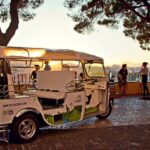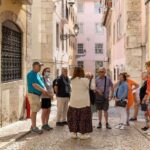

Lisbon feels different when you glide. This private electric tuk-tuk tour strings together major landmarks and quieter corners with live commentary, moving you fast between the city’s hill-climbs. You’ll start with hotel pickup in the center, then spend the next few hours bouncing between views, churches, and riverside history.
Two things I especially like: you get big-view moments without the leg workout, and the stop list mixes famous sites with neighborhoods like Alfama, Graça, Chiado, and Bairro Alto. One drawback to consider: some stops require paid entry (like Lisbon Cathedral, Jerónimos Monastery, and Belém Tower), and the streets are bumpy—so it’s not ideal if you have back issues or serious motion sickness.
- Key highlights that make this tuk-tuk tour work
- Why Lisbon’s Hills Feel Easier on an Electric Tuk-Tuk
- The Magic of Private: What 4 Hours Buys You in Lisbon
- Lisbon Cathedral to Portas do Sol: the view-and-story sequence
- The overlooked neighborhood beat: Graça and the Santa-with-a-side-of-local-life approach
- Belém in one efficient stretch: Jerónimos, Belém Tower, and the Navigators
- Praça do Comércio and Carmo Square: history you can see without a museum
- Chiado, Bairro Alto, and Basilica da Estrela: a mix of culture and views
- Pastéis de Belém and ginja: what you’ll likely pay for
- Electric tuk-tuk comfort: seating, rain gear, and who should think twice
- Price and value: what 8.84 buys you for four hours
- Who should book this tuk-tuk tour in Lisbon
- Should you book? My practical call for a 4-hour private circuit
- FAQ
- Is this tour private or shared?
- How long is the tour and when does it end?
- Are entrance tickets included for Lisbon Cathedral, Jerónimos, and Belém Tower?
- Do Pastéis de Belém and ginja cost extra?
- Where do I meet the guide if I’m not picked up from my hotel?
- Is the tuk-tuk suitable for children?
- Can I cancel or reschedule?
- The Best Of Lisbon!
- More Private Tours in Lisbon
- More Tours in Lisbon
- More Tour Reviews in Lisbon
Key highlights that make this tuk-tuk tour work





- Private means your group sets the tempo, with the guide timing short photo stops and quick looks rather than herding you along.
- Miradouro Portas do Sol and Senhora do Monte give Lisbon the postcard view, without an all-day uphill slog.
- Belém hits the classics: Jerónimos, Belém Tower, and the Monument to the Navigators.
- You’ll get local context, not just names—enough to help you choose what to revisit later.
- Electric tuk-tuk comfort details matter, like the transparent rooftop and rain covers with umbrellas if weather turns.
- Your guide can add useful extras, including food stops at your own expense and practical city tips (from guides such as Nuno, Filipe, Joaquim, Eduardo, Antonio, Miguel, and Pedro).

👉 See our pick of the The Top 13 Lisbon Historical Tours
Why Lisbon’s Hills Feel Easier on an Electric Tuk-Tuk
Lisbon’s topography can drain your energy fast. The clever part here is the vehicle: you’re in a comfortable electric tuk-tuk built for city touring, so you’re not spending your best hours only climbing stairs and negotiating steep sidewalks.
The route is designed around quick wins. You’ll hit a photo stop at Lisbon Cathedral, then climb to Miradouro das Portas do Sol, the classic viewpoint over Alfama. From there you keep moving to Miradouro da Senhora do Monte, a wide panoramic lookout that locals often call the best angle on the city.
And because the tuk-tuk has a transparent rooftop, you get the views without constantly adjusting your position to see through gaps. On rainy or cool days, rain gear matters too. The tour uses transparent rain covers, and they provide umbrellas if rain is forecast—so you’re not trapped waiting under a doorway while everyone else stays dry.
One practical note: the streets are bumpy. This isn’t a smooth highway ride; it’s Lisbon. If you’re sensitive to jolts, keep reading before you book.
You can also read our reviews of more private tours in Lisbon


The Magic of Private: What 4 Hours Buys You in Lisbon
A private tour is more than a marketing label. In a city like Lisbon—where distances feel longer than they are and hills change your pace—private time is freedom time. Your group rides together, stays together, and gets live commentary targeted to your pace.
This is also an efficient first-day plan. It’s roughly four hours, which is long enough to get oriented, but short enough that you can still plan a focused second day. The itinerary threads together neighborhoods and sights so you can decide later if you want more time in Alfama, a longer stop in Belém, or a repeat walk through Chiado and Bairro Alto.
Your guide is the engine behind that value. This operation is known for guides who mix history with storytelling—names you’ll hear again and again include Nuno, Filipe, Joaquim, Eduardo, Antonio, Miguel, Pedro, Henrique, and others. Even on weather-challenged days, guides tend to keep the vibe up by making the ride feel like a guided conversation, not a lecture.
Finally, hotel pickup and drop-off in the city center reduces friction. You don’t waste your morning trying to find a meeting spot in narrow streets with signage you might not notice.
Lisbon Cathedral to Portas do Sol: the view-and-story sequence
You start with a quick stop at Lisbon Cathedral. The plan is mostly exterior, about ten minutes, with history explained as you look at the building’s walls. You’ll also learn how the cathedral reflects Lisbon’s past changes after disasters—one of those moments where a landmark turns into a timeline.
Then comes the big “postcard” switch. At Miradouro das Portas do Sol, your time is short (about ten minutes), but it’s the kind of stop that changes how you see the whole city. Alfama spreads out in bright patches and winding streets below, and you’ll understand why this area is so central to Lisbon’s identity.
From there you continue onward to Miradouro da Senhora do Monte for another brief stop with a 180-degree panorama. This one is particularly helpful because it shows districts in relation to each other. You can get a sense of where you are now, where you’ve been, and what’s around the next hill.
Between viewpoints, you’ll also pass through older areas like Graça and São Vicente as you travel—so the ride itself becomes part of the sightseeing, not just transportation.
A small reality check: these miradouros are quick stops. They’re timed for photos and orientation, not for hours of lingering. If you want a slow, long-view experience, treat this tour as the setup, then plan your own return later.
The overlooked neighborhood beat: Graça and the Santa-with-a-side-of-local-life approach
One reason I like this tour format is that it doesn’t just chase the loudest names. Graça often gets less attention than Alfama, but it has its own feel—older streets, a quieter mood, and a historical vibe you can actually sense while you’re there.
This itinerary builds that in with a specific stop and explanations about Graça’s character and past. That means when you later walk here on your own, you’ll recognize the district’s personality rather than treating it like random side streets.
You’ll also pause for a viewpoint and photo opportunities tied to these neighborhoods, so you’re not bouncing between locations without context. The goal is that, after four hours, you can look at Lisbon on a map and mentally match it to what you saw—viewpoints, churches, squares, and major arteries.
And in Lisbon, that matters. People often feel lost because the hills break up what should be simple walking routes. A district-by-district guided pass helps you build a mental map quickly.
Belém in one efficient stretch: Jerónimos, Belém Tower, and the Navigators
After the central-old-city portion, the tour shifts toward Belém’s maritime identity. This is where Lisbon’s grand “Portugal as a global seafaring power” story becomes physical.
You’ll stop at Mosteiro dos Jerónimos (about fifteen minutes). Entry to see inside is not included in the tour price, but the stop is still worth it because you’ll learn what makes the Manueline style so distinctive. You’ll also get the note about Vasco de Gama’s burial tomb being connected to the church there.
Next is Belém Tower (Torre de Belém). It’s a UNESCO site and a symbol of Portugal’s maritime prowess. Your time here is short (about ten minutes) and entry is not included. That short window still works because you’ll understand what you’re looking at: the fortress-on-the-water feeling, the intricate architectural details, and the view over the Tagus.
Then you’ll visit the Monument to the Navigators (Padrão dos Descobrimentos). The design is unusual—ship-shaped and sculpture-heavy—and your guide will connect the figures to Portugal’s expansion story. You’ll get the sense that this isn’t just a monument you pose with; it’s a physical summary of a major era.
Between these stops, you’ll pass major Belém landmarks like the Padrao dos Descobrimentos area and the Torre de Belem zone, so the ride keeps the momentum.
Tip for planning your day: if you care a lot about museum-grade time, budget extra time later. This tour is a fast, guided highlight pass, not a full independent Belém immersion.



Praça do Comércio and Carmo Square: history you can see without a museum
From Belém you roll back toward Lisbon’s center. One of the smartest parts of the itinerary is including open squares where you don’t need tickets to get historical context.
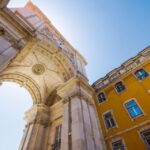
At Praça do Comércio, you get a sense of the city’s scale and its dramatic past—this is where the royal family once resided and where sailors once landed seeking fortune. The guide also ties in tragedy connected to Lisbon’s history, giving you a reason to care about the grand setting.
Then you pause at Largo do Carmo, where the ruins of the Carmo Convent stand as a reminder of the devastating 1755 earthquake. If you’ve ever seen photos of Lisbon that look almost too orderly, this stop grounds you. It explains why parts of the city look the way they do today.
You’ll also hear how the Portuguese revolution links to this location. That’s the kind of connection that can make your later self-guided walks feel less random.
These square stops are short, but they do something important: they prevent your tour from becoming only viewpoints and churches. You get street-level history you can point to.
Chiado, Bairro Alto, and Basilica da Estrela: a mix of culture and views
Once you’re in the center, the tour moves through Chiado and Bairro Alto areas. This is where Lisbon starts to feel like a living city rather than a list of sights.
You’ll pass by cultural anchors such as Time Out Market Lisboa, and your guide can point out major attractions in the area. That matters because Chiado and Bairro Alto are the kind of neighborhoods where you can wander for hours—so you need guidance on what’s worth your time.
Another stop is Basilica da Estrela. It’s about ten minutes here, and the emphasis is the architecture: the church’s striking dome, plus the Baroque details inside and out. Even if you don’t go inside, this is the kind of sight you’ll remember later when you see photos of Lisbon’s skyline.
The tour also frames Bairro Alto as part of Lisbon’s “bohemian” feel, with a stop tied to local life and where people go for good food. If you like planning your own meals after a tour, these hints are actually useful.
Pastéis de Belém and ginja: what you’ll likely pay for
This is where I’m blunt: the tour stops you near the food, but you should plan to cover the cost yourself. The schedule includes a stop for Pastéis de Belém at the original bakery. It’s fast—about ten minutes—and the tasting is optional, but it’s the moment most people want.
You’ll also have the chance to taste ginja, the cherry liqueur. The tour description frames it as an authentic local taste, and it’s at your own expense.
One smart way to handle this: go in with a mild budget for snacks. Since the tour is timed, it’s not built for sitting down for long meals. You’ll get the experience without turning your entire afternoon into a food coma.
Electric tuk-tuk comfort: seating, rain gear, and who should think twice
If you have mobility or back concerns, read this part carefully. The tuk-tuk fits up to six passengers legally, and comfort guidance recommends four people per tuk-tuk. For groups of five or six, seating arrangements may be set either all facing forward or seats facing each other, depending on the model available.
Getting in and out can matter. People with limited range of motion in their knees might find it hard to step up into the vehicle. The operator also notes it’s not recommended for people with back problems because Lisbon streets are bumpy and that may feel uncomfortable.
Motion sickness is another flag. The ride across uneven streets may trigger symptoms for people prone to it.
On the positive side, the tour provides rain covers and umbrellas if rain is forecast. Multiple guides have handled rainy days with comfort-first approaches, and you’ll typically stay sheltered enough to keep the itinerary moving.
Finally, the transparent rooftop and open-air feel mean you’ll take in the scenery constantly. If you dislike staring out at bright light or wind, you might want to plan sunglasses and a light layer.
Price and value: what $108.84 buys you for four hours
At $108.84 per person, this isn’t a budget bus tour. It’s a private electric tuk-tuk tour with live commentary plus hotel pickup and drop-off in the city center area.
So where does the value come from?
First, the guide cost is spread across a small vehicle. That’s why the private format matters. You’re paying for time, not just transportation.
Second, the route is efficient. Four hours can cover major viewpoint anchors (Portas do Sol and Senhora do Monte), Belém’s signature monuments (Jerónimos, Belém Tower, Navigators), and central neighborhoods (Chiado/Bairro Alto) without you needing to map everything or fight the hills.
Third, you’re getting a human layer. Guides such as Nuno, Filipe, Joaquim, Eduardo, Antonio, Miguel, and Pedro are repeatedly described as engaging and flexible with pacing—exactly what you want on a short trip. Flexibility is where these tours often win.
Just remember: a few entrances are not included. So if you plan to go inside Jerónimos and Belém Tower, you’ll want a separate budget for tickets.
Who should book this tuk-tuk tour in Lisbon
Book this if:
- You want a first-day orientation in a short time window
- You prefer minimal walking over steep hills
- You like photo stops that also come with context
- You want a guided overview that helps you pick your later self-guided priorities
Skip it (or consider a different format) if:
- You have back problems, serious knee limitations, or are sensitive to jolts
- You get motion sickness easily
- You want long museum time at major sites
This tour is also a strong option for families who want to see lots without spending the afternoon climbing stairs. The ride is designed to cut down on walking, and the guide’s pacing tends to keep things from feeling rushed.
Should you book? My practical call for a 4-hour private circuit
If you’re landing in Lisbon and you want to get your bearings fast, I’d book this. The combination of viewpoints, Belém monuments, and central neighborhoods is one of the most efficient ways to understand Lisbon’s shape.
I’d also book it if weather is uncertain. The vehicle’s rain covers and umbrella support help keep the day moving, and the guide-led storytelling tends to keep the experience enjoyable even when the sky doesn’t cooperate.
But be honest with your body. If your back or knees struggle with stepping into vehicles or bumpy roads, you might get a lot less enjoyment than you hoped. In that case, choose a smoother alternative or add extra rest time and be prepared to skip some comfort-risky moments.
FAQ
Is this tour private or shared?
This is a private tour. Only your group rides in the electric tuk-tuk together.
How long is the tour and when does it end?
The duration is about 4 hours. After exploring, it ends back at the meeting point, with hotel pickup and drop-off offered within the city center area.
Are entrance tickets included for Lisbon Cathedral, Jerónimos, and Belém Tower?
No. The itinerary notes admission tickets are not included for Lisbon Cathedral, Jerónimos Monastery (church), and Torre de Belém.
Do Pastéis de Belém and ginja cost extra?
Yes. The tour includes stops where you can taste Pastéis de Belém and/or ginja, but the food and drink are optional and at your own expense.
Where do I meet the guide if I’m not picked up from my hotel?
If pickup isn’t provided in advance, the standard meeting point is Avenida da Liberdade 3, 1250-001 Lisboa, next to the Gloria yellow tram and across from Hard Rock Café Lisbon.
Is the tuk-tuk suitable for children?
Children under 7 are not legally permitted to ride in tuk-tuks in Portugal.
Can I cancel or reschedule?
Free cancellation is available up to 24 hours before the experience starts. Changes made less than 24 hours before the start time are not accepted.