
Dan Brown invented a conspiracy. Rome turned out to contain the real backdrop — four churches, two Bernini sculptures, one Renaissance fountain — and the tourism never stopped.
The Angels & Demons tour is built on a fictional plot. The art is real, and most of it had been quietly underrated for centuries before the book sent tourists looking for it.
Quick Picks
- Best value — Angels and Demons Half-Day Tour with Coach ($42). Coach transfers between the four sites.
- Walking premium — Rome: Angels and Demons Guided Tour ($90). More time at each stop, no coach.
- Walking mid-tier — Rome: Half-Day Angels and Demons Tour ($79). Four hours, similar route, different operator.
- Quick Picks
- What Dan Brown Actually Got Right
- Booking the Three Real Options
- Angels and Demons Half-Day Tour with Coach — .33
- Rome: Angels and Demons Guided Tour — .50
- Rome: Half-Day Angels and Demons Tour —
- Site 1 — Santa Maria del Popolo (The Earth Altar)
- Site 2 — St. Peter’s Square (The Air Altar)
- Site 3 — Santa Maria della Vittoria (The Fire Altar)
- Site 4 — Piazza Navona (The Water Altar)
- The Climactic Site — Castel Sant’Angelo
- Coach vs Walking — The Real Math
- Who This Tour Actually Works For
- What Most Tour Reviews Don’t Mention
- Pairing With the Rest of Your Rome Trip
- The Florence Angels & Demons Variant
- Practical Logistics
- The Real Reason to Book This
- Final Take
What Dan Brown Actually Got Right
The novel’s premise — that Bernini left coded clues in Rome pointing toward the Illuminati’s secret meeting place — is fiction. But the four sites Brown picked as the “Path of Illumination” are all real places with real Bernini connections that pre-date the novel by 350 years. The genius of the book (and the tour) is that you don’t have to believe the conspiracy to enjoy seeing the sites.
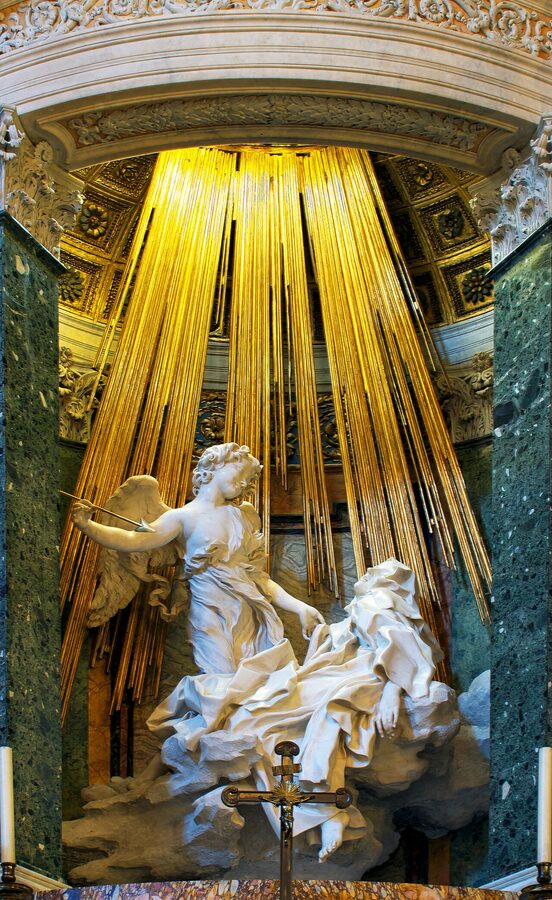
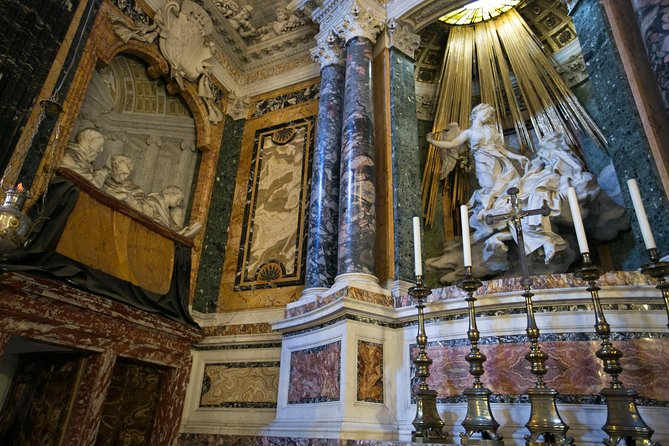
The four “Path of Illumination” sites: Santa Maria del Popolo (the Earth altar — Habakkuk and the Angel chapel), St. Peter’s Square (Air altar — the West Ponente wind disc on the colonnade pavement), Santa Maria della Vittoria (Fire altar — Ecstasy of St. Teresa), and Piazza Navona (Water altar — Bernini’s Fountain of the Four Rivers). Plus Castel Sant’Angelo as the climactic location.
What’s not real: the Illuminati conspiracy, the antimatter bomb, the actual Path of Illumination as a coherent route. What is real: every single one of these sites holds genuine Bernini work, all are within walking distance of each other in central Rome, and none of them are tourist traps in the way the Vatican Museums are.
The tour basically works because Brown identified an underrated route that even non-readers benefit from following.
Booking the Three Real Options
The Angels & Demons tour market splits between coach-transfer and walking-only formats. Pick based on your physical preference and budget.
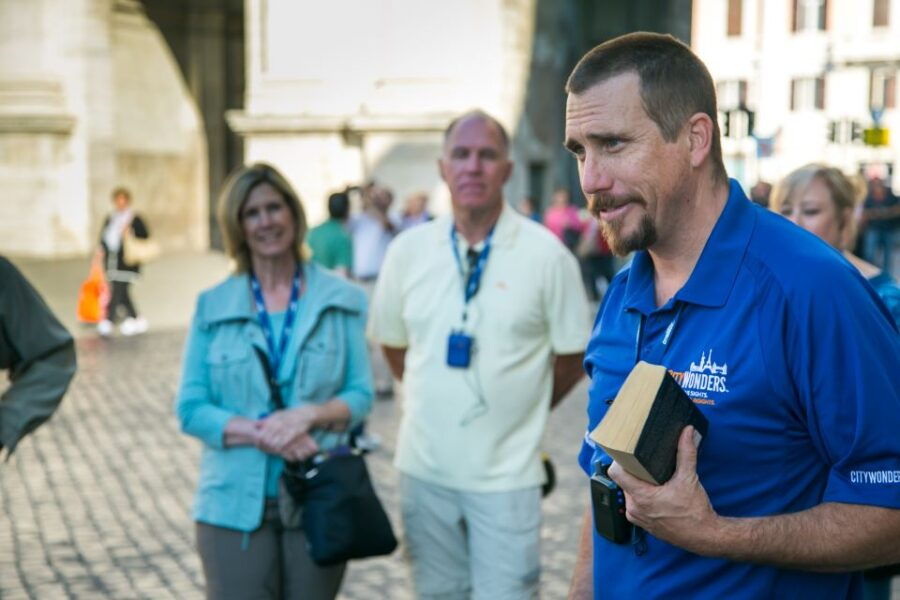
Angels and Demons Half-Day Tour with Coach — $42.33
The category leader. Half-day with private coach moving you between the four “Path” sites — useful because Santa Maria della Vittoria sits 1.5km from the others and walking it adds time. The route in order and where the guide spends the most time is in the review. Best value if you want efficiency over walking time. Duration listed as “1 hour” is misleading — actual is 3-4 hours including transfers.
Rome: Angels and Demons Guided Tour — $89.50
Walking-only premium version, more time at each site than the coach version. What the extra $47 buys — longer photo stops, more storytelling, less rushing — is in the write-up. Pick this if you want to study each Bernini rather than tick sites off a list. If you leave hungry for more of his sculpture, the Borghese Gallery holds his early masterpieces.
Rome: Half-Day Angels and Demons Tour — $79
A different walking-only operator at a slightly lower price than the premium pick. Four hours, similar route. Why this works as the middle-ground option between the coach and premium walking tours is in the write-up. Pick if you want walking but $89 felt steep.
Site 1 — Santa Maria del Popolo (The Earth Altar)
The Chigi Chapel inside Santa Maria del Popolo holds Bernini’s “Habakkuk and the Angel” sculpture (1655-61). Habakkuk is being instructed by the angel to deliver lunch to the prophet Daniel in the lions’ den. The sculpture group is small, dynamic, theatrical — Bernini doing what only Bernini did in the 17th century.
The chapel is otherwise the work of Raphael (1513), making this a genuine all-star collaboration room: Raphael’s design, Bernini’s sculpture, plus a Caravaggio “Crucifixion of St. Peter” and “Conversion of Saul” in a separate side chapel. The combination of names per square metre is one of Rome’s quieter art-history density events.
Santa Maria del Popolo sits at the north end of Piazza del Popolo. Free to enter. Open daily but afternoon closure 12:30-16:30 catches a lot of unsuspecting visitors. The tour times the visit around the open hours.
Site 2 — St. Peter’s Square (The Air Altar)
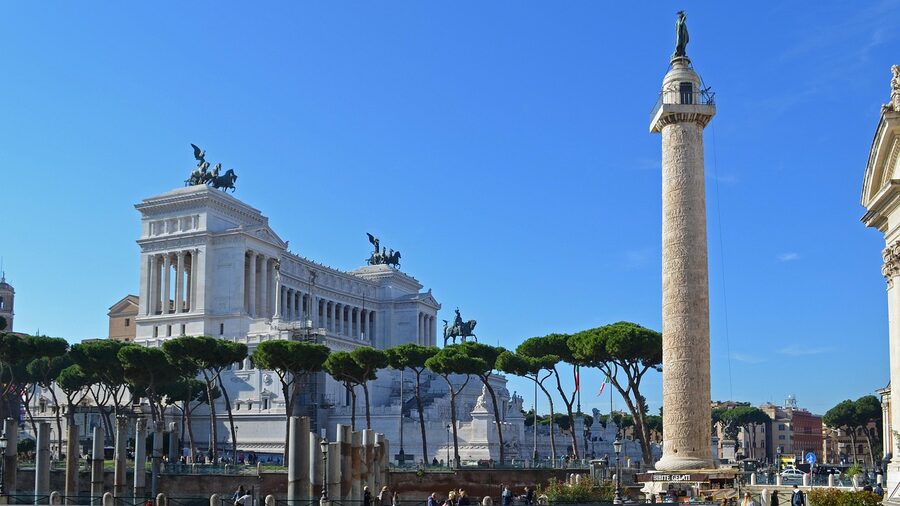
The “West Ponente” wind disc — a 5th-century pavement disc relocated to St. Peter’s Square in 1817 — represents the West Wind in Brown’s plot. It’s a circular marble disc embedded in the pavement of the square, and most visitors walk over it without noticing.
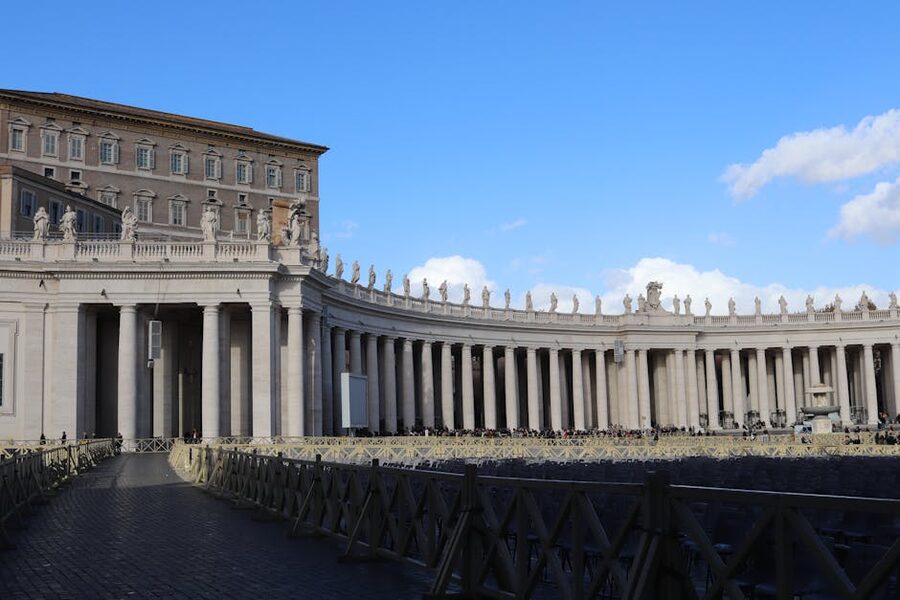
The disc is not Bernini work and is genuinely tangential to the rest of the route. The tour stops here mostly because the book did. Honest take: this is the weakest Path of Illumination site. The book gave it significance the actual disc doesn’t carry. Quick stop, photo, move on.
The colonnade by Bernini surrounding the square is the more rewarding subject — 284 columns deep, four rows thick, each column a single piece of travertine. Bernini designed it 1656-67 specifically to frame the basilica. The tour usually spends some time here regardless of the disc’s relative significance to the plot.
Site 3 — Santa Maria della Vittoria (The Fire Altar)
This is the standout site. Inside Santa Maria della Vittoria sits Bernini’s “Ecstasy of St. Teresa” (1647-52) — one of the most discussed sculptures in Western art history.
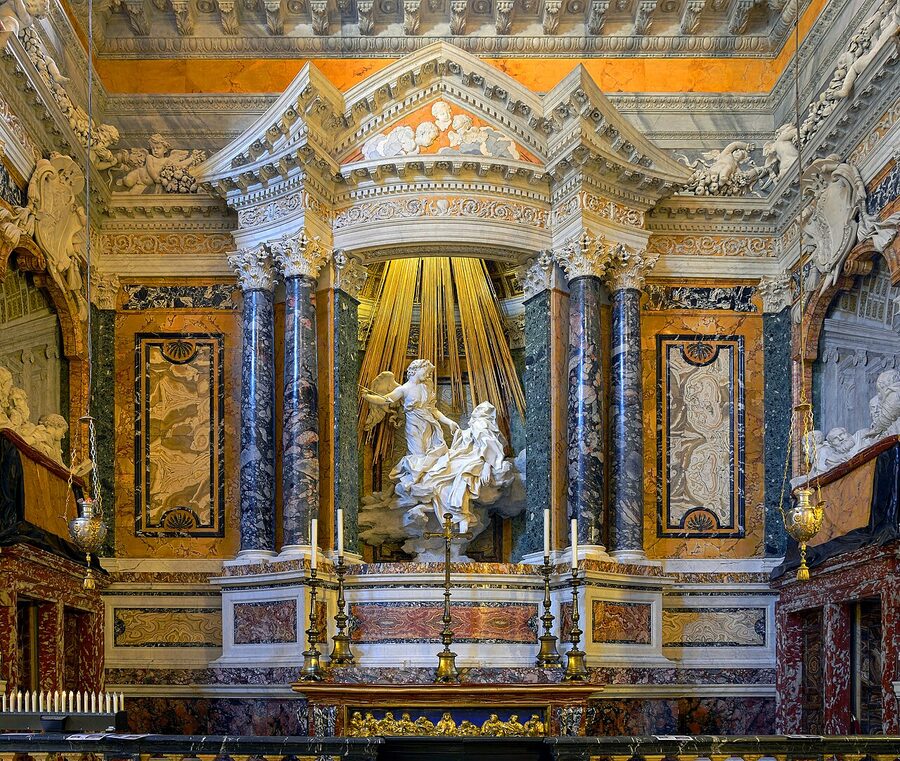
What you see: St. Teresa of Avila reclining on a cloud, head tilted back, mouth open, as an angel prepares to plunge a golden arrow into her heart. The pose is taken from Teresa’s own description (1577) of a mystical experience: “the pain was so great I screamed… and the sweetness this exceeding pain caused was so excessive there was no wanting it to stop.”
Whether Bernini’s depiction is religious ecstasy, sexual ecstasy, or both has been argued for 370 years. The sculpture is in the Cornaro Chapel — Bernini designed the whole chapel as a theatrical staging: hidden upper window directing natural light onto Teresa’s face, golden rays radiating behind her, marble balconies on either side with sculpted members of the Cornaro family appearing to watch the scene as if it’s a play.
This is the most rewarding stop on the tour. Budget 15 minutes minimum. The chapel is on the left side of the church, lit on a coin-operated system (€1 for proper illumination — bring a coin or the light is too dim).
Site 4 — Piazza Navona (The Water Altar)
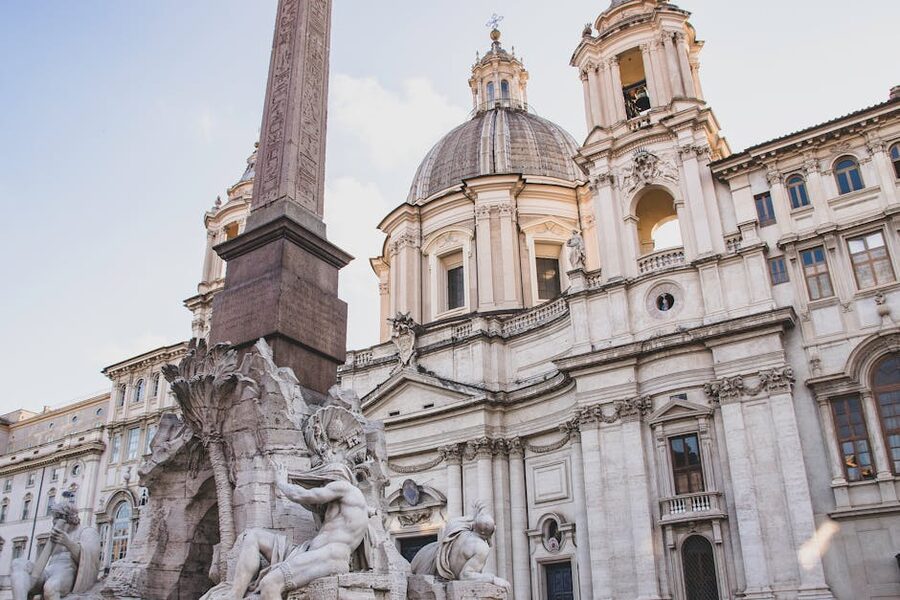
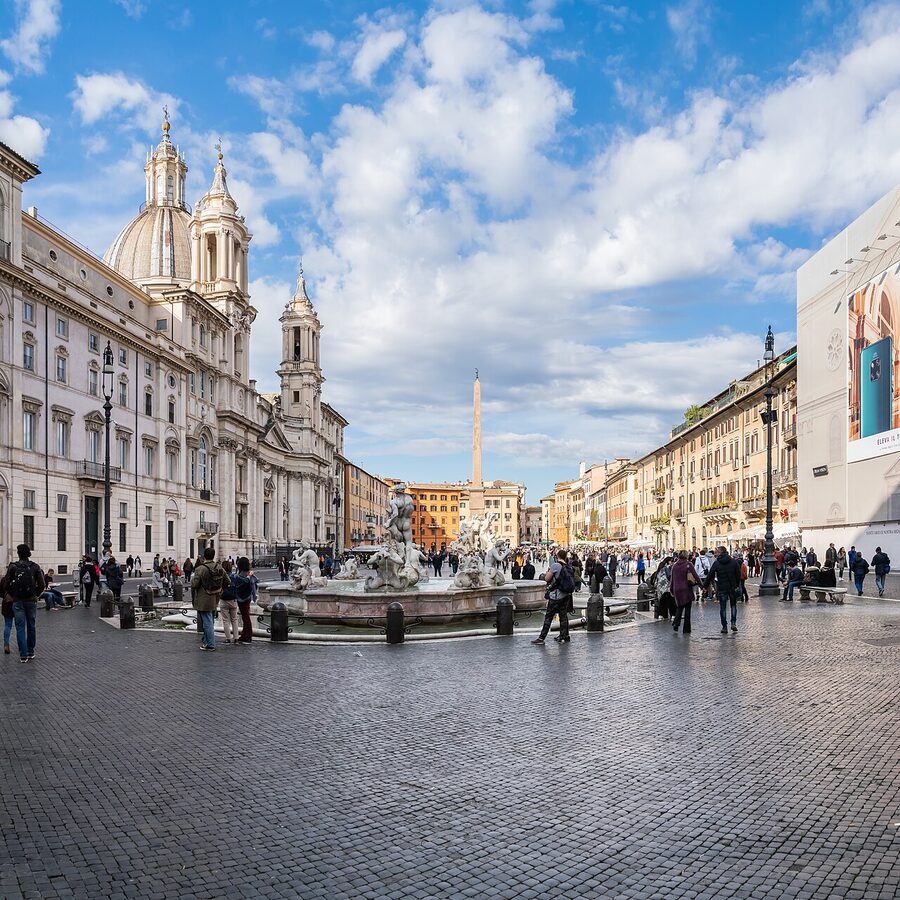
Bernini’s Fountain of the Four Rivers (1651) sits in the centre of Piazza Navona. The four rivers represented are the Danube (Europe), Ganges (Asia), Nile (Africa), and Río de la Plata (Americas) — one personification per inhabited continent known to Europe at the time.
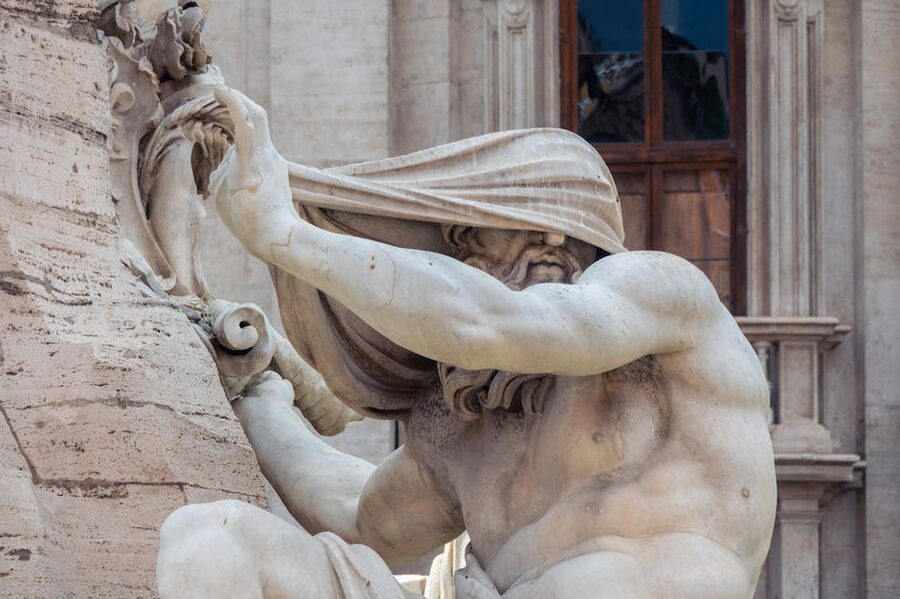
The tour uses this as the “Water” altar but the more interesting story is the rivalry with Borromini. Francesco Borromini designed the church facing the fountain (Sant’Agnese in Agone). Bernini and Borromini hated each other. Roman gossip suggests Bernini designed the Río de la Plata personification with one arm raised as if shielding his eyes from Borromini’s “ugly” facade — though art historians dispute this and the timing doesn’t quite work. Doesn’t matter. The story is funny enough that guides keep telling it.
The Egyptian obelisk on top is real ancient Egyptian — brought to Rome by Domitian in the 1st century AD, then forgotten in a Roman basilica’s ruins for centuries until Bernini’s project rediscovered and reused it.
Free to view. Always accessible. The square is one of Rome’s most photographed and the tour usually wraps up here with time for everyone to wander, take photos, and grab gelato at one of the surrounding cafes (overpriced but the location is the location).
The Climactic Site — Castel Sant’Angelo
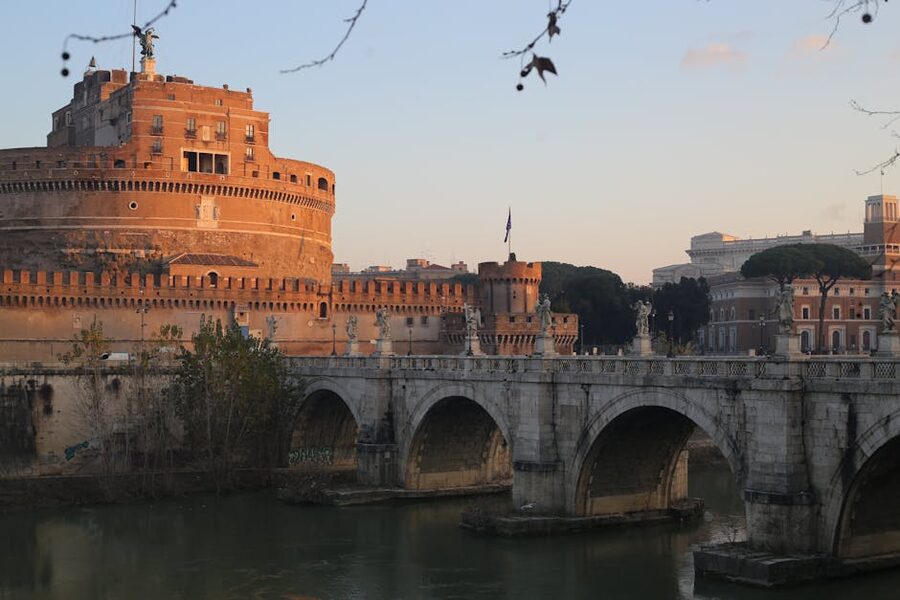
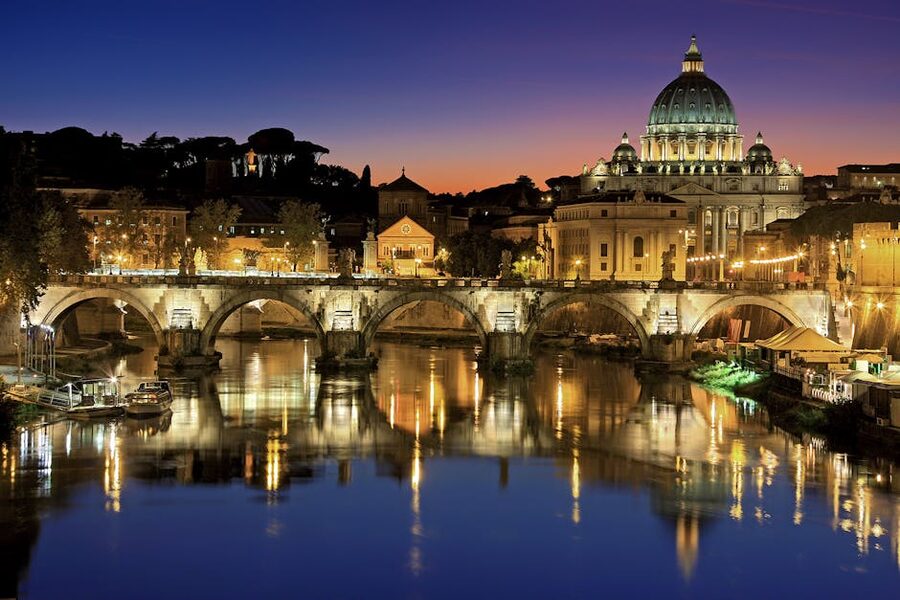
The novel’s final showdown happens at Castel Sant’Angelo. The fortress at the end of the bridge of angels was Hadrian’s mausoleum (139 AD), then medieval papal fortress, then Renaissance escape route for popes (the Passetto di Borgo connects it to the Vatican via a covered passage).
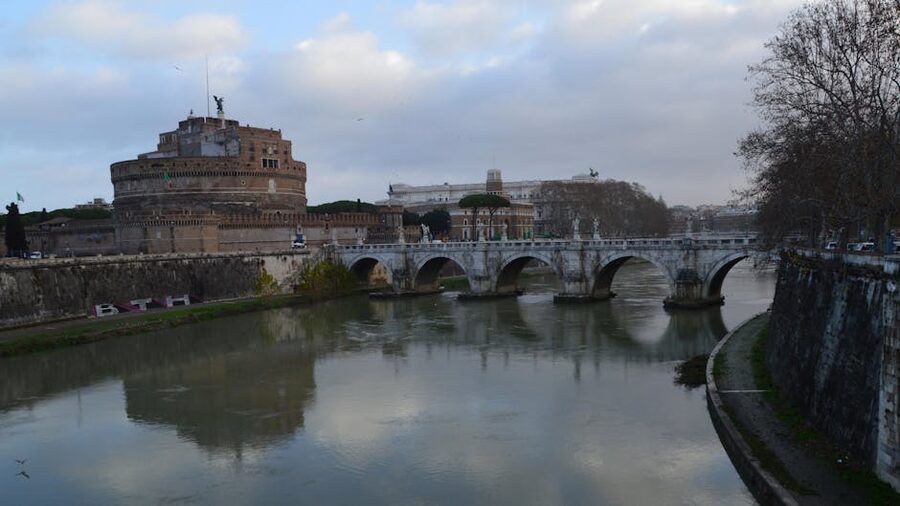
The interior of Castel Sant’Angelo is genuinely interesting — military architecture from the Middle Ages, papal apartments from the Renaissance, prison cells where Cellini and Cagliostro were jailed, and a roof terrace with one of Rome’s best basilica views. The tour usually doesn’t enter (separate ticket) but does explain the building from the outside and crosses the bridge.
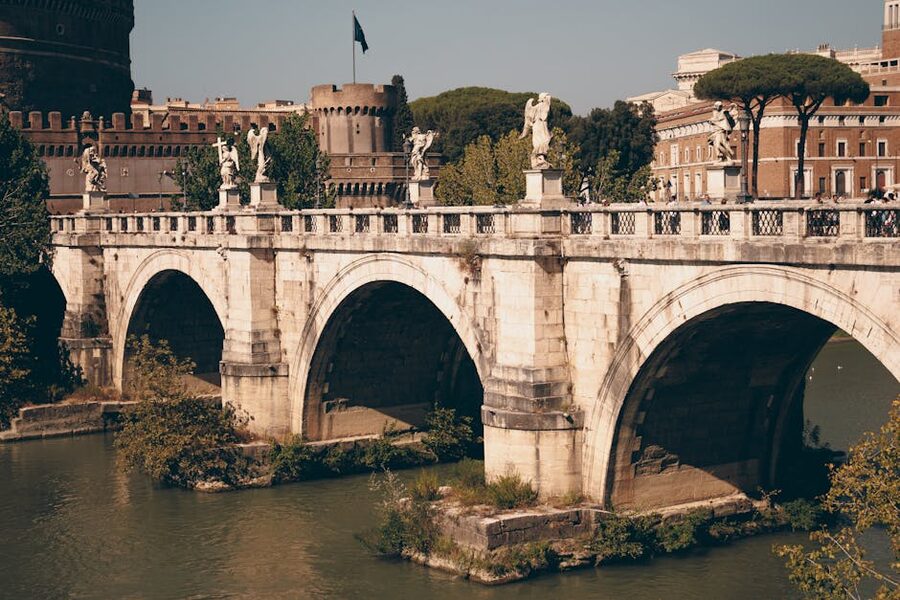
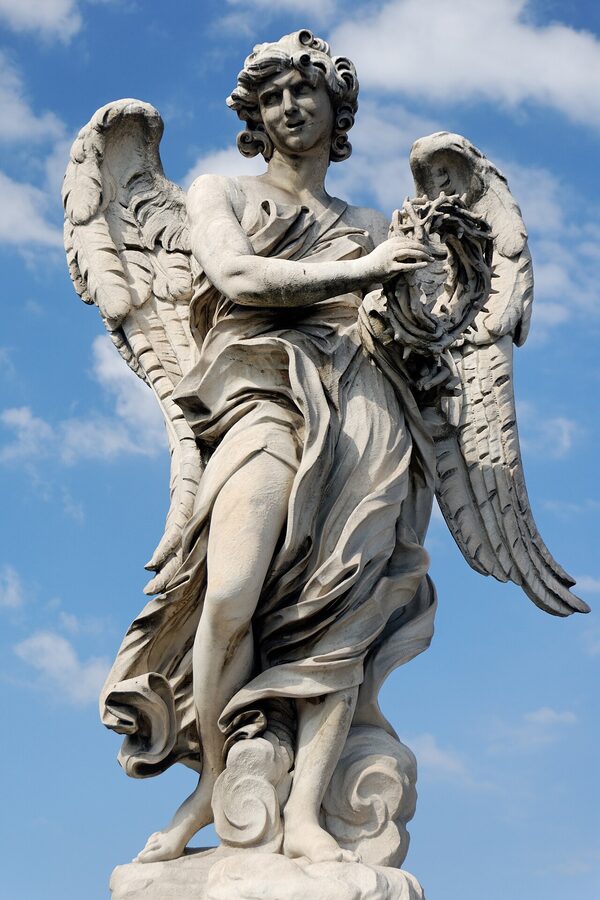
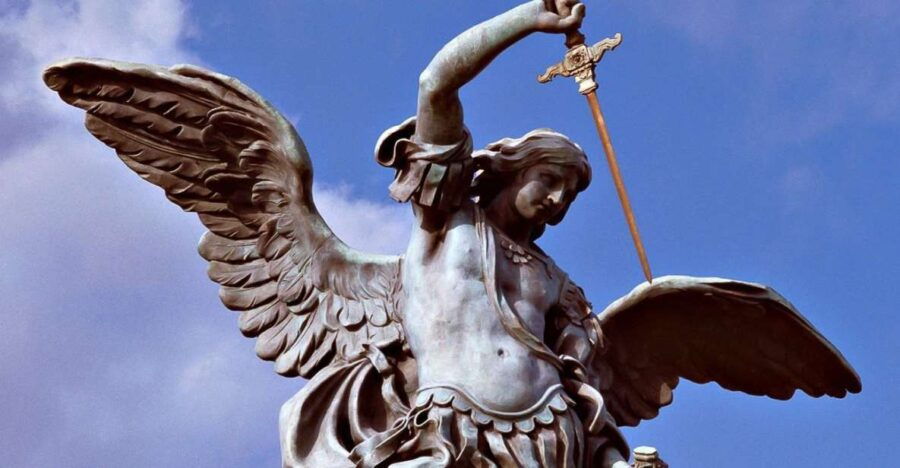
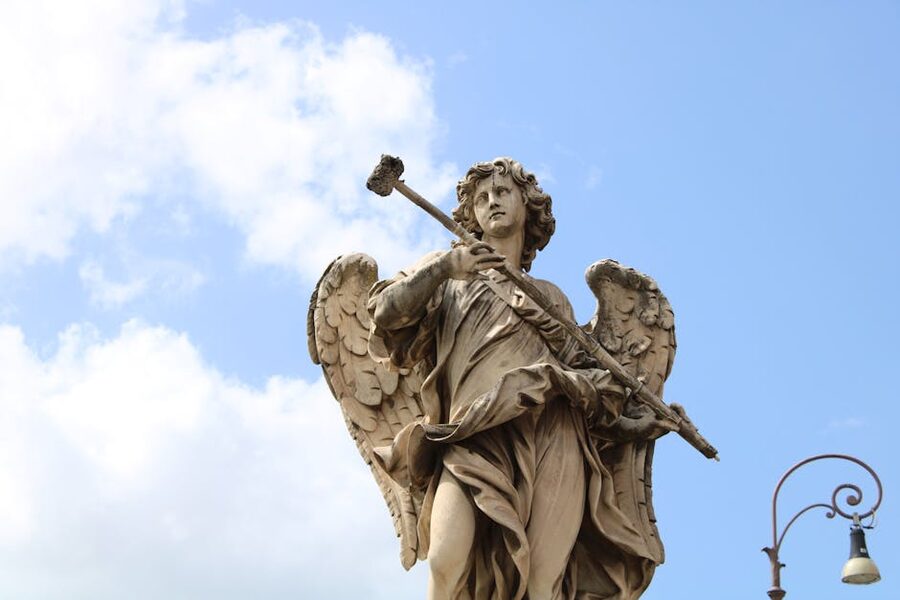
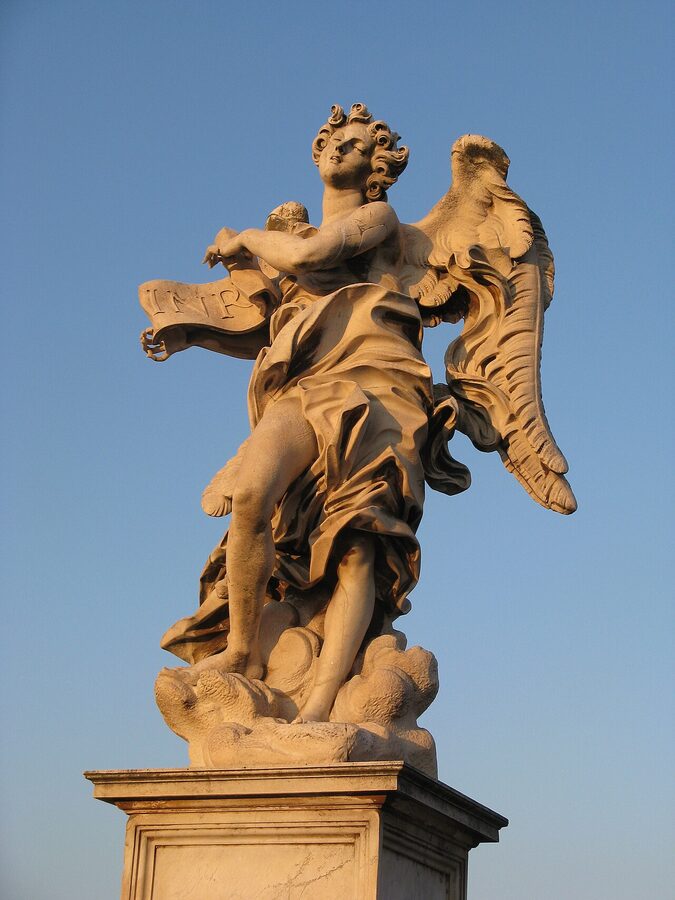
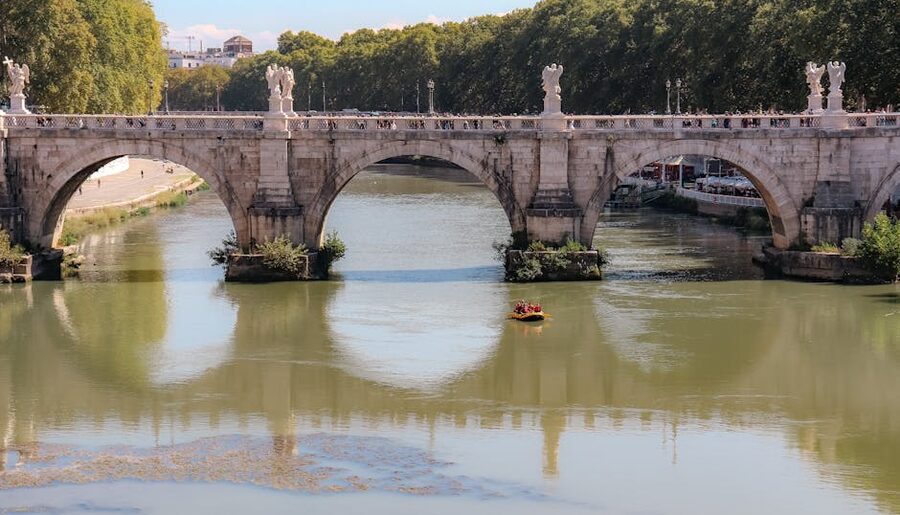
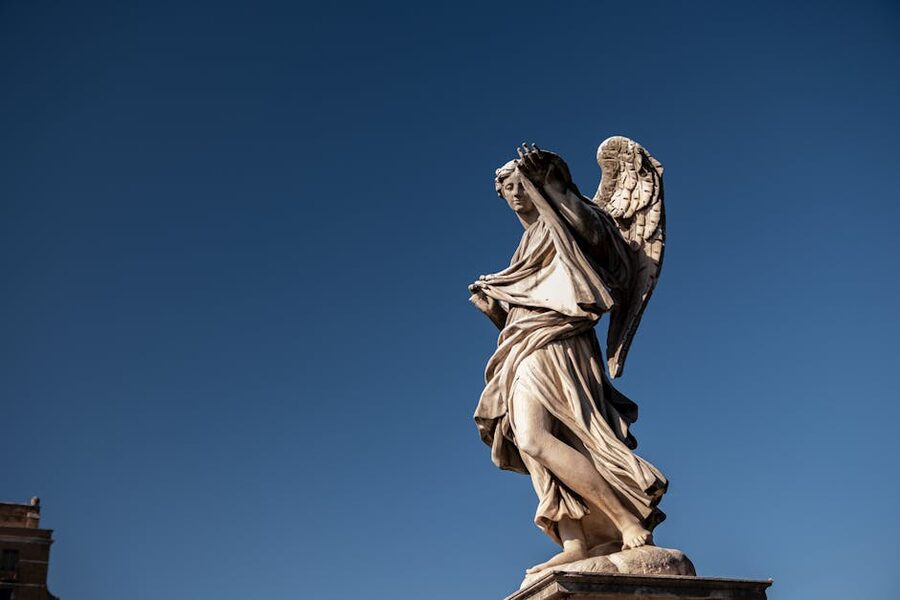
The 10 angels lining the bridge — designed by Bernini, executed by his workshop in the 1660s — each hold an instrument of Christ’s crucifixion (the crown of thorns, the inscription, the lance, the nails, the column, the whip, the dice, the sponge, the cross, the veil). Originally Bernini hand-carved two of them; the originals are now in Sant’Andrea delle Fratte church and the bridge displays copies. Even the copies are excellent.
Coach vs Walking — The Real Math
The four-Path-of-Illumination sites span about 4km in central Rome. The coach version covers them in 3-4 hours including driving and stops. The walking version covers them in 4-5 hours including walking and stops.
Coach version pros: faster, no walking fatigue, air-conditioned in summer, accommodates older travellers and people with mobility issues, cheaper at $42 vs $79-90.
Coach version cons: less immersive (you’re in a vehicle between sites instead of walking through Rome), shorter time at each site (rushing), feels more like a “ticking off the list” tour.
Walking version pros: longer time at each site, more storytelling between sites, you experience the geography of central Rome on foot, photos are better because you’re not rushing.
Walking version cons: 4-5 hours of standing/walking, brutal in summer heat, more expensive, requires reasonable fitness.
The honest advice: walking version April-May and September-October when the weather cooperates. Coach version June-August and November-March when weather works against walking. The 5°C temperature difference between, say, October and July changes which version is “better” entirely.
Who This Tour Actually Works For
Three traveller types this works particularly well for. And one type it doesn’t.
Works well for: Dan Brown readers. If you’ve read the book, the tour is a “the actual sites from the novel” experience that delivers exactly what you want. The fictional context elevates each Bernini work into a connected narrative you can mentally overlay.
Works well for: art tourists who haven’t seen Bernini before. The tour functions as a curated Bernini sampler. You see the Ecstasy of St. Teresa, the Four Rivers Fountain, the Ponte Sant’Angelo angels, and the colonnade — four of his masterworks in one half-day. It’s basically a Bernini Greatest Hits route with a thriller marketing angle.
Works well for: visitors who want a Rome day with a thread. The “Path of Illumination” framing gives the tour a narrative spine that random walking tours lack. You’re following a route that connects rather than just hopping between unrelated sights.
Doesn’t work for: people who haven’t read the book and don’t care about Bernini. Without either Dan Brown context or art-history interest, the tour reduces to “we went to four churches and a bridge.” Some visitors find this anticlimactic. If you fall into this group, do a more general Colosseum tour instead.
What Most Tour Reviews Don’t Mention
A few realities worth flagging.
Mass schedules can interrupt visits. Santa Maria della Vittoria has Mass times that close the chapel to tourists temporarily. Same for Santa Maria del Popolo. Tour operators schedule around these but unexpected services (funerals, special masses) sometimes cause delays.
The Vatican site disappoints. The “West Ponente” disc in St. Peter’s Square is genuinely underwhelming compared to the Bernini sites. Tour groups crowd around a small pavement marker that doesn’t really reward extended attention. Lower expectations for this stop.
Photography in churches. Allowed without flash at Santa Maria del Popolo and Santa Maria della Vittoria. The Ecstasy of St. Teresa is in low light and phones often struggle — bring a steady hand and don’t expect Instagram-perfect results.
Interior of Castel Sant’Angelo isn’t included. The tour stops at the bridge. If you want to enter the fortress, you need a separate $25 ticket. Worth it if you have time, optional otherwise.
Some tours add St. Peter’s Basilica entry. Read the booking carefully. Tours including basilica entry are slightly longer but more value if you weren’t planning to visit separately.
Pairing With the Rest of Your Rome Trip
The Angels & Demons tour is a half-day commitment that fits naturally with other half-day Rome activities.
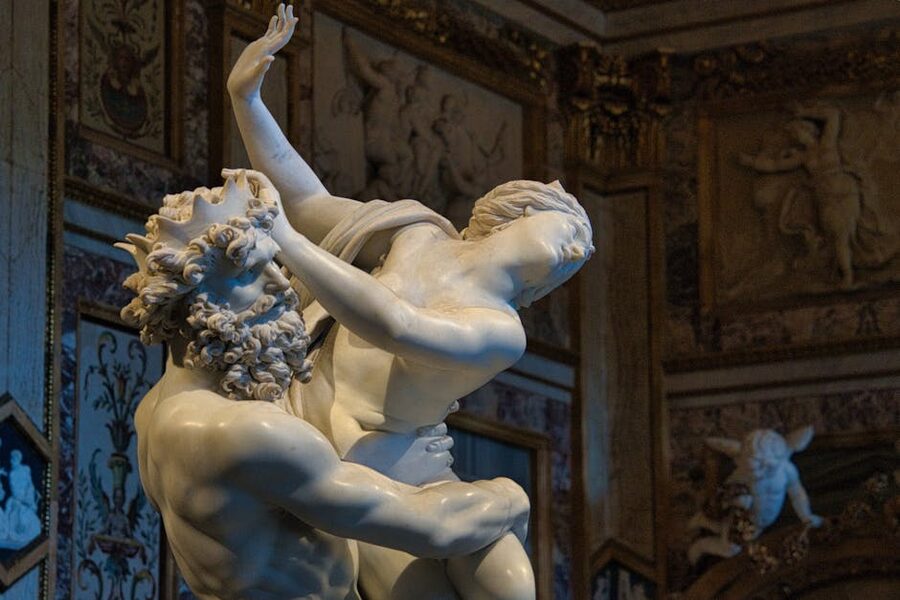
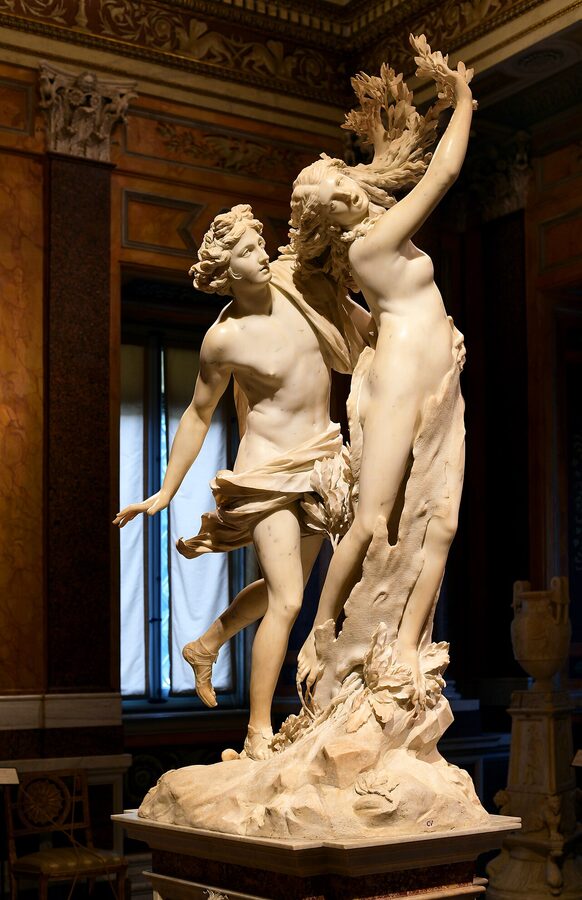
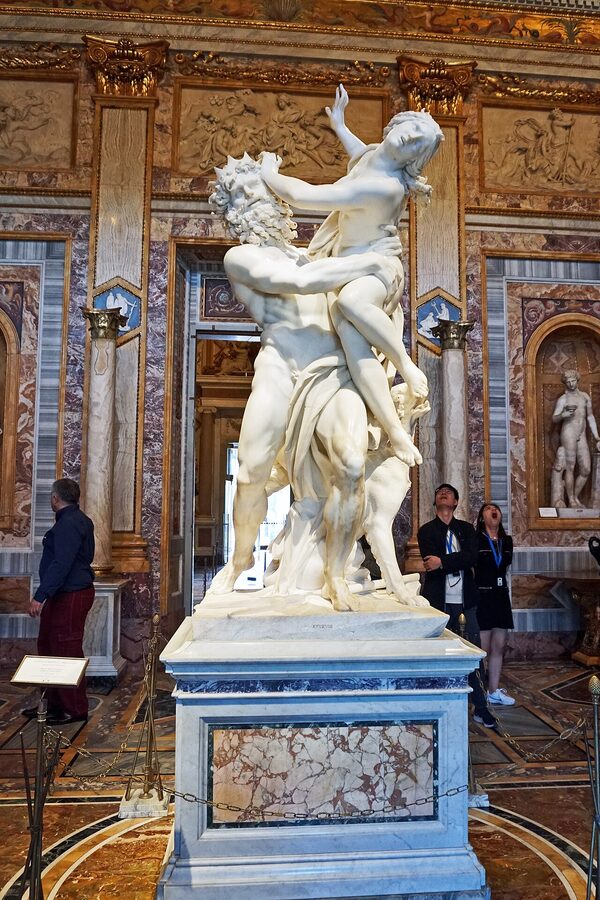
The pairings that work: morning Angels & Demons followed by an afternoon at the Borghese Gallery creates a Bernini-saturated day — tour the Bernini-themed sites in the morning, then see his definitive Apollo & Daphne and Rape of Proserpina in the afternoon, and you’ll leave Rome with a deeper feel for one specific artist than most travellers achieve in a week. Alternatively, Angels & Demons in the morning then a Trastevere food tour in the evening means cultural immersion followed by physical comfort food — perfect pacing for day three or four of a longer Rome trip. If you’ve also booked the Papal Audience for a Wednesday, a Tuesday Angels & Demons + Wednesday morning Audience + Wednesday afternoon Vatican Museums creates a tightly Vatican-themed three-event arc that delivers more religious-Rome context than scattered separate visits would. And for the deeply art-curious, do this tour the day after the Capitoline Museums — the contrast between Republican-era Roman sculpture (Capitoline) and Baroque Bernini drama (Angels & Demons sites) sharpens your eye for what makes each era’s work distinctive.
The Florence Angels & Demons Variant
If you’re a Dan Brown completionist, his sequel “Inferno” set the action in Florence rather than Rome. There’s a separate Florence Inferno Walking Tour that runs the equivalent route through Boboli Gardens, Palazzo Vecchio, the Baptistery, and other novel sites. Worth booking if you’re doing both Rome and Florence — the two tours together give you the full Brown-thriller-meets-real-Renaissance-art experience.
For Rome-only trips, the Angels & Demons tour stands alone perfectly. You don’t need the Florence sequel to enjoy the Rome version.
Practical Logistics
Meeting points are typically near the Vatican (Castel Sant’Angelo area) or central Rome (Piazza Navona). Operators send specific GPS coordinates with booking confirmation.
Best timing: 09:00 morning starts. Avoid afternoon starts (the church afternoon-closure window 12:30-16:30 catches some operators out and forces awkward routing).
Dress code: shoulders covered, knees covered for both men and women. The churches enforce this — you’ll be turned away in tank tops or short shorts. Light scarves work as cover-ups in summer.
What to bring: water, a coin or two for the Cornaro Chapel light box, a phone with decent low-light camera, comfortable shoes, light layer for cool church interiors.
Group sizes: coach versions usually 15-25 people. Walking versions cap at 8-12 for better experience. Private versions exist at $300+ per group if exclusivity matters.
Cancellation: typical 24-hour free cancellation. Religious holiday closures occasionally affect routes — operators handle rebookings.
The Real Reason to Book This
If you take the Dan Brown framing out entirely, you’re left with: a guided tour through four Bernini-related sites in central Rome, plus context on Bernini’s career, plus the chance to see the Ecstasy of St. Teresa and the Fountain of the Four Rivers with someone who can explain what you’re looking at.
That alone is worth $42-79. The Dan Brown framing is essentially a marketing wrapper around a high-quality Bernini tour. If you’ve read the book, you get the bonus pleasure of “actual real sites from the novel.” If you haven’t, you’re getting the Bernini Greatest Hits route at a competitive price.
Final Take
Book the coach version ($42) if you’re on a budget or visiting in summer heat. Book the walking version ($79-90) if you’re an art tourist who wants longer at each site and you’re visiting in shoulder-season weather. Pair with the Borghese Gallery for a perfect Bernini day or with a general Rome itinerary for thematic variety. Skip if you have zero interest in Bernini and didn’t read the book — you’ll be bored.
The Dan Brown thriller premise is fiction. The Bernini sculptures are not. The tour gets you to all of them efficiently and with context most self-guided visits miss. At $42 for the coach version it’s one of the better-value Rome cultural tours. Book a morning slot, dress modestly for the churches, bring a coin for the Cornaro Chapel light, and don’t stress if the West Ponente disc underwhelms you — even Dan Brown probably knew that one was a stretch.