
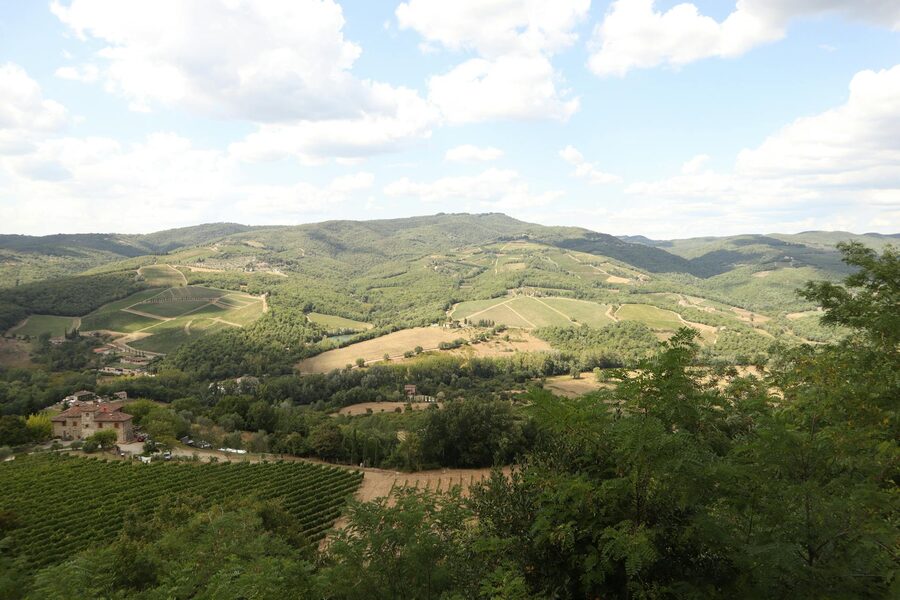
The hills are real. The Instagram photos flatten them. At 120 km/h in a rental car, Chianti looks gentle; on a bike, it’s a 6-8% climb and you are the engine.
Book the e-bike option. Life is too short to pretend.
Quick Picks
- Full-day guided — Tuscany Bike Tours Through Chianti Hills With Wine Tasting ($145). E-bikes available. Support van.
- Self-guided — E-Bike Florence Tuscany Self-Guided Ride With Vineyard Visit ($97). GPS, roadside backup, your own pace.
- No cardio required — Explore Chianti on a Vespa: Tour, Guide & Lunch ($125). Same roads, no pedalling.
- Quick Picks
- Why Cycling Chianti Actually Works
- The Three Real Options
- Tuscany Bike Tours Through the Chianti Hills With Wine Tasting — 5
- E-Bike Florence Tuscany Self-Guided Ride With Vineyard Visit —
- Explore Chianti on a Vespa: Tour, Guide & Lunch From Florence — 5
- The Route Reality
- The E-Bike Question
- What You Drink
- What You Eat
- Timing and Season
- Who This Is For (and Who It Isn’t)
- Equipment and What to Bring
- Booking Sense
- Pairing Chianti with the Rest of Florence
- Common Questions
- The Honest Verdict
Why Cycling Chianti Actually Works
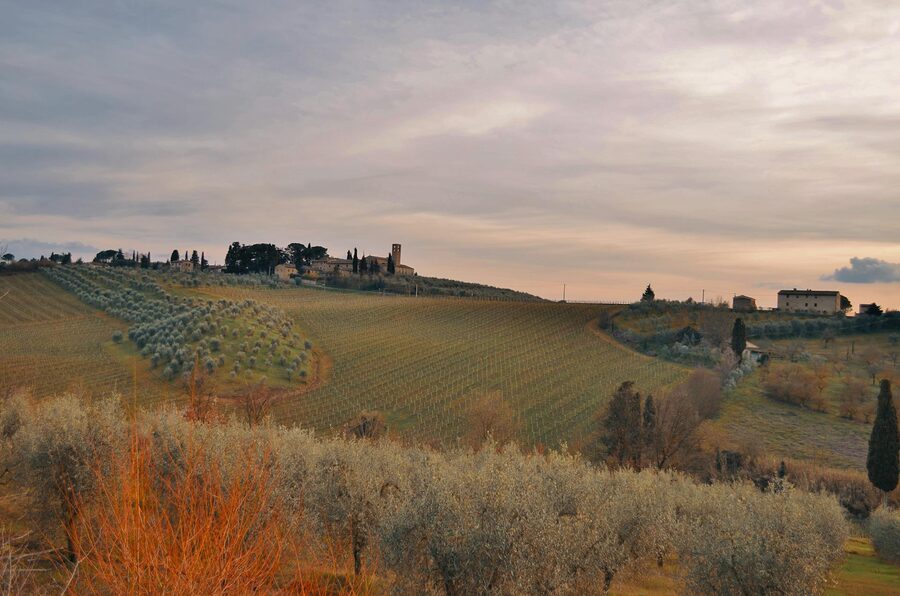
There’s a reason cycling tourism exploded in Tuscany over the last fifteen years and not, say, Provence. The region packs an unusual concentration of variables that make riding here genuinely rewarding: short distances between villages (usually 5-10 km), a dense network of unpaved strade bianche (white gravel roads) that never get traffic, and a climate that stays rideable from March to late October.
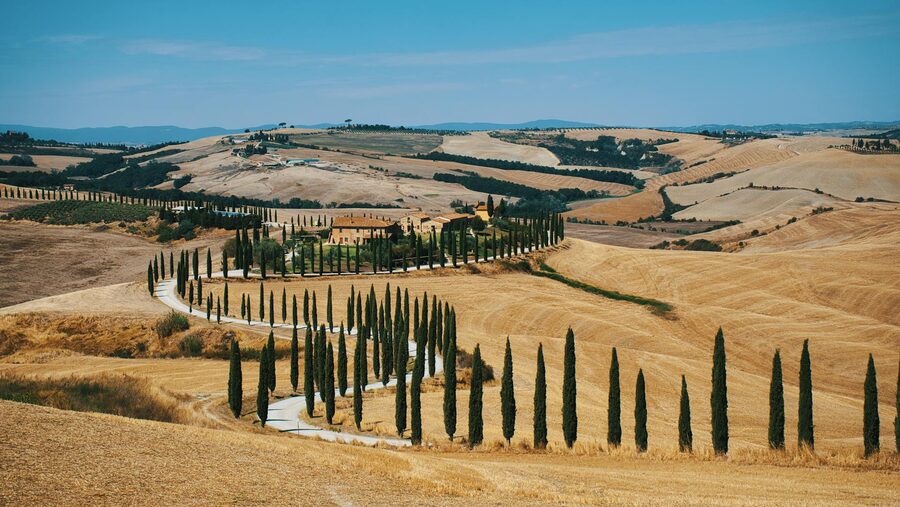
The other reason: the rest stops. On a bus tour you look at wineries through a window. On a bike tour you earn your wine. The physical effort + the tasting + the view combine into something that feels like a proper day, not a sightseeing errand. Nobody writes home about the tour bus that drove them past a vineyard. People write home about the morning they climbed the hill to Panzano with thunder rolling behind them and ate cold salami on a bench afterwards.
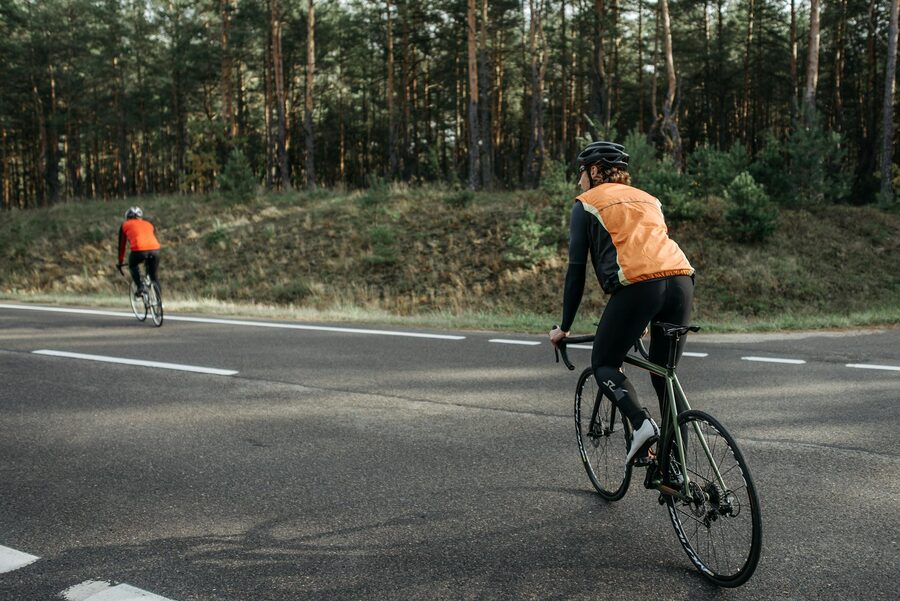
There’s also the geography argument. Chianti sits roughly between Florence and Siena — the classic Greve-Panzano-Radda-Castellina triangle — and the roads connecting its wine villages were built for horses, not trucks. The grades never got steep enough to require major re-engineering in the 20th century, so you’re still riding essentially the same routes that wine merchants rode 200 years ago. Most of them are still lined with the same families of vines.
The Three Real Options
Three bookings cover the sensible range. Pick based on fitness, comfort with traffic, and whether you want a group or solo day.
Tuscany Bike Tours Through the Chianti Hills With Wine Tasting — $145
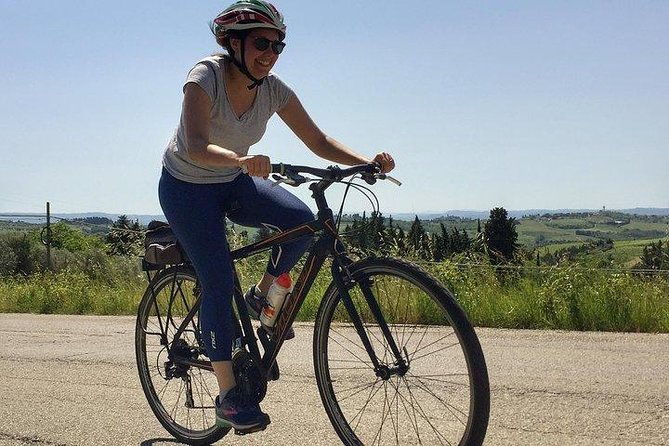
The default. Small-group full-day from Florence — pickup, bike fitting, 30-50 km ride through Chianti Classico (distance depends on the group), lunch and tastings at a working winery, return transfer. E-bikes available on request at booking. The exact route variants and what the lunch actually looks like is in the full write-up.
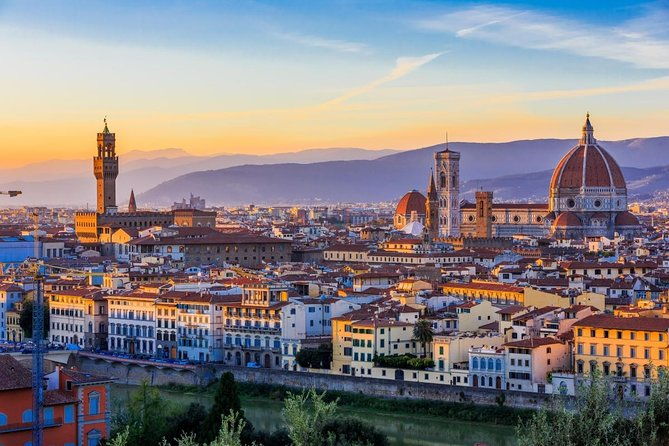
E-Bike Florence Tuscany Self-Guided Ride With Vineyard Visit — $97
The introvert’s pick — e-bike rental, GPS device with a pre-loaded route, and a boutique vineyard stop, all on your own schedule with no group to keep pace with. The e-bike handles the climbs, the GPS keeps you from getting lost on the strade bianche, roadside assistance is included if anything goes wrong. Why this beats the guided version if you’re confident on a bike and hate tour-group pacing. For a longer day that extends south, the Val d’Orcia tour covers three medieval towns on the same wine route.
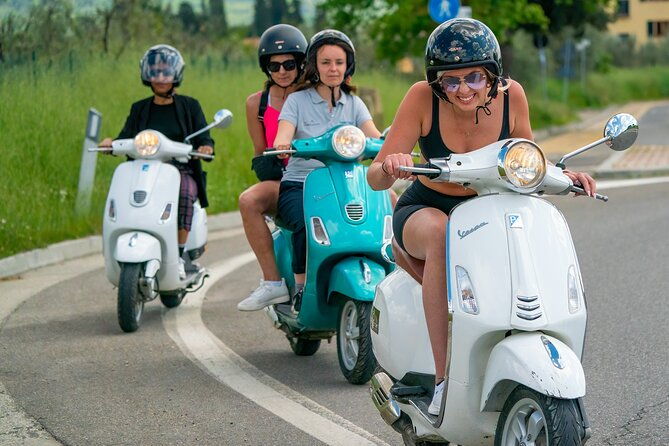
Explore Chianti on a Vespa: Tour, Guide & Lunch From Florence — $125
The plot twist: same roads, same wineries, same lunch, but on a Vespa instead of a bike. Honest pick if you want the Chianti day trip without the cardio. Driving lesson included for first-timers; automatic Vespas available if you don’t want manual gears. The bike sees more, the Vespa covers more ground — here’s the honest comparison.
The Route Reality
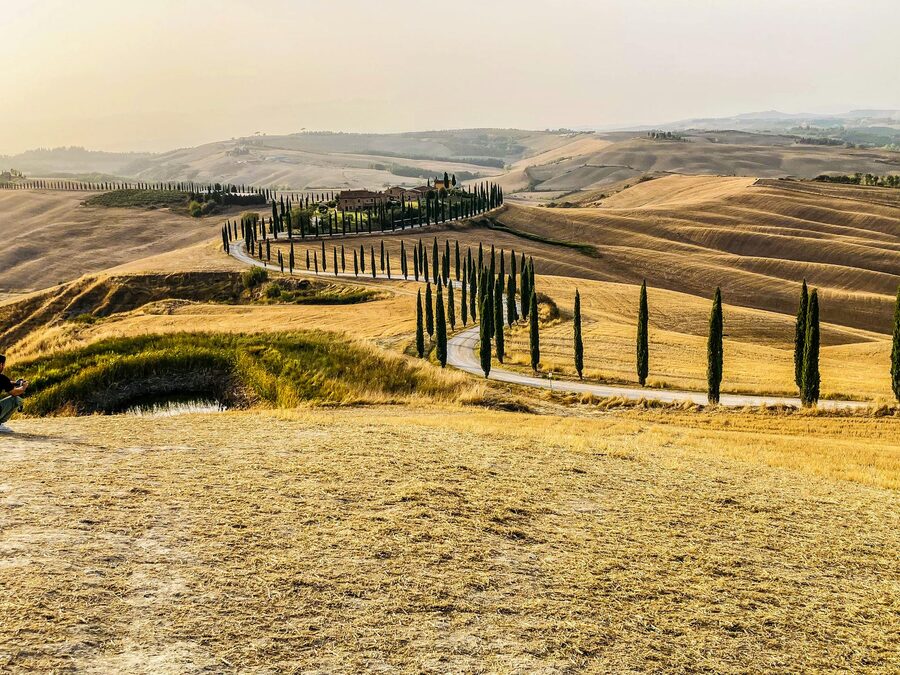
Standard full-day tours cover 30-50 km depending on the group. That sounds modest; on Chianti terrain it’s a full day’s work. Assume 500-800 metres of climbing across the route — not mountain-stage territory, but steady enough that unfit riders will feel it by 15:00.
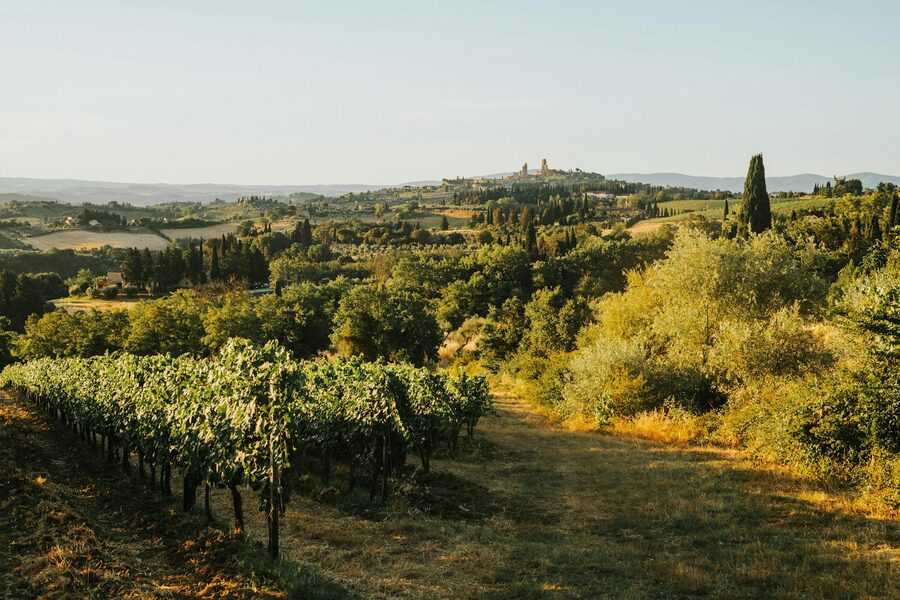
Typical route shape: transfer van from Florence drops you at a start point near Greve in Chianti or San Casciano Val di Pesa (about an hour south of the city). From there you ride a loop through vineyards, stop at one or two wineries for tastings, break for lunch at a farmhouse or village, finish at a pickup point where the van takes you back. The guide rides with the group; a second vehicle sweeps the route carrying water, spare bikes, and anyone who wants off.
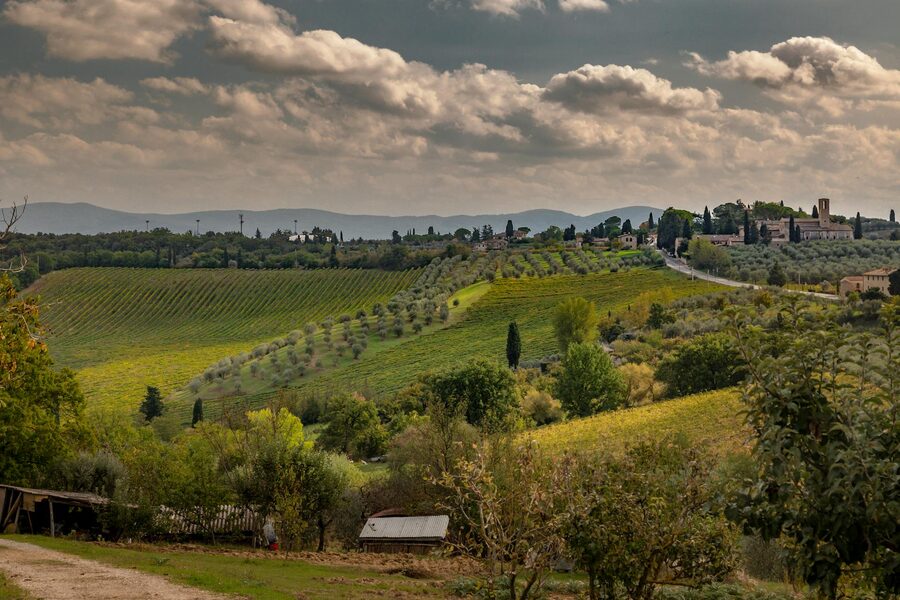
Typical climbs: the ridge out of Greve toward Panzano (about 3 km of steady uphill), the climb to Radda (shorter but steeper), and the rolling finish toward Castellina. None are brutal on their own; the cumulative effect is what wears riders down.
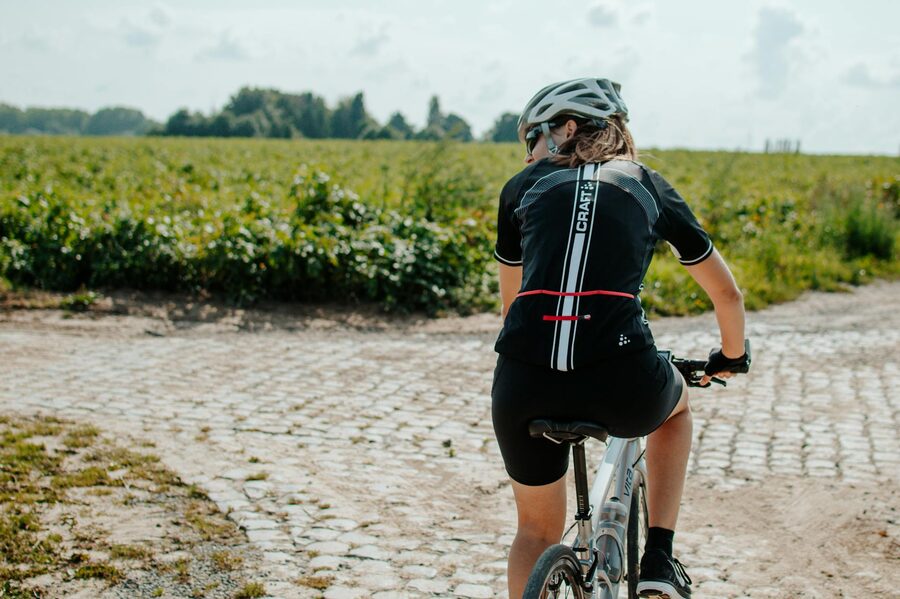
Surfaces: about 30-40% strade bianche (white gravel), 60-70% low-traffic paved back roads. Tour bikes handle both fine — standard kit is a hybrid or gravel-style bike with 35-38mm tyres.
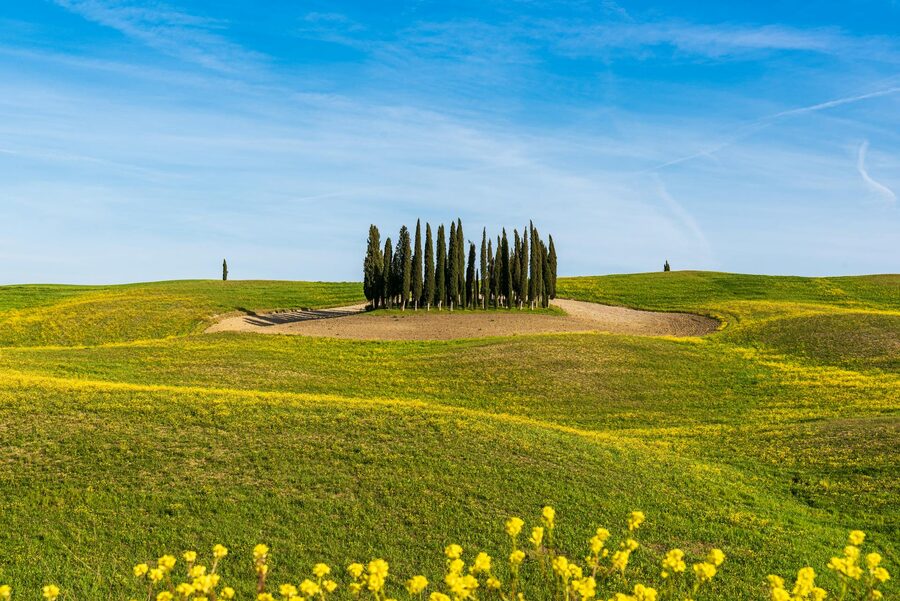
Traffic: minimal on the secondary roads. The only cars you’ll meet are locals going between farms or the occasional tour van. No lorries. Much safer than urban cycling anywhere else in Italy.
The E-Bike Question
If you’re on the fence about fitness, pay the e-bike upgrade. It costs an extra €20-30 on most tours and it’s the single best money you’ll spend.
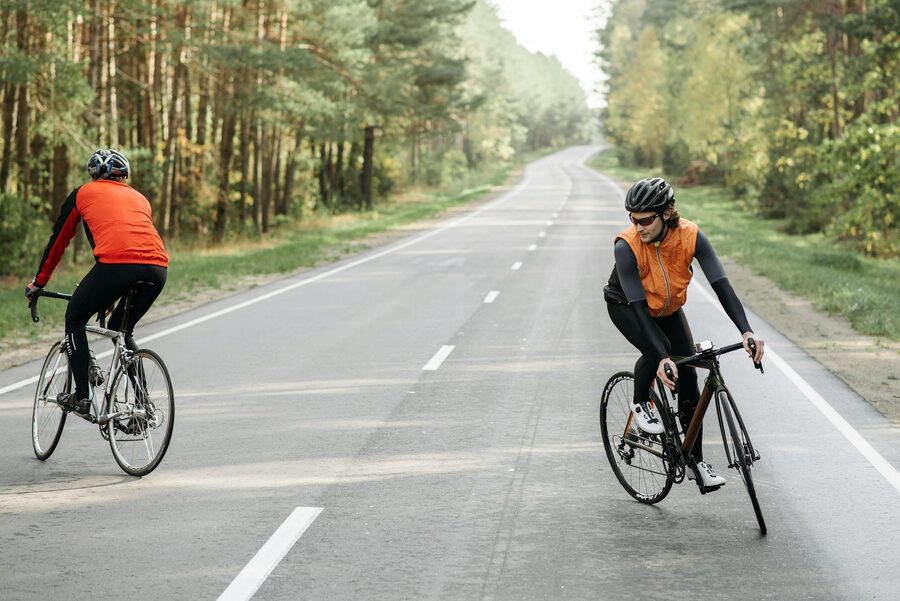
E-bikes level the field. Mixed fitness couples or groups can ride together at the same pace. The slower rider takes more assist; the faster rider takes less. Nobody has to wait at the top of a climb for fifteen minutes while someone else grinds up. The group stays cohesive, the day works.
The only honest arguments against e-bikes: if you’re a serious cyclist and you want the workout, take a road bike. If you’re doing this on a budget and you’re reasonably fit, the standard bike is fine on the under-30km tours. For everyone else — anyone over 50, anyone unsure, anyone who’s not ridden a hill in five years — the e-bike is the right call.
What You Drink
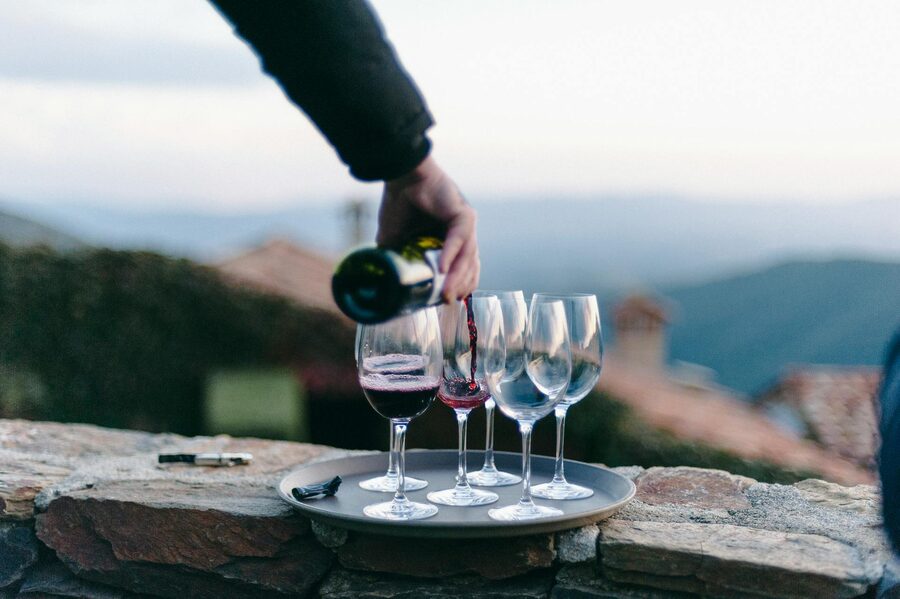
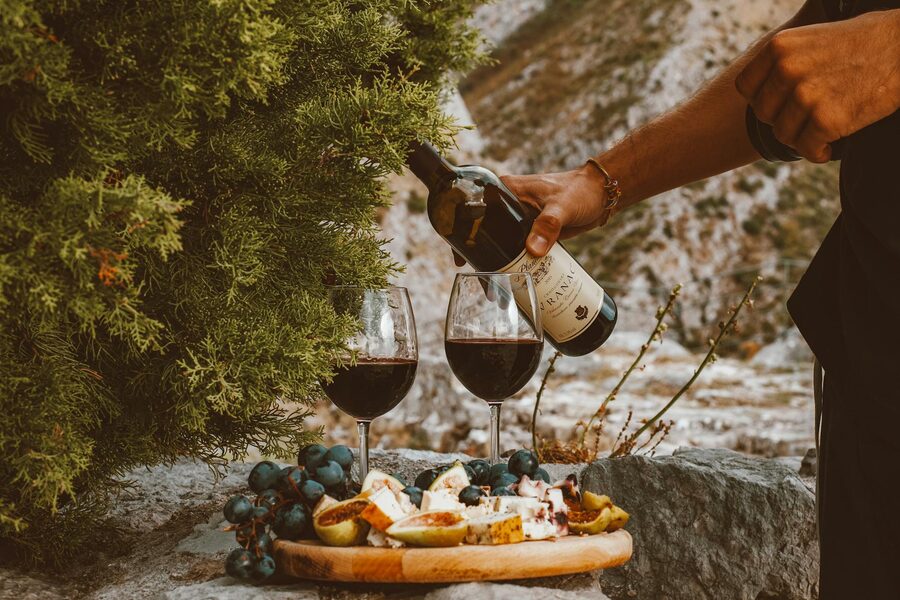
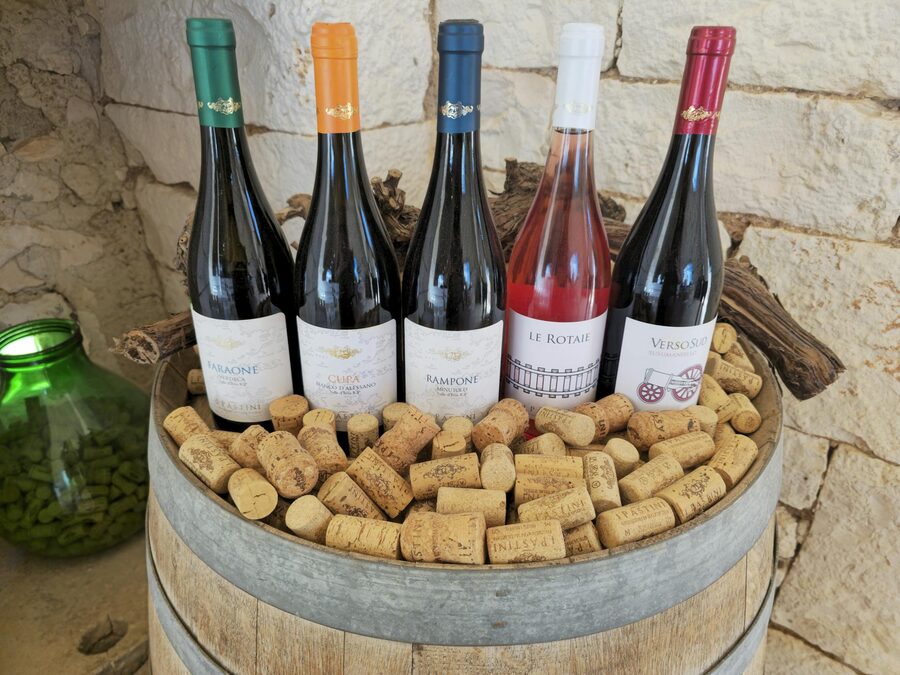
This is called a Chianti bike tour, so the wine is half the point. A standard tour includes one or two tasting stops with 4-6 wines poured at each. Quality is usually good — tour operators maintain partnerships with proper small wineries, not the tourist-trap cellar doors that exist elsewhere.
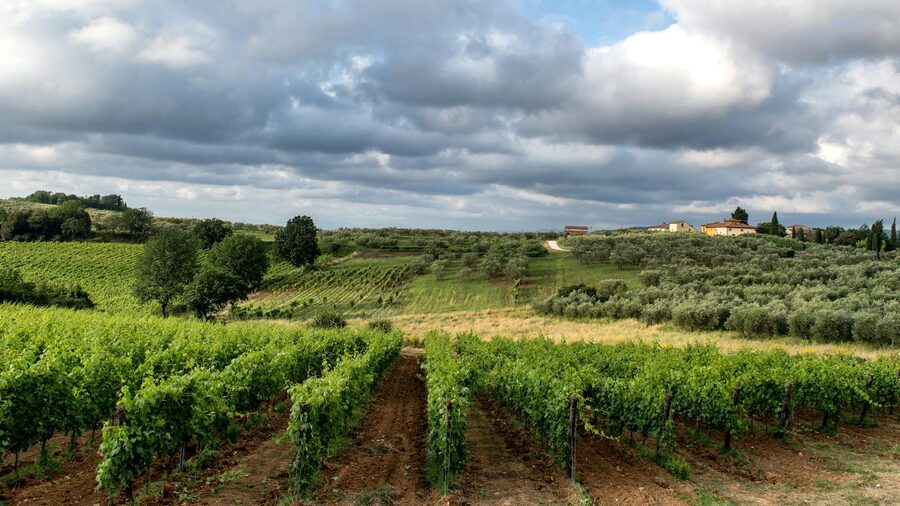
Chianti Classico: the main event. Minimum 80% Sangiovese by DOCG rule. Age categories: Annata (2 years min), Riserva (24 months min, 3 in barrel), Gran Selezione (30 months min, introduced 2014). A good tasting flight covers all three so you can taste the oak progression.
Vin Santo: Tuscany’s dessert wine, made from dried grapes, served with cantucci (almond biscuits) for dipping. Almost every tasting ends with this. It’s not everyone’s taste — sweet, caramel-heavy, intense — but it’s unquestionably Tuscan.
Olive oil: most wineries also produce EVOO from their own trees. The tastings usually include a bread-and-oil sampling. Fresh-pressed Tuscan oil is peppery and grassy in a way that supermarket oil isn’t — when the fresh harvest hits in November it’ll literally make your throat tingle.
What You Eat
Lunch is structured around the ride, not the other way round. Typical format: antipasto of local salumi and pecorino, one pasta course (usually pici or ribollita), bread, salad, a dessert. No secondo of meat and no coffee — both slow you down on the afternoon ride.
Typical pasta: pici al ragù (hand-rolled thick spaghetti with meat sauce) or ribollita (Tuscan bread-and-bean soup, the winter version). Both are calorically sensible for afternoon riding.
Bistecca alla fiorentina is NOT on these lunches. The 1 kg T-bone steak that Florence is famous for is an evening meal, not a midday one, and it’s too heavy for riders who still have 20 km to cover. If you want bistecca, book dinner in Florence after the tour.
Dietary restrictions are handled well by tour operators. Vegetarians get a replacement primo; gluten-free travellers get polenta or rice. Vegans are the trickiest (pecorino is everywhere) but most operators will sort something with 48 hours’ notice.
Timing and Season
Tuscany has a long riding season by European standards, but not all of it is equally good.
April-May: ideal. Wildflowers in the verges, vines budding out, temperatures 18-24°C, low tourist numbers. Light rain possible but rarely day-killing.
June: heating up. Mid-20s to low-30s C by afternoon. Start times get pushed earlier (8:30 instead of 9:30) to beat the heat. Still good, just sweatier.
July-August: too hot. Tours still run but afternoon temperatures routinely hit 35°C+ and the light is harsh. Early-morning-only tours dominate. Book elsewhere if you can.
September: perfect again. Harvest is happening in the vineyards (you’ll see crews on ladders pulling grapes), temperatures drop back to mid-20s, and the post-August crowd thinness makes the countryside feel private.
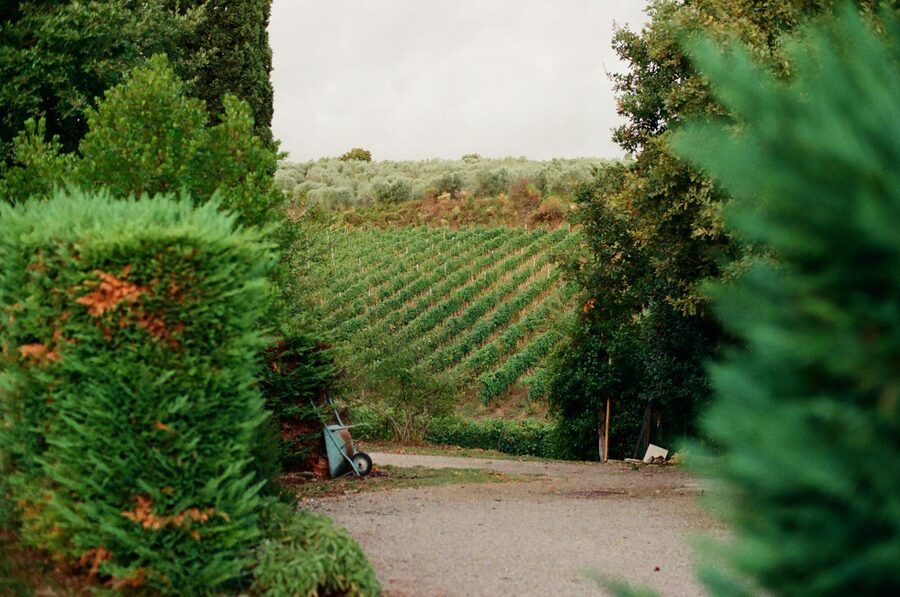
October: crisp mornings, autumn colour in the vineyards, harvest winding down. Arguably the most photogenic month. Dress in layers — it’s 10°C at 9:00 and 22°C at 14:00.
November-March: some tours still run on mild days but most operators shut down. Bare vines, quiet wineries, no group tours. For winter-only visitors the Vespa option works better than the bike.
Who This Is For (and Who It Isn’t)
Honest fit assessment.
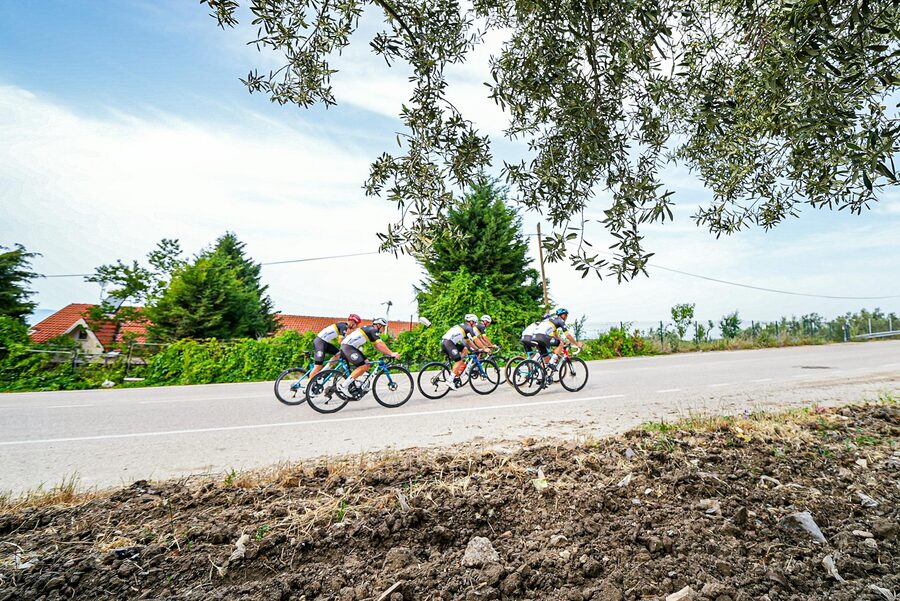
Perfect fit: travellers with 1-2 days of Tuscany exposure already, moderately fit (can walk 10 km comfortably), interested in wine, don’t need luxury. You’ll love this.
Reasonable fit with e-bike upgrade: less-fit travellers, over-50s who haven’t cycled recently, anyone intimidated by the idea. The e-bike really does fix this.
Honest bad fit: families with kids under 12 (too long, too hot, too much wine-focused content), people who hate cycling in any form, travellers looking for a curated luxury wine experience (book private tours for that). For those groups the Vespa tour or a private driver works better.
Equipment and What to Bring
The tour supplies bikes, helmets, water, saddle bags, and (on guided tours) a support vehicle. You supply clothing and sunscreen.
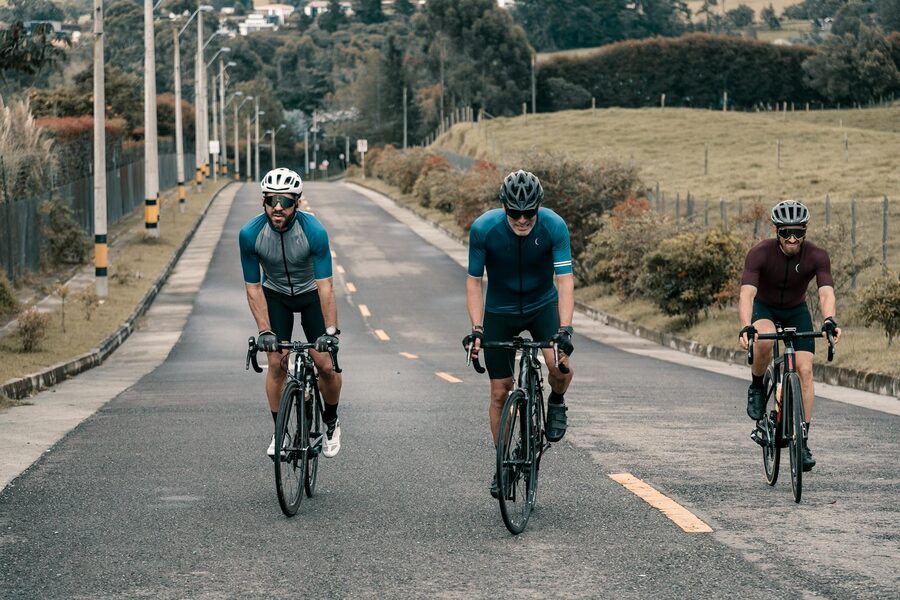
Clothing: padded cycling shorts save you. Rent if you don’t own. Baggy shorts over them are fine; you don’t need the full spandex look. Breathable t-shirt. Closed-toe sneakers or cycling shoes — sandals are a bad idea on Chianti roads.
Sun protection: non-negotiable. Tuscan sun is stronger than Northern European visitors expect. SPF 50 on arms, neck, calves. Sunglasses. A cap under your helmet if you burn easily.
Phone: useful for photos and emergency contact with the guide. Bring a small waterproof pouch — Chianti gets rain showers that pass in 15 minutes but can drench electronics.
What you don’t need: your own bike, panniers, specialist clothing, high-tech gadgets. Tour operators handle everything. Bringing your own bike only makes sense if you’re doing a multi-day independent ride.
Booking Sense
Book 2-4 weeks ahead for April-June and September. Weekday availability is better than weekends. Solo travellers get better single-person rates by booking directly rather than through third-party aggregators.
Cancellation policies: 48-72 hours is standard for full refunds. Weather cancellations are rare — operators run in light rain — but heavy weather sometimes gets a reroute or reschedule offer.
Pickup logistics: most tours collect from central Florence (Piazza Stazione area) between 8:00 and 9:30. Return drop-off by 18:00-19:00. If you’re staying outside the city centre, check whether pickup includes your hotel.
Group size: small groups (max 8-12) are standard and worth holding out for. Larger bus-and-bike operations exist but the group-level pace control gets compromised.
Pairing Chianti with the Rest of Florence
The bike tour eats a full day. Plan around it: the day before should be light (museum afternoon, gentle walking), and the day after should be even lighter (lounging, pool time, easy walking). Stacking back-to-back physical days is a mistake most travellers only make once.
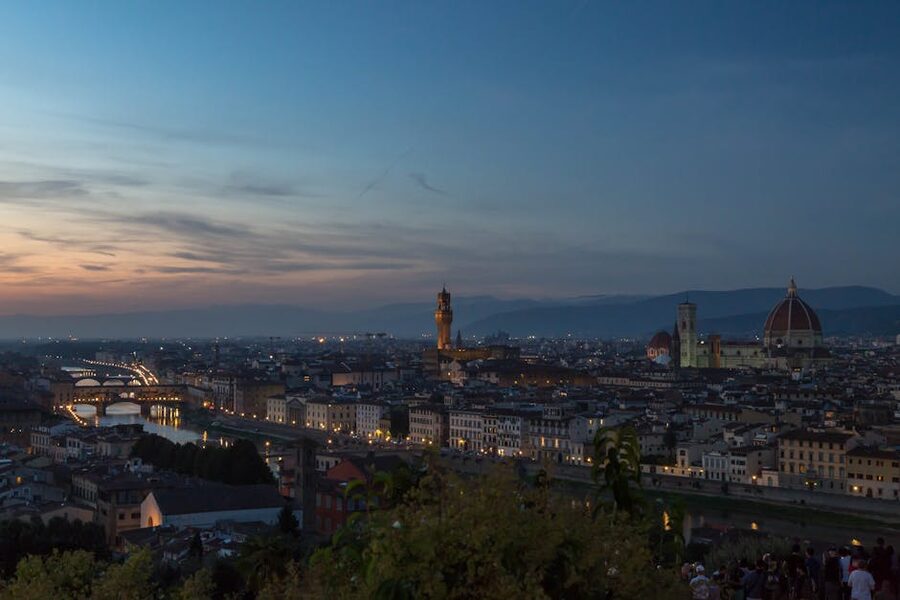
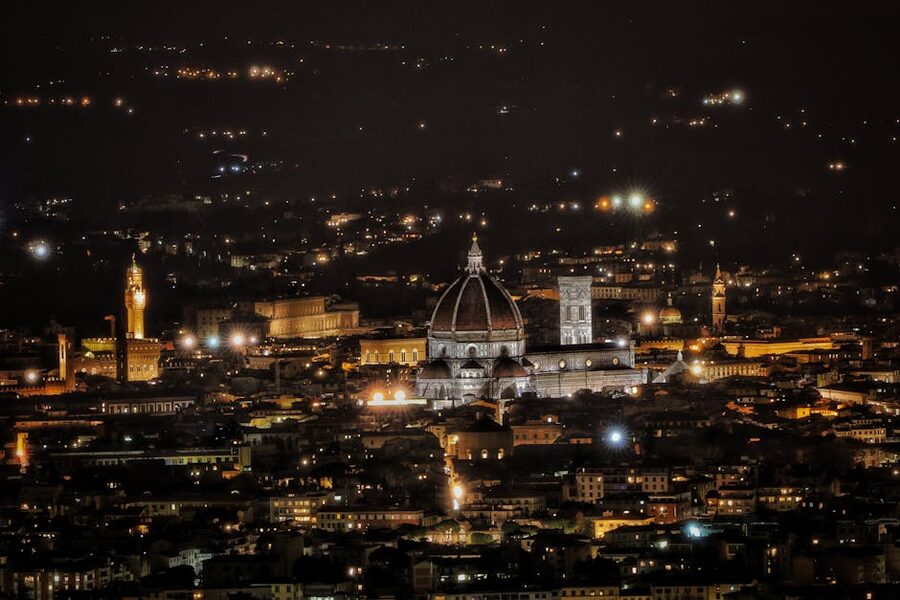
The combinations that land well: a Florence cooking class the day before the bike tour works because you’ve already learnt what Tuscan ingredients look and taste like, so the winery lunch lands with more context. Or do the bike tour on Day 2 of a four-day Florence trip — Day 1 is city orientation, Day 2 Chianti, Day 3 museums and recovery, Day 4 day trip. That rhythm respects your legs. A Florence walking tour makes excellent Day 1 pairing — you get Duomo / Signoria / Ponte Vecchio orientation under a guide, then head into the countryside the next morning already knowing what you’ve seen. For evening activities post-ride, the Santa Monaca opera concert is ideal — you sit still for an hour in a cool church, which is exactly what post-Chianti legs want. Finish the trip with a Florence dark mysteries night tour on the last evening and you’ve hit food, countryside, music, and Renaissance shadows in one neatly-balanced stay.
Common Questions
How hard is it really? Standard bike, not e-bike, you’ll burn 2,500-3,500 calories on a full day. If you can walk briskly for 2 hours without a break, you can do this with an e-bike. If you can cycle for an hour on hills without stopping, you can do this on a standard bike.
What if I fall behind? Support van picks you up. Everyone does this at some point. Not a failure. The group regroups at each stop.
Can I bring wine back with me? Yes — wineries ship internationally and you can buy bottles at the tasting. For US travellers, check your home state’s direct-to-consumer wine shipping rules; Texas, Pennsylvania, and Utah have quirks that complicate things.
Are the tastings limited? No. You can drink as much as you want within reason. The guide will sometimes gently suggest water between pours if you’re being optimistic. Spitting is perfectly acceptable at Italian tastings — nobody judges.
Is the wine good? Yes, genuinely. Chianti Classico has had a quality revolution since the 1990s and the wineries on tour circuits are mostly properly-run small producers making serious wine, not commodity bulk stuff. You’ll taste the difference from supermarket Chianti immediately.
Do I need to speak Italian? No. Guides are fluent in English (often native). Winery staff speak English. Menus and tasting notes are translated. Duolingo progress not required.
The Honest Verdict
Chianti by bike is the rare tourist activity that lives up to its marketing. The roads really are empty, the wine really is good, the lunch really is long and generous, and the hills really do earn you the view at the top. The only question is which version of the day you’re doing.
Pick the full-day guided tour ($145) if this is your first time — the guide adds cultural context, the lunch is properly organised, the support van is reassuring. Pick the self-guided e-bike ($97) if you’ve ridden abroad before and want your own pace. Pick the Vespa version ($125) if you’re not going to cycle but want the same roads, same wineries, same lunch. Upgrade to e-bike if you’re even slightly unsure about the hills. Book for April-May or September-October. Wear padded shorts. Eat the cantucci. Bring a bottle home.