
There’s a moment, about halfway through, when the pizzaiolo nods at your dough ball and says something in fast Neapolitan and the room laughs. I’m still not sure what he said. My dough was fine.
That’s the Naples pizza class. €55, three hours, two pizzas you made yourself, a very opinionated teacher.
Quick Picks
- The pizza class — Authentic Pizza Making Class in Naples With Appetizers and Drink ($59). Two pizzas you make, antipasto, a drink.
- Eat instead of cook — Naples Street Food Walking Tour ($50). Cuoppo, sfogliatella, pizza al portafoglio, espresso.
- Pizza + Pompeii day — Pompeii + Vesuvius Day Trip with Italian Light Lunch ($132). Pizza is a side, the ruins are the point.
- Quick Picks
- Why Pizza in Naples Is a Different Thing Entirely
- The Three Real Options
- Authentic Pizza Making Class in Naples With Appetizers and Drink — .26
- Naples: Street Food Walking Tour with Local Guide —
- Pompeii Vesuvius Day Trip From Naples & Italian Light Lunch — 1.57
- What the Class Actually Covers
- The Dough
- The Toppings
- The Oven
- The Meal at the End
- Where the Class Happens
- Timing and Season
- Who This Class Is For
- Common Questions
- Pairing With Your Naples Trip
- The Honest Verdict
Why Pizza in Naples Is a Different Thing Entirely
There’s pizza, and there’s pizza Napoletana. The difference is technical and protected. An authentic Napoletana pizza is defined by the Associazione Verace Pizza Napoletana rules: dough made only from flour, water, salt, and yeast (no sugar, no oil); specific flour types (00 or 0 with minimum 11% protein); 70% hydration; minimum 8 hours of fermentation; a final ball of 180-250g. The oven is wood-fired, dome-shaped, and runs at 485°C. Bake time is 60-90 seconds maximum.
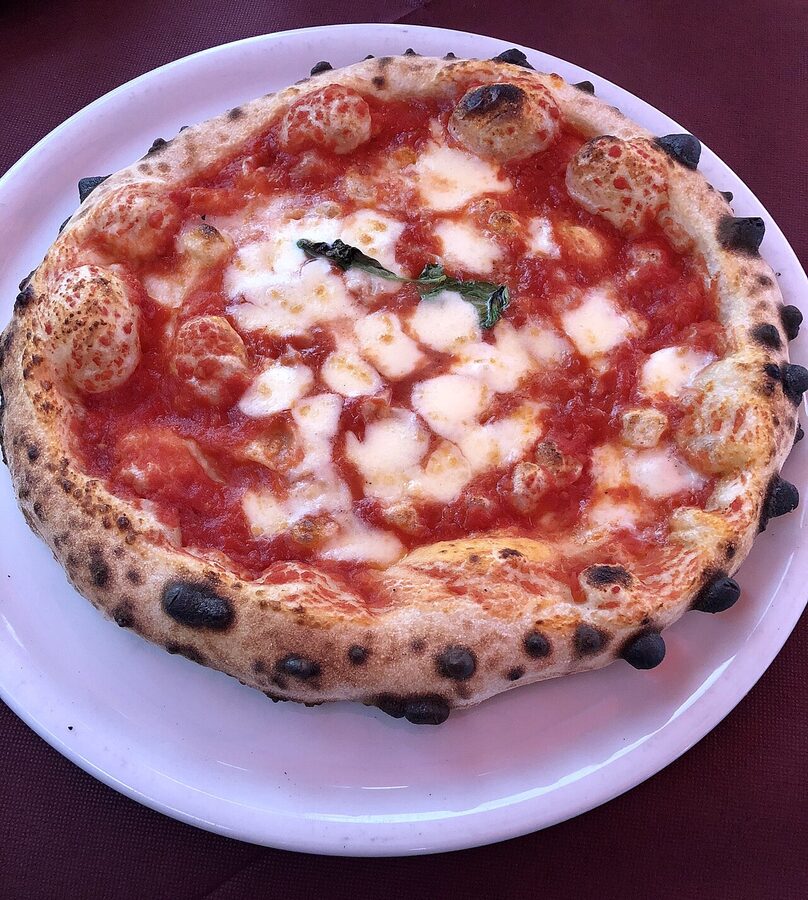
Every Neapolitan pizzeria worth the name follows these rules. Chain pizza does not. Roman pizza (thinner crust, longer bake, lower hydration) is a different product. American-style pizza (thicker, higher fat, longer bake) is basically a different food. The class teaches you which camp is which and how to distinguish each.
The Three Real Options

Authentic Pizza Making Class in Naples With Appetizers and Drink — $59.26
The default class. 2.5 to 3 hours, small group of six to ten, hands-on — you make two pizzas yourself. Antipasto and one drink included. Held in a working pizzeria near the historic centre. The pizzaiolo is usually second or third generation Neapolitan and will tell you within thirty seconds what separates proper pizza from everything else. Our review covers what you make and what you learn.
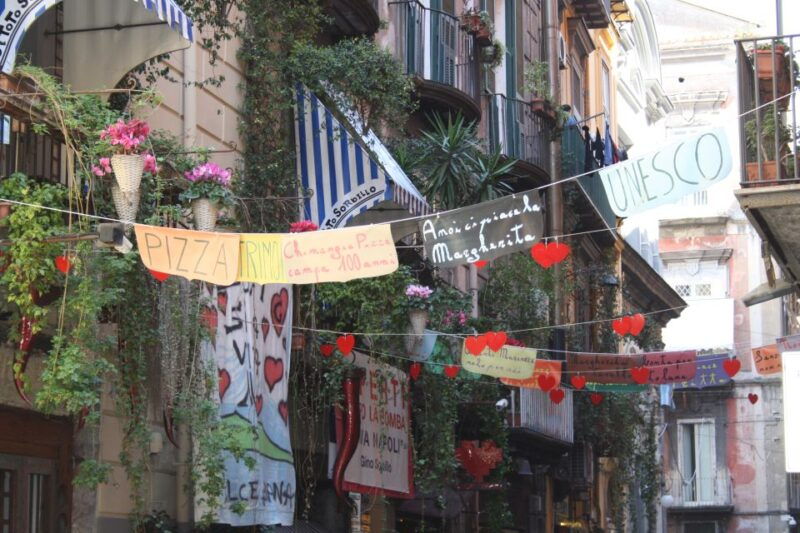
Naples: Street Food Walking Tour with Local Guide — $50
For people who’d rather eat Naples than make it. 2.5 hours, six to eight stops, covers cuoppo (fried seafood cones), pizza al portafoglio (street pizza), sfogliatella, and serious Neapolitan espresso. Different product entirely — no cooking, all walking and eating. Great complement to the pizza class on a different day. Our review breaks down the tour.
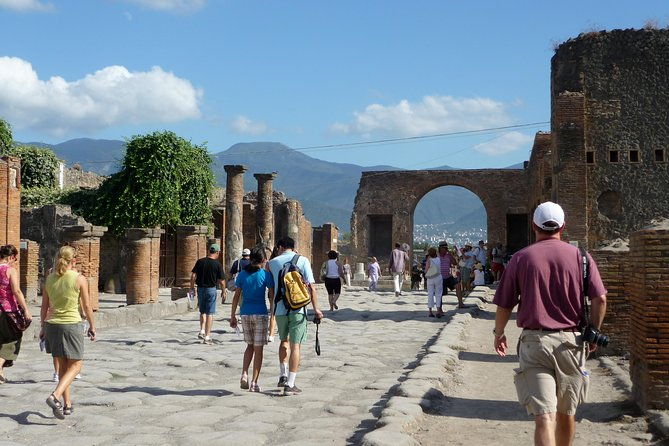
Pompeii Vesuvius Day Trip From Naples & Italian Light Lunch — $131.57
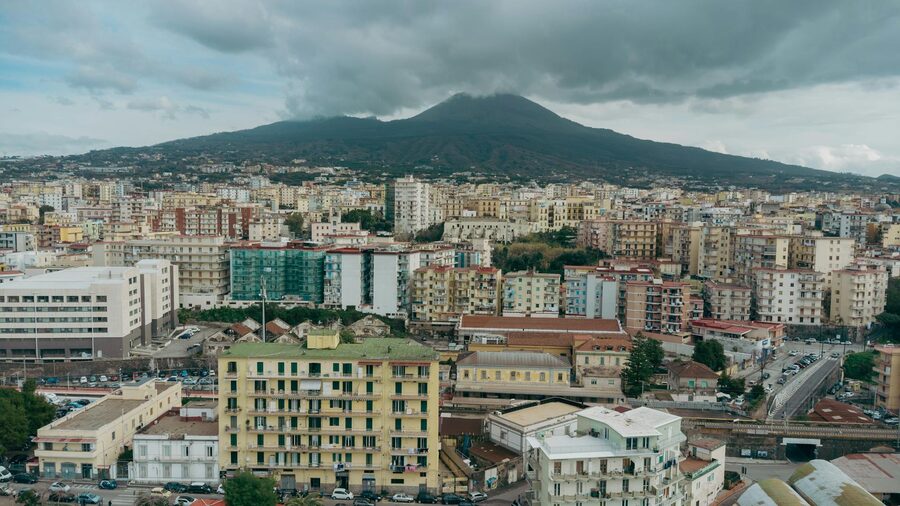
For travellers who want one day to cover the big stuff. Full day from Naples to Pompeii and Mount Vesuvius, with lunch including pizza or wine tasting. The pizza is a side element, not the focus, but you get a proper Neapolitan bake as a bonus. Our review covers timing and what’s worth seeing at both sites.
What the Class Actually Covers
A 2.5-3 hour class breaks down predictably. Intro, dough, shaping, topping, baking, eating.
The Dough
The pizzaiolo starts with pre-made dough that’s already been fermenting for 8-24 hours — you don’t make the dough from scratch (that’s a 2-day process). Instead you learn to portion, shape, and handle fermented dough.
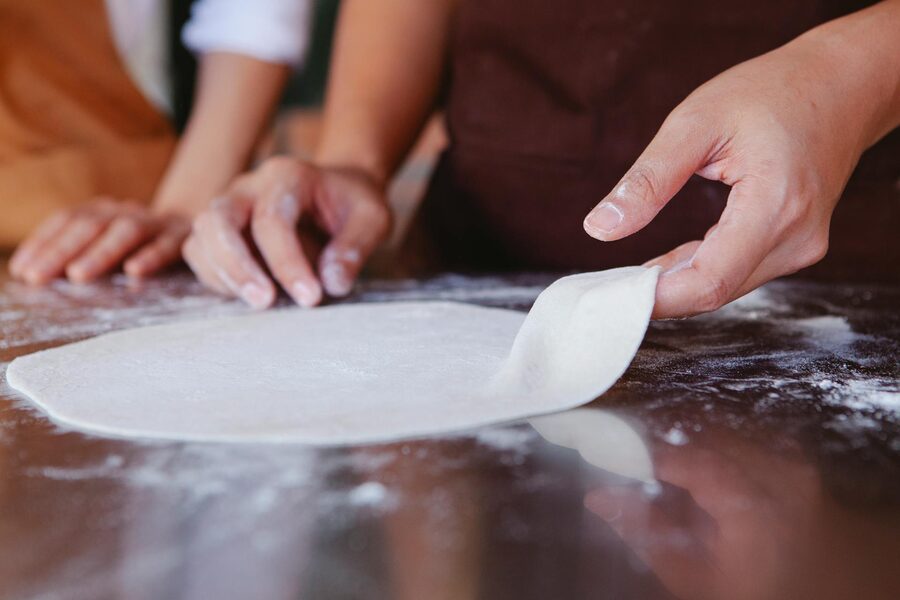
The portion: 250g per pizza (roughly the size of a tennis ball). You weigh or eyeball it.
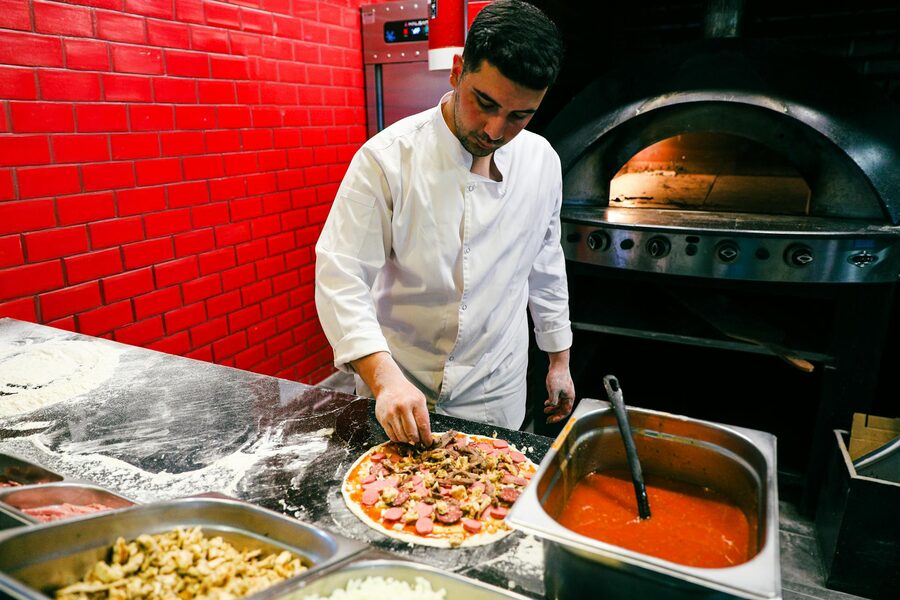
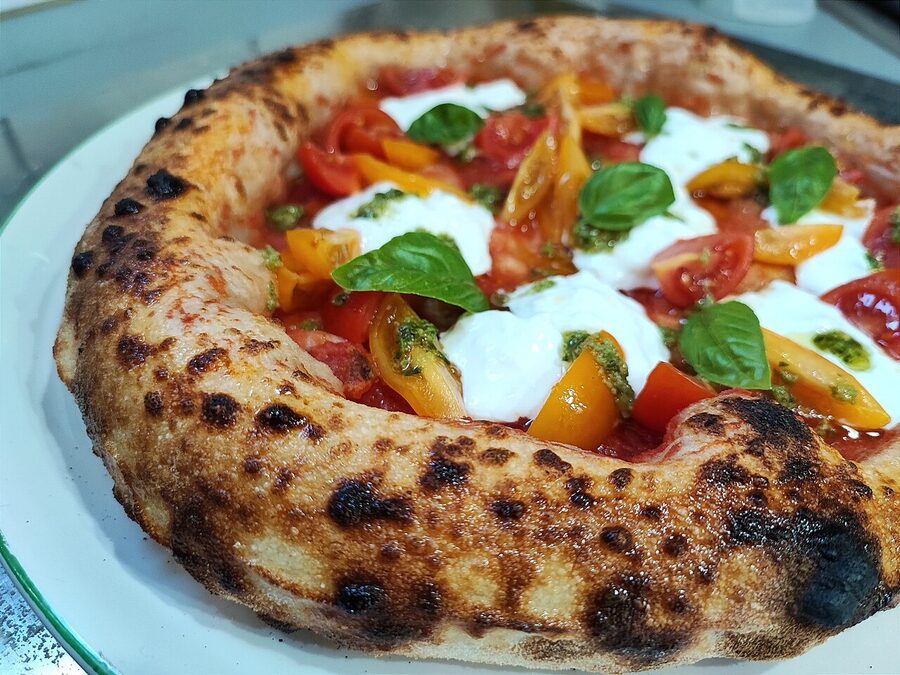
The stretch: press fingers into the centre, push gas to the edges, stretch by lifting and rotating the dough. No throwing (that’s showmanship, not technique). The edge should stay thicker — that’s the cornicione, the puffy crust rim that defines a Neapolitan pizza.
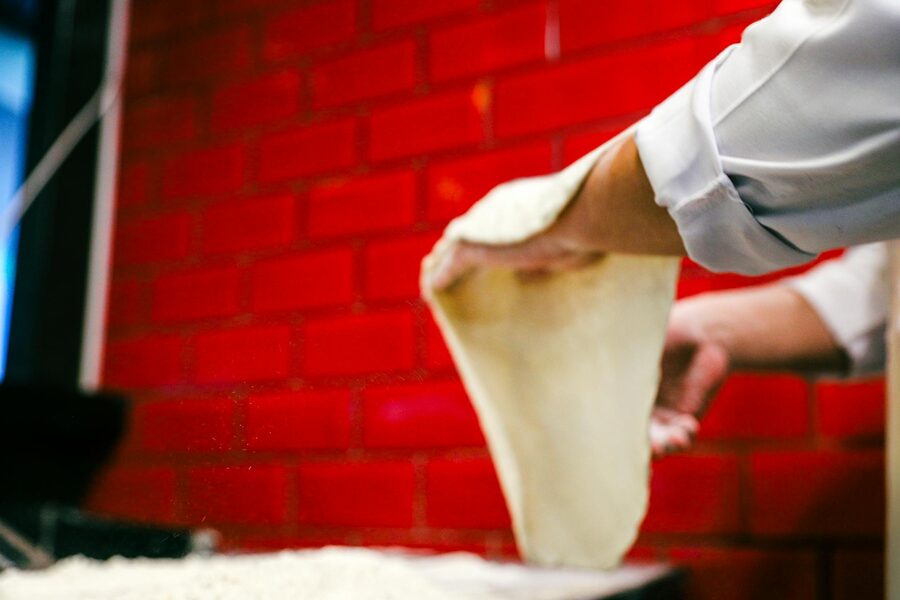
Common mistakes: stretching too thin in the middle (the pizza tears during transfer to oven); not respecting the cornicione (crust loses structure); over-handling (the dough tightens and snaps back).
The Toppings
Neapolitan pizza is minimalist. Two classic toppings are taught:
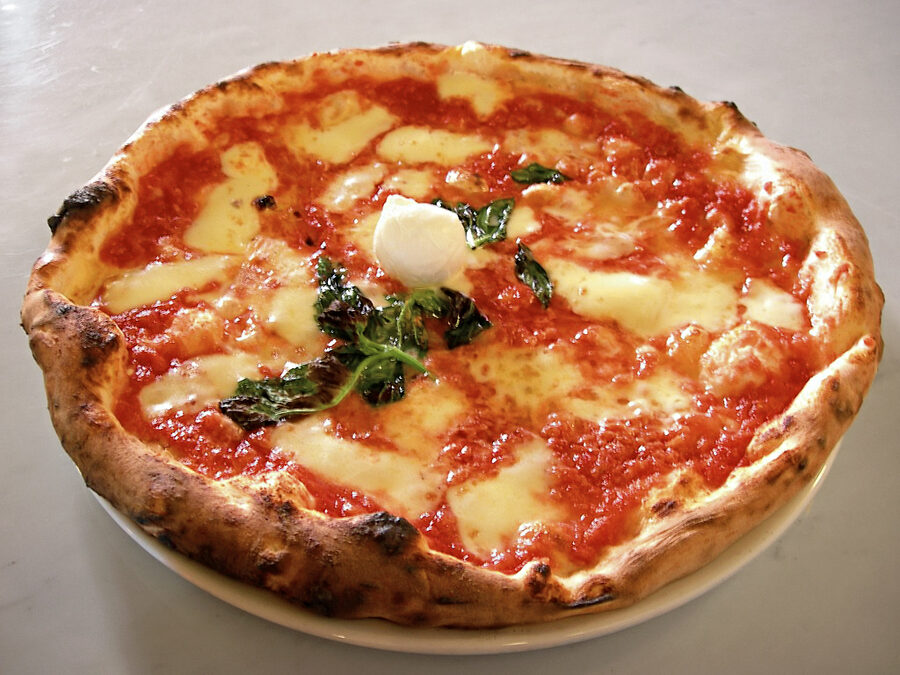
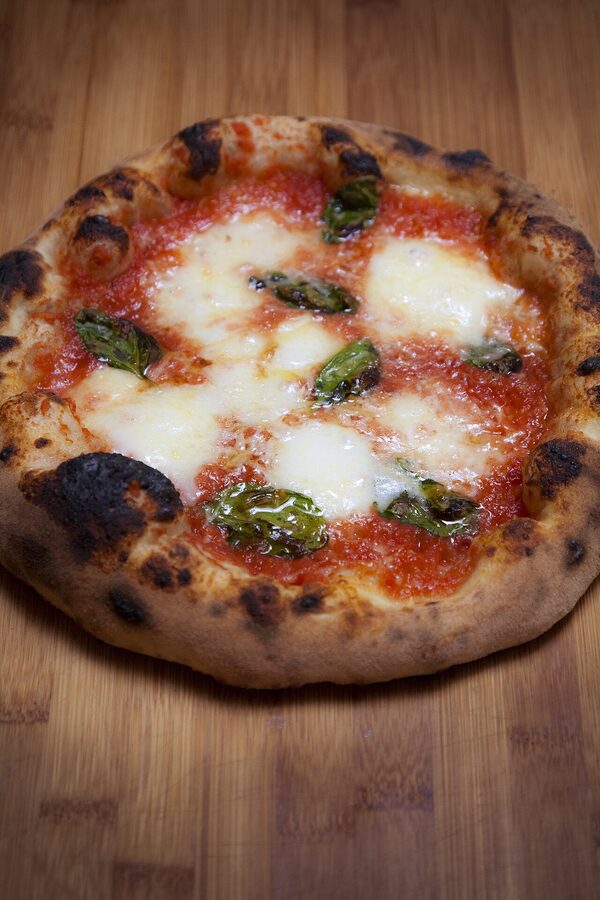
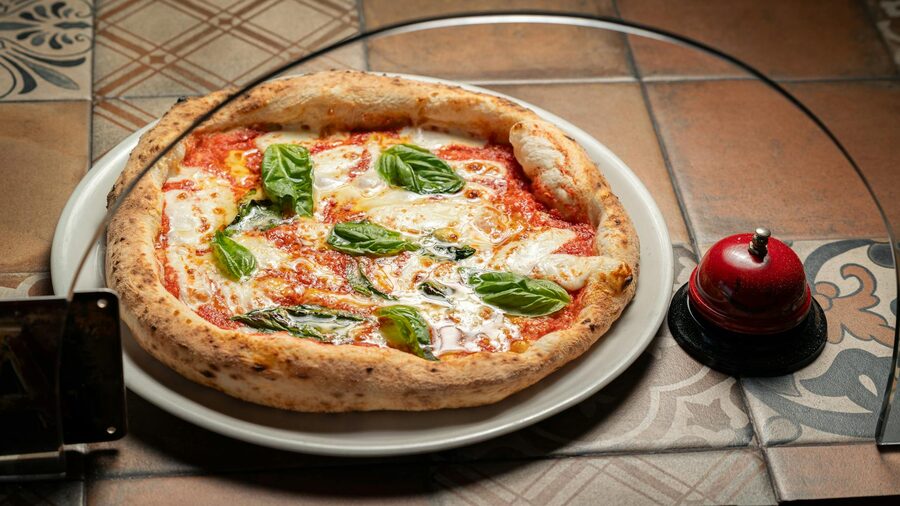
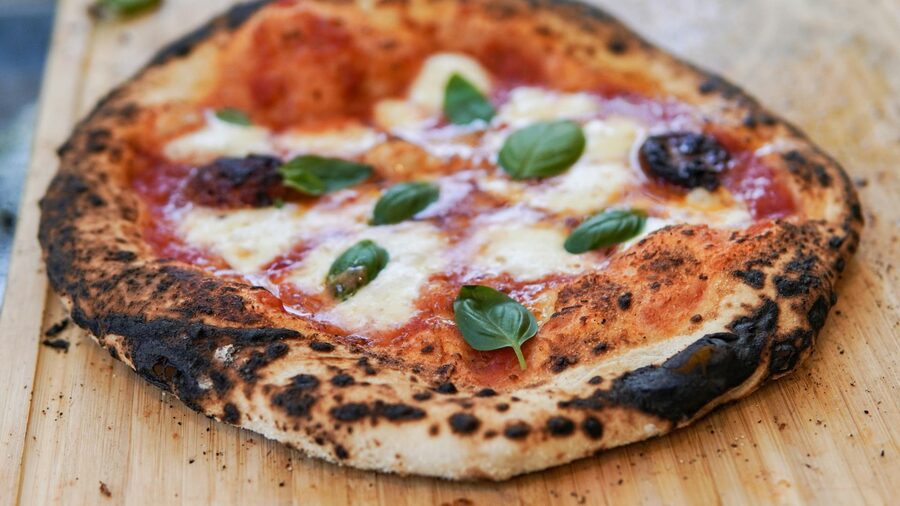
Margherita: crushed San Marzano tomato (NOT cooked — just fresh crushed), Fior di Latte mozzarella (drier than the water-packed Mozzarella di Bufala, suits pizza better), torn fresh basil, olive oil drizzle, pinch of salt.
Marinara: just tomato, garlic, oregano, olive oil — no cheese. Older than Margherita; dates from the 1700s; eaten by fishermen who couldn’t afford cheese. Marginal in modern Italy but historically the first pizza.
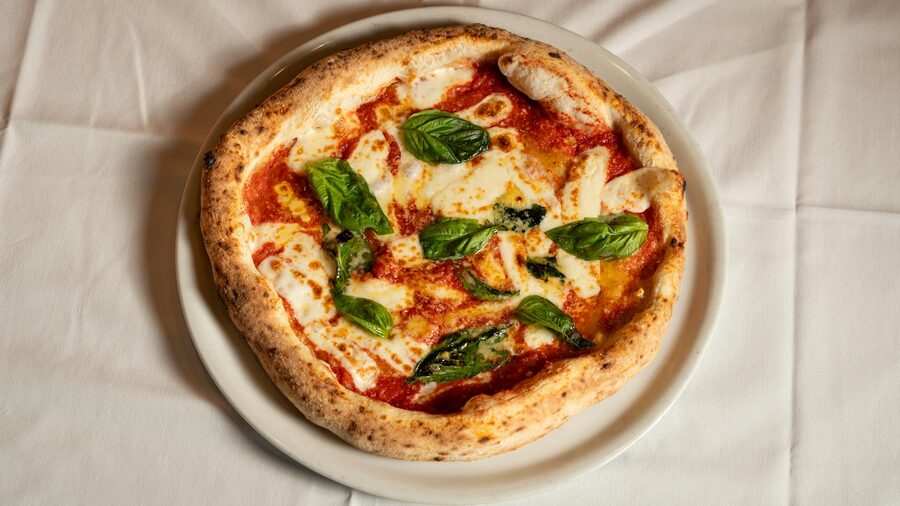
Topping order: tomato first (sparse layer, don’t drench), then cheese (small torn pieces, not thick layers — cheese puddles if too thick), then salt + olive oil. Basil either before bake (traditional) or after (modern).
The Oven
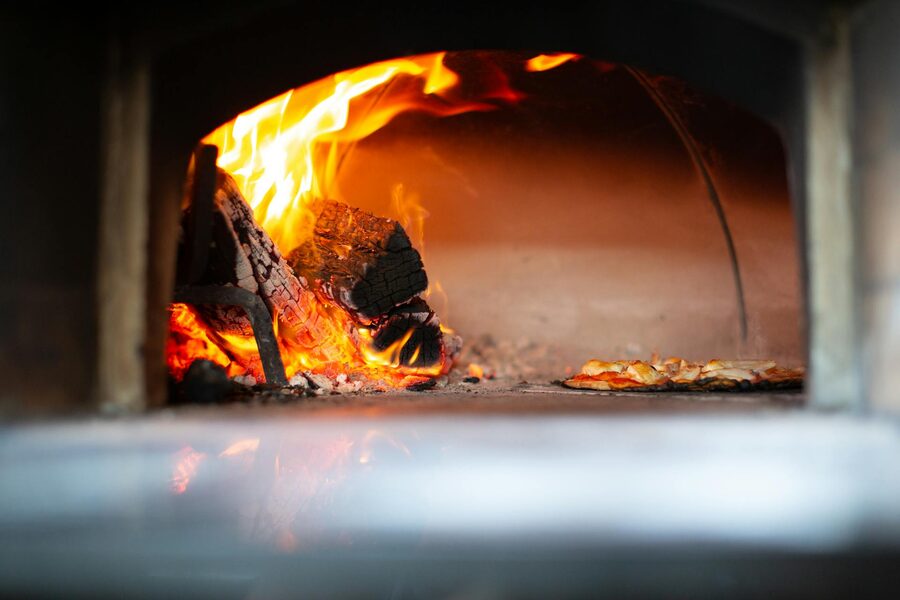
The oven is the hardest part. You don’t light it (that’s a 4-hour process to heat the chamber to 485°C); you bake your pizza in an already-hot professional oven. But you learn to use the peel (the long wooden paddle) to load and unload.
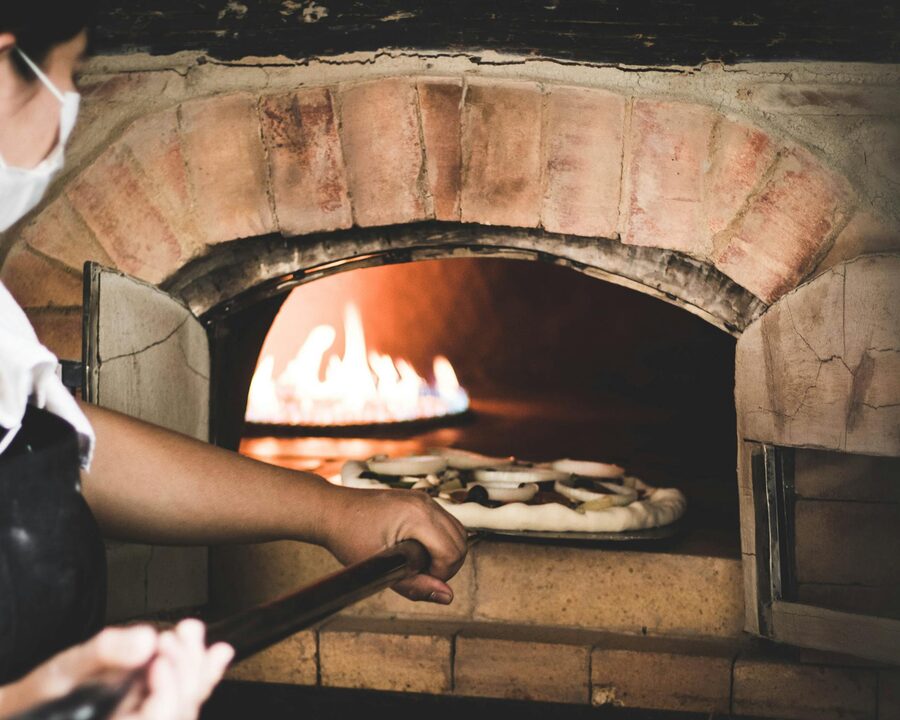
Bake time: 60-90 seconds. You watch the pizza through the oven door; when the cornicione blisters and the cheese bubbles, it’s done.
Rotation: every 20 seconds the pizzaiolo rotates the pizza 90 degrees using the peel. This ensures even cooking — the part closest to the fire cooks faster.

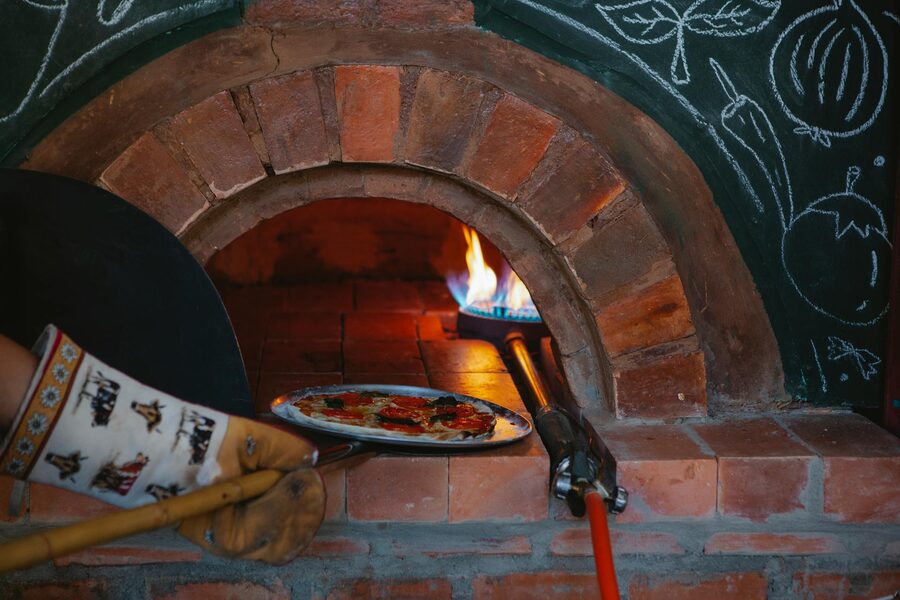
You do this: under direct pizzaiolo supervision. First pizza usually goes in the oven at an angle; second one is usually fine.
The Meal at the End
The last 30-45 minutes of the class is eating. You sit at a table with the other students, drink a glass of wine or beer, and eat the two pizzas you made. The pizzaiolo sits with you.
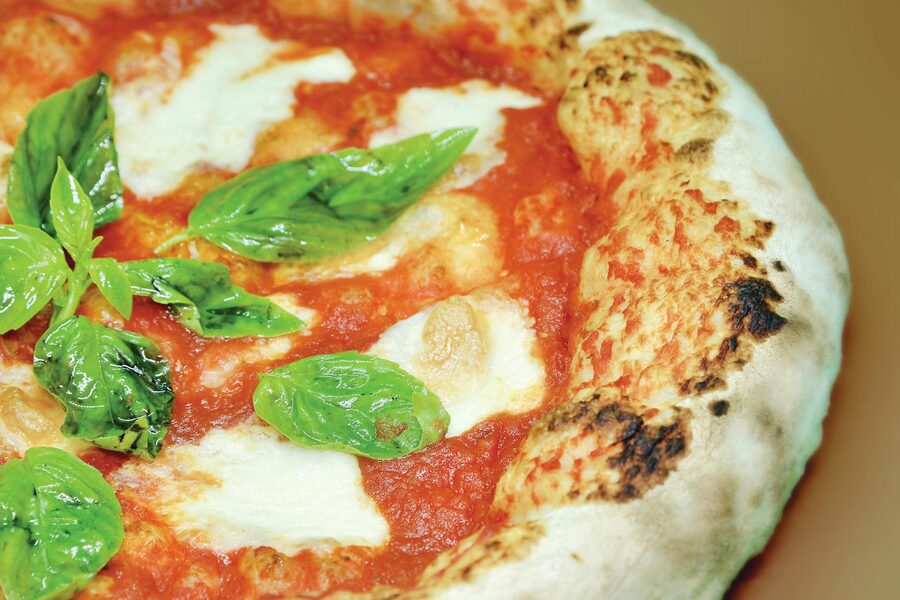
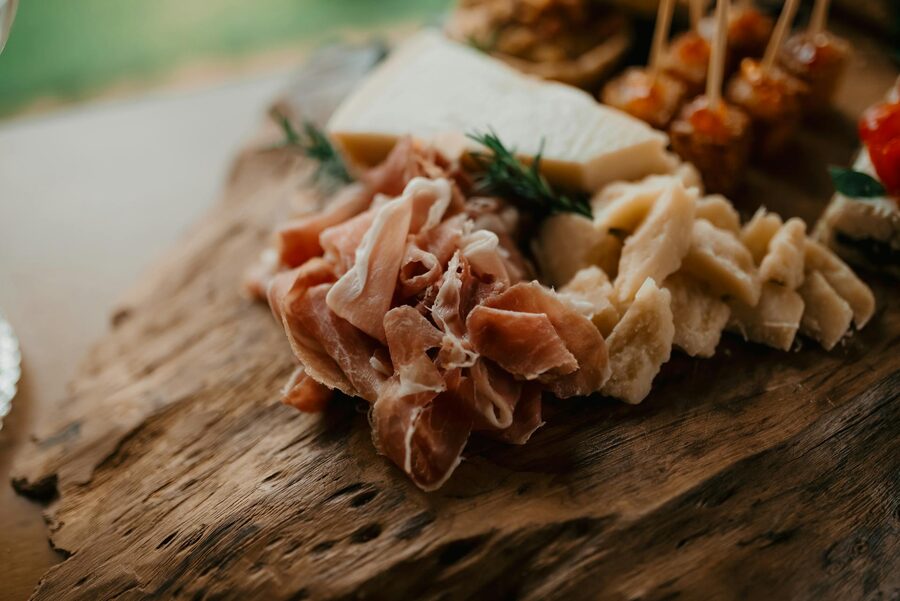
The appetiser is usually a small plate of cured meats + cheese + bread. The drink is a small beer (Peroni or Nastro Azzurro), a glass of red wine (Lacryma Christi from Vesuvius slopes), or non-alcoholic (water, soda).
Where the Class Happens
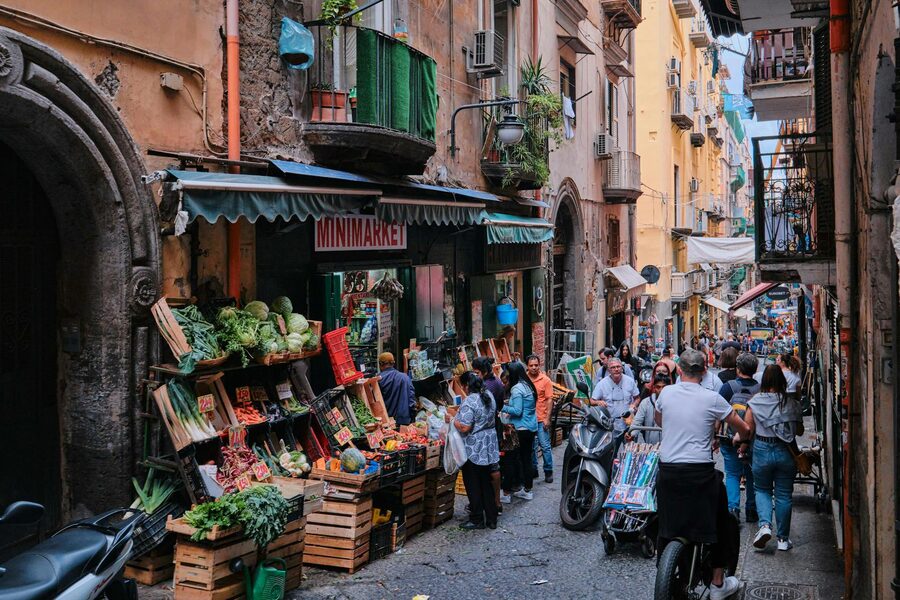
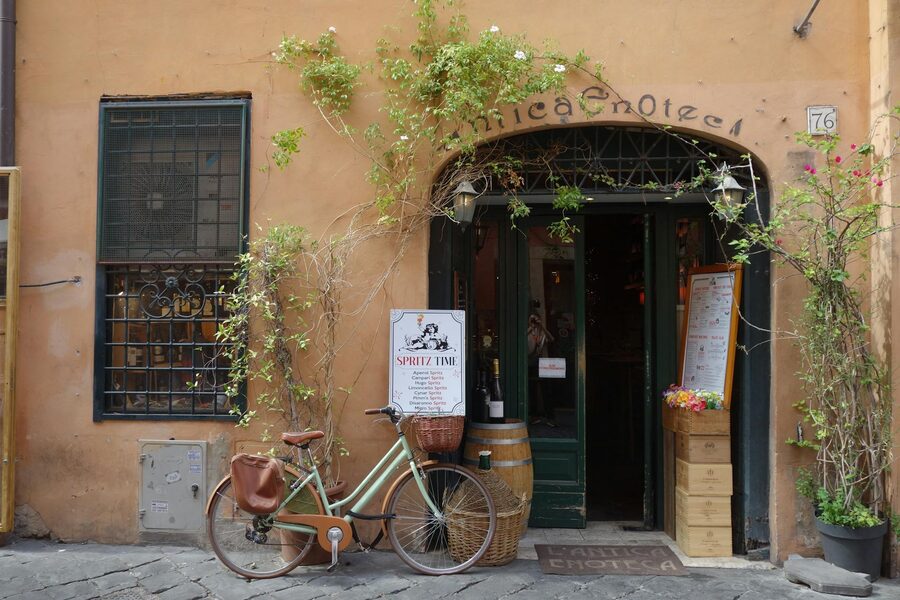
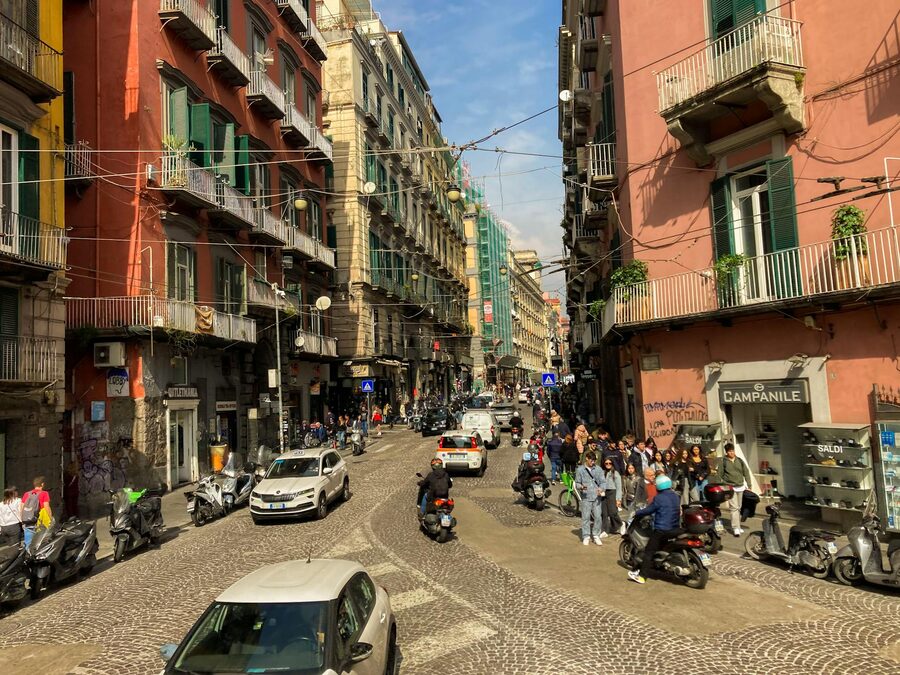
Most Naples pizza classes run out of working pizzerias in the historic centre — the Centro Storico, Quartieri Spagnoli, or around Via Tribunali (the “pizza street” of Naples, home to some of the city’s oldest pizzerias).
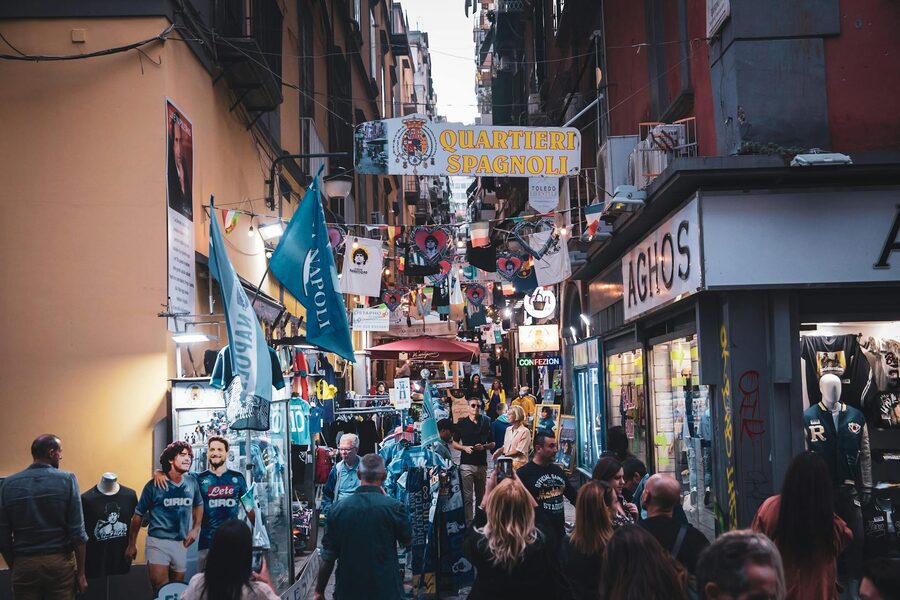
You’re taught in the actual kitchen, sometimes during hours when the pizzeria is closed to regular customers, sometimes alongside the prep staff for lunch service. Either way it feels authentic rather than staged.
Timing and Season
Classes run daily year-round. Morning (10:00), afternoon (14:00-15:00), and evening (18:00-19:00) slots exist depending on operator.
Best time: April-June and September-October. Milder temperatures mean the oven kitchen isn’t oppressively hot. July-August classes are still fine but the oven room hits 35-40°C and you sweat.
Slot choice: morning slots end around 12:30-13:00 and set up a light afternoon. Evening slots end around 21:00-21:30 and replace dinner entirely. Afternoon is awkward for most.
Booking: 3-5 days ahead in high season. Usually available same-week in low season.
Who This Class Is For
Great fit: food enthusiasts, couples, home cooks looking to level up, anyone on a Naples trip of 2+ nights, parents who cook at home (kids learn alongside — the class is kid-friendly for 10+), first-time Naples visitors.
Reasonable fit: families with kids 10+, casual travellers who want “something different” in Naples, small friend groups.
Bad fit: toddlers or very young kids (the oven is dangerous at 485°C), gluten-intolerant travellers (gluten-free pizza is possible but not authentic), travellers who’ve done pizza classes elsewhere recently (the novelty is everything).
Common Questions
Is it hands-on? Very. You make 2 pizzas yourself with pizzaiolo guidance. Not a demonstration.
What about allergies? Dairy-free (vegan mozzarella alternatives possible with notice). Gluten-free (separate dough, often charged extra, 48-72 hour notice needed). Nut-free (no issue — nuts aren’t standard toppings). Egg-free (no issue — Neapolitan dough has no eggs).
Can I really replicate it at home? Partially. Dough and shape you can master with practice. The oven is the hard part — home oven max (260°C) is 225°C short of ideal. A pizza stone helps. A pizza grill attachment helps more. Real wood-fired at-home setups exist but cost €500-2,000.
What about the dough recipe? The pizzaiolo shares it. Recipe cards go home with you in English. Specifics: 100% flour, 70% hydration, 2-3% salt, very little yeast (0.5% fresh or less dried), 8-24 hour cold fermentation.
Do I eat 2 full pizzas? Yes or you take leftover home. Two 12-inch pizzas is more than most people eat in one sitting. The pizzaiolo brings boxes for leftovers.
What’s the single most important thing? The dough fermentation time. You can’t shortcut it. Cold-ferment 24 hours minimum for authentic results at home.
Tipping? €5-10 per student if the pizzaiolo was great. Not expected.
Pairing With Your Naples Trip
Naples is often under-visited because travellers think 2-3 days is enough. It isn’t. A proper Naples trip is 3-4 nights.
The itinerary that works: Day 1 arrive + evening stroll + pizza dinner at Sorbillo or Di Matteo. Day 2 morning Quartieri Spagnoli walk + afternoon pizza class + evening at a piazza. Day 3 Pompeii + Vesuvius day trip. Day 4 Capri or Herculaneum. Combinations: pair the pizza class with a street food tour on a different day — you get both the maker’s side and the eater’s side of Neapolitan food culture. Pair with the Pompeii + Vesuvius day trip for a full-region trip. If combining Naples with Rome or Florence, the Venice pasta class and Florence cooking classes make a three-city cooking arc covering fresh pasta, tiramisu, pizza, and regional technique.
The Honest Verdict
The Naples pizza class is one of the best cooking-class values anywhere in Italy. $59 for 2.5-3 hours, two full pizzas you make, appetisers, drink, and UNESCO-protected technique taught by a working pizzaiolo is a rare combination. Compared to a €60 pizzeria dinner in Naples with no learning, the class wins on every axis except total quantity of pizza consumed.
Book it for any Naples trip of 2+ nights. Evening slots if you want pizza for dinner; morning slots if you want a lighter evening. Combine with the Naples Street Food Tour on a separate day for comprehensive food coverage. Don’t eat before the class (you’ll finish 2 full pizzas). Wear clothes you don’t mind getting flour on. And when you’re back home — cold-ferment the dough 24 hours minimum. That’s the real lesson. Everything else is decoration.