
You don’t sit down to eat in Naples. You stand at a counter, you hand someone a coin, they hand you something hot in paper.
A street food tour is a two-hour version of that, with someone who knows which counter to visit.
Quick Picks
- Street food walk (GetYourGuide) — Naples Street Food Walking Tour with Local Guide ($50). The most-booked version. 2.5 hours.
- Viator version — Naples Street Food Tour With Local Expert ($51). Same format, different platform.
- Premium Secret Food — Naples Walking Food Tour With Secret Food Tours ($105). Double the price, adds a hidden vendor and a sit-down pairing.
- Quick Picks
- What Naples Street Food Actually Is
- The Three Real Options
- Naples: Street Food Walking Tour with Local Guide —
- Naples Street Food Tour With Local Expert — .79
- Naples Walking Food Tour With Secret Food Tours — 5.21
- The Stops You’ll Actually Hit
- Stop 1 — Pizza al Portafoglio
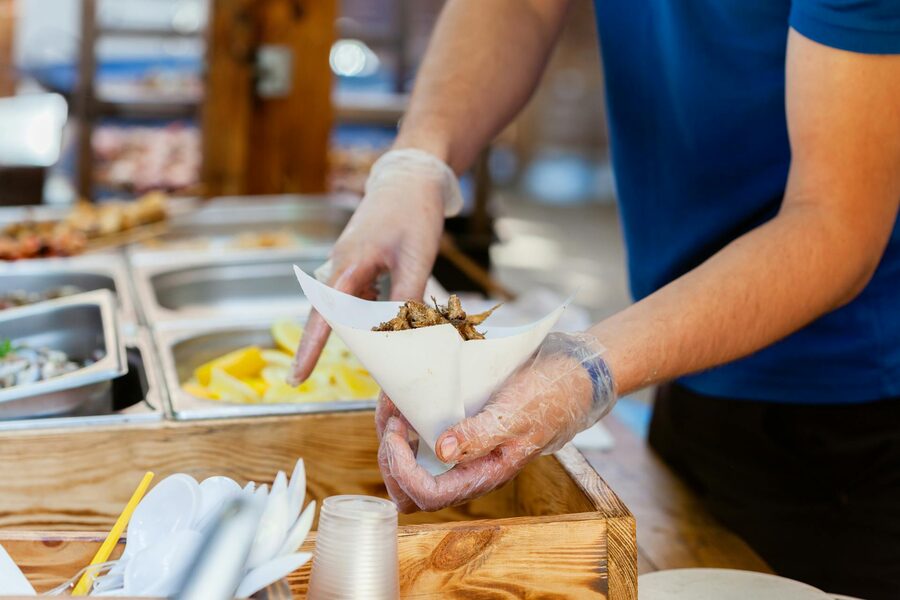
- Stop 2 — Cuoppo di Mare
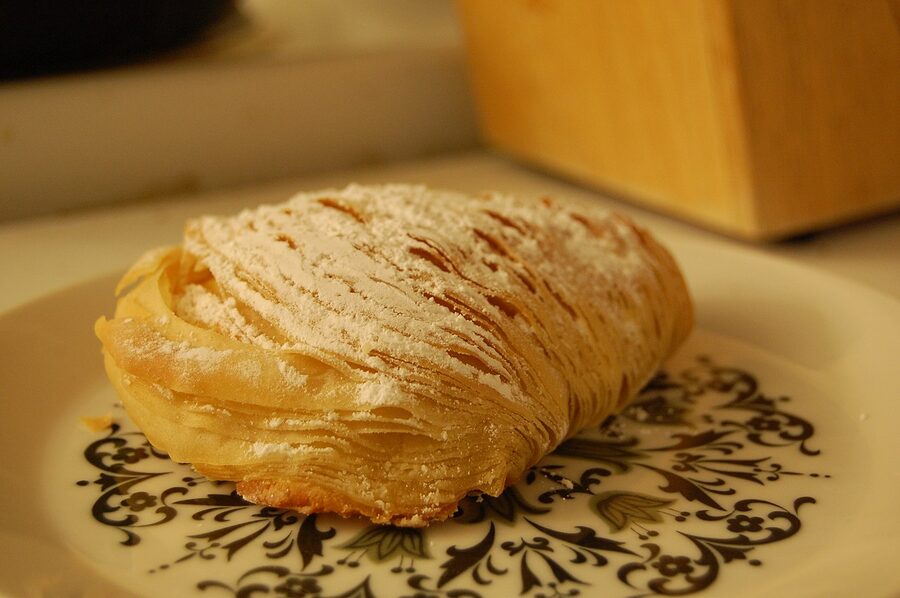
- Stop 3 — Sfogliatella
- Stop 4 — Babà
- Stop 5 — Pizza Fritta (Fried Pizza)
- Stop 6 — Arancino
- Stop 7 — Espresso
- The Route Geography
- Timing the Tour
- Who This Is For
- Naples Food vs Other Italian Food Cities
- Pairing With Your Naples Trip
- Common Questions
- The Honest Verdict
What Naples Street Food Actually Is
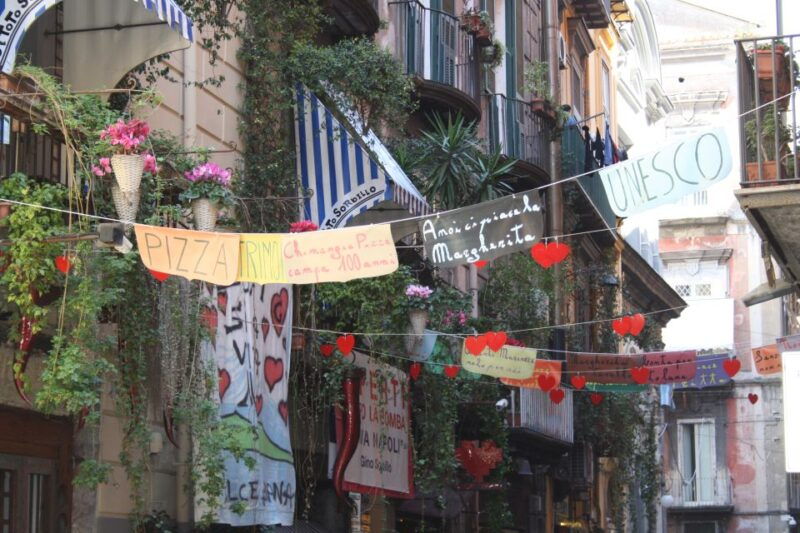
It’s not snack food. In other cities, street food is an addendum to restaurant culture — a cheap alternative to sit-down meals. In Naples, street food is the main thing. Locals eat pizza al portafoglio (“pizza in a wallet” — folded in half, wrapped in paper) for actual lunch, cuoppo di mare as actual dinner, sfogliatella + espresso as actual breakfast. The restaurant category exists but plays second fiddle to what happens on the street.
This isn’t romanticised folklore. It’s economics. Neapolitan wages are about 30% lower than Milan’s, but food costs are similar. Restaurant culture got squeezed out of daily life; street culture expanded to fill the gap. The tour shows you a food system that’s survived by being affordable.
The Three Real Options
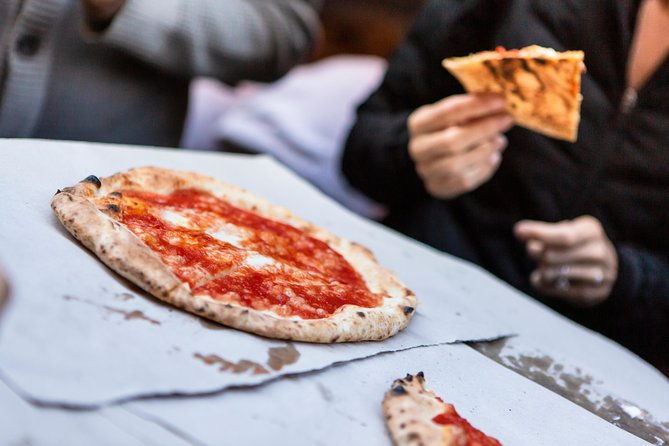
Naples: Street Food Walking Tour with Local Guide — $50
The most-booked version. 2.5 hours, six to eight food stops, a dessert stop, and an espresso finale. Small group (max ten to twelve). Local Neapolitan guides. Covers pizza al portafoglio, cuoppo di mare, sfogliatella, babà, pizza fritta, and limoncello or espresso at the end. Our review covers what each stop delivers.
Naples Street Food Tour With Local Expert — $50.79
The Viator equivalent at virtually the same price. Same format — three hours, six-plus food stops, small group, sometimes with Eating Europe branding. Choose between this and the GetYourGuide version based on which platform you already use. Our review compares both.
Naples Walking Food Tour With Secret Food Tours — $105.21
The premium option. Secret Food Tours is a London-based brand that runs higher-end food walks in a handful of cities. Double the price of the basic tour but includes one “secret” stop at a vendor most tourists never find, plus a sit-down course with wine pairing. Worth it if food is the main reason you’re in Naples. Our review argues the premium is earned for serious food travellers.
The Stops You’ll Actually Hit
Stop 1 — Pizza al Portafoglio
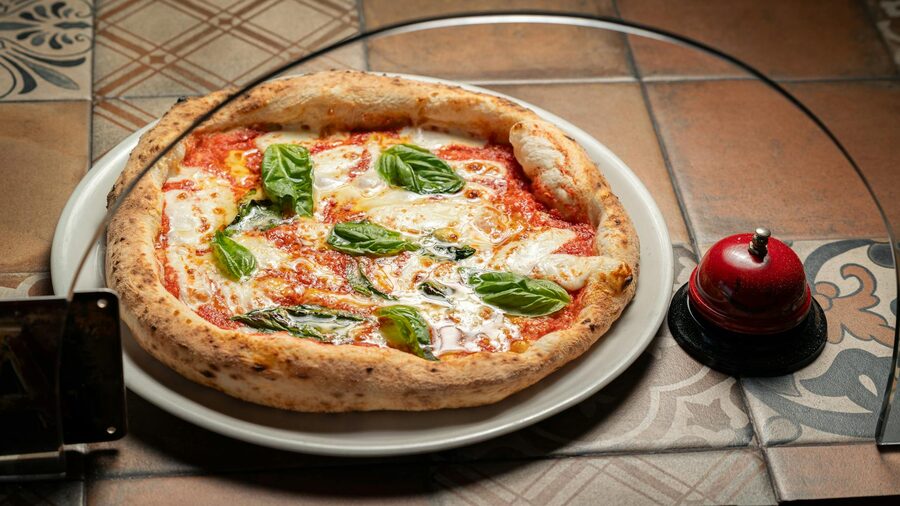
“Pizza in a wallet.” A small Margherita (about half the size of a restaurant pizza) folded in quarters, wrapped in wax paper, eaten standing up. Costs €1.50-3. This is what Neapolitan workers eat for lunch — not the restaurant version you’re thinking of.
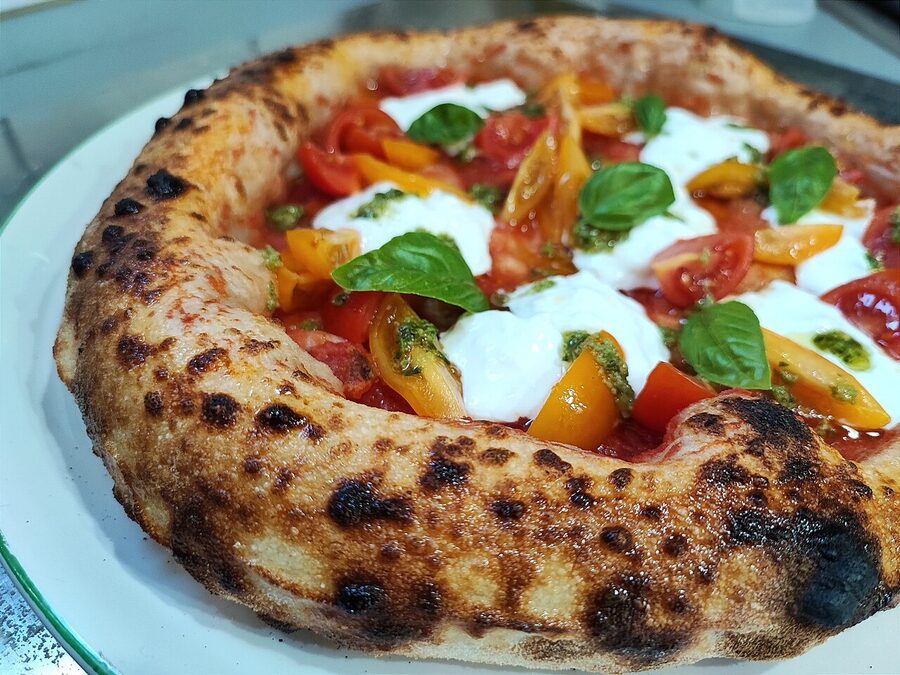
The tour stop is usually at one of the classic old pizzerias on Via Tribunali — Pizzeria Di Matteo, L’Antica Pizzeria da Michele, or similar. The guide gets you pizza al portafoglio from the walk-up window rather than the sit-down dining room.
Stop 2 — Cuoppo di Mare
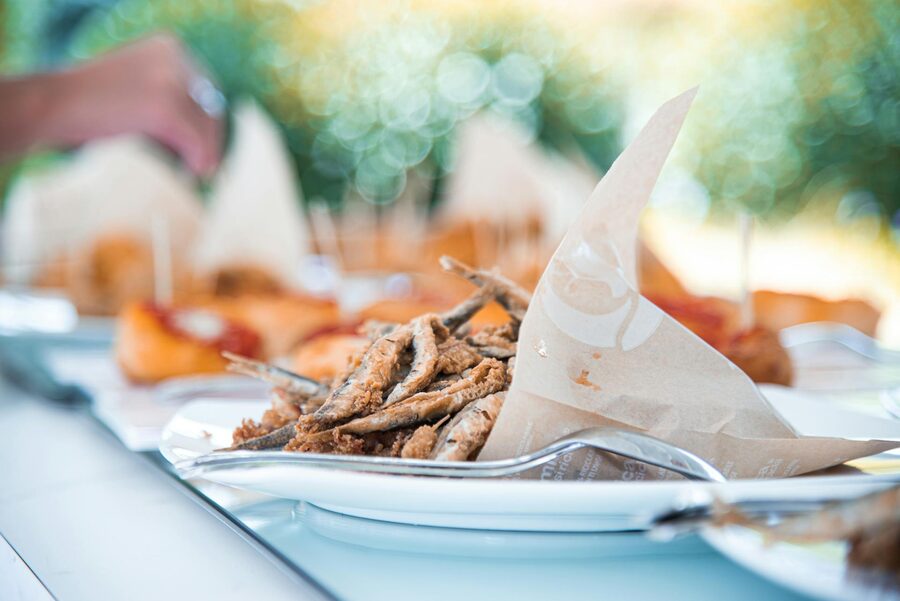
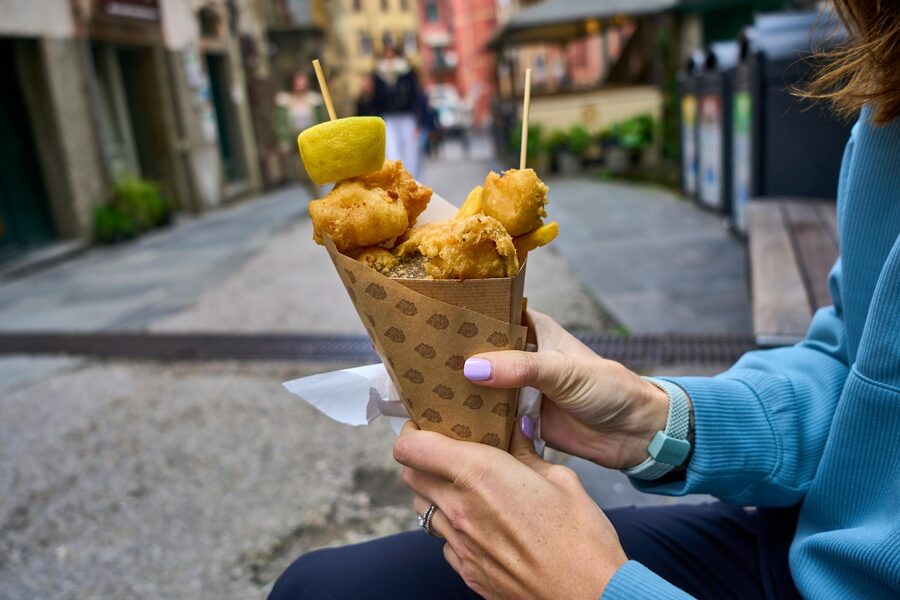
The fried seafood paper cone. Baby calamari, whitebait, shrimp, zucchini blossoms, sometimes potato. Everything deep-fried in light batter, salted, served piping hot in a rolled-up newspaper cone. €5-8 for a full cone.
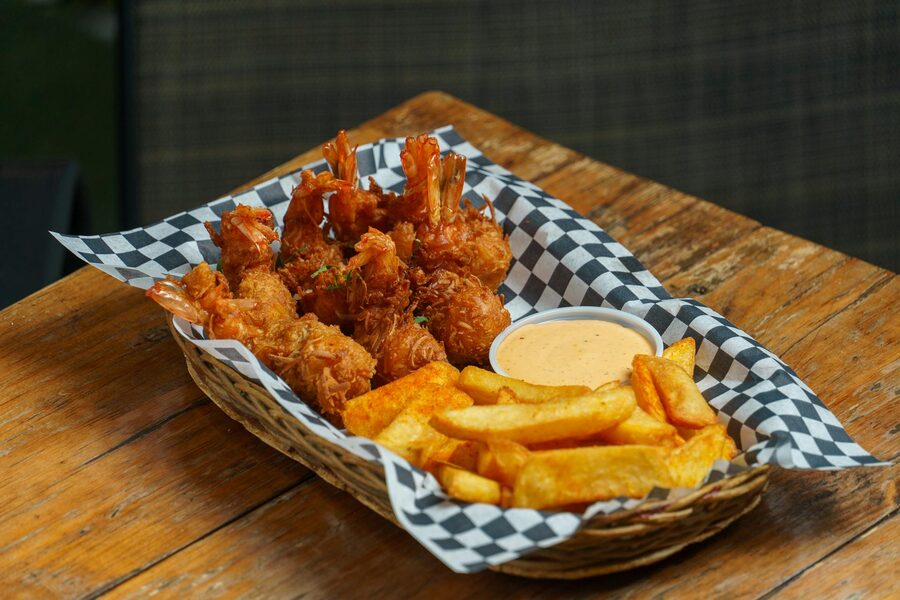
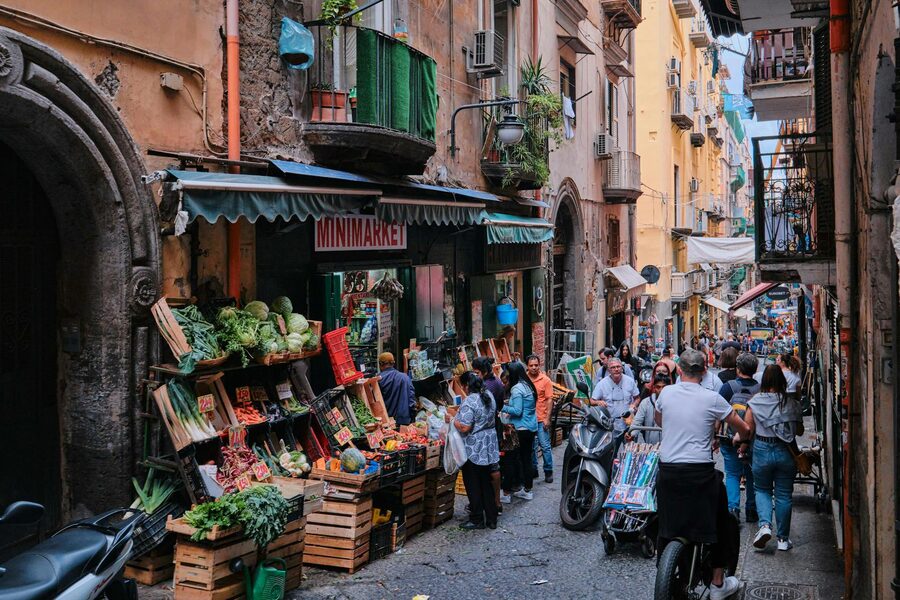
Where from: fish markets in the Pignasecca district, or stalls along the waterfront in Mergellina. The tour routes through Pignasecca most commonly.
Stop 3 — Sfogliatella
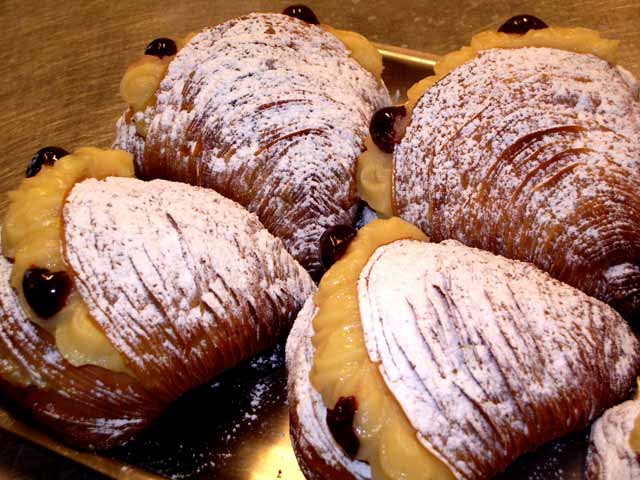
The shell-shaped ricotta pastry. Invented in the 17th century by nuns at the Santa Rosa monastery in the Amalfi Coast; adopted by Naples and spread from there. Two versions that matter: riccia (flaky multi-layer puff pastry shell) and frolla (short crust, softer shell).
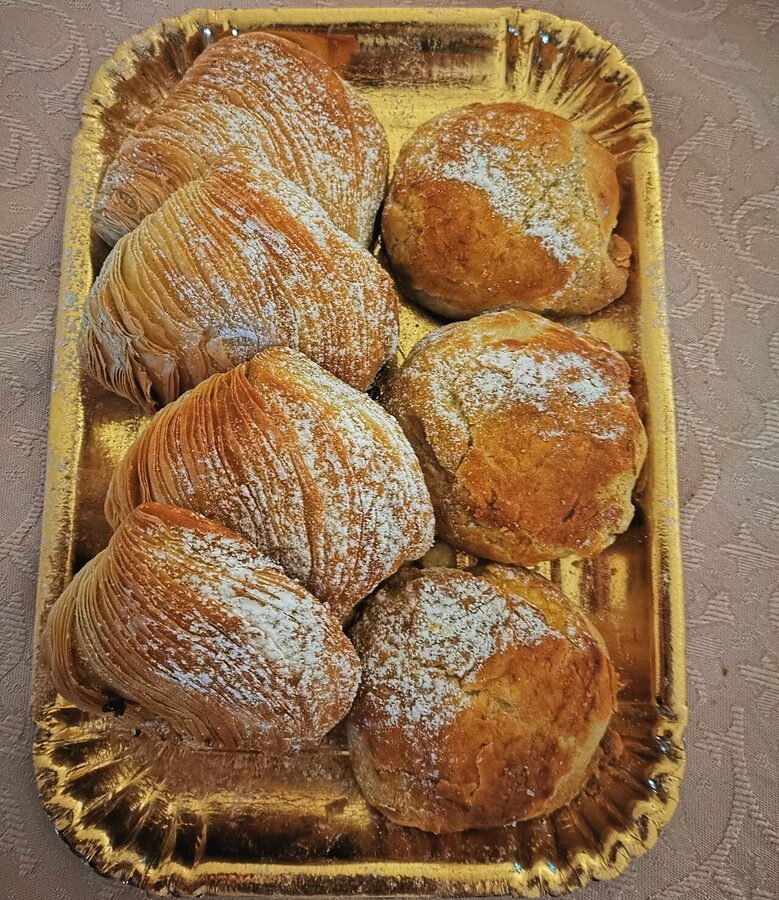
Inside: ricotta-based filling with sugar, candied orange peel, cinnamon, sometimes semolina. Served hot from the oven when possible — cold ones are acceptable but not ideal.
Stop 4 — Babà
The rum-soaked yeast cake. Looks like a small mushroom, doused in rum syrup, sometimes split and filled with cream. €2-3 per piece. Neapolitans are unreasonably proud of this and consider it superior to every other dessert in existence.

Stop 5 — Pizza Fritta (Fried Pizza)
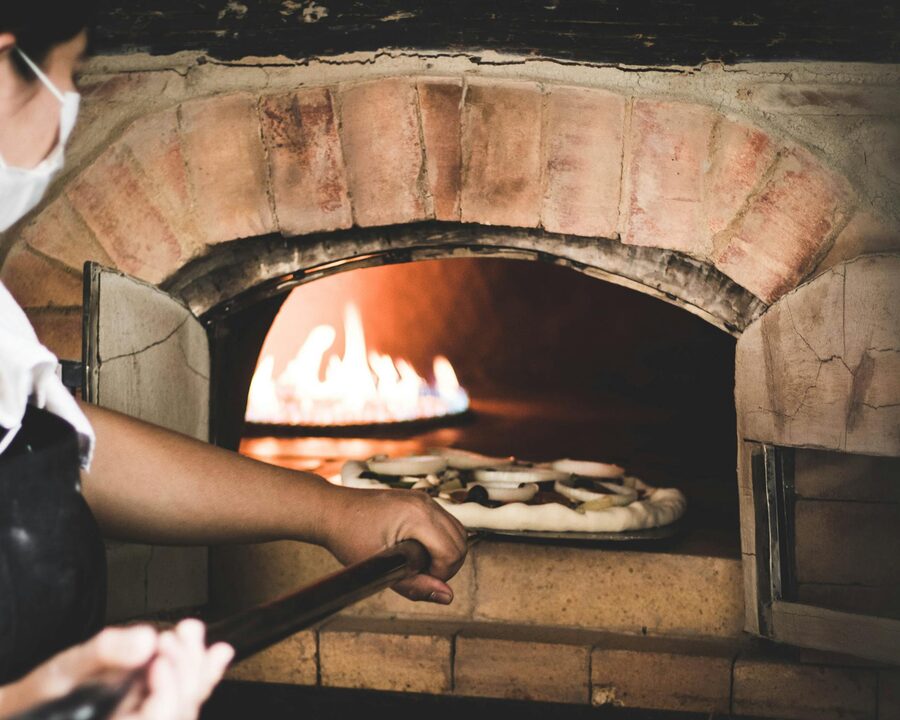
The pre-industrial pizza form. Before wood-fired ovens spread to every neighbourhood, Naples’ poor fried their pizza in oil — faster and cheaper. Still made. A half-moon of pizza dough filled with ricotta, provola, and salami, deep-fried until golden. Absurdly rich. €2-4.
Stop 6 — Arancino
Technically Sicilian but adopted by Naples. Fried rice ball stuffed with ragù or mozzarella. €2-3. Shows up on most Naples food tours even though Sicilians object strongly to the Neapolitan version being called arancino (they call theirs arancina, with an ‘a’, and the rivalry is real).
Stop 7 — Espresso
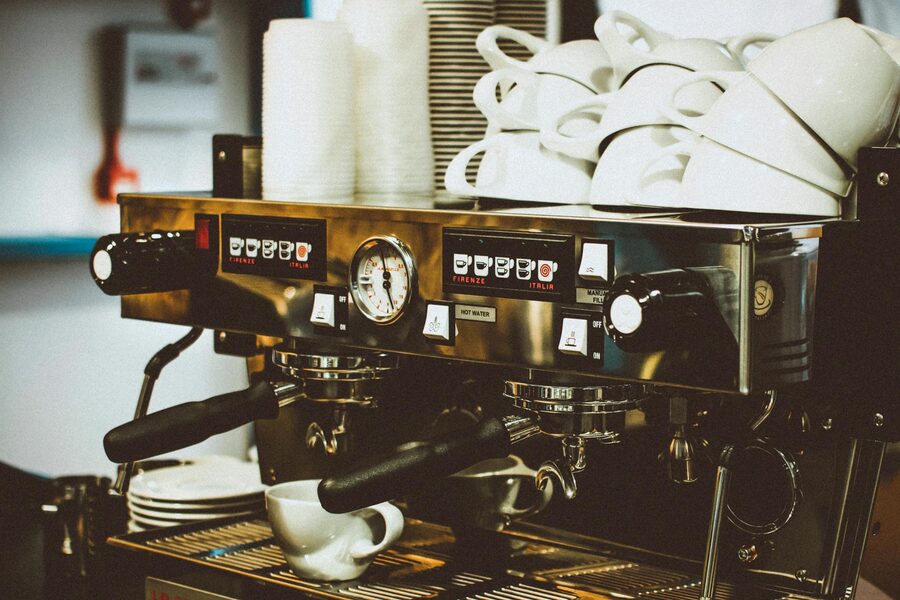
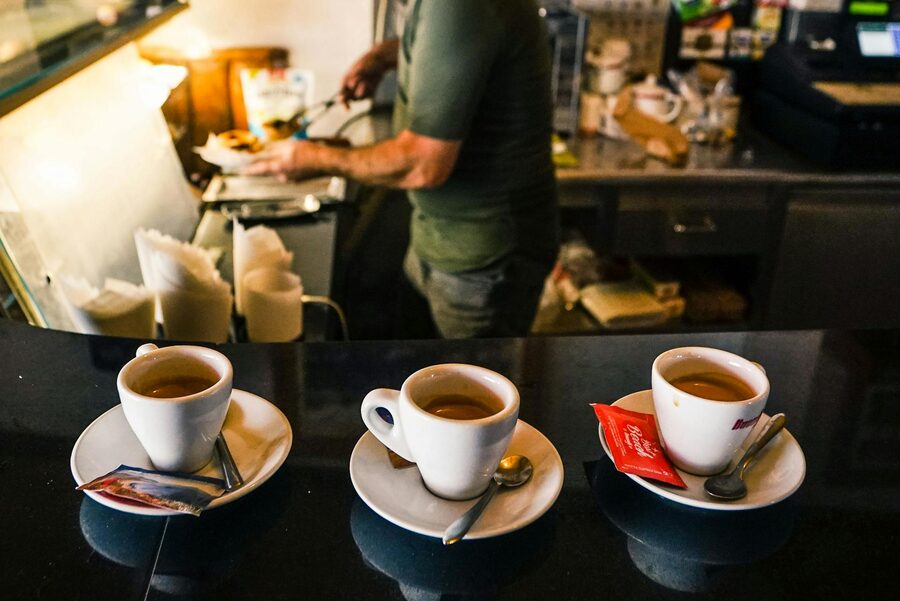
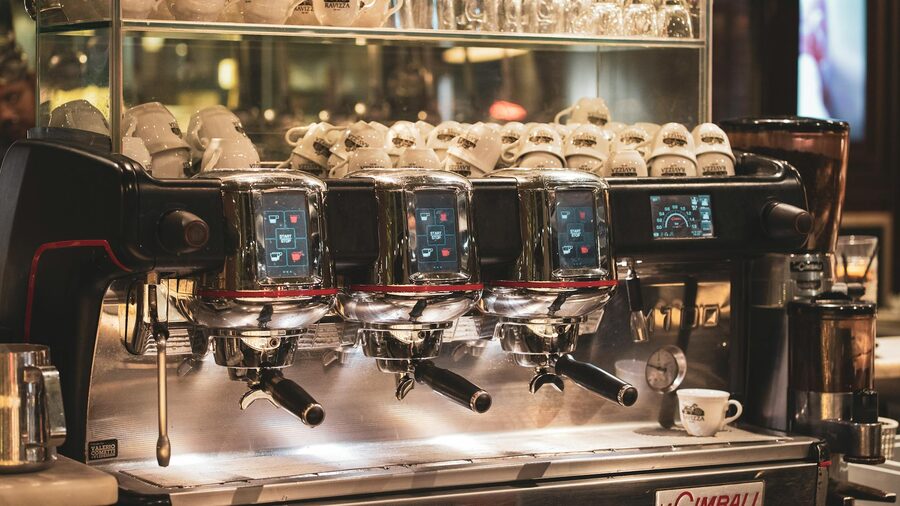
Naples takes coffee seriously. Most Italian cities have mediocre espresso; Naples has genuinely excellent espresso as a daily default. The tour ends at a historic caffè — Gran Caffè Gambrinus, Caffè Mexico, Scaturchio, or similar. €1.20 at the bar, €4 at the table. Stand at the bar.
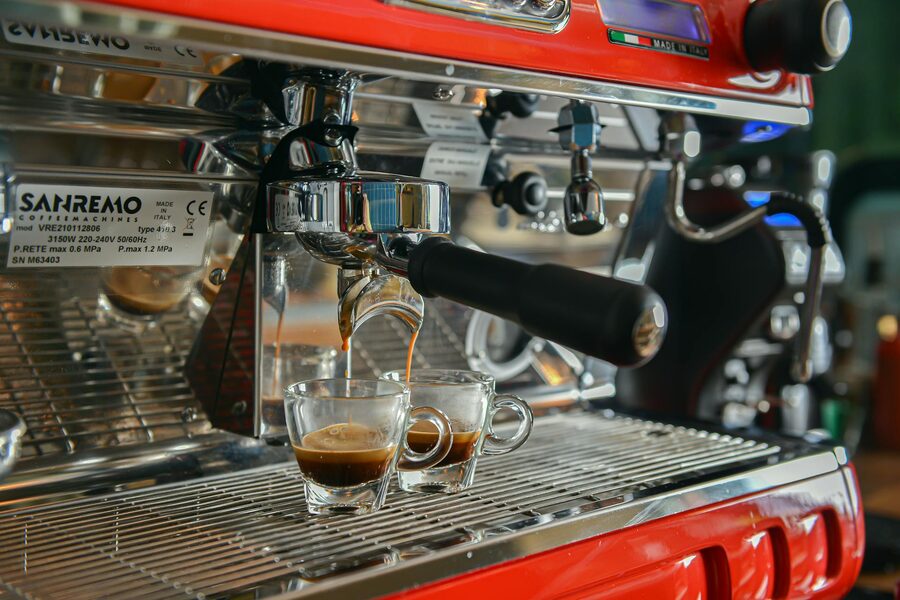
Caffè sospeso: the Neapolitan tradition of paying for two coffees but drinking one — the second is free for someone who can’t afford it. Still practiced at Gambrinus and other historic bars. The guide often buys a sospeso at your tour’s end.
The Route Geography
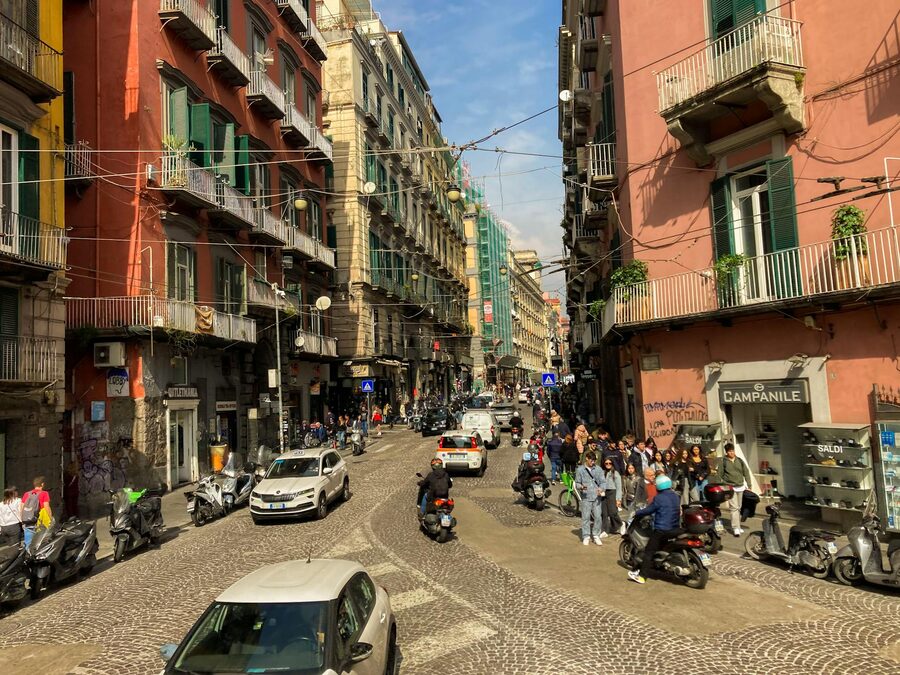
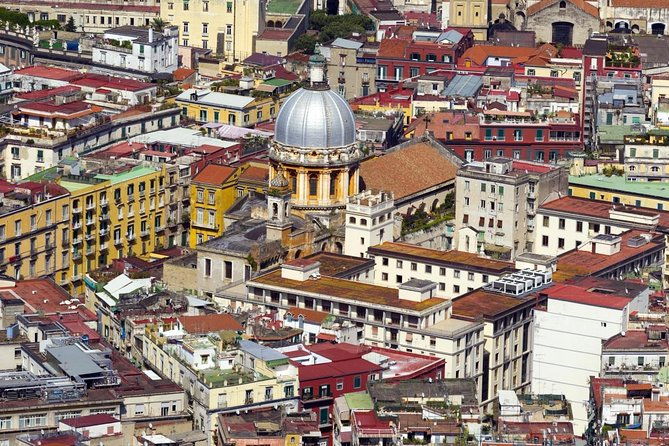
The tour covers about 2-3 kilometres across the historic centre. Starting point varies — often Piazza Dante or Piazza del Gesù Nuovo. Ending near San Francesco di Paola or Via Toledo.
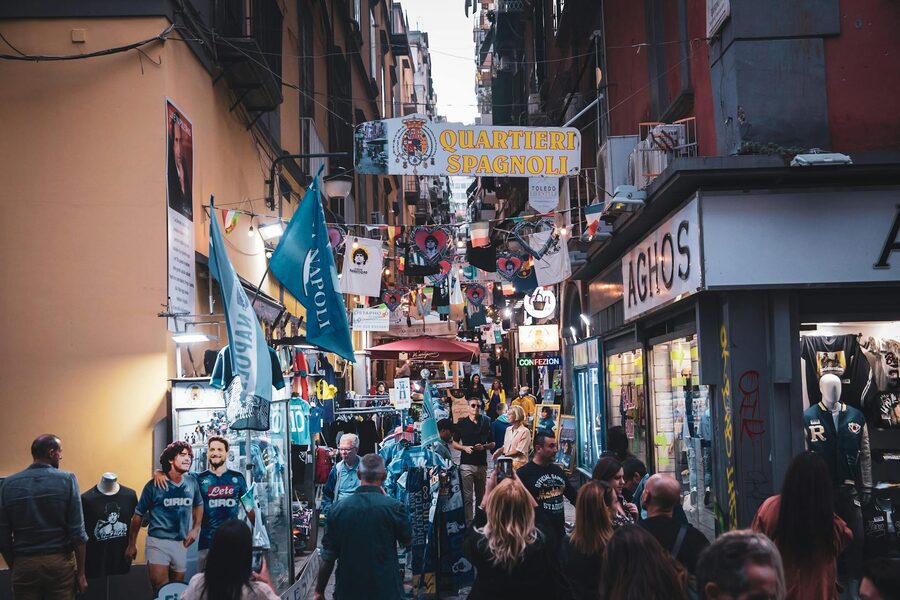
Typical itinerary: Start in the centro storico near Piazza del Gesù. First stop pizza al portafoglio on Via Tribunali. Cuoppo at Pignasecca market. Sfogliatella at a historic pasticceria. Babà somewhere along Via Toledo. Fried pizza snack en route. End with espresso at Gambrinus.
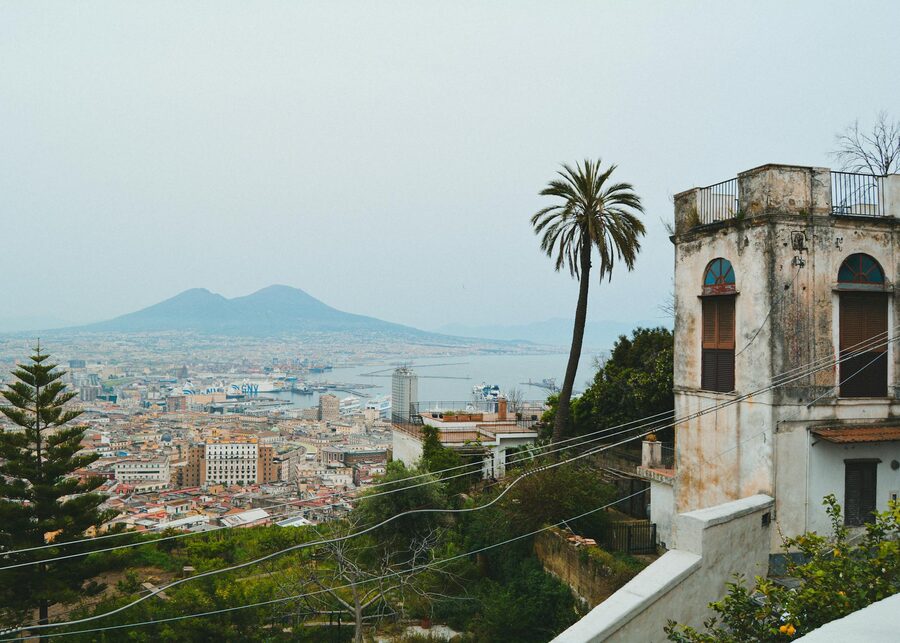
Physical demands: easy. 2-3 km over 2.5-3 hours, mostly flat (Naples historic centre is flat; only the Vomero district is elevated). Cobblestones throughout. Sturdy shoes recommended.
Timing the Tour
Most tours run mid-morning (10:30) or early evening (17:00). Lunch isn’t typical because the tour covers pizza and sfogliatella which clash with a separate lunch.
Best season: spring (April-May) and autumn (September-October). Summer Naples (July-August) gets seriously hot and street food doesn’t travel well in 35°C heat. Winter (November-March) works fine — warmer clothes required, but the food is good year-round.
Booking: 2-5 days ahead in high season, same-week in low season. Small group size (max 12) means it fills up.
Who This Is For
Great fit: first-time Naples visitors, food enthusiasts, travellers with adventurous palates (there’s no point going to Naples if you can’t handle rich, fried, unfussy food), anyone on a 2+ night stay.
Reasonable fit: adventurous teenagers (the food is fun and nothing is too weird — not a cicchetti situation where you might get cow stomach), couples looking for local immersion.
Bad fit: travellers with celiac (there’s pizza, fried dough, pastry — hard to swap), travellers avoiding fried food (cuoppo and pizza fritta are central), very young kids (they won’t finish the portions and will get restless), travellers whose food horizons stop at “safe Italian”.
Naples Food vs Other Italian Food Cities
Naples food is not Tuscan food. It’s not Venetian food. The climate, the poverty, the sea, and the volcanic soil have shaped something specific.
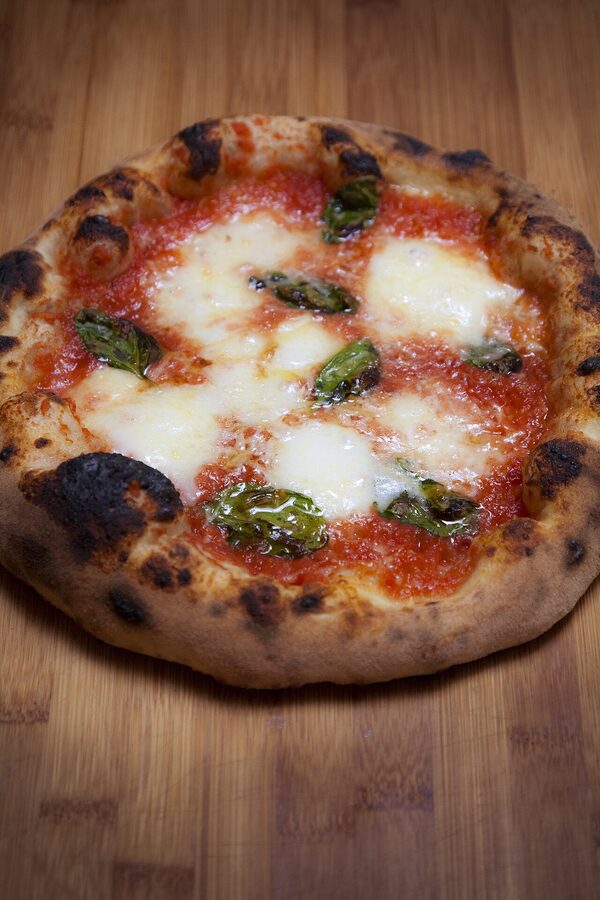
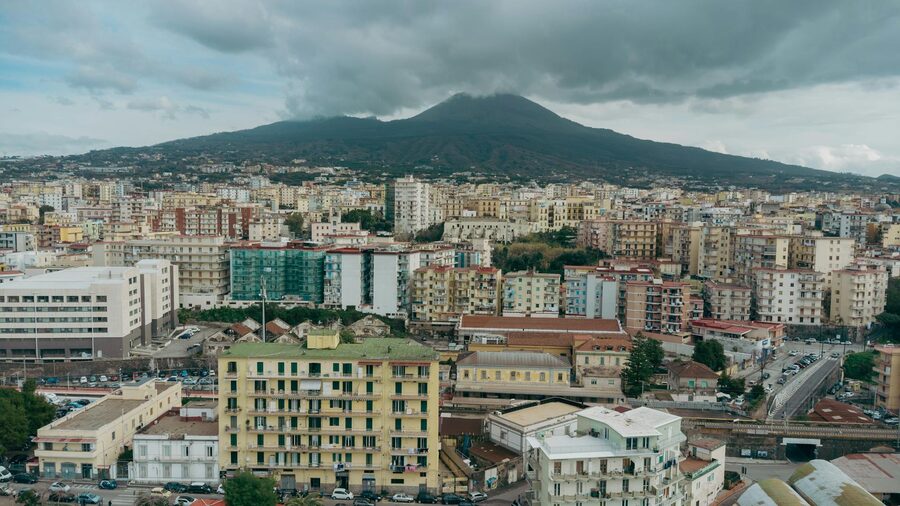
San Marzano tomatoes: grown in volcanic soil around Vesuvius. DOP protected. Used in Naples pizza and pasta in a way no substitute can replicate. The tour explains this.
Fior di Latte vs Mozzarella di Bufala: Naples uses both. Fior di Latte is cow’s milk mozzarella; Mozzarella di Bufala is buffalo milk, richer and creamier, expensive. Pizza uses mostly Fior di Latte (melts better); salads use Bufala.
Seafood from the Gulf: Naples sits on one of the Mediterranean’s most productive fish bodies. Clams, mussels, octopus, anchovies, red mullet, swordfish all feature heavily.
Pairing With Your Naples Trip
The street food tour is a perfect Day 1 or Day 2 orientation.
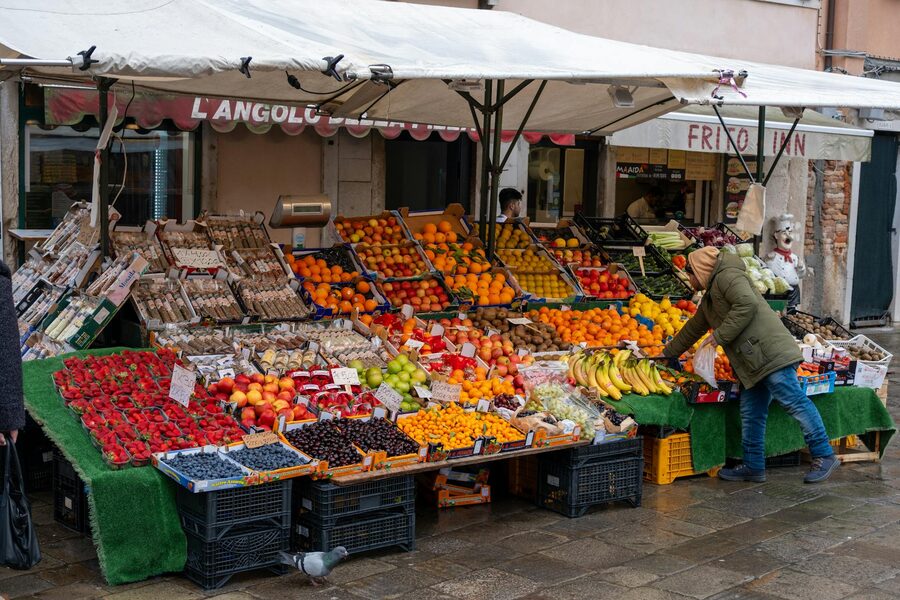
The itinerary that works: Day 1 arrive + afternoon street food tour (learn the city through your stomach) + sit-down dinner later. Day 2 Centro Storico + Duomo + Veiled Christ. Day 3 Pompeii + Vesuvius. Day 4 Capri or Amalfi. Combinations: pair with the Naples pizza-making class on a different day (eater vs maker perspectives on the same food tradition). Combine with the Pompeii + Vesuvius day trip mentioned above for a full-region trip. For wider Italy trips, the Naples street food experience is the southern bookend to Venice’s cicchetti walk — both cities have proud street food cultures that restaurant-focused tourists miss.
Common Questions
How much food do I get? A LOT. Many travellers skip dinner after the tour. 7 stops x reasonable portions = a full day’s calories.
Vegetarian? Partially — pizza, sfogliatella, babà, and some market stops are vegetarian. Cuoppo is seafood; pizza fritta often has meat. You’ll get about 70% of the experience.
What about hygiene? Naples street food is safer than it looks. The pizzerias and pasticcerie are regulated. Cuoppo vendors rotate their oil daily. The busy stalls turn food over faster, which is the safety filter.
Do I need to speak Italian? No. Guides are English-fluent. Vendors don’t need you to speak — you point, you pay, you eat.
Is it safe in Naples? The tourist areas are fine. Quartieri Spagnoli has a reputation but the food-tour hours (daytime and early evening) are low-risk. Keep your bag zipped and don’t flash expensive phones. Pickpocketing is the primary risk; violent crime is extremely rare.
Tipping? €5-10 per person for a great guide. Optional but standard.
The Honest Verdict
The Naples street food tour is one of the best food-tour values in Europe. $50 for 2.5 hours of 7+ specific Neapolitan dishes + local guide + ability to return and order on your own is outstanding. The guide is effectively renting you their 20 years of local knowledge for two hours.
Book for Day 1 or Day 2 so the knowledge compounds over the trip. Wear loose clothing — you’ll eat more than you planned. Skip breakfast on tour day. Don’t book a dinner reservation for the same evening. And when you leave Naples, buy sfogliatella at the airport (Naples Capodichino) — they’re actually good there, vacuum-packed, and survive a 12-hour flight home remarkably well.