
The trick to Naples is realising the city you’re walking on isn’t the real one. The real one is hollow — 40 metres down, in the tuff rock — and it’s been that way for 2,400 years.
Eighteen euros gets you down there. I wasn’t expecting to tear up at a WWII school chair. I did anyway.
Quick Picks
- The headline booking — Naples Underground Spanish Quarters With Guide ($18). Above ground and below, in two hours.
- Streets only, if stairs aren’t your thing — Naples: Spanish Quarters Street Art Tour ($14). Maradona mural, laundry alleys, no descents.
- Broader centro storico — Naples Historical and Street Art Walking Tour ($15). Wider than the Quartieri alone.
- Quick Picks
- What Naples Sotterranea Actually Is
- The Three Real Options
- Naples Underground Spanish Quarters With Guide — .14
- Naples: Spanish Quarters Street Art Tour —
- Naples Historical and Street Art Walking Tour — .74
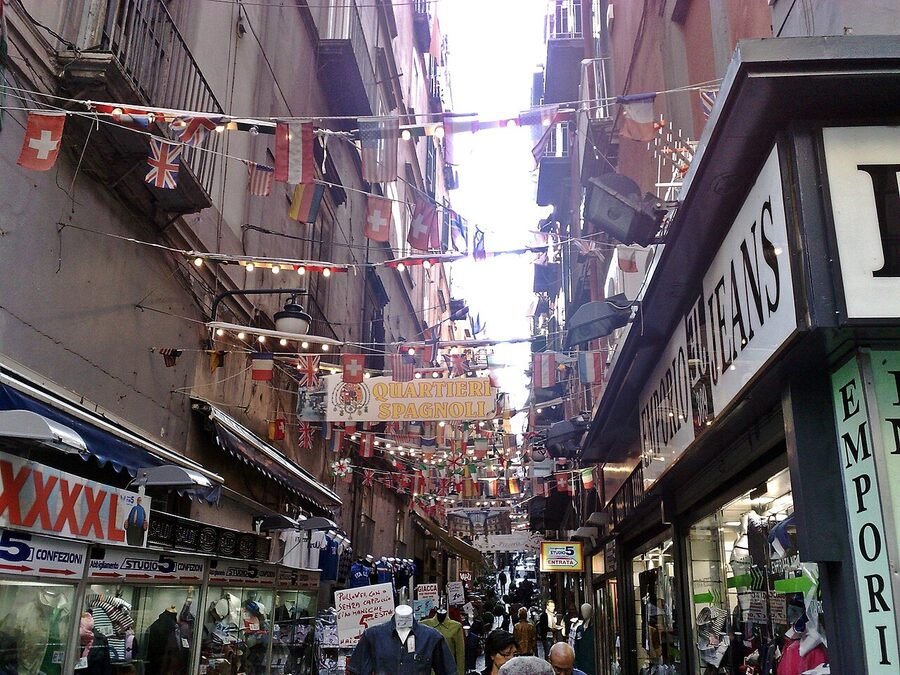
- The Quartieri Spagnoli Above Ground
- The Descent
- What Makes Naples Underground Different
- The Galleria Borbonica (Separate Tour)
- Timing the Visit
- What to Wear and Bring
- Physical Accessibility
- Pairing With the Rest of Naples
- Common Questions
- The Honest Verdict
What Naples Sotterranea Actually Is
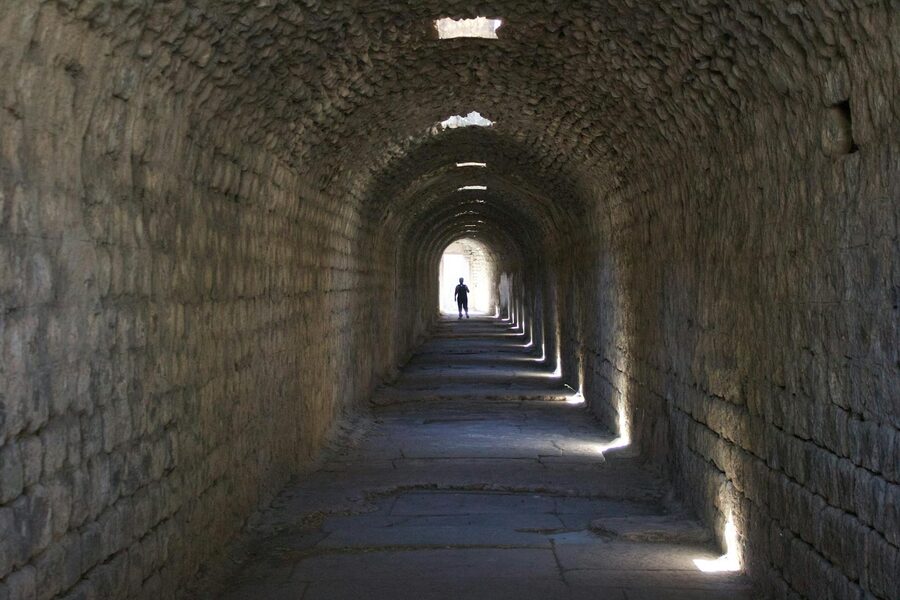
The Greeks who founded Neapolis in 600 BC quarried tuff (a soft volcanic rock) from under the city to build the city above. They cut tunnels and cisterns into the rock at the same time. The Romans extended the system, connecting cisterns into a 400-kilometre aqueduct network. Medieval and Bourbon-era Neapolitans continued the work, turning the underground into wine cellars, prison escape routes, and ice stores.
In 1942, Naples was the most-bombed Italian city. The existing tunnels became mass air-raid shelters — tens of thousands of Neapolitans lived underground for weeks at a time. You still see their beds, school chairs, toys, bicycles in some sections. That layer of history is the emotional core of the tour.
After the war the tunnels were forgotten. Locals threw rubbish down, sealed entrances, built over ventilation shafts. Rediscovery and tourism access began in the 1990s. Today about 3-5% of the network is open to tours; the rest remains unexplored or unstabilised.
The Three Real Options
Naples Underground Spanish Quarters With Guide — $18.14
Two hours, one licensed guide, both layers of the city. You walk the Quartieri above ground for forty-five minutes, then you descend. The ticket covers the underground entry, which you’d otherwise pay for separately. Our review goes through what each section actually shows.

Naples: Spanish Quarters Street Art Tour — $14
The street-level version. Two hours on foot through the Quartieri, focused on murals, the Maradona shrine, and contemporary Neapolitan culture. No underground, no stairs. Book this if descending 121 steps into a tunnel isn’t your idea of a holiday. Our review explains who this suits.
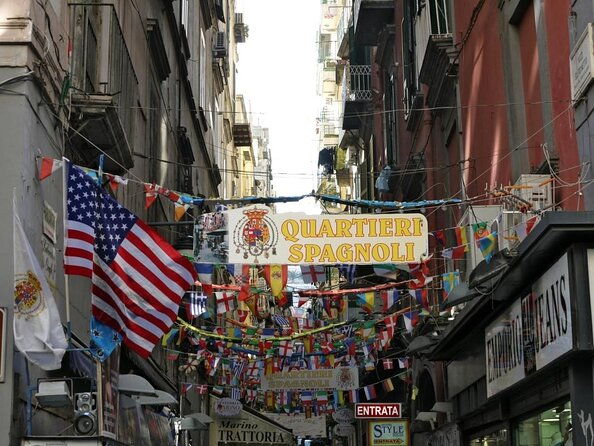
Naples Historical and Street Art Walking Tour — $14.74
The wider-area option. Two to two and a half hours, covers the centro storico and the Quartieri together rather than focusing on one. Book this if you’ve already done the underground separately and want the above-ground orientation. Our review compares this to the more focused tour.
The Quartieri Spagnoli Above Ground
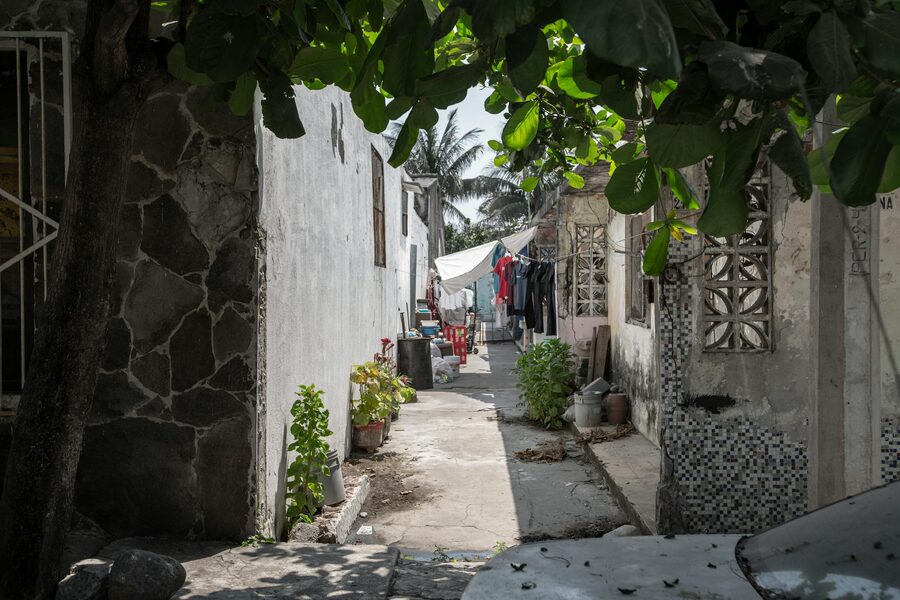
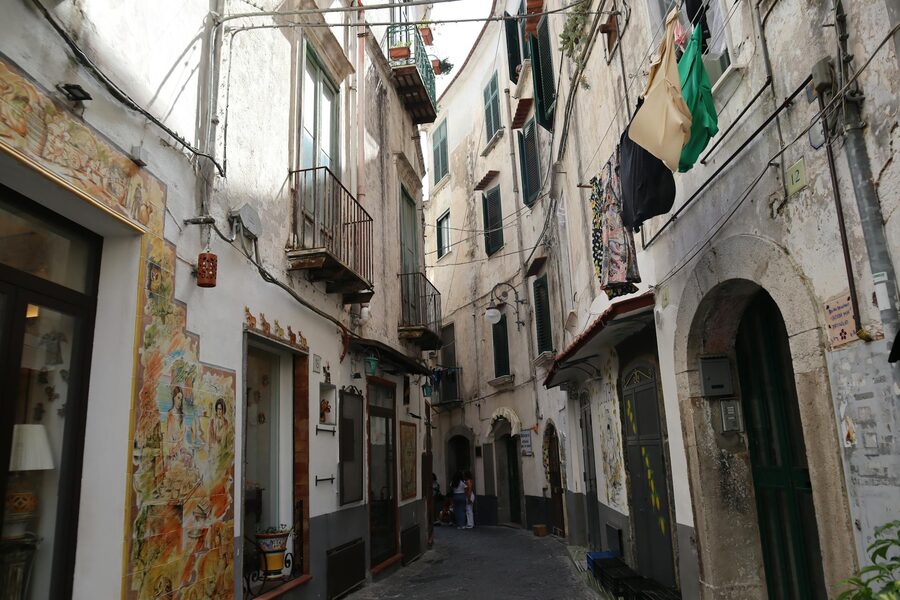
The neighbourhood gets half the tour. Understanding it matters — the Quartieri is one of the most distinctive urban environments in Europe.
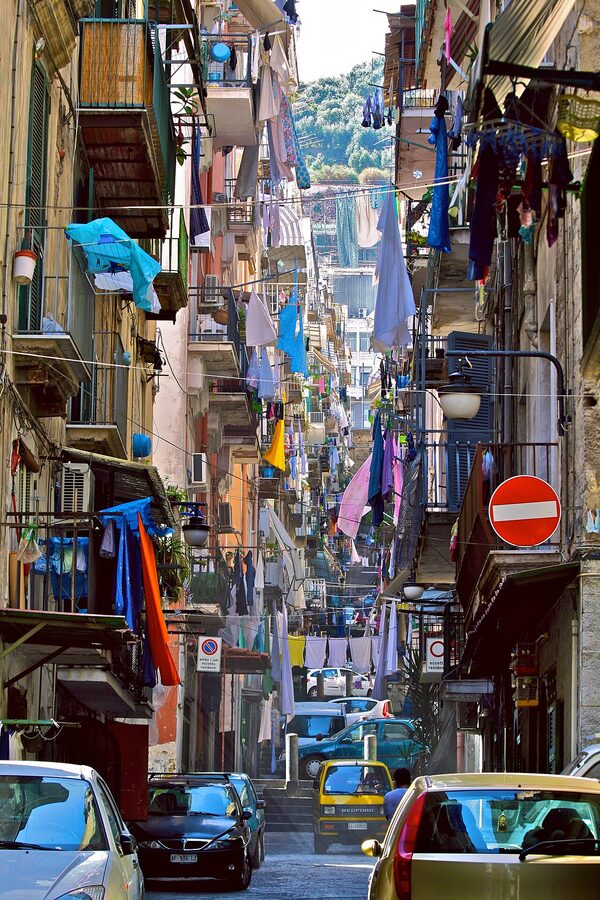
The Quartieri were built in the 1530s to house Spanish garrison troops sent to Naples by Charles V. Layout: a strict grid of narrow perpendicular streets, small piazzas at intersections. 500 years later, the same layout is intact. The buildings are modified (extra floors, new windows) but the streets are unchanged.
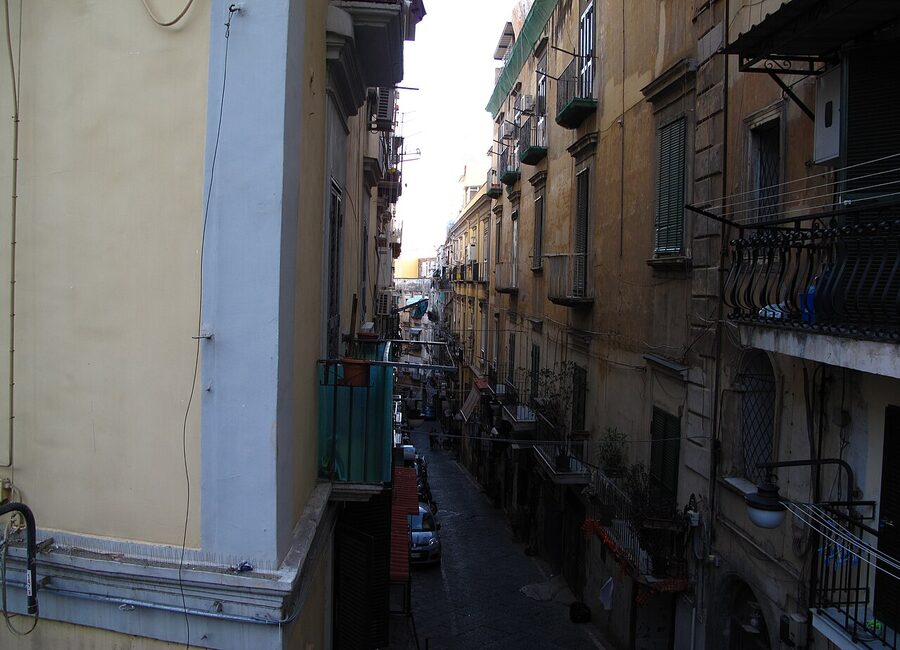
Population density in the Quartieri is around 14,000 residents per square kilometre — one of Europe’s highest. Poverty coexists with working-class dignity; this isn’t slum tourism, it’s a living neighbourhood. Tours route through with guides who live here or nearby.
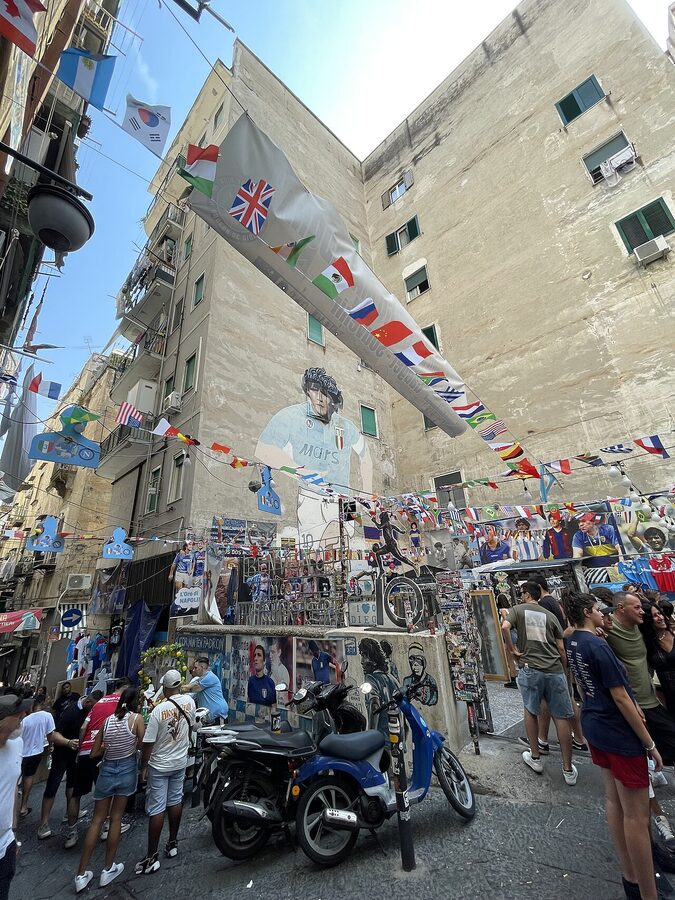
The Maradona connection: Diego Armando Maradona played for Napoli from 1984-1991 and won them two Serie A titles (1987 and 1990). Naples had never won before and hasn’t won since (until 2023). To the Quartieri Spagnoli, Maradona is close to a saint. The mural is his civic altar. The tour always stops here.
The Descent
The underground entry is through an unassuming door on Vico Sant’Anna di Palazzo or similar side street. You descend 121 steps (depending on which entrance) into the first level of tunnels. Temperature drops from 25°C outside to 17°C underground. The air is heavy, mineral-smelling.
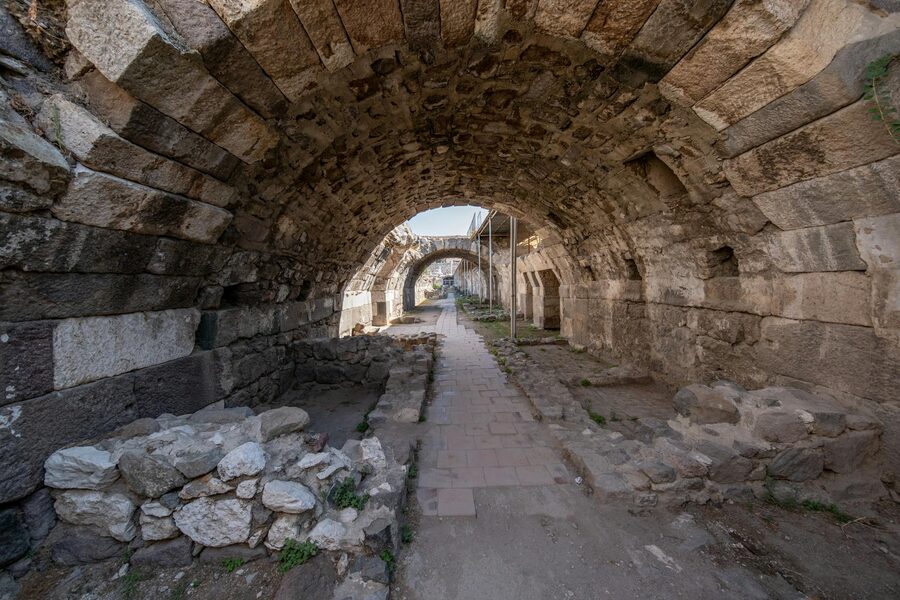
Stop 1 — The Greek-Roman cisterns: rectangular rock chambers 8-12 metres high, once full of drinking water. You walk along what would have been the water surface, now a wooden platform above the dry floor. The acoustic is eerie — every whisper echoes across the space.
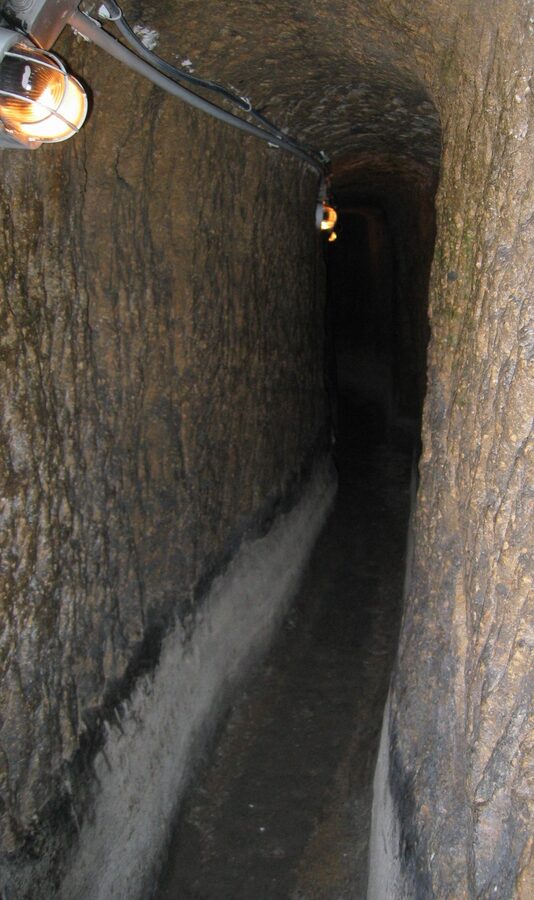
Stop 2 — The aqueduct tunnels: narrow corridors 1.2 metres wide, carved in a zigzag pattern to minimise collapse risk. You walk single-file, sometimes sideways. Claustrophobic travellers opt out here — the guide offers a return path to an earlier chamber.
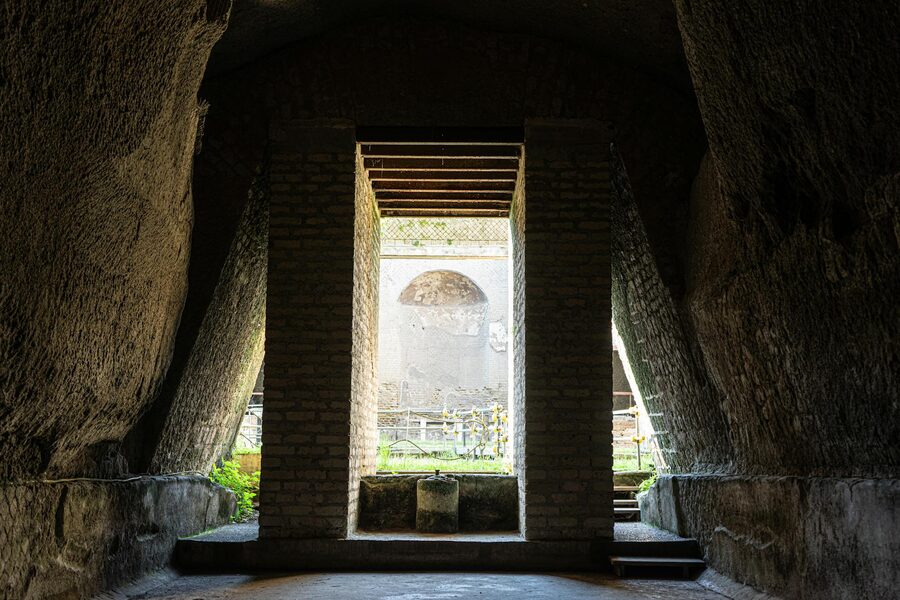
Stop 3 — Medieval cellars: repurposed cisterns converted into wine storage and ice cellars during the 1400s-1700s. Some still have the iron rings used to secure wine casks.
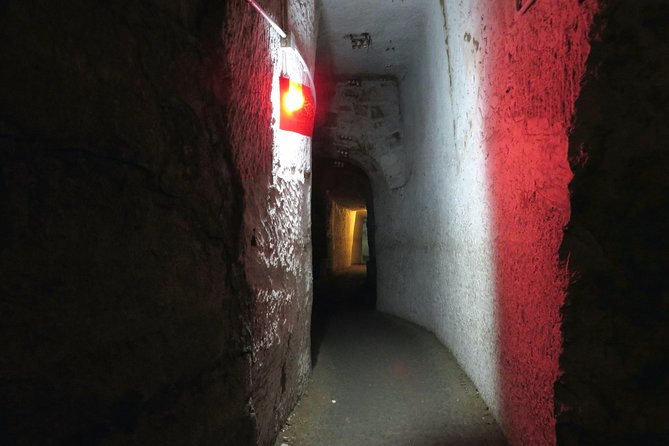
Stop 4 — The WWII shelter: the most emotionally heavy section. Iron-frame beds set up for families, school chairs, children’s toys. Mass accommodation for up to 10,000 people at a time during 1942-1944 bombing. Hand-written graffiti still visible on the walls.
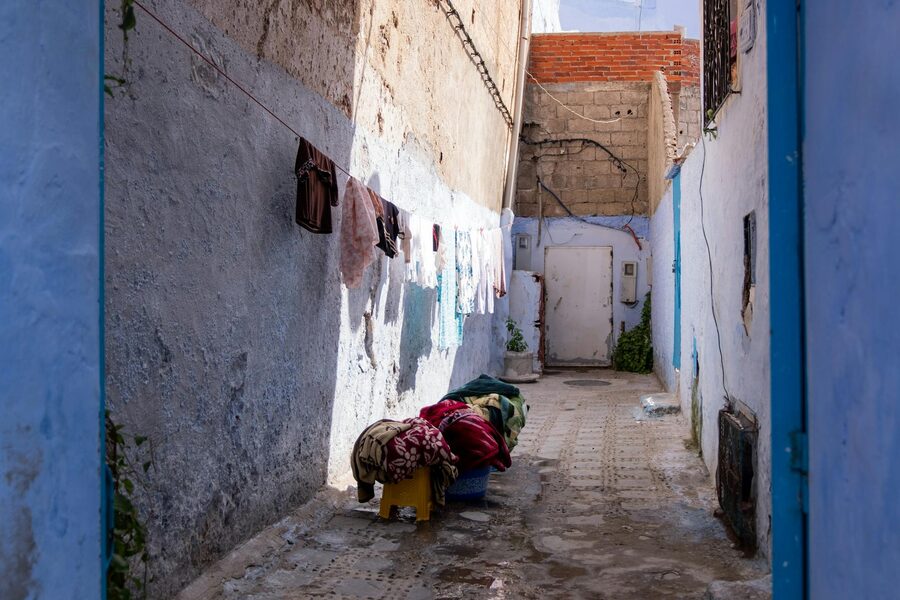
Stop 5 — Return ascent: 121 steps back up. The guide leaves you at the exit on street level, usually where the tour started.
What Makes Naples Underground Different
Rome has catacombs, but they’re funerary — dedicated burial sites. Paris has catacombs, but they’re 19th-century ossuaries collecting bones from closed cemeteries. Most European cities have some subterranean history. Naples is different because the underground is continuously inhabited urban infrastructure — water supply, storage, shelter, escape, rubbish disposal — layered across 2,400 years of the same city, never abandoned, only occasionally forgotten.
The functional layers:
- 600 BC-79 AD: Greek cisterns and first aqueduct. Water supply for the early city.
- 79 AD-476 AD: Roman extension. Second aqueduct (Serino) runs 96 km from source to Naples.
- 500-1500 AD: medieval conversion of cisterns into wine cellars and ice stores.
- 1500-1700: Spanish-era escape routes connecting noble palaces to safe exits.
- 1700-1860: Bourbon monarchy expansion (the Galleria Borbonica is a separate 1853 military tunnel you can also visit).
- 1942-1944: WWII bomb shelter for up to 200,000 Neapolitans.
- 1944-1990: abandonment and rubbish dumping.
- 1990-present: excavation, stabilisation, tourist access.
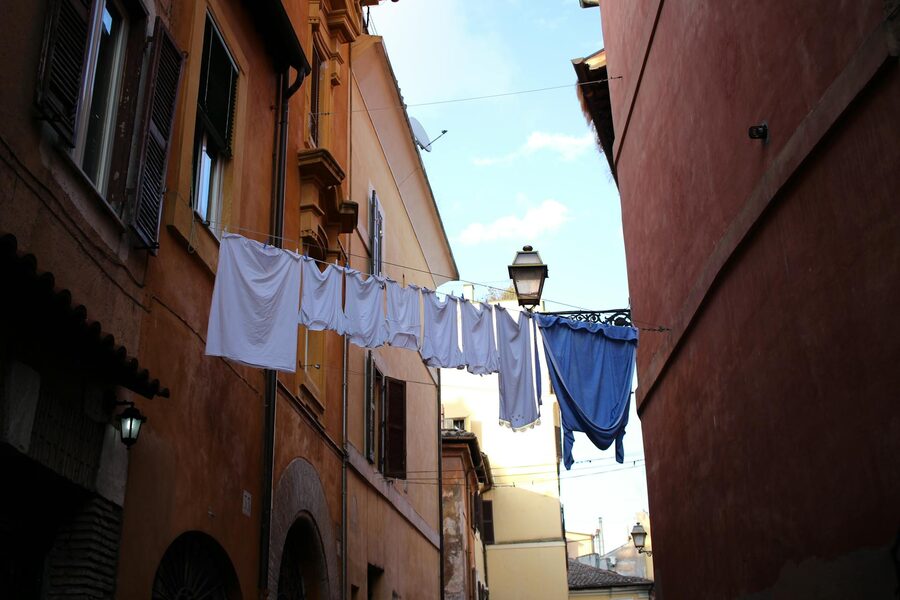
The Galleria Borbonica (Separate Tour)
Worth mentioning because travellers often conflate it with Napoli Sotterranea. The Galleria Borbonica is a different underground site — a 19th-century Bourbon-era military escape tunnel built by Ferdinand II in 1853 under Monte di Dio, later used as a WWII shelter and a post-war car impound. It’s accessed separately from Napoli Sotterranea and has its own ticket (also around €18).
Both tours are worth doing; the main one first because it covers the older layers. Budget half a day each if doing both.
Timing the Visit
Tours run roughly every 60-90 minutes throughout the day. Most start between 10:00 and 17:00.
Best time of year: actually any. The underground is 17°C year-round, so summer offers welcome respite from Naples heat, winter offers welcome warmth from Naples cold and rain. Spring and autumn are the objectively best months for the above-ground Quartieri walk (milder temperatures, thinner crowds).
Group size: capped around 15-20. Smaller than most underground tours worldwide.
Language availability: English-dedicated tours run 2-3 times daily. Italian tours run continuously. German, French, Spanish on specific days — check the calendar at booking.
What to Wear and Bring
The tunnels are narrow, cool, and uneven. Practical gear matters.
Closed-toe shoes with grip: absolutely essential. Flip-flops and heels are banned by the operator. Sneakers or walking shoes are standard.
Light jacket or long sleeves: the 17°C underground feels colder than it sounds because you’re slow-walking and generating little body heat. In summer, the temperature differential with the 30°C+ street is pleasant; in winter, it’s still cooler than street level.
Small flashlight or phone torch: some sections are dim. The guide has a main lantern but having your own small light lets you read wall inscriptions without waiting.
Water bottle: mildly useful. The tour lasts 2 hours and doesn’t stop for water. Bring a small bottle, skip the large ones.
What NOT to bring: large backpacks (some tunnels are too narrow), strollers (no disabled access), tripods (photography isn’t the point and they block passage).
Physical Accessibility
The tour is NOT wheelchair accessible. 121+ steps, narrow tunnels, uneven flooring.
Claustrophobia: some tunnel sections are genuinely tight. 1.2 metre width, low ceilings. If claustrophobia is an issue, either book the street-art-only tour or make sure the guide knows so they can route you to the less-enclosed sections.
Age range: 10+. Kids under 10 sometimes get scared in the dark sections. Kids 12+ usually love it. The guide gauges the group and adjusts commentary accordingly.
Pairing With the Rest of Naples
The Spanish Quarters + Underground tour is a good Day 2 morning activity — after Day 1 orientation walking.
The day that works: Day 1 arrive + Spaccanapoli walk + pizza for dinner. Day 2 morning Spanish Quarters + Underground tour, afternoon free for Capodimonte or the Archaeological Museum (see the original Pompeii finds before visiting Pompeii), evening dinner and gelato. Day 3 Pompeii + Vesuvius day trip (the Archaeological Museum from Day 2 gives you essential context). Day 4 Capri or Amalfi.
Combinations: pair with the pizza-making class for a proper hands-on Naples day. Pair with the street food walking tour so you know the Quartieri from two angles — the historical/underground and the culinary.
Common Questions
How cold is underground? 17°C year-round (around 63°F). Feels cold after a summer day, neutral in winter. A light jacket works.
Is it creepy? Only mildly. The WWII section is emotionally heavy but not scary. The cisterns are large open spaces; the narrow tunnels are short (2-3 minutes each). You’re never in the dark.
Photography allowed? Yes, but no flash (disturbs other visitors). The lighting is low so phone photos come out dim. A small camera with decent low-light performance works best.
Is the Spanish Quarters safe in the daytime? Yes. Very. Guides walk this route multiple times daily without incident. Keep valuables close, don’t flash phones, and you’ll be fine.
Is it worth $18 if I’ve seen Roman ruins before? Yes. The Naples underground is not just Roman — it’s layered across 2,400 years of continuous use. You get Greek cisterns, Roman aqueduct, medieval wine cellars, Bourbon escape routes, WWII shelter. No other European city stacks this many layers in one place.
Can I do this as a solo traveller? Yes. The tour is very solo-friendly — small group, guide-led, safe by design. You’ll probably chat with others during the tunnel section.
Booking lead time? 1-3 days ahead is sufficient year-round. High season summers can fill up 5-7 days out; check in advance.
What about strollers? No. 121 steps and narrow tunnels rule out strollers entirely. Leave the kids at the hotel or bring baby carriers for very small children.
Will I need a separate bathroom break? Go before. The underground has no facilities once you descend. 2 hours is manageable for most adults.
Are there age discounts? Yes. Children 4-12 typically half price. Under 4 free but generally not recommended.
Can I leave early? The guide can’t escort you back up mid-tunnel — the tour stays together. If you need to leave due to claustrophobia, the start section (cisterns) has an accessible exit route.
The Honest Verdict
For $18, the Naples Underground + Spanish Quarters tour is the highest per-dollar-value cultural experience you can book in Italy. Two hours, a living neighbourhood, 2,400 years of subterranean history, a working-class civic landscape you can’t appreciate without a guide — for less than the cost of a pizza + Prosecco at a tourist restaurant.
Book it for Day 2 of any Naples stay. The street-art-only version works if you’re claustrophobic or short on time. Wear proper closed shoes, bring a jacket, avoid the tour if stairs are a genuine issue. And take the guide’s restaurant recommendations seriously — they live in this neighbourhood and the places they’ll point you to will be better than anything you’d find via review sites.