
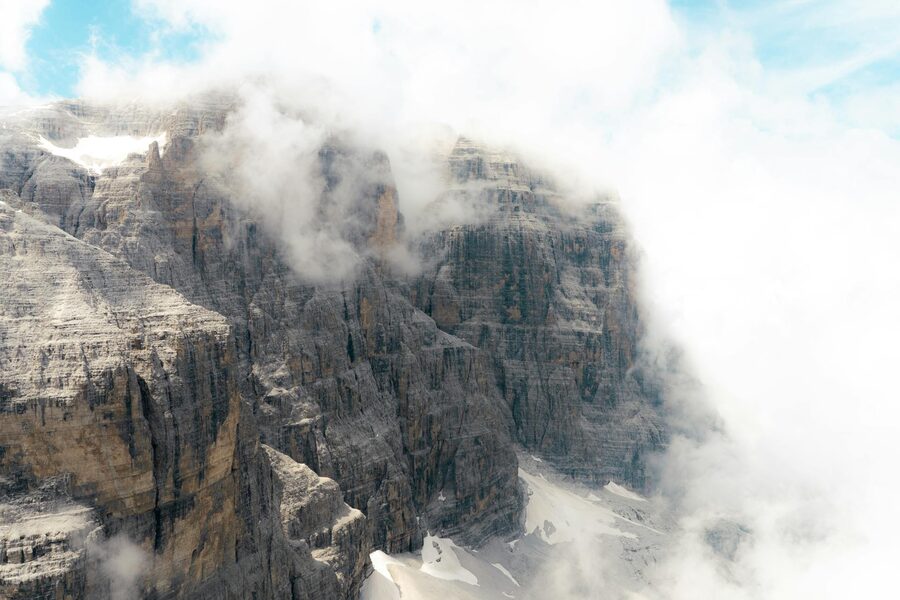
Somewhere past Poschiavo, the train rounds a curve and the windows fill with glacier. You stop taking photos because no photograph will do what is happening in front of you.
That’s the Bernina Express, and it’s the reason people book trains as tourism in the first place.
In a Hurry
- Lake Como + Bernina combo — From Milan: Lake Como Cruise, St Moritz & Bernina Red Train ($159). Most variety in one day.
- Train-focused version — From Milan: Bernina Train and St Moritz Day Trip ($122). Skips the lake, keeps the mountains.
- Small-group premium — Bernina Red Train, Swiss Alps & St Moritz From Milan ($168). Tighter group, more time in St Moritz.
- In a Hurry
- Why This Train Ride Is Special
- The Three Real Options
- From Milan: Lake Como Cruise, St. Moritz & Bernina Red Train — 9
- From Milan: Bernina Train and St. Moritz Day Trip — 2
- Bernina Red Train, Swiss Alps & St Moritz From Milan — 8.09
- The Route — What You’ll See
- Stop-by-Stop Sequence
- St Moritz Itself
- Train Class Options
- Season Matters
- The Long-Day Reality
- What to Pack
- Pairing With Your Milan Trip
- Common Questions
- The Honest Verdict
Why This Train Ride Is Special
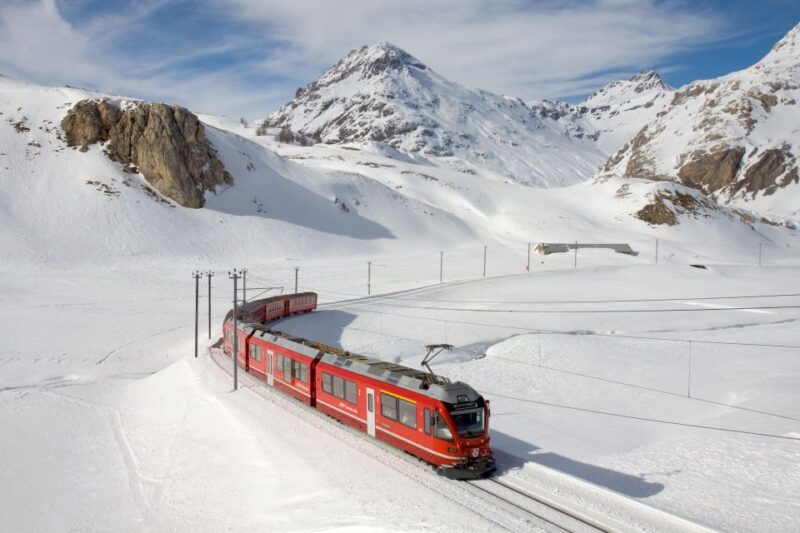
Scenic trains exist across Europe (the Flåm Railway in Norway, the Jacobite Steam Train in Scotland, the Glacier Express also in Switzerland). The Bernina is different for a specific combination of factors: it’s the highest-altitude transalpine rail line without rack-and-pinion assistance, crossing the Bernina Pass at 2,253 metres; it uses adhesion-only traction (the rails grip the wheels via friction alone, not gears) on gradients that would normally require cog rail; and the scenery varies dramatically from Italian chestnut forests at the start to Swiss alpine tundra at the top.
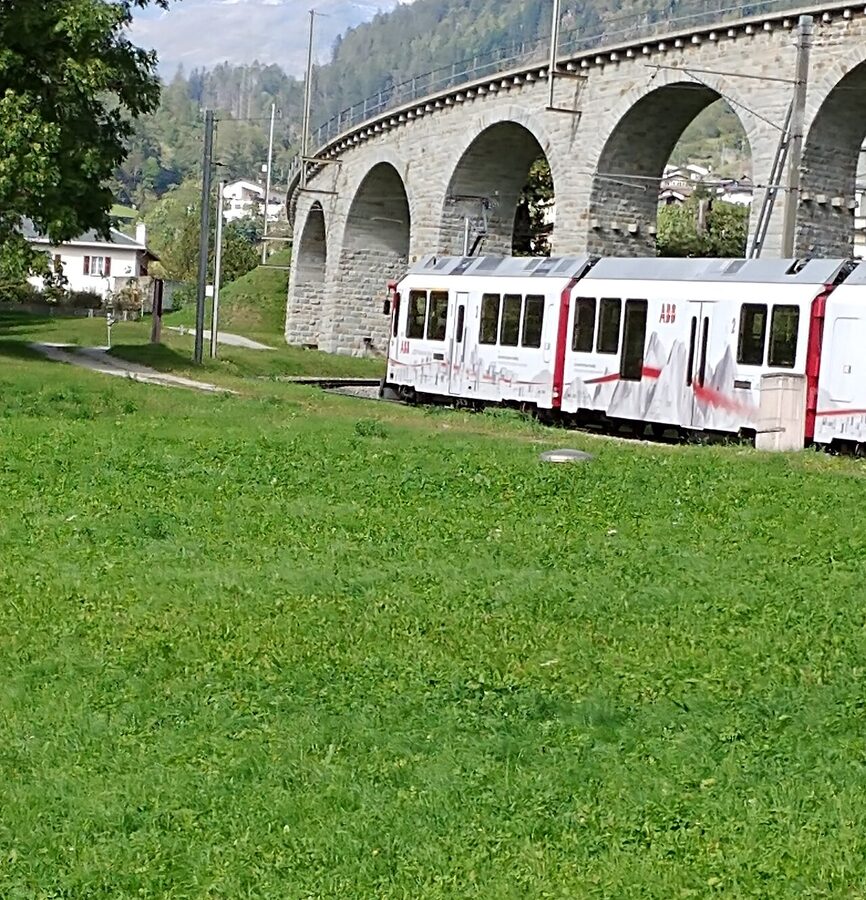
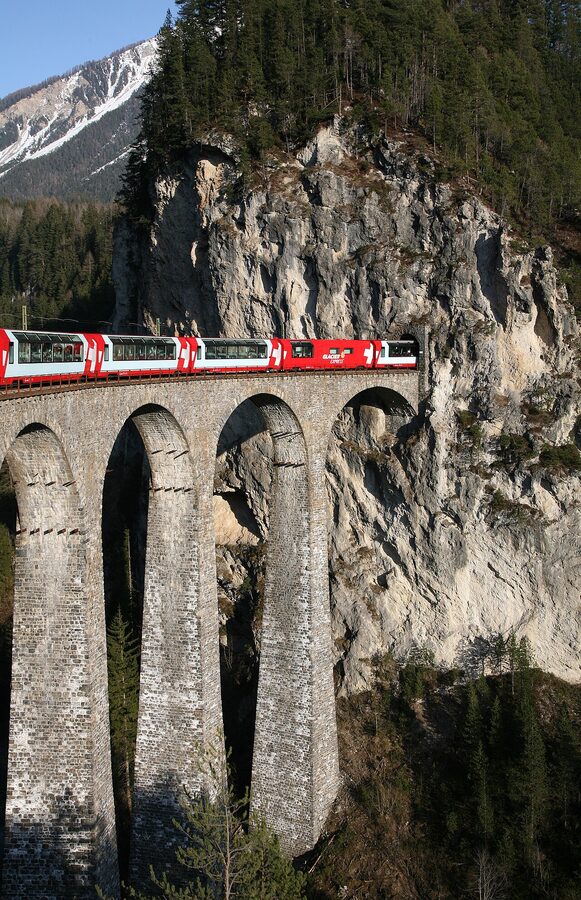
UNESCO added the Rhaetian Railway in the Albula/Bernina landscapes to World Heritage in 2008 — a rare designation for working infrastructure. The argument: the line demonstrates how early 20th-century engineering could blend into alpine landscape rather than scar it. Most of the stations, bridges, and tunnels look unchanged from opening day.
The Three Real Options
From Milan: Lake Como Cruise, St. Moritz & Bernina Red Train — $159
This is the one most people book — a full sampler of Lombardy plus Switzerland in twelve hours. You start on Lake Como at breakfast, you end watching the sun set behind Swiss peaks. The logistics are handled; you just sit down and look out of windows. Our review walks through each segment.
From Milan: Bernina Train and St. Moritz Day Trip — $122
The purer rail version. No lake detour, more time on the train itself, more hours in St Moritz. Pick this if the Bernina Express is the point of the trip and you can skip Como for another day. Our review explains who this suits better than the combo.
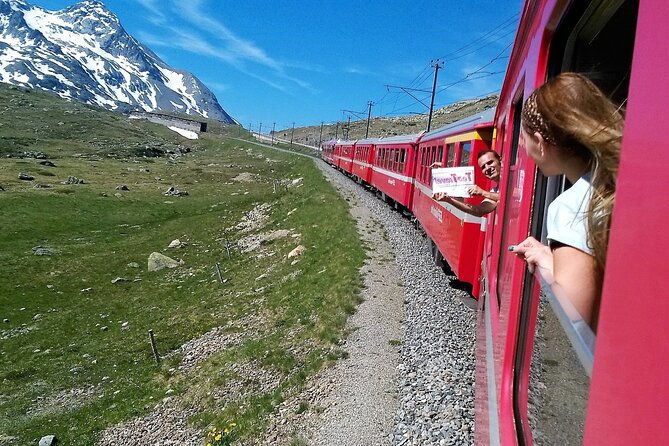
Bernina Red Train, Swiss Alps & St Moritz From Milan — $168.09
The small-group premium version. Tighter group size, slightly more generous time in St Moritz, slightly more expensive. Book this one if the group dynamics of a bus of 50 bother you. Our review compares the three options side by side.
The Route — What You’ll See
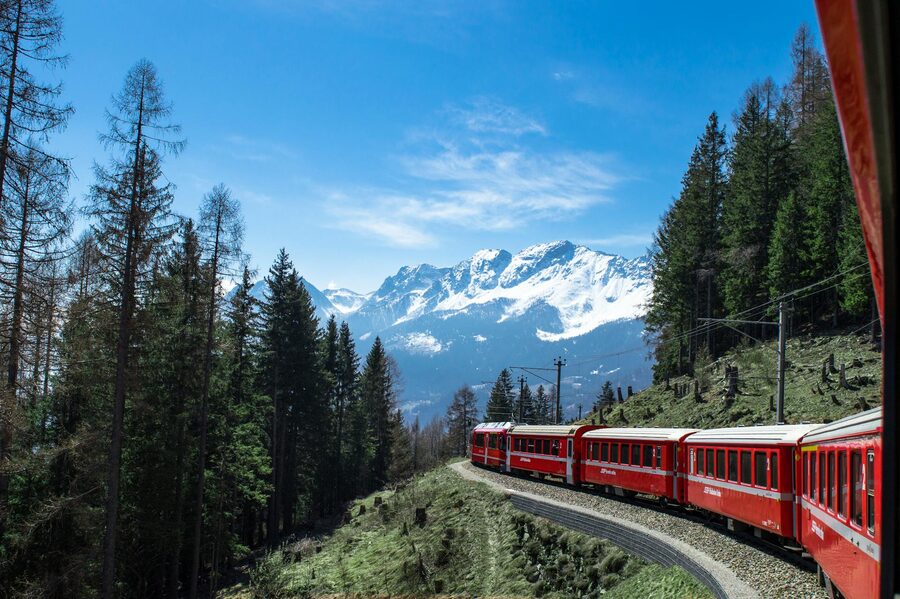
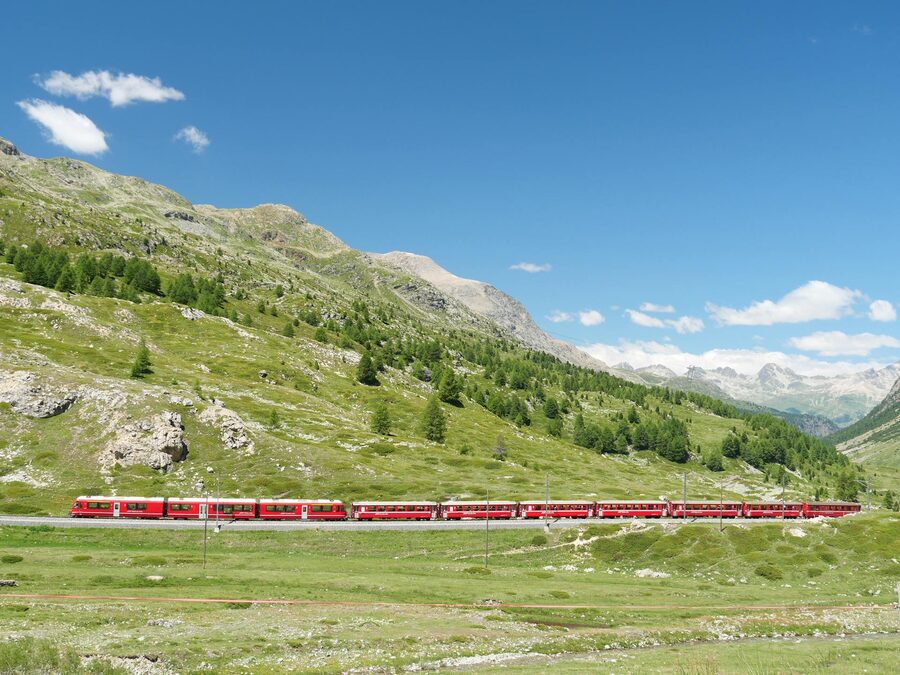
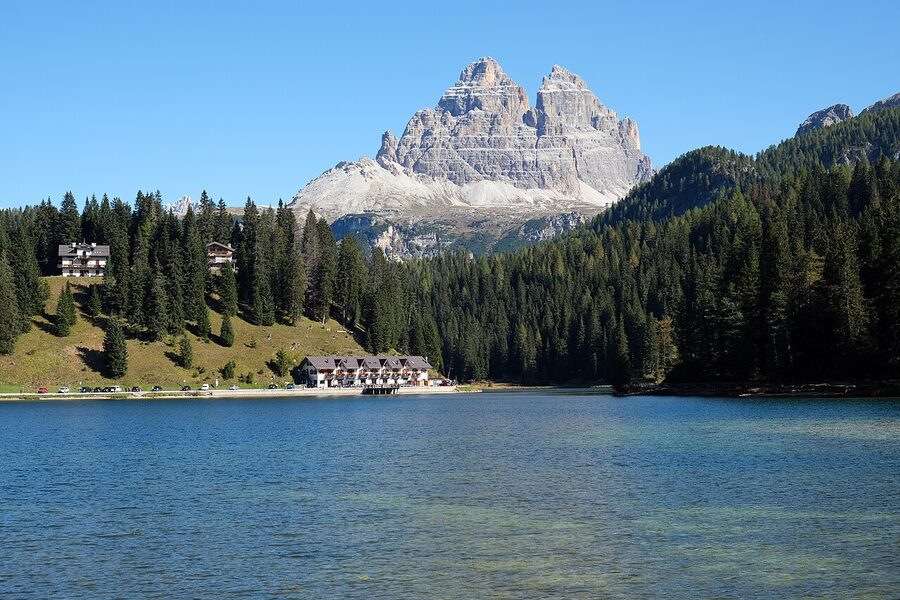
The train journey itself is 61 km from Tirano (429m elevation) up to St Moritz (1,775m). It climbs continuously for most of the ride, levels off at the Bernina Pass (2,253m), then descends slightly to St Moritz. The visual sequence is dramatic: Italian valley farmland → Alpine conifer forest → bare alpine plateaus → glacial lakes → ski resort town.
Stop-by-Stop Sequence
Tirano (startpoint): small Italian town in the Valtellina valley, near the Swiss border. The train station is right next to the standard Italian railway station — you step off the regional train from Milan and walk 3 minutes to the Bernina platform. Lunch options in town if you have 30+ minutes to spare.
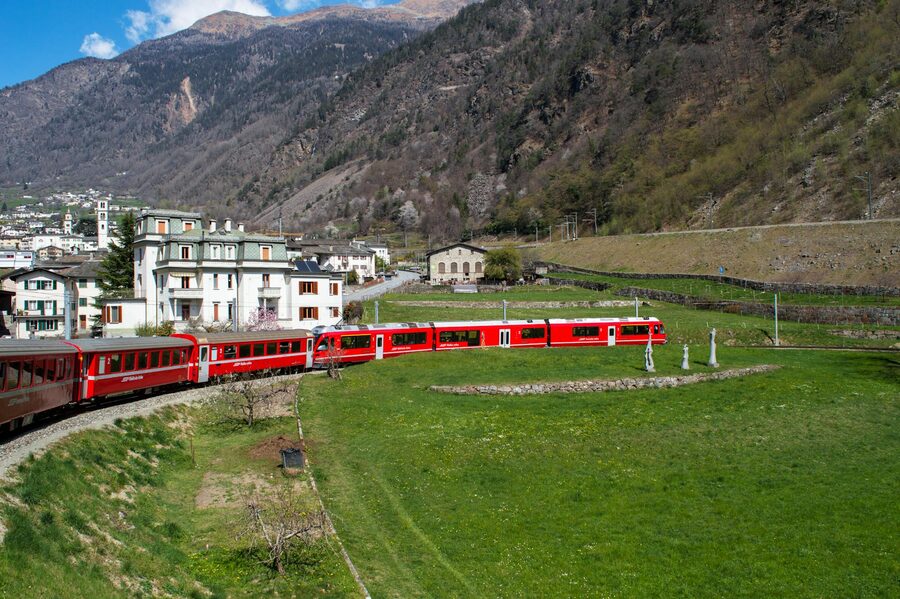
Brusio Spiral Viaduct (6 km in): the train climbs through a 360-degree helical loop viaduct to gain elevation. You can watch your own train curve below you out the window. One of the engineering highlights of the route.
Poschiavo (15 km): small Swiss town on Lago di Poschiavo. Brief stop. Panoramic train continues.
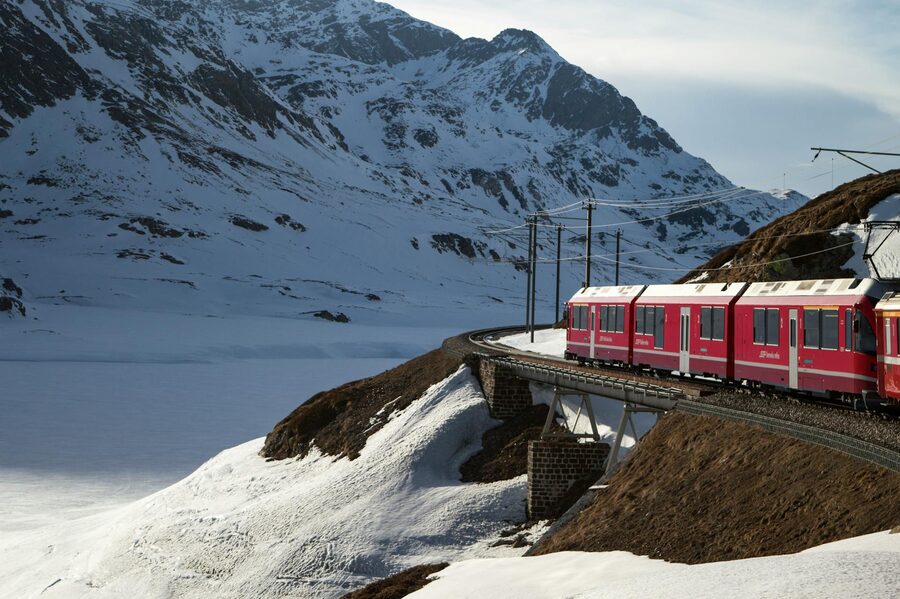
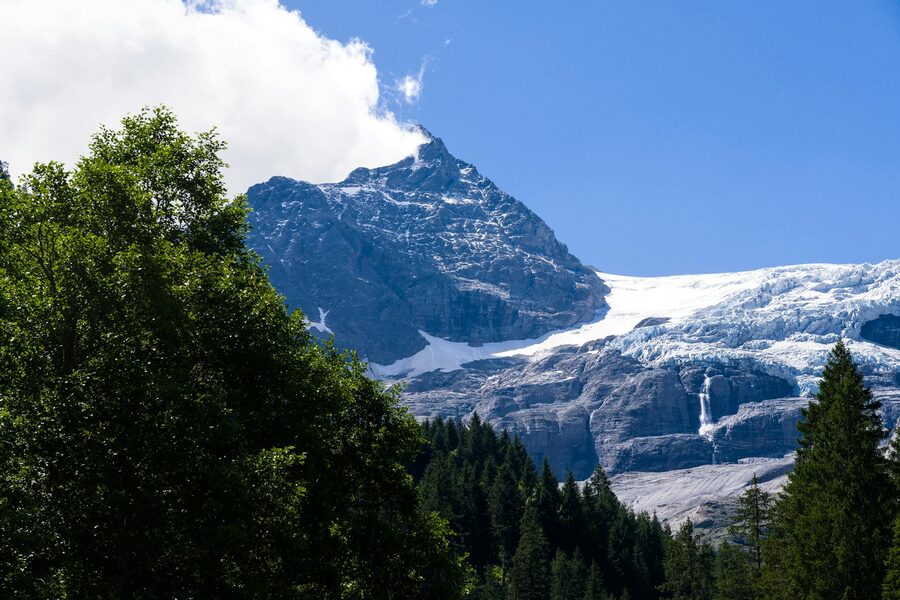
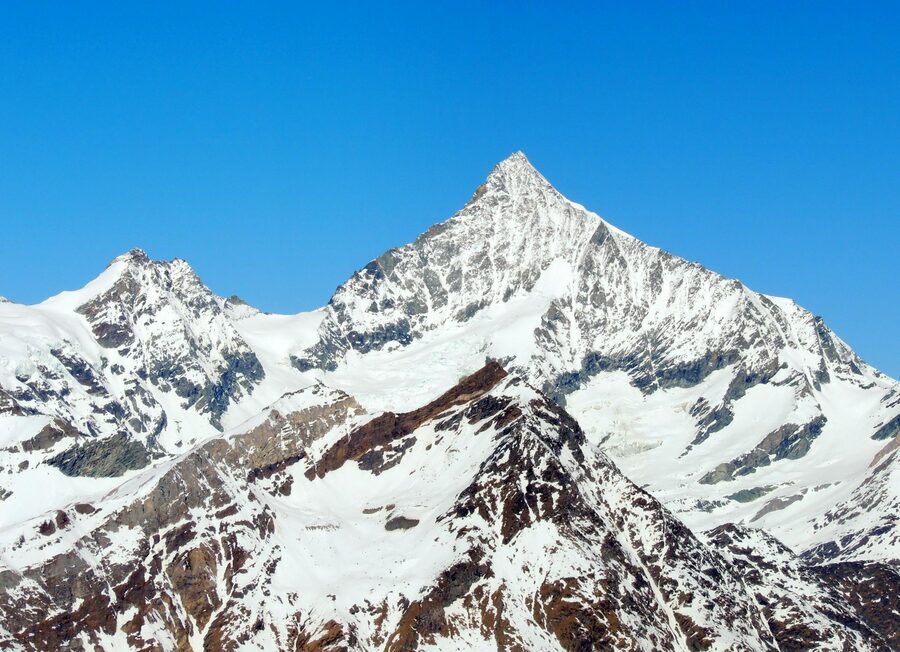
Alp Grüm (35 km): alpine station at 2,091m. The train pauses for 10-15 minutes here, often to let another train pass on the single-track line. Passengers can step onto the platform for photos. The Palü Glacier is directly visible from the platform.
Ospizio Bernina (45 km): the highest point on the route at 2,253m. Alpine pass, lakes on both sides, minimal vegetation. Summer temperatures can be 5-10°C here even when Tirano below is 25°C. Window-opening territory.
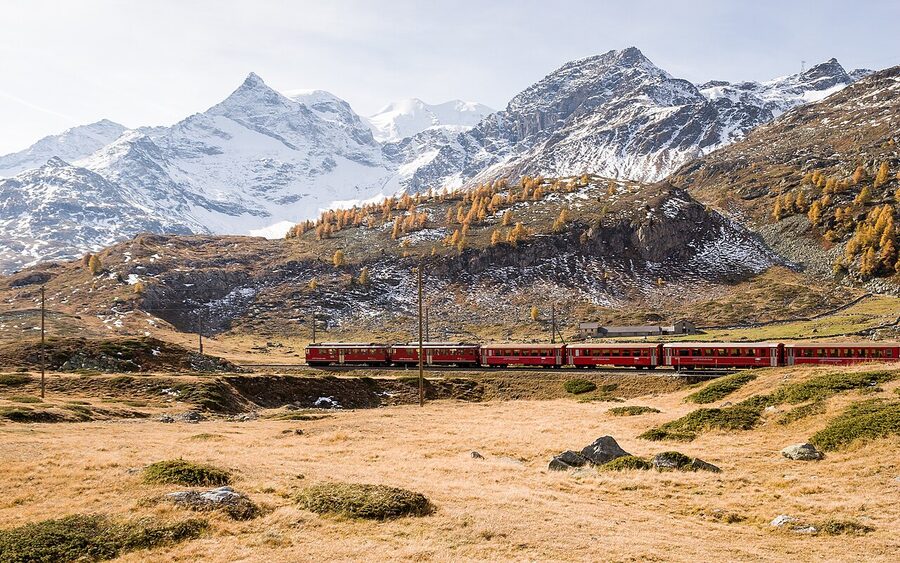
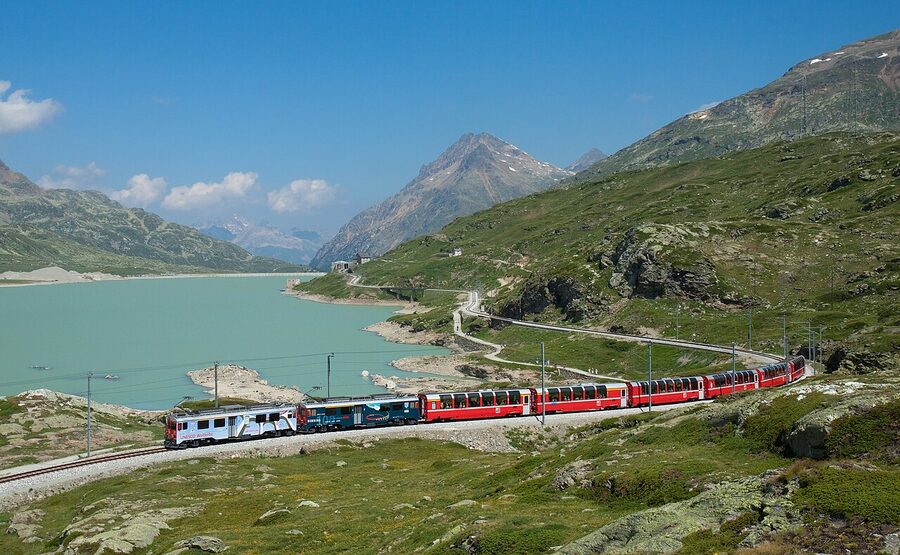
Lago Bianco (46-48 km): the “White Lake” on the pass. Lies exactly at the continental watershed — water from one side flows to the Adriatic, water from the other side flows to the Black Sea. Bright turquoise in summer, frozen in winter.
Pontresina (55 km): transfer point to bus connection. Some itineraries stop here.
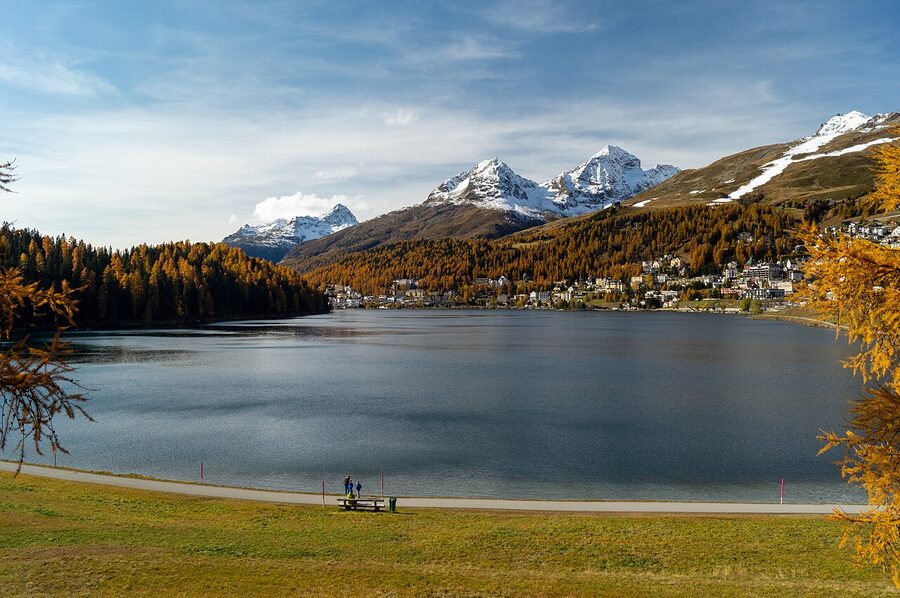
St Moritz (61 km): final stop. Lake St Moritz, luxury ski resort town, about 80 minutes in town on most day tours. Lunch, a short lakeside walk, maybe a quick tour of the town’s main street (Via Serlas is the shopping axis).
St Moritz Itself
St Moritz is famous globally as a luxury winter resort. In summer it’s much quieter, still beautiful, and noticeably more affordable (relatively). The town is small — you can cover the centre in an hour on foot.
The town has hosted Winter Olympics twice (1928, 1948) and still runs the famous Cresta Run toboggan course in winter. You can see the permanent ice track from various viewpoints in town.
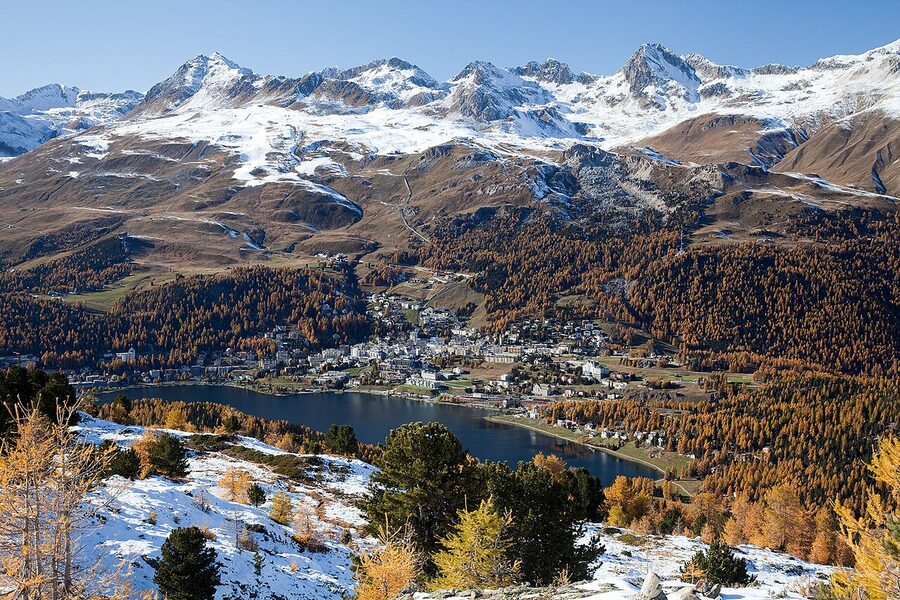
Lunch options: price is brutal — a basic salad in a St Moritz café is CHF 25-30 (€25-30). Better value at train-station cafés or the Migros supermarket nearby (Migros has a decent self-service cafeteria that’s Swiss-standard but affordable).
Shopping: Via Serlas runs the luxury-brand strip (Louis Vuitton, Cartier, Bulgari). Actual Swiss goods (watches, chocolates, army knives) are plentiful but not discounted — prices are full retail + St Moritz markup.
Time on ground: most day tours give you 60-90 minutes. That’s enough for lunch + a quick walk. Not enough for the funicular or a proper Cresta Run viewing. If you want those, stay overnight.
Train Class Options
The Bernina Express has two classes on its panoramic-window cars.
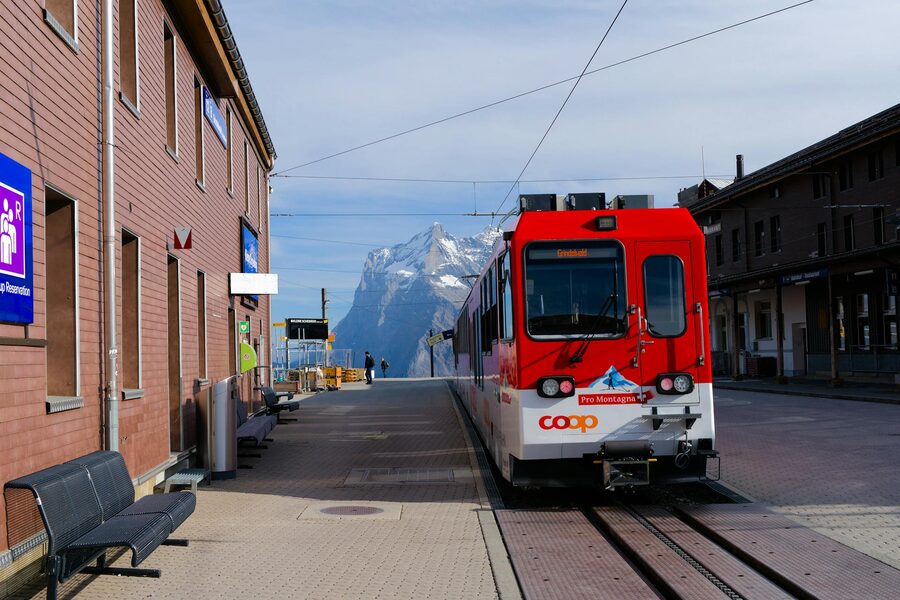
Second class: standard panoramic seats, 2+2 configuration, wide windows, free seat selection. CHF 94 total one-way from Tirano-St Moritz including panoramic supplement. Perfectly comfortable.
First class: 2+1 seat configuration, more legroom, same panoramic windows, optional meal service. CHF 154 one-way. Not particularly worth the premium unless you’re tall or want the extra shoulder room.
Regular cars (without panoramic windows): also operate on the same line, CHF 66 one-way without supplement. You can see the scenery but through smaller windows. Locals use these.
The bundled day tours from Milan: second-class panoramic seats are standard. Upgrading to first class varies by operator.
Season Matters
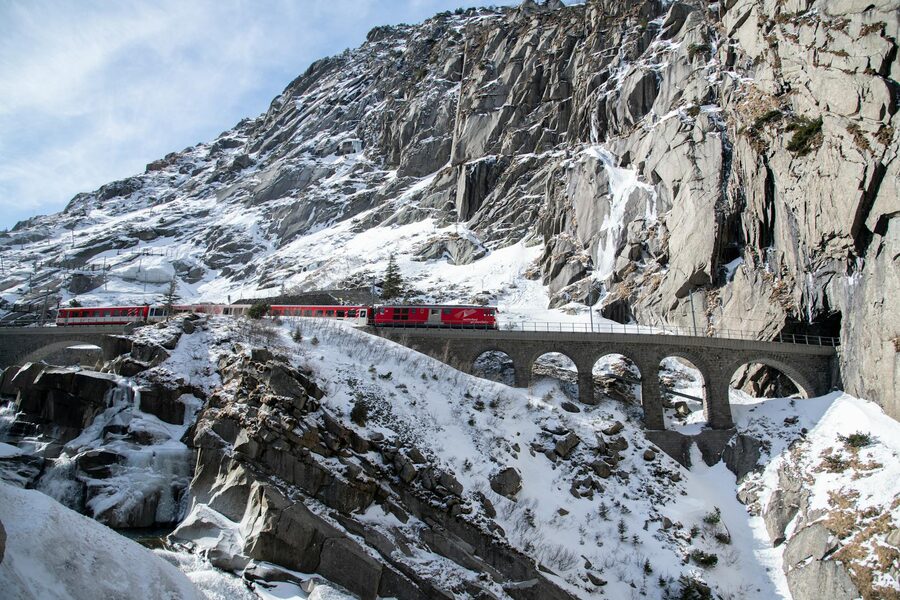
June-August: peak summer. Meadows green, lakes ice-free, 20-22°C days, 12-15°C at the pass. The train runs at peak frequency. Most tourist volume. Book 3-7 days ahead.
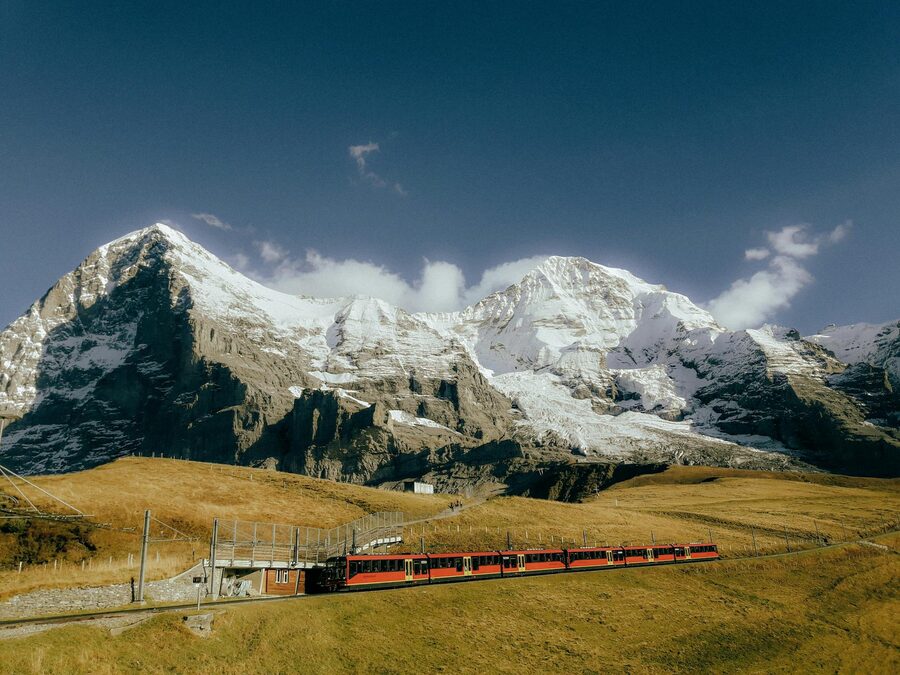
September-October: autumn. Larch trees turn gold in late September; lakes still warm; temperatures drop toward freezing at the pass by mid-October. Arguably the most photogenic window — shoulder season crowds, dramatic light.
November: transition month. Snow is patchy; skiing not yet possible; trees leafless. The least interesting visual window. Avoid.
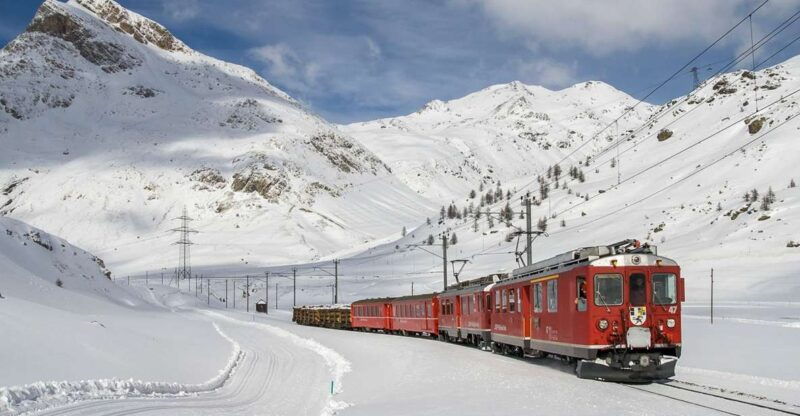
December-March: winter. Full snow cover, ski season active in St Moritz, shorter daylight. The train is heated and panoramic windows double-glazed so the ride is comfortable. Book 5-10 days ahead if you want ski-adjacent dates.
April-May: spring. Snow melt begins, lakes half-frozen, muddy terrain, generally awkward visual window. Better to wait for June.
The Long-Day Reality
Whichever tour you book, the day is 12-13 hours door-to-door from Milan.
Typical all-inclusive timeline: 7:00 Milan hotel pickup. 9:00 Lake Como cruise (if included). 10:30 drive to Tirano. 12:00 board Bernina Express. 14:30 arrive St Moritz. 14:30-16:00 town free time. 16:00 return bus (not train — bus down to Milan via Maloja Pass is faster). 20:00-21:00 back in Milan.
Train one-way + rail return option: alternative format where you train-out and train-back. 14-hour day. More authentic rail experience but exhausting.
Overnight option: the way to actually enjoy this is to stay one night in Poschiavo, Pontresina, or St Moritz. You cover the line at a human pace and have time for meals, walks, and proper photography. Day-trippers see less and do more.
What to Pack
Layers: t-shirt + fleece + windproof jacket. You’ll use all three across the day.
Passport: mandatory. You’re crossing from Italy (EU) into Switzerland (not EU, but Schengen since 2008). Passport controls are rare but possible.
Swiss Francs or euros: Switzerland uses CHF. Most St Moritz places accept euros at a bad rate. Credit cards work almost everywhere. ATMs at train station.
Camera: the panoramic windows are wide enough for phone photos. A proper camera with zoom captures wildlife (ibex, marmots) and distant peaks better.
Sunglasses: alpine light is harsh and snow reflection (winter) or water glare (summer) can damage eyes.
Motion sickness meds: some of the curves are tight. Rarely an issue but bring if you’re sensitive.
Pairing With Your Milan Trip
The Bernina + St Moritz day is a full-day commitment from Milan. Plan around it.
The day shape: Day 1 arrive + Duomo + La Scala museum. Day 2 Bernina Express day trip (early start, late return). Day 3 recovery + Last Supper + Sforza + Navigli. Day 4 departure or Lake Como extension. Combinations: the Bernina trip is geographically logical but emotionally distinct from other Milan activities — you’re in Switzerland, not Italy, for half the day. Worth doing but not stackable with other heavy days. Pair with a lighter La Scala museum visit on adjacent days.
Common Questions
Do I need a Swiss visa? Most EU/UK/US/Canadian/Australian visitors don’t. Schengen rules apply.
Is the train always running? Yes, year-round. Occasional closures for track maintenance (usually 1-2 days in spring/autumn). Operator website shows schedule.
Can I just buy a train ticket at Tirano? Yes. Walk-up second-class panoramic tickets usually available. First-class may require advance booking in summer peak.
Are there bathrooms on the train? Yes, 1 per carriage. Clean, standard European rail quality.
Is there food service? Basic trolley service with coffee, sandwiches, Swiss chocolate. Not a meal. Eat before or at St Moritz.
How crowded? Moderately. Summer peak can have 80-90% full panoramic cars. Winter often runs half-empty. Book seats if you want a window.
Can I step off the train at intermediate stops? Not on the Bernina Express (reserved seats; door-closed policy at short stops). On the regular non-panoramic Rhaetian Railway trains, yes — but those aren’t the bundled tour option.
Tipping? Not expected for train staff. €5-10 per person for good tour guides.
The Honest Verdict
The Bernina Express is one of the genuinely great scenic train rides in Europe. The combination of alpine landscape + engineering heritage + UNESCO status delivers something distinct from what other “tourist trains” offer. At $122-168 for a full-day Milan booking, the price is fair for what you get.
Book the GetYourGuide “Lake Como + Bernina + St Moritz” version ($159) if you want maximum variety in one day. Book the Bernina-focused “Train + St Moritz” ($122) if you only care about the rail experience. Skip the bundled tours entirely and do it yourself (Milan-Tirano-Bernina-St Moritz-Tirano-Milan) only if you’re on a 2+ night trip with flexibility. Go June-October for best weather, December-March for winter magic, skip November and April-May. Pack layers, bring a passport, leave Milan at 7:00 and expect to be back by 20:00 exhausted but happy.