
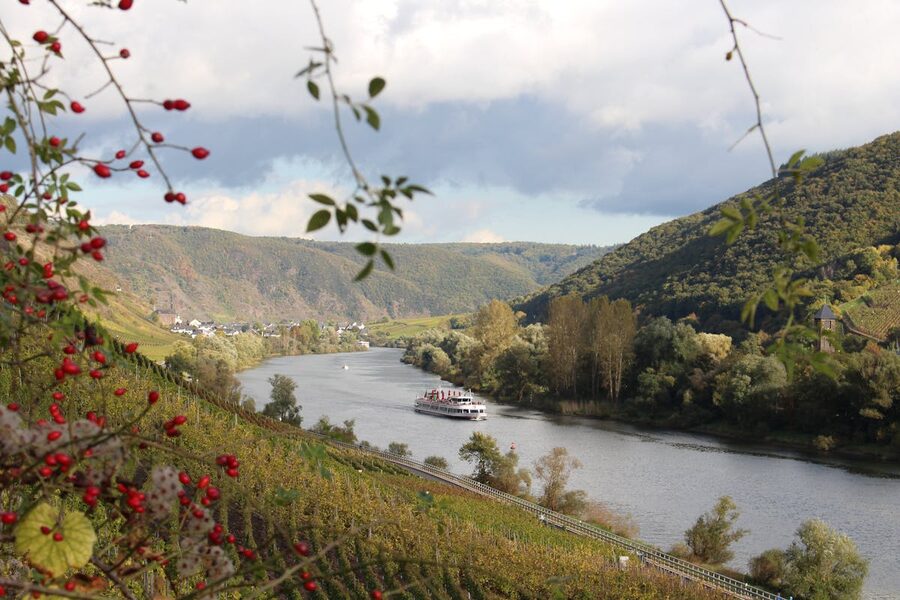
The Rhine Gorge between Koblenz and Bingen is the stretch that earned the river its reputation — 65 kilometres of steep vineyards, ruined castles on every hilltop, and the Lorelei rock where a siren supposedly sang sailors to their doom. UNESCO gave the whole thing World Heritage status in 2002, and a 2-hour boat cruise through it costs $22.
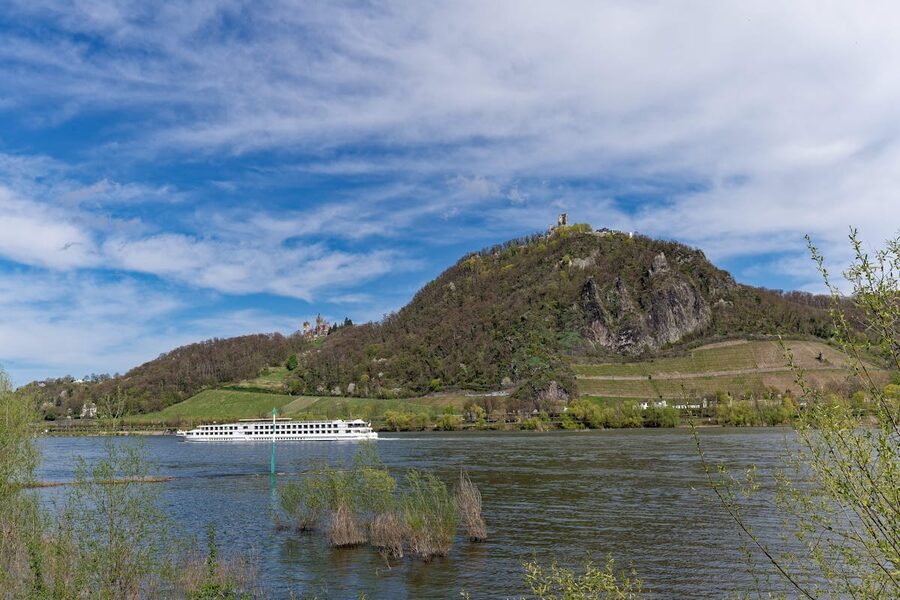
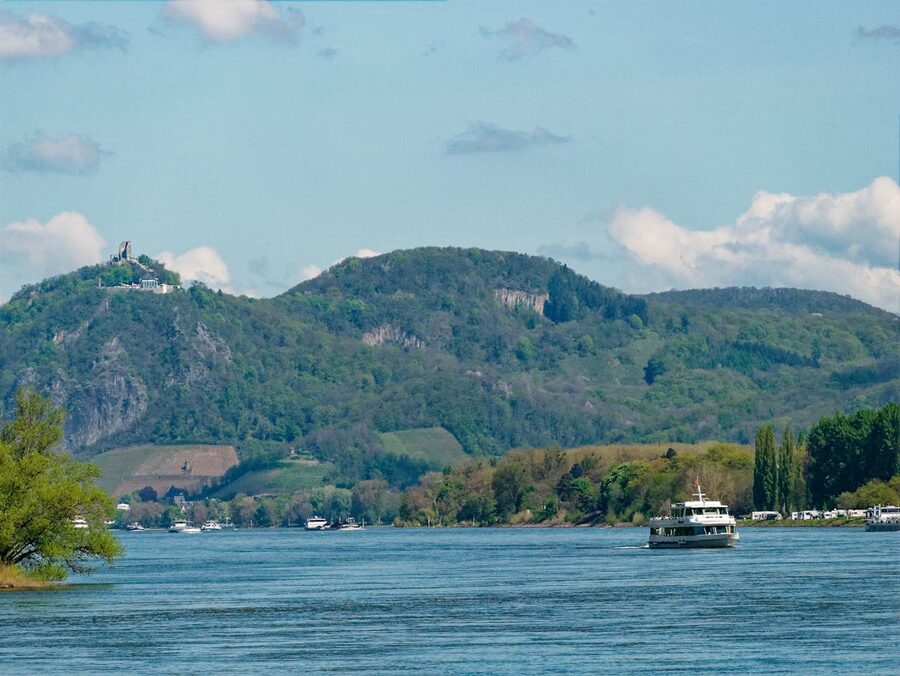
The Upper Middle Rhine Valley (its official name) packs more castles per kilometre than any other river valley in Europe. Over 40 castles and fortresses line the banks between Koblenz and Bingen, most built in the 12th-14th centuries by feuding lords who used them to control river traffic and collect tolls. The boat cruise from Koblenz takes you past the most dramatic section — castle after castle sliding by as the river narrows through the gorge and the vineyards climb impossibly steep hillsides.
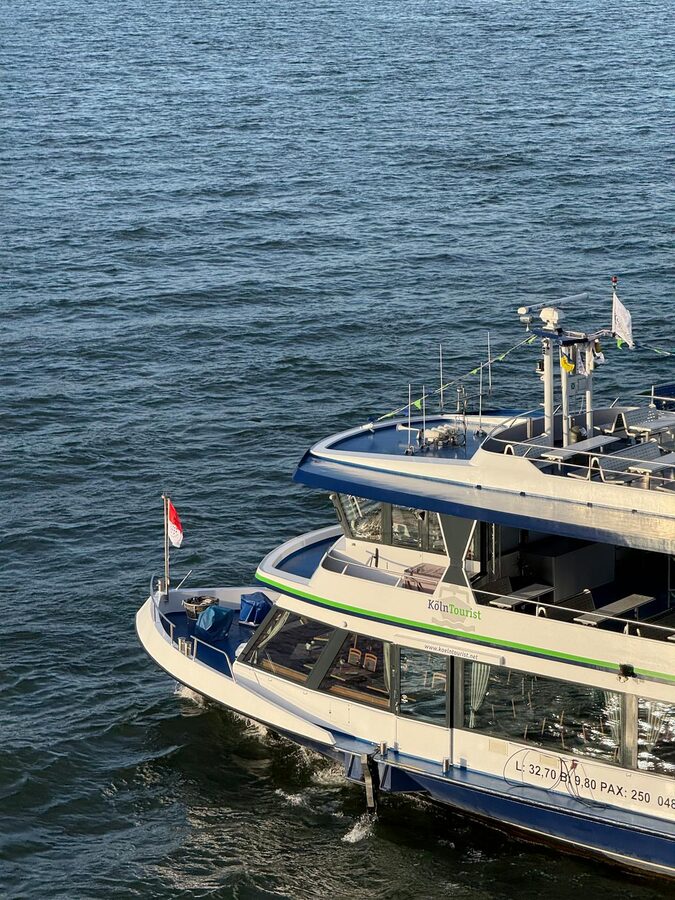
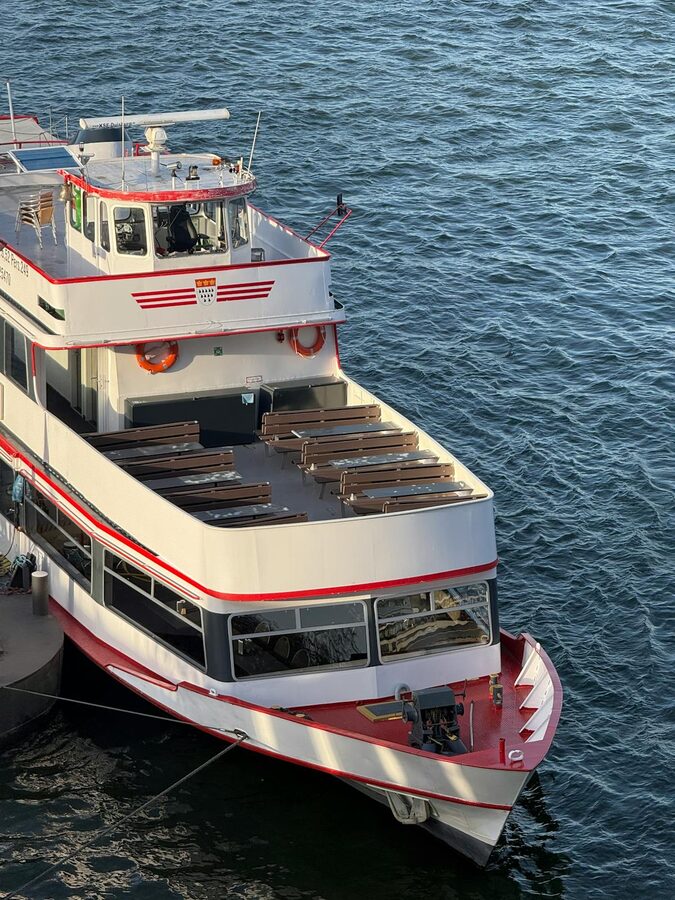
Best from Frankfurt: Rhine Valley Day Trip from Frankfurt — $167, full day with cruise, wine tasting, and guided tour.
Official info: visit-koblenz.de — cruise schedules, fortress info, and Koblenz visitor guide.
- The 2-Hour Castle Cruise from Koblenz
- The Castles You’ll See
- The Lorelei Rock
- Koblenz: The Starting Point
- Rhine Wine: The Valley’s Other Treasure
- The Rhine’s History
- The Day Trip from Frankfurt
- Best Tours to Book
- 1. Koblenz: Rhine Valley Castle Cruise —
- 2. Rhine Valley Day Trip from Frankfurt — 7
- 3. Koblenz Cable Car & Ehrenbreitstein Fortress
- Practical Tips
- More Germany River Experiences
The 2-Hour Castle Cruise from Koblenz
The standard Rhine Valley cruise departs from Koblenz’s Konrad-Adenauer-Ufer (the main boardment, near the Deutsches Eck) and heads upstream through the gorge. Over 2 hours, you pass approximately 20 castles, multiple wine villages, the famous Lorelei rock, and enough scenery to fill a camera roll. Bilingual commentary (German and English) identifies everything you see.
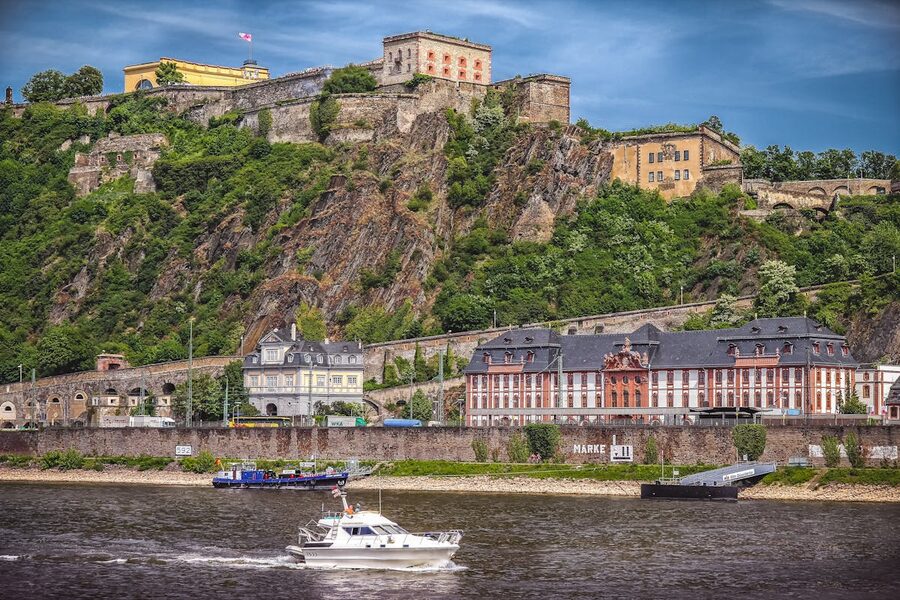
At $22, the cruise is one of the best-value experiences in Germany. The boats run daily from April through October, with multiple departure times. The cruise is one-way upstream — you either take the return boat (same route, same time) or combine the cruise with a stop in one of the riverside towns and return by train.
The Castles You’ll See
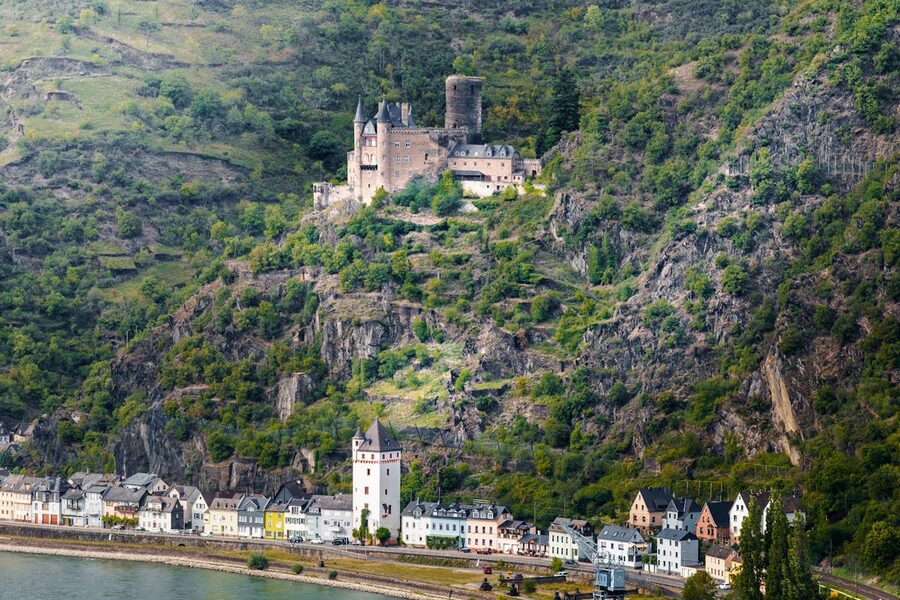
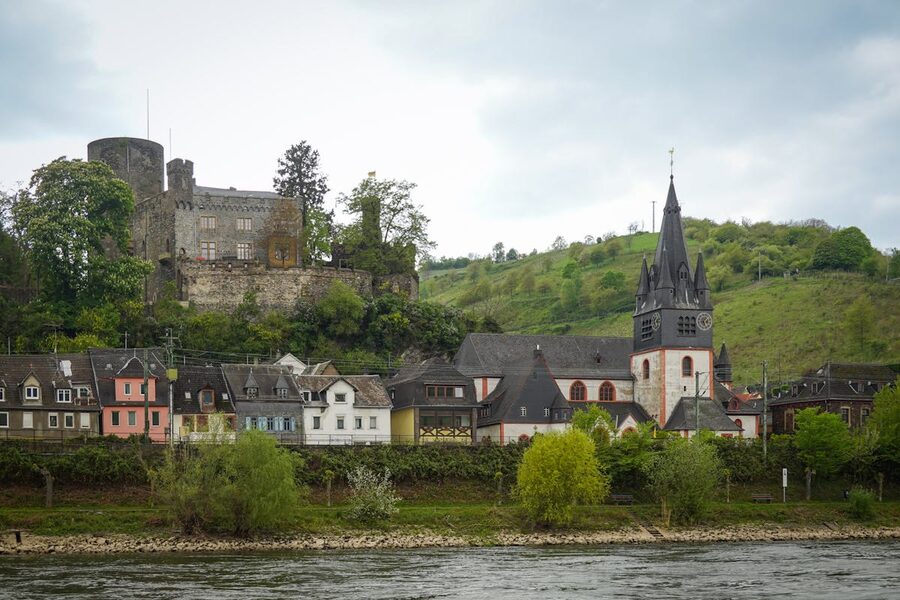
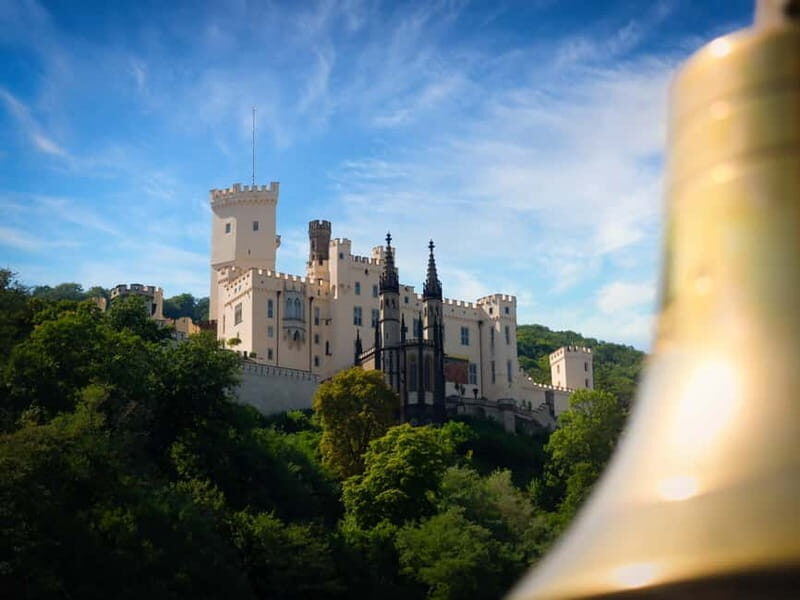
The Rhine Gorge’s castles fall into three categories: toll castles (built on rocky outcrops to control river traffic), fortress-residences (where the local lords actually lived), and romantic reconstructions (ruins rebuilt in the 19th century when the Romantic movement made medieval architecture fashionable).
Marksburg Castle — the only hilltop castle on the Rhine that was never destroyed. Every other castle in the gorge was demolished at least once (usually by the French in the 17th century). Marksburg survived because its hilltop was too steep for artillery to reach, and it’s now the best-preserved example of a medieval Rhine castle. Guided tours are available if you stop at Braubach.
Burg Rheinfels — the largest castle ruin on the Rhine, above St. Goar. Built in 1245 by Count Dieter V of Katzenelnbogen (the greatest name in German nobility), it withstood a siege by 28,000 troops in 1255 but was eventually destroyed by the French in 1797. The ruins are extensive and explorable — tunnels, mine galleries, and underground passages that you can walk through with a torch.
The Hostile Brothers (Burg Sterrenberg and Burg Liebenstein) — two castles built side by side on neighbouring hilltops, separated by a wall. Legend says two brothers built them after falling out over a woman. The reality is more prosaic (inheritance disputes), but the visual — two castles facing each other with a spite wall between them — is one of the Rhine’s most memorable images.
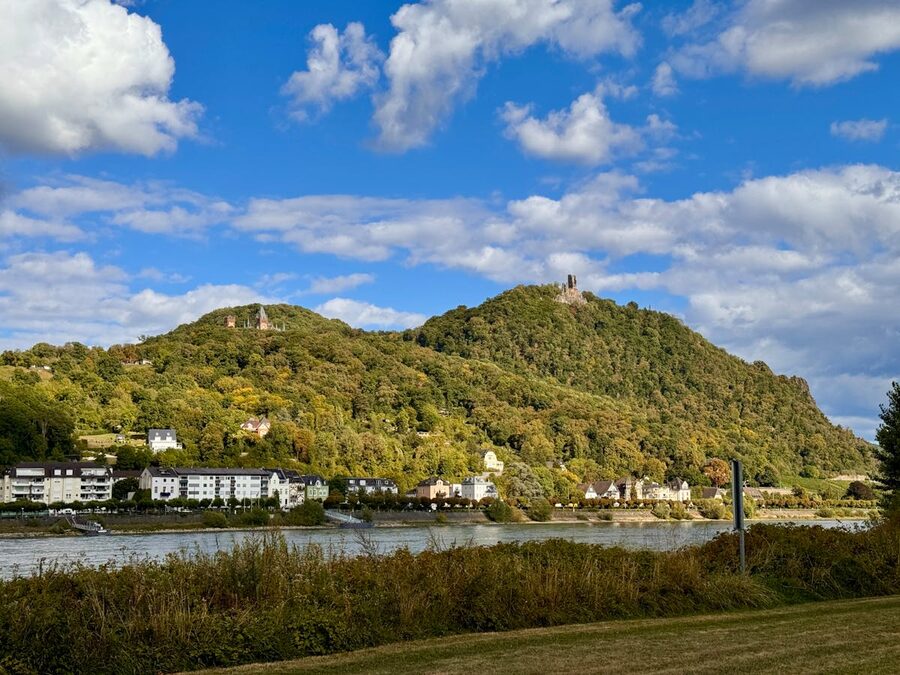
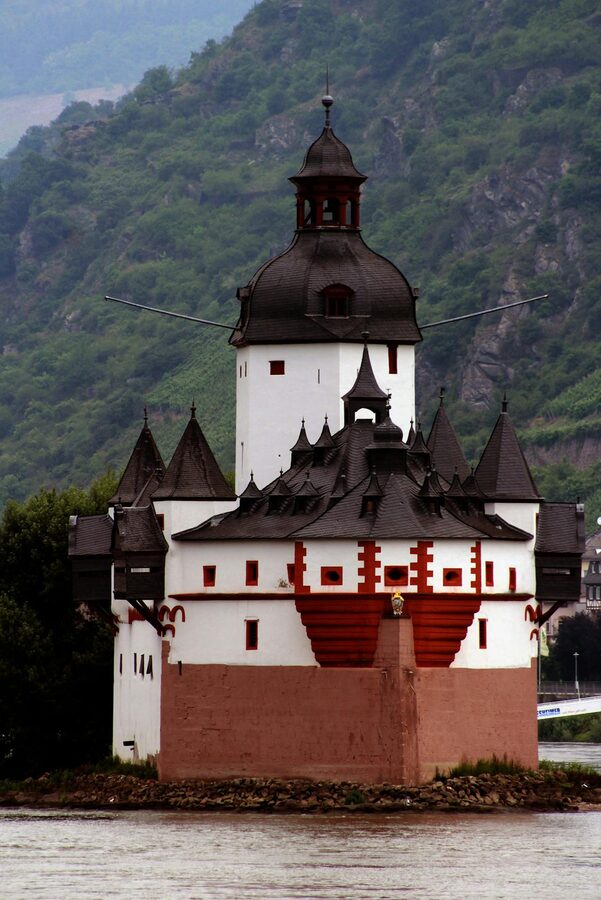
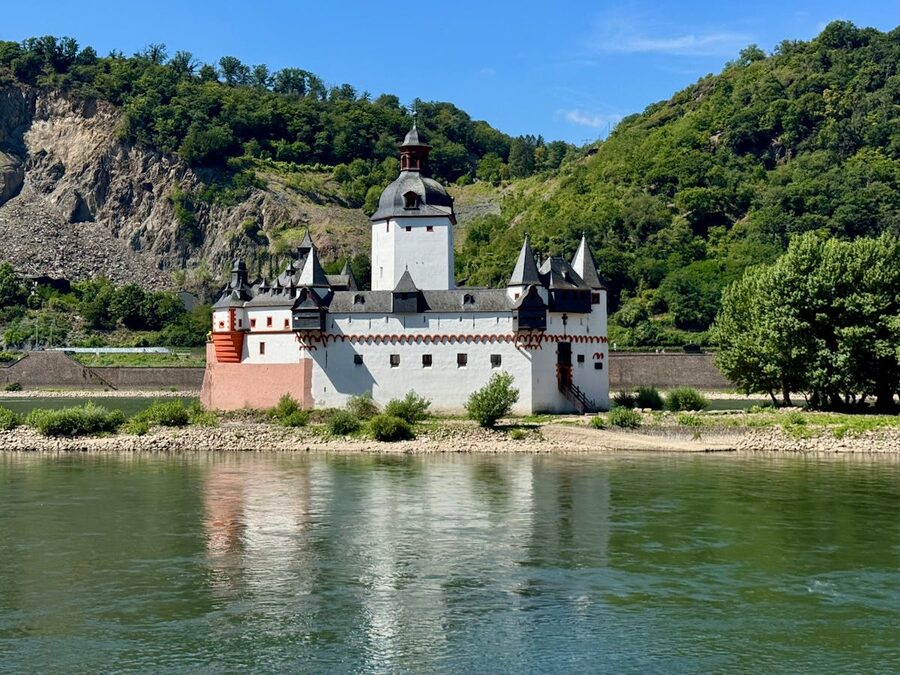
Pfalzgrafenstein — a castle built on an island in the middle of the Rhine, near Kaub. Its ship-shaped design was built to split the river’s current, and its purpose was purely commercial: it was a toll station. No one lived here permanently. Ships had to stop and pay, or the garrison would sink them. It’s one of the most distinctive silhouettes on the river.
The Lorelei Rock
The Lorelei is a 120-metre slate cliff that marks the narrowest and deepest point of the Rhine Gorge. The current here is strong, the river narrows to 113 metres, and the rock creates an echo that amplified the sound of the rapids before they were dredged in the 19th century. Legend attributed the dangerous currents to a siren sitting on the rock, combing her golden hair and singing sailors to their death.
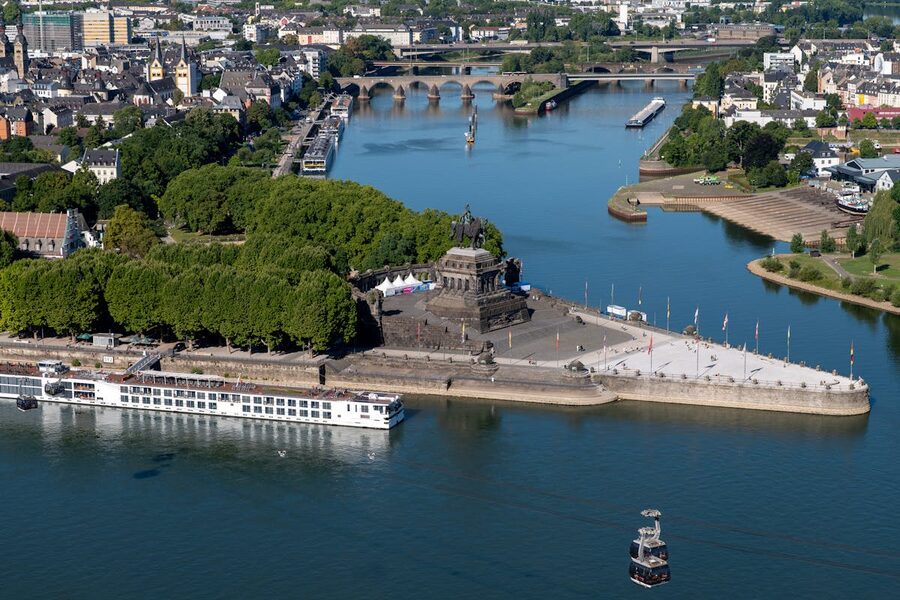
Heinrich Heine’s 1824 poem “Die Lorelei” turned the legend into one of the most famous works of German Romantic poetry. The cruise commentary usually includes a version of the poem (sometimes sung by the crew, sometimes played over speakers), and whether this is charming or cheesy depends on your tolerance for audience participation on boats. The rock itself is impressive regardless — a sheer cliff face rising from the water that explains why the legend took hold.
Koblenz: The Starting Point
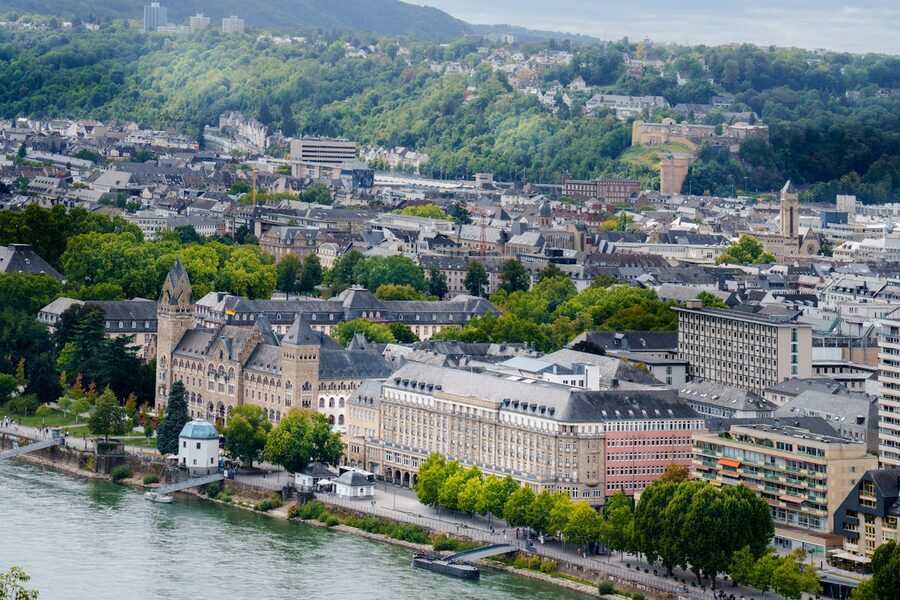
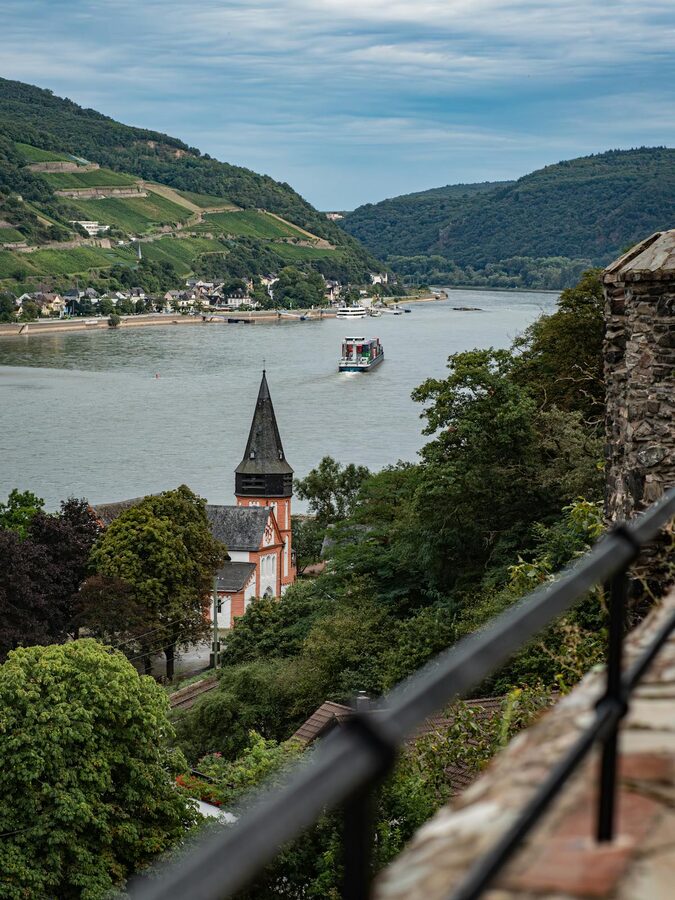
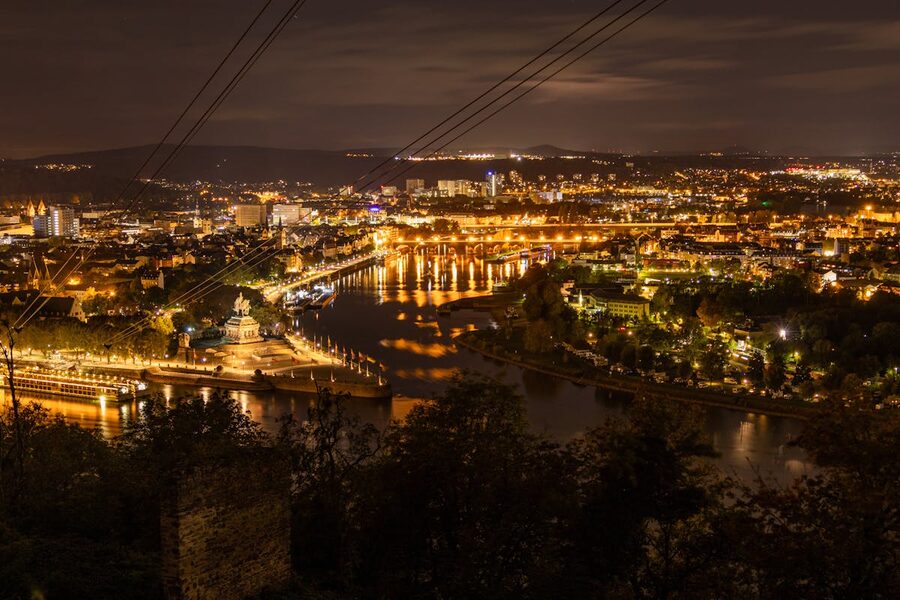
Koblenz sits at the confluence of the Rhine and the Moselle — the Deutsches Eck (German Corner) marks the exact point where the two rivers meet, crowned by a massive equestrian statue of Kaiser Wilhelm I. The city makes a natural base for Rhine cruises because it’s at the northern end of the gorge, well connected by train, and has enough attractions for a half-day beyond the cruise.
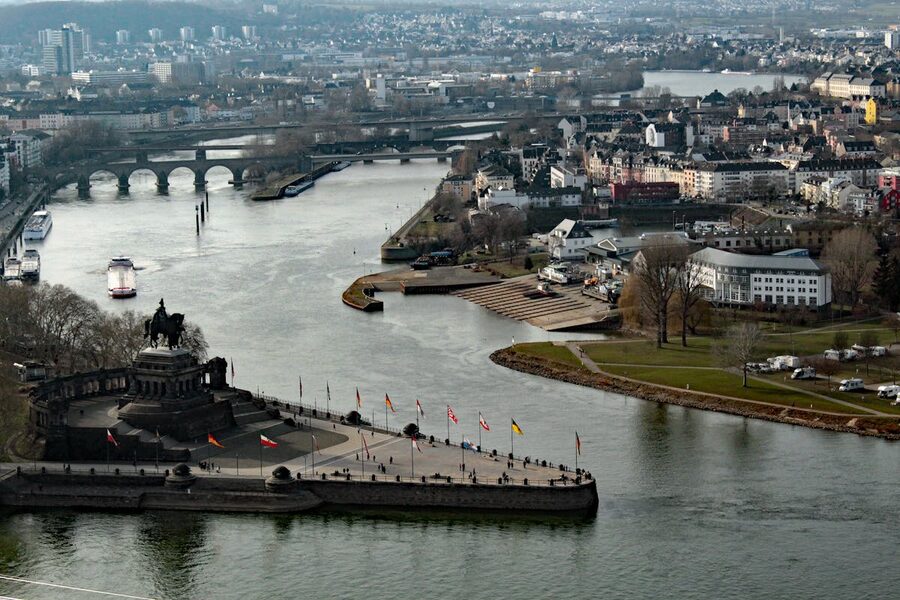
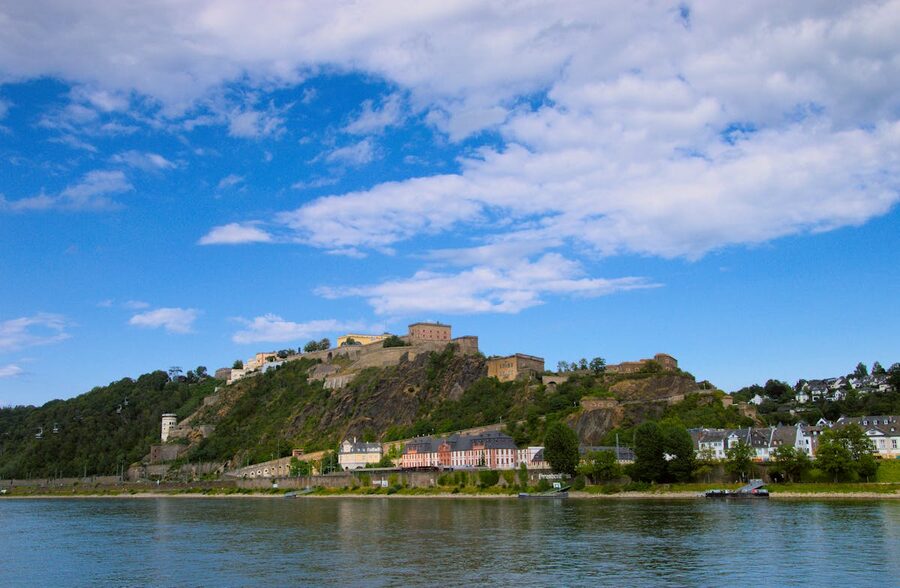
The Ehrenbreitstein Fortress — one of the largest fortresses in Europe, perched 118 metres above the Rhine on the opposite bank from Koblenz’s old town. The cable car from the Deutsches Eck crosses the Rhine to the fortress in about 5 minutes, and the views from the fortress ramparts over the confluence and the Rhine Gorge are spectacular. The fortress houses a regional museum and hosts cultural events throughout the year.
Rhine Wine: The Valley’s Other Treasure
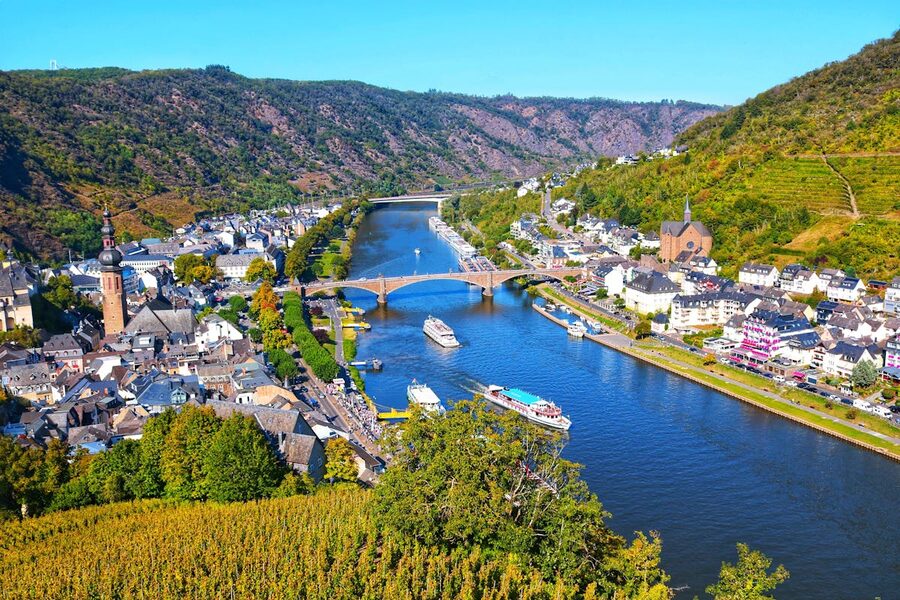
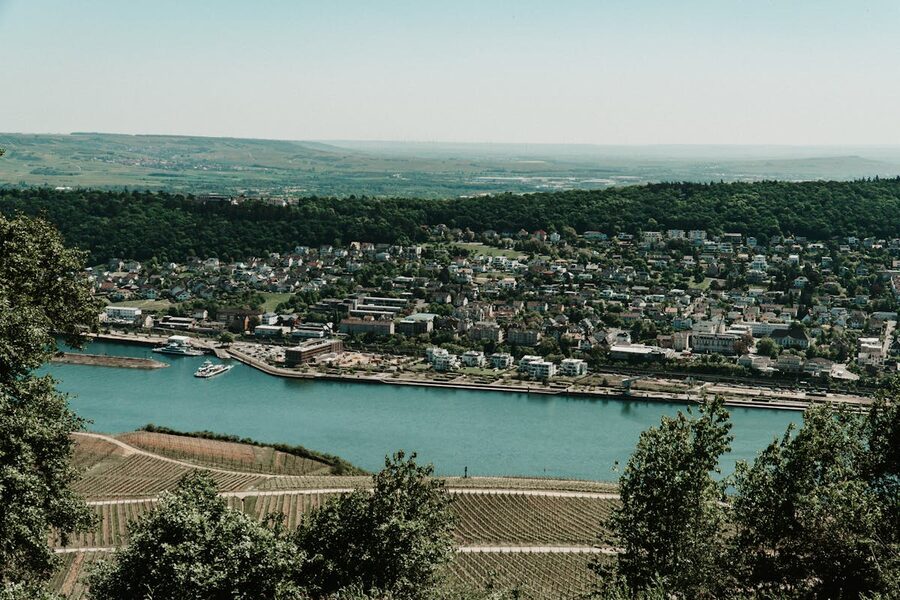
The Rhine Gorge is Riesling territory. The steep, south-facing vineyards that line the valley produce some of Germany’s finest white wines — dry, mineral, and with an acidity that pairs perfectly with the local fish and pork dishes. The cruise passes directly beneath the vineyards, close enough to see the individual vines clinging to the hillsides.
The Rhine Valley day trip from Frankfurt ($167) includes a wine tasting at a local vineyard as part of the itinerary. If you’re on the Koblenz cruise without the wine tasting, the riverside villages (particularly Bacharach and Oberwesel) have Weinstuben (wine taverns) where you can taste local wines by the glass for €3-5. Bacharach is the most popular stop — a small medieval town with half-timbered houses, a ruined hilltop chapel, and wine taverns that line the main street.

The Rhine’s History
The Rhine has been a transport corridor, a military frontier, and a political boundary for over 2,000 years. The Romans used it as the empire’s northern border — the right bank was Germania, the left bank was Rome. Medieval lords built their castles to control river trade. Napoleon used it as France’s “natural frontier.” And the Allies crossed it in 1945 to end the war in Europe. Every era has left its mark on the valley, and the cruise commentary traces these layers.
The castles date primarily from the 12th-14th centuries, when the Holy Roman Empire’s political fragmentation meant that dozens of minor lords competed for control of the lucrative river tolls. The archbishop of Mainz, the counts of the Palatinate, and various knightly families each built fortresses at strategic points — narrows, bends, and islands — to stop passing ships and demand payment. At one point, over 60 toll stations operated on the Rhine between Basel and the North Sea. Emperor Rudolf I finally limited toll collection in the 1270s, but the castles remained.
The Day Trip from Frankfurt
For visitors based in Frankfurt, the Rhine Valley Day Trip ($167, 8 hours) covers the entire experience in a single day — bus from Frankfurt to the Rhine, a cruise through the gorge, a wine tasting, a guided walk through one of the riverside villages, and the return journey. The price is significantly higher than the standalone Koblenz cruise because it includes transport from Frankfurt, the guide, and the wine tasting.
Frankfurt is about 1.5 hours from the Rhine Gorge by bus, and the guided day trip is the easiest way to see the valley without a car. Independent visitors can take the train from Frankfurt to Koblenz (about 1 hour 40 minutes on the fast IC service) and board the cruise there, but the guided trip handles logistics and adds wine expertise that self-guided visits lack.
Best Tours to Book
1. Koblenz: Rhine Valley Castle Cruise — $22
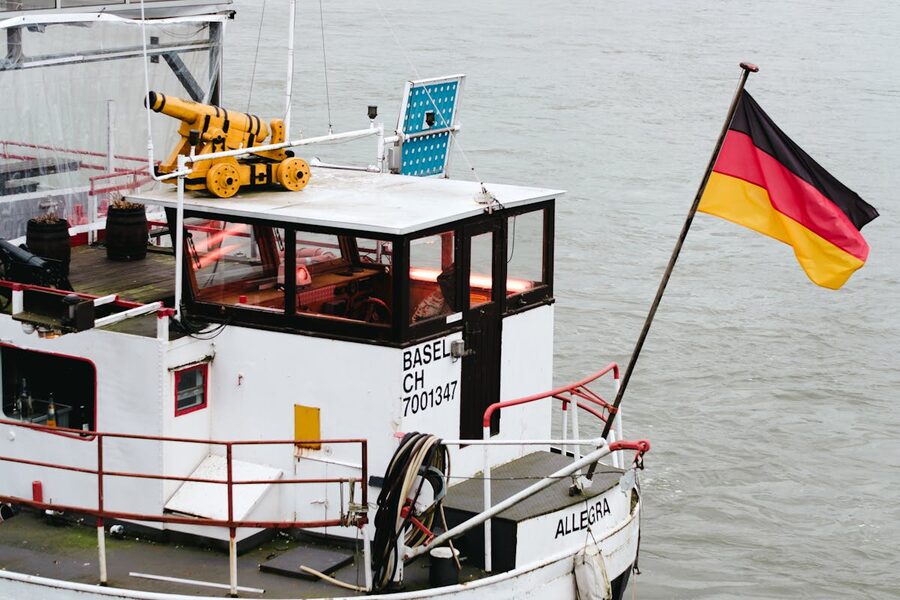
The standard Rhine Valley experience. Two hours upstream from Koblenz through the most scenic stretch of the Rhine, with bilingual commentary identifying every castle, village, and vineyard you pass. At $22, it’s one of the cheapest guided experiences in Germany and one of the most visually spectacular. Our review covers the boat quality and the best seats for photography.
2. Rhine Valley Day Trip from Frankfurt — $167
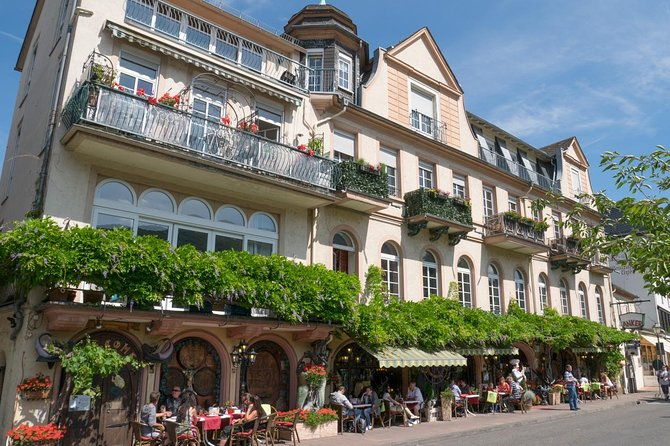
For Frankfurt-based visitors who want the complete Rhine Valley experience without rental car logistics. Eight hours covering the bus transfer, the river cruise, a wine tasting at a local vineyard, and free time in a riverside village. At $167, it’s the premium option but the most comprehensive. Our review covers whether the Frankfurt day trip adds enough value over the standalone Koblenz cruise.
3. Koblenz Cable Car & Ehrenbreitstein Fortress
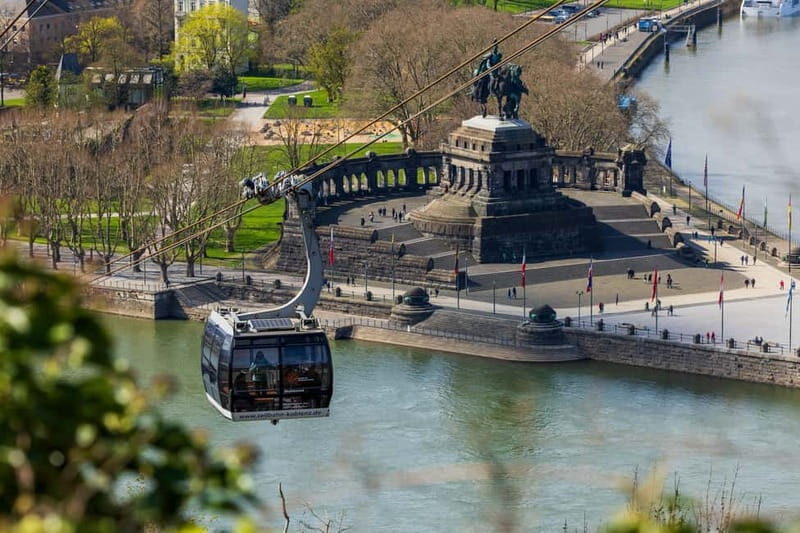
The ideal add-on to the Rhine cruise. The cable car crosses the Rhine from the Deutsches Eck to the Ehrenbreitstein Fortress, giving you an aerial perspective over the confluence that the boat cruise can’t provide. The fortress itself is worth 1-2 hours for the views, the museum, and the sheer scale of the fortifications. Our review covers the cable car experience and the fortress highlights.
Practical Tips
When to cruise: April through October. The peak season is June-September when the weather is warmest and the vineyards are green. October brings autumn colours to the hillsides — arguably the most beautiful month for the cruise, and significantly less crowded.
Getting to Koblenz: Direct trains from Frankfurt (1hr 40min), Cologne (1hr), and Bonn (30min). Koblenz Hauptbahnhof is about 15 minutes on foot from the cruise boardment at the Deutsches Eck.
Combining cruise + stops: The boats stop at several riverside towns. Buy a hop-on hop-off ticket (available from KD Rhine Steamer) to break the journey — cruise to Bacharach or St. Goar, explore for a few hours, then continue by train back to Koblenz (trains run along both banks of the Rhine).
Budget: Koblenz cruise: $22. Cable car + fortress: varies. Wine tasting in Bacharach: €3-5/glass. Lunch at a riverside restaurant: €12-18. A full day in Koblenz with cruise, fortress, and wine: about €60-80.
More Germany River Experiences
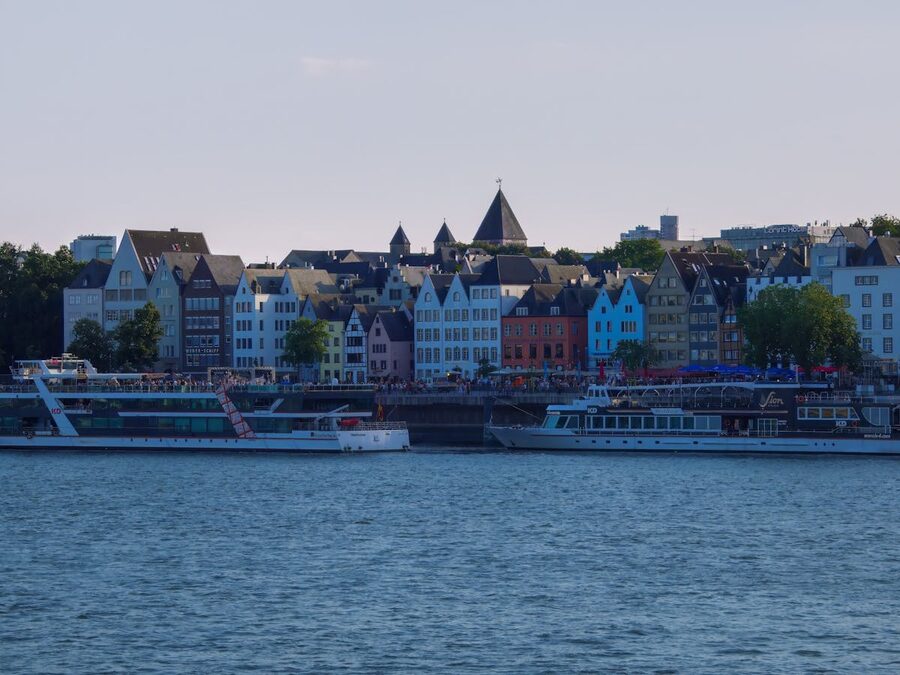
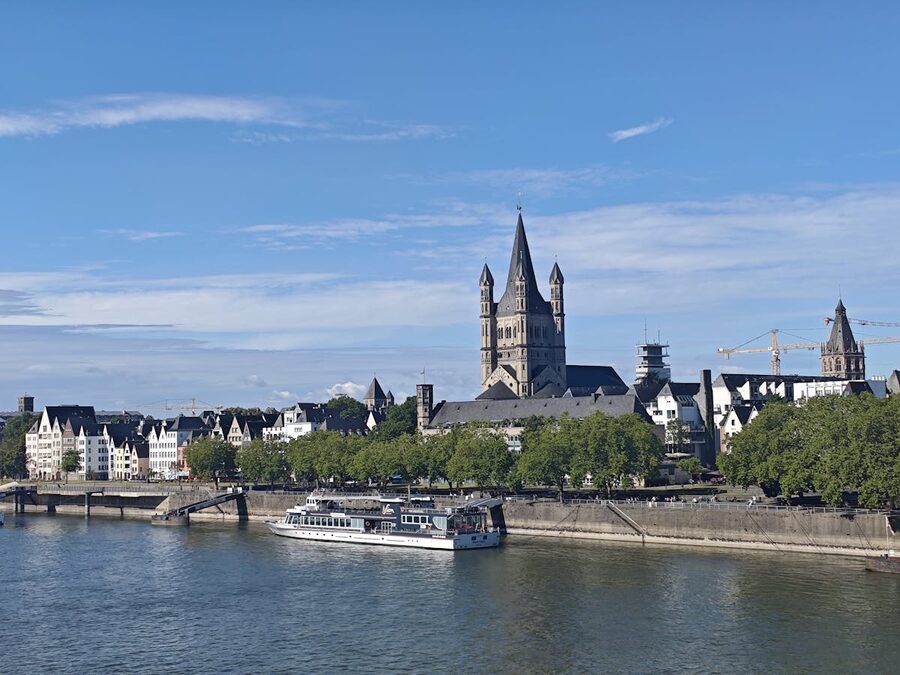
The Rhine cruise from Koblenz pairs well with the Cologne Rhine cruises — a different section of the river, more urban and industrial, with the cathedral dominating the waterfront. The Heidelberg Neckar River cruise offers a more intimate river experience — a smaller river, a university town, and a ruined castle instead of 40.
For visitors continuing through Germany, the Dresden walking tours show what happens when a different German river (the Elbe) shapes a city’s identity, and the Hamburg harbour cruises represent the opposite end of the river spectrum — industrial port rather than romantic valley.