
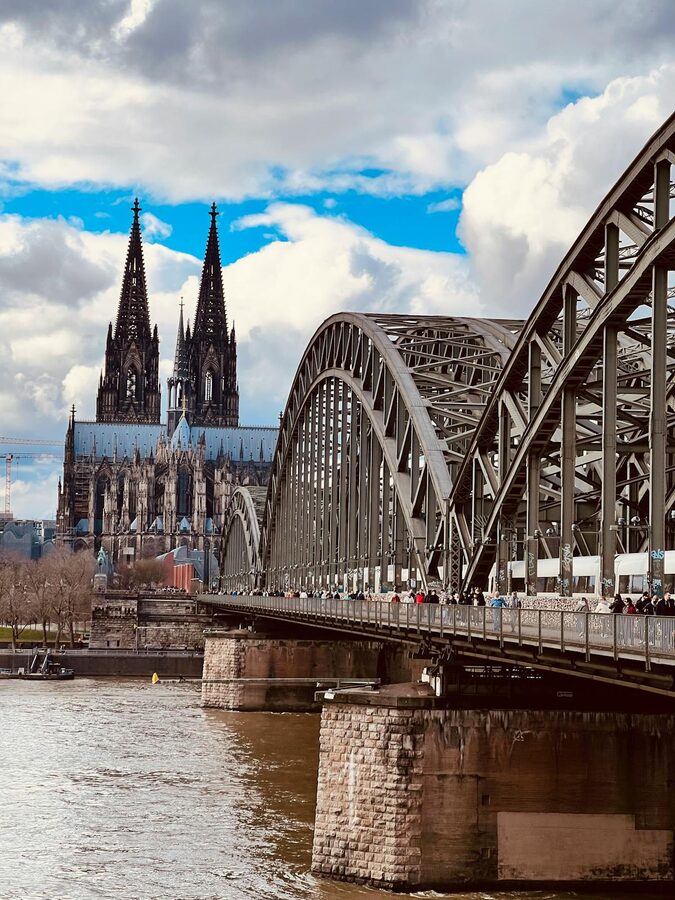
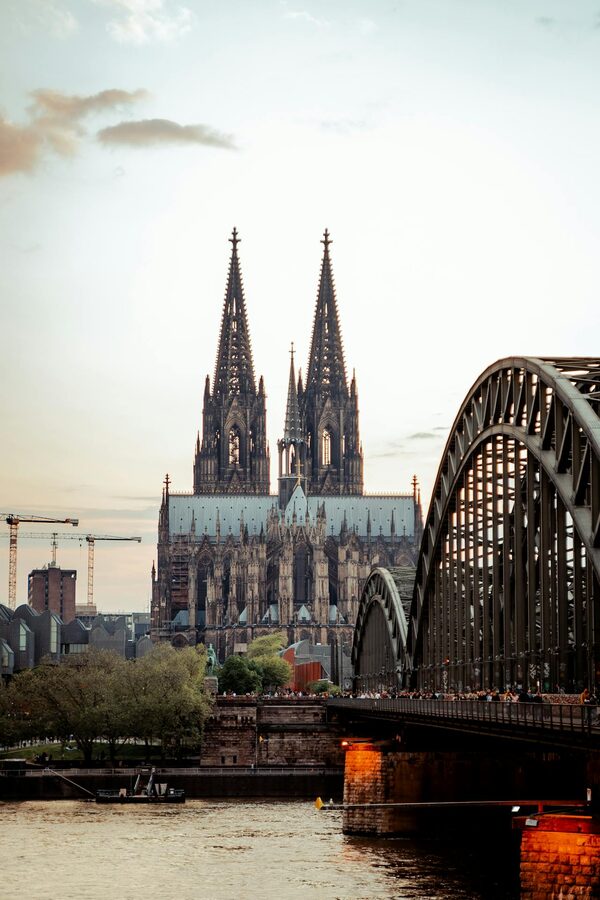
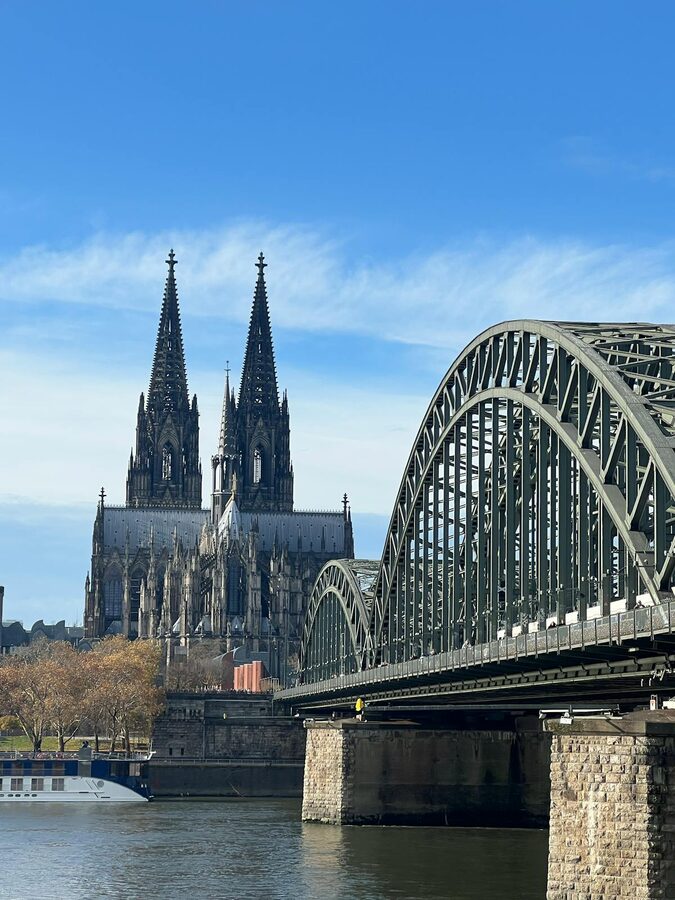
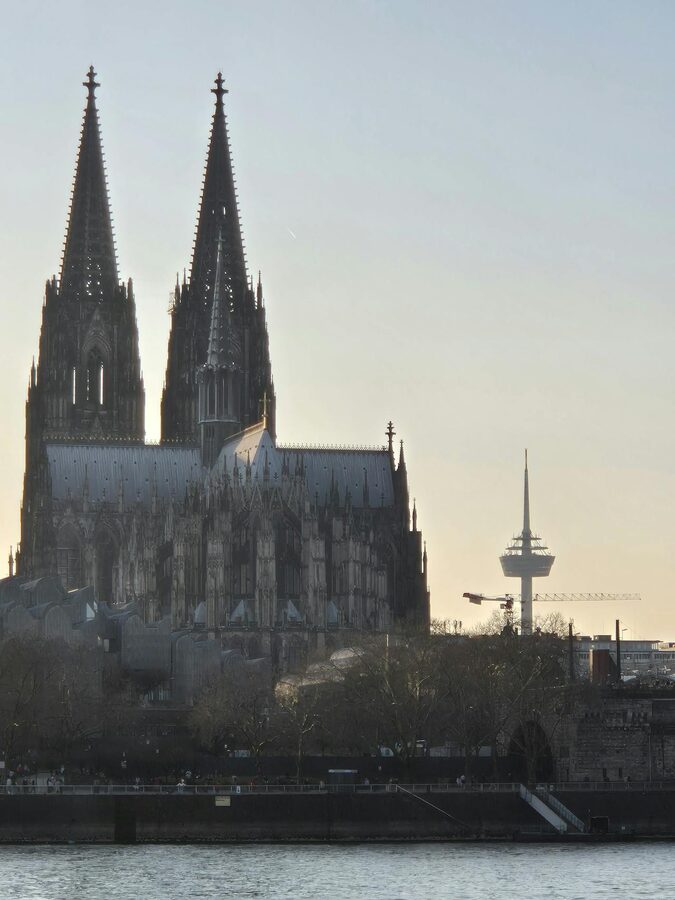
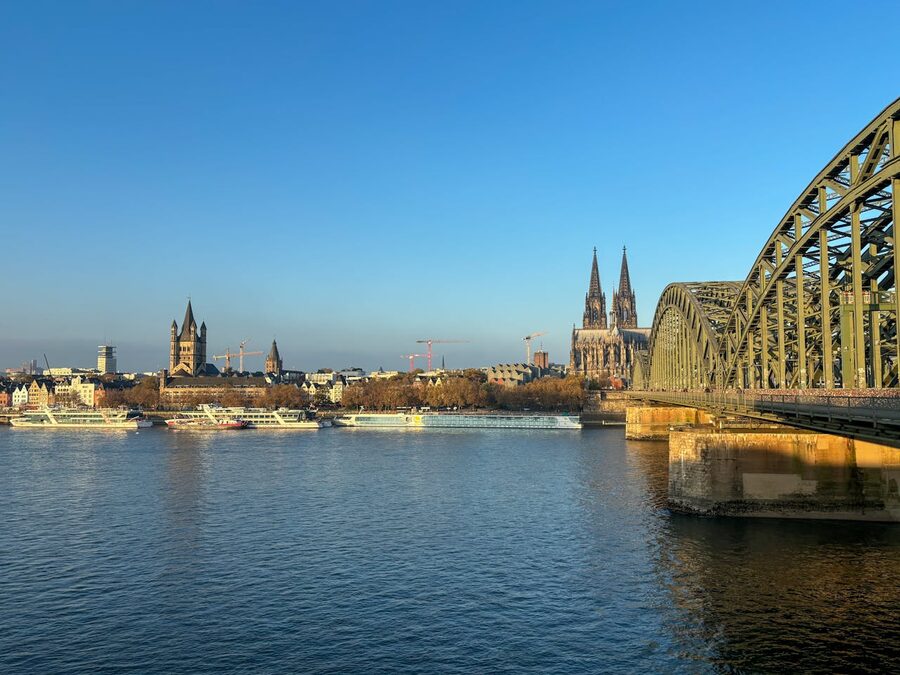
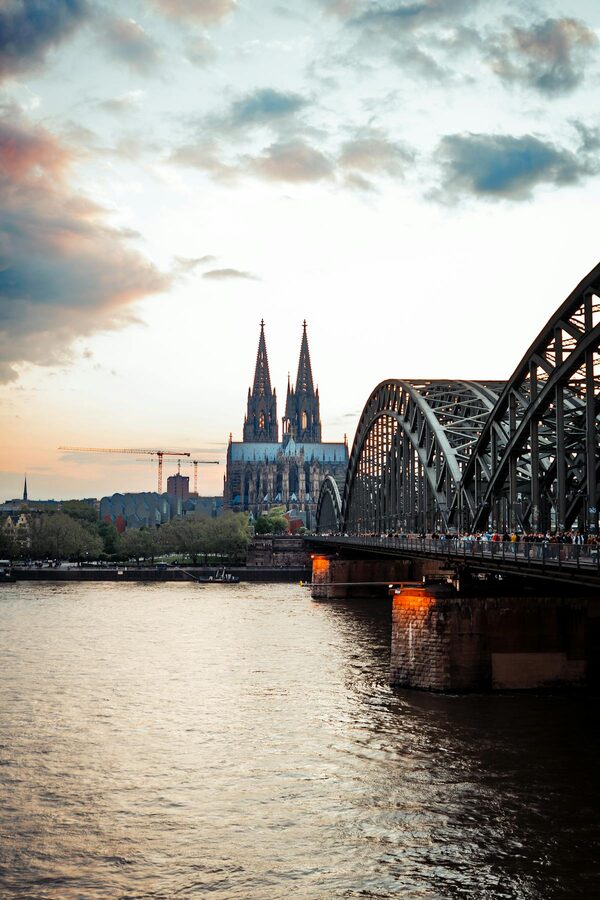
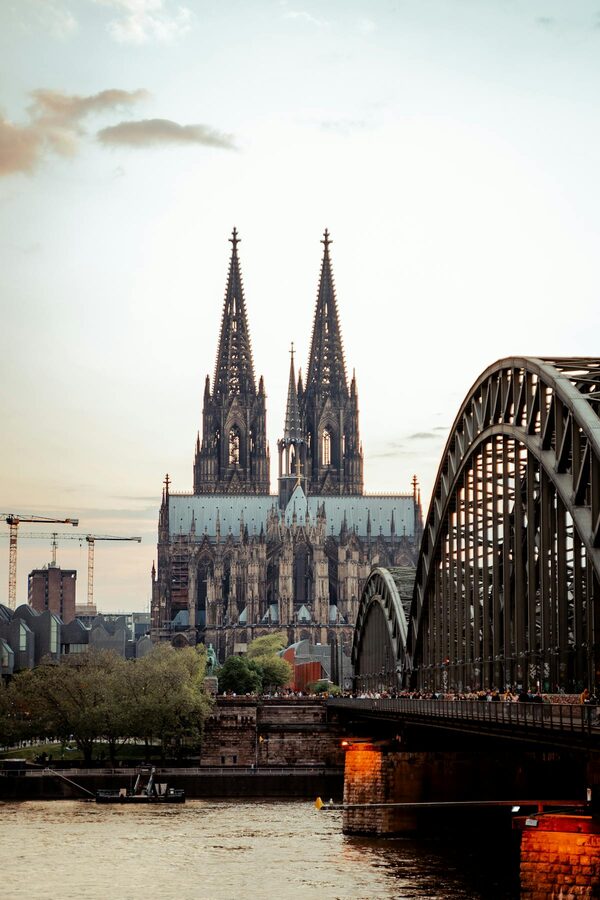
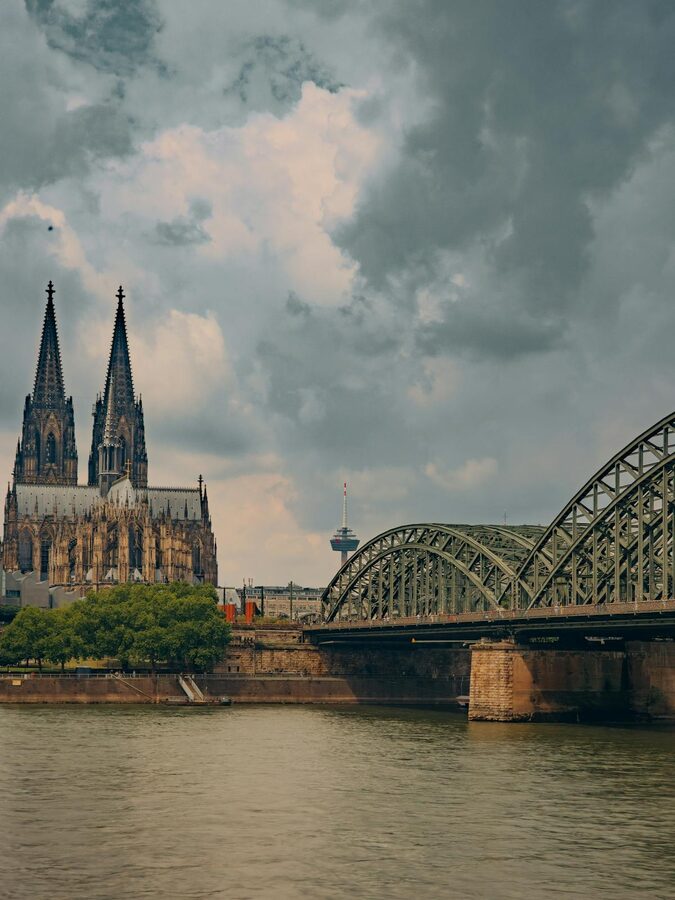
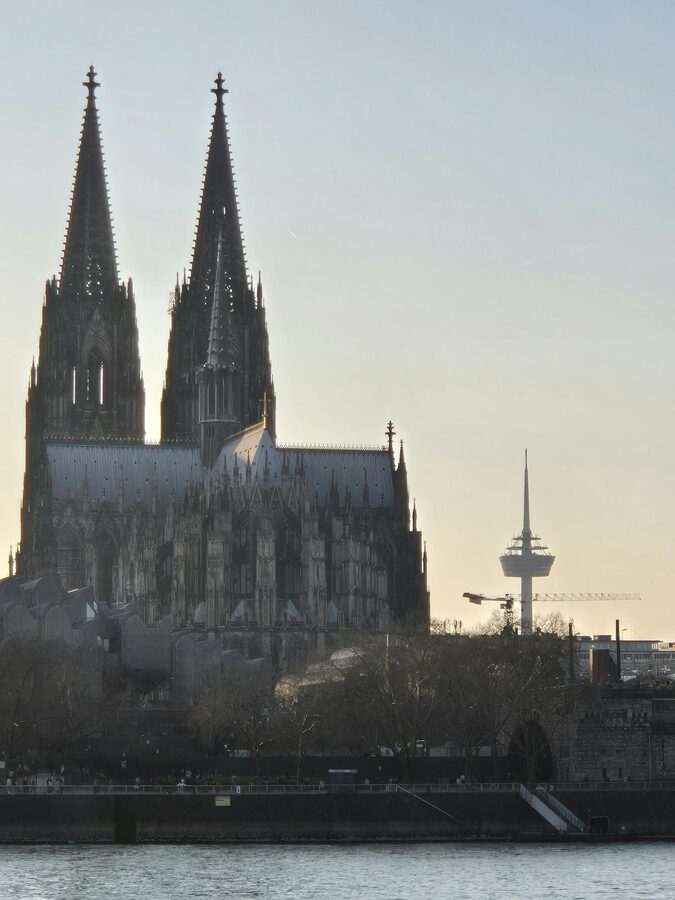
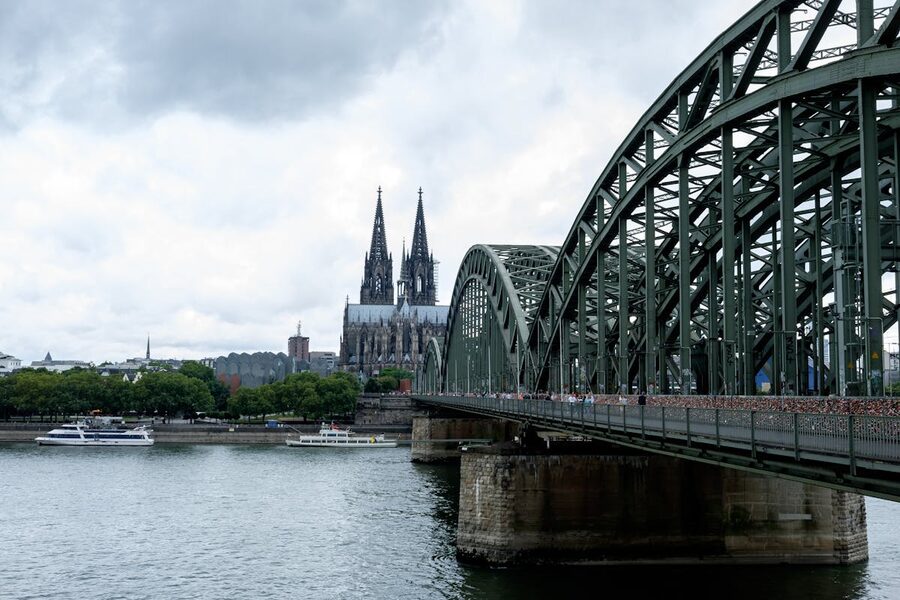
Cologne Cathedral took 632 years to build — started in 1248, abandoned in 1473, and finally completed in 1880 using the original medieval blueprints. Today it’s the most visited landmark in Germany, and the twin spires visible from the Rhine are the image that defines Cologne.
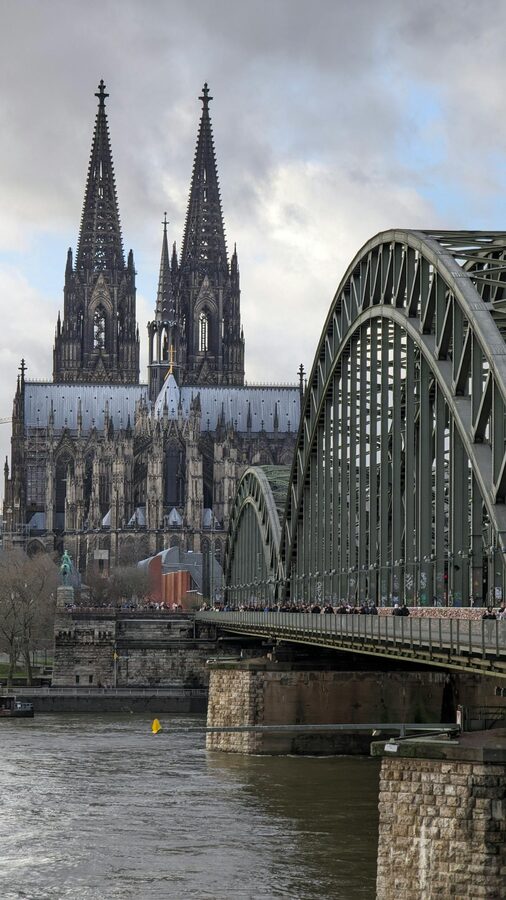
Cologne (Köln in German) sits on the Rhine about 2 hours from Frankfurt and 1 hour from Düsseldorf. It’s a city that doesn’t take itself too seriously despite having 2,000 years of history — the Romans founded it as Colonia Claudia Ara Agrippinensium, which is mercifully shortened to “Köln.” The walking tours, the Rhine cruise, and the brewery pub crawl together show you a city that combines medieval churches, post-war reconstruction, the world’s best Kölsch beer culture, and the most dramatic cathedral silhouette in Europe.
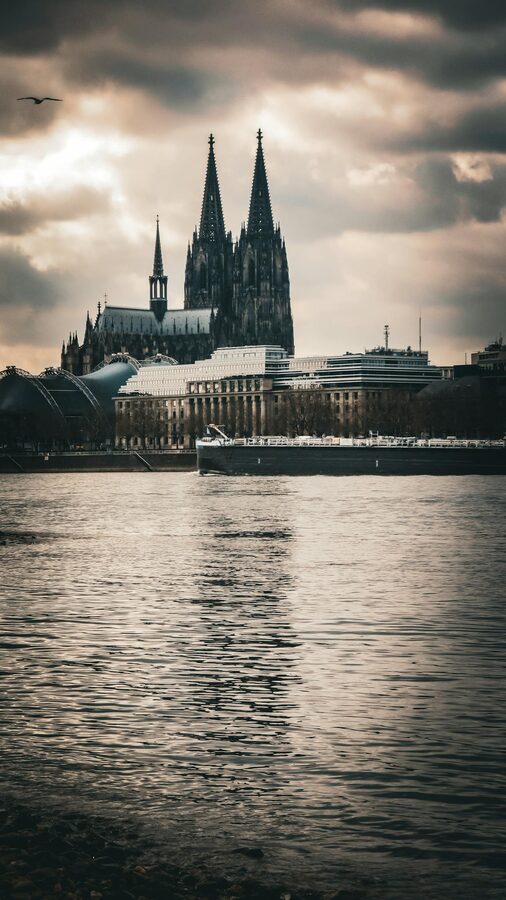
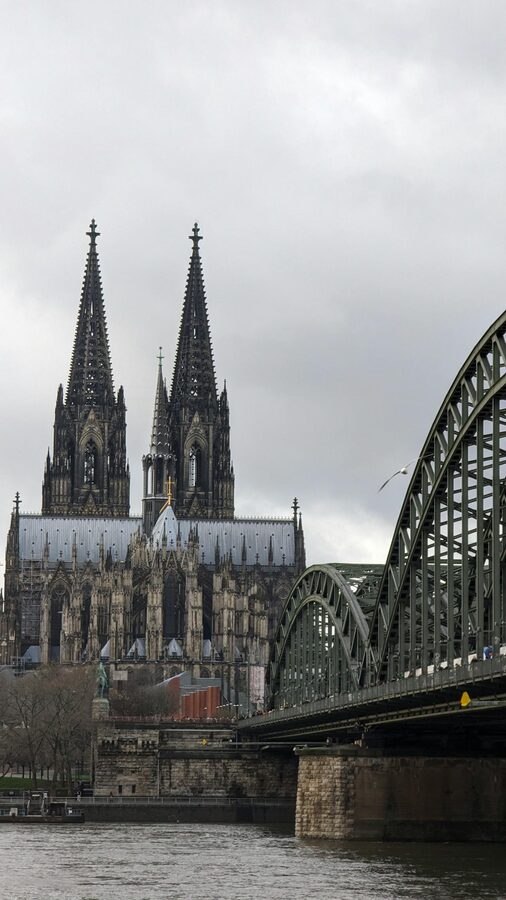
Best highlights: Cologne Guided Highlights Tour — $16, 2 hours, covers cathedral, Roman ruins, and brewery culture. consistently praised by visitors.
Best on water: 1-Hour Rhine Cruise — $22, the cathedral from the river. excellent visitor feedback.
- The Night Watchman Tour
- The Highlights Walking Tour
- Cologne’s Kölsch Culture
- The Rhine Cruise
- The Cathedral: What You Need to Know
- Best Tours to Book
- 1. Night Watchman Old Town Walking Tour —
- 2. Cologne Guided Highlights Tour —
- 3. 1-Hour Rhine Cruise —
- Cologne’s Roman Heritage
- Practical Tips
- More German Cities
The Night Watchman Tour
The Night Watchman tour is Cologne’s most popular guided experience and one of the most unusual walking tours in Germany. A guide dressed as a medieval night watchman — lantern in hand, costume in place — leads you through the old town after dark, telling stories of plague, fire, crime, and the darker chapters of 2,000 years of city history. It’s theatrical, entertaining, and educational in roughly equal measure.
At $18 for 1.5 hours, it’s the cheapest walking tour option and the most atmospheric. The consistently excellent visitor feedback reflect a tour that’s been refined over years of nightly operation. The main limitation: it’s in German. Non-German speakers can still enjoy the atmosphere and visual storytelling, but the jokes and historical details require language comprehension.
The Highlights Walking Tour
For English-speaking visitors, the Highlights Tour ($16, 2 hours) covers the essential Cologne in a compact loop: the cathedral (exterior and context — entry is free and self-guided), the Roman remains (Cologne was one of the most important cities in the Roman Empire), the old town’s Romanesque churches (12 of them — more than any other city in Europe), and the Kölsch beer culture.
The guide also covers Cologne’s distinctive beer culture. Kölsch — a light, crisp, top-fermented beer unique to Cologne — is served in tiny 200ml glasses (Stangen) that the waiters (Köbes) replace automatically when empty. They carry circular trays of filled glasses and simply place a fresh one in front of you when you finish. The only way to stop is to place your coaster on top of your glass. The system is efficient, social, and guaranteed to get you drunker than you planned.
Cologne’s Kölsch Culture
Cologne’s relationship with its beer is territorial. Kölsch is legally protected — it can only be brewed within the city limits, served in the traditional 200ml Stange glass, and poured by a Köbe (waiter) who operates on the assumption that an empty glass must be refilled unless you place your beer mat on top to signal you’ve had enough. The system is delightfully aggressive: Kölsch appears at your table before you’ve ordered it, and it keeps appearing until you physically cover the glass. The walking tours explain this ritual and usually end at a traditional Brauhaus where the group can experience it firsthand.
The city has over 20 breweries producing Kölsch, each with a slightly different character. Gaffel, Früh, Reissdorf, and Mühlenkölsch are the most popular, and the walking tour guides have strong opinions about which is best (ask them — the debate is part of the experience). The Brauhäuser (breweries with attached pubs) along the Rhine — particularly Früh am Dom (practically next to the cathedral) and Gaffel am Dom — are tourist-friendly but genuine, serving the same beer to locals and visitors alike.
The Rhine Cruise
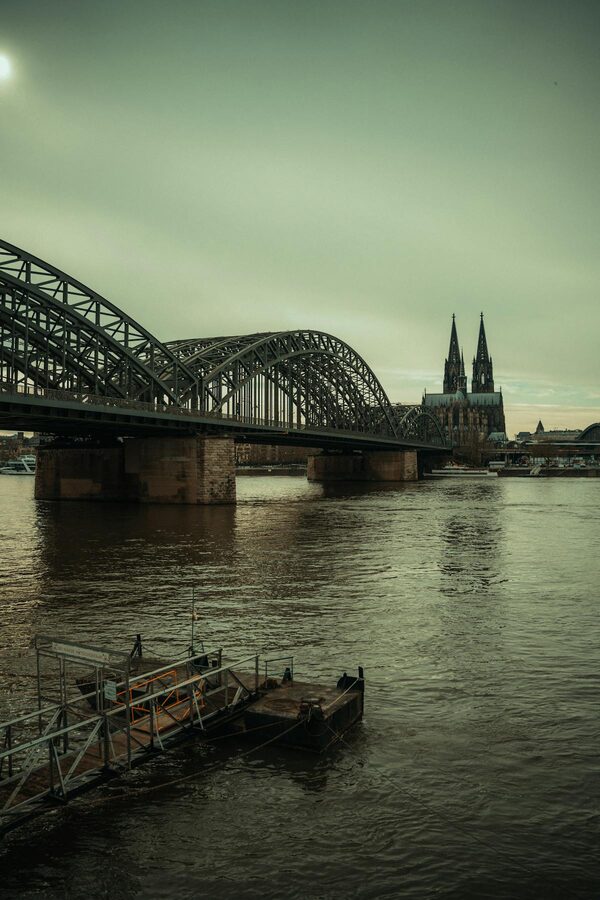
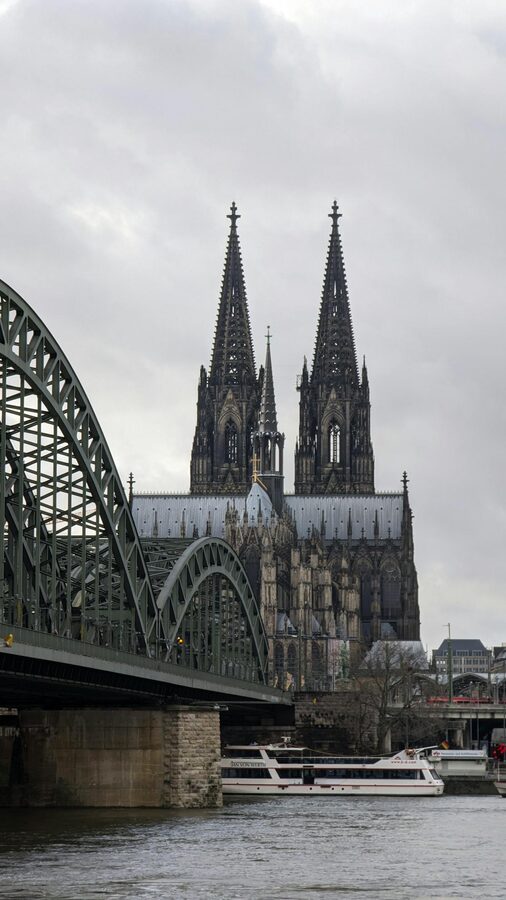
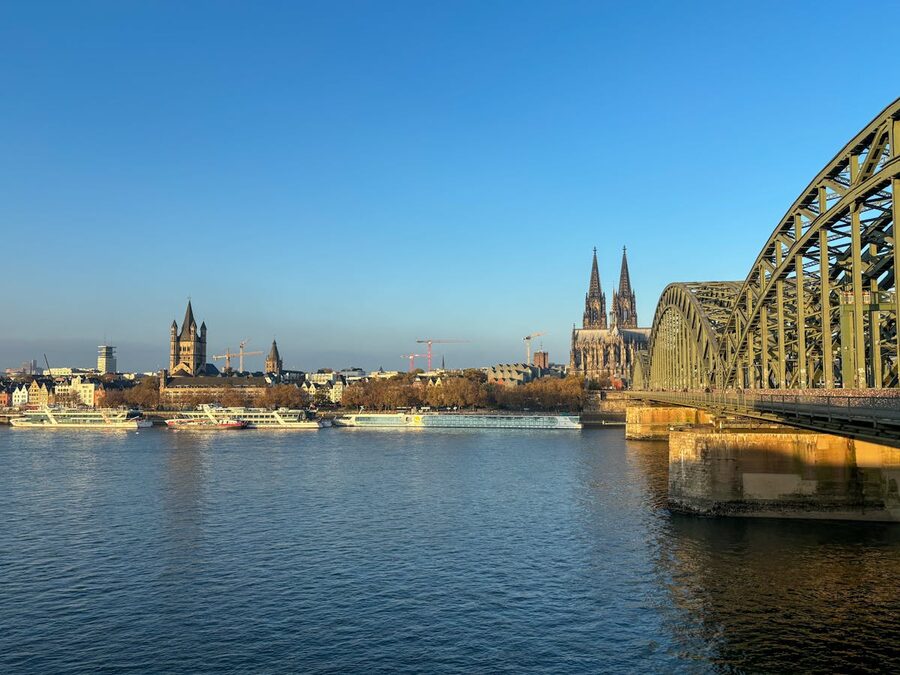
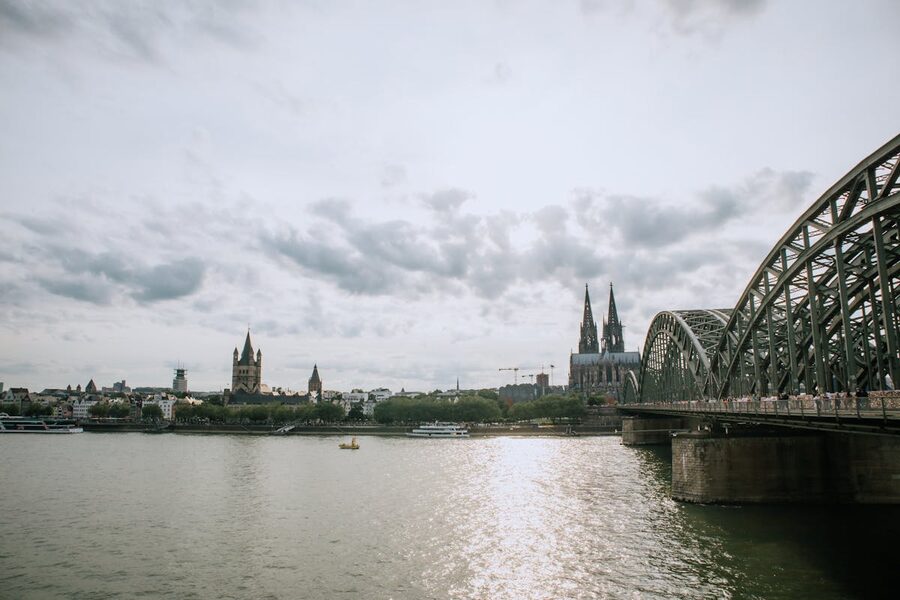
The 1-hour Rhine cruise ($22) shows you Cologne from the water — the cathedral from directly below, the colourful facades of the Altstadt, the Hohenzollern Bridge from underneath, and the industrial south bank that tells the modern story of the city. The commentary (multilingual) covers the landmarks and the river’s role in Cologne’s 2,000-year history as a trading port.
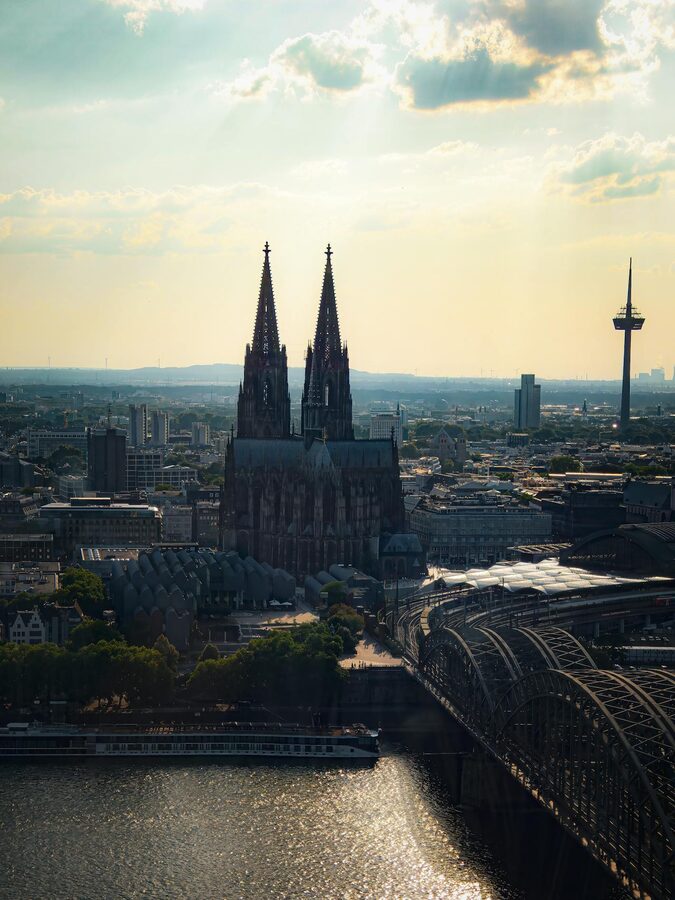
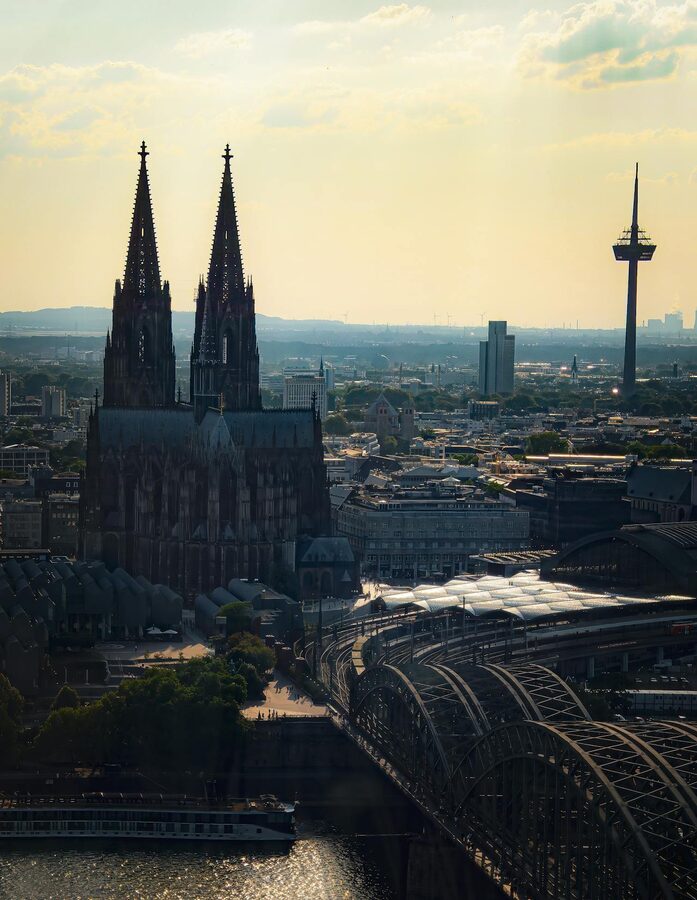
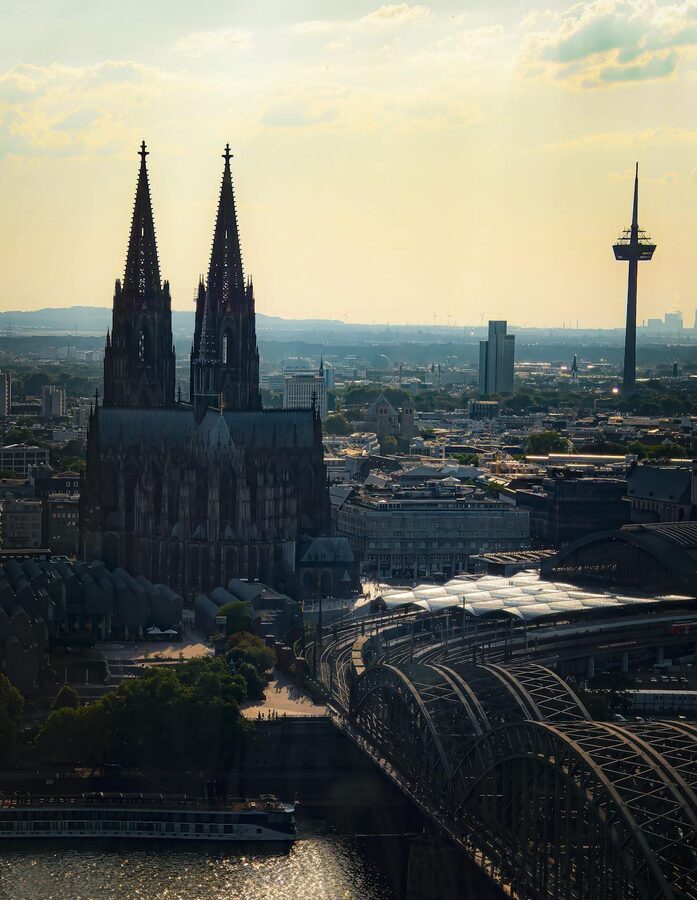
The sunset cruise is the most popular timing — the cathedral turns gold, the bridge lights come on, and the river reflects the whole scene. At $22 for an hour, the cruise is good value, and the excellent visitor feedback confirm it delivers. The boats depart from near the Hohenzollern Bridge, a 5-minute walk from the cathedral.
The Cathedral: What You Need to Know
Cologne Cathedral (Kölner Dom) is free to enter — no ticket, no reservation, no queue for the main nave. The cathedral is a functioning Catholic church and is open daily. The guided walking tours explain the exterior; the interior is self-guided.
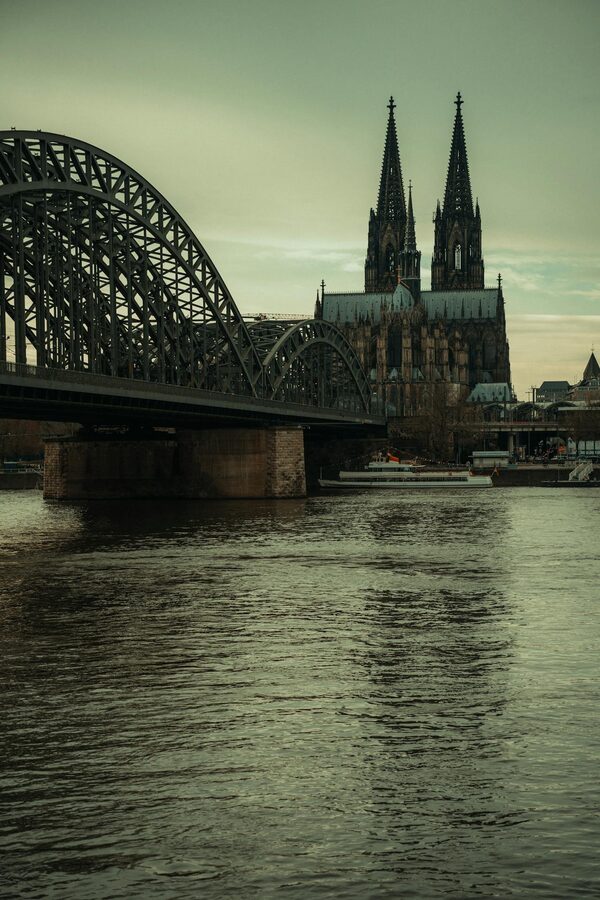
The tower climb (533 steps, about €6) takes you to a platform at 100 metres with views over the city and the Rhine. It’s narrow, steep, and not for claustrophobes — but the view from above the city is the payoff. The south tower platform is the one that’s open; the north tower is closed. Allow about 30 minutes for the climb and descent. Check cologne-tourism.com for current cathedral hours and any special events.
Best Tours to Book
1. Night Watchman Old Town Walking Tour — $18

The most atmospheric option. 1.5 hours through Cologne’s old town after dark with a guide in Night Watchman costume. The stories cover 2,000 years of city history — Roman Colonia, medieval plagues, the cathedral’s troubled construction, and the darker moments that tourist maps don’t mention. In German only. Our review covers the format and whether non-German speakers can still enjoy it.
2. Cologne Guided Highlights Tour — $16
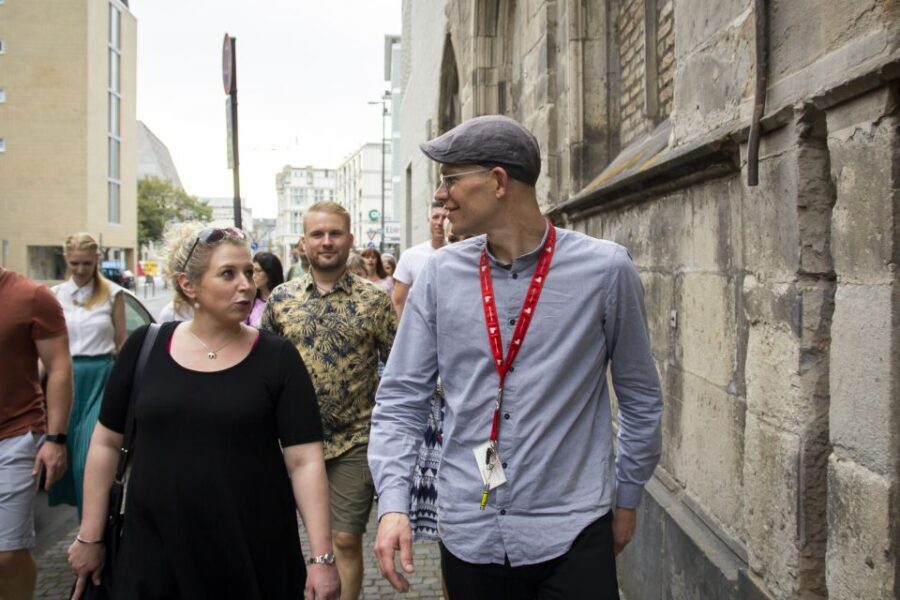
Two hours covering Cologne’s essential landmarks with a local guide. Available in English, which makes it the better option for international visitors. The route covers the cathedral, the old town, the Roman remains, and at least one Brauhaus where the guide explains the Kölsch drinking ritual. At $16, it’s one of the cheapest guided city tours in Germany. Our review covers the full route and what the guide adds beyond the free information available at the cathedral.
3. 1-Hour Rhine Cruise — $22
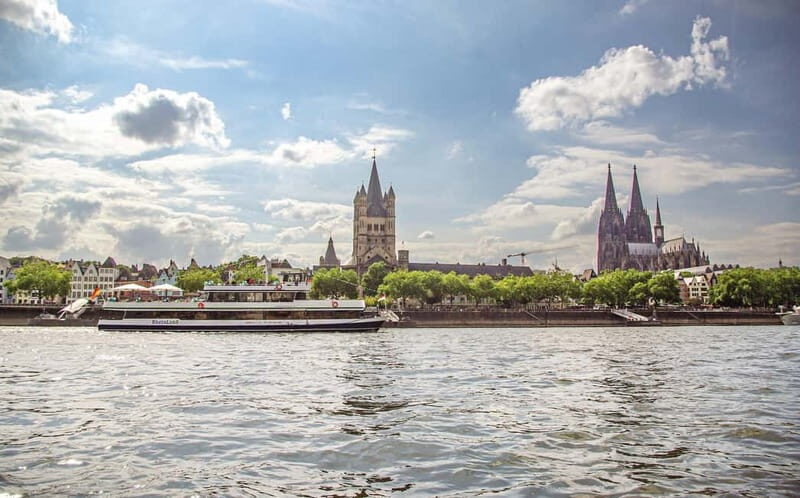
One hour on the Rhine passing Cologne’s major landmarks from water level. The cruise covers the cathedral, the Hohenzollern Bridge, the old town waterfront, and the modern Rheinauhafen development. Multilingual commentary explains what you’re seeing. At $22, it pairs well with a walking tour — one on foot, one on water, two different Colognes. Our review covers the boat, the commentary, and the best time for the cathedral photographs.
Cologne’s Roman Heritage
Cologne’s history extends back 2,000 years to the Roman colony of Colonia Claudia Ara Agrippinensium, founded in 50 AD as the capital of the Roman province of Germania Inferior. Remnants of the Roman city are still visible throughout the centre — the Praetorium (governor’s palace) lies beneath the modern town hall, Roman sewers run under the streets, and the Romano-Germanic Museum (currently closed for renovation, but its famous Dionysus mosaic is visible through the window from the street) houses one of the most important Roman collections north of the Alps.
The walking tours incorporate these Roman layers, pointing out the line of the original Roman wall, the sites of the ancient gates, and the Ubiermonument — the oldest stone building in Germany, dating from around 4 AD. Cologne’s Roman period isn’t an abstract history lesson; it’s physically present beneath the medieval and modern city, and the guides make it tangible by standing on the spots where Roman roads crossed and Roman merchants traded.
Practical Tips
Getting there: Cologne Hauptbahnhof is one of Germany’s busiest stations — ICE trains from Frankfurt (1 hour), Düsseldorf (25 minutes), Berlin (4.5 hours), and Amsterdam (3 hours). The station exit puts you directly in front of the cathedral. There is no walk — you step off the train and the cathedral is right there.
How long: One full day is enough for the highlights — walking tour in the morning, cathedral climb before lunch, brewery lunch with Kölsch, Rhine cruise in the afternoon. Two days lets you add the Romanesque churches, the excellent museum quarter (Museum Ludwig for modern art, Wallraf-Richartz for medieval), and a proper Kölsch pub crawl.
Beer: Cologne’s Kölsch culture is unique. There are about 20 Kölsch breweries and each has its own Brauhaus. The beer is light (4.8% ABV), crisp, and served in 200ml glasses that get replaced automatically. The Köbes (waiter) marks your coaster for every glass — your tab is calculated from the marks. Don’t try to order a Pilsner. Don’t mention Düsseldorf’s Alt beer. Both are social crimes in Cologne.
Budget: Walking tour: $16-18. Rhine cruise: $22. Cathedral: free (tower climb €6). A Kölsch at a Brauhaus: about €2 per glass. Lunch at a brewery: €12-18. Cologne is noticeably cheaper than Munich or Hamburg — a full day of touring, eating, and drinking costs about €60-80.
More German Cities
Cologne pairs naturally with other Rhineland destinations. The Hamburg experience is 4 hours north by ICE — a completely different city character but equally strong beer culture. Berlin’s walking tours cover 20th-century history where Cologne covers 2,000 years of continuous occupation. And for a day trip from Cologne, the Rhine Valley between Koblenz and Rüdesheim — medieval castles on every hilltop, vineyards sloping to the water — is one of Germany’s most scenic train rides.