
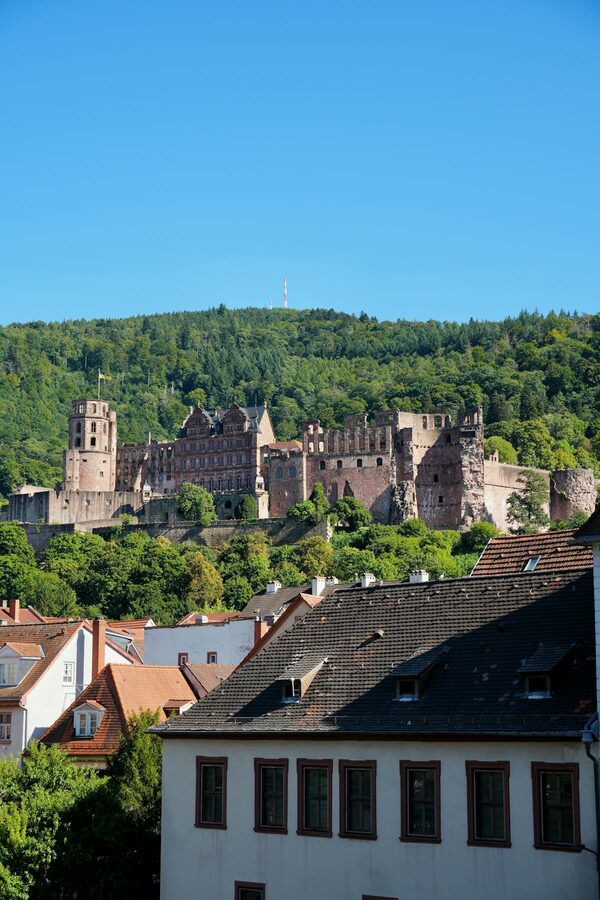
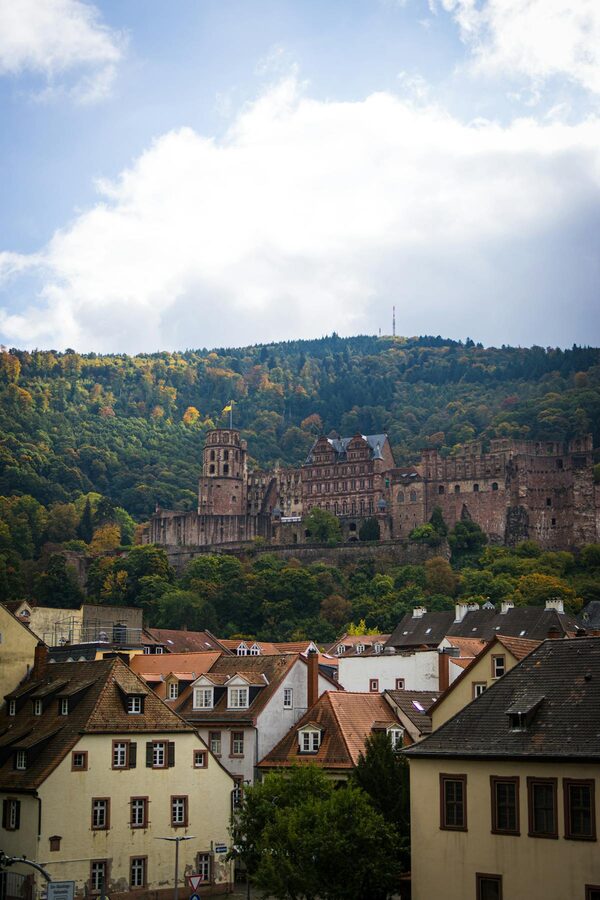
Heidelberg Castle has been a ruin since 1693, and that’s precisely what makes it magnificent. The French army blew it up during the Nine Years’ War, and nobody ever bothered to fully rebuild it — because the ruin turned out to be more beautiful than the original.
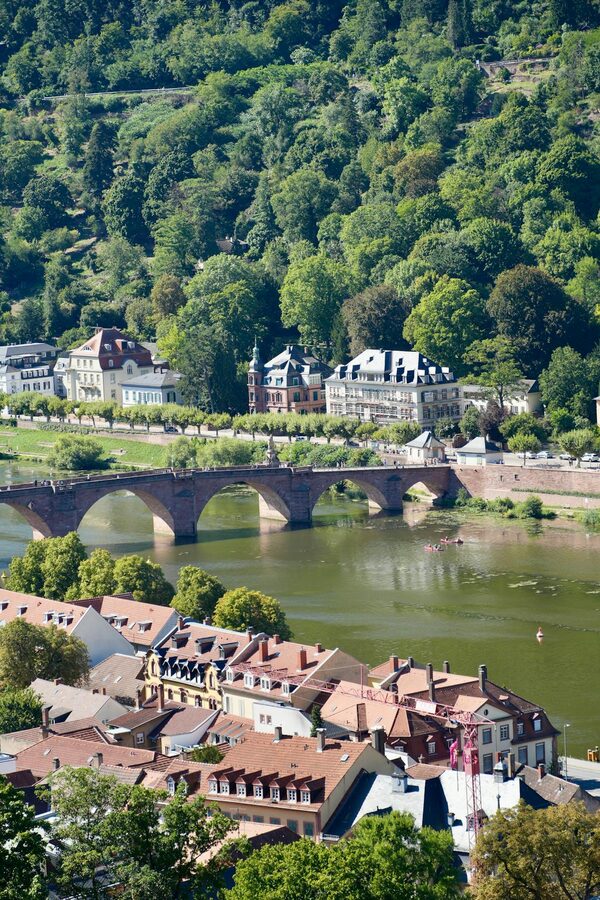
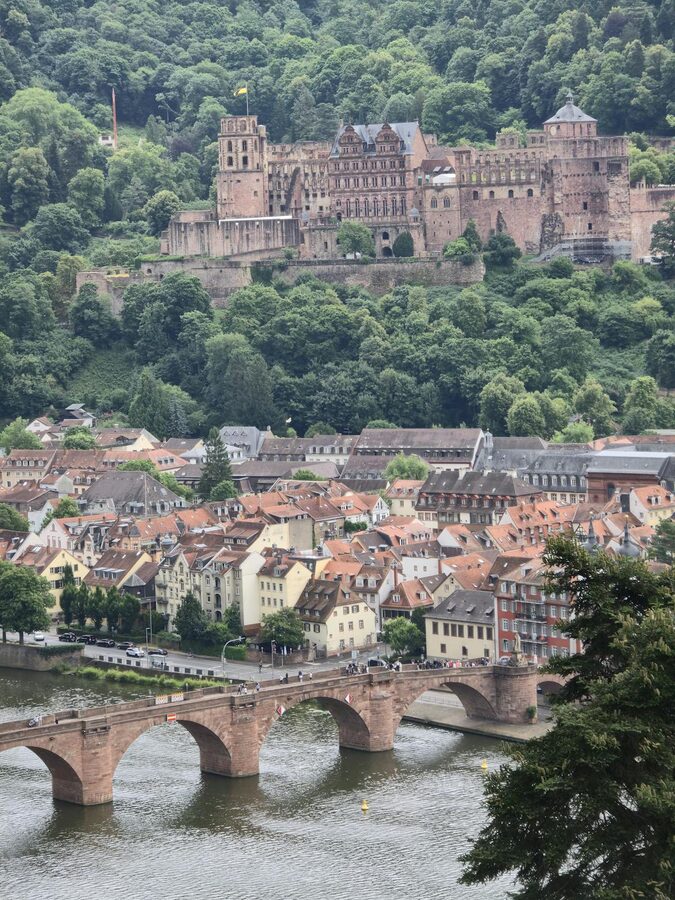
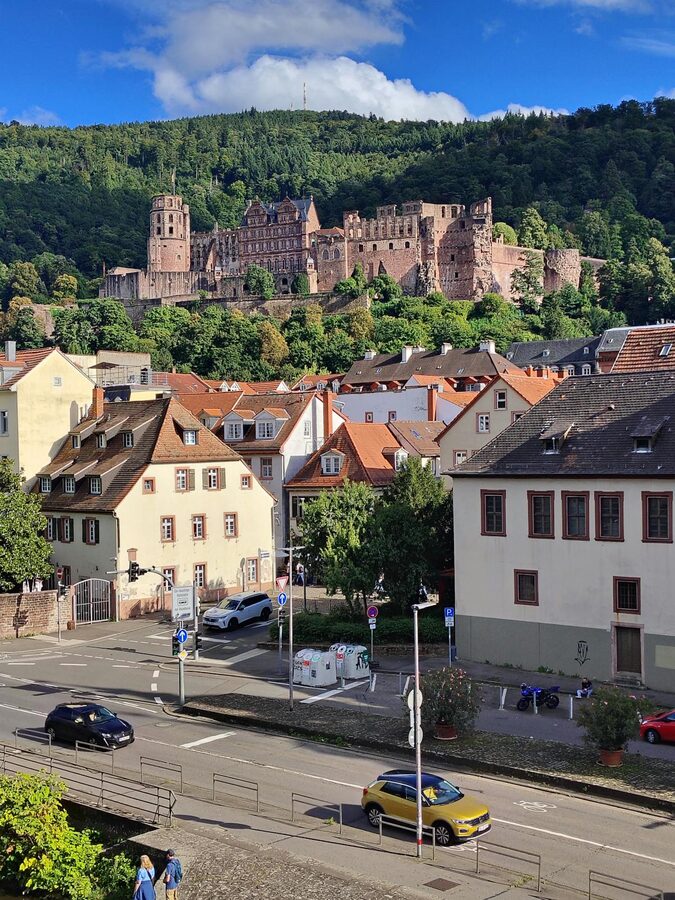
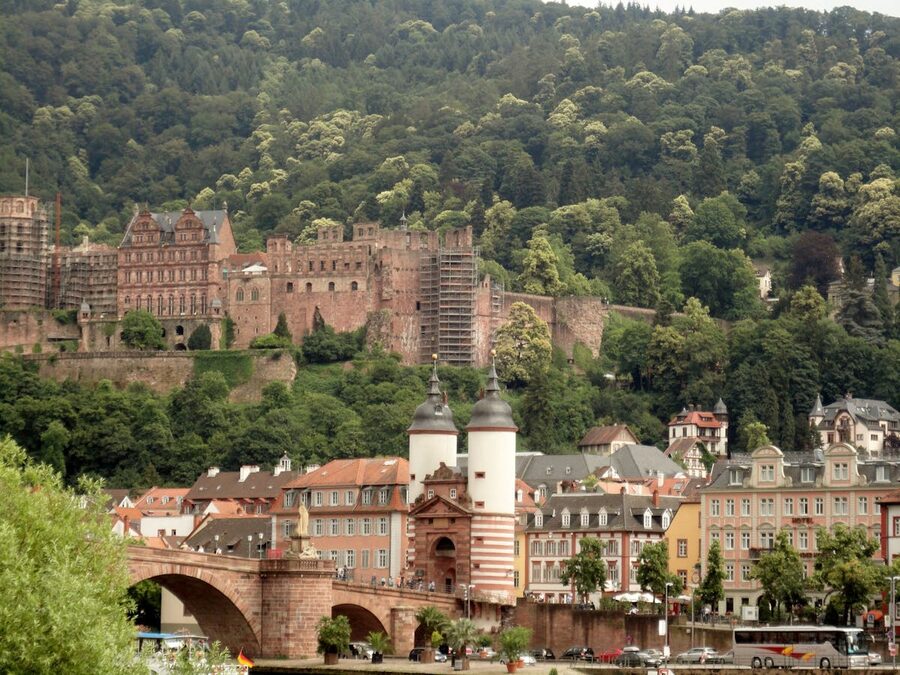
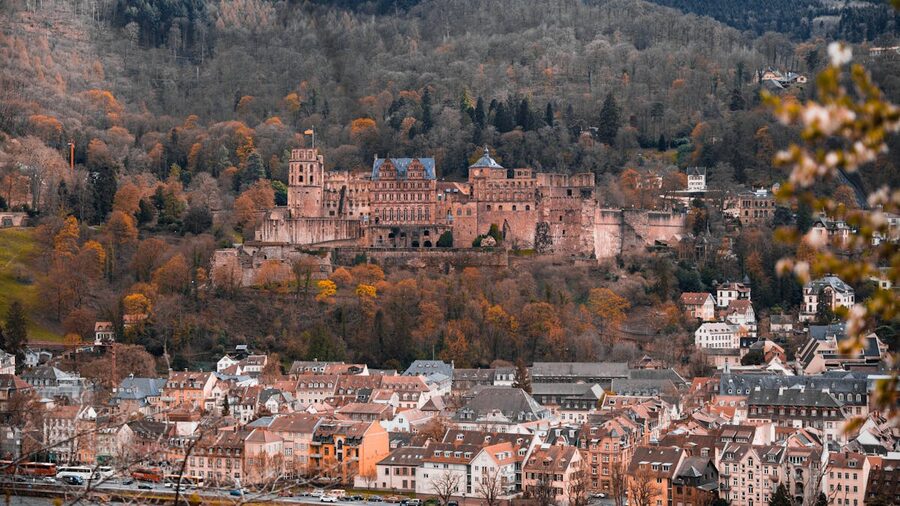
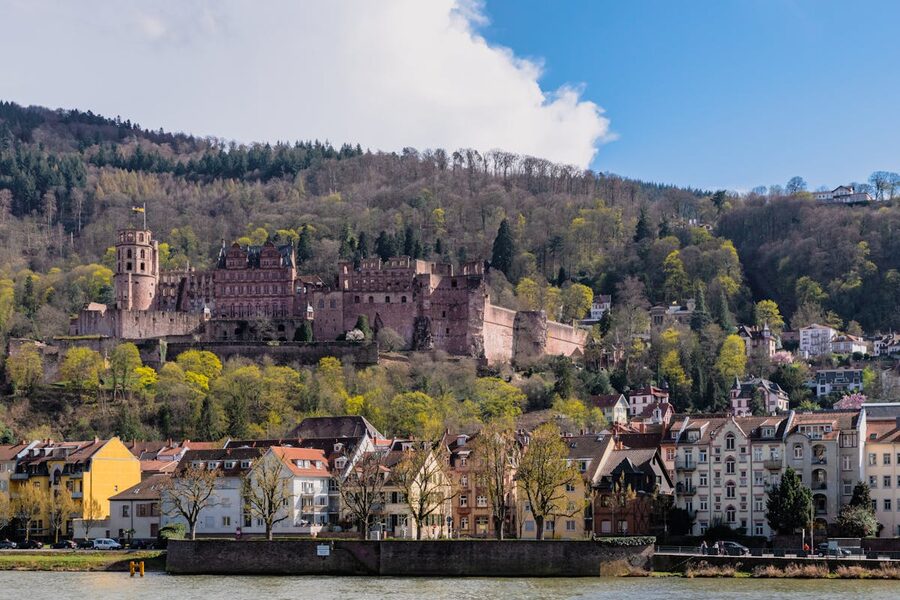
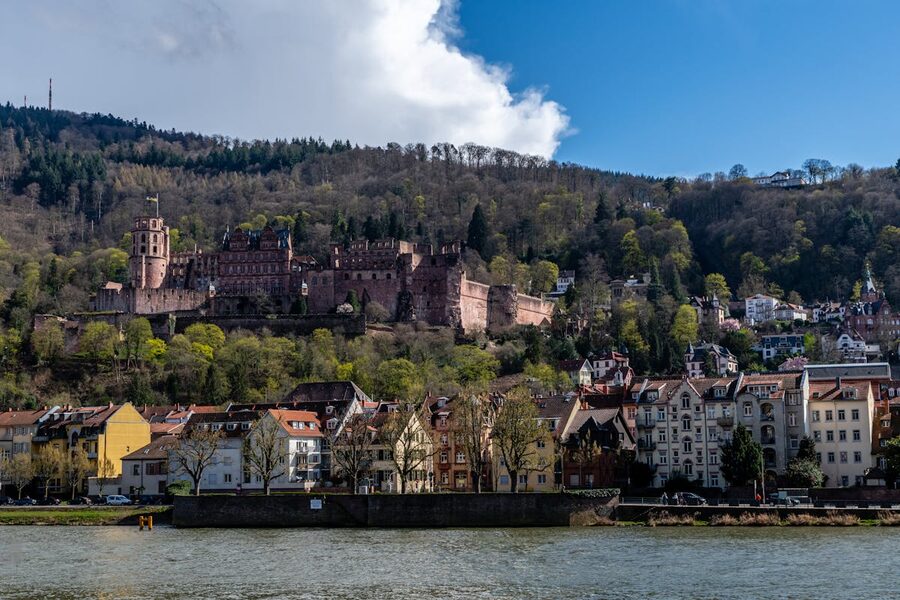
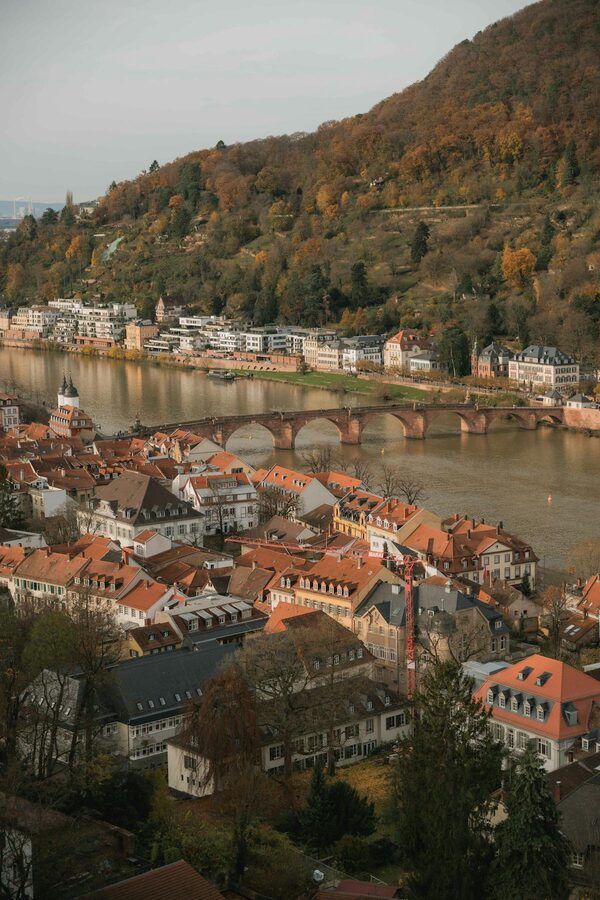
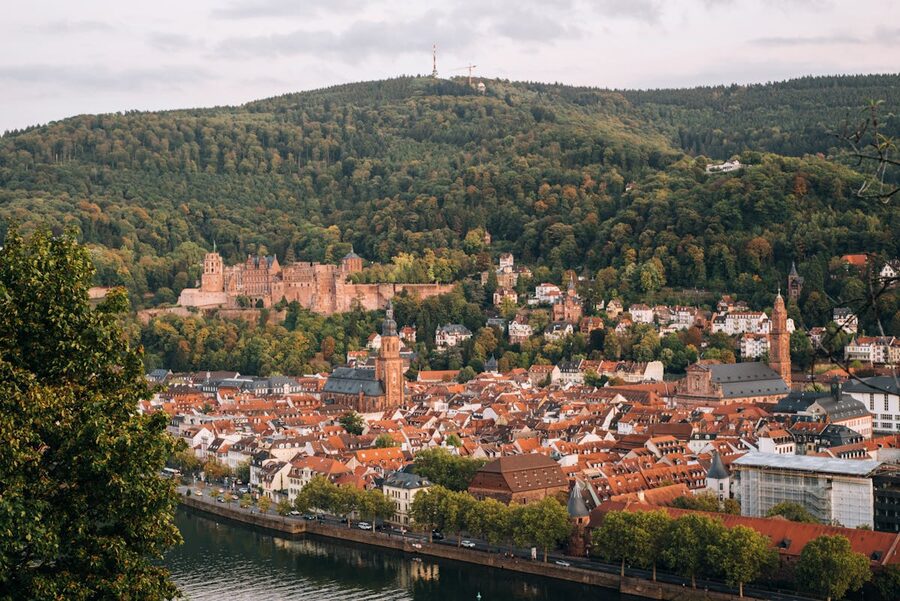
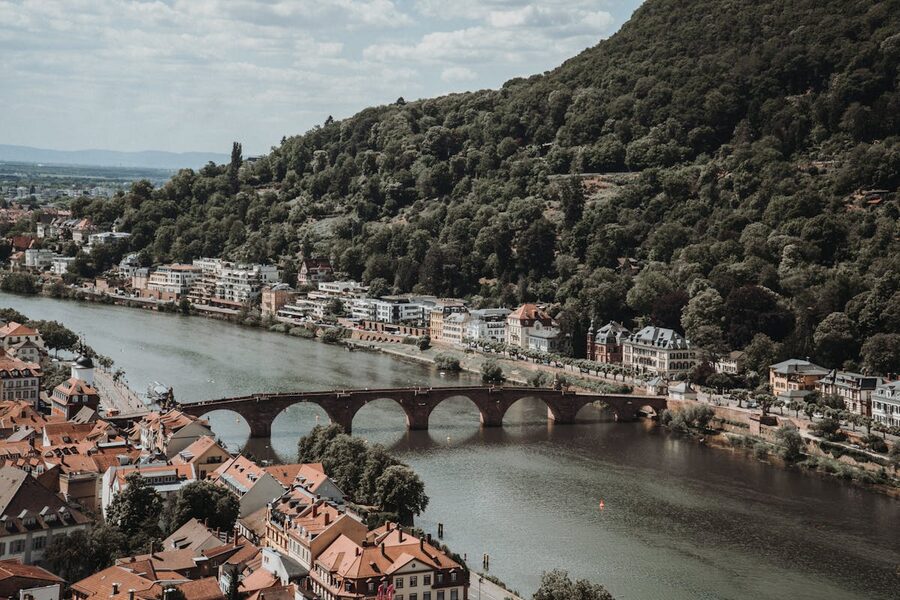
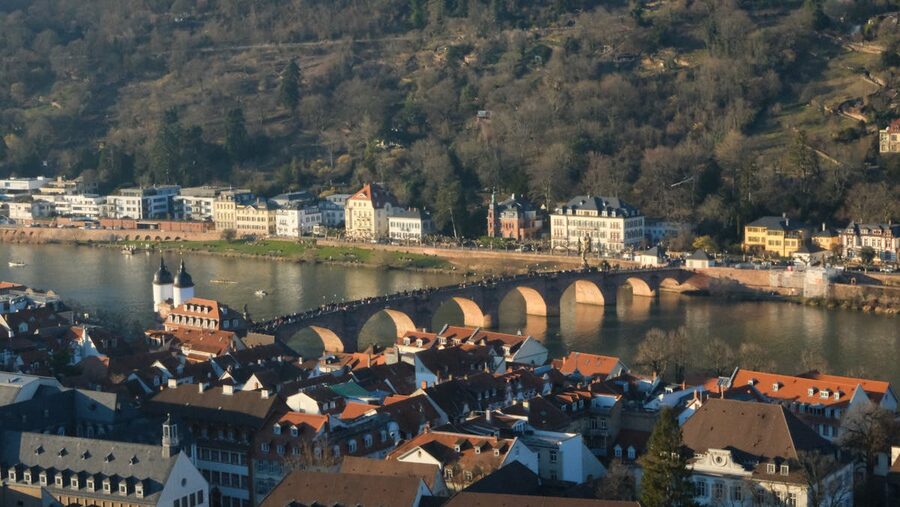
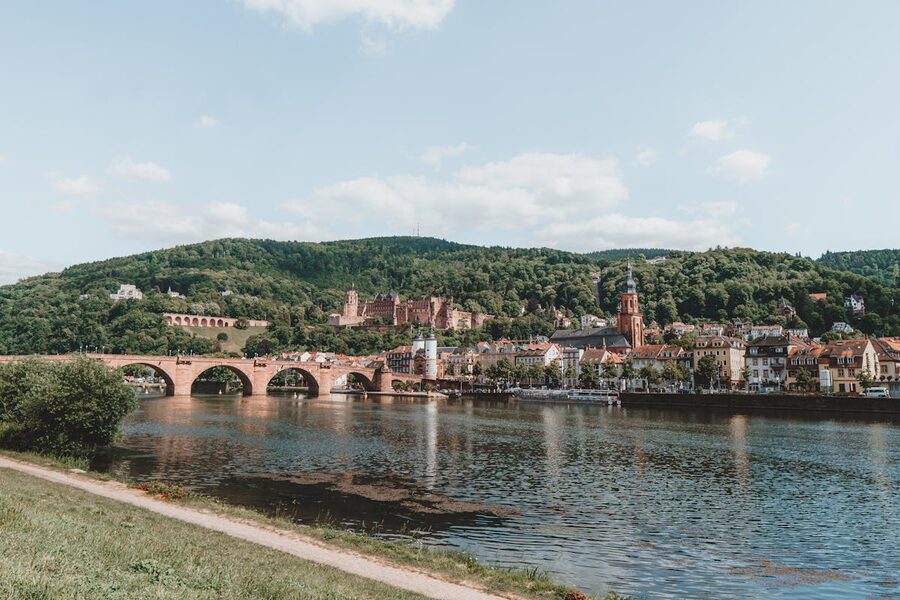
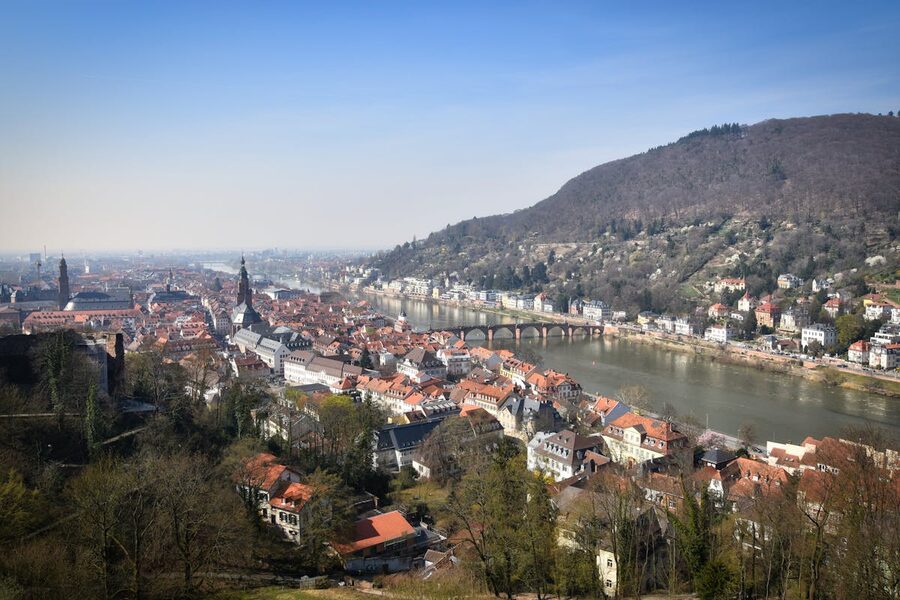
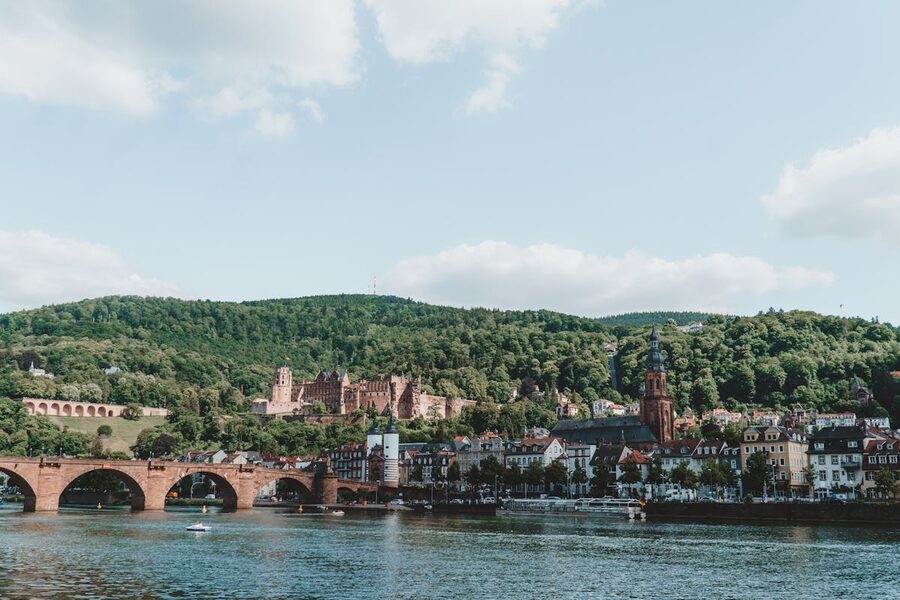
The castle sits on the Königstuhl hill 80 metres above Heidelberg’s old town, overlooking the Neckar River valley in a scene that made it the defining image of German Romanticism. Turner painted it. Goethe wrote about it. Mark Twain called Heidelberg the finest place he’d ever seen. The ruins, the old town, and the Neckar together form one of the most photographed compositions in Germany — and the guided tours, the river cruise, and the walking tours show you the full picture from every angle.
Best city walk: Old Town Walking Tour — $18, 1.5 hours covering the old town’s history, university, and architecture.
Best on water: Neckar River Cruise — the castle from the water, with a complimentary drink included.
Official site: schloss-heidelberg.de — visitor info, opening hours, funicular schedules.
Getting to the Castle
The castle is accessible three ways from the old town: the Bergbahn (funicular), which departs from the Kornmarkt station and delivers you to the castle entrance in about 3 minutes; the steep walking path from the Kornmarkt that takes about 15-20 minutes through wooded switchbacks; or the longer but gentler route via the Klingenteich gate.
The Bergbahn ticket (included in the €9 castle entry) covers the return funicular ride plus castle entry and access to the castle courtyard, the Great Barrel, and the German Pharmacy Museum inside the castle. The funicular continues beyond the castle to the Königstuhl summit (additional ticket), where there’s a TV tower, a forest playground, and walking trails through the Odenwald forest.
What You’ll See in the Castle
The castle isn’t one building — it’s a complex of structures from different centuries, each built by a different Elector of the Palatinate. The oldest sections date from the 13th century. The most impressive — the Ottheinrichsbau (Ottheinrich Building) — is a Renaissance facade from the 1550s that’s considered one of the finest examples of German Renaissance architecture, even in its ruined state.
The Great Barrel (Großes Fass) — the world’s largest wine barrel, holding 219,000 litres. Built in 1751, it was filled only three times (the castle had its own vineyard). The barrel is genuinely enormous — you can walk on the platform above it — and the story of its construction and the court dwarf who served as its guardian is one of the more entertaining things the guides tell you.
The German Pharmacy Museum (Deutsches Apotheken-Museum) — housed inside the castle, this museum traces the history of pharmacy from ancient Egypt to the 20th century. Original apothecary workshops, laboratory equipment, and medicine jars fill the rooms. It’s included in the castle ticket and takes about 30-45 minutes to explore.
The castle grounds and gardens — the terraced gardens (Hortus Palatinus) were once among the most famous gardens in Europe, designed by Salomon de Caus for Friedrich V as a wedding present for his bride Elizabeth Stuart. The gardens were never completed (Friedrich lost his throne in 1620), but the terraces, grottos, and remaining structures hint at the intended grandeur. The garden walk includes viewpoints over the old town and the Neckar valley that are among the best in the city.
The Old Town Below
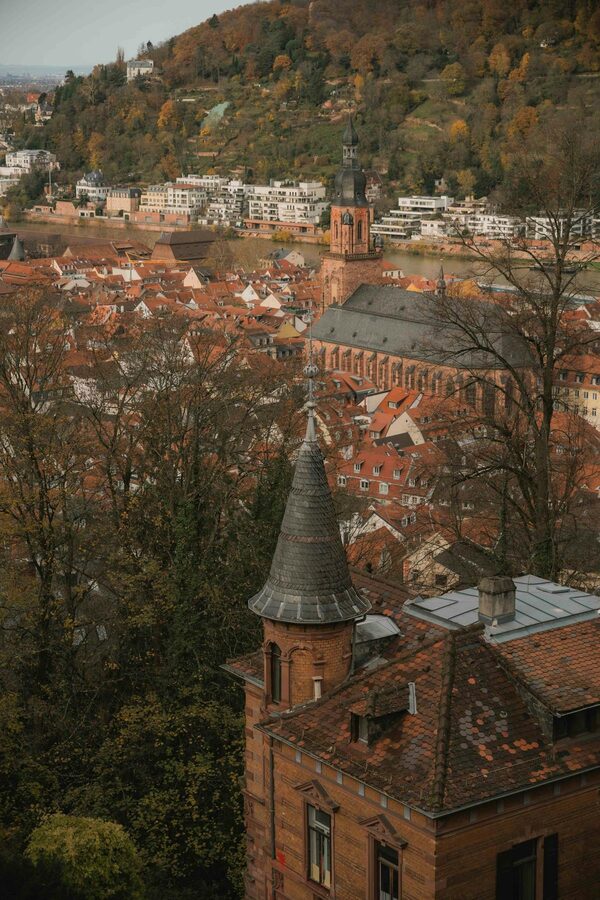
Heidelberg’s Altstadt (old town) stretches along the south bank of the Neckar for about 1.5 kilometres. The main street — Hauptstraße — claims to be the longest pedestrian shopping street in Europe at 1.6km. The walking tour covers the highlights in about 90 minutes.
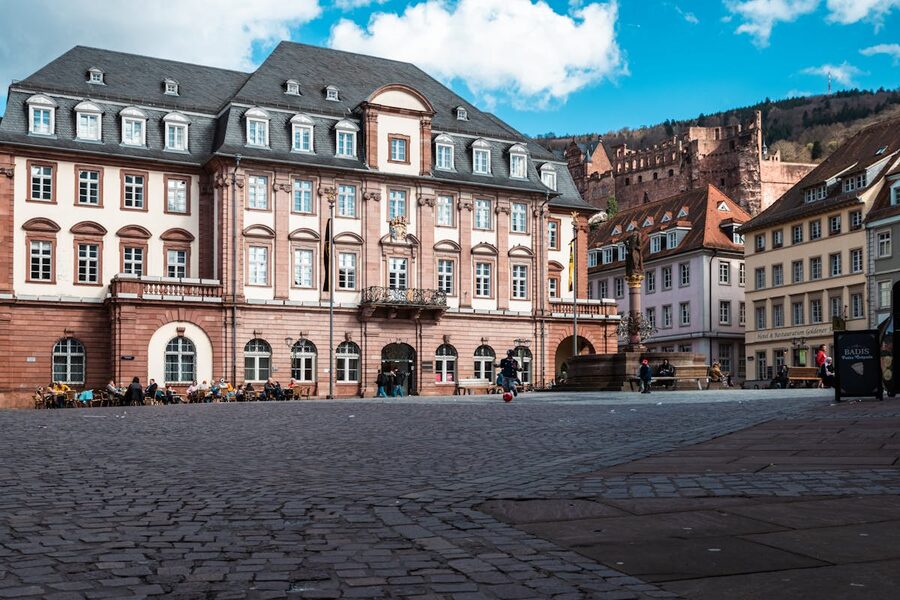
The University — Heidelberg University, founded in 1386, is Germany’s oldest. The old university building on Universitätsplatz houses the Student Prison (Studentenkarzer) — a room where misbehaving students were locked up from 1778 to 1914. The walls are covered in their graffiti — names, dates, messages, and caricatures — and it’s one of the old town’s quirkiest attractions. The walking tours always include it.
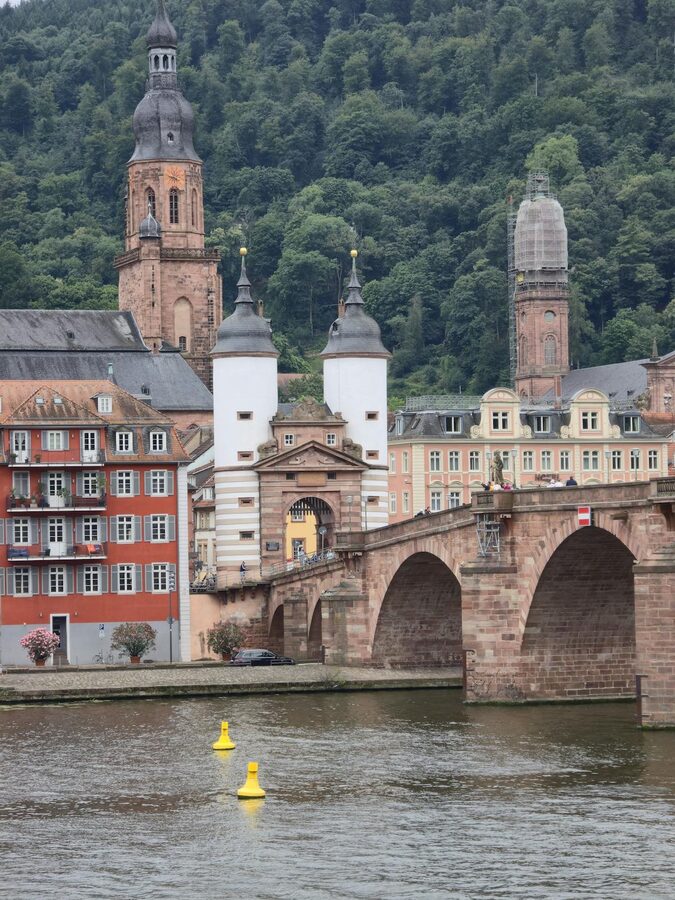
The Heiliggeistkirche (Church of the Holy Spirit) — the main church on the Marktplatz, a Gothic structure that once housed the famous Bibliotheca Palatina (the most important library in the German-speaking world until it was looted by the Catholic League in 1623 and shipped to Rome). Market stalls have occupied the spaces between the church’s buttresses since the Middle Ages, and some are still there today.
The Neckar River Cruise
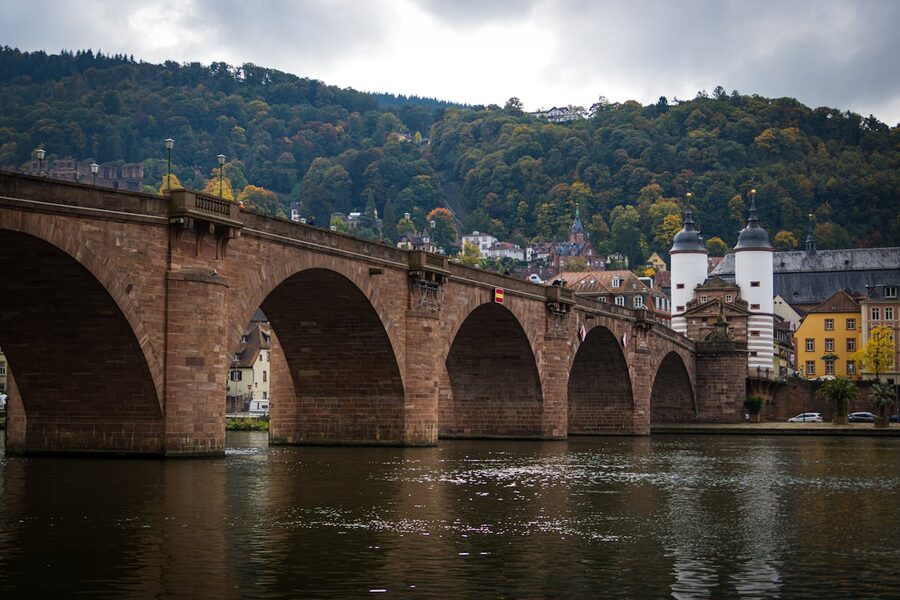
The Neckar cruise takes you upstream from the old town along the river, giving you the waterside perspective of the castle, the Old Bridge, and the forested hills. The cruise includes a complimentary drink and lasts about 50-60 minutes. The boats depart from near the Old Bridge.
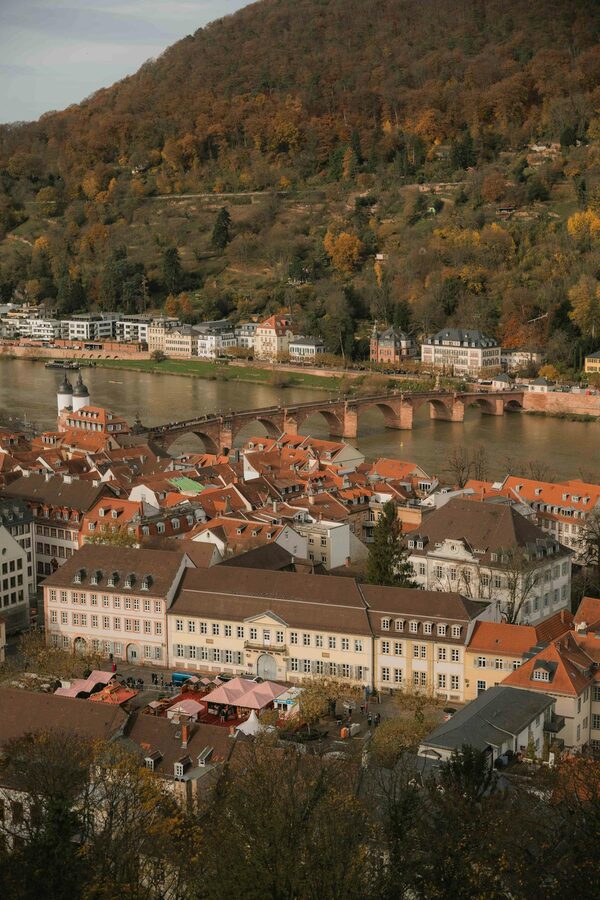
The cruise is the most popular activity in Heidelberg by visitor volume, though many visitors combine it with a castle visit and walking tour for a full day that covers the city from water level, street level, and hilltop.
The Philosophers’ Walk
The Philosophenweg (Philosophers’ Walk) on the north bank of the Neckar is one of the most famous walks in Germany. The path runs along the hillside opposite the castle, offering a perspective that has attracted writers, artists, and philosophers for centuries. Goethe walked here. Hegel walked here. The name isn’t marketing — it’s history.
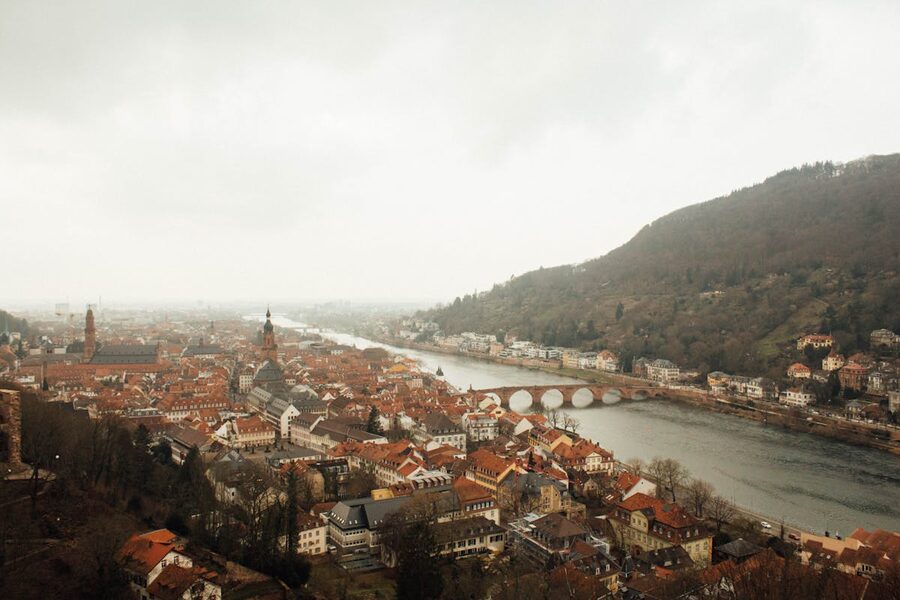
The walk climbs steeply from the north end of the Old Bridge before levelling out along the hillside. The south-facing slope creates a microclimate that’s warmer than the rest of the city — you’ll see Mediterranean plants (figs, olives, wisteria) that don’t normally grow this far north. The walk is free, open year-round, and can be done independently at any time. The walking tours don’t usually include it (it’s across the river from the old town), but the guides recommend it for after the tour.
Heidelberg’s History
Heidelberg’s story begins with the castle. The first fortification appeared on the Königstuhl in the 13th century, and successive Electors of the Palatinate expanded it over the next 400 years into one of the grandest palaces in Germany. The Electoral Palatinate was one of the most powerful states in the Holy Roman Empire — the Elector Palatine was one of seven princes who chose the Emperor.
The castle’s destruction came in two waves. In 1622, during the Thirty Years’ War, Catholic League forces captured and stripped it. In 1689 and 1693, Louis XIV’s French armies systematically destroyed both the castle and the town as part of the devastation of the Palatinate. The castle was partially rebuilt in the 18th century, struck by lightning in 1764, and then abandoned. When the Romantic movement discovered the ruins in the early 19th century, the aesthetic appeal of the decay — ivy on broken walls, trees growing from shattered towers — made Heidelberg Castle one of the most painted and written-about buildings in Europe.
Heidelberg University — founded in 1386 — has shaped the city’s character for over 600 years. It’s the oldest university in present-day Germany, and its alumni include Hegel, Hannah Arendt, Max Weber, Robert Bunsen, and Helmut Kohl. The student population (about 30,000 in a city of 160,000) keeps Heidelberg younger and livelier than its tourist image suggests. The Untere Straße and the Marstallstraße area are the student bar districts — cheaper and more authentic than the tourist restaurants on the Hauptstraße.
Best Tours to Book
1. Discover Heidelberg Castle Tour — $46
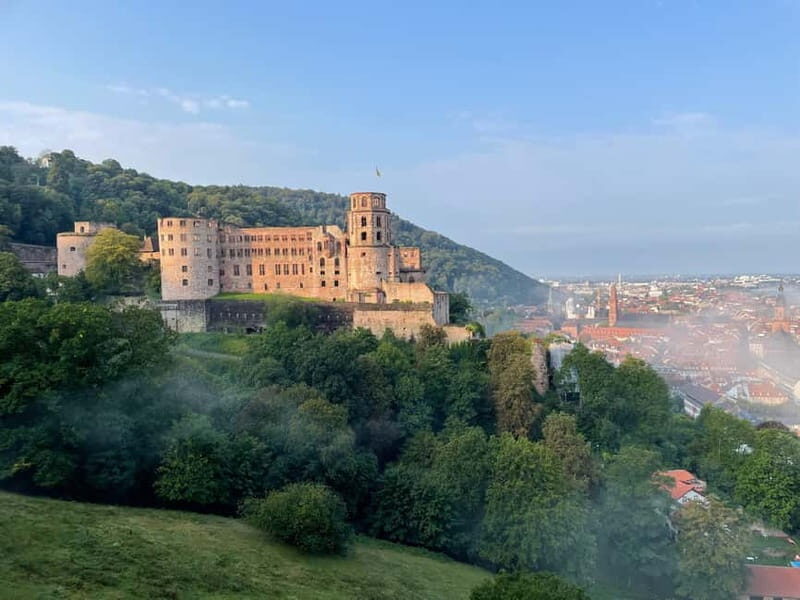
Two hours inside the castle grounds with a local historian. The guide covers the architectural history of each building, the Elector who built it, the destruction and the Romantic rediscovery. At $46 (excluding the €9 castle entry ticket), it’s the premium option — but the depth of information you get is incomparable to visiting independently. Our review covers what the guide adds beyond the standard audio guide.
2. Old Town Walking Tour — $18
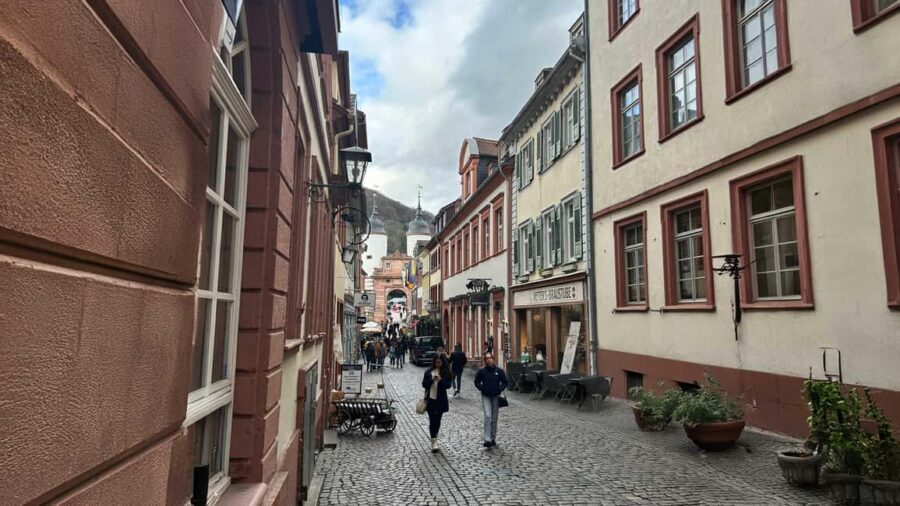
Ninety minutes through the old town’s greatest hits — the Marktplatz, the university, the Student Prison, the Heiliggeistkirche, and the Old Bridge. At $18, it’s excellent value and the best introduction to Heidelberg’s ground-level history. Combine it with the castle tour (separately or on the same day) for the full picture. Our review covers the route and what makes the local guides’ perspective special.
3. Neckar River Sightseeing Cruise
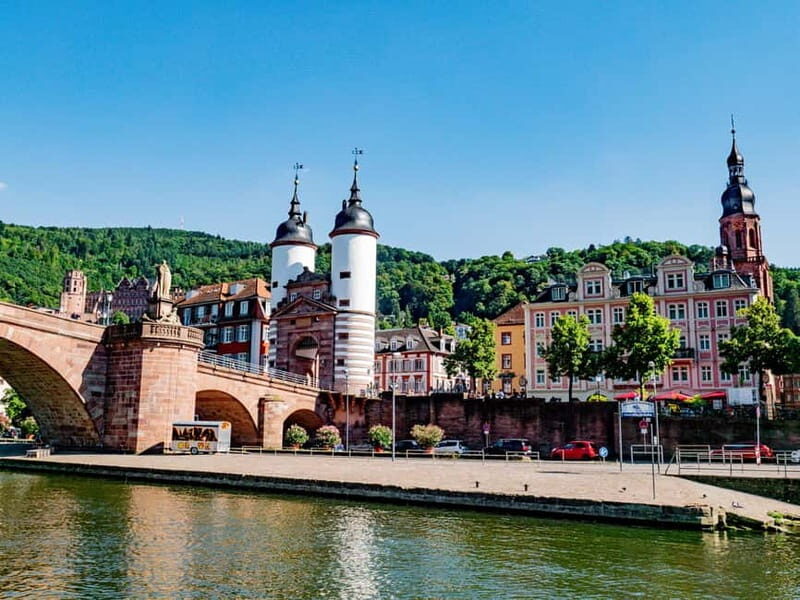
The cruise covers the stretch of Neckar that gives you the classic Heidelberg panorama — castle above, old town below, river in between. The complimentary drink is a nice touch, and the 50-60 minute duration is well-judged. The cruise is the most-reviewed activity in Heidelberg for good reason: the perspective from the water is genuinely different from anything you see on land. Our review covers the boat type and the best seats for photography.
Practical Tips
Getting to Heidelberg: Direct trains from Frankfurt (50 min, frequent), Stuttgart (40 min), and Mannheim (15 min). From Munich, the journey takes about 3 hours with one change. The Hauptbahnhof is about 15 minutes by tram/bus from the old town.
Castle entry: €9 includes the funicular, castle courtyard, Great Barrel, and Pharmacy Museum. Interior guided tours (castle rooms) are €6 extra. The private guided tours (€46+) are separate from the entry ticket.
When to visit: Spring (April-June) and autumn (September-October) are best — warm enough for outdoor sightseeing, fewer crowds than summer. The castle illuminations (Schlossbeleuchtung) happen three times per year (usually June, July, September) — the castle is lit with fireworks and red flares. It’s spectacular and worth planning around.
How long: A full day is ideal — morning at the castle, midday walking tour, afternoon Neckar cruise, evening Philosophers’ Walk. Half a day works if you prioritise the castle and one other activity.
Budget: Castle entry: €9. Funicular: included. Walking tour: $18. Castle tour: $46. Neckar cruise: varies. Lunch in old town: €10-15. A full day: about €60-80.
Other Germany Day Trips and Tours
Heidelberg pairs naturally with the Rothenburg and Romantic Road day trip — both show Germany’s medieval heritage from different angles. Rothenburg is the preserved small town; Heidelberg is the university city with castle ruins. Together they cover the range of what medieval Germany looked like.
From Frankfurt, the Cologne Rhine cruises offer a different river experience — the Rhine is wider and more industrial than the Neckar, and the cathedral in Cologne is the contrast to Heidelberg’s castle: one intact and overwhelming, the other ruined and romantic.
For visitors based in Munich, the Neuschwanstein Castle day trip and the Dachau memorial tour round out a Bavaria trip that covers fairytales, history, and the full emotional range of German cultural heritage.