
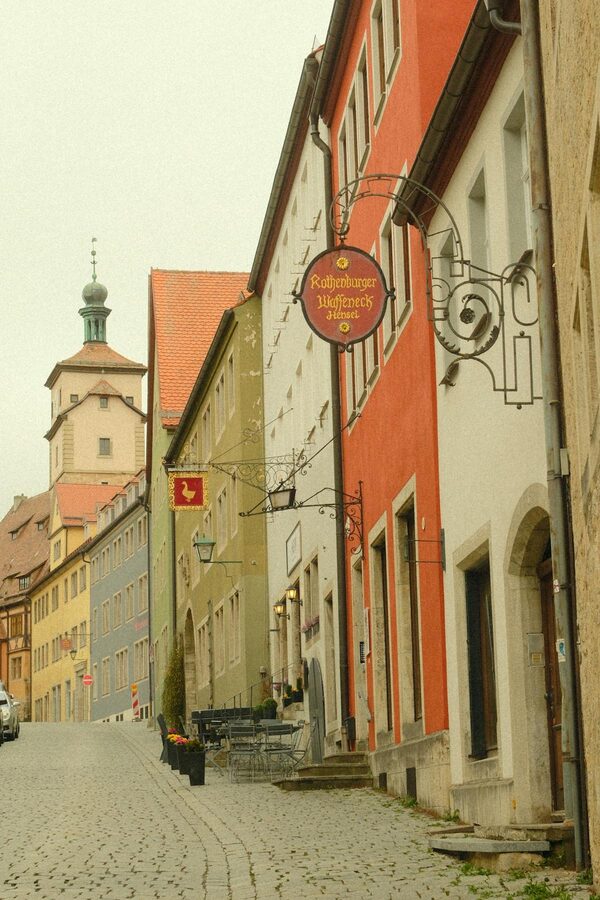
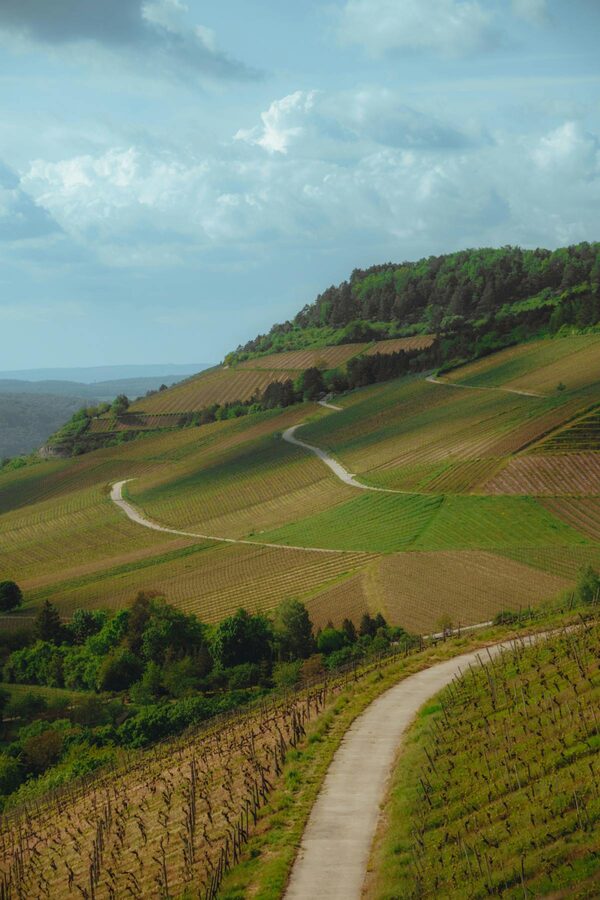
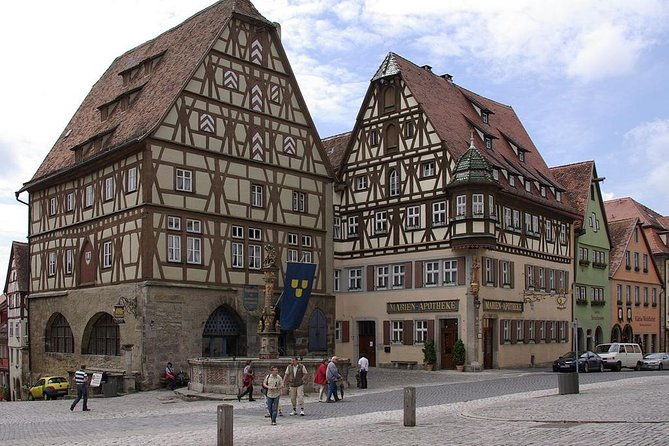
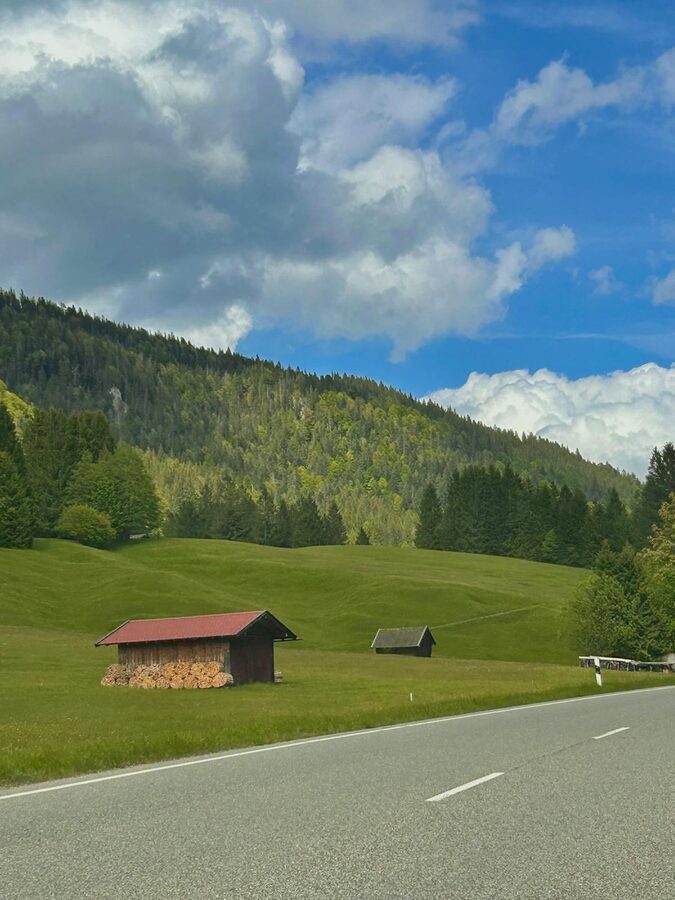
The Romantic Road runs 460 kilometres from Würzburg to Füssen, threading through some of the most absurdly picturesque countryside in Germany. Rothenburg ob der Tauber sits roughly at the halfway point — a medieval town so perfectly preserved that it looks like someone built a theme park based on a 15th-century German village, except it’s real.
The day trip from Munich ($90-95, about 10.5 hours) covers the Romantic Road’s highlights by bus with a guide — Rothenburg, Harburg Castle, and the Bavarian countryside between. It’s the most popular Germany day trip after Neuschwanstein, and the most efficient way to see the Romantic Road if you don’t have a car.
Best via Viator: Romantic Road, Rothenburg & Harburg Tour — $95, same route with slightly different stops.
Official site: rothenburg-tourismus.de — visitor information, events, and independent visit planning.
- What You’ll See in Rothenburg
- The Romantic Road: Why It Exists
- Harburg Castle: The Other Stop
- The Day Trip Logistics
- Should You Take the Day Trip or Visit Independently?
- Rothenburg’s History
- Best Tours to Book
- 1. From Munich: Rothenburg & Romantic Road Day Trip —
- 2. Romantic Road, Rothenburg & Harburg Tour —
- 3. Guided Rothenburg Day Trip from Frankfurt — 6
- Practical Tips
- Other Munich Day Trips
What You’ll See in Rothenburg
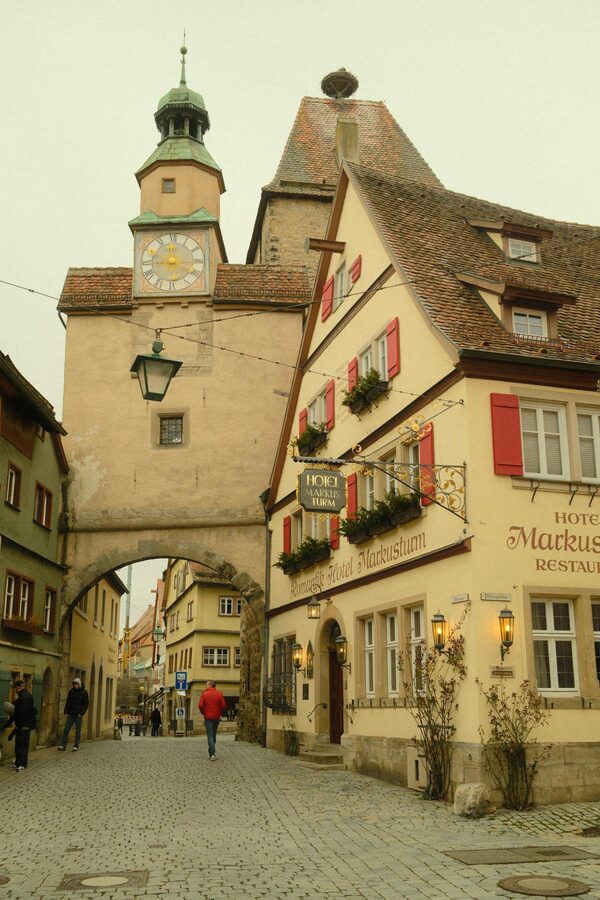
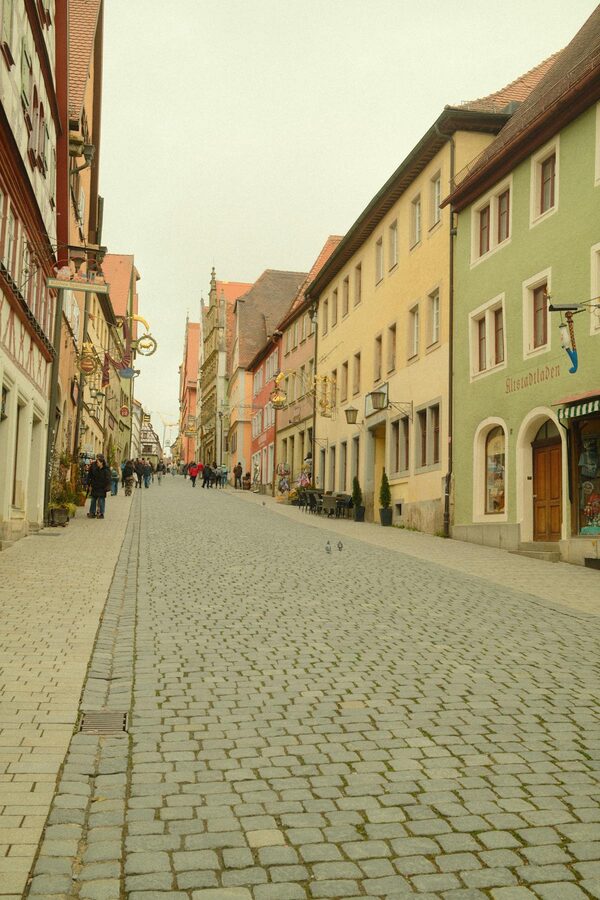
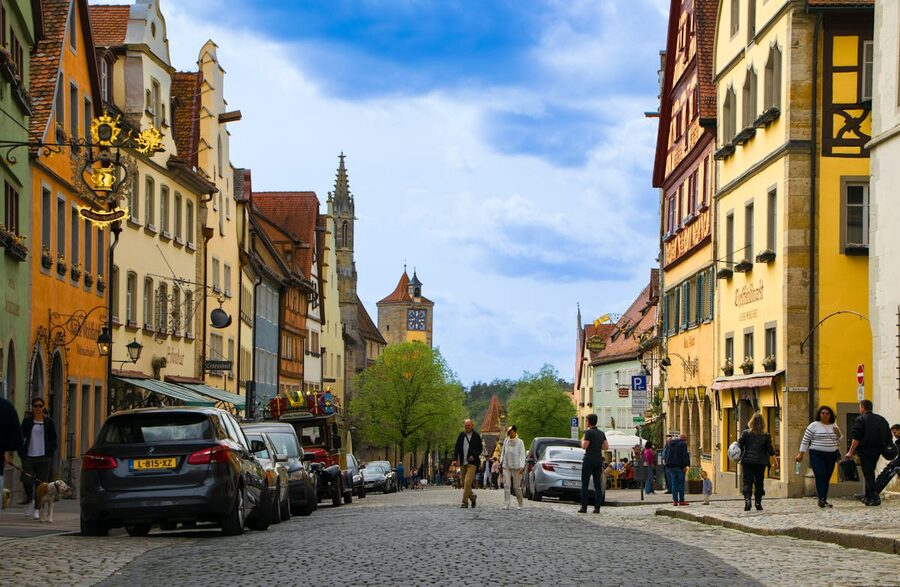
Rothenburg ob der Tauber is a small town. The entire walled old town takes about 20 minutes to walk across, and the day trips give you 2-3 hours of free time to explore. That’s enough to see the highlights, eat something, and buy a Schneeball (snowball pastry) — the local specialty that’s essentially deep-fried dough rolled in sugar.
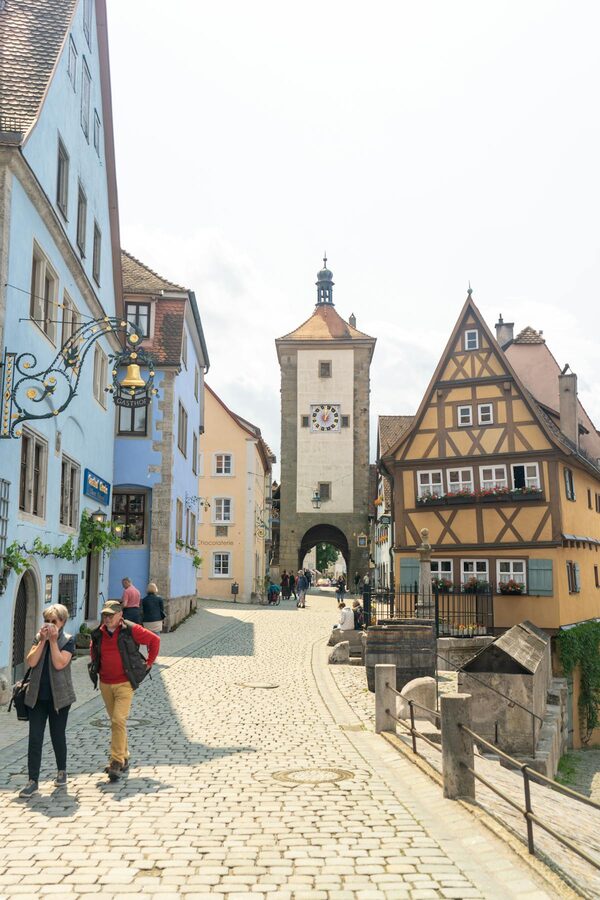
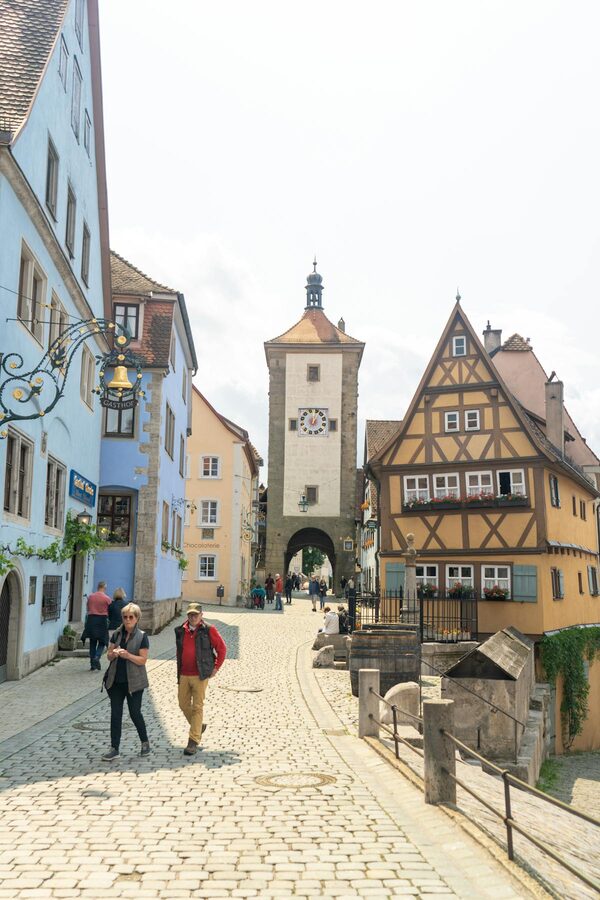
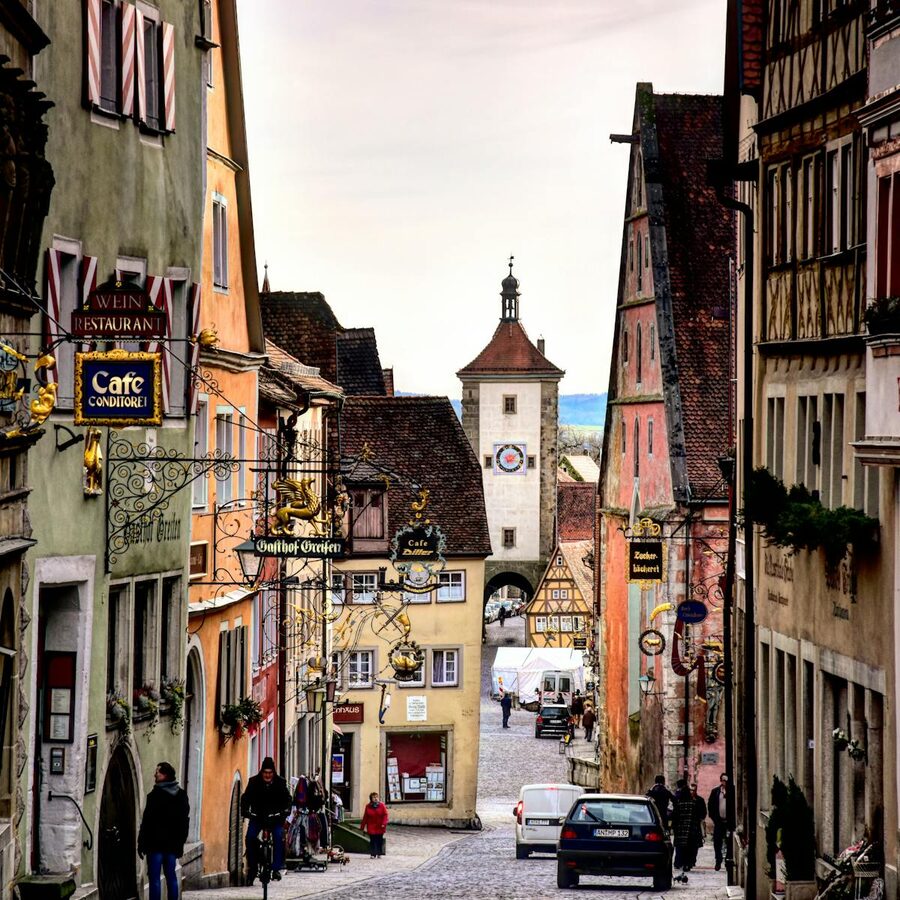
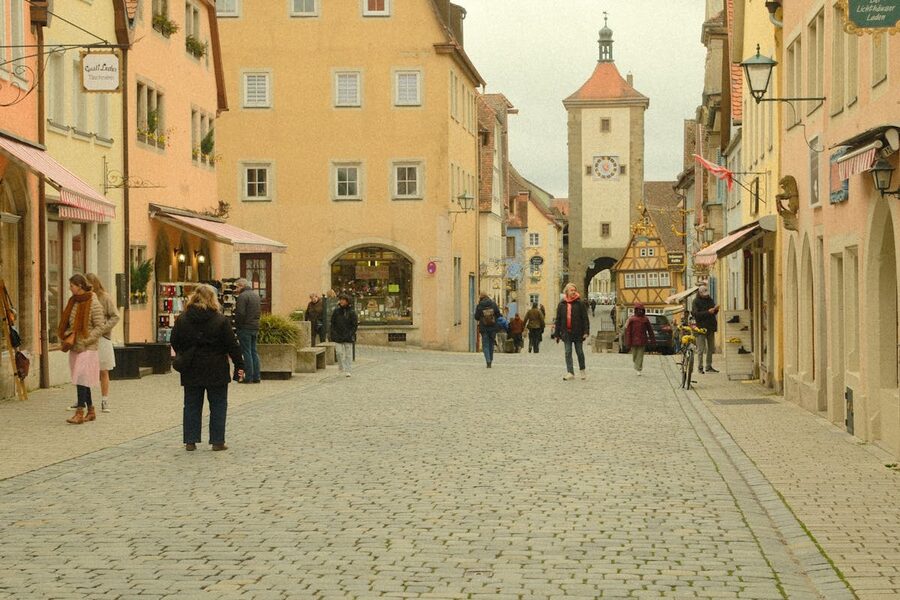
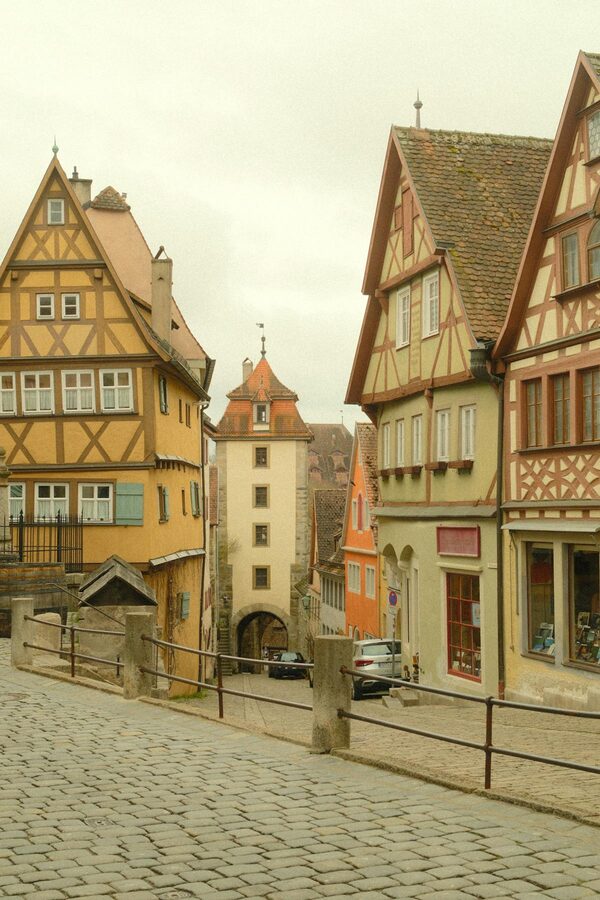
The Plönlein — the most photographed spot in Rothenburg, and possibly in all of Germany. Two streets diverge at a half-timbered yellow house, framed by a tower gate on each side. It’s the image you’ve seen on every Romantic Road brochure, and it’s exactly as pretty in person. The guided tours and the free time both bring you here.
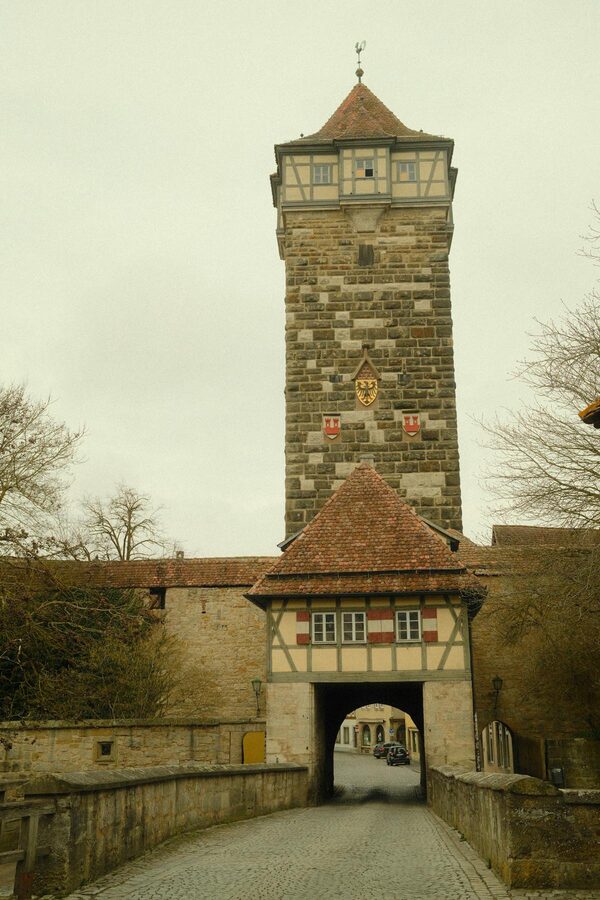
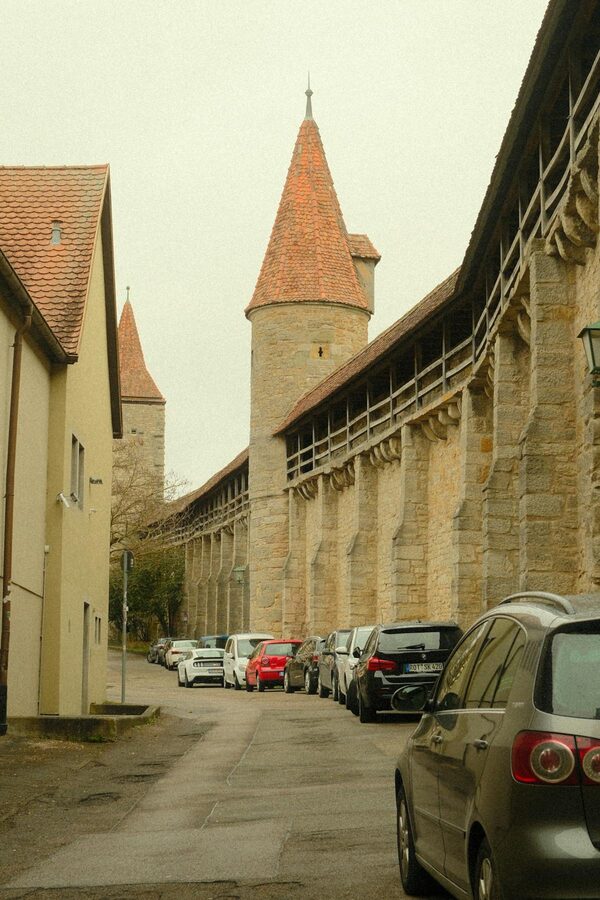
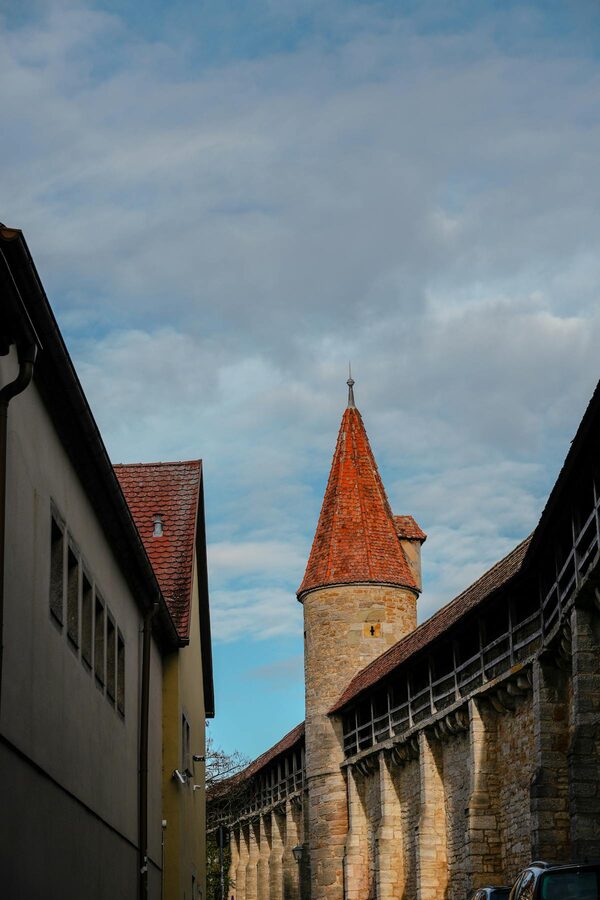
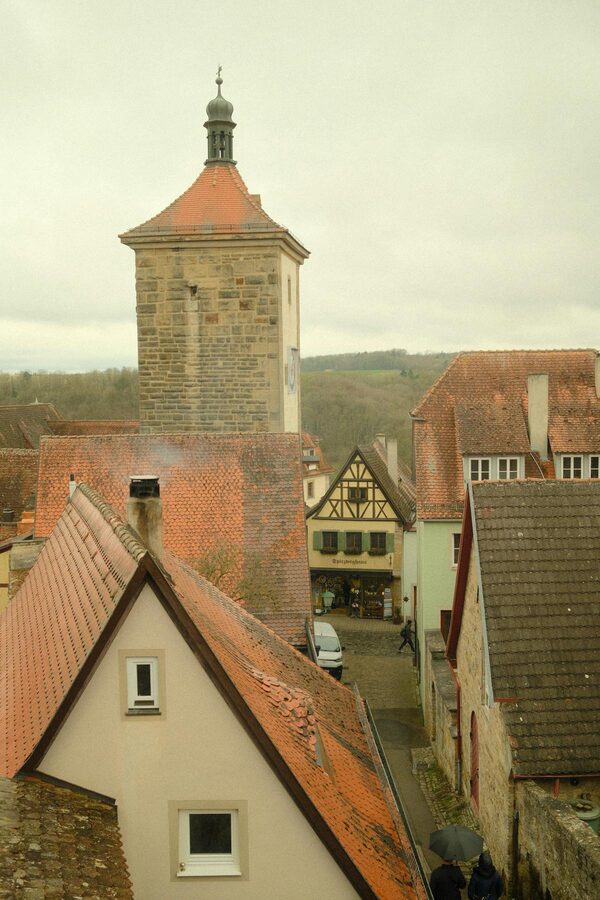
The Town Wall Walk — Rothenburg’s medieval wall is almost entirely intact, and you can walk along the covered parapet for most of the town’s perimeter. The walk takes about 25-30 minutes and gives you elevated views over the rooftops, the Tauber valley below, and the countryside beyond. Sections of the wall have been restored with donations — small plaques name the individuals and organisations that funded each stretch.
St. Jakob’s Church — a Gothic church from the 14th century that houses the Heilig-Blut-Altar (Holy Blood Altar) by Tilman Riemenschneider, one of the masterpieces of German medieval sculpture. The carved limewood altarpiece is in the upper gallery and depicts the Last Supper with extraordinary detail. Even if you’re not interested in religious art, the craftsmanship is genuinely exceptional.
The Medieval Crime Museum — Rothenburg’s most unusual attraction. The museum displays instruments of torture, punishment devices, and legal documents from the Middle Ages through the 19th century. It’s oddly entertaining and educational — you learn about medieval justice systems while looking at thumb screws, shame masks, and a cage they used to dunk suspected witches in the river.
The Romantic Road: Why It Exists
The Romantic Road (Romantische Straße) was created in 1950 as a tourist driving route — one of Germany’s first deliberate attempts to attract international visitors after the war. The name has nothing to do with romance in the love sense. “Romantic” here means the Romantic movement in art and literature: a celebration of nature, history, and the picturesque. The route was designed to string together medieval towns, castles, and landscapes that embody this aesthetic.
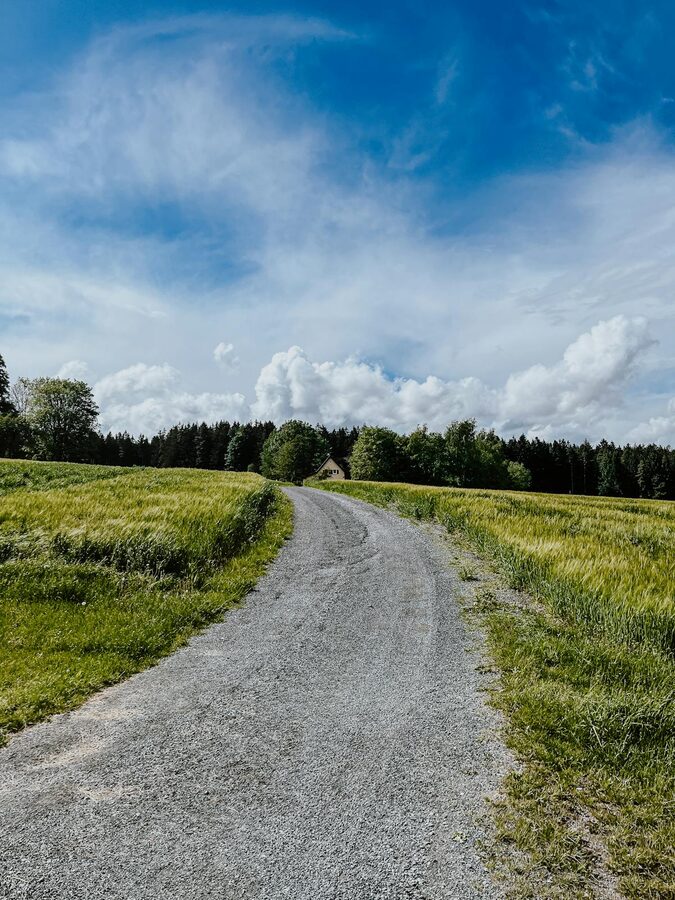
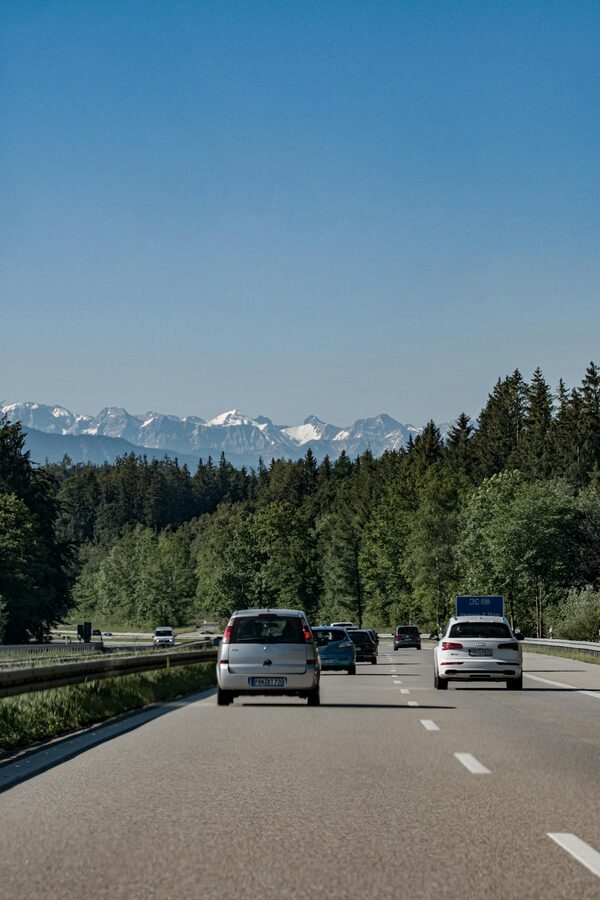
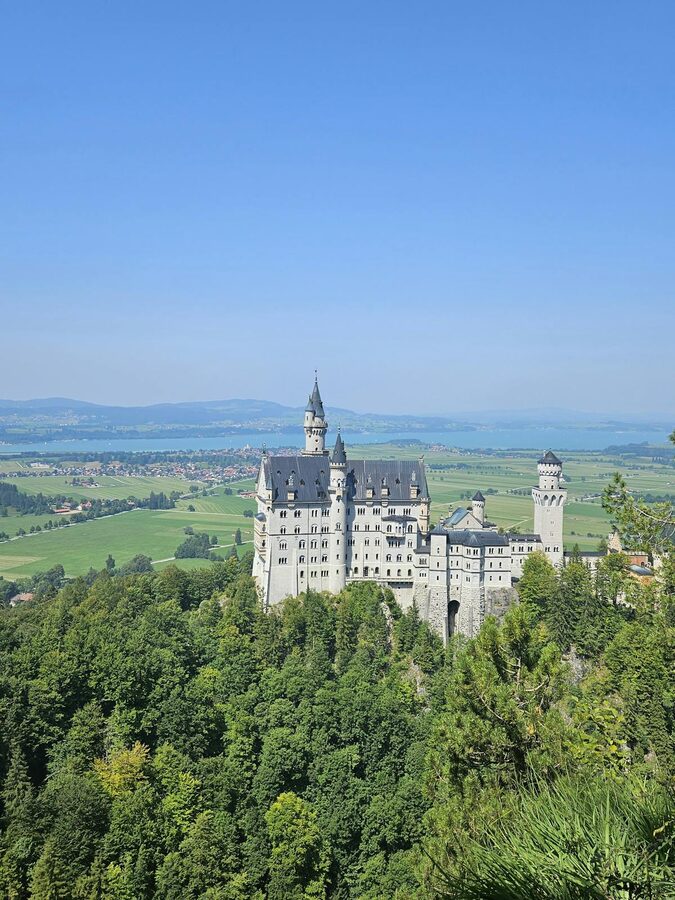
The route runs from Würzburg in the north to Füssen (near Neuschwanstein Castle) in the south. The day trip from Munich covers the southern and central sections — Harburg Castle and Rothenburg being the main stops. You don’t see the entire road (that would take several days), but you see its two best-known destinations.
Harburg Castle: The Other Stop
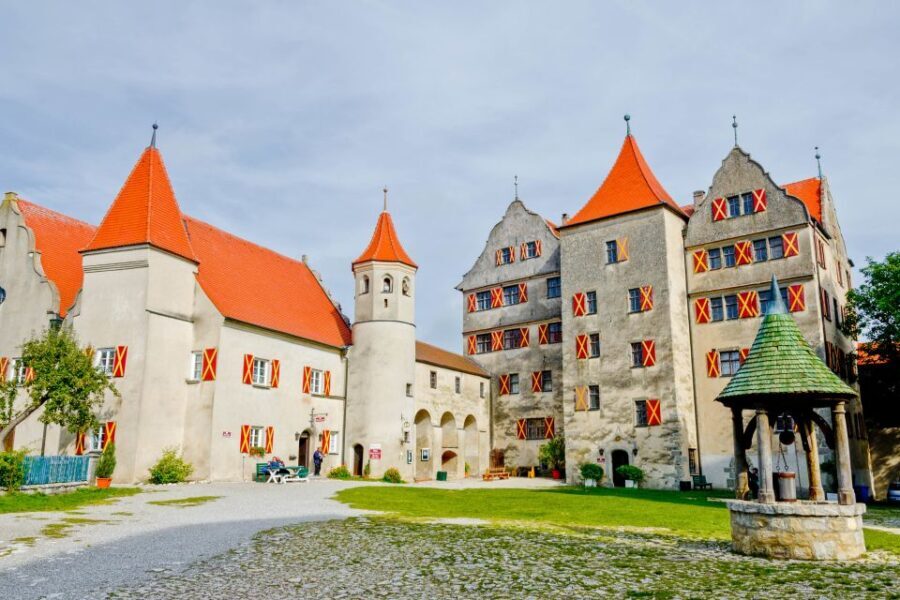
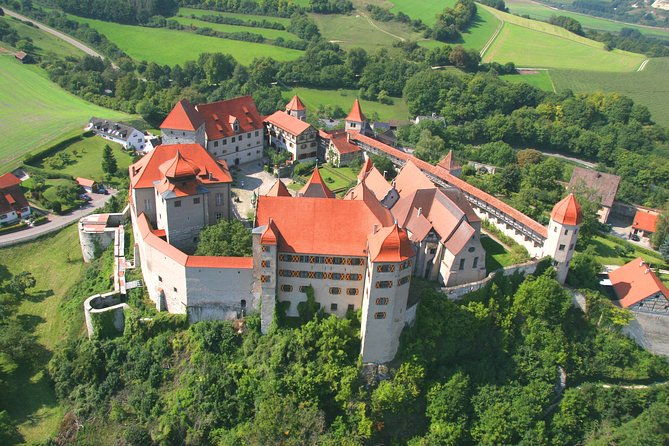
The day trips include a stop at Harburg Castle (Burg Harburg) — one of the best-preserved medieval castles in southern Germany. The castle sits on a hill above the town of Harburg and has been continuously inhabited since the 11th century. It’s still owned by the princely Oettingen-Wallerstein family, and some sections remain private residences.
The guided tour of the castle (included in the day trip) takes about 45 minutes and covers the keep, the courtyard, the prison tower, and the castle church. The views from the ramparts over the Wörnitz valley are excellent. Harburg doesn’t have Rothenburg’s tourist infrastructure — no snowball shops, no crime museum — which means it feels more like a genuine medieval fortress and less like a curated experience.
The Day Trip Logistics
Both tours depart from Munich early morning (around 8-8:30am) and return around 7-7:30pm. The total driving time is about 5-6 hours (round trip), with the remaining time split between Harburg (about 1 hour), Rothenburg (2-3 hours), and comfort stops.
The buses are modern coaches with air conditioning, reclining seats, and onboard toilets. The guide provides commentary in English (and sometimes German) during the drive, covering the Romantic Road’s history, the Bavarian countryside, and practical tips for the free time in Rothenburg.

What’s included: Bus transport from Munich, English-speaking guide, Harburg Castle entry, and free time in Rothenburg. Lunch is NOT included — you eat on your own in Rothenburg during the free time. Budget €10-15 for a meal in one of the old town restaurants, or more for a sit-down traditional Franconian lunch.
What’s not included: Meals, drinks, admission to Rothenburg attractions (Crime Museum €5, Town Hall Tower €2.50), and the Night Watchman’s Tour (runs separately in the evening, not accessible on a day trip).
Should You Take the Day Trip or Visit Independently?
If you have a rental car, driving the Romantic Road independently is the superior experience — you set your own pace, stop at the smaller towns (Dinkelsbühl, Nördlingen), and spend as long as you want in Rothenburg. The drive from Munich to Rothenburg takes about 2.5 hours via the A7 motorway, or 3-4 hours if you follow the Romantic Road itself through the towns.
Without a car, the day trip is the practical option. Train connections from Munich to Rothenburg exist but require changes at Steinach and take about 3 hours each way — which leaves less time in the town than the bus tour provides, with no Harburg Castle stop.
The day trip works well for visitors based in Munich who want to see Rothenburg and the Romantic Road without the complexity of car rental or independent train travel. The guide handles all logistics, the Harburg Castle stop adds variety, and the 2-3 hours in Rothenburg is enough to see the main sights. You’ll wish you had more time — everyone does — but you’ll see enough to understand why Rothenburg is the most famous small town in Germany.
Rothenburg’s History
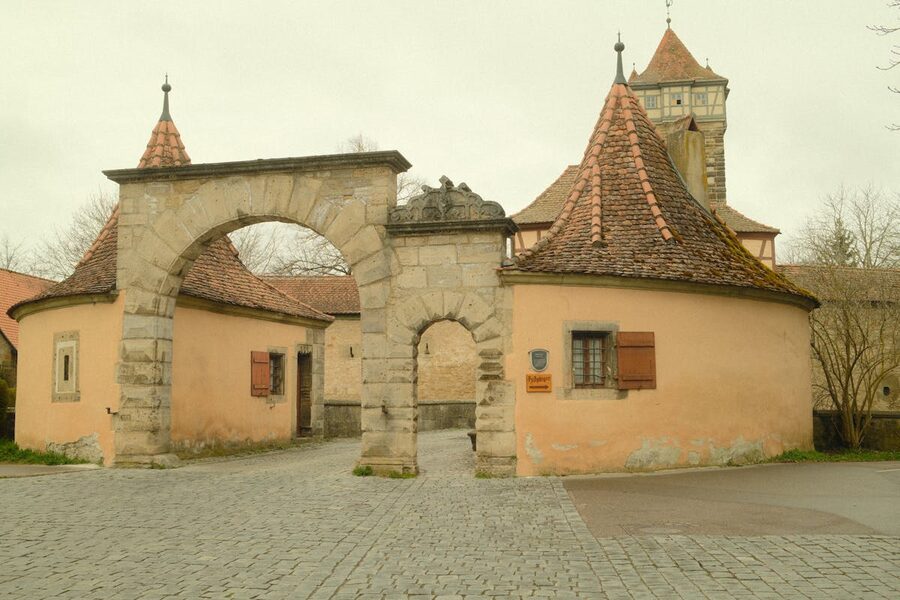
Rothenburg ob der Tauber (“Red Fortress above the Tauber”) was founded in the 12th century and reached its peak of prosperity and power in the 14th century, when it was a free imperial city with its own army and extensive trade networks. The town’s wealth came from wool trade, and the merchants invested their profits in the elaborate buildings that still stand today.
The Thirty Years’ War (1618-1648) devastated Rothenburg. The town was besieged, sacked, and depopulated. It never recovered economically — which, ironically, is why it’s so well preserved today. With no money for redevelopment, the medieval buildings simply stayed as they were. By the 19th century, Romantic movement artists “discovered” Rothenburg and began painting its medieval streetscapes, which attracted travelers who came to see the Germany of fairy tales and folk stories.
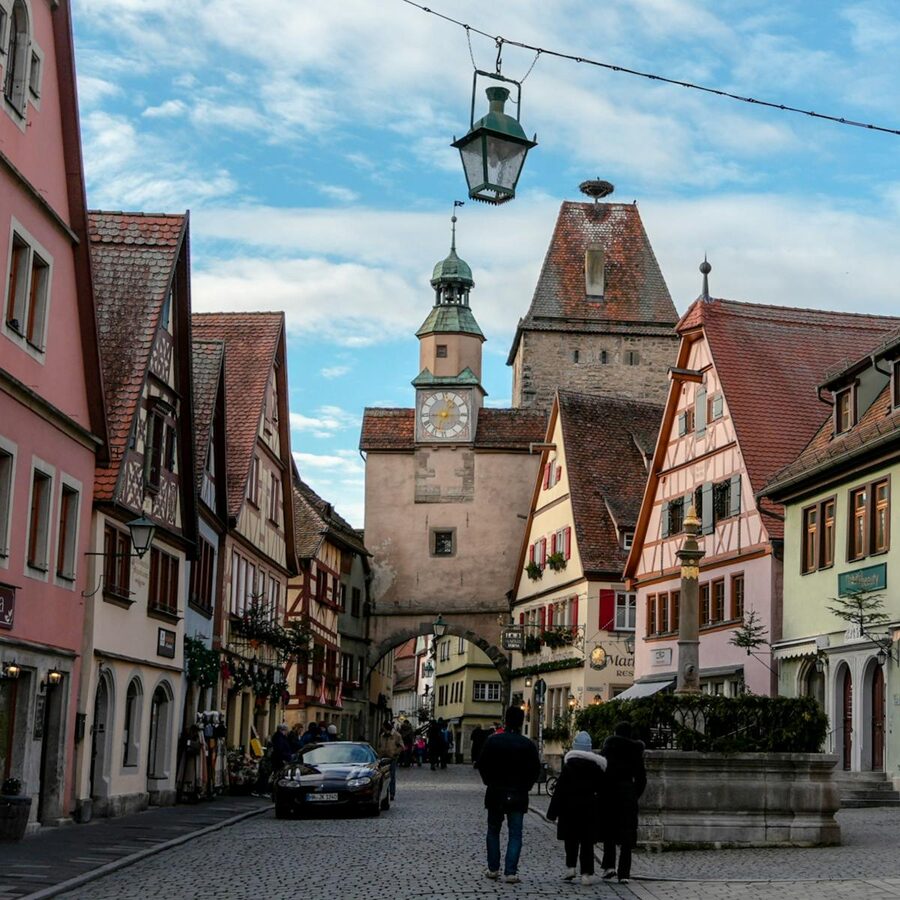
During WWII, about 40% of Rothenburg’s east side was damaged by Allied bombing in March 1945. The rest was saved when US Assistant Secretary of War John J. McCloy, who knew the town from pre-war visits, ordered the local commanding officer to accept the town’s surrender rather than shell it. The damaged sections were rebuilt using traditional materials and techniques, and the repairs are almost impossible to distinguish from the original medieval buildings.
Best Tours to Book
1. From Munich: Rothenburg & Romantic Road Day Trip — $90
The standard Munich day trip. A full day by modern coach with an English-speaking guide, covering Harburg Castle, Rothenburg ob der Tauber, and the Romantic Road countryside between. At $90 including the Harburg Castle entry, the logistics alone would cost nearly as much independently. Our review covers the bus quality, the guide’s narration, and how to make the most of your free time in Rothenburg.
2. Romantic Road, Rothenburg & Harburg Tour — $95
Same concept, different operator. The route overlaps significantly with the GYG tour — Romantic Road, Harburg, Rothenburg — with minor differences in timing and commentary style. The $95 price is marginally higher but includes the same stops. Choose between this and the GYG tour based on availability and departure times. Our review compares the two operators and explains which one has the edge.
3. Guided Rothenburg Day Trip from Frankfurt — $296
For visitors based in Frankfurt rather than Munich. The day trip follows a different route — the Castle Road (Burgenstraße) rather than the Romantic Road — and reaches Rothenburg from the north. The $296 price is significantly higher because it’s a small-group or private tour rather than a large coach. Our review covers whether the premium format justifies the premium price.
Practical Tips
When to visit: April through October is the main season. December is magical — Rothenburg’s Christmas market (Reiterlesmarkt) is one of the most atmospheric in Germany, and the town’s medieval streets look like a Christmas card with snow. July-August is warmest but most crowded. Spring (April-May) and autumn (September-October) offer the best balance of weather and crowd levels.
What to eat: Schneeball (snowball pastry) is the local specialty — a ball of fried dough strips dusted with powdered sugar or dipped in chocolate. It’s good, not great, and very photogenic. For a proper meal, try Franconian sausages with sauerkraut, or the excellent bakeries along the Herrngasse. The restaurants on Marktplatz are tourist-priced; the ones a block away are better value.
What to buy: Käthe Wohlfahrt’s Christmas shop on Herrngasse is a year-round Christmas emporium that’s worth visiting even if you don’t buy anything — the interior is decorated to look like a Christmas forest. Hand-made Christmas ornaments start at about €10. The Christmas Museum upstairs costs €4 and is genuinely interesting.
Budget: Day trip: $90-95. Lunch in Rothenburg: €10-15. Crime Museum: €5. Tower climb: €2.50. Schneeball: €3-4. A full day including the tour and spending money: about €120-130.
Other Munich Day Trips
Rothenburg and the Romantic Road make a natural pair with the Neuschwanstein Castle day trip — fairytale castle one day, medieval town the next. Both are full-day excursions that show different sides of Bavaria’s personality: the royal fantasy of Ludwig II versus the mercantile reality of the medieval trading towns.
The Dachau Concentration Camp tour adds the 20th-century chapter that the Romantic Road deliberately avoids. Together with Rothenburg and Neuschwanstein, it gives you three days of Bavarian day trips that cover the full span of German history — from medieval prosperity through royal excess to the darkest chapter and beyond.
For visitors who prefer to stay in Munich, the Munich city tours cover the beer halls, the Marienplatz, and the English Garden without the long bus ride. Munich itself is worth at least two full days of exploration before you start day-tripping.