
Dachau was the first concentration camp the Nazis built — opened in March 1933, less than two months after Hitler became Chancellor. Over 12 years, more than 200,000 people were imprisoned here, and at least 41,500 were murdered.
The memorial site sits 16 kilometres northwest of Munich, reachable in about 45 minutes by S-Bahn and bus. Most visitors come on guided tours from Munich, and the quality of these tours — led by historians who specialise in the Nazi period — is what makes the visit educational rather than merely harrowing.
Dachau held political opponents first: communists, social democrats, trade unionists. Then it expanded to Jews, Roma, homosexuals, Jehovah’s Witnesses, and anyone the regime considered undesirable. It became the prototype for the entire concentration camp system — the methods, the bureaucracy, the architecture of terror were developed here and exported to every camp that followed. Guides don’t just describe the horrors. They explain the system: how it was designed, how it functioned, and how ordinary people became complicit in it.
Best small group: Dachau Small-Group Half-Day Tour — $60, max 15 people, consistently outstanding feedback.
Official site: kz-gedenkstaette-dachau.de — hours, visitor info, and educational resources.
- What You’ll See at the Memorial
- The History Behind the Memorial
- Liberation and Aftermath
- Tour vs. Independent Visit
- Best Tours to Book
- 1. Dachau Memorial Tour from Munich by Train —
- 2. Dachau Memorial Tour with Train —
- 3. Dachau Small-Group Half-Day Tour —
- The Town of Dachau
- Preparing for Your Visit
- Dachau and Other Munich Day Trips
- Practical Information
- Where Dachau Fits in Your Munich Trip
What You’ll See at the Memorial
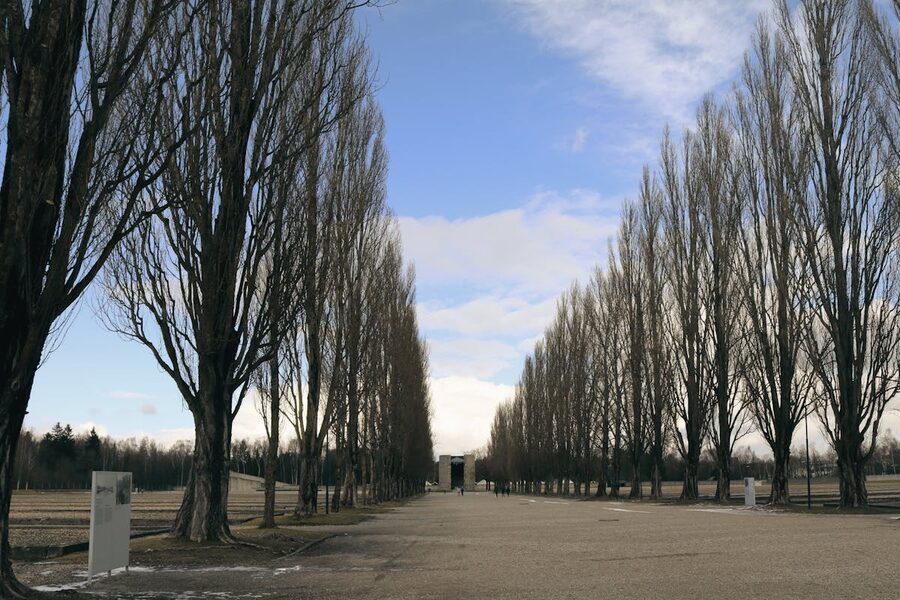
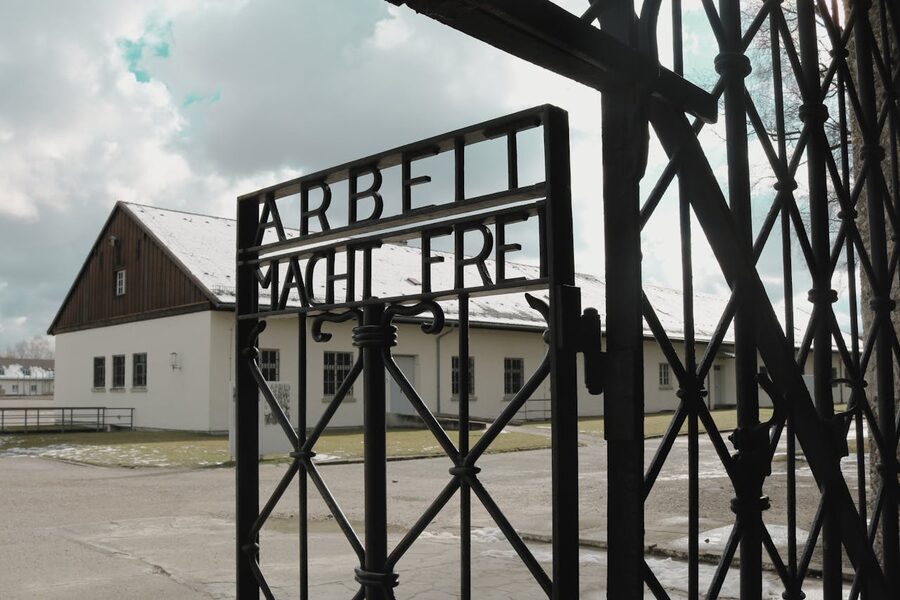
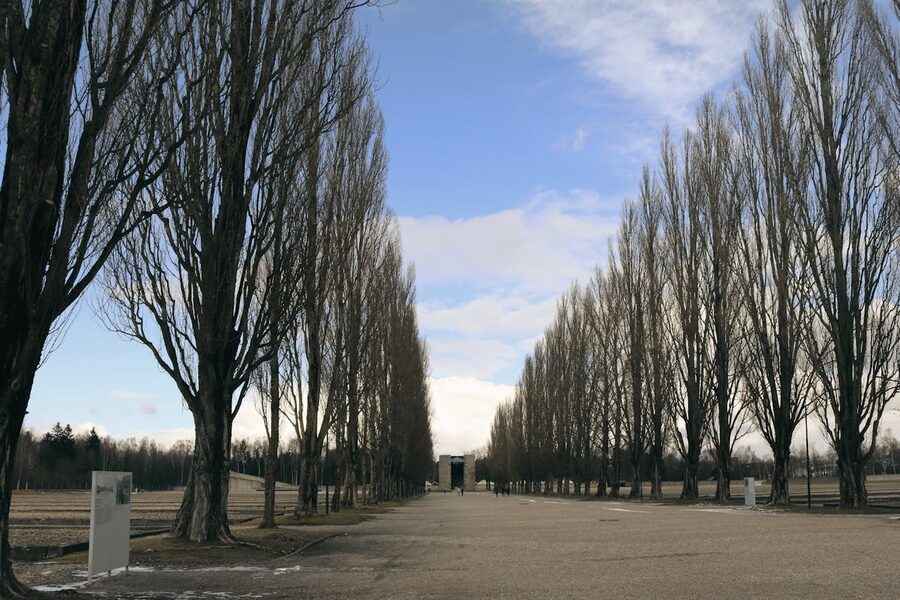
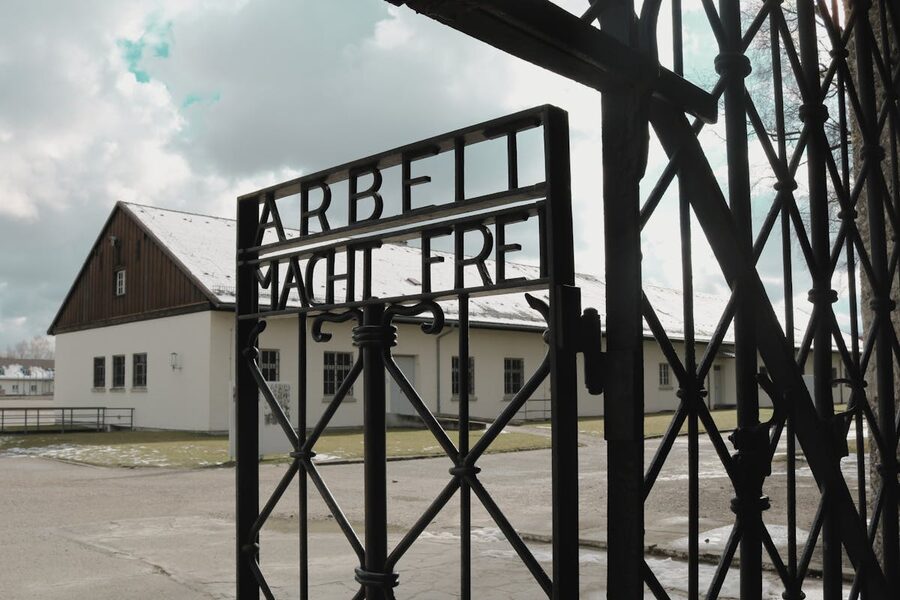
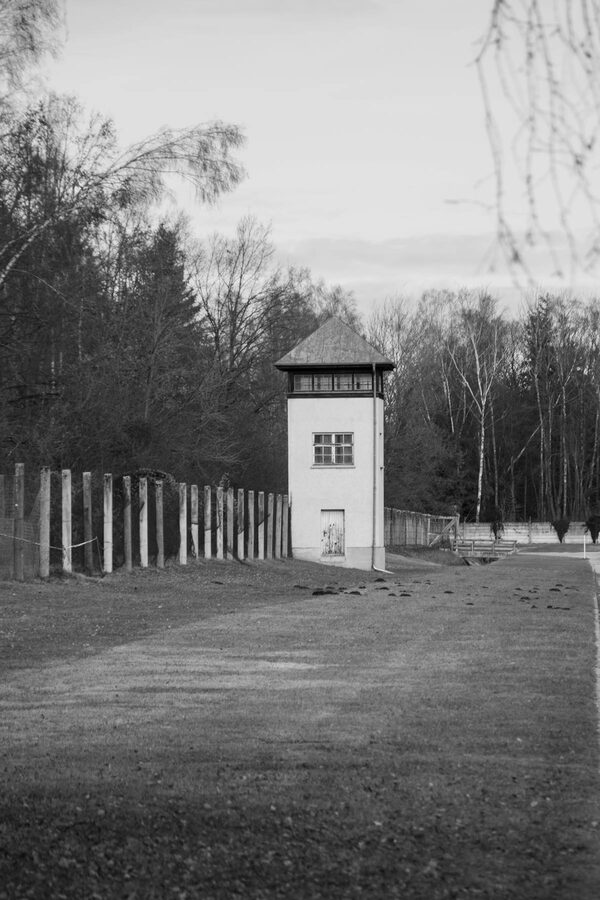
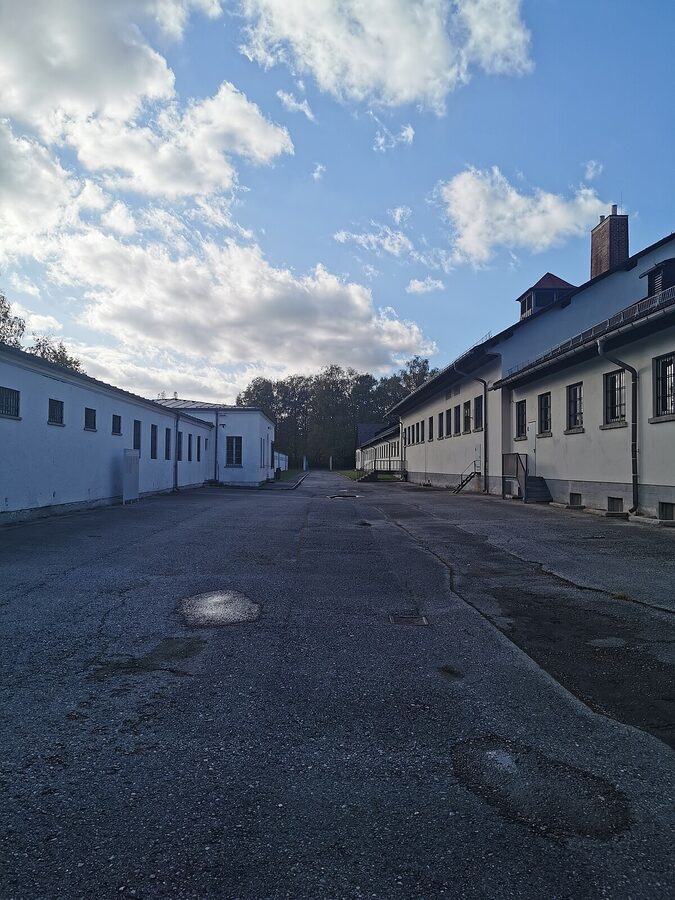
The memorial preserves the camp’s layout and several original buildings. The guided tours follow a route that builds chronologically from the entrance through the daily life of the camp to the killing facilities.
The main exhibition occupies the former maintenance building and covers the full history of Dachau in extraordinary detail. Photographs, documents, personal testimonies, and artefacts trace the camp from its founding through liberation by American troops on April 29, 1945. The exhibition is available in English and German and takes about 45-60 minutes to walk through thoroughly. The curators updated the exhibition in 2003, replacing the original 1965 display with a more comprehensive treatment that incorporates decades of additional research and survivor testimony. The result is one of the most thorough camp exhibitions in Europe — more detailed than Sachsenhausen’s and more accessible than Auschwitz’s, largely because of its English-language focus on the Munich tourism circuit.
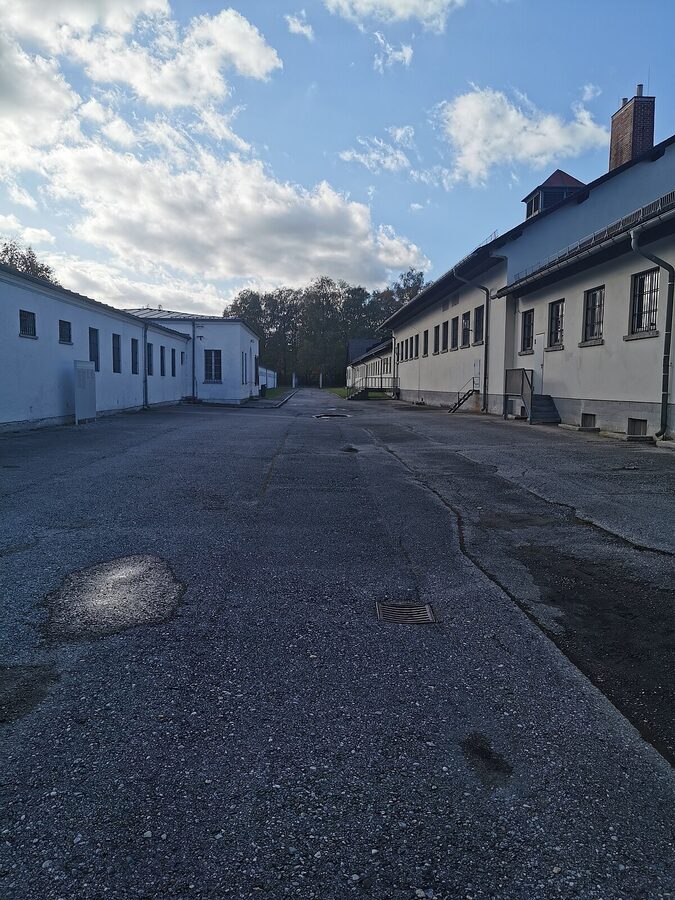
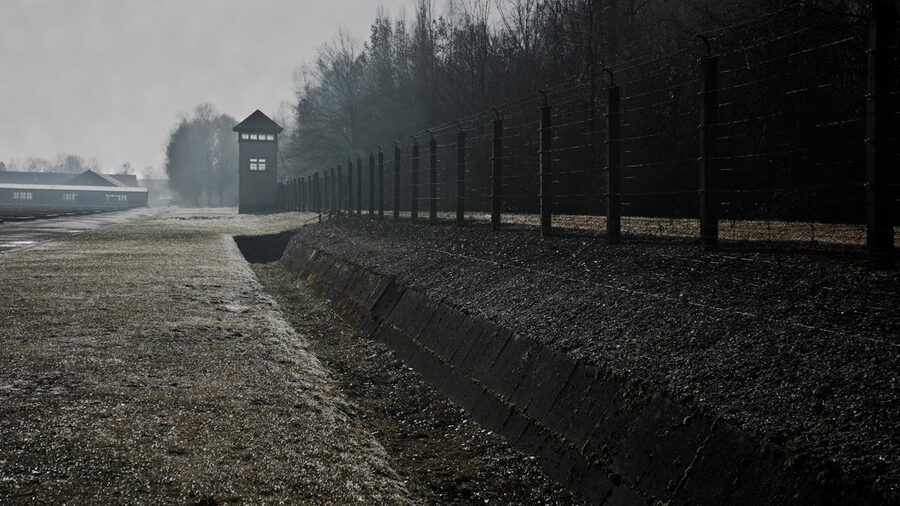
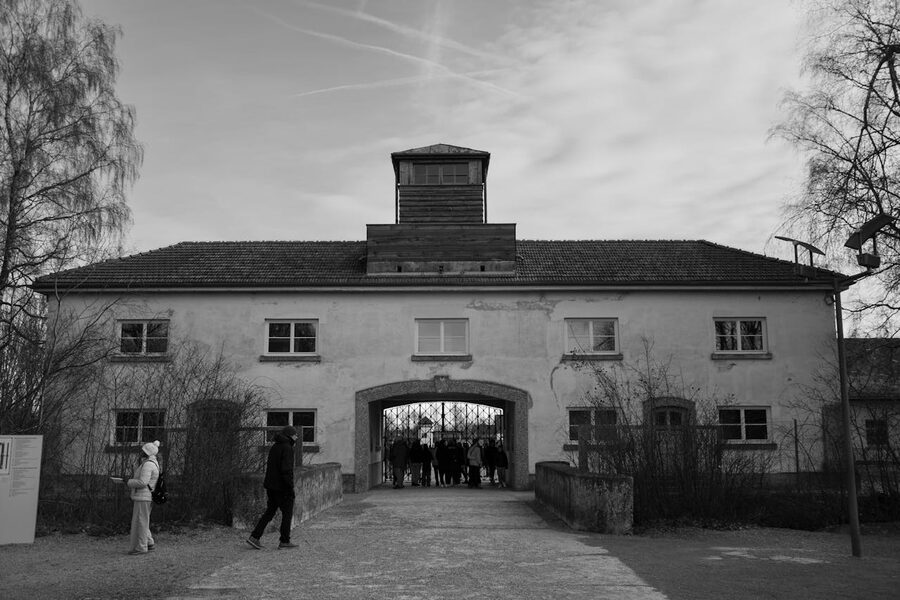
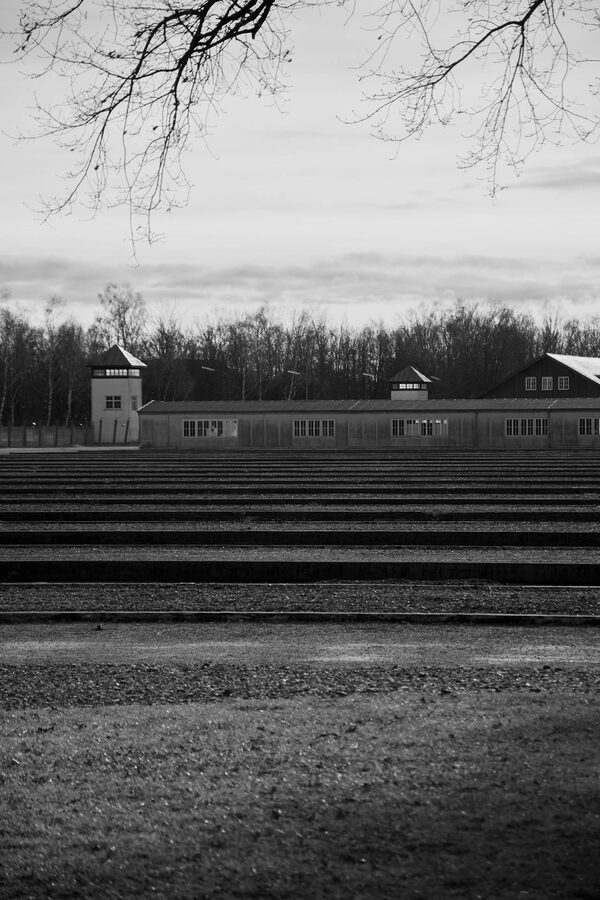
The barracks — two reconstructed barracks show living conditions at different periods. In the early years, conditions were harsh but survivable. By 1944-45, the camp was catastrophically overcrowded — designed for 6,000, it held over 30,000. The reconstructions show both periods, and the difference is one of the most effective exhibits in the memorial.
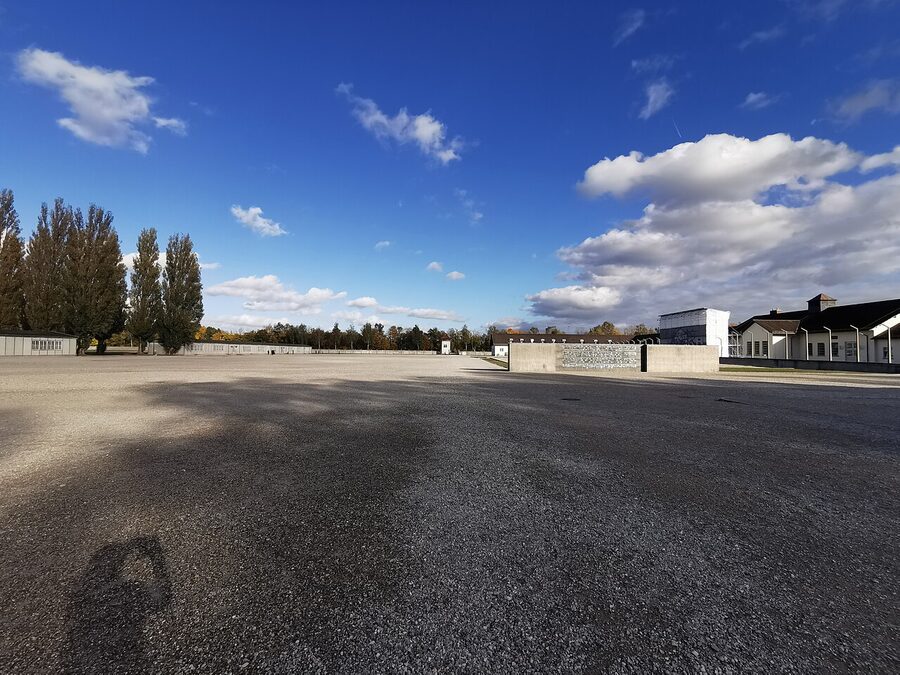
The first barracks building is restored to its 1933-38 configuration — relatively ordered, with individual beds and lockers, reflecting a period when the Nazis still maintained a pretence of “re-education” rather than extermination. The second shows the 1944-45 reality: triple-stacked bunks crammed so tightly that prisoners slept two or three to a mattress, disease rampant, starvation routine. The camp’s original capacity was 6,000. By the time American troops arrived in April 1945, it held over 30,000 prisoners in conditions beyond description.
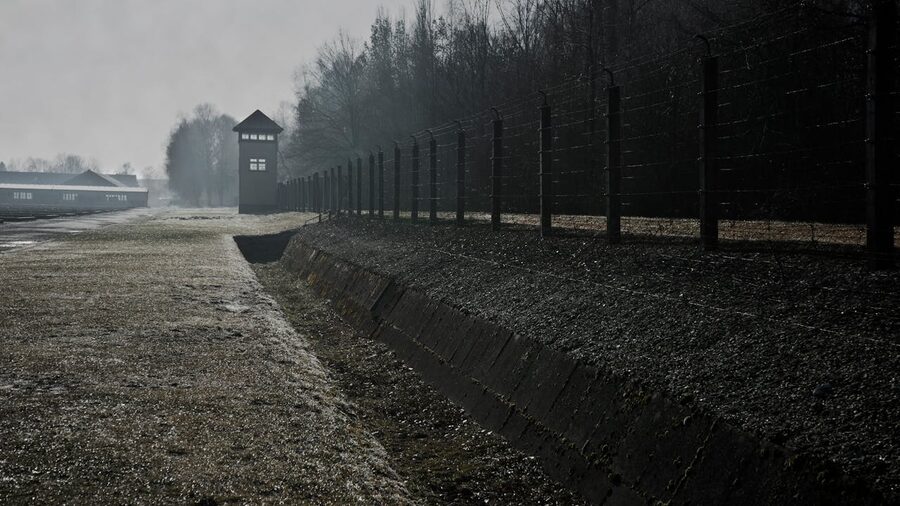
The crematorium and gas chamber — at the far end of the camp. The “Baracke X” building contains the ovens where bodies were burned and a gas chamber disguised as a shower room. Whether the gas chamber at Dachau was used systematically for mass murder (as at Auschwitz) remains historically debated — the exhibition presents the evidence and the ongoing scholarly discussion transparently.
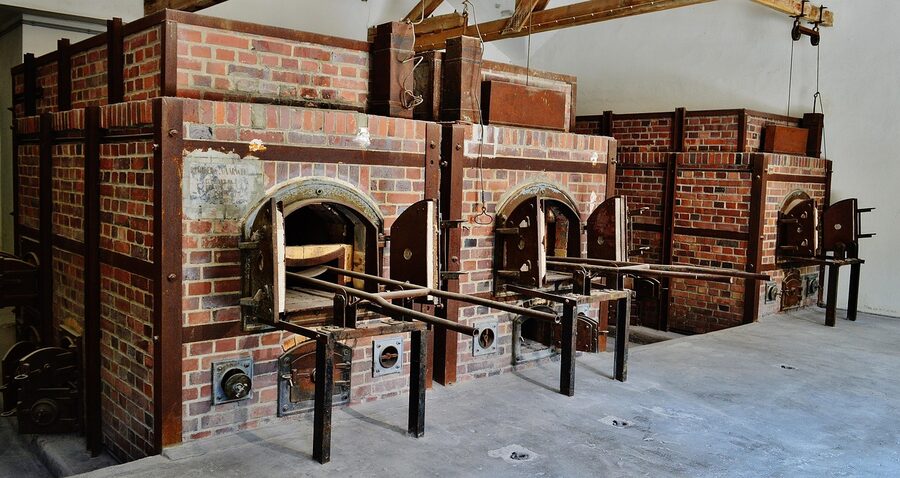
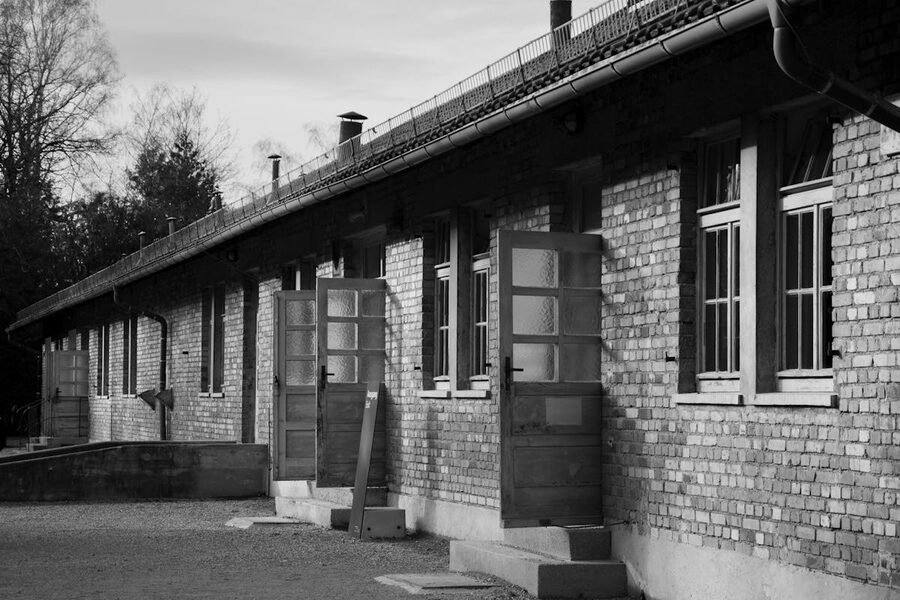
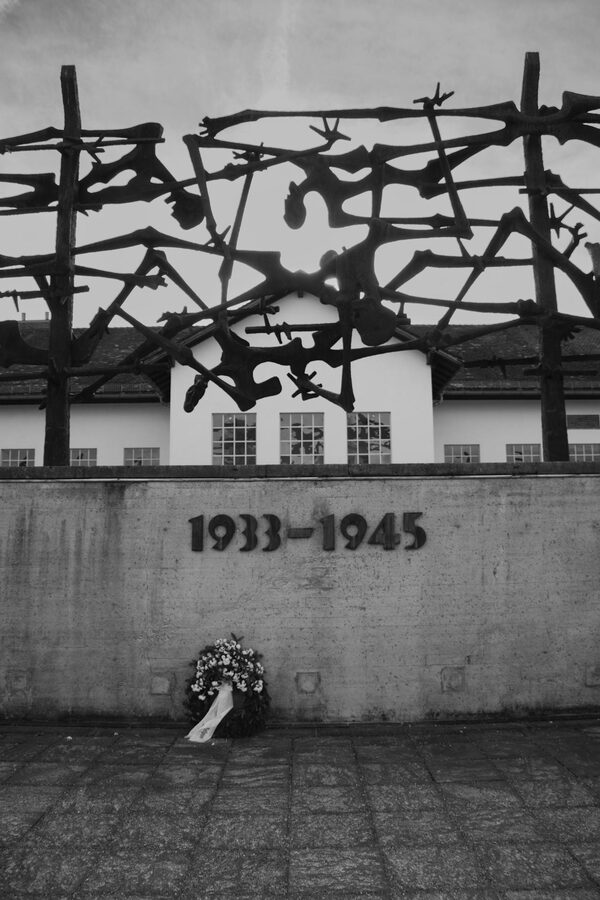
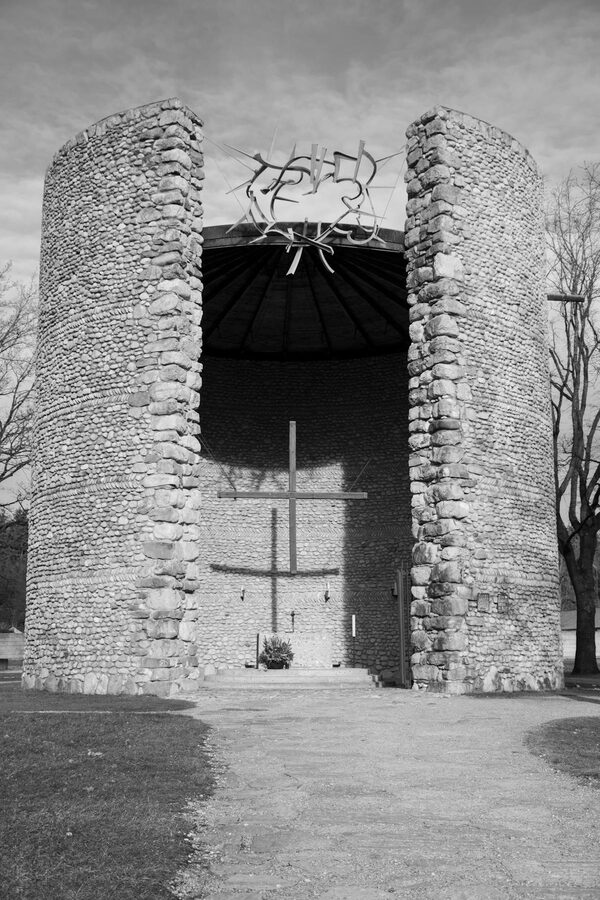
The religious memorials — Catholic, Protestant, Jewish, and Russian Orthodox memorials stand on the grounds, each built in a different architectural style that reflects the faith community’s response to the camp’s history. The Jewish memorial is the most recent and the most stark — a ramp descending underground, representing the descent into darkness.
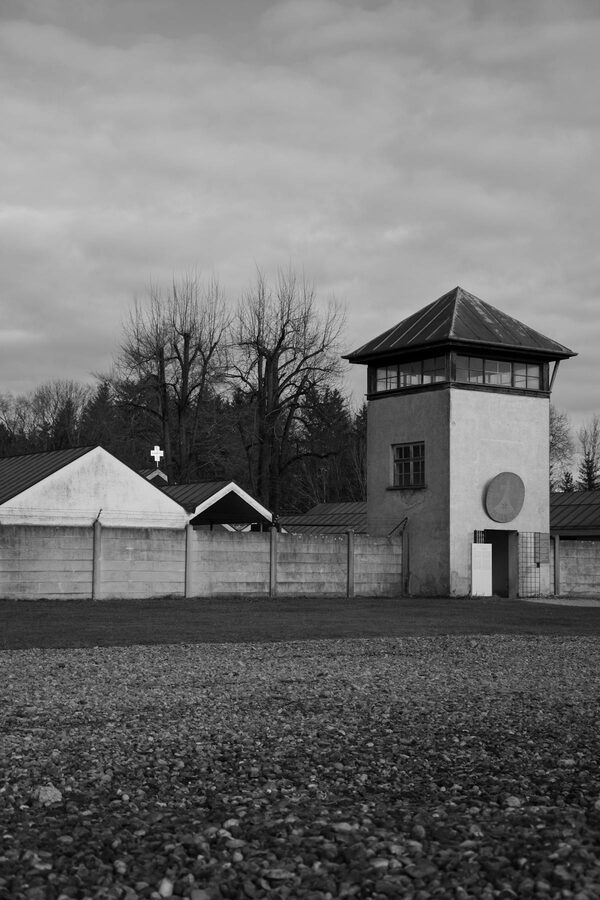
The Catholic memorial — the Mortal Agony of Christ Chapel — was designed by Josef Wiedemann and consecrated in 1960. It was the first religious memorial built on the grounds, reflecting the fact that Catholic clergy were among Dachau’s earliest and most numerous religious prisoners. Nearly 3,000 clergy from across occupied Europe were imprisoned in a dedicated “priest barracks,” and over 1,000 died here. The Evangelical Church of Reconciliation, designed by Helmut Striffler, opened in 1967 and uses brutalist architecture to create a sense of constriction and oppression. The Jewish memorial by Hermann Zvi Guttmann was added in 1967. The Russian Orthodox chapel, the newest addition, was consecrated in 1995 and features a distinctive wooden structure built in traditional Russian ecclesiastical style.
The History Behind the Memorial
Dachau opened on March 22, 1933, in a disused munitions factory on the edge of the town. Heinrich Himmler announced its creation at a press conference — it was never secret. The first prisoners were political opponents: communists, social democrats, trade union leaders, journalists critical of the new regime. The camp served as Himmler’s laboratory for the concentration camp system. Theodor Eicke, the first commandant, wrote the rules and procedures that would be replicated at Buchenwald, Sachsenhausen, Mauthausen, and eventually Auschwitz. The infamous SS-Totenkopfverbände (Death’s Head Units) were trained here before being deployed to run camps across occupied Europe.
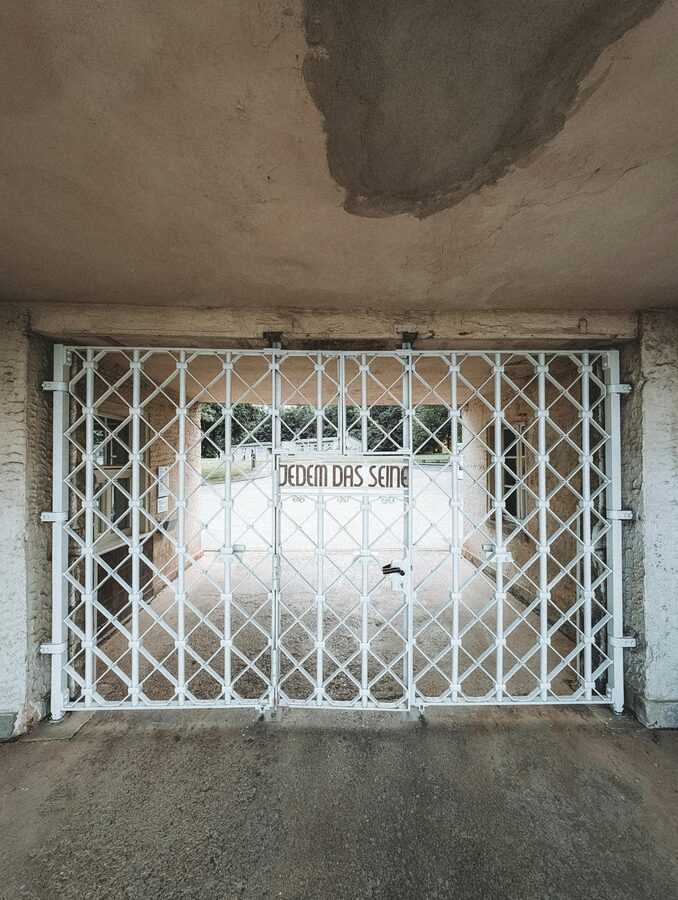
The camp expanded throughout the 1930s. After Kristallnacht in November 1938, over 10,000 Jewish men were imprisoned at Dachau in a single mass action. Many were released only after agreeing to surrender their property and emigrate — the regime was still focused on forced emigration rather than extermination at that point. Once the war began, the prisoner population diversified dramatically: Polish intellectuals, Soviet prisoners of war, French Resistance fighters, Roma families, homosexuals, Jehovah’s Witnesses, and common criminals from across Europe were all transported to Dachau or its sub-camps.
The camp ran a network of over 100 sub-camps across southern Bavaria and Austria, many attached to armaments factories. Prisoners produced weapons, aircraft parts, and construction materials for the German war effort. The labour was brutal, the rations starvation-level, and the death rate — particularly in the final months of the war — catastrophic. Medical experiments were also conducted at Dachau, including hypothermia experiments, high-altitude pressure tests, and malaria inoculations. The doctors responsible were tried at Nuremberg after the war.
Liberation and Aftermath
On April 29, 1945, soldiers of the US Army’s 42nd and 45th Infantry Divisions reached Dachau. What they found — a train of cattle cars filled with thousands of dead and dying prisoners, the walking skeletons of the survivors, the crematorium still warm — provoked immediate and visceral reactions. Some American soldiers summarily executed SS guards; the incident remains one of the most controversial episodes of the European liberation. The film and photographic documentation created that day was among the first visual evidence of the camp system shown to the wider world.
After liberation, Dachau served as a displaced persons camp and as the site of the Dachau war crimes trials, where US military tribunals prosecuted camp guards, doctors, and administrators. The trials ran from 1945 to 1948 and resulted in multiple death sentences. The camp then became housing for ethnic German refugees from Eastern Europe — families lived in the former barracks until the 1960s. The transition from concentration camp to refugee housing to memorial site is itself a story of how Germany has grappled with its past, and the guides address this layered history directly.
Tour vs. Independent Visit
The memorial is free to enter and open daily. Information panels in English cover every section. You can absolutely visit independently, and many people do. But the guided tours add a dimension that self-guided visits miss: the human stories, the political context, and the uncomfortable questions about how democratic societies slide into totalitarianism.
The train-based tours ($57-64) include the S-Bahn from Munich Hauptbahnhof to Dachau station, the bus to the memorial, 2.5-3 hours of guided touring, and the return journey. The small-group option (max 15 people) costs roughly the same but offers a more intimate experience — the guide can engage more personally and answer questions more thoroughly.
The guides who lead these tours are almost universally praised in visitor feedback. They’re professional historians — not actors or performers — and they approach the material with a combination of factual rigour and emotional sensitivity that most visitors find essential to processing what they see. They know when to talk and when to let the site speak for itself. They answer difficult questions honestly, including the uncomfortable ones about ordinary German complicity and the town of Dachau’s own relationship with the camp next door.
One significant advantage of the guided tours is the S-Bahn logistics. The journey from Munich Hauptbahnhof to Dachau station takes about 20 minutes on the S2 line, followed by a 10-minute bus ride to the memorial entrance. It’s straightforward if you know Munich’s public transport system, but the guides handle all the ticketing and transfers, which removes the stress of navigating an unfamiliar transit network while processing the emotional weight of where you’re going. The guides also use the travel time productively — the train journey becomes a mini-lecture on the political context of 1933 and the events that led to Dachau’s creation.
Best Tours to Book
1. Dachau Memorial Tour from Munich by Train — $64

The standard option. Five hours from central Munich including S-Bahn travel, bus transfer, and 2.5-3 hours at the memorial with a historian guide. The guide covers the full camp history — from its founding as the first concentration camp through liberation by American troops. At $64, the price covers the guide’s expertise and the transport logistics. Our review covers the full experience and what the guide adds beyond the memorial’s own panels.
2. Dachau Memorial Tour with Train — $57

Similar format to the main tour at a slightly lower price. The route and content overlap significantly — both cover the entrance, exhibition, barracks, crematorium, and memorials. The guide quality varies by individual rather than by operator, and both maintain excellent feedback that indicates consistently good experiences. Choose based on availability and price. Our review compares the two operators.
3. Dachau Small-Group Half-Day Tour — $60

The premium option — smaller group, more personal guide interaction, and the time to pause at sections that resonate. The exceptional feedback reflects guides who read the group’s emotional state and adjust the tour accordingly — sometimes spending longer at the barracks, sometimes more time in the exhibition, always responding to what the group needs. Our review explains why the small-group format is especially valuable at a memorial site.
The Town of Dachau
The town itself predates the camp by centuries — it’s a perfectly pleasant Bavarian market town with a hilltop castle, a baroque church, and views over the Amper River valley. Before 1933, Dachau was known as an artists’ colony. After 1945, it became known for one thing only. The relationship between town and memorial is complicated and ongoing. For decades, many residents resisted the memorial’s expansion. Today, the town has largely accepted its role as host to one of Germany’s most important memorial sites, though the tension between “normal Bavarian life” and the camp’s presence has never fully resolved.
Most visitors travel directly from Munich to the memorial and back, never seeing the town at all. The guides on the Munich tours don’t take you through Dachau town centre — the bus goes directly from the station to the memorial entrance. If you’re visiting independently and have extra time, the walk from Dachau station through the town to the memorial (about 30 minutes on foot) provides context that the bus ride skips. You pass through ordinary residential streets, past shops and cafes, and the proximity of normal life to what happened just up the road becomes its own lesson.
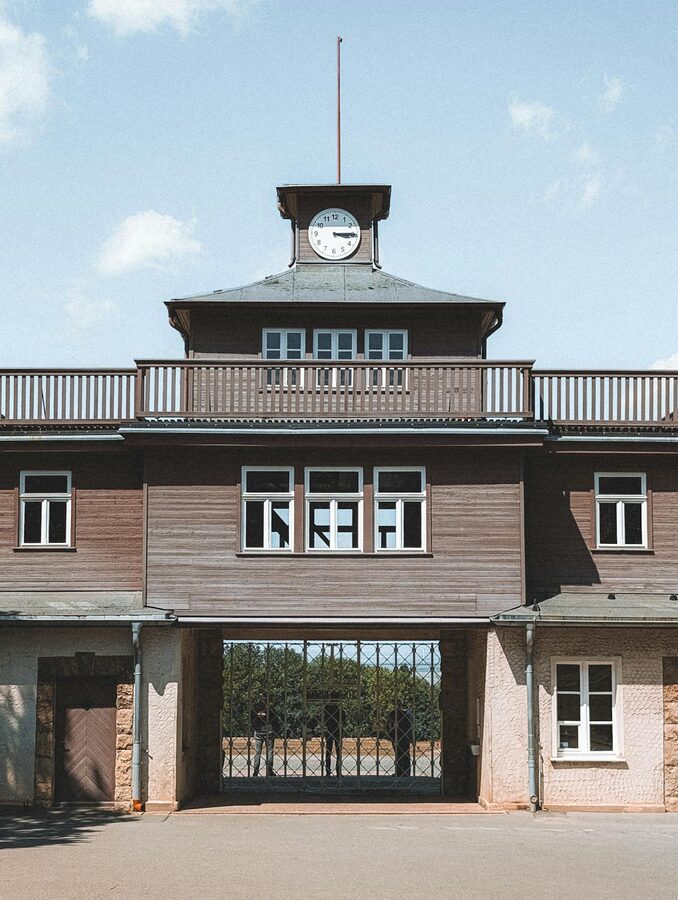
Preparing for Your Visit
This is not a fun day out. It’s an important one, and most visitors describe it as one of the most meaningful experiences of their European trip, but it’s emotionally demanding. Expect to feel drained afterward. Most tour groups are quiet on the S-Bahn ride back to Munich, and many visitors say they needed time alone in the evening to process what they’d seen.
Wear comfortable shoes — the memorial site is large and you’ll be on your feet for 2-3 hours on concrete and gravel paths. Bring water, but note that eating and drinking within the memorial grounds is not permitted (there’s a cafe near the entrance). Dress appropriately — not because there’s a dress code, but because you’ll be in a graveyard where tens of thousands of people died. The memorial asks visitors to show respect in their appearance and behaviour.
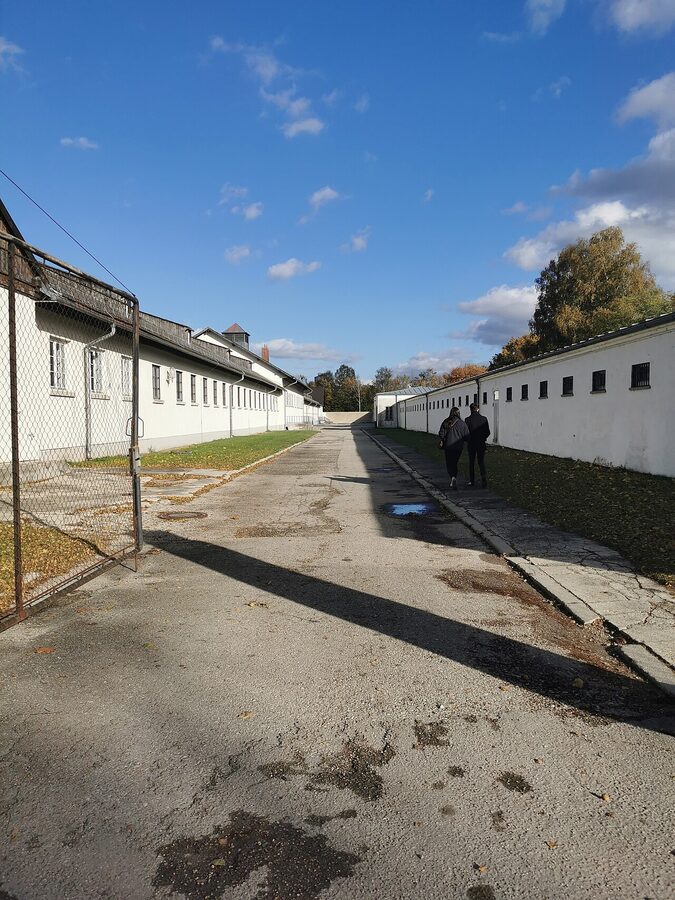
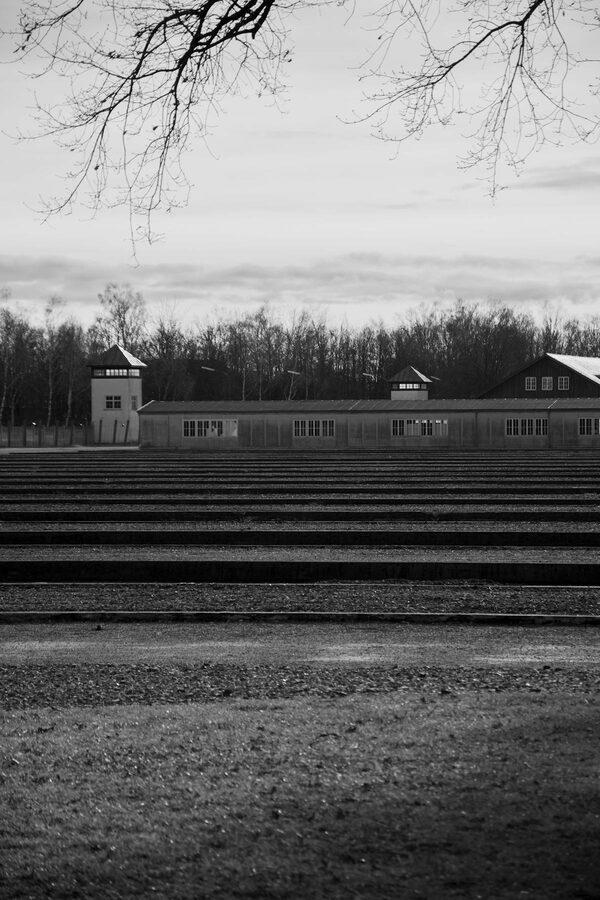
Photography is permitted throughout the site, but the memorial asks that it be done thoughtfully. This means no smiling selfies at the gate, no posed photographs at the crematorium, no Instagram-style shots that trivialise the location. If you’re unsure about whether a photograph is appropriate, it probably isn’t. The guided tours address this directly — guides will tell groups at the start what’s expected regarding photography and behaviour.
For those travelling with children, the memorial recommends ages 12 and above for the full visit including guided tours. The exhibition contains graphic photographs and descriptions of violence, and the crematorium area is genuinely disturbing. Some families visit with younger children and adjust their route — skipping the crematorium, focusing on the barracks and memorials — but this is a parental judgment call. The guides can accommodate families if informed in advance.
Dachau and Other Munich Day Trips
Dachau pairs naturally with Munich’s other major day trips, though most visitors space them across different days rather than doubling up. The Neuschwanstein Castle day trip takes a full day and represents the opposite end of Bavarian history — fairytale fantasy versus the darkest reality. Many visitors do Neuschwanstein one day and Dachau another, and the emotional whiplash between the two is itself instructive about how complex Germany’s past really is.

The Munich city tours complement the Dachau visit well. Walking tours of Munich’s city centre inevitably touch on the city’s role as the birthplace of the Nazi movement — the beer halls where Hitler rallied support, the streets where the 1923 putsch began, the buildings where early party offices operated. Seeing these sites in Munich first, then visiting Dachau the following day, creates a chronological understanding that pure memorial visits lack. Munich isn’t just the nearest big city — it’s the city where all of this began.
Practical Information
Opening hours: Daily 9am-5pm. Closed December 24. The grounds are open but the exhibitions and buildings close at 5pm. Check the official site for current information.
Getting there independently: S-Bahn S2 from Munich Hauptbahnhof to Dachau station (about 20 minutes), then bus 726 to “KZ-Gedenkstätte” (about 10 minutes). The journey is covered by a Munich day ticket (€9.20 for zones M-1). Allow 45 minutes each way from central Munich.
Entry: Free. Audio guide: €4.50. Guided tours from Munich: $57-64.
How long: 2-3 hours at the memorial for a thorough visit. Plus travel time (45 min each way). Total: 4-5 hours from Munich.
Behaviour: This is a memorial and graveyard. Dress respectfully. No eating or drinking on the grounds. Photography is allowed but should be done thoughtfully. No selfies at the gate or crematorium. Silence is expected in the most sensitive areas.
Children: The memorial recommends ages 12+ for guided tours. The exhibition contains graphic photographs and descriptions of violence. Parents should assess their children’s readiness individually.
Where Dachau Fits in Your Munich Trip
Dachau is typically a morning or afternoon visit — the memorial takes about 3 hours with a guided tour, leaving the rest of the day for Munich itself. Most visitors plan Dachau for the morning (tours depart around 9:30-10am) and return to Munich by early afternoon, leaving time for the city’s museums, beer gardens, or Marienplatz.
If you’re also visiting Berlin, the Sachsenhausen Concentration Camp tour from Berlin covers similar ground with a different camp and different history. Sachsenhausen served a different function within the Nazi system — as the administrative headquarters of the entire camp network and later as a Soviet prison — while Dachau was the prototype. Visiting both gives you the fullest possible picture, though many visitors find one camp memorial sufficient for a single trip.
The Berlin Third Reich walking tours also connect directly to what you’ll learn at Dachau. The Munich-to-Berlin axis of Nazi power — from the movement’s birthplace to the capital where it was implemented on a national scale — is one of the most important historical threads in 20th-century European history. Understanding both cities’ roles deepens the impact of visiting either memorial site.