
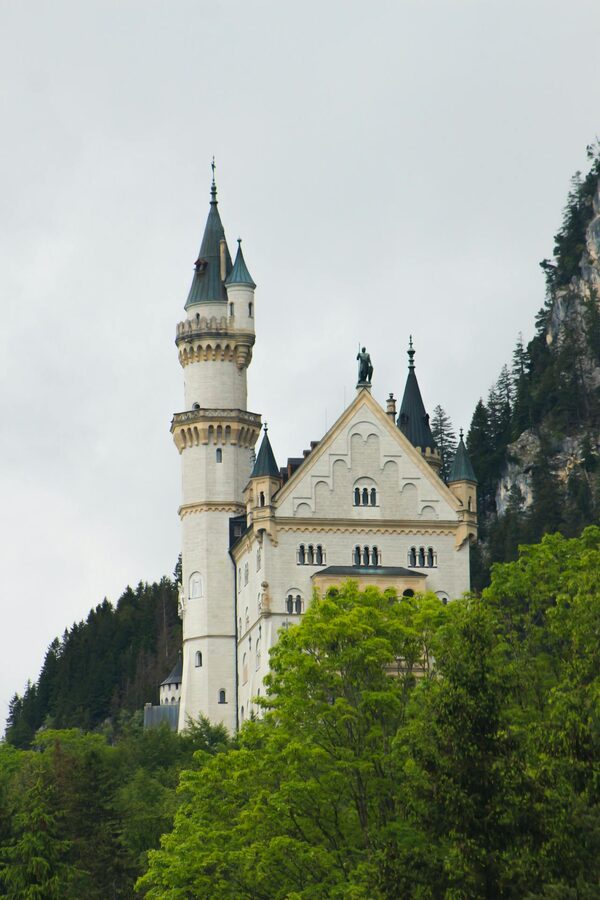
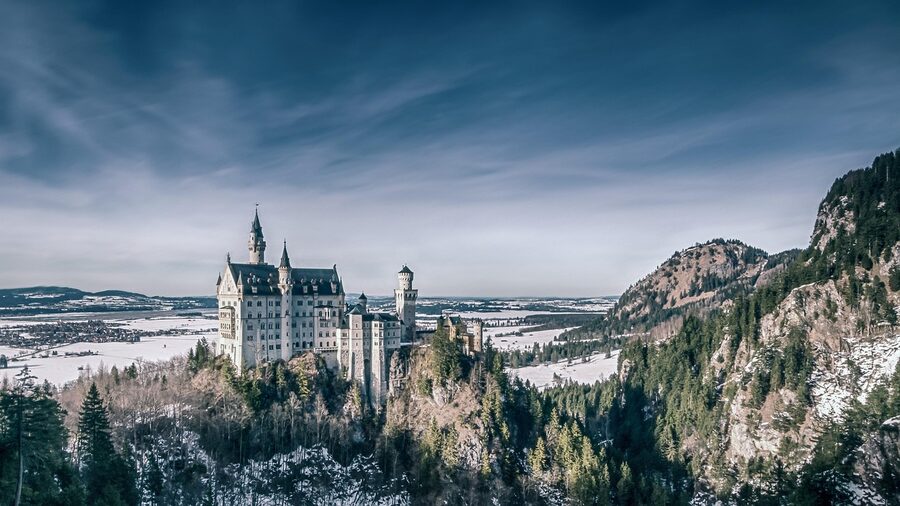
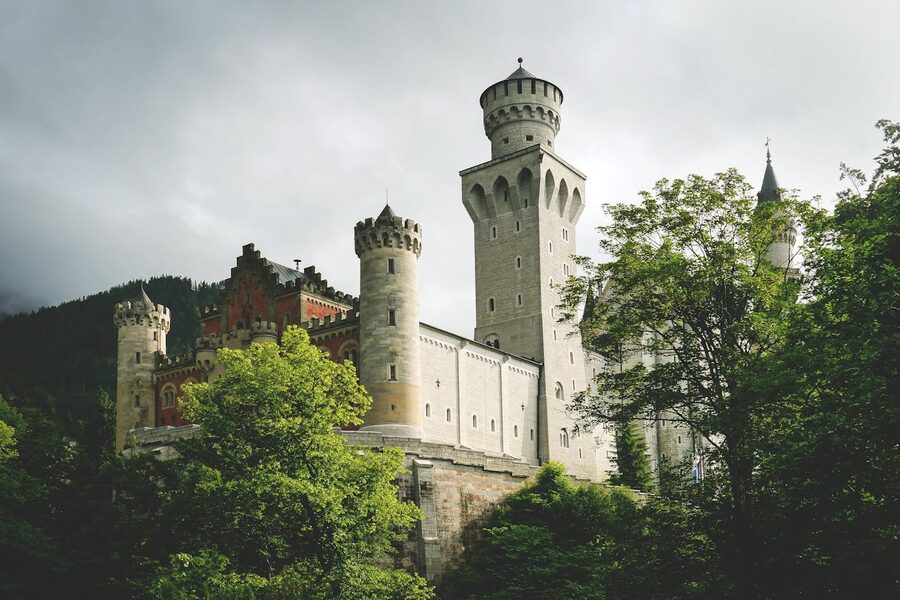
Ludwig II of Bavaria bankrupted himself building Neuschwanstein. He started construction in 1869 as a personal retreat — a Romanesque fantasy castle perched on a cliff above the Pöllat gorge in the Bavarian Alps. He never finished it. He was declared insane in 1886 and died the next day under mysterious circumstances.
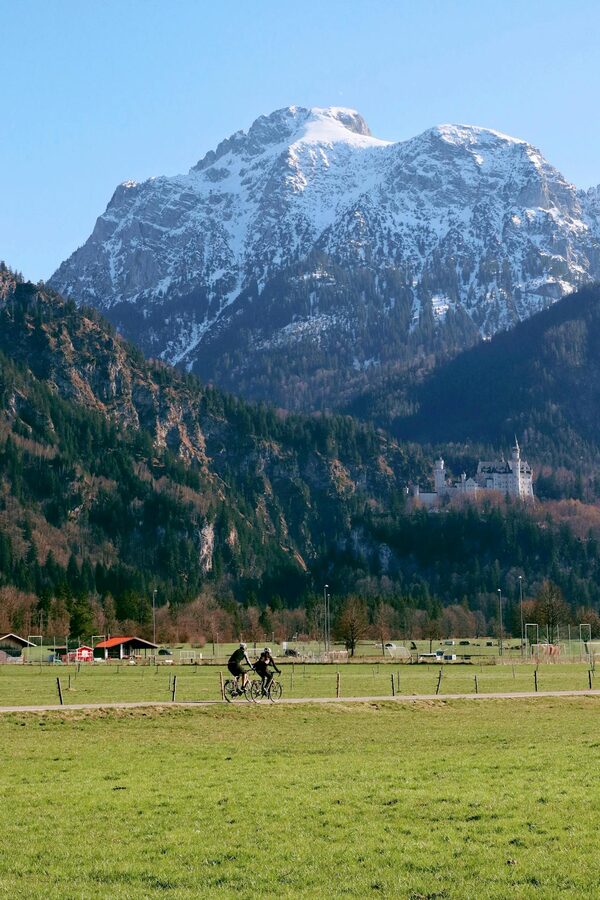
Neuschwanstein sits about 120 kilometres southwest of Munich, near the town of Füssen in the Allgäu Alps. Most visitors reach it as a day trip from Munich — a 2-hour drive or train ride each way, plus a steep uphill walk from the village of Hohenschwangau to the castle gates. The journey is long but the payoff is extraordinary: a fairytale castle that inspired Disney’s Sleeping Beauty Castle, set against Alpine scenery that looks photoshopped even in person.
Best small group: Neuschwanstein Small Group Tour — $96, 10 hours, max 8 people with skip-the-line entry.
Official tickets: hohenschwangau.de — timed entry tickets bookable 3 months ahead.
- How Booking Works
- The Marienbrücke: The Famous Photo Spot
- Linderhof: The Castle You Didn’t Know You Wanted to See
- Ludwig II: The King Behind the Castle
- Getting There Independently
- Best Tours to Book
- 1. Neuschwanstein + Linderhof Full-Day Trip —
- 2. Neuschwanstein & Linderhof Fairytale Day Tour —
- 3. Neuschwanstein Small Group Tour —
- Practical Tips
- Hohenschwangau Castle: Ludwig’s Childhood Home
- The Alpsee: Bavaria’s Most Beautiful Lake
- Füssen: The Town at the End of the Romantic Road
- Bavarian Food Near the Castle
- The History: Why Ludwig Built It
- More Bavaria and Germany
How Booking Works
Neuschwanstein entry is by timed ticket only — you cannot walk in without one. Tickets are timed to the minute: your ticket says “14:05” and you enter at 14:05, not 14:04 or 14:06. The guided tour inside lasts about 30 minutes. You can buy tickets online through the official ticket site (recommended — they sell out in summer) or at the ticket office in Hohenschwangau village on the day.
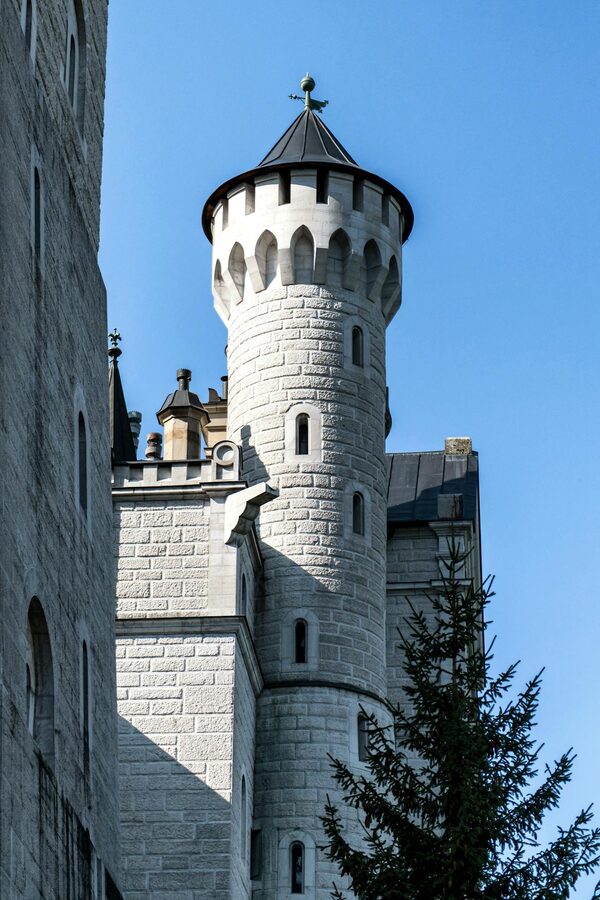
The official ticket costs about €15 for adults. Children under 18 are free. Audio guides are available in multiple languages. The interior tour covers about 14 of the castle’s 200 rooms — the most finished ones, including the Throne Hall (never completed — it has no throne), the Singer’s Hall (a performance space Ludwig never used), and the king’s bedroom with its impossible Gothic woodwork.
The walk from the ticket office in Hohenschwangau up to the castle takes about 30-40 minutes on a steep paved road. Alternatives: a horse-drawn carriage (€7 up, €3.50 down — the horses work harder going up) or a shuttle bus to the Marienbrücke bridge (€3 up), from where it’s a 15-minute downhill walk to the castle entrance.
The Marienbrücke: The Famous Photo Spot
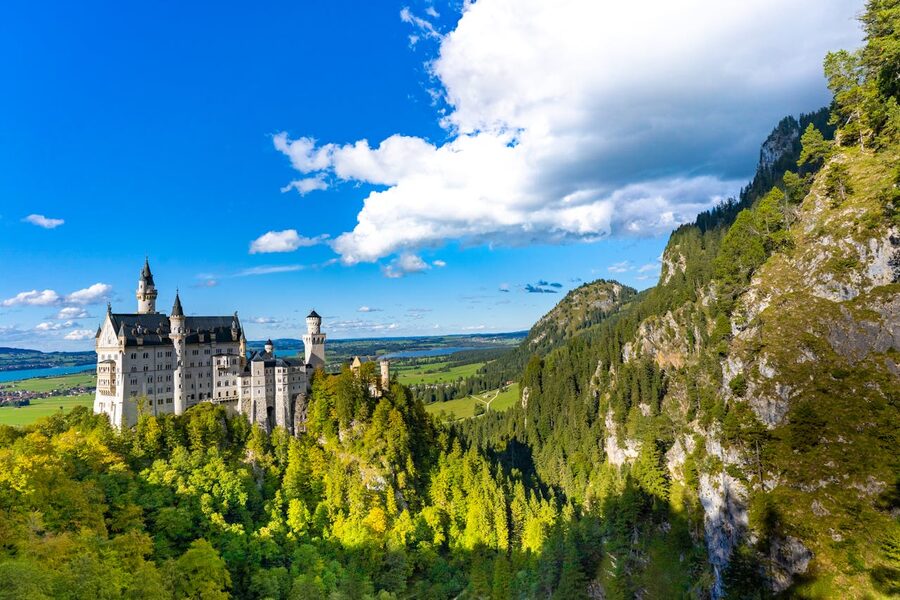
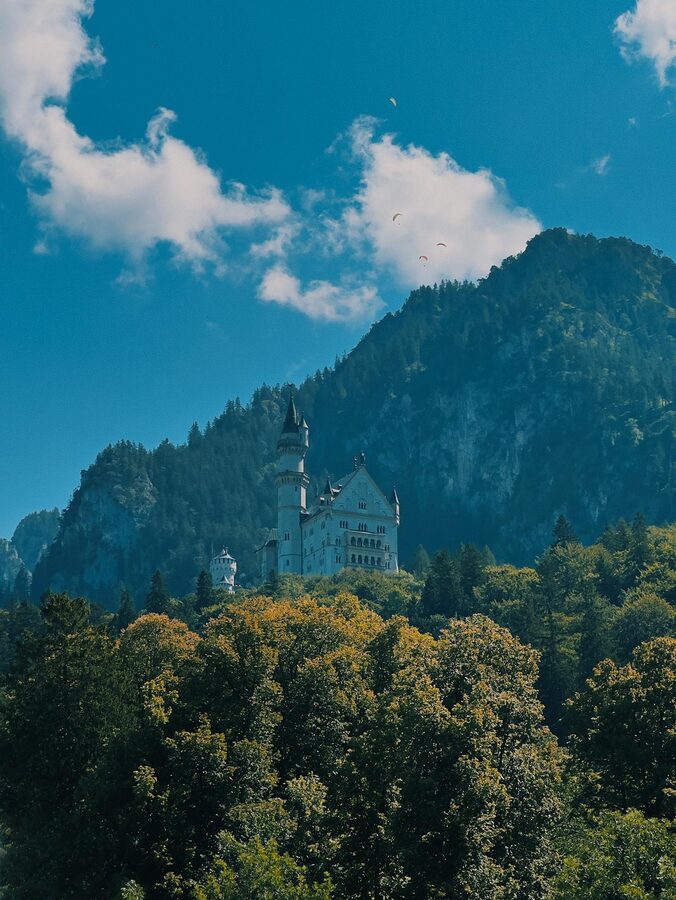
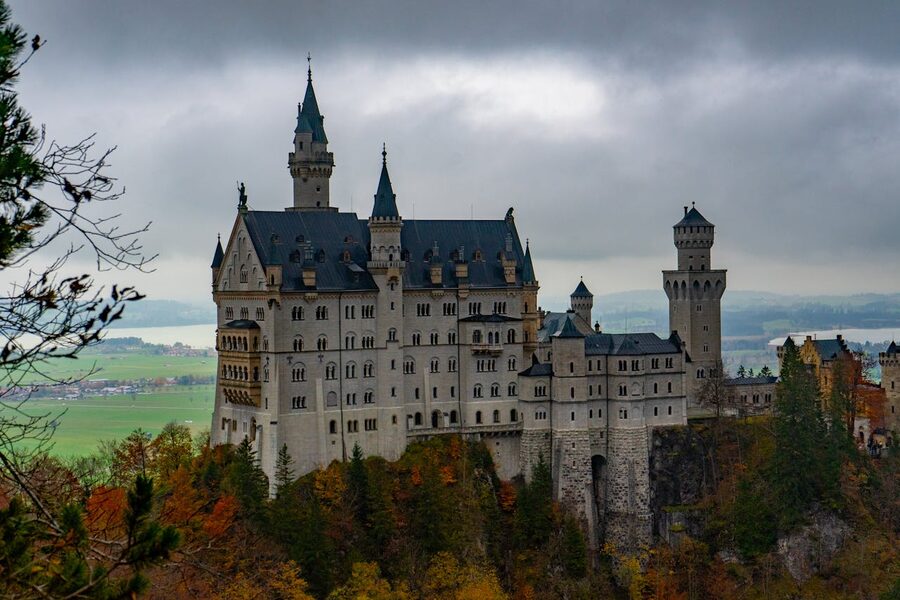
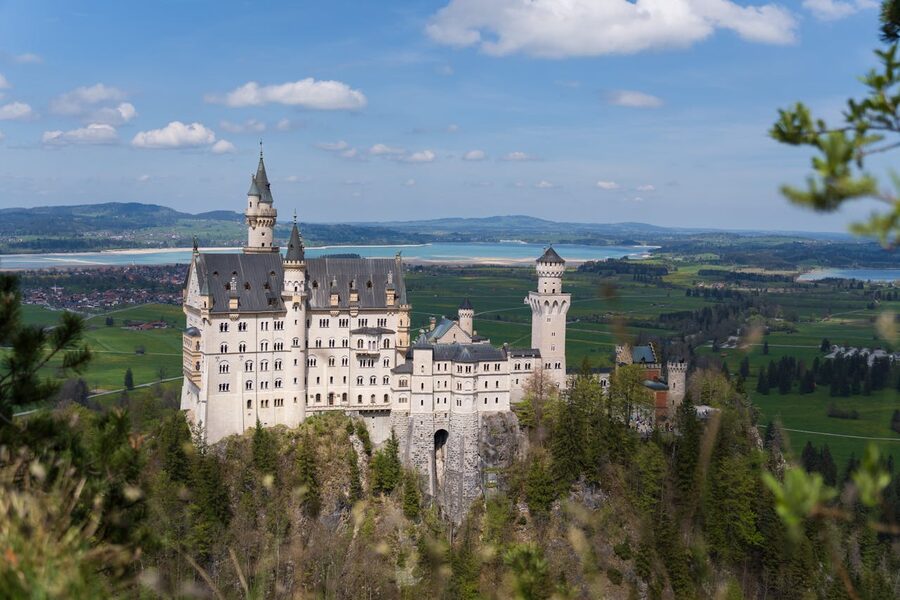
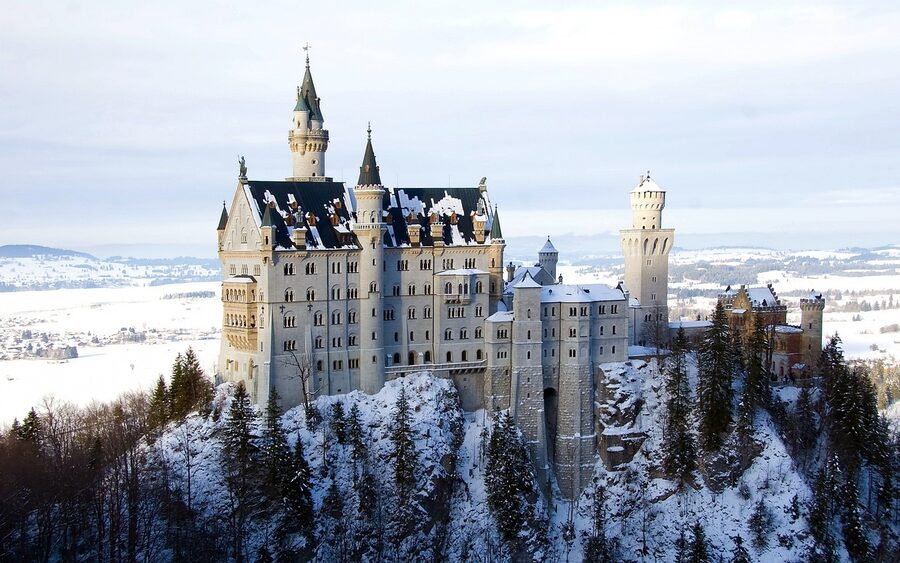
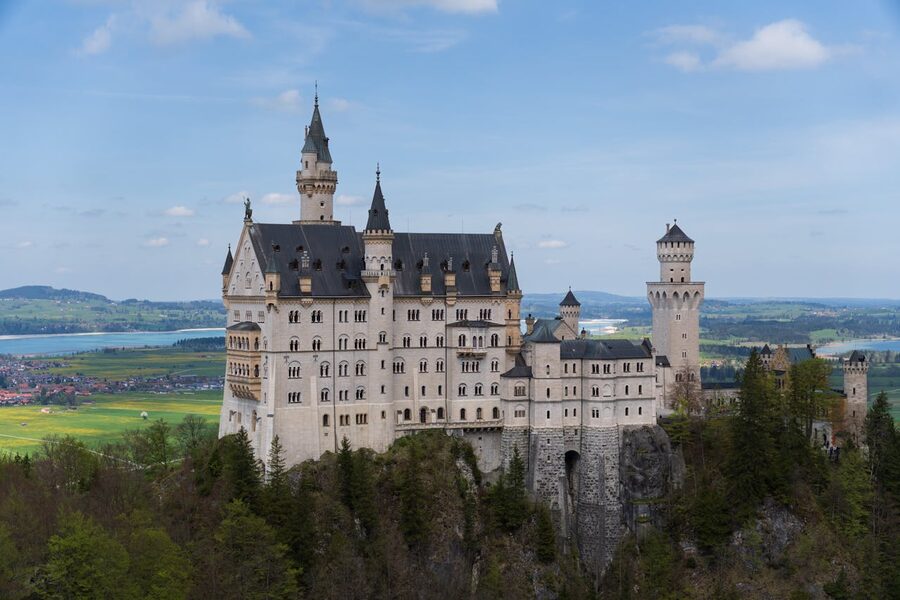
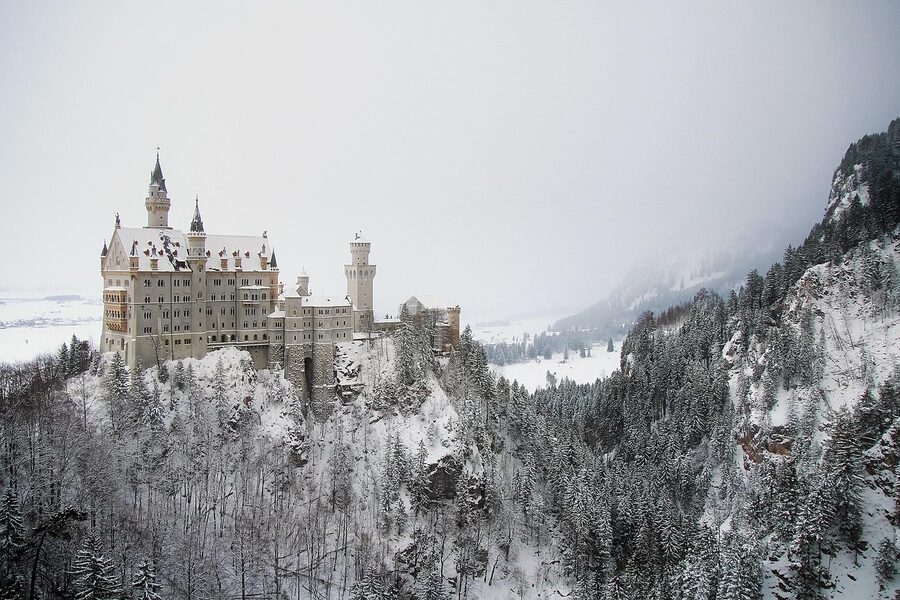
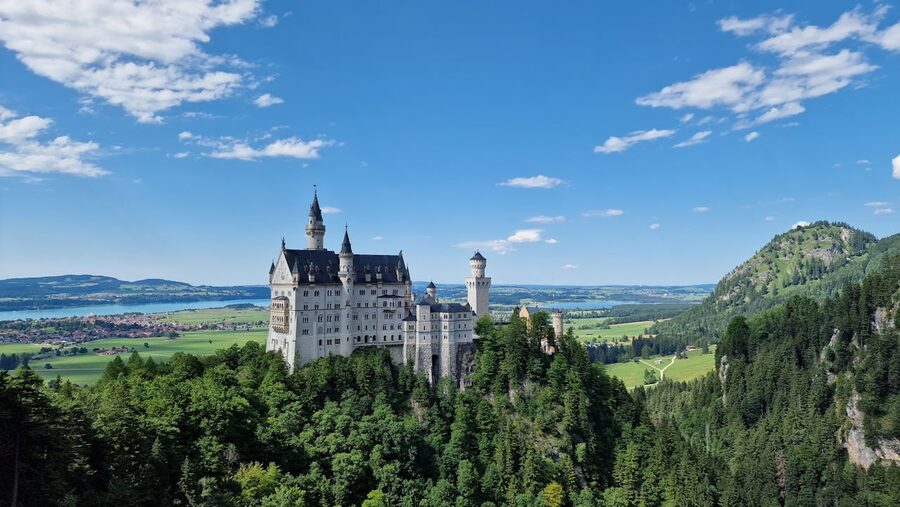
The Marienbrücke (Mary’s Bridge) is a narrow iron bridge spanning the Pöllat gorge behind the castle. It gives you THE view — the one you’ve seen in every photo, every postcard, every Disney comparison. The castle from this angle looks impossible: white towers rising from a forested cliff with the Bavarian Alps behind and the Alpsee lake below.
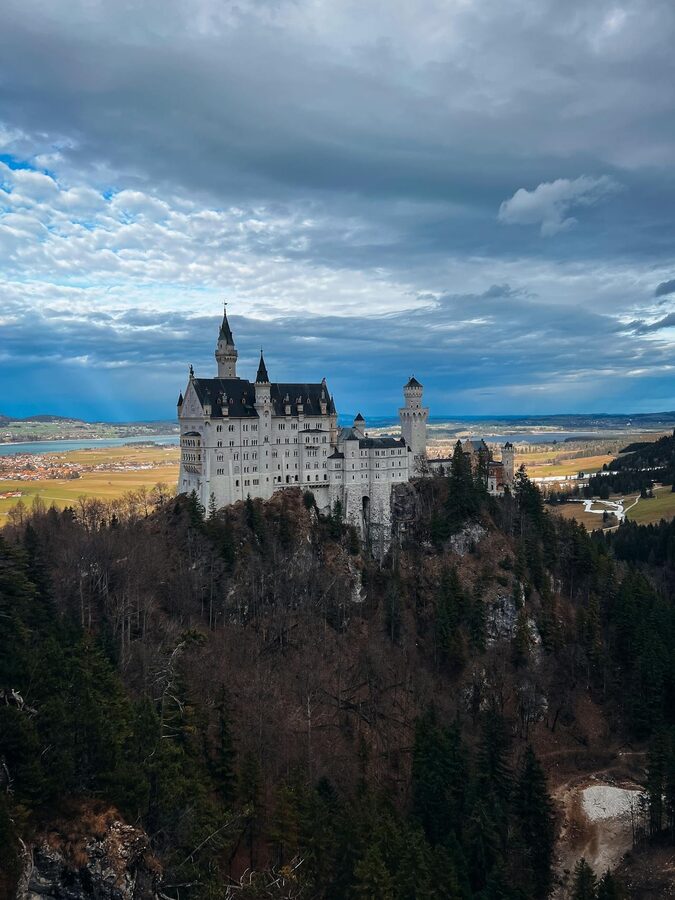
The bridge closes in winter when ice makes it dangerous, and occasionally in high winds. If it’s closed, the viewpoint from the path above the castle (accessible without crossing the bridge) gives you a similar but slightly different angle. Worth noting: the bridge has no barriers on the sides beyond a low railing, which can be unnerving for people with a fear of heights.
Linderhof: The Castle You Didn’t Know You Wanted to See
Most Neuschwanstein day trips from Munich also include Linderhof Palace, Ludwig II’s other castle about 30 kilometres away. While Neuschwanstein is the famous one, many visitors find Linderhof more impressive — it’s smaller but actually finished, extravagantly decorated in French Rococo style, and surrounded by formal gardens with grottos, a Moorish kiosk, and a Venus cave with an artificial lake that Ludwig crossed in a golden shell-shaped boat.
The combo day trip ($94) covers both castles with skip-the-line entry, transport from Munich, and a guide who explains the history. It’s a long day (10+ hours) but efficient — doing this independently requires a car and significantly more logistics. It’s consistently one of the most popular castle tours in Europe, running daily year-round.
Ludwig II: The King Behind the Castle
Understanding Ludwig II makes the castle visit 10 times more interesting. He became King of Bavaria at 18, was obsessed with Wagner’s operas and medieval mythology, and spent the rest of his short life building fantasy castles that expressed his inner world while his kingdom fell apart financially. He was painfully shy, possibly gay (in an era when that was criminal), and increasingly reclusive — he slept during the day and took midnight sleigh rides through the snow.
In 1886, a government commission declared Ludwig insane (without examining him) and deposed him. The next day, he was found dead in Lake Starnberg along with the doctor who was supposed to be watching him. The official verdict was suicide by drowning, but Ludwig was a strong swimmer and the doctor was also dead. The mystery has never been solved. The Bavarian royal family still considers it murder.
Getting There Independently
If you prefer not to take a tour, the train from Munich Hauptbahnhof to Füssen takes about 2 hours (change at Buchloe, about €25 each way with a Bayern Ticket). From Füssen station, bus 73 takes 10 minutes to Hohenschwangau village, where the ticket office and the uphill walk begin. The total journey from Munich is about 2.5 hours each way.
The Bayern Ticket (€27 for one person, €37 for two, €47 for three) covers unlimited regional trains and buses in Bavaria for a day. It’s the cheapest way to reach Neuschwanstein by public transport if you’re travelling with others. Valid from 9am on weekdays, all day on weekends.
Driving takes about 2 hours from Munich via the A95 and B17. Parking at Hohenschwangau costs about €10 per day. The advantage of driving: flexibility to stop at Alpine viewpoints and to combine Neuschwanstein with Linderhof on the same day without a tour schedule.
Best Tours to Book
1. Neuschwanstein + Linderhof Full-Day Trip — $94
The default choice and the most-booked Neuschwanstein tour on the market. Covers both castles in a 10.5-hour day from Munich, with skip-the-line entry, a guide, and the scenic drive through the Alps. The combination of Neuschwanstein (dramatic and unfinished) with Linderhof (intimate and complete) gives you two contrasting sides of Ludwig’s vision. Our review breaks down the itinerary hour by hour.
2. Neuschwanstein & Linderhof Fairytale Day Tour — $95
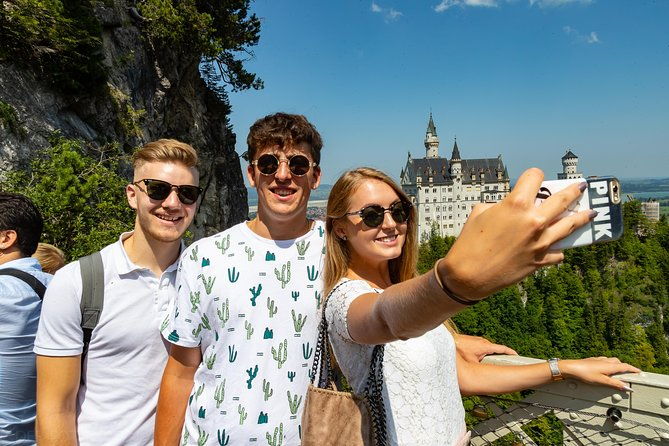
Nearly identical to the GYG option in format and price — both cover Neuschwanstein and Linderhof in a full day from Munich. The Viator version emphasises the “fairytale” narrative and uses different guides. Choose based on availability and platform preference — both are excellent. Our review compares the two operators.
3. Neuschwanstein Small Group Tour — $96
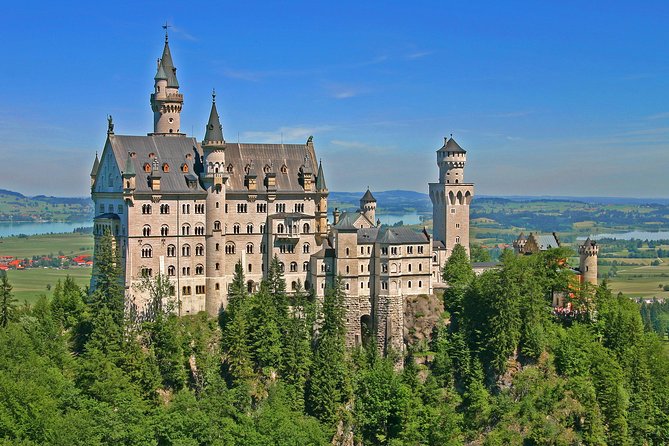
The premium option. Smaller group, more flexibility, and the guide can adjust stops based on conditions and the group’s interests. Some versions include Hohenschwangau Castle (Ludwig’s childhood home, across the valley from Neuschwanstein) instead of Linderhof, which gives you the full Ludwig story — where he grew up and what he built. Our review covers the small-group advantages and whether the premium is justified.
Practical Tips
When to visit: May through October for reliable weather and full opening hours. July-August is peak — expect long queues for the Marienbrücke and sold-out tickets if you haven’t booked online. September-October (autumn colours) and May-June (spring wildflowers) are the sweet spots. Winter (December-March) is quieter and atmospheric but the Marienbrücke closes and some facilities reduce hours.
How long: The castle tour itself takes 30 minutes. Allow 90 minutes for the uphill walk and return. Add 30-60 minutes for the Marienbrücke. Add 2 hours each way for transport from Munich. Total: about 8-10 hours for a Munich day trip.
What to wear: Comfortable walking shoes — the uphill path is paved but steep. Layers — the Alpine weather changes fast and the castle interior is cool. Rain gear in spring and autumn. In winter: proper winter boots, warm layers, and gloves.
Photography: No photography allowed inside the castle (enforced). The exterior and the Marienbrücke view are the main photo opportunities. The best light for the classic Marienbrücke shot is morning (the castle faces roughly south, so morning sun lights the east-facing towers without harsh shadows). Drone photography is prohibited in the castle area.
Budget: Castle entry: €15 (free under 18). Guided tour from Munich: $94-96. Independent by train: ~€50 return (Bayern Ticket). Horse carriage: €7 up. Parking: ~€10. Food at Hohenschwangau restaurants: €12-20 for lunch.
Hohenschwangau Castle: Ludwig’s Childhood Home
Directly across the valley from Neuschwanstein — close enough to see from the Marienbrücke — sits Hohenschwangau Castle. This was where Ludwig grew up. His father, Maximilian II, rebuilt a ruined medieval fortress in the 1830s and filled it with Romantic paintings of German legends — Lohengrin, Tannhäuser, the Holy Grail. Young Ludwig spent his formative years staring at these murals, and the obsession with medieval mythology that eventually produced Neuschwanstein was born in these rooms.
Hohenschwangau is smaller, older, and arguably more interesting than Neuschwanstein because it was actually lived in. The rooms are furnished with original 19th-century pieces, the walls are covered in the legendary murals that shaped Ludwig’s imagination, and the atmosphere is more domestic than theatrical. The guided tour (about 30 minutes, €21, can be combined with a Neuschwanstein ticket) is worth the time if you want to understand why Ludwig built what he built.
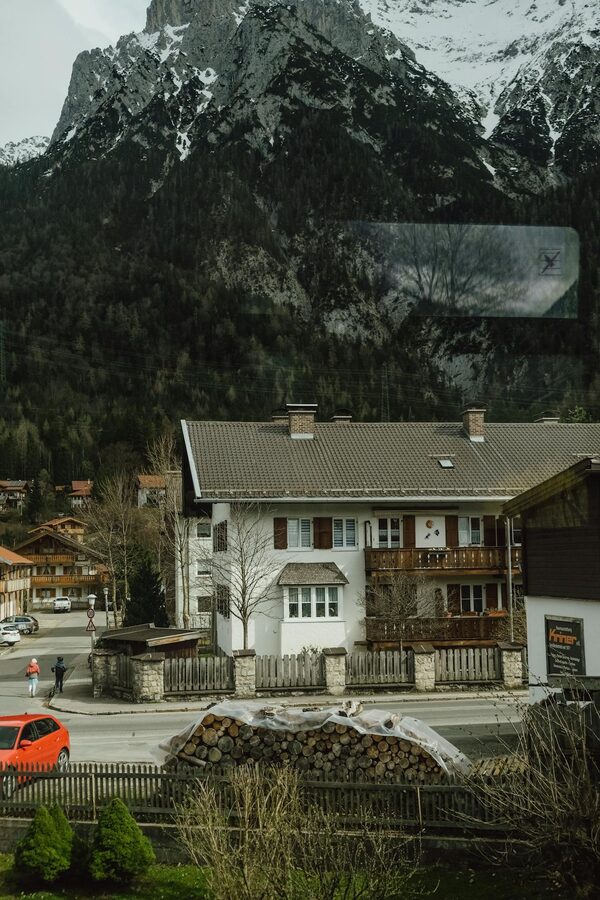
The Alpsee: Bavaria’s Most Beautiful Lake
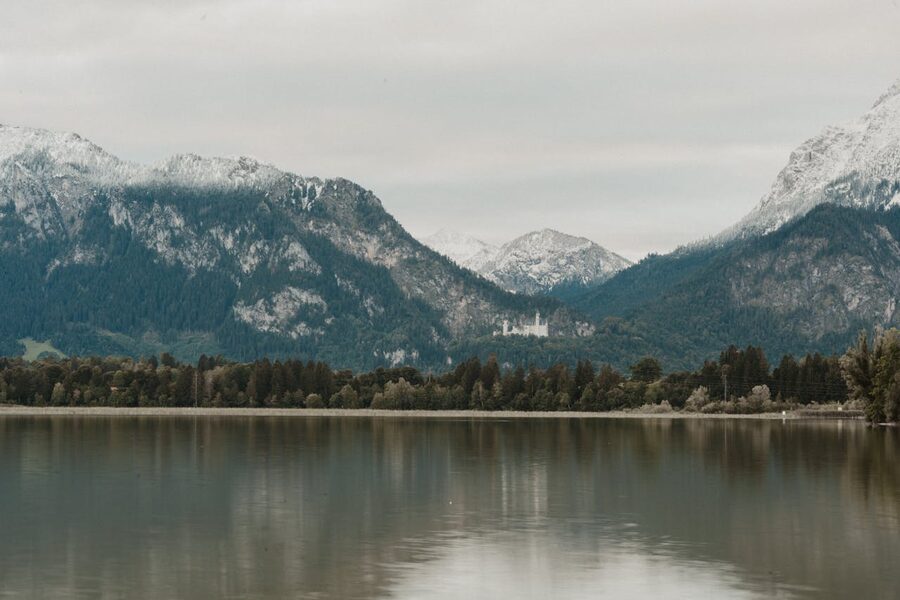
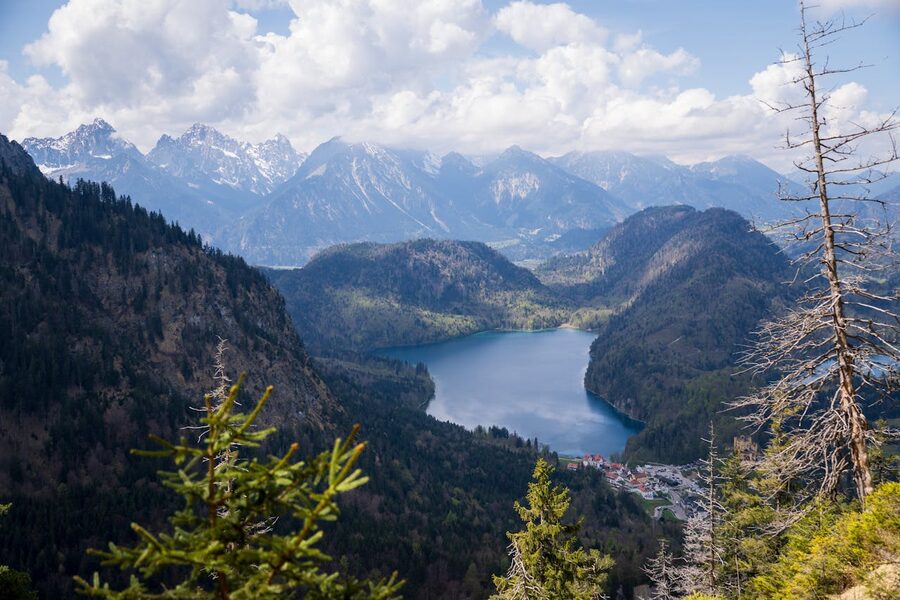
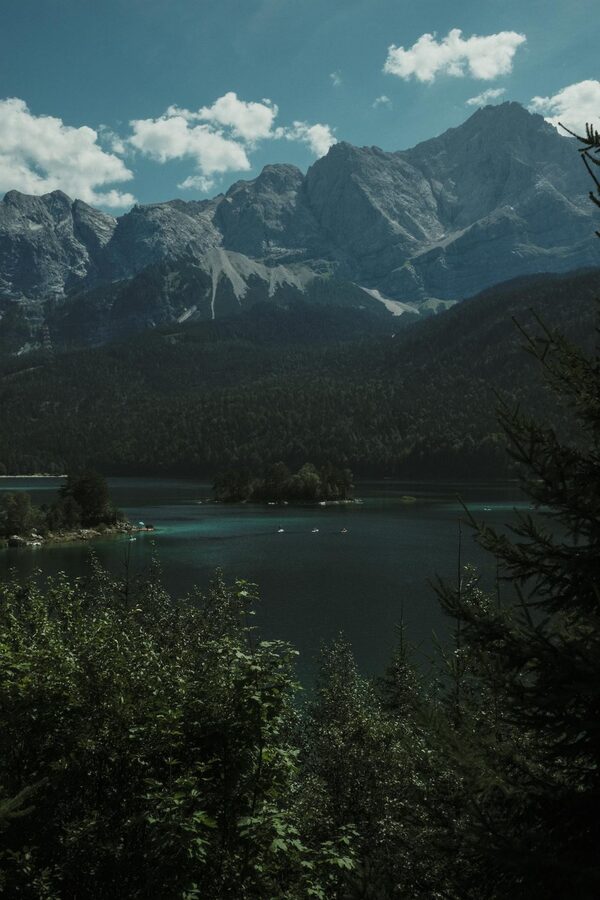
The Alpsee sits directly below both castles — a deep Alpine lake surrounded by forest that’s one of the most scenic bodies of water in Bavaria. It’s free to access, the shoreline path takes about 45 minutes to walk, and on calm mornings the castle reflections in the water are the kind of thing that makes you stop and just stand there.
The Museum of the Bavarian Kings — at the lakeside in Hohenschwangau — covers the Wittelsbach dynasty that ruled Bavaria from 1180 to 1918. It provides context for Ludwig’s castles that neither Neuschwanstein nor Hohenschwangau can fully explain on their own: the family’s rise to power, the creation of an independent Bavaria, and the increasingly eccentric behaviour of its final kings. Entry is about €14 and the visit takes about an hour.
Füssen: The Town at the End of the Romantic Road
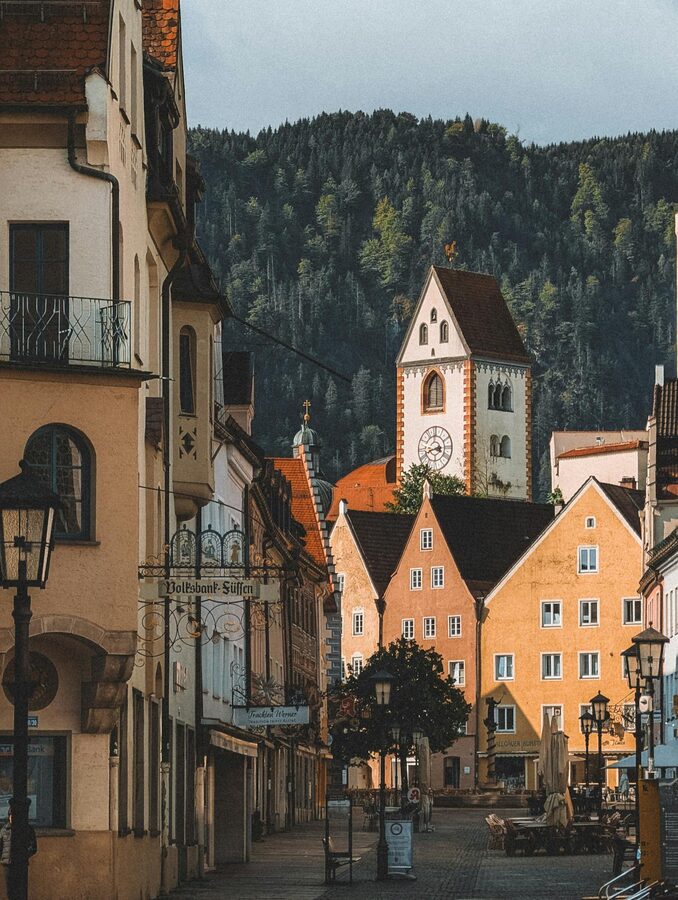
Füssen is the nearest town to Neuschwanstein — about 4 kilometres from the castle — and it’s worth time in its own right. The Altstadt (old town) has a medieval high street, a Baroque monastery (Kloster St. Mang), and a castle (Hohes Schloss) with a painted facade that creates the illusion of ornate windows and balconies on a flat wall. The town sits at the end of Germany’s Romantic Road — the 400-kilometre tourist route from Würzburg to Füssen that passes through medieval towns and Baroque churches.
If you’re arriving by train from Munich, Füssen station is the end of the line. The town is a 10-minute walk from the station, and bus 73 to the castles departs from right outside. Having lunch in Füssen before or after the castle visit is cheaper and more relaxed than eating in Hohenschwangau village. The Gasthof Krone and the Markthalle (market hall) are both good options.
Bavarian Food Near the Castle
The Hohenschwangau village restaurants are tourist-priced but the food is genuine Bavarian. The classics you’ll find everywhere:
Schweinshaxe — roasted pork knuckle with crackling skin. Served with Kartoffelknödel (potato dumplings) and Sauerkraut. It’s enormous — one portion feeds two normal humans or one hungry Bavarian.
Käsespätzle — Bavarian mac and cheese. Handmade egg noodles layered with Allgäu mountain cheese and topped with crispy fried onions. Simpler than it sounds, better than it has any right to be.
Kaiserschmarrn — shredded sweet pancake with powdered sugar and fruit compote. Originally an imperial dessert (Kaiser = emperor), it’s now standard Bavarian comfort food and the perfect reward after the uphill walk to the castle.
Weißbier — Bavarian wheat beer, served in a tall glass, slightly cloudy, with a banana-and-clove flavour that comes from the yeast. The brewery Weihenstephan (the oldest brewery in the world, founded in 1040) produces a Weißbier that pairs perfectly with anything on this list.
The History: Why Ludwig Built It
Ludwig II became king at 18, in 1864, inheriting a Bavaria that was about to lose its independence to Prussian-led German unification. He was a reluctant politician, a devoted patron of Richard Wagner, and an increasingly reclusive dreamer who preferred the company of mountains to ministers. The castles — Neuschwanstein, Linderhof, and the unfinished Herrenchiemsee — were his escape from a role he never wanted.
Neuschwanstein was designed as a homage to Wagner’s operas. The Singers’ Hall (based on the Hall of Song in Wartburg Castle) was built for performances that never happened. The murals throughout the castle depict scenes from Tannhäuser, Lohengrin, Parsifal, and Tristan und Isolde. Wagner himself never set foot in the finished building — he died in 1883, three years before Ludwig.
The castle cost about 6.2 million marks — paid from Ludwig’s personal Wittelsbach fortune, not from state funds (a distinction the Bavarian government conveniently forgot when they declared him insane). Ludwig was deposed on June 10, 1886, moved to Berg Castle on Lake Starnberg, and found dead in the lake on June 13 alongside the doctor who was supposed to be supervising him. The official verdict was suicide by drowning. The water was waist-deep where his body was found. His watch had stopped at 6:54 PM.
More Bavaria and Germany
Neuschwanstein is the starting point for many Germany itineraries. For other Ludwig II castles, Linderhof (usually included in the day trip) and Herrenchiemsee (on an island in Lake Chiemsee, a separate day trip from Munich) complete the trilogy. For a completely different Bavaria experience, the Dachau concentration camp memorial is a sobering but essential half-day from Munich. And for the city itself, the Munich city tours cover the Marienplatz, beer halls, and English Garden.