
Two hours, one giant Florence lesson. This budget-friendly walking tour links Florence’s top sights to the Medici power story, guided in English as you stroll the city. I love the way the route turns big buildings into real people and real motives. I also like that it ends near the Uffizi area, so you can choose what to see next. One drawback: it’s short, so it’s best as a start—not as a substitute for long museum time.
You begin right in the center, meeting your guide near the statue of Giovanni de’ Medici on a throne. In the feedback, guides like Aurora, Alberto, Camilla, and Manuel are singled out for making Florence make sense fast, even when the weather isn’t perfect. If you want inside-time at every stop, you’ll likely need to plan extra visits after the tour.
- Key highlights at a glance
- Two Hours That Explain Why Florence Looked Like Renaissance Power
- Starting at San Lorenzo: Meeting Point and the Fast-Begin Florence Trick
- Basilica di San Lorenzo: Medici Burials in the Middle of the Market
- Palazzo Medici Riccardi: Seeing Renaissance Wealth as Architecture
- Battistero di San Giovanni: Florence’s Oldest-Feel Landmark
- Duomo Complex and Brunelleschi’s Dome: What to Notice Without Getting Lost
- Museo Casa di Dante: A Quick Detour That Changes the Mood
- Piazza della Signoria: Florence’s Outdoor Living Room
- Palazzo Vecchio and the Copy of Michelangelo’s David
- Uffizi Gallery Finish: Your Next Step Is Already Set
- Price, Donations, and What You’re Really Paying For
- Who This Tour Suits Best (and Who Might Want a Different Option)
- Should You Book The Best Tour in Florence: Renaissance and Medici Tales?
- FAQ
- How long is the Renaissance and Medici Tales walking tour?
- Where is the meeting point?
- Is the tour offered in English?
- Are tickets included for the sights?
- What happens if the weather is bad?
- How many people are in the group?
- The Best Of Florence!
- More Tours in Florence
- More Tour Reviews in Florence
Key highlights at a glance
 1 / 8
1 / 8 2 / 8
2 / 8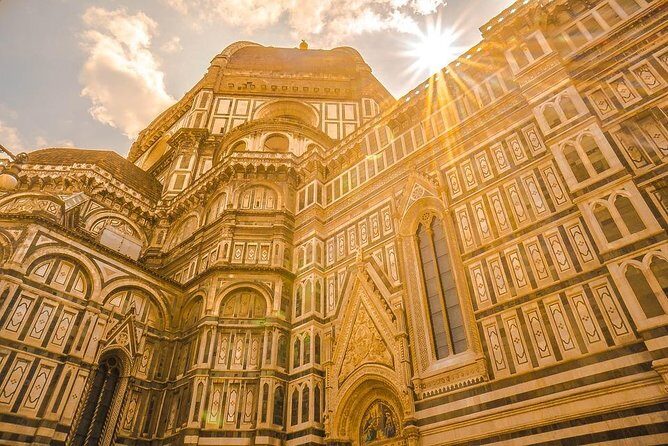 3 / 8
3 / 8 4 / 8
4 / 8 5 / 8
5 / 8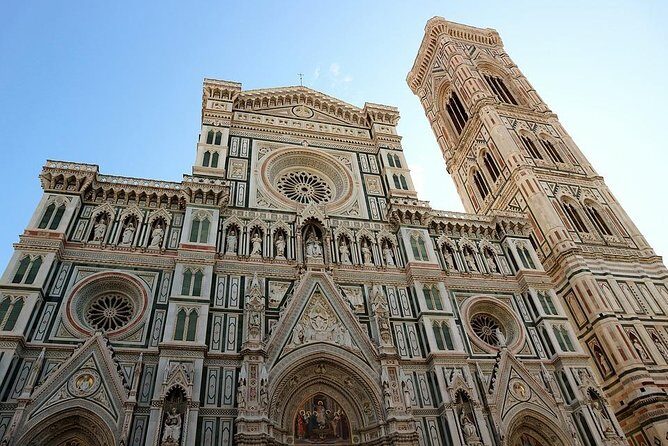 6 / 8
6 / 8 7 / 8
7 / 8 8 / 8
8 / 8- A Medici-led route through Florence’s most important squares, churches, and civic buildings
- Duomo complex viewpoints plus the Baptistery, Campanile, and Brunelleschi dome context
- Dante in the mix, with a quick stop at his birthplace museum (free)
- End near the Uffizi Gallery, so your second act is already mapped
- Small-group feel with a maximum of 30 people and a licensed English guide
👉 See our pick of the What Are The Best 2-Hour Tours In Florence? Our Top 3 Picks
Two Hours That Explain Why Florence Looked Like Renaissance Power
This tour works because it doesn’t treat Florence like a checklist. It threads the story of the Medici family into the streets you’re actually standing on, from church to palace to public square. You’ll get the basic “why” behind the look and the influence, not just what things are called.
I like that the pacing is designed for orientation. You walk, you listen, you glance up, and suddenly the city has a storyline. Guides are often praised for storytelling and even humor, which matters in a place where the stone details can otherwise blur together.
Also, you’re not stuck in a museum hall for two hours. You’re outside, so you get the feel of Florence as you go—sound, light, and the constant flow of people moving between major spaces.
You can also read our reviews of more tours and experiences in Florence.
- Tuscany Day Trip from Florence: Siena, San Gimignano, Pisa and Lunch at a Winery
★ 5.0 · 21,634 reviews

Starting at San Lorenzo: Meeting Point and the Fast-Begin Florence Trick
You start in front of the Basilica di San Lorenzo, in the main market district area. The official meeting spot is Piazza di San Lorenzo, 35R, and your guide meets you next to a statue of Giovanni de’ Medici sitting on a throne.
That first moment matters. You’re not wandering around trying to figure out where you are. You’re anchored to a Medici symbol from the start, and the guide builds the connections from there.
One practical tip: wear comfortable shoes. This is a walking tour, and you’ll cover several major landmarks in about two hours. If it’s warm, bring water. If it’s rainy, don’t assume the day is ruined—Manuel is noted for leading smoothly even on a rainy day.
Basilica di San Lorenzo: Medici Burials in the Middle of the Market
The first major stop is the Basilica di San Lorenzo. It’s one of Florence’s largest churches and sits right at the center of the city’s main market district.
Here’s what makes it special: it’s the burial place for the principal Medici family members, from Cosimo il Vecchio to Cosimo III. That’s a big deal, because it ties a Renaissance “dynasty” story to a real physical place you can stand in front of.
The tour gives you about 10 minutes at this stop, and admission ticket costs are not included for this part. So if you want to go inside for more time, budget extra time and entry cost.
Palazzo Medici Riccardi: Seeing Renaissance Wealth as Architecture
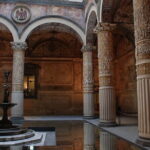
Next comes the Palazzo Medici Riccardi. This palace was designed for Cosimo de’ Medici, and it was built between 1444 and 1484.
The value here is context. You’re not just looking at a handsome façade. You’re looking at a designed statement of power by a banking family—Renaissance influence made visible in stone and scale. Even if you don’t enter, the guide’s commentary helps you read what you’re seeing.
Plan for roughly another 10 minutes here, and admission isn’t included. If you like architecture and politics as one story, this stop is a highlight.
Battistero di San Giovanni: Florence’s Oldest-Feel Landmark
The tour then heads to the Baptistero di San Giovanni, also known as the Baptistery of Saint John. It sits in the Piazza del Duomo and the Piazza San Giovanni, across from Florence Cathedral and near the Campanile di Giotto.
What you learn here matters because the baptistery is built in the Florentine Romanesque style and dates from 1059 to 1128. So while the Duomo complex is later, this gives you an earlier “root” that helps the whole Renaissance story feel less sudden and more built over time.
Expect about 10 minutes. Admission ticket isn’t included in the tour pricing for this stop, so if you want to go inside, you may need separate tickets.
- The Best tour in Florence: Renaissance & Medici Tales – guided by a STORYTELLER
★ 5.0 · 12,316 reviews

Duomo Complex and Brunelleschi’s Dome: What to Notice Without Getting Lost
You’ll get a stop at the Duomo (Cattedrale di Santa Maria del Fiore). The cathedral was begun in 1296 in Gothic style, based on a design by Arnolfo di Cambio. The complex is in Piazza del Duomo and includes the Baptistery and Giotto’s Campanile, and these three buildings are part of a UNESCO World Heritage Site covering Florence’s historic center.
This part can be overwhelming if you show up with no plan. The guide helps by giving you a few “look-for” ideas so you’re not just photographing and hoping it adds up later.
The dome (Cupola del Brunelleschi) is another key moment. You’ll hear why it’s considered a major architectural mystery and why it was such a giant project—at the time it was the largest in the world, and it remains the largest brick dome ever constructed. Even a short stop here pays off if you appreciate the engineering behind the art.
You’ll also stop at the Campanile di Giotto. It’s described as a showpiece of Florentine Gothic architecture, with rich sculptural decoration and polychrome marble encrustations. You’re given about 10 minutes at each of these stops, and for several of them admission tickets are not included.
One consideration: crowd energy and time. The exterior viewpoints can still feel busy. If you want slow, quiet time, do that afterward on your own schedule. This tour is about understanding what you’re looking at.
Museo Casa di Dante: A Quick Detour That Changes the Mood
Then you shift from church and power to literature. The tour includes a stop at Museo Casa di Dante (birthplace museum area), with about 5 minutes allotted.
This is marked as free, which is a nice break in a route that mostly revolves around ticketed monuments. You’ll hear that Dante Alighieri wrote the Divine Comedy, widely considered the most important poem of the Middle Ages and the greatest literary work in the Italian language.
It’s a short visit, but it matters because it broadens the Renaissance story beyond patronage and architecture. Florence wasn’t only built—it was written, too.
Piazza della Signoria: Florence’s Outdoor Living Room
After Dante, you arrive at Piazza della Signoria. This is an L-shaped square in front of the Palazzo Vecchio and a major meeting place for Florentines and travelers. It’s near Palazzo Vecchio and Piazza del Duomo and it’s also described as a gateway to the Uffizi Gallery.
You’ll spend about 10 minutes here, and admission isn’t required for the stop itself. This is a good “reset” space: you take in the open square, you get the feel of civic life, and you’re positioned for the final stretch.
If you’re doing this as a first activity in Florence, Piazza della Signoria is a strong payoff. It’s where you start to connect the big names—Medici, civic power, art—with the actual geometry of the city.
Palazzo Vecchio and the Copy of Michelangelo’s David
Next is Palazzo Vecchio, described as the town hall of Florence. It’s a massive fortress-palace, and it’s one of the most impressive town halls of Tuscany.
This stop brings the power theme full circle. You’re not only seeing wealth (Medici) and worship (San Lorenzo). You’re seeing the city’s governance—who had authority, where decisions were made, and how public spaces projected that power.
The tour places you near the square’s highlights, including a copy of Michelangelo’s “David” statue. The adjacent Loggia dei Lanzi is also referenced as having a gallery of statues.
Admission tickets are not included for this stop, so if you want to go inside, plan for separate entry. Also remember: this is a copy, so set expectations accordingly. The guide’s commentary is useful because it helps you understand why a replica sits in a civic square.
Uffizi Gallery Finish: Your Next Step Is Already Set
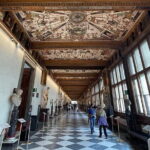
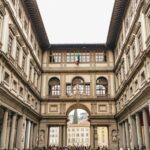
Your tour ends near the Uffizi Gallery area, in the vicinity of Piazza della Signoria. The final stop is listed as Gallerie Degli Uffizi, an art museum adjacent to the square.
The Uffizi is described as one of Italy’s most important museums and the most visited, and it’s also one of the largest and best known in the world. You’ll hear that it holds priceless works, particularly from the Italian Renaissance.
What you gain from this timing is simple: you don’t wander to the Uffizi cold. After learning the Medici thread and seeing where civic life meets art, you’ll understand how the museum connects to the people who funded it. The building of the Uffizi complex was begun by Giorgio Vasari in 1560 for Cosimo I de’ Medici to accommodate offices of Florentine magistrates—the name uffizi comes from offices.
Again, admission isn’t included for the final stop. But your guide’s route helps you decide how you want to spend your next hours: broad overview, or go straight for your favorites.
Price, Donations, and What You’re Really Paying For
The tour price listed is $3.62 per person, which looks almost too low to be real. The key detail is the donation model: the provider says the tour is made possible thanks to your donations, and at the end you choose the appropriate amount to compensate the guide.
So the value isn’t just the low upfront price. The value is the guiding—licensed, English-speaking, and focused on connecting the dots between Medici politics, Renaissance art, and major Florence monuments. The route is also efficient: you hit San Lorenzo, Palazzo Medici Riccardi, the Baptistery, the Duomo complex, Dante’s museum stop, Piazza della Signoria, and Palazzo Vecchio in about two hours.
One more practical angle: several stops are marked with admission ticket not included. That means you may still spend extra if you want to enter certain buildings or view certain interiors. The Uffizi is also not included, even though it’s right there at the end.
If you want a concrete money strategy, in the feedback people suggested tipping around €20 per person. Even if you choose a different amount, plan to donate fairly, because that’s how the guides get paid on this model.
Who This Tour Suits Best (and Who Might Want a Different Option)
This tour is ideal if you’re in Florence for the first time or if you want a clean introduction before you go deeper on your own. It’s also great if you care about the Medici story—the way a banking family shaped art, buildings, and public life.
It’s not the best fit if your top priority is spending long hours inside major attractions. This tour gives you short stops and strong orientation, not full museum time. You’ll likely need extra visits to see everything at your own pace.
It also helps if you like listening. The route is packed with landmark exteriors and short interior-linked moments, so the guide’s commentary is what turns a fast walk into real understanding.
Should You Book The Best Tour in Florence: Renaissance and Medici Tales?
I think you should book it if you want to understand Florence quickly and enjoyably. The structure is built for first-time visitors: you get a Medici-focused storyline, you see the Duomo complex landmarks, you get a literature stop with Dante, and you finish near the Uffizi so your next move is obvious.
Skip it only if you’re already set on doing long museum sessions first and don’t want any walking or guided context. If you’re okay with a brisk two-hour start, this is one of the best ways to make your later visits click.
FAQ
How long is the Renaissance and Medici Tales walking tour?
The tour runs about 2 hours.
Where is the meeting point?
You meet in Piazza di San Lorenzo, 35R, 50123 Firenze FI, Italy, next to the statue of Giovanni de’ Medici on a throne.
Is the tour offered in English?
Yes, it’s offered in English.
Are tickets included for the sights?
Not always. Several stops are marked as admission ticket not included, while some stops are marked free (for example, Museo Casa di Dante and Piazza della Signoria, and the Duomo stop is marked free). If you want to go inside any place where admission isn’t included, you should plan to pay separately.
What happens if the weather is bad?
The experience requires good weather. If it’s canceled due to poor weather, you’ll be offered a different date or a full refund.
How many people are in the group?
The tour has a maximum of 30 travelers.
The Best Of Florence!


More Tours in Florence
- The Best tour in Florence: Renaissance & Medici Tales – guided by a STORYTELLER
★ 5.0 · 12,316 reviews

More Tour Reviews in Florence
- Tuscany Day Trip from Florence: Siena, San Gimignano, Pisa and Lunch at a Winery
★ 5.0 · 21,634 reviews - The Best tour in Florence: Renaissance & Medici Tales – guided by a STORYTELLER
★ 5.0 · 12,316 reviews
Not for you? Here's more nearby things to do in Florence we have reviewed
- The Best tour in Florence: Renaissance & Medici Tales – guided by a STORYTELLER
★ 5.0 · 12,316 reviews - Tuscany Day Trip from Florence: Siena, San Gimignano, Pisa and Lunch at a Winery
★ 5.0 · 21,634 reviews