
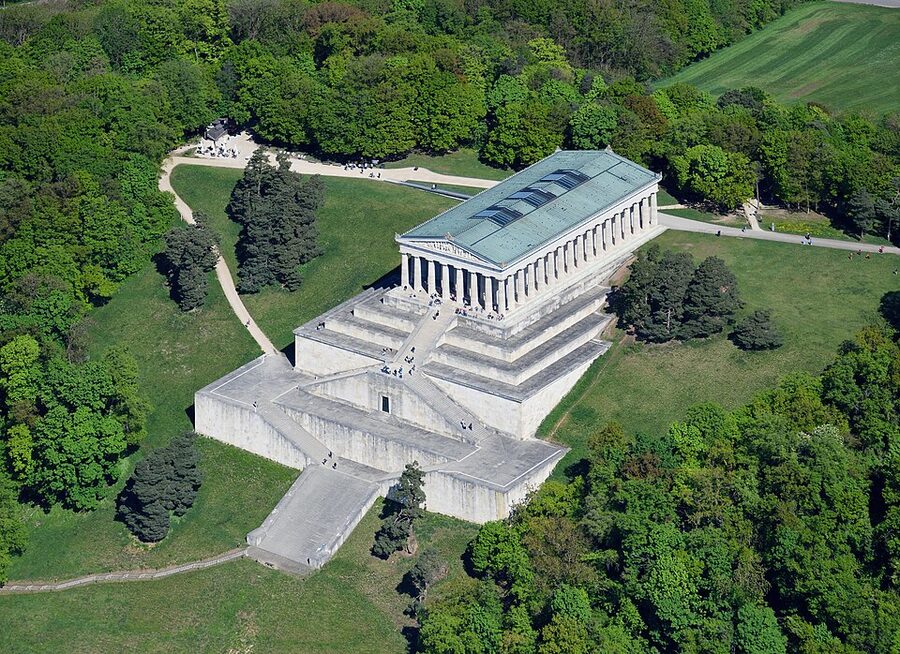
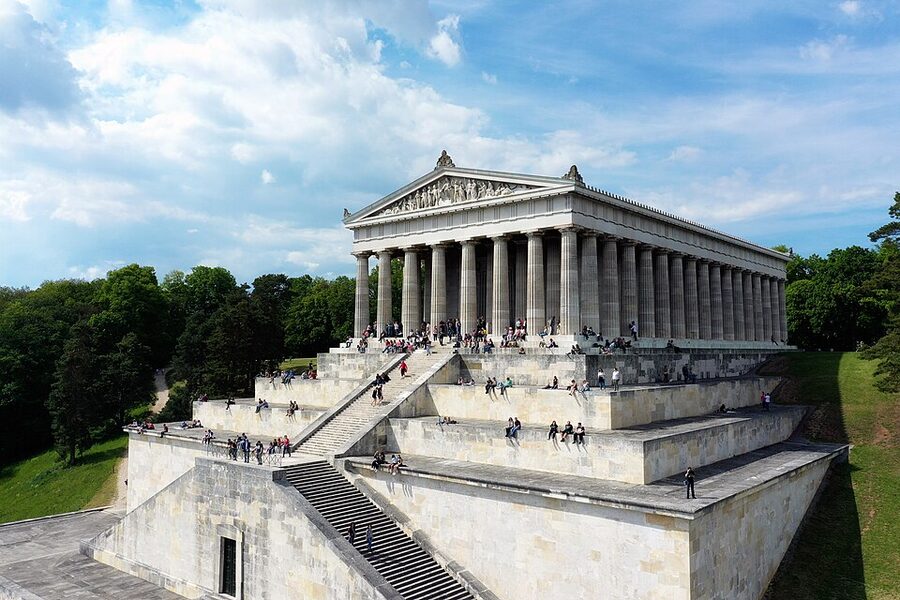
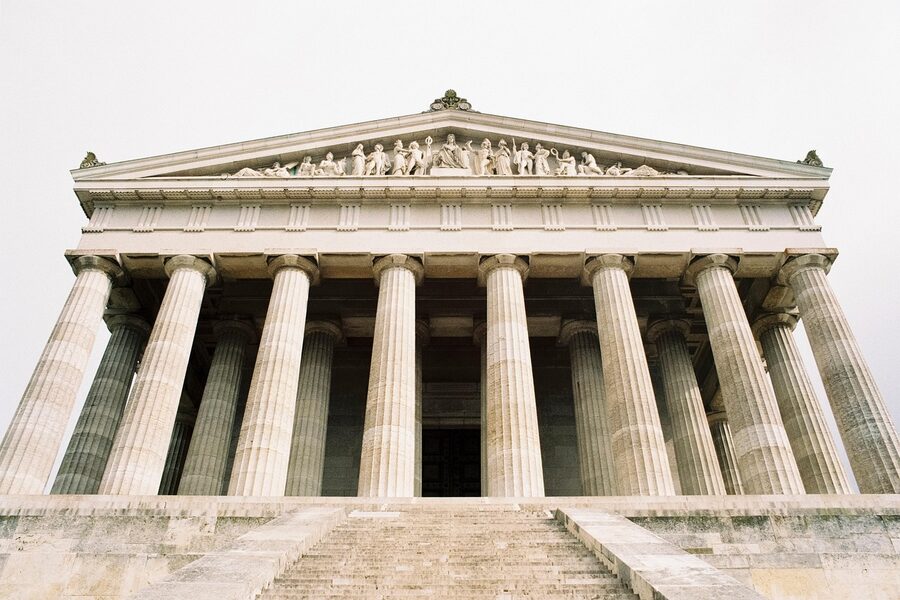
The Walhalla looks like the Parthenon was airlifted from Athens and dropped on a hill above the Danube. King Ludwig I of Bavaria built it in 1842 as a hall of fame for “praiseworthy and distinguished Germans” — and it remains one of the most surprising sights in southern Germany. The Klinger boat tour from Regensburg takes you upriver to its dramatic location and back in 2-3 hours for $24.
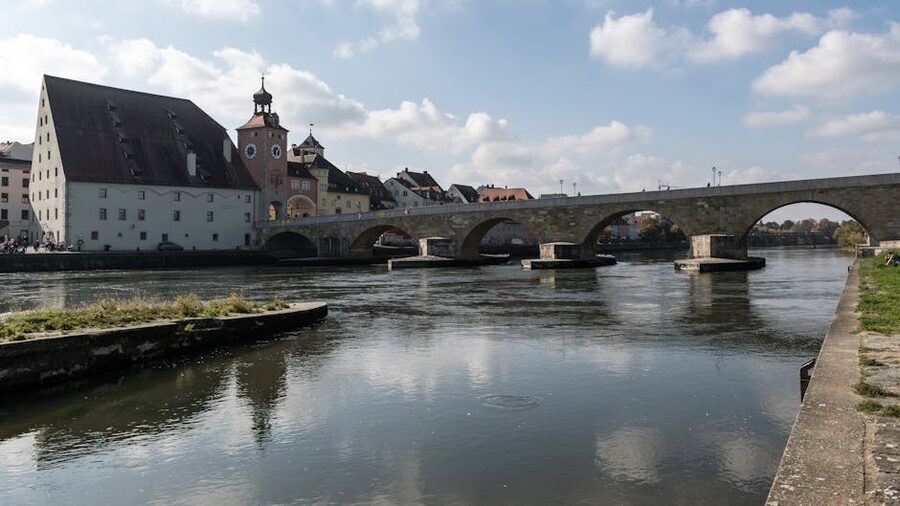
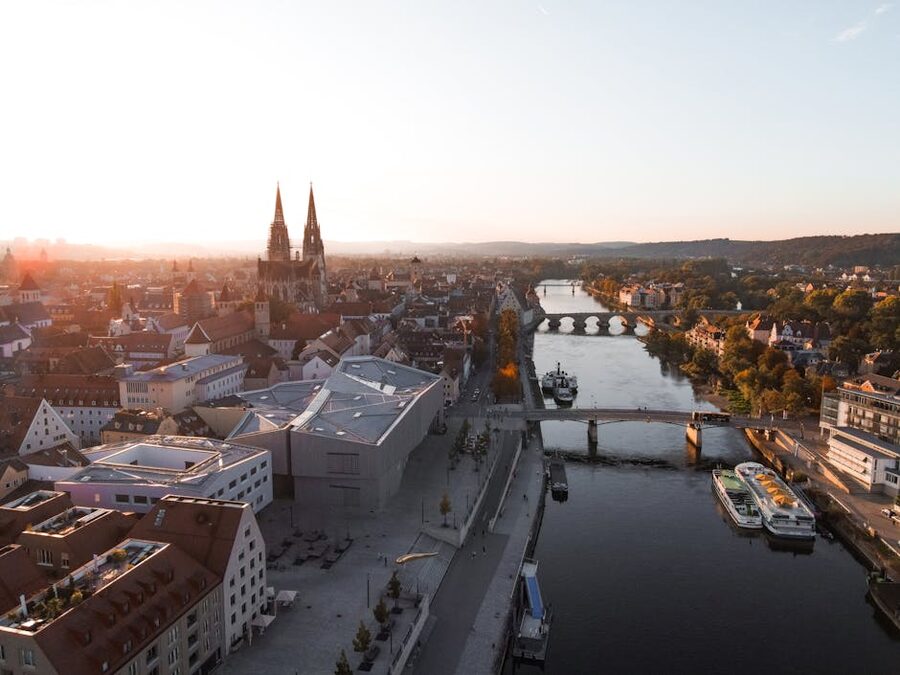
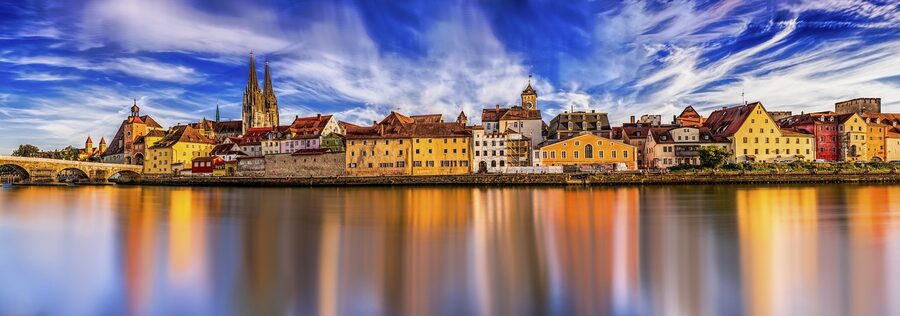
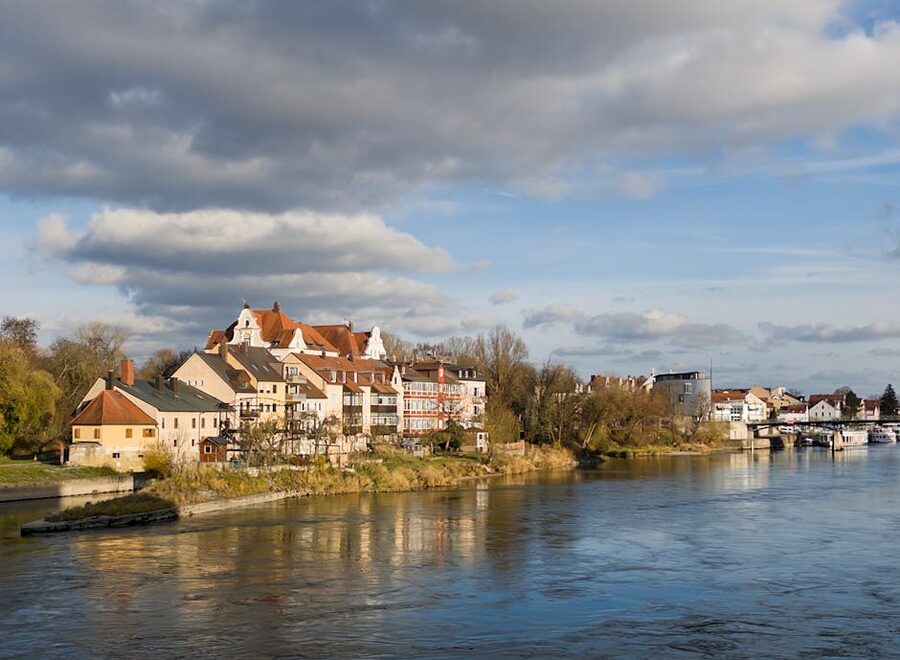
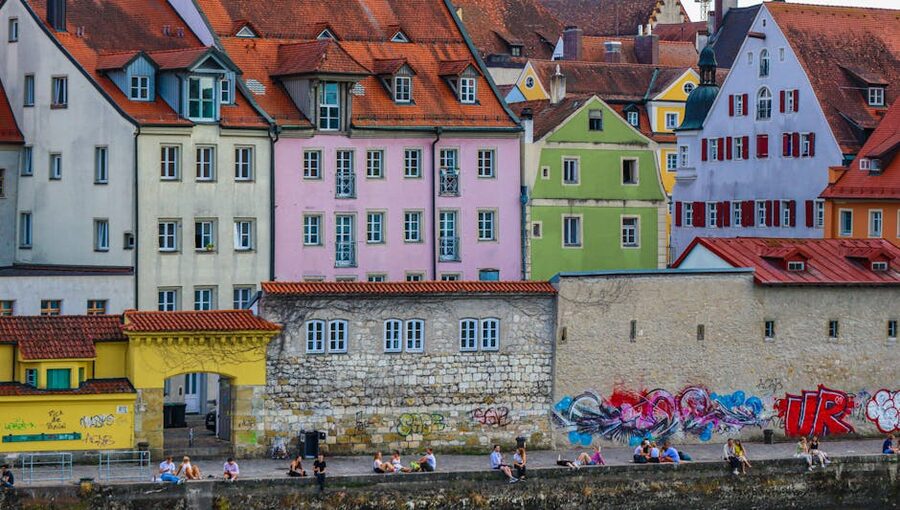
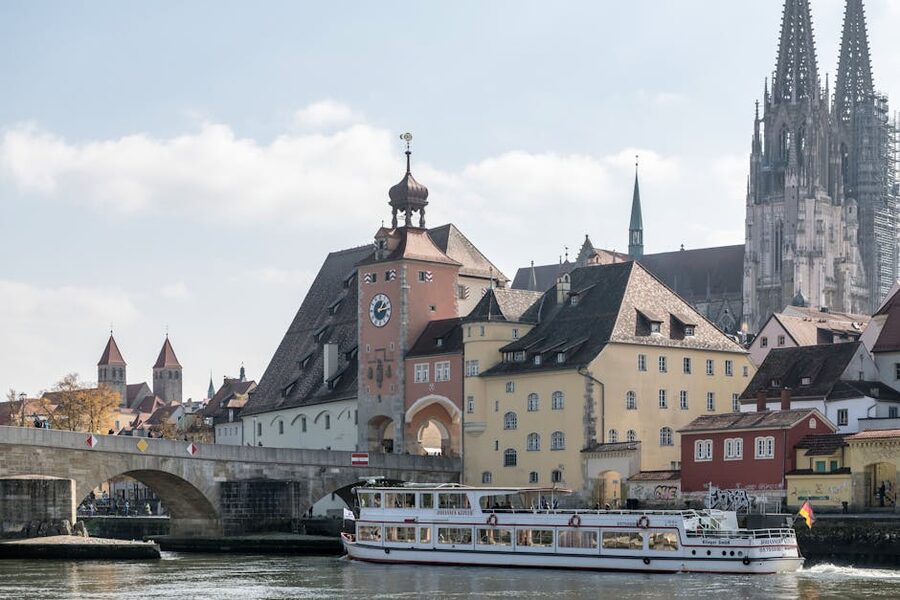
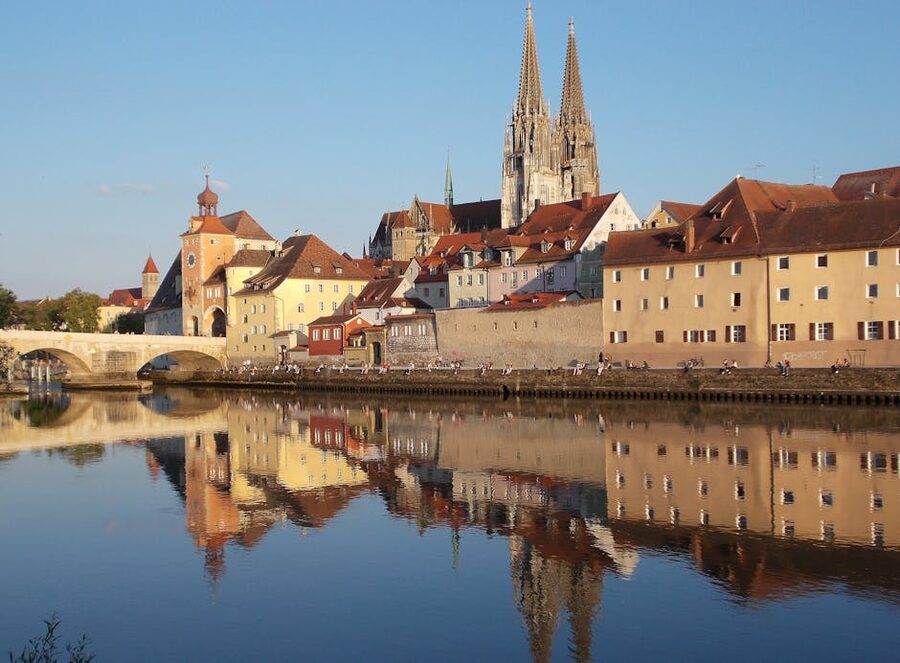
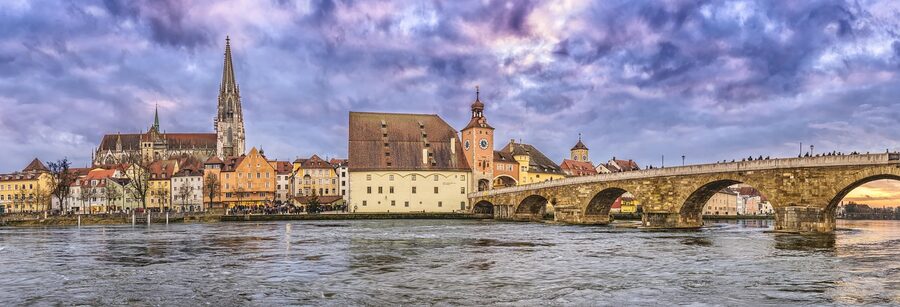
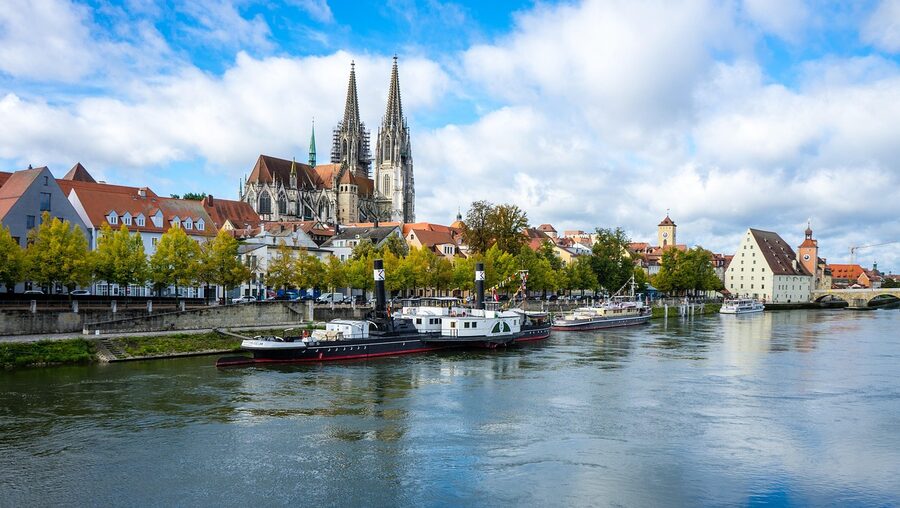
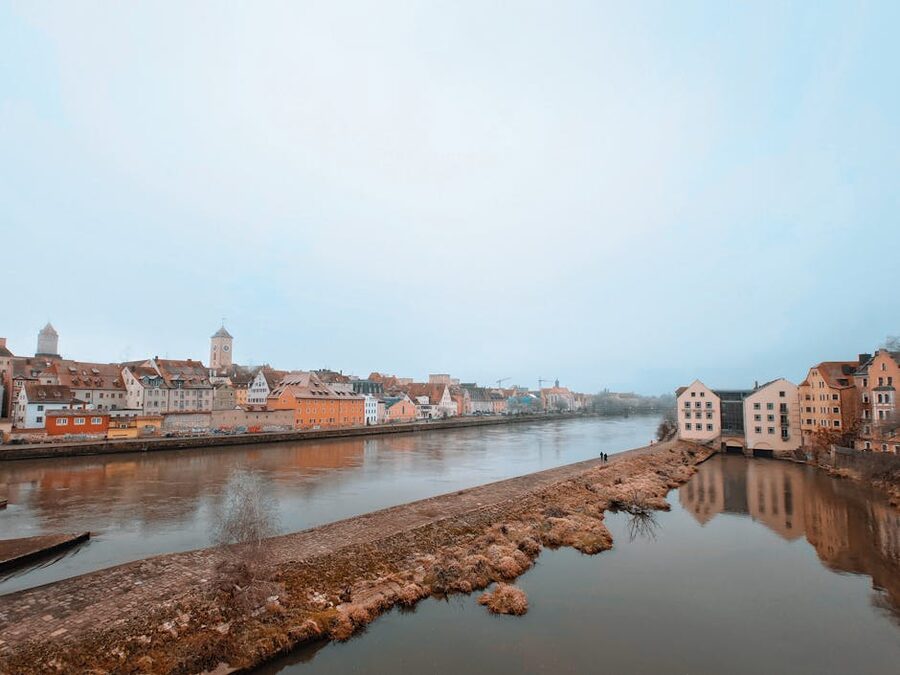
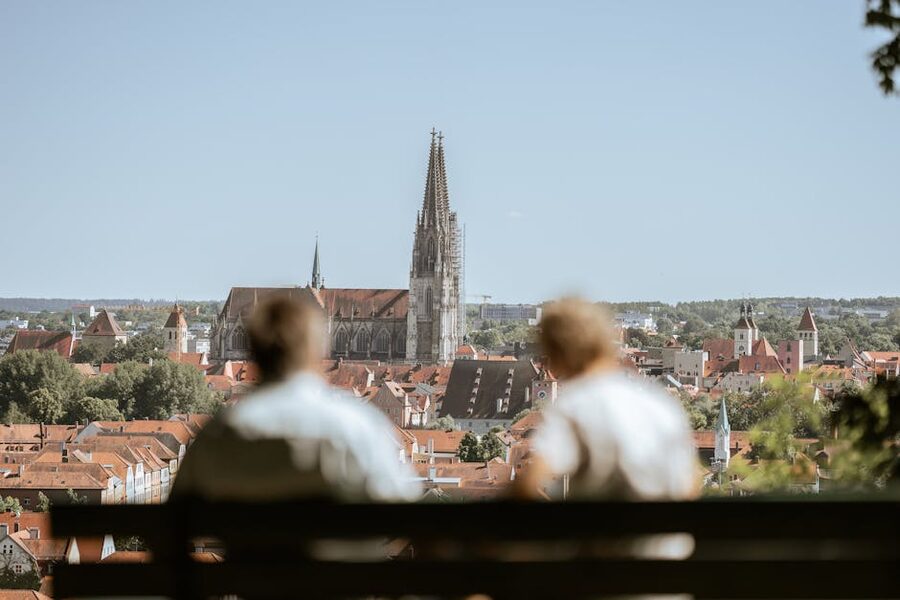
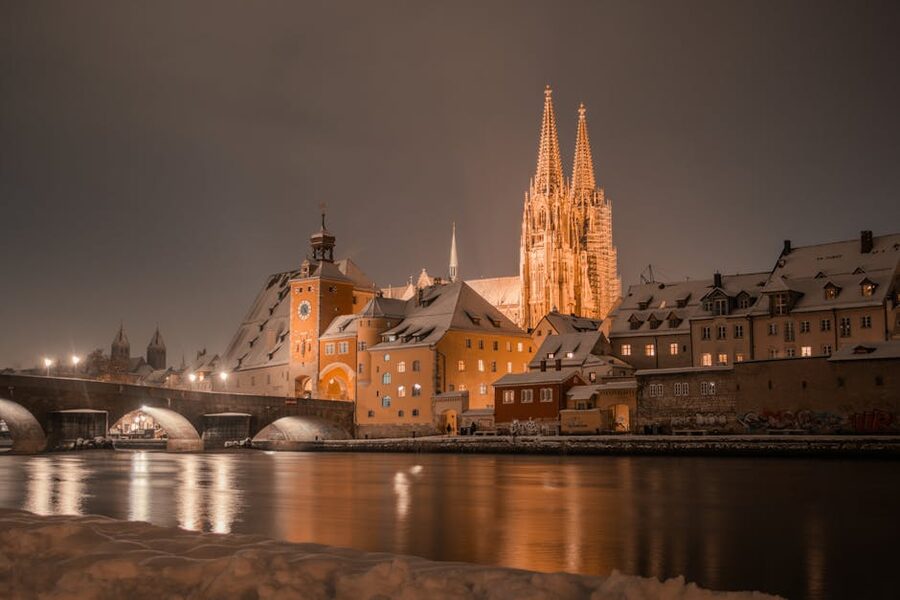
Regensburg itself is a UNESCO World Heritage Site — one of Germany’s best-preserved medieval cities, with a 12th-century stone bridge, a Gothic cathedral, and an old town that survived WWII bombing almost completely intact. The boat tour combines two extraordinary attractions: the medieval city you depart from and the neoclassical temple you sail to.
Alternative operator: Regensburg Boat Tour to Walhalla — $23, similar route, different operator.
Old town deep dive: Regensburg Private Walking Tour — $289 for groups up to 15, professional guide for the medieval old town.
Official info: walhalla-bayern.de — opening hours, history, and visitor information for the memorial.
- The Boat Tour to Walhalla
- Climbing to the Walhalla
- The View from the Top
- Regensburg’s Old Town
- The Patrician Towers
- The Walhalla’s History
- Combining the Boat Tour with Old Town
- Best Tours to Book
- 1. Klinger’s Sightseeing Boat Tour to Walhalla —
- 2. Regensburg Sightseeing Boat Tour to Walhalla —
- 3. Regensburg Private Walking Tour — 9 (group)
- Practical Tips
- More Bavaria Tours
The Boat Tour to Walhalla
The Klinger boat departs from Regensburg’s central docks (right next to the Stone Bridge) and follows the Danube downstream for about 12 kilometres to the Walhalla. The journey takes about 50-60 minutes each way, with about 45 minutes at the memorial itself. You climb the 358 marble steps from the riverbank to the temple, explore the interior, and return on the same boat.
The boat is a small enclosed vessel — 50-80 passengers depending on the model. There’s an open deck for photography (essential for the Walhalla approach) and an enclosed lower deck with seating and a snack bar. Bilingual commentary (German with English summaries) covers the river’s history, the villages you pass, and the geological context of the gorge.
Climbing to the Walhalla
The 358 marble steps from the riverbank to the Walhalla are the price of admission to the views. The climb takes about 10-15 minutes at a moderate pace, with terraces along the way for rest and photographs. The steps were built in 1842 alongside the temple and have barely been altered since.
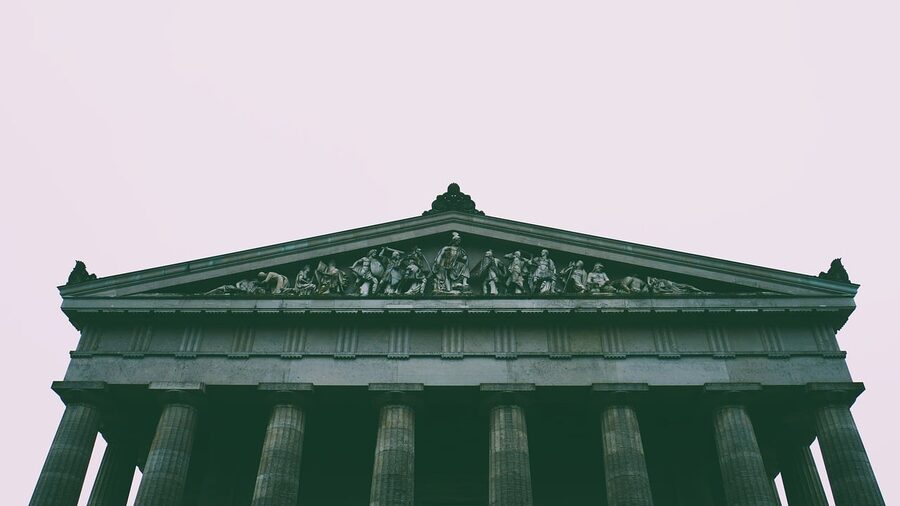
Inside, the temple houses 130 marble busts and 65 plaques commemorating “praiseworthy and distinguished Germans” from across history. The figures honoured range from Charlemagne and Frederick the Great to Goethe, Beethoven, Einstein, and (added in 2003) Sophie Scholl, the anti-Nazi resistance member executed in 1943. The selection is updated periodically, with a committee adding new busts every few years.
The View from the Top
The Walhalla’s terrace offers one of the best Danube views in Germany. The river curves below in a wide arc, the Bavarian forest stretches to the horizon, and on clear days you can see all the way back to Regensburg. The terrace is exposed — bring sunscreen in summer and a jacket in any other season.
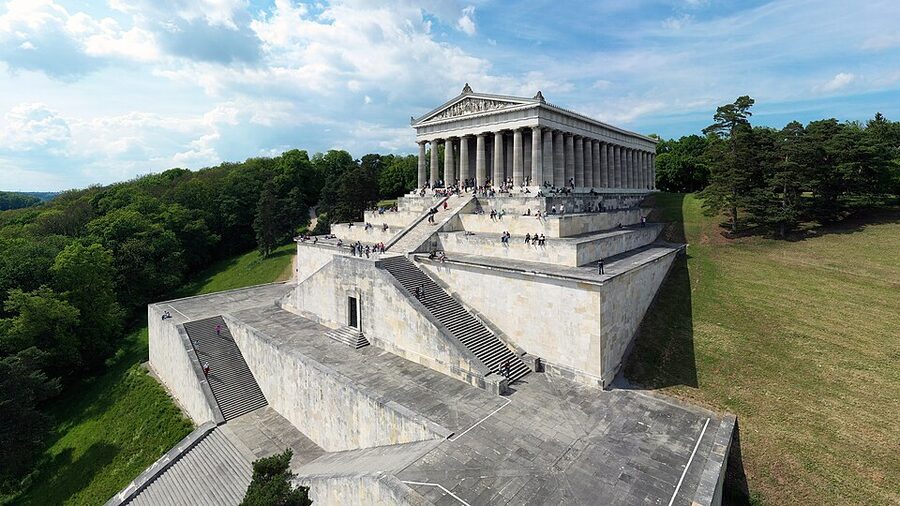
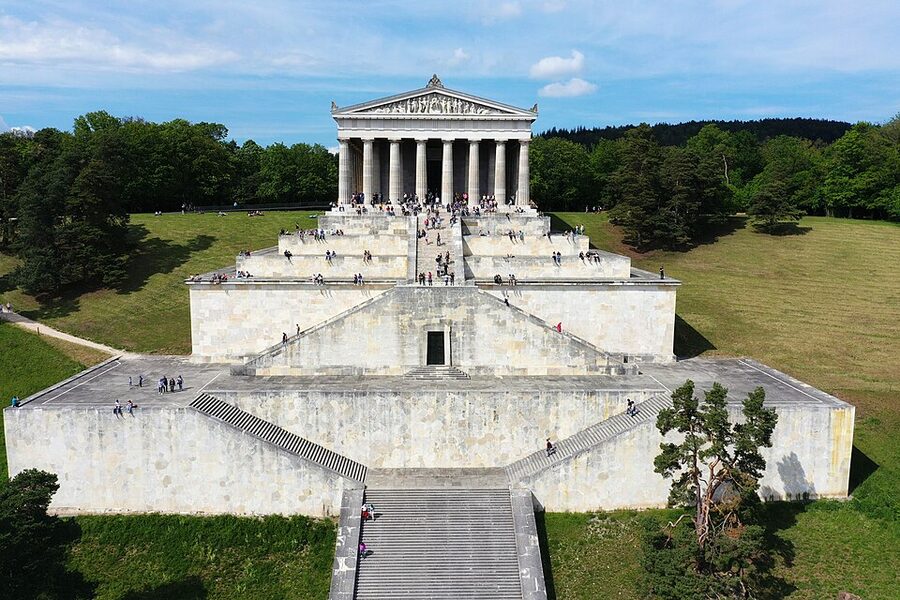
Entry to the Walhalla costs €4.50 (not included in the boat ticket). The interior is open daily April-October, with reduced winter hours November-March. Allow 30-45 minutes for the climb, the temple, and the views. The boat schedule is timed to give you enough time but not unlimited time — make sure you’re back at the dock when the boat leaves.
Regensburg’s Old Town
The Regensburg you sail from is one of the most remarkable medieval cities in Europe. Founded by the Romans in 90 AD as Castra Regina, it became the capital of the Duchy of Bavaria in the 6th century and the seat of the Imperial Diet of the Holy Roman Empire from 1663 to 1806. The old town’s 1,000-year-old buildings survived WWII bombing because the Allies considered Regensburg too historically important to destroy.
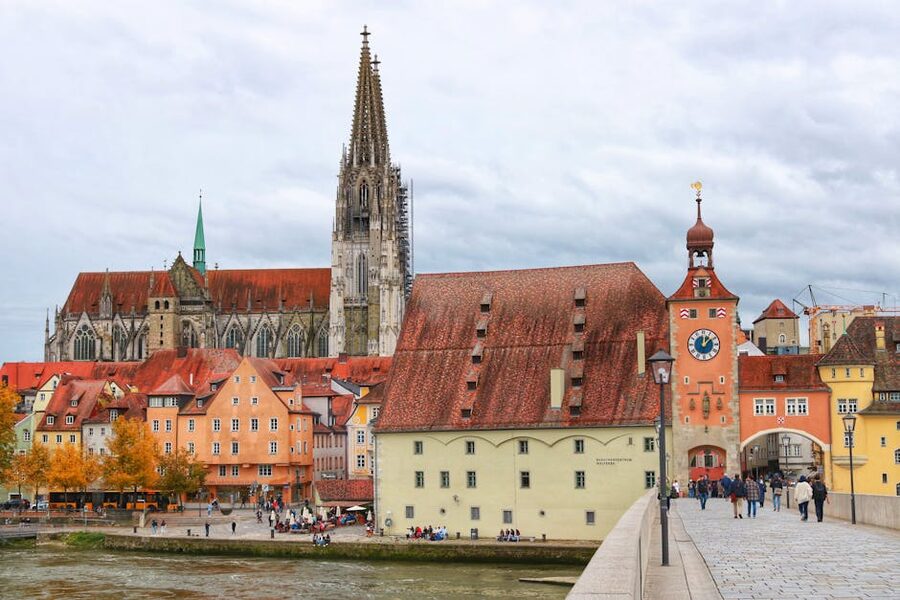
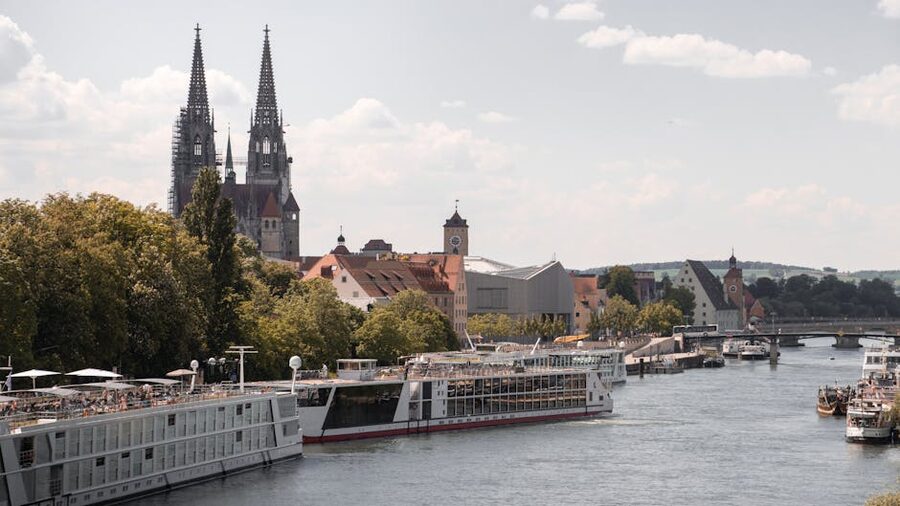
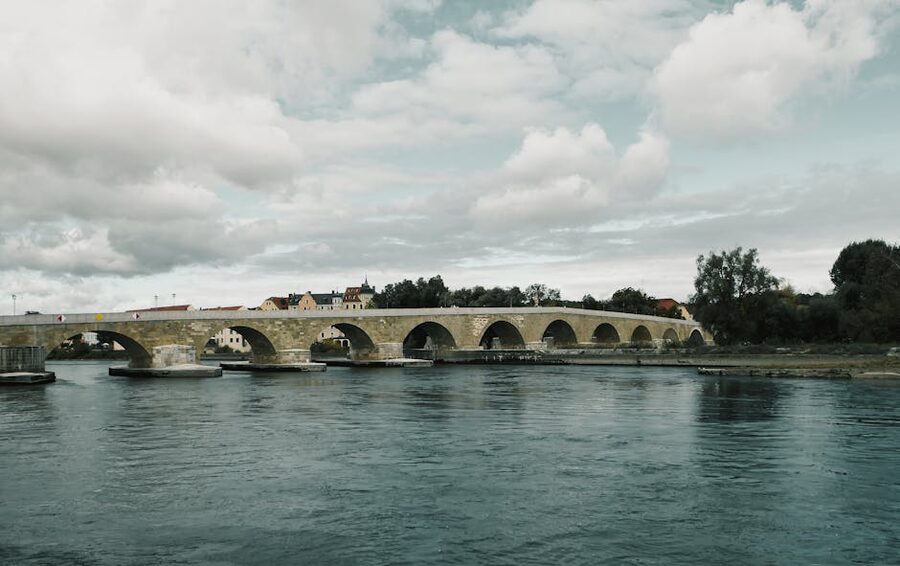
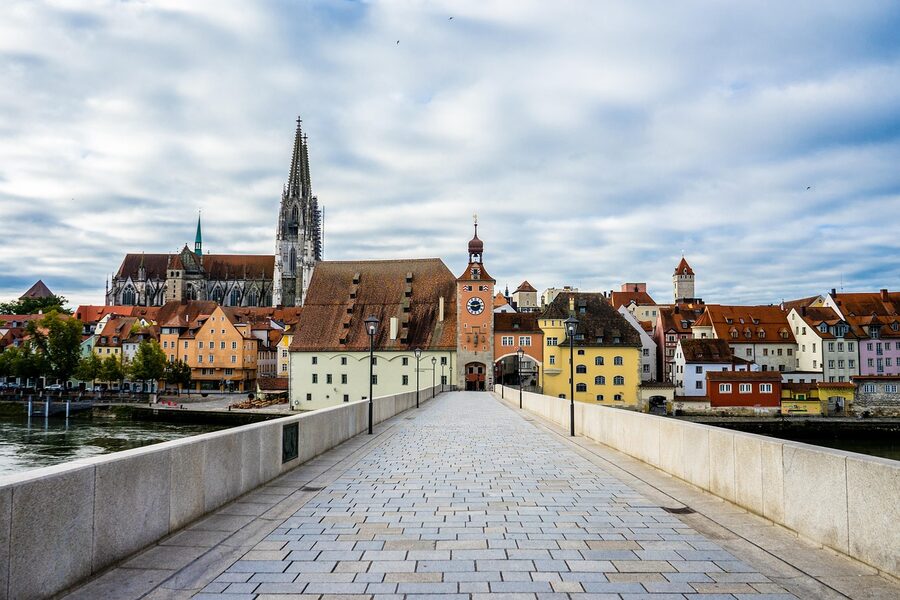
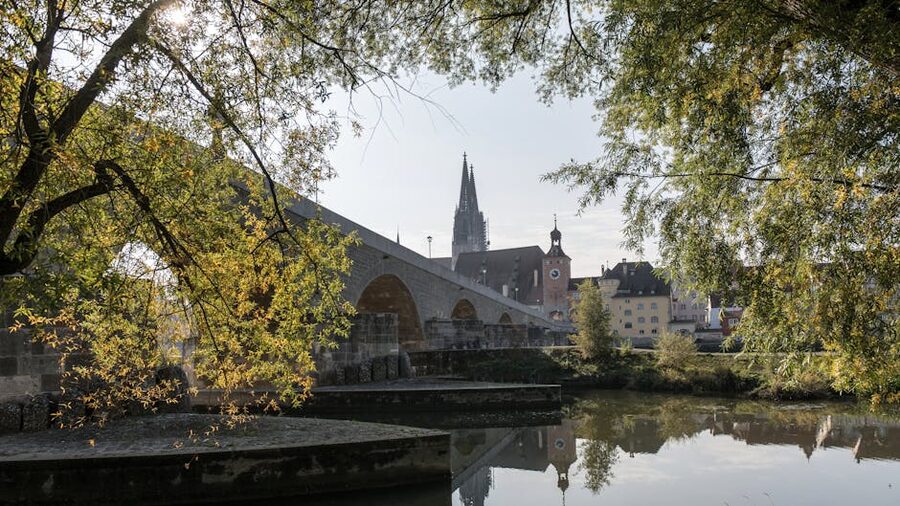
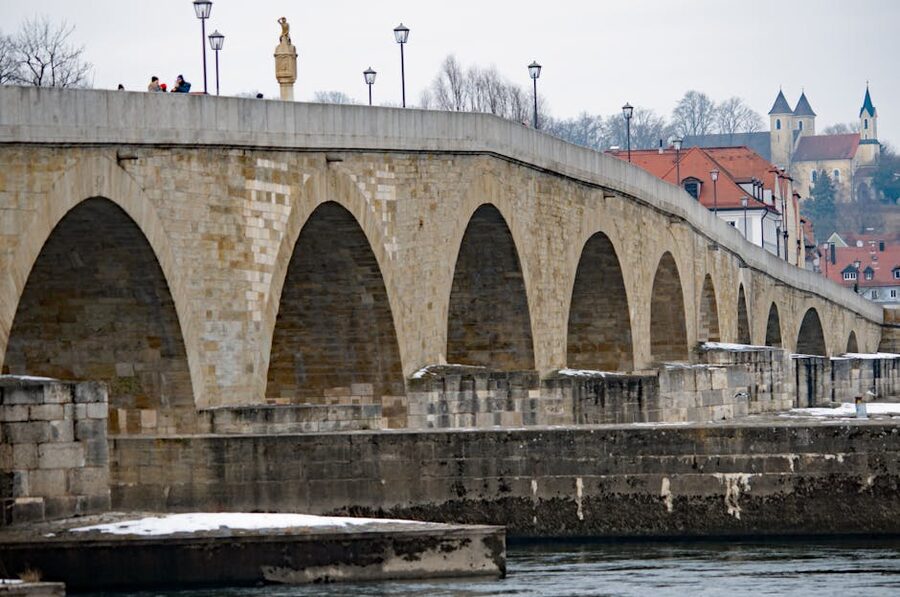
The Steinerne Brücke (Stone Bridge) dominates Regensburg’s riverfront — 16 arches, 308 metres long, completed in 1146. For 800 years it was the only Danube crossing between Ulm and Vienna. Frederick Barbarossa crossed it on his way to the Second Crusade in 1147. The bridge is now pedestrian-only, and walking across it remains one of Regensburg’s signature experiences.
The Old Town Hall (Altes Rathaus) hosted the Imperial Diet — Germany’s parliament under the Holy Roman Empire — from 1663 to 1806. The Reichstagsmuseum inside the building lets you sit in the actual chamber where the empire’s affairs were debated for over a century. The walking tours include this stop, and it’s one of Regensburg’s most historically significant buildings.
The Patrician Towers
Regensburg has 20 surviving “Geschlechtertürme” — patrician towers built by wealthy merchant families in the 13th-14th centuries to display their wealth and status. The towers were Italian-influenced (similar to the famous towers of San Gimignano in Tuscany), and Regensburg was the only German city where they appeared in significant numbers. The walking tours point out the most prominent examples.
The Walhalla’s History
Ludwig I conceived of the Walhalla in 1807, when Napoleon’s empire dominated Europe and German national identity was emerging as a political force. The temple was Ludwig’s personal project — a way to celebrate German cultural and intellectual achievement during a period when “Germany” didn’t yet exist as a unified nation. He chose the name “Walhalla” from Norse mythology (the hall where Odin received fallen warriors), giving the project a Nordic-Germanic mythological frame to balance the Greek architectural inspiration.
The selection of who gets a bust or plaque has been controversial throughout the temple’s history. The original list excluded Jewish Germans (rectified in the 20th century). Women were almost entirely absent until recent additions. The Nazis added busts of figures they admired (some later removed). Today’s selection committee tries to balance historical achievement with contemporary values, which has produced some interesting recent additions including Edith Stein, the Catholic philosopher killed at Auschwitz.
Combining the Boat Tour with Old Town
The Klinger boat tour takes 2-3 hours, leaving plenty of time for a half-day exploring Regensburg’s old town. The classic itinerary is morning boat tour to the Walhalla, lunch at a riverside restaurant, then 2-3 hours walking the old town in the afternoon. Many visitors find this combination — temple in the morning, medieval city in the afternoon — covers everything important about Regensburg in a single day.
Best Tours to Book
1. Klinger’s Sightseeing Boat Tour to Walhalla — $24
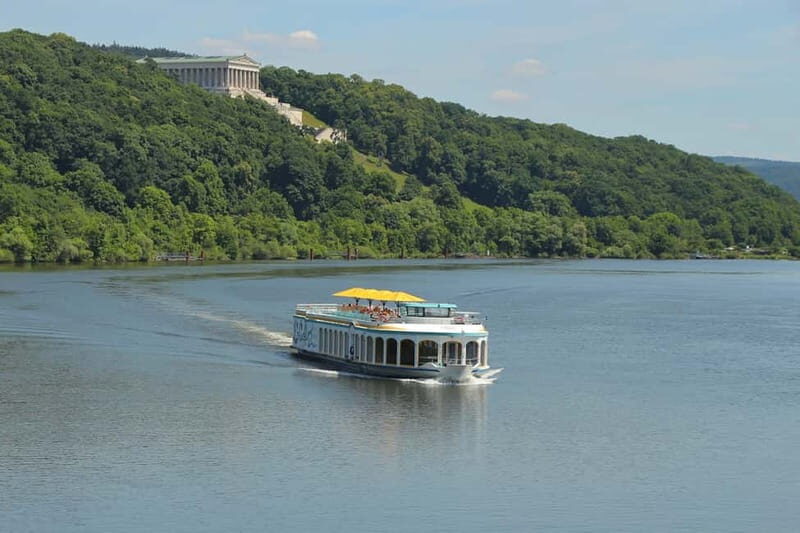
The standard Walhalla boat tour. Two to three hours by boat from central Regensburg to the Walhalla memorial and back, with about 45 minutes at the temple itself. The commentary covers the river’s history, the villages along the route, and the architectural significance of the Walhalla. At $24, it’s one of southern Germany’s best-value river experiences. Our review covers the boat experience, the timing at the Walhalla, and what makes the Klinger tour the obvious choice.
2. Regensburg Sightseeing Boat Tour to Walhalla — $23
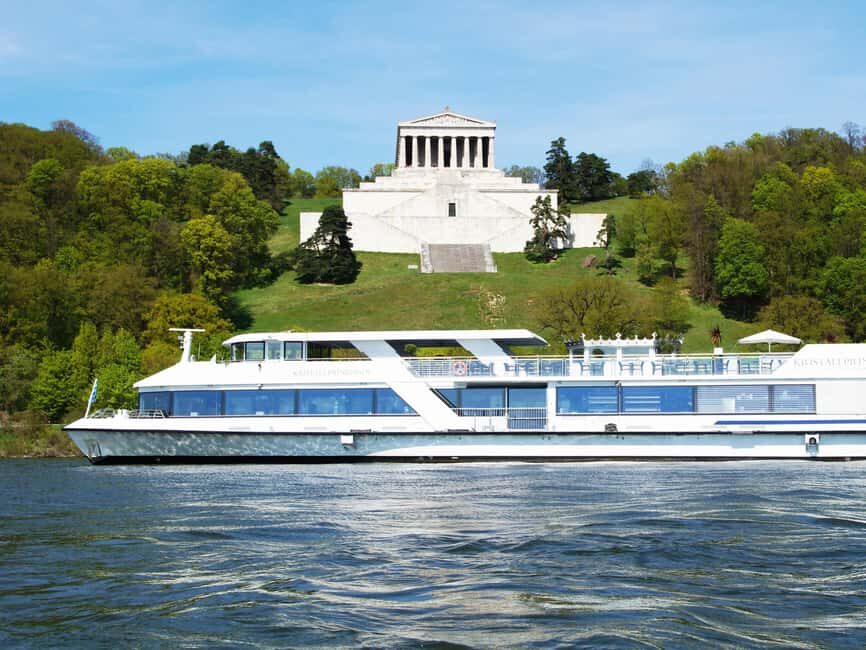
A different operator running essentially the same route. The 2-hour format is slightly shorter than the Klinger tour, with less time at the Walhalla itself. The commentary style and boat type vary, but the experience is fundamentally similar. Choose based on departure time availability. Our review compares this with the Klinger tour and explains when each is the better choice.
3. Regensburg Private Walking Tour — $289 (group)
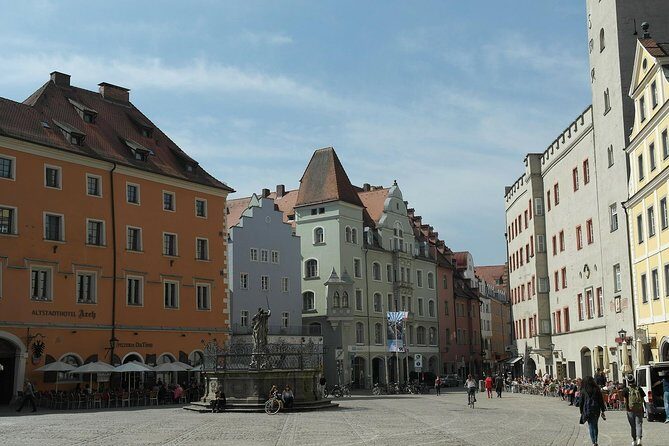
The premium Regensburg experience. A professional guide leads your private group through the medieval old town for as long as you want, focusing on the topics that interest your group. At $289 per group (up to 15 people), the per-person cost drops significantly with larger groups — a family of 5 pays about $58 each, similar to public guided tours but with private attention. Our review explains who benefits from the private format and what to ask the guide to prioritise.
Practical Tips
When the boat runs: Boat tours operate from late April through October. Multiple departures daily in summer, fewer in spring and autumn. The morning departures (10am-12pm) tend to have less wind and clearer visibility for photos.
Getting to Regensburg: Direct trains from Munich (1.5 hours), Nuremberg (1 hour), and Frankfurt (3.5 hours). Regensburg Hauptbahnhof is a 10-minute walk from the boat docks.
What to wear: The Danube is windy even in summer — bring a light jacket. Sturdy shoes for the 358 steps to the Walhalla. Sun hat in midsummer (the open boat deck has minimal shade).
Walhalla entry: €4.50 (not included in boat ticket). Allow 30-45 minutes at the temple. The boat won’t wait if you’re late.
Budget: Boat tour: $23-24. Walhalla entry: €4.50. Lunch in Regensburg: €12-18. Old town walking tour (alternative): $289 per group. A full day in Regensburg: about €70-80.
More Bavaria Tours
Regensburg combines naturally with other Bavarian experiences. The Munich city tours are 1.5 hours away by train. The Nuremberg medieval dungeons and old town tour is 1 hour away — perfect for a two-city Bavarian medieval itinerary. The Rothenburg and Romantic Road day trip from Munich shares the medieval town theme but covers a smaller, more intact example.
For visitors continuing the Danube River theme, the Rhine Valley boat tours from Koblenz offer a similar river-cruise experience in a different German river system. The Rhine has more castles per kilometre; the Danube around Regensburg has more medieval urban heritage.