
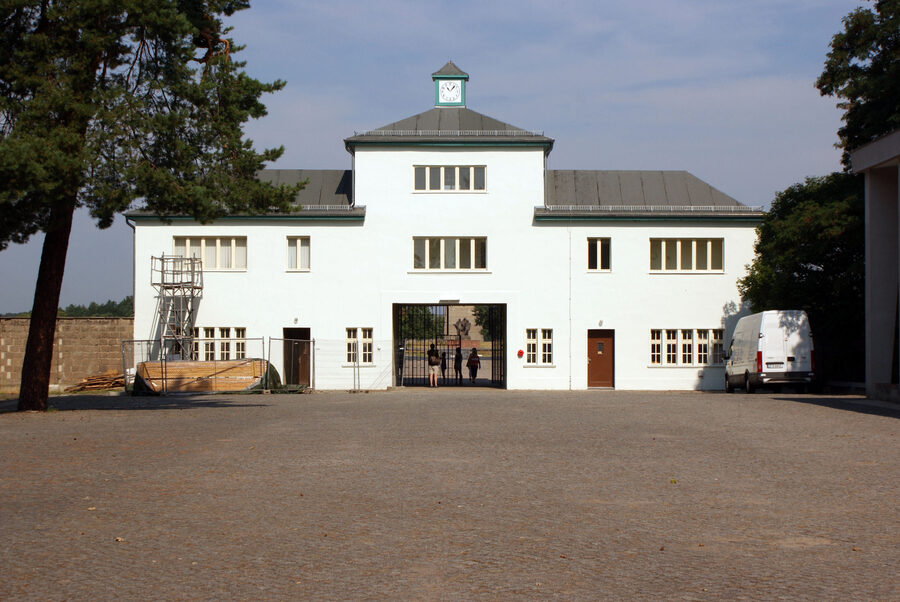
Sachsenhausen was the prototype. Built in 1936 in Oranienburg, 35 kilometres north of Berlin, it served as the administrative headquarters for the entire Nazi concentration camp system — the SS officers who ran Auschwitz, Dachau, and every other camp were trained here.
Visiting Sachsenhausen is not a pleasant experience. It is an important one. The memorial site preserves the camp’s layout, several original buildings, and extensive museum exhibitions that document what happened here in forensic detail. The guided tours from Berlin add context that the memorial’s information panels can’t fully provide — the human stories, the political mechanics, and the uncomfortable questions about how ordinary people participated in extraordinary evil.
Best by bus: Sachsenhausen Bus Tour — $69, includes coach transport from central Berlin.
Official site: sachsenhausen-sbg.de — hours, visitor information, and educational resources.
- What You’ll See at the Memorial
- Operation Bernhard: The Counterfeiting Workshop
- The Soviet Special Camp: 1945-1950
- The November 1938 Mass Arrests
- The Town of Oranienburg
- Do You Need a Guided Tour?
- Getting There
- What the Memorial Teaches
- The Liberation and Its Aftermath
- Preparing Yourself for the Visit
- Best Tours to Book
- 1. Sachsenhausen Memorial Tour from Berlin —
- 2. Sachsenhausen Bus Tour —
- 3. Sachsenhausen Small Group Tour (Max 15) —
- Practical Information
- Where Sachsenhausen Fits in Your Berlin Trip
What You’ll See at the Memorial
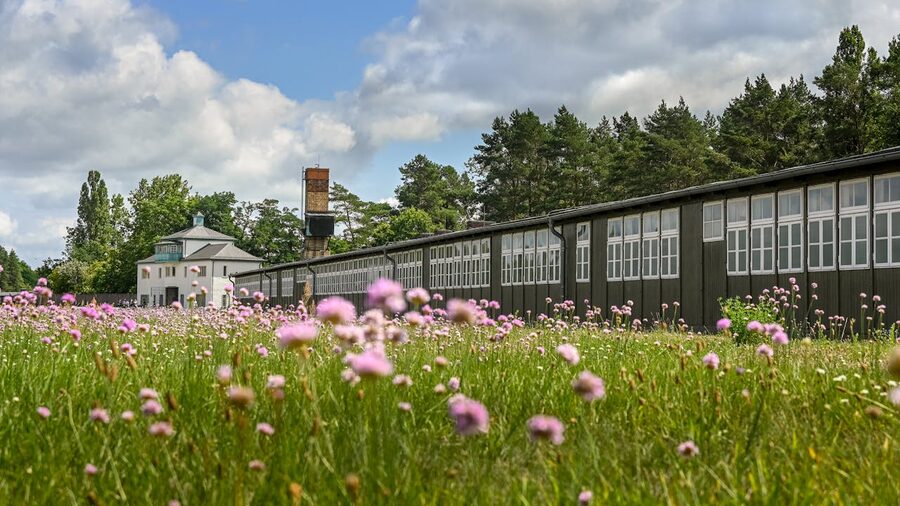
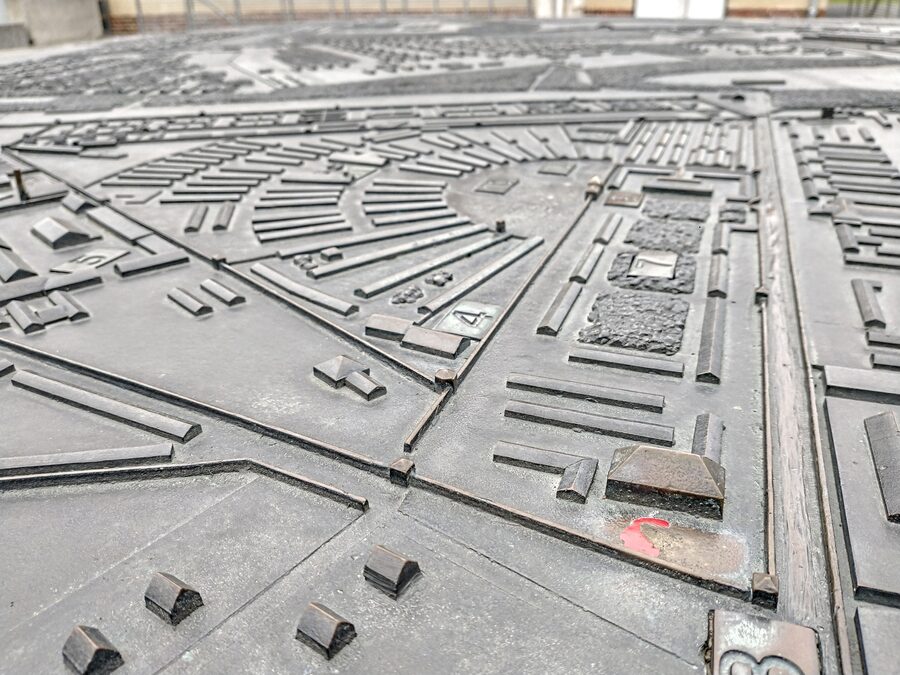
The memorial site preserves the camp’s triangular layout and several original structures. The guided tours typically cover:
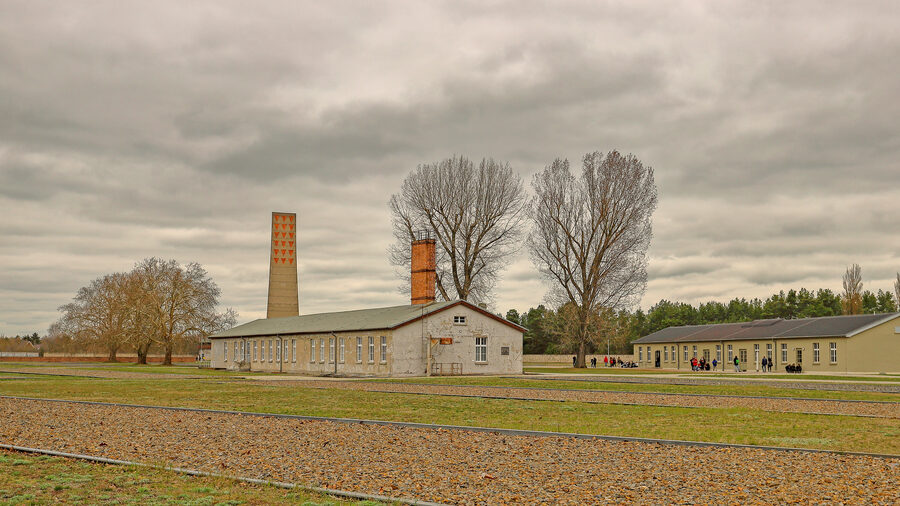
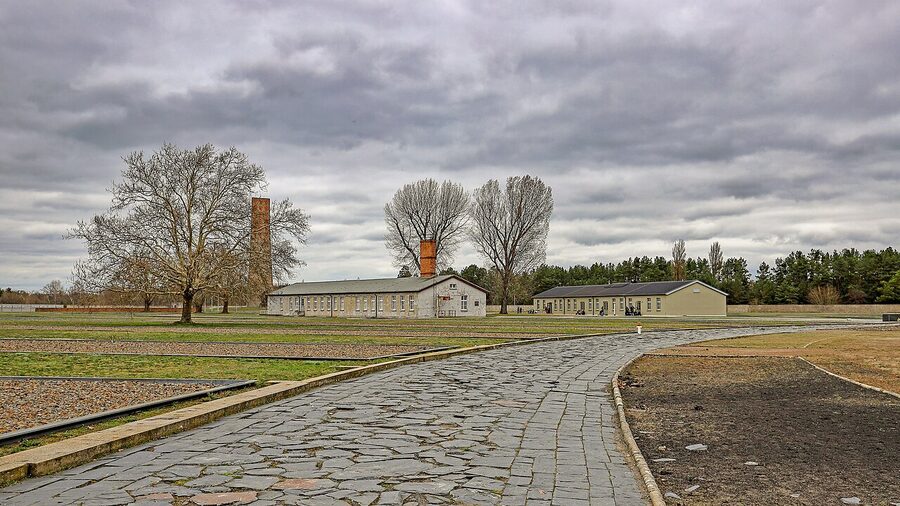
The Appellplatz (roll-call square) — a vast open space where prisoners stood for hours during daily roll calls. The square is bordered by the camp wall and the remains of the barracks. Standing in this space and understanding that thousands of prisoners stood here in freezing conditions, sometimes for hours, while the SS counted and recounted them — that’s when the scale of the cruelty becomes physical rather than abstract.
Station Z — the execution area at the far end of the camp. This is where the SS carried out mass shootings, hangings, and gassings. The original structures were destroyed but the foundations remain, along with a memorial and information panels. The gas chamber was disguised as a shower room — a technique later refined and expanded at Auschwitz.
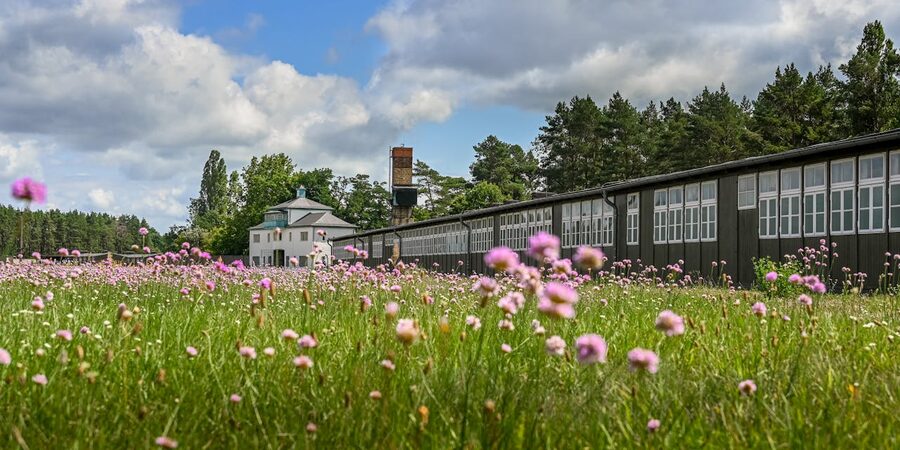
The barracks — reconstructed buildings show how prisoners lived (or rather, how they were prevented from living). Bunks stacked three high, no heating, insufficient food, and forced labour that was designed to be lethal. Some barracks now house museum exhibitions with personal testimonies, photographs, and artefacts.
The museum exhibitions cover the camp’s history chronologically: its construction in 1936, the categories of prisoners (political opponents, Jews, Roma, homosexuals, Jehovah’s Witnesses, Soviet POWs), the daily routine of forced labour and punishment, the death marches of 1945, and the post-war Soviet use of the camp (the Soviets ran their own internment camp on the same site from 1945-1950, imprisoning about 60,000 people, of whom 12,000 died).
Operation Bernhard: The Counterfeiting Workshop
One of Sachsenhausen’s lesser-known stories is Operation Bernhard — the largest counterfeiting operation in history. Between 1942 and 1945, the SS forced a group of Jewish prisoners with relevant skills (artists, engravers, printers) to produce forged British pound notes in a dedicated workshop within the camp. The quality was so high that the Bank of England couldn’t distinguish the fakes from genuine notes. The operation produced over £130 million in forged currency — enough to destabilise the British economy if deployed effectively.
The story was dramatised in the 2007 Austrian film “The Counterfeiters” (Die Fälscher), which won the Academy Award for Best Foreign Language Film. The memorial site has an exhibition dedicated to Operation Bernhard that includes original counterfeit notes, printing equipment, and testimonies from the surviving prisoners.
The Soviet Special Camp: 1945-1950
The history of Sachsenhausen doesn’t end in 1945. After liberation, the Soviet occupation forces repurposed the camp as “Special Camp No. 7” — a political internment facility that held suspected Nazis, political opponents of the Soviet regime, and ordinary Germans who fell foul of the occupation authorities. Between 1945 and 1950, approximately 60,000 people were imprisoned here, of whom about 12,000 died — primarily from malnutrition and disease.
The mass graves from the Soviet period were discovered in 1990, shortly after reunification. They contained the remains of thousands of prisoners, many of them teenagers. The memorial now includes a separate section dedicated to the Soviet camp, with its own exhibition and a memorial to the victims. The walking tour guides cover this period as the final chapter of Sachsenhausen’s history — a reminder that the capacity for state-sponsored cruelty didn’t end with the Nazis.
The November 1938 Mass Arrests
On the nights of November 9-10, 1938 — Kristallnacht — the Nazi regime orchestrated a nationwide pogrom against Jewish communities. In Berlin and the surrounding region, about 6,000 Jewish men were arrested and sent to Sachsenhausen. They were subjected to brutal treatment, forced to stand for hours in the roll-call square, and many were murdered or died from the conditions. Most of the survivors were released after weeks or months — on the condition that they leave Germany immediately and surrender their property.
This event — the mass imprisonment of Kristallnacht victims — was a turning point. It demonstrated that the regime was willing to use the camp system against an entire civilian population, not just political opponents. The guides explain this as the moment when the camp system shifted from targeted political repression to generalised persecution — the step that led, eventually, to the industrialised murder of the Holocaust.
The Town of Oranienburg
Sachsenhausen sits within the town of Oranienburg, and the relationship between the camp and the town is one of the most uncomfortable aspects of the visit. The camp was not secret. It was built using local labour. The SS officers lived in houses on the town’s streets. Their children attended the local school. The smoke from the crematorium drifted over the town centre. And yet, after the war, most residents claimed not to have known what was happening behind the walls.
The walking tours from Berlin use the train journey and the walk through Oranienburg to introduce the concept of “bystander complicity” — the idea that the Holocaust required not just perpetrators and victims, but a much larger population of people who chose not to see, not to question, and not to act. It’s the most uncomfortable part of the tour and the part that visitors say stayed with them longest.
Do You Need a Guided Tour?
Sachsenhausen is free to enter and has information panels throughout. You can visit independently. But a guided tour is strongly recommended — not because the memorial is hard to navigate (it’s straightforward), but because the guides provide context, stories, and connections that the panels can’t.
The guides are historians who specialise in the Nazi period. They don’t just describe what happened — they explain how it was possible. How the camp system evolved. How the guards were recruited and trained. How prisoners were dehumanised through bureaucratic processes. And how the memorial was created after the war to ensure the history isn’t forgotten. The consistently outstanding feedback reflects guides who handle this material with the seriousness and sensitivity it demands.
Getting There
By tour (recommended): The guided tours depart from central Berlin (usually near the TV Tower or Hauptbahnhof). The train-based tour ($36) takes the S-Bahn to Oranienburg and walks to the memorial — the same route many prisoners took. The bus tour ($69) is more comfortable but misses that connection. Both include 3 hours at the memorial with a historian guide.
Independently: S-Bahn S1 from Berlin Friedrichstraße to Oranienburg (about 45 minutes), then a 20-minute walk to the memorial. The memorial is free. An audio guide is available for €3. Allow 2-3 hours at the site.
What the Memorial Teaches
Sachsenhausen’s exhibitions are designed not just to document atrocities but to explain systems. The memorial’s educational approach focuses on how ordinary bureaucratic processes — registration, categorisation, work allocation, punishment hierarchies — were used to dehumanise and ultimately destroy human beings. The camp ran like a factory, with departments, schedules, and performance metrics. Understanding this bureaucratic dimension is what makes Sachsenhausen different from memorials that focus primarily on emotional impact.
The prisoner categories are displayed in detail: political prisoners (mostly communists and social democrats, especially in the early years), Jewish prisoners (increasingly after 1938), Roma and Sinti, homosexual men, Jehovah’s Witnesses, so-called “asocials,” and Soviet prisoners of war. Each category wore a different colour triangle on their uniform, and the hierarchy between categories was deliberately fostered by the SS to prevent solidarity. Understanding this system of divide-and-control is essential to understanding how a relatively small number of guards controlled a vast prisoner population.
The medical experiment section is the most disturbing part of the exhibition. SS doctors used prisoners for experiments including hepatitis infection, surgical procedures without anaesthesia, and testing the limits of human endurance to cold, pressure, and injury. The documentation is clinical and specific. Some visitors find this section too graphic; the guides will tell you in advance and respect your decision to skip it.
The exhibition on the camp’s hierarchy of perpetrators — from the commandant to the guards to the Kapos (prisoner-functionaries who supervised other prisoners) — challenges the comfortable assumption that evil requires special people. The guards were ordinary young men who had been through SS training. The Kapos were fellow prisoners who chose collaboration over solidarity. The system worked because it offered incentives at every level and punished resistance absolutely.
The Liberation and Its Aftermath
Sachsenhausen was liberated by Soviet and Polish troops on April 22, 1945. By that point, the SS had already evacuated most prisoners on death marches — forced walks northward toward the Baltic coast, during which thousands died from exhaustion, starvation, and shooting. The soldiers who entered the camp found about 3,000 sick prisoners who had been left behind, the camp’s infrastructure largely intact, and evidence of the crimes that would later be used in the Nuremberg Trials.
The memorial was established in 1961 by the East German government, which used it primarily to honour communist resistance fighters. After reunification, the memorial was reorganised to tell the full story — all victim groups, the Soviet camp, and the complex questions about memory and responsibility that the original GDR memorial had simplified. The current exhibitions, installed between 2001 and 2011, represent the most comprehensive and honest version of Sachsenhausen’s story that has ever been presented.
Preparing Yourself for the Visit
Sachsenhausen is emotionally demanding. Even visitors who have been to other Holocaust memorials or concentration camps find it affecting. A few suggestions from the guides and from visitor experience:
Go with a guide. The human stories and expert context make the visit educational rather than just overwhelming. Without a guide, the empty spaces and ruined buildings are harder to interpret.
Allow time afterwards. Don’t schedule another activity immediately after. Many visitors need 30 minutes to an hour of quiet after the visit to process what they’ve seen. The walk back to Oranienburg station through the residential streets provides some of that decompression.
Talk about it. The guided tours build in time for questions at the end, and the guides are prepared for difficult conversations. The most common reaction isn’t sadness — it’s anger, confusion, and the question “how was this possible?” The guides don’t have a neat answer because there isn’t one. But they can help you understand the conditions that made it possible.
Children. The memorial recommends a minimum age of 14 for guided tours. The content is graphic and conceptually complex. Younger teenagers can handle it if prepared; younger children generally cannot. The guides will speak to you privately beforehand if you have concerns about specific ages.
Photography. Photography is permitted throughout the memorial site. Use it respectfully. The guides ask that you don’t take selfies at the gate or in the crematorium area. Some visitors photograph everything; others put their phones away after the first 10 minutes. Both approaches are valid.
Best Tours to Book
1. Sachsenhausen Memorial Tour from Berlin — $36
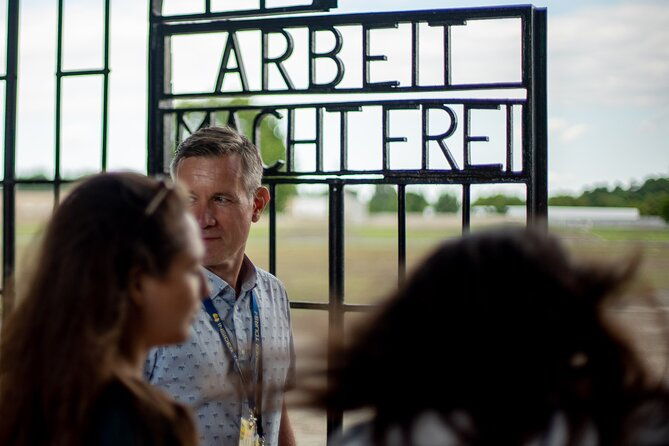
The standard and most-booked option. 5.5 hours including train travel from central Berlin, a 3-hour guided tour of the memorial, and return. The guide is a historian who covers the camp’s role in the broader Nazi system, the individual stories of prisoners, and the post-war memorialisation. At $36, the price barely covers the guide’s expertise — this is one of the most valuable educational experiences available in Berlin. Our review covers the full itinerary and what makes the guides consistently excellent.
2. Sachsenhausen Bus Tour — $69
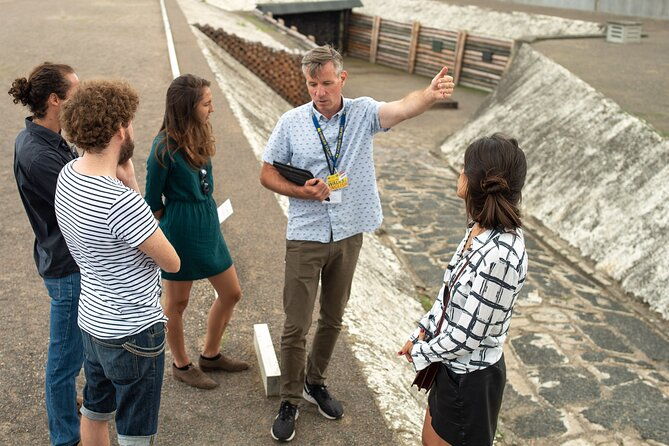
The bus option includes return coach transport from central Berlin, skip-the-queue entry, and a 3-hour guided tour. The higher price ($69 vs $36) reflects the private transport — the bus is more comfortable than the S-Bahn and the journey is shorter. The guide quality is the same. Choose based on your preference for comfort vs. authenticity. Our review compares the bus and train options.
3. Sachsenhausen Small Group Tour (Max 15) — $36
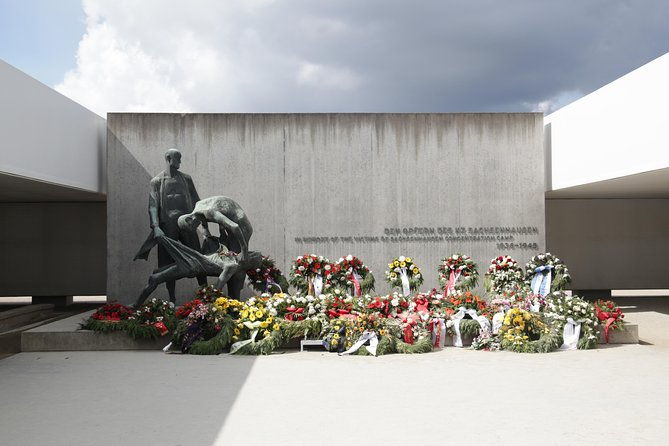
Same price as the standard tour ($36), same train-based transport, but with a group size capped at 15 people. The smaller group means you can hear the guide more clearly, ask questions more easily, and spend longer at sections that resonate. The quality difference is noticeable, especially in the museum sections where larger groups create congestion. Our review explains why the small-group format is worth seeking out.
Practical Information
Opening hours: Mid-March to mid-October: 8:30am-6pm daily. Mid-October to mid-March: 8:30am-4:30pm daily. Closed December 24-25 and January 1. Museums close 30 minutes before the site. Check the official site for current hours.
Entry: Free. Audio guide: €3. Guided tours from Berlin: $36-69.
How long: 2-3 hours at the memorial for a thorough independent visit. 3 hours with a guided tour. Plus travel time (45 minutes each way by S-Bahn). Total from Berlin: 4-6 hours.
What to wear: Comfortable walking shoes — the site is large and mostly gravel or concrete paths. Dress for the weather (mostly outdoors). Warm layers in winter — the memorial is exposed and can be bitterly cold.
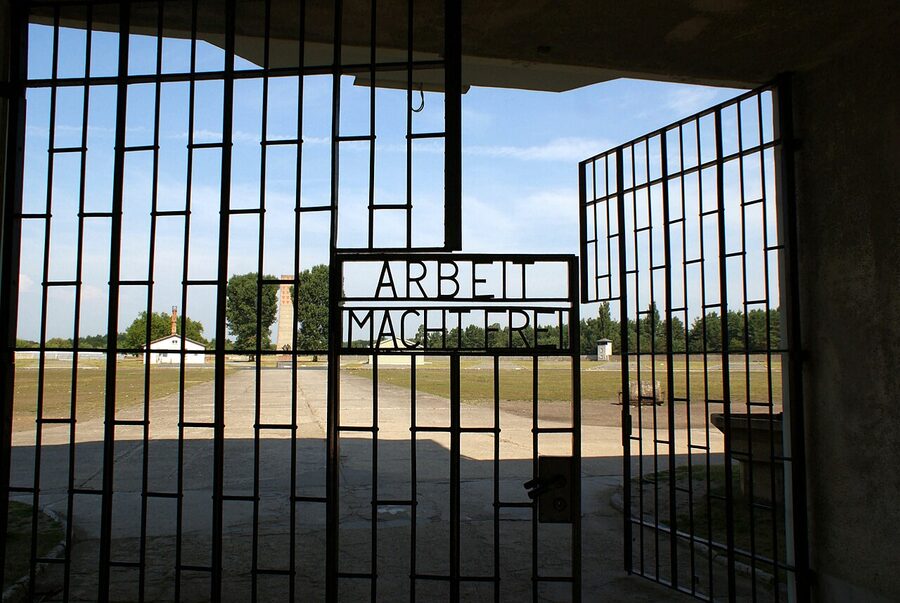
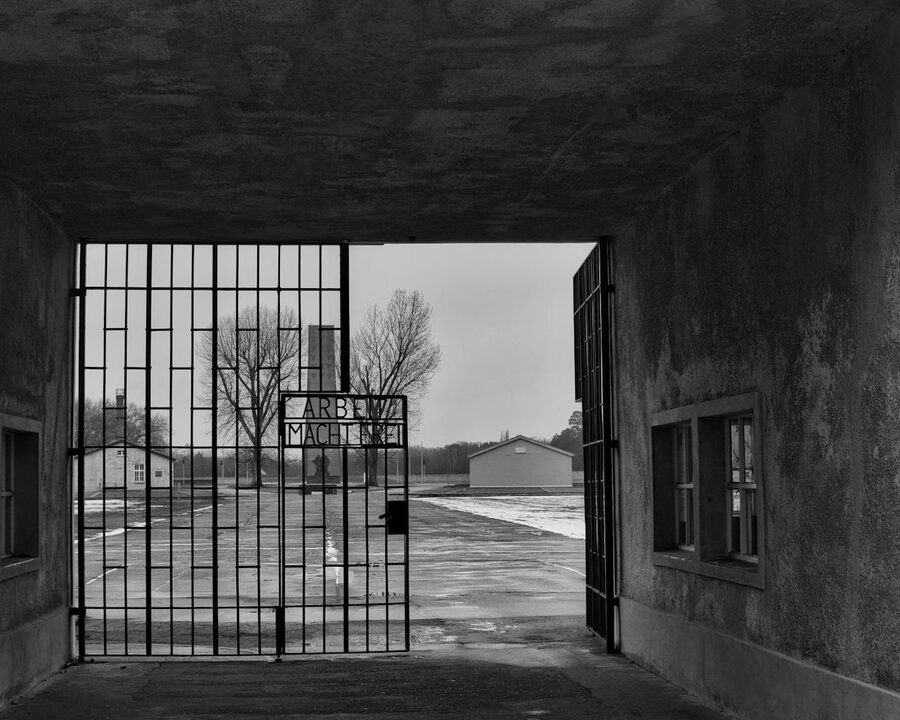
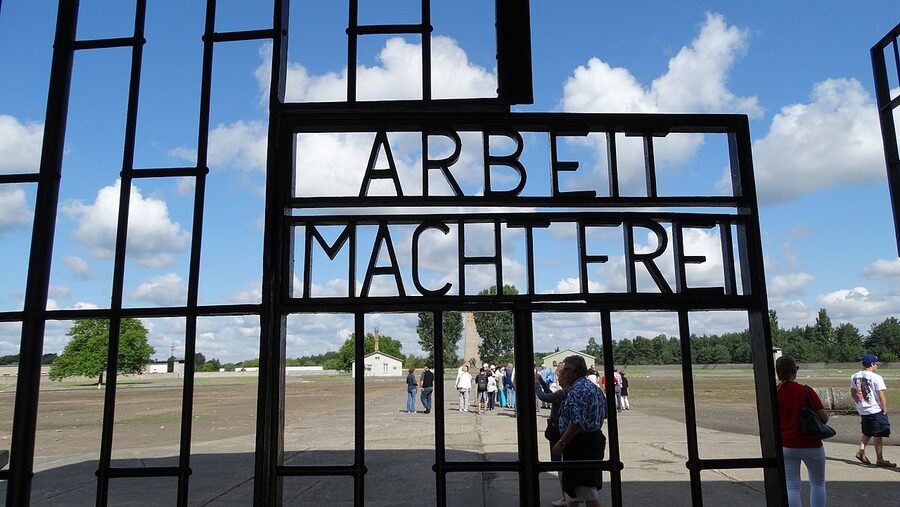
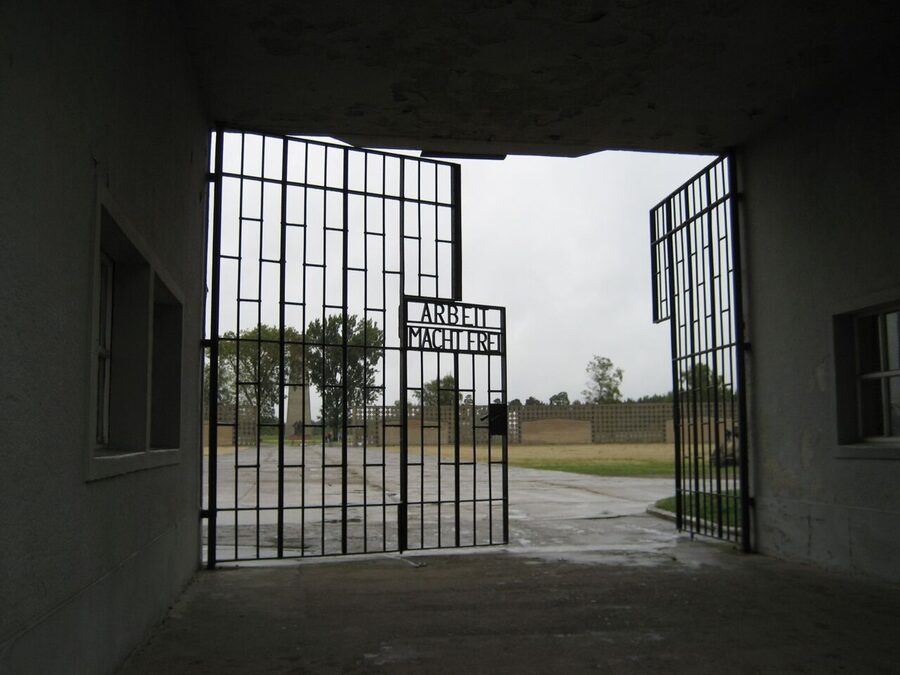
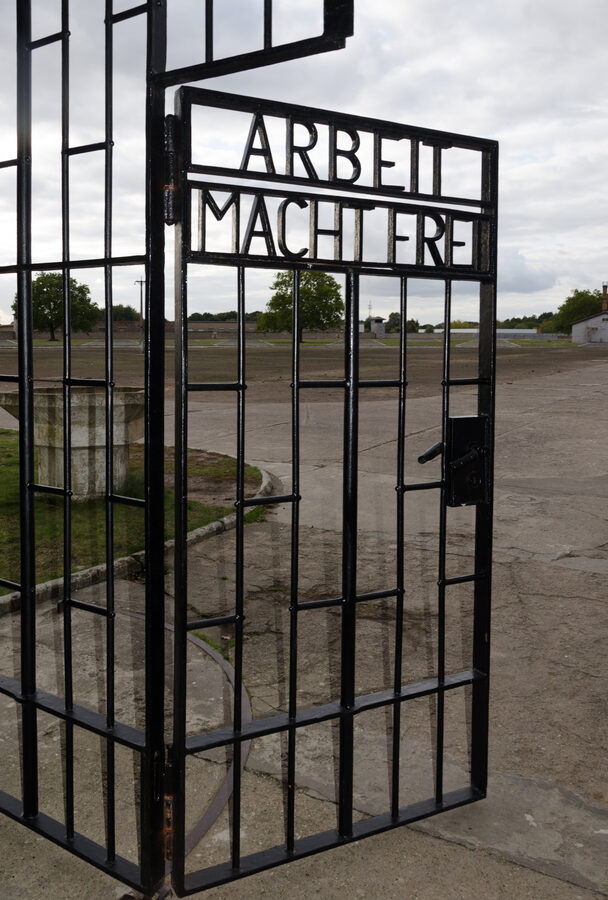
Tone and behaviour: Sachsenhausen is a memorial and a graveyard. Dress respectfully. Keep voices low. Photography is allowed but should be done thoughtfully — selfies at the “Arbeit Macht Frei” gate are inappropriate and the staff will tell you so. The visit is emotionally demanding. Allow yourself time to process afterward.
Children: The memorial is appropriate for older children (14+) who can understand the historical context. Younger children will find the content distressing and won’t benefit educationally. Use your judgment based on your child’s maturity.
Where Sachsenhausen Fits in Your Berlin Trip
Sachsenhausen is the depth that the Berlin walking tours introduce. The walking tour gives you the overview — the Wall, the Gate, the Cold War. Sachsenhausen takes one thread from that overview and follows it to its darkest conclusion. Together, they provide the most complete understanding of 20th-century Berlin that’s available in two days. The TV Tower on a third day adds the aerial perspective — looking down at a city that contains both the memorial’s horrors and the reunified capital’s hope.