
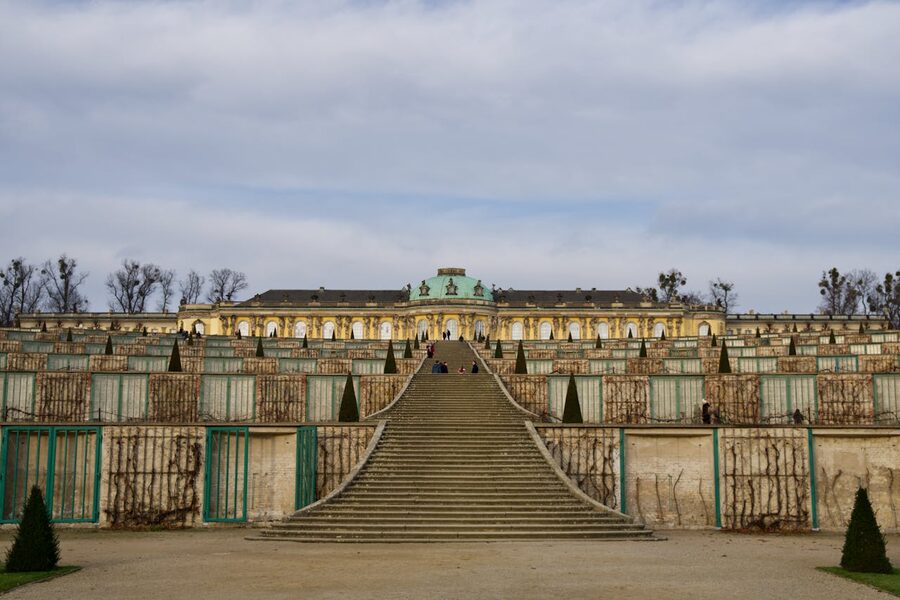
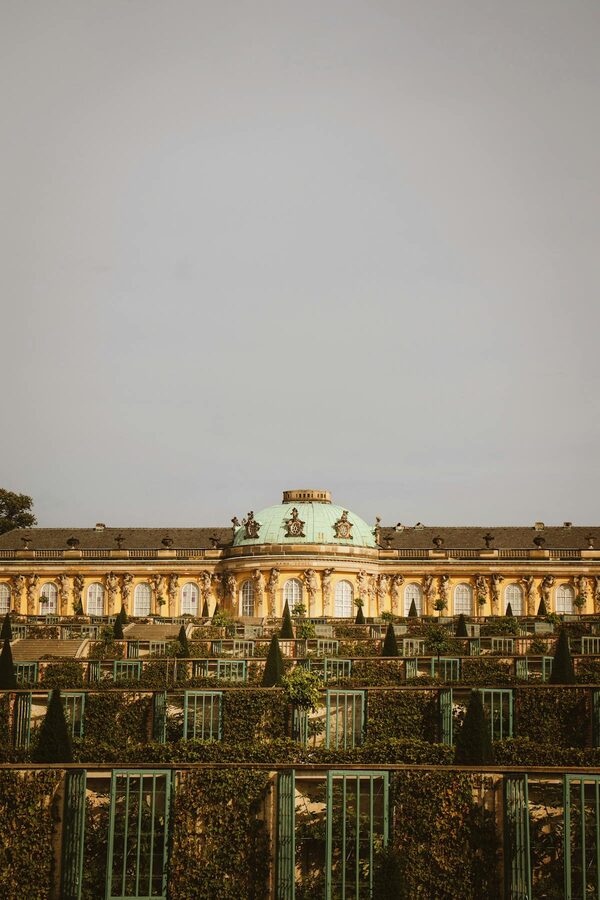
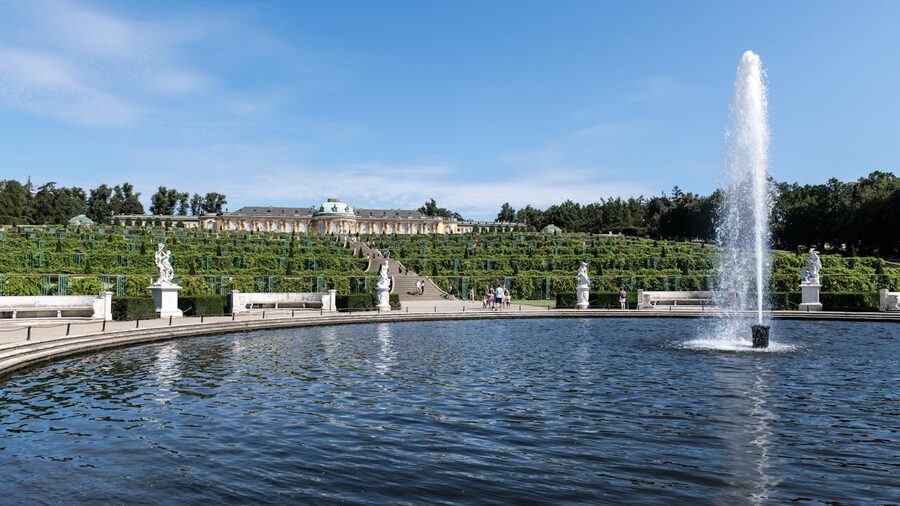
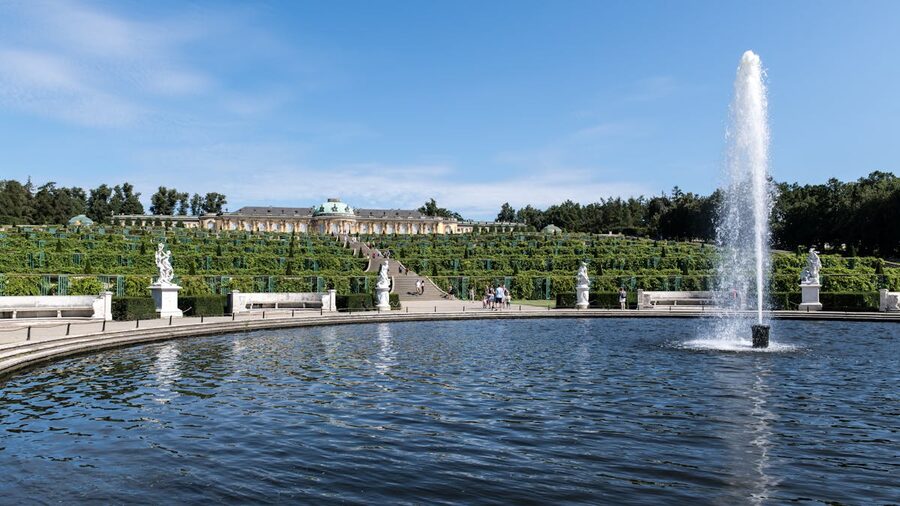
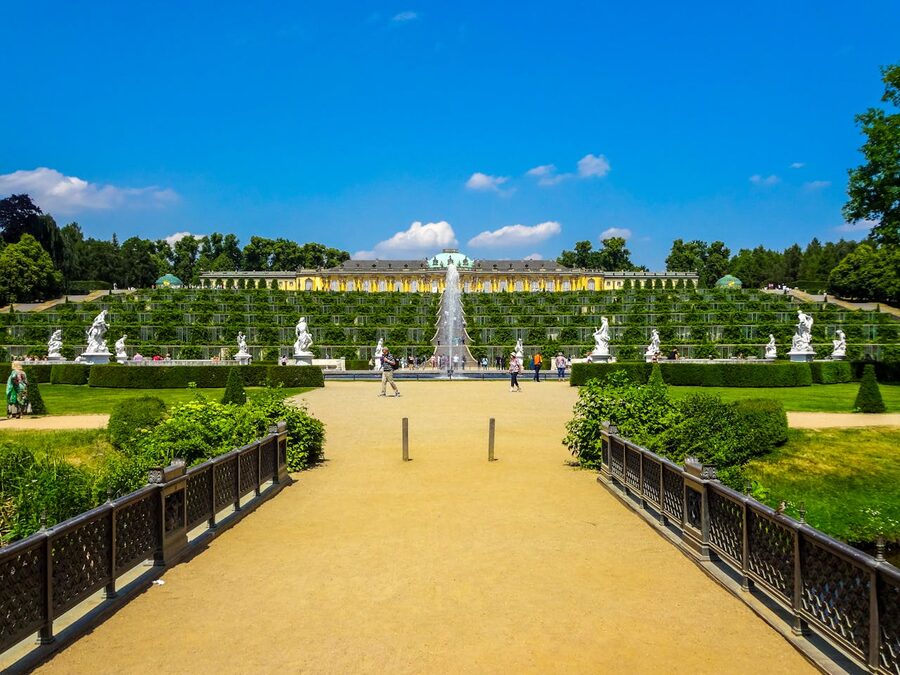
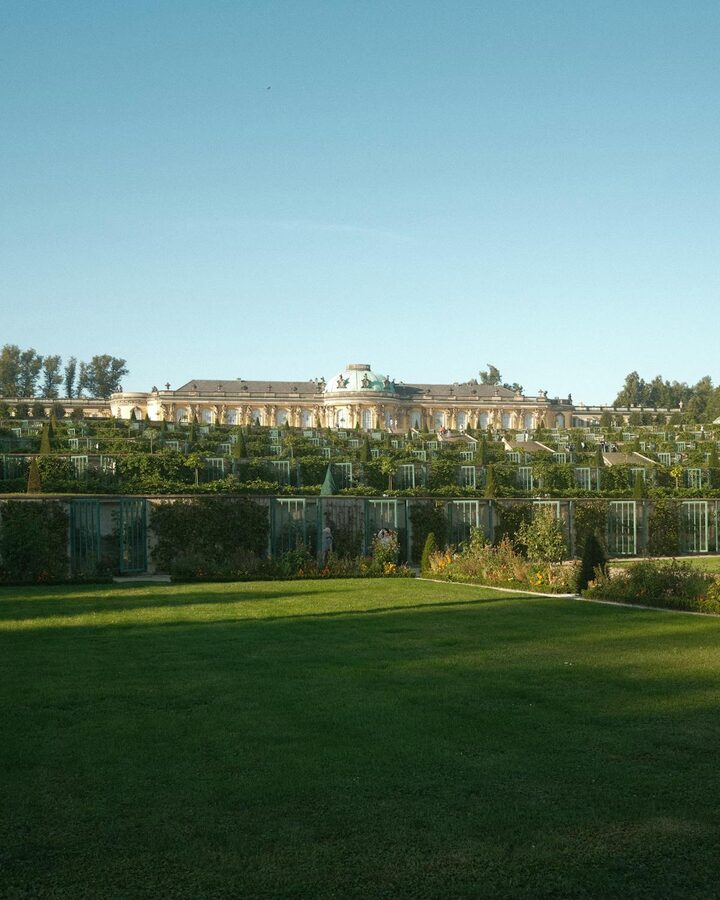
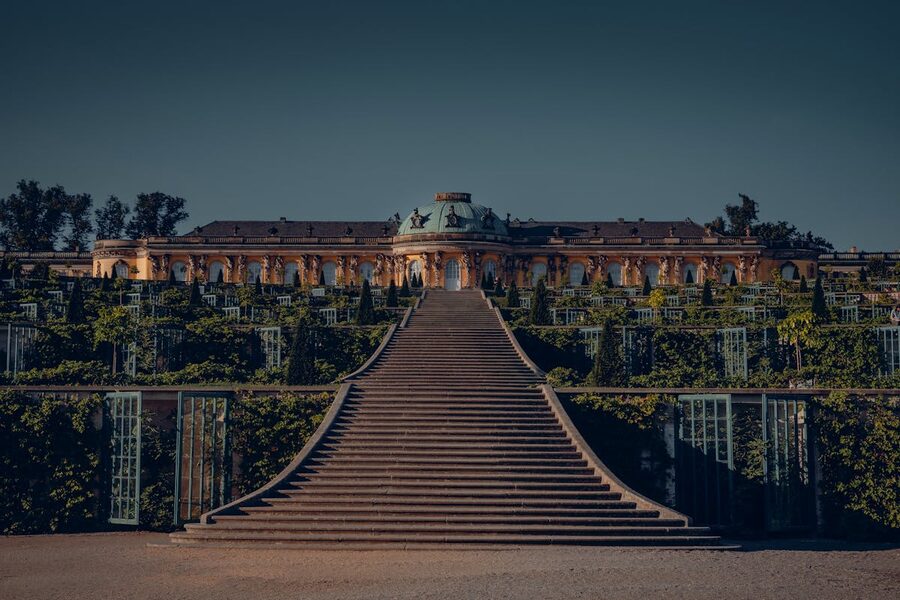
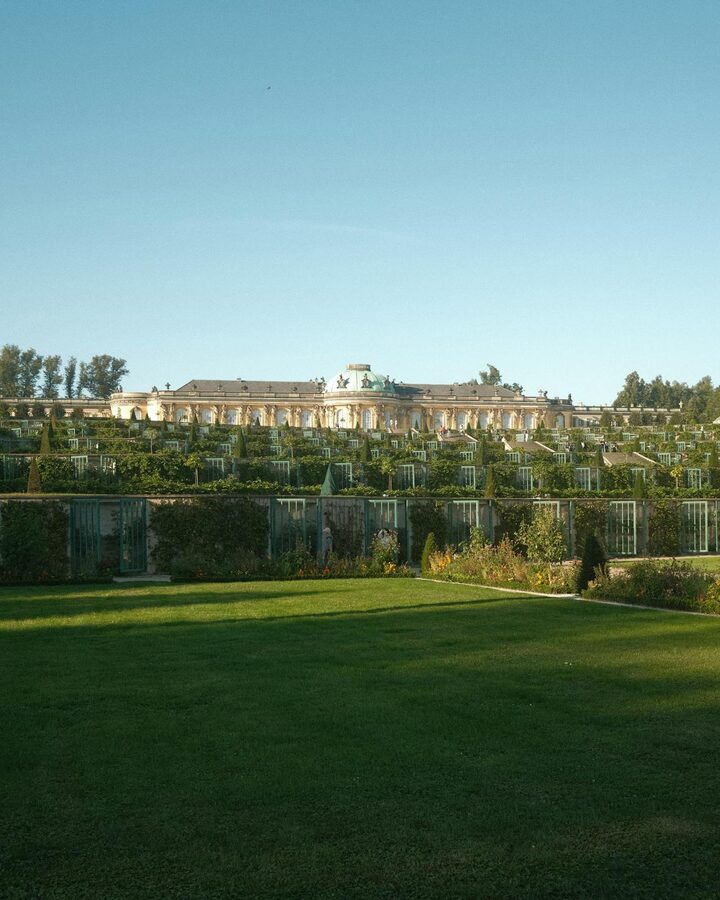
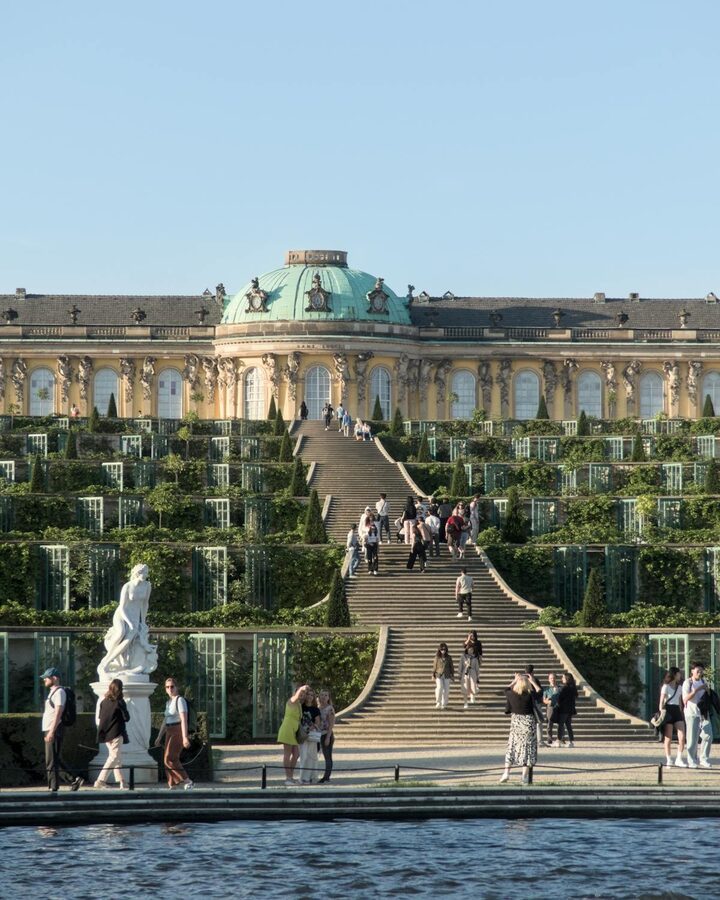
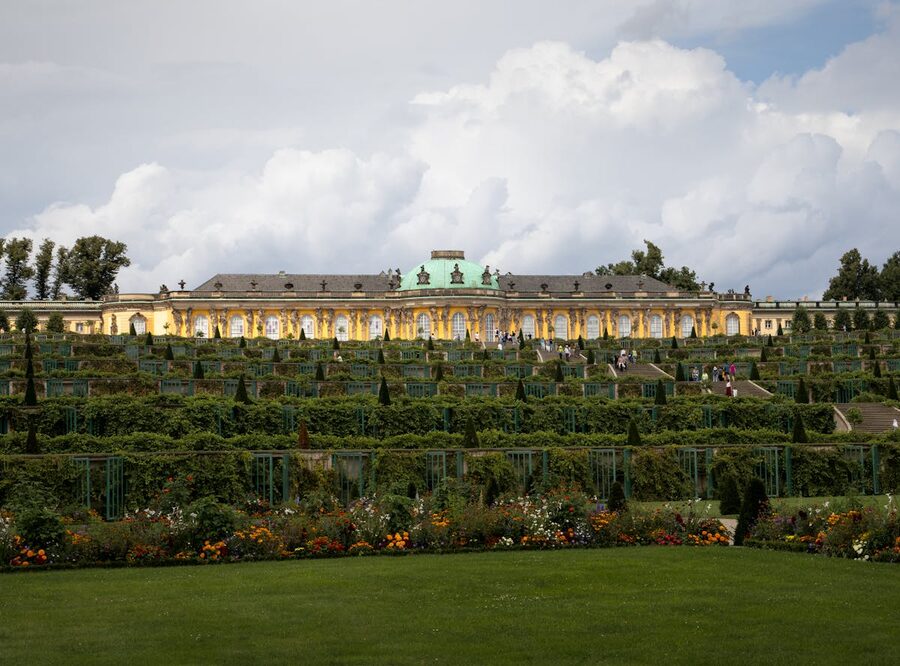
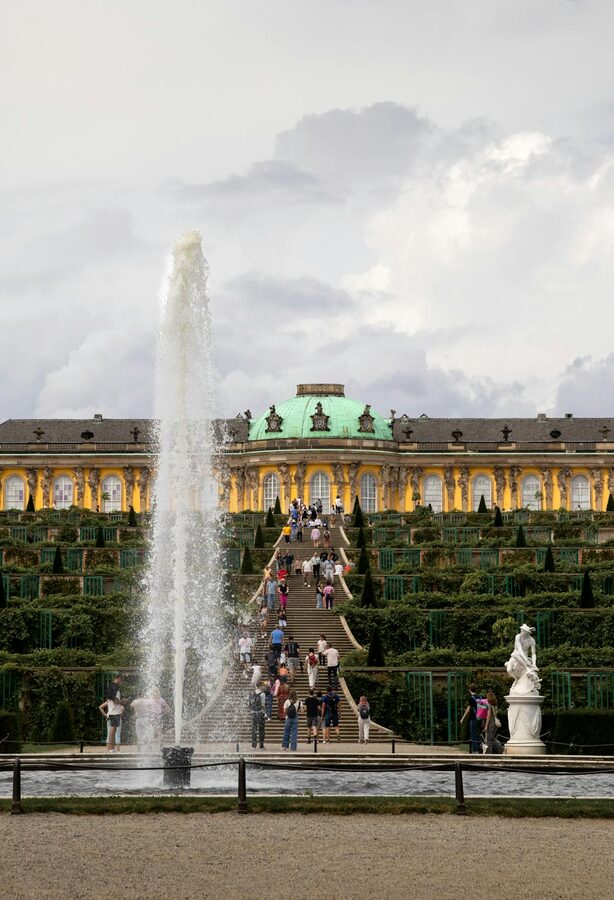
Frederick the Great built Sanssouci as a place to stop worrying — the name literally means “without care.” The palace on its terraced vineyard, where the Prussian king composed flute concertos and argued philosophy with Voltaire, is the most personal and most beautiful of any royal building in Germany.
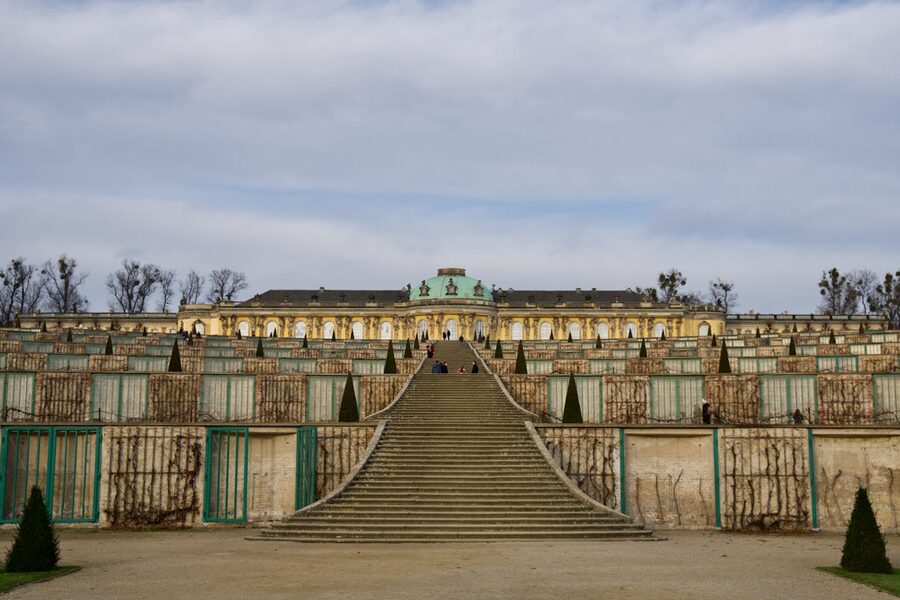
Potsdam — the city where Sanssouci sits — is 30 minutes by S-Bahn from central Berlin. The UNESCO World Heritage designation covers not just the palace but the entire 500-hectare park and gardens complex, which includes the New Palace, the Chinese House, the Orangery, and a landscape garden that took three centuries to complete. It’s Germany’s Versailles, except the Germans hate that comparison because they think Sanssouci is better. They might be right.
Best by boat: World Heritage Cruise to Potsdam — $25, 3 hours on the water from Berlin. consistently excellent visitor feedback.
Best walking: Half-Day Walking Tour from Berlin — $24, covers the old town and park. strong visitor feedback from a growing audience.
- Sanssouci Palace and Park
- The Cecilienhof and the Potsdam Conference
- Getting to Potsdam
- Potsdam Old Town
- Best Tours to Book
- 1. Potsdam + Sanssouci Palace Tour with Entry —
- 2. World Heritage Cruise to Potsdam —
- 3. Potsdam Half-Day Walking Tour —
- The Film Studios at Babelsberg
- Practical Tips
- More Berlin Day Trips and Germany
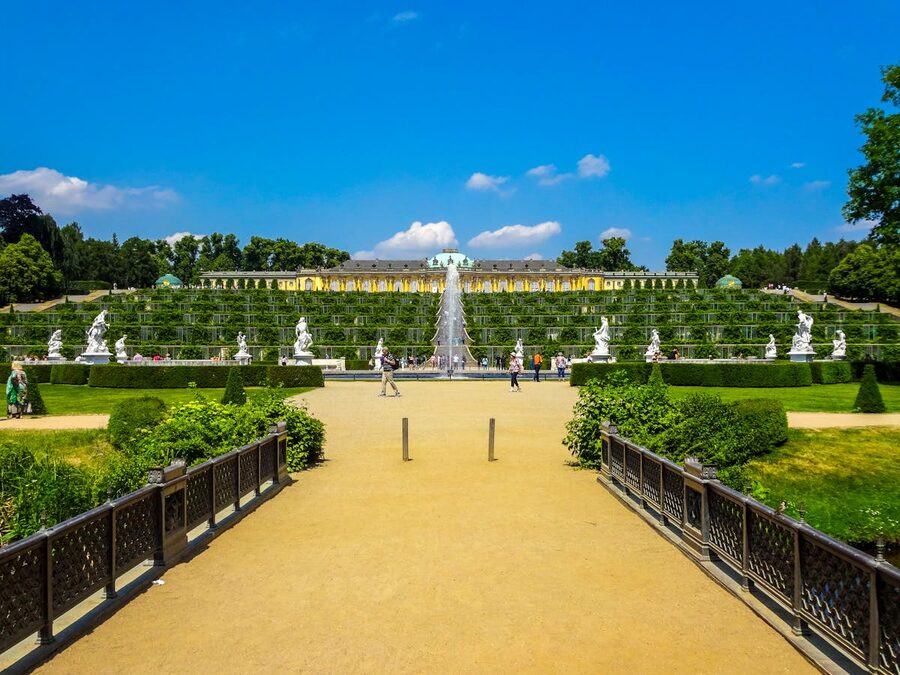
Sanssouci Palace and Park
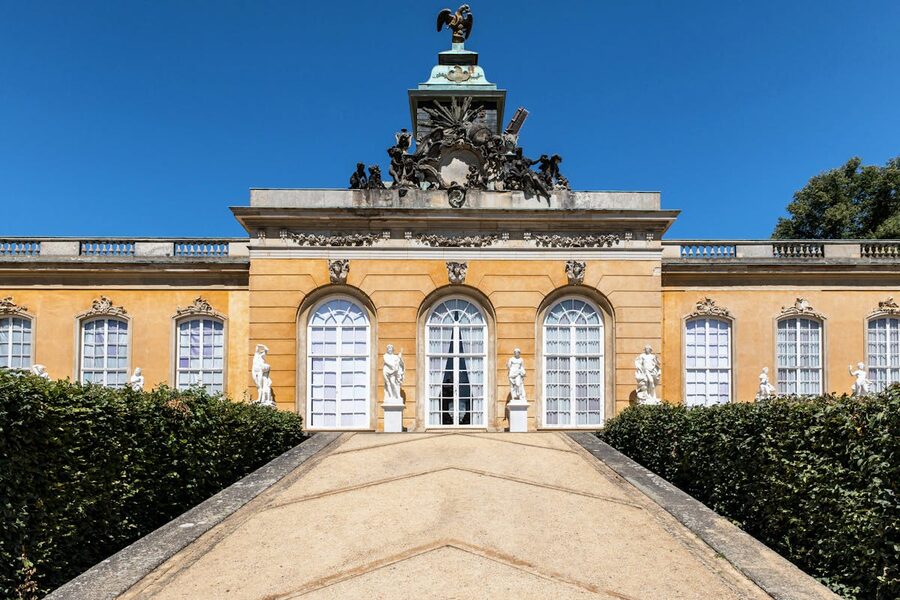
The palace interior is surprisingly intimate. The Marble Hall — the central reception room — is elegant but not overwhelming. Frederick’s library and music room show a man who valued books and music above state ceremonies. The Voltaire Room (where the philosopher actually stayed during his contentious visit) is decorated with carved monkeys and parrots — either whimsical or passive-aggressive, depending on your reading of the Frederick-Voltaire relationship.

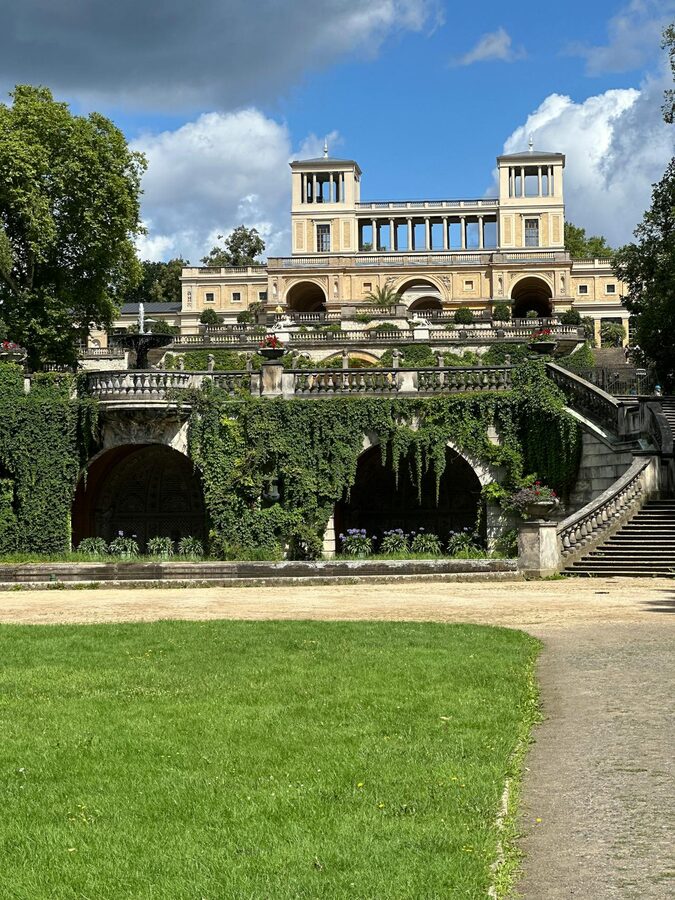
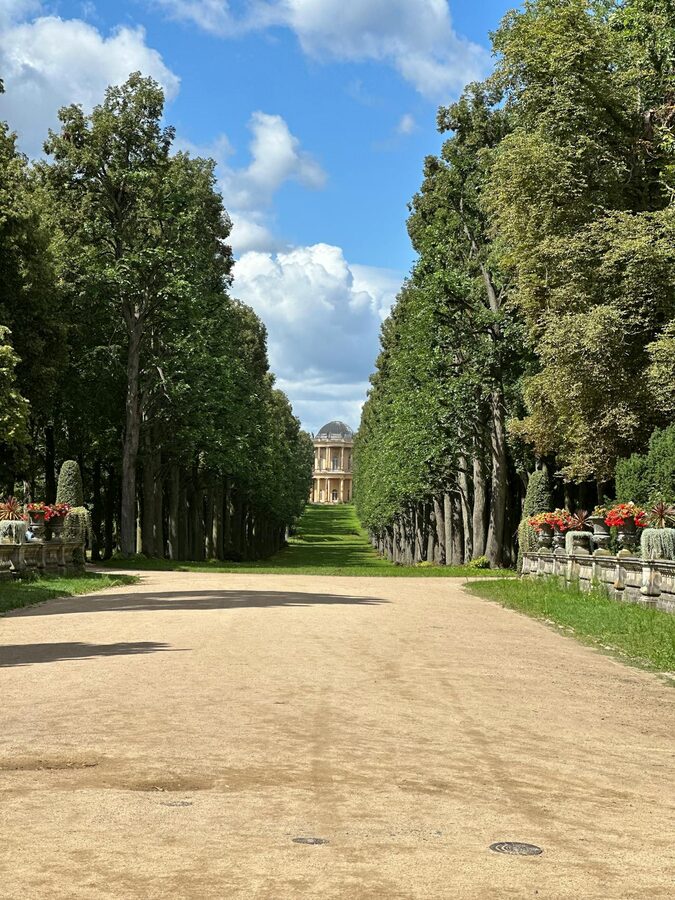
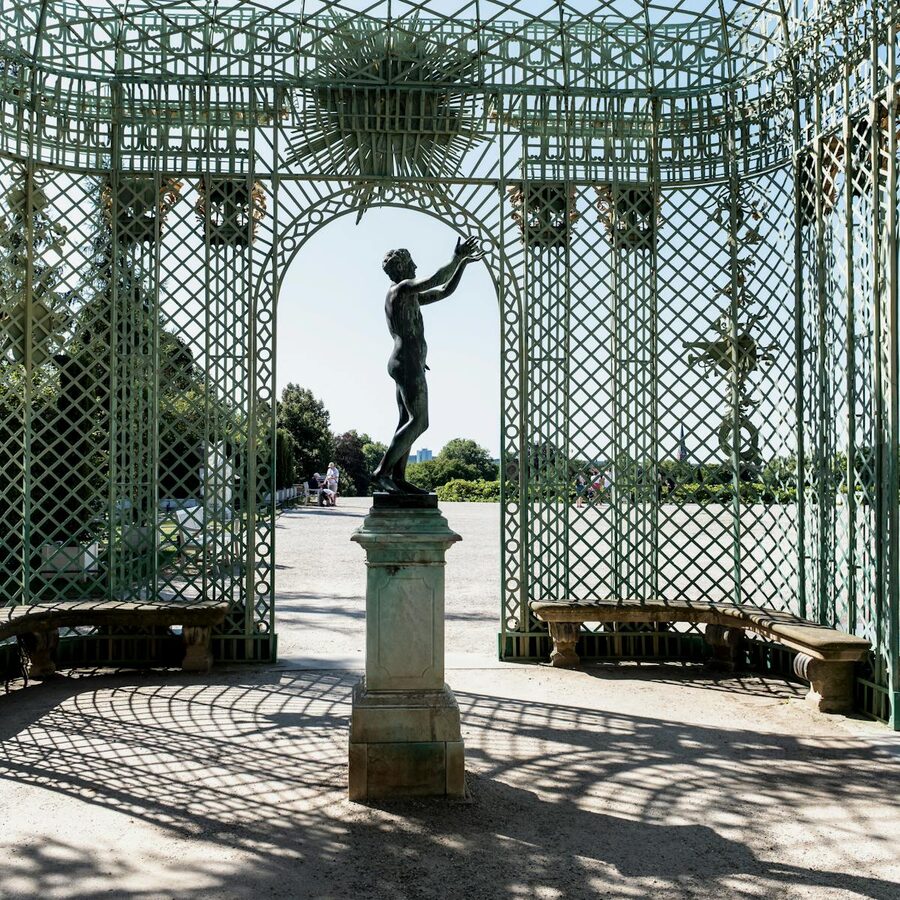
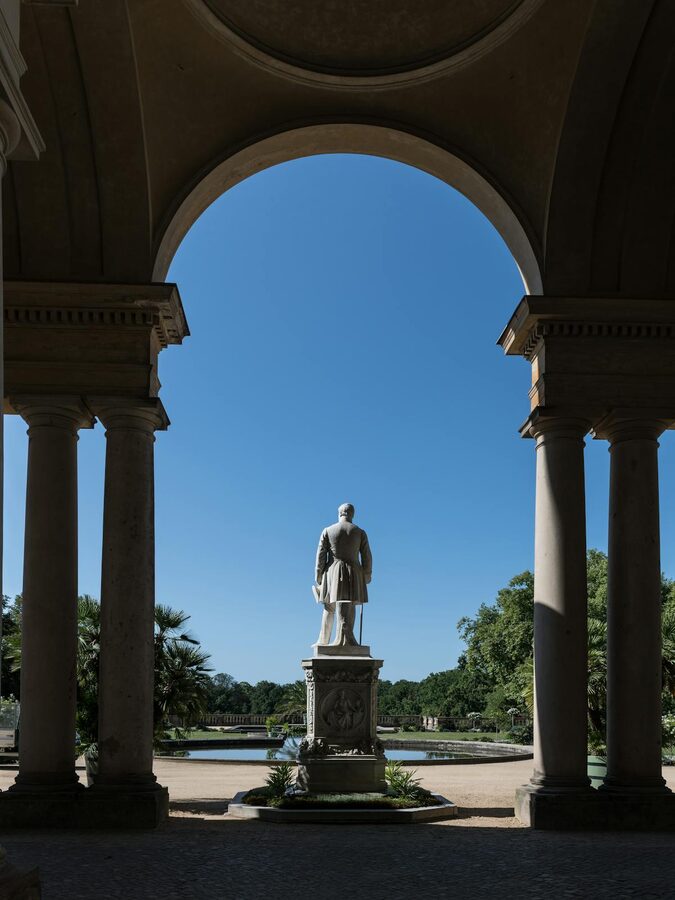
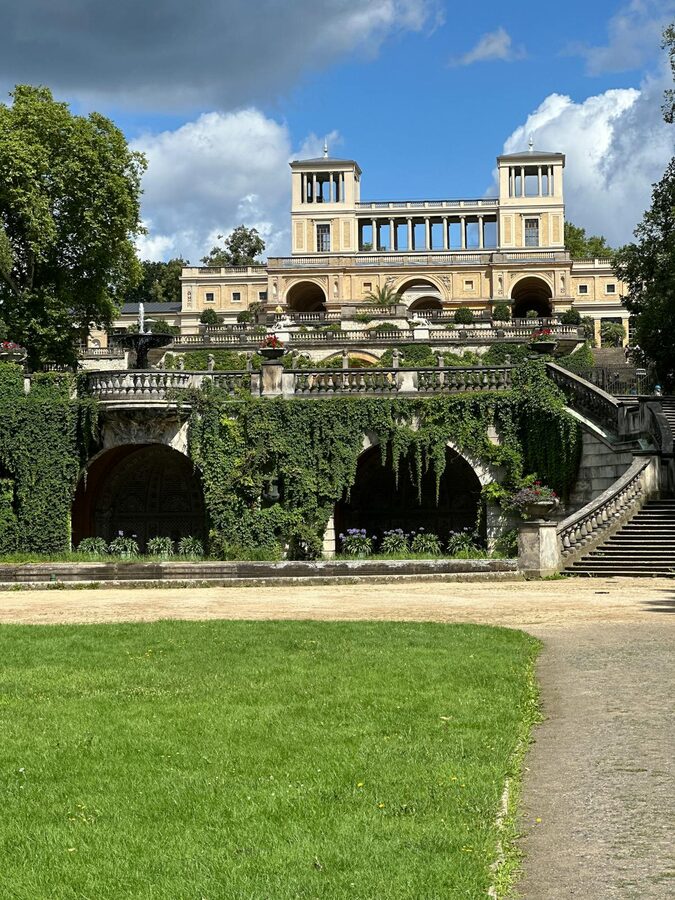
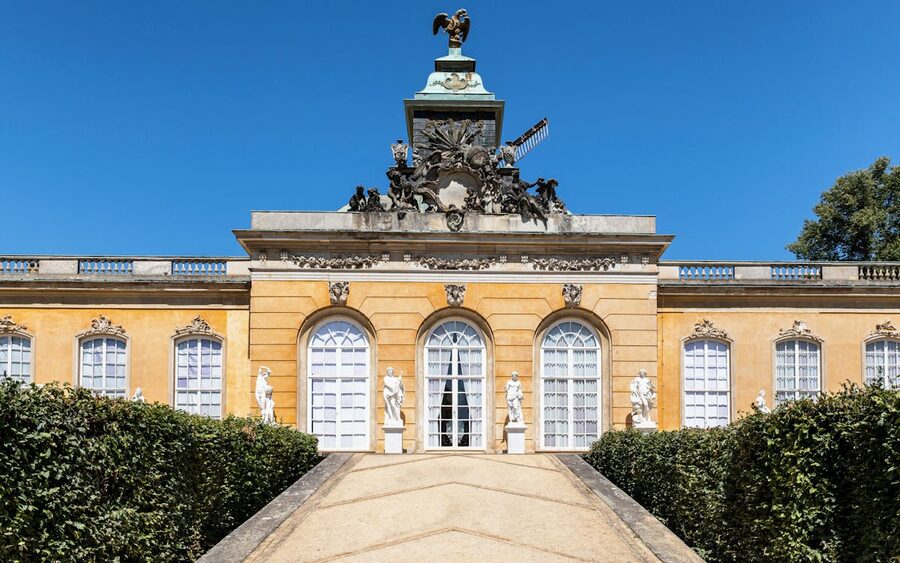
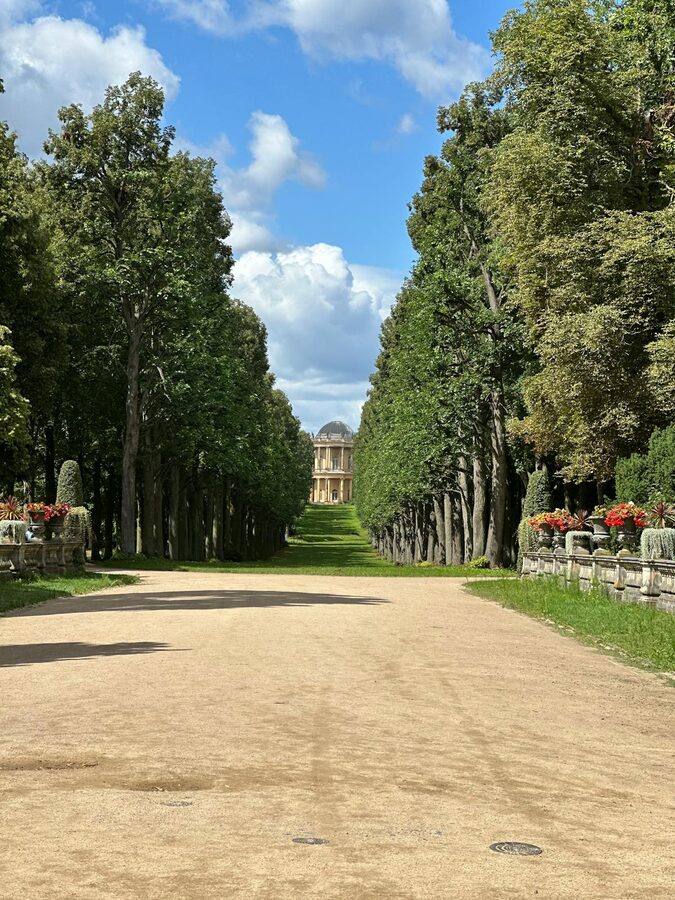
The park extends well beyond the palace. The New Palace — built after the Seven Years’ War to demonstrate that Prussia could still afford grand architecture — is the larger building at the western end. The Chinese House — a gilded circular pavilion — is one of the finest Chinoiserie buildings in Europe. And the Orangery Palace — inspired by Italian Renaissance villas — houses a copy of Raphael’s rooms from the Vatican. The park is free to walk; the palaces require individual timed tickets.
The Cecilienhof and the Potsdam Conference
Potsdam’s other major historical attraction is Cecilienhof — the English-style country house where the Potsdam Conference took place in July-August 1945. Truman, Stalin, and Churchill (replaced mid-conference by Attlee) met here to decide the post-war fate of Germany and Europe. The conference room is preserved as it was during the talks, and the exhibition documents the decisions that shaped the Cold War.
The Cecilienhof is in the Neuer Garten on the shore of the Jungfernsee lake, about 3km from Sanssouci. The walking tours from Berlin that cover both Sanssouci and the old town don’t usually include Cecilienhof (it’s a separate entrance fee and a 20-minute walk from the other sites), but visitors with extra time should consider adding it. The Cold War resonance — sitting in the room where the world was divided — is powerful, especially for visitors who’ve also done the Berlin Third Reich and Cold War walking tours.
Getting to Potsdam
By train: S-Bahn S7 from Berlin Hauptbahnhof or Friedrichstraße to Potsdam Hauptbahnhof (about 40 minutes). Regional trains are faster (25 minutes). Covered by a Berlin ABC day ticket (about €10). From Potsdam station, bus 695 goes directly to Sanssouci Palace, or it’s a 20-minute walk through the old town.
By boat: The 3-hour World Heritage Cruise ($25) follows the Havel river from Berlin’s Wannsee to Potsdam, passing palaces and gardens the entire way. It’s the most scenic approach and the cruise itself is worth the price — the Havel landscape is one of the most beautiful waterways near any European capital.
By guided tour: The $75 tour from Berlin includes S-Bahn transfer, a guided walk through Potsdam’s old town (the Dutch Quarter and the Russian Colony are highlights), and a guided visit inside Sanssouci Palace with skip-the-line entry. The 4.7 rating across strong visitor praise reflects guides who know the palace history in detail and the skip-the-line entry is genuinely valuable — the palace queue can exceed an hour in summer.
Potsdam Old Town
The city of Potsdam is worth time beyond the palace. The Dutch Quarter — 134 red-brick houses built in the 1730s to attract Dutch craftsmen — is now a shopping and café district that feels like a piece of Amsterdam transplanted to Brandenburg. The Russian Colony Alexandrowka — wooden log houses built for a Russian choir that sang for the Prussian king — is even more unexpected. And the Nikolaikirche on the Alter Markt has a dome that’s visible from the palace terraces.
Best Tours to Book
1. Potsdam + Sanssouci Palace Tour with Entry — $75
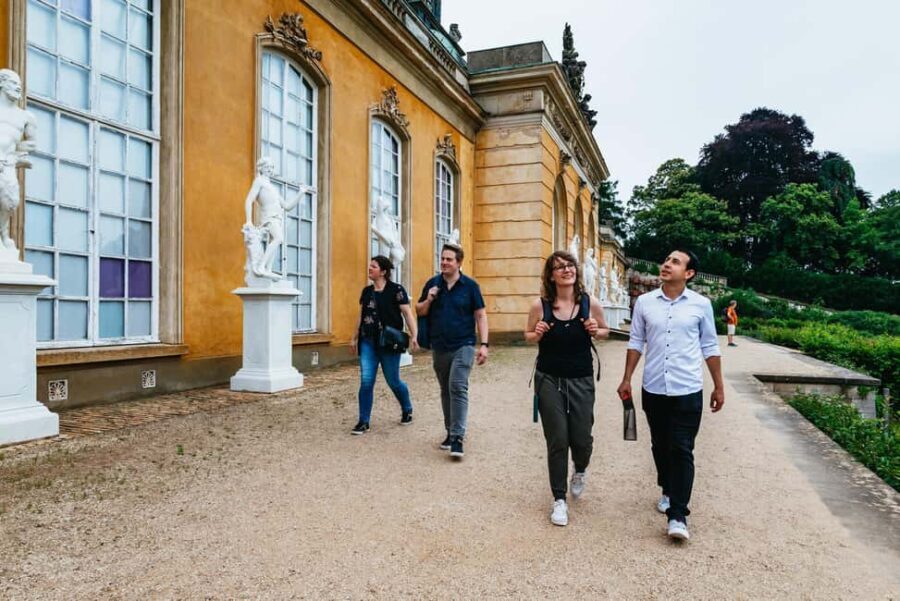
The full Potsdam experience. Guided walk through the old town (Dutch Quarter, Russian Colony, Alter Markt), followed by a guided visit inside Sanssouci Palace with skip-the-line entry and a walk through the park. The $75 price includes transport from Berlin, guide, and palace ticket. The guide adds the Frederick the Great stories that make the rooms come alive. Our review covers the full itinerary and whether the palace entry is worth the premium over the walking-only tour.
2. World Heritage Cruise to Potsdam — $25
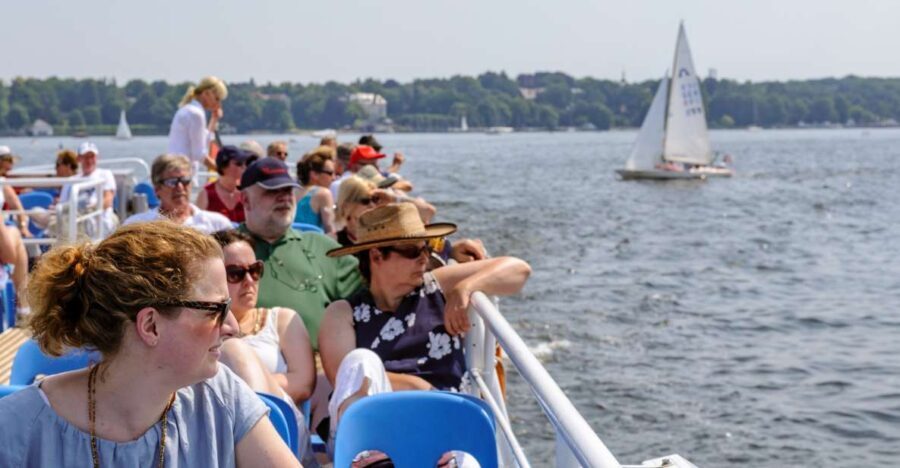
The scenic option. A 3-hour cruise on the Havel river from Berlin-Wannsee to Potsdam, passing the Glienicke Bridge (the Cold War spy exchange point), island palaces, and the UNESCO-designated lake landscape. At $25, the cruise is excellent value for 3 hours on the water. It can be combined with any Potsdam walking tour — take the cruise one direction and the train back. Our review covers the route and the landmarks visible from the water.
3. Potsdam Half-Day Walking Tour — $24
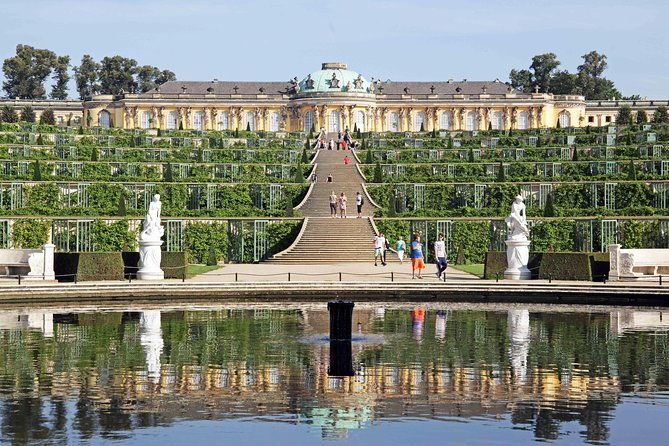
The budget-friendly alternative. S-Bahn from Berlin to Potsdam with a guided walk through the old town and Sanssouci Park. The palace interior is not included (you’d need to book separately — about €14, timed entry), but the park, terraces, and old town are covered. At $24, the guide adds enough historical context to make the external visit worthwhile. Our review compares this with the full palace tour.
The Film Studios at Babelsberg
Potsdam’s other claim to international fame is the Babelsberg film studios — the oldest large-scale film studios in the world, founded in 1912. Fritz Lang filmed Metropolis here. Marlene Dietrich shot The Blue Angel here. The GDR’s DEFA film company operated from Babelsberg, and after reunification the studios were modernised and continue to produce major international films. The Filmpark Babelsberg is open to visitors as a theme park, with stunt shows, special effects demonstrations, and film set tours.
The Filmpark makes a good half-day addition to a Potsdam visit, particularly for families — the combination of Sanssouci’s high culture in the morning and Babelsberg’s entertainment in the afternoon creates a balanced day trip that appeals to all ages. The Filmpark is about 15 minutes by tram from Potsdam’s city centre.
Practical Tips
Palace tickets: Sanssouci Palace entry is about €14 (timed ticket, book online at spsg.de). The New Palace is €10. The Chinese House and other buildings are €4-6 each. A day ticket covering all palaces is about €22. The park and gardens are free to enter year-round.
How long: Half a day for Sanssouci Palace and park. A full day for the palace + old town + New Palace. Two days if you want to add Cecilienhof (Potsdam Conference site) and the film studios at Babelsberg.
Best time: May-September for the gardens at their best. The palace is open year-round but some garden features close in winter. The terraces are most photogenic in morning light (they face south) and the vineyard grapes ripen in late September.
Budget: Guided tour from Berlin: $24-75. Palace entry (self-guided): €14. Park: free. S-Bahn from Berlin: ~€4 (or free with Berlin ABC ticket). Lunch in Potsdam old town: €12-18. A full Potsdam day costs about €30-50 independently or $75 all-inclusive with the guided tour.
More Berlin Day Trips and Germany
Potsdam is the closest major day trip from Berlin. The Sachsenhausen concentration camp is a sobering half-day in the opposite direction. Dresden (2 hours by ICE) offers Baroque architecture and its own reconstruction story. And within Berlin itself, the Spree boat tours and Reichstag dome provide water and panoramic perspectives on the capital.