
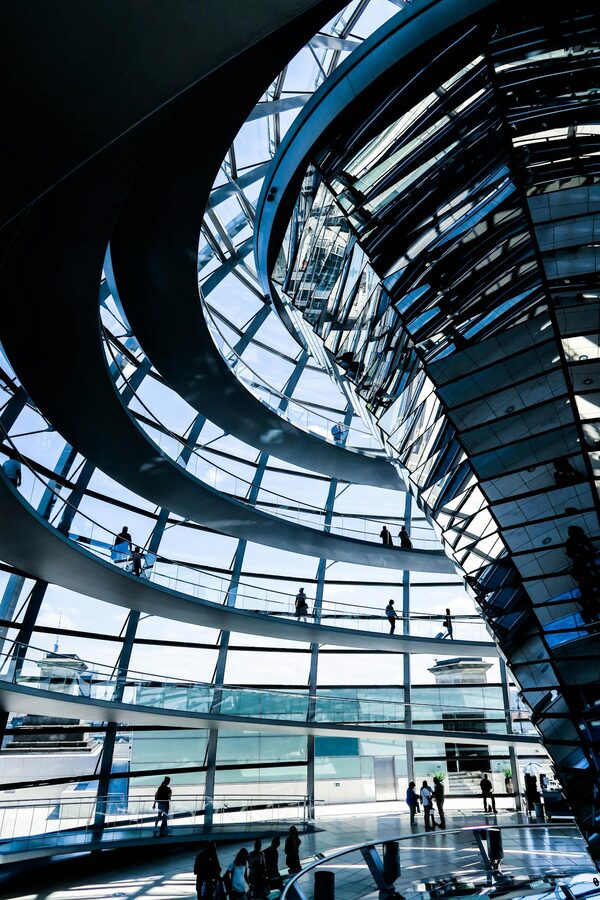
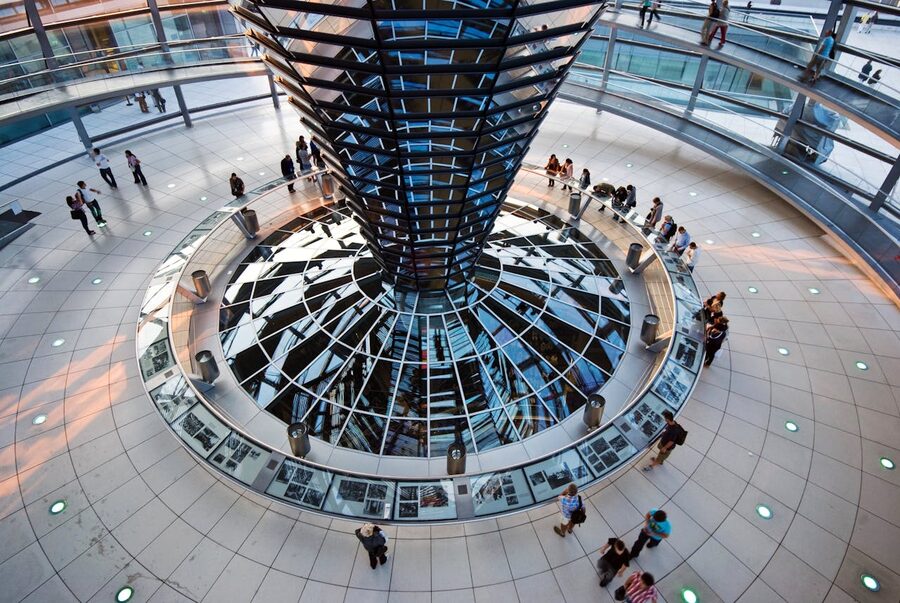
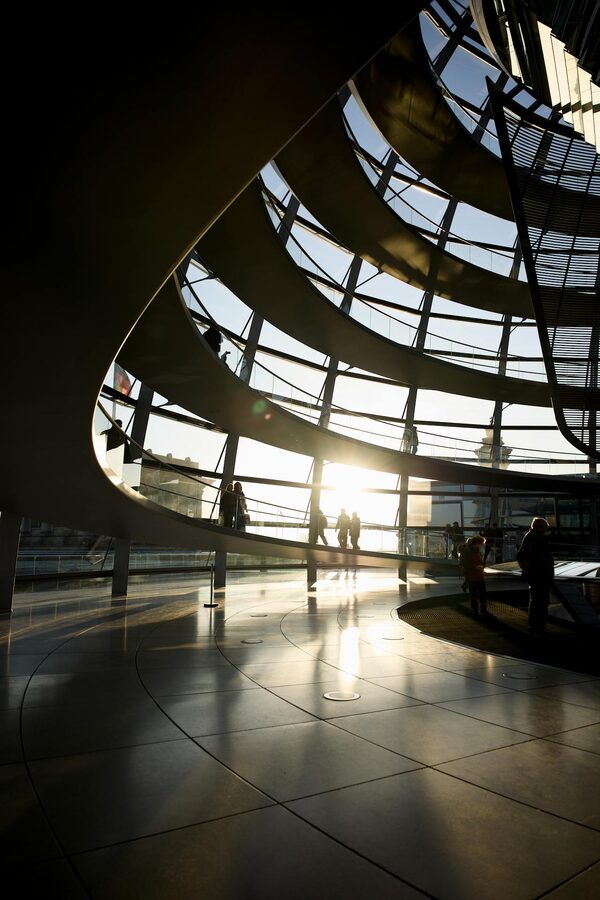
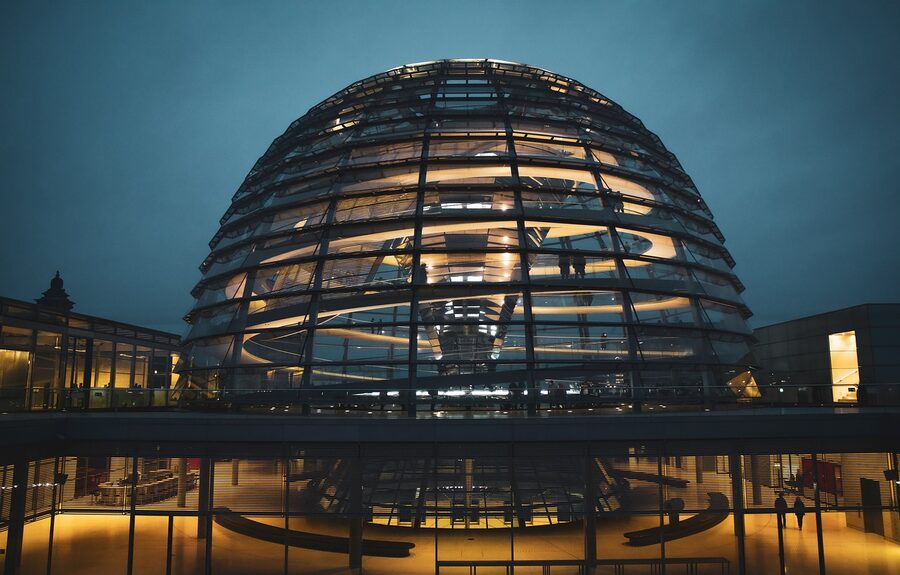
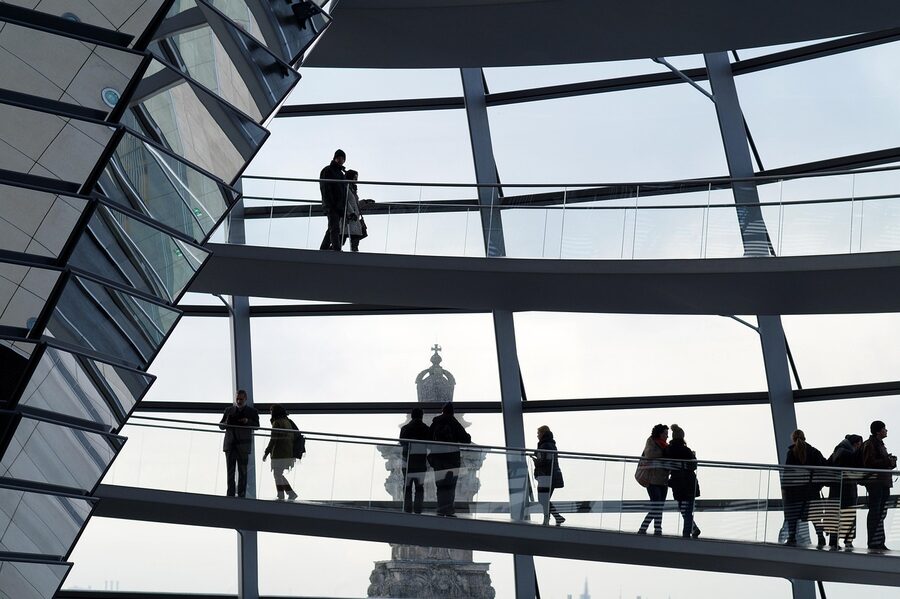
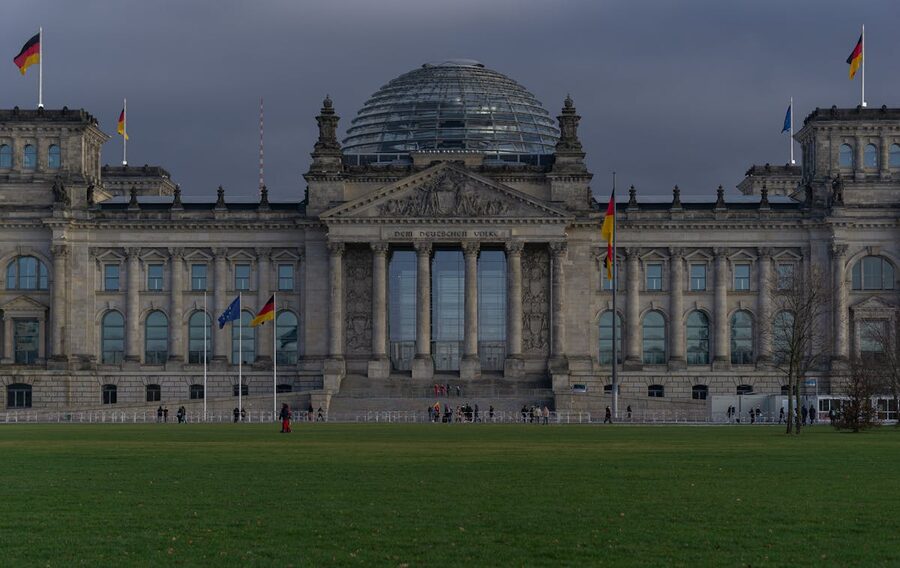
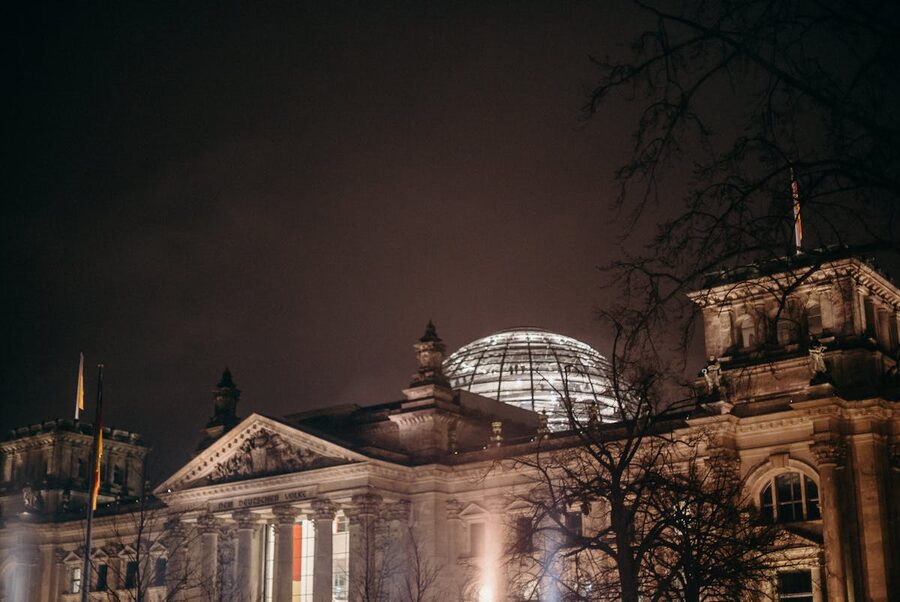
The Reichstag dome is free to visit — one of the most photographed pieces of modern architecture in Europe, open to the public at no cost. Register online, show up at your time slot, and walk up a spiral ramp inside Norman Foster’s glass bubble with 360-degree views over Berlin while the Bundestag debates beneath your feet.
The symbolism is deliberate: in a democracy, the people are above the politicians. It’s a powerful idea, and the architecture sells it — you literally look down through glass at the parliament while they legislate. No other national parliament offers this kind of public access to its working chamber.
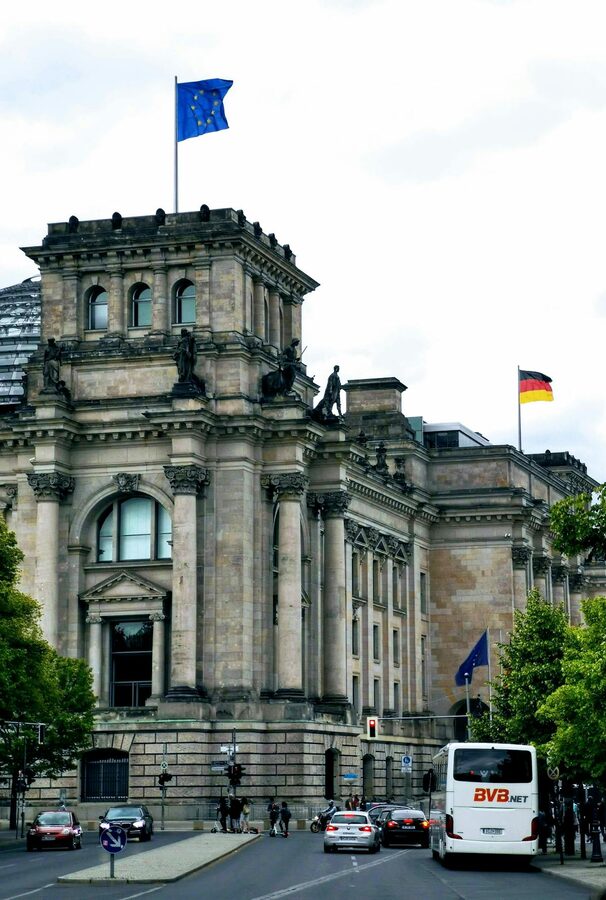
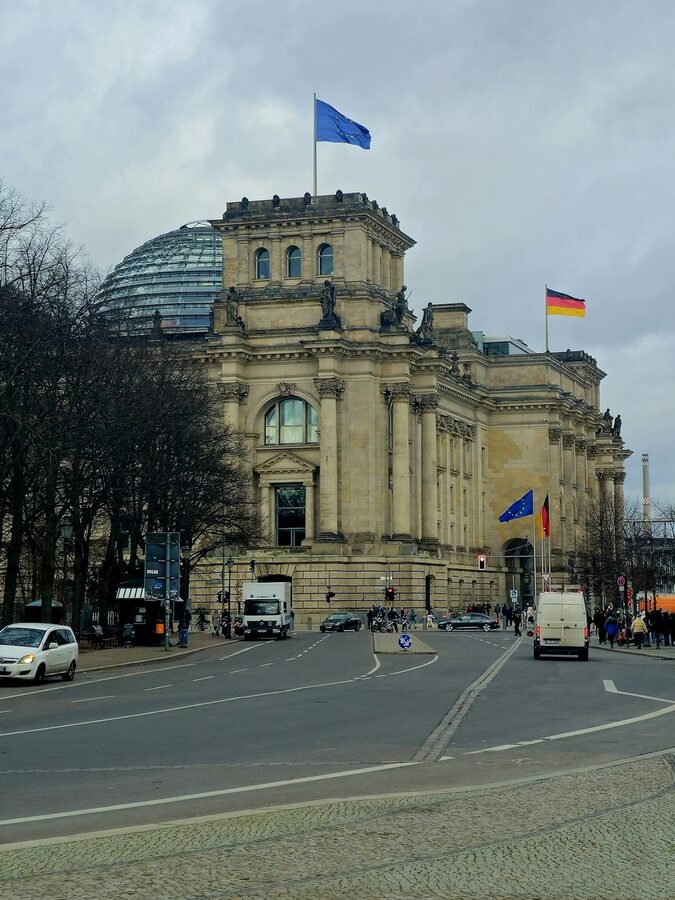
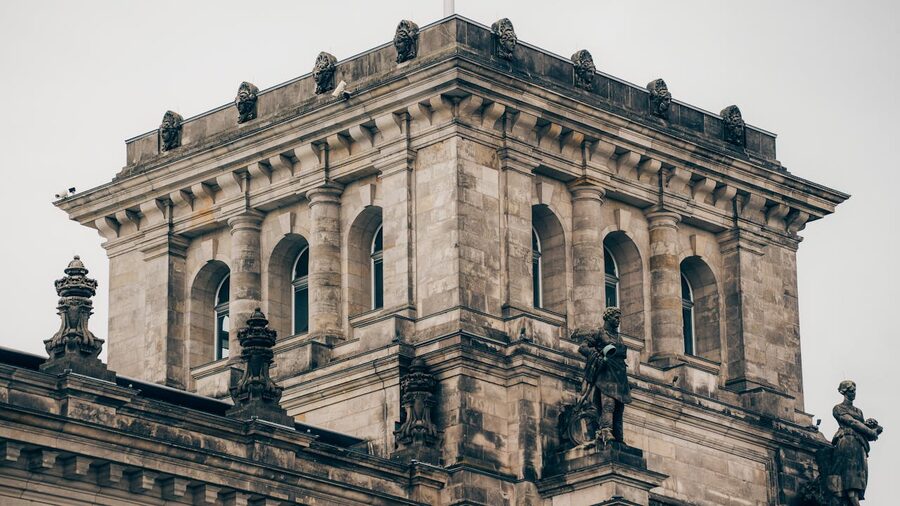
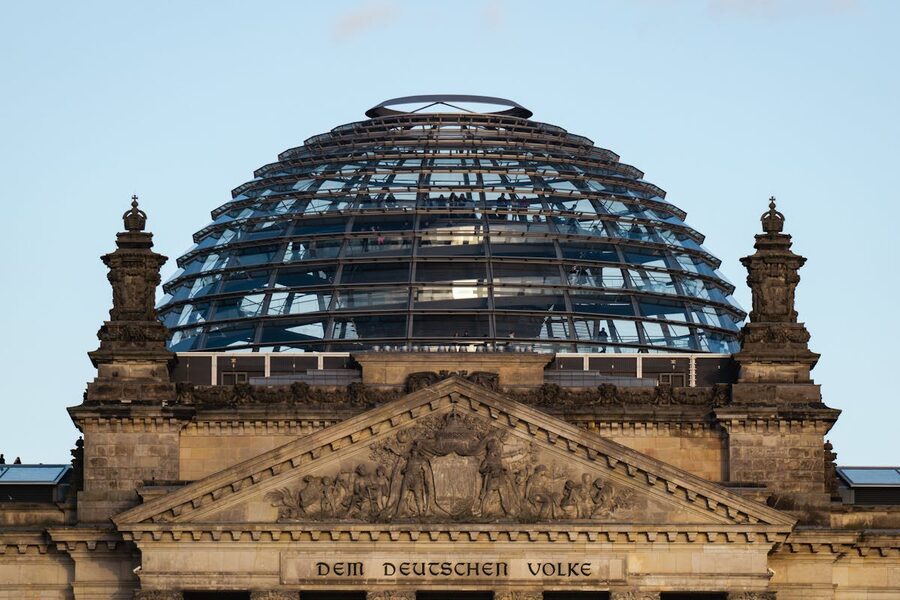
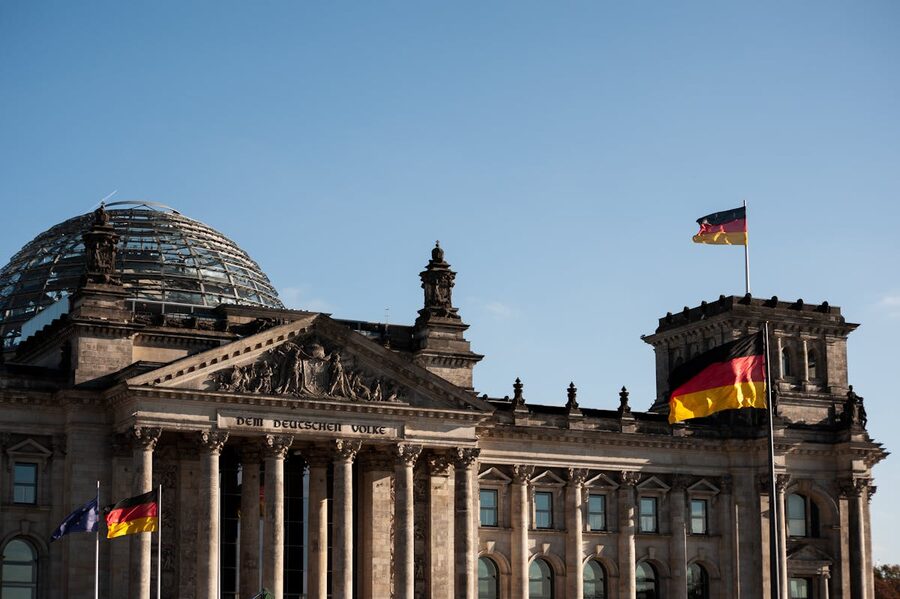
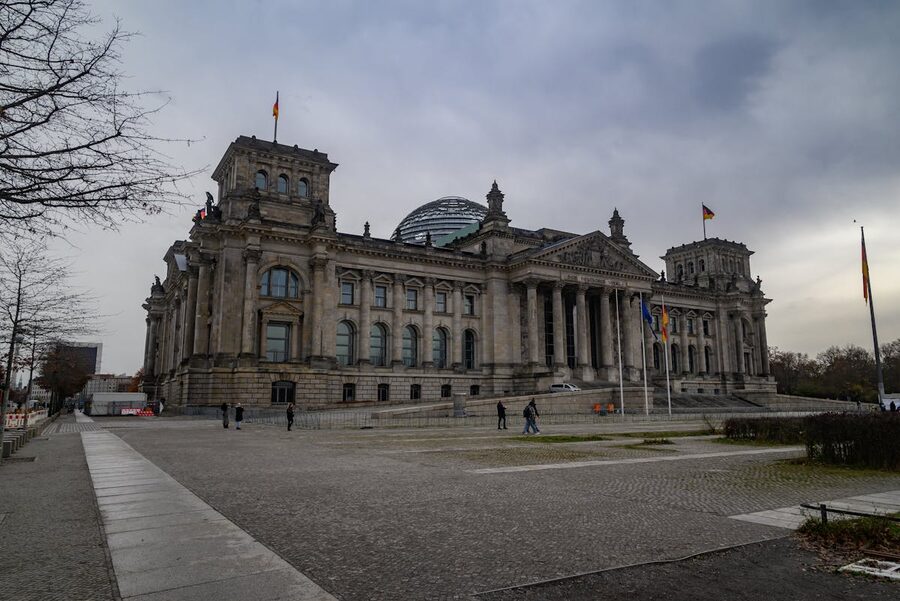
The Reichstag building itself has one of the most dramatic histories of any building in Europe. Opened in 1894 as the Imperial Diet. Burned in 1933 in a fire that Hitler used to seize emergency powers. Bombed and shelled during the Battle of Berlin in 1945. Left as a gutted ruin for decades while the Wall ran past its back door. And then rebuilt after reunification with Foster’s glass dome — a transparent symbol of democratic openness sitting on top of a building that had witnessed democracy’s destruction.
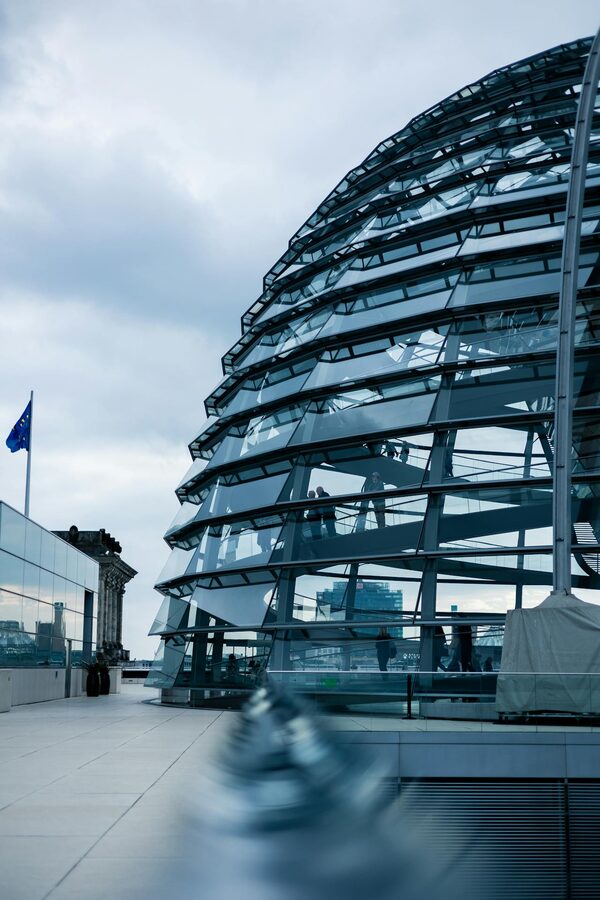
Free dome visit: Register on bundestag.de — free timed entry, book 2-3 weeks ahead.
Best city overview: Big Bus Berlin Hop-On Hop-Off — $25, the Reichstag stop is on the route.
- The Free Dome Visit
- The Building’s History
- The Guided Government District Tour
- Christo’s Wrapped Reichstag
- The Rooftop Terrace
- Best Tours to Book
- 1. Government District & Reichstag Dome Visit —
- 2. Berlin City + Spree Boat Tour Combo —
- 3. Big Bus Berlin Hop-On Hop-Off —
- Practical Tips
- More Berlin Experiences
The Free Dome Visit
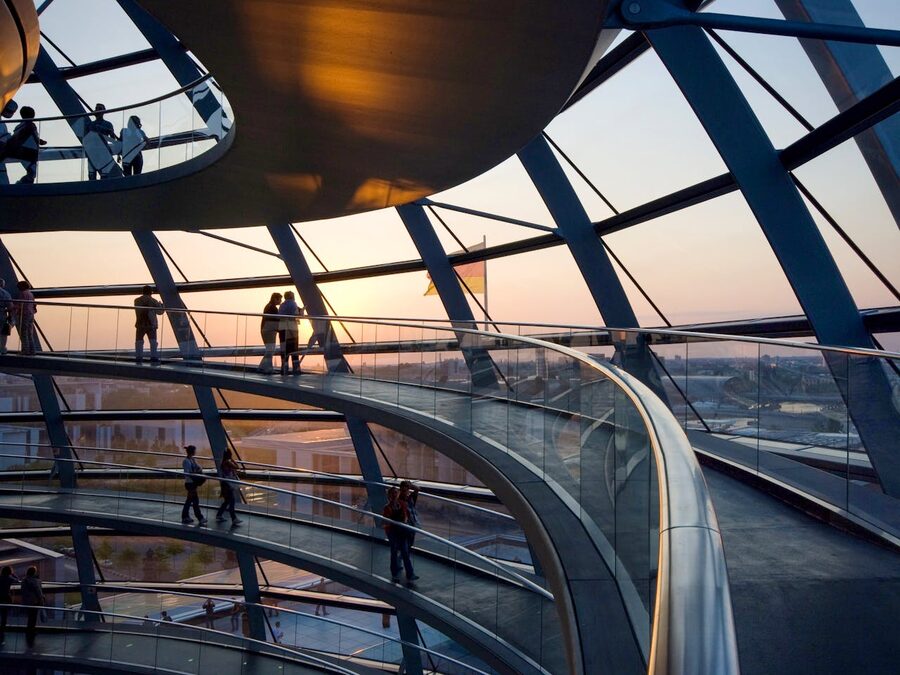
The dome is free to visit but requires advance registration on the official Bundestag website. You book a time slot (available every 15 minutes from 8am to midnight in summer, shorter hours in winter), go through security at the visitor entrance, take the lift to the roof terrace, and walk up the spiral ramp to the top of the dome. The whole visit takes 30-45 minutes.
The catch: slots book out 2-3 weeks ahead, especially in summer and for sunset times. If you know your Berlin dates, register as soon as your trip is confirmed. Walk-up entry is sometimes available (check the visitor centre on the south side of the building) but it’s not guaranteed and the queue can be long.
The Building’s History
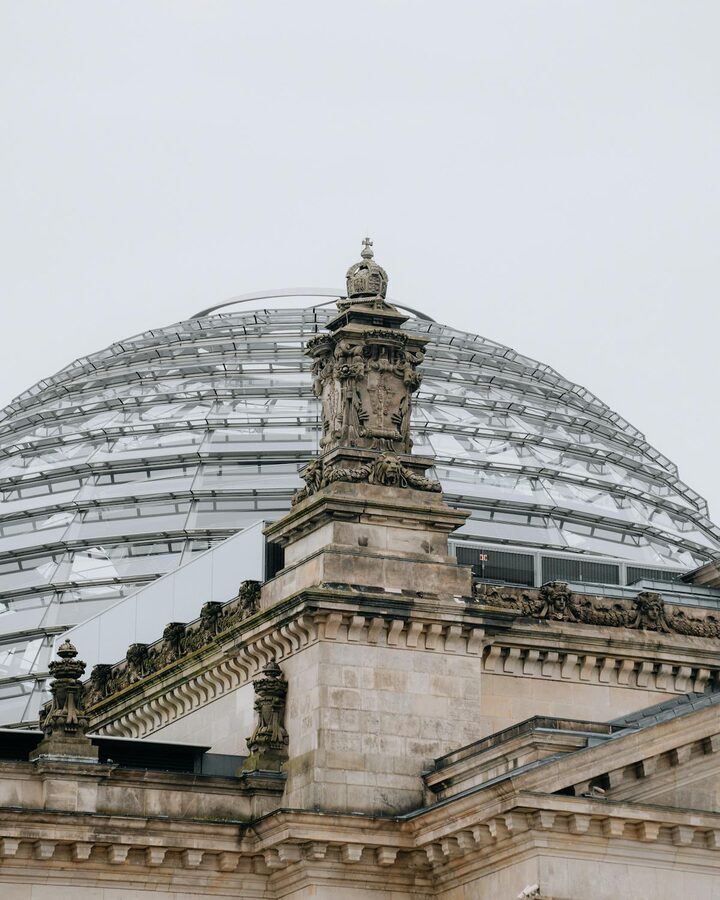
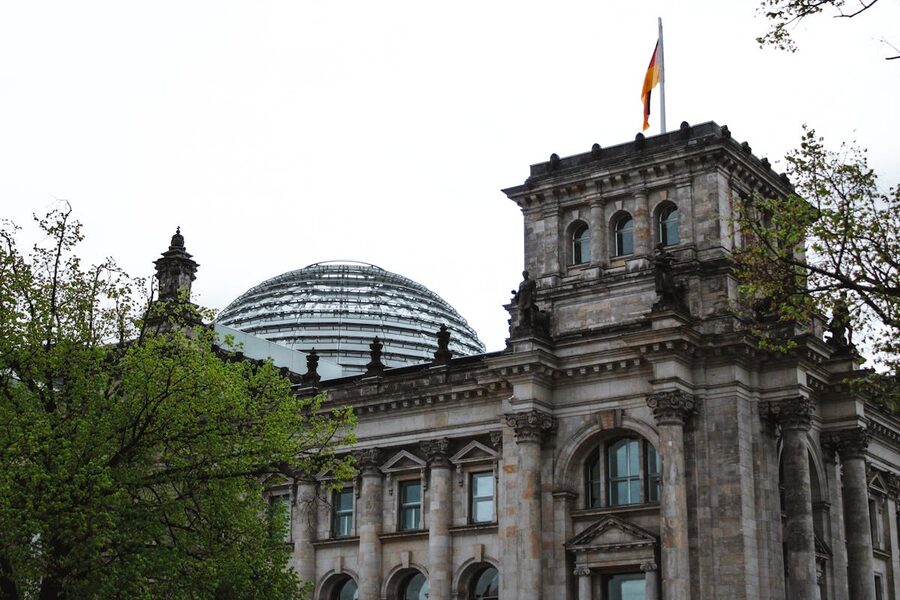
The Reichstag’s journey from imperial parliament to democratic symbol spans every chapter of modern German history. Designed by Paul Wallot in a style that mixed Renaissance and Baroque elements, it opened in 1894 to house the parliament of the German Empire. Kaiser Wilhelm II reportedly dismissed it as “the height of bad taste” — but the building outlived the Kaiser, the Empire, the Weimar Republic, the Third Reich, the Cold War, and reunification.
The Reichstag fire of February 27, 1933, remains one of the most consequential events of the 20th century. Whether it was set by a lone Dutch communist (as the Nazis claimed) or by the Nazis themselves (as many historians suspect) barely matters — Hitler used it as the pretext for the Reichstag Fire Decree, which suspended civil liberties and paved the way for dictatorship. The fire didn’t destroy the building, but it effectively ended German democracy for 12 years. The guided tours explain this sequence in detail, standing in the building where it happened.
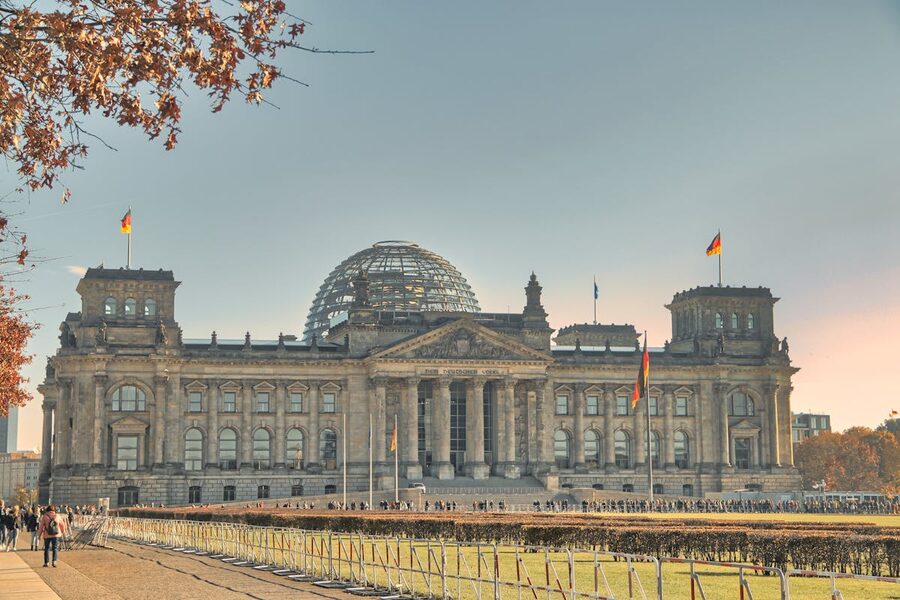
During the Battle of Berlin in April 1945, the Reichstag became the final target for Soviet forces — capturing it was symbolically essential, and the fighting was fierce. Soviet soldiers raised the red flag over the building on April 30, 1945 (the same day Hitler died in his bunker nearby). The iconic photograph by Yevgeny Khaldei — a Soviet soldier waving the flag from the roof — is one of the most famous images of World War II, though it was staged hours after the actual capture.
After the war, the Reichstag sat in West Berlin’s sector but wasn’t used as a parliament — the Bundestag met in Bonn. The building was partially restored in the 1960s but remained largely empty, a monument to a divided country. The Wall ran just metres from its eastern side. When reunification came in 1990, the decision to move parliament back to Berlin — and back to the Reichstag — was controversial. Many Germans worried about the symbolism of returning to a building so associated with the Nazi era. Foster’s radical renovation, which preserved the historical scars while adding the transparent dome, was designed to address exactly this concern.
The Guided Government District Tour
The $45 guided tour covers more than just the dome. It starts with a 90-minute walking tour through the government district — the Chancellery, the parliament office buildings, the Paul-Löbe-Haus, and the “Band des Bundes” (federal ribbon) of buildings that deliberately straddles the former Wall line. The guide explains the architecture’s political symbolism, the reunification decisions, and the practicalities of how 700+ members of parliament work in this modern complex.
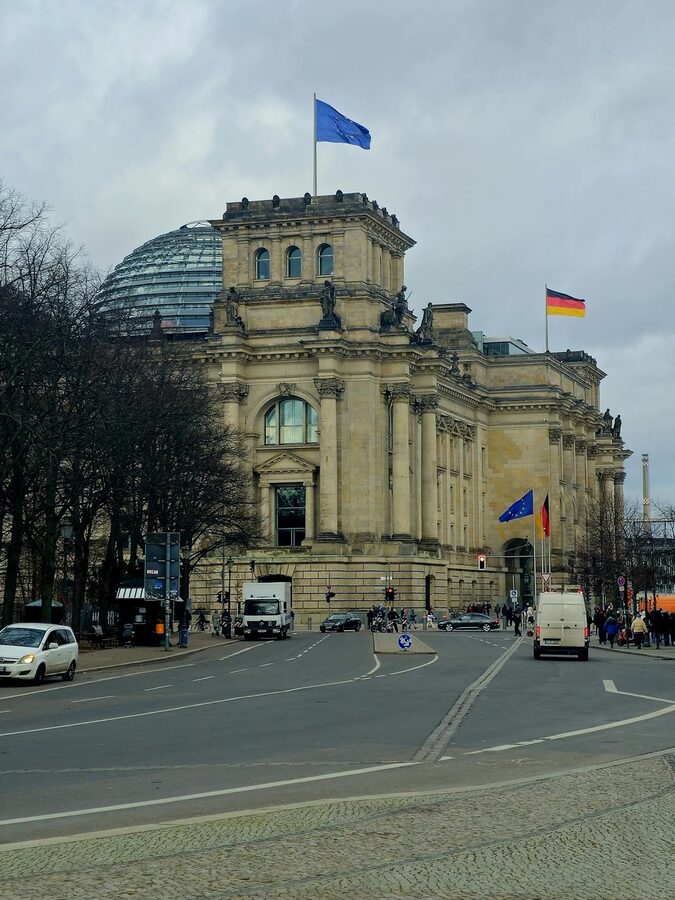
After the walking tour, the group enters the Reichstag for the dome visit. The guided entry skips the registration process — the tour operator handles the security clearance. This is the main advantage of the paid tour over the free dome registration: no booking weeks ahead, no risk of sold-out slots, and the context of the walking tour makes the dome visit more meaningful.
Christo’s Wrapped Reichstag
Before Foster’s renovation began, the artists Christo and Jeanne-Claude wrapped the entire Reichstag in silvery fabric in June 1995. The “Wrapped Reichstag” project drew five million visitors over two weeks and became one of the most significant public art events of the 20th century. The wrapping symbolised transformation — the building was literally covered and revealed anew, just as Germany was reinventing itself after reunification. The Bundestag’s decision to approve the project (after years of debate) was itself a democratic statement — the parliament voted to allow artists to temporarily transform the seat of government.
The Rooftop Terrace
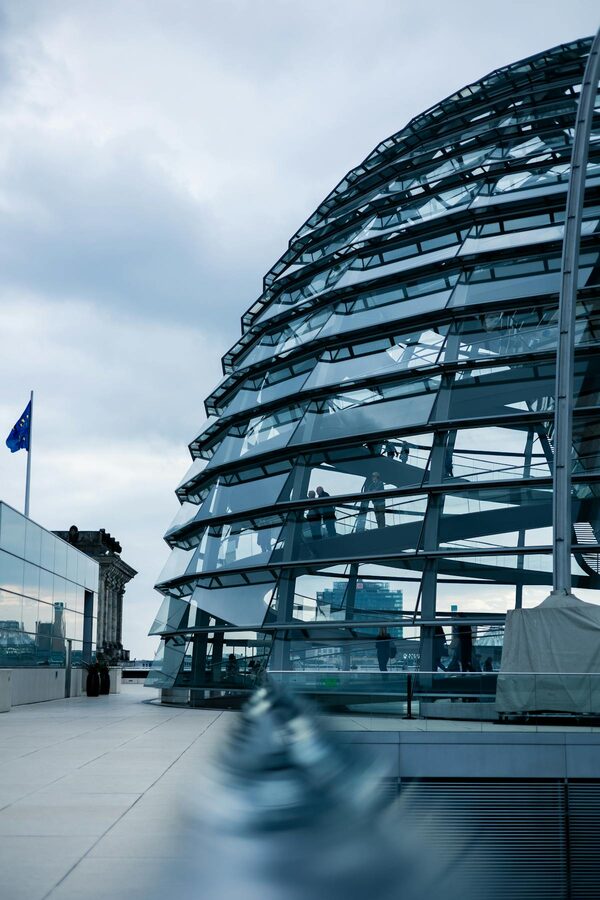
Below the dome, the Reichstag’s rooftop terrace is open to all dome visitors. The terrace offers a different perspective from the dome itself — eye-level views across the government district, the Tiergarten, and the Spree rather than the 360-degree panorama from above. The rooftop restaurant (Käfer Dachgarten) serves German cuisine with the same view and requires a separate reservation.

Best Tours to Book
1. Government District & Reichstag Dome Visit — $45
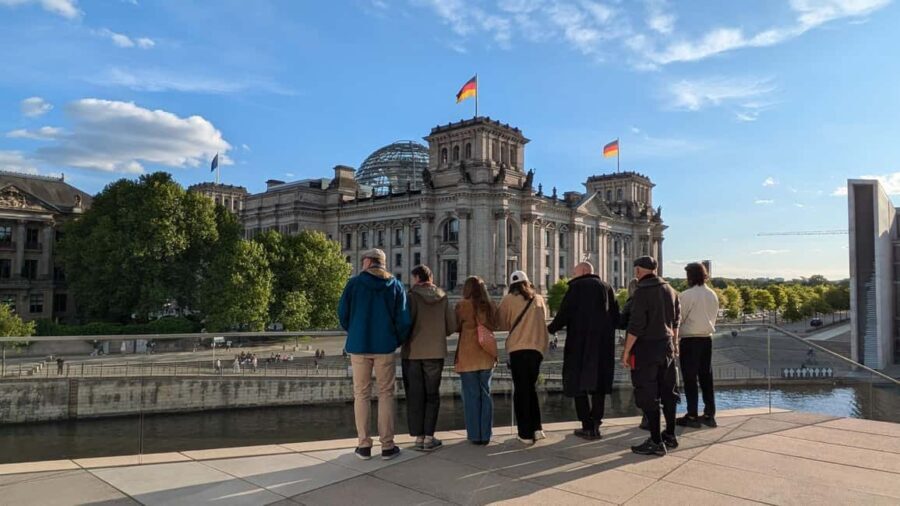
The premium option: a 90-minute guided walk through the government district followed by dome access with skip-the-registration entry. The guide covers the architecture, the reunification politics, and the Reichstag’s dramatic history. At $45, it’s more than the free dome visit but the guided context and guaranteed entry make it worth the premium for visitors who didn’t register weeks ahead. Our review covers the walking route and whether the government district portion adds genuine value.
2. Berlin City + Spree Boat Tour Combo — $64
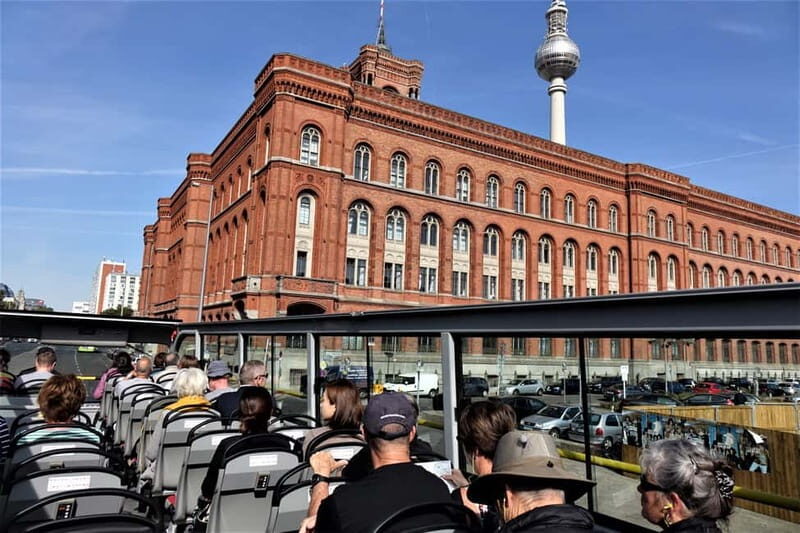
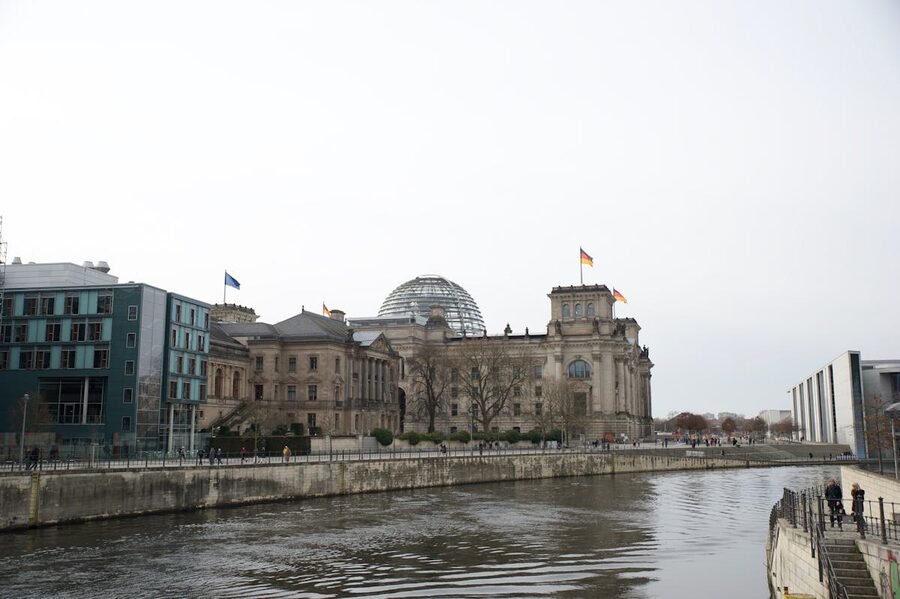
If you want the complete Berlin overview, this combo covers the city by bus and the waterfront by boat. The Reichstag is a stop on the bus route and visible from the river during the cruise — two perspectives on the same building. At $64 for both, it’s better value than buying separately. Our review covers whether the combo format works or feels rushed.
3. Big Bus Berlin Hop-On Hop-Off — $25
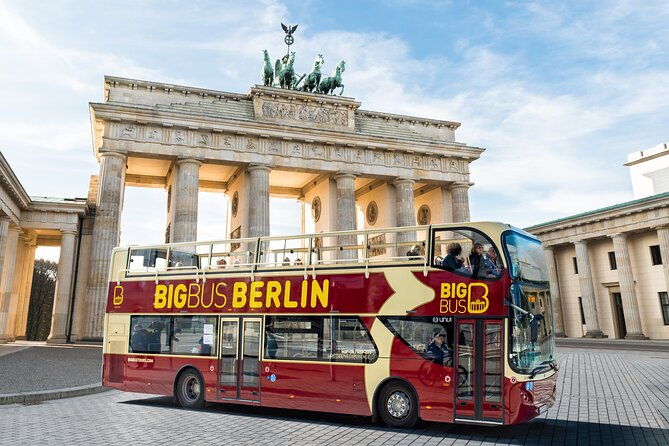
The hop-on format works well with the Reichstag dome visit — ride the bus for the city overview, hop off at the Reichstag stop, visit the dome (if you’ve pre-registered), then hop back on to continue. At $25 for the full day, it’s the cheapest way to see Berlin’s major landmarks. Our review covers the route and the best stops for combining with walking exploration.
Practical Tips
Free dome registration: Book at bundestag.de at least 2-3 weeks ahead. Slots open 3 months in advance. You’ll need passport/ID details for all visitors. Sunset slots sell out first.
Security: Airport-style security screening at the entrance. No large bags, no weapons (obviously), and be prepared for a thorough check. Arrive 15 minutes before your slot time.
Opening hours: Dome: 8am-midnight (last entry 10pm) in summer. Reduced hours in winter. Closed December 24 and occasionally for government events. Check the Bundestag website for current schedule.
Getting there: S-Bahn/U-Bahn Brandenburger Tor (S1/S2/S25, U55). The Reichstag is a 5-minute walk north of the Brandenburg Gate. Bus routes 100 and 200 stop directly at the building.
How long: 30-45 minutes for the dome and terrace. Add 90 minutes for the guided government district tour. The rooftop restaurant requires a separate 2-hour reservation.
Photography: Photography is allowed throughout the dome and terrace. The glass creates reflections — a polarising filter helps. The best photos come from the top of the ramp looking down through the cone, or from the terrace looking across at the TV Tower and Brandenburg Gate.
More Berlin Experiences
The Reichstag dome gives you the political perspective on Berlin. The TV Tower gives you the panoramic perspective from 203 metres. The walking tours give you the street-level history. The Spree boat cruises show you the government district from the water. And the Third Reich and Cold War tours explain why this building — burned, bombed, divided, and rebuilt — is the most important symbol of German democracy.