
A bike tour is the best way to see Paris in a single afternoon. You will cover three times more ground than you could on foot, you will actually see the parts of the city that travelers miss from a coach window, and you will end up in places no metro line goes. I have done three different Paris bike tours with three different operators and the short version is: pick the cheapest 4-hour highlights tour from a reputable operator, go in the morning on a weekday, wear closed-toe shoes, and you will have one of the best days of your Paris trip.
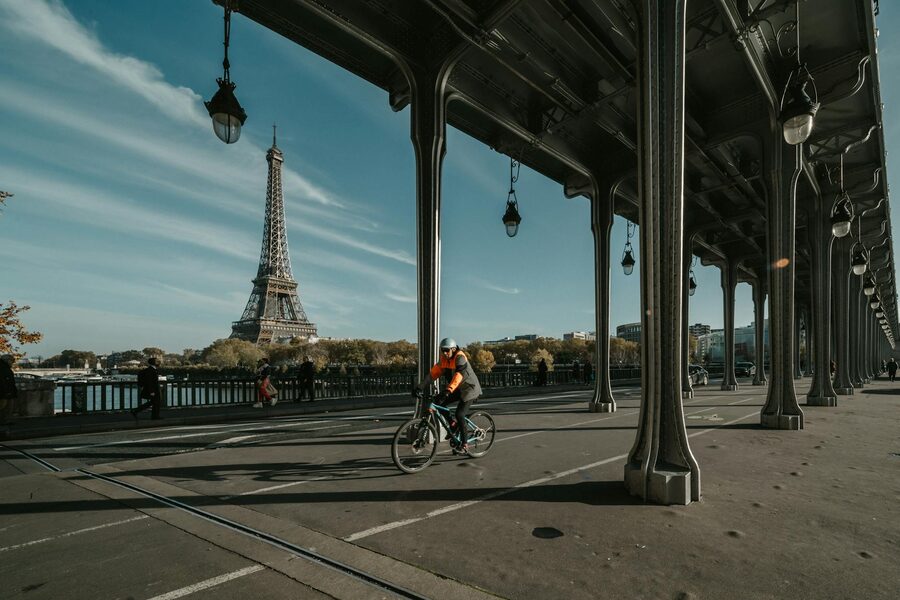
Paris is also not a terrifying city to cycle in, contrary to what people assume. The city has built out an extensive network of protected bike lanes over the past decade, drivers are used to cyclists, and any reputable tour will keep you on the quieter streets anyway. If you can ride a normal hybrid bike on flat ground for 4 hours, you can do a Paris bike tour.
The elevation is minimal. The speed is slow. The guide goes at the pace of the slowest person in the group.
- Quick Picks
- Is a Paris Bike Tour Actually Worth It?
- Which Bike Tour to Actually Book
- What a Good Paris Bike Tour Actually Covers
- The Best Time of Day and Week to Go
- Is Paris Actually Safe to Cycle In?
- What Kind of Bike Will You Ride?
- Three Tour Formats Compared
- Paris Bike Tour: Eiffel Tower, Place de la Concorde & More
- Best of Paris 4-Hour Bike Tour
- Paris: Bike Tour to Versailles with Timed Palace Entry
- Which Tour Format Matches Which Traveler
- What to Wear and Bring
- Common Mistakes
- A Good Morning on a Paris Bike Tour
- Who Is This For?
- Pairing Your Bike Tour With the Rest of Your Paris Trip
- Final Thoughts
- FAQ
- More Ways to See Paris
Quick Picks
The cheapest and the default: the Paris Bike Tour to Eiffel Tower, Concorde and more, from around $44/person. Covers the main central landmarks in 3-4 hours with a small group. Book the cheapest option →
The bestseller: the Best of Paris 4-Hour Bike Tour from around $53/person. The most popular format, covers 10+ major landmarks, English and French speaking guides. Book the best-of tour →
The full-day ambitious option: the Bike Tour to Versailles with Timed Palace Entry from around $135/person. 8-hour day including the train out, a scenic canal-side bike ride through Versailles gardens, and palace access. Book the Versailles bike →
Is a Paris Bike Tour Actually Worth It?
Yes, with one caveat: a bike tour is worth it if it is one of your first Paris activities, not one of your last. Here is why. A bike tour gives you a geographic and historical map of the city in 4 hours that would take you 3 days to piece together on your own.
If you do it on day 1 or day 2 of a Paris trip, every subsequent walk, metro ride, and landmark visit makes more sense because you already have the mental map. If you do it on day 6, you have already figured the city out and the tour feels redundant.
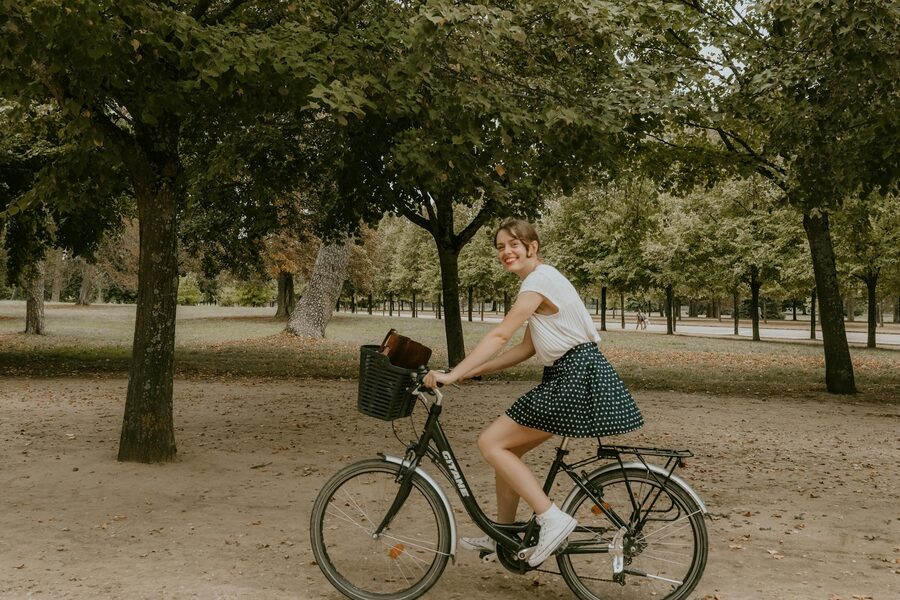
The other reason bike tours work well is distance. Paris looks small on the map but walking the “standard” tourist loop (Louvre to Notre Dame to Saint-Germain to Invalides to the Eiffel Tower to the Arc de Triomphe) is about 9 kilometers. On foot that is a full exhausting day.
On a bike it is a gentle 90-minute ride with six stops and time for photos. You are seeing the same things, but in 1/3 of the time and with 80% less leg fatigue.
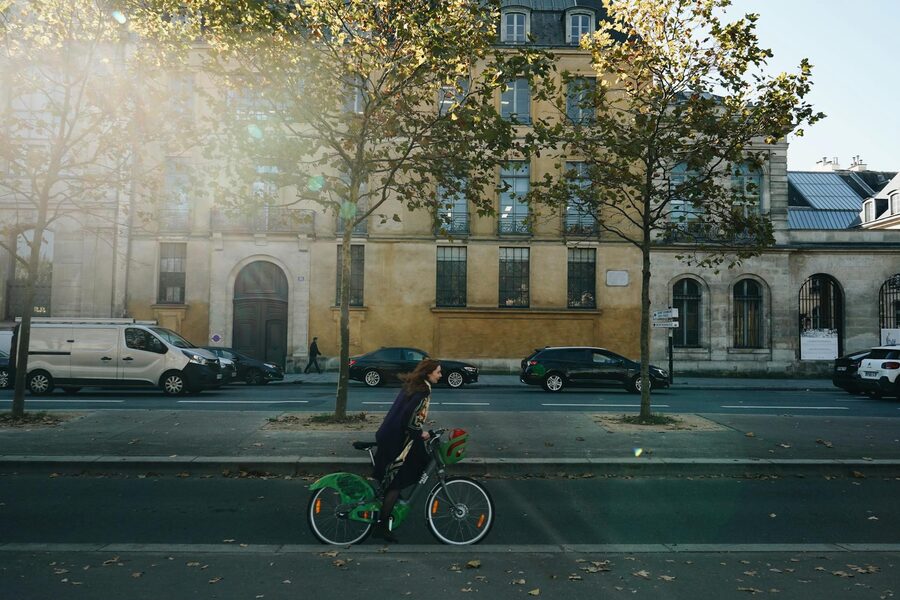
The one scenario where bike tours are not worth it: if you are genuinely afraid of city cycling, if you have balance issues, or if it is your first time on a bike in over a decade. The tours are beginner-friendly but they are not training wheels — you need to be able to ride a normal bicycle in a straight line at a slow pace for a few hours. If that does not describe you, take the Paris hop-on-hop-off bus instead.
Which Bike Tour to Actually Book
Paris has dozens of bike tour operators and they are not equally good. Here is the honest breakdown of the three main options.
Paris Bike Tour — Eiffel Tower, Place de la Concorde and More (around $44): the cheapest of the three. 3-4 hours, 6-8 landmarks covered, small-group format with a maximum of 10-12 riders. The route hits the Eiffel Tower, Trocadero, Place de la Concorde, the Louvre, and the Tuileries. The price point is the attraction — this is a legitimate tour at a very fair price, and for a traveller on a budget it is the right default. The guides are usually local, the bikes are hybrid comfort models, and the meetup is in central Paris.
Best of Paris 4-Hour Bike Tour (around $53): the bestseller and the one I recommend for most first-time visitors. A full 4 hours, 10-14 major landmarks, better bikes than the budget option, and more scheduled photo stops. The route typically covers the Eiffel Tower, Ecole Militaire, Invalides, Musee d’Orsay, the Louvre, Place de la Concorde, the Tuileries, and Notre Dame. The $9 upcharge over the cheapest option is worth it for the extra landmarks, the longer photo stops, and the slightly higher chance of an English-native guide.
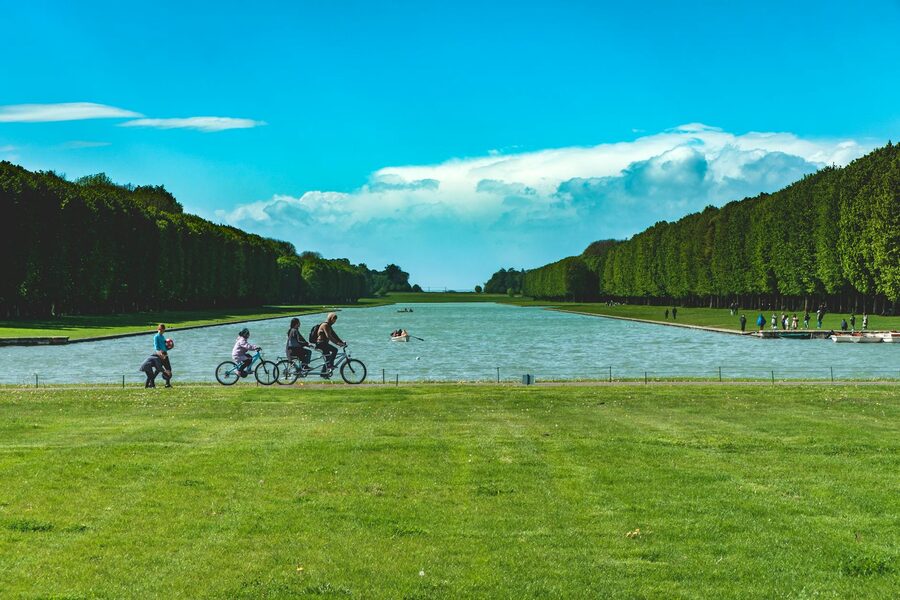
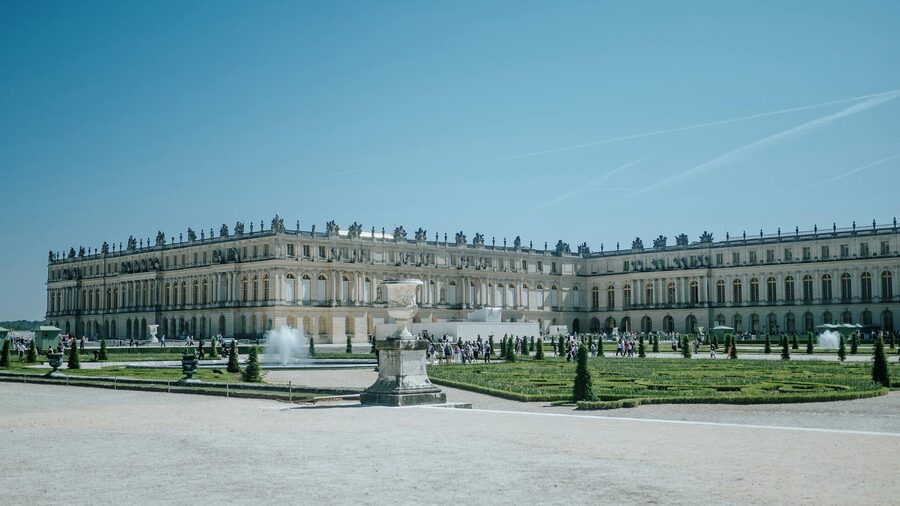
Paris to Versailles Bike Tour with Palace Entry (around $135): the ambitious full-day option. 8 hours total: you take an early morning train from Paris to Versailles, meet the guide, ride through the massive Versailles gardens and the Grand Canal area, break for lunch, enter the palace on a timed-entry ticket, and ride back through the estate in the afternoon. The palace entry alone is worth €30-40, the bike rental is worth €25, the train is included, and you are getting a full day of expertise on top. This is a niche option for travellers who already love bike tours and want a day trip that feels different from the standard Versailles bus.
Skip the private tours. Private bike tours run €250-600 per person and they are rarely worth the upcharge. The small-group tours are already small enough (10-12 people max) that you get plenty of guide attention, and the social aspect of a group is actually one of the best parts of the experience. Private tours are only worth it if you have specific accessibility needs or if you are on a celebratory trip and money does not matter.
What a Good Paris Bike Tour Actually Covers
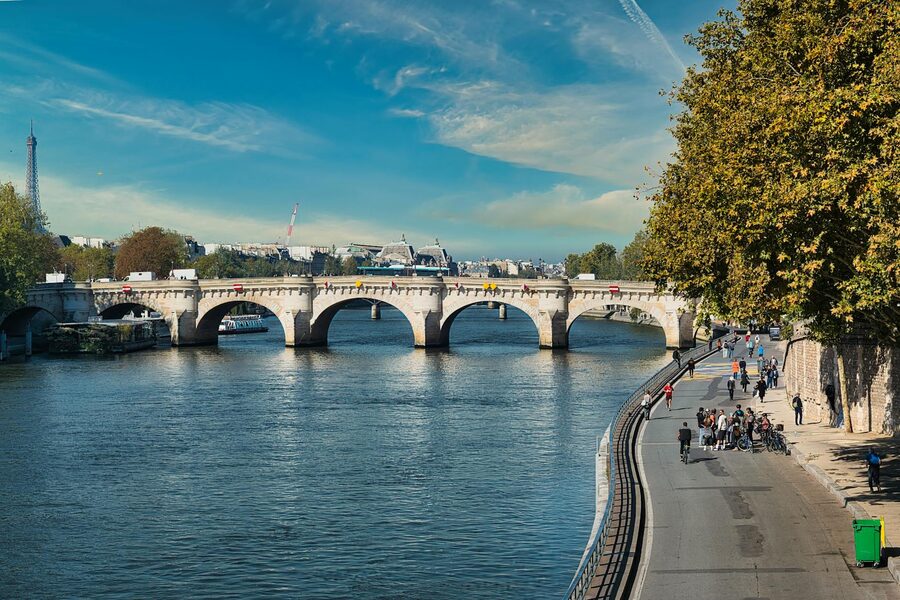
A typical 4-hour bike tour covers 10-14 landmarks. Here is what you should expect and in what rough order.
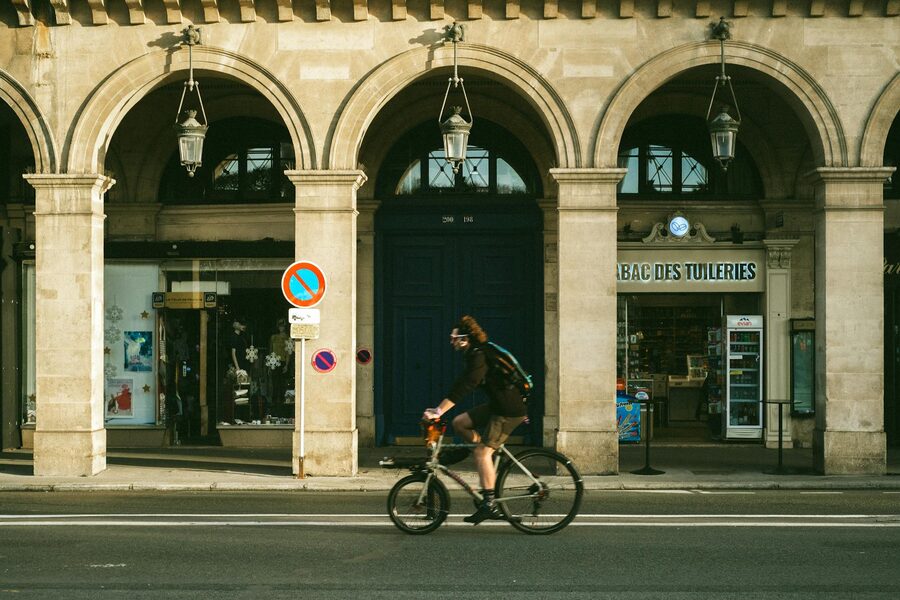
Start point (Opera or Place de la Concorde area). You meet your guide at 9:30am or 2pm at a central meet point, get fitted for your bike, run through the safety briefing (mostly “stay behind me, don’t ride on sidewalks, ring the bell if you need to stop”), and set off as a small group.
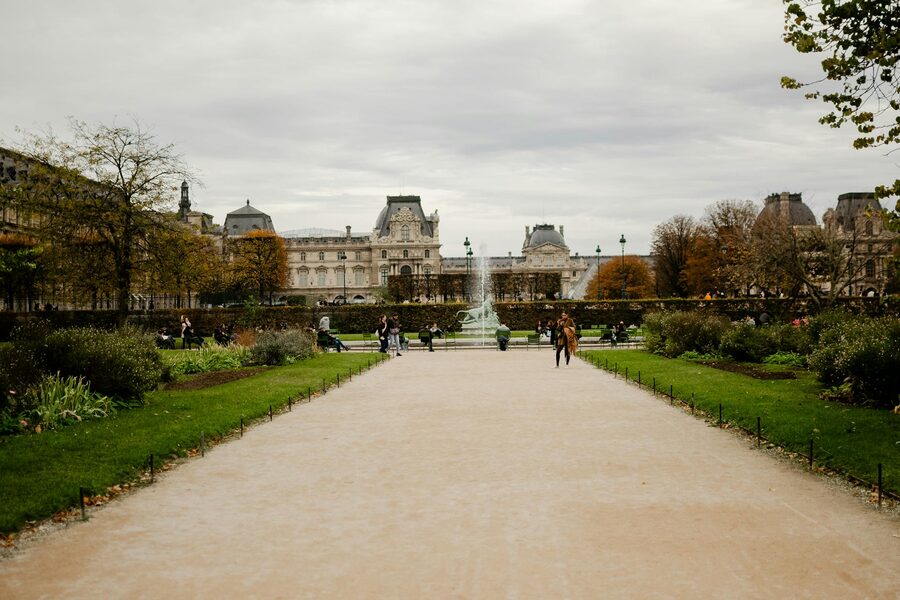
The Louvre and Tuileries. Ride through the courtyard of the Louvre and along the central axis of the Tuileries. This is usually one of the best early-tour photo stops. The bikes slow down for the pyramid and the garden fountains.
Place de la Concorde and Champs-Elysees. A quick photo stop at the obelisk, then a ride up a portion of the Champs-Elysees. Depending on the route, you may turn off before the Arc de Triomphe (the roundabout is not bike-friendly) and detour through the 8th arrondissement side streets.
Invalides and Musee d’Orsay. Cross the Seine on a quiet bridge, ride past the gold-domed Invalides (Napoleon’s tomb), then the Musee d’Orsay along the quay. This is where you start to get the “river city” sense of Paris that you miss from the metro.
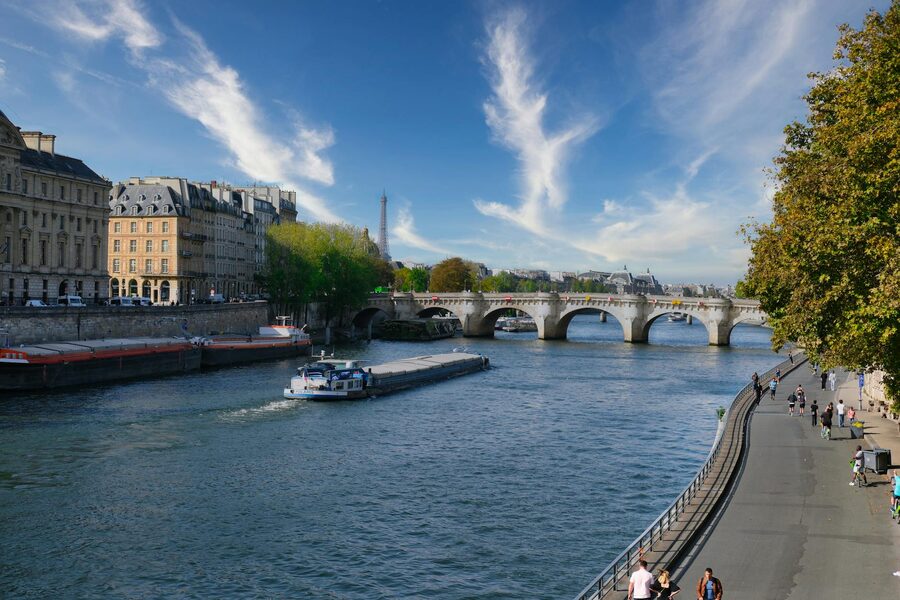
Eiffel Tower (Champ de Mars or Trocadero). The money shot of the tour. Your guide will park the bikes and give you 10-15 minutes for photos. Some tours stop at Trocadero (the best side for photos) and some stop at Champ de Mars (the closer side). Both work.
Saint-Germain and the Latin Quarter. Ride through the Left Bank — narrow streets, cafes, the Pantheon, the Sorbonne. Slower riding here because the streets are cobblestone and the tourist crowds are thick.
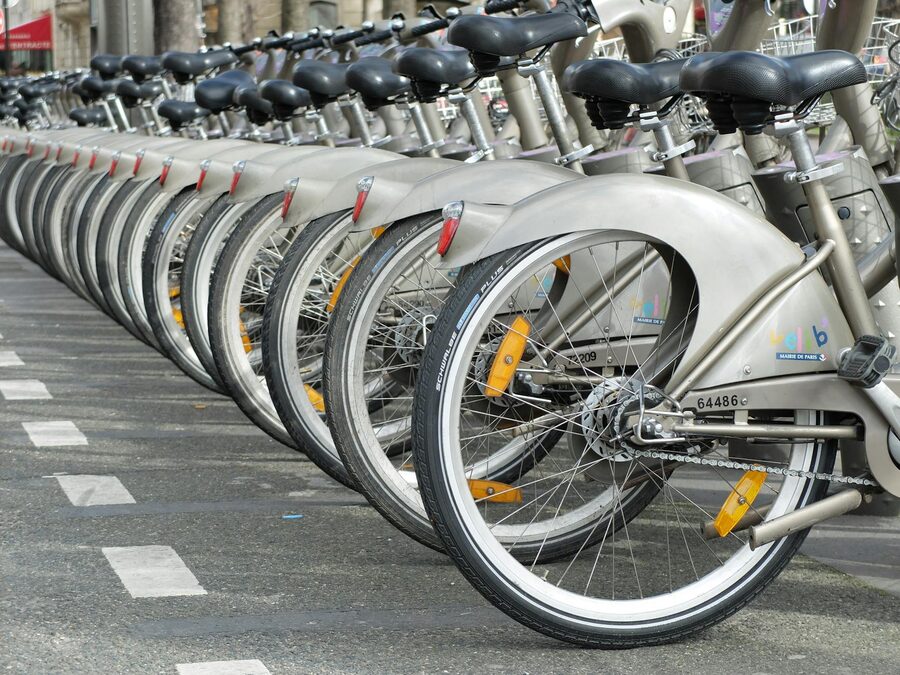
Île de la Cité and Notre Dame. End the tour at Notre Dame (still being rebuilt, but visible from outside) with a final photo of the cathedral and a goodbye from your guide. You can cycle back to the meet point or just leave the bike at a central Velib station.
The Best Time of Day and Week to Go
Morning over afternoon. Book the 9:30am slot if your operator runs one. Morning tours are cooler in summer, less crowded at landmarks, and the light is better for photos. Afternoon tours (usually 2pm or 2:30pm start) are fine but the 4-hour slog in the 3pm sun is brutal in July and August. You will also finish the afternoon tour at 6pm, which is the start of rush hour for Paris traffic.
Weekday over weekend. Monday through Thursday tours are noticeably calmer than Friday-Sunday tours because the bike lanes are less busy with locals and the central landmarks have fewer queues. Saturday is the single worst day for a bike tour because every other tourist in Paris is also out.
Month: May, September, or early October. These are the three best windows. April and late October are also fine but you risk rain. November through March is too cold for most travellers. June is excellent weather-wise but the lunch and dinner crowds at cafes are heavier. July and August are too hot and too crowded. Mid-September is the sweet spot for weather, crowd, and light.
Avoid rain days. Most Paris bike tours run in light rain but cancel in heavy rain. If the morning of your booking is forecast for thunderstorms, email the operator early to reschedule. The refund policies vary but most will let you move the tour to a different day at no cost if the weather is clearly a problem.
Is Paris Actually Safe to Cycle In?
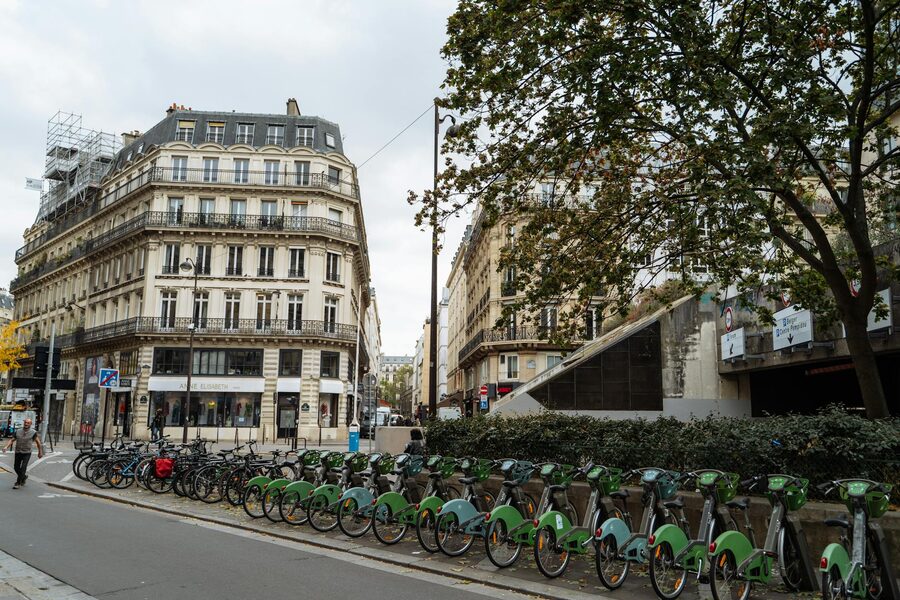
Yes — genuinely, not as a tourism-marketing answer. Paris has spent the last decade building out a real bike network and the city is now safer and more cyclist-friendly than any other major European capital except Amsterdam and Copenhagen.
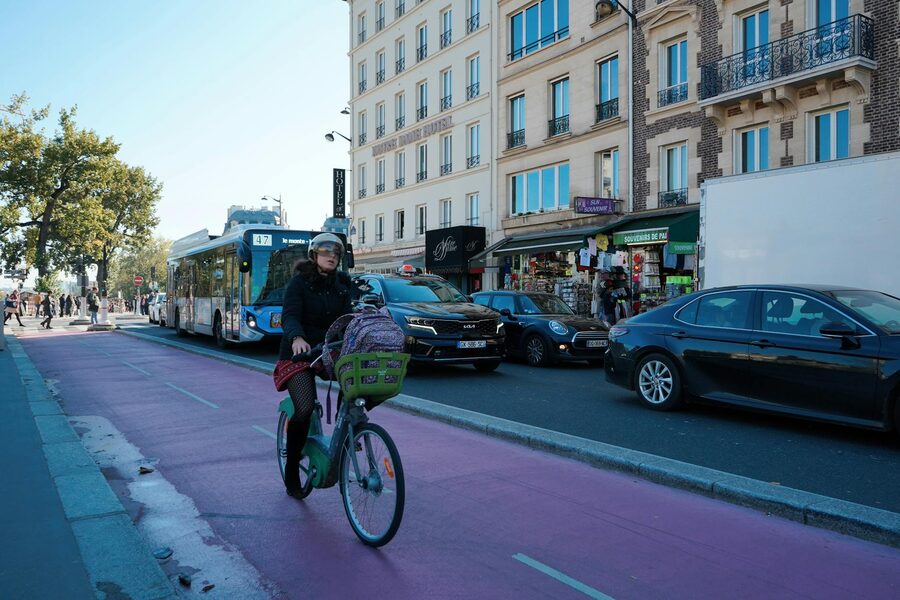
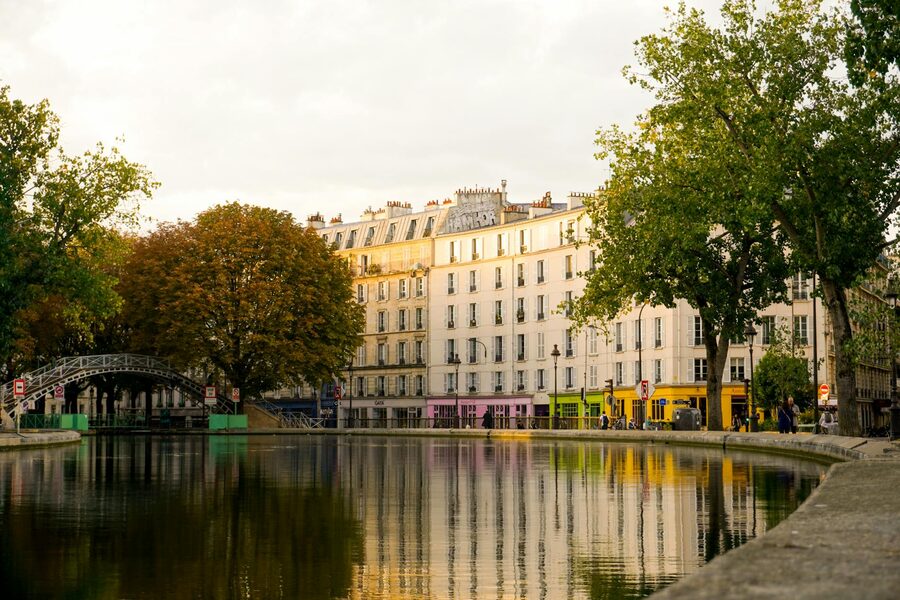
Specifically: major boulevards have fully separated bike lanes with concrete or planter barriers between cyclists and cars. Side streets in the central arrondissements have a 30km/h speed limit and traffic-calming features. The riverside quays along the Seine have been converted to pedestrian and cycling zones with no car access at all.
You can ride from the Louvre to the Eiffel Tower without touching a single car lane.
On a guided tour, your guide will also actively keep the group off the one or two dangerous sections (mainly the Arc de Triomphe roundabout and the Place de la Bastille roundabout, both of which are scary by design). The tour routes are specifically engineered to avoid these hazards.
The most dangerous part of cycling in Paris is actually scooters and e-scooters cutting across bike lanes. They are faster than you expect and rarely follow traffic rules. Keep your head up at intersections and signal your turns.
If anything hits you on a bike tour, it will almost certainly be an electric scooter rather than a car.
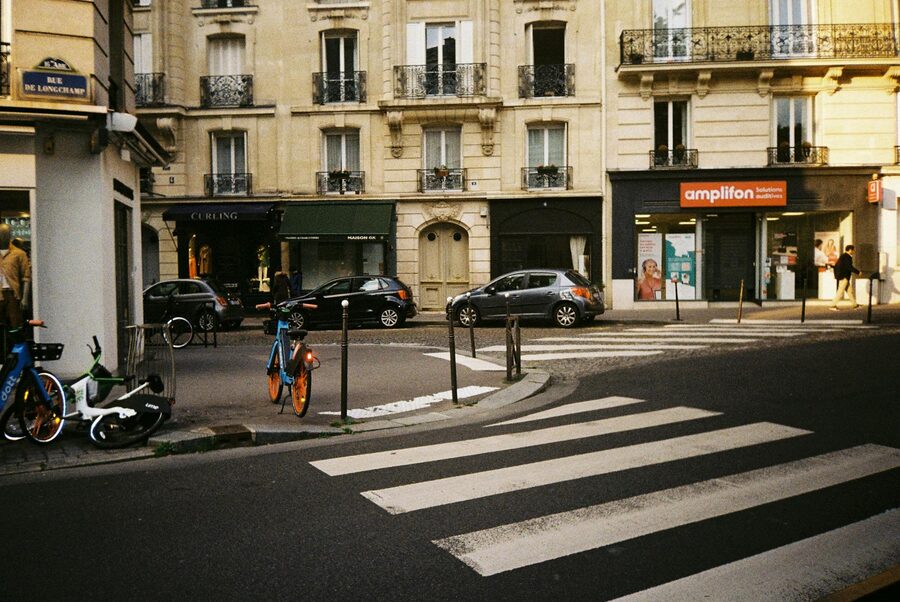
What Kind of Bike Will You Ride?
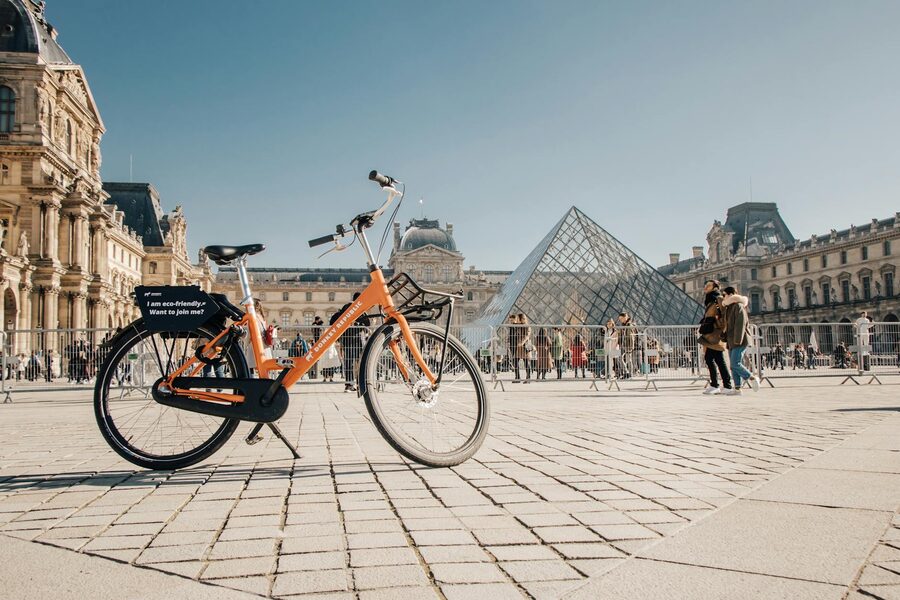
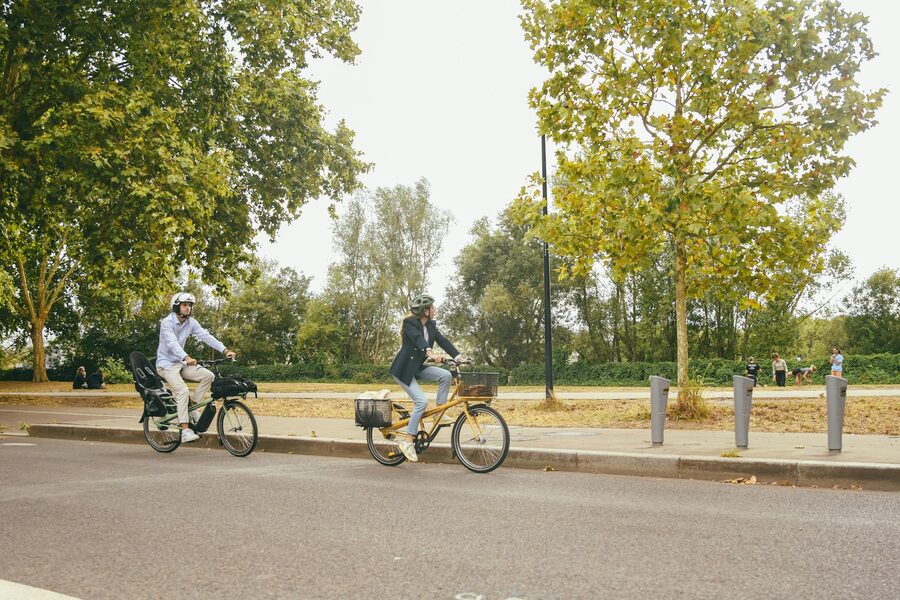
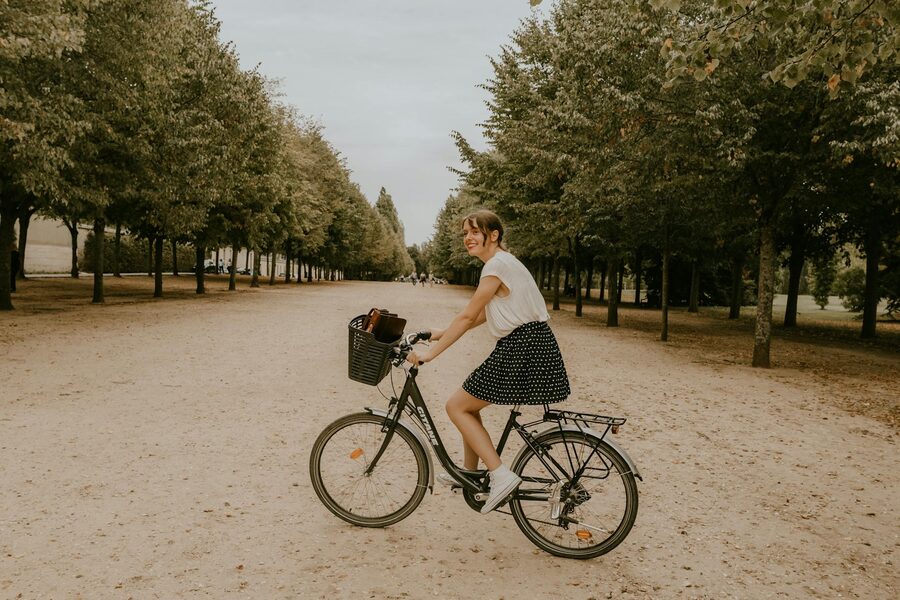
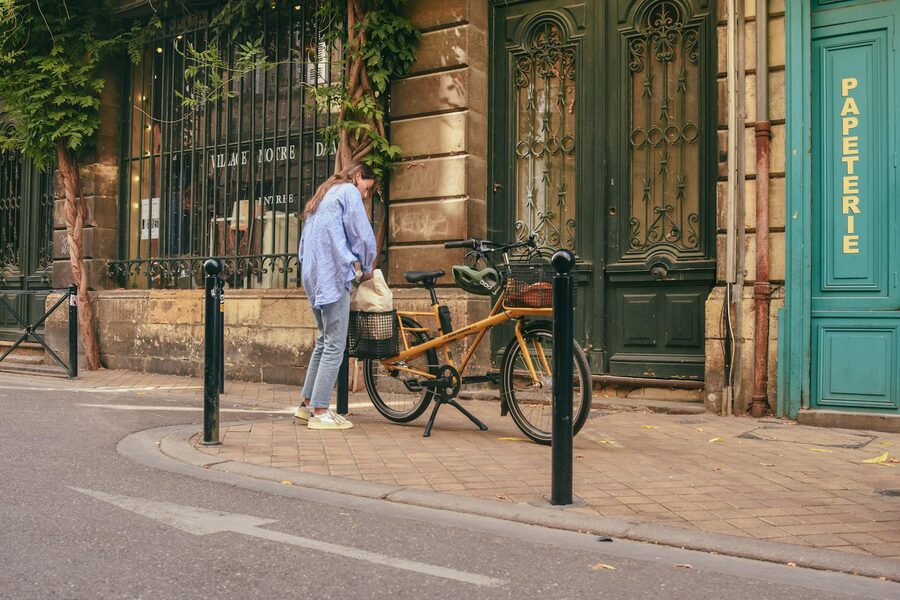
Almost every bike tour in Paris uses the same style of bike: a hybrid “comfort” model with an upright seating position, wide tires, a chain guard, a front basket, and often a step-through frame for easier mounting. You will not be riding a drop-handlebar racing bike or a fixed-gear. The bikes are comfortable, they are easy to mount and dismount, and they are forgiving if your riding skills are rusty.
A good tour will also offer a few optional upgrades. Some operators provide helmets as standard (ask if yours does — French law does not require helmets for adults but most tours include them free). Some offer e-bikes for an extra €15-25 per person if you are worried about keeping up with the group or if someone in your party has mobility issues.
A few operators have child seats that attach to the back of the parent’s bike for toddlers.
Do not bring your own helmet from home unless you are really committed. The tour-provided helmets are fine and carrying your own through airport security is more hassle than it is worth. If you do not want to wear the provided helmet, that is usually OK in France — just tell the guide.
Three Tour Formats Compared
Paris Bike Tour: Eiffel Tower, Place de la Concorde & More
The cheapest of the main tours and the right default for solo travellers and couples on a budget. Covers the central Paris highlights (Eiffel Tower, Concorde, the Louvre, Tuileries, some of the 7th arrondissement) with a small-group format of 10-12 riders. Comfort hybrid bikes, helmet included, English-speaking guide as standard.
The meetup point is usually near Opera or Louvre-Rivoli. The 90-minute tour saves fade is the biggest risk here — 3 hours is a sensible length for first-timers, 4 hours is slightly long for beginners. Confirm the exact duration when you book.
Best of Paris 4-Hour Bike Tour
The bestseller and the right choice for most first-time visitors. A full 4 hours covering 10-14 major landmarks at a relaxed pace with scheduled photo stops, rest breaks, and guide commentary on the history of each area. The extra hour over the cheapest option actually matters: you get deeper explanations of what you are looking at, longer photo stops at the Eiffel Tower and the Louvre, and a less rushed feel overall.
Small-group format (usually 10-12 riders max), bilingual guides, and better-maintained bikes than the budget operators. Meetup is typically in central Paris (Louvre or Opera area) and the tour ends near Notre Dame so you can explore the Île de la Cité afterward.
Paris: Bike Tour to Versailles with Timed Palace Entry
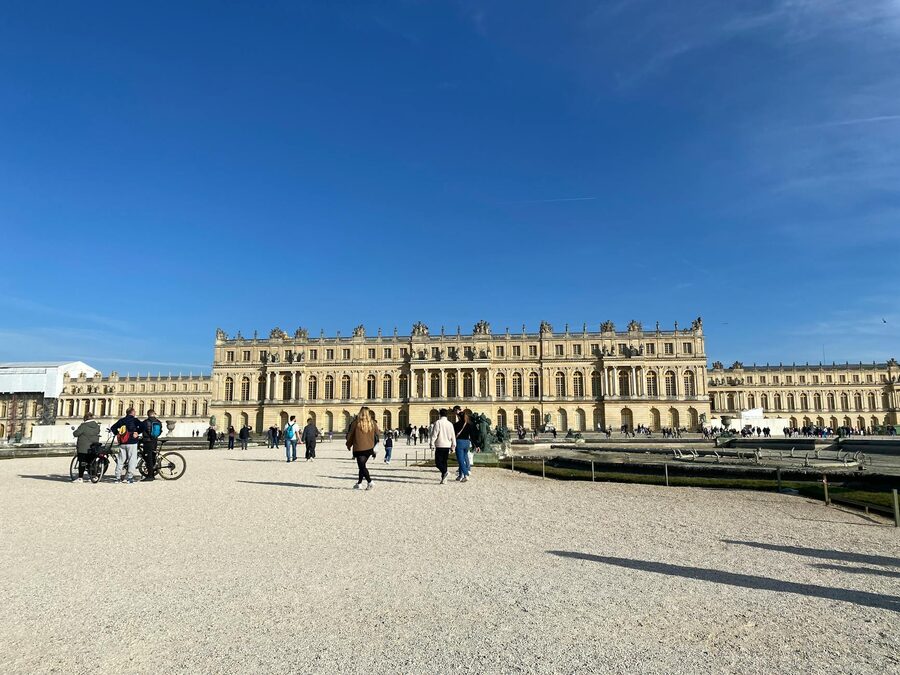
The ambitious full-day option and the correct choice for travellers who love bike tours and want to combine one with a major day trip. Meet at 8:30am at the Paris meeting point, take the RER C train out to Versailles (included), collect your bike from the Versailles station, spend the morning cycling through the enormous Versailles gardens and around the Grand Canal, break for a 90-minute lunch at a local restaurant (included in some versions, extra on others — check the listing), enter the palace on a skip-the-line timed ticket in the afternoon, then cycle back through the estate. Returns to Paris by 5-6pm.
The bike ride through the Versailles gardens is genuinely magical — the estate is too big to walk comfortably, and cycling lets you see parts of the grounds most day-trippers never reach.
Which Tour Format Matches Which Traveler
The cheapest option is the correct default for the majority of first-time visitors. You save $9 per person versus the bestseller and lose about 10% of the tour content. For a couple, that is $18 in savings, which pays for a nice lunch later.
If you are travelling solo or in a pair and the content tradeoff does not bother you, book the cheapest option and be done with it.
The Best of Paris 4-Hour Tour is the right upgrade for travellers who want the full experience and are not counting every euro. The longer format gives you 60 more minutes of riding time, which translates to 3-4 extra landmarks and more breathing room at the major photo stops. If you are visiting Paris for the first time and want the canonical Paris bike tour experience, this is the one.
The additional cost is worth it.
The Versailles bike tour is a different beast and should not be compared to the two central Paris options. It is an alternative to a Versailles bus tour rather than a second version of a Paris city tour. Book it if you want to visit Versailles anyway, you enjoy cycling, and you want a more active day than the standard palace-only tours.
Do not book it instead of a central Paris tour — book it in addition, probably on a different day.
What to Wear and Bring
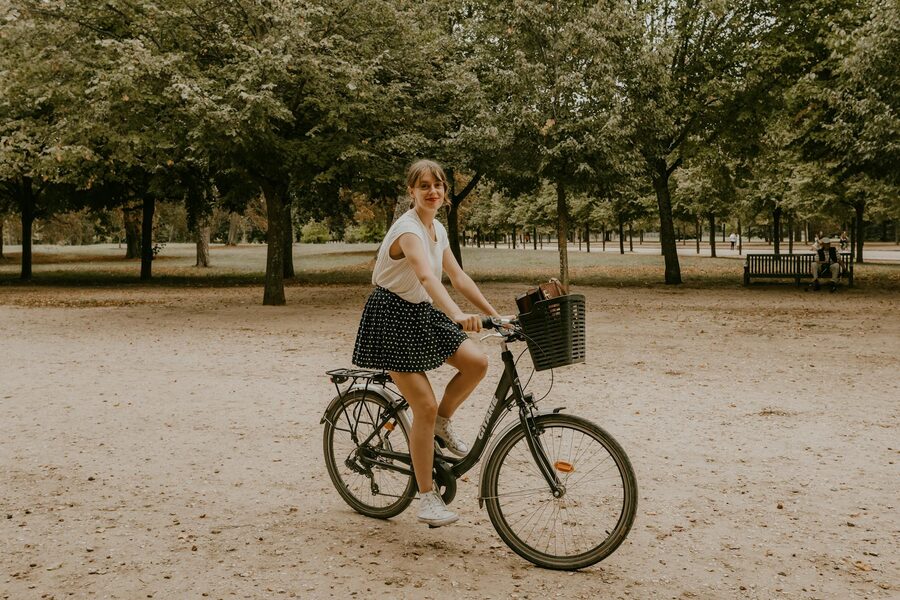
Closed-toe shoes. This is the non-negotiable item. Flip-flops, open sandals, and dress shoes all end badly on a bike tour. Sneakers or comfortable walking shoes are ideal.
Trousers or shorts, not a long skirt or a dress. A long flowing skirt will catch in the wheels and a dress is uncomfortable for 4 hours on a saddle. Shorts or jeans or cycling pants all work.
A light layer. Morning tours in April or October get chilly for the first 30 minutes; afternoon tours in July are hot all the way through. Bring a cardigan or a light windbreaker you can tie around your waist.
A small backpack or crossbody bag. The tour bike has a front basket but it is shallow. A proper daypack is more comfortable for a phone, a wallet, a water bottle, a camera, and any layers. Do not bring a large tote bag — it will slide around as you ride.
Water bottle. Most tours provide one, but bring your own just in case. You will drink 500-1000ml during a 4-hour ride.
Sunscreen. Especially in May-September. You are out in the sun for 3-4 hours and your face and forearms will burn without protection.
Phone with Google Maps loaded offline. In case you get separated from the group or want to explore independently afterward. Also useful for the Velib app if you want to continue riding after the tour.
Cash (€20-30) for a small tip. Standard in France is €2-5 per person for a good guide. Not mandatory but genuinely appreciated.
Common Mistakes
Mistake 1: booking the tour for day 6 of your trip. By then you already know the city on your own terms and the tour’s geographical overview feels redundant. Book it for day 1 or day 2 instead. The tour sets the mental map for the rest of the week.
Mistake 2: wearing dress shoes or flip-flops. The pedals need a flat, grippy, closed sole. Sandals slide, dress shoes scuff, and flip-flops can actually fall off and get tangled in the spokes. Closed-toe sneakers are the correct answer.
Mistake 3: booking the afternoon slot in summer. A 2pm-6pm tour in July will have you riding through 35°C afternoon sun for four hours. The morning slot (9:30am-1:30pm) is cooler, quieter, and has better light. Always book the morning if it is available.
Mistake 4: skipping the water bottle. You do not notice how much you are sweating while cycling and you can end up mildly dehydrated by the second hour. Drink at every photo stop. The guides usually remind you but assume they will not.
Mistake 5: trying to do the Versailles bike tour as a first-time bike tour. The Versailles tour is 8 hours and includes both a train journey and a full day of cycling. If you have never done a guided bike tour before, the standard 4-hour Paris option is a much better introduction. Do the Versailles one as a second or third trip.
Mistake 6: showing up late. The tours leave on time and will not wait more than 5 minutes past the start time. You will lose your spot, the operator may or may not refund you, and your day is ruined. Arrive 15-20 minutes early to the meet point.
Mistake 7: assuming the bikes are racing bikes. They are not. They are comfort hybrids with wide tires and upright seats. Do not show up in full Lycra — you will look like you are lost.
A Good Morning on a Paris Bike Tour
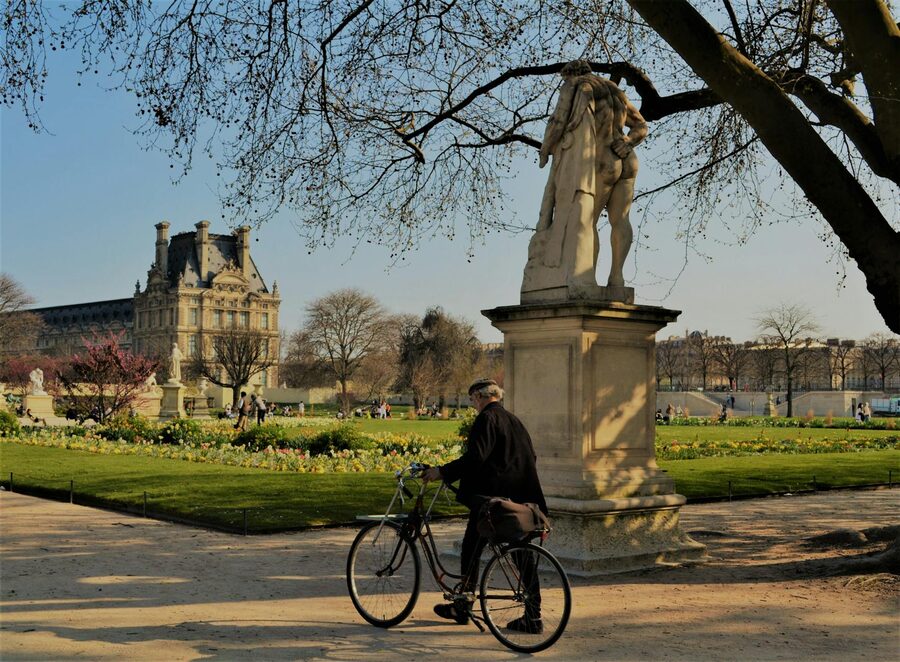
Here is how a well-planned bike-tour day actually unfolds.
8:30am: wake up, coffee and a croissant at a cafe near your hotel. Do not eat a heavy breakfast — a full stomach on a bike saddle is uncomfortable.
9:00am: metro or walk to the tour meeting point. Leave yourself 20 extra minutes in case of metro delays.
9:15am: arrive at the meeting point. Fill out any liability waivers, get fitted for your bike, introduce yourself to your guide and fellow riders.
9:30am: tour departs. First 10 minutes are a slow warmup on quiet streets while your guide assesses the group’s riding level.
9:45am-10:15am: first major landmark stop (usually the Louvre courtyard or Place de la Concorde). Photos, quick history briefing, back on the bikes.
10:30am: cross the Seine and ride along the Left Bank. Pass Musee d’Orsay, Invalides, and the 7th arrondissement residential streets.
11:00am: arrive at the Eiffel Tower area. Extended photo stop (15-20 minutes) with time to get your camera out, do your self-portrait, and take in the view.
11:30am: ride through Saint-Germain-des-Pres and into the Latin Quarter. Cobblestones get bumpier here — stand up on the pedals over the rough sections to save your backside.
12:00pm: quick break at a scenic spot (the Seine quays or a small plaza). Water, a snack bar, a rest for the legs.
12:30pm: final leg to Notre Dame and the tour end point. Group photo at the cathedral if the guide is the type to organize it.
1:00pm: tour ends. Return your bike to the operator’s base or drop it at a Velib station. Lunch immediately at a cafe on Île Saint-Louis or a nearby bistro — you will be ravenous.
Who Is This For?
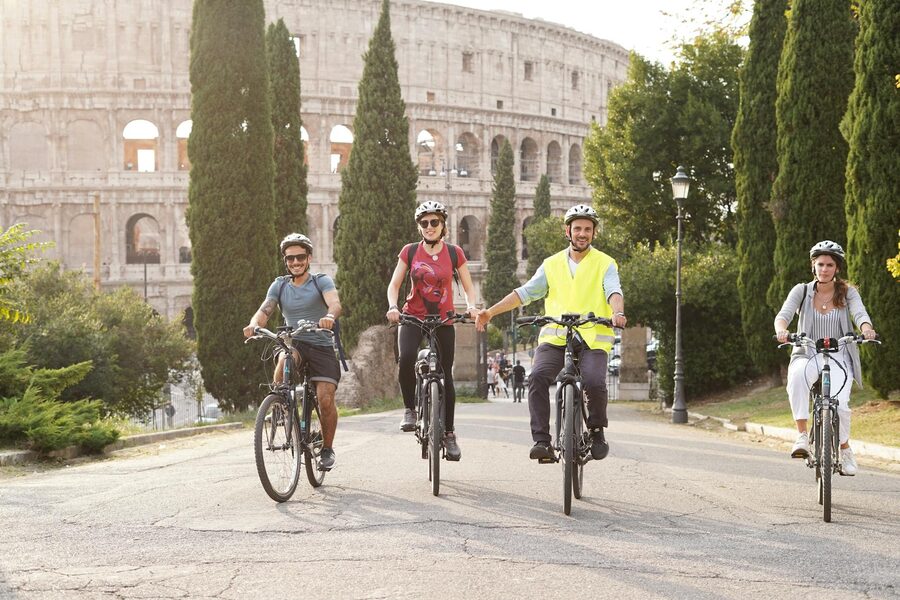
Perfect for: first-time Paris visitors, solo travellers who want to meet other travellers, couples with moderate fitness levels, anyone who finds walking tours too slow but hop-on-hop-off buses too passive, budget-conscious travellers who want a good overview of the city for under $50, photographers who want diverse backdrops across a single morning.
Possibly for you: families with children old enough to ride their own bikes (usually 10+), retirees with good balance and moderate fitness, travellers on their second Paris visit who want a different format from last time.
Probably not for you: travellers who have not ridden a bike in 10+ years, anyone with significant knee or back issues, travellers with very young children (under 6) who cannot ride their own bike and are too heavy for a toddler seat, people who hate group activities and prefer to explore independently.
Definitely not for you: non-cyclists who would genuinely struggle with 4 hours on a saddle, travellers who are terrified of city traffic regardless of the safety situation, anyone whose Paris trip is only 2 days long (a walking or coach tour covers more landmarks per hour).
Pairing Your Bike Tour With the Rest of Your Paris Trip
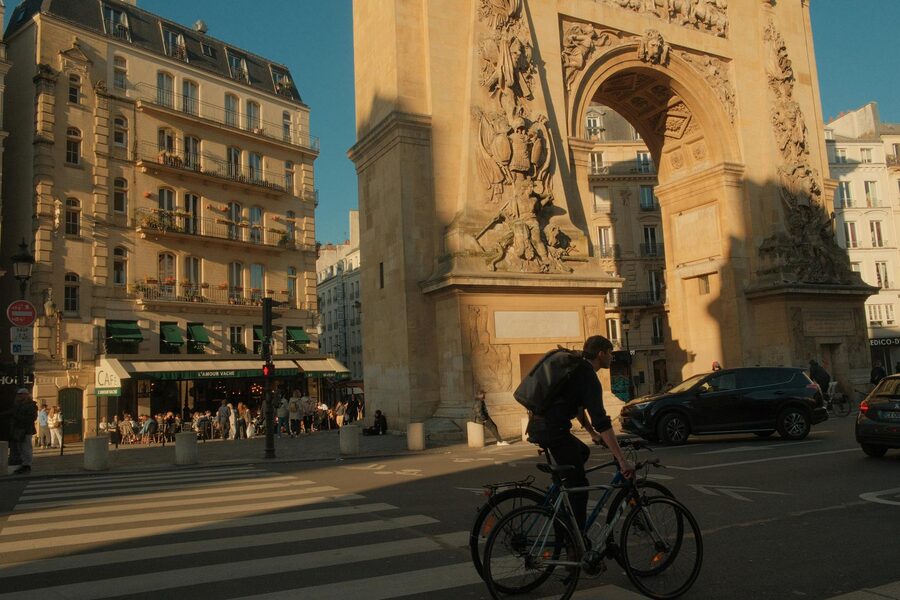
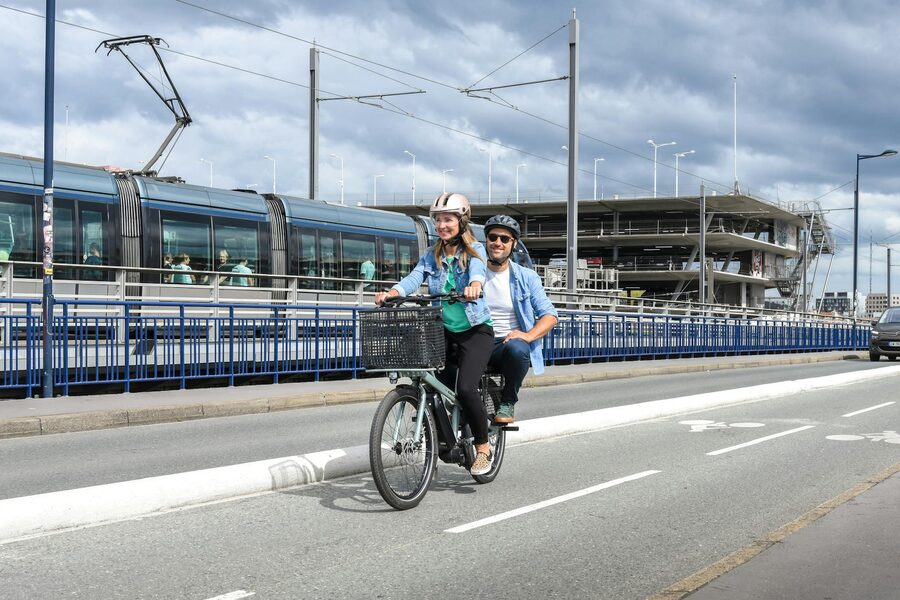
A bike tour is best as the first or second major activity of your Paris trip. It gives you the geographic framework for everything else. Pair it with low-effort afternoon activities (a Seine river cruise in the early evening, a long lunch at a Left Bank bistro) rather than another high-energy morning.
The day after a bike tour, your legs will be tired. Plan something sedentary: the Louvre with a timed-entry slot, the Musee d’Orsay for a quieter art-museum day, or a Paris food tour (which is walking but at a gentler pace). Do not plan the Eiffel Tower climb, a Versailles day trip, or a Disneyland Paris day on the day after a 4-hour bike ride.
Your body will not thank you.
If you are on a longer Paris trip, a bike tour works well as a “reset” halfway through the week. You do the first 3 days of standard Paris sightseeing, hit a Wednesday morning bike tour to re-orient yourself, then spend the rest of the week exploring the specific neighborhoods that caught your attention on the ride. The Montmartre walking tour or a deep-dive into the Marais both work well as post-bike-tour follow-ups.
One combination to avoid: a bike tour on the same day as any other major physical activity. Do not do a bike tour in the morning and an Eiffel Tower climb in the afternoon. The quads will protest and you will end the day miserable.
Pair physical days with rest days, not with other physical days.
Final Thoughts
A Paris bike tour is one of the highest-value half-days you can book on a Paris trip. $44-53 gets you a 3-4 hour small-group overview of the city from a local guide, with 10-14 major landmarks, protected bike lanes for most of the route, and an early-trip geographic map that makes everything else you do in Paris more intelligent. Book the cheapest option if you are on a budget or the bestseller if you want the full 4-hour version, go in the morning on a weekday in May or September, wear closed-toe shoes, and do it on day 1 or 2 of your trip.
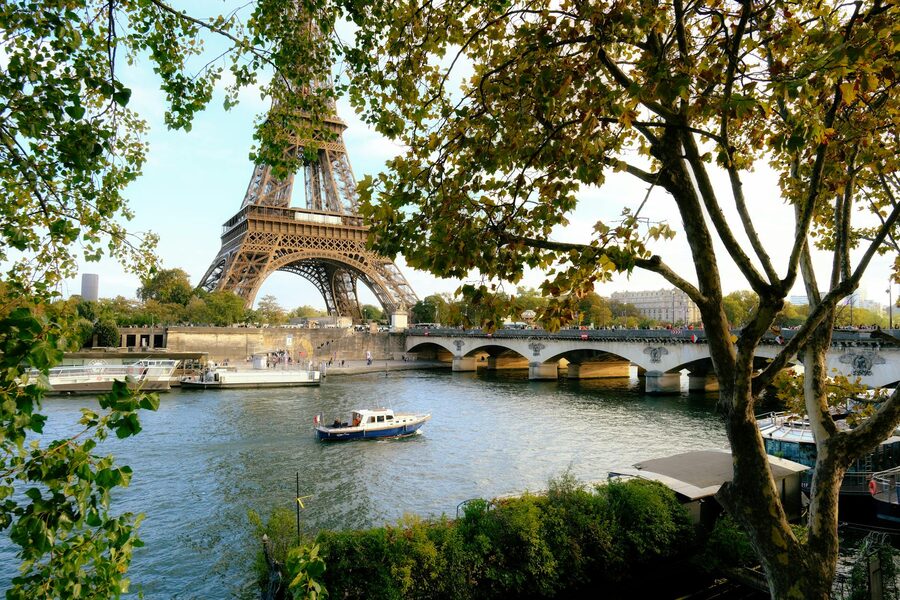
Skip the tour if you have not cycled in a decade, if you have mobility issues, or if you genuinely hate group activities. Everyone else should consider it a serious contender for the single best thing they do in Paris. Pair it with a Seine cruise in the evening and a long dinner afterward and you have one of the best days Paris offers.
FAQ
How fit do I need to be? Minimal. You need to be able to ride a normal bicycle in a straight line at a slow pace for 4 hours with multiple stops. If you can walk for 30 minutes continuously without getting winded, you have enough fitness for a standard Paris bike tour.
Do I need to bring my own helmet? No. The tour operators provide helmets as standard, and French law does not require adults to wear one. The provided helmets are clean, fitted at the start of the tour, and perfectly adequate.
Is it safe for nervous cyclists? Yes. The tours are specifically designed to avoid dangerous intersections and busy roads. You will spend most of your time on protected bike lanes or quiet residential streets. The guide will also actively manage the group’s pace to match the slowest rider.
What if it rains? Most tours run in light rain but cancel in heavy rain or thunderstorms. Check your operator’s specific weather policy when you book. If the forecast is clearly bad, email them the day before to reschedule.
Can children join? Yes, depending on age. Most tours accept children who can ride their own bike (usually aged 10+). A few operators have toddler seats that attach to a parent’s bike. Younger kids and infants are usually excluded from standard tours — book a private tour if you need child accommodation.
How do I find the meetup point? Your confirmation email will include specific directions, usually near a major metro station (Opera, Louvre-Rivoli, or Chatelet). Use Google Maps and aim to arrive 15-20 minutes early.
Should I tip the guide? Yes, if you enjoyed the tour. The French tipping norm is €2-5 per person in cash, handed to the guide at the end. It is not mandatory but it is genuinely appreciated and most guides rely partly on tips.
Can I use Velib bikes for a self-guided tour instead? Yes, but do a guided tour first. The Velib system is excellent for exploring on your own terms once you already know the layout of the city. Use a guided tour to learn the map, then rent a Velib for a second day to revisit specific neighborhoods.
Will I get lost? No — the guide leads the group and actively watches for stragglers. The tour format is designed so that even if you fall 30 meters behind, the guide will stop and wait. If you genuinely lose the group, call the operator’s emergency number on the back of your confirmation and they will help you reconnect.
How much should I budget for the whole day? The tour itself is $44-53 for the standard 4-hour options. Add €10-15 for lunch after the tour, €15-20 for dinner in the evening, €5 for metro transport to the meetup point, and €5-10 for tipping and incidentals. A full bike-tour day should cost around $90-110 per person all in, which is one of the cheapest good days you can have in Paris.
More Ways to See Paris
A bike tour shows you Paris at pedal pace. For faster coverage, the Segway tours cover more ground with less effort. For vintage style, the 2CV and sidecar tours put you in classic French vehicles. And for a completely different kind of evening ride, the night ghost tours take you through medieval Paris on foot after dark.