
The Louvre is the most visited museum on earth. 9 million people a year. And nearly all of them come to see one painting the size of a microwave door.
If you’re going, the question isn’t really “what to see” — it’s how to get inside without burning two hours of your Paris trip in a queue. After four visits, two different entrances, and one disastrous August afternoon that I do not recommend, here’s exactly how I book it now.
Best overall (guided, skip-the-line): Louvre Museum Masterpieces Guided Tour with Access — $87. 2.5 hours, a real guide, you skip the queue, you see the five paintings everyone came for, you leave feeling like you earned it. The one I’ve booked three times.
Best budget guided: Louvre Priority Access Guided Tour with Mona Lisa — $54. Same skip-the-line, slightly shorter tour (2 hours), same must-sees. Book this if you’re on a budget but still want commentary.
Best for DIY travellers: Louvre Museum Timed Entry Ticket — $48. Just the ticket, no guide. Timed-entry means you walk past the main queue. Book this if you want to wander on your own for 5 hours and read labels.
- Why Louvre Tickets Are More Confusing Than They Should Be
- The Entrance Trick Nobody Tells You
- DIY vs Guided — An Honest Breakdown
- The Three Louvre Tours I’d Actually Book
- 1. Louvre Museum Masterpieces Guided Tour with Access —
- 2. Louvre Priority Access Guided Tour with Mona Lisa —
- 3. Louvre Museum Timed Entry Ticket —
- When to Go — The Days and Times That Matter
- What You Actually Come to See
- The Mona Lisa Reality Check
- How to Get There
- Tips That Will Save You Time and Temper
- Nearby — Other Paris Guides to Pair With This One
- Beyond the Louvre
Why Louvre Tickets Are More Confusing Than They Should Be
The Louvre sells tickets three ways and only one of them actually works well: timed-entry online, in advance, through the official site or a reseller. The walk-up queue exists but it’s where bad afternoons happen — on a summer Saturday, I have watched it snake 400 metres across Cour Napoléon and take over 90 minutes to clear.
The museum even warns you on the homepage not to do this. People still do it.
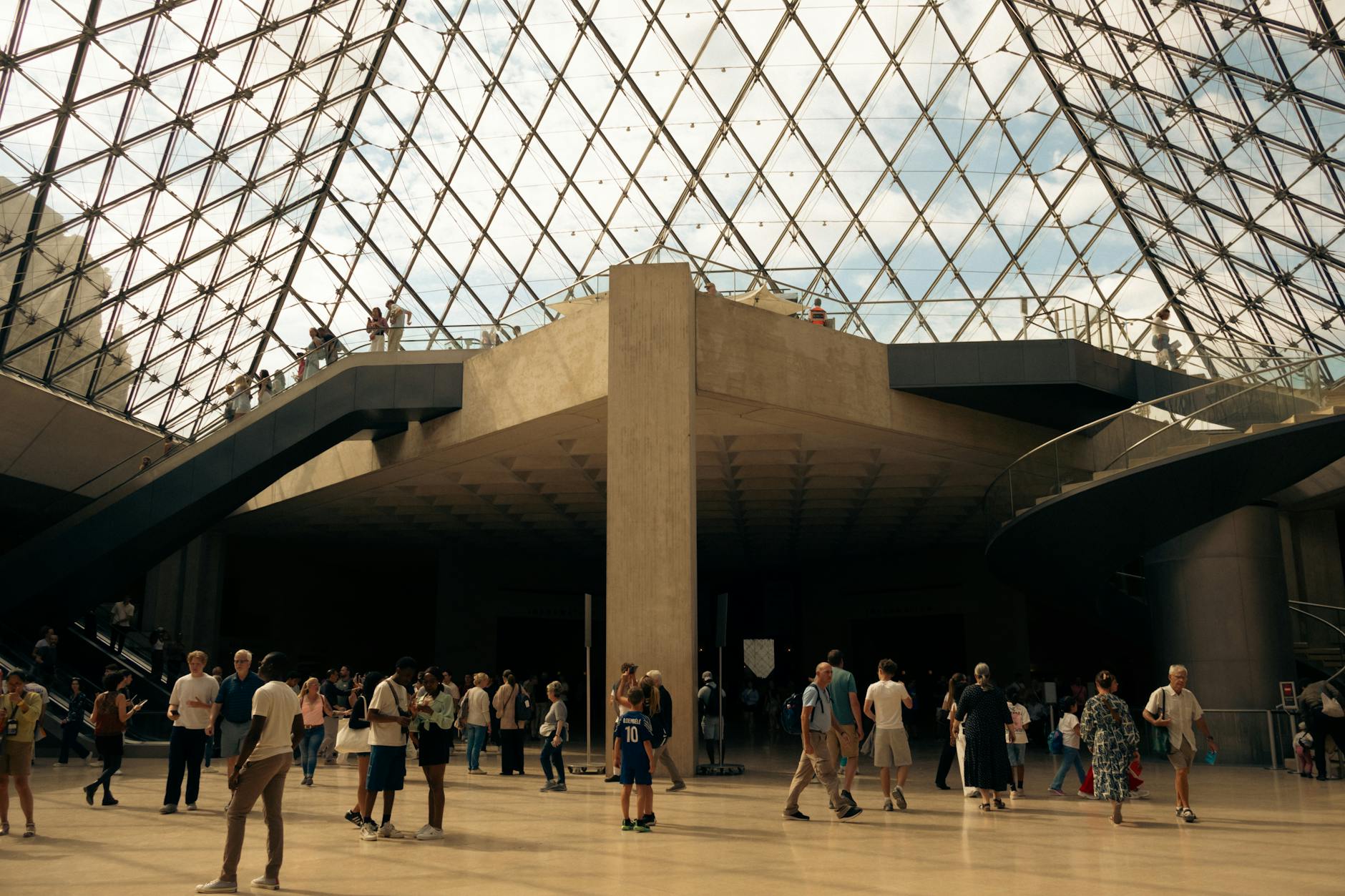
The timed-entry system is what you want. You book a 30-minute slot online, you show up within that window, you scan your QR code, you’re inside the pyramid in about 10 minutes.
Operators buy these slots in bulk, which is why a guided tour sits around $54-$87 when the underlying ticket is €22 from the official site. You’re paying for the slot, the guide, and the fact that someone else has done all the booking logistics for you.
My rule: if you’re comfortable navigating a French-language ticket page and you want to see the museum at your own pace, buy the €22 timed-entry ticket direct from louvre.fr. If you want an English-speaking guide who’s been there 200 times and knows exactly where the Mona Lisa is, book one of the tours below. The price difference is $25-$65 and honestly, for a first visit, it’s worth every cent.
The Entrance Trick Nobody Tells You
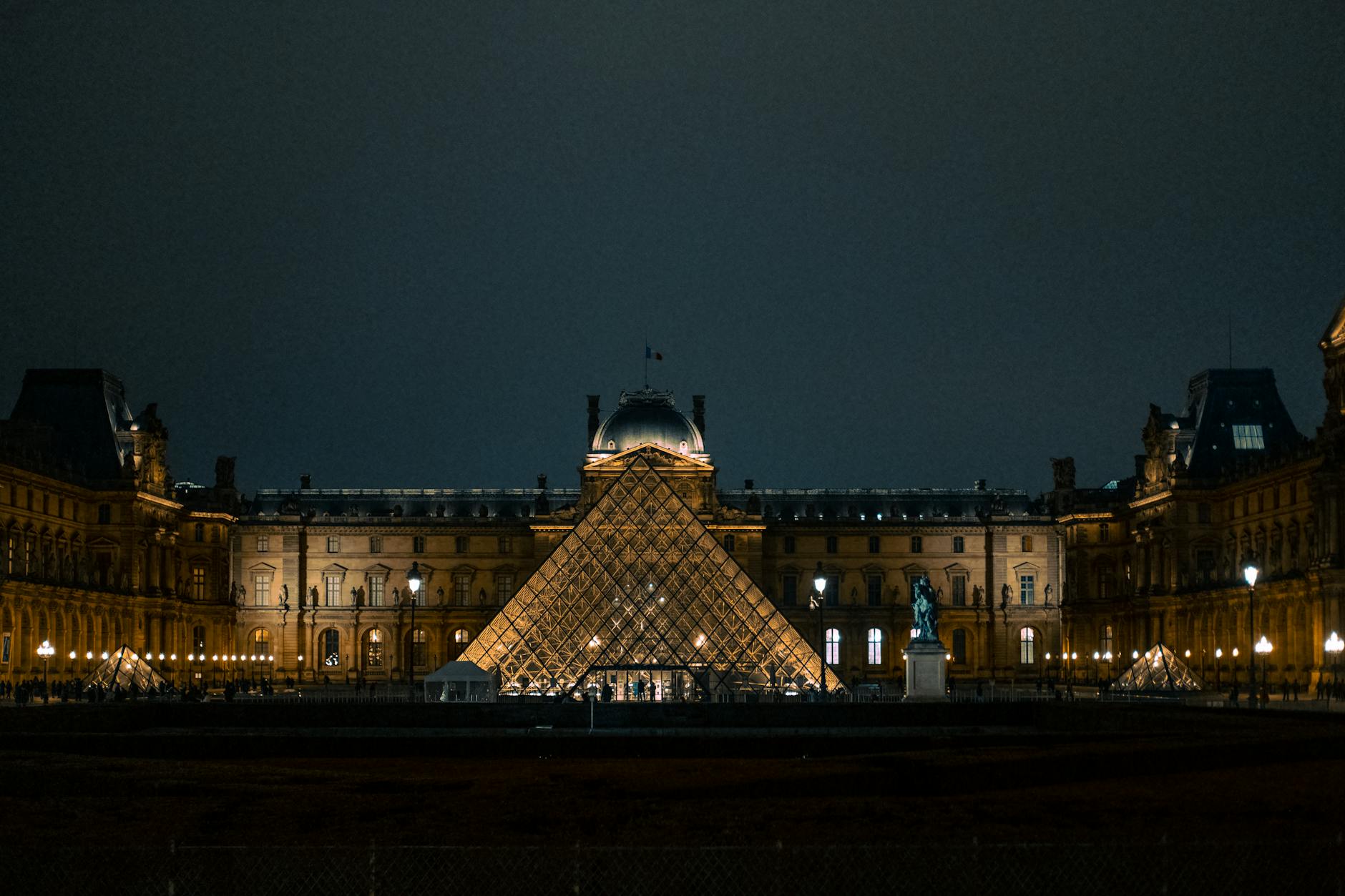
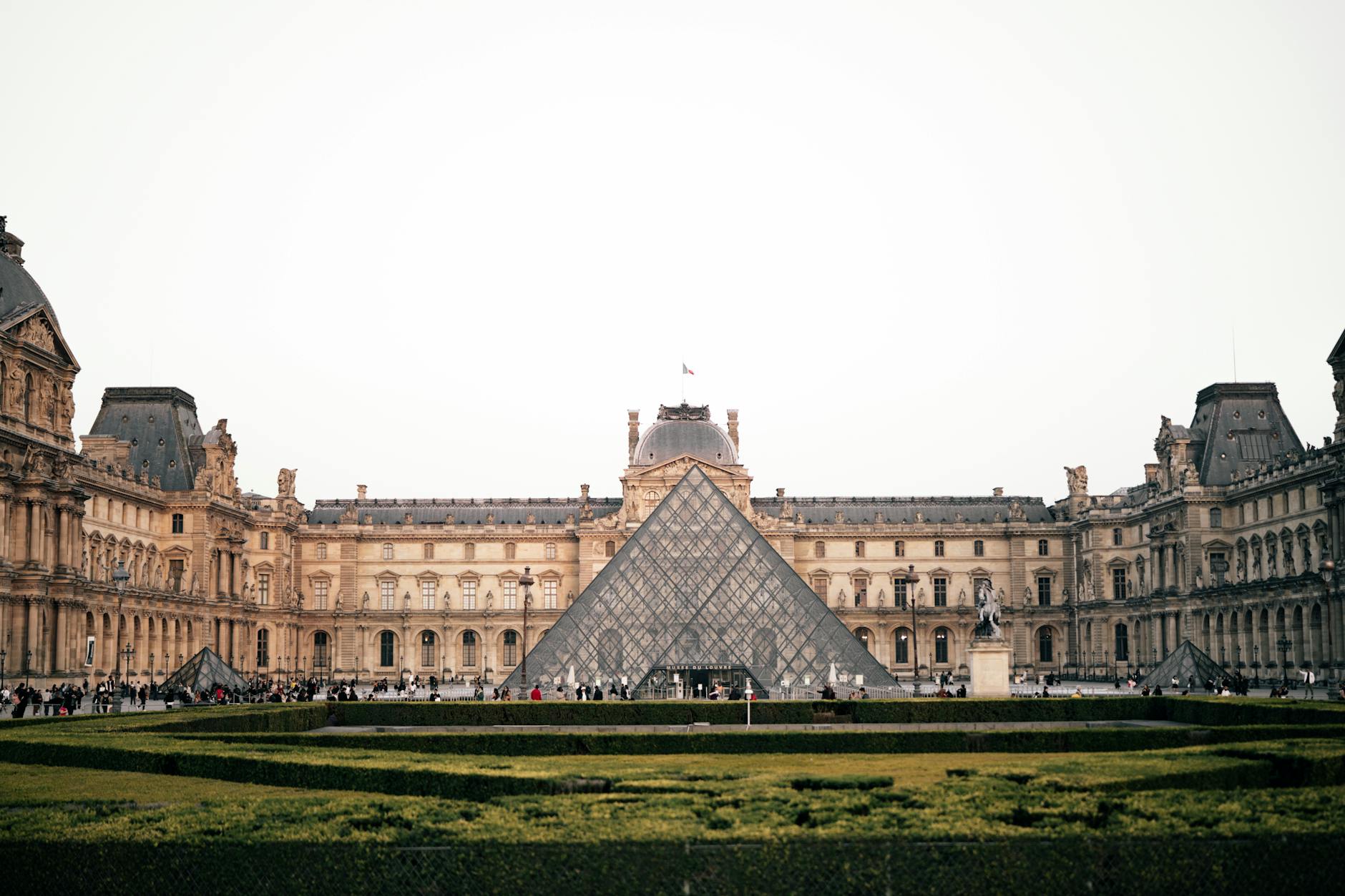
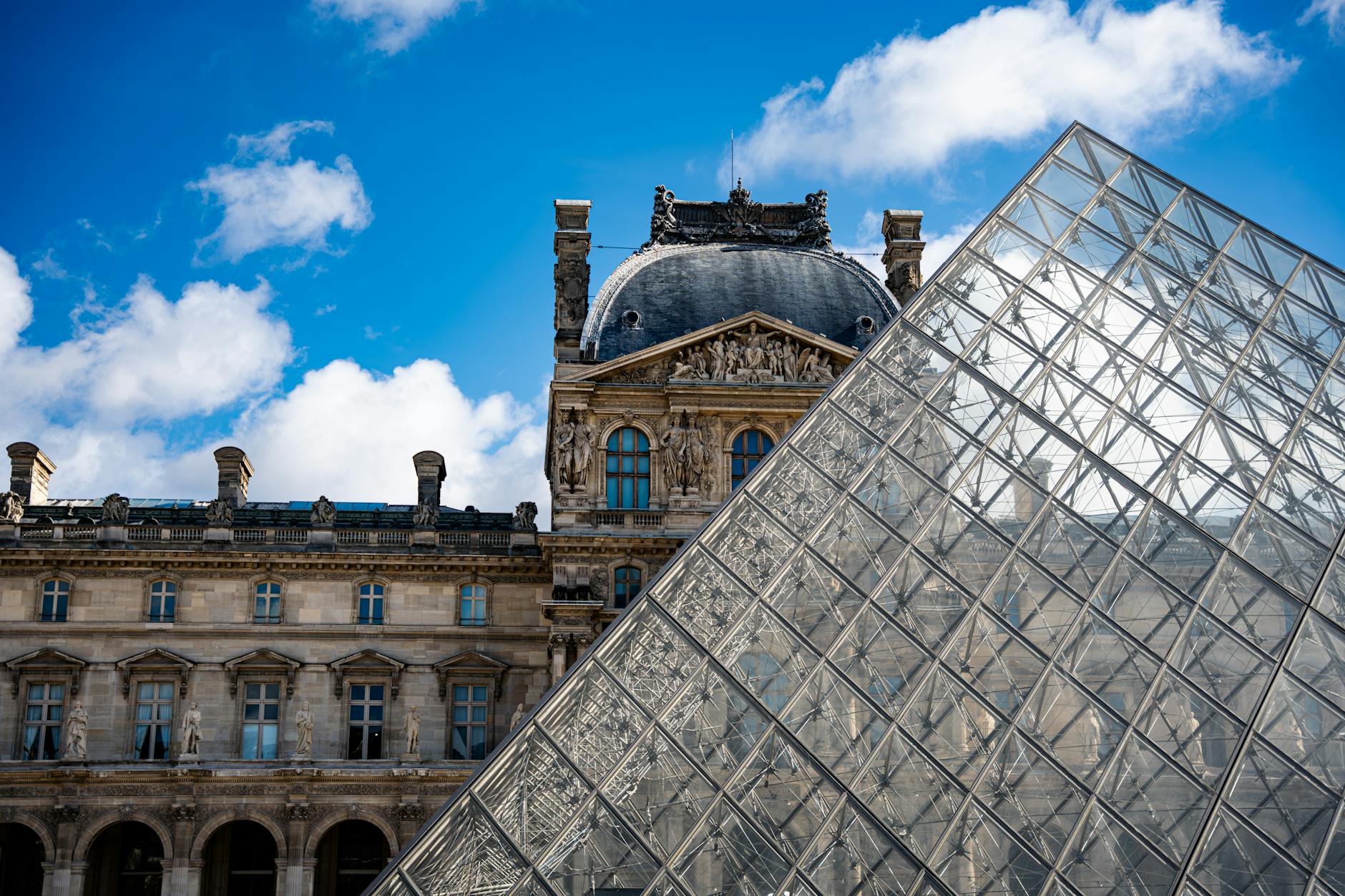
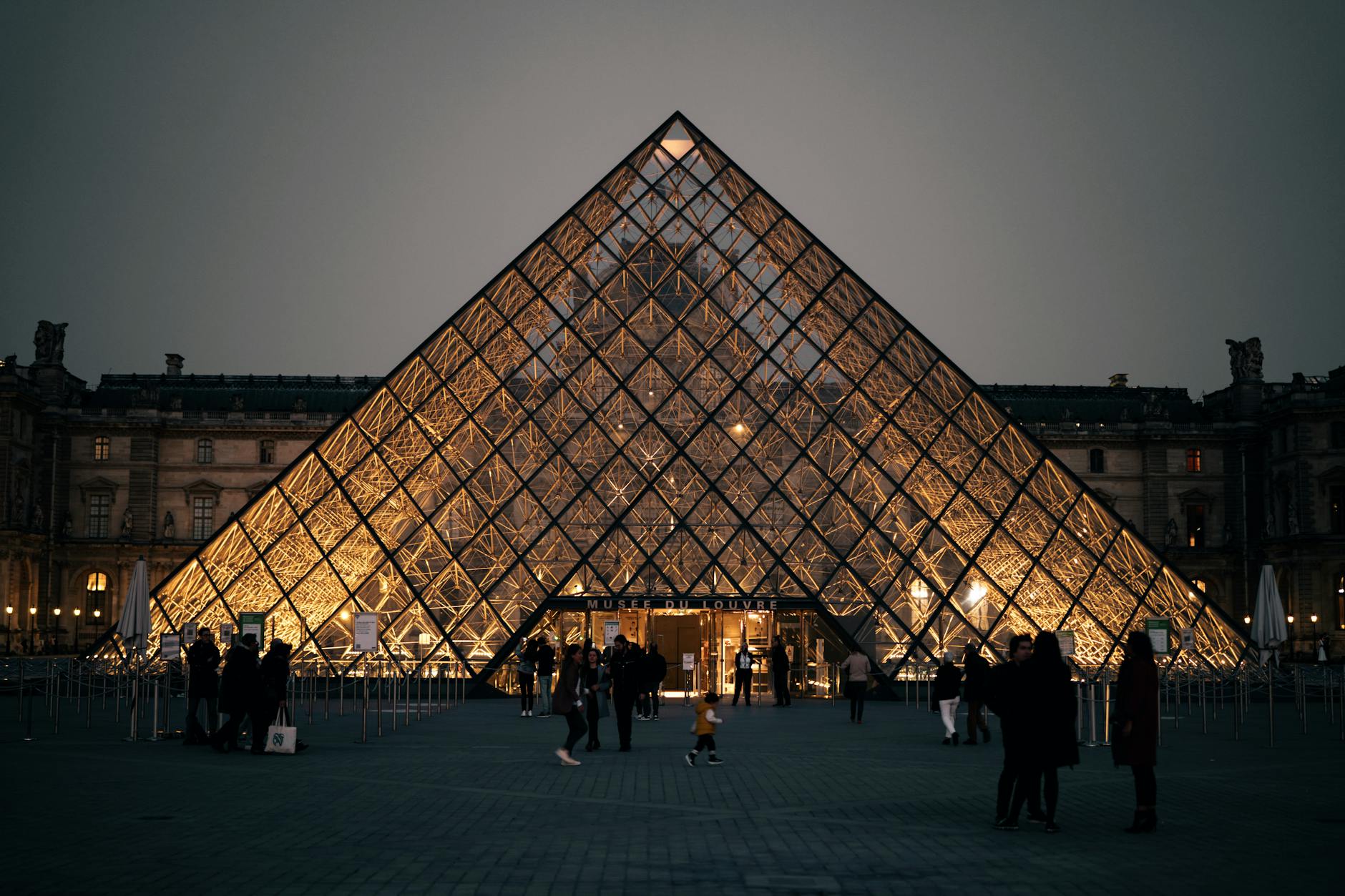
There are three entrances to the Louvre and they matter. The main one is the Pyramid — I.M. Pei’s glass pyramid in Cour Napoléon.
This is the big queue, because this is where walk-ups go — the two alternatives are both better:
Carrousel du Louvre entrance. Underground, via the Rue de Rivoli shopping arcade. Signposted from Métro Palais Royal–Musée du Louvre. If you have a pre-booked timed-entry ticket, go here. The queue is usually half the size of the pyramid queue and sometimes non-existent.
Porte des Lions entrance. On the south side of the museum, facing the Seine. Very few people know about it.
It’s closed a few days a week (check in advance, it changes) but when it’s open, it’s the fastest way in. Your guide will know which one to use.
The reason guided tours tend to use Carrousel or Porte des Lions is that their operators have pre-booked times at those entrances. When I booked Masterpieces Guided Tour in May, we met at the Tuileries garden fountain, walked to Porte des Lions as a group, and were inside the Sully wing before the pyramid queue had even reached 10am.
It felt like cheating. It wasn’t — the tour just books smarter than a first-timer would.
DIY vs Guided — An Honest Breakdown
The Louvre has a weird property: it gets better with a guide on a first visit, and worse with a guide on a repeat visit. Here’s why.
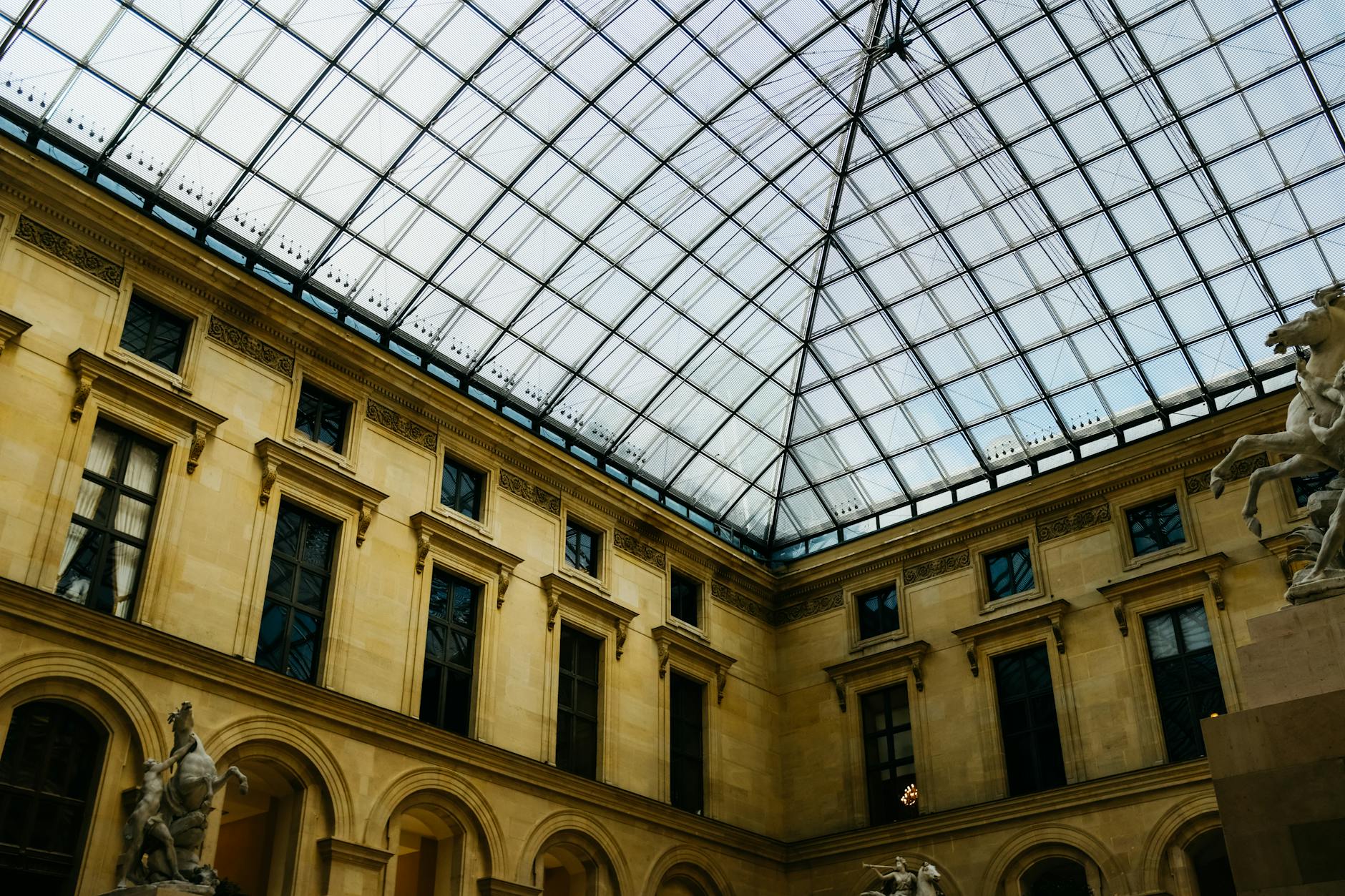
First visit. You have no map, the signage is confusing (the floor plans look like airport diagrams), and you genuinely don’t know what you’re looking at. A 2-hour guided tour here is the difference between “I saw the Louvre” and “I got lost in the Louvre for 3 hours and then left without finding the Mona Lisa”.
I’ve watched this happen. A good guide frontloads the five unmissable pieces, gives you context, then sets you free for another 2-3 hours on your own.
Repeat visit. Skip the guide. You already know where you’re going, you have your own favourites, and you don’t want someone marching you past the painting you actually wanted to sit with.
Buy the €22 ticket, walk in, ignore the maps, and let yourself get pleasantly lost. This is what the Louvre is actually for.
With kids. Guided, always. A 7-year-old in the Louvre without a guide is 45 minutes from a meltdown.
With a guide who knows the kid-friendly route (Egyptian antiquities, Napoleon III apartments, the sculpture halls where they can walk around the statues) you get a surprisingly good family visit.
The Three Louvre Tours I’d Actually Book
Three picks. Two guided, one ticket-only. All three skip the main queue.
1. Louvre Museum Masterpieces Guided Tour with Access — $87
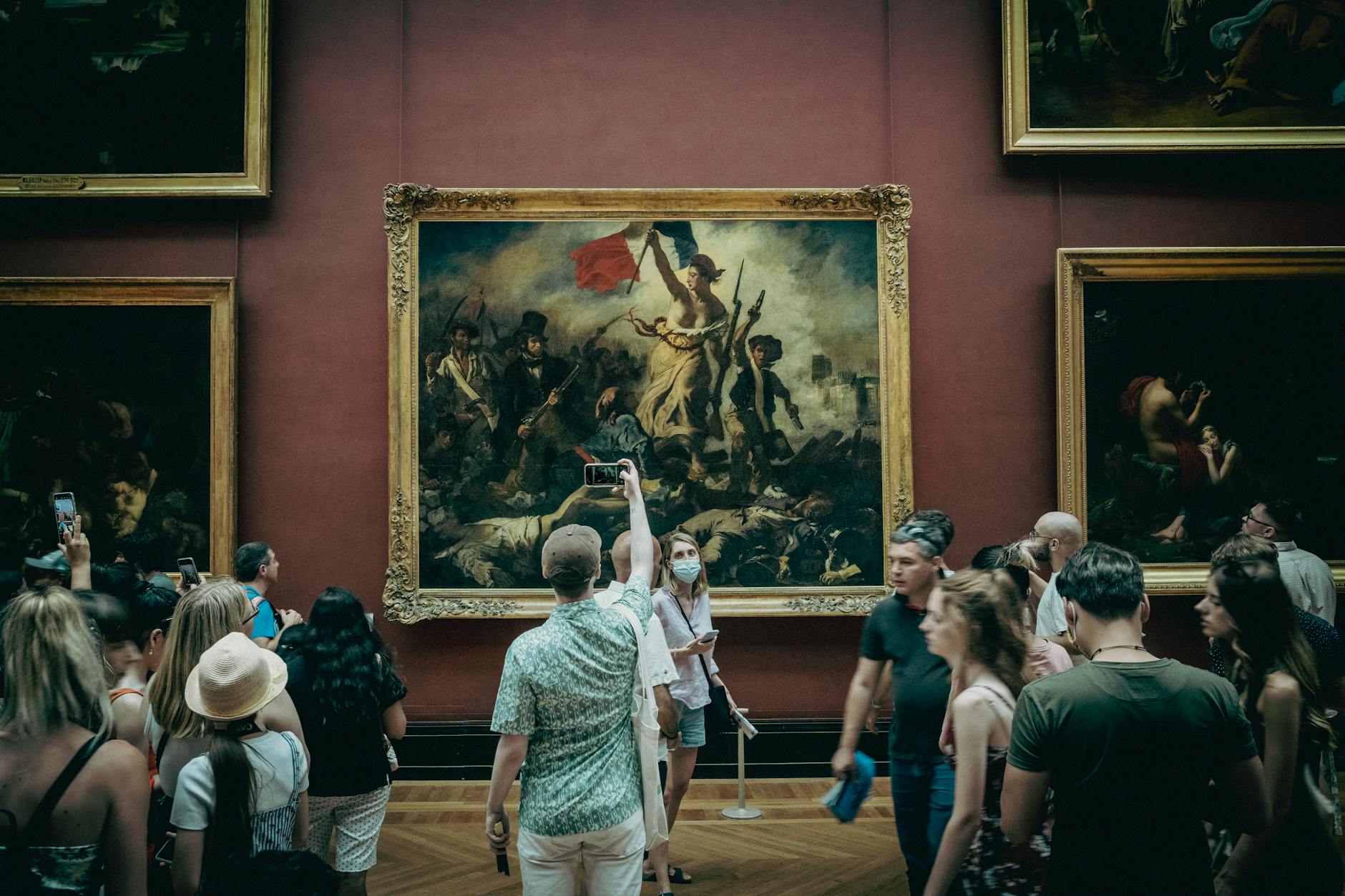
This is the one I always recommend for a first visit. 2.5 hours with an English-speaking guide, skip-the-line entry via the Carrousel or Porte des Lions, and a route that covers the Venus de Milo, the Winged Victory of Samothrace, the Coronation of Napoleon, the Mona Lisa, and usually two or three Vermeers or Rembrandts depending on which rooms are open that day.
What you’re paying for: the guide’s knowledge of which entrance is fastest that morning, 2.5 hours of actual art history, and a route that hits the unmissables without zigzagging. My guide in May was a French art-history PhD student who had strong opinions on why the Winged Victory is better than the Mona Lisa and took 15 minutes to argue for it. That was the best $87 I spent in Paris.
After the tour ends, your ticket stays valid for the rest of the day, so you can wander on your own. Most people do another 2 hours after the guided portion ends. The whole thing is a 4.5-5 hour day if you do it properly.
2. Louvre Priority Access Guided Tour with Mona Lisa — $54
The budget version of the same tour. 2 hours instead of 2.5, same skip-the-line, same five must-sees. The guide tends to spend slightly less time on context and more on navigation — which, for some visitors, is exactly what they want. If you’d rather see the big five paintings and then have extra budget for a Seine cruise later, this is the smarter spend.
The only catch: the €33 savings over the Masterpieces tour come at the cost of time in front of each piece. If you want to stand for 5 minutes in front of the Winged Victory and absorb it, book option 1. If you want a quick efficient hit-list with a skip-the-line voucher, book this one.
3. Louvre Museum Timed Entry Ticket — $48
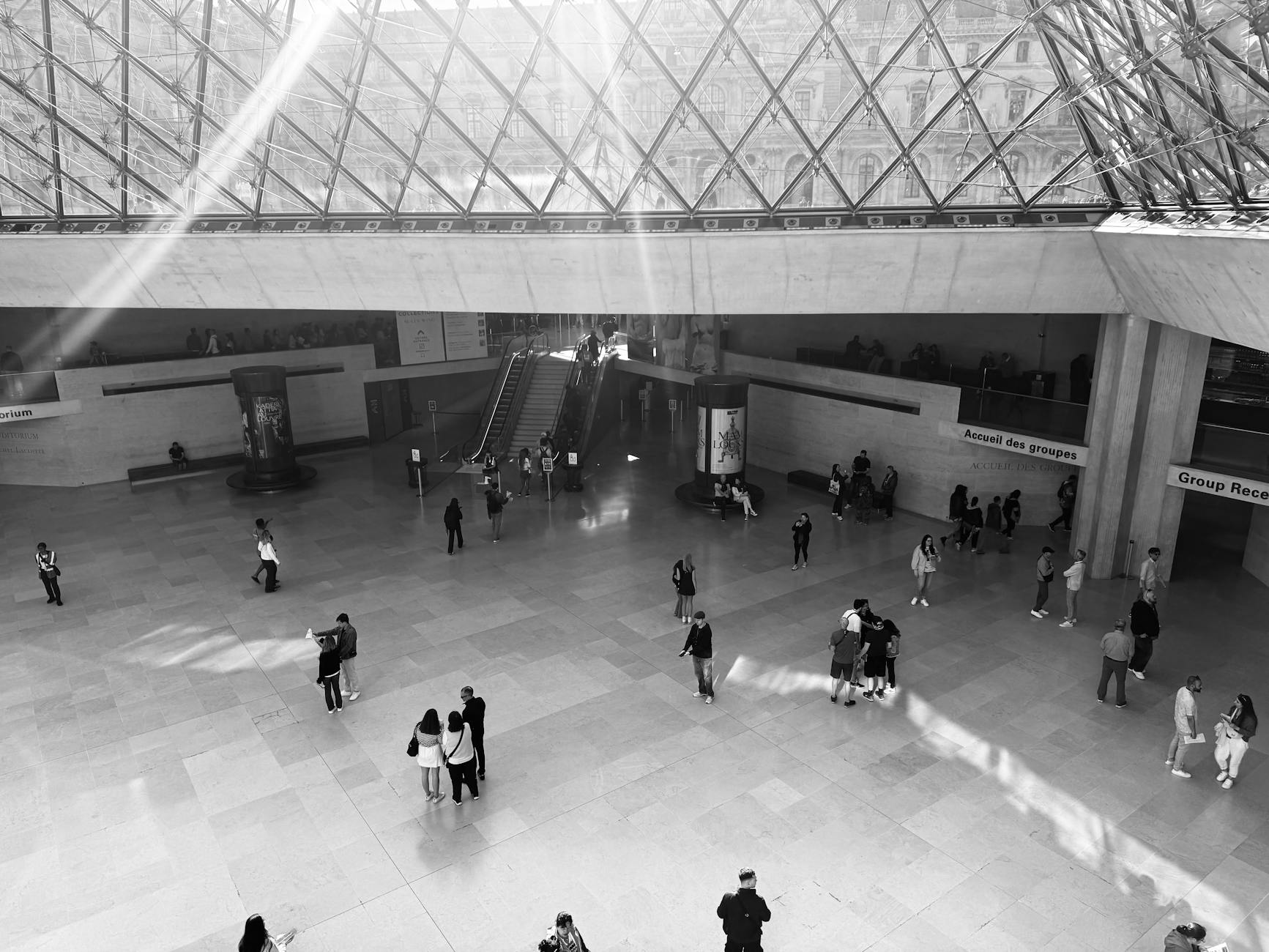
Ticket only, no guide. You book a 30-minute timed slot, show up with your QR code, scan in via the pyramid or Carrousel entrance, and you’re inside. Priced at $48 (about $5-8 over the official €22 Louvre direct-purchase price) because the operator has locked in the timed slot for you — so no need to refresh the official site at midnight hoping for a window.
My take: if you’ve been to the Louvre before, or you’ve done a lot of art museums in your life and don’t need hand-holding, this is the ticket. Five hours inside at your own pace.
Wander. Get lost. Sit in the Rubens room for 20 minutes.
The Louvre is a better museum when you’re in charge of your own route.
When to Go — The Days and Times That Matter
Closed Tuesdays. Full stop. Do not show up on a Tuesday. I have seen travelers crying at the pyramid after realising.
The Louvre has been closed Tuesdays since 1946 and it will be closed on your Tuesday too.
Best day: Wednesday or Friday. Both are late-opening days — the museum stays open until 9:45pm. Book a 5pm or 6pm entry slot.
The crowds thin out dramatically after 6pm, the light through the pyramid at sunset is unreal, and half the tour groups have already left. By 8pm you can have the Venus de Milo to yourself.
Worst days: Saturday, Sunday, first Sunday of the month. Saturdays and Sundays are always busy. The first Sunday of every month used to be free entry, and while that ended in 2019 for most visitors, the crowd habit stuck.
It’s still the single busiest day of the month. Avoid.
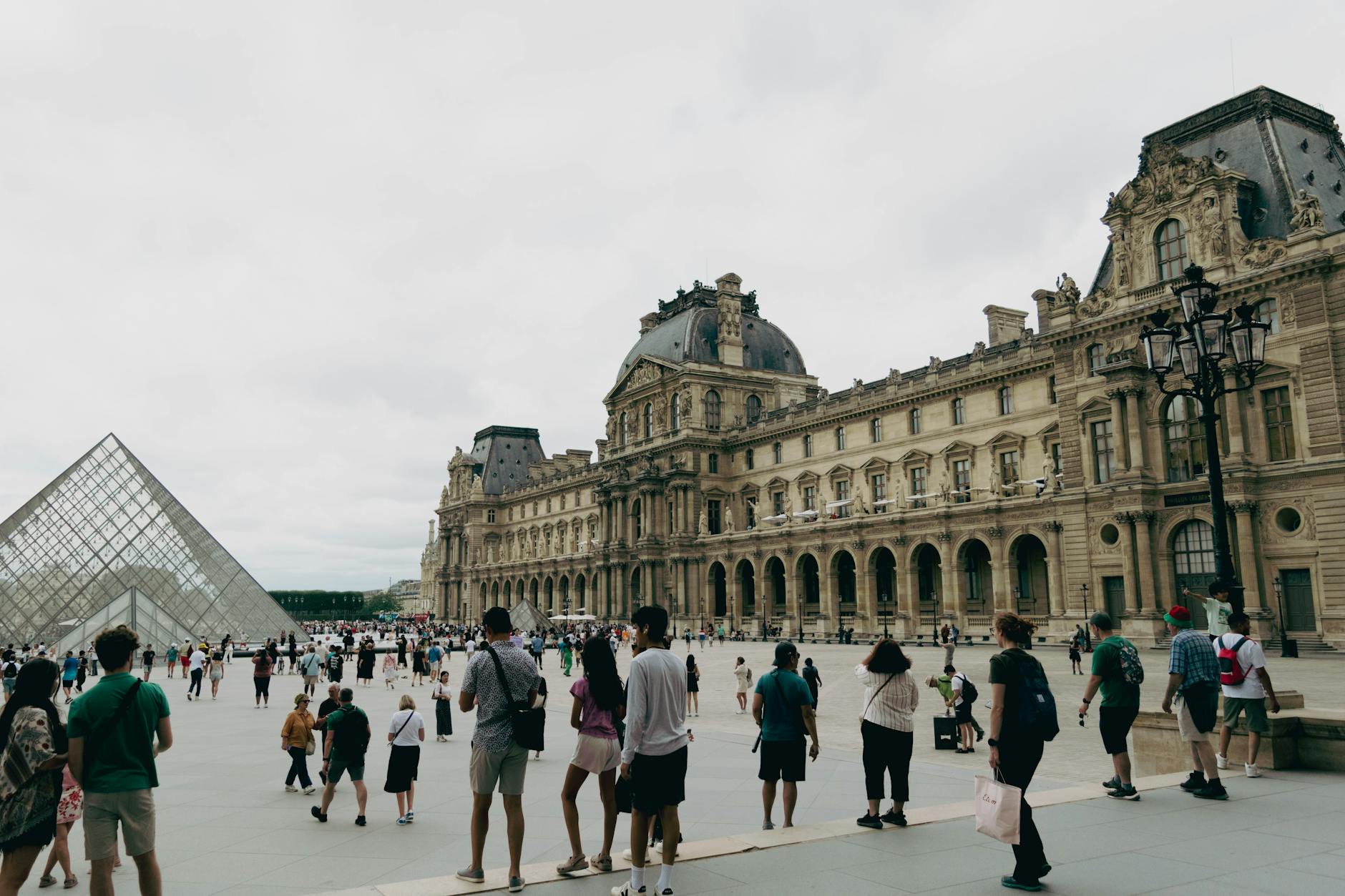
Best time: first slot of the day (usually 9am), or last two slots on a late-opening night. The worst time is 11am-2pm on any day. That’s when school groups, coach tours, and European family visits all converge.
I’ve done 11am once and it was miserable. I’ve done 9am five times and it’s consistently been the best version of the museum.
What You Actually Come to See
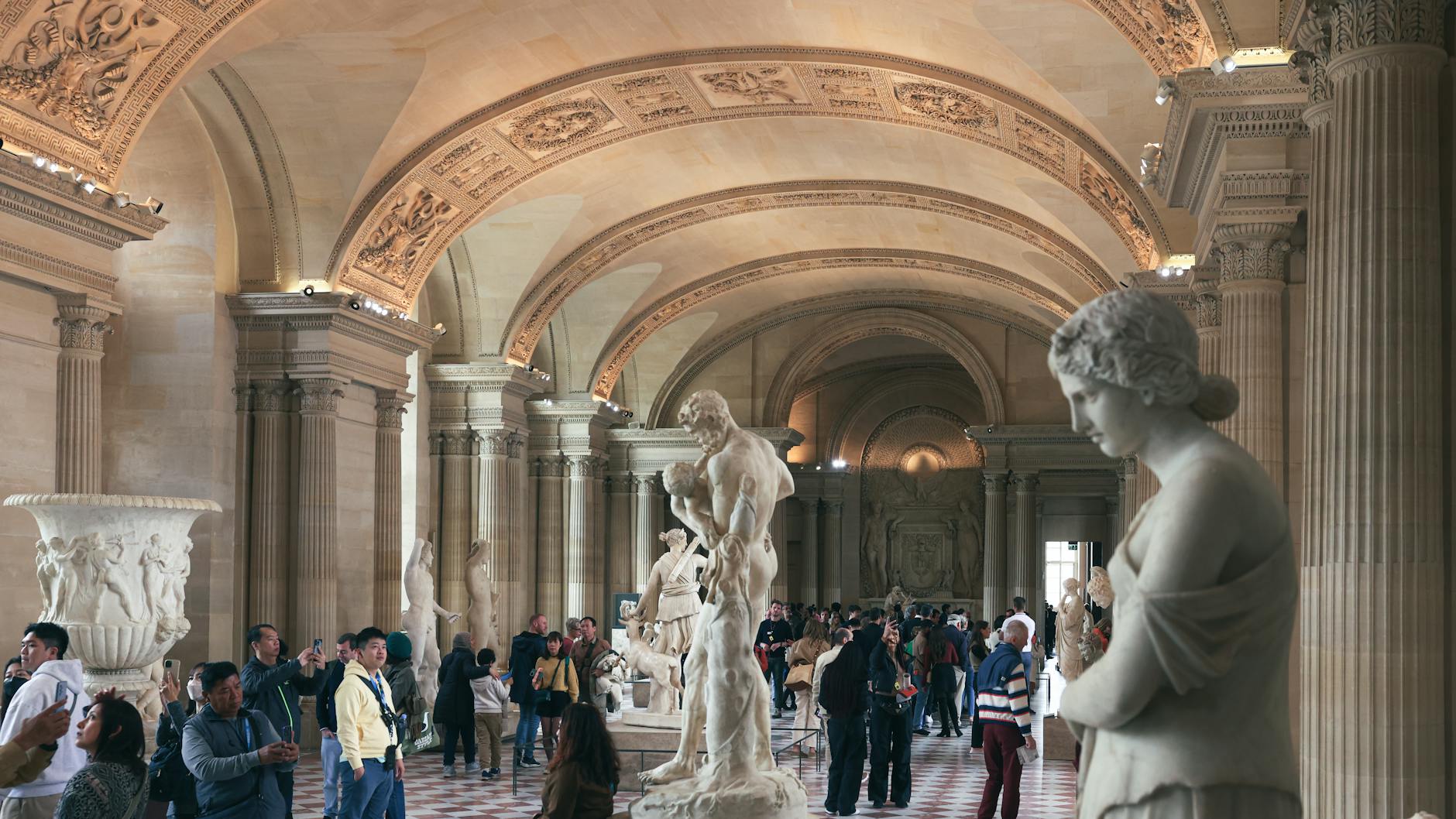
The Louvre has roughly 35,000 objects on display at any given time. You cannot see them all. A first visit should focus on the Denon wing (where most of the superstar works live) and pick one other wing to sample.
Mona Lisa. Denon wing, Room 711, first floor. Yes you have to see it once in your life.
No it is not worth the 30-minute queue to get within 2 metres of it. The painting is 77x53cm, behind bulletproof glass, in a room with fluorescent lighting.
Your photo will be bad. Everyone else’s photo will be bad.
Look at it for 90 seconds, accept that you’ve seen it, move on.
Winged Victory of Samothrace. Top of the Daru staircase, Denon wing. A 2nd-century-BC marble sculpture of the Greek goddess Nike, 2.75 metres tall, with her wings spread as though landing on a ship’s prow.
She’s been without her head and arms for 2,200 years and it somehow makes her better. This is the piece to actually sit with for 10 minutes. Free bench directly opposite.
Venus de Milo. Sully wing, ground floor. Classical Greek sculpture from around 100 BC. Marble, armless, 2 metres tall.
The queue for photos here is smaller than the Mona Lisa’s but still busy. Walk around her 360 degrees — most people only see her from the front, and the three-quarter view from the left is the better angle.
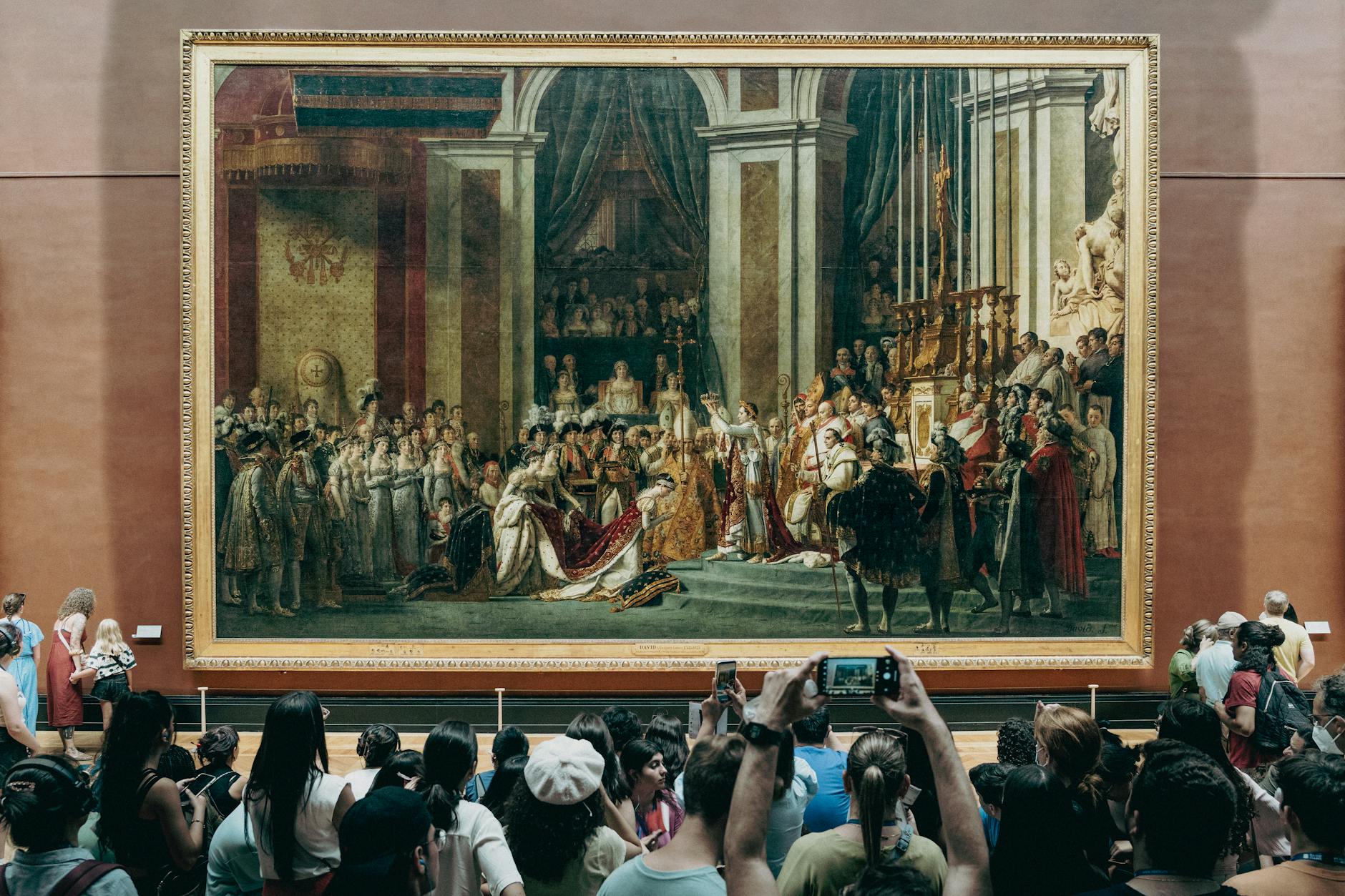
Coronation of Napoleon. Denon wing, Room 702, first floor. Jacques-Louis David, 1807. Ten metres wide, six metres tall, and somehow almost always has space in front of it because it’s just across from the Mona Lisa room and everyone’s fighting over the Leonardo instead.
This is the sleeper pick. Stand in front of it for 5 minutes and notice how David has subtly painted his own face into the audience.
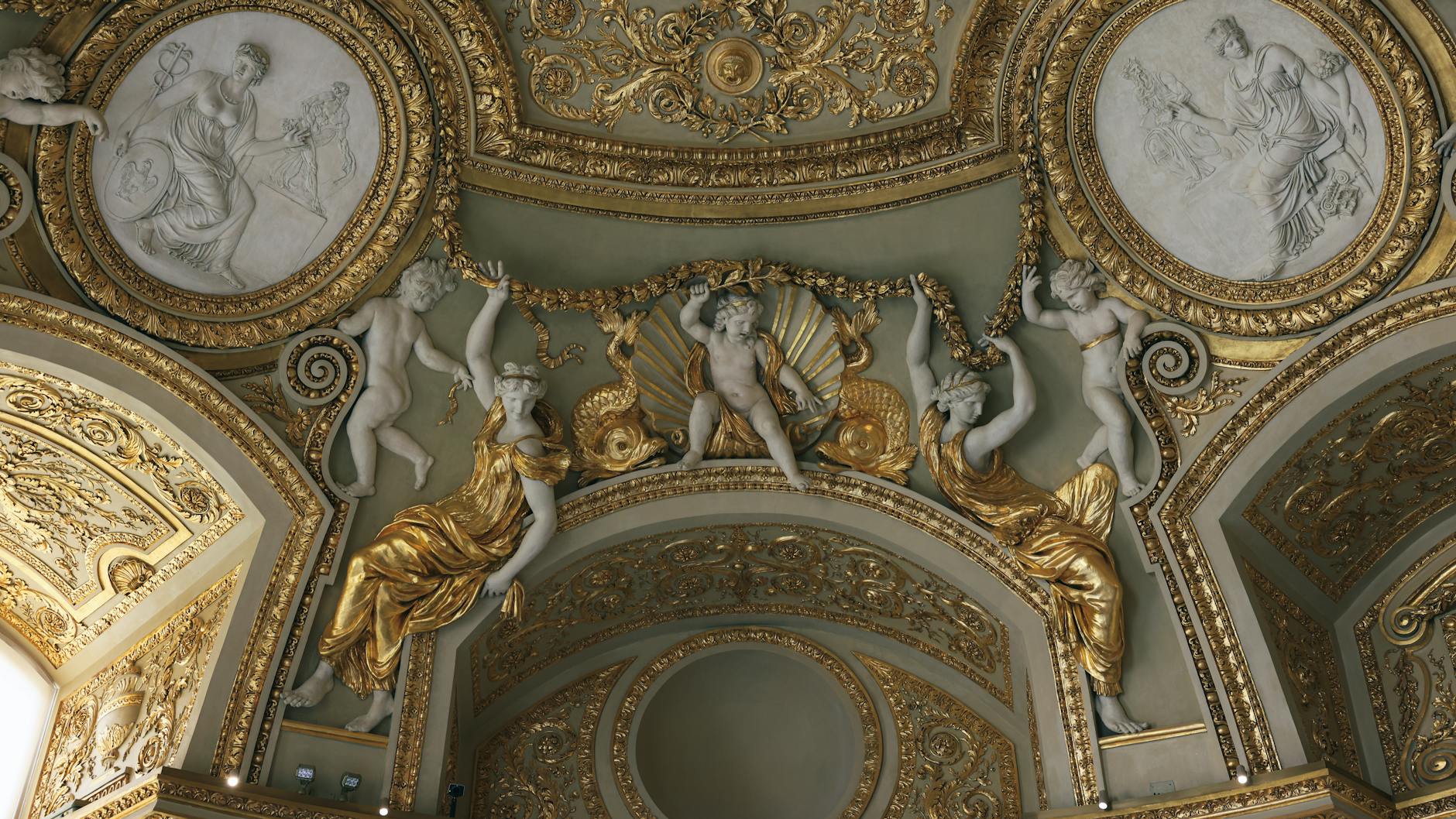
Liberty Leading the People. Denon wing, Room 700. Delacroix, 1830. The painting that shows up in every French history textbook — Marianne with the tricolour leading the July Revolution. Big, dramatic, weirdly low-crowded.
The Wedding at Cana. The wall directly opposite the Mona Lisa. Veronese, 1563. 6.7 metres by 9.9 metres — the largest painting in the Louvre.
Ignored by 80% of visitors because they’re facing the other way looking at Leonardo. Turn around. It’s a better painting.
Egyptian antiquities. Sully wing, ground floor and lower ground floor. If you have kids, start here. Real sarcophagi, the Great Sphinx of Tanis, the Seated Scribe. Kid-friendly, rarely crowded, and a nice change of pace from the Renaissance galleries.
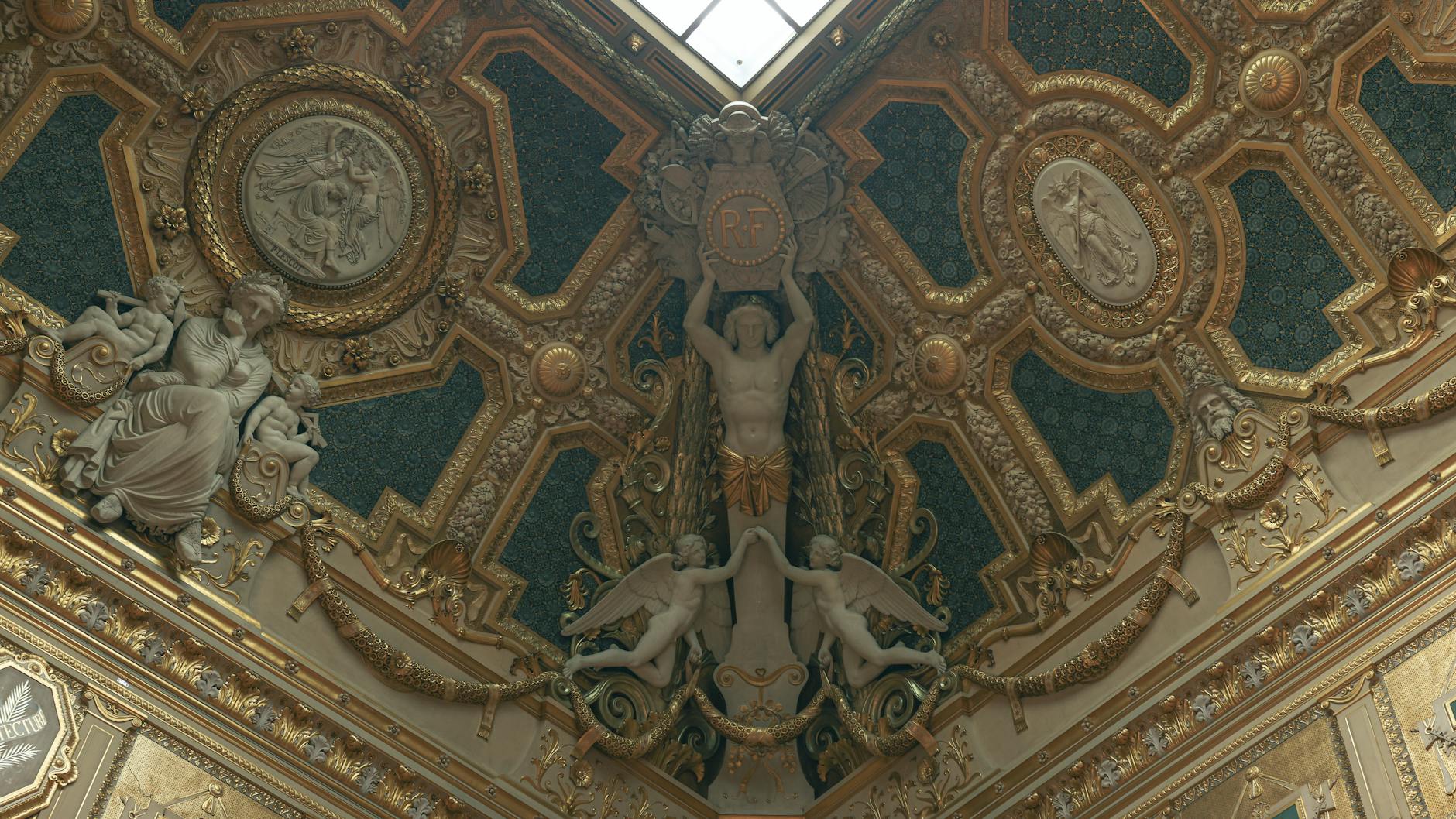
Apollo Gallery. Denon wing, first floor, just before the Mona Lisa room. This is where the French Crown Jewels are — including the 140-carat Regent Diamond.
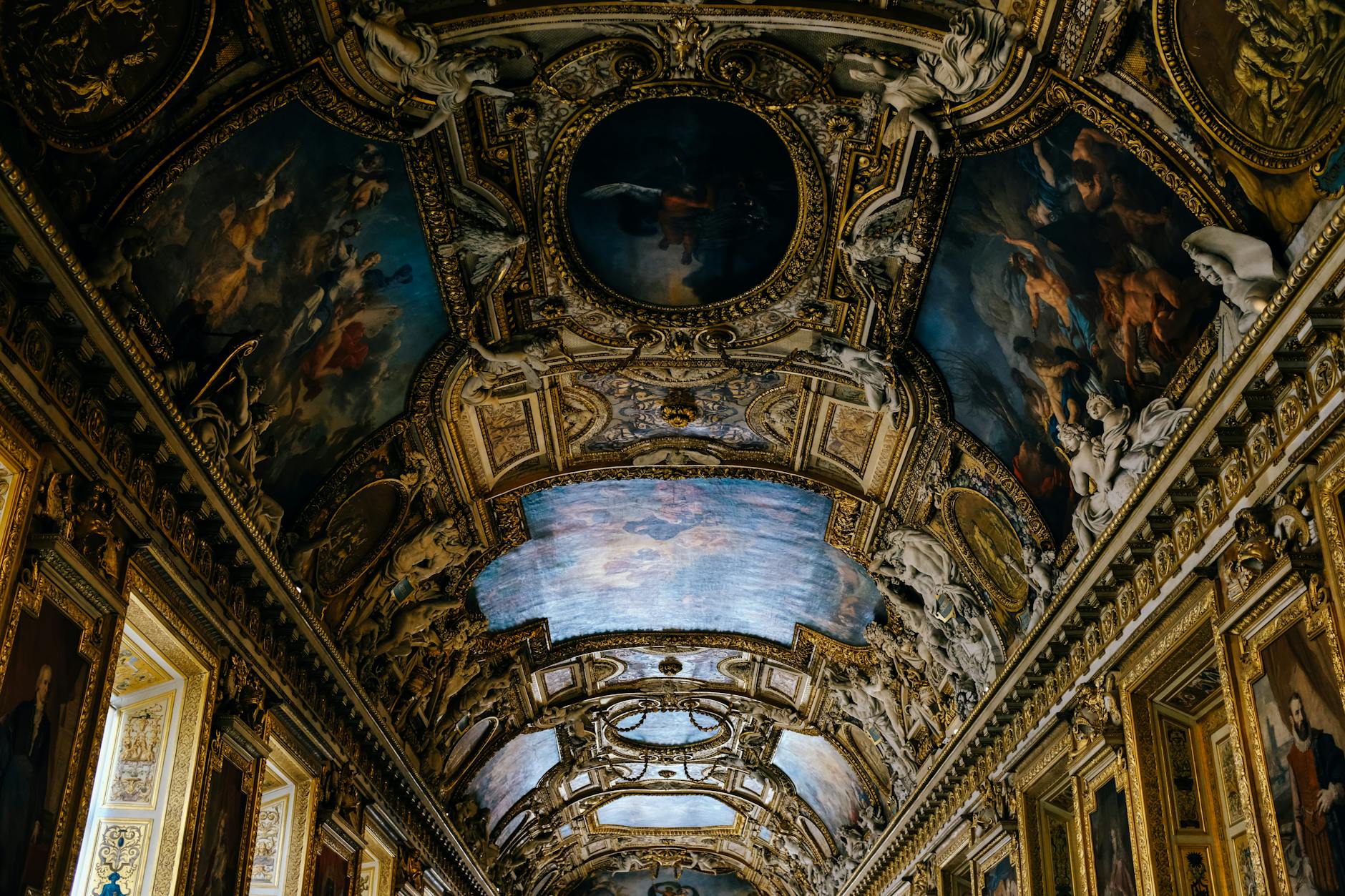
The room itself is one of the most ornate spaces in the museum, with a gilded ceiling painted by Charles Le Brun in 1663. Most tour groups walk through it too fast. Linger.
The Mona Lisa Reality Check
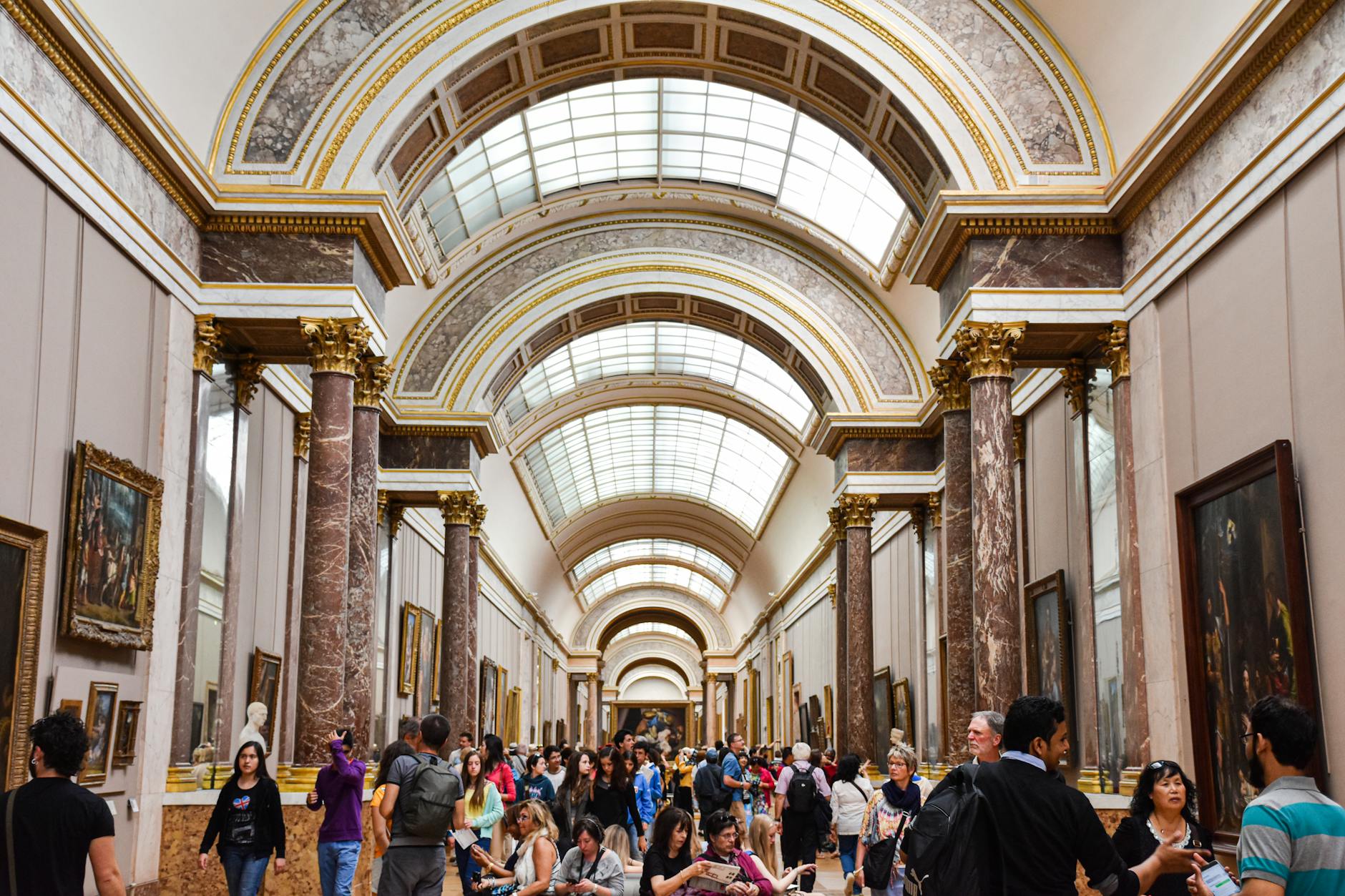
Here’s the truth: the Mona Lisa is the most famous painting in the world because of its theft in 1911, not because it’s Leonardo’s best work. La Belle Ferronnière, in the same museum, is arguably a better Leonardo portrait and you can stand a metre away from it with no crowd.
The Louvre knows this. That’s why La Belle Ferronnière is in a quiet room 50 metres from the scrum.
My advice: see the Mona Lisa for two minutes, take one bad photo, then walk back through the Grande Galerie to La Belle Ferronnière and sit with her properly. That’s the Leonardo you’ll actually remember.
How to Get There
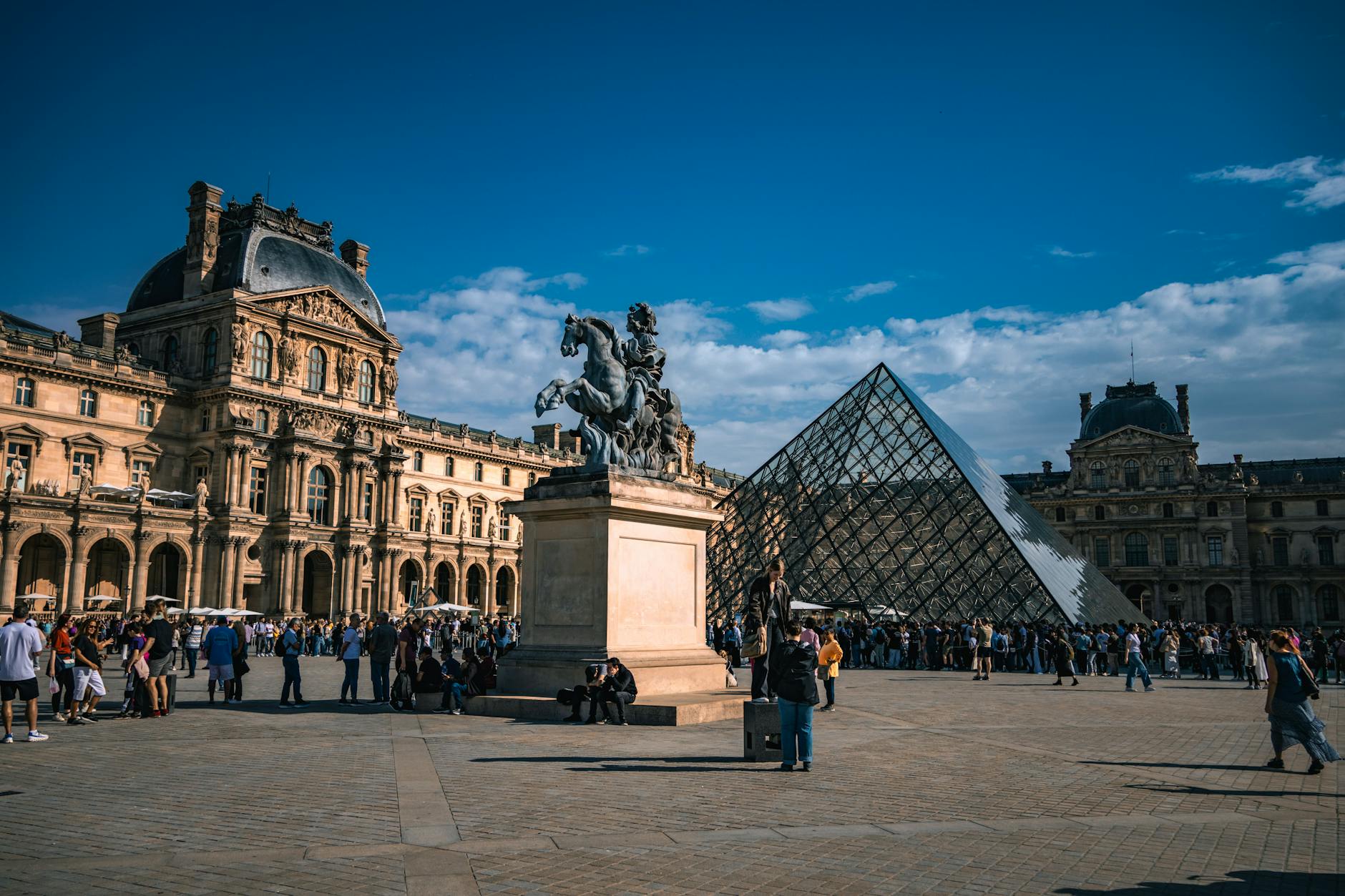
Metro. Line 1 or Line 7 to Palais Royal–Musée du Louvre. The station has a direct underground passage to the Carrousel entrance — you don’t even need to go outside. If you’ve booked a timed-entry ticket, this is the fastest way to get to your entrance.
On foot. From Place de la Concorde, it’s a 10-minute walk through the Tuileries gardens. This is the prettiest approach and the one I’d choose if weather is decent. From Notre-Dame, it’s 15 minutes along the Seine.
By bus. Lines 21, 27, 39, 48, 68, 69, 72, 81, 95. The stop is “Louvre–Rivoli” or “Palais Royal”. Honestly, the metro is faster unless you want to sightsee on the way.
Bike. Vélib stations everywhere in the area. Docking near Tuileries is usually easiest.
Tips That Will Save You Time and Temper
Book the first slot of the day. The 9am entry is the quietest, the light is the best, and by 10am you’ve already seen three of the big five. The difference between 9am and 11am is about 4,000 people.
Bring a water bottle. The Louvre is enormous — 73,000 square metres of gallery — and water fountains are hidden. You will walk 5-8km inside the building.
Wear soft-soled shoes. Marble floors, hours of walking, echoing corridors. No heels, no new shoes. This is not the day to break in those boots you bought on Rue de Rivoli.
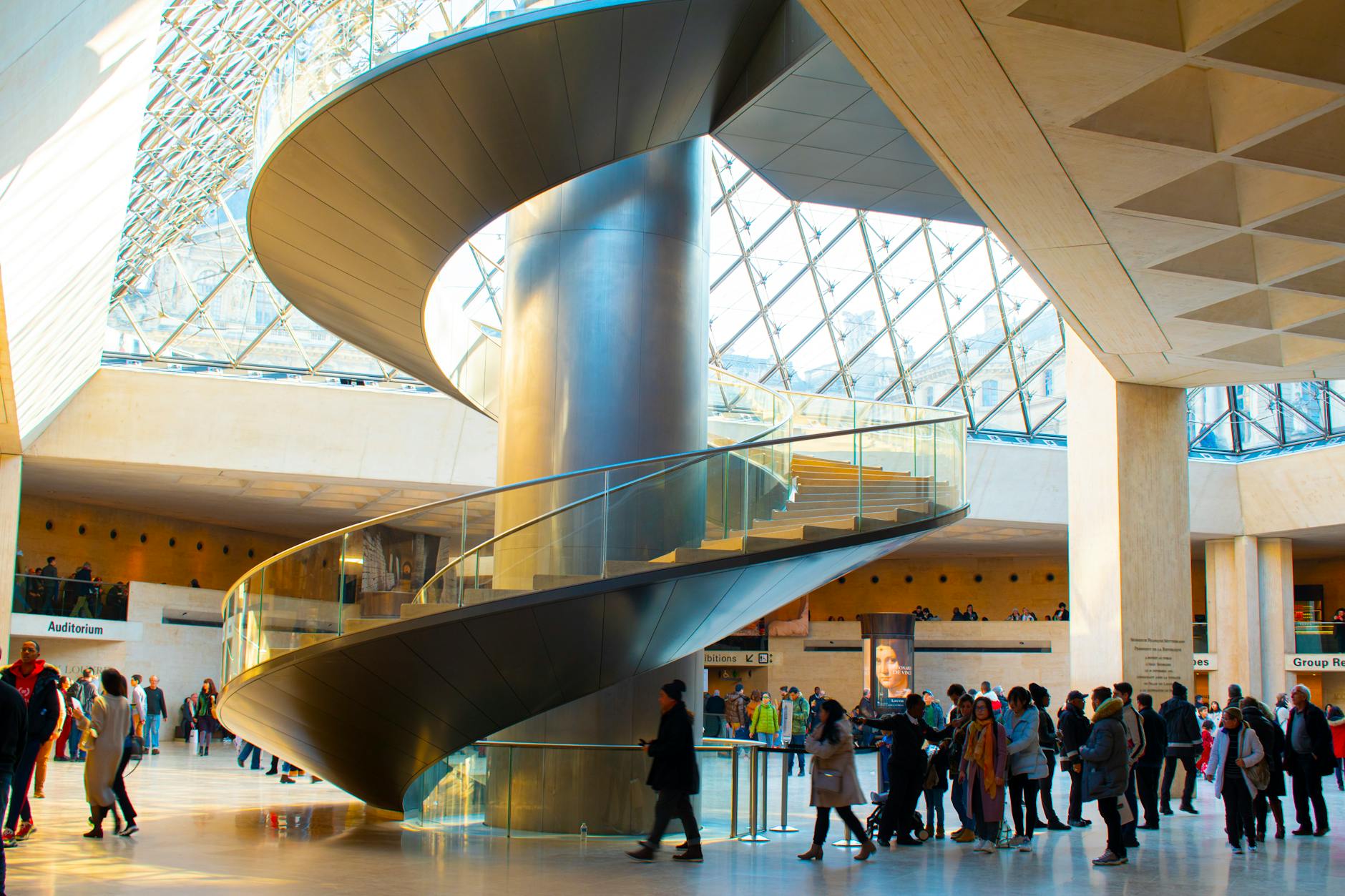
Use the coat check. Free, under the pyramid. Leave your jacket and day pack. The galleries get warm and lugging a coat around is the second most common Louvre complaint after “where’s the Mona Lisa”.
Skip the main gift shop. The Carrousel du Louvre gift shop (underground, separate from the museum shop) has better prices on the same Mona Lisa mug and you don’t need a ticket to enter.
Eat before or after. The café inside the Richelieu wing is expensive and mediocre. The Angelina tearoom (also inside) does a €12 hot chocolate that’s genuinely worth it, but save the meals for outside.
Rue Saint-Honoré is a 5-minute walk and has infinitely better options.
Don’t try to see it all. Four hours is the sweet spot. Six hours is legally allowed but your brain stops processing art after about 3.5 hours.
Any more and you’re just wandering past Rembrandts without registering them.
Nearby — Other Paris Guides to Pair With This One
The Louvre eats 4-5 hours of your day but leaves you in the geographic centre of Paris, which means you can pair it with almost anything. My Seine river cruise guide is the obvious afternoon follow-up — walk 5 minutes from the pyramid to the Pont Neuf dock and you’re on a 1-hour sightseeing cruise by 4pm. If you want to turn the day into a proper Parisian evening, my Seine dinner cruise guide picks up where the museum leaves off — and I’ve done the Louvre-to-dinner-cruise combo twice, it’s a great Paris day.
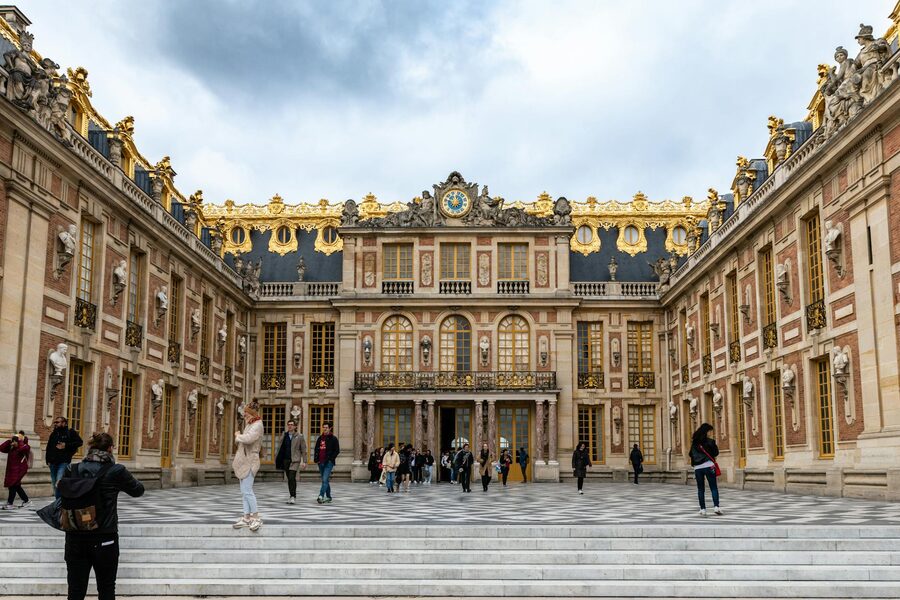
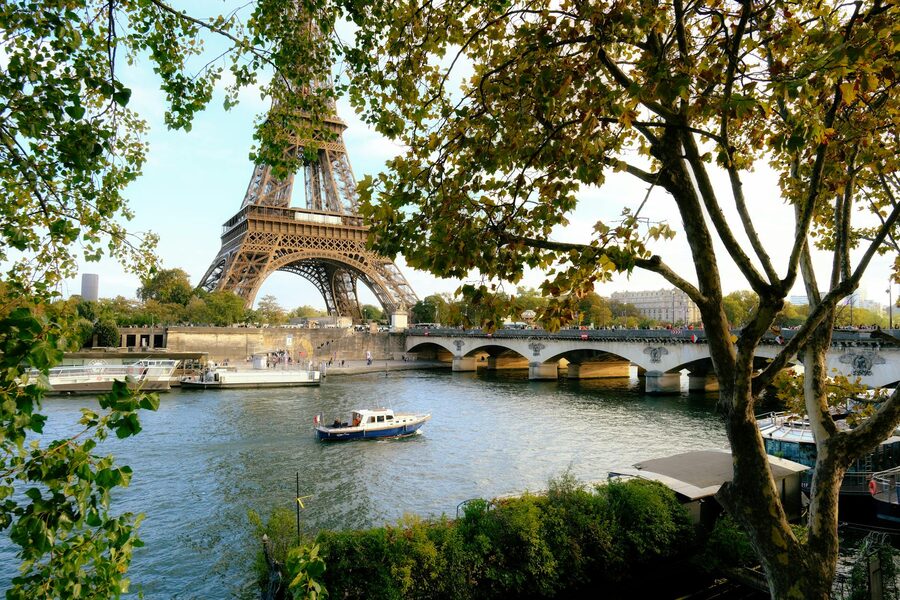
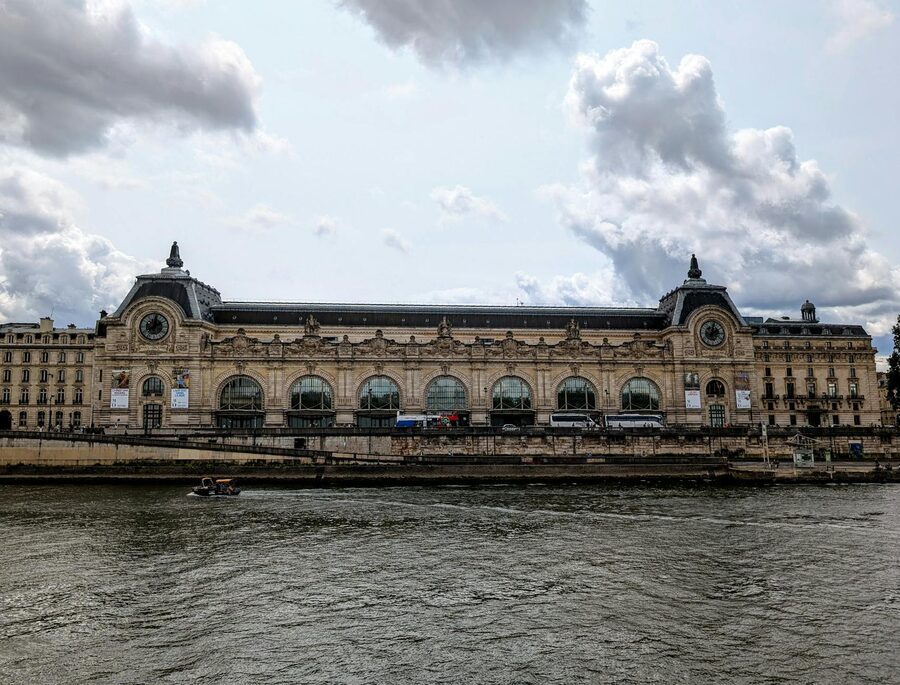
If you’re building a proper Paris itinerary, my Versailles day-trip guide is the obvious second-day pairing — do the Louvre on day one when you’re fresh, save Versailles for day two when you know the RER system. My Eiffel Tower ticket guide covers the other big Paris ticket you’ll need to book in advance, and my Musée d’Orsay guide is the Louvre’s quieter, smaller, and honestly-maybe-better cousin a 15-minute walk away along the Seine.
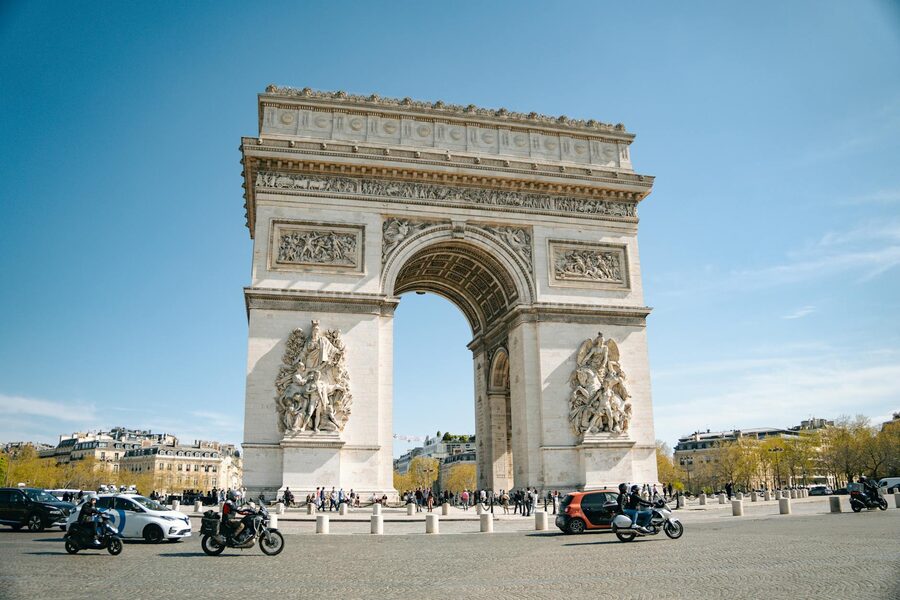
If you want to combine the Louvre with something less art-heavy on the same day, my Arc de Triomphe guide is a 25-minute walk up the Champs-Élysées and takes about 45 minutes end-to-end. Good palate cleanser after four hours of Renaissance paintings.
This article contains affiliate links. When you book through these links, we may earn a small commission at no extra cost to you. This helps us keep producing free travel guides.
Beyond the Louvre
After hours in the world s biggest museum, Paris has plenty of ways to decompress. The quirky museums — the Atelier des Lumieres, Museum of Illusions, and the Banksy exhibition — offer a lighter, more interactive museum experience. The Hotel de la Marine on the Place de la Concorde, a 5-minute walk from the Louvre, shows what 18th-century French interior design looks like when restored to perfection. For a complete change of pace, a vintage 2CV or sidecar tour takes you past the Louvre and through the rest of Paris in style. And if the Louvre sparks a wider interest in French history, the Conciergerie and Sainte-Chapelle on the Ile de la Cite are a short walk across the river.