
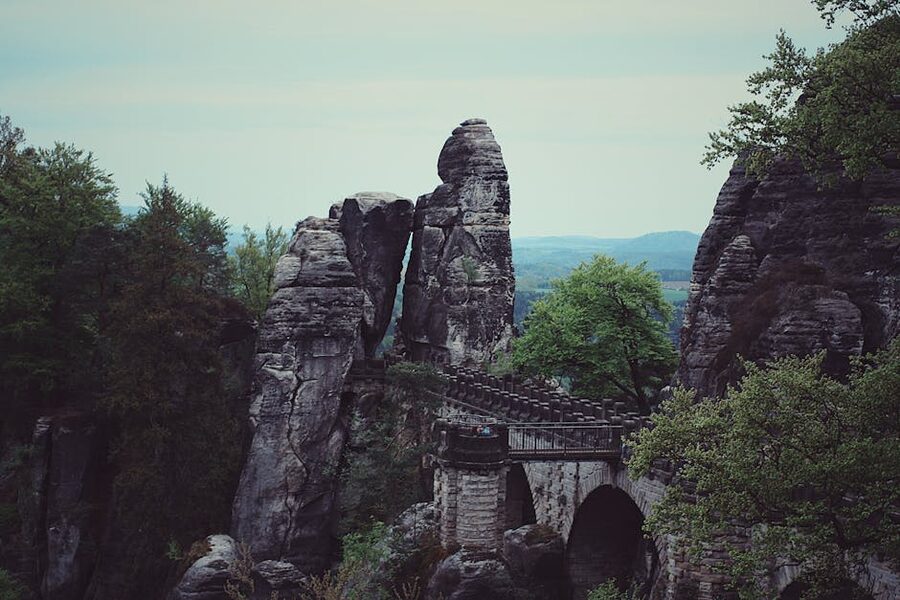
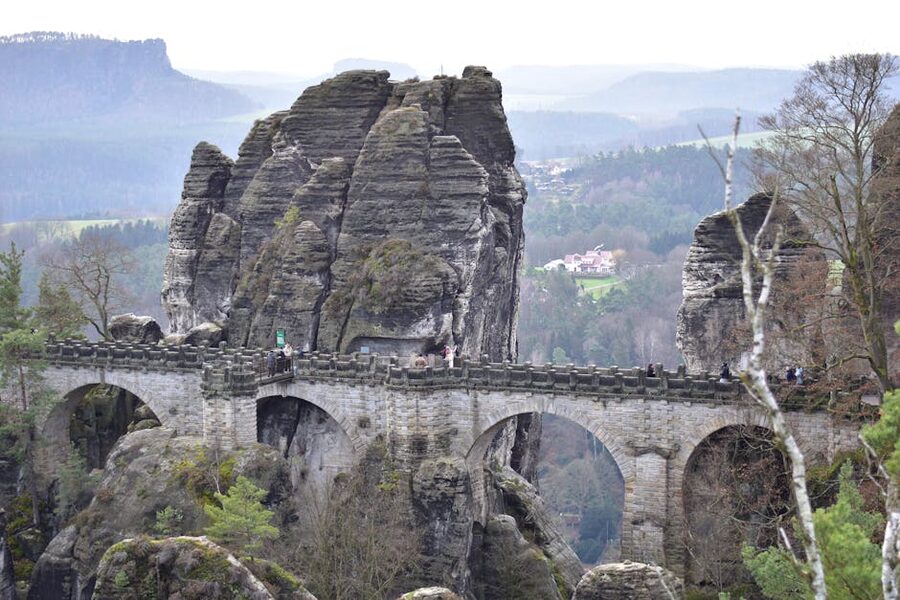
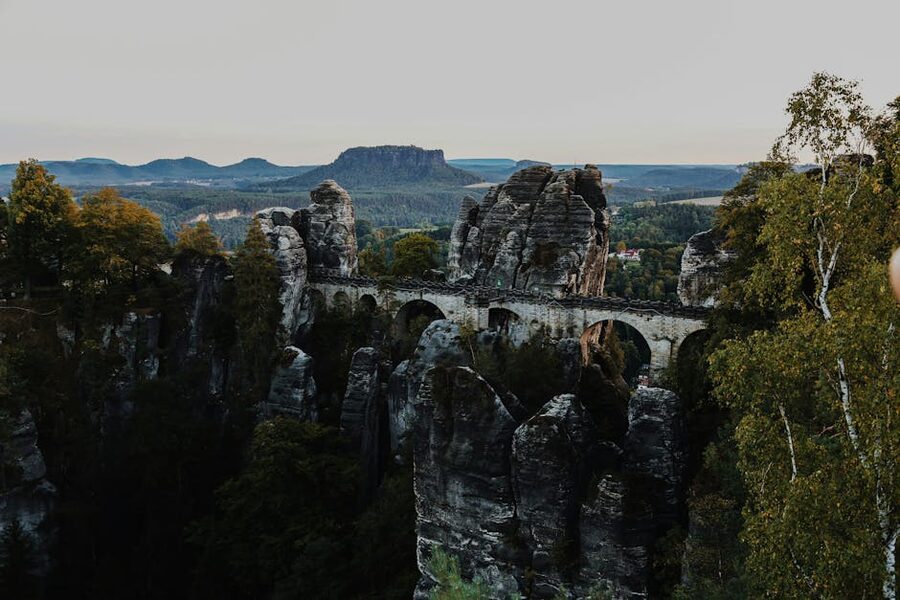
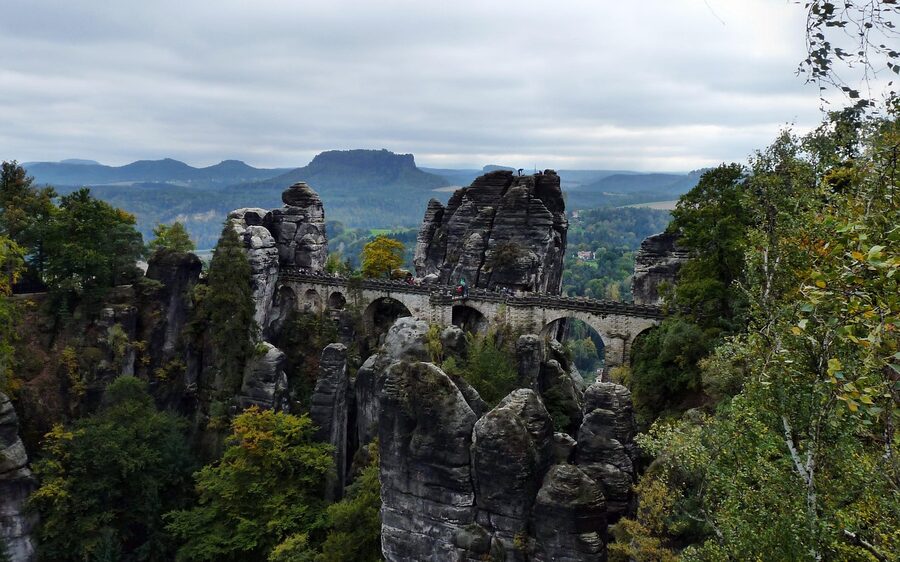
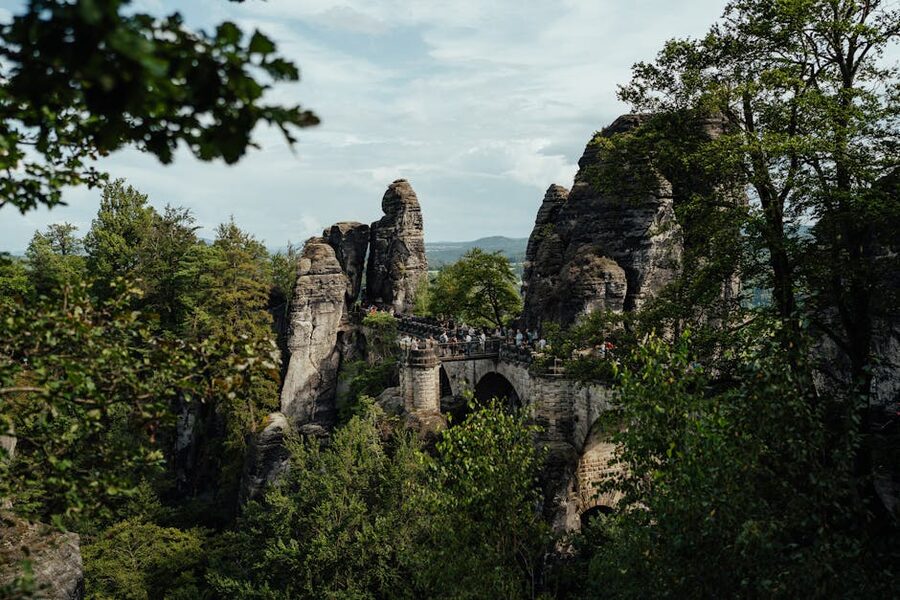
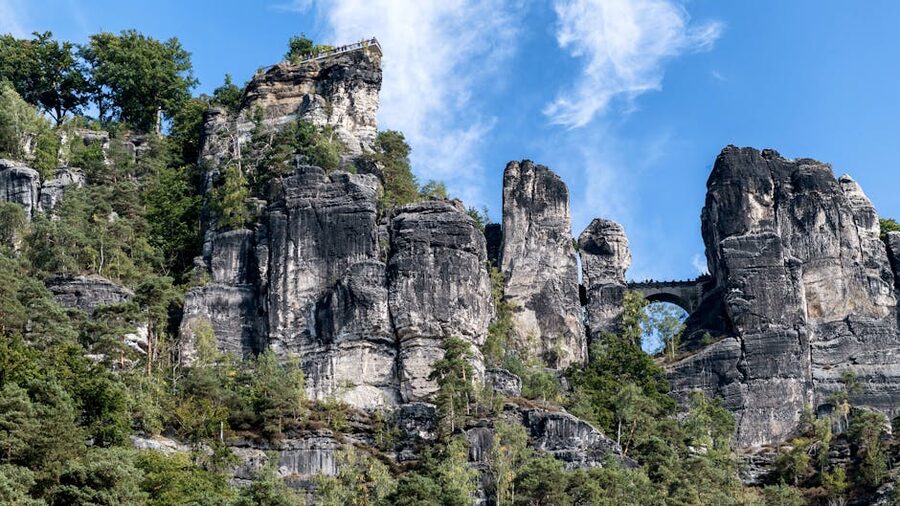
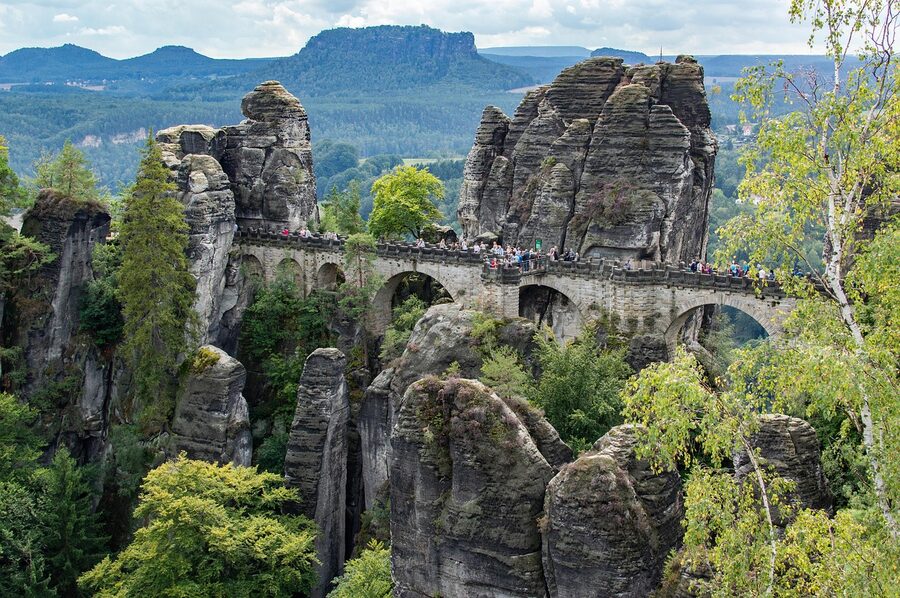
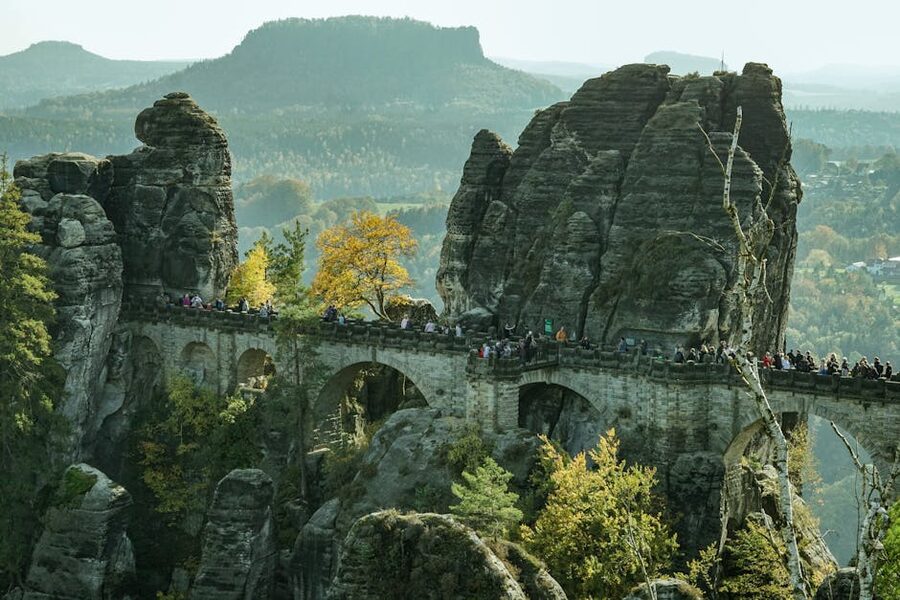
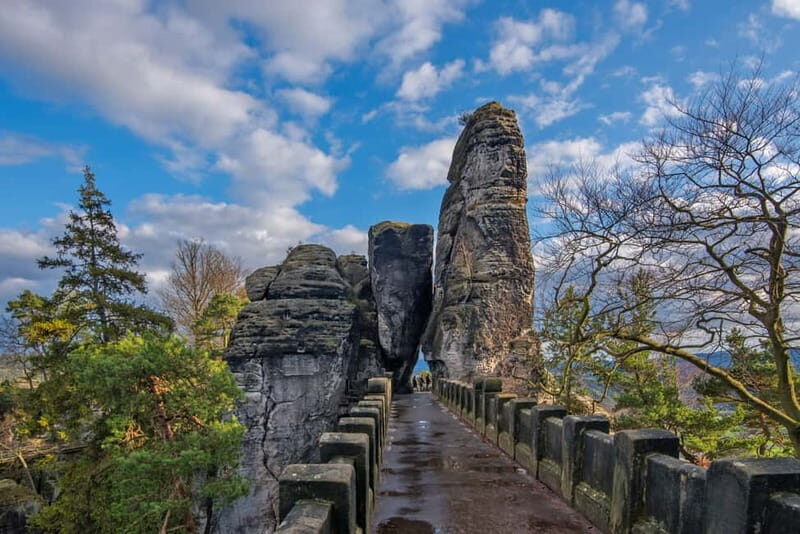
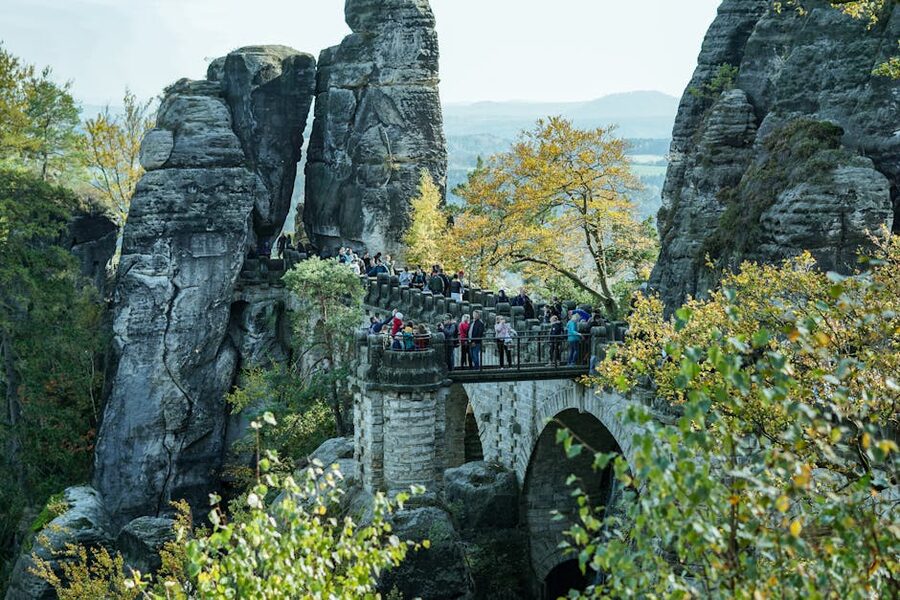
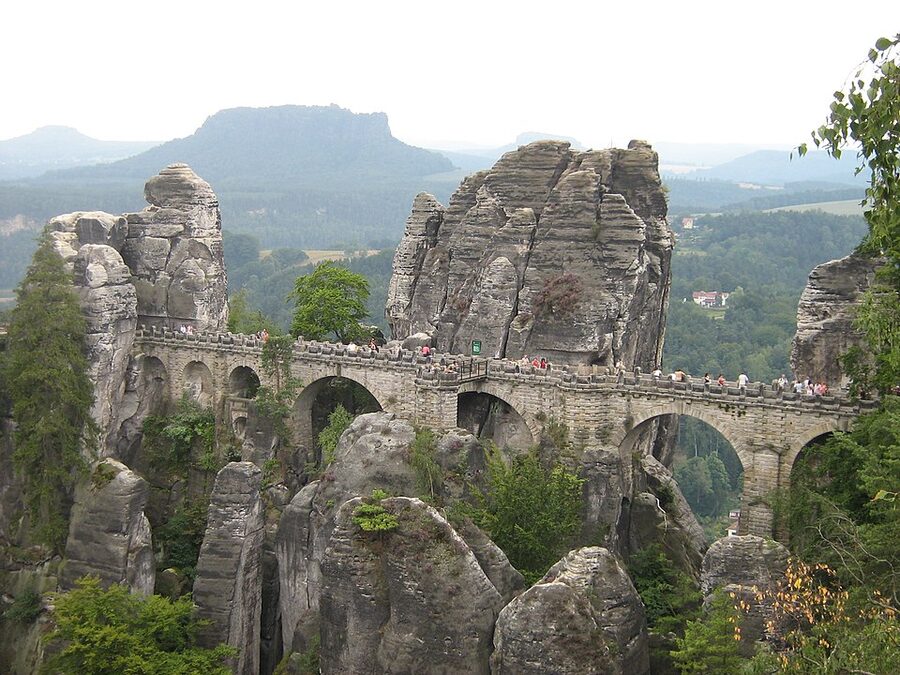
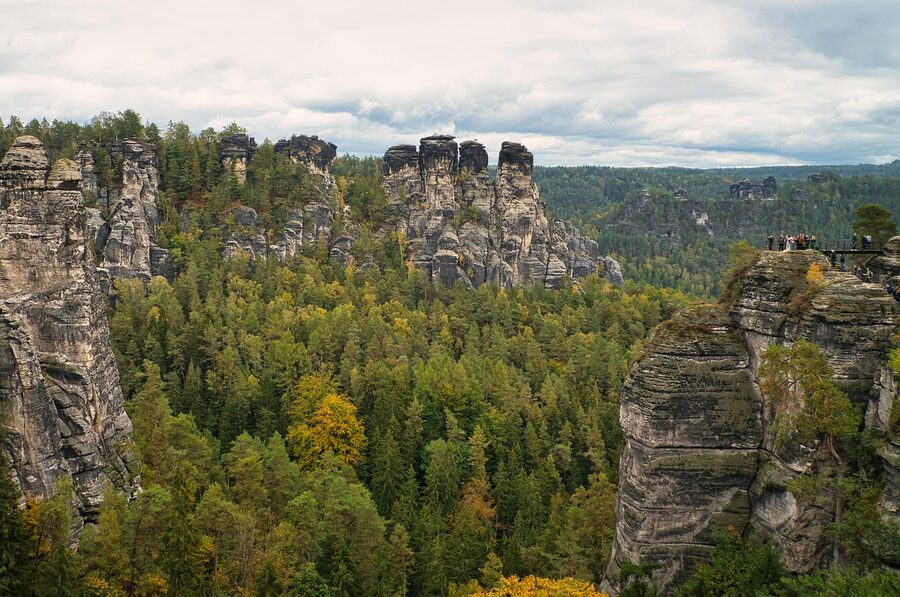
The Bastei Bridge spans a 76-metre gap between sandstone pillars in Saxon Switzerland National Park, 40 minutes from Dresden by S-Bahn. The bridge has been carrying visitors across the gorge since 1851, and the view from its parapet — over the Elbe valley to the forests beyond — is the photograph that defines the entire region.
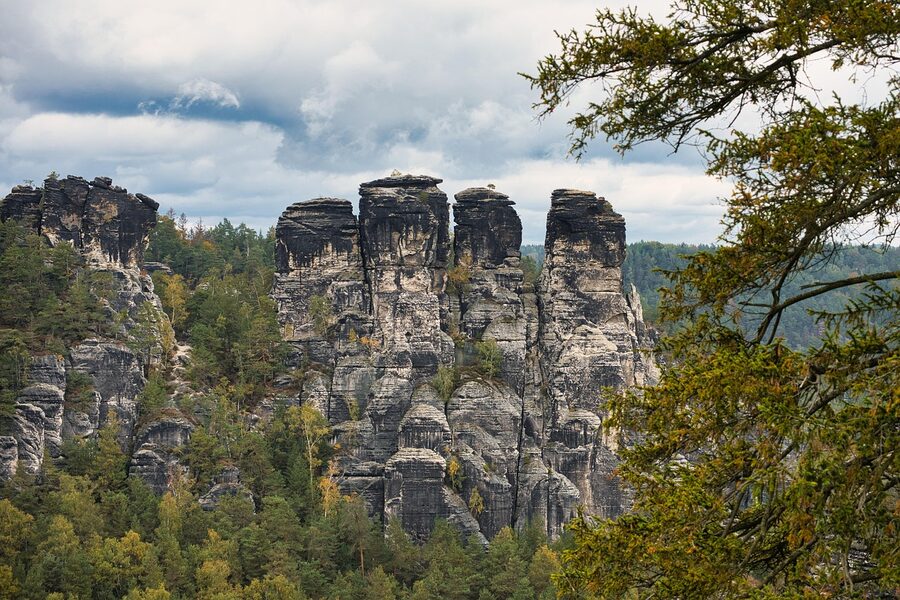
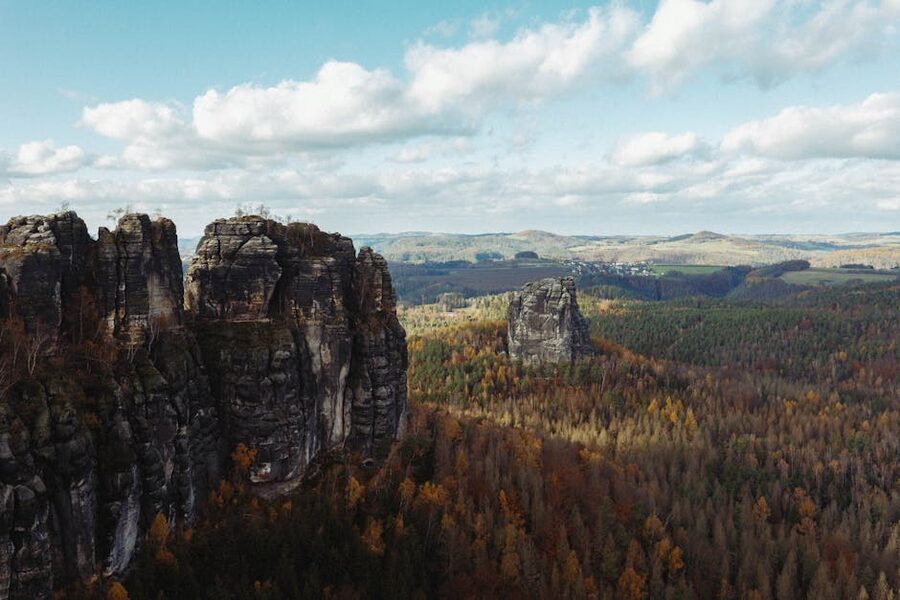
Saxon Switzerland (Sächsische Schweiz) is Germany’s smallest national park and one of its most dramatic landscapes. The eroded sandstone formations rise from a forested plateau in shapes that look impossible — towers, arches, free-standing pillars, narrow gorges. The full-day trip from Dresden ($35) covers the highlights with hiking, viewpoints, and the Bastei Bridge itself.
Combo from Prague: Bohemian + Saxon Switzerland Full-Day Tour — $137, 10-12 hours covering both sides of the Czech-German border.
Premium Dresden tour: Bohemian & Saxon Switzerland from Dresden — $148, smaller group, both countries.
Official info: nationalpark-saechsische-schweiz.de — trail maps, weather, opening times.
- The Day Trip from Dresden
- What You’ll See at the Bastei
- The Bohemian Switzerland Add-On
- Saxon Switzerland’s Geology
- The Hiking Trails
- The Königstein Fortress
- Rathen and the Riverside Villages
- Best Tours to Book
- 1. Saxon Switzerland Full-Day Trip from Dresden —
- 2. Bohemian + Saxon Switzerland from Prague — 7
- 3. Bohemian + Saxon Switzerland from Dresden — 8
- Practical Tips
- Combining with Dresden Sightseeing
- More Eastern Germany Experiences
The Day Trip from Dresden
The full-day Dresden tour ($35, 7 hours) is the most accessible way to see Saxon Switzerland without your own transport. The bus departs central Dresden around 9-9:30am, drives the 40 minutes to the Bastei area, and spends about 4-5 hours in the park before returning around 4-5pm. The guide leads a moderate hike to the Bastei viewpoints and explains the geology, the history, and the ecology along the way.
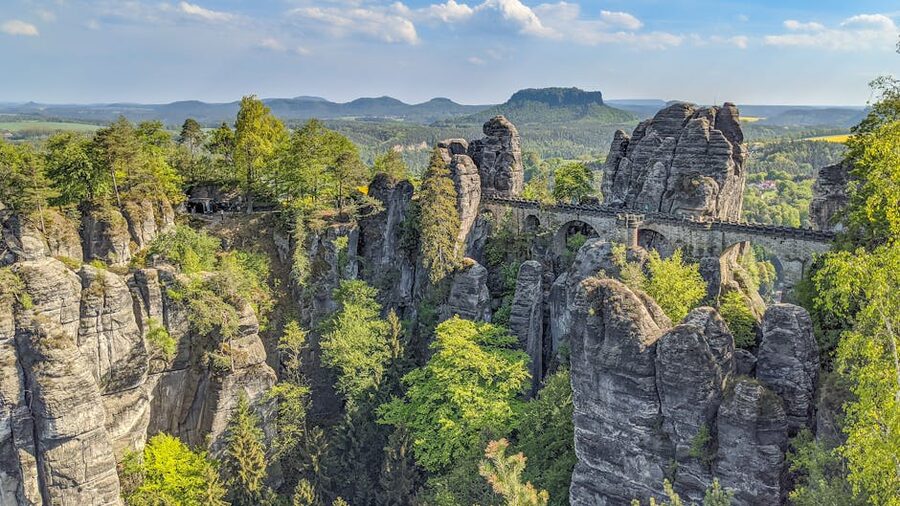
The hike isn’t strenuous — most of the elevation gain is via stairs and boardwalks built into the rocks. Total walking distance is about 4-5 kilometres with regular stops at viewpoints. Anyone reasonably mobile can do it. The guide handles the pace and ensures the group stays together.
What You’ll See at the Bastei
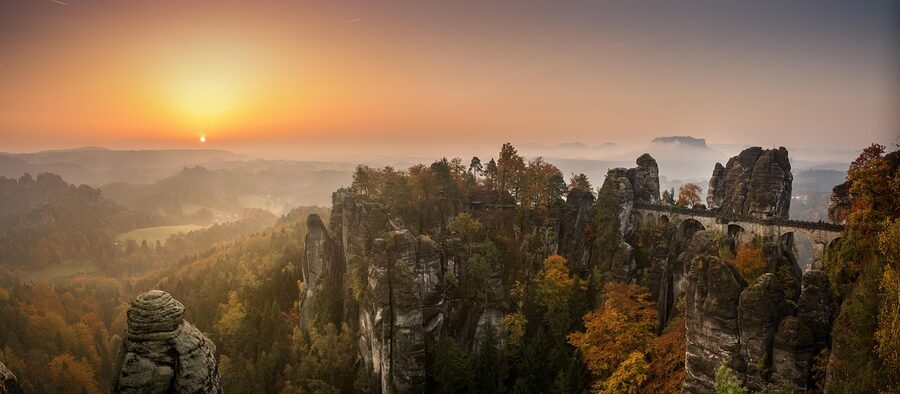
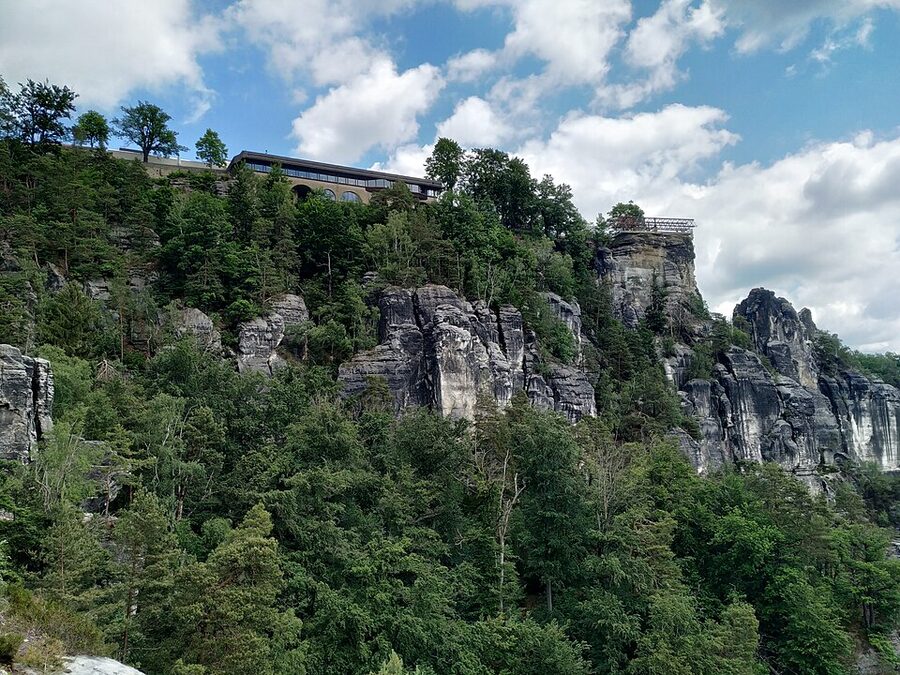
The Bastei is more than just the bridge. The whole area is a network of viewpoints, rock formations, and historic structures linked by walking paths through the sandstone landscape. Most visitors photograph the bridge from the Ferdinandstein viewpoint (the classic angle), then walk across it for views into the Elbe valley.
The Felsenburg Neurathen — a medieval rock fortress carved into the sandstone above the Bastei. The fortress was built in the 13th century and used until the 15th century, when it was abandoned. The remains include rooms, stairways, and a war machine reconstruction, all carved directly into the rock. Entry is €2.50 and takes about 30-45 minutes.
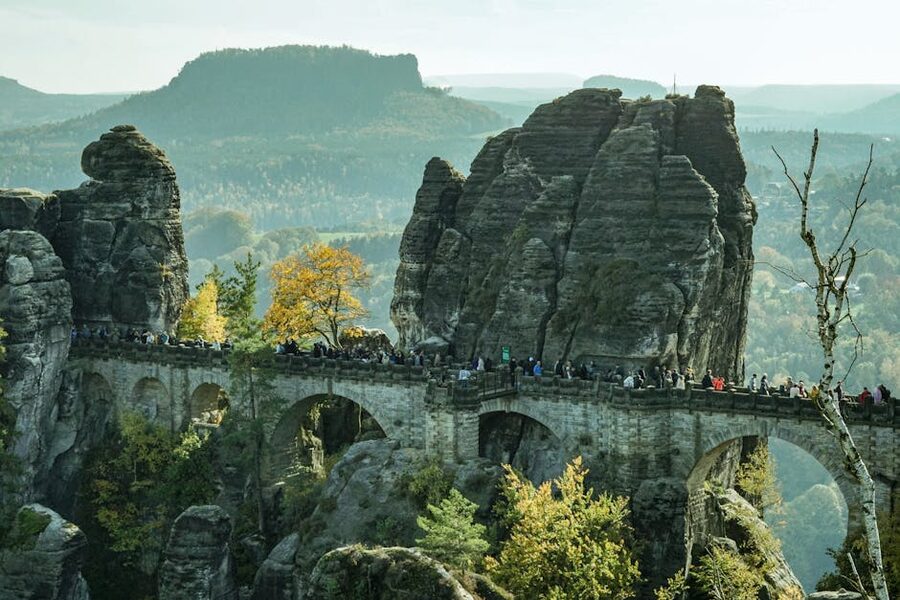
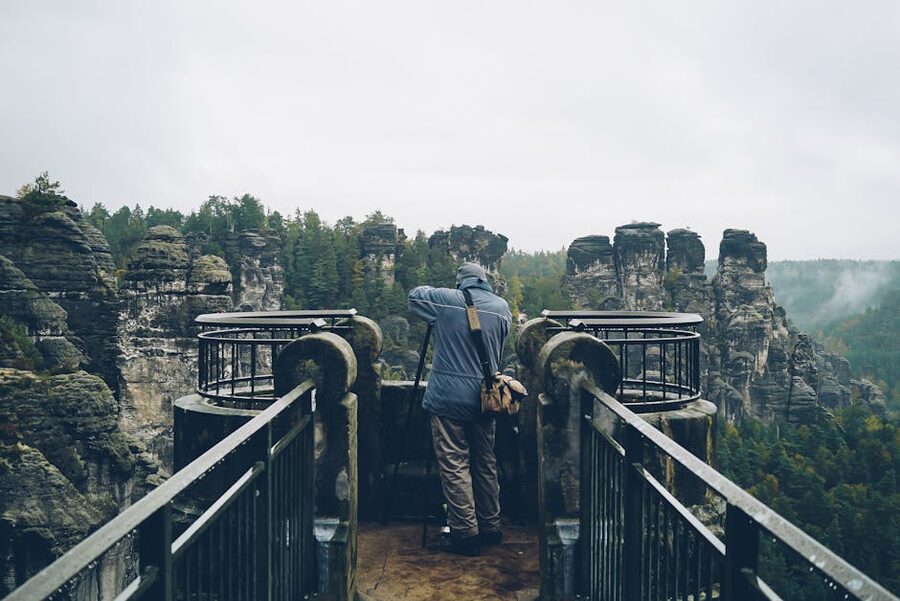
The Bastei viewpoints — multiple platforms positioned around the bridge offer different angles on the rock formations and the Elbe valley. The Ferdinandstein and the Pavillonaussicht are the most photographed. The newer Wehlen viewpoint requires a slightly longer walk but rewards you with views that fewer day-trippers see.
The Bohemian Switzerland Add-On
The Bohemian and Saxon Switzerland combo tours ($137-148) extend the day trip across the Czech border to include the Pravčická brána (Pravčice Gate) — Europe’s largest natural sandstone arch. The tour usually adds 2-3 hours to the day, includes the border crossing (no passport needed within the EU), and shows you the more dramatic Bohemian side of the same geological region.
The combo tour from Prague is significantly more expensive ($137 from Prague vs $35 from Dresden) because the bus journey from Prague to the park takes 90 minutes each way. If you’re staying in Dresden anyway, the local tour is much better value. If you’re based in Prague, the combo tour saves you the logistics of doing it yourself.
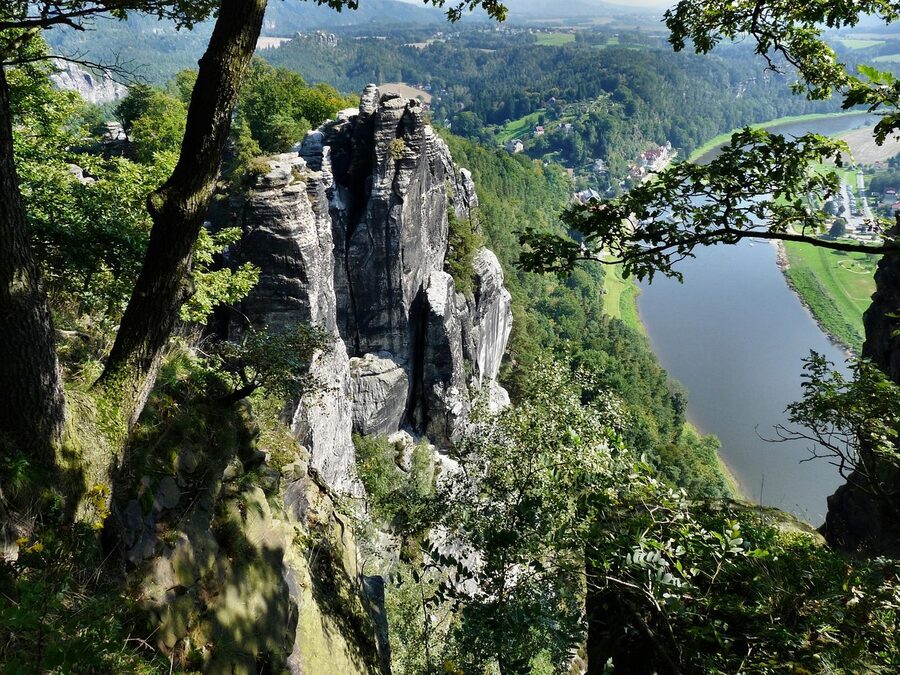
Saxon Switzerland’s Geology
The Elbe Sandstone Mountains formed about 100 million years ago when this area was the bed of a shallow Cretaceous sea. The compressed sand became sandstone. Then tectonic uplift raised the entire region, and millions of years of erosion by the Elbe river and rainfall carved out the dramatic shapes you see today. The result is a landscape unlike any other in Central Europe — sandstone towers, narrow gorges, plateau forests, and free-standing rock pillars.
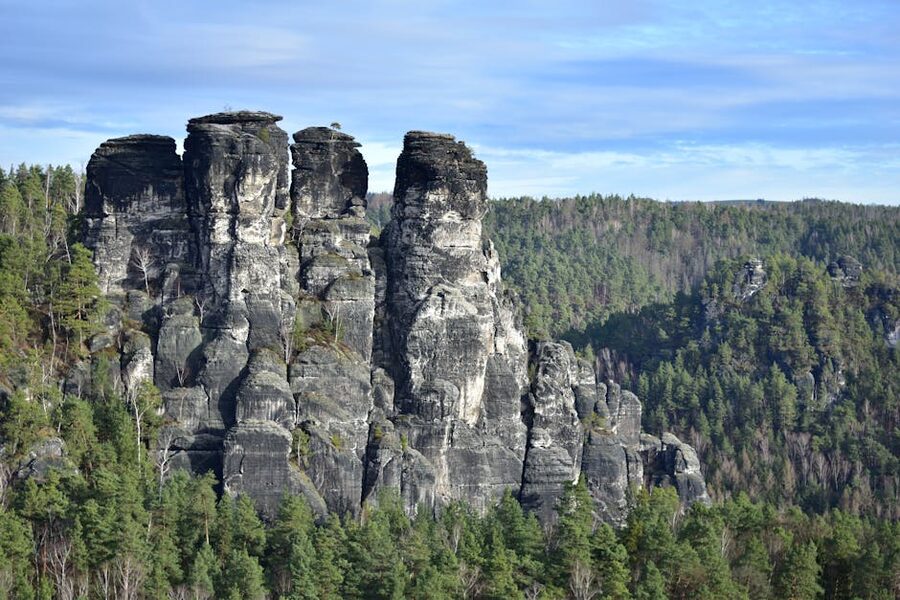
The “Switzerland” in the name has nothing to do with the country. In the late 18th century, two Swiss artists who’d been hired by the Saxon court started calling the region “Saxon Switzerland” because the landscape reminded them of home. The name stuck, and now it’s the official designation for the national park that protects 93 square kilometres of this geology.
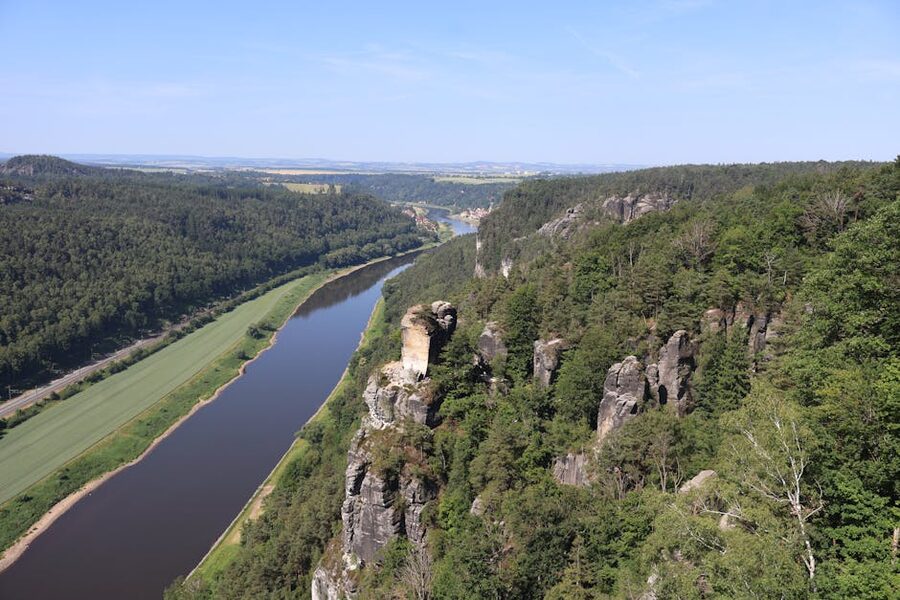
The Hiking Trails
Saxon Switzerland has over 1,200 kilometres of marked walking trails. The Malerweg (Painters’ Way) is the most famous — a 112-kilometre circular route that links the viewpoints painted by the Romantic artists Caspar David Friedrich and Ludwig Richter in the early 19th century. The full Malerweg takes 8 days; day visitors hike sections of it.
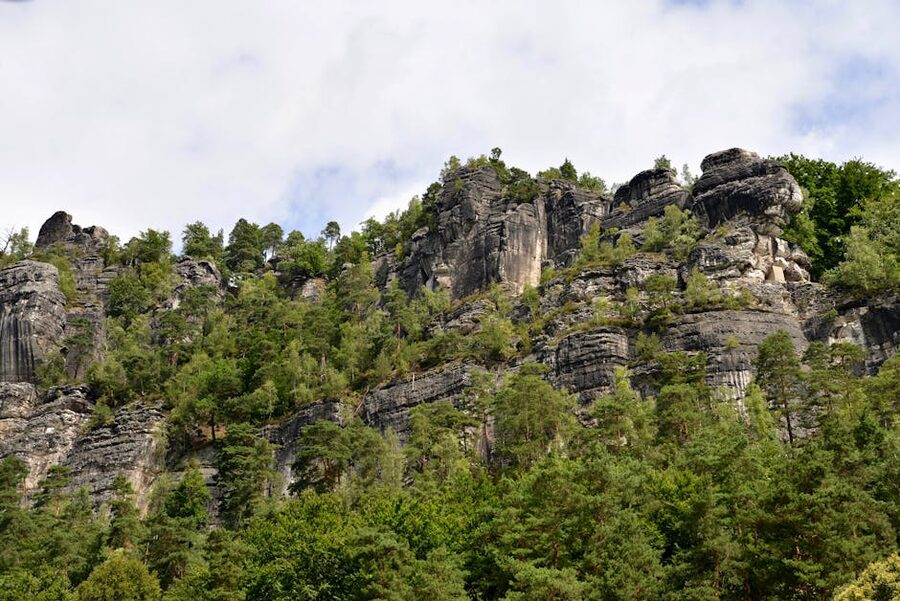
The Schwedenlöcher (Swedish Holes) — a narrow gorge that legend says was used as a hiding place during the Thirty Years’ War. The gorge has wooden boardwalks and stairs through some of the most dramatic narrow sections of the park. The walk takes about 45-60 minutes and is included in some of the longer guided tours.
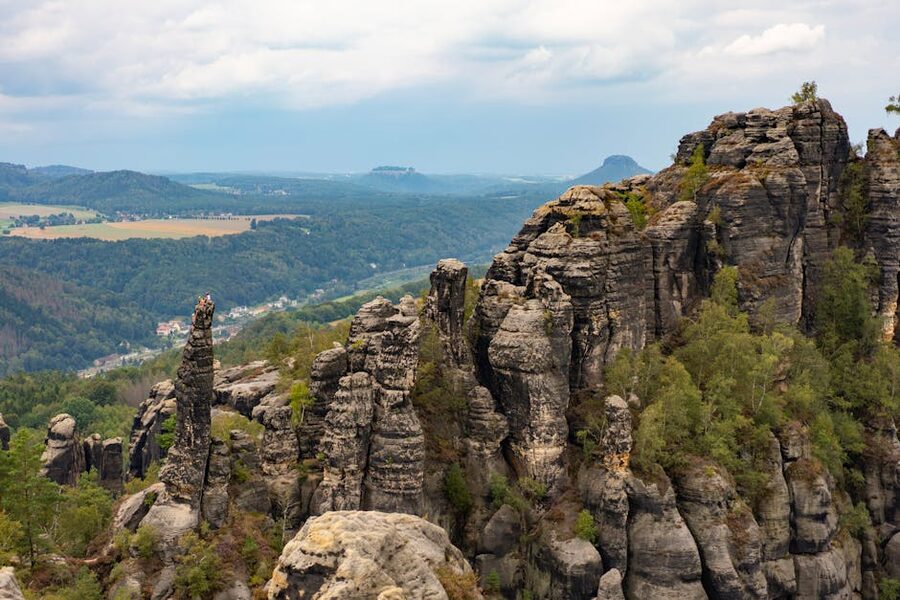
The Schrammsteine — a chain of jagged sandstone peaks east of the Bastei. The Schrammsteinaussicht (Schrammsteine viewpoint) requires a longer hike (about 2 hours from the nearest road) but offers views that compete with the Bastei in beauty and have a fraction of the crowds. Day tours that include the Schrammsteine are usually the longer 9-10 hour options.
The Königstein Fortress
The Königstein Fortress sits on a 240-metre sandstone plateau about 10 kilometres from the Bastei. It’s one of the largest hilltop fortresses in Europe, never captured in its 800-year history because the natural rock walls made conventional siege impossible. The fortress includes a deep well (152.5 metres — once the deepest in Europe), a treasury vault, multiple bastions, and panoramic views over the Elbe valley.
The Königstein Fortress isn’t included in the standard Bastei day trip from Dresden, but it makes an excellent second-day visit if you have time. The S-Bahn from Dresden to Königstein station takes about 40 minutes, and a free shuttle bus runs from the station to the fortress entrance. Entry is €13.
Rathen and the Riverside Villages
Rathen is the closest village to the Bastei — a tiny riverside settlement with about 350 permanent residents. The village is car-free (you arrive by ferry across the Elbe, included in the visitor fee). It has a few hotels, restaurants serving Saxon cuisine, and the Felsenbühne open-air theatre carved into the rocks.
The Felsenbühne is one of Europe’s most distinctive theatres — natural sandstone walls form the backdrop, and the audience sits on tiered seating carved into the rock. The theatre runs operas and plays from May through September, and a performance here (with the rocks lit at sunset) is one of the most atmospheric cultural experiences in Germany. Tickets cost €25-50 depending on the production.
Best Tours to Book
1. Saxon Switzerland Full-Day Trip from Dresden — $35
The standard Dresden day trip — bus to the park, guided hike to the Bastei Bridge, time at the major viewpoints, and return to Dresden by mid-afternoon. The guides are local naturalists who explain the geology, the history, and the ecology along the way. At $35 for a full day including transport and guide, it’s one of the cheapest guided experiences in eastern Germany. Our review covers the hike difficulty, the photo opportunities, and what makes this tour the obvious starting point.
2. Bohemian + Saxon Switzerland from Prague — $137
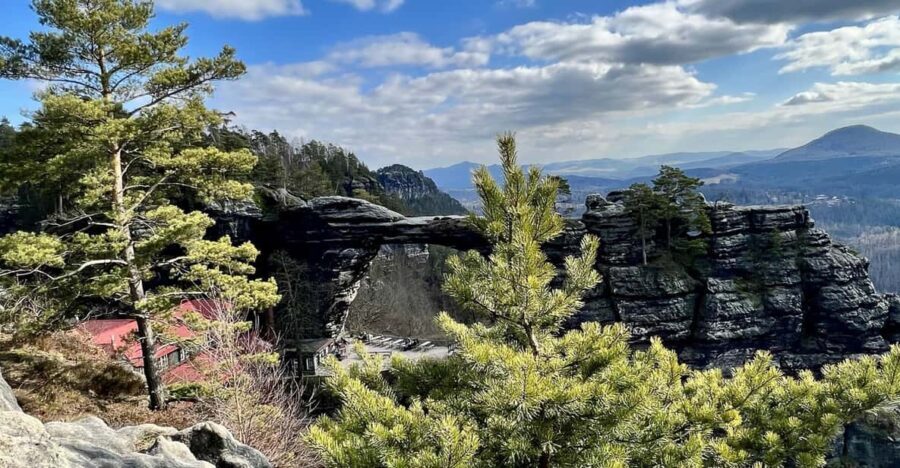
For visitors based in Prague rather than Dresden, this 10-12 hour tour covers both the Czech (Bohemian) and German (Saxon) sides of the Elbe Sandstone Mountains. You see the Pravčická brána arch (Europe’s largest natural sandstone arch) on the Czech side and the Bastei Bridge on the German side. The price includes border crossings, hiking, and lunch. Our review compares this tour with doing the two regions separately.
3. Bohemian + Saxon Switzerland from Dresden — $148
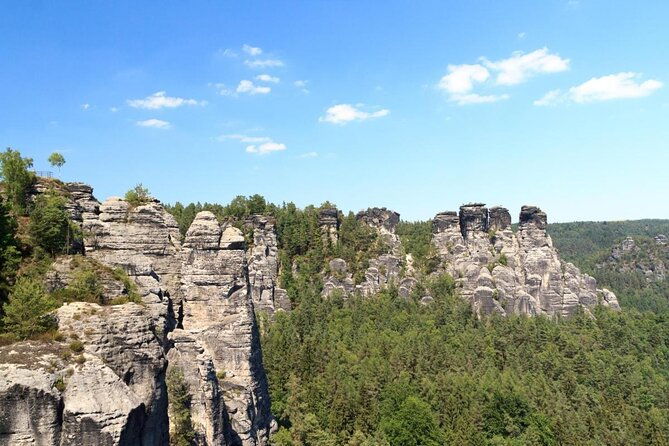
The premium Dresden option — a smaller-group tour that covers both the Czech and German sides of the Elbe Sandstone Mountains. The 10-hour day includes the Bastei, the Pravčická brána, and time in the small villages on both sides of the border. The higher price reflects the smaller group size and the more thorough itinerary. Our review explains when the combo tour beats the standalone Bastei trip.
Practical Tips
When to visit: April through October is the main season. May-June is the greenest. September-October has autumn colours and fewer crowds. Winter visits are possible but the trails can be icy and some viewpoints close. The day trips from Dresden run year-round, with reduced winter schedules.
Getting there independently: S-Bahn S1 from Dresden to Kurort Rathen station (about 30-40 minutes). Then the ferry across the Elbe to Rathen village (€2 each way, runs every 15 minutes). Then walk up to the Bastei (about 30 minutes uphill). Total cost: €15-20 for a Saxony Day Ticket. The guided tour is more efficient for first-timers.
What to wear: Sturdy walking shoes (the rock surfaces can be slippery in damp weather), layers (the temperature drops noticeably as you climb), and sunscreen in summer. Bring a refillable water bottle — you can refill at the Bastei restaurant.
Budget: Day tour: $35-148. Independent (rail + ferry + park entry): €25-30. Bastei restaurant lunch: €15-20. Felsenburg Neurathen ruins: €2.50. A full independent day costs about €50-70; the guided tour costs more but handles all logistics.
Combining with Dresden Sightseeing
The Saxon Switzerland day trip pairs well with a full day in Dresden itself. The Dresden walking tours cover the Frauenkirche, the Zwinger, and the Semperoper — the rebuilt Baroque heart of the city. Combined with a national park day, you get the contrast between Dresden’s reconstructed urban grandeur and Saxon Switzerland’s untouched natural wilderness.
For visitors continuing through Germany, the Leipzig canal tours are 90 minutes from Dresden by train and add another Saxon city to the trip. The Berlin Museum Island tickets are an easy onward connection — Berlin is 2 hours from Dresden by direct train, and the Museum Island fits naturally into the cultural itinerary that started at Dresden’s reconstructed Old Town.
More Eastern Germany Experiences
Saxon Switzerland is the natural counterpart to Dresden’s urban experience. The Dresden walking tours cover the rebuilt city. The Leipzig canal tours show another Saxon urban centre with a different identity. And the Potsdam Sanssouci day trip — accessible from Berlin — covers the royal Prussian gardens that complement the natural landscape of the national park.