
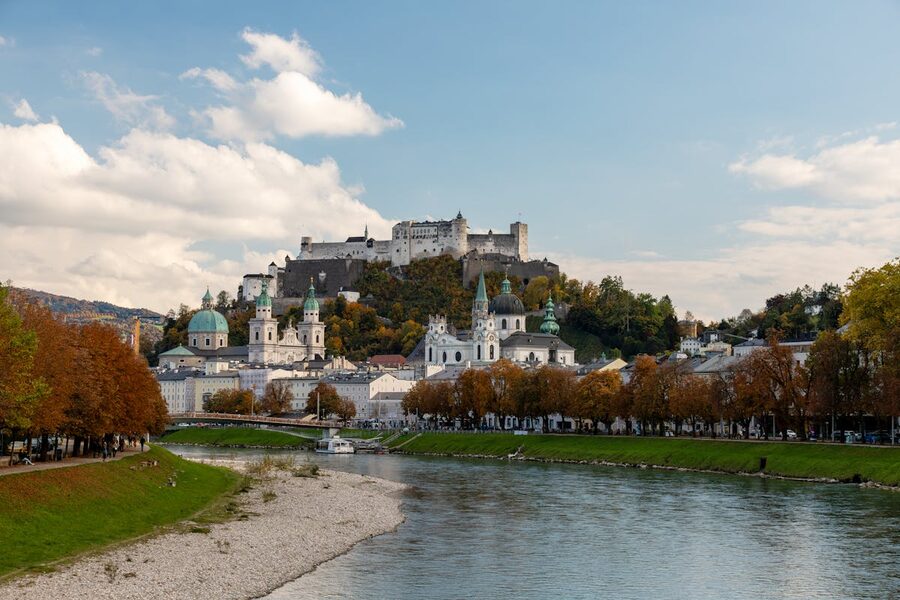
Mozart was born here, The Sound of Music was filmed here, and the Hohensalzburg Fortress has been watching over the city from its hilltop since 1077. Salzburg is the day trip that Munich visitors argue about most — some say one day is enough, others say you need three.
The day trip from Munich takes about 1.5 hours by train and drops you in a city that’s smaller, older, and more Austrian than you expect. The guided tours ($84-93) handle the logistics and add historical context. Independent visitors can do the same journey with a €29 Bayern Ticket that covers unlimited regional trains all day.
Best value: Salzburg, St. Wolfgang & Salzkammergut — $84, includes the Austrian Lake District.
Official tourism: salzburg.info — visitor information, events, and Salzburg Card details.
- What You’ll See in Salzburg
- The Sound of Music Connection
- The Salzkammergut and Austrian Lake District
- Getting There Independently
- Salzburg’s History
- Salzburg’s Food and Drink
- Best Tours to Book
- 1. Salzburg Day Trip by Train from Munich —
- 2. Salzburg, St. Wolfgang & the Salzkammergut —
- 3. Salzburg & Lake District Tour —
- Practical Tips
- Other Munich Day Trips
What You’ll See in Salzburg
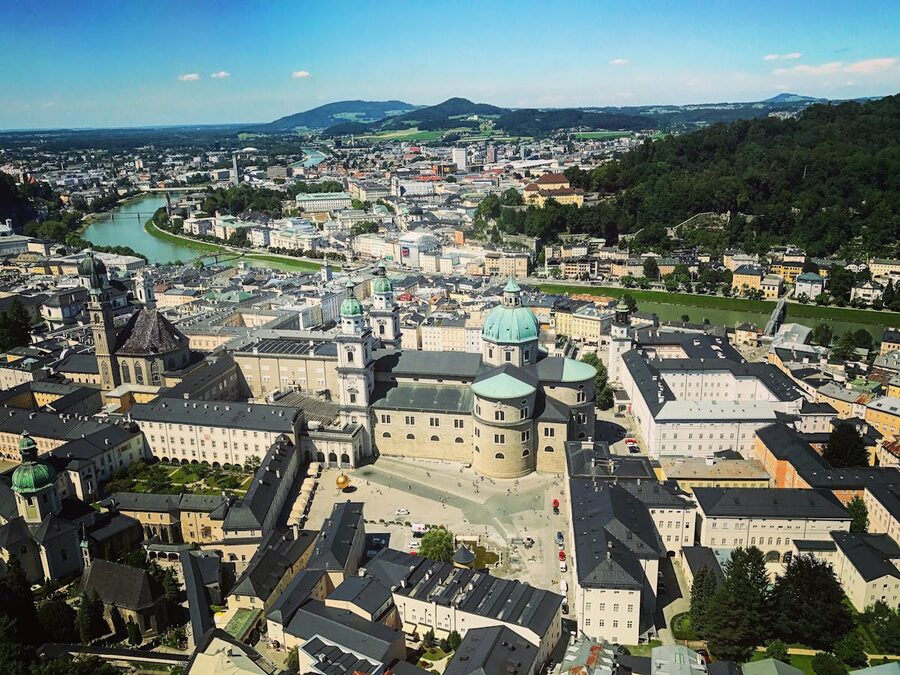
Salzburg’s old town is compact enough to see in a day — everything of interest sits within a 20-minute walking radius. The guided tours cover the highlights in 3-4 hours, leaving free time for the fortress, shopping, or a coffee and Sachertorte at Café Tomaselli (operating since 1705).
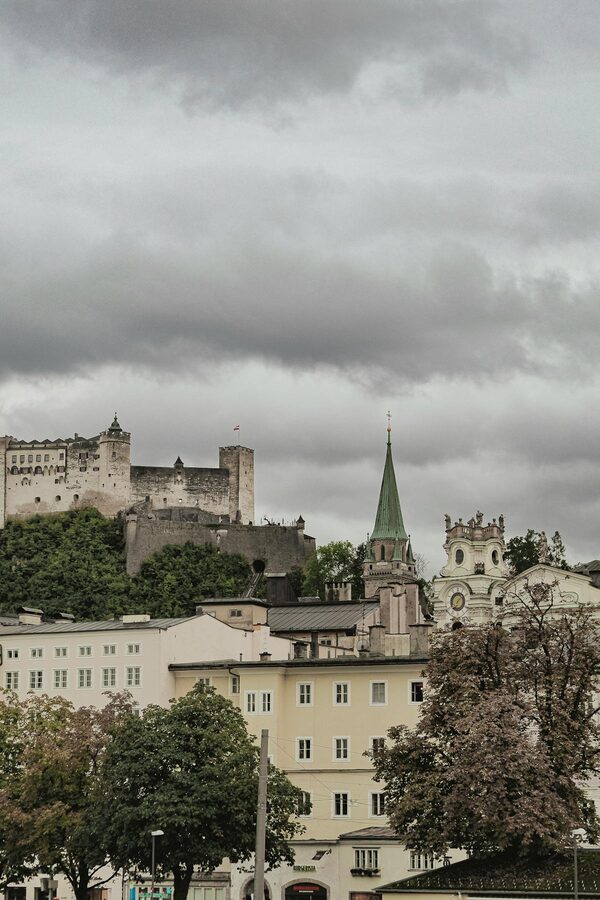
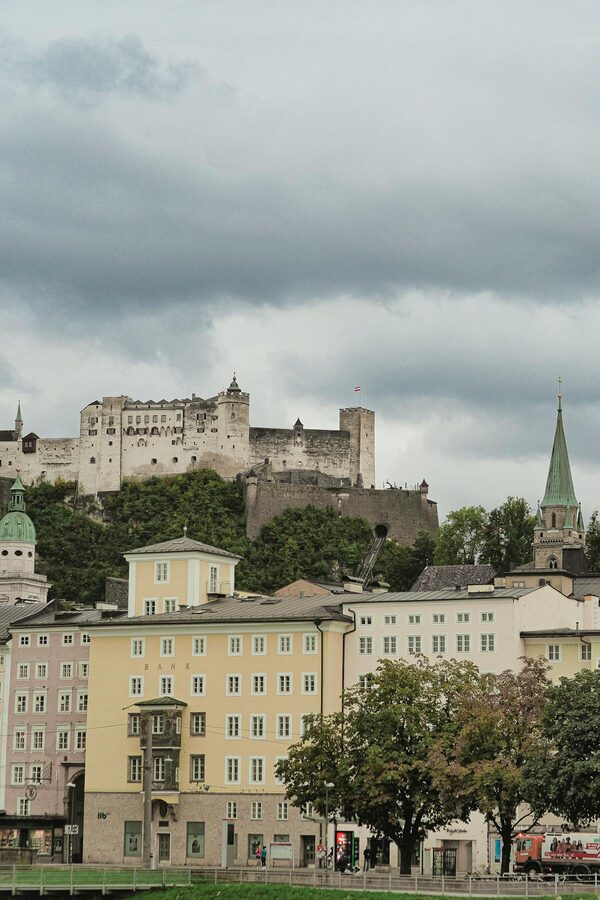
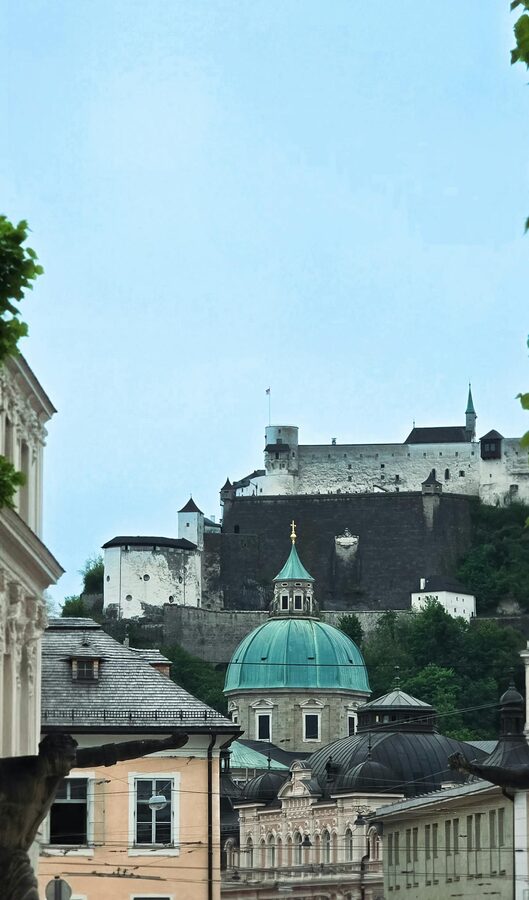
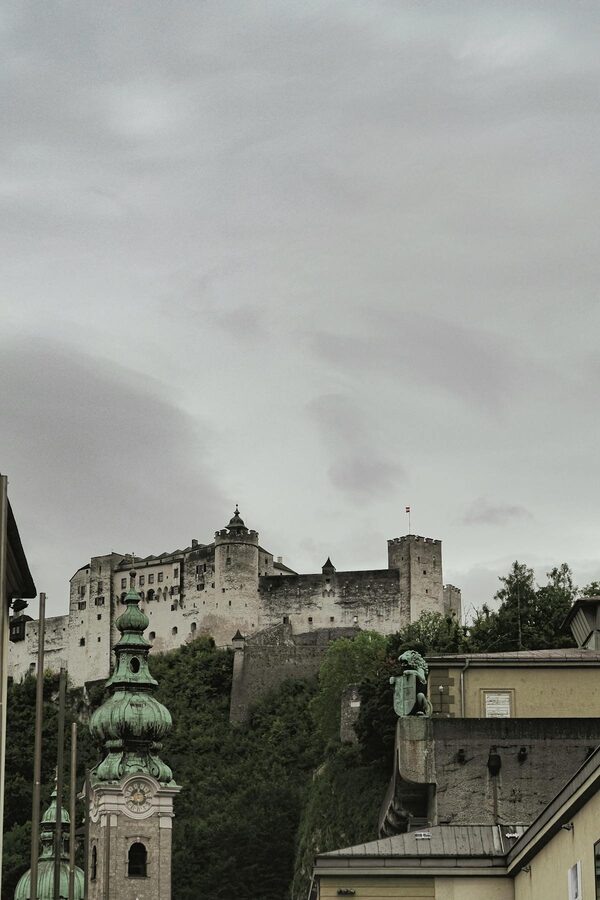
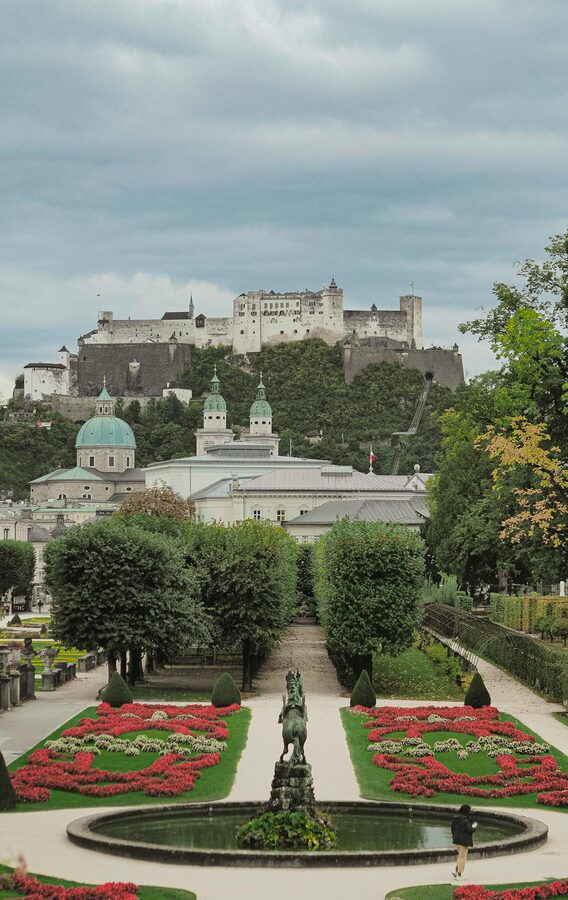
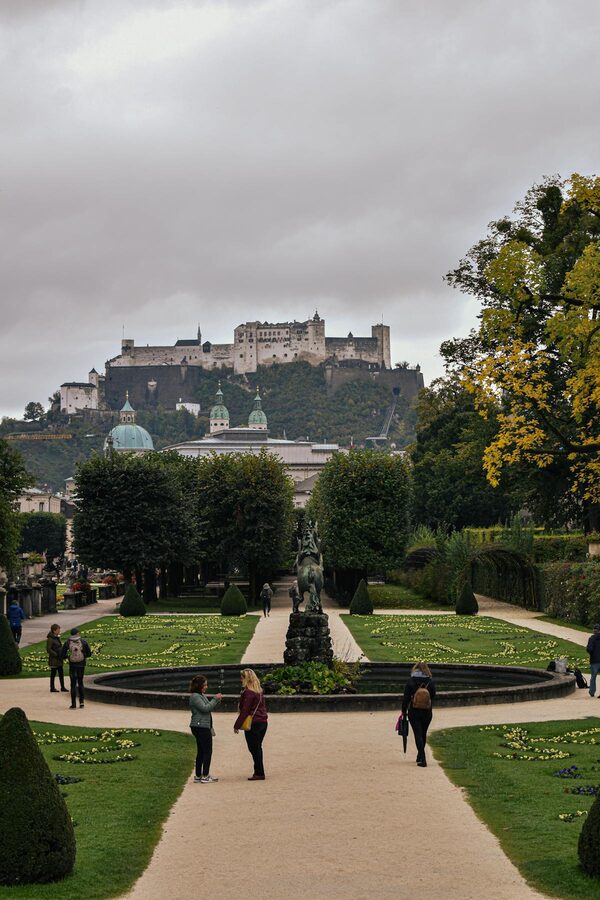
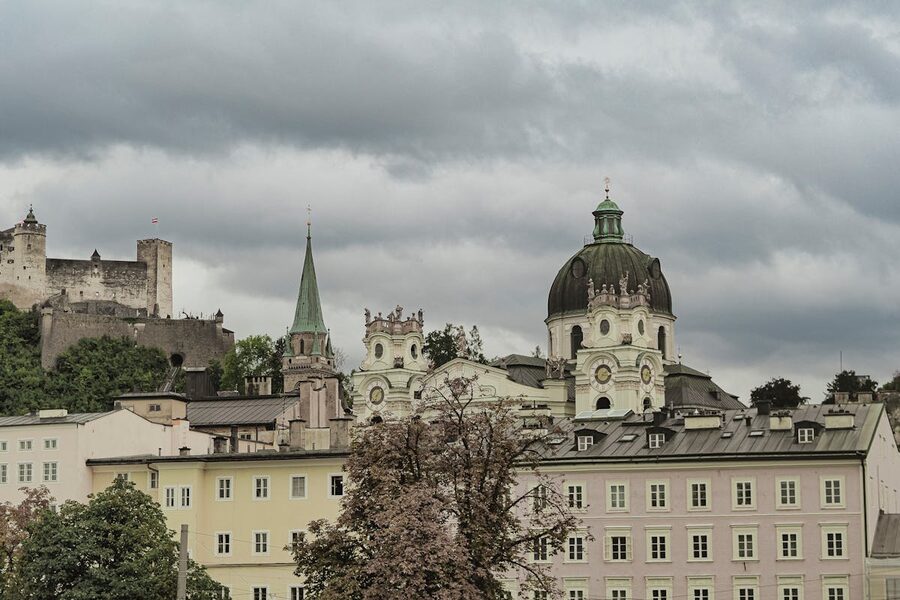
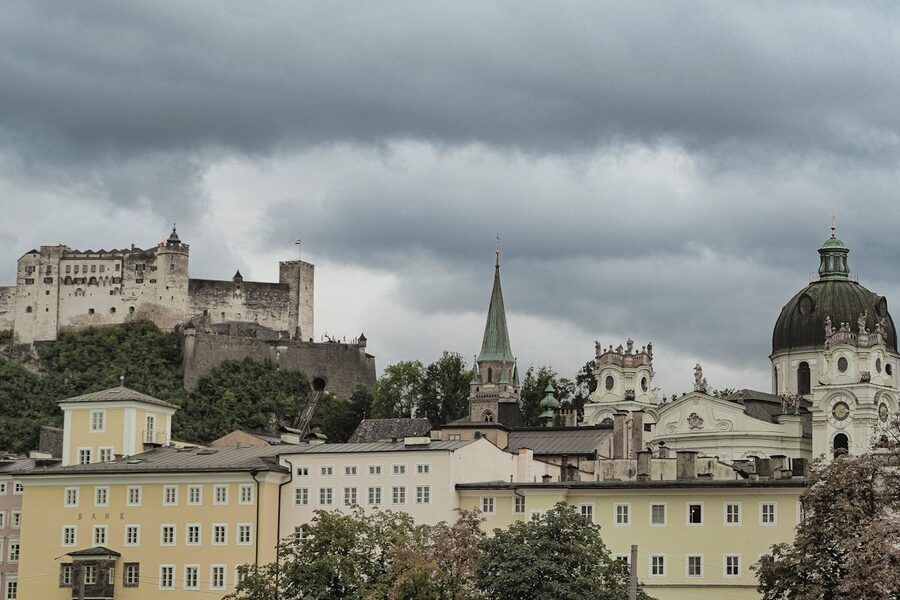
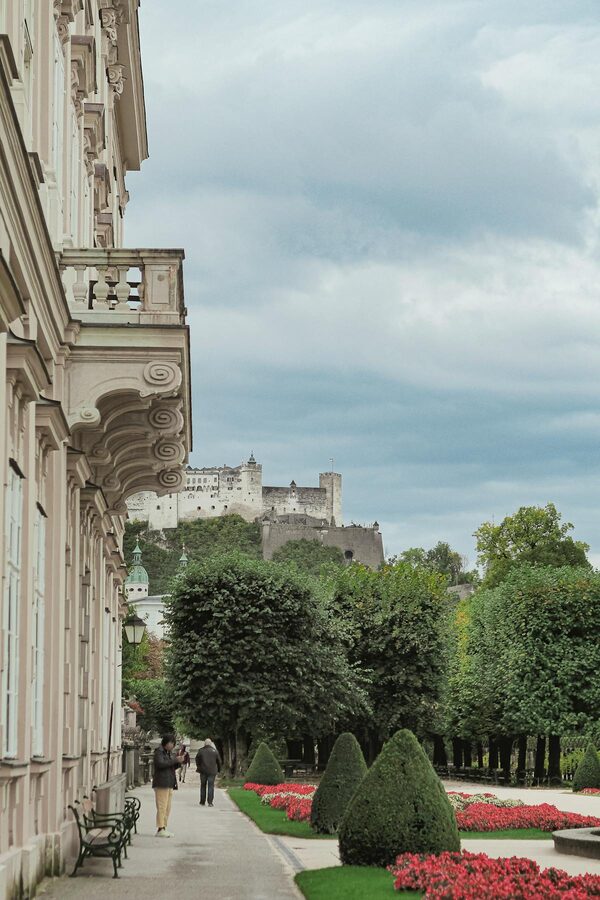
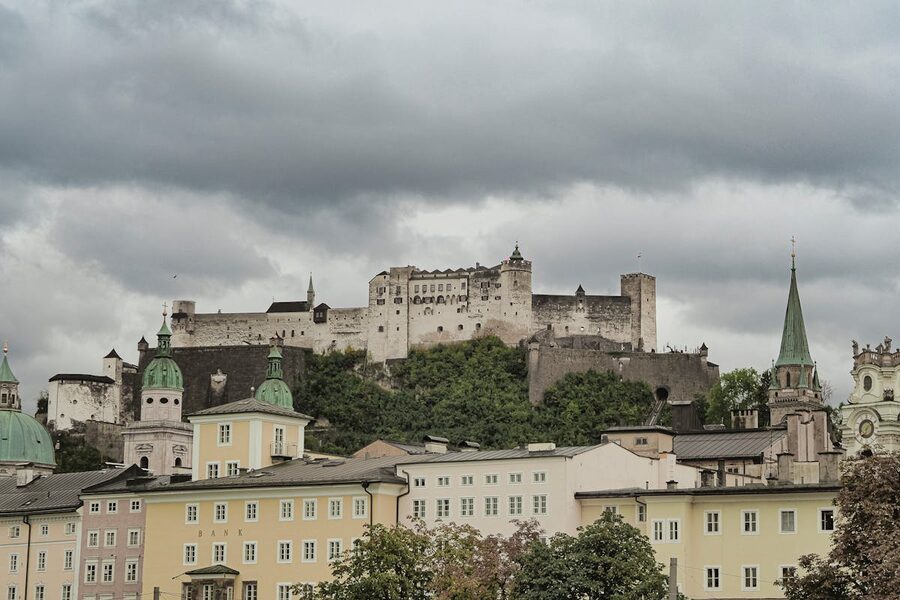
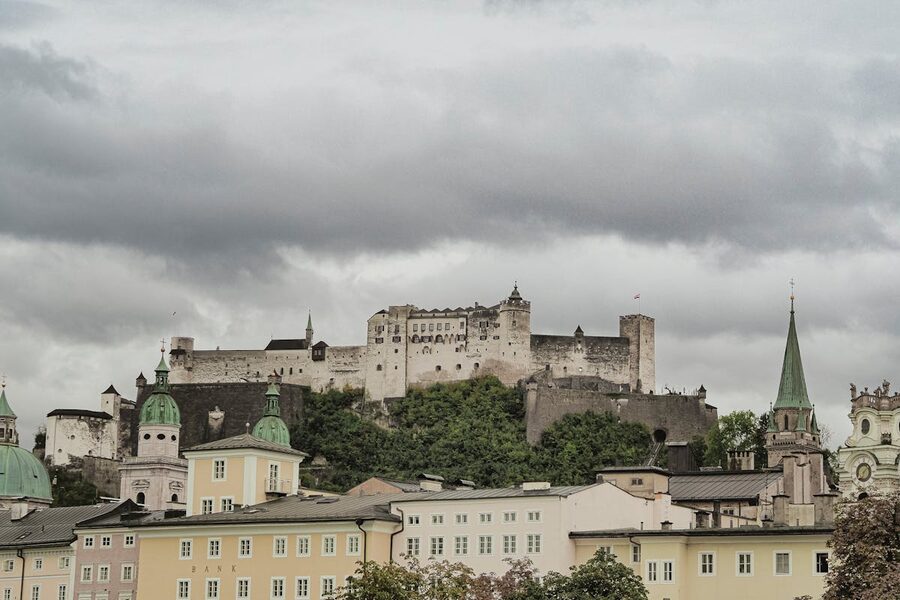
The Hohensalzburg Fortress — Central Europe’s largest fully preserved castle, perched 120 metres above the city since 1077. The funicular takes you up in one minute, or you can walk (15-20 minutes, steep). The fortress interior includes state rooms, a torture chamber, a puppet museum, and panoramic views over Salzburg, the Alps, and the Bavarian border. Entry is about €16 including the funicular.
Mozart’s Birthplace (Geburtshaus) — Getreidegasse 9. Mozart was born here on January 27, 1756, and the house is now a museum displaying his childhood violin, family portraits, and original manuscripts. The museum is small (takes about 30-45 minutes) but moving — you’re standing in the rooms where one of history’s greatest musical minds first heard music.
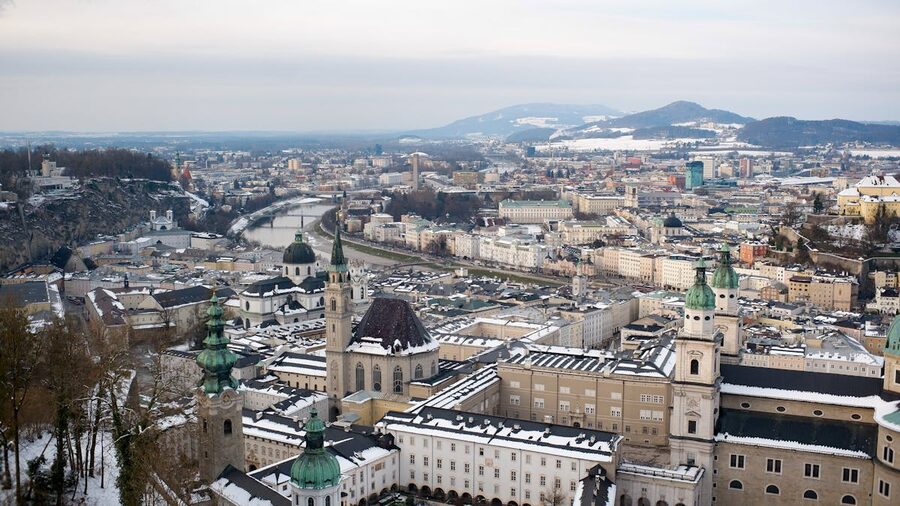
The Salzburg Cathedral (Dom) — a massive Baroque cathedral rebuilt after a fire in 1598. The interior is ornate (marble, stucco, ceiling frescoes) and the organ that Mozart played as cathedral organist is still in use. Entry is free. The Dom Museum (€12) is worth the fee for art enthusiasts.
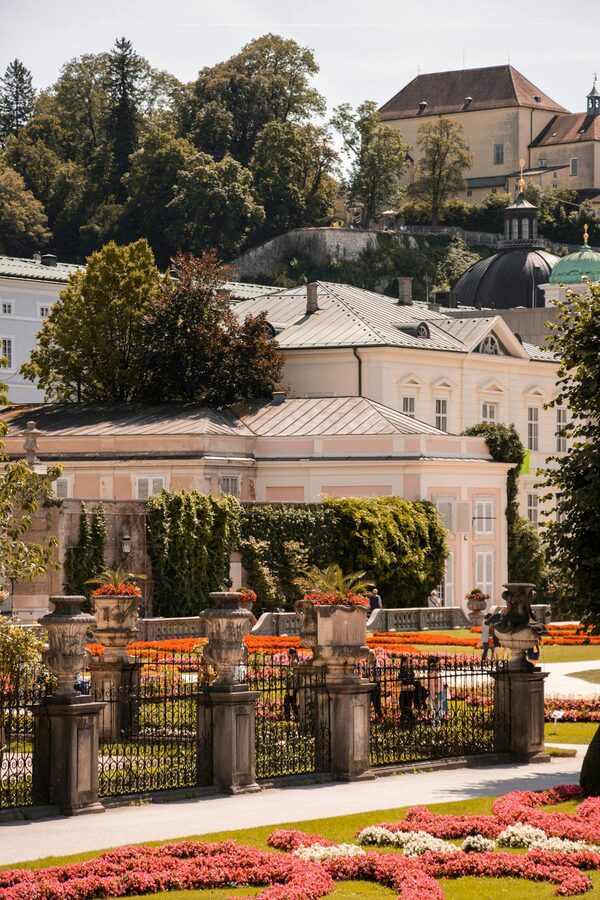
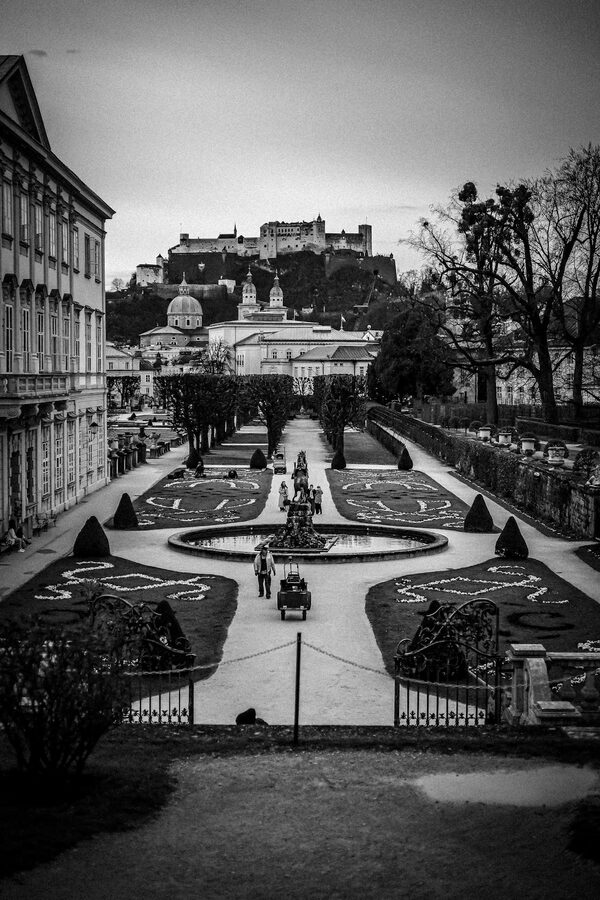
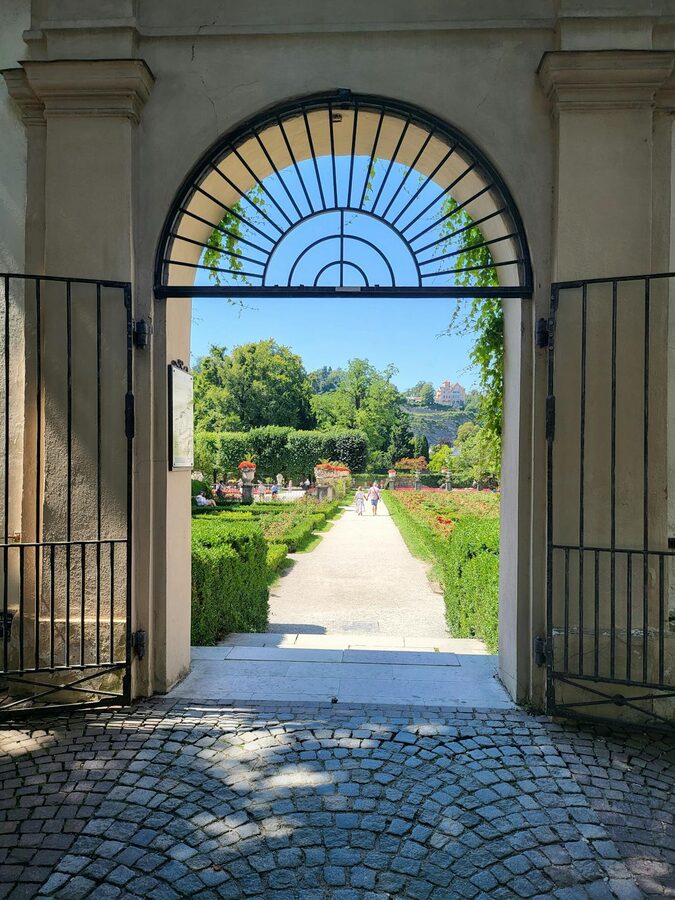
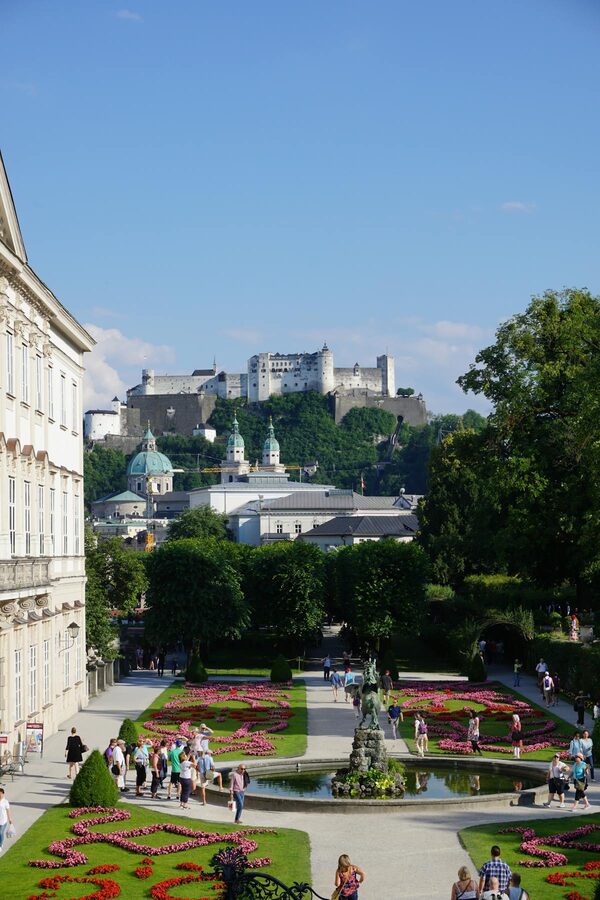
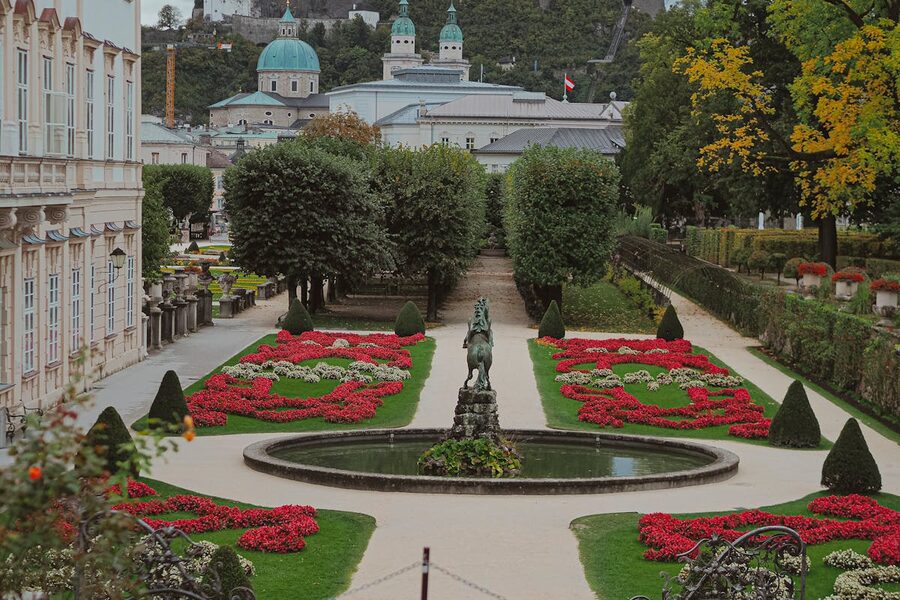
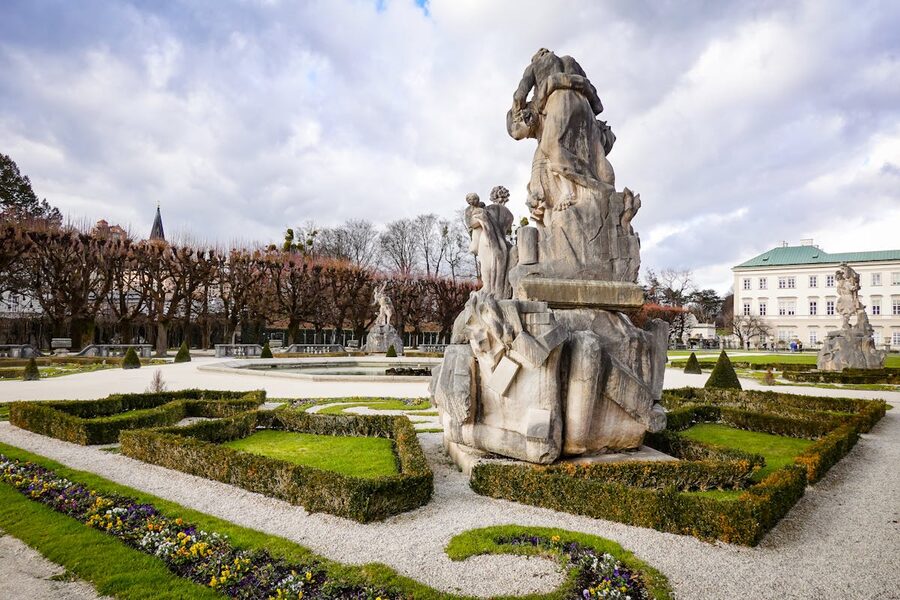
The Mirabell Palace and Gardens — built in 1606 by the prince-archbishop for his mistress (the church handled these things differently in Salzburg). The gardens are free and are one of the most famous film locations in the world — the “Do-Re-Mi” scene from The Sound of Music was shot on the Pegasus fountain steps. The Marble Hall inside the palace (now a civil ceremony venue) hosted concerts by the Mozart family.
The Sound of Music Connection
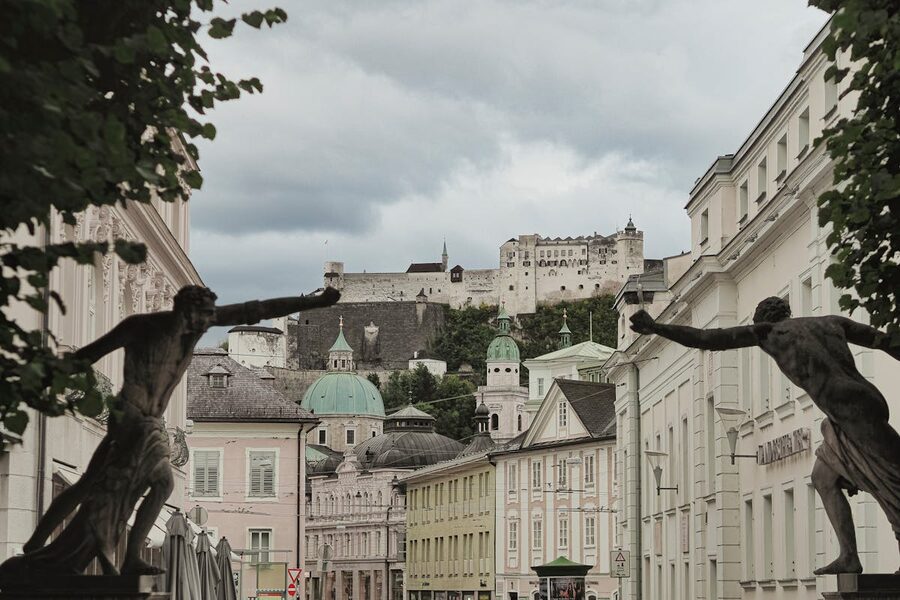
Let’s address it directly: you will not escape The Sound of Music in Salzburg. The film locations are everywhere — the Mirabell Gardens (Do-Re-Mi), the Nonnberg Abbey (Maria’s convent), the Leopoldskron Palace (the exterior of the von Trapp villa), and the Felsenreitschule (the festival concert hall where the family performed). Whether this is charming or annoying depends entirely on your relationship with the film.
The dedicated Sound of Music tours run within Salzburg (not from Munich) and cost about €50-60 for 4 hours. If you’re doing the day trip from Munich, you won’t have time for both a city tour and a Sound of Music tour — choose one. The city walking tours touch on the major film locations without devoting the entire visit to them, which is the right balance for most visitors.
The Salzkammergut and Austrian Lake District
The Salzburg, St. Wolfgang, and Salzkammergut tour ($84) extends beyond Salzburg itself into the Austrian Lake District — one of the most scenic areas in Central Europe. The Salzkammergut is a UNESCO-protected landscape of mountains, lakes, and villages that supplied salt to the Habsburg Empire for centuries.
St. Wolfgang — a small pilgrimage town on the Wolfgangsee lake — is the main Salzkammergut stop on the day trip. The town is famous for the White Horse Inn (Weißes Rössl), a historic hotel that inspired the popular operetta, and for the 15th-century altarpiece by Michael Pacher in the parish church, considered one of the masterpieces of Gothic art.
Getting There Independently
The train from Munich Hauptbahnhof to Salzburg Hauptbahnhof takes about 1.5 hours on the fast EuroCity service (€29-45 each way) or about 2 hours on the slower regional trains (covered by the €29 Bayern Ticket for groups of up to 5). The Bayern Ticket is the budget option — valid after 9am on weekdays and all day on weekends for unlimited regional trains in Bavaria, including the cross-border service to Salzburg.
From Salzburg station, the old town is about 15 minutes on foot or a short bus ride. The Salzburg Card (€30 for 24 hours) covers all public transport, the fortress funicular, all major museums, and a river cruise — excellent value if you plan to visit the fortress and at least one museum.
Salzburg’s History
Salzburg’s wealth came from salt — the “white gold” mined in the surrounding mountains. The prince-archbishops who ruled Salzburg from the 8th century until 1803 were among the richest ecclesiastical rulers in Europe, and they invested their fortune in the Baroque architecture that defines the city today. Salzburg was technically an independent state for most of its history — it didn’t become part of Austria until 1816, after the Napoleonic Wars.
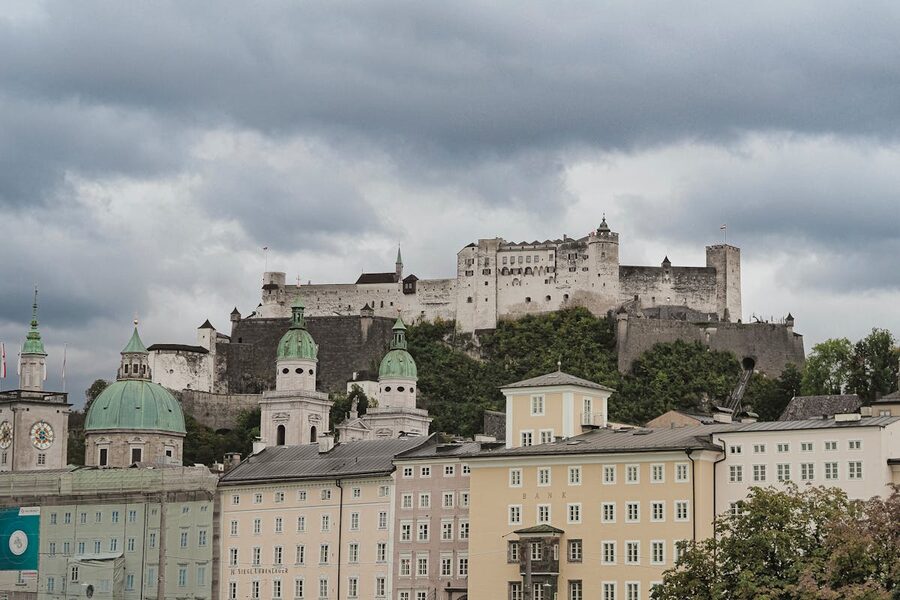
The prince-archbishops were both religious leaders and secular rulers. They collected taxes, maintained armies, and conducted foreign policy — while simultaneously running the diocese and building churches. Wolf Dietrich von Raitenau (ruled 1587-1612) was particularly ambitious: he demolished the medieval cathedral and commissioned the current Baroque replacement, redesigned the city’s squares, and maintained a relationship with Salome Alt that produced 15 children. He was eventually arrested by his rival, the Bishop of Bavaria, and spent his last years imprisoned in the fortress he’d helped build.
Salzburg’s Food and Drink
Salzburg’s culinary identity is distinctly Austrian — Wiener Schnitzel (served everywhere, best at the traditional Gasthäuser), Salzburger Nockerl (a sweet soufflé dessert shaped like the three hills surrounding the city), and Kasnocken (cheese dumplings with fried onions). The city also claims Mozart Kugeln — chocolate pralines with marzipan and nougat that have been produced since 1890 by the Fürst chocolatier. The original Fürst shop on the Alter Markt sells the hand-made version — accept no imitations (the mass-produced Reber and Mirabell versions are everywhere but not the same).
Coffee culture is serious in Salzburg. Café Tomaselli (established 1705) on the Alter Markt is the oldest coffeehouse in Austria and serves the full range of Viennese coffee specialties — Melange, Einspänner, Fiaker — along with cakes and pastries displayed in glass cases. The waiter brings you a tray with your coffee and a glass of water, and you’re expected to linger. This is not Starbucks culture; this is the Central European tradition where a coffee purchase entitles you to sit for as long as you like.
Best Tours to Book
1. Salzburg Day Trip by Train from Munich — $93
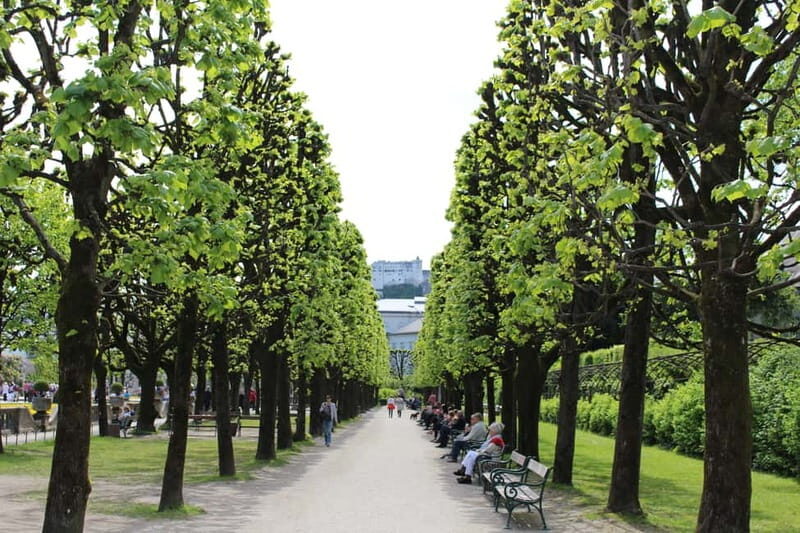
The premium option. Train from Munich to Salzburg with a guide who leads a walking tour through the old town covering Mozart’s birthplace, the cathedral, the fortress views, and the major squares. Free time for lunch, the fortress visit, or shopping. At $93, the price covers the train and the guide — a Bayern Ticket would cost €29 alone, so the guided premium is modest. Our review covers the train experience and what the guide adds.
2. Salzburg, St. Wolfgang & the Salzkammergut — $84
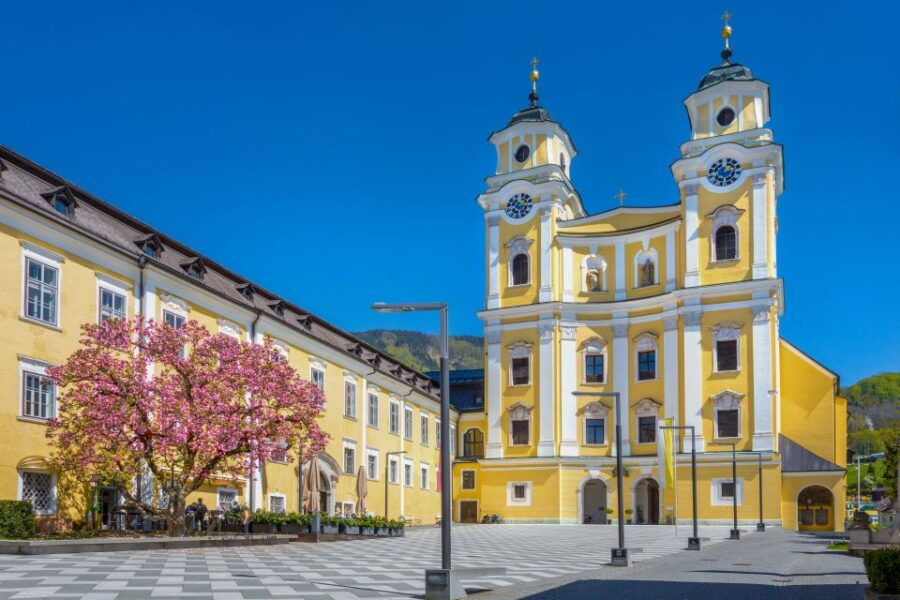
The best-value option and the one that shows you more of Austria. The bus tour covers Salzburg’s old town, then continues into the Salzkammergut lake district with a stop in St. Wolfgang. At $84, it’s cheaper than the train tour and covers more ground. The trade-off is less free time in Salzburg itself. Our review explains whether the Salzkammergut extension is worth the reduced Salzburg time.
3. Salzburg & Lake District Tour — $87
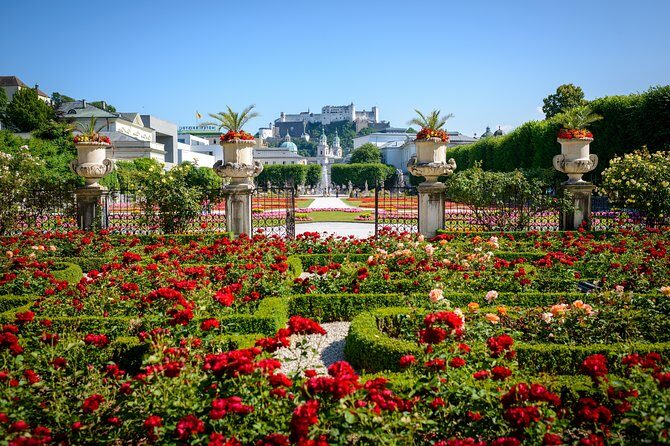
Same concept as tour #2, different operator. Salzburg old town plus the Austrian lakes, by bus from Munich. The $87 price sits between the other two options, and the 11-hour duration means you’re back in Munich by early evening. The operator variation means different guides and sometimes different lake stops. Our review compares this with the GYG version.
Practical Tips
When to visit: The Salzburg Festival (late July to late August) is the city’s cultural pinnacle — world-class opera, concert, and theatre performances. It’s also the most expensive and crowded period. Spring (April-June) and autumn (September-October) offer warm weather and fewer crowds. The Christmas markets (late November to late December) are atmospheric and worth the cold.
How long: A full day from Munich (leave by 8-9am, return by 7-8pm) gives you 5-7 hours in Salzburg. That’s enough for the old town, the fortress, and one museum. Two days would be better — adding the Sound of Music locations, the modern art museum on the Mönchsberg, and the Hellbrunn Palace with its trick fountains.
Budget: Guided day trip: $84-93. Independent train (Bayern Ticket): €29 for groups of up to 5. Fortress entry: €16. Mozart’s Birthplace: €13. Lunch: €12-18. Coffee and cake at Café Tomaselli: €8-12. A full day: about €80-120.
The Austrian border: Salzburg is in Austria. EU citizens need no passport (Schengen area). Non-EU visitors should carry their passport — random border checks occasionally occur on the Munich-Salzburg trains.
Other Munich Day Trips
Salzburg pairs naturally with the Neuschwanstein Castle day trip — fairytale castle one day, Austrian culture capital the next. The Berchtesgaden and Eagle’s Nest day trip covers the Alpine landscape just south of Salzburg and adds the WWII dimension. And the Rothenburg and Romantic Road tour heads north instead of south, showing a completely different side of southern Germany.
For visitors who want to stay in Munich, the Munich city tours cover the beer halls, churches, and neighbourhoods without the cross-border journey. Munich deserves at least two full days before you start day-tripping — the English Garden, the Residenz, and the beer gardens are worth your time.