
Welcome to Rome is a 360-degree projection show that runs through three thousand years of Roman history in thirty-five minutes.
€21. One of the cheapest tickets in central Rome and a very good Day 1 warm-up if it’s your first visit.
Quick Picks
- Most booked — Welcome To Rome Immersive Multimedia Show ($21). 35 minutes, purpose-built theatre on Corso Vittorio Emanuele.
- Classic format: Welcome To Rome Experience ($21.77) — essentially the same show, booked through Viator instead of GetYourGuide.
- Alternative immersive: IKONO Roma Immersive Experience ($18) — different format focused on Instagram-friendly immersive installations.
- Quick Picks
- What the Show Actually Is
- Booking the Three Ticket Options
- Rome: Welcome To Rome Immersive Multimedia Show —
- Welcome To Rome Experience — .77
- Rome: IKONO Roma Immersive Experience —
- Why This Works as a Rome Primer
- Who This Works Best For
- The Palazzo Bonaparte Connection
- The Piazza Venezia Neighbourhood
- Timing Your Visit
- The Technology Behind the Show
- What You Learn in 35 Minutes
- Language Options and Accessibility
- Combining with Rome Sightseeing
- Alternative Immersive Experiences
- What to Expect On-Site
- Common First-Visit Mistakes
- Value Assessment
- Booking and Timing Logistics
- Who Goes to See This
- Final Recommendation
What the Show Actually Is
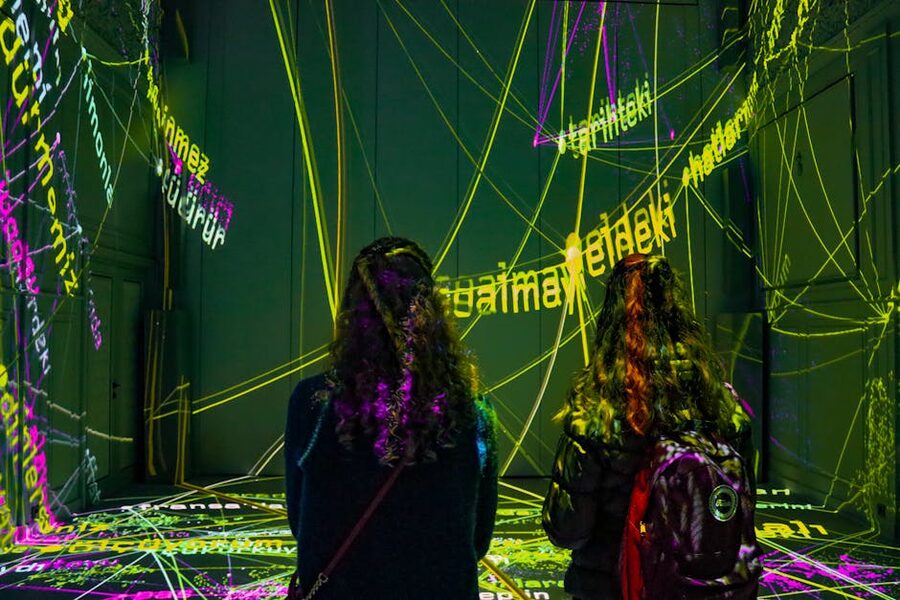
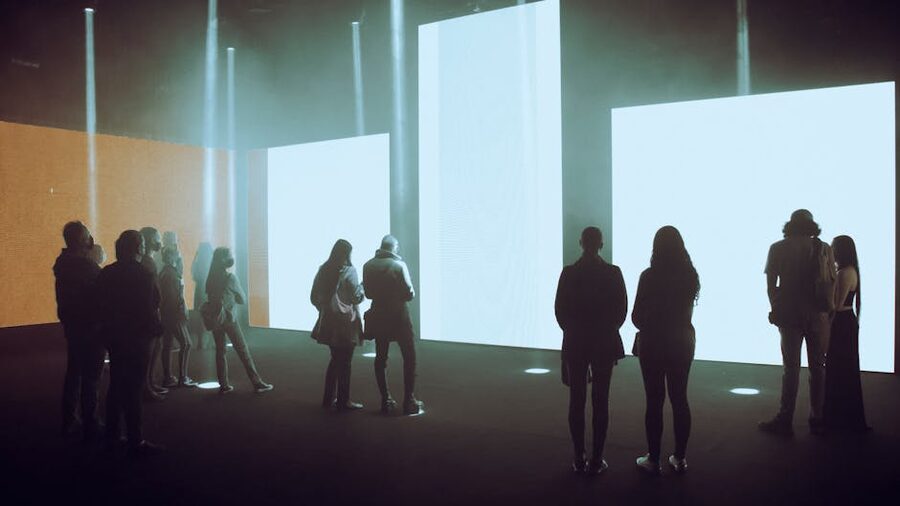
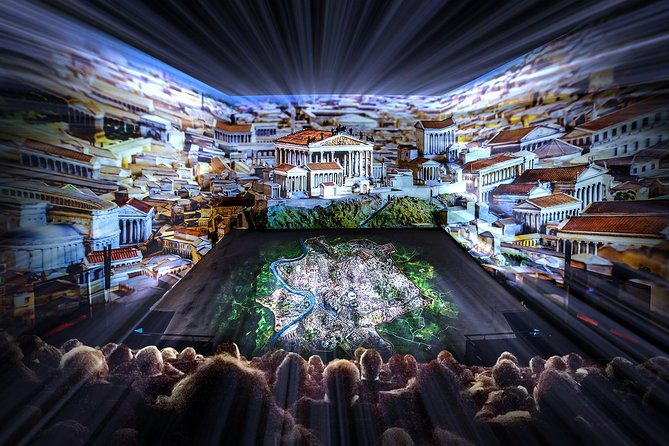
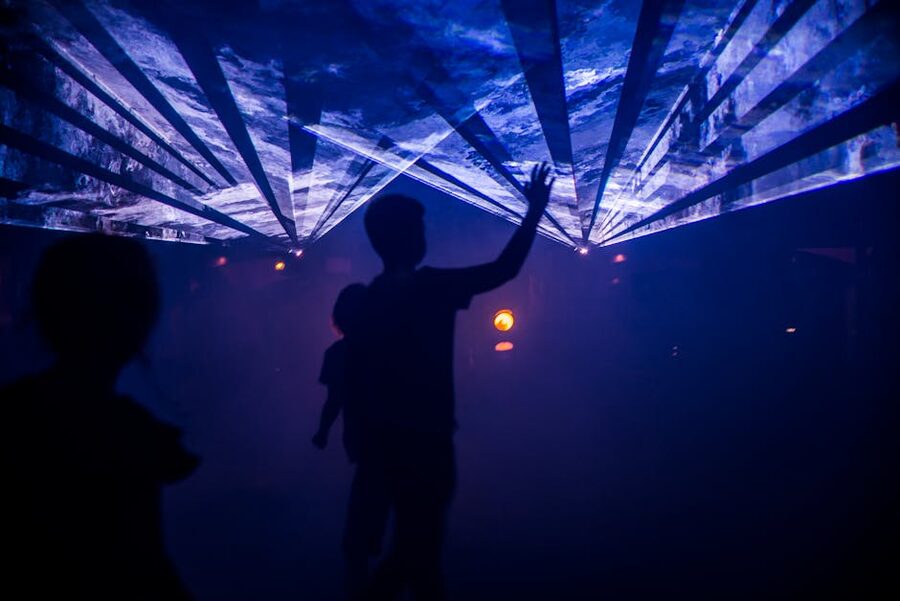
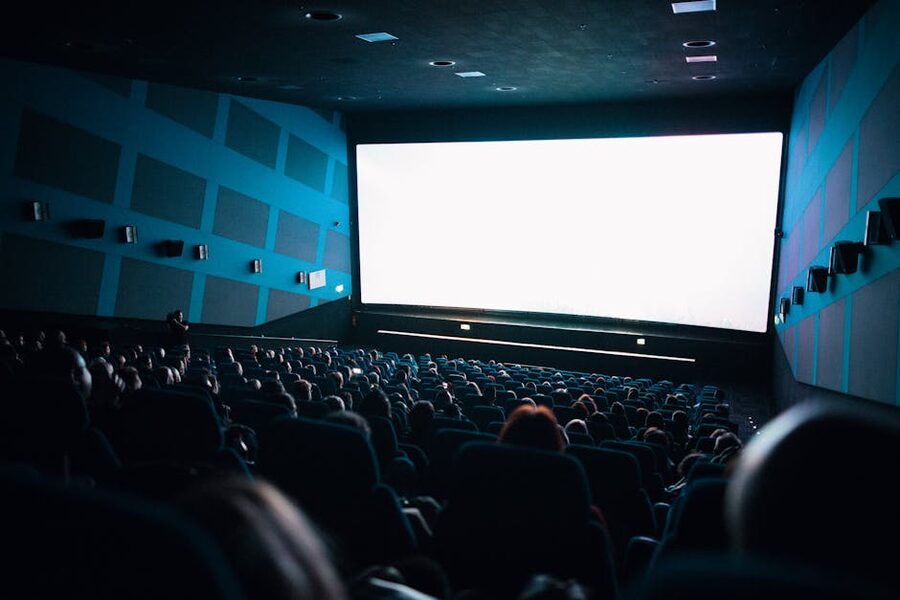
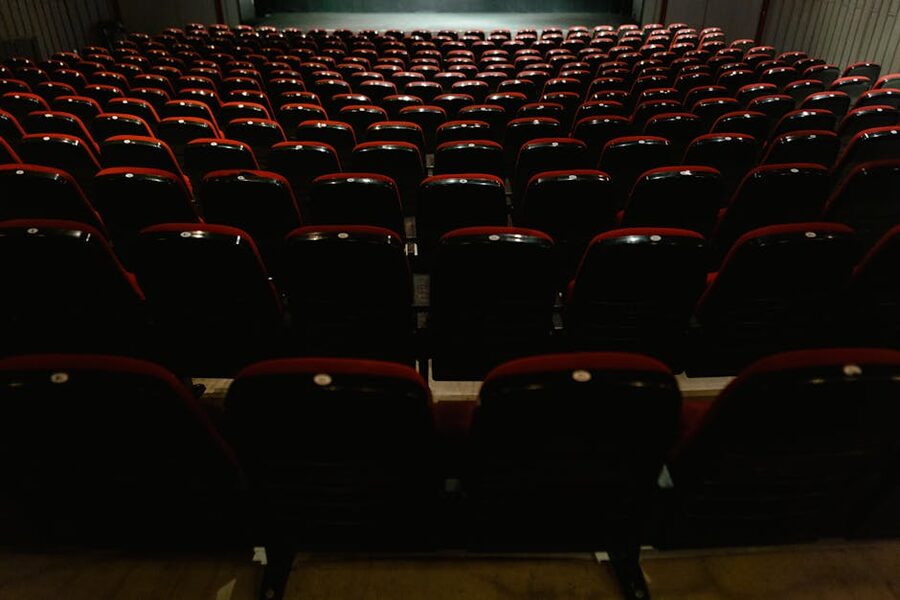
Welcome to Rome occupies a small custom theatre near Piazza Navona — specifically on Corso Vittorio Emanuele II, directly opposite the Palazzo Bonaparte. It seats about 130 people on benches arranged in a circle. The walls, floor, and ceiling are all projection surfaces. No screens, no podiums, no speakers you can see.
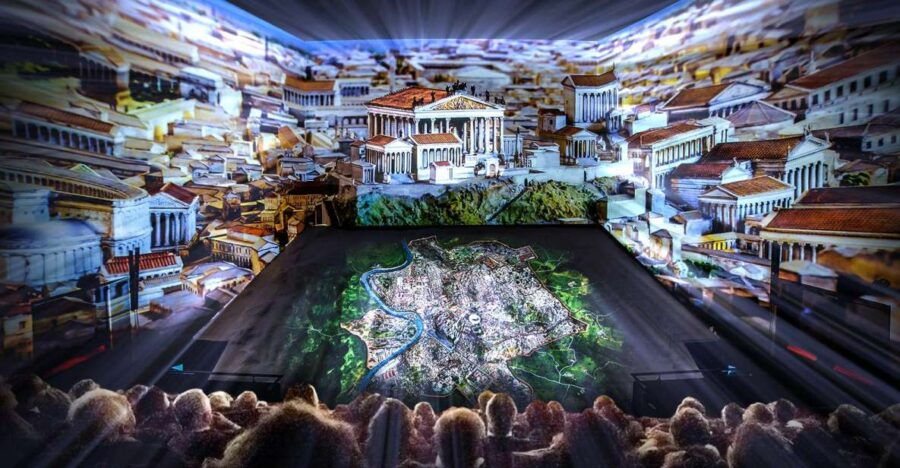
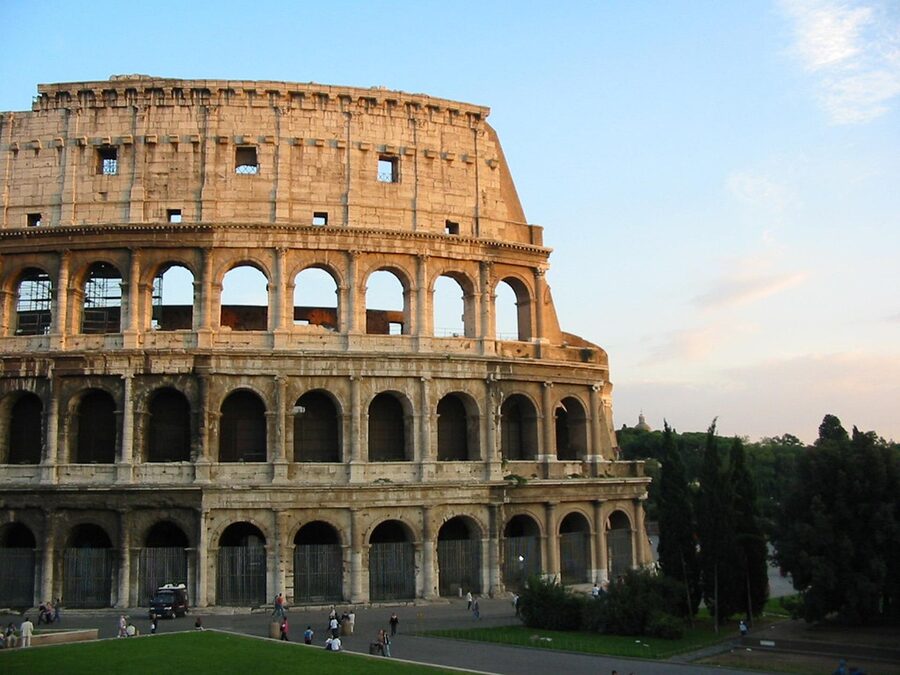
The 35-minute show walks you through Rome’s history in chronological order: Romulus and Remus, Republican Rome, the Empire, Christianisation, the medieval period, the Renaissance, Baroque Rome, unification, modern Rome. Each era gets 3-4 minutes of immersive visualisation built around key landmarks and events.
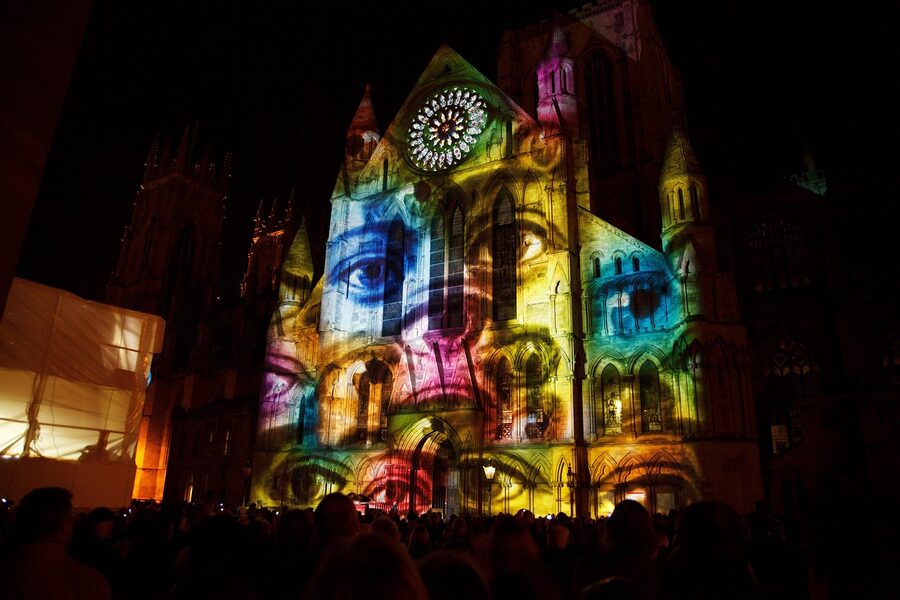
The format is fundamentally different from watching a documentary. Because images surround you on 360 degrees, you turn constantly to follow the action. Bernini’s sculptures rise from the floor around you. The Colosseum’s construction happens on the curved walls. The Forum fills with crowds. It’s closer to theme park than to museum.
Narration plays through multi-channel audio with dramatic music scoring. Available in 8+ languages (pick your language on arrival). The show runs continuously every 30 minutes throughout the day, so you never wait more than 30 minutes for the next showing.
Booking the Three Ticket Options
There are essentially two identical Welcome to Rome ticket formats (booked through different platforms) plus an alternative immersive experience (IKONO) for travellers who want something different.
Rome: Welcome To Rome Immersive Multimedia Show — $21
The GetYourGuide booking for the main show. Open flexible entry — you can show up any time during opening hours and catch the next available screening. What the 35 minutes actually delivers, and how it stacks up against other Rome orientation options, is worth reading first. Book this for first-time Rome visitors who want the history framework before hitting the real ruins.
Welcome To Rome Experience — $21.77
The Viator listing for the same show — essentially identical ticket at nearly identical price. If you’re already using Viator for other Rome bookings, consolidate here; otherwise the GetYourGuide version has a longer reviews history. How the two platforms compare for this specific product is the question worth answering before you pick. Choose based on which booking platform you prefer.

Rome: IKONO Roma Immersive Experience — $18
A completely different immersive format. IKONO is a walk-through of photogenic installations — more Instagram than history. Fifteen-plus themed rooms over 60-90 minutes at your own pace. How the two fit different travel companions is the honest call here. Pick this if your travel companion wants photos more than education — and pair it with the Leonardo da Vinci Exhibition if you’re hunting more multimedia-era Rome stops.
Why This Works as a Rome Primer
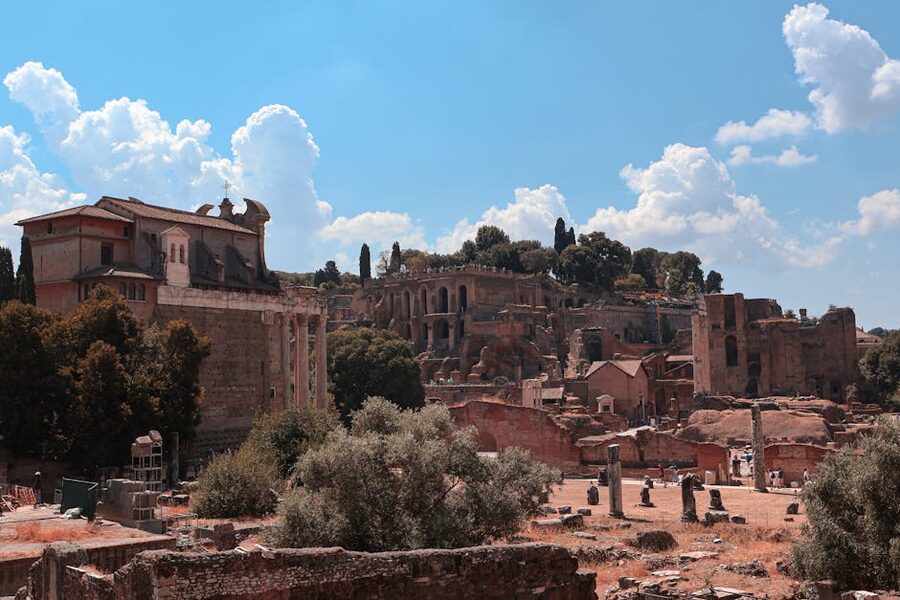
Most first-time Rome visitors struggle with the historical layering. You stand at the Roman Forum and see rubble but don’t know which century is which, what happened where, or why one ruined column matters more than another. Welcome to Rome compresses 3,000 years into 35 minutes specifically to solve this problem.
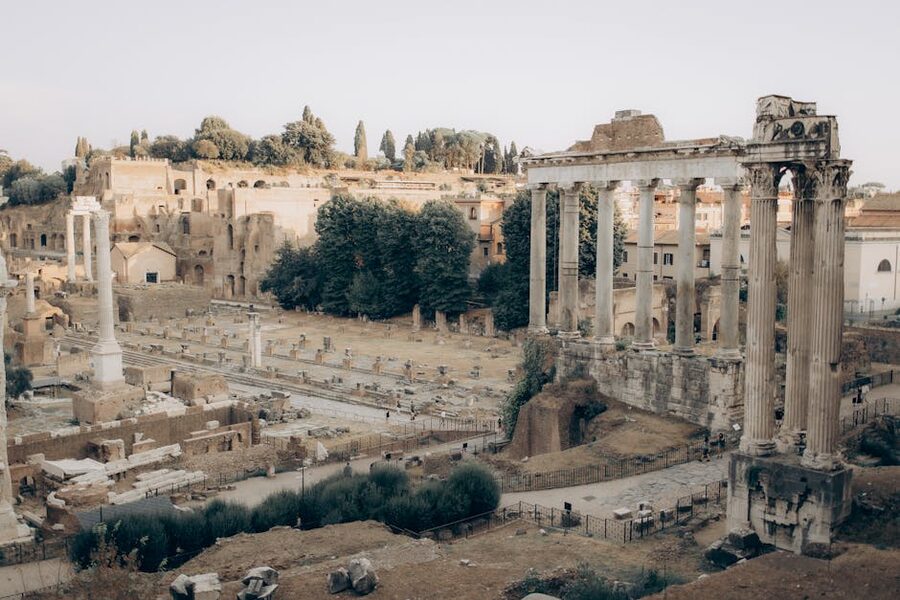
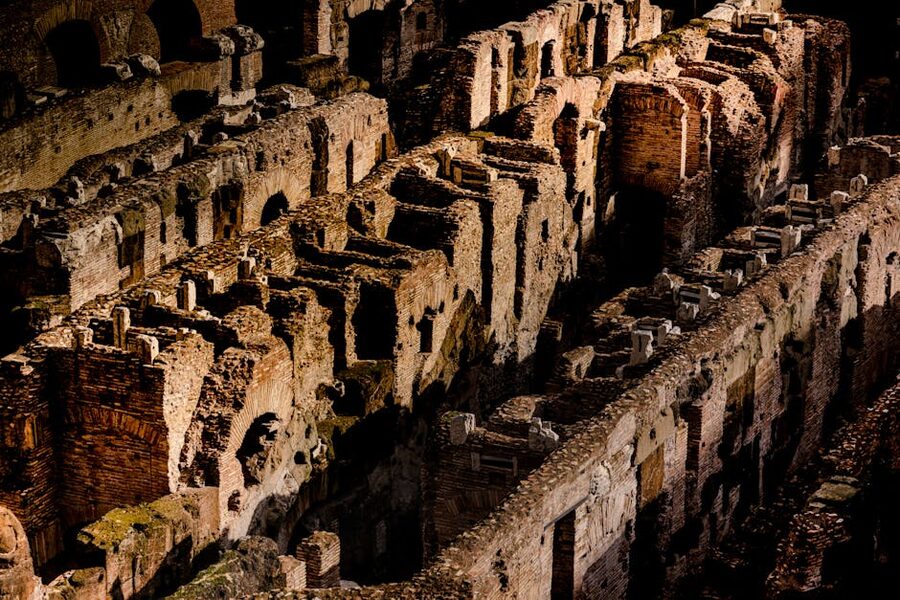
After the show, you’ll recognize the Curia (Senate house), Temple of Saturn, Arch of Titus, Basilica of Maxentius — these aren’t abstract names anymore but specific buildings you saw reconstructed in the show. The 3-4 hour Forum + Colosseum visit you do the next day becomes substantially richer.
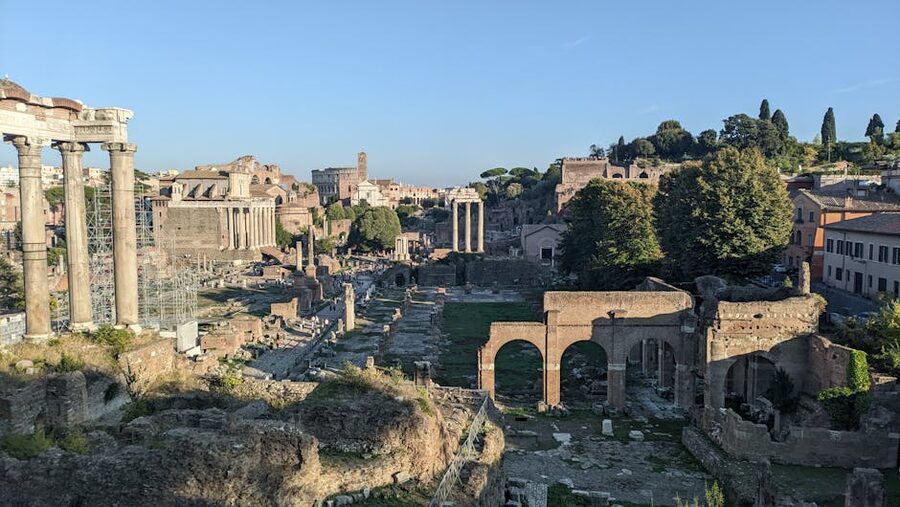
The trick is timing. Book Welcome to Rome on your first afternoon or evening in Rome. Visit the Forum and Colosseum on day 2 or 3 with the Colosseum guided tour. You’ll see those sites through the lens of the immersive show you already watched, and the guide’s commentary will connect back to things you already learned.
Who This Works Best For
The 35-minute format works brilliantly for some travellers and falls flat for others. Understanding which category you’re in before booking saves you from disappointment.
Great for: first-time Rome visitors who want context, families with children ages 6+ who can handle 35 minutes indoors, travellers who don’t want to read long history guidebooks, anyone who prefers visual learning to text, visitors with limited time who want to absorb a lot fast.
Not ideal for: visitors who already know Rome’s history well and would find the show basic, people with sensory processing issues (the dark room, loud music, and moving projections can be overwhelming), anyone expecting deep academic detail (the show summarises rather than deep-dives), travellers who hate audio guides or narrated experiences.
Families: kids 6-12 tend to love it — the immersive format keeps them engaged where traditional museums don’t. Under-6s sometimes get scared of the dark and loud music. Over-14s may find it too basic; give teenagers the option to skip.
Accessibility: wheelchair accessible via the Corso Vittorio Emanuele entrance, front-row bench seating available on request, audio descriptions not currently offered for visually impaired visitors. English captioning available for hearing impaired visitors.
The Palazzo Bonaparte Connection
The Welcome to Rome theatre sits opposite Palazzo Bonaparte — the 17th-century palace where Napoleon’s mother Letizia Ramolino lived the last 18 years of her life. Being across from a genuinely historic palace gives the show’s location an organic connection to actual Rome.
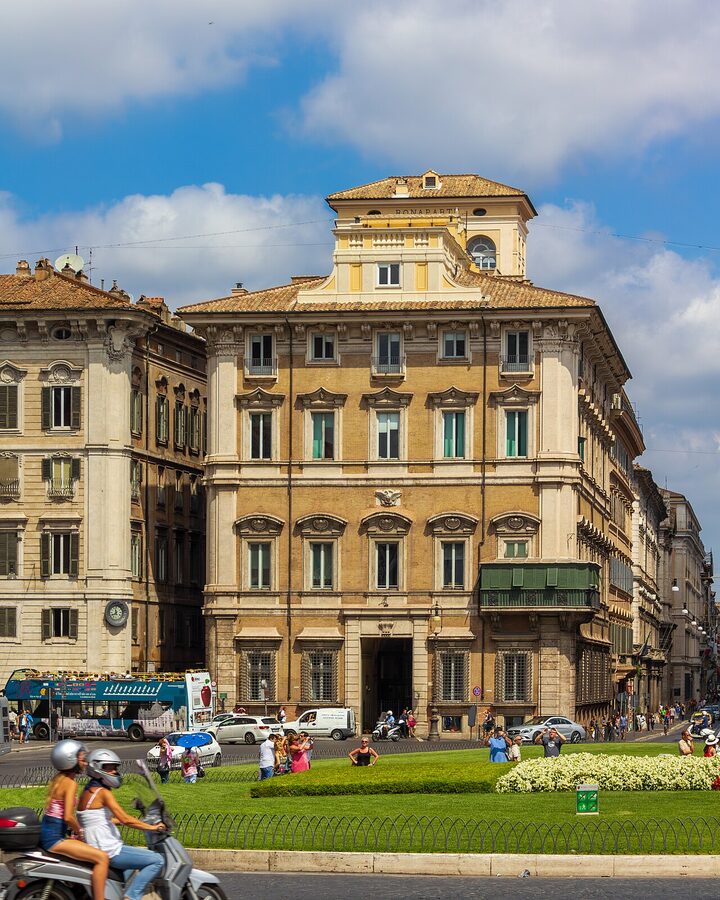
Palazzo Bonaparte itself hosts rotating art exhibitions (separate tickets) and isn’t part of the Welcome to Rome package. But walking past it on your way to the show adds a small “did you know” moment — you’re in a neighbourhood where Napoleon’s family literally lived.
The theatre entrance is at Via Plebiscito 118 / Via Santo Stefano del Cacco — walking directions point you to a small ground-floor entrance that’s easy to miss if you’re not looking. A reasonable marquee identifies it but don’t expect a massive sign; this is a small cultural operator, not a theme park.
The Piazza Venezia Neighbourhood
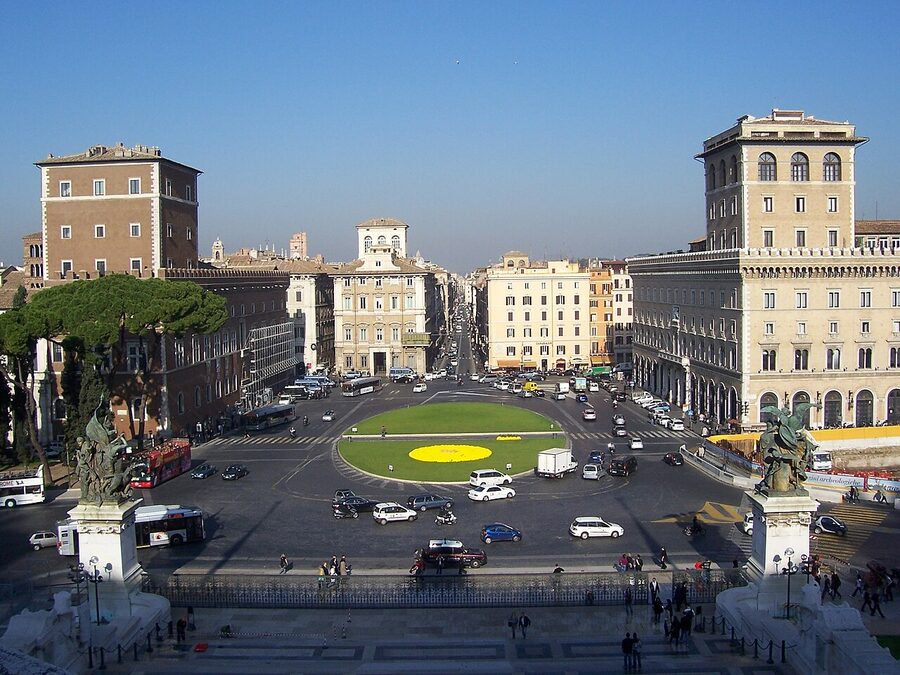
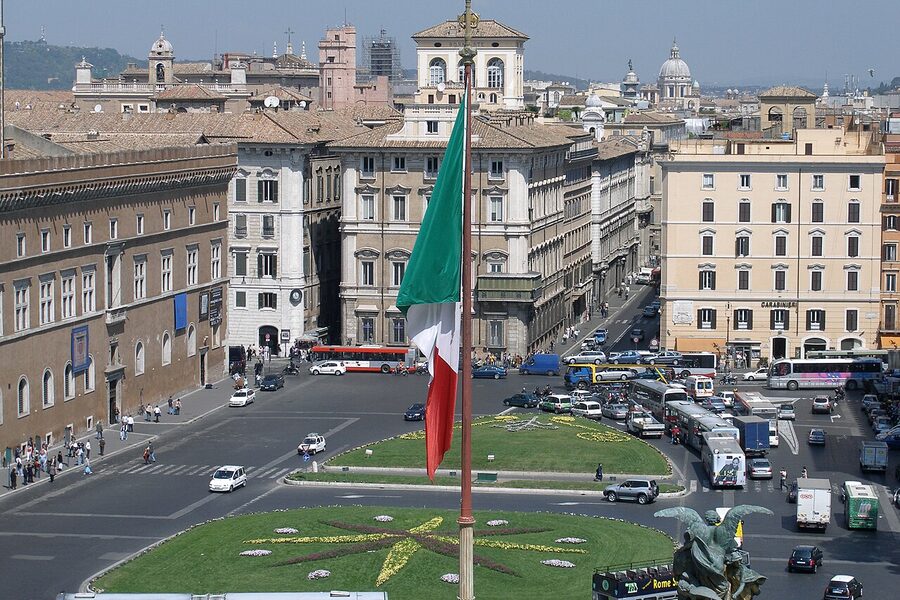
Welcome to Rome sits within walking distance of Piazza Venezia, Rome’s largest central square and the symbolic heart of modern Italy. If your time in Rome is limited, this single location connects you to multiple essential sites.
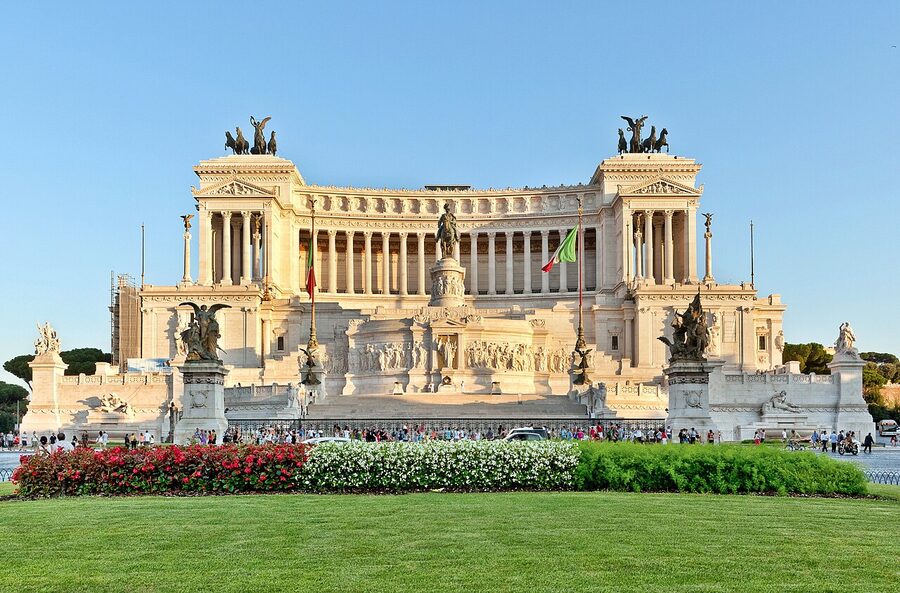
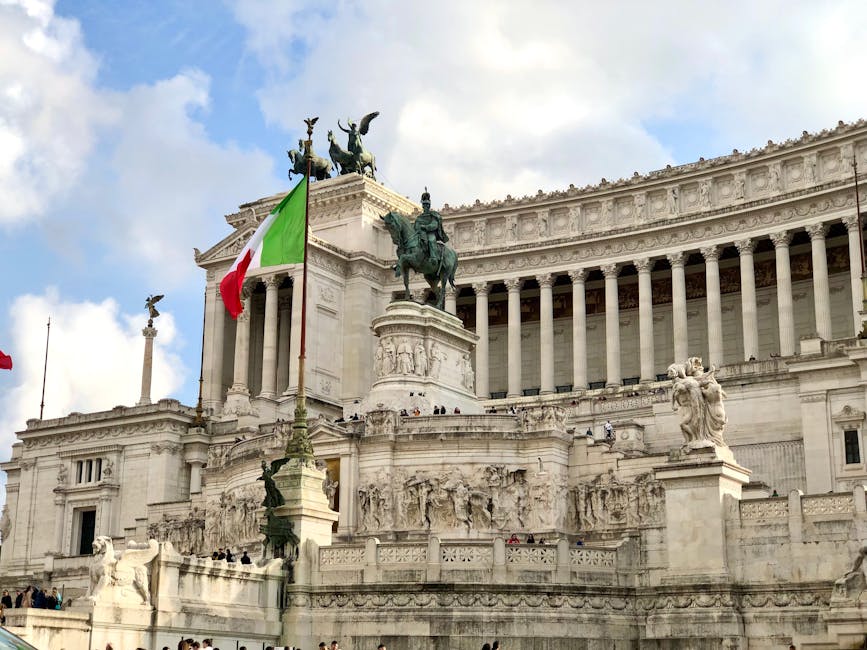
Il Vittoriano (Altar of the Fatherland) is Piazza Venezia’s massive 19th-century monument — the one Romans nickname “the wedding cake” or “the typewriter.” It’s free to enter at ground level and contains the Tomb of the Unknown Soldier. The elevator to the top (€10 separate ticket) gives you one of Rome’s best panoramic views.
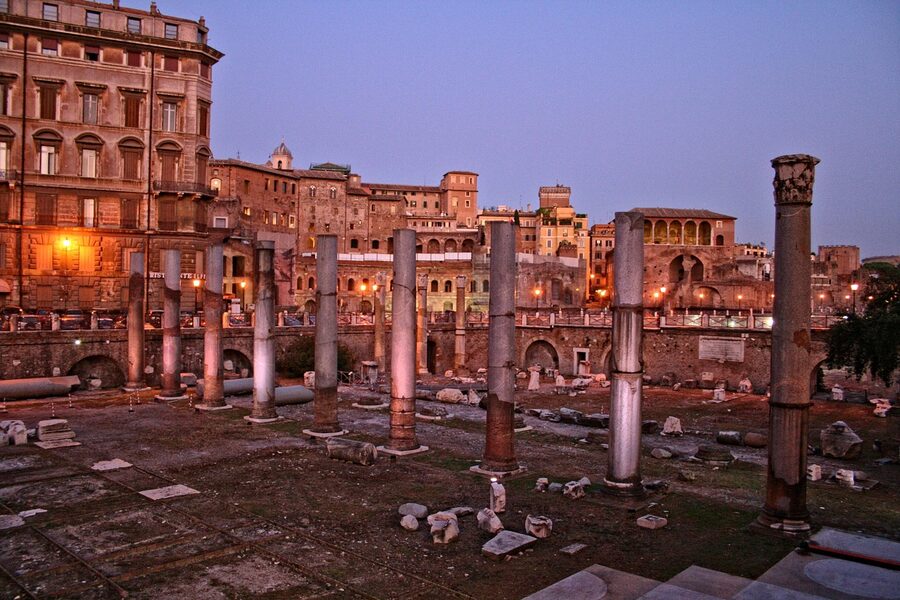
Trajan’s Forum and Column (free, outdoor) sit 3 minutes’ walk east of Welcome to Rome. The column has a continuous spiral relief sculpture depicting Trajan’s Dacian wars — 155 scenes across 30 metres of marble. Walk around it slowly; the carving quality is remarkable and free to see.
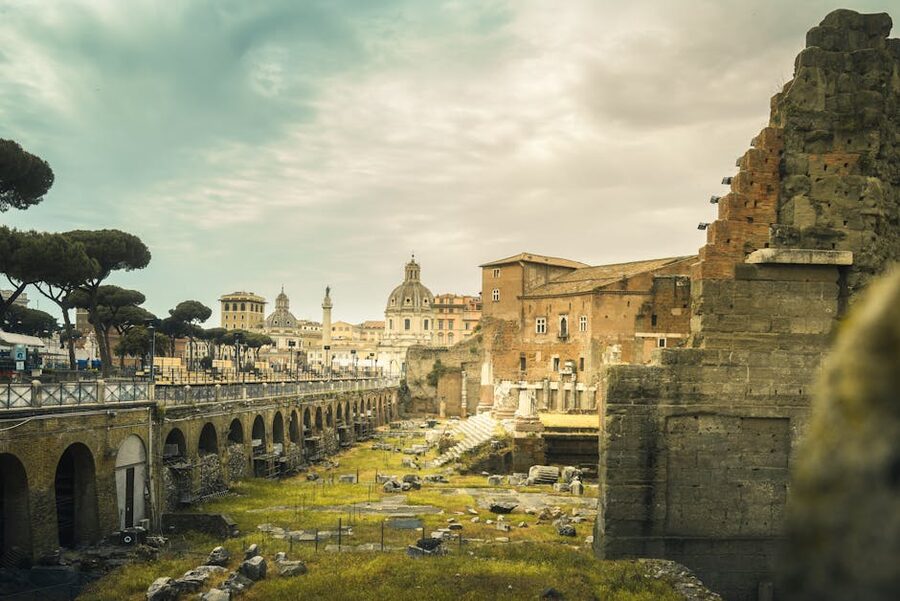
Campidoglio (Capitoline Hill) behind Il Vittoriano — Michelangelo-designed piazza with museums, free to enter the piazza itself. The view from the top of the stairs toward the Forum is classic Rome postcard material.
Timing Your Visit
The show runs continuously every 30 minutes from 10:00 to 19:00 daily (last entry 18:30). Morning slots are less crowded; afternoon slots often sell out for walk-ups in high season.
Morning (10:00-12:00): smallest crowds, freshest audiences, easiest front-row access. Best time if you have the flexibility.
Midday (12:00-14:00): busiest period, largest school/tour groups. Skip unless you have no other option.
Afternoon (14:00-17:00): medium crowds, convenient after morning sightseeing. The 15:00 slot is particularly popular.
Evening (17:00-19:00): smaller crowds, the last slot (18:30) often has just 40-60 people rather than the 100+ midday. The show works well as a day-closer before dinner.
Tickets are essentially always available same-day because the theatre runs 18 shows per day with 130 seats each. Walk-ups rarely wait more than 30 minutes even in peak season. Booking ahead isn’t strictly necessary — though it does let you skip the ticket counter queue.
The Technology Behind the Show
The theatre uses 12+ laser projectors positioned around the ceiling to cover walls, floor, and ceiling with seamless projection. Content is 5K resolution across the full 360-degree surface, which is why it looks sharper than typical museum video installations.
Audio uses directional speakers embedded in the ceiling, meaning the narration seems to come from the side of the room showing the current scene. When the show switches focus from Trajan’s Forum on the east wall to the Colosseum on the south wall, the audio follows automatically.

The content was commissioned specifically for this theatre and the projection geometry. You can’t watch it online, on YouTube, or in VR headsets — the experience only works in the physical space it was designed for. This is genuinely a “you had to be there” experience.
Most 360-degree attractions use pre-recorded spherical video displayed on curved screens. Welcome to Rome’s approach is fundamentally different — the room is the display surface, and your perspective shifts based on where you stand. Two people in the same theatre see different compositions depending on where they’re positioned.
What You Learn in 35 Minutes
The content progresses chronologically through Roman history, hitting the major turning points. You won’t get academic-level depth, but you will get coherent narrative context that organizes the random facts most tourists arrive with.
Foundation (753 BCE): Romulus and Remus, the she-wolf, the founding myth.
Republic (509-27 BCE): government structure, Julius Caesar, territorial expansion. 4 minutes.
Empire (27 BCE-476 CE): Augustus through the fall, imperial architecture, the Colosseum construction. 6-8 minutes.
Christian transformation (313-500 CE): Constantine’s conversion, St Peter’s original basilica, the transition from pagan to Christian Rome. 4 minutes.
Medieval Rome (500-1300): barbarian invasions, papal states, population collapse and recovery. 3 minutes.
Renaissance (1400-1600): papal patronage, Michelangelo, Raphael, the reconstruction of St Peter’s. 4 minutes.
Baroque (1600-1750): Bernini, the fountains, the piazzas Rome is famous for. 4 minutes.
Unification (1861-1870): Italian unification, Rome as new capital, the construction of Il Vittoriano. 3 minutes.
Modern (1900-present): fascism and Mussolini (briefly), post-war reconstruction, contemporary Rome. 2-3 minutes.
The pacing is uneven — the Empire and Baroque get more attention than the medieval or modern periods. This matches what tourists will actually see during their Rome visit (more surviving imperial and Baroque monuments than medieval ones), so the content prioritisation makes sense.
Language Options and Accessibility
The show is available in: English, Italian, Spanish, French, German, Portuguese, Japanese, Mandarin Chinese, and Russian. You pick your language when collecting tickets; individual headsets for non-dominant languages aren’t currently offered, so the whole theatre hears the same language per showing.
Check language schedules before booking. Italian showings run every 60-90 minutes; English, Spanish, French, German run every 2-3 hours; Japanese, Chinese, Russian may only have 2-3 showings per day. Arriving with a non-dominant language preference may mean waiting longer for the right showing.
If you have language preference but can tolerate English: book an English slot, which runs most frequently after Italian. The show’s visual component is strong enough that partial comprehension still works.
Physical accessibility: ramp entrance, limited wheelchair seating at the back (reserve ahead), hearing loops for compatible hearing aids. Visual impairment accommodation is limited — the show is primarily visual and less effective for visitors who can’t see the projections.
Combining with Rome Sightseeing
Welcome to Rome is short (35 minutes plus 10 minutes check-in and exit) which makes it easy to combine with other activities. The location near Piazza Venezia puts you central to everything.
First-afternoon Rome itinerary: arrive, hotel check-in, 17:00 Welcome to Rome show, walk through Piazza Venezia to see Il Vittoriano, dinner in Trastevere. This is the classic “first day in Rome” structure — low-energy, high-orientation.
Pre-Forum warm-up: 10:00 Welcome to Rome show, walk to the Forum for your 11:30 Colosseum and Roman Forum tour. Context-first approach that makes the 3-hour Forum visit much richer.
Full-Rome day: morning Borghese Gallery, afternoon Welcome to Rome (15:30), walk to dinner via Piazza Navona. Art, history, food — solid full day.
Rest afternoon: morning intense (Vatican or Catacombs), light lunch, 15:00 Welcome to Rome, free evening. Good recovery structure for a longer Rome trip.
Alternative Immersive Experiences
Welcome to Rome isn’t the only immersive show in Rome. If you want something different from history projection mapping, several alternatives exist.
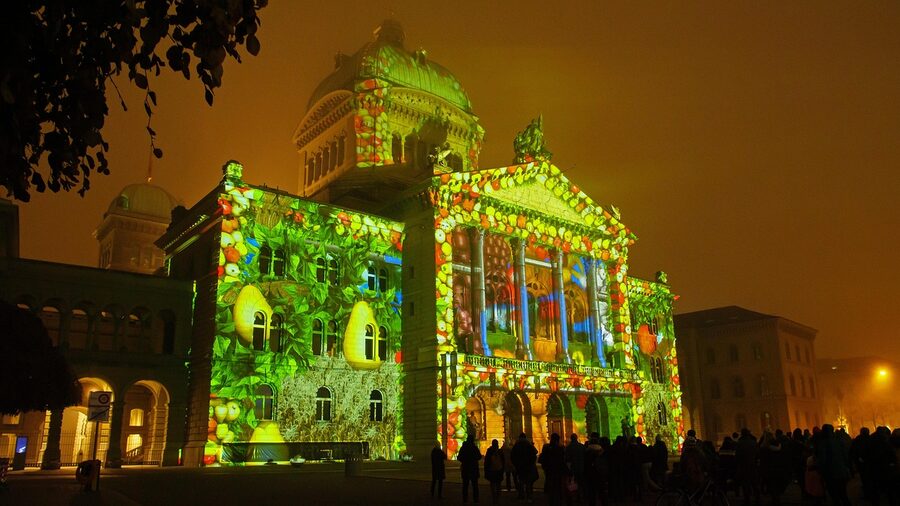
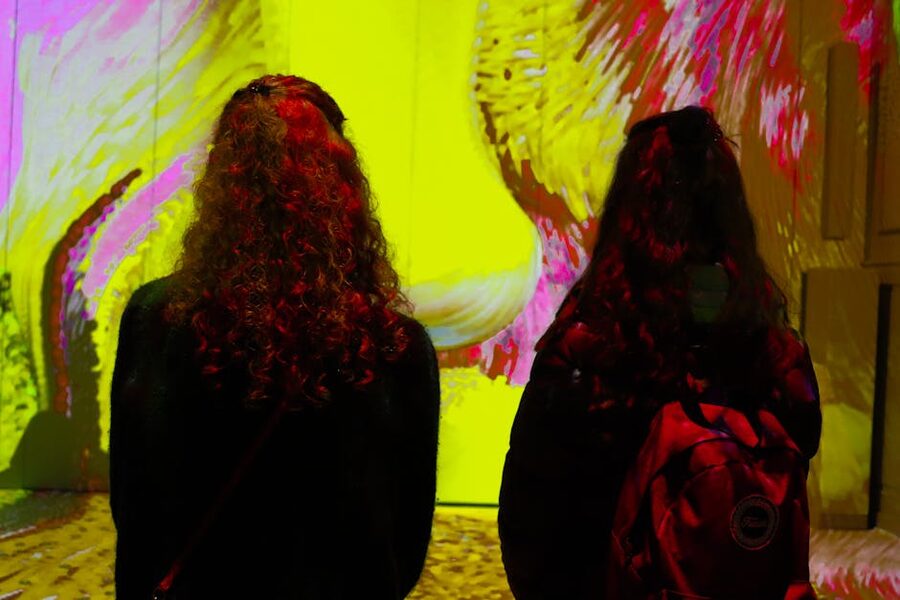
IKONO Roma: the Instagram-optimized immersive space — 15+ themed rooms designed for photogenic selfies rather than education. Popular with younger travellers and families with teenagers. Completely different vibe from Welcome to Rome.
Colosseum VR: a VR headset experience that reconstructs the Colosseum in its original state. Shorter (15-20 minutes), more specific (Colosseum only), and combinable with actual Colosseum admission. Works well as an add-on if you’re doing the Colosseum anyway.
Rome Time Elevator: older format (2000s) using motion seats and projected video. Less polished than Welcome to Rome but similar concept — covers Rome’s history over 30-40 minutes. Still operating as of recent visits.
Pick Welcome to Rome if: you want comprehensive historical context, you have limited Rome time and need efficient orientation, you’re visiting with children, or you’ve never been to Rome before.
Pick IKONO if: you care more about photos than learning, you’re with younger travellers who find pure history boring, or you’ve already done Welcome to Rome on a previous trip.
Pick Colosseum VR if: you specifically want to see the Colosseum reconstructed and you’re already doing the Colosseum tour.
What to Expect On-Site
The theatre entrance has a small lobby where you exchange your ticket for a wristband, pick your language, and enter the waiting area. The waiting area has Italian history displays to read while you wait the remaining minutes until showtime.
Doors open 10 minutes before show. When the previous audience exits through a separate door, yours enters. Seating is unassigned — arriving early gets you better bench positioning. Front row (next to the central projector) isn’t always best; middle rows often have the best view of the 360-degree projection.
Photography rules: photography IS allowed during the show (without flash), unlike most Rome museums. This is unusual and worth knowing — you can capture the experience to share back home. Filming is typically restricted to a few seconds of video rather than the full 35-minute show.
After the show: you exit through a museum area with physical artifacts and historical displays that expand on what you just saw. Budget 15-20 minutes to walk through this — it’s included in your ticket and often overlooked.
Gift shop: small, standard Rome souvenirs plus the show’s own branded merchandise. Worth a browse but not essential — most items are available cheaper at other Rome gift shops.
Common First-Visit Mistakes
A few things that trip up first-time visitors to Welcome to Rome worth flagging so you avoid them.
Showing up right at showtime. You need 5-10 minutes to exchange tickets, pick language, and enter. Arriving at showtime means you miss the start of your slot and get pushed to the next showing.
Booking the wrong language. If you want English but don’t check language schedules, you might book a ticket for a slot that’s actually in Italian. Confirm the language when booking.
Treating it like a museum. This is a theatre show — you stand/sit and watch. You don’t wander and read plaques like at the Vatican. Adjust expectations accordingly.
Doing it after the Forum. The value proposition is “primer before you see ruins.” Going after you’ve already seen the Forum means the show functions as reinforcement rather than introduction. Still worthwhile but less impactful.
Rushing the post-show museum. The physical artifact display after the show is the meat of the educational content. Breezing through in 5 minutes means you miss genuinely informative material.
Value Assessment
At $21, this is one of Rome’s cheapest cultural activities. The value proposition is overwhelmingly positive for the right type of visitor.
The math: $21 for 35 minutes of curated, high-production-value immersive content plus another 15-20 minutes of related museum material. Per-minute cost is lower than most paid Rome experiences. Per-learning-hour cost is excellent.
Hidden benefit: the show’s framing of Rome’s history pays forward into every subsequent site visit. The value persists beyond the 35 minutes in your theatre seat.
Cost comparison: Vatican Museums tickets are $30-35. Colosseum tickets are $20-25. Borghese Gallery tickets are $25-55. Welcome to Rome at $21 delivers worthwhile content at the low end of Rome museum pricing.
Who shouldn’t buy: budget travellers on absolutely minimum-spend Rome trips who need the $21 for food. Everyone else can justify this; it’s not a discretionary luxury, it’s a practical investment in getting more out of your other Rome sites.
Booking and Timing Logistics
The practical side of booking is simple compared to more complex Rome activities.
Advance booking: GetYourGuide and Viator both sell the standard ticket. Prices are nearly identical. Cancellation is typically 24 hours free. Advance tickets are digital — show your phone at the entrance.
Walk-up: you can buy tickets at the door if there’s availability. In peak season some afternoon slots sell out, but morning and late-afternoon slots almost always have space. Budget 15-20 minutes of buffer in case a specific slot is full.
Group discounts: groups of 10+ get discounted pricing via direct email to the operator. For 10-15 people this works out to about $15 per person instead of $21. Makes sense for family reunions or small organised groups.
Combined tickets: some Rome city passes include Welcome to Rome among bundled attractions. Check the specific ticket details before buying combined passes to make sure Welcome to Rome is genuinely included rather than discounted.
Who Goes to See This
The typical Welcome to Rome audience skews family-heavy, international-diverse, and first-timer-heavy. This isn’t a locals’ activity — it’s an introduction for visitors.
Typical demographics: families with children 6-15 (30-40%), first-time Rome visitors from non-Italian backgrounds (40-50%), older travellers who prefer air-conditioned indoor activities (15-20%), school groups on educational tours (visible during school term months), occasional Italians taking visiting relatives or friends around Rome.
The mix makes for an interesting audience. You’re not alone with tourists from your home country — you’re in a genuinely international crowd all learning the same thing simultaneously. The shared experience is part of what makes it memorable.
Final Recommendation
Welcome to Rome is one of the highest-value tickets a first-time Rome visitor can buy. $21 for 35 minutes of immersive history that transforms every subsequent site visit from “confusing rubble” to “specific recognisable buildings with known historical context.” Book this on your first day and do the Roman Forum/Colosseum tour after, not before.
Book the GetYourGuide version if you don’t have a platform preference. Skip this experience if you’re already well-versed in Roman history, if you have sensory processing issues that struggle with dark rooms and projections, or if you’re on an absolutely shoestring budget. Everyone else should book — preferably as early in their Rome trip as possible, to maximise the context-forward effect on the rest of the week.