
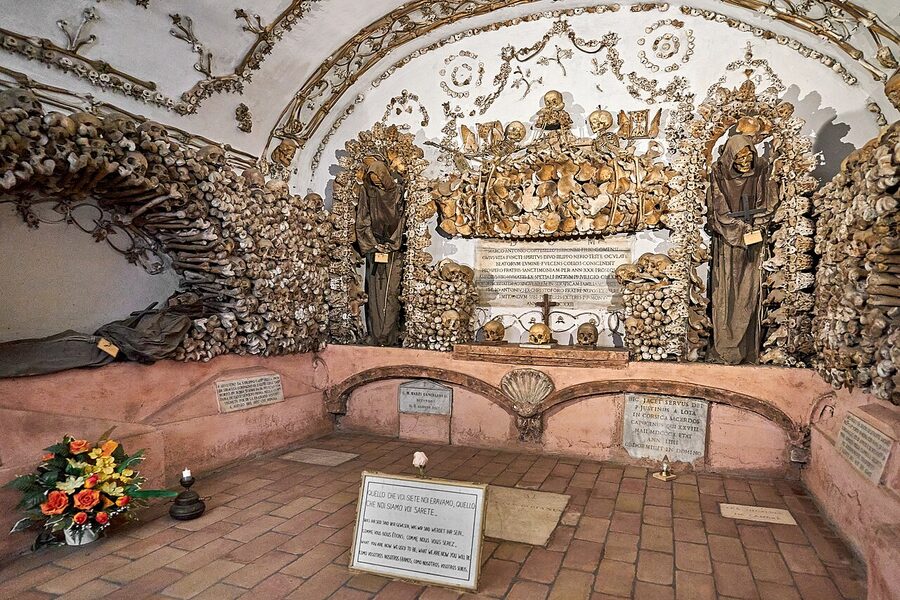
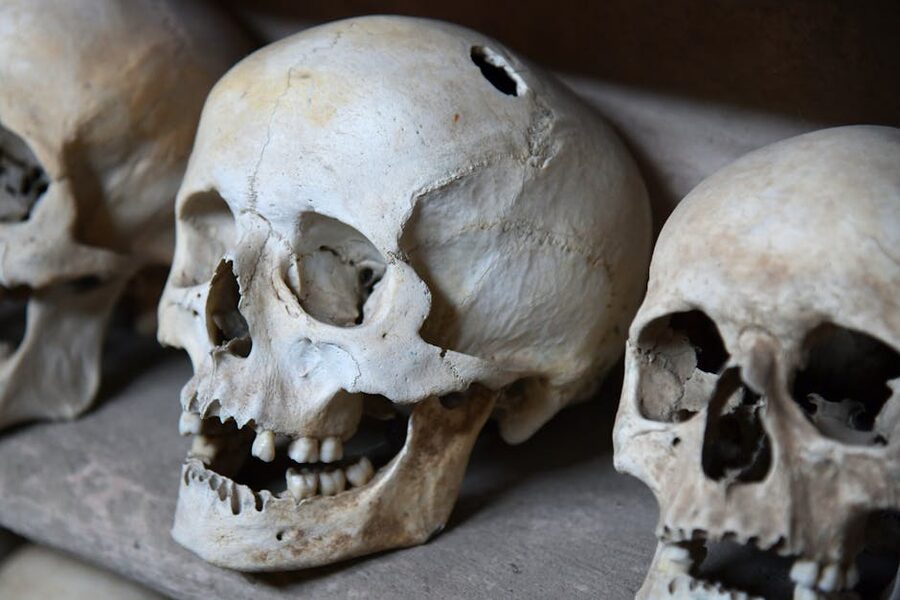
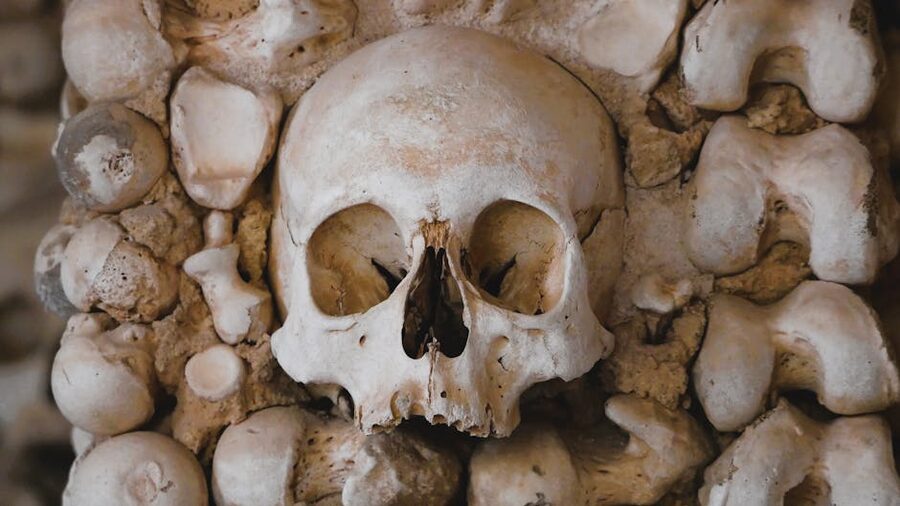
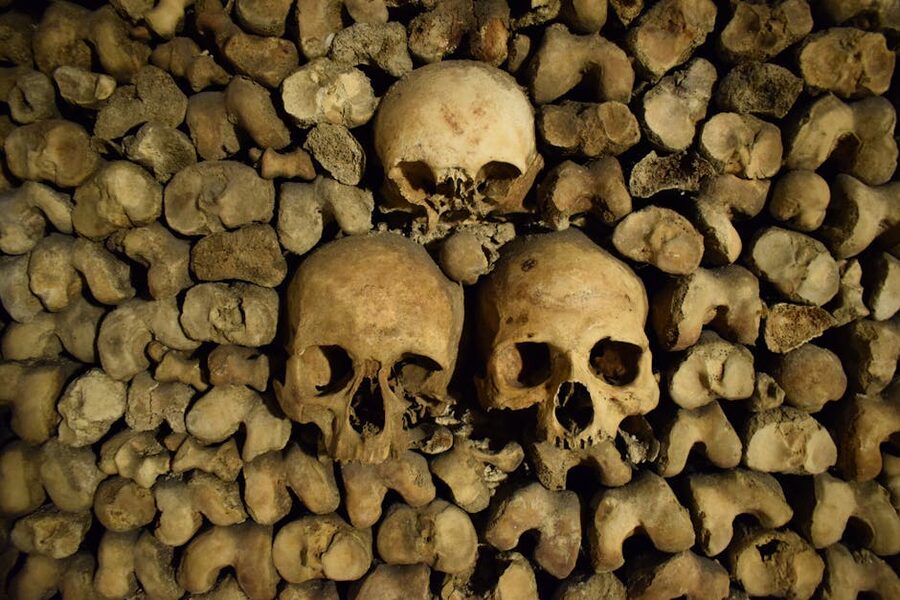
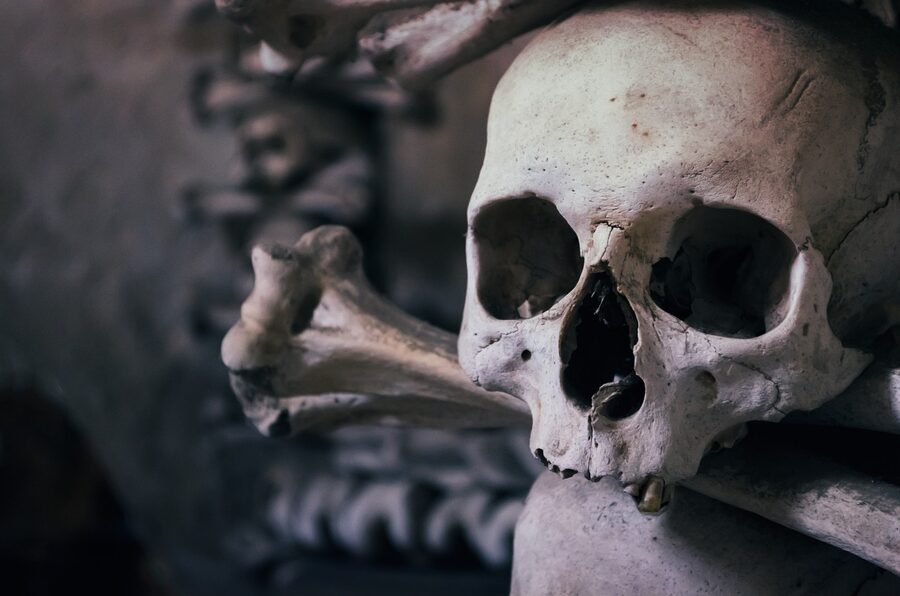
The walls of the Capuchin Crypt are made of bones. Tibias for pillars, skulls for ceiling medallions, femurs arranged like baroque decoration. The sign inside says: “What you are, we once were. What we are, you will be.”
€25-66 and you’ve got an afternoon.
Quick Picks
- Best combo value — Original Crypts & Catacombs Tour with transfers ($66). 3.5 hours, Capuchin plus Domitilla plus San Nicola, transport.
- Capuchin only — Capuchin Crypts skip-the-line ticket ($25). One hour, central.
- Small-group premium — Small group Bone Crypt + Catacombs tour ($65). Better guides, smaller group.
- Quick Picks
- Why These Two Things Got Combined
- Booking the Three Main Tour Options
- The Original Roman Crypts and Catacombs Tour with Transfers — .51
- Rome: Capuchin Crypts Skip-the-Line Ticket and Tour —
- Rome Underground Tour with Catacombs & Exclusive Bone Crypt — .30
- What the Catacombs Actually Are
- The Capuchin Crypt — Very Different Thing
- Photography and Filming Rules
- Dress Code and What to Wear
- The Appian Way Context
- Planning Around Rome’s Other Underground Sites
- The Christian Burial Context
- Tour Logistics and Transfers
- What to Expect Emotionally
- Pairing with Other Rome Stops
- The Via Veneto Neighbourhood
- Best Times to Visit
- Closures to Know About
- Tickets and Pricing
- Photography Workarounds
- Final Planning Tips
- Pair This Guide With
- Final Take
Why These Two Things Got Combined
The catacombs and the Capuchin Crypt aren’t really the same thing historically. The catacombs are 2nd-5th century Christian burial networks, dug into the soft volcanic tuff rock outside the city walls. The Capuchin Crypt is a 17th-18th century monastery ossuary built from the exhumed bones of Capuchin friars. About 1,500 years and completely different purposes separate them.
The reason tour operators combine them: both involve human remains underground, both are relatively dark-tourism friendly, and the geography works. Most catacombs sit along the Appian Way south of central Rome. The Capuchin Crypt sits off Via Veneto in central Rome. A tour with van transfers can pick you up centrally, hit the Capuchin, drive you to a catacomb, and return you to your hotel in 3-4 hours.
If you treat them as a package, the visit makes sense. If you treat them as the same thing, you’ll be confused when a 17th-century bone arrangement at the Capuchin is followed 30 minutes later by early Christian fresco-decorated burial niches at Domitilla — two radically different experiences that share only the word “underground.”
Booking the Three Main Tour Options
Tour operators run three main formats. Which one works depends on how much of Rome you want to see and whether you care more about the Capuchin or the catacombs specifically.

The Original Roman Crypts and Catacombs Tour with Transfers — $66.51
The most-booked combo tour on the market, and the one that delivers the full Rome underground in a single afternoon. Includes the Capuchin Crypt, the Catacombs of Domitilla, and Basilica San Nicola in Carcere with van transfers between all three. Worth reading what each of the three sites actually contributes before you pick, because the mix is wider than it sounds. Go with this if you want the proper underground Rome visit in one trip.
Rome: Capuchin Crypts Skip-the-Line Ticket and Tour — $25
Just the Capuchin Crypt, central Rome location, under an hour — the budget option if you’re only interested in the bone chapel and don’t want to travel down to the Appian Way. The skip-the-line makes sense because the Capuchin queue can run 30-45 minutes on weekends; how much context the guide adds is the thing to weigh before paying the premium over a walk-up ticket. Perfect if you’ve got 90 minutes between other Rome stops.
Rome Underground Tour with Catacombs & Exclusive Bone Crypt — $65.30
The premium tier for this category — smaller group sizes, more experienced guides, and access to the Bone Crypt of Santa Maria dell’Orazione e Morte alongside a main catacomb. 3 hours 15 minutes with van transfers. The thing that makes this worth the extra effort is the second bone chapel — different arrangement, different mood. If you’ve also done Naples’ Galleria Borbonica on the same Italy trip, this slots naturally alongside it as the Roman side of the underground-Italy story.
What the Catacombs Actually Are
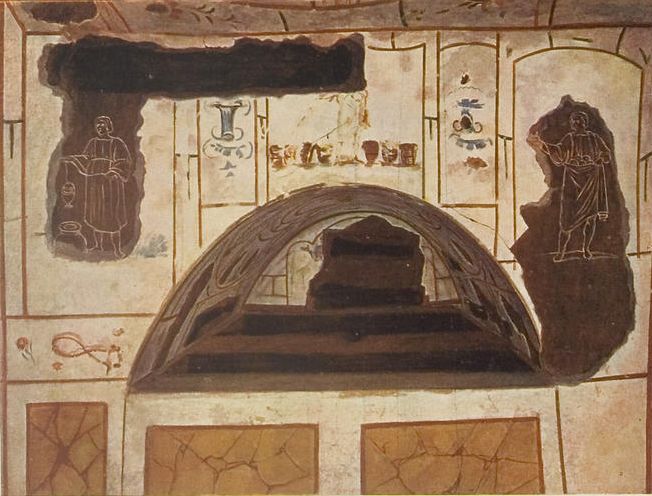
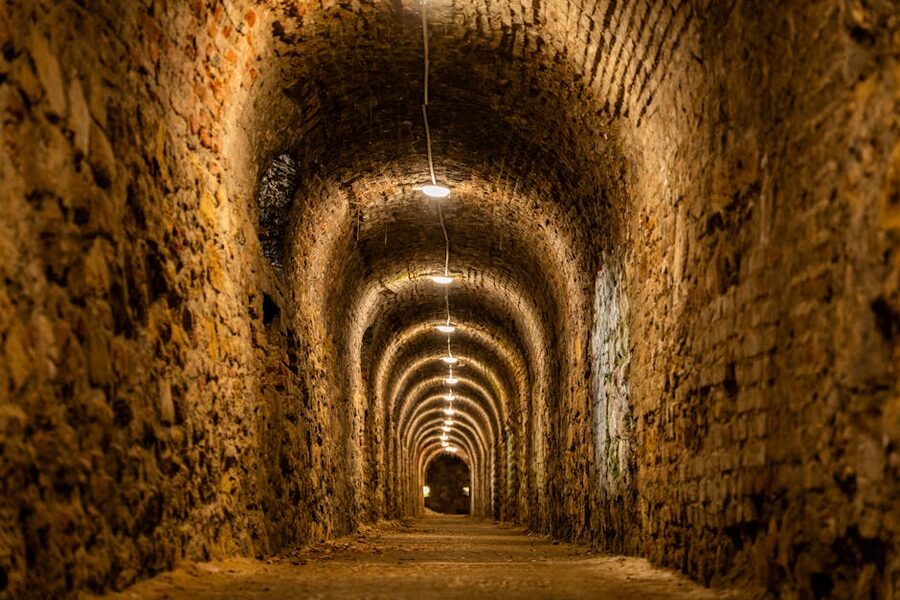
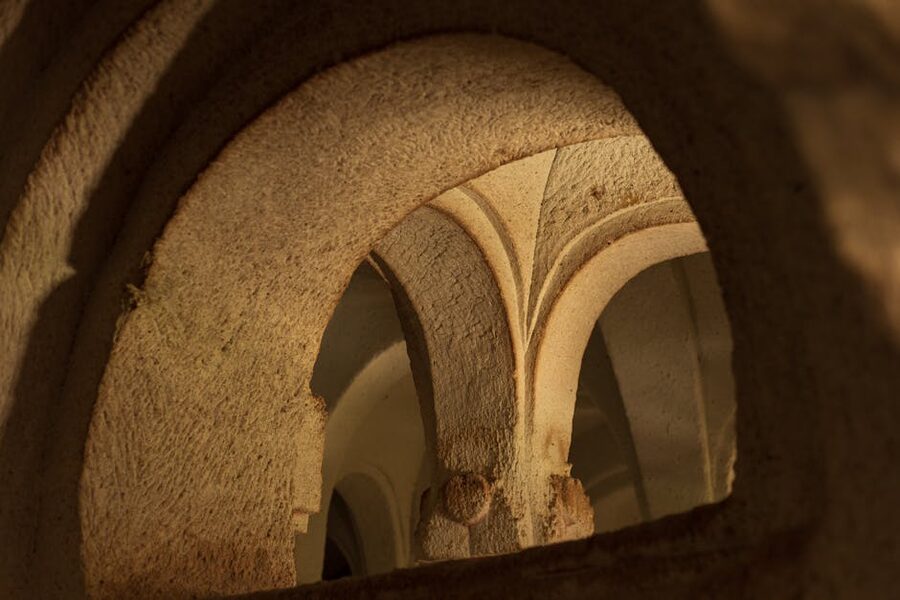
The Rome catacombs are underground cemeteries. 2nd-5th century Christians dug tunnels into the soft tuff rock outside the city walls (burial inside Rome was illegal under Roman law) to create shared burial spaces for their communities. By the 4th century the system had grown to about 170 kilometres of tunnels spread across six main networks and several smaller ones.
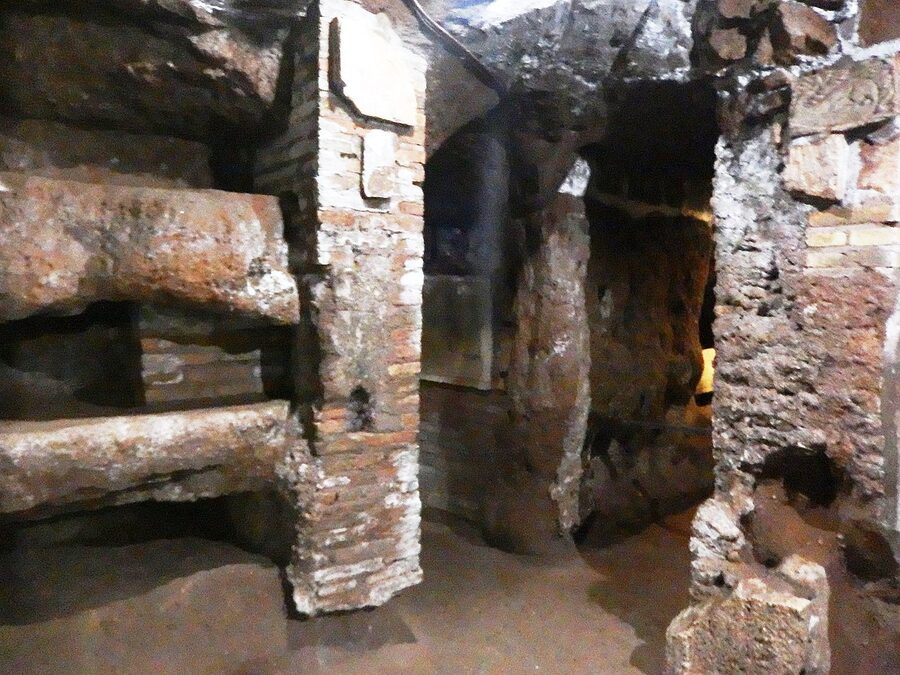
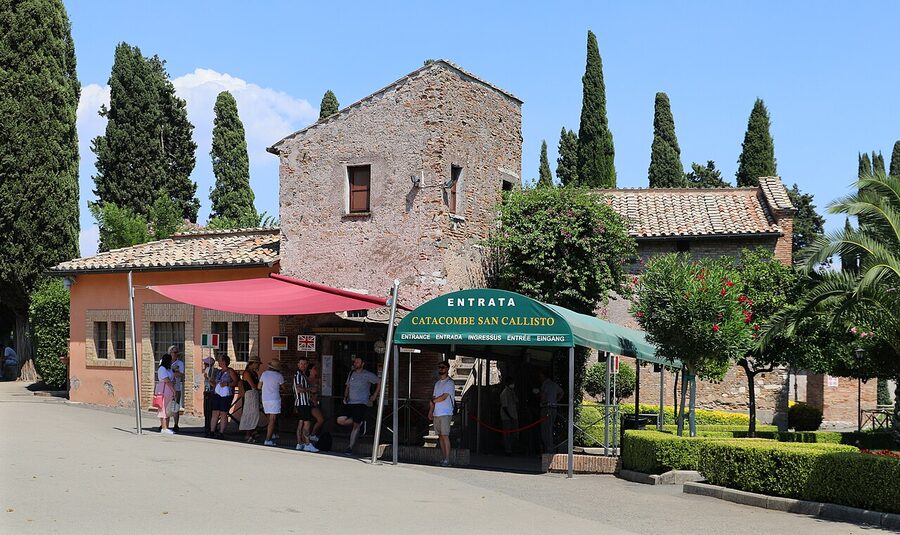
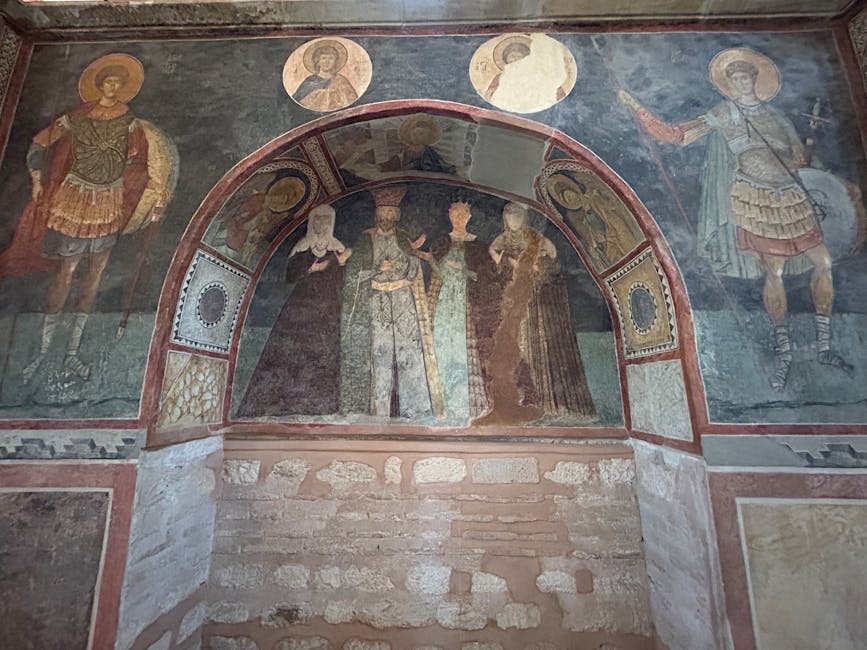
The main sites tours visit: San Callisto (the largest and best-known — nine popes and many martyrs buried here), San Sebastiano (notable frescoes and the only catacomb accessible throughout the Middle Ages), Domitilla (contains the oldest depiction of the Good Shepherd Christ in existence), and Priscilla (famous for early frescoes including the so-called earliest image of the Virgin Mary).
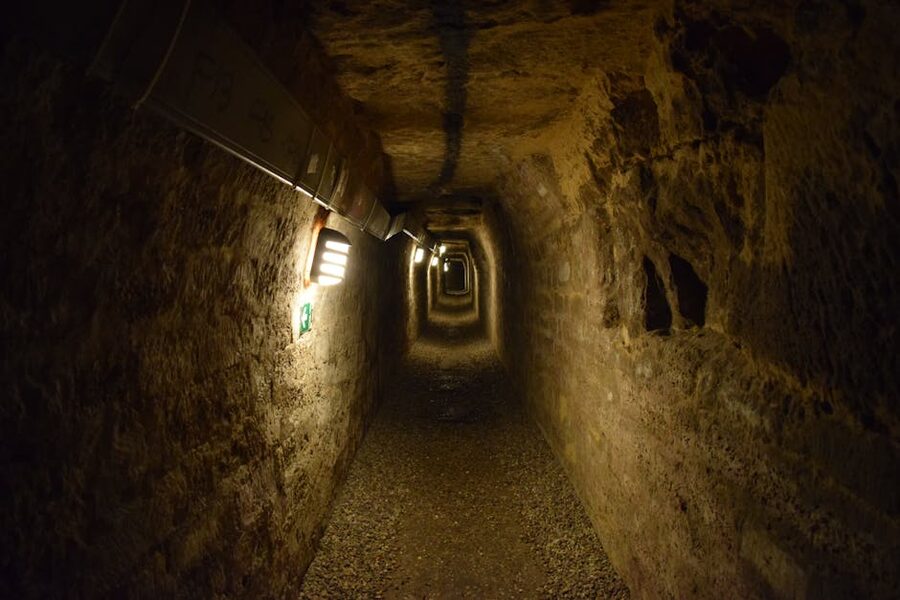
Not all are accessible on a given tour. Operator itineraries rotate based on which site has availability and how they time the van transfers. Most tours visit one catacomb — usually Domitilla or San Callisto — rather than multiple sites. If a specific catacomb matters to you (say, for the frescoes at Priscilla), ask before booking which site the tour actually enters.
What you’ll see inside: rows of loculi (burial niches), arcosolium tombs (arched niches for wealthier families), occasional frescoes painted on the tuff walls, and Christian symbols including the chi-rho monogram, the fish (ichthys), and the Good Shepherd image. Don’t expect bones — most catacombs have been emptied of human remains, either by looting in the medieval period or by later archaeological study.
The Capuchin Crypt — Very Different Thing
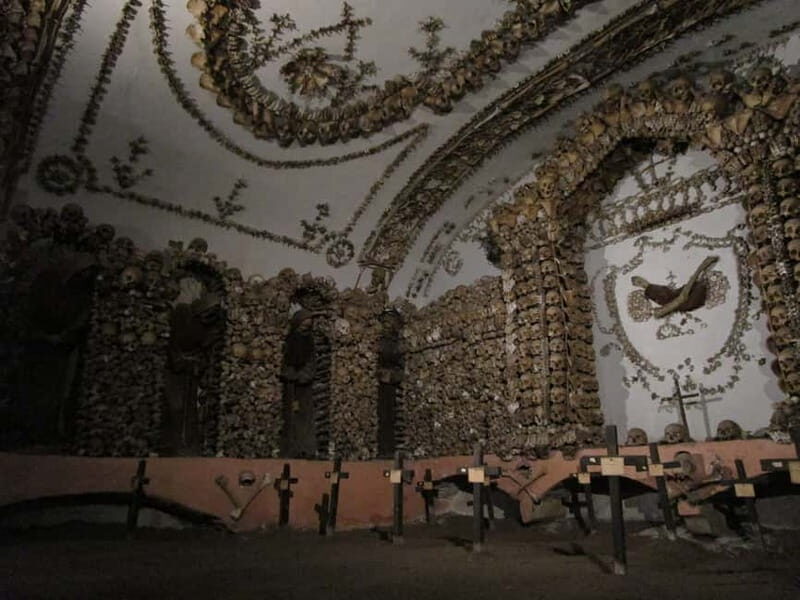
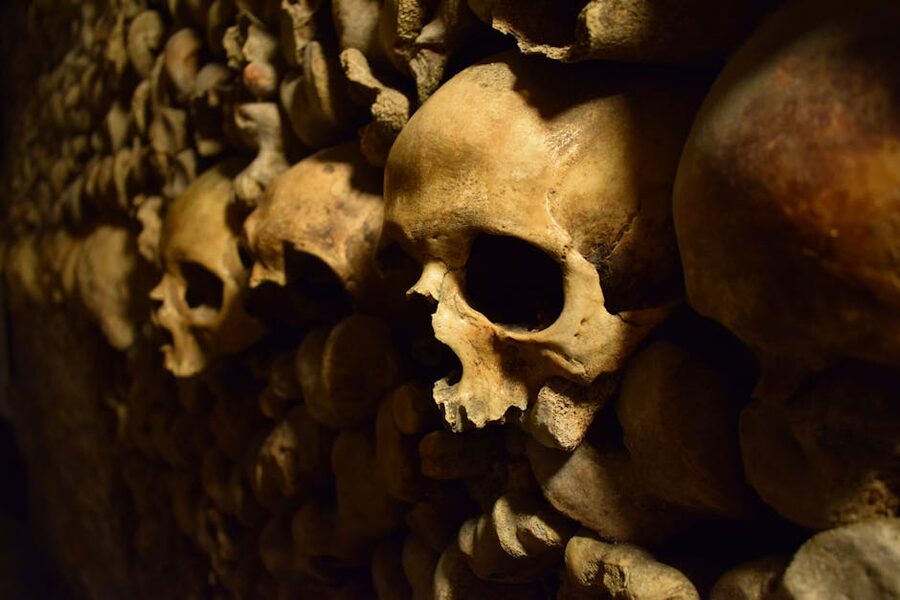
The Capuchin Crypt sits below the Church of Santa Maria della Concezione dei Cappuccini on Via Veneto, not far from the Borghese Gallery. It’s a sequence of six small chapels decorated entirely with the bones and skulls of roughly 3,700 Capuchin friars who died between 1528 and 1870.
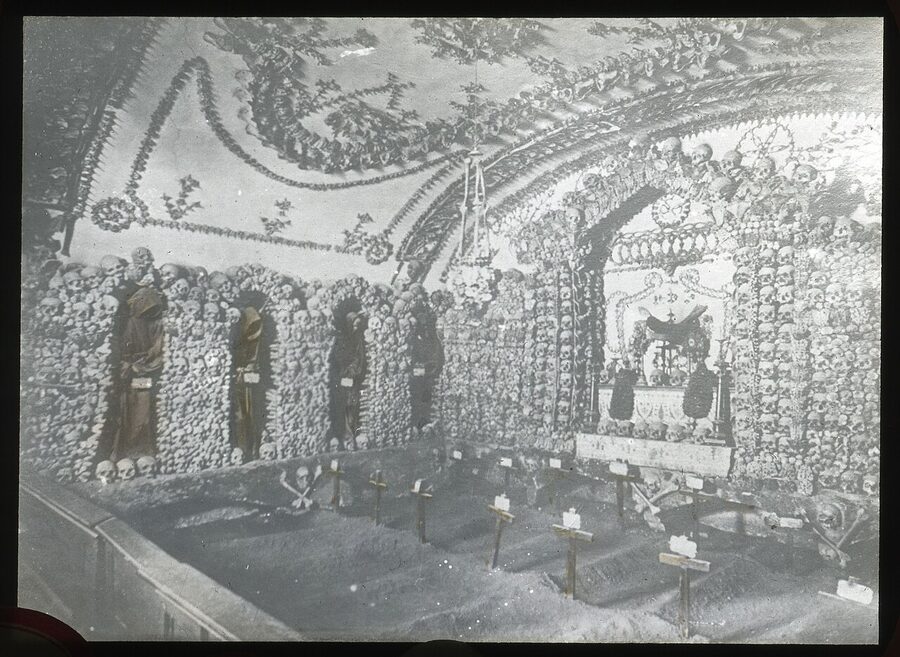
The bones aren’t randomly piled. They’re arranged into patterns — arches, ornamental borders, a full chandelier in one chapel, framed niches for intact skeletons still wearing their monastic habits. A plaque at the end reads: “What you are now we used to be; what we are now you shall be.” Memento mori in its purest form.
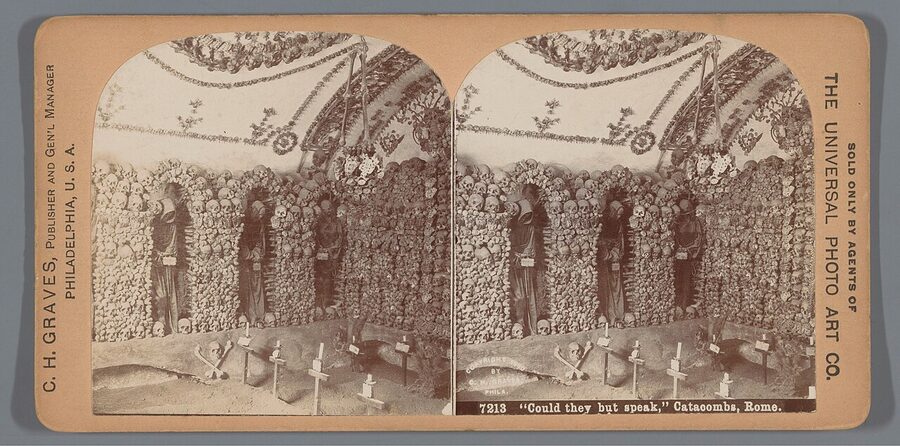
The crypt opened to the public in 1851 and has been drawing tourists ever since — the Marquis de Sade visited, Mark Twain wrote about it, Jim Morrison reportedly spent an afternoon here before his death. Today it’s one of Rome’s most-photographed dark-tourism sites, though photography inside is strictly prohibited.
The Capuchin Crypt is small — you’ll walk through the six chapels in about 20 minutes at normal pace, maybe 40 if you’re reading plaques carefully. The experience is intense rather than long. Most people need the fresh air afterwards.
Photography and Filming Rules
Neither site allows photography inside. This is strictly enforced and involves actual staff monitoring rather than just signs. If you try to photograph the Capuchin Crypt or any of the main catacombs, you’ll get a polite but firm intervention from a staff member within seconds.
Reasons: the Capuchin order maintains the crypt as a religious space and prohibits photography on respect grounds. The catacombs are officially consecrated cemeteries under Vatican authority, and Italian law classifies them as places of worship where photography disrupts the solemnity.
This is actually part of what makes the experience work. You can’t doom-scroll through photos afterwards — you only have the memory of what you saw. It forces presence in a way that phone-enabled sightseeing doesn’t. Most people find they remember the Capuchin and the catacombs better than other Rome sites for exactly this reason.
Above-ground photography is fine — you can photograph the basilicas, the churches, the entrance areas, the Appian Way. Just nothing inside the actual crypts or catacomb galleries.
Dress Code and What to Wear
The catacombs and Capuchin Crypt are consecrated religious spaces, so dress code matters. Shoulders covered, knees covered, no swimwear-style clothing. This applies year-round including summer heat.
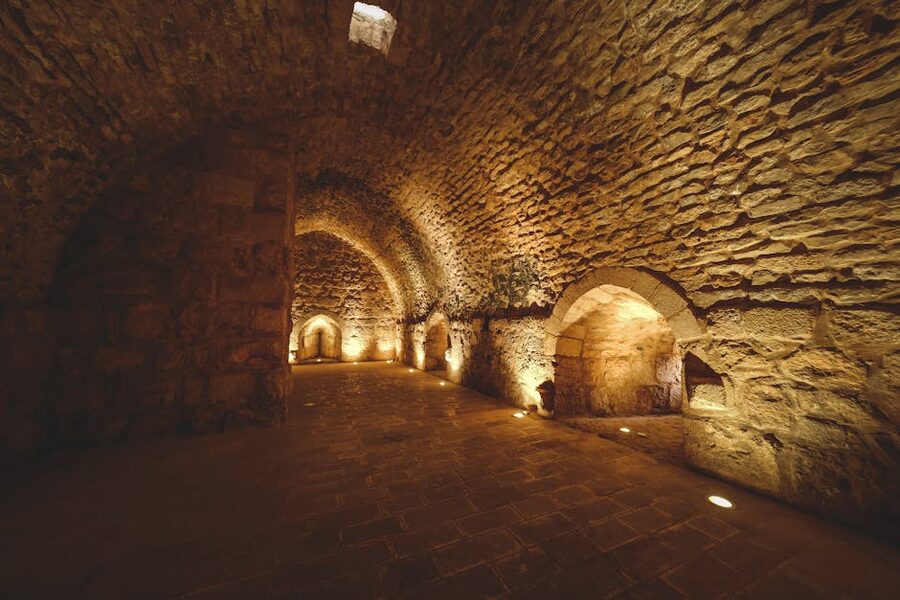
Temperatures underground: the catacombs hold a steady 14-15°C year-round. This feels great in July when Rome’s aboveground runs to 35°C, but in January you’ll wish you had a light jacket. Bring one even in spring and autumn transitional months.
Footwear: closed shoes. The floors are uneven, sometimes damp, and often slippery in parts. Sandals are technically allowed but practically a bad idea. Comfortable walking shoes or light boots work best.
Bags: small bags are fine, large day-packs need to be cloaked at the Capuchin. The catacomb sites generally don’t have formal cloakrooms so you’ll carry whatever you bring through the visit.
The Appian Way Context
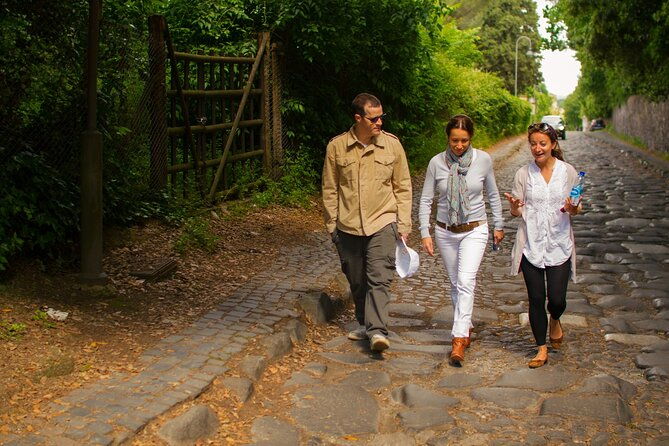
The main catacombs sit along or near the Via Appia Antica, the ancient road that connected Rome to Brindisi on Italy’s heel. The section immediately outside the city — first few kilometres — still has the original Roman paving in places and passes through a regional park that’s now a popular cycling and walking area for locals.
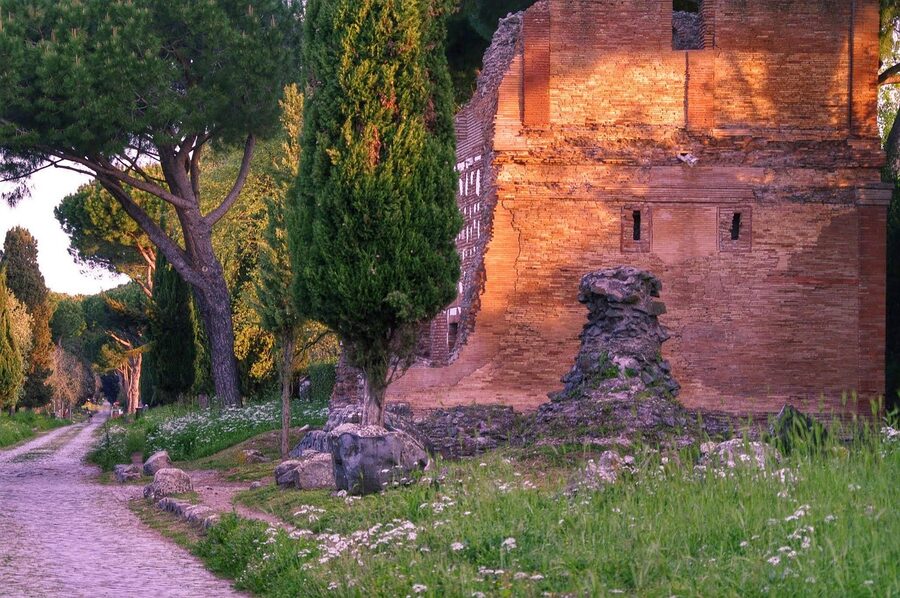
The catacomb tours with transfers drive you directly to the site and back. If you want the full Appian Way experience, you need a separate bike or walking tour — there are combo options from GetYourGuide and Viator that add the ancient road to a catacomb visit. Worth considering if you have a full day to dedicate.
The cycling and catacombs combo tours run 4-5 hours and cost $80-110. You ride the first 3-4km of the Appian Way by e-bike, stop at one or two catacombs for the underground portion, then ride back. This works better in spring and autumn than in peak summer heat.
If you’re not interested in cycling but want to see the Appian Way, a standalone transfer + walk option exists from some operators — they drop you near Porta San Sebastiano, you walk the first 2km to Quo Vadis chapel and back, then continue to the catacombs. About 3.5 hours total.
Planning Around Rome’s Other Underground Sites
Rome has a lot of underground. The catacombs and Capuchin Crypt are the most booked, but not the only options. Worth knowing about alternatives so you don’t double-book similar experiences.
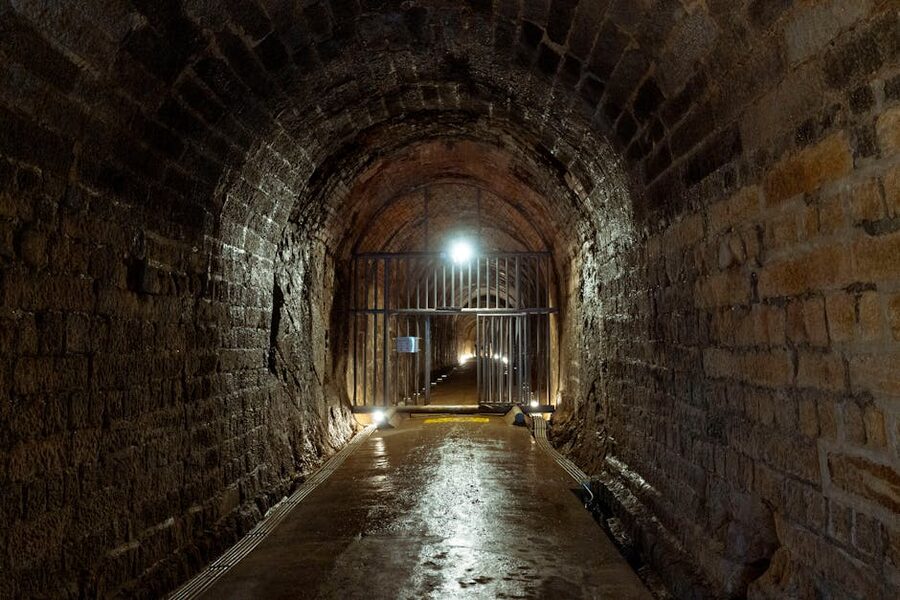
Basilica San Clemente: three layers of history stacked underground — 12th-century basilica, 4th-century church, and 2nd-century Mithraic temple. Separate tour, about 90 minutes, less atmospheric than the catacombs but historically fascinating. Works as a different afternoon rather than same-day combo.
Domus Aurea (Nero’s Golden House): the excavated remains of Nero’s palace, with VR-assisted tours that reconstruct the original appearance. Needs its own visit, not combinable with catacombs, and sells out fast.
Colosseum Underground: totally different thing — the hypogeum tunnels beneath the Colosseum where gladiators and animals waited. Combined with the main Colosseum tour as an add-on. If you’re doing this, don’t add the catacombs the same day — two underground visits in 24 hours is draining.
Naples Underground: if you’re doing a Naples day trip from Rome, Naples has its own underground network that’s genuinely different — ancient Greek cisterns, WWII air-raid shelters, and catacombs much less visited than Rome’s.
The Christian Burial Context
Understanding why early Christians built these underground networks makes the catacomb visit make sense. Pagan Rome cremated the dead by default — it was the cheap, practical option for a dense city where land was scarce. Christians rejected cremation because they believed in physical resurrection: the body needed to be preserved intact for the Second Coming.
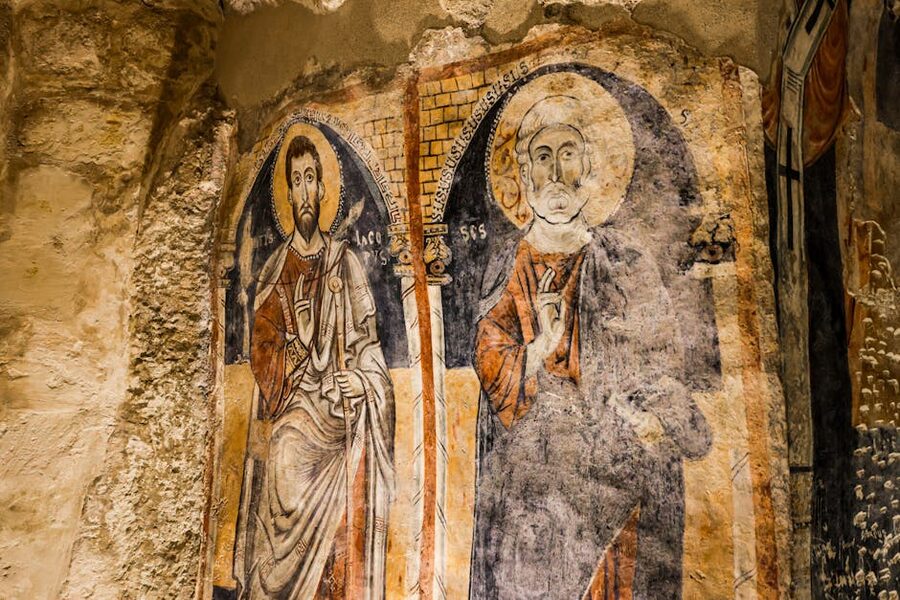
Roman law required burial outside the city walls. Christians, who couldn’t afford the aboveground cemeteries available to wealthier pagans, started excavating tunnels in the soft tuff rock. The project was collective — families could buy a small plot for each loved one, the community maintained the corridors, and eventually martyrs’ graves became pilgrimage sites.
By the 4th century after Christianity became the state religion, the catacombs were monumental spaces — no longer hidden burial grounds but formal cemeteries with basilicas built above them. San Callisto, the largest, held nine popes. The system kept expanding until barbarian raids in the 5th-6th centuries made the underground cemeteries too vulnerable, and Christian burial moved back aboveground into city churches.
The catacombs were essentially forgotten from the 9th century until 1578, when Antonio Bosio discovered the network under Via Salaria and began exploring systematically. Full excavation and public access only developed in the 19th and 20th centuries. What you visit today is carefully preserved and partially restored.
Tour Logistics and Transfers
The combo tours include van transfers because the catacombs are genuinely far from central Rome — San Callisto is about 4km south of the Colosseum, Domitilla is 3km further south, and the Capuchin sits on Via Veneto, 4km north of both. Doing this on public transit takes longer than the underground portion of the visit itself.
Typical itinerary: meet at a central pickup point around 14:00, van to the Capuchin Crypt for 20-40 minute visit, van to the Appian Way catacomb for 60-80 minute visit, optional third stop at a second catacomb or a related basilica, return to pickup point by 17:30-18:00.
The van itself is usually a 12-16 seat minibus. Air-conditioned, reasonably comfortable, but not luxurious. You’ll be sharing with other tour participants — typical group size is 10-15 people. This is not a private experience.
The guide narrates throughout. Most tours are offered in English only; Spanish, Italian, French, and German are available on some operators but you need to book specifically. Check the tour description — language defaults vary between operators.
What to Expect Emotionally
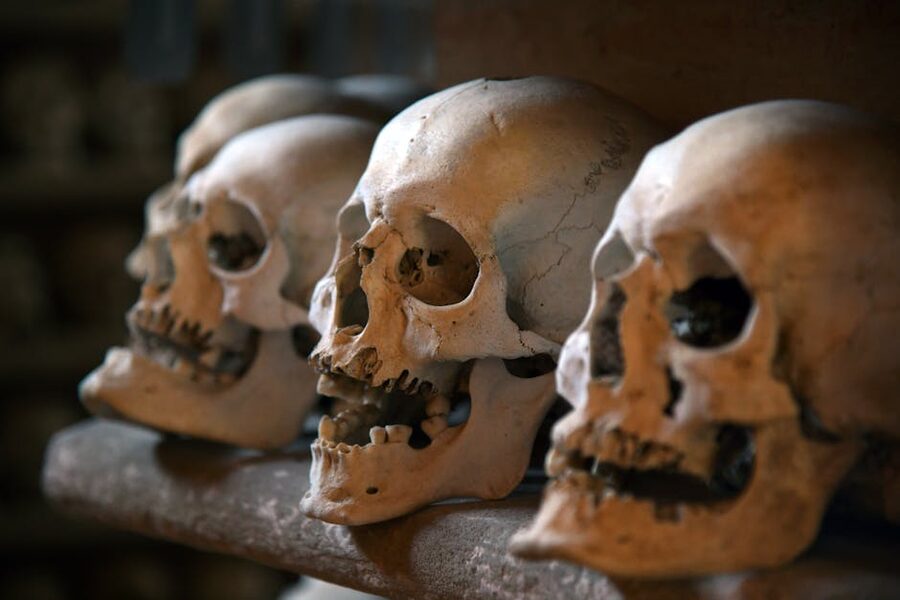
Dark tourism is an acquired taste and not for everyone. The Capuchin Crypt in particular is emotionally intense — you’re surrounded by 4,000 skeletons arranged into artistic patterns, and the cumulative effect of room after room of bones can genuinely rattle you.
The catacombs tend to be easier emotionally because the tombs are empty and the atmosphere feels archaeological rather than morbid. You’re walking through a historical cemetery without seeing actual remains. The guide’s narration is usually more history-focused than ghost-tour-style.
Children under 10: most operators allow children but don’t recommend it. The Capuchin specifically can be upsetting for younger kids. If you’re bringing children, the catacombs-only options work better than the Capuchin combo.
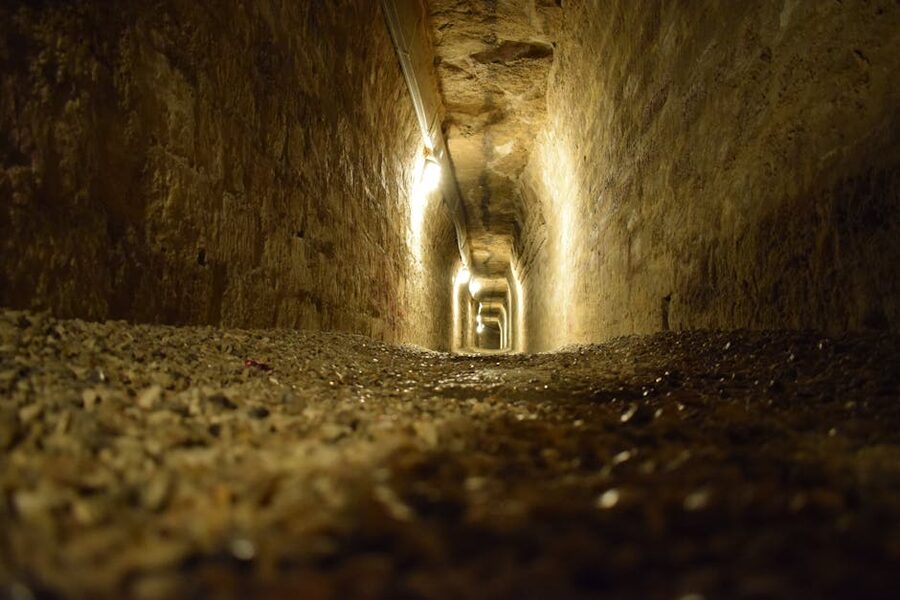
Claustrophobia: the galleries are narrow and the ceilings sometimes low. Anyone with serious claustrophobia should skip this experience entirely. The Capuchin alone is less confining (it’s a series of chapels rather than tunnels) but still involves descending to a basement level and walking through tight passages.
Mobility: the catacomb visits involve staircases, uneven floors, and long walks through corridors. Not accessible for wheelchairs or serious mobility issues. If this matters, stick to the Capuchin-only option, which has steps but is shorter and less physical.
Pairing with Other Rome Stops
The catacombs and Capuchin tour works best as an afternoon activity after a morning elsewhere in Rome. The 14:00 start times are the most common, which means your morning is free for other sights.
Morning Borghese Gallery + afternoon catacombs: The Borghese’s 09:00 slot finishes at 11:00, lunch in the Via Veneto area, afternoon 14:00 catacomb tour pickup. Both sites visited with plenty of walking between. This is a cultural day with range.
Morning Colosseum + afternoon catacombs: The Colosseum opens at 09:00, finishes 11:30-12:00 depending on your tour length, lunch, 14:00 catacomb tour. Heavy on ancient Rome history. Leave the evening free — you’ll be tired.
Morning Vatican Museums + afternoon catacombs: Heavy Catholic religious day. Works if you’re interested in Christian history specifically. Both sites have religious significance and the afternoon catacombs put the morning Vatican into deeper context.
Evening add-on — ghost tour: after the underground afternoon, a Rome ghost tour through the city’s spookier historical sites makes a thematic full day. Most ghost tours start around 20:30, giving you 2-3 hours for dinner between the catacomb return and the ghost tour start.
The Via Veneto Neighbourhood
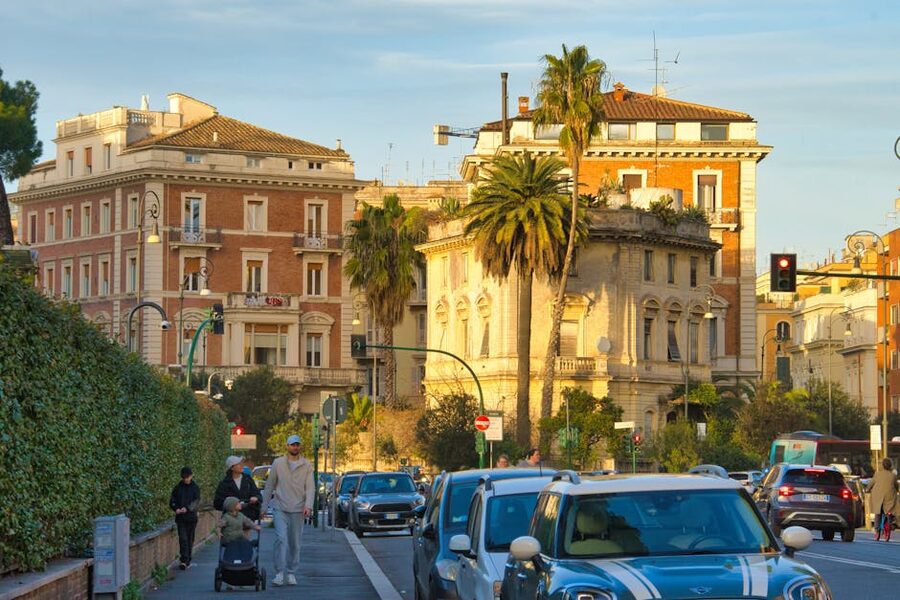
The Capuchin Crypt sits on Via Veneto, once Rome’s glamour street — the 1960s Fellini-era dolce vita epicentre. Today it’s more faded than that reputation suggests but still holds significant hotels, cafés, and bars worth a walk before or after your crypt visit.
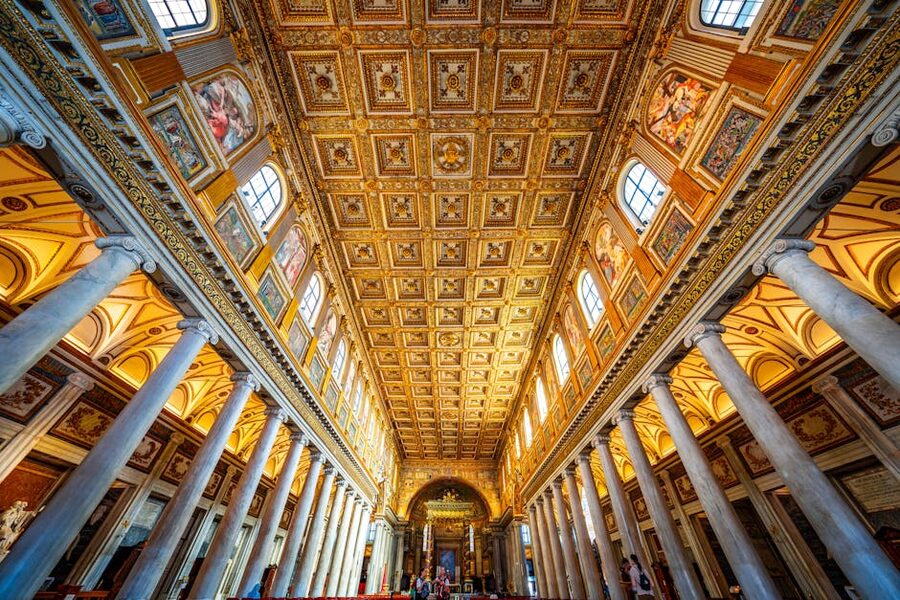
The Church of Santa Maria della Concezione itself is worth 15 minutes before you go underground — Baroque interior, a Guido Reni altarpiece of Saint Michael defeating the Devil, and multiple small chapels. Most tours skip this in favour of heading straight to the crypt downstairs; if you’re on a self-guided ticket, make time.
For food in the area: Trattoria Moderna on Via Bernardo Cellini, Taverna Flavia (a classic 1960s trattoria where Elizabeth Taylor allegedly ate during the filming of Cleopatra), or the cafés on Piazza Barberini itself. Prices run Rome-central levels — €15-25 for pasta, €25-40 for meat secondi.
Piazza Barberini with its Bernini Triton Fountain is a 2-minute walk from the Capuchin. Combine that with the Quattro Fontane street of fountains just up the hill and you have an afternoon’s worth of Bernini-era Rome to explore after the crypt experience.
Best Times to Visit
The catacombs hold their steady 14-15°C regardless of season, so summer visits are actually more comfortable than July Rome heat above ground. Winter visits are atmospheric but genuinely cold — the underground chill penetrates when you’re not moving much.
Spring (March-May): ideal combination of cool Rome temperatures, manageable tourist crowds, and comfortable underground visits. Book 1-2 weeks ahead for weekend slots.
Summer (June-August): the underground is a welcome break from the heat. Crowds are peak but tour availability is typically good. Book 2-3 weeks ahead for preferred times.
Autumn (September-November): the best season overall — Rome is beautiful, crowds have thinned, weather is comfortable. This is when locals book their own cultural tours.
Winter (December-February): smallest crowds, easiest booking, but the underground chill is real and you’ll want warm clothing. Worth it for the atmosphere — the Capuchin feels particularly intense when the aboveground is also grey and cold.
Closures to Know About
Both the Capuchin Crypt and the catacombs close on specific days that can trip up travellers.
Capuchin Crypt: closed all Thursdays and on most major Catholic holidays — Easter Sunday, Christmas, All Saints’ Day, and Assumption. Open normally most weekends.
San Callisto catacombs: closed Wednesdays and for most of January (pilgrimage season preparation). Hours shift seasonally — check the current schedule before booking.
San Sebastiano catacombs: closed Sundays. Most combo tours switch from San Sebastiano to Domitilla or San Callisto on Sundays automatically.
Domitilla catacombs: closed Tuesdays. Same automatic switch logic applies for combo tours.
The combo tour operators handle these closures automatically — if your Tuesday booking would hit Domitilla, they’ll route you to San Callisto or San Sebastiano instead. You don’t need to manage this yourself, but know that the specific catacomb visited can change based on weekday.
Tickets and Pricing
Direct museum tickets cost less than guided tours but give you less — no guide, no transfers, no skip-the-line on guaranteed schedule.
Capuchin Crypt direct ticket: €8.50, buy at the door or online. No skip-the-line on direct — you queue with everyone else. Weekend queues run 30-45 minutes in peak season.
Catacomb direct tickets: €10-15 depending on site. San Callisto and San Sebastiano require guided entry (the guides are included in the ticket). Domitilla sometimes offers self-guided.
Combo tours with transfers: €55-85. The transfer + skip-the-line + guide combination makes the premium over direct tickets obvious — you save 2-3 hours of logistics and get professional context.
Booking platform choice: GetYourGuide and Viator both list the major operators. Prices are similar. Cancellation policies vary — check for 24-hour vs 48-hour full-refund windows before confirming.
Photography Workarounds
If no-photography is a dealbreaker, you have limited legitimate options but some workarounds worth knowing.
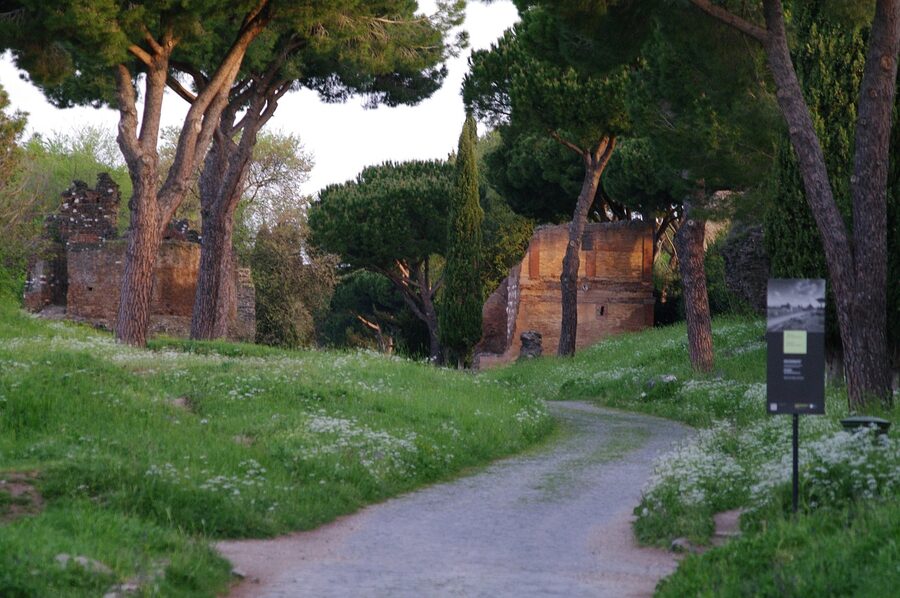
Above-ground photography: all basilica entrances, the Appian Way, the church interiors above the catacombs, and Via Veneto / Piazza Barberini above the Capuchin — all fair game. Your tour will naturally include time above ground for these shots.
Purchase official images: the Capuchin museum sells postcards and a guidebook with professional photos. Same at some catacomb sites. €5-15 gets you the record of what you saw.
Accept the no-photo experience: honestly, this is the best approach. The memory of these places is stronger precisely because you had to look rather than record. I’ve visited both sites multiple times and remember specific details I’d never have noticed if I’d been distracted by framing shots.
Final Planning Tips
A few things worth flagging specifically — small details that make the difference between a good catacomb visit and a great one.
Book pickup-included tours unless you genuinely enjoy public transit. Getting to San Callisto from central Rome by bus takes 45-60 minutes and the routes are confusing. The van transfer pays for itself in saved stress.
Ask about the specific catacomb before booking. Operators often list the tour as “Catacombs” without naming which one. If you want Domitilla specifically for the Good Shepherd fresco, ask to confirm before confirming payment.
Bring water. Not allowed inside the sites but useful on the van transfers and during the Appian Way portion if your tour includes any surface walking.
Eat light before the tour. A large lunch plus a 14:00 tour equals mid-afternoon sluggishness in poorly-lit underground spaces. A light lunch (salad, pasta, bread) works better than a full Roman pasta + meat meal.
Mental preparation for the Capuchin. It’s intense. Read about it before you go so you know what to expect. Don’t book it as a light afternoon activity — it deserves more mental preparation than a museum visit.
Pair This Guide With
The catacombs and Capuchin tour slots naturally into a Rome trip that includes the city’s major cultural draws. Combining with the Borghese Gallery (also near the Capuchin area) or the Vatican Museums creates days with cultural range. For a full ancient Rome focus, add the Colosseum and Roman Forum tour the next morning — underground Christianity then aboveground imperial Rome across two days.
For evenings, consider pairing with the Pantheon at night (briefly open some evenings, free entry) or a Rome Vespa night tour that covers the above-ground sites near Piazza Barberini and Via Veneto. Both complement the underground theme by showing you Rome’s surface magic after you’ve seen what’s beneath.
Final Take
The catacombs and Capuchin Crypt aren’t for everyone, but for anyone interested in Rome’s religious history, early Christian art, or memento mori culture, they’re essential. The combo format makes the logistics manageable — three hours, one van, two very different experiences of Rome’s underground.
Book at least a week ahead for weekend slots, wear layers, bring no photography expectations, and prepare mentally for intensity rather than casual sightseeing. Two hours in the Rome underground sticks with you differently from two hours at the Colosseum — the silence, the history, the mortality all stay with you in a way that sunlit monuments don’t. That’s the point.