
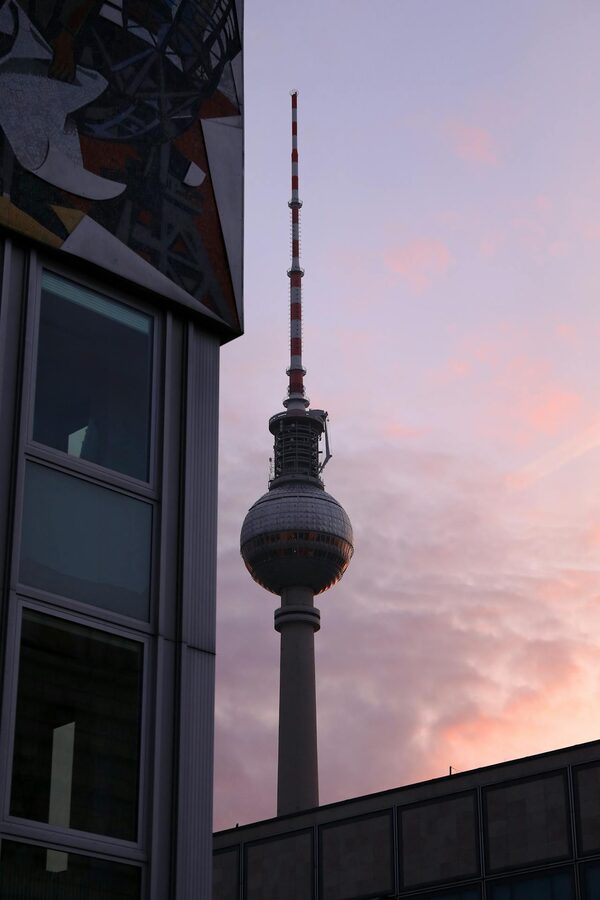
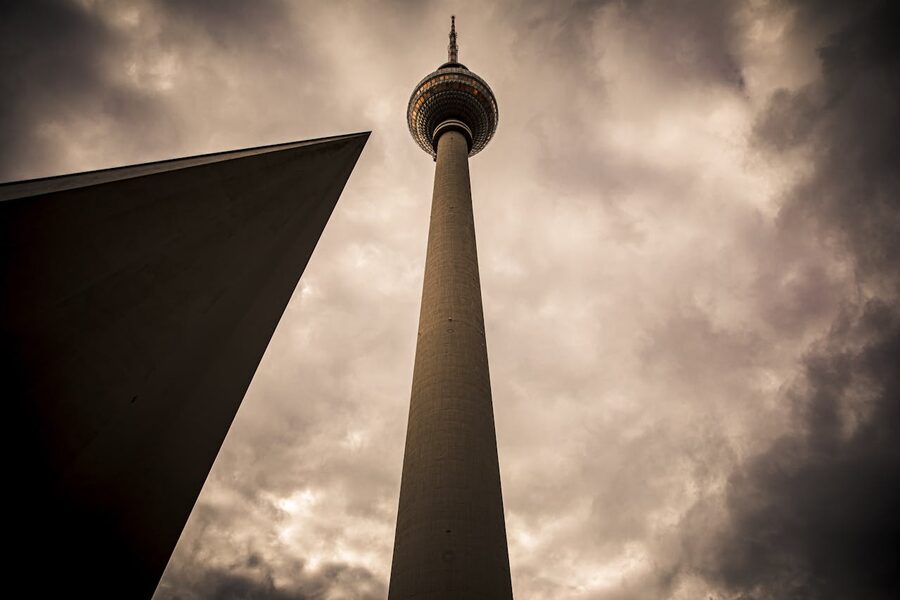
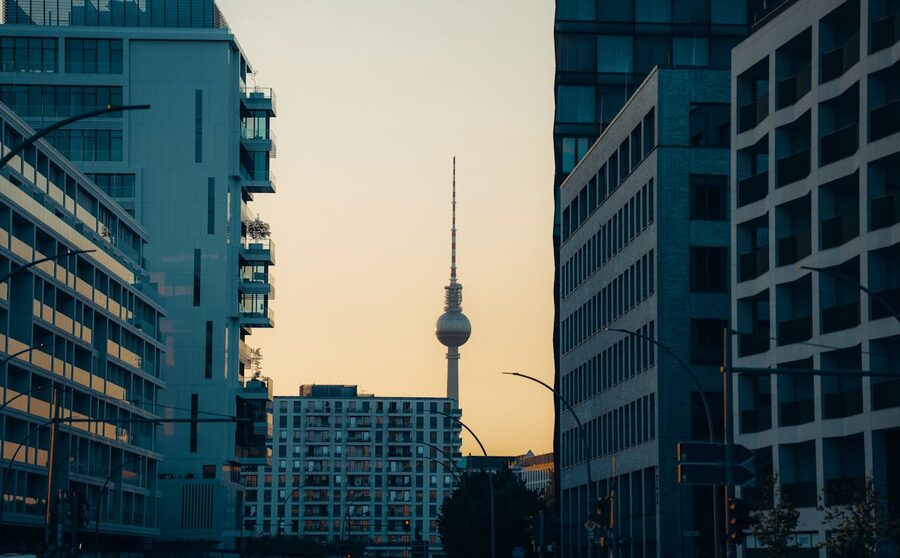
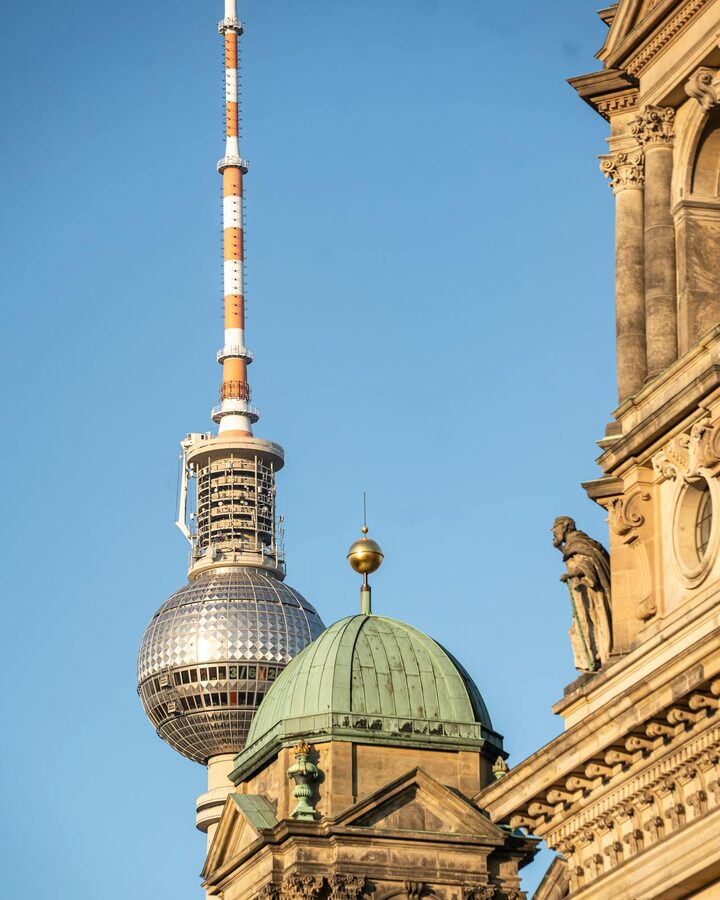
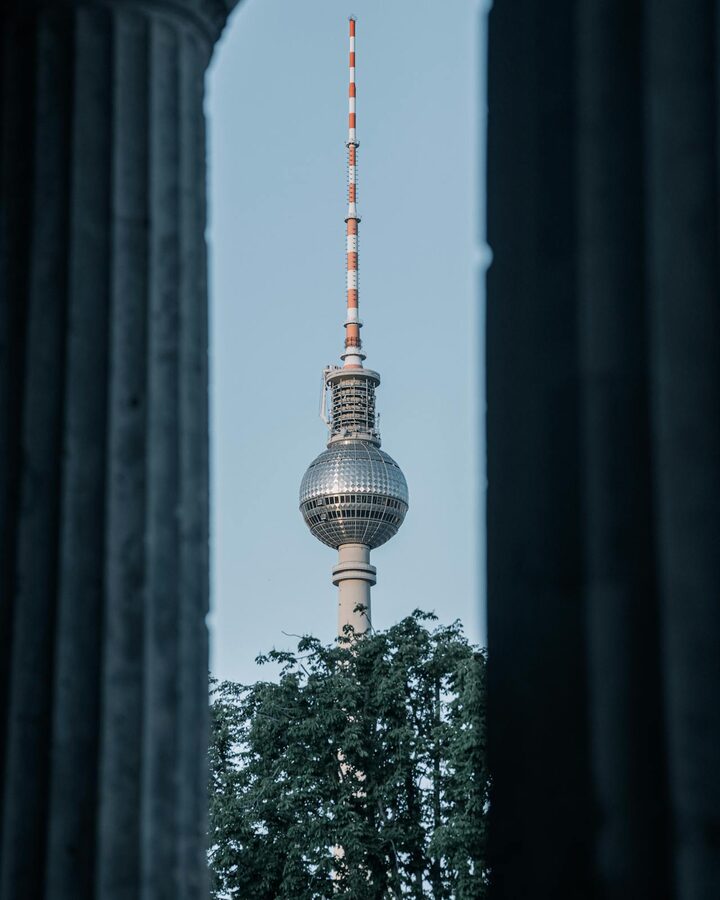
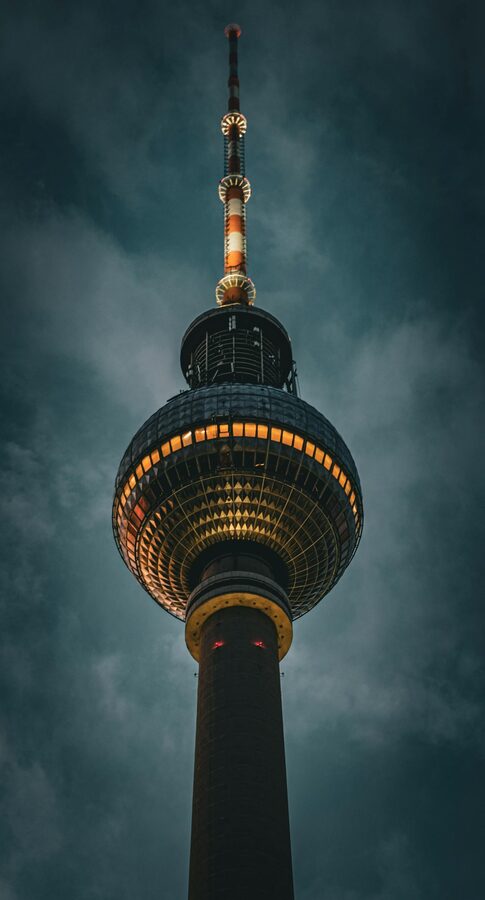
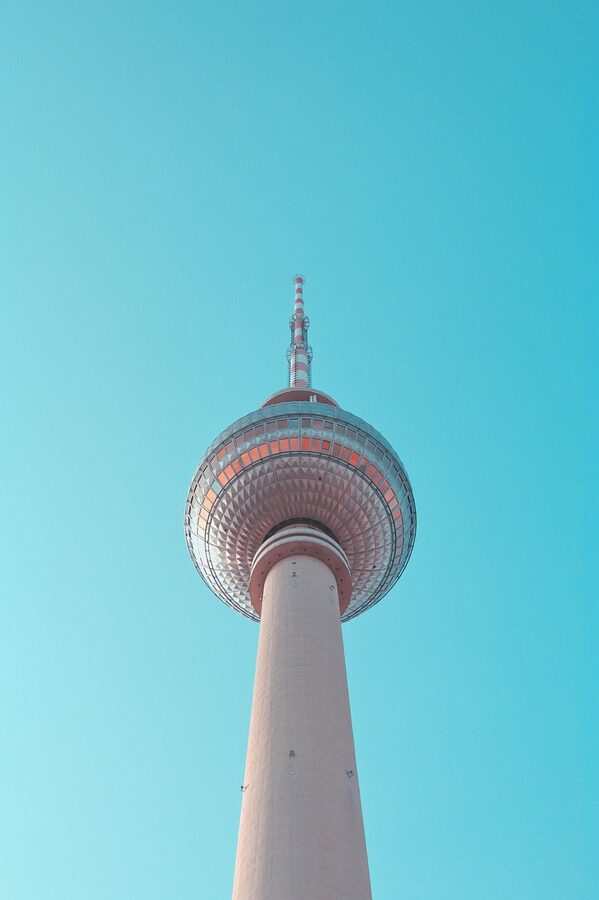
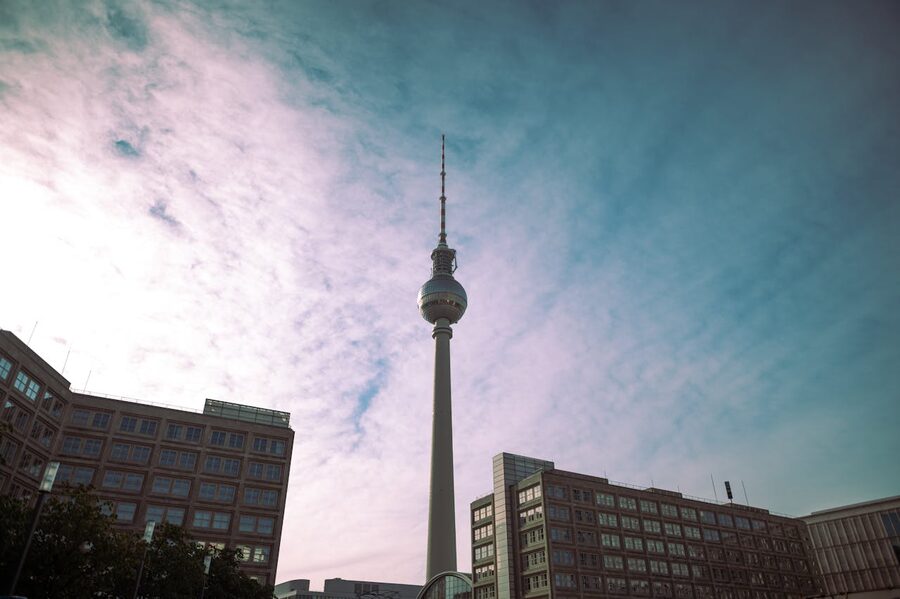
The Berlin TV Tower is the tallest structure in Germany and the most recognisable silhouette in Berlin’s skyline. At 368 metres, it’s visible from virtually everywhere in the city — a silver needle topped with a sphere that catches the light and projects a cross-shaped reflection that the atheist East German government spent decades trying to explain away. Berliners called it “the Pope’s revenge.”
The observation deck sits at 203 metres — high enough to see the entire city and well beyond it on a clear day. The revolving restaurant one floor above serves food designed by Michelin-starred chef Tim Raue while rotating 360 degrees every 30 minutes. And a newer VR experience adds a virtual reality time-travel element that lets you see Berlin as it looked in different historical periods. Between the view, the food, and the history, the TV Tower packs more into a 45-minute visit than most Berlin attractions manage in half a day.
Best dining: SPHERE Restaurant Tim Raue — $33, revolving restaurant with observation deck access included.
Official site: tv-turm.de — all ticket options, VR experience, and restaurant bookings.
- The Observation Deck
- The SPHERE Restaurant
- The VR Experience
- A Brief History
- Alexanderplatz: The Square Below the Tower
- The Neighbourhood: Where to Eat and Drink
- The GDR Legacy: Why the Tower Matters
- Christmas at the Tower
- Berlin Street Art and Culture Near the Tower
- Practical Tips
- Best Tickets to Book
- 1. TV Tower Standard Entrance —
- 2. SPHERE Restaurant Tim Raue —
- 3. TV Tower + VR Experience —
- More Berlin Experiences
The Observation Deck
The elevator takes 40 seconds to reach the observation deck at 203 metres. The doors open and you’re looking at Berlin from nearly the same height as a 60-storey building. The 360-degree view covers the entire city: the Brandenburg Gate, the Reichstag, the Tiergarten, Museum Island, the East Side Gallery, and on clear days, the lakes and forests of Brandenburg stretching to the horizon.
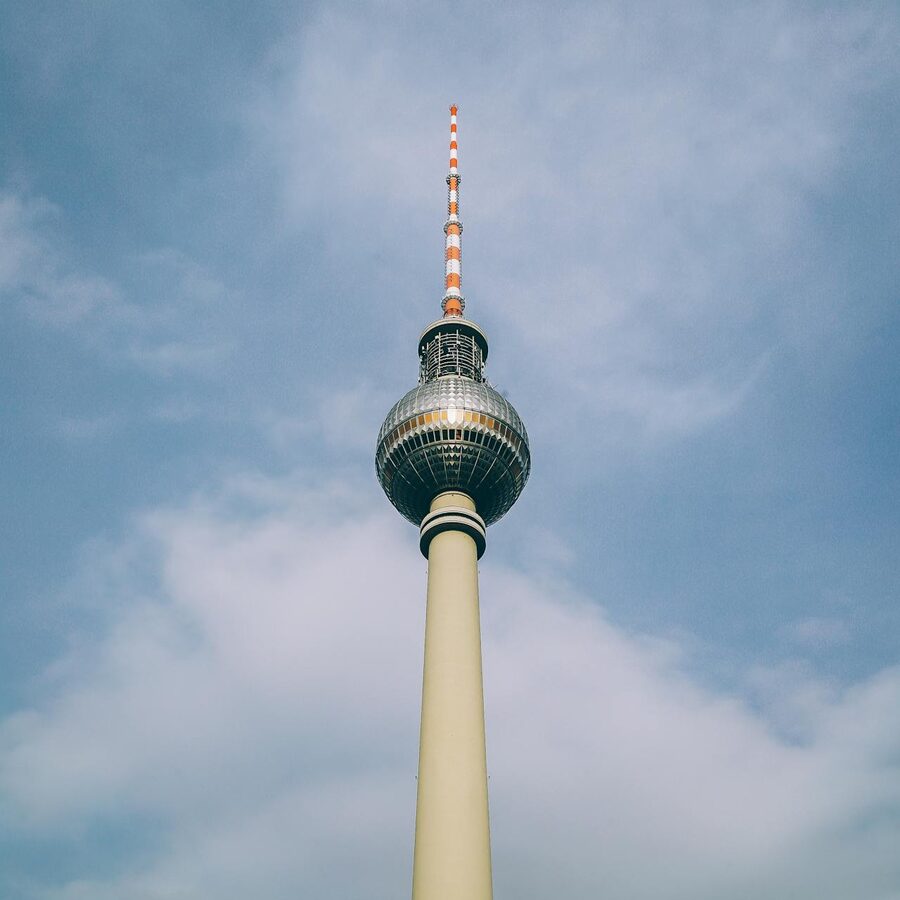
The standard ticket ($33) gets you timed skip-the-line entry to the observation deck. Without a timed ticket, the queue at the base can exceed 90 minutes in summer — the pre-booked slot lets you bypass this entirely. Allow about 30-45 minutes on the deck, though there’s no time limit.
The SPHERE Restaurant
One floor above the observation deck, the SPHERE Restaurant revolves slowly while serving food developed by Tim Raue, one of Berlin’s most celebrated chefs. The menu is modern German-Asian fusion — not cheap (mains around €25-40) but the quality justifies the altitude premium. The restaurant makes one full rotation every 30 minutes, which means your view changes continuously throughout the meal.
The restaurant ticket ($33) includes observation deck access — so you get both the view and the meal for the same base price as the standard ticket, though the food is extra. Book well ahead for dinner — the sunset slots sell out weeks in advance. Lunch is easier to get and the view is arguably better in clear daylight.
The VR Experience
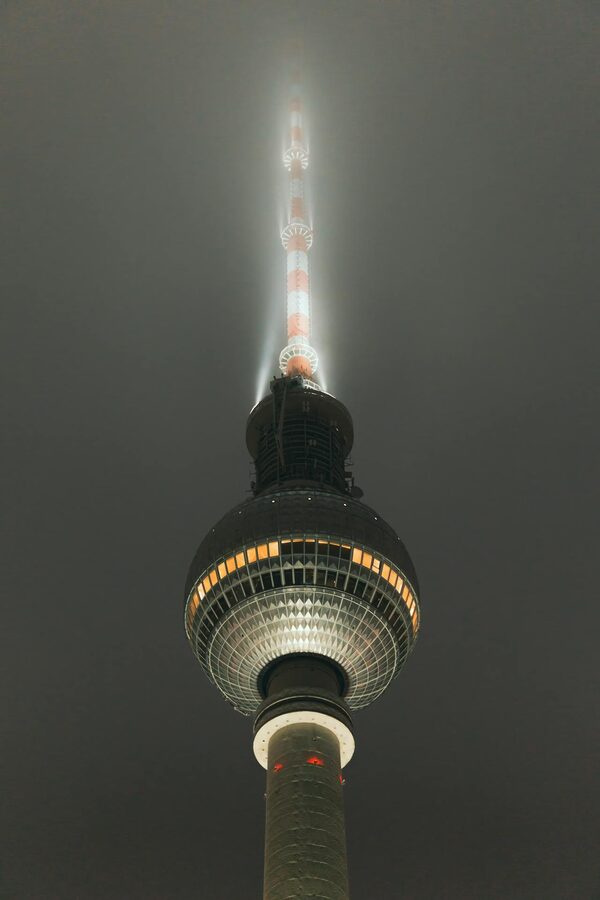
The newest addition is a virtual reality experience ($43, includes observation deck) that lets you “fly” over Berlin in different time periods — 1920s Weimar Republic, wartime 1940s, divided Cold War-era, and present day. You wear a VR headset on the observation deck and the view below you transforms into a historical reconstruction of whatever era is selected. It’s gimmicky but surprisingly well-produced, and the historical comparisons — seeing the Wall from above, or the bombed-out city centre — are genuinely informative.
A Brief History
The TV Tower was built between 1965 and 1969 by the GDR (East Germany) as a demonstration of socialist engineering capability. It was designed by architect Hermann Henselmann and engineer Jörg Streitparth, and at the time of its completion, it was the second-tallest freestanding structure in the world after the Ostankino Tower in Moscow. The East German government intended it as a symbol of communist modernity visible from every part of Berlin — including the West.
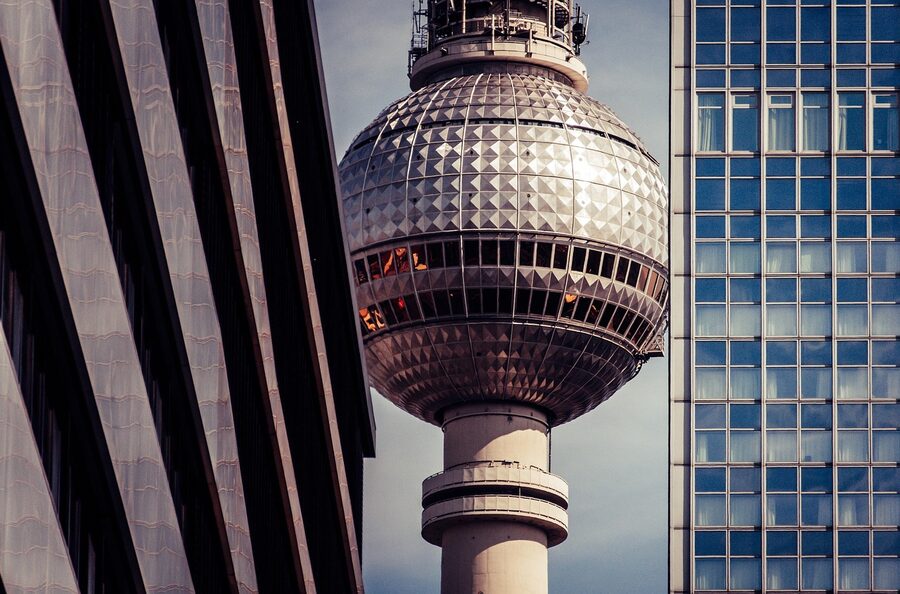
The cross-shaped reflection — the “Pope’s revenge” — appears on the sphere when the sun hits it at certain angles. The story goes that the atheist East German government was mortified by the religious symbolism and tried various coatings and surface treatments to eliminate it. Nothing worked. Berliners named it the “Rache des Papstes” (Pope’s revenge) and it became one of the city’s favourite running jokes.
Alexanderplatz: The Square Below the Tower
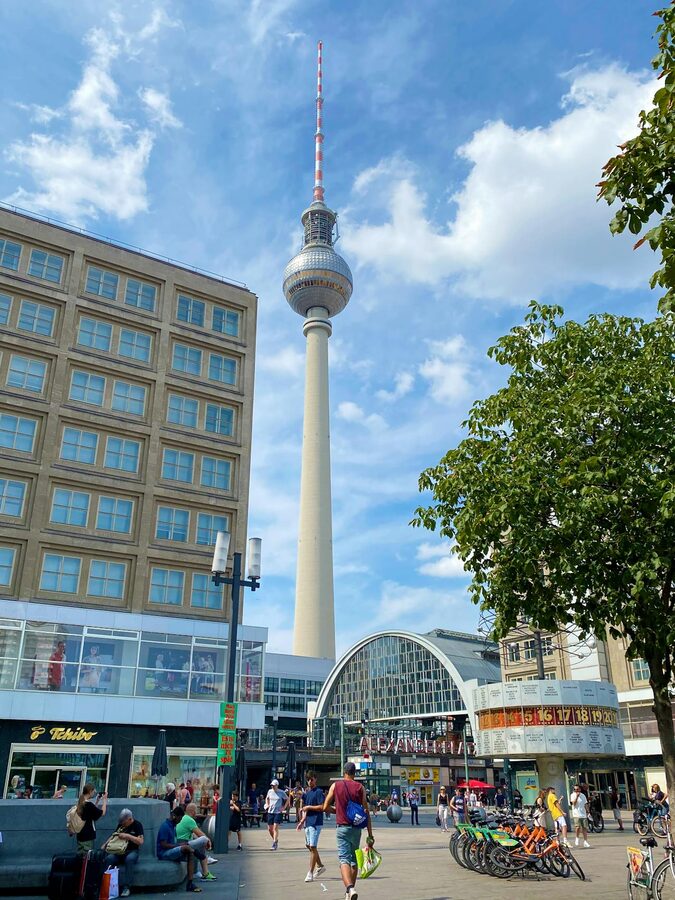
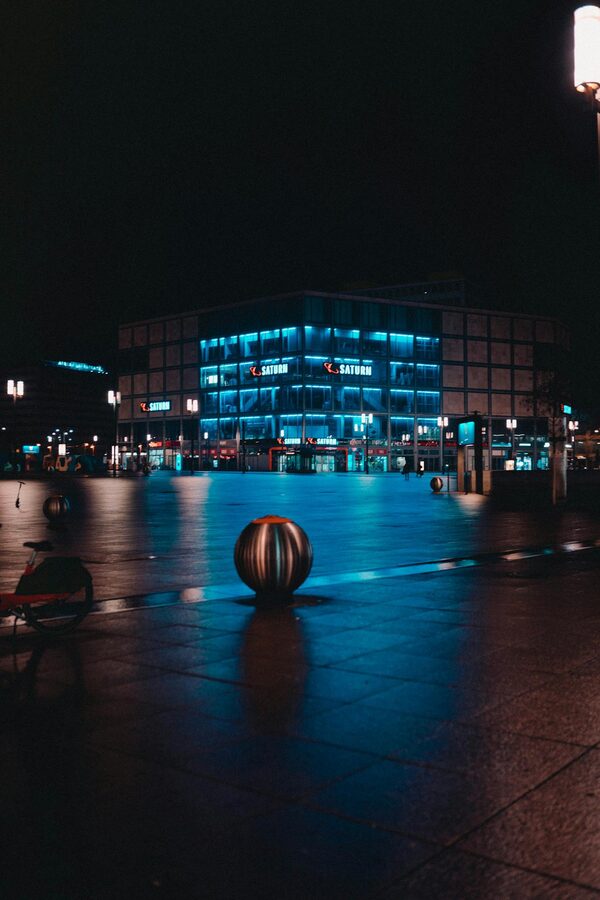
Alexanderplatz is Berlin’s central square and the most East-meets-West space in the city. The GDR built it as a showcase of socialist modernity — wide open spaces, concrete tower blocks, and the World Clock (Weltzeituhr) that shows the time in 148 cities. After reunification, it became a shopping district with the usual chains, but the GDR-era architecture remains and gives the square a character that no other Berlin space has.
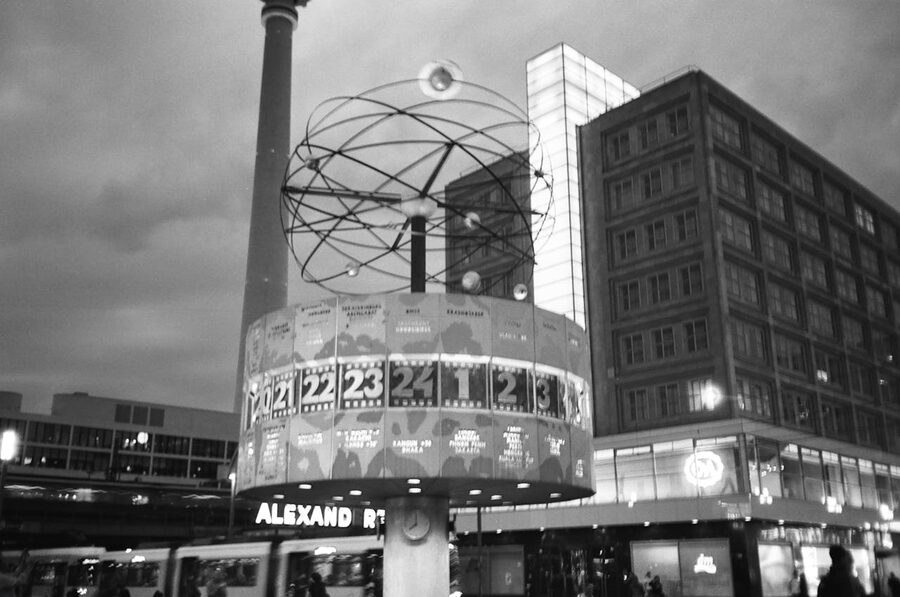
The World Clock is the square’s other landmark — a rotating time display from 1969 that shows the time in every time zone. It’s a popular meeting point (the Berlin equivalent of “under the clock at Grand Central”) and a genuine piece of GDR-era design that somehow remained cool long after the government that built it disappeared.
The Neighbourhood: Where to Eat and Drink
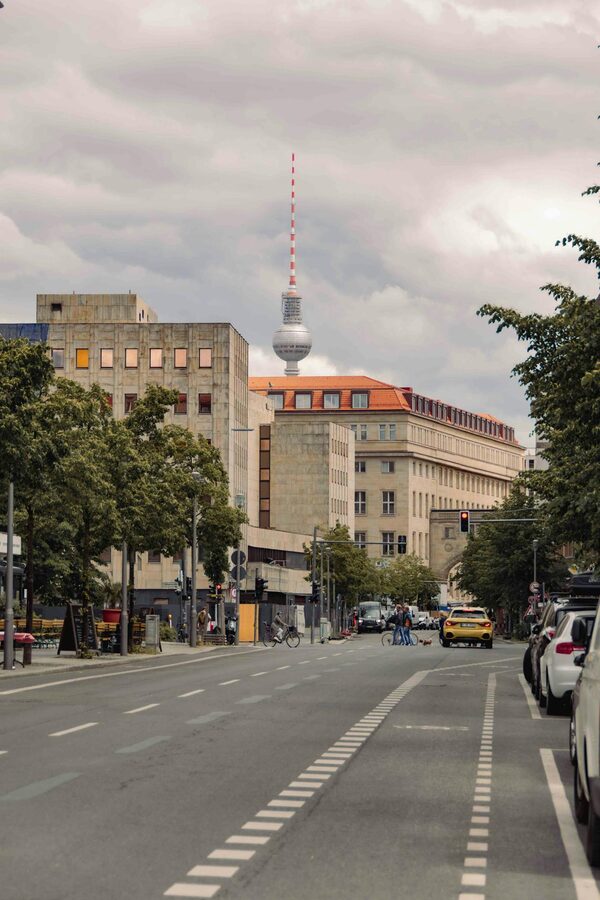
The area immediately around Alexanderplatz is chain restaurants and fast food — not recommended for a proper meal. Walk 10 minutes in any direction and the food improves dramatically.
North to Prenzlauer Berg: The trendiest food neighbourhood in eastern Berlin. Kastanienallee and Kollwitzplatz have dozens of independent restaurants, from Vietnamese street food to modern German cuisine. Sunday brunch at the Mauerpark flea market (in season) is a Berlin institution.
West to Hackescher Markt: The courtyard complexes (Hacksche Höfe) have restaurants, bars, and galleries in connected courtyards that feel like a village within the city. This is the closest good eating to the tower — about 8 minutes on foot.
East to Friedrichshain: Cheap, international, and abundant. Simon-Dach-Straße has a bar every 10 metres, and the restaurant scene along Boxhagener Platz is one of the most diverse in Germany. Döner kebabs at every corner — Berlin’s döner is legitimately excellent and a meal in itself for under €5.
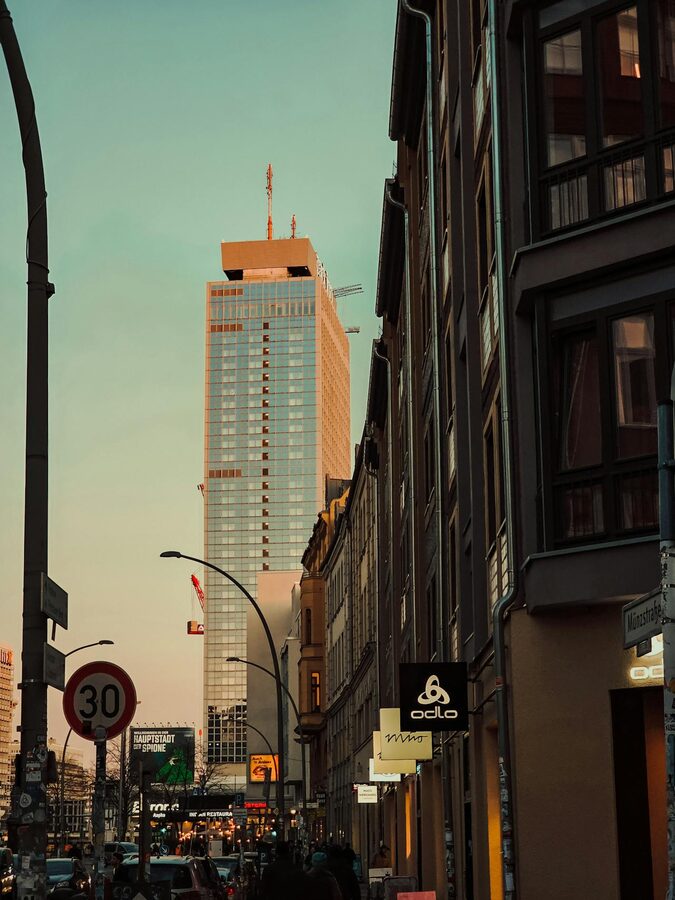
The GDR Legacy: Why the Tower Matters
The TV Tower isn’t just a viewpoint — it’s a political statement frozen in concrete. The East German government built it to demonstrate that socialism could produce engineering achievements that rivalled the West. The tower was taller than anything in West Berlin. It was visible from every point in the divided city. And its position on Alexanderplatz — the showcase square of the socialist capital — was chosen to dominate the skyline from every angle.
After reunification in 1990, there were serious discussions about demolishing the tower — it was, after all, the most prominent symbol of a regime that had imprisoned its own citizens behind a wall. But Berliners had grown attached to it. The tower had outlived the government that built it and become part of the city’s identity regardless of politics. The decision to keep it — and to embrace it as a symbol of Berlin rather than of East Germany — reflects the city’s complicated but honest relationship with its own history.
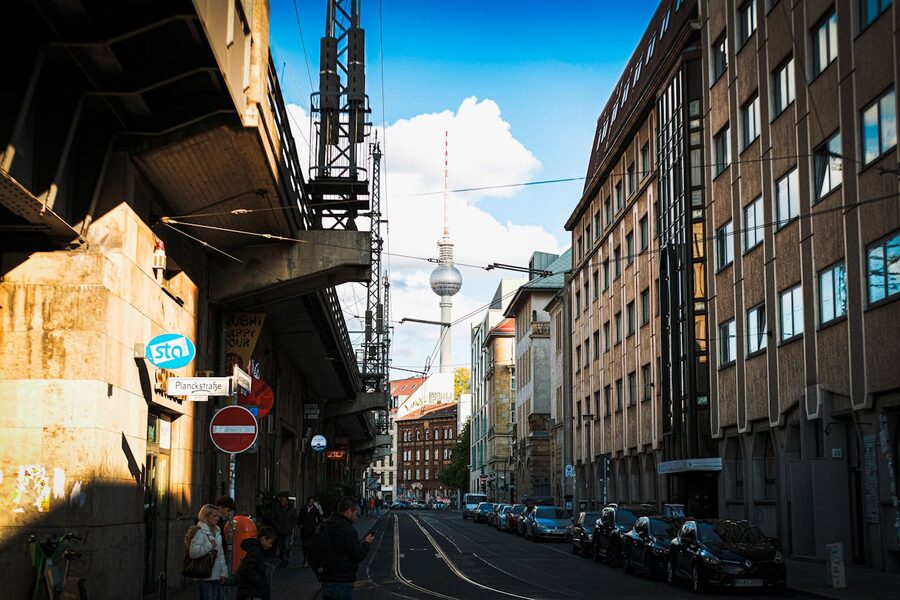
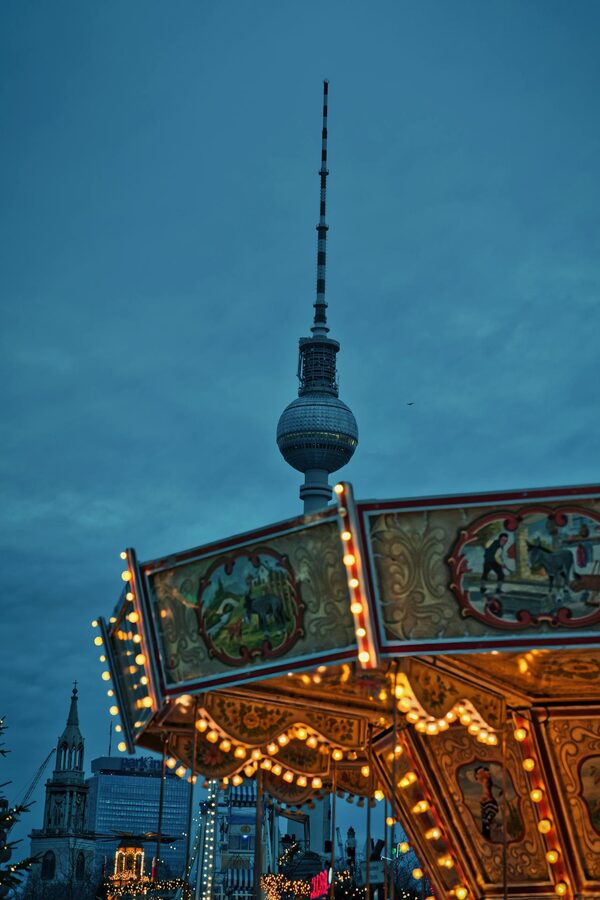
Christmas at the Tower
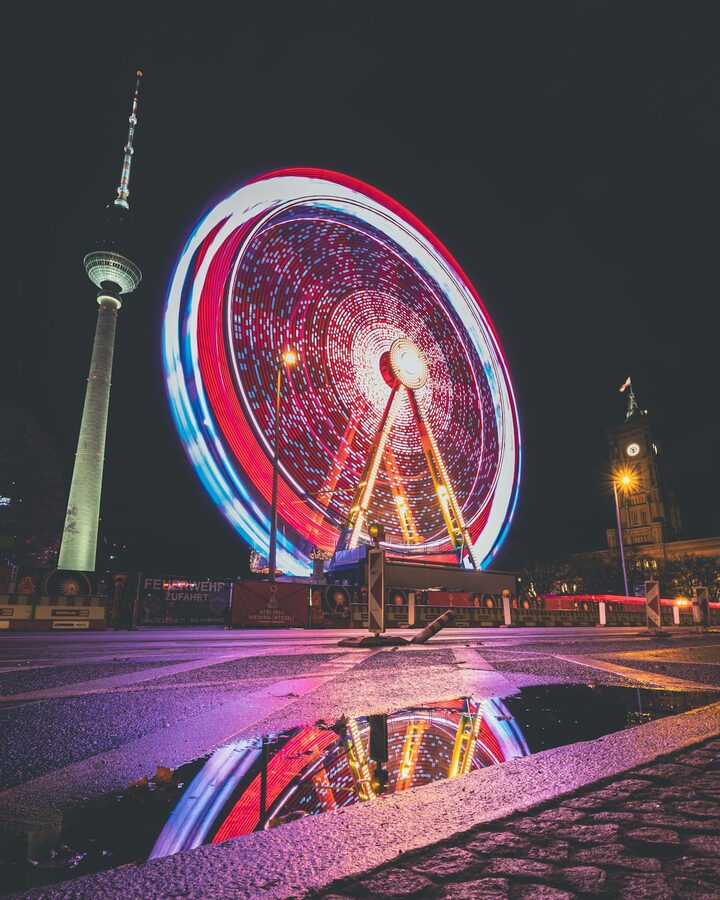
Alexanderplatz hosts one of Berlin’s largest Christmas markets from late November through December. The market surrounds the tower’s base with stalls selling Glühwein (mulled wine), Bratwurst, handmade ornaments, and Lebkuchen. A Ferris wheel and carousel add fairground elements, and the tower lit up above the market creates a scene that’s simultaneously futuristic and traditional.
Berlin Street Art and Culture Near the Tower
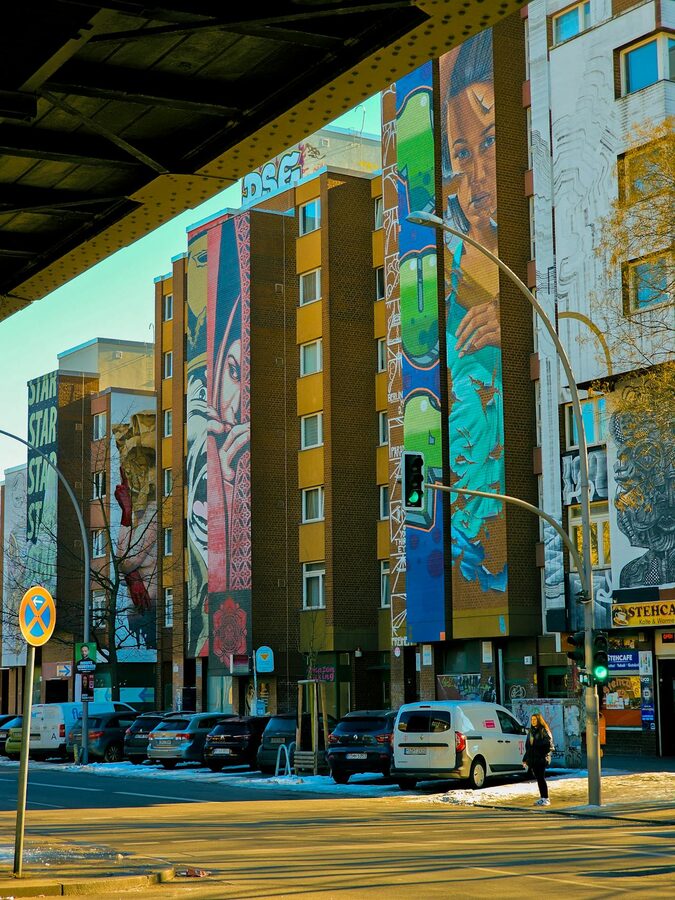
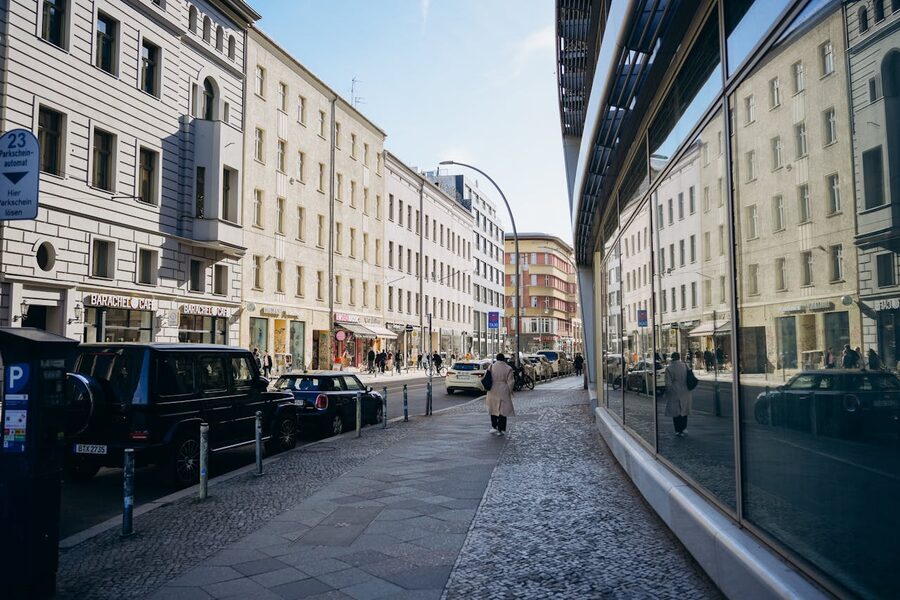
The cultural institutions near the tower are significant. The DDR Museum (on the Spree, near Museum Island) recreates daily life in East Germany — complete with a Trabant car you can sit in. The Haus der Geschichte is a newer museum covering post-war German history. And the Alexander Haus — one of the few pre-war buildings on the square — has been a landmark since the 1930s and survived everything Berlin has thrown at it.
Practical Tips
Getting there: The tower is on Alexanderplatz — served by U-Bahn (U2, U5, U8), S-Bahn (multiple lines), tram, and bus. The entrance is at the base of the tower on the south side. You can’t miss it — it’s the tallest thing in the city.
Opening hours: March-October: 9am-midnight. November-February: 10am-midnight. Last admission is 30 minutes before closing. Check tv-turm.de for current hours and any special events.
Booking: Book online through GYG or the official site. The GYG ticket is the same price and includes skip-the-line access. Without a pre-booked timed slot, the ground-level queue can be 60-90 minutes in peak season.
How long: 30-45 minutes for the observation deck. 60-90 minutes for the restaurant (with meal). 20 minutes for the VR experience (on top of the deck visit). Total: 45 minutes to 2 hours depending on what you book.
Budget: Standard observation deck: $33. Restaurant entry: $33 (food extra, mains €25-40). VR experience: $43 (includes deck). The standard ticket is the best value — the view is the attraction, and you get the same view regardless of which ticket tier you choose.
Best Tickets to Book
1. TV Tower Standard Entrance — $33
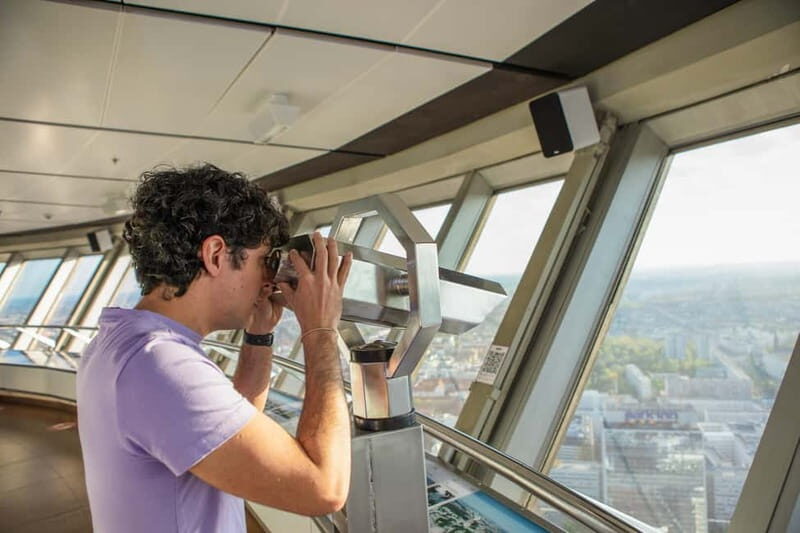
The default choice. Timed skip-the-line entry to the observation deck at 203 metres, with 360-degree views across Berlin. At $33, it’s comparable to other European observation decks (London Eye, Eiffel Tower) but with a unique Cold War history that adds depth to the panorama. Our review covers the best viewing positions, photo tips, and whether the sunset slot is worth the premium booking effort.
2. SPHERE Restaurant Tim Raue — $33
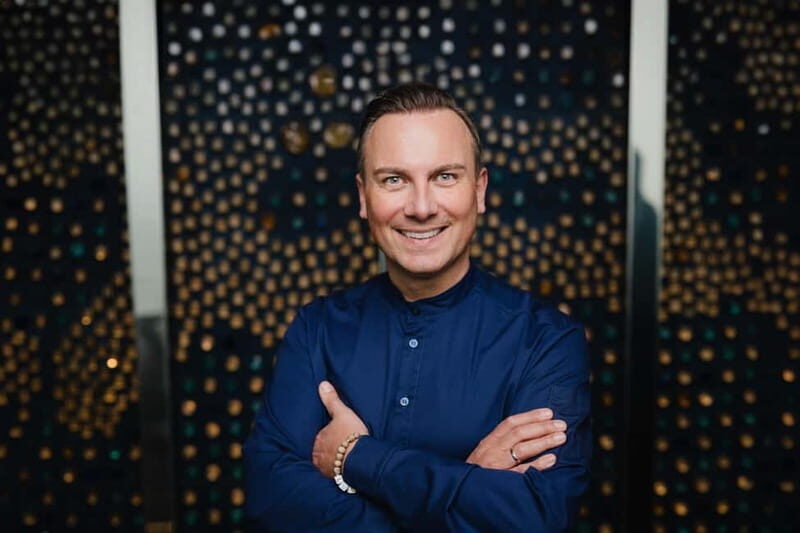
The restaurant ticket costs the same as the standard entrance ($33) but gives you access to the revolving SPHERE Restaurant one floor above the observation deck. Food is extra (€25-40 for mains). The combination of the view, the rotation, and the quality of the food makes this one of Berlin’s most memorable dining experiences. Our review covers the menu, the booking process, and whether the window seats are worth requesting.
3. TV Tower + VR Experience — $43
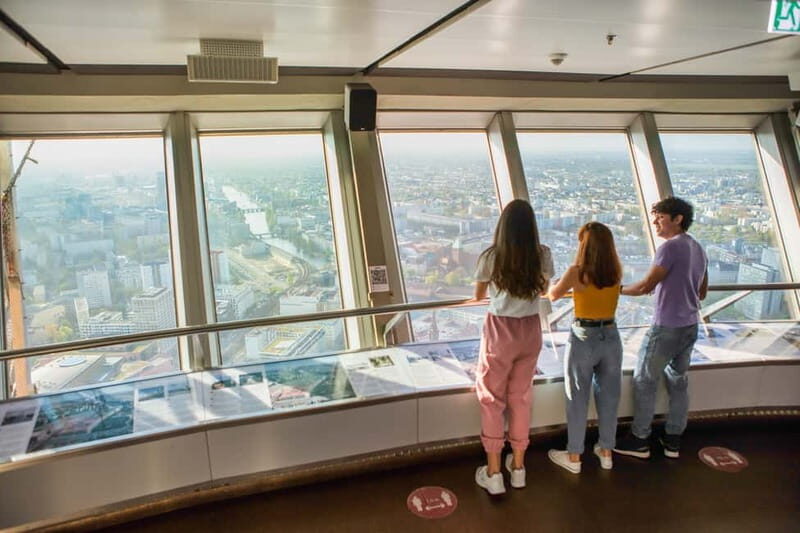
The premium option: observation deck access plus a virtual reality experience that lets you “fly” over Berlin in different historical periods. The VR headsets overlay the real view with historical reconstructions — you look down at the city below and see it as it was in the 1920s, 1940s, or during the Cold War division. At $43 (vs $33 for the standard), the $10 premium is reasonable for the added historical context. Our review assesses whether the VR technology enhances or distracts from the real view.
More Berlin Experiences
The TV Tower is a natural starting point for exploring Berlin. From Alexanderplatz, it’s a short walk to Museum Island and its world-class collections. The Reichstag dome visit gives you a different kind of Berlin panorama — political rather than commercial. And the Berlin walking tours provide the street-level context that the aerial view hints at — the Wall sites, the Cold War checkpoints, and the layers of history that make Berlin unlike any other European capital.