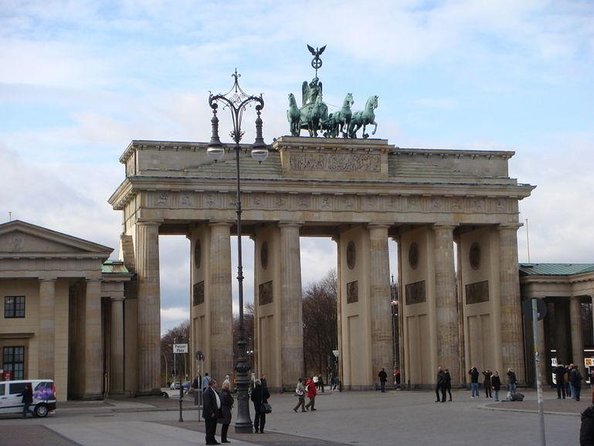
Underneath a nondescript car park near the Brandenburg Gate lie the remains of Hitler’s bunker — no monument, no plaque, just a small information board installed decades later because people kept asking. Germany’s decision to pave over it and refuse to create a shrine tells you everything about how Berlin handles its darkest history.
That story — the story of how Berlin dealt with the physical remains of the Third Reich — is the thread that the Third Reich and Cold War walking tours follow. The tours don’t glorify or sensationalise. They explain. How the Nazi regime rose to power. Where they built their headquarters. What happened during the war. How the city was divided afterward. And how modern Berlin has chosen to remember — or not remember — each chapter. The guides are historians, and their ability to make 20th-century history feel urgent and personal is what visitors consistently praise most highly.
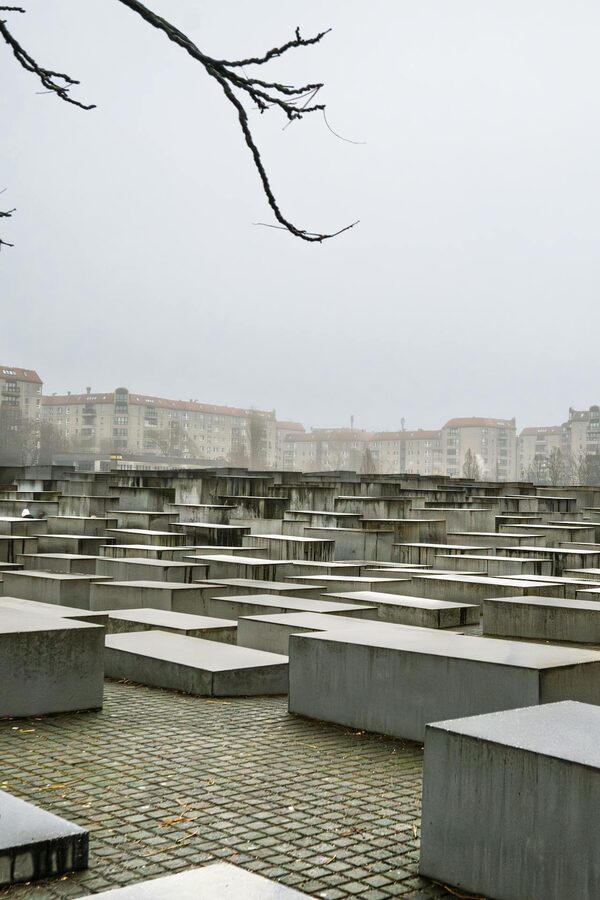
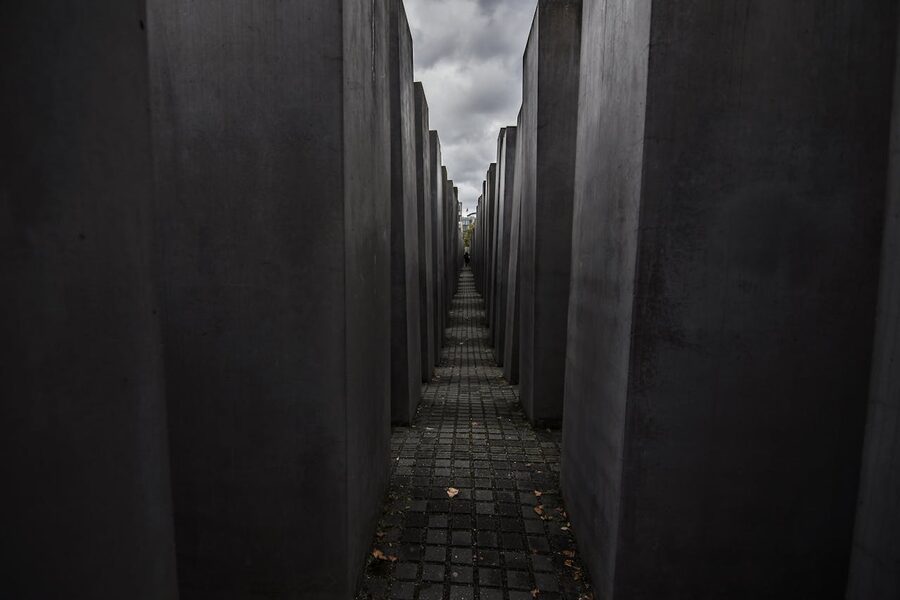
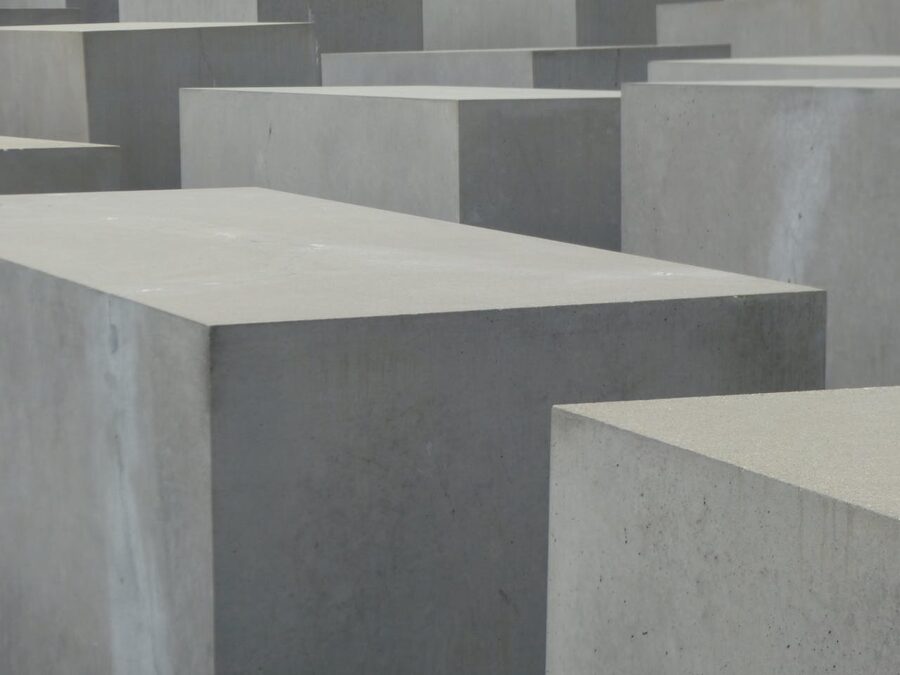
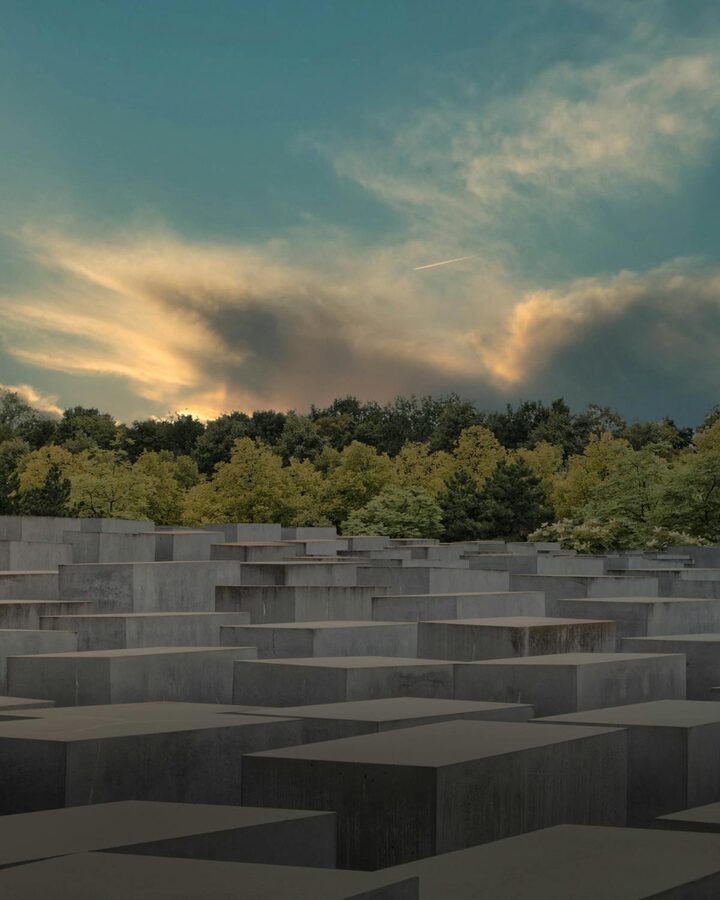
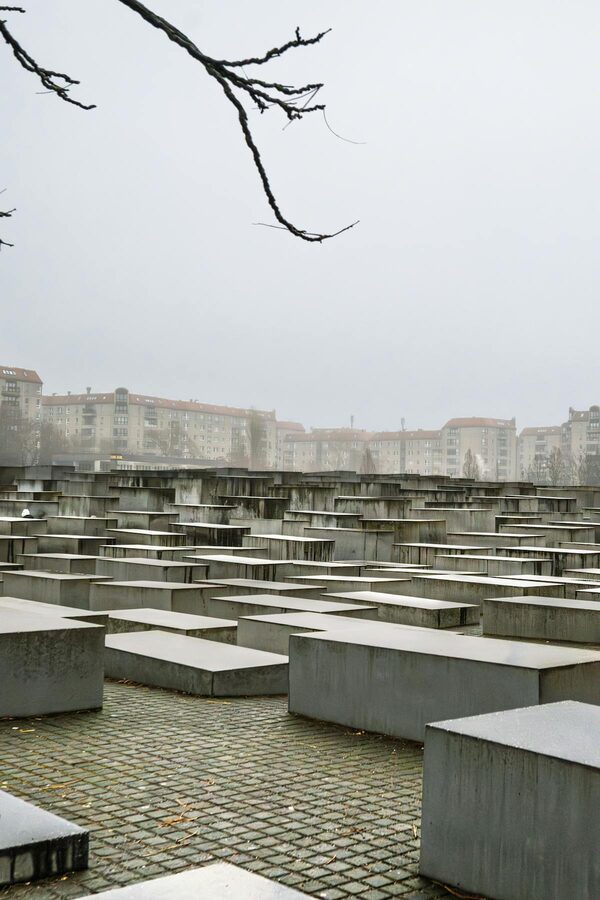
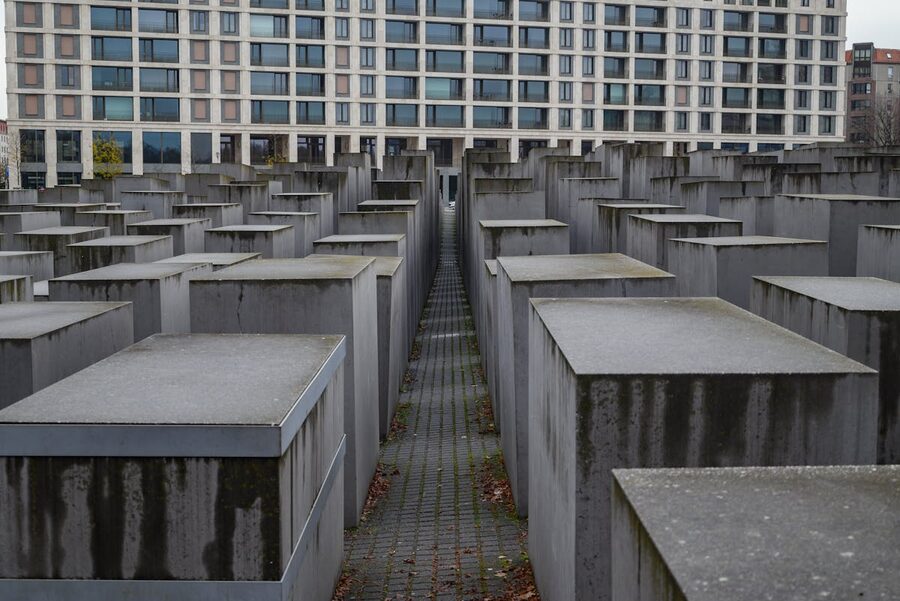
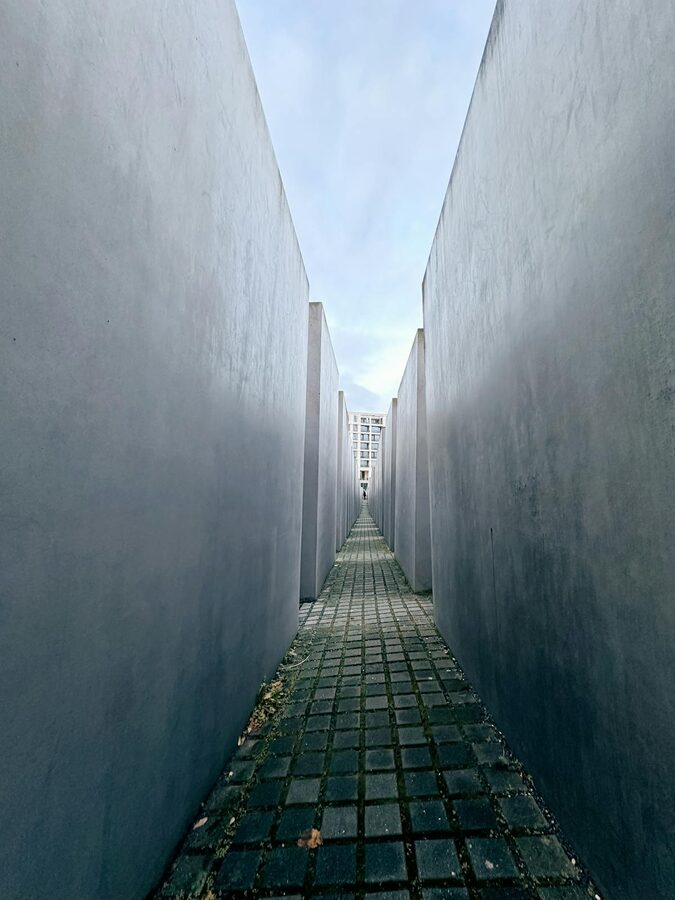
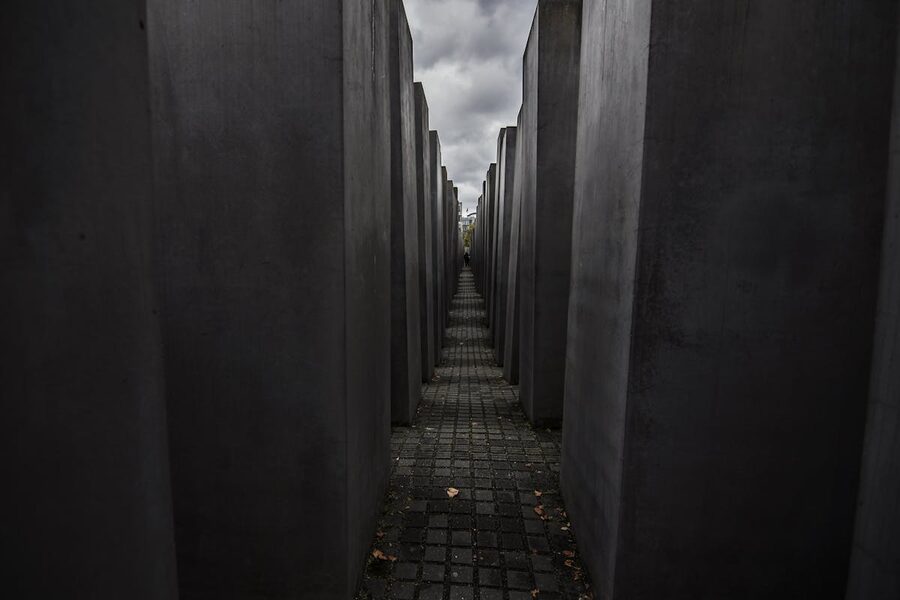
The Holocaust Memorial’s stelae catch different light at different times of day — early morning and late afternoon create long shadows between the blocks that intensify the sense of walking through something claustrophobic and inescapable. The guides time their visits to maximise this effect when possible.The Memorial to the Murdered Jews of Europe — 2,711 concrete stelae covering a city block near the Brandenburg Gate. The blocks range from ankle height at the edges to over 4 metres in the centre. You walk in from the street and the ground drops and the blocks rise until they tower over you. The disorientation is deliberate. Peter Eisenman designed it to make you feel what isolation and loss feel like, not to explain them.The memorial has no names, no inscriptions, no explicit reference to who died or how. The information centre beneath the surface (free, included in the tour) provides the specifics — names, letters, family stories. The above-ground memorial is pure emotion. The underground centre is fact. Together they create the most powerful Holocaust memorial in the world.
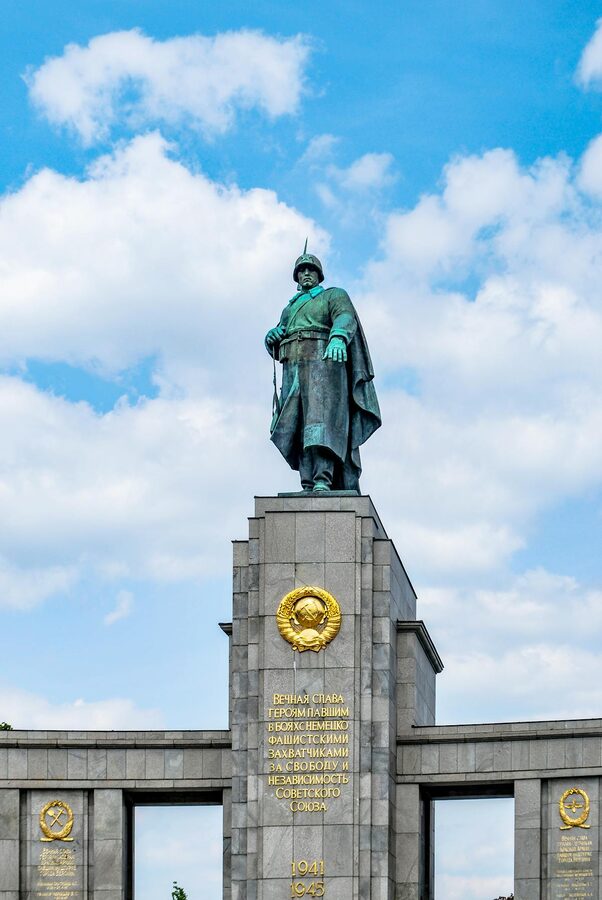
The Nazi regime left surprisingly few buildings standing in Berlin. Allied bombing, Soviet artillery, and Germany’s own post-war demolition campaigns destroyed most of the Third Reich’s architectural legacy. What remains is often invisible from the street — underground bunkers, foundations beneath modern buildings, and empty lots where ministries once stood. The walking tour guides know where to look.
The relationship between the Third Reich and the Cold War is physical in Berlin — the Wall was built partly to contain the consequences of the war. The Soviets occupied the east, the Allies the west, and a city that had been one became two. Understanding the Third Reich explains why the Wall happened. Understanding the Wall explains why Berlin looks the way it does today.Berlin’s historical landscape is layered in ways that most cities aren’t — Third Reich infrastructure sits beneath Cold War division, which sits beneath reunification architecture, which sits beneath the tech-startup Berlin of today. The walking tours peel back these layers one by one.
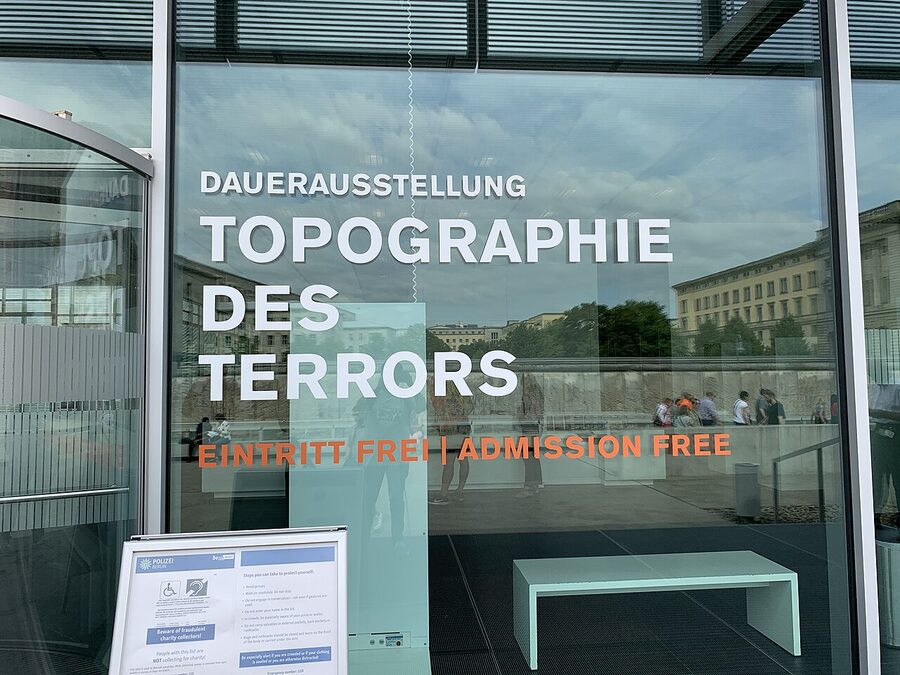
The Topography of Terror — a museum built on the site of the Gestapo and SS headquarters. The basement cells where prisoners were interrogated survive, and the museum above documents the entire Nazi security apparatus. Free entry. The walking tours pass the exterior; the museum takes 1-2 hours to visit properly on your own.
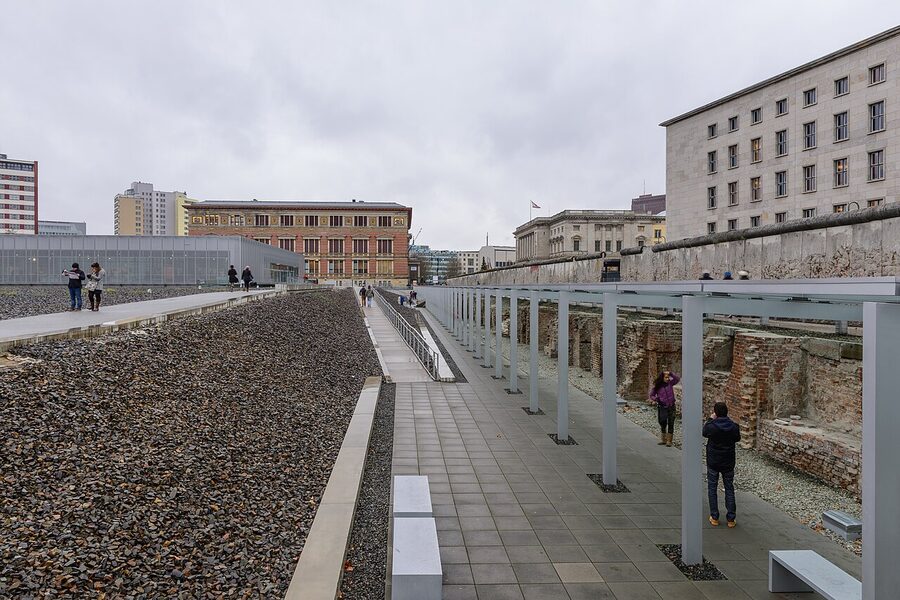
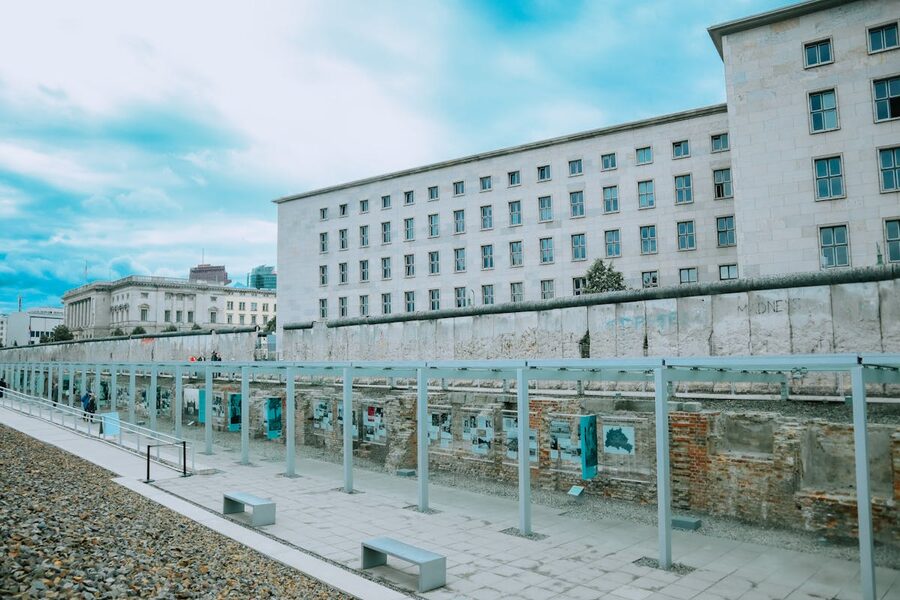
The Topography of Terror museum sits directly on the former site of the Gestapo headquarters at Prinz-Albrecht-Straße 8. The outdoor exhibition runs along a preserved section of the Berlin Wall, creating a visual intersection of the Nazi era and the Cold War division that makes the connection between the two periods impossible to ignore.
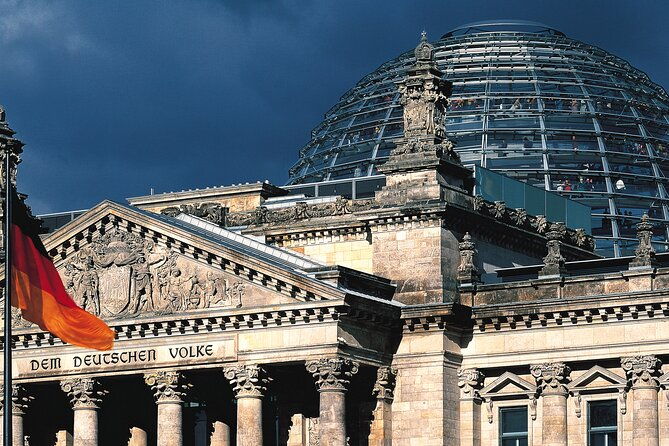
The museum’s location is no accident. Prinz-Albrecht-Straße 8 was the most feared address in Nazi Germany — the headquarters of the Gestapo, the SS, and the Reich Security Main Office all clustered within a few hundred metres. From here, Reinhard Heydrich coordinated the Einsatzgruppen death squads and later the administrative machinery of the Holocaust. Heinrich Himmler’s office was around the corner. The proximity of these offices to the centre of government — less than a kilometre from the Reichstag — is a recurring theme in the guides’ narration: the Nazi terror apparatus didn’t operate from the shadows. It operated from the heart of Berlin.
The outdoor exhibition at the Topography of Terror runs alongside a preserved section of the Berlin Wall — one of the few places in Berlin where Third Reich history and Cold War history occupy the exact same physical space. The information panels trace the site’s use from Nazi headquarters to post-war ruin to Cold War border zone.
The Führerbunker site — the unmarked car park described above. The guide explains the bunker’s layout, the final days, and Germany’s deliberate refusal to memorialise the site. The decision — which remains controversial — reflects the country’s complex relationship with its own history.
The stelae of the Holocaust Memorial are designed to be walked through, not looked at from outside. The paths between them are narrow enough for one person. The blocks are slightly tilted at different angles. And the ground undulates. The effect — intentionally — is claustrophobia, disorientation, and the feeling of being swallowed by something larger than yourself.
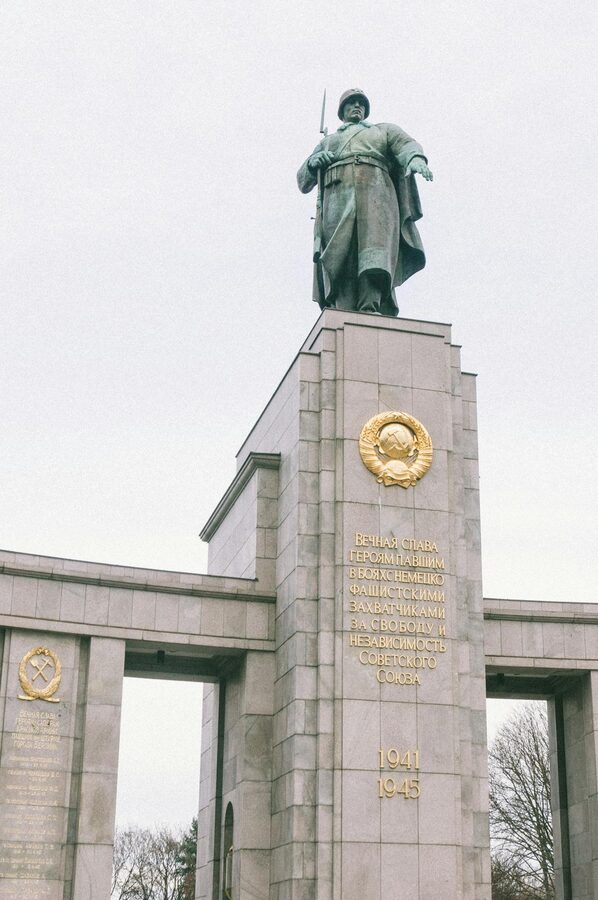
The Air Ministry (Detlev-Rohwedder-Haus) — one of the few Third Reich buildings that survived intact. Hermann Göring’s massive Air Ministry is now the Federal Finance Ministry. The brutal architecture — imposing stone facade, symmetrical windows, overwhelming scale — is a deliberate display of state power that hasn’t softened with repurposing.
The architectural legacy of the Third Reich in Berlin is mostly invisible — bombed out, demolished, or buried under new construction. What remains tends to be functional rather than monumental, making the guides essential for identifying what you’d otherwise walk straight past.
Other Third Reich sites the tours cover include the Bebelplatz book burning memorial — a glass panel in the pavement revealing empty white shelves below, commemorating the May 1933 book burning when Nazi students threw 20,000 books into a bonfire — and the former site of the Reich Chancellery on Wilhelmstraße, where Hitler’s office once stood. The guides also point out the Stolpersteine (stumbling stones) — small brass plaques embedded in pavements outside buildings where victims of the Nazi regime lived. There are over 10,000 in Berlin alone, each engraved with the name, birth date, and fate of an individual victim. Most visitors never notice them until a guide points them out.
Berlin’s government district contains layers of history visible only to those who know where to look. Buildings that housed Nazi ministries were later used by East German authorities, then repurposed again after reunification. The guides trace these transitions, showing how power has occupied — and reoccupied — the same spaces across different regimes.
The Cold War Sites
The Cold War divided Berlin from 1961 to 1989 — 28 years of walls, checkpoints, watchtowers, and a death strip that ran through the heart of the city. The walking tours cover the physical remains and the human stories.
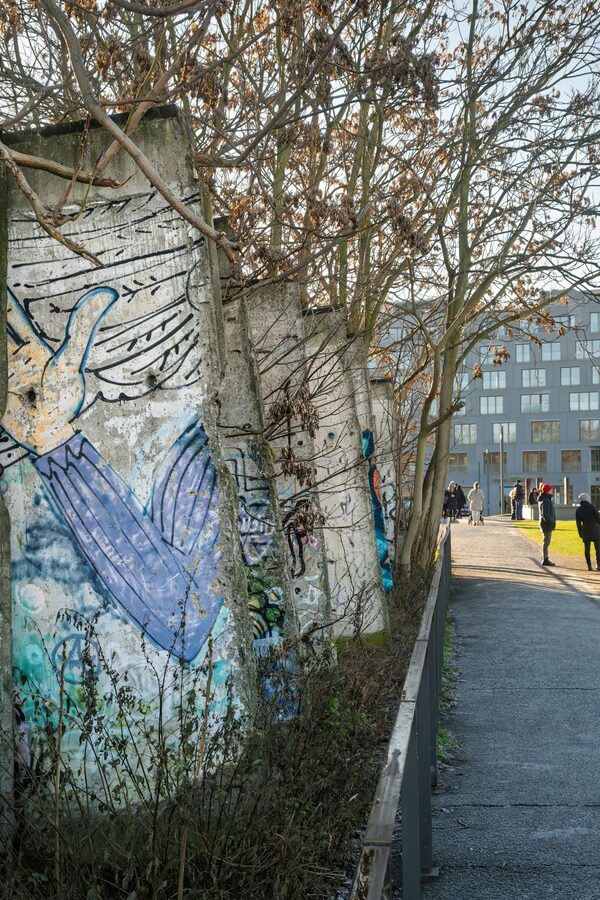
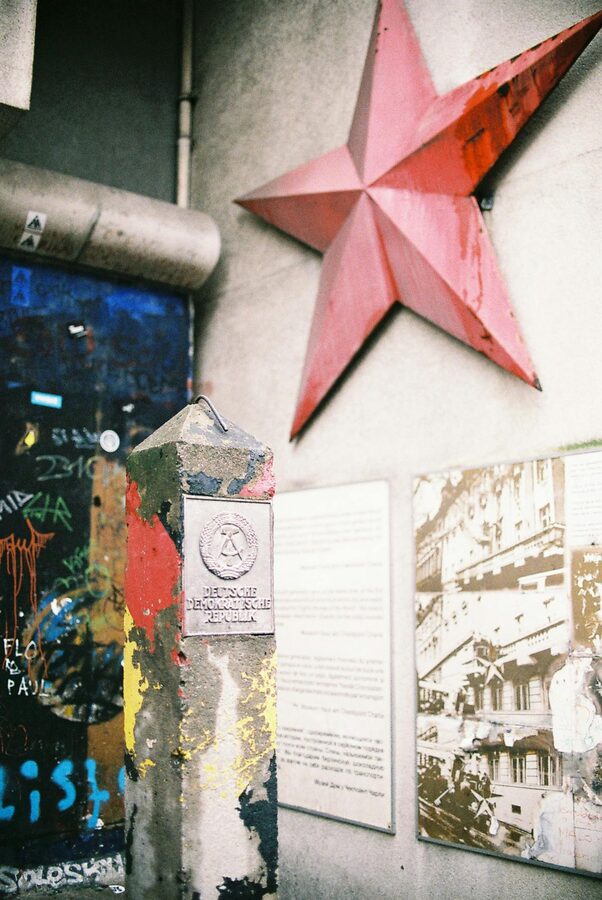
Preserved Wall sections appear throughout Berlin, each in a different state of conservation. Some are pristine museum pieces. Others are covered in graffiti, chipped, weathered — the physical degradation itself telling a story about how quickly solid-seeming structures can crumble.
The Wall wasn’t built in a day. On August 13, 1961, East German soldiers rolled out barbed wire along the sector boundary while Berliners slept. Within days, the wire became concrete blocks. Within months, the blocks became a wall. Over the following years, the Wall evolved into a sophisticated barrier system: two parallel walls with a “death strip” between them, mined in places, lit by floodlights, patrolled by guards with shoot-to-kill orders. At least 140 people died trying to cross it. The guides tell individual escape stories — the tunnels, the hot air balloons, the cars with secret compartments, the couple who strung a wire between buildings and slid across — that bring the statistics to life.
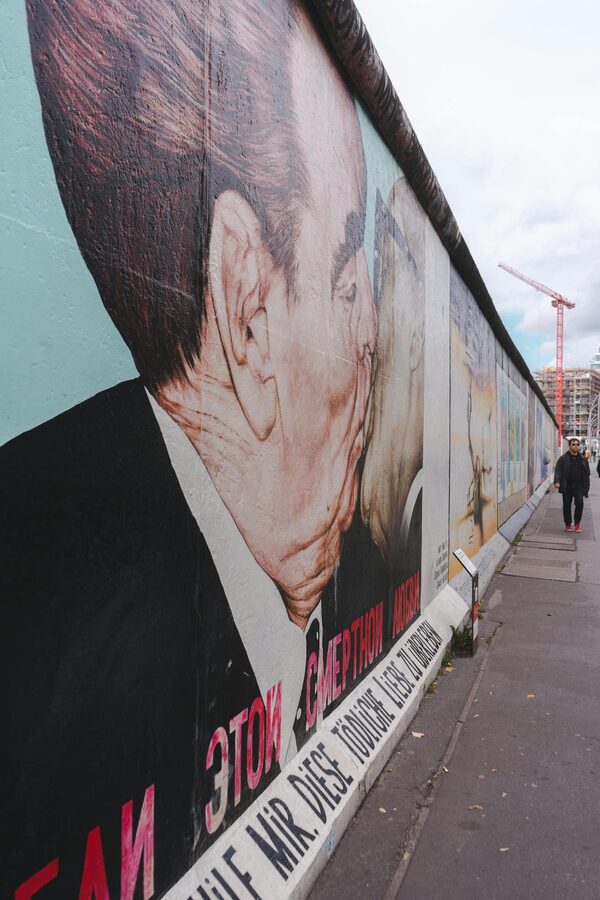
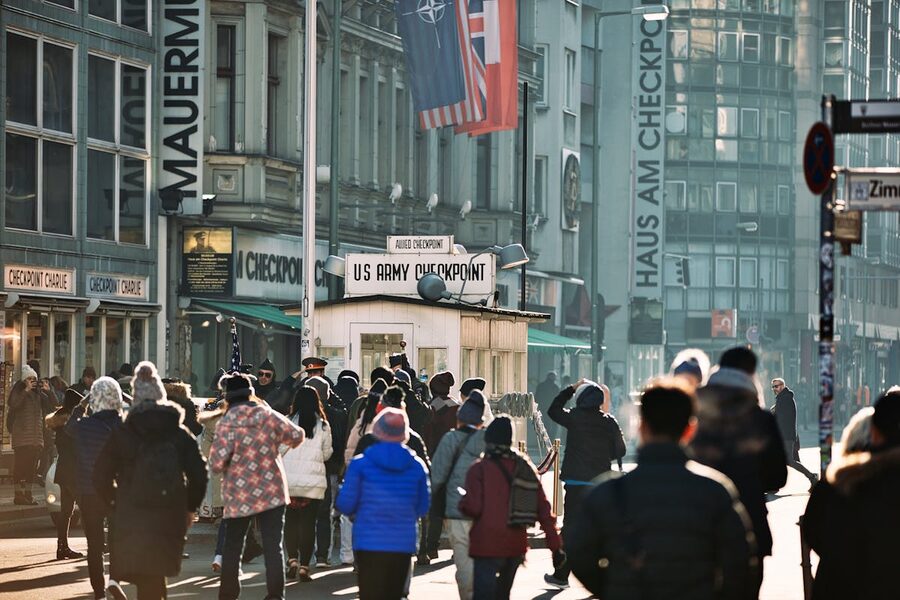
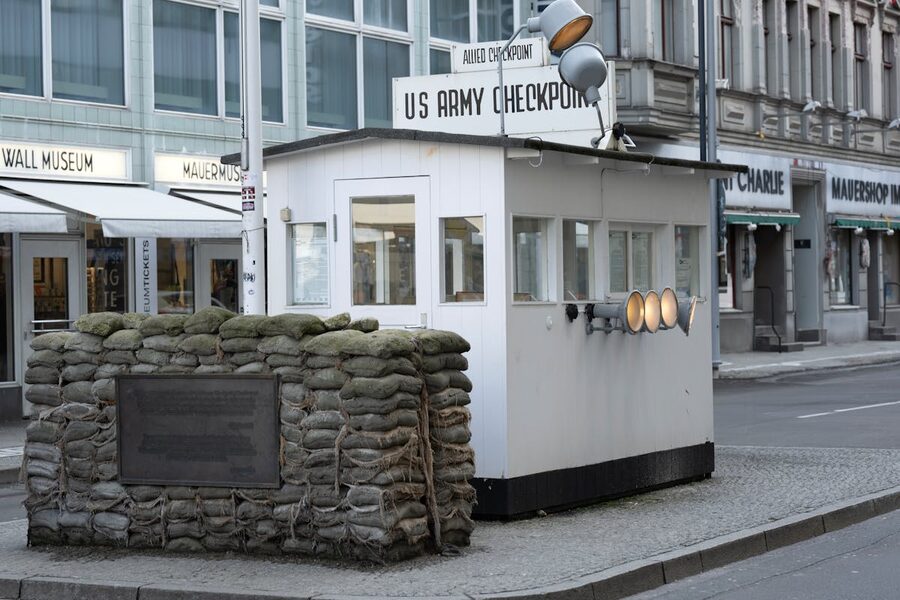
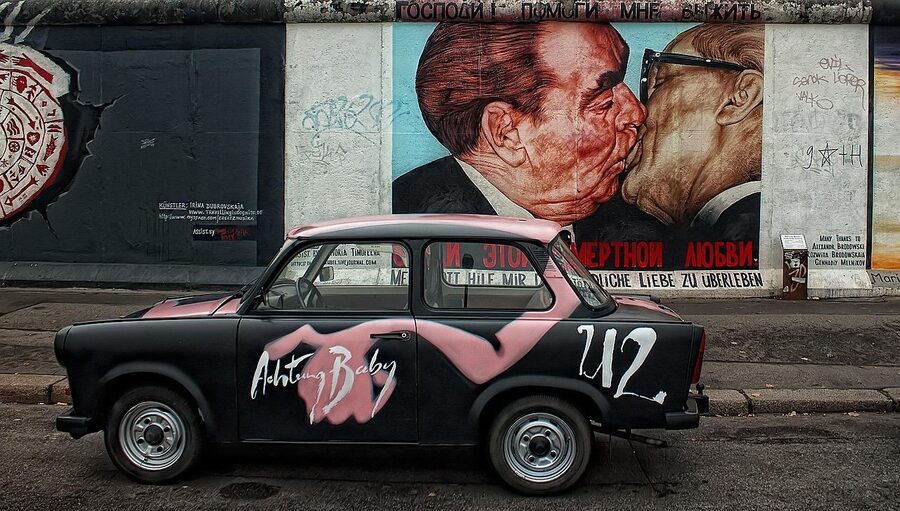
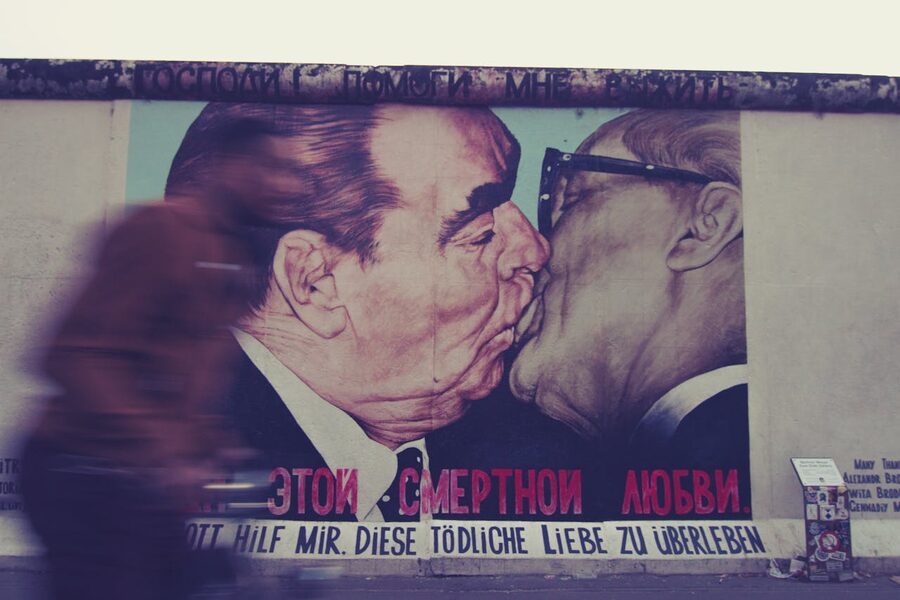
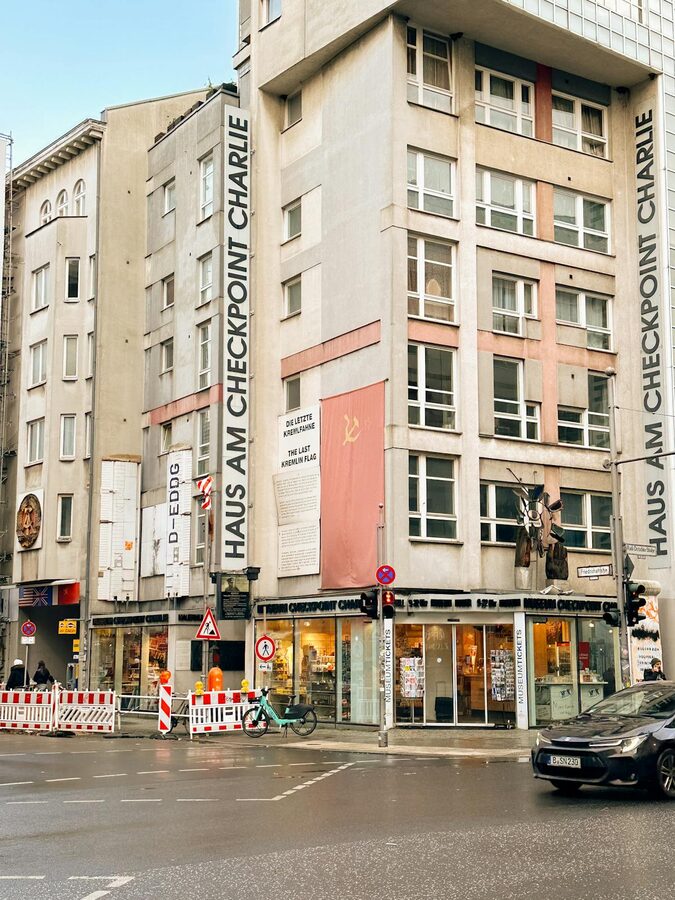
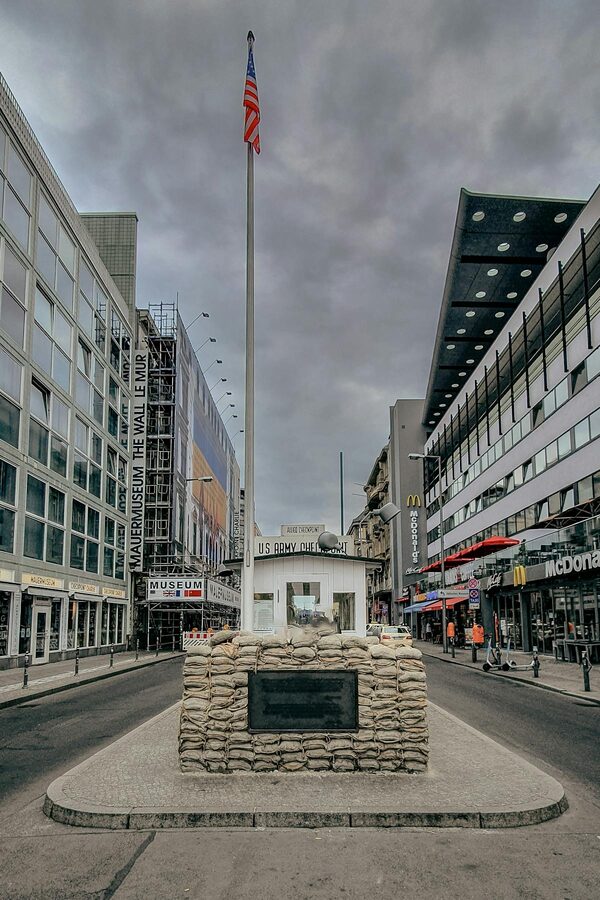
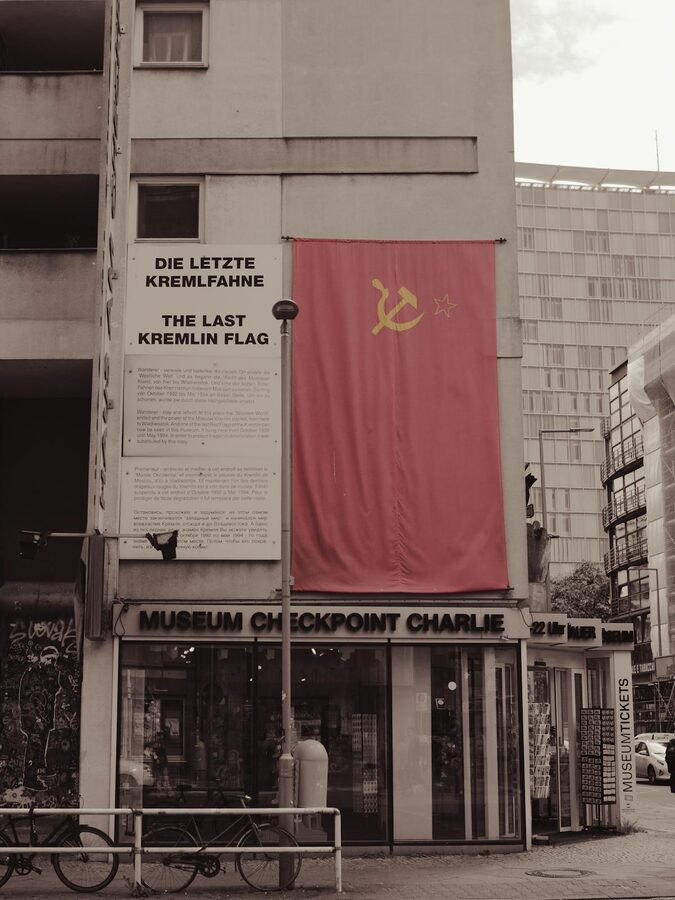
The Checkpoint Charlie area has been heavily commercialised since reunification — souvenir shops, tourist restaurants, and fake border guards offering photo opportunities crowd the intersection. The guides cut through the kitsch to explain what actually happened here, including the 1961 tank standoff that brought the world to the brink of nuclear war.Checkpoint Charlie — the most famous crossing point — is now surrounded by souvenir shops and fast food restaurants. The commercialisation is jarring. But the guide cuts through it by telling the real stories: the 1961 tank standoff when American and Soviet tanks pointed their guns at each other across a gap of 100 metres, and the escape attempts that became increasingly desperate as the Wall’s defences were strengthened.The East Side Gallery — 1.3 kilometres of the Berlin Wall covered in murals — is the largest open-air gallery in the world. Painted by artists from 21 countries after the Wall fell, the murals range from political satire to abstract expression. The most famous — Dmitri Vrubel’s “My God, Help Me to Survive This Deadly Love” showing Brezhnev and Honecker kissing — has become one of the most reproduced images of the 20th century.The Fraternal Kiss mural captures a real moment — the 1979 meeting between Soviet leader Brezhnev and East German leader Honecker, photographed by Régis Bossu. Vrubel painted it on the Wall in 1990 with the caption “My God, Help Me to Survive This Deadly Love.” It’s been restored multiple times and remains the East Side Gallery’s most visited panel.Wall remnants throughout Berlin have become canvases for graffiti artists — some political, some abstract, some simply territorial. The graffiti is itself historically layered: pieces from the 1990s sit alongside work from the 2000s and 2010s, each generation responding differently to the Wall’s legacy.
The Berlin Wall Memorial on Bernauer Straße preserves a section of the Wall with its full death strip — inner wall, outer wall, watchtower, tank trap, and the cleared ground where escapees were shot. It’s the only place in Berlin where the complete Wall system is visible. The documentation centre has a viewing platform that shows the death strip from above.
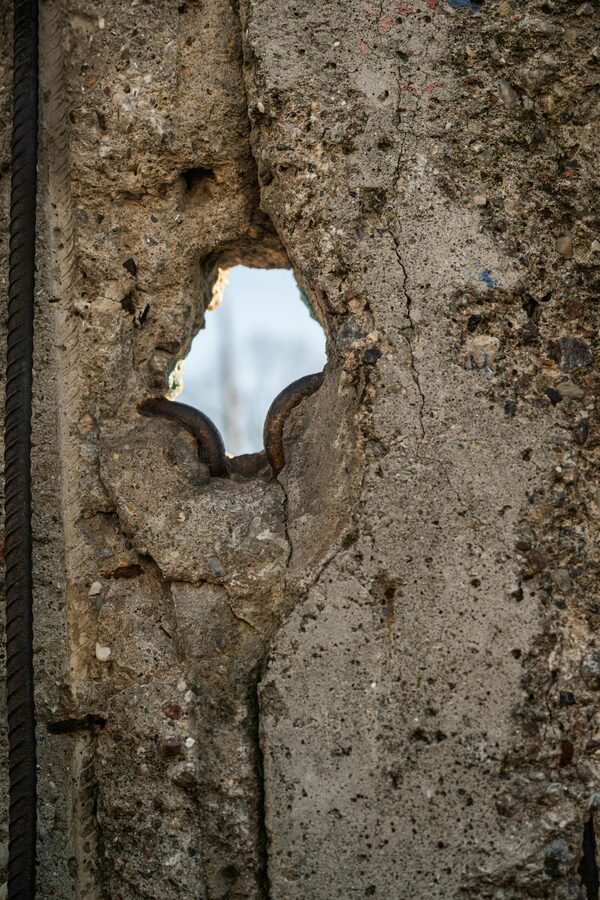
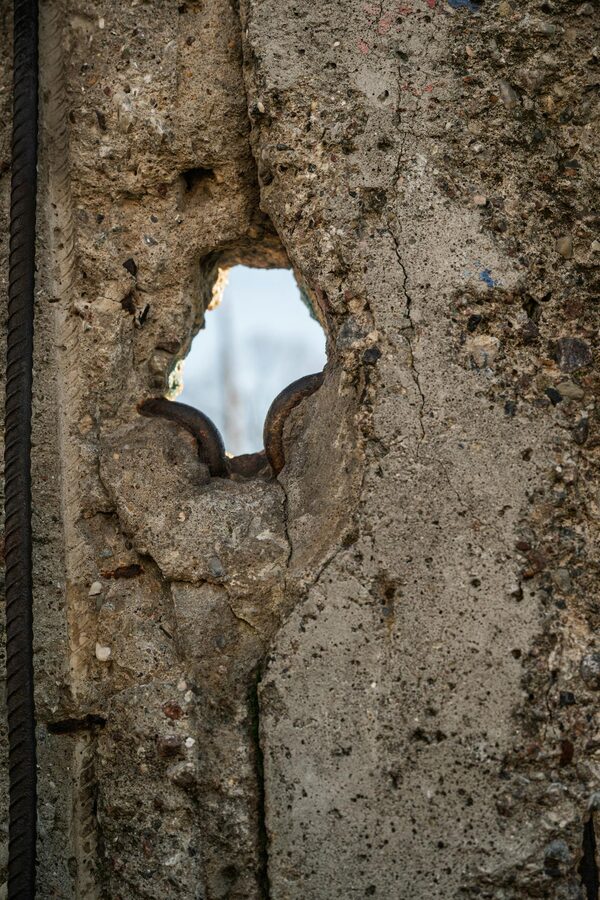
The Bernauer Straße memorial preserves the Wall in its entirety — both walls, the death strip between them, the watchtower, and the cleared ground that border guards maintained to ensure clear lines of fire. This is the only place in Berlin where you can see the full depth of the barrier system.Sections of the Wall that weren’t painted show the raw concrete — chipped, scarred, and in some places holed by people trying to break through. The Wall was reinforced multiple times over its 28-year existence, evolving from a simple barbed-wire barrier in 1961 to a sophisticated 3.6-metre concrete structure with smooth pipe tops designed to prevent handholds.Scattered Wall segments now stand in parks and public spaces across Berlin — art installations, memorials, and reminders that the division was physical, not abstract. Some have been covered in new graffiti. Some are clean. All of them draw travelers who stop, photograph, and try to imagine what it was like when this concrete line determined where you could live, work, and love.
What the Guides Add
You could walk this route alone with a guidebook or a podcast. Many people do. But the guides add three things that self-guided visits miss. First, they know where to stand. Berlin’s history isn’t signposted — the Führerbunker site has one small board, the Topography of Terror requires knowing where the entrance is, and many sites have no markers at all. The guides position you at the exact spot where something happened and then explain what you’re looking at.
The East Side Gallery’s murals represent 105 different artists from 21 countries, each responding to the Wall’s fall in their own style. The guides select specific panels to stop at and explain the political context — turning what could be a casual stroll past colourful walls into a curated gallery of post-Cold War artistic expression.
Second, they connect the periods. The combo tour is specifically designed to show how the Third Reich led to the Cold War — how the Allied occupation created the conditions for division, how the division calcified into the Wall, and how the Wall’s fall created the Berlin you see today. That narrative arc is invisible if you visit sites individually. You see a monument here, a museum there, a wall segment somewhere else. The guide weaves them into a story that makes the 20th century comprehensible.
The museum area around Checkpoint Charlie has expanded significantly since reunification. Multiple private museums compete for tourist attention alongside the official memorial. The guides help visitors distinguish between serious historical institutions and opportunistic tourist traps — a valuable service in an area where the line between education and exploitation is sometimes blurred.
Third, they answer questions. And the questions visitors ask — about German guilt, about how people could have stood by, about what lessons apply to current politics — are the questions that transform a sightseeing walk into genuine education. The guides don’t shy away from uncomfortable topics. They’ve heard every question before and they answer them honestly, drawing on academic research rather than emotional appeals. Several visitors in their reviews specifically mention questions they asked and the quality of answers they received as the highlight of their tour.
Berlin’s historical district buildings carry visible scars from different eras — bullet holes from the 1945 Battle of Berlin, reconstruction patches from the post-war period, and modernisation from reunification. The guides point out these physical marks, using them as entry points to explain the violence that shaped the city’s architecture.Berlin’s memorial landscape extends well beyond the famous sites. Small memorials, plaques, and installations appear throughout the city, each commemorating specific victims, specific events, or specific acts of resistance. The guides know dozens of these smaller memorials and weave them into the larger narrative.Preserved Wall segments serve as both historical artefacts and public art installations. Their presence in parks, plazas, and private gardens throughout Berlin ensures that the physical reality of division remains visible — you can’t walk far in Berlin without encountering a piece of concrete that once separated families, friends, and neighbourhoods.
Best Tours to Book
1. Third Reich + Cold War 2-Hour Walking Tour — $24
The most-booked Berlin history tour by an enormous margin, with consistently perfect visitor feedback. The combo format covers both eras in 2 hours — the Nazi rise to power, the bunker site, the Holocaust Memorial, the Wall, Checkpoint Charlie — connected by a narrative that shows how one led to the other.
The most popular option and the best introduction. Two hours covering the essential Third Reich and Cold War sites in a single walk. The guide connects the dots between the two eras — how the devastation of the war created the conditions for the division, and how the division shaped the Berlin you see today. At $24, it’s the same price as a decent meal and infinitely more nourishing. Our review covers the full route and what makes the combo format work.
The deeper dive into the Nazi era — 3 hours focused specifically on the Third Reich’s rise, reign, and fall. Visitor feedback is overwhelmingly positive, praising the guides’ depth of knowledge and ability to make complex history accessible.
For visitors who want to go deeper into the Nazi period specifically. Three hours covering the same ground as the combo tour’s Third Reich section but with significantly more context — the political mechanics of how democracy became dictatorship, the propaganda machine, the resistance movements, and the final days. The extra hour makes a genuine difference in comprehension. Our review compares this with the combo tour and explains who benefits from the longer format.
The cheapest option and the one focused specifically on the divided city — the Wall, the escape attempts, the spy exchanges, and the night the Wall came down. Visitor feedback matches the other tours in quality — perfect marks across the board.
Three hours focused on Berlin’s 28 years of division. The guide covers the Wall’s construction in 1961, daily life on both sides, the escape tunnels and balloon crossings, the spy exchanges at Glienicke Bridge, and the extraordinary night of November 9, 1989 when the Wall opened by accident (a confused press conference, a bureaucratic error, and a million Berliners in the streets). At $18, it’s the cheapest Berlin walking tour and one of the most emotionally engaging. Our review covers the Cold War route and the stories that stay with you.
Walking paths along the Wall’s former route are marked with a double line of cobblestones embedded in the pavement — a subtle but powerful reminder that the division ran through streets, across bridges, and even through buildings. The guides point out where the Wall once stood in locations where no physical trace remains.Cold War infrastructure survives in unexpected places across Berlin — former watchtower foundations, bunker entrances sealed behind modern facades, and border crossing stations repurposed as cafes or galleries. The guides know where to find these hidden remnants and use them to show how thoroughly the Cold War permeated everyday Berlin life.
Practical Tips
Which tour to choose: If you only have time for one, take the combo tour — it covers both eras in 2 hours and gives you the essential narrative. If you have two half-days, take the WWII tour one day and the Cold War tour the next. The combo is the overview; the individual tours are the deep dives.
Meeting points: All three tours meet near the Brandenburg Gate area. Exact meeting points are confirmed after booking. Arrive 10 minutes early.
When to book: Daily departures year-round. Summer has the most departures (sometimes 2-3 per day per tour). Winter tours run but dress warmly — you’re outdoors for 2-3 hours.
Combine with: The Sachsenhausen concentration camp tour takes the Third Reich history to its most extreme conclusion. The general Berlin walking tour provides the broader city context. And the TV Tower gives you the aerial view of a city whose geography was shaped by the events these tours describe.