
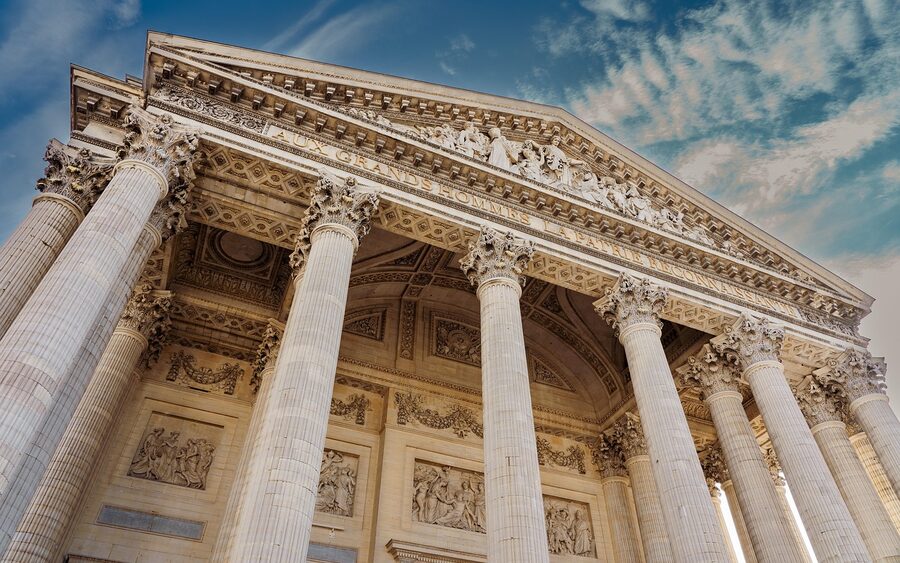
Marie Curie is buried in the Pantheon. So is Victor Hugo. And Voltaire. And Alexandre Dumas. And Josephine Baker. And about seventy other people whose contributions to France were so significant that the country decided they deserved to rest under a building originally designed as a church, then repurposed as a mausoleum, then converted back to a church, then turned into a mausoleum again.
France could not decide what the Pantheon was for. That indecision is part of its charm.
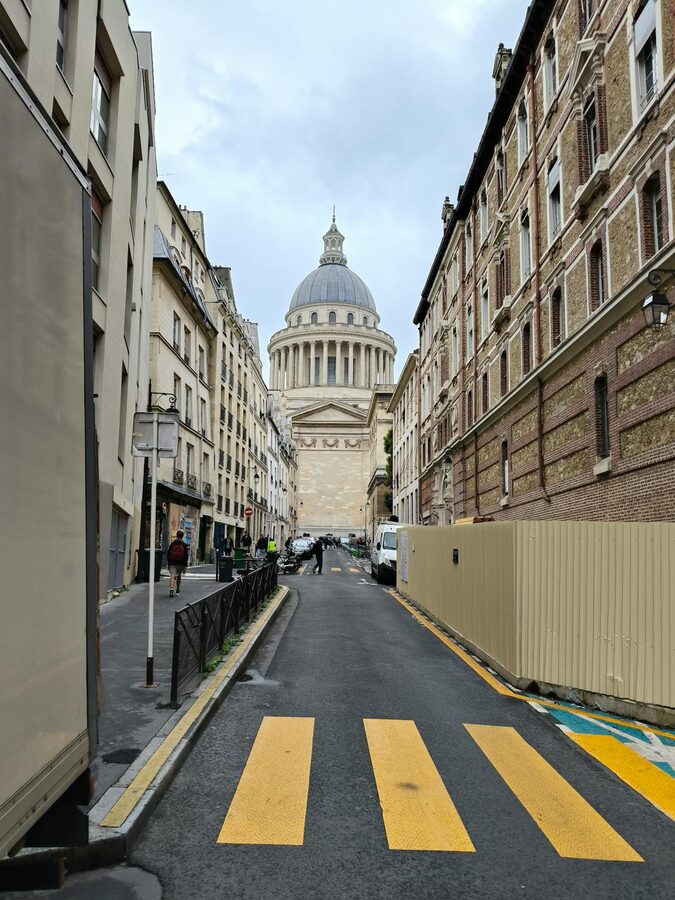
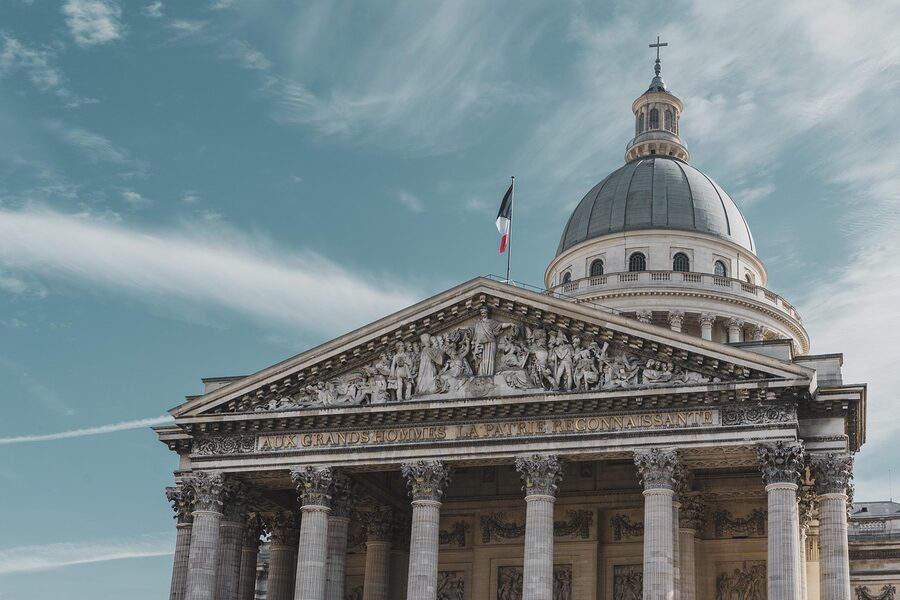
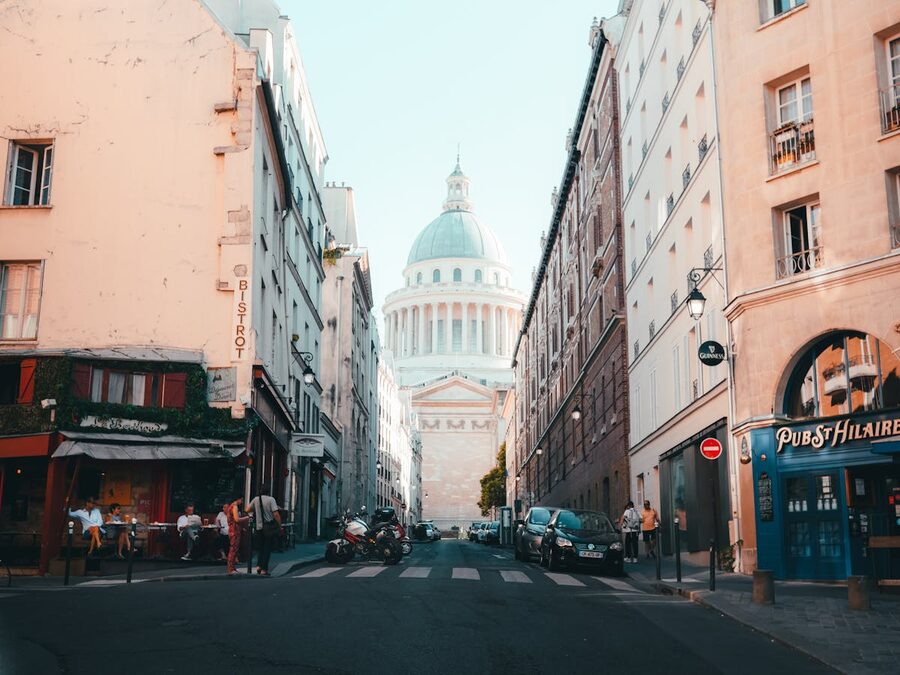
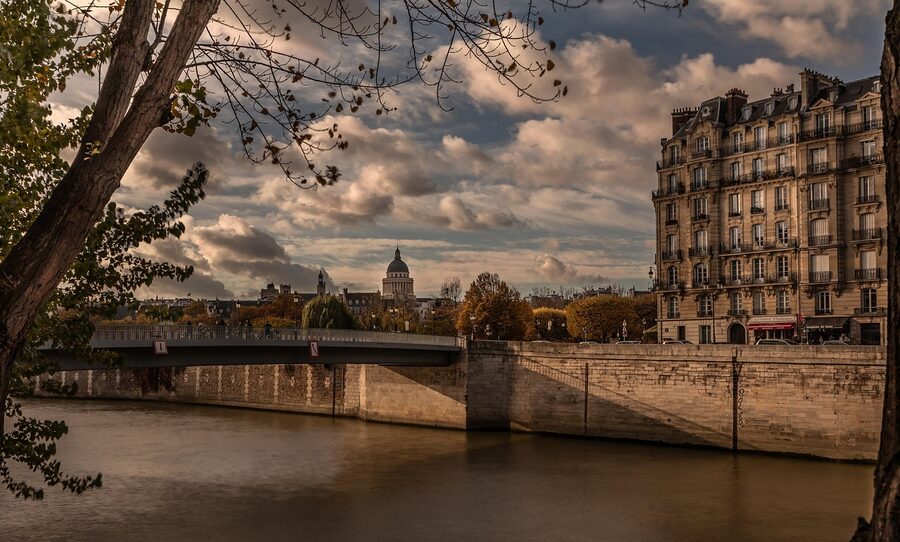
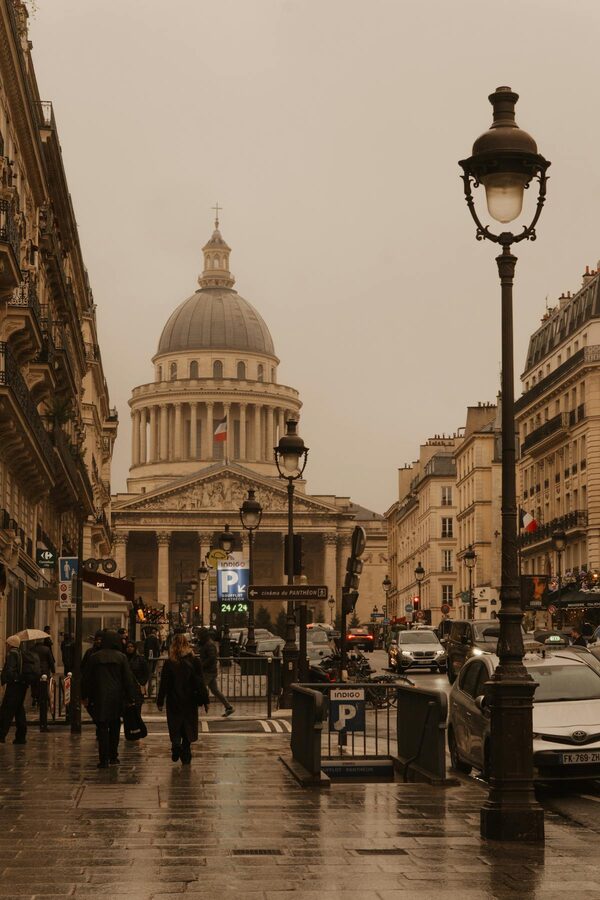
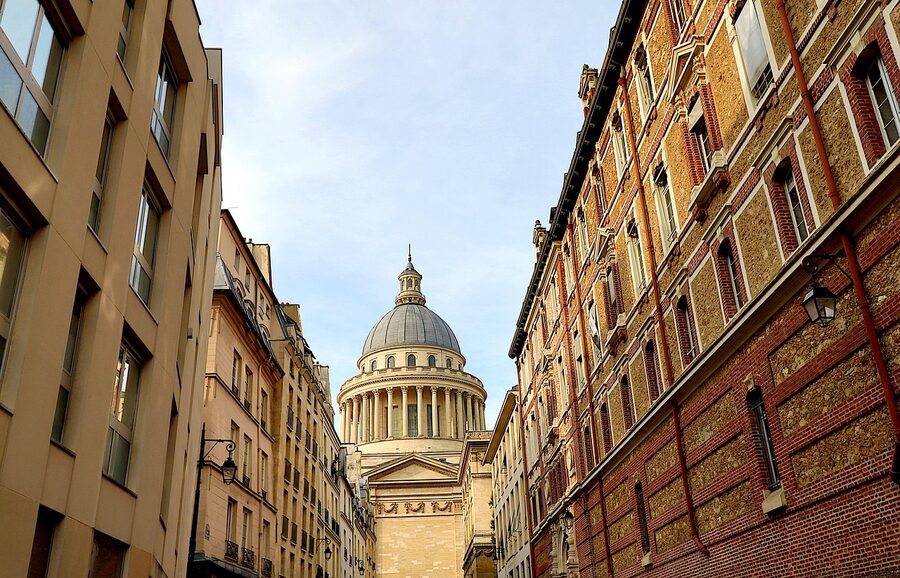
What makes the Pantheon worth a visit is the combination of architecture, history, and the slightly eerie atmosphere of the crypt. It sits on the highest point of the Left Bank, on a hill named after the patron saint of Paris, in the middle of the Latin Quarter. You can see the dome from half the city. And yet most travelers walk right past it on their way to the Luxembourg Gardens.
This guide covers how to get tickets, what you will see inside, and why the Foucault Pendulum alone is worth the 16 euros.
- Quick Picks — Pantheon Ticket Options
- How to Buy Pantheon Tickets
- Option 1: GetYourGuide Timed Ticket (Recommended)
- Option 2: Buy at the Door
- Option 3: Paris Museum Pass
- Free Entry
- What You Will See Inside
- The Main Hall
- The Foucault Pendulum
- The Crypt
- The Best Pantheon Tours and Tickets
- 1. Pantheon Admission Ticket —
- 2. Latin Quarter Walking Tour (12 People Max) —
- 3. Latin Quarter Walking Tour + Seine Cruise —
- The Pantheon’s History
- When to Visit the Pantheon
- Best Time of Day
- Best Day of the Week
- How Long to Spend
- Practical Tips
- Nearby Attractions
- More Paris Guides
- More Paris Monuments
Quick Picks — Pantheon Ticket Options
Best for the area: Latin Quarter Walking Tour (12 people max) — around $60, a guided walk through the Latin Quarter that includes the area around the Pantheon and connects it to the neighbourhood’s student history.
Best combo: Latin Quarter Walking Tour + Seine Cruise — around $42, covers the Pantheon neighbourhood and adds a river cruise. Good value if you want both in one booking.
How to Buy Pantheon Tickets
Entry to the Pantheon costs 16 euros from April through September, and slightly less in the winter months. The ticket includes everything — the main hall, the crypt, and any temporary exhibitions. You do not need to book a separate crypt ticket.
Option 1: GetYourGuide Timed Ticket (Recommended)
The GYG ticket at around $15 gives you reserved entry with a specific arrival window. This matters during summer, when the queue for walk-up tickets can stretch around the building. With the timed ticket, you bypass the main queue and walk straight in.
The booking also comes with free cancellation up to 24 hours before, which is useful if your plans shift.
Option 2: Buy at the Door
You can always buy tickets at the Pantheon’s ticket window on the day. In winter and on weekday mornings, the queue is manageable — 10 to 15 minutes. In summer, especially on weekends, expect 30 to 45 minutes. Cash and cards accepted.
Option 3: Paris Museum Pass
The Pantheon is included in the Paris Museum Pass. If you are also visiting the Louvre, Orsay, Versailles, and the Arc de Triomphe rooftop, the pass becomes good value. You still need to queue for entry with the pass, but the queue is shorter than the ticket-buying queue.
Free Entry
Free for everyone under 18. Free for EU residents aged 18-25. Free for everyone on the first Sunday of each month from November through March. If any of these apply, you save 16 euros and can spend it on lunch in the Latin Quarter instead.
What You Will See Inside
The Main Hall
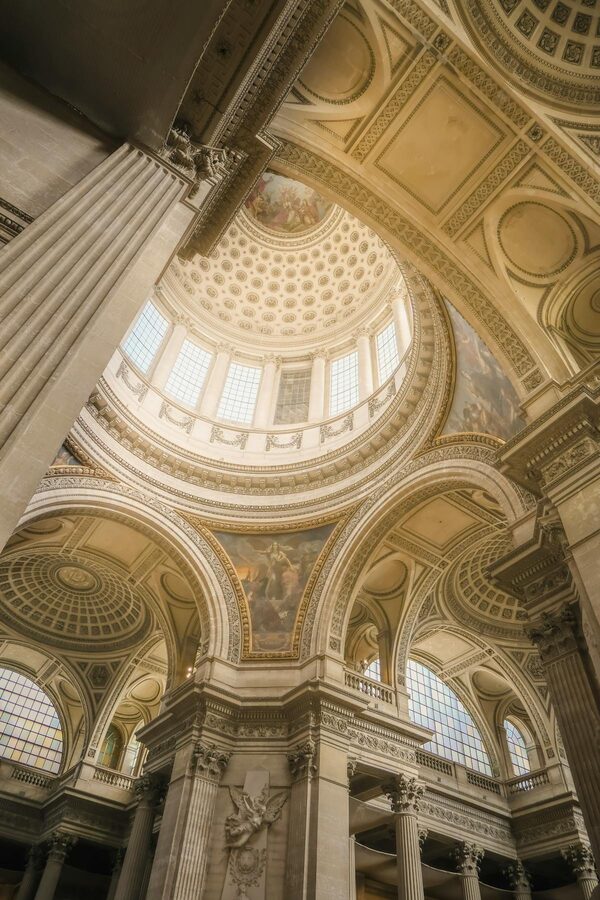
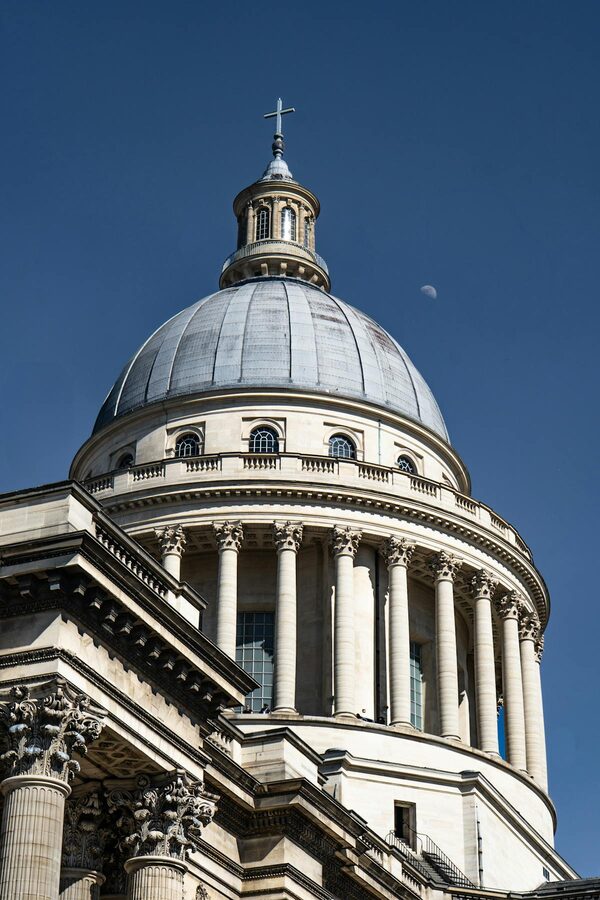
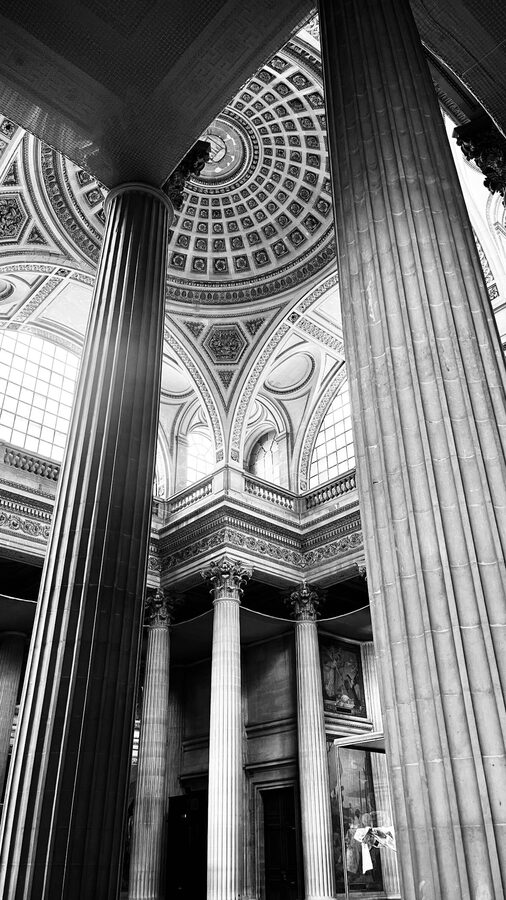
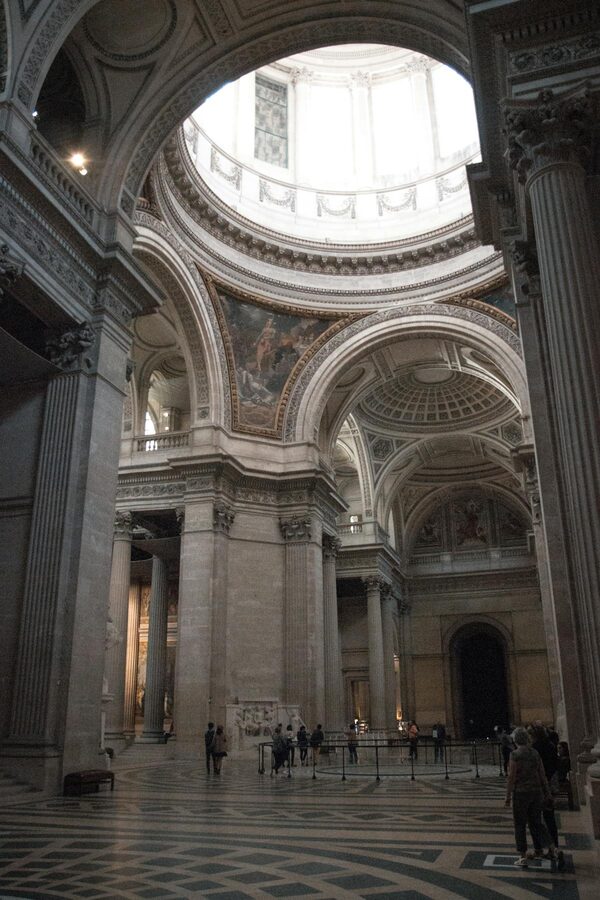
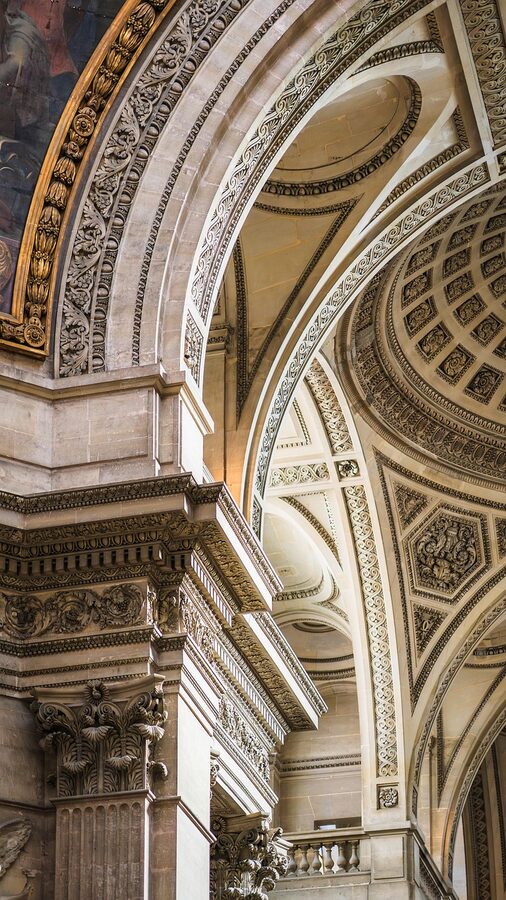
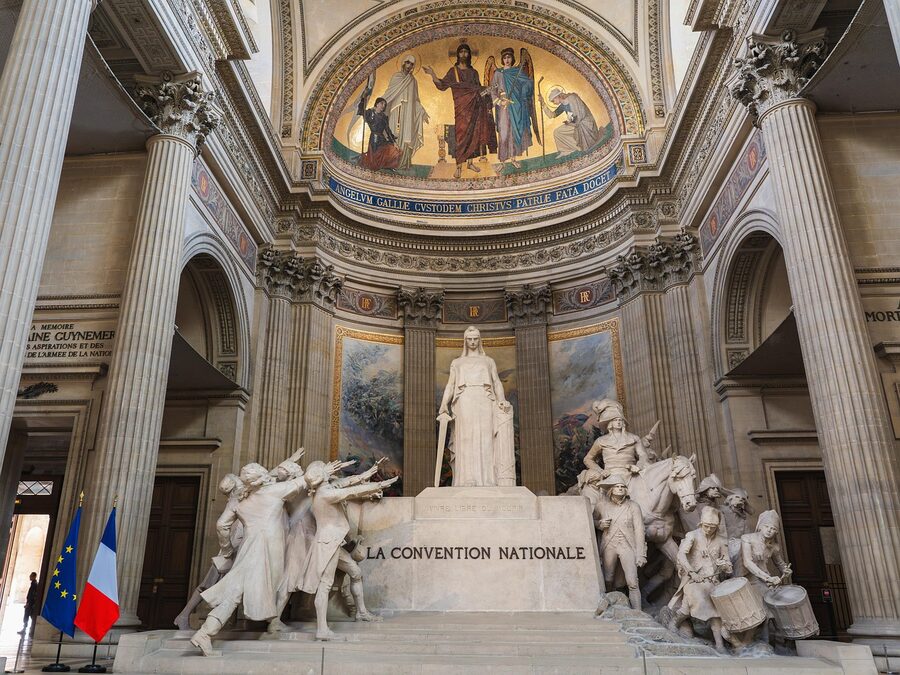
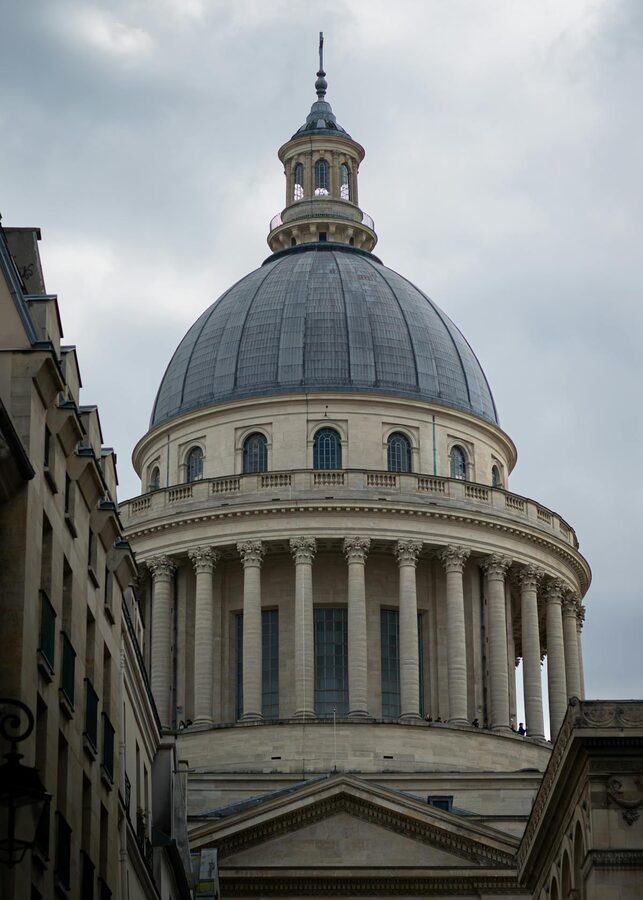
The interior is enormous — a Greek cross plan with a nave 110 metres long and a dome 83 metres high. The scale is cathedral-like but the atmosphere is completely different from a church. It feels more like a national museum dedicated to the idea of France itself.
The walls are covered in massive paintings depicting key moments in French history: the baptism of Clovis, Joan of Arc at Orleans, Charlemagne’s coronation. They were painted in the 19th century when the building was at its most politically symbolic, and they have a propagandistic grandeur that is equal parts impressive and over-the-top.
The Foucault Pendulum
In 1851, the physicist Leon Foucault hung a 67-metre pendulum from the centre of the dome to demonstrate that the Earth rotates. The experiment was public and caused a sensation — people could literally watch the plane of the pendulum’s swing shift over the course of an hour as the Earth turned beneath it.
A replica of the pendulum still hangs in the Pantheon today. It swings continuously, and a ring of pegs around the base is gradually knocked over throughout the day as the Earth’s rotation shifts the swing path. It is one of the most elegant science demonstrations ever devised, and watching it is oddly hypnotic.
The Crypt
The crypt is directly underneath the main hall and is where France’s most honoured citizens are buried. The atmosphere down here is cool, quiet, and surprisingly moving. Dimly lit stone corridors lead to individual alcoves and chambers, each marked with simple nameplates.
The big names:
Voltaire and Rousseau — facing each other across a corridor, which feels appropriate for two philosophers who spent much of their lives disagreeing.
Victor Hugo — whose funeral in 1885 drew two million mourners and was one of the largest public gatherings in French history.
Marie Curie — the first woman to be interred here on her own merits (1995), and the only person buried in the Pantheon who won two Nobel Prizes.
Alexandre Dumas — whose body was moved here in 2002, 132 years after his death, after a campaign arguing that the author of The Three Musketeers deserved national recognition.
Josephine Baker — the most recent addition (2021), the American-born French entertainer, resistance fighter, and civil rights activist.
The Best Pantheon Tours and Tickets
1. Pantheon Admission Ticket — $15
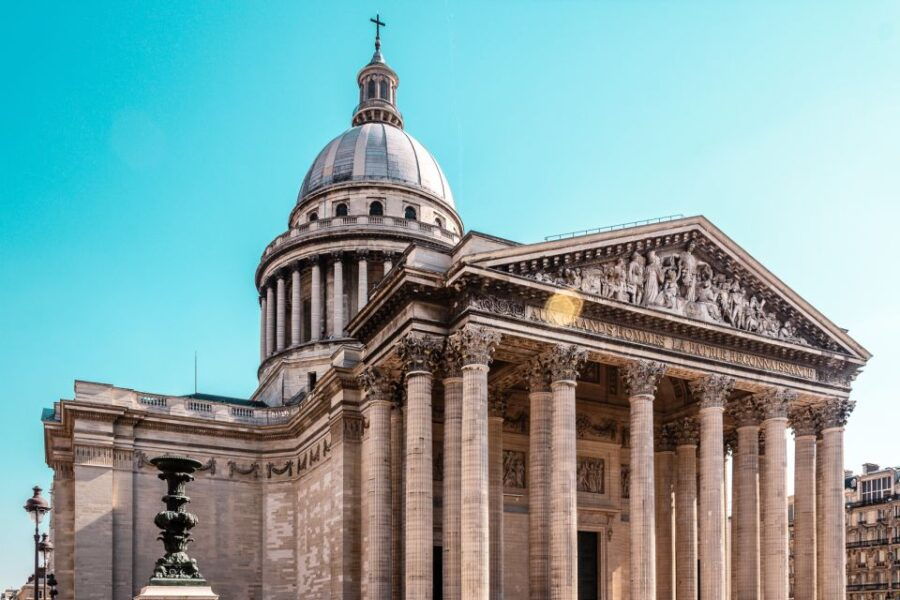
This is the standard admission ticket and the one I recommend for most visitors. It is a self-guided visit — no guide, no audio tour included — but the Pantheon is straightforward enough that you do not need one. The crypt has clear signage in French and English, and the main hall’s visual impact does not require explanation.
The skip-the-line element is the main selling point. During peak season, the walk-up ticket queue can add 30-45 minutes to your visit. With the timed entry, you walk past the queue and go straight through the security screening.
In short, interesting place, famous burials, worth the stop. The Pantheon is not the kind of attraction that demands a full morning — 45 minutes to an hour covers everything comfortably. It fits perfectly as a first stop before lunch in the Latin Quarter.
2. Latin Quarter Walking Tour (12 People Max) — $60
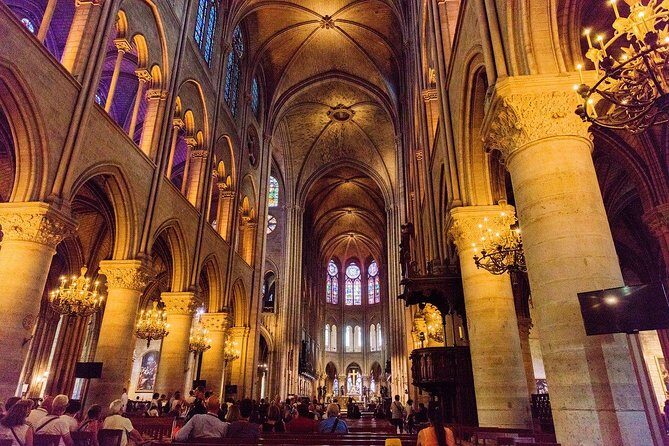
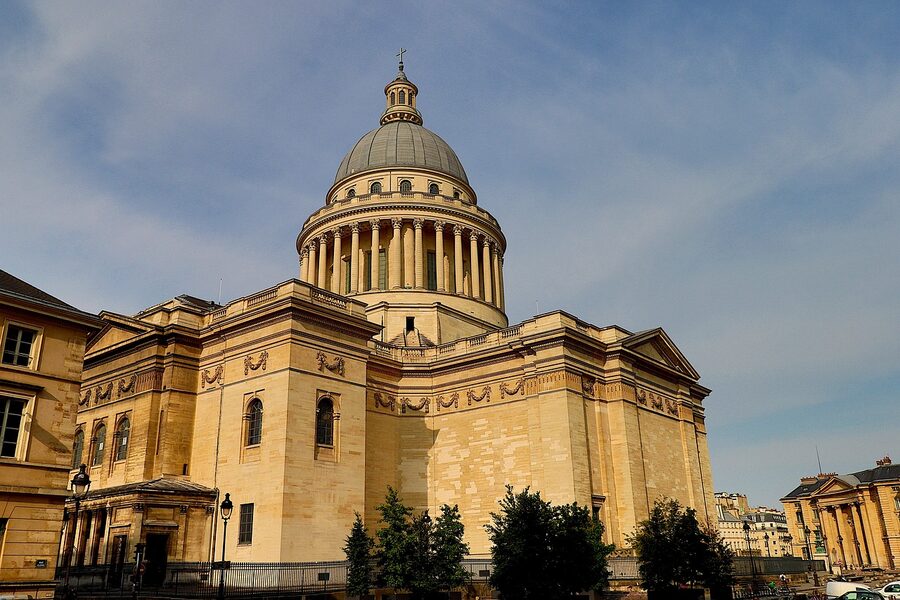
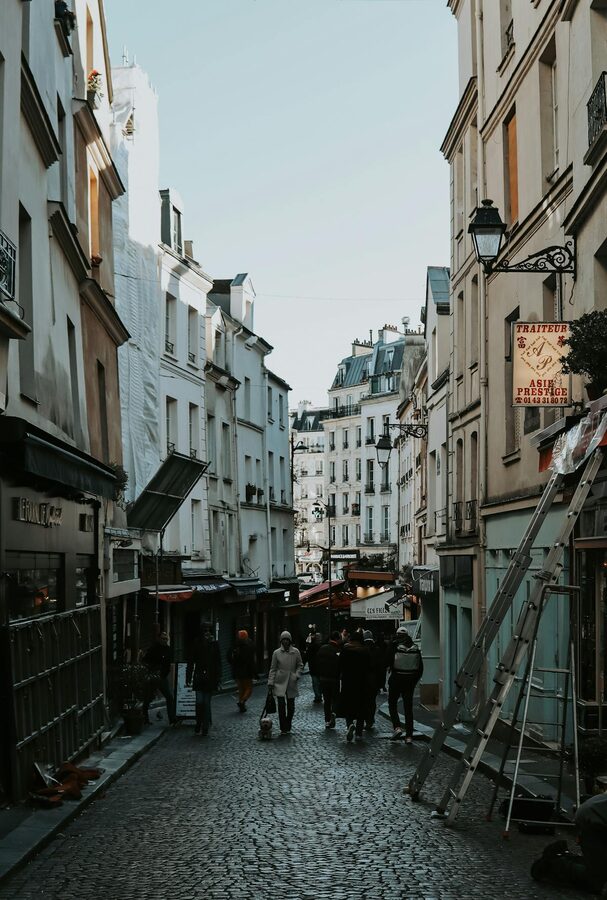
If you want context beyond just the Pantheon itself, this walking tour puts the building in the story of the Latin Quarter — the student riots, the medieval university, the bookshops, the cafe culture that produced existentialism. The group is capped at 12, which keeps things conversational.
The tour does not include Pantheon entry (you would add that separately), but it walks you through the surrounding streets and explains how this hilltop neighbourhood shaped French intellectual life for centuries. The Sorbonne, the Luxembourg Gardens, the Rue Mouffetard market — it all connects.
At $60 it is not cheap for a walking tour, but the small group size and the depth of the storytelling justify the price. This is especially good for first-time visitors to Paris who want to understand the Left Bank beyond the typical tourist circuit.
3. Latin Quarter Walking Tour + Seine Cruise — $42
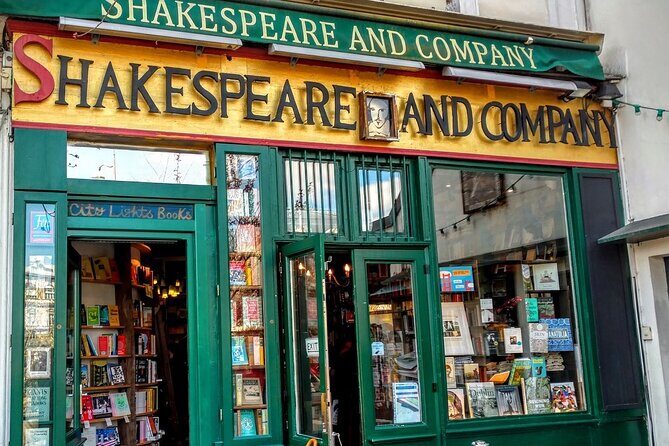
This combo tour gives you a guided walk through the Latin Quarter — passing the Pantheon area, the Sorbonne, and the medieval streets — followed by a Seine River cruise. The walking portion covers the intellectual and architectural history of the Left Bank, and the cruise adds the riverside landmarks.
At $42 for both elements, this is solid value. A standalone Seine cruise typically runs $20 on its own, so you are essentially getting the guided walk for $22 — which is cheaper than most Paris walking tours. The downside is that neither element is as in-depth as a dedicated experience. If you want a deep dive into the Latin Quarter, the $60 tour above is better. If you want a basic orientation plus a cruise, this works well.
The Pantheon entry is not included — add a $15 timed ticket to complete the set.
The Pantheon’s History
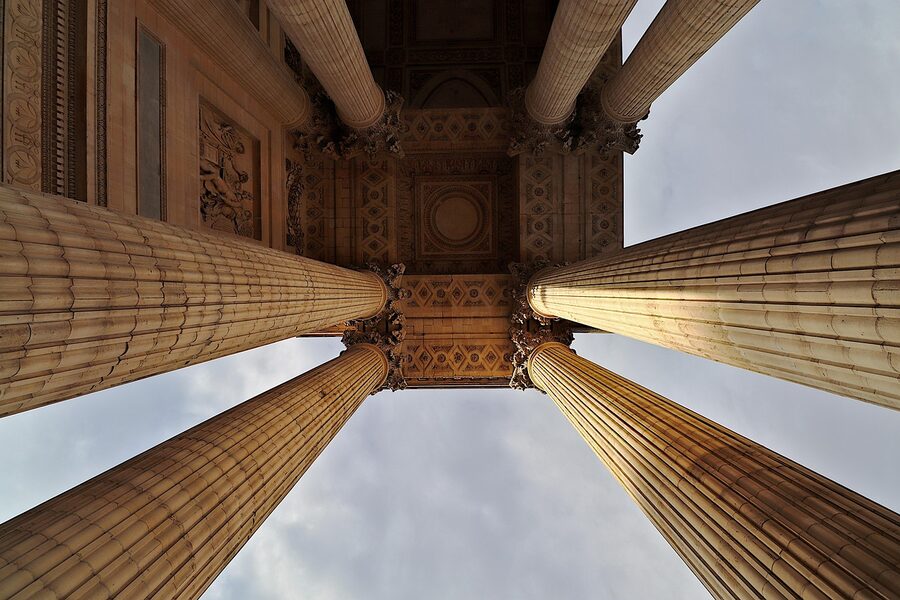
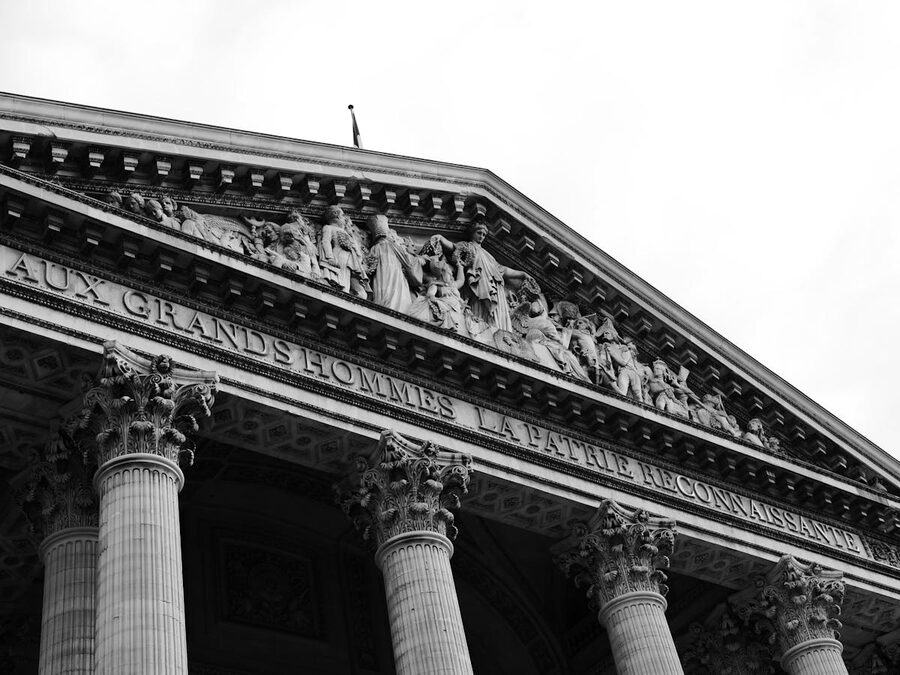
King Louis XV fell seriously ill in 1744 and vowed that if he recovered, he would replace the ruined church of Sainte-Genevieve with something worthy of the patron saint of Paris. He recovered. He hired the architect Jacques-Germain Soufflot. Construction began in 1758.
Soufflot died before the building was finished. His successor completed it in 1790 — just in time for the French Revolution to decide that a church dedicated to a saint was no longer appropriate. The National Assembly voted to convert it into a secular temple honouring France’s great citizens. Voltaire was the first to be interred there, in 1791.
Over the next two centuries, the building flip-flopped between church and mausoleum four times, depending on who was running France. Napoleon briefly gave it back to the church. The 1830 revolution took it back. Napoleon III gave it to the church again. The Third Republic finally settled the question in 1885 by declaring it permanently a civic monument when Victor Hugo was buried there.
When to Visit the Pantheon
Best Time of Day
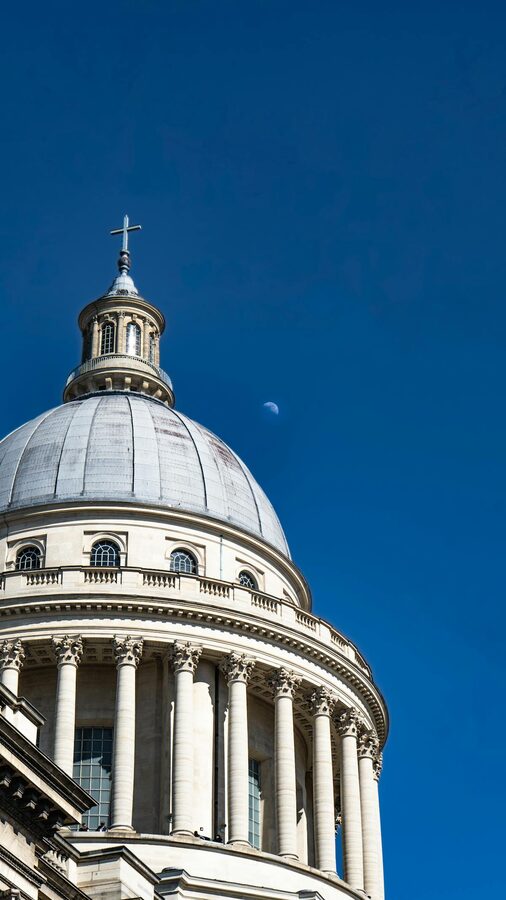
Morning. The Pantheon opens at 10am (April-September) and the first hour is reliably the quietest. By midday the tour groups arrive. Late afternoon (after 4pm) is a good second choice — the crowds thin out and the low sun through the high windows creates dramatic shadows across the floor.
Best Day of the Week
Weekdays are always quieter than weekends. The Pantheon sits in a university neighbourhood, so the streets are liveliest (and the cafes most interesting) during the academic year on weekdays. If you visit on a Saturday, combine it with the Luxembourg Gardens next door — the gardens are at their best on weekends when Parisian families take them over.
How Long to Spend
45 minutes to 1 hour covers everything comfortably. 30 minutes if you just want the highlights (Foucault Pendulum, a quick loop through the crypt). Add 15 minutes if there is a temporary exhibition.
Practical Tips
Address: Place du Pantheon, 75005 Paris
Metro: Cardinal Lemoine (Line 10) or Luxembourg (RER B) are both a 5-minute walk. Maubert-Mutualite (Line 10) is also close.
Hours: 10am-6:30pm April-September. 10am-6pm October-March. Last entry 45 minutes before closing. Closed January 1, May 1, December 25.
Dome access: Seasonally available (April-October, weather permitting). Check at the ticket desk on the day — it is not guaranteed and is not included in the standard ticket. When available, it costs a small supplement and offers panoramic views of Paris that rival the more famous viewpoints.
Photography: Allowed everywhere, including the crypt. No flash. The interior is bright enough for phone cameras. The Foucault Pendulum is best photographed from above (the gallery level) if you can access it.
Accessibility: The main hall is wheelchair accessible via a ramp. The crypt has lift access. The dome is stairs only.
Nearby Attractions
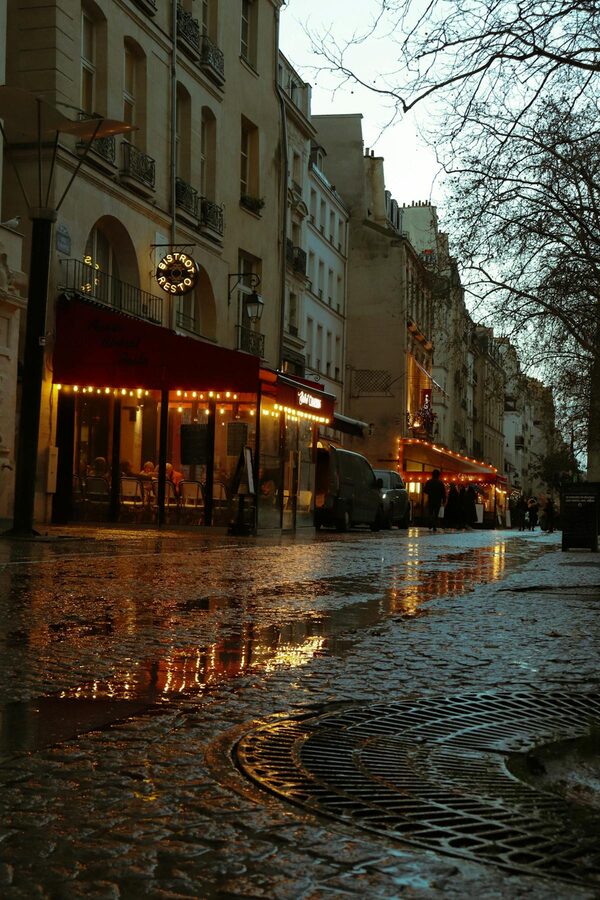
The Pantheon sits in one of the best walking neighbourhoods in Paris. Everything listed below is within 10 minutes on foot.
Luxembourg Gardens: Right next door. The second-most-beautiful park in Paris (after the Tuileries, in my opinion). Benches, fountains, the Medici Fountain, and in autumn some of the best leaf colour in the city. Free entry.
Sainte-Genevieve Library: Across the square from the Pantheon. One of the most photogenic reading rooms in Europe — the iron and glass ceiling is spectacular. Free entry, but you need to register at the desk.
Notre Dame Cathedral: A 10-minute walk downhill. The Pantheon and Notre Dame bookend the Ile de la Cite from opposite directions — one secular, one sacred, both essential Paris.
Musee de l’Orangerie: A 20-minute walk through the Luxembourg Gardens and across the river. If the Pantheon’s grandeur leaves you wanting something intimate, Monet’s Water Lilies are the perfect contrast.
More Paris Guides
The Pantheon is the perfect starting point for a Left Bank day in Paris. From here you can walk to Notre Dame in one direction, the Orangerie in another, or the Orsay Museum along the river. If you are working through the major Paris landmarks, our Louvre guide and Arc de Triomphe guide cover the Right Bank essentials. And for an evening to round out a day that started at the Pantheon, a Seine dinner cruise passes the Left Bank landmarks you have been walking past all day — seeing them from the water at night is a completely different experience.
More Paris Monuments
The Pantheon joins a cluster of Paris monuments worth combining. The Pere Lachaise Cemetery is the other great resting place of French luminaries. The Conciergerie is where Revolutionary justice was dispensed. And the Basilique Saint-Denis holds the royal tombs.