
One guide can change your whole Istanbul day.
This private tour is built around a licensed local guide and lots of on-foot time in the UNESCO Historic Areas, with chances to tailor the pace to your interests. It’s a smart way to hit the big names—Hagia Sophia, Blue Mosque, Topkapi, Grand Bazaar—without trying to decode the city map while you’re jet-lagged.
I love the way the route groups sites logically, so the story of Constantinople and the Ottoman Empire makes sense as you move. I also like that you can extend from 1 day to 2 or 3 for added neighborhoods and viewpoints like Balat-Fener and Pierre Loti. One consideration: museum and transit tickets aren’t included, so you’ll want to budget extra time and money for places like Topkapi, Dolmabahce, the Bosphorus ferry, and Chora Museum.
- Key highlights worth planning for
- Why this private Istanbul format works
- Meeting your guide: hotels, German Fountain, and optional van help
- Day One in Sultanahmet: Hagia Sophia, Blue Mosque, and the Grand Bazaar route
- Day One market time: Spice Market, Egyptian Bazaar, and Cicek Passage
- Day Two on the Bosphorus: public ferry views plus Dolmabahce Palace
- Day Two city center energy: Taksim Square and an outside look at Galata Tower
- Day Three for texture: Süleymaniye, Balat-Fener, and the Golden Horn
- Chora mosaics and the Iron Church: museum time that feels worth it
- Pierre Loti cable car views: end the day with a slope and a view
- Price and ticket reality: what 0 covers and what you’ll pay yourself
- Timing tricks: closures, late starts, and avoiding the worst lines
- Practical advice that makes the day easier
- Who this tour is best for
- Should you book this Istanbul private guided tour?
- FAQ
- How long is the Best of Istanbul private guided tour?
- Is this tour private or shared?
- Does the tour include pickup from my hotel?
- Are entrance tickets included for all sights?
- Does the guide help with queues at Hagia Sophia and Galata Tower?
- What time should I start to reduce delays at Hagia Sophia?
- What happens if a sight is closed?
- Is there a Bosphorus cruise included?
- If I start late, will I still see everything?
- The Best Of Istanbul!
- More Guided Tours in Istanbul
- More Tours in Istanbul
- More Tour Reviews in Istanbul
Key highlights worth planning for
- Private guide + walking-first Old City so you actually understand what you’re looking at
- Flexible 1, 2, or 3 days lets you match Istanbul to your energy level
- Bosphorus option on day two using a public ferry for an easy, scenic format
- Multiple photo-and-story stops from the Hippodrome to Pierre Loti cable car views
- Timing tips for long security lines at Hagia Sophia (aim for early departures)

👉 See our pick of the We Rank The 4 Best Photography Experiences In Istanbul
Why this private Istanbul format works
Istanbul can be overwhelming fast. This tour keeps you from wandering in circles by putting your time into the areas that connect naturally—Old City monuments first, then shopping streets, then Bosphorus, then Golden Horn neighborhoods.
The best part is how a guide turns landmarks into a storyline you can carry all trip. You’re not just collecting photos of domes and minarets. You learn what changed over centuries, why certain places matter, and what to notice while you’re standing right there. And because it’s private, you set the rhythm instead of getting dragged along at group speed.
You can also read our reviews of more guided tours in Istanbul

Meeting your guide: hotels, German Fountain, and optional van help
Pickup is one of those details that can make or break your first morning. If you don’t book a van, your guide meets you at a centrally located hotel or at Galataport on foot. If your hotel isn’t central or reachable by public transportation, the meeting point becomes German Fountain (Alman Çeşmesi)—so plan to start near Sultanahmet or be ready for a short walk/tram/funicular connection before you meet up.
If you do book private van service, pickup can be arranged from central hotels, but there’s a surcharge if your hotel is outside the city center or on the Asian side. The good news: the route is designed so that without a van, you can still move around using public transit like trams, funiculars, and ferries.
Day One in Sultanahmet: Hagia Sophia, Blue Mosque, and the Grand Bazaar route
Day one is where you get your bearings fast. You begin in the Sultanahmet area, working through the Historic Areas where Istanbul’s story layers Roman, Byzantine, and Ottoman chapters on top of each other.
You’ll stop by the Hippodrome area (Atmeydanı), including the remnants visitors recognize from earlier empires: the Egyptian Column and the German Fountain. These are short stops on paper, but they help you understand why this neighborhood became the ceremonial center. From there, you move through Sultanahmet Square, then into the heavyweight matches.
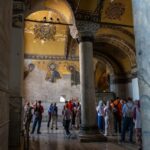
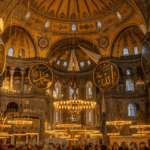
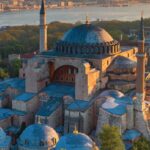
The big moment is Hagia Sophia / Ayasofya. It’s described as built in the 6th century by Emperor Justinian, then changed hands over time—church to mosque to museum to mosque again. One practical snag: because it’s not operating like a museum right now, guide skip-the-line priority isn’t guaranteed. The tour suggests leaving for the area around 8:30am or 9:00am to help avoid slowdowns from security lines.
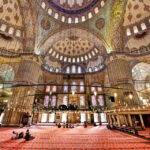
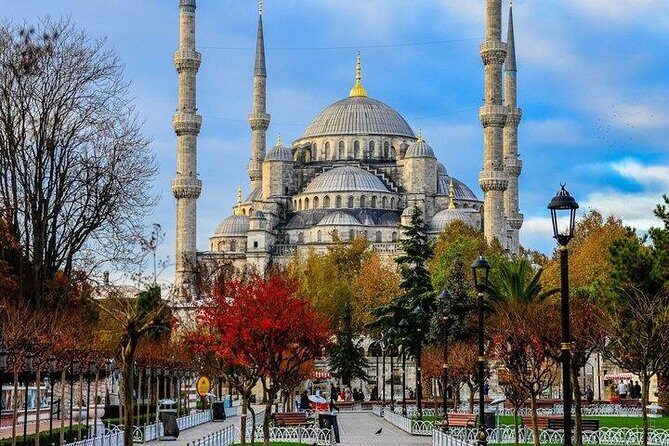
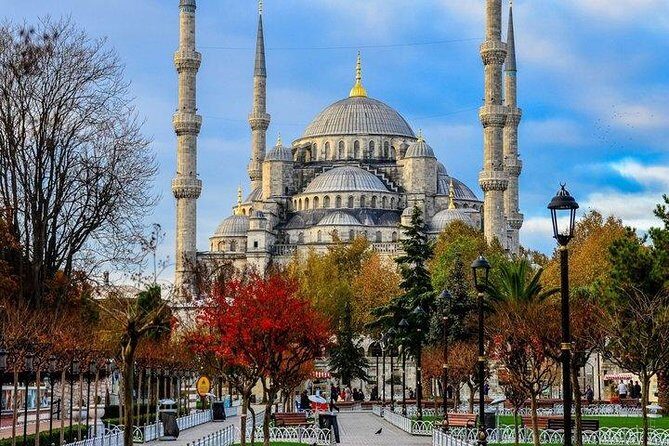
Next is the Blue Mosque. You’ll see why it became an Ottoman masterpiece: built in the early 1600s, with delicate proportions for a structure that feels massive in person. After that, you shift into the market world with the Grand Bazaar. Even if you don’t plan to buy, this is where the city’s daily energy shows up: thousands of shops under one roof, with ceramics, leather, rugs, carpets, handicrafts, and metals.
Two scheduling notes help here. Grand Bazaar is closed on Sundays and is replaced with Spice Market. And Topkapi Palace is closed on Tuesdays, so you’ll see alternatives on those days (more on that below).
Day One market time: Spice Market, Egyptian Bazaar, and Cicek Passage
Markets here aren’t just for shopping. They’re a “learn by walking” tool. After the Old City highlights, you’ll see the contrast: religious monuments and imperial architecture on one side, then the everyday commerce that keeps the city moving.
If Grand Bazaar isn’t available, you’ll likely end up at Spice Market (Mısır Çarşısı) in Eminönü. Expect an indoor bazaar packed with spices, flavored teas, Turkish delight, nuts, and small souvenirs. Because it sits where the Bosphorus meets the Golden Horn region, it also makes a convenient pivot point if you’re heading toward ferry crossings later.
On the modern side of the tour you may also hit İstiklal Street and Çiçek Passage (Flower Passage). İstiklal Street is the colorful, public-facing spine of modern Turkey—churches, art galleries, embassies, cafes, pubs, and shops. Çiçek Passage is smaller, calmer, and very “eat-and-wander” friendly, with little cafes and shops packed into a short stretch.
Day Two on the Bosphorus: public ferry views plus Dolmabahce Palace
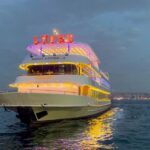
If you choose a second day, Istanbul stops being a museum walk and starts becoming a water-and-city panorama. The tour includes a Bosphorus cruise by public ferry (or a private cruise option if selected).
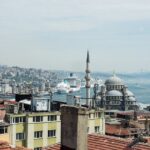
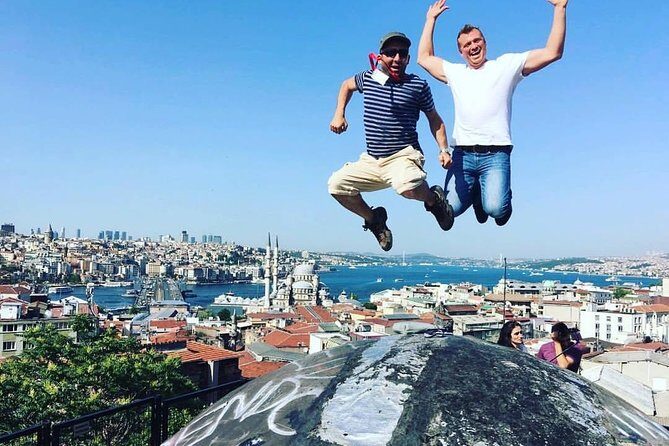
I love this approach because a ferry gives you wide views without requiring you to commit to a full-day boat setup. You’ll see both the European and Asian sides, plus the Galata Tower area, Dolmabahce and Beylerbeyi palaces from the water, the Rumeli Fortress, old Ottoman villas, the Bosphorus bridges, and plenty of waterfront mosques. Even if you’re not into boats, it’s one of the cleanest ways to get a visual map of Istanbul.
After the ferry, you go to Dolmabahce Palace. The tour describes it as luxury-heavy—chandeliers, rugs, crystals, ceramic fireplaces—built on the Bosphorus with gorgeous furnishings and artworks. One important consideration: Dolmabahce Palace is closed on Mondays, and due to museum regulations, live guide service isn’t available inside on scheduled visits. Translation: you’ll still see it, but your guide’s role may shift to explanations you can get before or around the visit.
You can also read our reviews of more private tours in Istanbul


Day Two city center energy: Taksim Square and an outside look at Galata Tower
On day two, you’ll also see parts of modern Istanbul so the trip doesn’t feel stuck in the past. Taksim Square is the big junction, with a sense of the modern republic’s public life and major streets branching out from there.
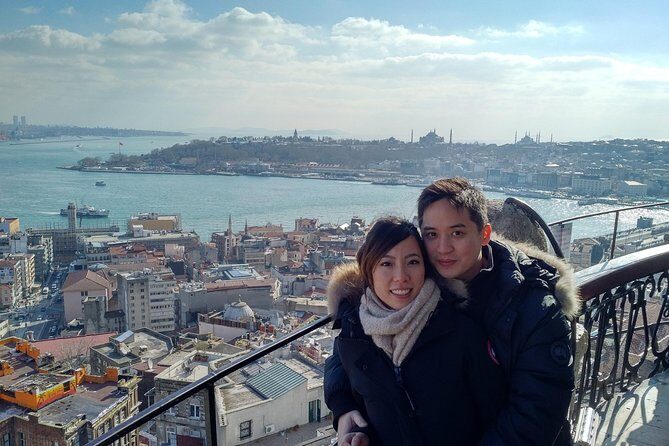
From Taksim, you can connect to İstiklal Street again, plus nearby spots like Çiçek Passage for food and coffee stops. And the tour includes a look at Galata Tower from the outside, with the guide explaining what to notice. If you’re tempted to go inside, be aware that guides don’t have skip-the-line priority for Galata Tower, so it can mean extra waiting.
Day Three for texture: Süleymaniye, Balat-Fener, and the Golden Horn
A third day is for people who want more than the famous postcard hits. It’s where Istanbul gets more layered at street level—steep lanes, religious buildings, and neighborhoods that feel less like a checklist.
You’ll start with Süleymaniye Mosque, described as Istanbul’s largest mosque, with impressive views from the terrace behind it over the Golden Horn and Bosphorus. Inside is where you’ll feel the scale and calm, and outside is where you get the composition: the mosque as a centerpiece over a city that refuses to be flat.
Then comes Balat and Fener, a backstreet walk through steep streets lined with Ottoman-era houses and laundry drying across windows. The tone here is different. You’re not shopping for souvenirs first; you’re walking through everyday religion and community life—plus the art galleries and design shops that dot the area.
The tour includes stops linked to Orthodox Christian history, including the Church of St. George and Fener Rum Patrikhanesi (Orthodox Patriarch). These are not just “look, a church.” They’re part of the spiritual geography of the city, and a good guide helps you see how institutions connect across time.
Chora mosaics and the Iron Church: museum time that feels worth it
Day three also adds two high-impact stops on the Golden Horn side. Chora Museum (formerly the Church of St. Saviour in Chora) is known for well-preserved mosaics and frescoes. The description calls out the depth and style of figures, and its importance as East Roman painting from the last period, with artwork that foreshadows later Renaissance approaches.
Another standout is St. Stephen Church, also called the Bulgarian Orthodox Church and nicknamed the Iron Church because it’s made entirely of prefabricated cast iron in the 19th century. From a value standpoint, these are exactly the kinds of sights that separate a guided visit from wandering alone: someone helps you look at small details instead of just moving on.
If any museums or mosques can’t be visited on your schedule, the tour includes Basilica Cistern as a replacement. That’s a useful backstop, because it means you don’t lose the day to closures.
Pierre Loti cable car views: end the day with a slope and a view
To cap things off, you head to Pierre Loti Hill for the cable car ride. This is a scenic finish, the kind of stop that lets your brain cool down after dense sightseeing. The tour suggests you enjoy the view while sipping something simple like Turkish coffee or tea—no fancy plan required, just time to look.
It’s also a practical end point. By the time you’re at Pierre Loti, you’ve already covered Sultanahmet monuments, Bosphorus water views, and Golden Horn neighborhoods. So even if you’re tired, you still get a payoff that feels like a reward.
Price and ticket reality: what $100 covers and what you’ll pay yourself
The price is $100 per person for a private guided experience, with total time running about 7 to 21 hours depending on your choice of 1, 2, or 3 days. For Istanbul, that price can feel like a deal if you plan to visit multiple paid sights and you value a guide who handles timing and route flow.
But the important part is honesty about what’s included. The tour includes a private licensed guide, pickup from central hotels (or on-foot meeting at German Fountain when needed), and the guided experience itself. It does not include museum tickets, ferry tickets, cable car tickets, or meals and transportation between sites unless van service is booked.
So your real budget is a mix: guide cost plus the entrance/transit costs set by each venue. The earlier you start and the more smoothly you follow the suggested timing, the more of your money becomes “time well used” instead of “waiting around.”
Timing tricks: closures, late starts, and avoiding the worst lines
Istanbul operates on its own calendar. A few specifics matter because they change what you can realistically see in a day:
- Topkapi Palace is closed on Tuesdays, so you’ll swap in alternatives like Turkish and Islamic Arts Museum, Archaeological Museum, or Basilica Cistern.
- Grand Bazaar is closed on Sundays, replaced by Spice Market.
- Dolmabahce Palace is closed on Mondays, and live guide service isn’t available there due to regulations.
- Blue Mosque timing shifts on Fridays, when it’s visited in the afternoon.
- If you start later than 11am, some sites may be off-limits by 7pm, so your guide adjusts based on your priorities.
One more timing tip stands out. For Hagia Sophia, guides don’t have skip-the-line priority and you may need to clear security lines. The tour specifically suggests departures around 8:30am or 9:00am to reduce queue pain.
Practical advice that makes the day easier
This is a walking-heavy experience on the first day, with shorter transfers mainly between the hotel area and Old Town if you’re staying outside the core. You’ll want comfortable shoes. You’ll also want a flexible mindset: markets and monuments both involve crowds and lines, so a guide’s pacing helps you keep your energy for the meaningful moments.
Lunch isn’t included. That’s fine—just plan a meal break when the route naturally allows it, especially around busy areas like Taksim, İstiklal, and the market districts. And when shopping for ceramics, rugs, or metals, slow down. Look for quality and compare pieces, because “same-looking” items can vary a lot in materials and craftsmanship.
Who this tour is best for
This is a strong fit if you’re:
- Visiting Istanbul for the first time and want a guided path that makes history feel connected
- Tight on time but still want the big monuments plus markets and viewpoints
- Traveling with kids, friends, or family who benefit from pacing and a guide who can adapt to your energy
It’s also a good choice if you like cities more when they’re explained, not just photographed. Istanbul rewards curiosity. A private guide helps you ask better questions and notice more than you’d find on your own.
If you hate walking, or you want totally free-form wandering with no scheduled stops, you might prefer something lighter. Even then, you could still pick the 1-day option and keep your expectations realistic.
Should you book this Istanbul private guided tour?
I’d book it if you want a practical plan that covers the key Istanbul zones without leaving you to figure out logistics while you’re tired. The private format, guide storytelling, and the option to add Bosphorus and Golden Horn neighborhoods make it good value when you compare it to paying for sights one by one with no structure.
I’d think twice if you hate ticket budgeting or you want every stop to be fully included and stress-free. The tour is still excellent, but it’s not a “everything is paid and timed for you” package. Bring a little planning energy, follow the early timing advice, and you’ll get a trip that feels like Istanbul is explaining itself to you.
FAQ
How long is the Best of Istanbul private guided tour?
The total duration runs from about 7 to 21 hours depending on whether you book the 1-day, 2-day, or 3-day option.
Is this tour private or shared?
It’s private. Only your group participates.
Does the tour include pickup from my hotel?
Yes. The guide meets you at centrally located Istanbul hotels. If you didn’t book van service and your hotel isn’t centrally located or accessible by public transportation, the meeting point is the German Fountain area or Galataport on foot.
Are entrance tickets included for all sights?
No. Museum tickets, ferry tickets, and cable car tickets are not included. Some notable stops are listed as free, but major visits like Topkapi Palace and Dolmabahce Palace have admission tickets not included.
Does the guide help with queues at Hagia Sophia and Galata Tower?
Not fully. For Hagia Sophia, the guidance says you may need to wait in the security line and tour guides don’t have skip-the-line priority. For Galata Tower, tour guides don’t have skip-the-line priority either.
What time should I start to reduce delays at Hagia Sophia?
The tour suggests departing around 8:30am or 9:00am to help avoid queues and reduce waiting.
What happens if a sight is closed?
The tour notes scheduled closures and replacements. For example, Topkapi Palace is closed on Tuesdays, Grand Bazaar is closed on Sundays, and Dolmabahce Palace is closed on Mondays. If a mosque or museum can’t be visited, Basilica Cistern is offered as a replacement.
Is there a Bosphorus cruise included?
If you choose the second day, yes. It’s a Bosphorus cruise by public ferry (or by private cruise if that option is selected). Tickets for the cruise are not included.
If I start late, will I still see everything?
Not always. For tours starting later than 11am, the tour warns you may need to skip one or a couple of sites because places close by 7pm. Your guide adjusts the schedule based on your priorities.