Temple-hopping Kyoto in one day is the whole point. This Perfect Kyoto bus tour turns planning into a timed route, with a professional guide on board and multilingual audio so you can follow along even when your Japanese skills are still loading. You’ll hit UNESCO-listed favorites and classic city views without wrestling transit connections.
What I like most is the combination of a comfortable coach (air-conditioned, with onboard WiFi) and the fact that major temple admissions are included for multiple stops. I also like that guides such as Sakura, Mai, Nagomi, Hiroko, and At-Chan get name-checked for keeping the day organized and lively. One real consideration: it’s a long, active day with walking, hills, and stairs, plus you’re on a set schedule in very crowded places.
- Key highlights at a glance
- A smooth start from Kyoto Avanti (and why that matters)
- Kiyomizu-dera: hilltop views and a classic Kyoto morning
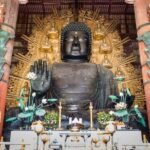
- Sanjusangendo’s 1,001 Kannon statues: short stop, big impact
- Arashiyama lunch break: a reset before the bamboo corridor
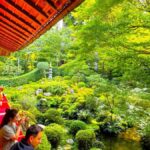
- Bamboo Forest Trail and Tenryu-ji: photos plus a garden breather
- Kinkaku-ji’s Golden Pavilion and the return pass by Nijo Castle
- Fushimi Inari Taisha: the torii gates moment you actually remember
- Pace, crowds, and how to avoid the sprint feeling
- Guides on board: the human part that makes it work
- Price and value: 9.25 for a packed “all-in” temple day
- Who should book this Perfect Kyoto 1-Day tour
- Should you book this tour or go it alone?
- FAQ
- What time does the tour start?
- Where do I meet the group?
- Where does the tour end?
- How long is the tour?
- Are temple admission tickets included?
- Is lunch included?
- What languages are available on the bus?
- Is the bus comfortable and does it have WiFi?
- Can I cancel for a full refund?
- Does this tour require walking?
- The Best Of Kyoto!
- More 1-Day Tours in Kyoto
- More Tours in Kyoto
- More Tour Reviews in Kyoto
Key highlights at a glance
 1 / 8
1 / 8 2 / 8
2 / 8 3 / 8
3 / 8 4 / 8
4 / 8 5 / 8
5 / 8 6 / 8
6 / 8 7 / 8
7 / 8 8 / 8
8 / 8- Big Kyoto hits without planning: a tight route covering hilltop temples, bamboo, the Golden Pavilion, and torii gates
- Admissions are built in: tickets included for Kiyomizu-dera, Sanjusangendo, Tenryu-ji, and Kinkaku-ji
- Multilingual support: English-speaking guide plus audio available in multiple languages on the bus
- Arashiyama bamboo time for photos: a short walk through the bamboo forest trail toward Tenryu-ji
- Group lines can save time: the tour structure can help you access sites more efficiently than going solo
- A bus day that feels smoother: many people praise how well the schedule flows and how guides keep you moving
👉 See our pick of the We Rank Kyoto’s 15 Top Tours & Experiences
A smooth start from Kyoto Avanti (and why that matters)
The day starts at Tully’s Coffee at Kyoto Avanti (Kyoto Avanti Japan), with the tour typically beginning at 7:50 am. Meeting there is useful because it’s easy to find and it keeps you from starting your day already stressed about transit.
This tour is also set up for comfort. You’re in an air-conditioned coach with WiFi onboard, and there’s a professional English-speaking guide plus multilingual audio guidance on the bus. In other words, you’re not guessing what you’re looking at while you’re tired.
One small but meaningful detail: this is a max 42-person tour, so it’s large enough to be efficient, but not a giant crowd on the bus.
You can also read our reviews of more tours and experiences in Kyoto
Kiyomizu-dera: hilltop views and a classic Kyoto morning
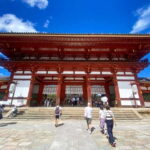
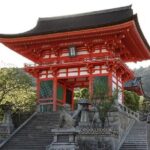
Your first major stop is Kiyomizu-dera Temple (about 1 hour, admission included). It sits on the Higashiyama hill, which is exactly why it’s so famous: you’re not just seeing buildings, you’re getting that panoramic sense of Kyoto spreading out around you.
The vibe here is part sightseeing, part atmosphere. Expect stairs and some uphill walking as you move through the grounds, and expect it to be crowded—this is one of the “everyone comes here” temples.
What to do to enjoy it more: go slow at the viewpoints and don’t feel you have to see every corner instantly. A lot of people get rushed because the day is packed, but Kiyomizu rewards a calmer pace if you can manage it.
Sanjusangendo’s 1,001 Kannon statues: short stop, big impact
Next up is Sanjusangendo Temple (about 40 minutes, admission included). This stop is all about the main hall’s 1,001 Senju Kannon statues—an unusual, very specific Kyoto experience. Instead of one iconic structure, you’re surrounded by repeating forms that create a “whole wall of devotion” effect.
Forty minutes isn’t long, but it’s usually enough time to understand what you’re seeing and get a few good photos without feeling stuck.
Watch the time here: Sanjusangendo is a quick hit, so if you want extra time for photos, you’ll have to be decisive. The payoff is that it’s one of those places where the short visit still feels meaningful.
Arashiyama lunch break: a reset before the bamboo corridor
Then you get your lunch break in Arashiyama (about 50 minutes). If you select the lunch option, it’s a Japanese-style buffet with local foods, and the lunch is noted as the same for vegetarians. Some dates (April 14 and 16, 2026) switch lunch to a set meal instead of buffet, so plan around that if your travel overlaps.
Arashiyama is also where you start noticing the “seasonal Kyoto” effect—especially around bamboo. Even if you don’t eat the buffet, having a scheduled break here is a smart part of the tour’s design.
Balanced reality check: lunch quality can be hit-or-miss on any tour, and there’s at least one experience where the buffet food felt cold. If you’re sensitive to that, bring small snacks in your day bag and use the buffet mainly for convenience, not as the highlight.
Bamboo Forest Trail and Tenryu-ji: photos plus a garden breather
After lunch, you head for the Bamboo Forest Trail (about 20 minutes, admission free). This is the corridor most people want on their Kyoto list, and yes, it’s very photo-friendly. The tour’s short timing means you’ll likely walk quickly, but that can actually help if you’re trying to catch the feeling without spending the whole day in a long line.
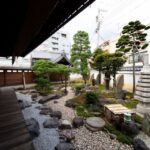
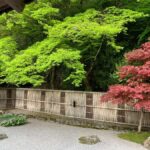
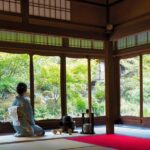
From there, you visit Tenryu-ji Temple (about 30 minutes, admission included). Tenryu-ji is famous for its traditional Japanese garden, and the garden design is described as unchanged for more than 700 years. That matters because you’re not just seeing scenery—you’re seeing a long-standing style that has been preserved over time.
What to watch for: the crowd factor. Even if the garden is calm in intention, the paths can still be packed. If you’re the type who likes quiet, aim to pause at the spots where you can look without constantly moving.

Kinkaku-ji’s Golden Pavilion and the return pass by Nijo Castle
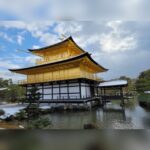
In the afternoon you reach Kinkaku-ji Temple, also known as the Golden Pavilion (about 40 minutes, admission included). The highlight is exactly what the nickname promises: a pavilion that looks dramatically different depending on the light, with the description noting it’s covered with pure gold leaves.
This is one of those “everyone knows the name” places, but the real value here is how efficiently you get there and how much of the day’s logistics are handled for you. A guide keeping everyone on track makes a difference when the crowds are at full volume.
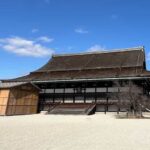
On the way back, the tour passes Nijo Castle. You won’t have a long visit stated here, but you do get context: it was an important political site when the Tokugawa shogunate returned power to the emperor. Even as a pass-by, it’s a useful historical pin in the middle of a day that’s mostly temples and shrines.
Fushimi Inari Taisha: the torii gates moment you actually remember
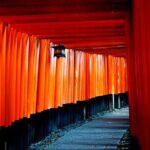
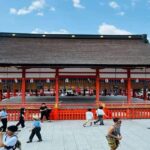
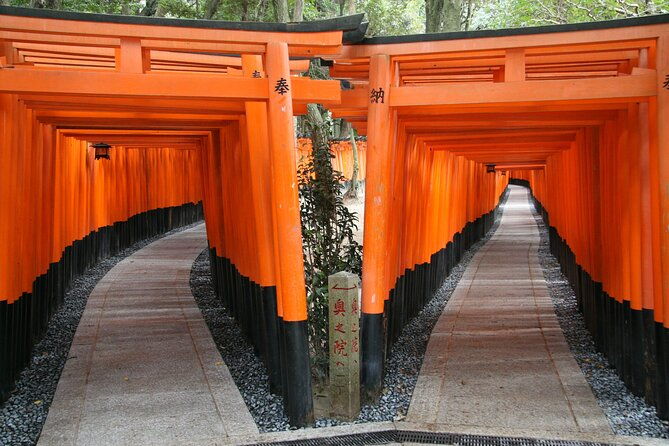
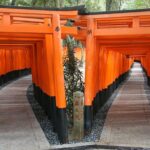
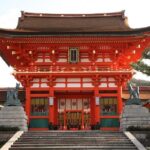
The final big stop is Fushimi Inari Taisha Shrine (about 1 hour, admission free). This is the torii-gate world: thousands of torii gates, arranged into endless corridors. The experience isn’t subtle. It’s one of those Kyoto scenes that sticks because it feels like you’re walking through a legend.
The one tricky part is that Fushimi Inari is always in motion: people flow both up and down the routes. That’s why pace matters. If you try to rush like it’s a museum, you’ll miss the emotional effect of seeing the gate tunnel stack deeper behind you.
My practical advice: treat this like a slow walk, not a check-the-box. Even within a limited hour, you can step aside for photos and take in the rhythm of the torii corridor.
Pace, crowds, and how to avoid the sprint feeling
This tour is designed as a highlights loop, so yes, it’s busy. Some people love that; others feel it’s too fast. One key criticism is that in crowded sections you can end up running back to the bus without fully absorbing everything.
Here’s how to protect your experience:
- Wear shoes you can trust. The tour includes walking plus stairs and hills across multiple stops.
- Bring a day bag with water and small snacks. Even with a lunch option, having backups keeps you comfortable.
- Use the guide’s commentary for context. In a tight schedule, understanding what you’re seeing helps the time feel longer.
Also, the itinerary order can shift depending on traffic, weather, and operations, and there’s a note that if a place is closed, you may be offered an alternative. The tour is set up to keep your day productive, but it’s still smart to treat this as a full-day plan rather than a relaxed stroll.
Guides on board: the human part that makes it work
A lot of the praise centers on the tour guides, and that’s not a small detail. In a day like this, you’re dealing with crowd control, timing, and explanations that make temples and shrines click.
Names that repeatedly show up include Sakura, Mai, Nagomi, Hiroko, At-Chan, Harry, and Nanami. The consistent theme is clear English plus energy on the bus—people specifically mention staying engaged during travel time between sites and learning a few Japanese words or numbers.
One nuance: there’s at least one comment that a guide’s English was hard to understand from some seats. That’s a reminder that audio and seat location matter, so if you want maximum clarity, choose a spot where you can hear the guide well and rely on the bus audio guide too.
Price and value: $129.25 for a packed “all-in” temple day
At $129.25 per person, the value depends on how you’d otherwise spend your day. This price bundles a lot: air-conditioned coach, WiFi, a guide, multilingual audio, and admission tickets for several major stops (Kiyomizu-dera, Sanjusangendo, Tenryu-ji, and Kinkaku-ji).
In plain terms, you’re paying to remove decision fatigue. If your Kyoto time is limited and you don’t want to map routes, buy multiple tickets, and line up at each site on your own, this can be a good deal.
Where value can vary is lunch. Some people love the buffet; others report it wasn’t hot enough. If lunch is important to you, decide whether to treat the buffet as convenient fuel or pack extra snacks for comfort.
Who should book this Perfect Kyoto 1-Day tour
This tour is a strong match if:
- you want the big-name Kyoto sights in a single day
- you’d rather ride in comfort than piece together bus and train transfers
- you like guided context and don’t want to plan every temple on your own
It’s not the best fit if you:
- can’t handle long walking, stairs, and hills
- need lots of unstructured time for wandering
- get overwhelmed by crowds and tight timing
Group size max is 42, and that’s a useful middle ground. You’ll have company, but you won’t feel like you’re trapped in a massive sea of people the whole day.
Should you book this tour or go it alone?
If you’re in Kyoto for a short window and you want a clean, efficient day, I’d book it—especially because the admissions for key sites are included and the day is designed to keep you moving between distant neighborhoods. The best part is that it’s built for the reality of Kyoto: dispersed temples, frequent crowds, and lots of waiting if you go solo.
If you prefer slower pacing, quiet gardens, and time to linger at the best angles, you might feel squeezed by the schedule. In that case, you may prefer a more flexible approach where you pick fewer stops.
My call: book this if you want a guided highlights day that saves planning and transport headaches. Bring comfortable shoes, expect crowds, and you’ll have a very memorable Kyoto day even when the schedule is packed.
FAQ
What time does the tour start?
The tour starts at 7:50 am.
Where do I meet the group?
Meet at Tully’s Coffee – Kyoto Avanti Japan, located at the Kyoto Avanti 1st floor.
Where does the tour end?
The tour ends back at the same meeting point.
How long is the tour?
It runs about 8 to 9 hours.
Are temple admission tickets included?
Yes. Admission is included for Kiyomizu Temple, Sanjusangendo Temple, Tenryuji Temple, and Kinkakuji Temple. Fushimi Inari-taisha is listed as free.
Is lunch included?
Lunch is included only if you select the tour option with lunch. The lunch option is a Japanese-style buffet, and it is stated that the buffet is the same for vegetarians.
What languages are available on the bus?
The tour includes a professional English-speaking guide and multilingual audio guidance on board in English, Spanish, French, Italian, German, Portuguese, and Ukrainian.
Is the bus comfortable and does it have WiFi?
Yes. The bus is air-conditioned and includes WiFi on board.
Can I cancel for a full refund?
Free cancellation is available up to 24 hours in advance for a full refund.
Does this tour require walking?
Yes. It includes walking plus stairs and hills, and it notes moderate physical fitness is recommended.