Underground warfare feels uncomfortably real.
This Ho Chi Minh City Cu Chi Tunnels day tour lets you see the Vietnam War from below ground, then back above ground through exhibits and documentary screenings. The pacing is built for a small group (up to 25), so you spend less time herding and more time understanding what the tunnels were used for between 1961 and 1972.
Two things I really like: the pickup and drop-off for District 1, 3, and 4, and the way the tour mixes story with hands-on moments like trying a tiny hiding entrance and exploring the tunnel maze. One thing to consider is the tunnel crawl: passages can feel very tight, and optional crawling may not suit claustrophobic folks or anyone with mobility limits.
- Key Points at a Glance
- Cu Chi Tunnels without the headache of getting there
- Pickup, timing, and how the day actually flows
- The 3D and documentary screenings: why they matter before you crawl
- War exhibits you’ll actually use to make sense of the tunnels
- Inside the Cu Chi tunnel maze: what to expect underground
- Cassava, tapioca, tea, and small snacks that keep the day human
- Optional tunnel crawling: who should do it and who should skip
- Guides make or break the tour: the real standout pattern
- A possible workshop stop for Agent Orange awareness
- Value for .90: what you’re getting for the money
- Who this Cu Chi tour suits best
- Should you book this Cu Chi Tunnels small-group tour?
- FAQ
- How long is the Cu Chi Tunnels tour?
- Is hotel pickup included?
- Where is the meeting point?
- What’s included with the tour ticket?
- Is the tunnel crawling included?
- Are English guides provided?
- Is this tour suitable for children?
- Can I cancel for a full refund?
- The Best Of Ho Chi Minh City!
- More Morning in Ho Chi Minh City
- More Tours in Ho Chi Minh City
- More Tour Reviews in Ho Chi Minh City
Key Points at a Glance




- Small-group feel with a max of 25 travelers and a shared minivan ride
- Pickup from Districts 1, 3, and 4 plus return drop-off back to District 1
- 3D/film mix: a documentary is included, while a 3D show may be offered as an extra
- Tunnel time with real constraints: tiny entrances, narrow passages, and trapdoor-style routes
- Food included that matches the war-era theme: cassava plus tapioca, tea, and snacks
- A respectful workshop stop may appear for Agent Orange awareness and voluntary souvenir browsing

👉 See our pick of the 15 Of The Best Airport Transfers In Ho Chi Minh City
Cu Chi Tunnels without the headache of getting there
Cu Chi is one of the big “yes, you should go” spots near Ho Chi Minh City. The tricky part is not the destination—it’s the logistics. This small-group format aims to remove the usual scramble of finding transport, coordinating tickets, and waiting around for the right bus.
You’ll start with pickup service from hotels in District 1, 3, and 4, then ride in a shared air-conditioned minivan. Along the way, your guide keeps the day moving and sets context so the site doesn’t feel like random tunnels and signs. That matters because Cu Chi can easily become a quick photo stop if the visit isn’t framed.
At about 7 hours total, it’s long enough to cover the tunnel complex and the exhibits without feeling rushed to the point of missing everything. It’s still a day trip, so you’ll want to treat it like a full mission: water, comfy clothes, and a realistic mindset about what you can handle underground.
You can also read our reviews of more tours and experiences in Ho Chi Minh City



Pickup, timing, and how the day actually flows
The tour runs both morning and afternoon, which is helpful in a city where weather can change fast. Your exact schedule can vary, but the structure is consistent: pickup, travel out, then a main on-site block at Cu Chi.
On the site, the tour includes about 2 hours tied to the Cu Chi Tunnels admission ticket. That’s a real chunk of time, but it’s also not unlimited. Some parts of the experience are spread out: documentary and exhibits first, then the tunnel area. If you come in expecting a long, slow crawl of every room, you might be surprised by how quickly you’ll be redirected to keep the group moving.
The return is simple: the activity ends back at the meeting point (and the provided drop-off service is to District 1). Most of the “work” is handled for you, which is the real value of paying for a guided day trip instead of trying to DIY.
The 3D and documentary screenings: why they matter before you crawl
One of the easiest ways to get more out of Cu Chi is to understand the setting before you squeeze into the passages. This tour includes a screening experience at the site: a documentary film is part of what’s included.
There’s also mention of a 3D movie tied to major ground operations. One important practical detail: a 3D option may be offered as an extra rather than fully included in the core tour. So if you’re the type who really wants that 3D format, plan to confirm on the day what’s included versus what costs extra.
Either way, don’t skip the films even if you think you know the basics. They help you connect the tunnel network to the tactics it supported—how hiding, movement, and sudden attacks made sense in that particular war. Without that context, the tunnels can feel like an interesting engineering project. With context, they become a survival system.
War exhibits you’ll actually use to make sense of the tunnels
After the on-screen context, you move into the war exhibits area, where the tour aims to translate the story into physical objects. Here’s the value: you get items like bunkers, guns, and traps, which help you understand the tunnel network as part of a bigger defense-and-communication system, not as a standalone attraction.
You’ll also spend time exploring the grounds and the forested presentation areas. The tour includes time for watching a documentary on the strategic system of Cu Chi Tunnels, which ties the exhibit objects back to how the network worked.
One more smart touch: the tour isn’t only about “look at this.” You get small interactive moments too, like trying a tiny hiding entrance. Even if you don’t go far underground, that quick try shows how much space, weight, and sound mattered to staying hidden.
Inside the Cu Chi tunnel maze: what to expect underground
The main event is the tunnel system—how people lived, moved, and fought from below ground. Between 1961 and 1972, the tunnels supported command centers, kitchens, field hospitals, factories, storage, and a network of movement routes with countless trap-door style features.
When you’re on-site, you’ll get to explore the tunnel maze at your own pace within group flow. There are lots of small cut-throughs and passage points, so the experience can feel like a guided “underworld walk,” even when you’re just standing close to openings.
Then comes the part everyone talks about: going into the tunnels. Some versions of this experience include an optional crawling segment. If you do it, expect low ceilings and very narrow spacing. Even if the passages are modified for safety today, they still communicate the core reality: this wasn’t built for modern comfort.
A practical note I’d follow if I were advising a friend: wear clothes you don’t mind getting dusty, and bring a mindset that you’ll move slowly. You’re not there to win a sprint. You’re there to understand how restricting the space was—and why that restriction helped people survive.


Cassava, tapioca, tea, and small snacks that keep the day human
Even serious history days need fuel. This tour includes tapioca, Vietnamese hot tea, and the site’s most popular war-day food: cassava. You also get wheat cake, wet tissues, and bottled water.
These inclusions matter more than they sound. Cu Chi visits often involve long stretches between real meals, and Vietnam heat can drain you quickly. Having snacks included means you won’t be stuck trying to find something later or paying premium prices on empty stomach energy.
If you’re wondering what to expect from the cassava portion: it’s part of the cultural food story of what people relied on. It’s also a useful break point. You’ll get to pause, reset your body, then go back to tunnels and exhibits with your head clearer.
Optional tunnel crawling: who should do it and who should skip
This is where Cu Chi can become either a memorable hands-on lesson or a miserable fit. Your tour includes an optional experience of crawling through parts of the tunnel network.
If you’re comfortable in tight spaces, you’ll likely enjoy the added understanding that comes from physically going in. That crawl segment can make the whole system click: you stop thinking of tunnels as scenery and start thinking of them as movement corridors.
If you’re not comfortable with claustrophobic spaces, you might prefer to keep it above ground and through accessible tunnel areas without full crawling. In at least one account of the “full experience,” people expected a stretch of around 60 meters in a tunnel about 4 feet high. Even if your exact route differs, the lesson is the same: the crawl is genuinely small.
Here’s the key: you don’t need to force the crawl to enjoy the day. The tour’s included parts still cover the underground life, the relics, and the documentary context. You’re simply choosing the level of discomfort you’re willing to trade for that extra realism.
Guides make or break the tour: the real standout pattern
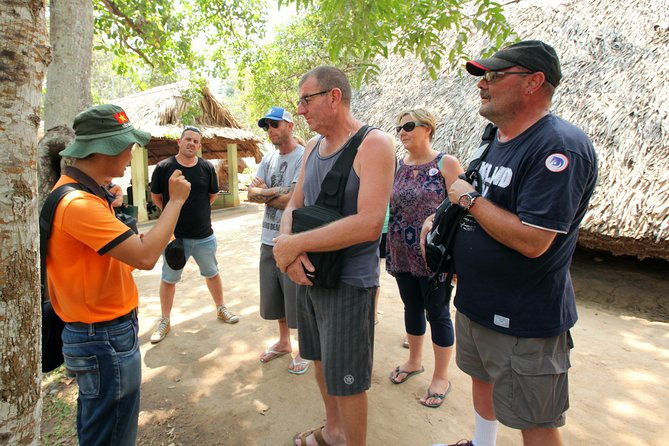
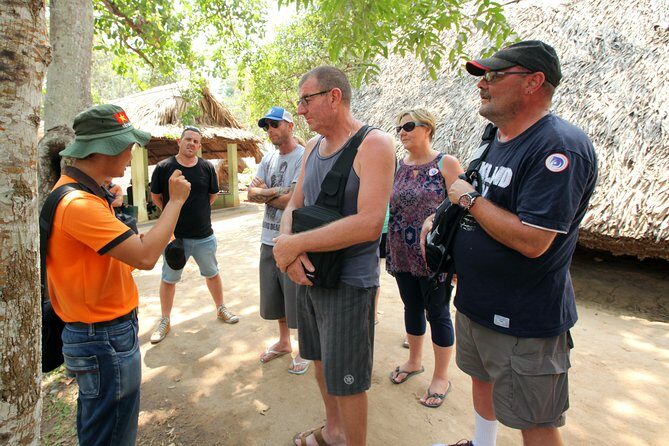
The single most praised factor in this kind of tour is usually the guide. And here, that pattern shows up clearly: people highlight guides who explain things clearly and keep the group moving without losing the story.
Different names come up often—Bao, Khanh, Phong, Luna, Tommy, Martin, Lao, Lee, Ben, and TV. The common theme across these examples is not just facts, but pacing and structure: clear explanations, engaging delivery, and attention to group safety and timing.
One practical advantage of this kind of guiding style is that it reduces the feeling of being rushed or left behind. When a guide stays organized, you’re more likely to see the key parts of the site in the right order—context first, then exhibits, then underground time.
That said, one caution also appears in the feedback data: occasionally, a guide can seem distracted or bring in extra phone use during long stretches. If you’re sensitive to that kind of distraction, consider how you handle it on day trips. It won’t change the fact that Cu Chi is interesting, but it can affect your experience quality.
A possible workshop stop for Agent Orange awareness
Some Cu Chi itineraries include a stop connected to Agent Orange awareness through a workshop setting. In the information you have here, there’s an Agent Orange handicraft workshop connected to victims of Agent Orange, and purchasing souvenirs is described as voluntary.
Practically, think of this as two things at once. First, it can be a context stop that keeps the story human and ongoing. Second, it can also act as a rest stop, with facilities and time before you wrap up the day.
If shopping isn’t your thing, you can still benefit just by using the break and keeping your focus on the main event. Just be aware that some schedules include this stop as part of the flow.
Value for $14.90: what you’re getting for the money
At $14.90 per person, this tour is priced in the “budget-friendly but not barebones” zone. The big value drivers aren’t magic storytelling—they’re the practical inclusions:
- Pickup and drop-off (from Districts 1, 3, and 4 to District 1)
- English-speaking guide
- Transport in an air-conditioned minivan
- Admission and included documentary viewing
- Snacks and drinks (tea, tapioca, cassava, wheat cake, water, wet tissues)
When you add up admission, guide time, and transport in Ho Chi Minh City traffic, the price starts to make sense. The day is long, the site is far enough that transport costs matter, and you’re not left figuring out the schedule yourself.
The trade-off is that budget tours sometimes mean fewer chances to slow down inside a site like Cu Chi. If you want a very long tunnel crawl and a lot of extra time per room, you might feel this is “enough, not exhaustive.” But for most first-timers, it lands as a solid deal: you get the core experience without the stress of DIY.
Who this Cu Chi tour suits best
This is a great fit if you:
- want a guided day trip from Ho Chi Minh City without arranging transport
- like your history with visuals: exhibits, films, and physical tunnel spaces
- enjoy small-group pacing and don’t want a full-day tour that’s one big free-for-all
It may be less ideal if you:
- strongly prefer slow, self-paced exploration
- can’t handle tight, low spaces and don’t want the optional crawl option at all
- get annoyed by any chance of tour distractions during long rides (it’s rare, but it’s been reported)
Should you book this Cu Chi Tunnels small-group tour?
I’d book it if you want the Cu Chi experience with easy logistics, a guide, included admissions, and built-in breaks like cassava and tea. For the price, the pickup service and included on-site items make it a smart first stop.
I’d skip or choose another approach if your top priority is maximum tunnel time and you hate the idea of optional crawling in tight spaces. For those travelers, the tunnels can become the main stress rather than the main lesson.
If you do book, I’d come prepared for two realities: travel time to Cu Chi can be around 1.5 to 2.5 hours one way depending on traffic and conditions, and the tunnels are small on purpose. That’s the point. Bring patience, wear something comfortable, and let the guide’s structure do its job.
FAQ
How long is the Cu Chi Tunnels tour?
The tour runs for about 7 hours (approx.), with around 2 hours on-site at Cu Chi.
Is hotel pickup included?
Yes. Pickup is offered from hotels in Ho Chi Minh City District 1, 3, and 4.
Where is the meeting point?
The meeting point listed is KIM TRAVEL – Daily Tours – Cu Chi Tunnels – Mekong Delta Tour, at 17 Thủ Khoa Huân, Phường Bến Thành, Quận 1, Thành phố Hồ Chí Minh, Vietnam.
What’s included with the tour ticket?
Included items cover admission fees, watching the Cu Chi Tunnels documentary film, an English-speaking guide, air-conditioned minivan transport, and the food/drinks listed (tapioca, hot tea, cassava, wheat cake, bottled water, wet tissues).
Is the tunnel crawling included?
Crawling through the Cu Chi Tunnels is listed as an optional experience, so you can choose whether to try it.
Are English guides provided?
Yes. The tour includes an experienced English-speaking guide.
Is this tour suitable for children?
Children can participate, but they must be accompanied by an adult.
Can I cancel for a full refund?
Yes. Free cancellation is available up to 24 hours in advance for a full refund.