The river makes the skyline make sense.
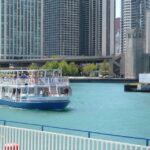
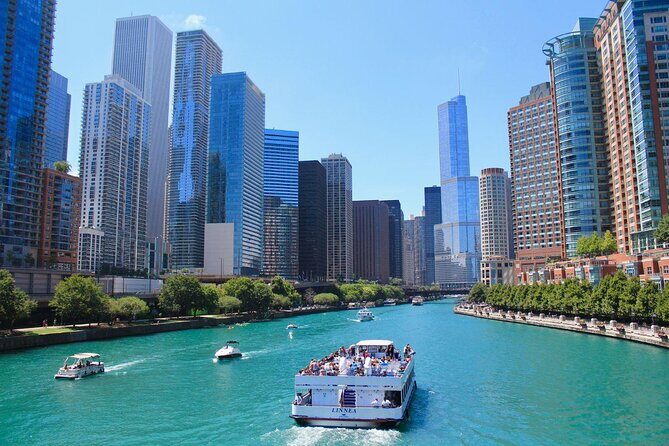
This Chicago River cruise turns downtown architecture into something you can actually see, right up at water level. You’ll glide along all three branches with narration that connects buildings to the way Chicago grew, from major landmarks to the riverwalk. It runs from Wendella’s dock area by the historic Michigan Avenue Bridge, with indoor and outdoor seating so you’re not stuck choosing between comfort and the view.
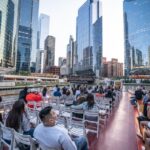
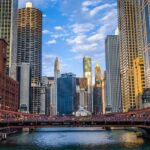
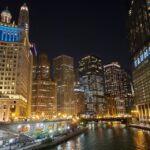
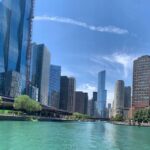
I love the close-up sightlines on the water—Marina City’s corn-cob towers, the Wrigley Building, the Willis Tower, and the Merchandise Mart all show up in real, watchable detail. I also love the guide energy: people cite guides like Lucas, Jack, and Alyssa as funny and quick with answers, which matters because the narration is the whole point of the cruise.
The main drawback is cold-weather reality. If you’re on the exposed upper deck in winter, the wind can bite hard, and the lower deck indoors can feel tight when seats get taken fast on a first-come basis.
- Quick Takeaways Before You Board
- Why a 90-Minute Architecture Cruise Works in Chicago
- Price and Time: What You’re Really Paying For
- Getting to Wendella on Michigan Avenue Without Losing Time
- Upper Deck vs Lower Deck: The Comfort Decision That Changes Everything
- The Start Area: Wendella, the Wrigley Neighborhood, and a River That Moves
- Your 90-Minute Route: Three Branches, One Big City Story
- Landmark Watch: What to Look For While You Pass Each Icon
- Marina City and the idea of a city inside a city
- The Wrigley Building: a skyline anchor
- Merchandise Mart and Chicago’s commercial muscle
- Willis Tower’s skyline position
- Lyric Opera and civic culture
- The Chicago Riverwalk and the human scale
- What the Narration Is Doing for You (Not Just Talking at You)
- Weather Reality: Cold Wind, Rain, and How to Plan Like a Pro
- On-Board Comfort Details That Matter More Than You Think
- Who This Tour Is Best For (and Who Might Want Another Option)
- Small Tips That Make the Tour Feel Easier
- Should You Book This Chicago River Architecture Tour?
- FAQ
- Where do we meet for the 90-min Chicago River Architecture Tour?
- What time should I arrive before departure?
- Is there indoor seating on board?
- Do I need good weather for the cruise?
- Are restrooms available during the tour?
- Can I bring outside alcohol or food?
- Is the tour wheelchair accessible?
- The Best Of Chicago!
- More Tours in Chicago
- More Tour Reviews in Chicago
Quick Takeaways Before You Board
 1 / 9
1 / 9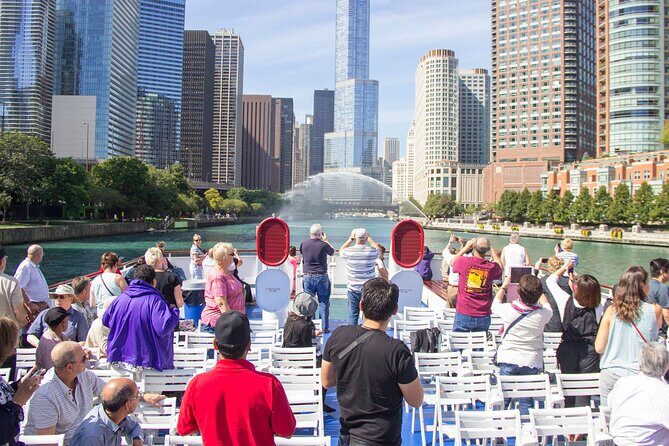 2 / 9
2 / 9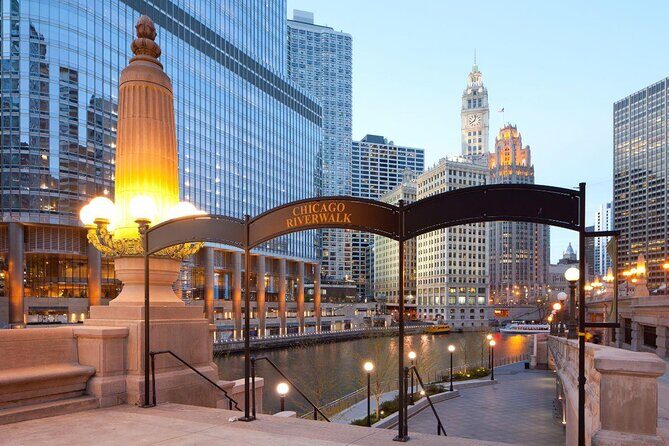 3 / 9
3 / 9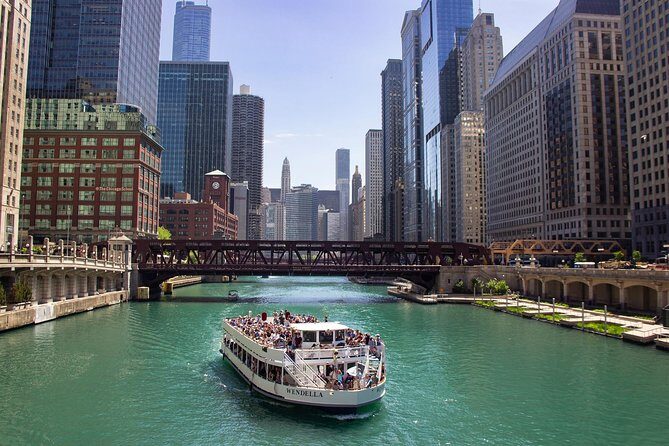 4 / 9
4 / 9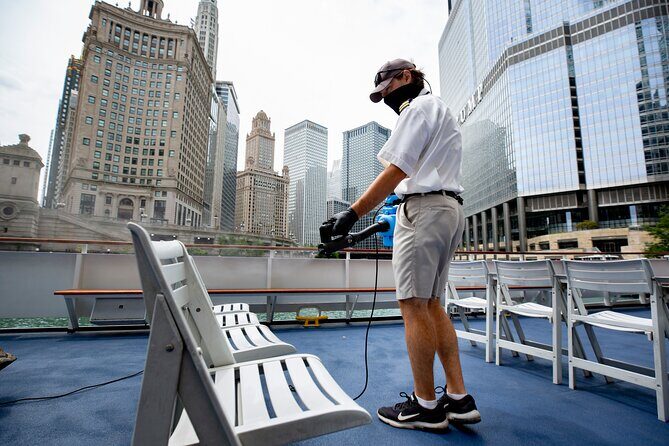 5 / 9
5 / 9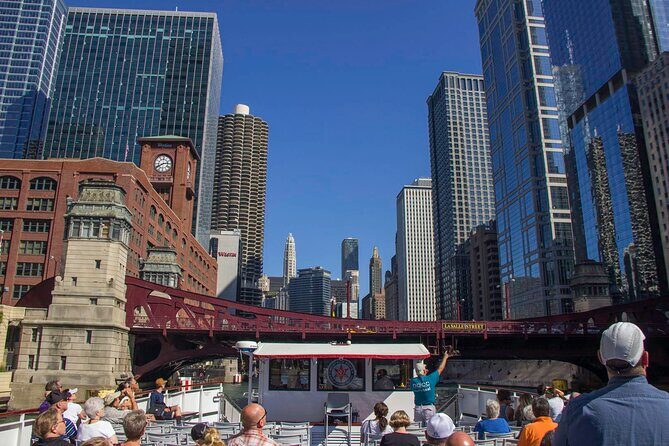 6 / 9
6 / 9 7 / 9
7 / 9 8 / 9
8 / 9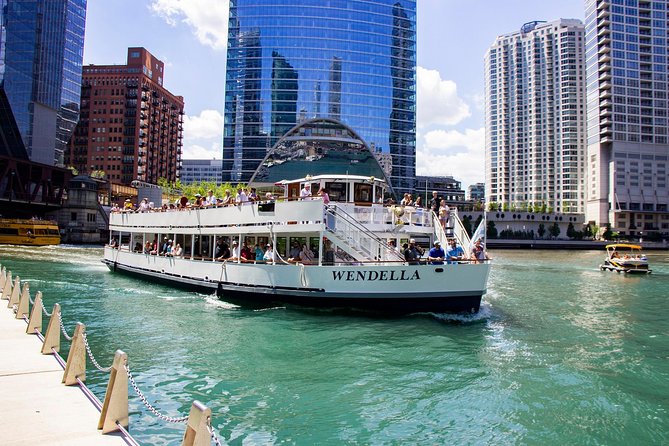 9 / 9
9 / 9- 130+ years of architecture in 90 minutes, without the stress of taxis or rerouting across town
- Indoor climate control downstairs, plus an upper deck view that’s best when weather cooperates
- Major Chicago icons on one loop: Wrigley Building, Willis Tower, Merchandise Mart, and more
- Three-branch route means you see more of the city than you’d get from one skyline angle
- Guides named Lucas, Jack, and Alyssa show up in great feedback for humor and clarity
- Winter tips: dress for wind, because sitting outside can be a different sport than sightseeing on land

👉 See our pick of the 2 Best 1 Hour Tours In Chicago (With Prices)
Why a 90-Minute Architecture Cruise Works in Chicago
Chicago is big. Even when you stay near downtown, getting from one major landmark to the next can eat your day. This tour fixes that by doing the travel for you. In about 90 minutes, you cover a wide stretch of riverfront views while a guide ties the buildings together into a story you can follow.
The value here is not just seeing famous structures. It’s how the tour changes the way you look at them. On land, a building is a photo. On the river, it’s part of a whole system—water, industry, money, migration, and engineering all in the same frame. The narration connects the why behind the what, so the skyline stops feeling like a list.
And because you’re on the water, you also get perspectives you can’t recreate from most street-level stops. You’ll see how the river bends around the city blocks and where architects and developers chose to make statements.
You can also read our reviews of more tours and experiences in Chicago.

Price and Time: What You’re Really Paying For
At $45 per person for about 1 hour 30 minutes, you’re paying for three things: guided narration, the boat ride itself, and the efficiency of getting a lot of skyline into a short window.
Here’s the practical way to judge the value:
- If you’re only in Chicago for a day or two, this is one of the fastest ways to get oriented.
- If architecture is your interest, narration turns the cruise into more than scenery.
- If you hate commuting between stops, the “no taxis, no bus transfers” benefit adds up fast.
The best part is that 90 minutes hits a sweet spot. Long enough to feel like you did something meaningful, short enough that you’re not stuck in a whole afternoon plan that gets derailed by weather.
Getting to Wendella on Michigan Avenue Without Losing Time
The start point is 400 N Michigan Ave, near the historic Wrigley Building. Boats depart from Wendella’s docks at the northwest corner of the Michigan Avenue Bridge (DuSable Bridge).
A few logistics points that can save your trip:
- Arrive 30 minutes early. Boarding begins 15–30 minutes before departure.
- Seats are first come, first served for both indoor and outdoor areas, so arriving early affects your comfort.
- Your ticket can be a mobile ticket, but you’ll still want to be ready to show it quickly.
Parking is available nearby in two garages you can plan around: AMA Plaza parking at 401 N. State Street and InterPark Public Parking at 430 N. Rush St.
Also, boats and docks involve security. All bags are subject to search, and the U.S. Coast Guard rules mean weapons are prohibited. If you’re carrying a bigger bag, assume it will take a little longer to get through.
Upper Deck vs Lower Deck: The Comfort Decision That Changes Everything
This is the tour’s make-or-break factor.
You’ll have both:
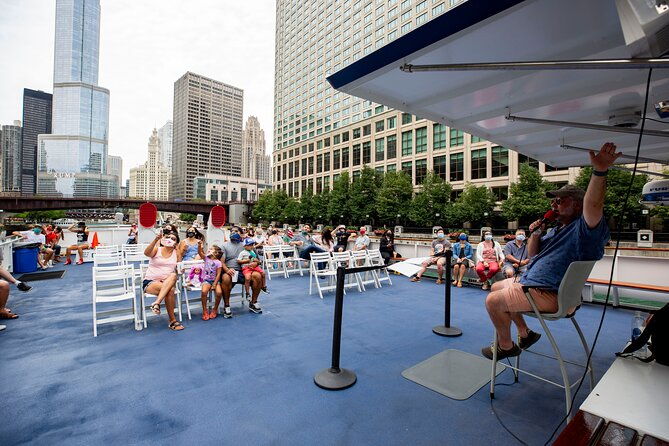
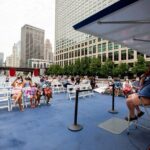
- An outdoor upper deck with the best skyline views
- A lower deck with indoor seating that’s climate controlled
But the timing of when you board matters. When it’s cold or windy, people move indoors quickly. One downside that can happen in winter is that the upper deck is exposed, and indoor seating can feel limited if everyone tries to warm up at once.
What that means for you:
- If you book on a chilly day, wear layers with real wind protection. A hat and gloves are not optional.
- Be ready to switch zones. You can get a couple minutes outside for the view, then duck inside to reset.
- If you care most about photos, you’ll likely spend more time on the upper deck. Just plan your body warmth like it’s part of the itinerary.
One more comfort note: a smooth ride helps if you’re prone to motion sickness. If you’ve been worried about feeling sick on boats, this kind of steady cruise format tends to be easier than you might expect.
The Start Area: Wendella, the Wrigley Neighborhood, and a River That Moves
Your departure begins at Wendella’s docks near the Wrigley Building area at the Michigan Avenue Bridge.
Right off the bat, you’re in the classic loop where Chicago brands itself:
- The Wrigley Building (white terra-cotta, built in 1922 for the Wrigley chewing gum company)
- The stretch around Michigan Avenue, with major cultural stops close by like the Art Institute, Millennium Park, and Magnificent Mile shopping
Also, the tour start area includes a fun piece of river infrastructure history. There’s a dedicated feature connected to the Metropolitan Water Reclamation District of Greater Chicago, tied to the turning point when Chicago reversed the river flow in 1900. Dedicated in 1989 for a 100th anniversary, the fountain shoots a water arc across the river for the first five minutes of every hour. It’s a quick reminder that this city’s architecture is also about engineering and systems—not just buildings.
Your 90-Minute Route: Three Branches, One Big City Story
The big reason this tour feels efficient is the way it ties into Chicago’s geography. You cruise along all three branches of the Chicago River, with narration walking you through how each area evolved.
As the boat moves, you’ll also get a clear sense of which parts of the city were built for:
- commerce and finance
- civic identity and culture
- housing and mixed-use life
It’s not a checklist tour. It’s more like watching the skyline change as the river guides your viewpoint.
You’ll pass by:
- Wrigley Building
- Willis Tower
- Merchandise Mart (often noted as the largest commercial building in the world)
- Marina City (the apartment towers people describe as a city within a city, with that signature corn-cob look)
- The Chicago Riverwalk
- Lyric Opera of Chicago, with its Art Deco interior and the note that it’s the second-largest opera auditorium in North America
- The Second Lakefront, an open pedestrian waterfront area
Seeing these close together helps you understand the “why” behind the skyline. These buildings weren’t placed at random. The river shaped the practical paths for movement, trade, and development.
Landmark Watch: What to Look For While You Pass Each Icon
Here’s how to make this cruise feel extra rewarding—by focusing on what changes as you go.
Marina City and the idea of a city inside a city
When Marina City comes into view, look at the towers like you’re seeing a neighborhood plan from above. The design reads as residential, but it also acts like an urban statement: housing stacked with the kind of density that makes day-to-day life work close by. If you’ve only seen Marina City from far away, the river angle makes the architecture feel more physical.
The Wrigley Building: a skyline anchor
The Wrigley Building is one of those structures that looks crisp even at a distance. On the water, you can better judge scale—how it commands the intersection of river and avenue. If you’re the type who likes details, this is a good stop to slow down and look at the materials and ornamentation rather than just snapping photos.
Merchandise Mart and Chicago’s commercial muscle
Merchandise Mart is all about the idea of commerce as architecture. The scale is the point. As you pass, try to notice how the riverfront setting frames the building: it’s not just a big office block; it’s a power player in the city’s economic story. The tour narration usually connects it to the evolution of downtown trade.
Willis Tower’s skyline position
Willis Tower tends to feel like the “north star” of Chicago’s downtown. From the river, it’s less like a distant landmark and more like a bulk structure the city grows around. Pay attention to how it sits relative to the river curve—this helps you connect architecture to the city map in your head.
Lyric Opera and civic culture
The Lyric Opera of Chicago has a strong identity, especially with that Art Deco interior noted for its style. Passing it on the river gives you a civic contrast: commerce and housing on one side, culture on another. It’s a reminder that Chicago didn’t build only to work; it built to perform too.
The Chicago Riverwalk and the human scale
River architecture is not only skyscrapers. When the boat shows the riverwalk, focus on how it shifts from “industrial corridor” to “people space.” That’s where Chicago’s modern identity comes through—waterfront design that encourages walking and lingering.
What the Narration Is Doing for You (Not Just Talking at You)
A strong architecture tour doesn’t just tell dates. It helps you read the city like a map.
On this cruise, the guide explains:
- why Chicago’s skyline looks the way it does
- how the buildings connect to industry, civic power, and city planning
- what landmark names represent and how they evolved over time
The best guides keep the tone light but the facts clear. You’ll often hear humor, and the tour format gives you plenty of time to ask questions if your timing works out. When guides like Lucas, Jack, and Alyssa show up, the tour reportedly moves fast because the guide keeps people engaged without turning it into a lecture.
Also, the tour covers more than 130 years of architectural development, so it’s built to show patterns rather than just single buildings. That structure is useful because it helps you remember things later.
Weather Reality: Cold Wind, Rain, and How to Plan Like a Pro
This is a cruise, so weather matters. The good news: it’s designed to be doable in typical conditions, and the boat includes sheltered areas and an indoor climate-controlled lounge.
Still, winter can be brutal. People often end up inside to warm up after time outside. If you’re going in January or February, treat it like a cold-weather sport:
- Layer up (base layer + insulation + wind shell)
- Bring gloves and a hat
- Keep a spare pair of dry socks if you’re worried about damp feet
Rain is a different story. The boat can depart rain or shine, and ponchos may be available for purchase onboard, but if you’re waiting outside near the dock, you might get soaked. I’d pack for that too—bring something that keeps your legs and bag from turning into a sponge.
The ride itself is smooth, which helps with comfort, but wind is still wind. Dress for what you’ll feel on the water, not what the air temperature says on land.
On-Board Comfort Details That Matter More Than You Think
A few practical touches make the cruise easier:
- Restroom on board (located on the lower deck)
- Climate-controlled seating downstairs
- A boat setup with speakers so you can hear narration while inside
Food and drink are not included, but there’s an onboard bar. You can purchase alcoholic beverages and non-alcoholic drinks, plus snacks. Bar purchases are credit cards only, and outside alcohol is prohibited. If you want hot chocolate or warm drinks, plan to buy them on board rather than bringing your own.
There’s also no storage area on the dock, so if you have luggage, you can bring it aboard, but it’s subject to inspection. For most visitors, that means: travel light if you can.
Who This Tour Is Best For (and Who Might Want Another Option)
This cruise is a strong match if you:
- want an easy, guided introduction to Chicago downtown architecture
- like iconic landmarks but want context, not just names
- want a time-efficient plan that covers a lot of ground without transit hassle
It may be less comfortable for you if:
- you hate cold weather and refuse to spend time outdoors at all, because the upper deck is exposed
- you want guaranteed prime viewing seats indoors, since seating is first come, first served
- you’re very sensitive to wind or rain while waiting outside at the dock
If you’re traveling with mobility needs, the operator notes wheelchair lifts between decks and ADA compliant toilets on board. There’s also a written narration script available for guests who are deaf or hard of hearing at the ticket office.
Small Tips That Make the Tour Feel Easier
These are the kinds of details that change your whole experience:
- Arrive early enough that you can choose where you sit without stress. Indoors is a comfort upgrade, not an afterthought.
- If you’re trying to locate the exact dock for your provider, look for clear signage at the Michigan Avenue area. One helpful clue is that dock levels can be below street level.
- Dress in layers so you can switch from outside view time to inside warmth time without feeling miserable.
Also, if you want a quick visual aid, maps with highlights in simplified Chinese can be picked up per request at the ticket window.
Should You Book This Chicago River Architecture Tour?
If you want a fast, guided way to see Chicago’s skyline and understand how the buildings got there, this is an easy yes. It’s structured for time efficiency, packed with major landmarks, and the guide narration is what gives the cruise meaning.
I’d book it especially if you’re visiting for a short stay, or if you want one plan that does orientation fast. Just take weather seriously. On cold days, the view is worth it—but only if you’re dressed for real wind off the water. On a milder day, you’ll likely spend more time up top and enjoy the scenery with less “indoor warm-up” time.
If your schedule is flexible, you’ll also have an easier time finding a departure that fits your comfort level, since this experience depends on workable weather and runs multiple departures.
FAQ
Where do we meet for the 90-min Chicago River Architecture Tour?
You meet at 400 N Michigan Avenue, Chicago, IL 60611, at the historic Wrigley Building area.
What time should I arrive before departure?
Arrive about 30 minutes prior to your scheduled departure time.
Is there indoor seating on board?
Yes. Indoor seating is available and is climate controlled, and outdoor seating is also available.
Do I need good weather for the cruise?
Yes, this experience requires good weather. If it’s canceled due to poor weather, you’ll be offered a different date or a full refund.
Are restrooms available during the tour?
Yes. Restrooms are on the lower deck of each vessel, and changing tables are available in the restroom.
Can I bring outside alcohol or food?
Outside alcohol is prohibited. Snacks and drinks are available for purchase onboard.
Is the tour wheelchair accessible?
The operator states the boats have wheelchair lifts between decks and can accommodate wheelchairs. ADA compliant toilets are available, and a written narration script is available at the ticket office for guests who are deaf or hard of hearing.