Old South Carriage turns Charleston into a moving storybook. You ride a Belgian or Percheron draft horse through historic streets and learn why locals call this place the Holy City and how Charleston shaped the Civil War. It’s a one-hour loop that covers about 2.5 miles and 30 blocks, so you get a lot of ground without the stress of walking cobblestones.
Two things I really like: the guide storytelling quality and the photo-friendly stops. On multiple rides, guides like Wendy and Carrie are praised for their humor and for explaining details most people miss, and the gardens with wrought iron gates make great quick snapshots. A possible downside is that the exact route can vary by hour, because the city assigns carriage zones—so you may not hit every big-name stop you hoped for.
- What Makes This Tour Work So Well
- Entering The Stable at 14 Anson Street
- The 1-Hour Route: 30 Blocks, 300+ Years, One Pace
- Stop 1: The Old South Carriage Company Experience (Where You Meet the Horses)
- What You’ll See: Churches, Mansions, Gardens, and the Civil War Thread
- Guides With Personality: When the Narration Actually Feels Fun
- Horses You Can Watch, Not Just Ride With
- Logistics That Matter (Without Spoiling the Fun)
- How to Choose the Right Day for This Ride
- Who This Tour Fits Best (and Who Might Skip It)
- Should You Book Charleston’s Old South Carriage Tour?
- The Best Of Charleston!
- More Historical Tours in Charleston
- More Tours in Charleston
- More Tour Reviews in Charleston
What Makes This Tour Work So Well
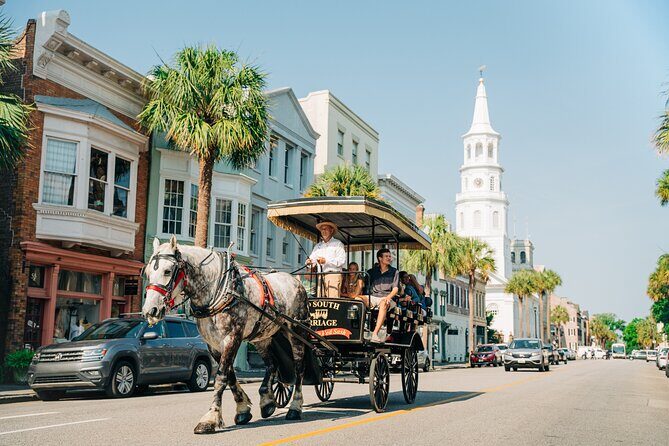
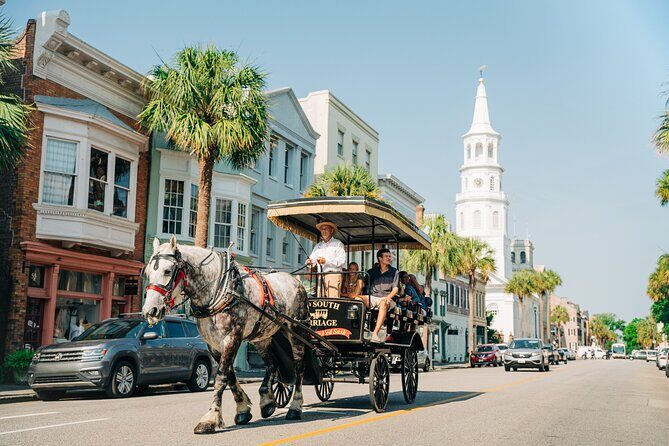
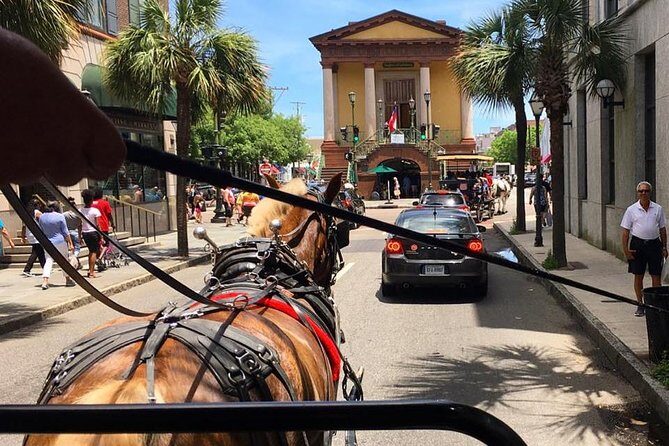
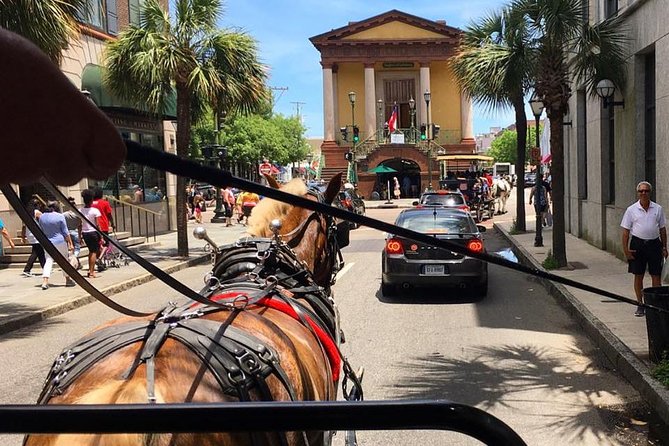
- Draft horses that fit Charleston’s look: Belgian/Percheron pull you at a slow, steady pace that matches the streets.
- A route that’s planned to manage traffic: the city assigns a zone near the Market area, so you’re not stuck in the same bottleneck everyone sees.
- A guide who turns streets into context: expect 30 blocks worth of narration tied to churches, mansions, gardens, and the Civil War.
- Comfort and easy boarding: check in at 14 Anson Street, then board using an inclined ramp/easy loading platform.
- Garden-gate photo ops: wrought iron entrances and lush yards are a highlight, even if you’re not a garden person.
👉 See our pick of the Charleston’s 11 Top Tours & Experiences
Entering The Stable at 14 Anson Street
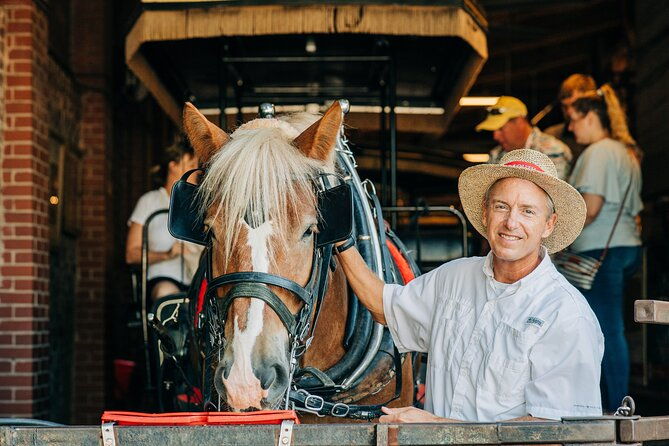
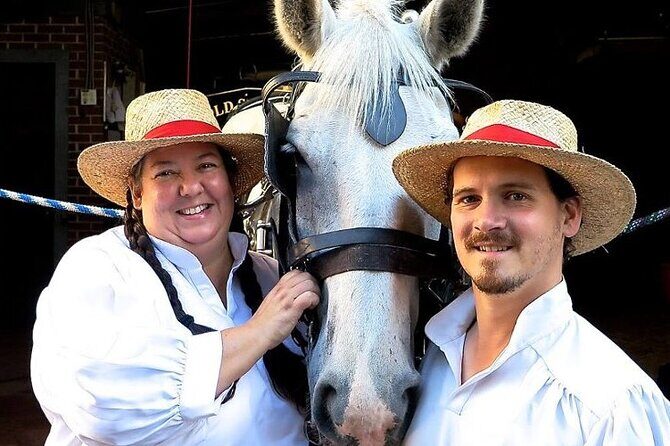
Your tour starts at 14 Anson Street, the home of Old South Carriage. This is where you check in, meet the horses up close, and get yourself settled before you roll through downtown Charleston. It’s also where the roof overhead helps while you wait, which matters because Charleston weather can change fast.
Before boarding, you can say hi to the draft horses and watch a short educational video. There’s also a restroom and the practical stuff you might want right away—like buying bottled water. You’re boarding a carriage with an inclined ramp/easy loading platform, which is a big deal if you don’t love stepping up and down over and over.
This first stretch sets the tone. You’re not just buying a ride—you’re gearing up for a slower pace where you’ll actually notice churches, piazzas, and the look of the historic houses as the city slides by.
You can also read our reviews of more historical tours in Charleston


The 1-Hour Route: 30 Blocks, 300+ Years, One Pace
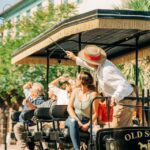
The tour itself runs about an hour (often 50–60 minutes). After you leave the stable, your carriage stops near the City gate near the Market. From there, the route is assigned based on the city’s system designed to spread carriage traffic out.
Here’s the key: the carriage route you get is not something the company chooses. You’re going to see the core “Charleston old town” scenes—wrought iron gates, church steeples, and antebellum-style architecture—but which exact landmarks appear can change depending on the zone you’re assigned.
That’s why I think this ride is so useful early in your trip. You get a strong mental map fast. After an hour, you’ll have a better sense of where the Market area sits, where the big church silhouettes show up, and how the neighborhood streets connect—so your later walking plans feel way more confident.
Stop 1: The Old South Carriage Company Experience (Where You Meet the Horses)
Stop 1 is the stable itself, and it’s more than a ticket check. This is where you can watch the draft horses, learn a bit before you roll out, and get a quick feel for how the team runs the day.
The horses are part of the appeal, and you’ll see that in the details people mention. One review notes that the guide explained that their Belgium draft horses come from Amish farms when they’re no longer needed as work horses, and that the horses are limited to pulling routes. Whether you care about farm history or not, it’s still a reminder that this isn’t a random “horse for hire” situation—it’s a working routine.
Then comes the boarding moment. The carriages take different configurations (the surrey-style can seat up to 16; there are also smaller wagonette-style options listed as seating up to 8). Your departure is capped at a maximum of 16 travelers, which helps keep the ride from feeling crowded.
If you’re traveling with kids, this part matters too. People praise the staff for being attentive to children and for keeping explanations clear without talking down. The stable start also helps you settle in before you’re surrounded by historic streets and curious looks from everyone else.
What You’ll See: Churches, Mansions, Gardens, and the Civil War Thread
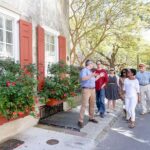
As you move through the historic district, your guide connects what you see to how Charleston became Charleston. You’ll pass old churches, antebellum mansions, and lush gardens as the tour covers more residential streets and architectural details than you’d likely catch on a quick walking loop.
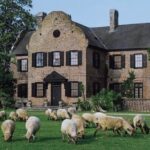
A standout moment on this tour can be stops outside historic homes like the Gov. William Aiken House, which is listed on the National Register of Historic Places (listed in 1977). Even when you’re not stepping up close, the guide’s narration helps those facades become more than just pretty pictures.
Also, pay attention to the “Holy City” framing. Charleston’s religious architecture and civic identity show up constantly in the skyline—church steeples become a visual thread. Guides often bring the Civil War era into the stories in a way that feels connected to the streets you’re riding, not like a separate lecture.
And the gardens? That’s the other big reason people book this. Expect wrought iron gates, yard entrances, and photo-friendly angles where you can grab a quick shot without breaking the group flow.
Guides With Personality: When the Narration Actually Feels Fun
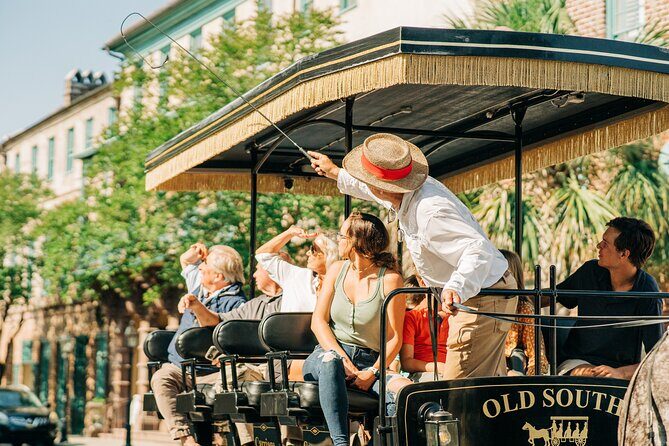
This tour lives or dies by the guide, and the strongest feedback centers on personality plus historic detail. Names that come up again and again include Wendy, Carrie, Ro, Jesse, Carol, and guides like Maddie and Noel. The common thread is that they mix humor with stories so you don’t drift off when the carriage slows.
I like this style because it makes the architecture easier to understand. Instead of memorizing a list of sites, you start noticing patterns: where churches dominate, how mansions present themselves, and how gardens and gates fit into neighborhood layout. That’s the kind of “learning” that sticks.
One useful tip from the way routes are assigned: if you’re hoping for a specific must-see (like the big photo sights people talk about), keep your expectations flexible. A guide can only narrate the route you’re given, and the city zoning system changes the exact lineup.
You can also read our reviews of more tours and experiences in Charleston
Horses You Can Watch, Not Just Ride With
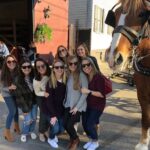
The draft horses are not background noise here. You’ll get close enough to see their behavior and rhythm as they pull the carriage through the streets.
Some people mention moments where the horse seems like a character—like Curtis or Arthur—and that’s part of why this feels different from a bus tour. When the horse is calm and steady, you can relax and focus on the guide. When the horse is clearly alert and responsive, it adds a little extra charm to the ride.
Practical note: the carriages are covered, with a roof that gives shade and some protection in light rain. If the weather is heavy, you’ll still get wet. Lightweight ponchos are available for purchase at 14 Anson Street, which is the kind of small thing that saves your evening plans.
Logistics That Matter (Without Spoiling the Fun)
This is a straightforward activity, but a few details are worth knowing so you don’t feel rushed.
First: check in at least 15 minutes before your scheduled start time. If you don’t, your reservation may be canceled without a refund. I treat this as my “vacation time insurance”—arrive early, breathe, meet the horse, and settle before the tour leaves.
Second: food isn’t allowed on the carriage, though drinks are fine. You can buy water at the offices at 14 Anson Street, so you can keep things simple.
Third: if you’re bringing a stroller, you can’t bring it onto the carriage. You can store it at the stable while you ride, which is helpful if you’re traveling with small kids and still want the carriage experience.
How to Choose the Right Day for This Ride
This tour runs in good weather, and it’s weather-dependent. It’s stated that the experience requires good weather, and it may be canceled for poor conditions. If it’s canceled due to weather, you’ll be offered another date or a full refund.
So I’d plan it for a day when you think you can handle a mild chill or light rain. Charleston’s winter days can feel sharper once you’re outside for a while, so bring a warm layer even if the sun is out early.
If you’re the type who loves great photos, aim for the softer light of morning or late afternoon. And don’t forget: the tour is only about an hour—so you’ll want to have your phone/camera ready before you hit the garden gates.
Who This Tour Fits Best (and Who Might Skip It)
This tour is a great match if you want:
- a low-effort way to see 30 blocks of historic Charleston
- narration that ties the architecture to the bigger story (including the Civil War period)
- strong family energy, with guides who handle kids well
- a calm, scenic pace with photo moments at wrought iron gates and gardens
It may be less ideal if:
- you need guaranteed stops at every single landmark you’ve pinned on a map, because routes vary by city zoning
- you dislike being out in the open for any weather, since the roof helps but doesn’t make you fully weatherproof
If you’ve got limited time in Charleston, this is a smart “get oriented” option. If you’re staying longer and love repeating experiences, you could consider doing it more than once, since different assigned routes can change what you see.
Should You Book Charleston’s Old South Carriage Tour?
Yes, if your goal is an easy, scenic way to understand old Charleston and get your bearings fast. At $50 per person for about an hour, it’s priced like a premium activity—but you’re paying for the combination that’s hard to DIY: a horse-drawn experience, a certified guide with a history-focused approach, and a route that covers enough ground to matter.
I’d book this when:
- you want the classic Charleston look (church steeples, piazzas, gardens, wrought iron)
- you appreciate storytelling with humor, like the guides people specifically mention (Wendy, Carrie, Ro, Jesse, Carol)
- you want comfortable downtime while learning, not another sprint through crowds
If you hate route surprises, read that as a sign to keep expectations flexible. You’ll still get the heart of historic downtown Charleston either way—the city’s zoning system mainly shifts the exact order of stops, not the overall charm.
If you want a single best “first day” move in Charleston, this one makes a strong case.