
Twelve hours in a coach, two Umbrian hilltop towns, two cathedrals built before America existed.
The Assisi and Orvieto day trip is the longest day you can do from Rome without sleeping elsewhere — and the one most people tell me was their favourite thing in Italy.
Quick Picks
- The classic — Assisi and Orvieto Day Trip from Rome ($198). 12.5 hours, both towns, lunch.
- Swap Assisi for the dying town — Bagnoregio & Orvieto Day Trip with Wine ($93). Half the price, dramatic medieval hilltop.
- Smaller-group version — Assisi & Orvieto Day Trip from Rome (GYG) ($174). Less coach-tour feel, $24 cheaper than the Viator version.
- Quick Picks
- What 12.5 Hours Actually Looks Like
- Booking the Three Real Options
- Assisi and Orvieto Day Trip from Rome — 8.23
- From Rome: Bagnoregio & Orvieto Day Trip with Wines & Lunch —
- Assisi & Orvieto Day Trip from Rome (GYG) — 4.46
- Why Assisi Is Worth the Drive
- Why Orvieto Is the Surprise
- The Lunch Most Tours Include
- The Bagnoregio Alternative
- The Coach Reality You Should Expect
- What This Tour Doesn’t Tell You
- Who This Tour Works For
- Pairing With the Rest of Your Rome Trip
- What to Pack for the Day
- The Honest Verdict
What 12.5 Hours Actually Looks Like
You leave Rome around 7:00am. Coach drives 2.5 hours north into Umbria. Arrive Assisi 09:30. Walk the basilica complex and town for 2-2.5 hours. Lunch at a partner restaurant in the countryside (1.5 hours including wine). Coach to Orvieto, 90 minutes. Walk Orvieto and the cathedral 2 hours. Coach back to Rome, 90 minutes. Drop-off around 19:30.
That’s the rhythm. Long ride, big stop, long lunch, big stop, long ride home. Most people fall asleep on the return leg. Most people are also surprised at how the day flies despite the duration — when you’re moving between three locations rather than spending all day in one, the hours collapse.
The brutal truth: this is a long day. If you’ve been in Rome for a week and you’re already tired, this trip will exhaust you. If you’ve just arrived in Rome and want a “see something completely different from the city” experience to anchor your trip, it’s perfect.
Booking the Three Real Options
The Umbrian day-trip market splits between three structures: the standard Assisi & Orvieto combo, the Bagnoregio & Orvieto alternative (Bagnoregio replacing Assisi), and various smaller-group versions of either combination.

Assisi and Orvieto Day Trip from Rome — $198.23
The category default. Coach pickup near Termini around 7:00, full-day, lunch included with wine, return around 19:30. The whole day in order — Assisi morning, Orvieto afternoon, what the lunch actually is — is in the review. The price is real but you’re getting a 12.5-hour coach tour with two paid attractions and a sit-down meal.
From Rome: Bagnoregio & Orvieto Day Trip with Wines & Lunch — $93
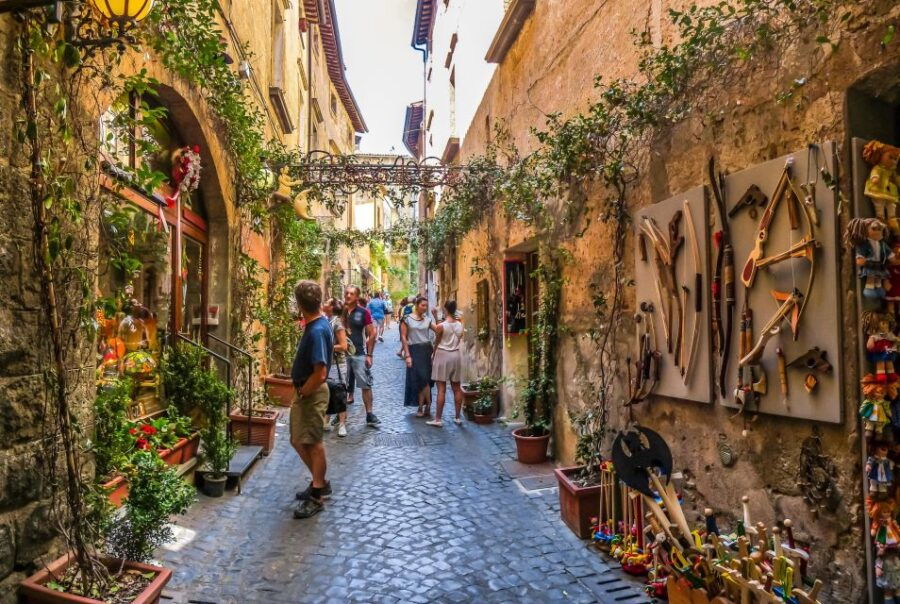
Half the price of the Assisi version because Bagnoregio is closer to Rome — less coach time. Bagnoregio is the famous “dying town,” a medieval hilltop village connected to the world by a single pedestrian bridge and slowly losing chunks to erosion. Why the dying-town novelty alone justifies the trip is the read if you’re on the fence. Good pick for travellers without a religious-pilgrimage interest.
Assisi & Orvieto Day Trip from Rome (GYG) — $174.46
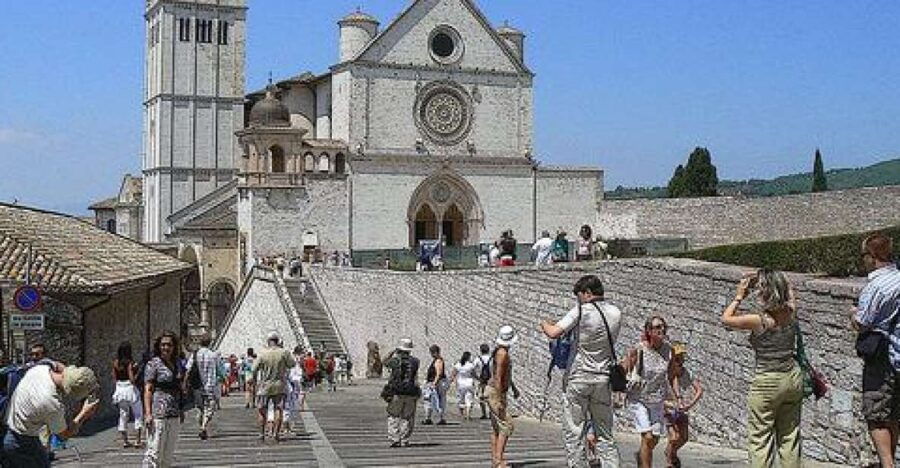
The GetYourGuide listing of the Assisi-and-Orvieto combo, $24 cheaper than the Viator version with similar content but smaller groups. The smaller group format is meaningfully better — less queueing, more guide attention. Pick this if you want both towns at a slight savings.
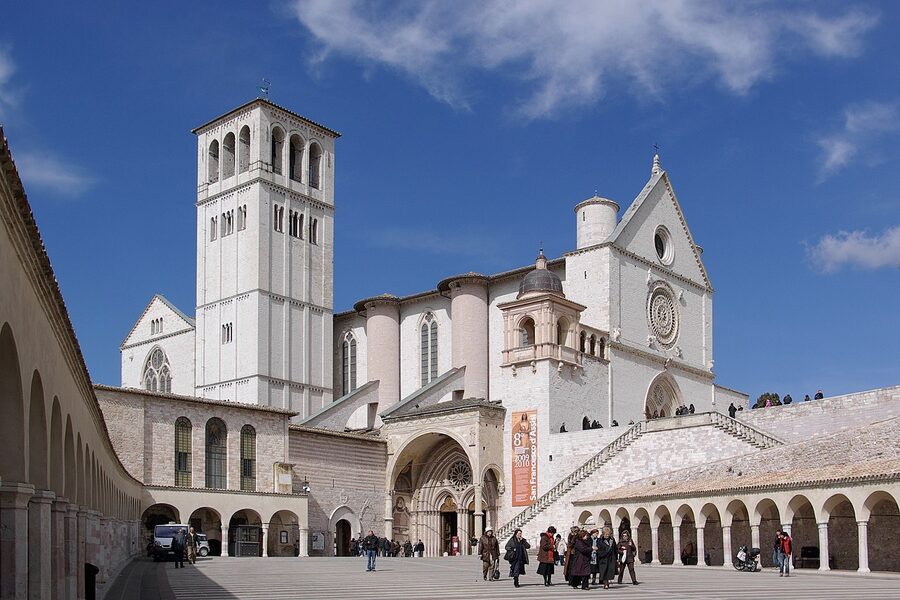
Why Assisi Is Worth the Drive
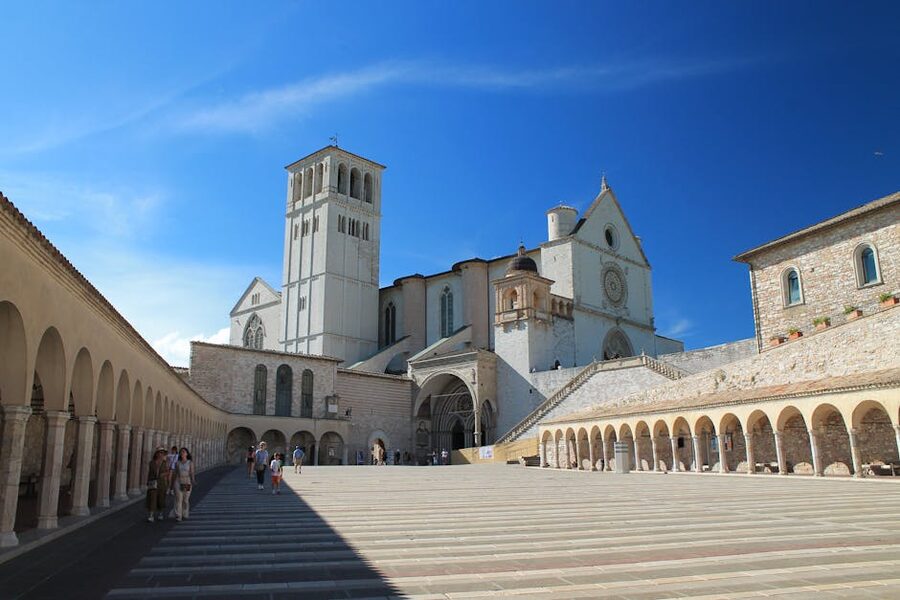
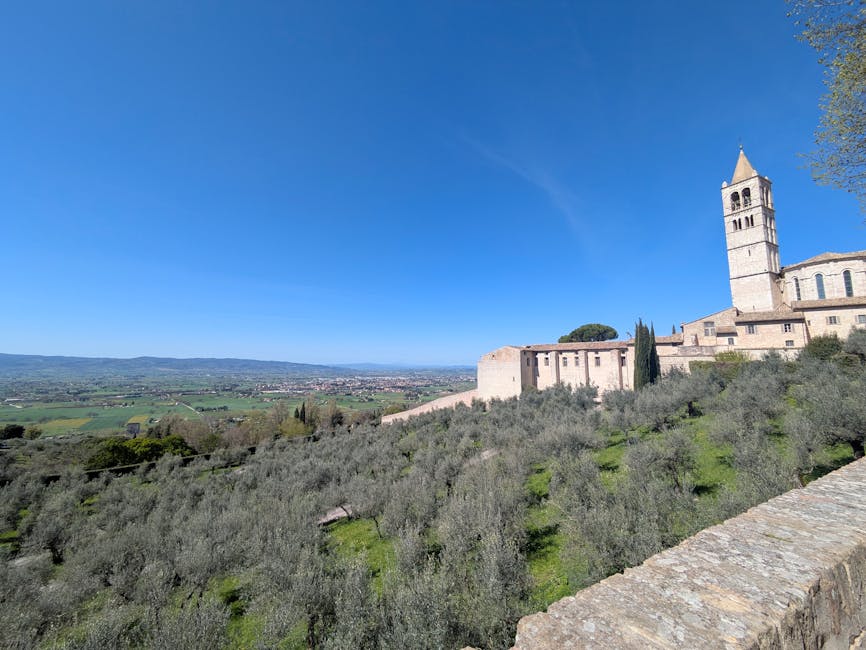
Assisi is famous for one thing: St. Francis lived and died here in the early 13th century. Within a generation of his death, the town became Catholicism’s third-most-important pilgrimage site after Jerusalem and Rome. Eight hundred years later, it still is.
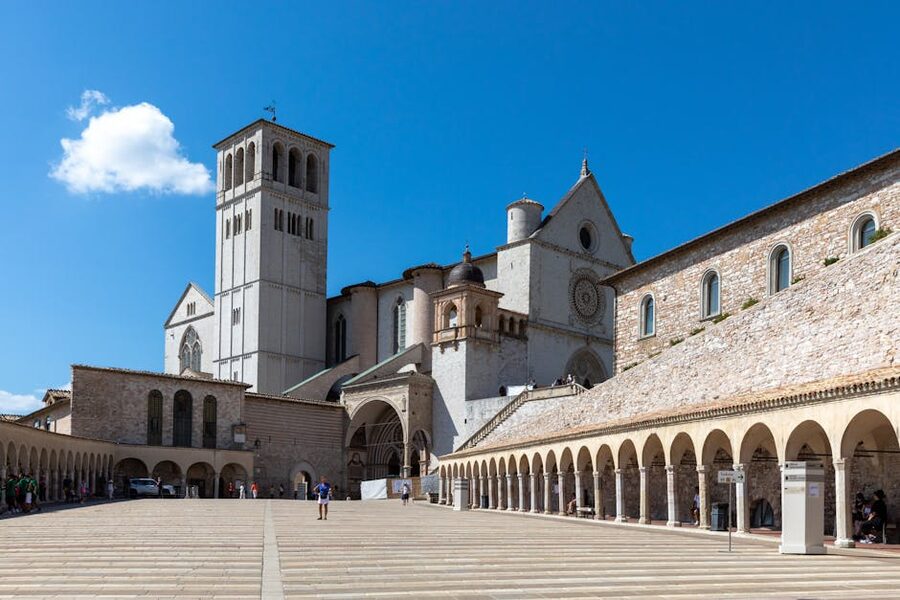
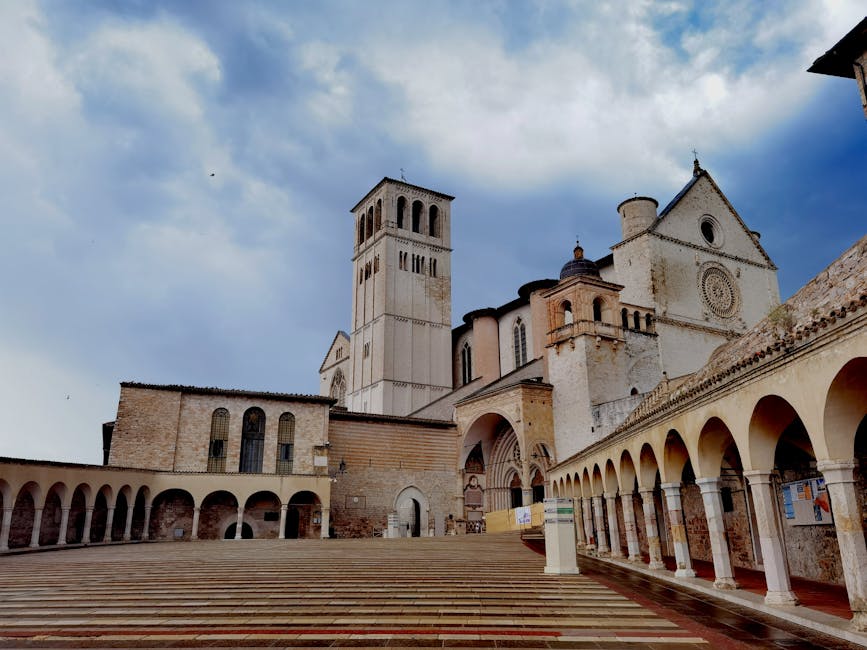
The Basilica of Saint Francis is the destination. Three things to know about it: it’s free to enter (yes, all of it), photography inside is forbidden (strictly enforced), and the upper church frescoes by Giotto (1290s) are some of the most important paintings in Western art history. Giotto basically invented narrative painting here — figures with weight and emotion, depth in space, a story you can read across the wall in sequence. Before Giotto: medieval flat religious icons. After Giotto: everything we now think of as Western painting.
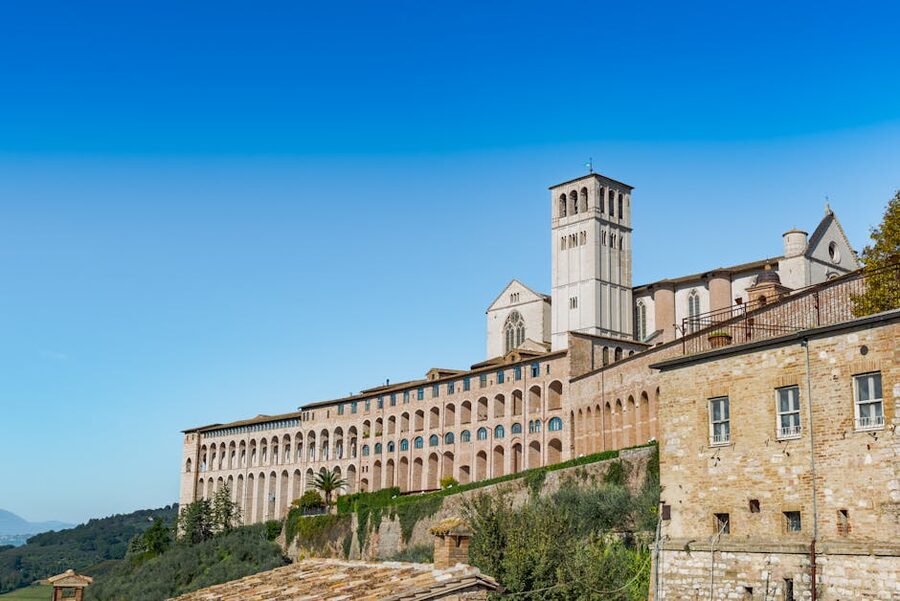
The town itself outside the basilica is a 13th-century pink-stone hilltop village that’s been preserved partly through religious tourism economics, partly through Italian heritage law, and partly because making any change to a 13th-century town turns out to be ridiculously expensive. The cobblestones are original. The walls are original. The street layout hasn’t changed.
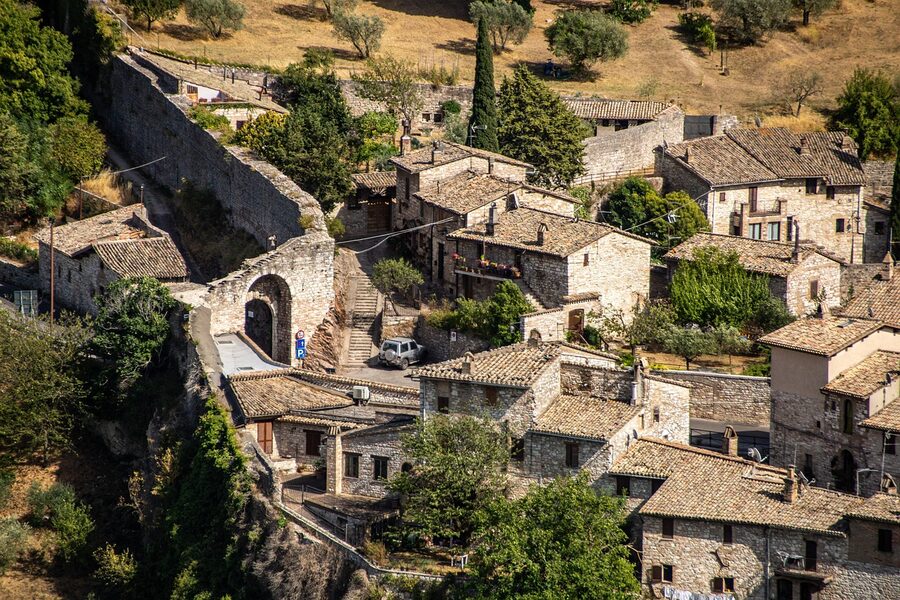
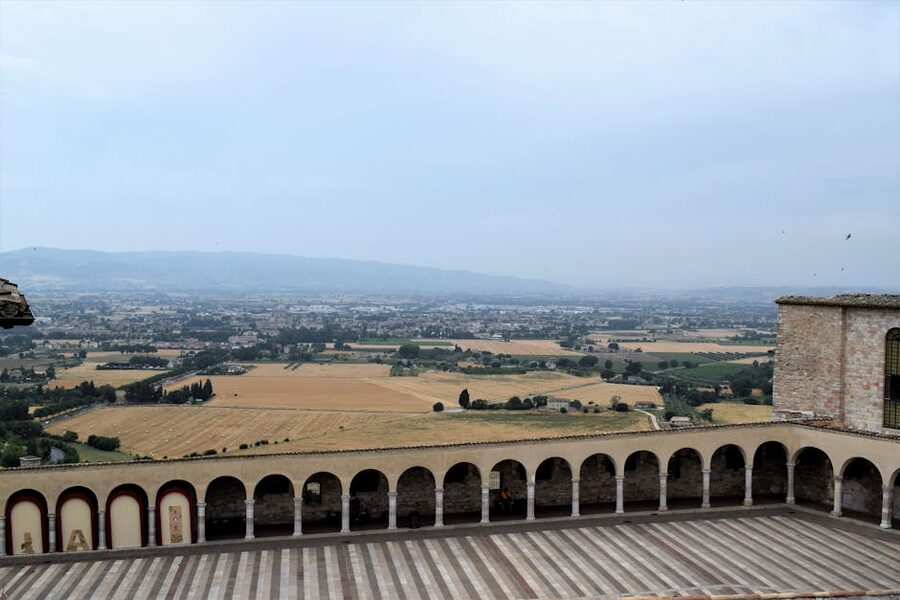
You’ll have 2-2.5 hours in Assisi on the standard tour. That’s enough for the basilica (45-60 minutes), the main square Piazza del Comune (15 minutes), the small Roman temple of Minerva preserved as a church (10 minutes), and a coffee at a local cafe (15-20 minutes). Not enough to see the rest of the town — Santa Chiara basilica, the Rocca Maggiore fortress on the hilltop, the Eremo delle Carceri hermitage outside town. If you want those, you’d need a full day in Assisi alone.
Why Orvieto Is the Surprise
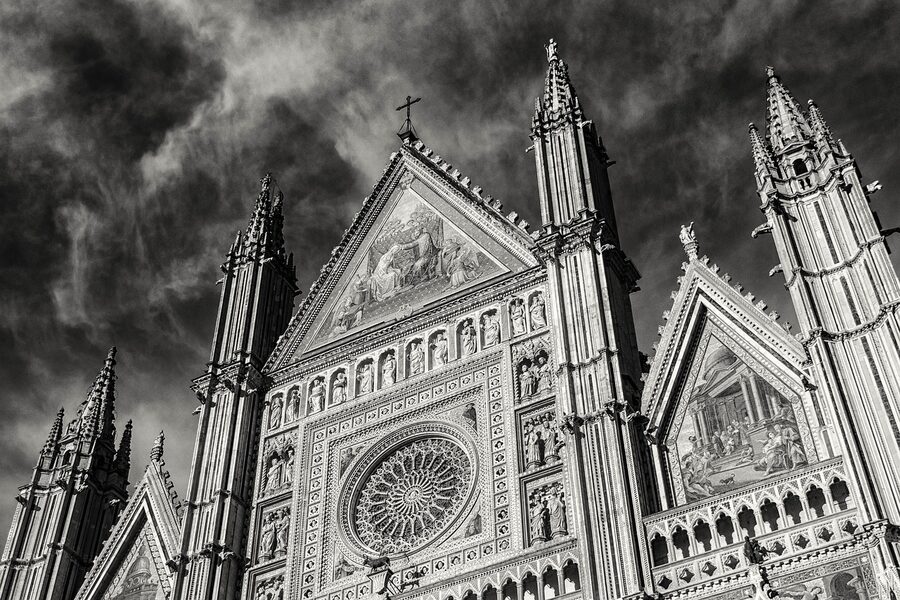
Orvieto sits on a 100m-high tuff cliff visible from the highway 20km away. The town has been continuously inhabited since the Etruscans (900 BC). The cathedral is one of the masterworks of Italian Gothic architecture and most international tourists haven’t heard of it.
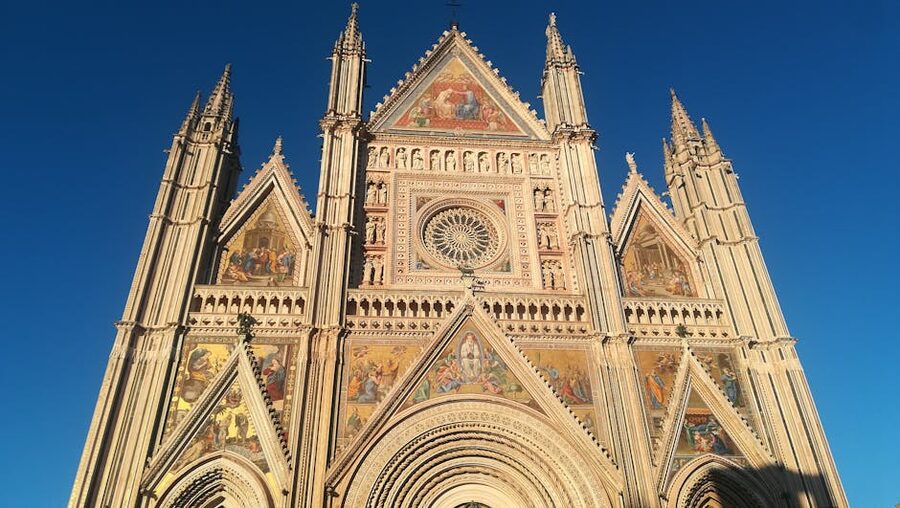
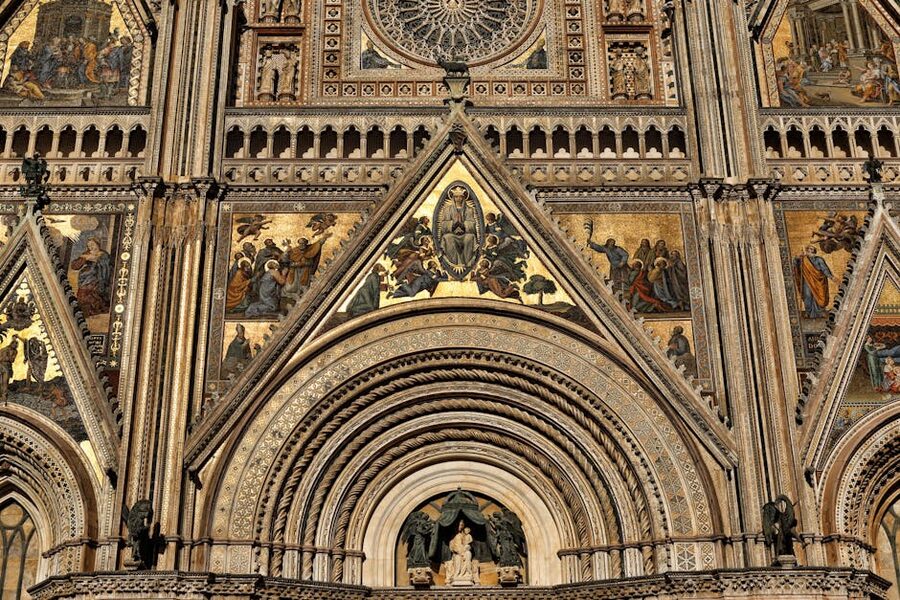
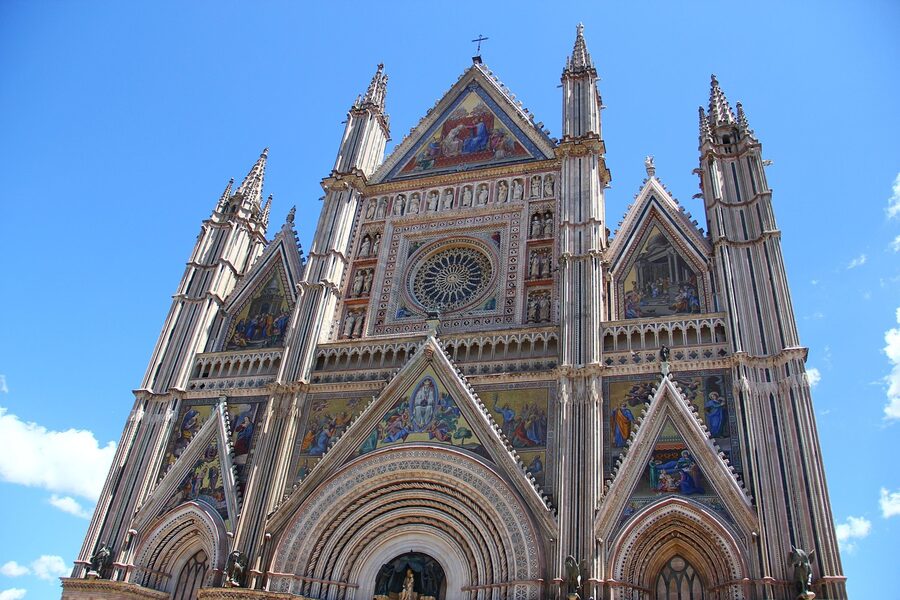
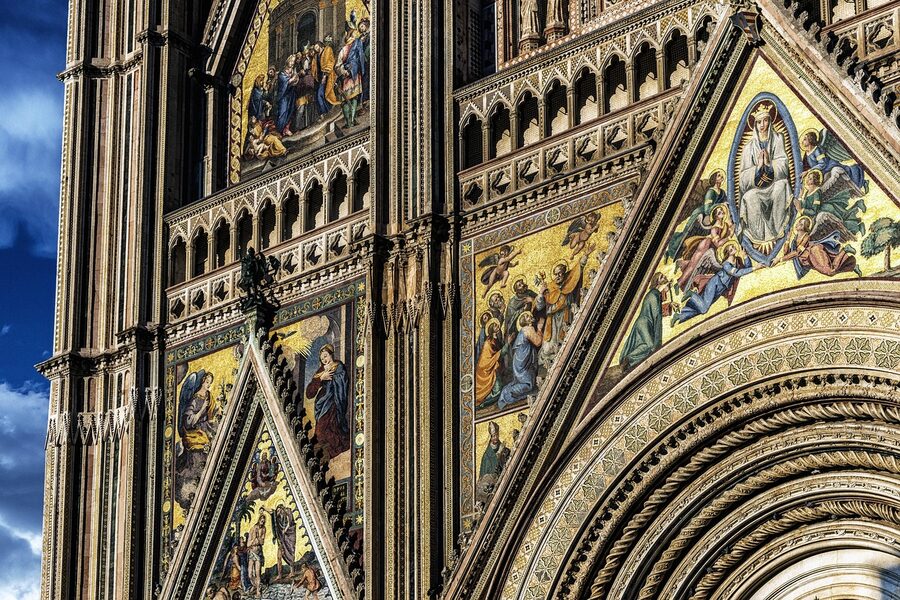
The Duomo (Cathedral) facade is the headline. Construction started in 1290, took 300 years to finish, and required the work of every major medieval Italian sculptor and mosaicist. The result is a five-story polychrome puzzle — biblical scenes in low relief, golden mosaics depicting the life of the Virgin Mary, rose windows by Lorenzo Maitani — all designed to be read by medieval pilgrims like a comic book of theology.
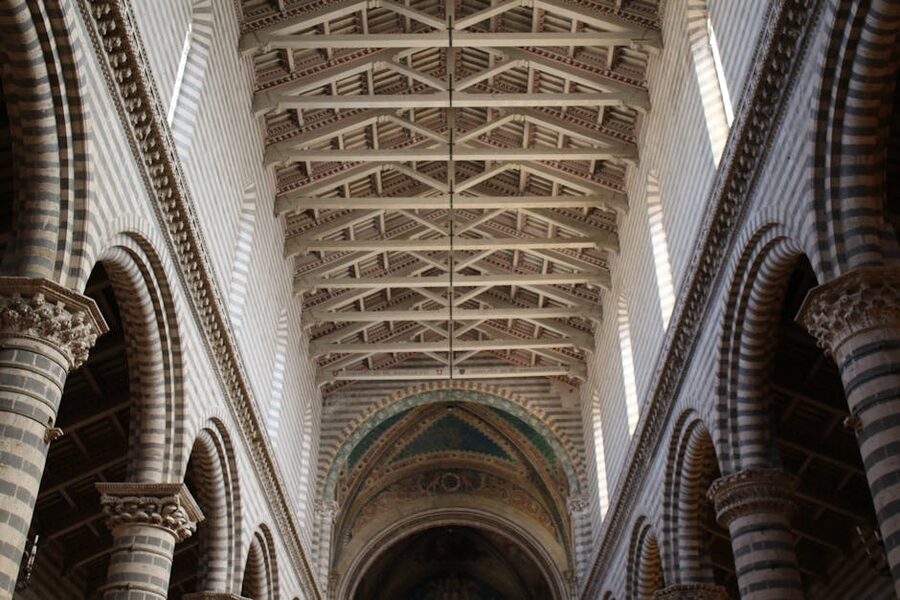
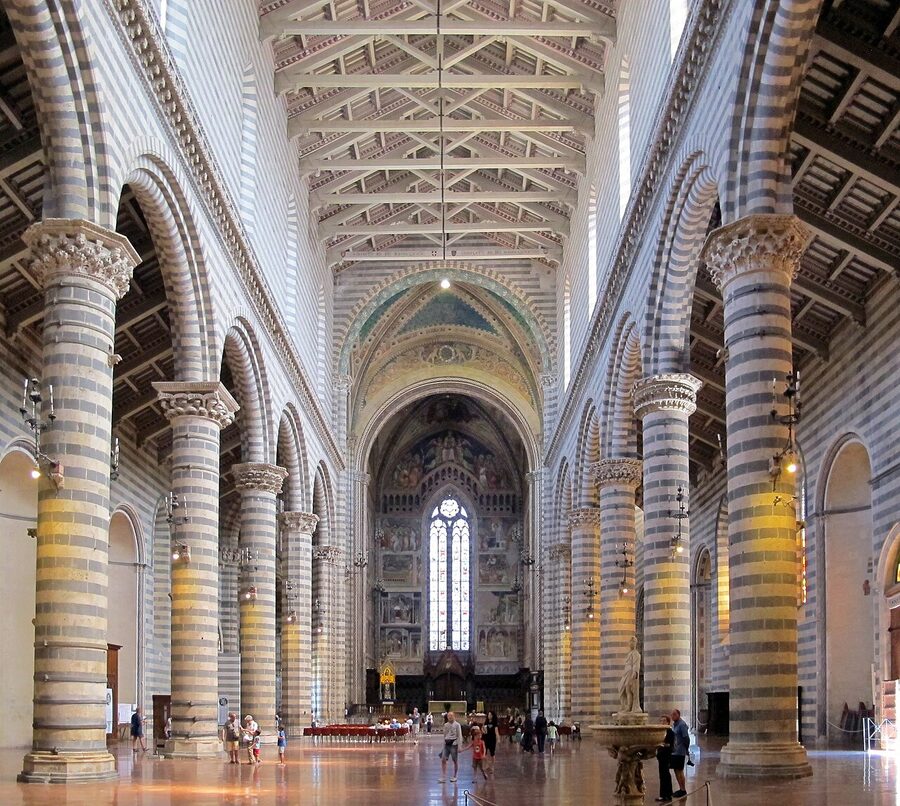
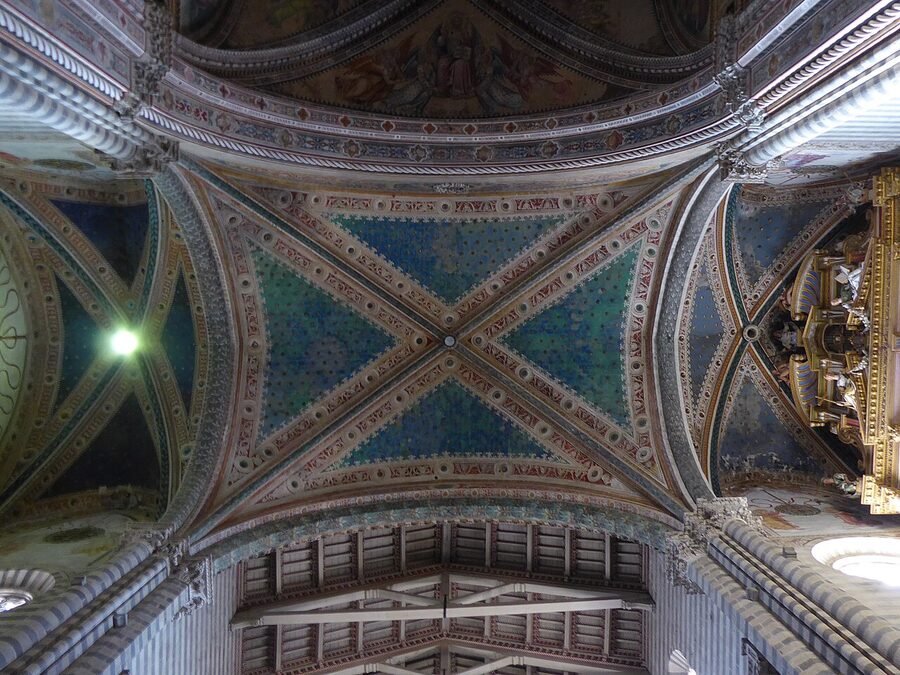
Inside the cathedral: stripey black-and-white architecture (you’ll think Siena Cathedral if you’ve been there — same Tuscan-Umbrian Gothic tradition), Luca Signorelli’s “End of the World” frescoes in the San Brizio Chapel (which influenced Michelangelo’s Sistine Chapel — Michelangelo studied them in person), and the Cappella del Corporale holding the relic from the Miracle of Bolsena (the Eucharistic miracle that inspired the Feast of Corpus Christi).
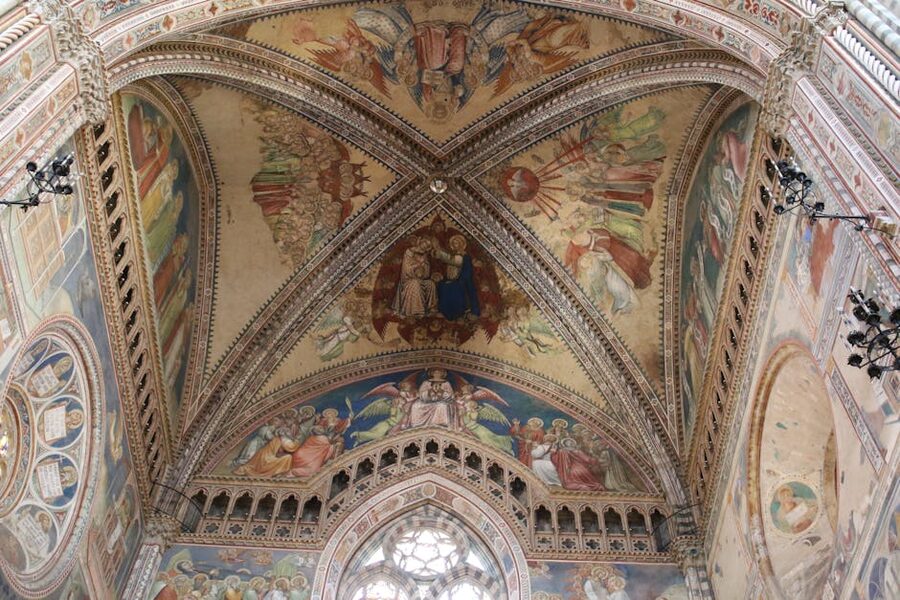
The Signorelli frescoes alone justify the trip. They depict the End of the World, the Resurrection of the Dead, the Damned in Hell, the Blessed in Paradise. Painted 1499-1502, immediately before Michelangelo started work on the Sistine ceiling. Michelangelo spent weeks in Orvieto studying these frescoes, and you can trace direct compositional debts. They’re free to see (included in the cathedral ticket) and most tourists never enter the chapel because they don’t know it’s there.
The Lunch Most Tours Include
The Umbrian lunch on these tours is real. Not the rubber-chicken bus-tour buffet you might fear. A typical stop is a family-run agriturismo (countryside farm restaurant) serving regional Umbrian dishes — thick handmade strangozzi pasta with truffle, wild boar ragout, local pecorino cheeses, the regional white wine Orvieto Classico (which is excellent and surprisingly cheap when bought direct).
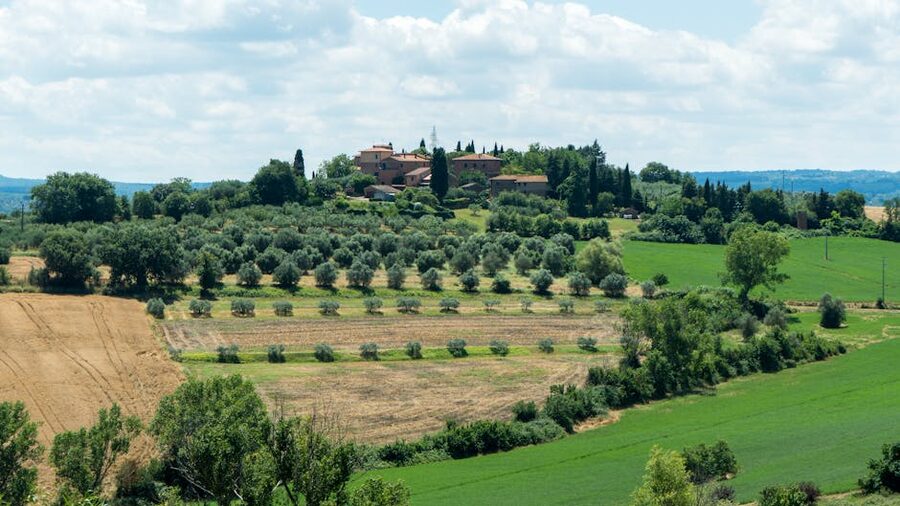
Lunch typically runs 90 minutes. Three courses, wine included (water and a soft drink for non-drinkers). The wine is generous — by the end you’ll be sleepy on the coach to Orvieto, which is the entire point of doing the lunch in the middle of the day rather than at the end.
What you should know: the lunch is included in the tour price. You can’t decline it for a refund. If you’ve got a packed schedule and want to save the lunch slot for the towns themselves, you’ll need to skip courses — and the staff will look at you sadly because Italian agriturismo lunch is the entire purpose of the institution.
Vegetarian options always available. Vegan less reliable — flag it 48-72 hours before the tour. Gluten-free is doable with notice. Allergies are taken seriously.
The Bagnoregio Alternative
The Bagnoregio & Orvieto trip swaps the Assisi pilgrimage for Civita di Bagnoregio — a medieval hilltop town slowly being eaten by erosion, accessible only via a pedestrian footbridge, with a population that fluctuates between 6 and 16 depending on the season.
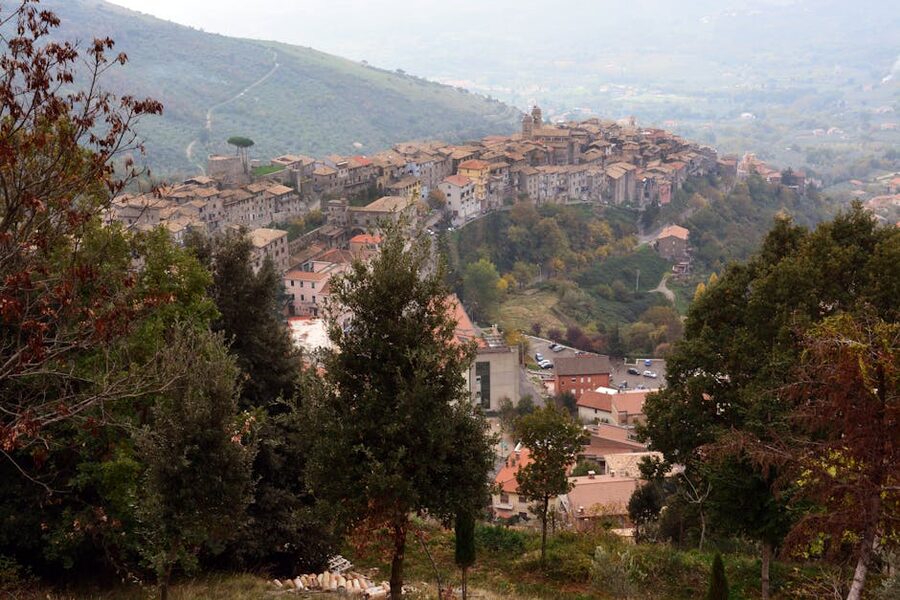
Bagnoregio (the larger town next door) is where the coach drops you. Civita (the dying village) is across the valley, accessed only by a 300m pedestrian footbridge. You walk in, explore for an hour, walk out. The town itself has maybe 5 streets, 3 churches, 2 cafes, and views in every direction over a moonscape of eroded tuff valleys.
Why this is the cheaper alternative: the drive from Rome is shorter (Bagnoregio is closer than Assisi), the Bagnoregio entry fee is small (€5-8), and the wine tasting included on these tours is at a Lazio winery rather than the more upscale Umbrian agriturismo lunch.
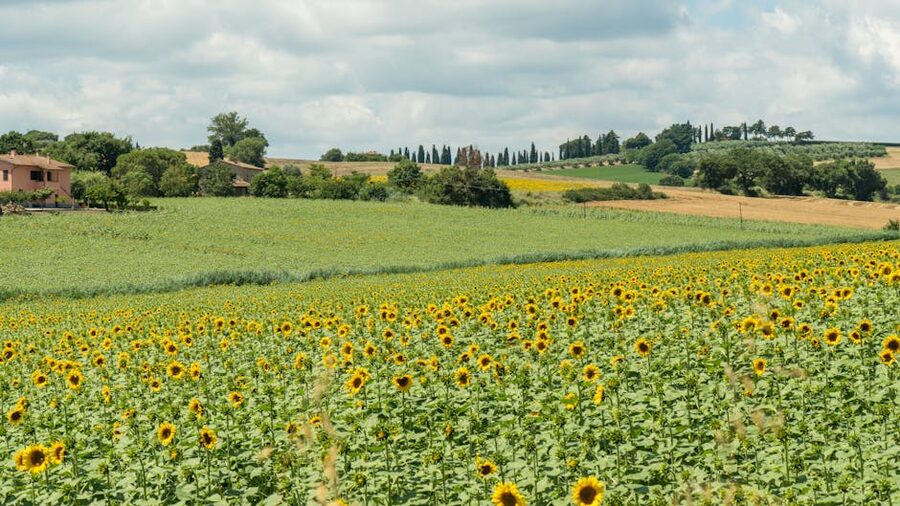
The trade-off: you don’t get Assisi. If St. Francis or Giotto are reasons you came to Italy, do the Assisi version. If “see weird Italian hilltop towns” is more your thing, Bagnoregio is more visually striking.
The Coach Reality You Should Expect
These are coach tours. You’ll spend roughly 4-5 hours of the 12.5-hour day on the bus. The coaches are modern (air-conditioned, comfortable seats, decent legroom) but they’re still buses.
The morning coach ride leaves Rome around 7:00am. Expect to arrive at the meeting point by 6:45 — most operators meet near Termini Station or at the Vatican area. You’ll be on the coach by 7:15, on the highway by 7:30. The first 90 minutes are highway driving with rest stop at a service plaza around 8:30 (Italian service stations have surprisingly good cafes; coffee + cornetto is €4-5).
The mid-day coach rides are shorter (Assisi to lunch is 30 minutes, lunch to Orvieto is 90 minutes). The return leg from Orvieto to Rome is the longest — 2 hours straight back to the city, arriving around 19:30. Most people sleep through this.
Coach amenities: WiFi sometimes (don’t rely on it), bathroom on board (basic but works), no food or drink service (eat at the rest stop). USB charging at most seats.
What This Tour Doesn’t Tell You
A few practical realities the operator descriptions skip.
Time inside Assisi is shorter than you’d want. 2-2.5 hours covers the basilica and a quick town walk. To see the smaller churches (Santa Chiara, Santa Maria Maggiore, the Roman Temple of Minerva interior) you’d need 4-5 hours. The day-trip format doesn’t allow this. If Assisi is your specific interest, consider an overnight stay instead.
Photography is heavily restricted at the basilica. No flash, no tripods, no professional cameras. Phones are tolerated but staff will tell you to stop if you point one at the Giotto frescoes. The frescoes are protected by copyright the Franciscan order zealously enforces.
The basilica closes for liturgical events. Mass times block tourist access. Tour operators schedule around them but unexpected services can cause delays.
Orvieto’s free attractions may surprise you. The cathedral itself has a paid section (Signorelli chapel — €5 entry separately) but the main nave is free. Tour groups handle the paid entry as part of the package, but if you came independently, budget €10-15 for the various paid attractions inside the town.
Underground Orvieto is its own thing. The Etruscan and medieval tunnels under the town are accessible via separate guided tour (about €7, 45 minutes). Tour groups don’t usually include this. If you want it, you’ll need to skip part of the cathedral visit and book separately.
Weather affects this trip more than Rome itself. Umbria is hillier and slightly cooler than Rome — bring layers in spring and autumn. Summer can be brutally hot at the hilltop towns where there’s no shade. Winter mornings can be foggy in the valleys, hiding the hilltop towns until you’re 200m away.
Who This Tour Works For
The Assisi & Orvieto trip is unusually well-suited to specific traveller types and unusually punishing for others.
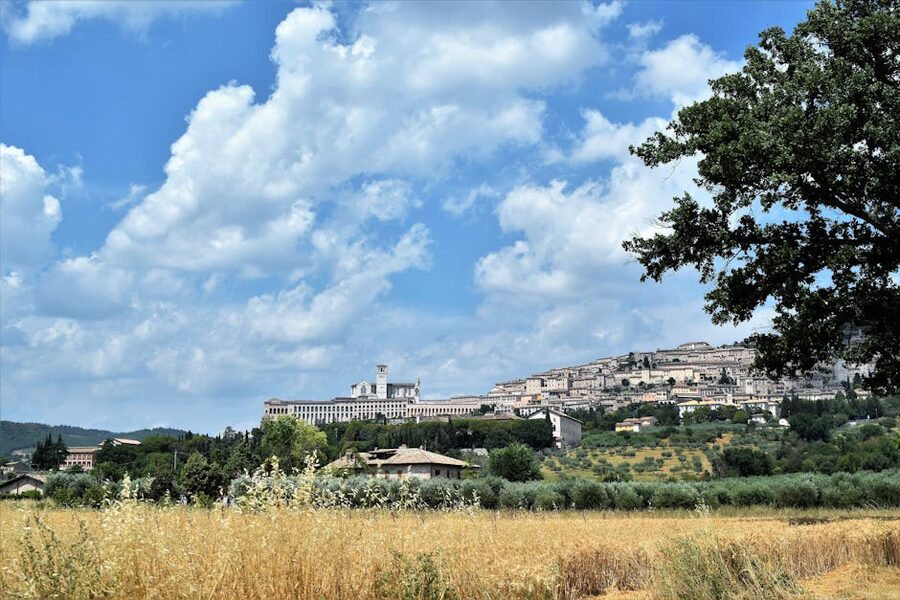
Great for: Catholic pilgrims (St Francis is one of the religion’s saints), art history travellers (Giotto + Signorelli + Maitani in one day), countryside-Italy enthusiasts who didn’t want to plan a Tuscany road trip, travellers who like efficient “two locations in one day” packaging.
Adequate for: general tourists who want a Rome-area excursion, photographers who can work fast, food-lovers who appreciate the Umbrian regional cuisine.
Doesn’t work for: people who hate organized coach tours, travellers who get motion sick on long drives, anyone with serious mobility issues (cobblestones and uphill walking are mandatory), visitors with less than 5 days in Rome (this single day is too long a commitment for short trips).
Pairing With the Rest of Your Rome Trip
The Assisi & Orvieto trip is a 12.5-hour commitment — schedule it carefully relative to your other Rome plans.
The combinations that actually work: do this trip on day 4 or 5 of a Rome week, after you’ve already covered the urban basics — the day trip becomes a “completely different Italy” reset that revives interest in the city when you return. Don’t book it on day 1 (jet lag will destroy you), don’t book it on the day before you fly home (you’ll be too tired to pack), and don’t book it the day after a late-night activity like an evening Trastevere food tour — the 7am pickup will hurt. The smart sequence: day 1 light arrival activities, day 2 Vatican or major Rome site, day 3 lighter Rome day (maybe the Papal Audience if it’s a Wednesday), day 4 full-day Umbria trip, day 5 recovery + lighter Rome culture like the Borghese Gallery. If your trip is a fly-in-fly-out 4-day affair, skip this trip — there isn’t time. Save it for a longer Italian itinerary.
What to Pack for the Day
Day-trip packing matters more than usual because you’re committed for 12+ hours with no return to your hotel.
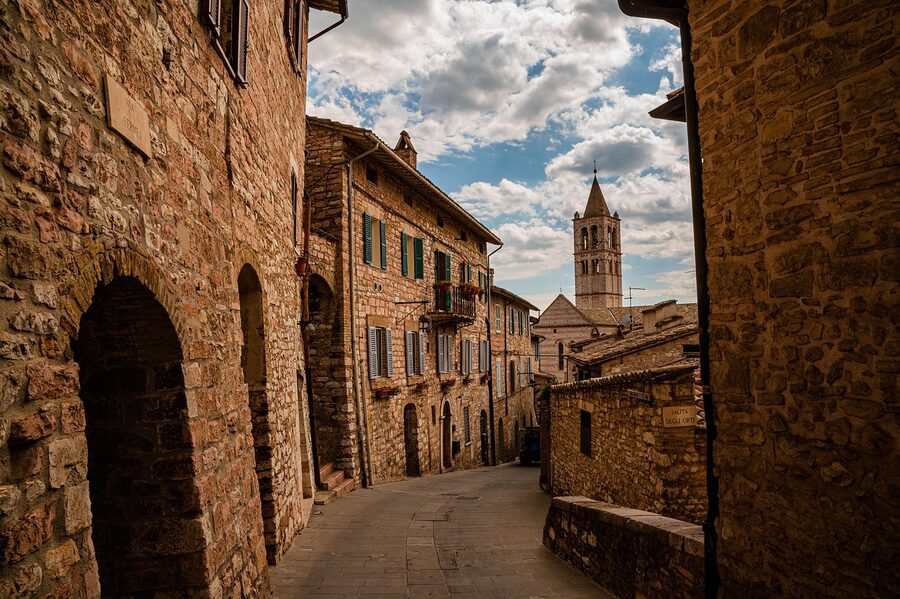
Comfortable closed shoes. Both towns involve uphill walking on uneven medieval cobblestones. Sandals work but feet get sore by hour 8.
Modest dress for the basilica. Shoulders covered, knees covered for both men and women. Bring a light scarf as a cover-up if your shirt is sleeveless. Staff turn people away in tank tops.
Layers. Coach is air-conditioned (cold), midday Umbria can be hot, evening on the coach back is warm. Pack one extra layer you can add or remove.
Water and snacks. Lunch is included but the morning has a long gap (7am pickup, 9:30 arrival, lunch at 13:00). A small snack and water bottle prevents low-blood-sugar misery at hour 5.
A portable phone charger. Heavy photography day, plus the coach charging may not work for your specific phone.
Sunscreen and sunglasses. Italian summer sun is brutal on hilltops with no shade.
The Honest Verdict
The Assisi & Orvieto day trip is a long, real commitment that delivers a substantially different Italy from what you see in Rome itself. The Basilica of Saint Francis is one of the most important religious buildings in the Christian world. The Orvieto Cathedral facade is one of the masterworks of European Gothic architecture. Both are within day-trip distance of Rome on roads that pass through Umbria’s classic landscape.
Book the Bagnoregio version ($93) if budget matters and Assisi isn’t a personal pilgrimage interest — Bagnoregio’s dying-town novelty is genuinely unique and the savings are substantial. Book the Assisi version ($174-198) if you want the religious-art heritage and the higher-quality lunch experience. Either way, plan it for the middle of a longer Rome trip when you’ve got the energy and the contrast helps the rest of your trip land better.
Don’t book this if you’re in Rome for fewer than 5 days. Don’t book it on either end of your trip. And don’t expect to do anything strenuous the next morning — give yourself a slow day after this.