
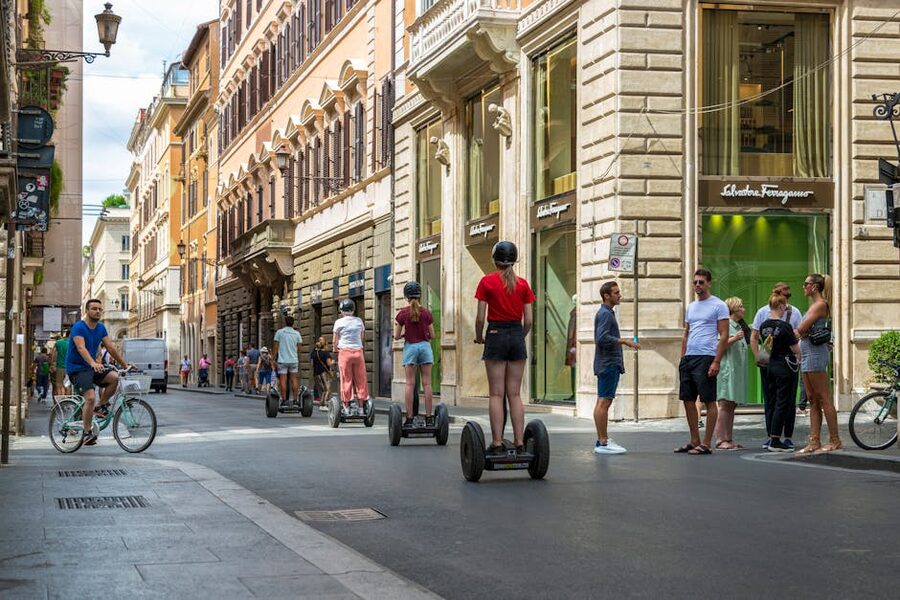
Look. You’ll feel like a dork. Helmet on, hands on the bars, knees locked, every Roman in a 30-metre radius pretending you don’t exist. Get over it. Three days into a Rome trip your feet hate you, the cobblestones have eaten your nice shoes, and the city is so dense with stuff to see that walking can’t keep up. The Segway is the unsexy answer almost everyone refuses to consider — and the people who book it are the ones who actually see Rome instead of crawling between two monuments per afternoon and collapsing.
Quick Picks
- The default pick — Rome Sights by Segway Tour ($90). 2.5 hours, daytime. Book if you only do one.
- The smart pick: Rome at Night Segway Tour ($91) — same operator, same price, monuments lit up, nobody around. This is the one.
- GetYourGuide alternative: Rome Sights by Segway (GYG) ($88) — same daytime route, different platform, $2 cheaper.
- Quick Picks
- Why Walking Rome Stops Working After Day 2
- Booking the Three Real Options
- Rome Sights by Segway Tour — .70
- Rome at Night Segway Tour — .74
- Rome: Sights by Segway Tour (GYG) —
- The First 20 Minutes Are Terrifying. The Next Two Hours Are Easy.
- The Route You’re Actually Doing
- Why the Night Tour Is the Right Tour
- What This Costs vs What It Saves
- The Things Reviews Don’t Tell You
- Where Segway Tours Quietly Beat Walking Tours
- Combining the Segway With the Rest of Your Rome Trip
- What to Wear (Skip If You’re Not Worried)
- The Honest Verdict
Why Walking Rome Stops Working After Day 2
Rome looks compact on the map. It is not. The historic centre alone runs about 4km east-west and the things you actually want to see are spread across that whole zone, plus Trastevere, plus the Vatican, plus Villa Borghese in the north. That’s a 7-8km walking radius minimum if you want to hit everything in one trip.
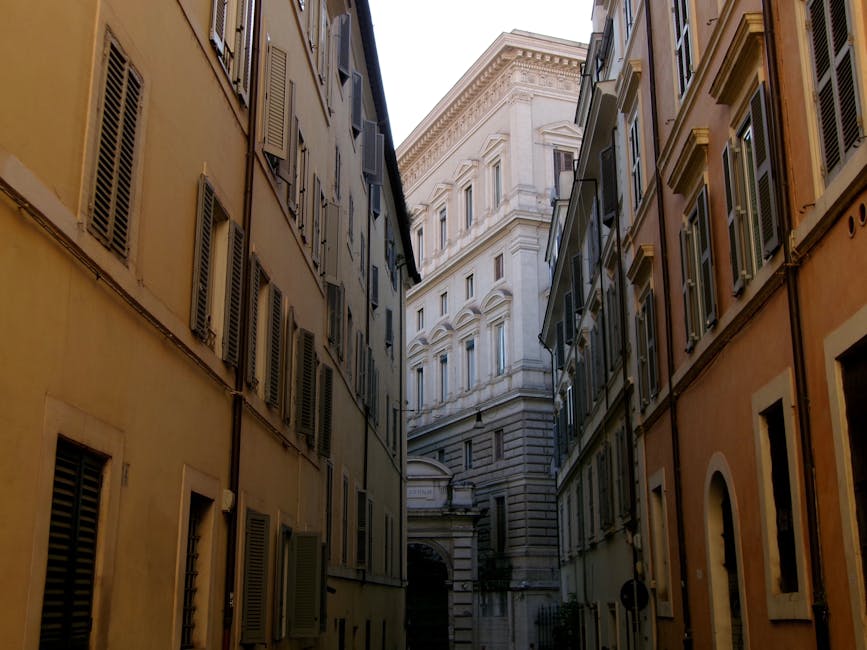
Now factor in the cobblestones (sampietrini, since you asked, and yes you will hate them by Wednesday), the seven hills that the city was famously built on, the heat from May to September, and the fact that bike lanes basically don’t exist. Walking is romantic for the first twelve hours. Then it’s just walking. The Segway short-circuits all of that — you cover ground at maybe 6-8 mph, you’re standing not walking, and the cobblestones become a non-issue because the wheels are big enough to roll over them.
People who refuse Segways usually do so on aesthetic grounds. Fine. But then they walk past three things they wanted to see because they ran out of legs at 3pm and limped back to the hotel. Pick your trade-off honestly.
Booking the Three Real Options
There are about ten Segway tour operators in Rome and three of them are worth your money. The other seven are upsell-heavy or run by people who learned the route last week. These three have the volume and the reviews to back up what they sell.
Rome Sights by Segway Tour — $90.70
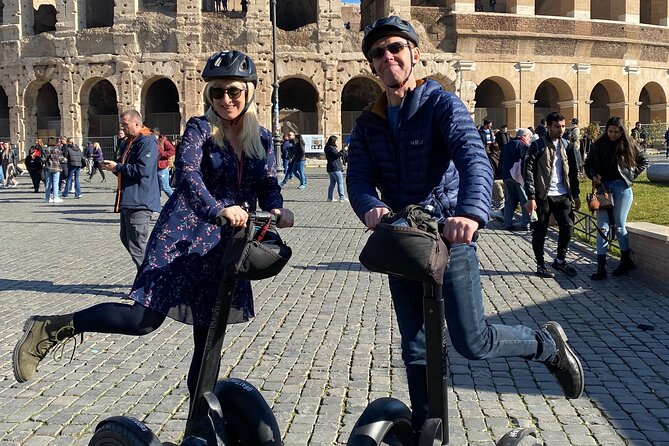
The heavyweight default. Two and a half hours, twelve monuments, a 20-minute training session before they let you near a real road. The route in detail — exactly which twelve stops and in what order — is in the review. Picks up around Piazza Venezia, ends near the Pantheon. If you’ve never ridden one, this is where you start.
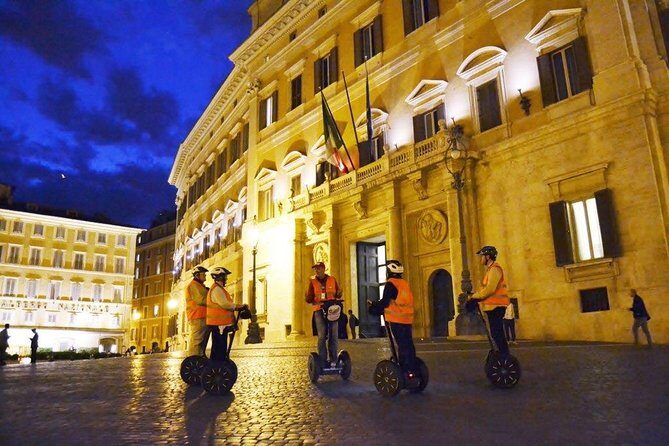
Rome at Night Segway Tour — $90.74
The same company’s night version and — controversial opinion — the only Segway tour worth doing on your first Rome trip. The Colosseum is floodlit, the Trevi Fountain is empty enough to actually photograph, the streets are 80% emptier of cars, and the heat that’s killing you in summer afternoons is gone. Why the night version costs roughly zero extra dollars for much more memorable photos is the pitch. Daytime tours are fine. Night tours are memorable.
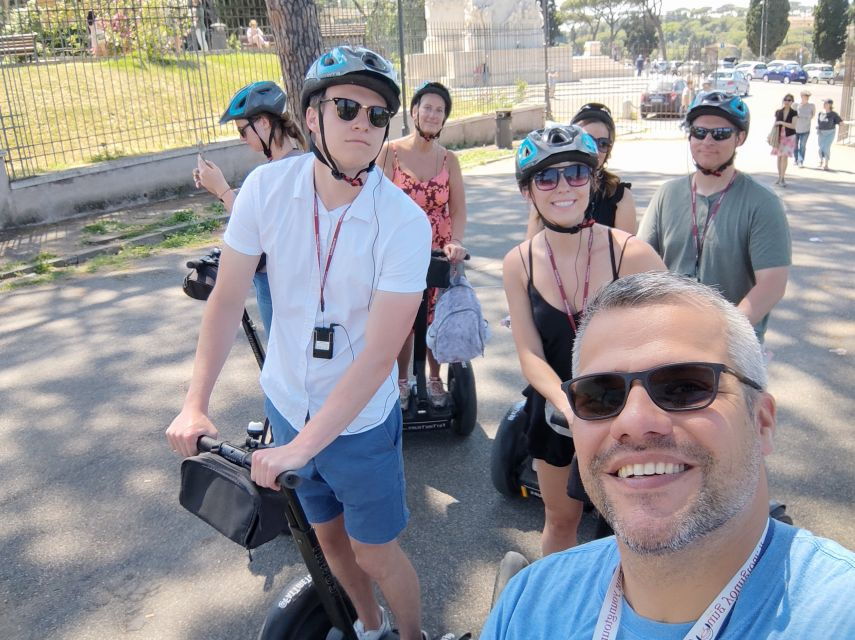
Rome: Sights by Segway Tour (GYG) — $88
Functionally identical to the main daytime tour, listed on GetYourGuide instead of Viator. Save $2.70, get the same trainers, same route, same sandwich-board lecture about looking up to balance. The practical differences are zero, which is the relevant finding. Use this if you’re already on GetYourGuide for other bookings — and if you prefer pedals to wheels, the Cannondale e-bike tour hits the same stops.
The First 20 Minutes Are Terrifying. The Next Two Hours Are Easy.
Nobody is born knowing how to ride a Segway. The first time you step on one, every instinct your nervous system has tells you to panic and lock your knees. Locking your knees is what makes you fall. The trainer will tell you this six times before you set off, and you will still do it twice.

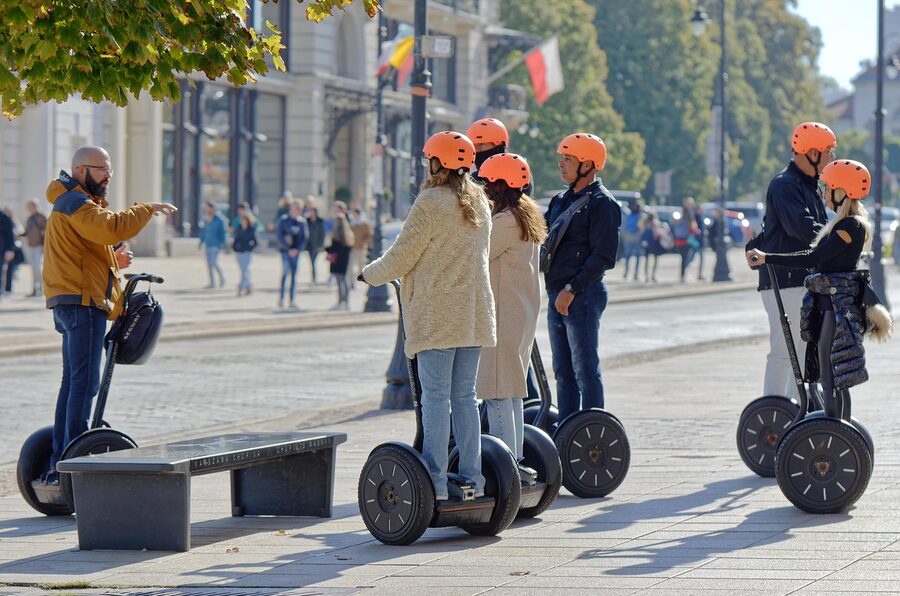
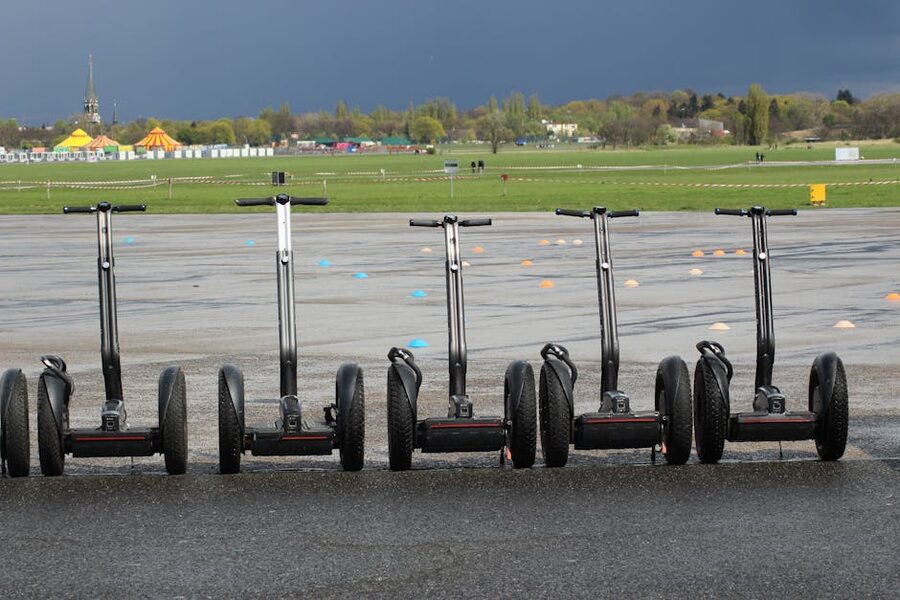
Here’s how training actually works. You stand on the platform with both feet, hands on the bars. The thing wobbles for ten seconds while it figures out your weight. Then it stops wobbling. You lean forward — barely, like 5 degrees — and it rolls forward. You lean back, it rolls back. Stop leaning, it stops. That’s the entire mechanic. The brain catches up around minute three; by minute eight you’re doing slow circles around an orange cone; by minute fifteen you’re trying it with one hand for a photo.
The two things that trip people up: looking down at your feet (your eyes need to be on the horizon for balance to work), and trying to “drive” by twisting your body (you steer by tilting the handlebars sideways, that’s it). If you can ride a bike you’ll have it figured out in five minutes. If you can’t ride a bike you’ll have it figured out in ten.
What I haven’t seen anyone fail to manage: the actual riding once you’re moving. The Segway corrects for everything. Cobblestone bumps that would throw a bike rider don’t faze it. Slight hills are handled by the motor. The only genuine skill required is staying loose and not over-thinking it.
The Route You’re Actually Doing
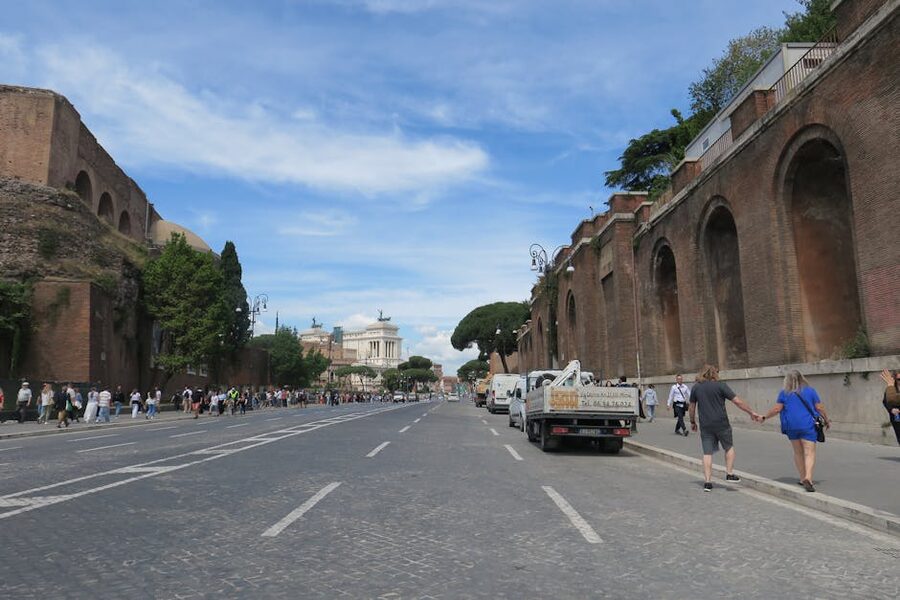
The standard 2.5-hour daytime route covers about 6km with stops for photos and storytelling. Pickup is usually around Piazza Venezia or Largo Argentina — central enough that any hotel in the historic core is a 10-15 minute walk away.

From Piazza Venezia you typically roll past the Vittoriano (the Altar of the Fatherland — the giant white wedding-cake monument), down toward the Roman Forum and Colosseum for the obligatory photo stop, then back up via Trajan’s Forum and the Imperial Fora.
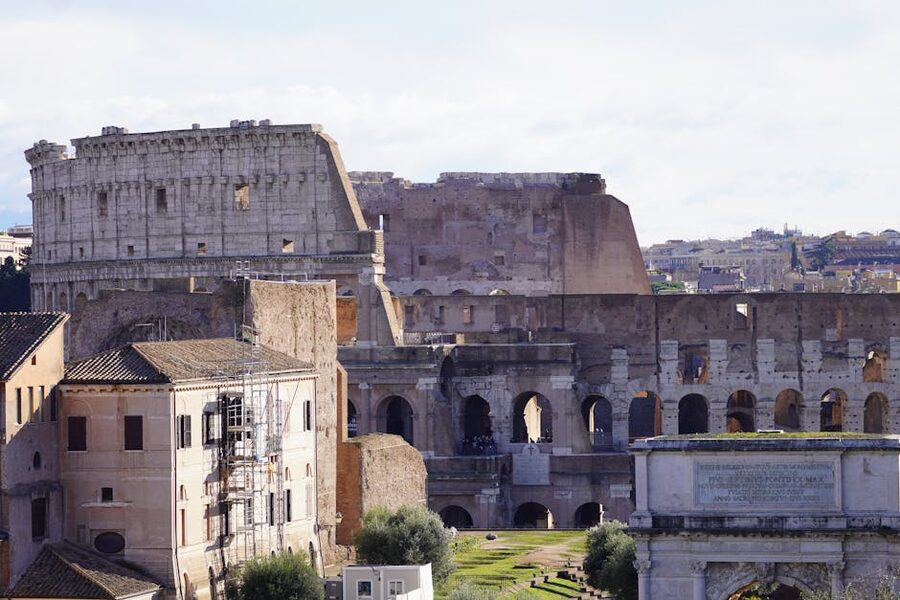
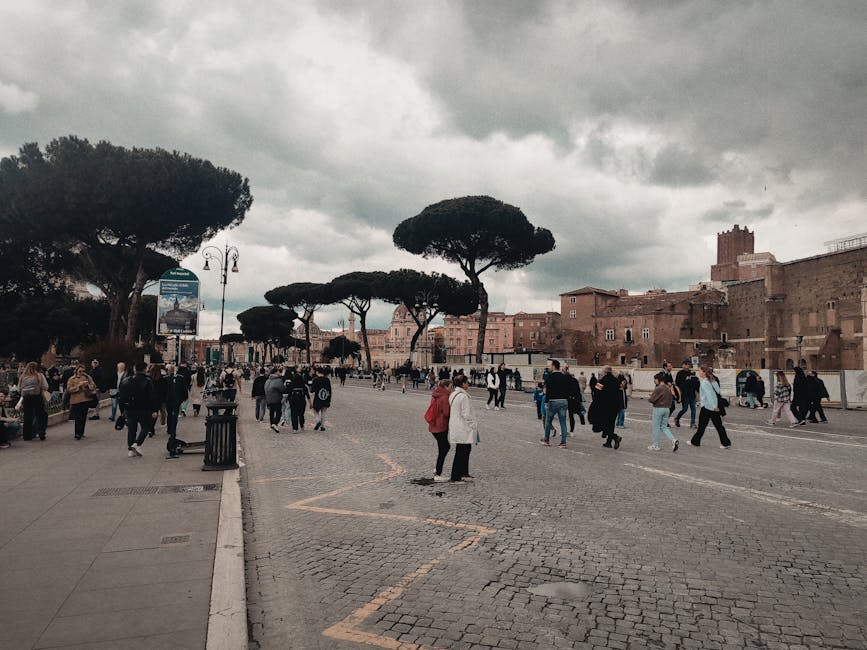
Second half: you wind through Centro Storico — the medieval grid of narrow streets between Piazza Navona and the Pantheon. This bit is where the Segway earns its keep. Walking these streets means dodging tourists, rolling suitcases, and the occasional Vespa. The Segway makes you legible to drivers (you’re the height of a person, not a child on a scooter) and the crowd parts naturally around you. It’s faster than walking and a lot less stressful.

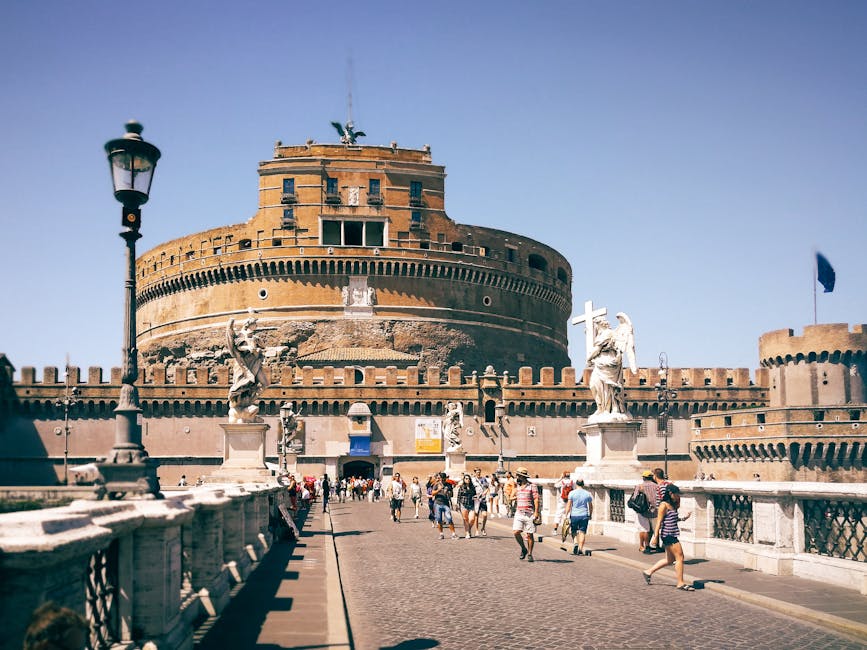
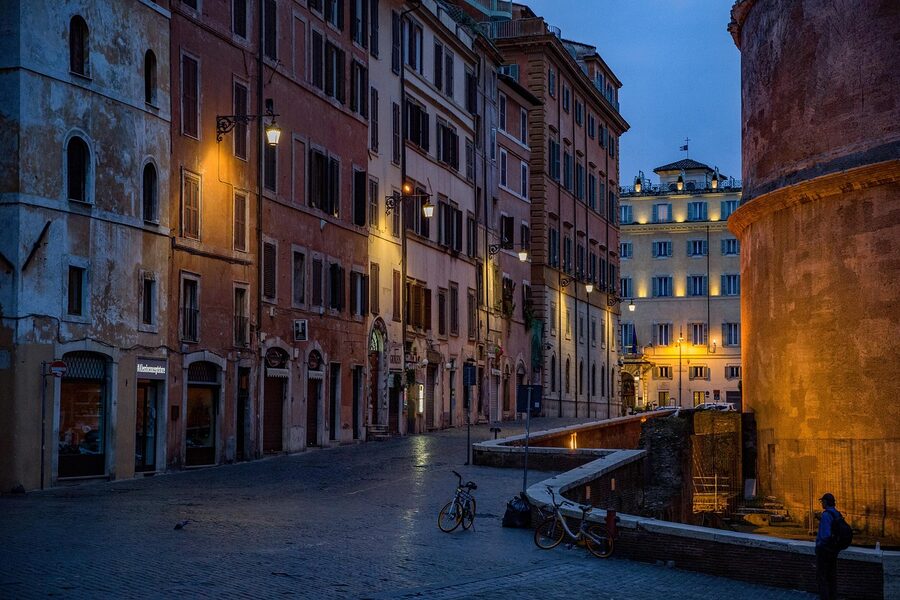
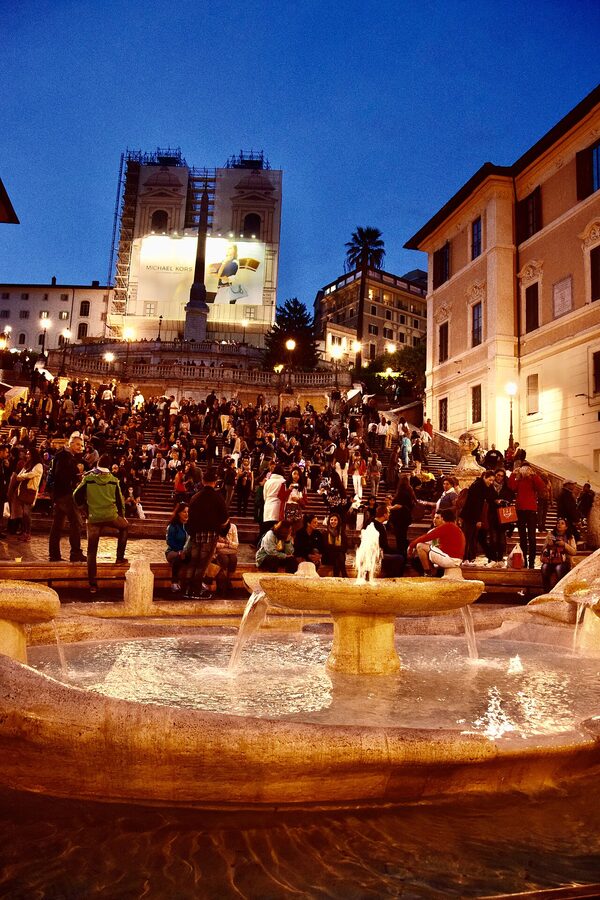
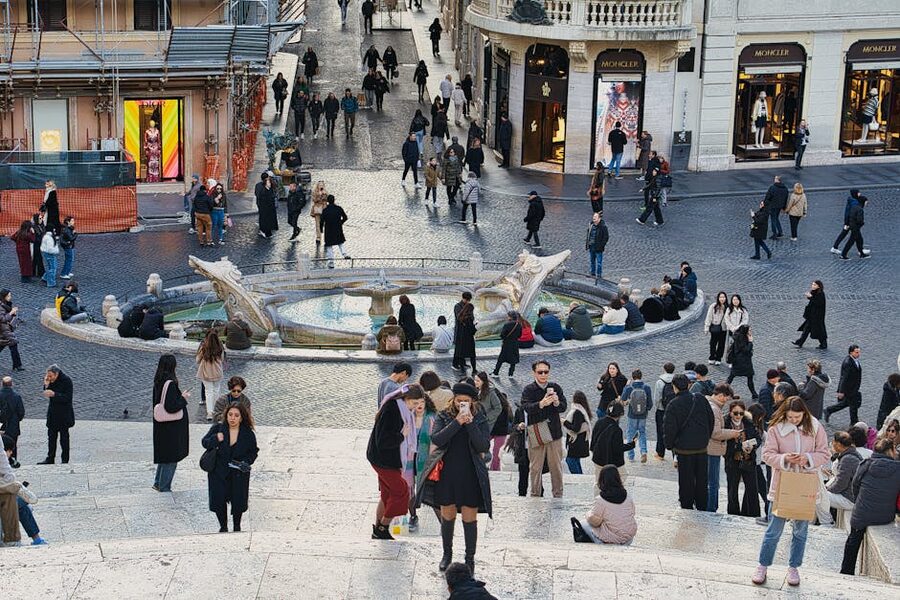
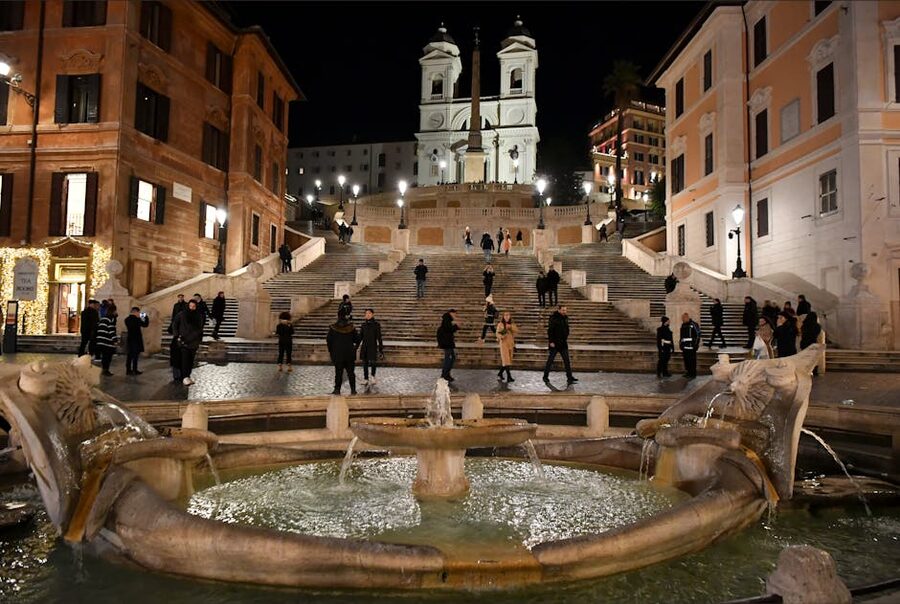
You finish near the Spanish Steps or the Pantheon depending on the operator’s traffic read for the day. The full route covers the Colosseum, Roman Forum, Vittoriano, Pantheon, Piazza Navona, Trevi Fountain, Spanish Steps, and a handful of smaller piazzas in between. You’ll have ridden past every Rome must-see except the Vatican in 150 minutes.
Why the Night Tour Is the Right Tour
I’ve recommended the night tour to about thirty people now. Two of them ignored me and booked the daytime version because they were nervous about the dark. Both told me afterwards they wished they’d listened.

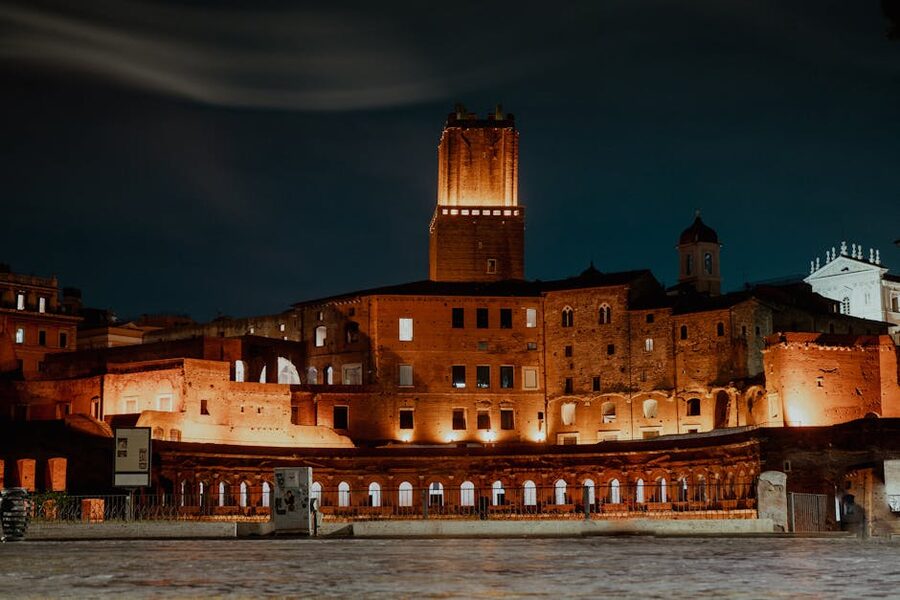
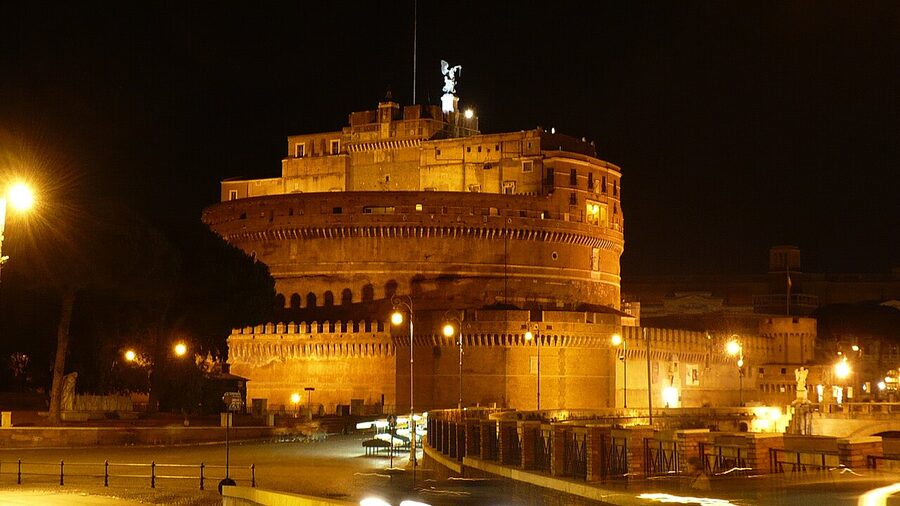
Three reasons the night version wins. First, the floodlighting on Rome’s monuments is genuinely spectacular and Italians have spent decades getting it right. The Trevi Fountain at midnight looks like a film set. The Colosseum from the south side glows. The Pantheon dome is lit from inside through the oculus. None of this is visible during the day.

Second, the heat. Rome from May through September runs 28-35°C with brutal sun. A daytime Segway tour at 14:00 means you’re standing in 33°C heat for 2.5 hours wearing a helmet. You will sweat through your shirt. The night tour starts at 19:30 or 20:30 — temperatures have dropped 5-8°C by then and you’re riding in genuinely pleasant air.
Third, traffic. Rome traffic during the day is constant honking, double-parked Smart cars, and Vespas materializing from nowhere. After 21:00 most of central Rome is closed to cars (the ZTL — limited traffic zone — is enforced electronically and the fines are punishing for non-residents). You’ll glide through streets that during the day are clogged with delivery trucks. It’s the same streets, but emptier. The contrast is striking.
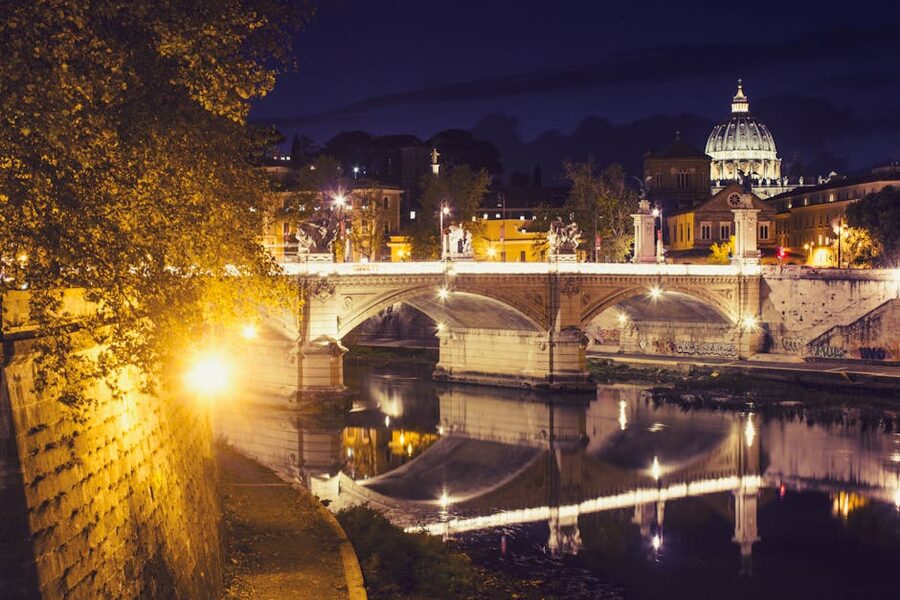
The one drawback of the night tour: photo quality. Phones in 2025 handle low light reasonably well, but the dynamic range of “floodlit monument with dark sky” is hard for any camera. Bring a real camera if photos matter, or accept that some shots will look better in your memory than on Instagram.
What This Costs vs What It Saves
$90 sounds like a lot for 2.5 hours. It is, until you do the math on what it replaces.
A Hop-On Hop-Off bus is $35 and gives you a worse experience because you’re on a fixed loop and can’t follow the guide’s commentary on small streets. A walking tour covers a quarter of the ground in the same time. Renting an e-bike is $25 but Rome’s e-bike share (LIME, Dott) doesn’t really exist in the historic centre and the bike lanes that do exist are inconsistent. Taxis between four monuments would run $30-40 plus the time wasted finding cars.
The Segway tour delivers: a guide who knows the city, sufficient ground covered to feel like you’ve actually seen Rome, photo stops at every major monument, and the physical relief of not being on your feet for hours. For travellers on tight Rome itineraries (3-4 days), the time it saves is worth more than the dollar cost.
Skip the Segway tour only if: you’re staying in Rome more than a week (you have time to walk), you’ve been to Rome before (you don’t need the orientation), or you have a knee or balance issue that makes Segway riding unsafe (it’s not for everyone — the operators screen for this at booking).
The Things Reviews Don’t Tell You
A few practical realities worth flagging that the polished tour descriptions don’t mention.
Group sizes. Listed as “small group” but in practice 6-10 people is normal. If you’re sensitive to group dynamics or you’re with someone who needs more attention from the guide, the private upgrade ($150ish per person for two people) is worth considering. It’s roughly 1.7x the per-person cost for what is a genuinely better experience.
Helmet hair. You will have it. Don’t book a Segway tour as an afternoon activity before a 19:00 dinner reservation expecting to look composed. The helmets are mandatory and they crush even the most resilient hair.
The bathroom problem. 2.5 hours with no scheduled bathroom break. Pee before you arrive. The tour does not stop for this and the trainer will look mildly disappointed if you ask.
Phone-on-a-stick logistics. The temptation is to film the whole tour. The reality is you have one hand on a Segway bar and one hand for filming, which means the worst camera footage you’ve ever captured. Take photos at the actual photo stops; let the guide narrate the in-between bits without trying to film them.

Weight limits. The Segways have a 260lb / 117kg upper limit. The operators don’t ask before you book but they will at sign-in. If this is close, call ahead. Don’t show up and find out you can’t ride.
Age limits. 12+ for most operators, 14+ for some. Younger kids need an alternative — the Bioparco Zoo or a walking tour designed for kids works better.
Where Segway Tours Quietly Beat Walking Tours
I’ve done enough Rome walking tours to have opinions. The good ones are excellent. The mediocre ones are exhausting because you’re standing in 33°C heat listening to historical context for 90 minutes between actual sights. The Segway flips this — you’re moving while the guide talks, you’re not standing still in the sun, and the geographic coverage is 4x what a walking tour can manage.
The Segway also solves what I think of as the “context problem” — you visit the Colosseum, then 90 minutes later visit the Vatican, and the two feel like separate trips because you took a 25-minute taxi between them and lost the spatial connection. On the Segway you ride from one to the other and physically experience how the city fits together. The geographic intuition you build in 2.5 hours is genuinely useful for the rest of your Rome trip.
What walking tours do better: small interior visits (you can’t take a Segway into a church), conversations with the guide (you’re focused on balance, not chatting), and atmospheric details (the cobblestone texture, the smell of bakeries — you’re moving too fast to register these).
Pair the two for best results. Day 1: Colosseum + Forum walking tour for the deep history. Day 2: Segway night tour for the geographic overview and the things you didn’t enter on day 1. By day 3 you’ve got the city wired.
Combining the Segway With the Rest of Your Rome Trip
The Segway tour is a high-density, low-energy activity — perfect for sandwiching between things that demand more focus. Don’t book it on a day you’re also doing the Vatican Museums (mental fatigue) or the Borghese Gallery (slot timing pressure). Do book it on a day you’d otherwise be walking yourself stupid.
The night tour pairs especially well with a long, late dinner — book the 20:30 Segway slot, return around 23:00, walk to Trastevere for an actual Roman late dinner where the locals eat. Your feet will thank you for not adding two more hours of walking after a full day of sightseeing. If you’re scheduled in for a Piazza Navona cooking class earlier the same day, the early-evening Segway slot becomes the orientation lap that turns “I made pasta near a fountain” into “I made pasta near the Fountain of the Four Rivers and now I know where everything is in this neighbourhood.” For a fuller cultural day, the morning Borghese Gallery slot followed by an afternoon recovery and night Segway tour gives you art, rest, and city orientation in one perfect ratio. And if the underground theme calls — the Catacombs and Crypts the morning before, Segway above-ground at night — the contrast between the buried Rome and the lit Rome works on a level that surprises you.
What to Wear (Skip If You’re Not Worried)
Comfortable closed shoes — anything but flip flops. The platform doesn’t grip well with bare-foot footwear and the operators won’t let you on in sandals. Long pants are sometimes required by insurance even in summer (check the booking confirmation; some operators allow shorts, some don’t). A small bag that you can wear on your back rather than carry — both hands need to be free for the bars, and the operators don’t have a baggage check.
That’s the whole list. No special clothing required, no advance preparation. Just show up able to stand on a moving platform for two hours.
The Honest Verdict
The Segway tour is the highest-value activity in Rome that nobody recommends because everyone’s worried about looking silly. Get over the silliness. Book the night tour. You’ll see more of Rome in 150 minutes than three days of walking would deliver, your feet won’t hate you, and the floodlit version of the city will reset whatever assumptions you had about what Rome looks like.
If you’re determined to skip the Segway because it’s “too touristy,” fine — go ride a bike instead. Rome doesn’t have proper bike infrastructure but a few operators run small-group bike tours that hit the same monuments at the same pace. The trade-off is more effort, more sweat, and the same touristy-look problem. There’s no “authentic” way to cover Rome’s geography quickly. Pick your compromise and stop worrying about it.
Book at least three days ahead for night tours in high season (April-October). Weekday slots usually have same-week availability. Cancel up to 24 hours before for a refund. The training session is mandatory — show up 15 minutes early. Don’t lock your knees.