nuremberg-castle-medieval-architecture

Nuremberg Tours: Medieval Dungeons, Old Town and Rally Grounds

Nuremberg’s medieval dungeons are still there — beneath the old town, carved into sandstone, a tunnel system that served as the city’s prison, storage, and beer cellar for 500 years is open for guided tours. At $11, it’s the cheapest guided history experience in Germany and one of the most consistently praised.
Nuremberg medieval castle old town
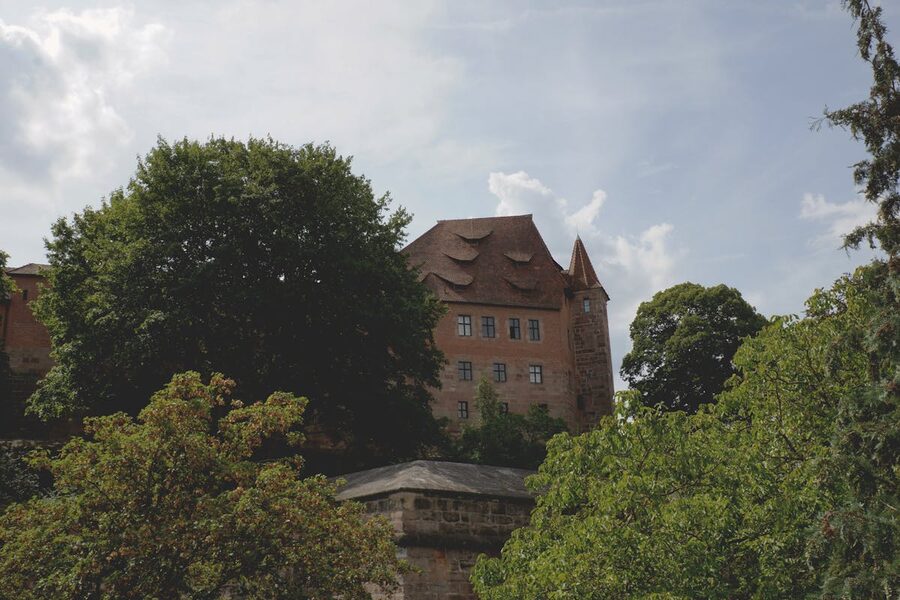
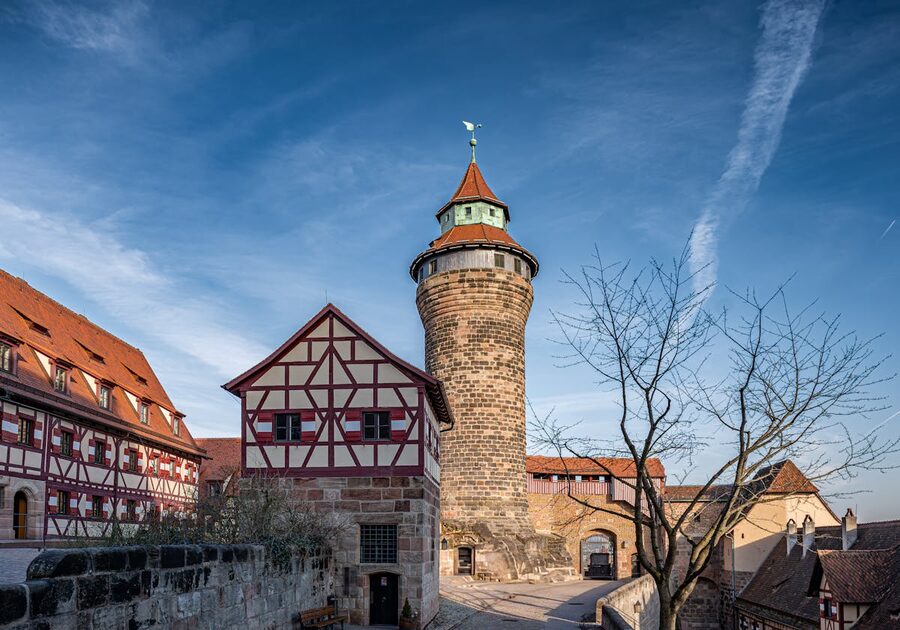
Nuremberg’s Imperial Castle (Kaiserburg) dominates the old town from its hilltop position — a fortress that served Holy Roman Emperors for over 500 years. The castle complex includes the Sinwell Tower, the Deep Well (54 metres deep), and the castle gardens with panoramic views over the red-roofed old town below.
Nuremberg medieval castle old town
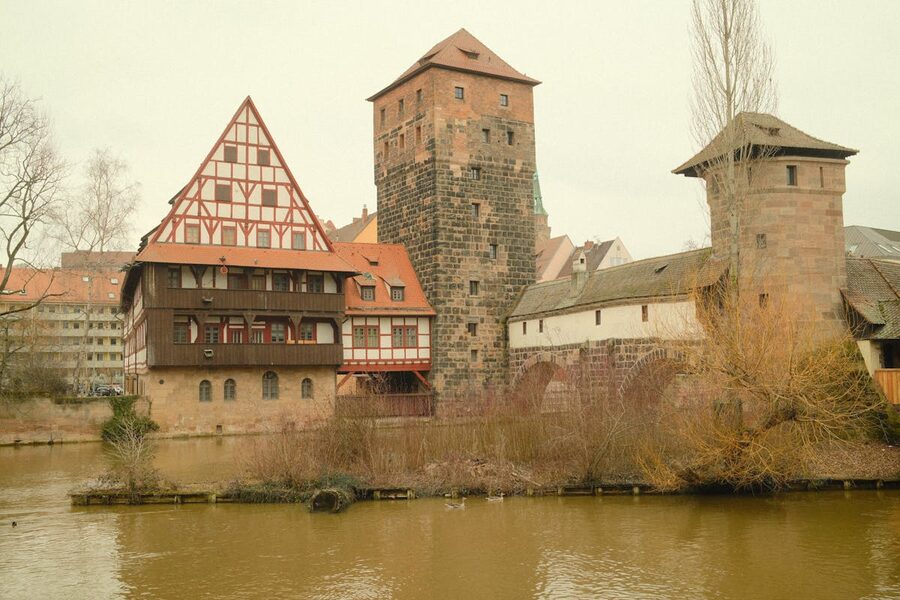
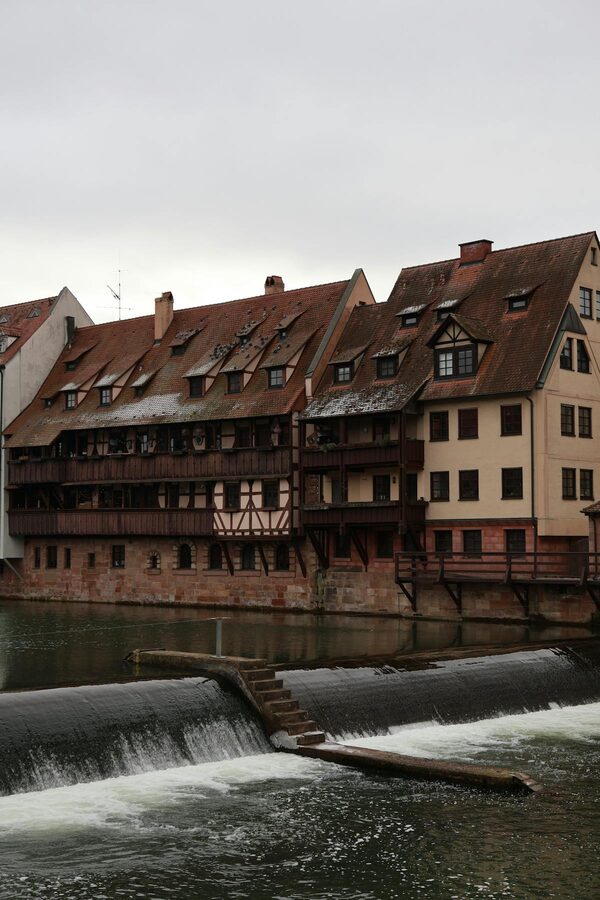
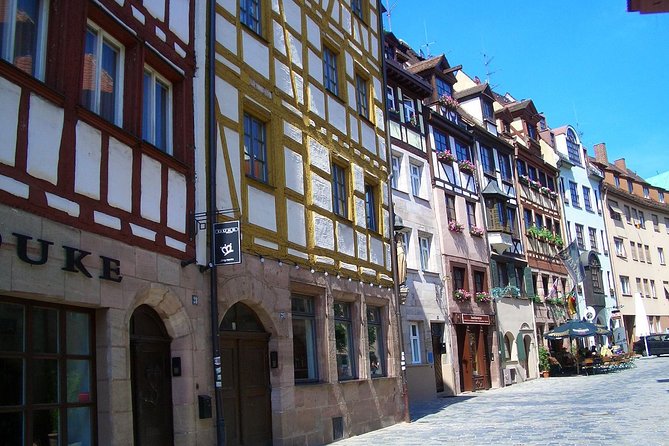
The half-timbered houses along the Pegnitz river — Nuremberg’s old town is divided by the river, with bridges connecting the two halves. The waterfront buildings date from the 15th-17th centuries (rebuilt after wartime damage) and create the medieval atmosphere that makes the walking tours so visually appealing.

Nuremberg carries two very different histories. The first is the medieval one — the Imperial Castle on the hill, the half-timbered houses, the Christmas market that’s been running since the 16th century, and the craftsmen’s workshops that made the city a centre of German Renaissance culture. The second is the 20th-century one — the Nazi Party Rally Grounds where Hitler staged his propaganda spectaculars, the Nuremberg Trials where the war criminals were judged, and the difficult questions that the city has spent 80 years trying to answer. The walking tours cover both, and together they make Nuremberg one of the most historically layered cities in Germany.
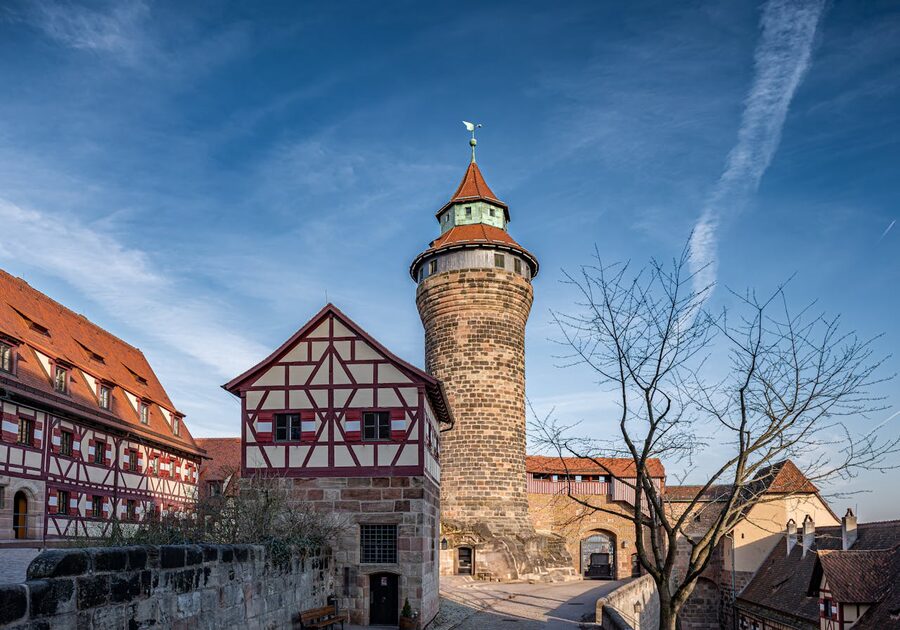
Nuremberg Castle and medieval architecture in Bavaria
The Kaiserburg (Imperial Castle) sits on the sandstone ridge that dominates Nuremberg’s skyline. The castle complex dates from the 11th century and served as a residence for Holy Roman Emperors. The view from the castle walls extends over the old town’s sea of red rooftops — a panorama that’s barely changed in 500 years.
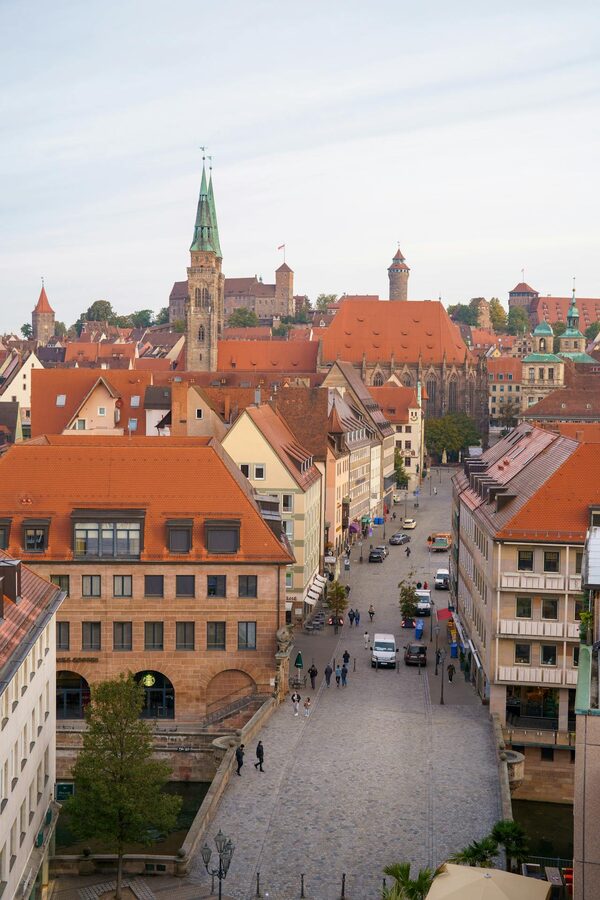
Aerial view of Nuremberg's historic buildings with red roofs
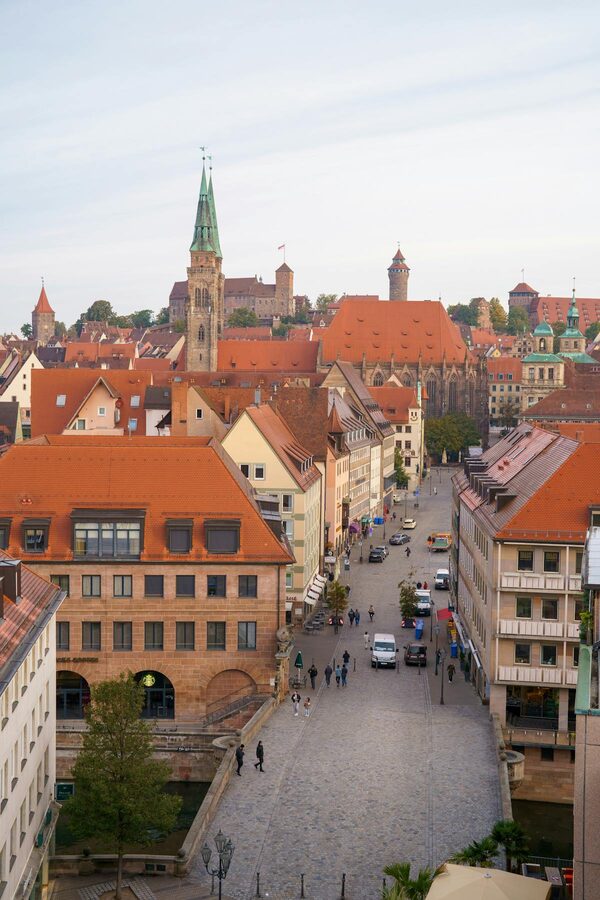
Nuremberg from above. The old town is enclosed within medieval walls that are still largely intact — over 5 kilometres of stone fortifications with towers and gates. The red-tiled roofs, the church spires, and the castle on the hill create a silhouette that’s quintessentially medieval German. About 90% of the old town was destroyed in WWII bombing and painstakingly rebuilt.
Best underground experience: Medieval Dungeons Guided Tour — $11, 70 minutes beneath the old town. consistently outstanding visitor feedback.

Best walking tour: Old Town + Nazi Rally Grounds — $45, 4 hours covering medieval AND 20th-century history. consistently praised by visitors.

Best day trip: Nuremberg Day Trip from Munich — $95, full day by train with guided walking tour. strong visitor feedback.
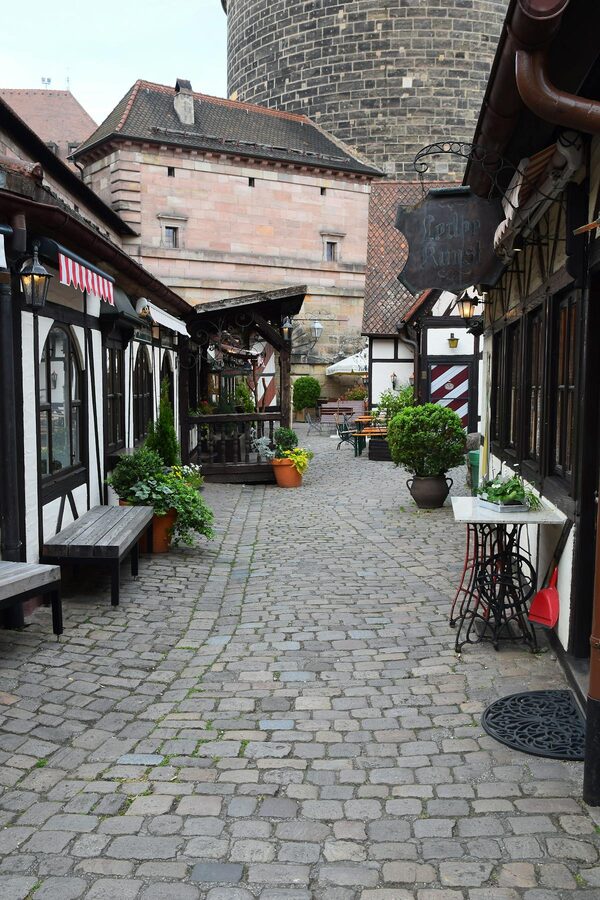
Nuremberg medieval castle old town
Nuremberg’s old town is enclosed by a remarkably well-preserved medieval wall — five kilometres of fortifications with 80 towers that still define the city’s boundary. Walking along sections of the wall is free and gives you an elevated perspective over both the old town and the surrounding modern city.

The Medieval Dungeons

The dungeon tour takes you into the tunnel system beneath the old town — a network of chambers that served multiple purposes over five centuries. Parts were prisons (the guide shows you the cells and explains the medieval justice system). Parts were beer cellars (Nuremberg’s breweries stored their products underground where the temperature stayed constant). And parts were air-raid shelters in WWII, repurposed when the city’s surface was being destroyed.
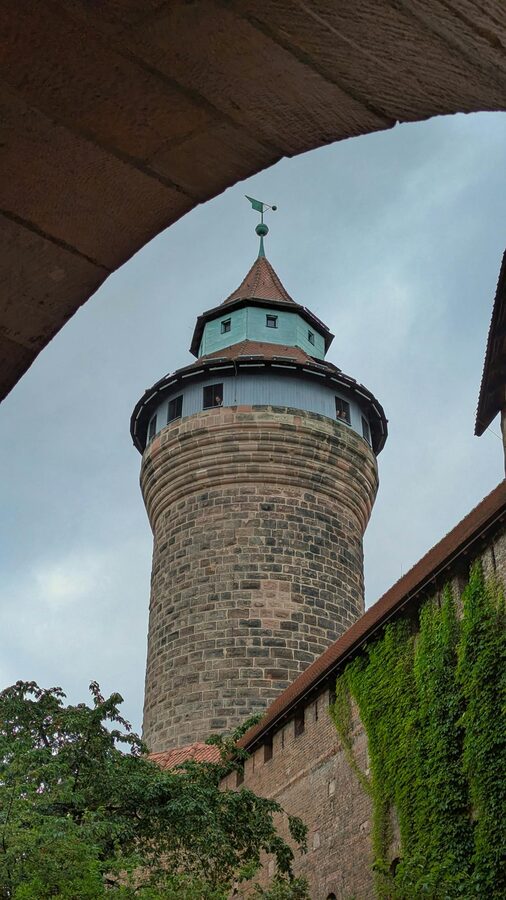
Nuremberg tower through an archway in the old town
The dungeon entrance is near the Rathaus (City Hall) in the old town. The guide leads you down narrow stone steps into the sandstone tunnels, which maintain a constant temperature of about 10°C year-round. Bring a jacket even in summer — the underground is cool and slightly damp.

At $11 for 70 minutes, the dungeon tour is extraordinary value. The guide covers the history of each chamber, the medieval prison hierarchy (debtors got better cells than thieves), and the surprisingly sophisticated brewing technology that the underground cellars enabled. The 4.8 rating reflects guides who balance dark history with genuine entertainment.
Nuremberg medieval castle old town
The underground tunnel system extends far beyond the dungeon tour route — kilometres of passages connect cellars, storage vaults, and medieval utility corridors beneath the old town. The dungeon tour covers the most historically significant sections, including the cells where prisoners awaited trial or punishment.
Nuremberg medieval castle old town
Nuremberg’s Hauptmarkt (Main Market) — the square where the famous Christmas market has operated since the 16th century — is ringed by restored medieval and Renaissance buildings. The Beautiful Fountain (Schöner Brunnen) in the corner is a 14th-century Gothic spire decorated with 40 carved figures. Touching the golden ring on the iron gate is said to bring good luck.

The Old Town and Nazi Rally Grounds

The 4-hour walking tour combines two Nurembergs in one walk. The first half covers the medieval old town — the Imperial Castle, the Albrecht Dürer House (where Germany’s most famous Renaissance artist lived and worked), the market square, and the Schöner Brunnen (Beautiful Fountain). The second half takes you to the Nazi Party Rally Grounds — the massive parade grounds, the Congress Hall (modelled on the Colosseum in Rome), and the documentation centre that explains how the Nazis used Nuremberg as their symbolic capital.
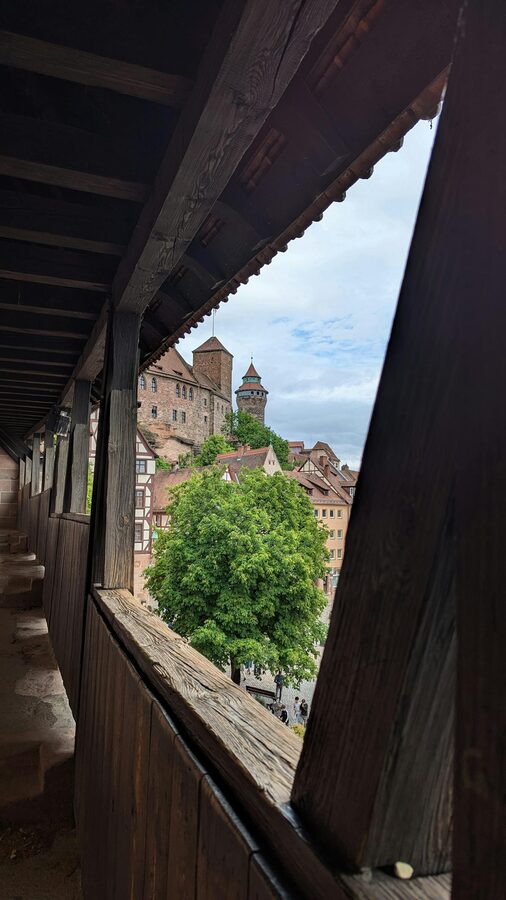
Nuremberg Castle and old town through wooden gallery
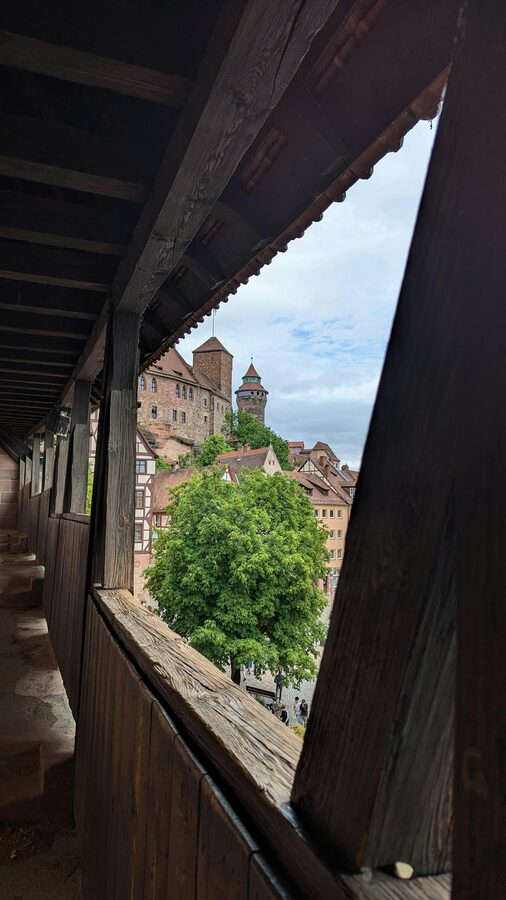
The Imperial Castle from the timber gallery on the south side. The castle’s position on the highest point of the old town was strategic — it commanded the crossroads of the medieval trade routes that made Nuremberg wealthy. The walking tours start here because the view from the castle walls provides the context for everything that follows below.
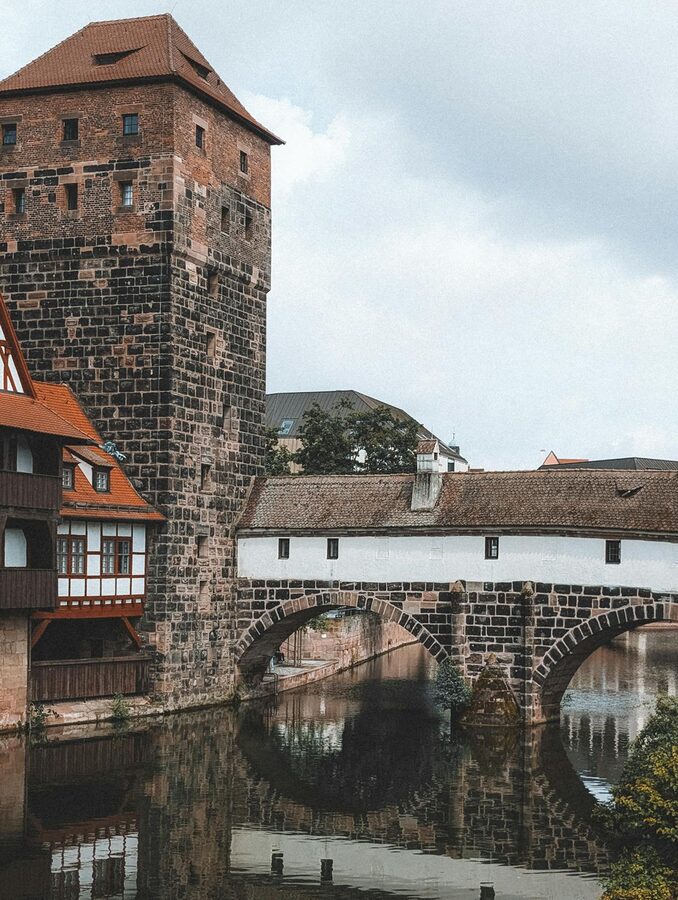
Medieval architecture in Nuremberg by the water
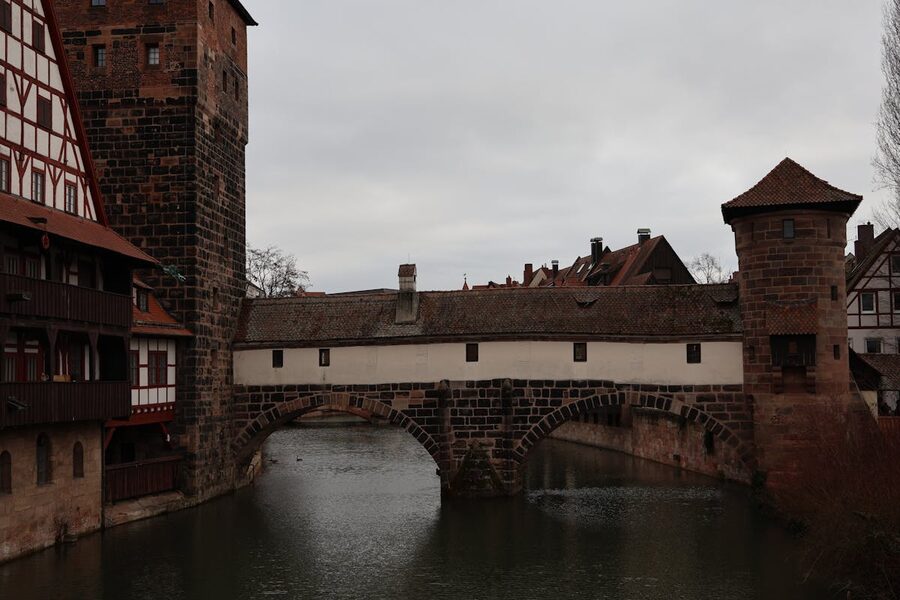
The Pegnitz river runs through the old town, splitting around the Schütt Island where the medieval tanneries and mills operated. The Henkersteg (Hangman’s Bridge) and the Heilig-Geist-Spital (Holy Spirit Hospital) — a Gothic building spanning the river — are two of the most photographed structures on the walking tour.

The Nazi Rally Grounds are about 3 kilometres southeast of the old town — the walking tour takes you there by tram. The scale of the construction is deliberately overwhelming: the parade grounds cover 11 square kilometres and the unfinished Congress Hall (never completed because the war intervened) would have seated 50,000 people. The documentation centre inside the hall uses the original architectural plans and propaganda footage to explain how the regime used architecture as a weapon of control.
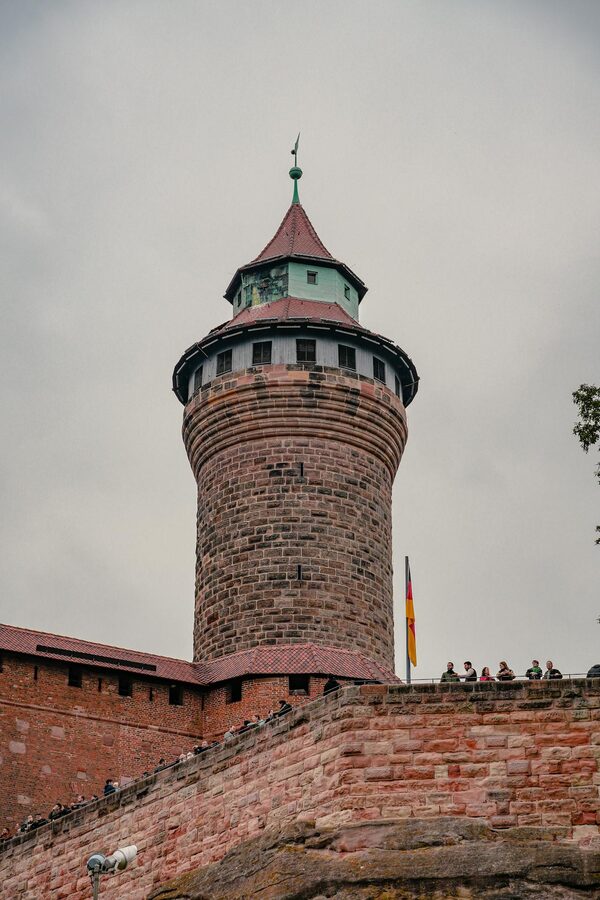
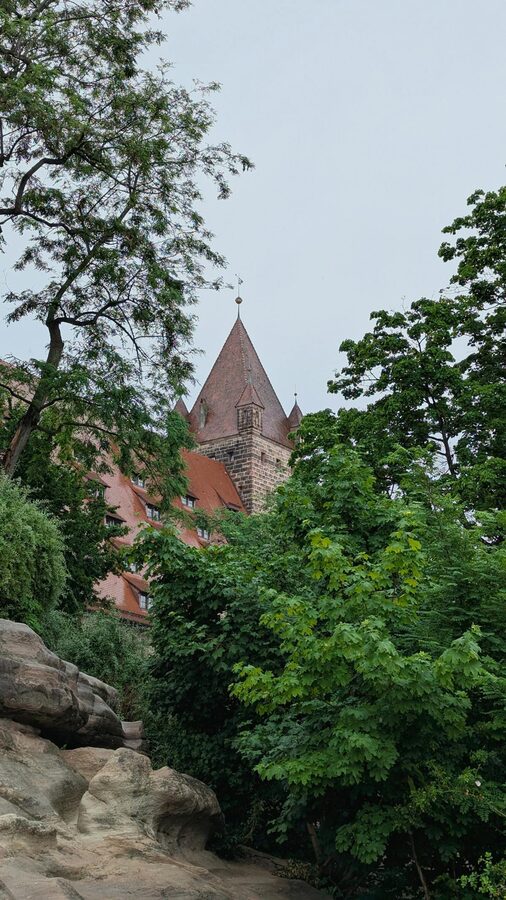
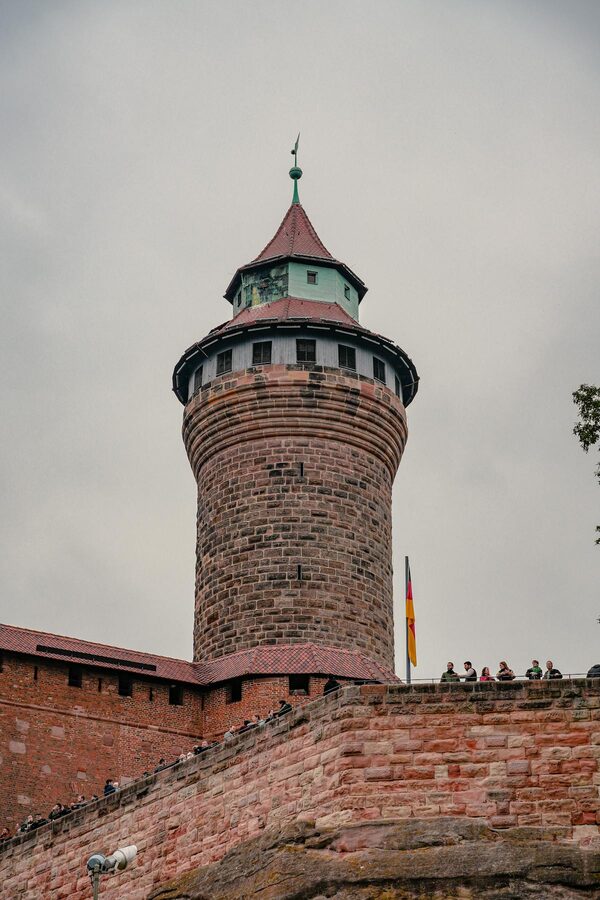
Historic castle tower with German flag under cloudy sky
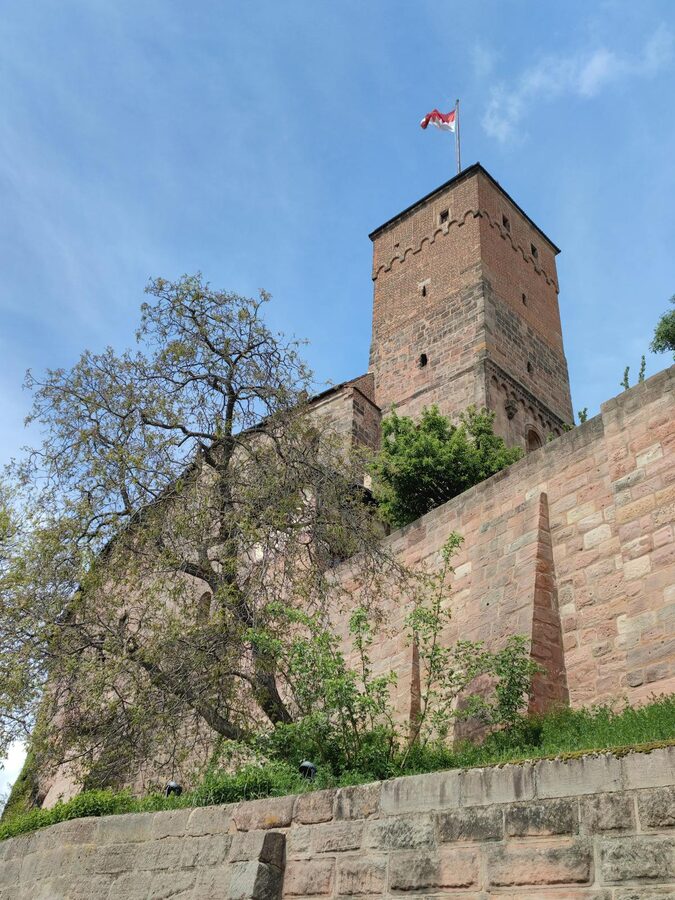
The German flag flying from the castle tower. The symbolism is complex in Nuremberg — the city was declared the “City of the Reich Rallies” by Hitler and used its medieval heritage to legitimise Nazi ideology. The post-war Nuremberg Trials in 1945-46 — held in the Palace of Justice, which still operates as a courthouse — represented the city’s attempt to turn the page. The walking tours address both narratives honestly.
Nuremberg medieval castle old town
The Nazi Party Rally Grounds southeast of the old town are a deliberately uncomfortable experience — the massive unfinished Congress Hall (modelled on the Roman Colosseum) and the Zeppelin Field (where Leni Riefenstahl filmed her propaganda) show the architectural ambition of a regime that intended to rebuild the world in its own image.

The Nuremberg Trials

Courtroom 600 in the Palace of Justice — where the major war criminals were tried between 1945 and 1946 — is open to visitors when the court is not in session. The room has been preserved largely as it was during the trials, and the adjacent Memorium exhibition provides context through photographs, documents, and film footage. The walking tour that covers both the old town and the rally grounds usually includes time for an independent visit to the courtroom, which is about 15 minutes by tram from the old town.

The choice of Nuremberg for the trials was symbolic — the city where the Nazi Party held its rallies became the city where its leaders were judged. The irony was deliberate, and the guides explain this decision as part of the broader narrative of how Germany confronted its past. The 24 defendants included Hermann Göring, Rudolf Hess, Albert Speer, and other senior Nazi officials. Twelve were sentenced to death. The trials established the principle that individuals are responsible for crimes against humanity, regardless of whether they were following orders — a legal precedent that shaped international law for the rest of the century.
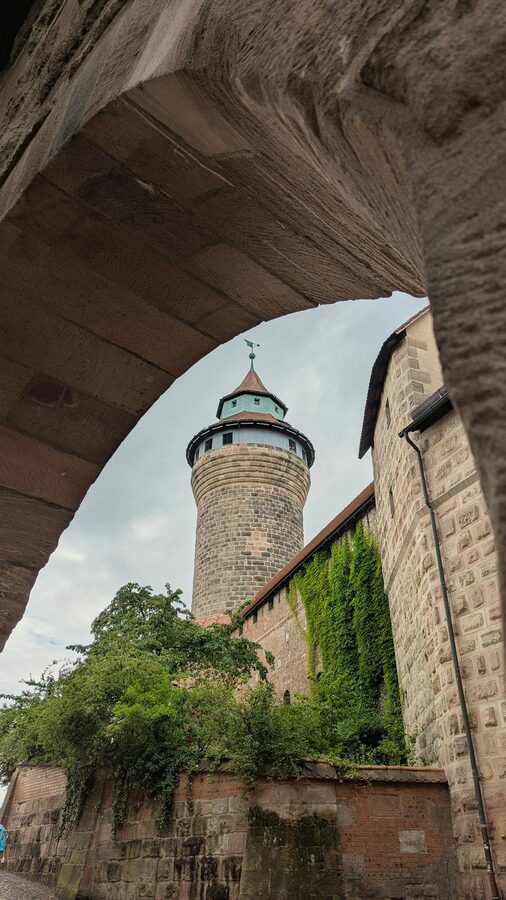
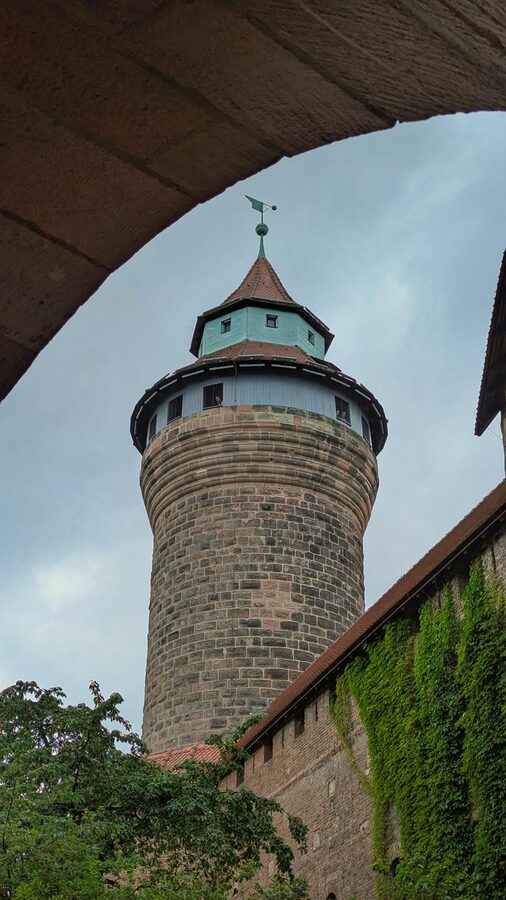
Nuremberg medieval castle old town
The Documentation Centre at the Nazi Party Rally Grounds occupies part of the unfinished Congress Hall — deliberately cutting through the massive structure to symbolise the interruption of the Nazi project. The exhibition traces the rise and fall of the Nazi Party using Nuremberg as the lens, and it’s one of the most important memorial museums in Germany.
Nuremberg medieval castle old town
Nuremberg’s streets show the seamless integration of medieval originals and post-war reconstructions — many buildings were rebuilt using traditional techniques and original materials salvaged from the rubble, creating an old town that looks authentic even where it’s technically new.

The Day Trip from Munich

Nuremberg is 1.5 hours from Munich by ICE train, making it one of the most accessible day trips from Bavaria’s capital. The guided day trip ($95) includes return train tickets, a 3-hour walking tour of the old town, and free time for the castle and dungeon. It’s a long day (about 10 hours) but the train journey through the Franconian countryside is pleasant and the guide uses the travel time for historical context.
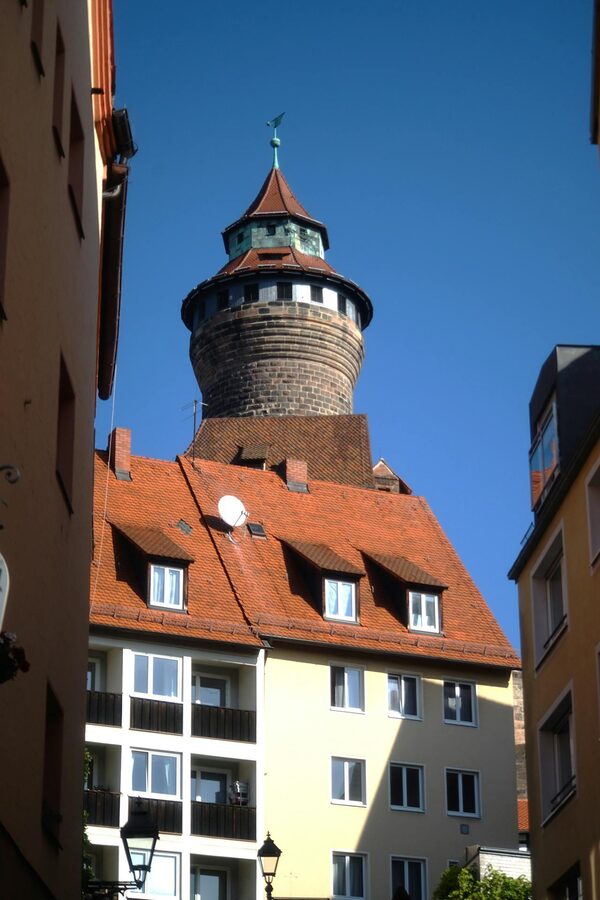
Nuremberg Castle tower under clear blue sky
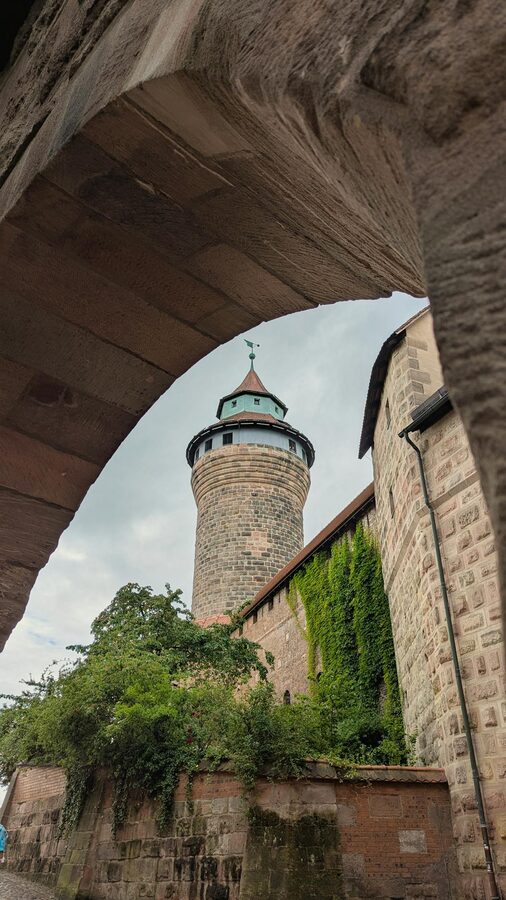
The Sinwell Tower — the castle’s main lookout tower — offers the best views over the old town for those who don’t mind the climb. The tower is included in the castle entry ticket (about €7) and takes about 5 minutes to ascend the spiral staircase. The view from the top covers the entire old town within the medieval walls.
Nuremberg tower framed by old architecture through archway
The old town’s medieval gates are still standing — the Frauentor, the Königstor, and the Spittlertor all provide dramatic entrance points. The walking tours use these gates deliberately, entering and exiting the walled city through the same passages that traders and emperors used for 500 years.
Nuremberg medieval castle old town
The Albrecht Dürer House — the home and workshop of Germany’s greatest Renaissance artist — is one of the walking tour highlights. The museum preserves the rooms where Dürer created his masterpieces, including demonstrations of the printing techniques he pioneered. Nuremberg was a centre of German art, science, and craftsmanship in the 15th-16th centuries.
Nuremberg medieval castle old town
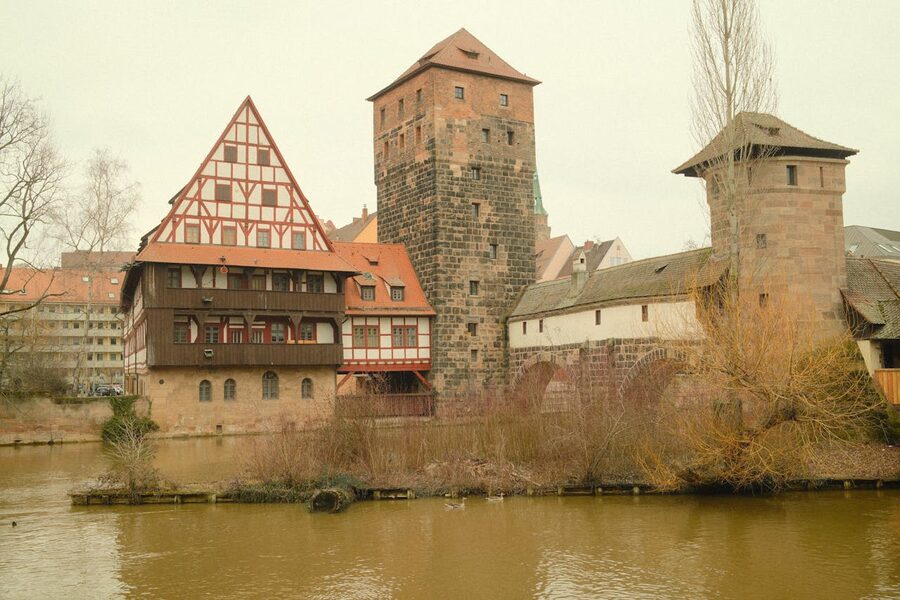
The Weinstadel (Wine Store) on the Pegnitz river is one of Nuremberg’s most photographed buildings — a massive half-timbered structure from the 15th century that now serves as a student dormitory. It’s connected to the Hangman’s Bridge (Henkersteg), where the city’s executioner once lived.
Nuremberg medieval castle old town
Nuremberg’s famous Christmas market (Christkindlesmarkt) runs from late November through Christmas Eve, filling the Hauptmarkt with wooden stalls selling Lebkuchen (gingerbread), Glühwein (mulled wine), and traditional crafts. It’s the most famous Christmas market in Germany — if you’re visiting in season, it’s unmissable.
Nuremberg medieval castle old town
Nuremberg’s Franconian cuisine — Nürnberger Bratwurst (small, finger-sized grilled sausages), Schäufele (roasted pork shoulder), and the local Rauchbier (smoked beer) — is part of what the walking tours introduce. The city’s food culture is distinct from Bavarian cuisine proper, and the guides know the best places to eat afterward.
Nuremberg medieval castle old town
The view from the Imperial Castle walls over Nuremberg’s red-tiled rooftops is the defining panorama of the city — church spires, fortress towers, and the medieval wall stretching into the distance. The castle is the starting or ending point of most walking tours, and the view is the reward for climbing the hill.
Nuremberg medieval castle old town
The Pegnitz river divides Nuremberg’s old town into the Sebalder Altstadt (north) and the Lorenzer Altstadt (south). Bridges connect the two halves, and the waterfront buildings create some of the city’s most picturesque scenes — particularly the Heilig-Geist-Spital (Holy Spirit Hospital) that spans the river like a Venetian bridge.

Best Tours to Book

1. Medieval Dungeons Guided Tour — $11
Nuremberg medieval dungeons guided tour
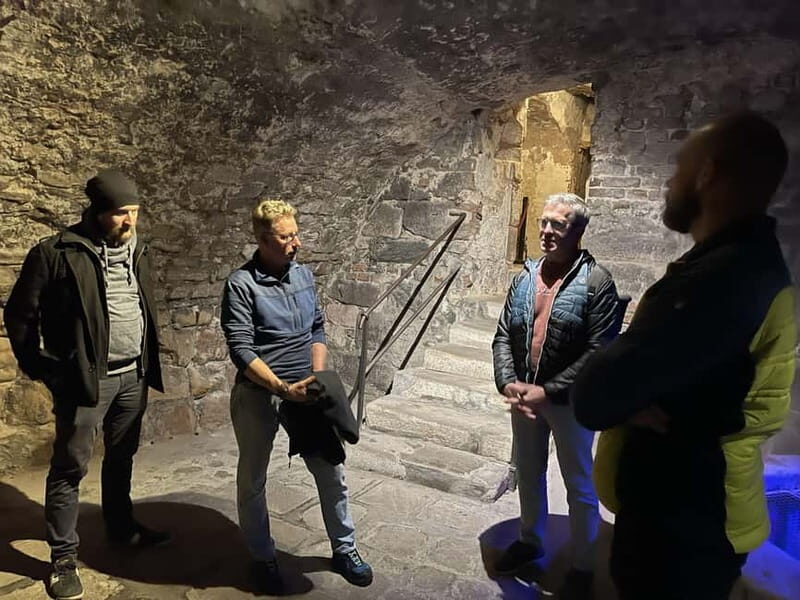
consistently outstanding visitor feedback. At $11 for 70 minutes underground, this is one of the best-value guided experiences in Germany. The dungeons are genuine medieval chambers, not reconstructions.

Seventy minutes beneath Nuremberg’s old town, exploring medieval prison cells, beer cellars, and WWII air-raid shelters carved from sandstone. The guide covers five centuries of underground history with the kind of dark humour that makes prison tours unexpectedly entertaining. At $11, the price is almost negligible for the quality of the experience. Our review covers the dungeon layout, the guide quality, and whether the tour is suitable for claustrophobes.

2. Old Town + Nazi Rally Grounds Walking Tour — $45
Nuremberg old town and Nazi rally grounds walking tour
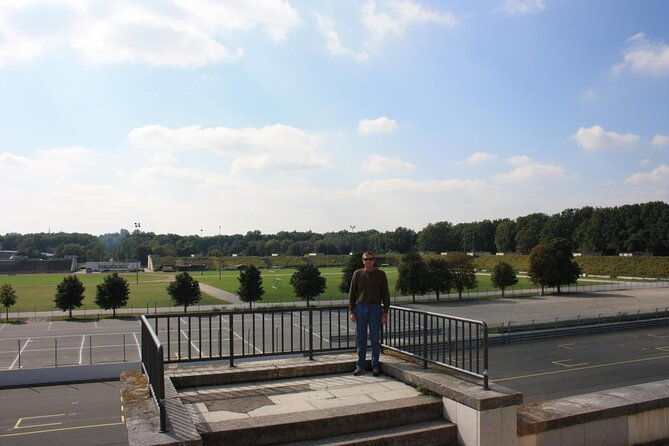
Consistently excellent visitor feedback. The 4-hour format covers both medieval and 20th-century Nuremberg — the only tour that connects the castle to the rally grounds in a single narrative.

The comprehensive option. Four hours covering the medieval old town (castle, churches, Dürer House) AND the Nazi Party Rally Grounds (parade area, Congress Hall, documentation centre). The guide connects the two histories — explaining how the Nazis deliberately exploited Nuremberg’s medieval Imperial heritage to legitimise their regime. In English. Our review covers the full route and how the guide handles the transition from medieval beauty to Nazi propaganda.

3. Nuremberg Day Trip from Munich — $95
Nuremberg day trip from Munich by train
Strong visitor praise across the board. The easiest way to see Nuremberg if you’re based in Munich — train tickets, guided tour, and logistics all handled.

A full day from Munich by ICE train including a 3-hour guided walking tour of the old town. The $95 price covers the return train ticket, guide, and group coordination. The guide uses the 1.5-hour train journey to set up the history before you arrive. Free time for the castle, dungeon, and lunch. Our review covers whether the day trip format gives enough time in Nuremberg or feels rushed.

Practical Tips

Getting there: ICE from Munich: 1.5 hours. ICE from Frankfurt: 2 hours. Regional trains from Bamberg: 45 minutes. Nuremberg Hauptbahnhof is inside the old town walls — you walk out of the station and you’re already there.

How long: One day covers the dungeon + one walking tour. Two days lets you add the Nazi documentation centre (budget 2-3 hours — it’s excellent and requires time), the Germanisches Nationalmuseum (Germany’s largest cultural history museum), and the Albrecht Dürer House.

Christmas market: The Christkindlesmarkt (late November to Christmas Eve) is Germany’s most famous Christmas market and draws 2+ million visitors annually. The market fills the Hauptmarkt square with stalls selling Lebkuchen (Nuremberg gingerbread), Glühwein (mulled wine), and handmade ornaments. It’s genuinely magical but extremely crowded — weekday mornings are the best time.

Budget: Dungeons: $11. Walking tour: $45. Day trip from Munich: $95. Castle entry: about €7. Nuremberg bratwurst (3 tiny sausages in a roll): €3. The city is one of Germany’s most affordable tourist destinations.

More Bavaria and Germany

Nuremberg pairs naturally with Munich (1.5 hours by ICE) and Neuschwanstein Castle (accessible from Munich on a different day). For similar medieval charm, Cologne offers the cathedral experience, and Dresden covers the Baroque alternative with its own reconstruction story. The Romantic Road day trip from Munich (passing through Rothenburg ob der Tauber) connects the Franconian medieval towns that made this region famous.