
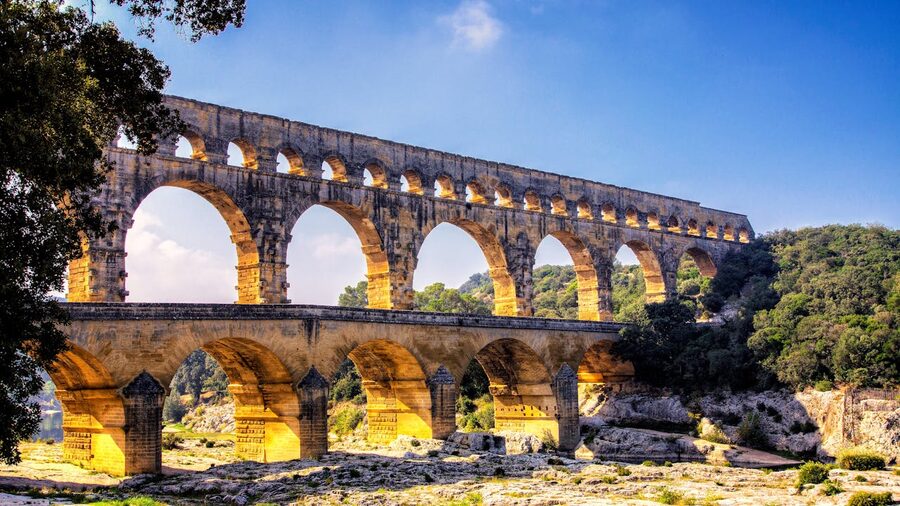
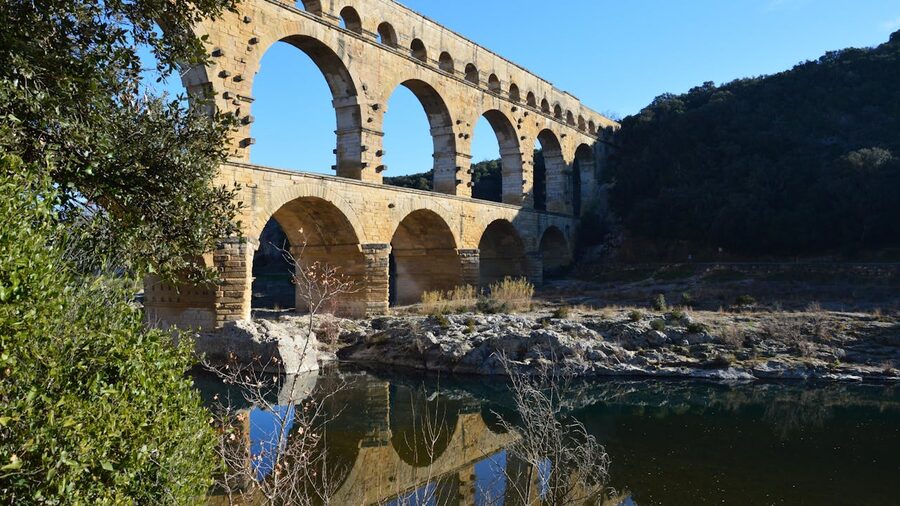
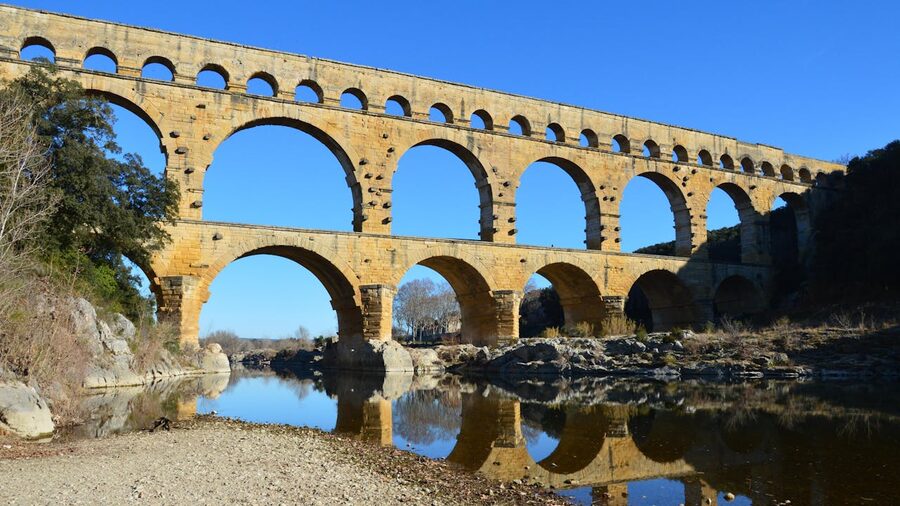
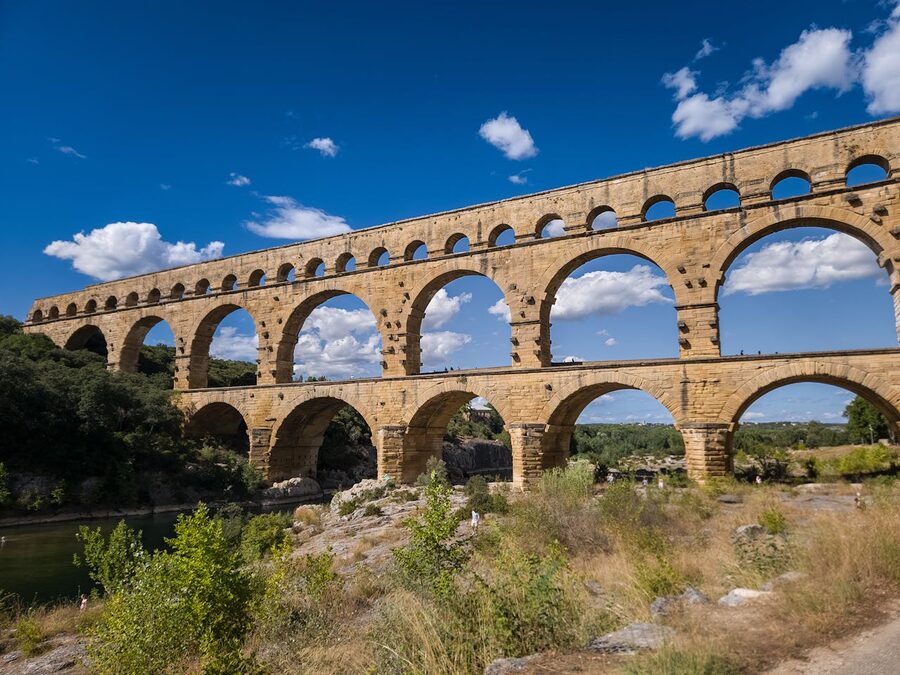
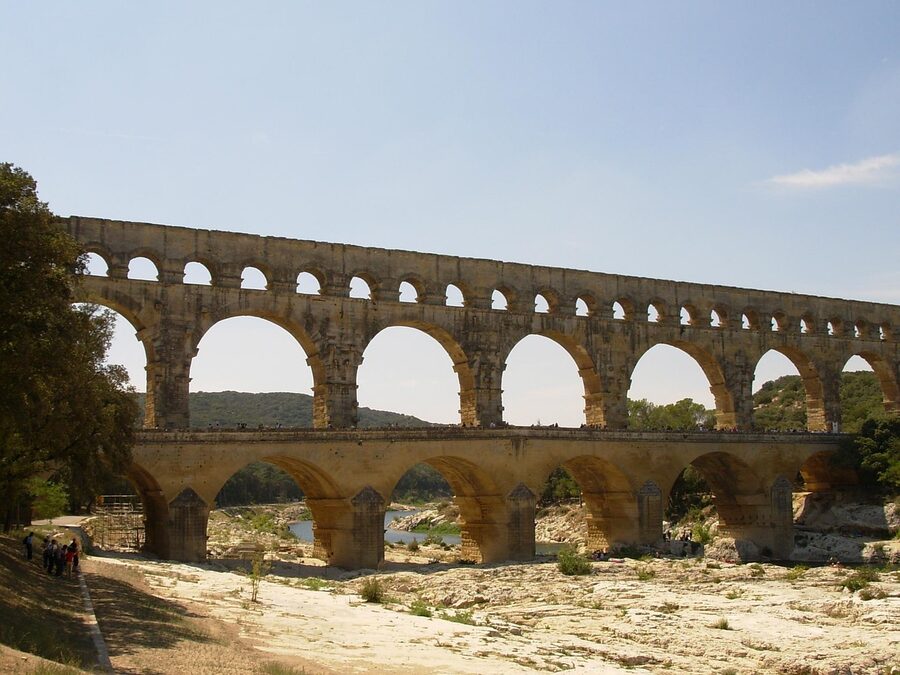
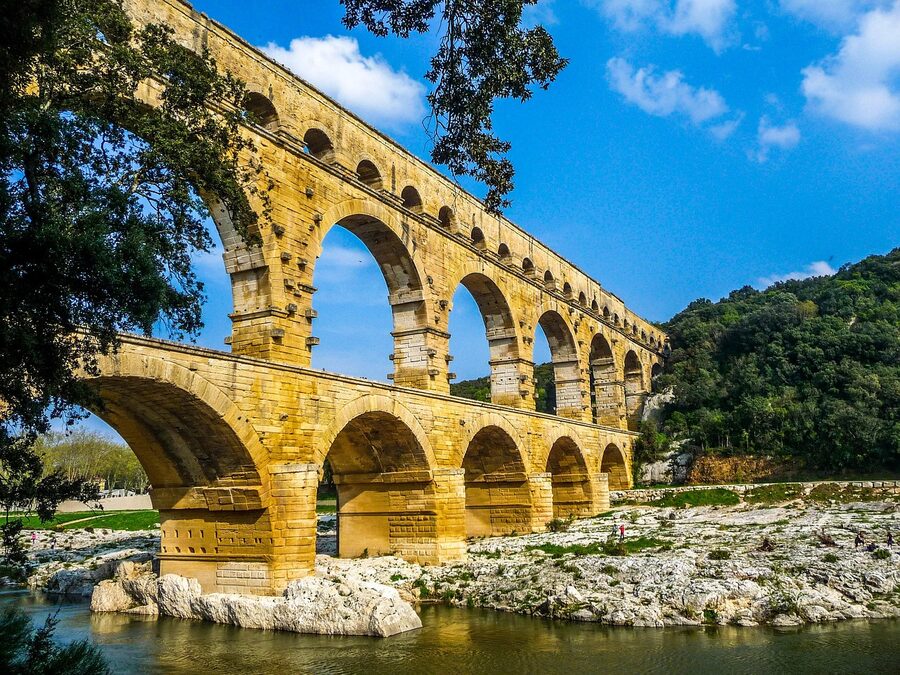
The Romans built the Pont du Gard to carry water. Just water. Fifty kilometres of aqueduct from a spring near Uzès to the city of Nîmes, crossing a river valley 50 metres deep. They could have built a pipe. They could have rerouted around the valley. Instead, they built a three-tiered stone bridge that’s been standing for nearly 2,000 years, is the tallest Roman aqueduct ever constructed, and is so perfectly engineered that the water channel at the top drops only 2.5 centimetres per kilometre — a gradient so precise that modern engineers struggle to replicate it with laser levels.
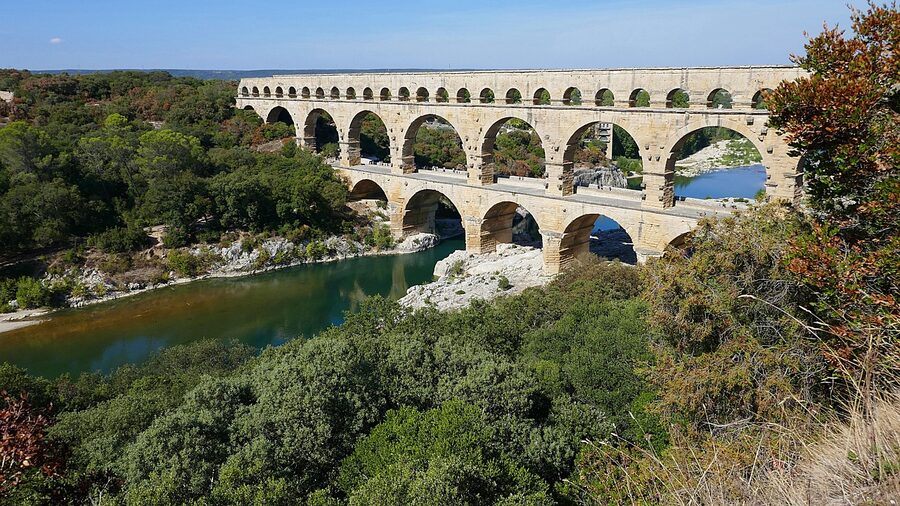
The Pont du Gard sits in a wooded valley about 25 kilometres northeast of Nîmes, in the Gard département of Occitania. It’s a UNESCO World Heritage Site, one of the most visited monuments in France, and the kind of building that makes you reconsider everything you thought you knew about “ancient” civilisations. There’s nothing primitive about this. It’s a masterpiece.
Official site: pontdugard.fr — current hours, exhibitions, and event schedule.
Combine with: Nîmes (Roman arena, Maison Carrée), Uzès (source of the aqueduct), or Avignon day trips.
What You’ll See
The site is more than just the bridge. The Pont du Gard visitor centre includes a museum covering the history and engineering of the aqueduct, walking trails along the riverbanks and through the garrigue (scrubland), and in summer, a beach area along the Gardon river. The bridge itself is free to see from the riverbank — the $9 ticket covers the museum, closer access, and the river beach.
The museum is excellent and often overlooked by visitors who come just for the bridge. It covers the aqueduct’s full 50-kilometre route (with scale models showing how the water was channelled through tunnels, trenches, and bridges), the Roman engineering techniques used, and the social history of water supply in ancient Nîmes. Allow about 45 minutes for the museum, then 30-60 minutes for the bridge and walks.
The Engineering: Why It Still Stands
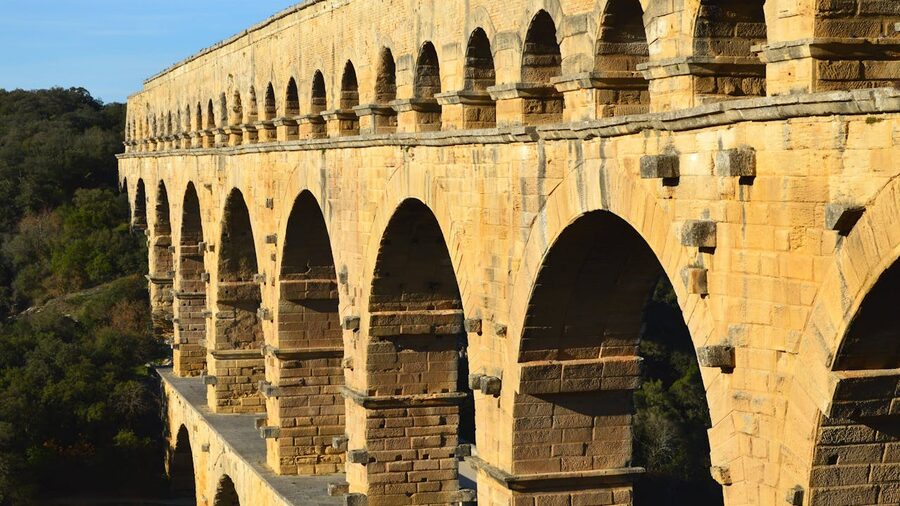
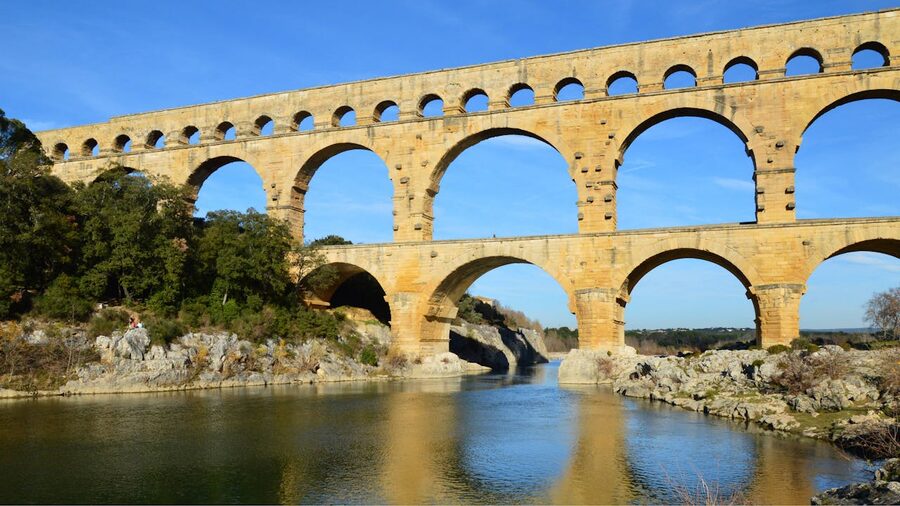
The Pont du Gard was built around 19 BC, during the reign of Augustus. The entire aqueduct system — not just the bridge, but all 50 kilometres — was completed in about 15 years, which is remarkable speed for a project of this scale. The bridge itself weighs about 50,000 tonnes and was constructed without mortar, metal clamps, or concrete. The stones are fitted together so precisely that a knife blade won’t fit between them.
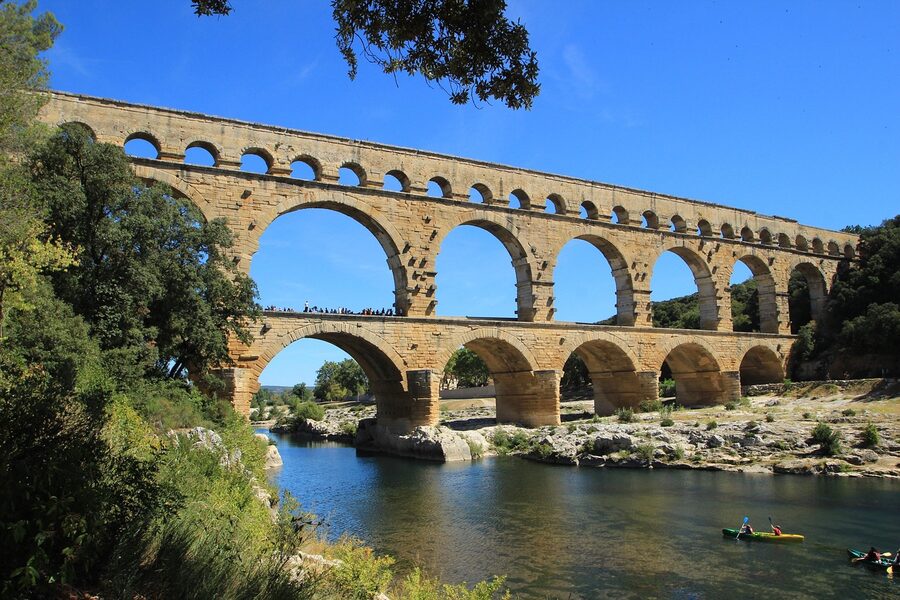
The water channel at the top is about 1.8 metres tall and 1.2 metres wide — enough for a person to walk through, which is exactly what the maintenance crews did for the 500+ years the aqueduct operated. The channel has a very slight downward gradient (17 metres over 50 kilometres) that maintained a steady flow rate of about 200 litres per second. That’s enough to supply a city of 50,000 people with water for public baths, fountains, and private houses.
Swimming, Kayaking, and the River
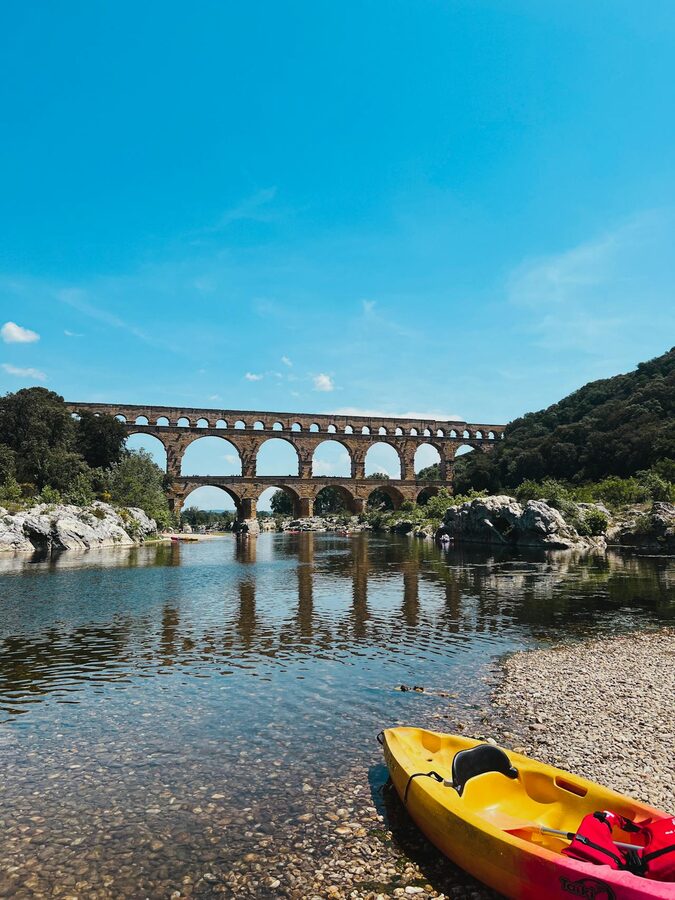
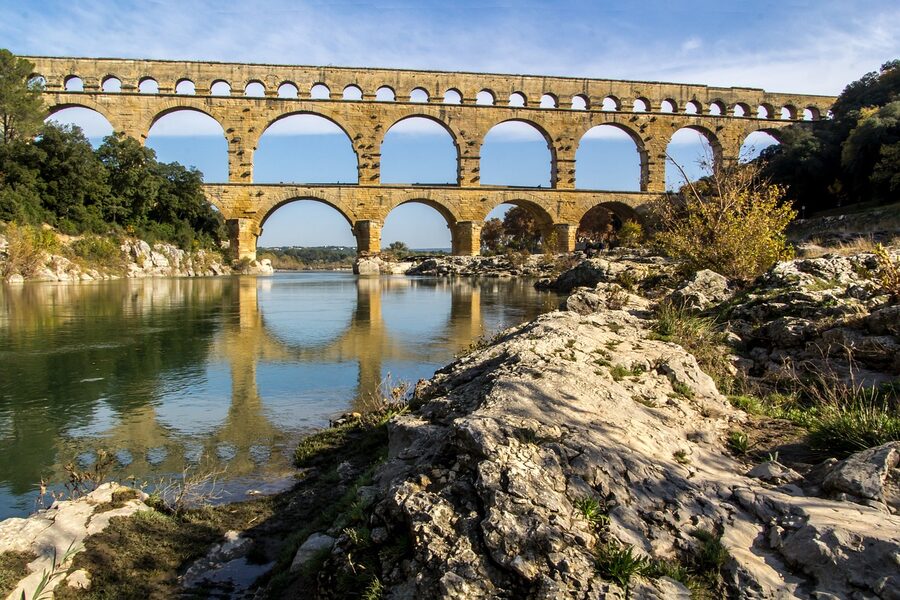
The Gardon river below the Pont du Gard is one of the best swimming spots in southern France. From April through October, the river beach area is accessible with your site ticket. The water is clean, clear, and cold — fed by springs in the Cévennes mountains — and the backdrop of a 2,000-year-old Roman bridge adds a surreal quality to a swim.
The Night Show
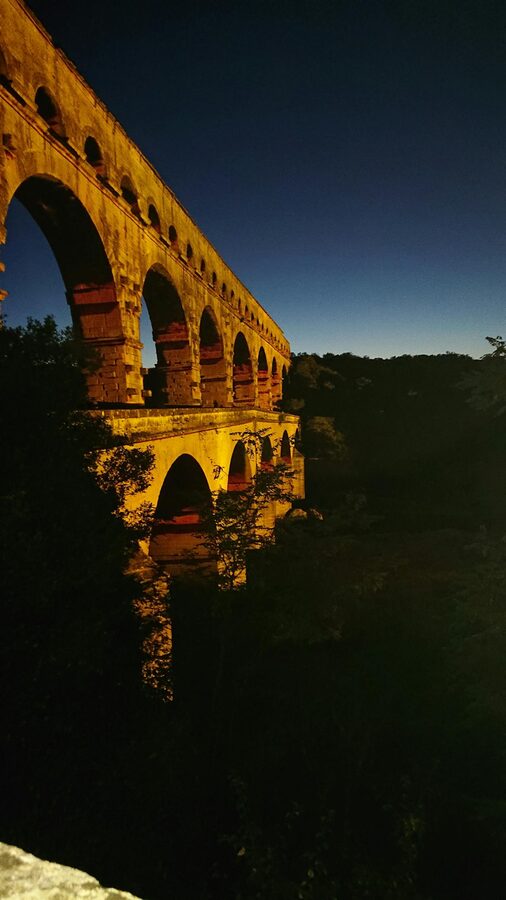
From June through September, the Pont du Gard hosts an evening light show that illuminates the bridge with projections telling the story of its construction and the Roman aqueduct system. The show is free with your site ticket and runs after dark (usually 9:30-10pm). It’s not a Disney-style spectacular — it’s tasteful, historically accurate projections that use the bridge’s stone surface as a canvas. The effect of seeing the bridge glow against the night sky is genuinely memorable.
Getting There
From Nîmes: 25km, about 30 minutes by car. No direct public transport — the site is designed for car access, with large parking areas on both sides of the river. Parking costs €8 per vehicle (included in some tour packages).
From Avignon: 25km, about 30 minutes. The Pont du Gard is roughly equidistant from Nîmes and Avignon, making it an easy day trip from either city. It’s often combined with the Provence day trip circuit from Avignon — the bridge, plus Uzès, plus a lavender stop if the season is right.
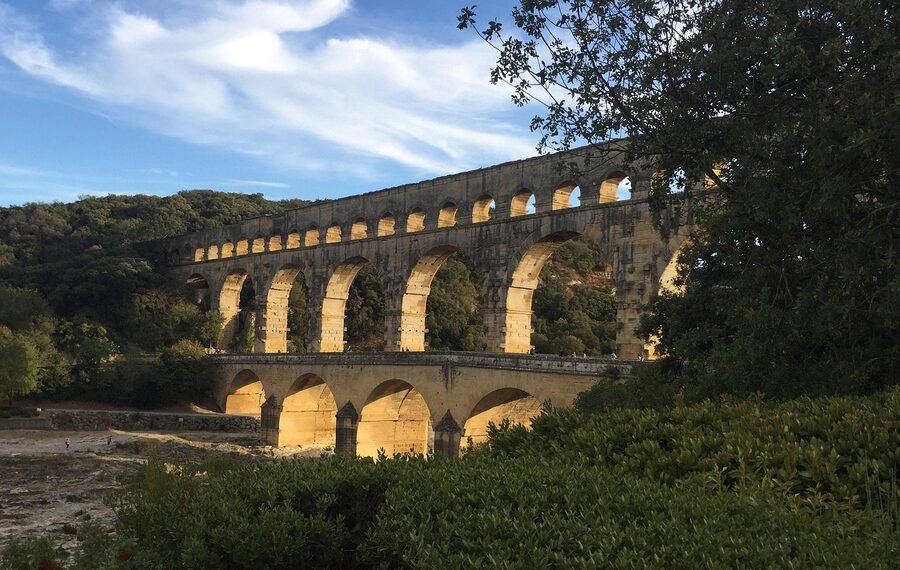
From Uzès: 15km, about 20 minutes. Uzès is a beautiful market town that was the source of the aqueduct’s water — the spring at Fontaine d’Eure still flows. Combining Uzès (morning market, especially on Saturday) with the Pont du Gard (afternoon swim) makes a perfect day.
Best Ticket to Book
1. Pont du Gard Skip-the-Line Admission — $9
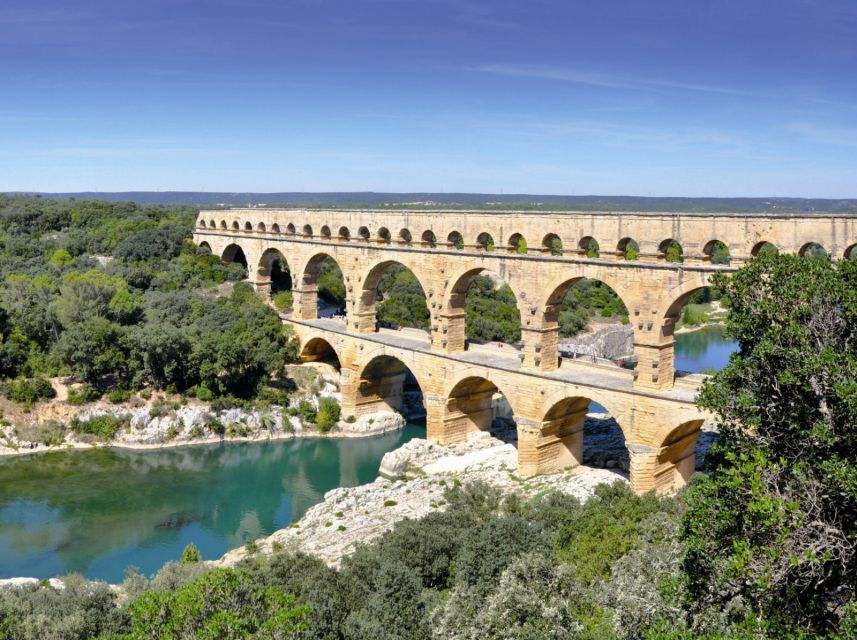
The entry ticket covers the museum, walking trails, river beach access, and evening illumination when running. The skip-the-line option from GYG avoids the ticket queue at the main entrance, which can be significant in July and August. At $9, the value is remarkable — you’re accessing a 2,000-year-old engineering marvel, a good museum, and a swimming spot for less than the price of a coffee in central Paris. Our review covers the full site layout, the museum highlights, and the best times for swimming and photography.
2. Provence Highlights from Avignon — $157

If you don’t have a car, the Provence highlights tour from Avignon includes stops at the Pont du Gard, Luberon villages, and lavender fields (in season). The guided format adds historical context but limits your time at each stop. Better for visitors who want an overview; less ideal for those who want to spend half a day at the bridge swimming and exploring.
3. Marseille Calanques Boat Tour — From $25

Not at the Pont du Gard, but in the same region of southern France. The Calanques boat tours from Marseille show you the Mediterranean coast’s most dramatic limestone scenery — a natural complement to the Pont du Gard’s river valley setting. Both demonstrate what limestone geology creates when water and time go to work on it.
Practical Tips
Opening hours: The site is open year-round. Summer (June-August): 9am-8pm. Spring/autumn: 9am-6pm. Winter: 9am-5pm. The museum closes 30 minutes before the site. Check the official site for exact dates and evening event schedules.
How long: 2-3 hours for the bridge, museum, and walking trails. Add 2-3 hours if you’re swimming or kayaking. The evening light show (when running) adds another 1-2 hours. A full day at the Pont du Gard is easily possible and highly recommended.
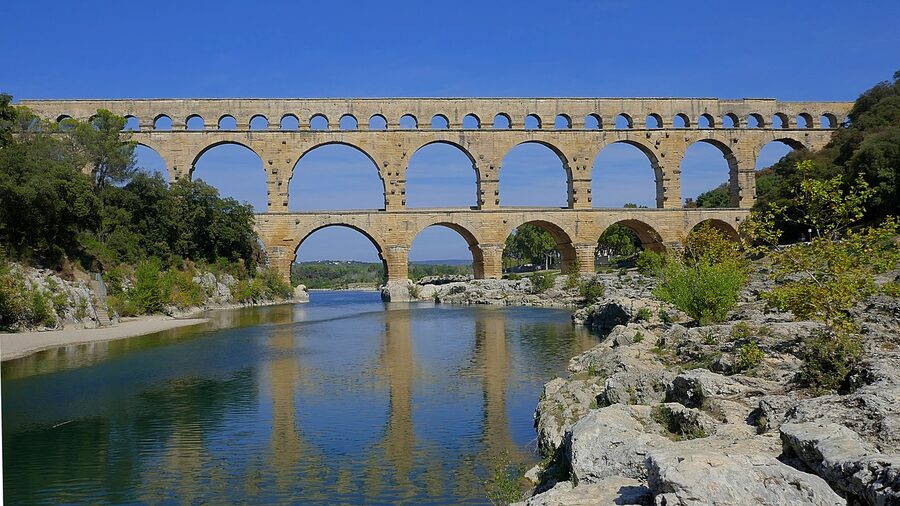
Best time: Late spring (May-June) and early autumn (September-October) for comfortable weather, swimmable river, and manageable crowds. July-August is extremely hot (35°C+) and extremely crowded — the river beach fills up by 10am on weekends. Early morning arrivals (before 10am) in summer get the best of both the bridge and the swimming.
Budget: Entry: $9. Parking: €8. Kayak rental from Collias: €15-20. The on-site restaurant is decent but overpriced — bring a picnic. Wine from the nearby Costières de Nîmes vineyards (€5-8 per bottle from a local cave) + bread, cheese, and local olives makes the best possible Pont du Gard lunch for about €10 per person.
Where the Pont du Gard Fits
The Pont du Gard is a natural stop on any southern France itinerary. The Provence day trips from Avignon often include it. The Carcassonne medieval city is about 2.5 hours west — a different era of French architecture but equally impressive. And for visitors heading to the coast, the Marseille Calanques are about 1.5 hours south. Between Roman engineering, medieval fortification, and Mediterranean limestone, southern France covers more architectural and natural variety per square kilometre than anywhere else in the country.