
Oscar Wilde’s tomb has a glass barrier around it now. They had to install it because visitors kept kissing the stone and the lipstick was dissolving the monument. That detail tells you everything about Père Lachaise — it’s a cemetery where the dead are more famous than most living people, and the living can’t stop touching things.
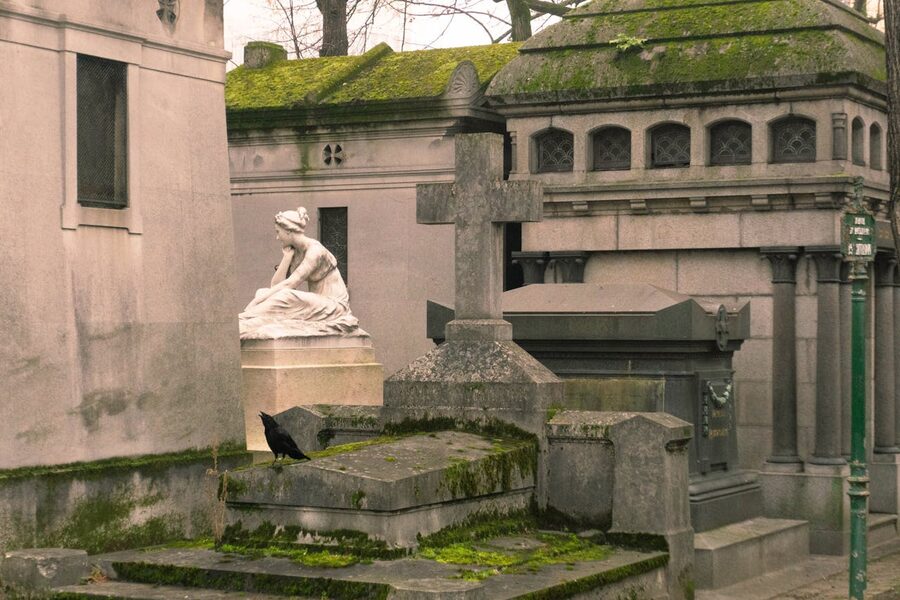
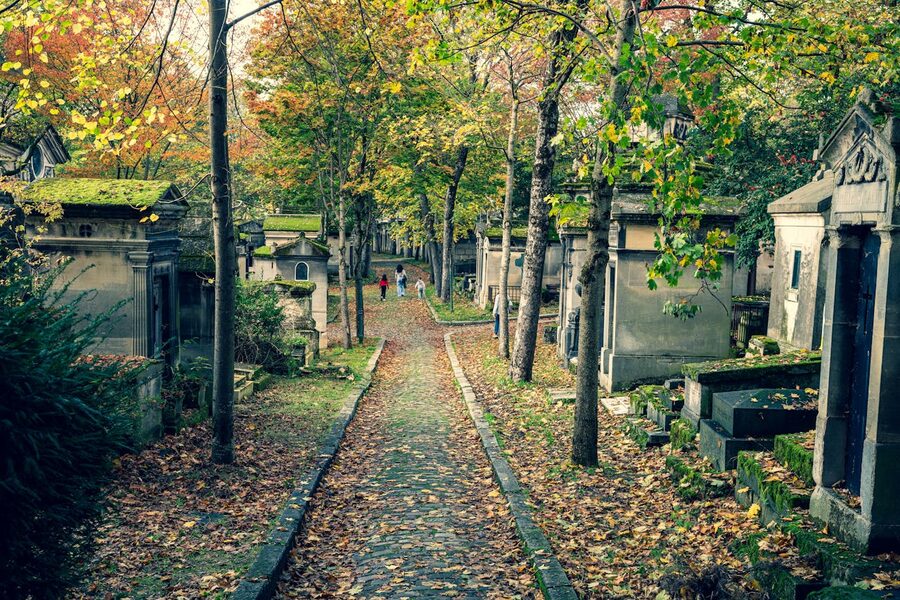
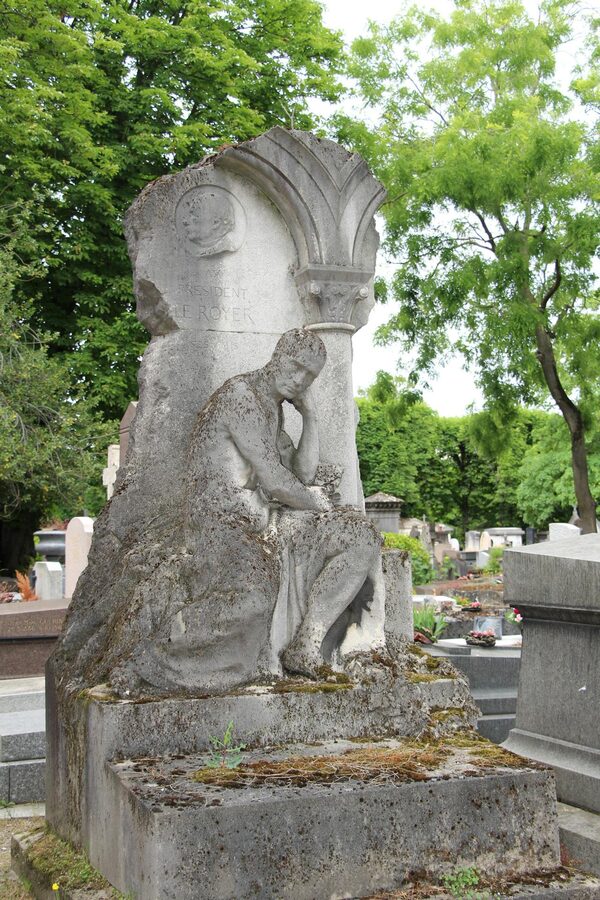
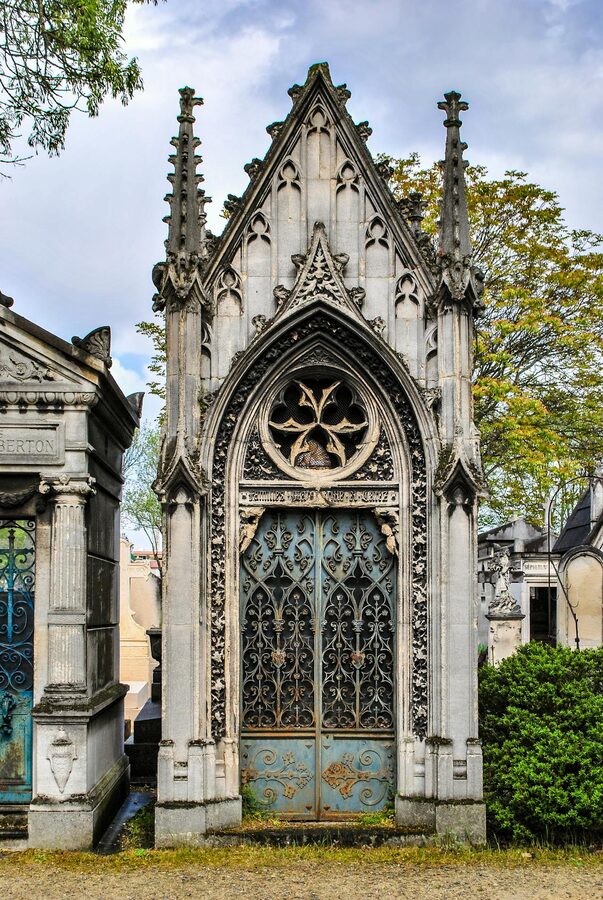
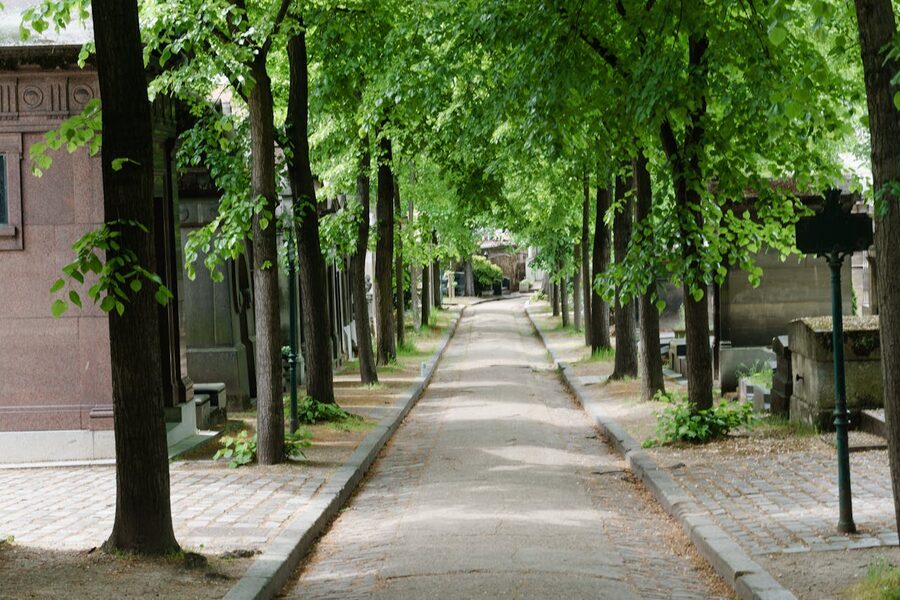
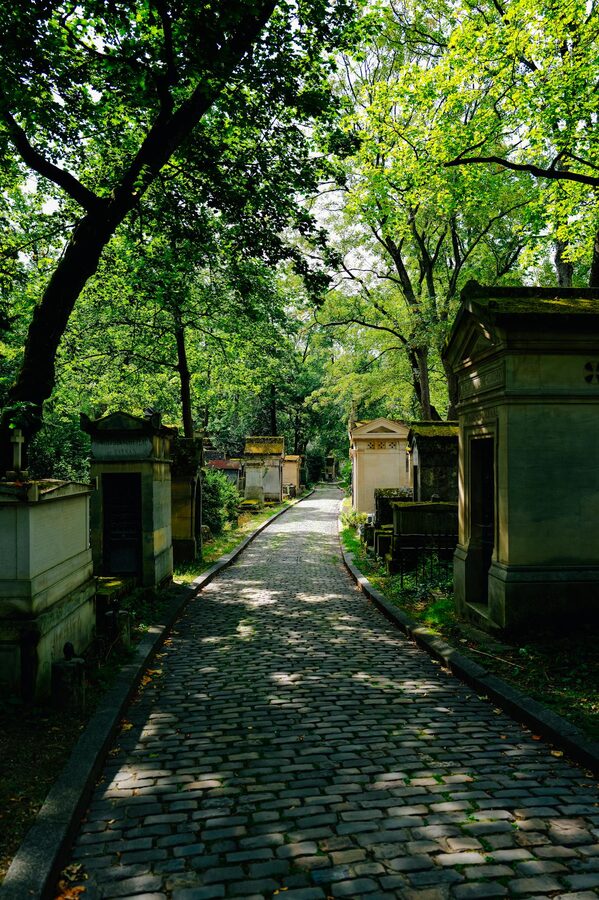
Père Lachaise is the most visited cemetery in the world. Over three million people walk through its gates every year, which makes it busier than some Parisian museums. They come for Jim Morrison, Edith Piaf, Chopin, Molière, Marcel Proust, and about a dozen other names that stopped needing surnames a long time ago. But the real draw isn’t any single grave — it’s the place itself. Forty-four hectares of cobblestone paths, ancient trees, and some of the most extraordinary funerary art you’ll see anywhere.
Same tour, different platform: Famous Graves Walking Tour (Viator) — $18, 2 hours, same route and guides.
For something different: Haunted Père Lachaise Tour — $27, 2 hours, focuses on the darker stories and ghost legends.
- Do You Need a Tour? (Honest Answer)
- The Famous Graves: Who’s Here
- The Cemetery Itself: Why It Matters
- Best Tours to Book
- 1. Famous Graves Guided Tour (GetYourGuide) —
- 2. Famous Graves Walking Tour (Viator) —
- 3. Haunted Père Lachaise Tour —
- Visiting on Your Own: Practical Details
- Best Time to Visit
- Beyond the Celebrity Graves
- The Neighbourhood Around the Cemetery
- Where Père Lachaise Fits in Your Paris Trip
Do You Need a Tour? (Honest Answer)
Père Lachaise is free to enter and open to the public every day. You can absolutely visit on your own with a free map from the guardhouse at the main entrance. So why would you pay for a guide?
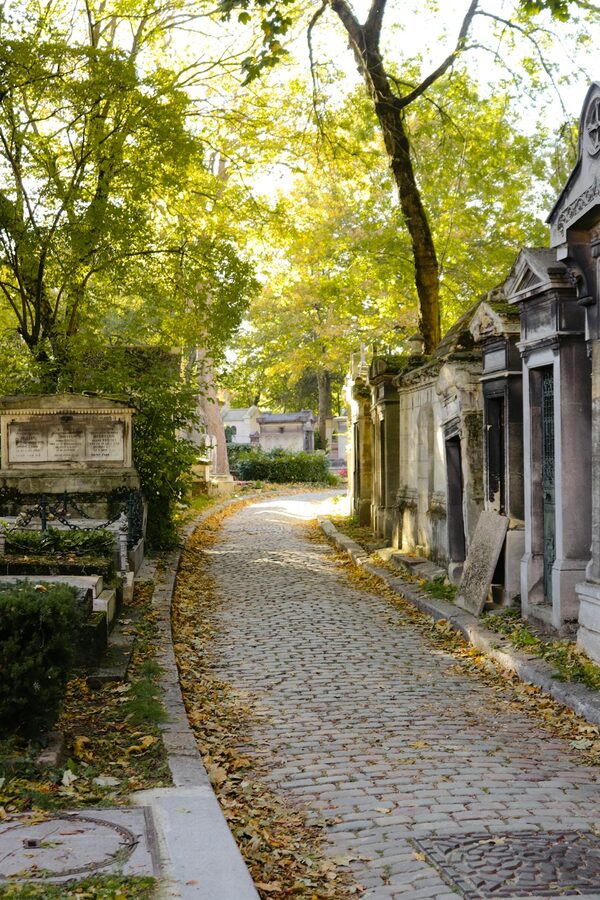
Two reasons. First, the cemetery is enormous and confusing. The famous graves are scattered across 44 hectares with no logical order and inconsistent signage. Jim Morrison is in Division 6. Chopin is in Division 11. Oscar Wilde is in Division 89. Without a guide, you’ll spend half your visit squinting at a map and the other half walking in circles.
Second — and this is the real reason — the stories are what make it. Every tomb has a story, and most of them are stranger than fiction. Guides know which graves have the best tales, which ones most visitors walk right past, and the connections between residents that the map doesn’t show. The difference between visiting with and without a guide is the difference between looking at gravestones and understanding a 200-year history of Paris through its dead.
The Famous Graves: Who’s Here
The headliners, in rough order of how many people queue to see them:
Jim Morrison (Division 6) — the most visited grave in the cemetery, which drives the French conservators slightly mad. A simple flat stone with a Greek inscription and usually a crowd three-deep. Security guards patrol it now because fans kept leaving drugs, alcohol, and graffiti on neighbouring tombs. The surrounding section is the most damaged in the cemetery, which is both a testament to Morrison’s enduring fame and a reminder that rock fans aren’t always respectful neighbours.
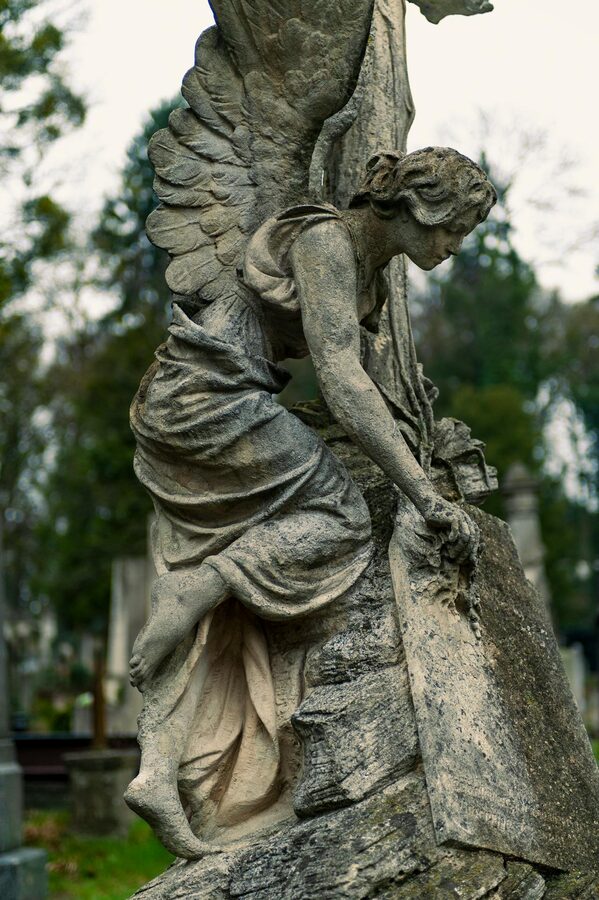
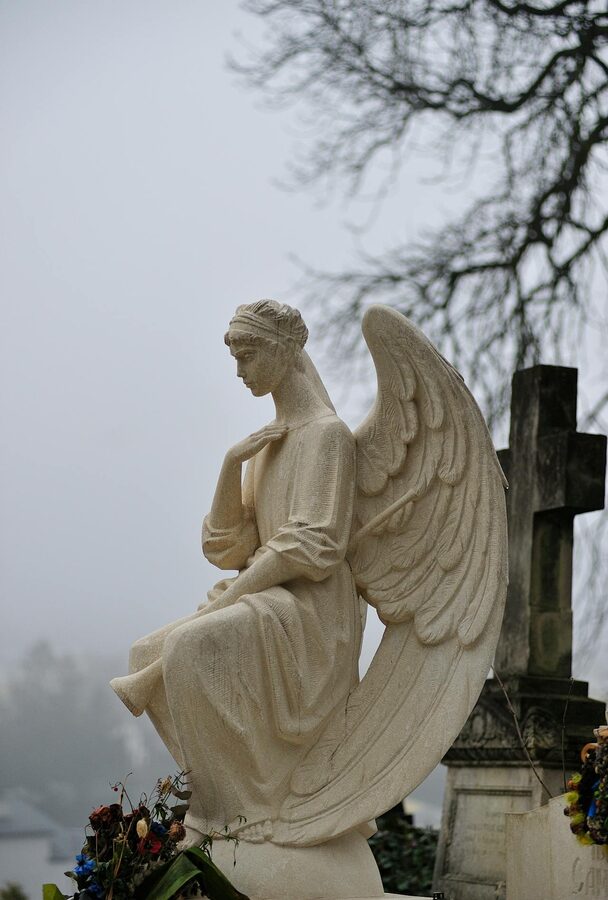
Oscar Wilde (Division 89) — a massive Art Deco angel by sculptor Jacob Epstein. The glass barrier was installed in 2011 after decades of lipstick kisses eroded the stone. The tomb also bears Wilde’s own words, which is exactly the kind of last flourish he would have approved of.
Edith Piaf (Division 97) — a simple black granite slab that’s almost always covered in fresh flowers. Piaf was born in the streets near Père Lachaise and her funeral in 1963 brought tens of thousands of mourners. Her grave is one of the few where the emotion still feels raw.
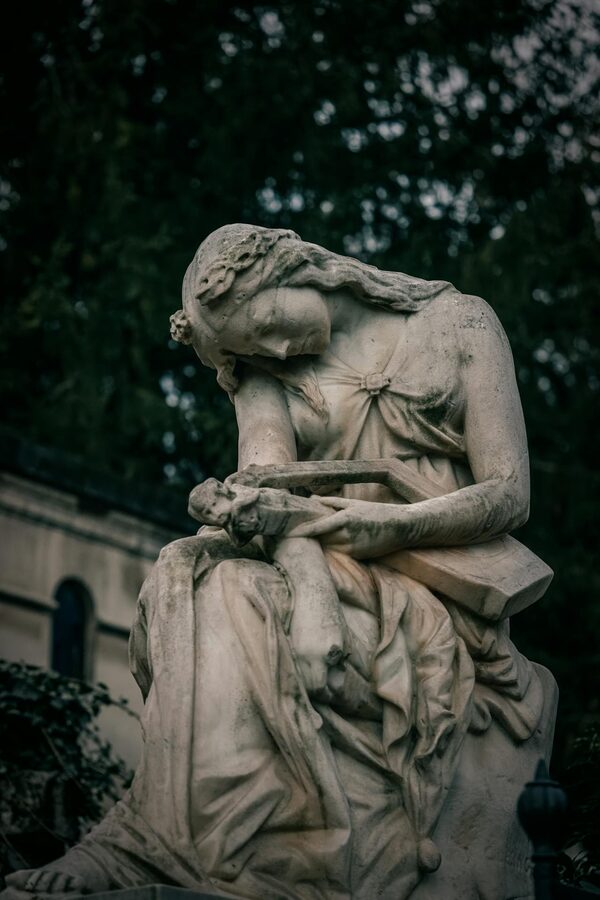
Frédéric Chopin (Division 11) — a white marble monument with a weeping muse. Chopin’s body is here, but his heart is in Warsaw, embedded in a pillar of the Church of the Holy Cross. He asked for it to be sent home.
Marcel Proust (Division 85) — a flat black marble slab, perpetually polished by the literary pilgrims who visit. Proust’s father and brother are buried alongside him.
Molière (Division 25) — the oldest “resident,” though his remains were moved here in 1817 from a different burial site. Molière and La Fontaine were relocated to give the new cemetery prestige. It worked.
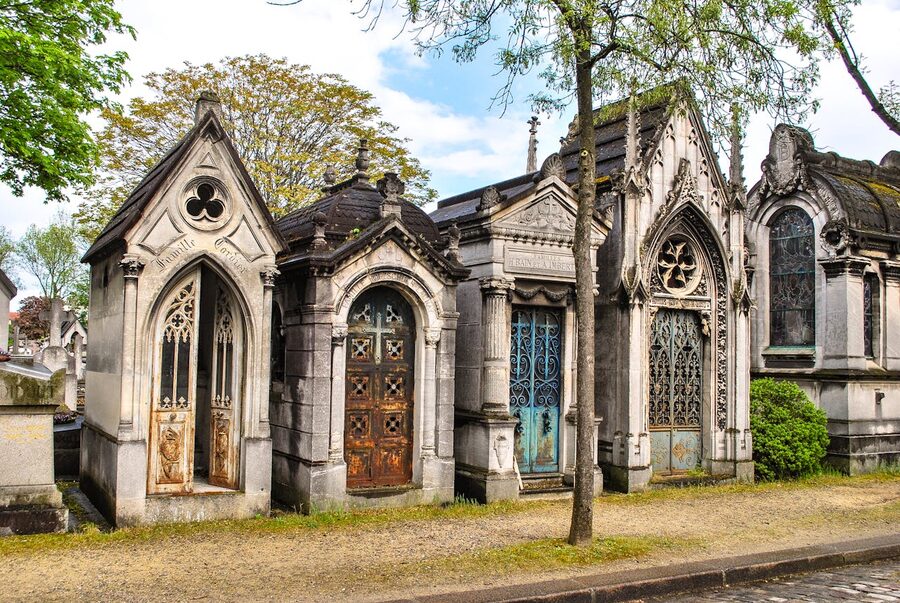
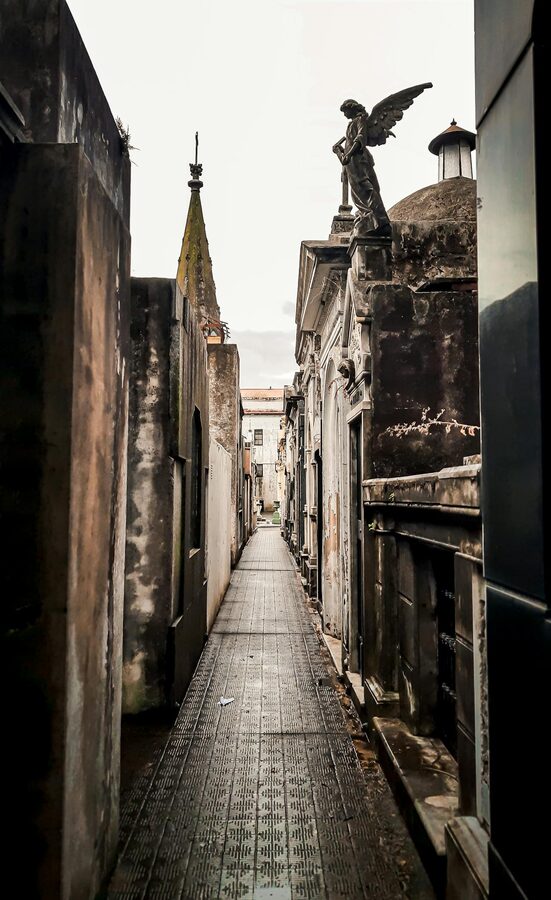
Other notable graves include Balzac, Colette, Gertrude Stein, Isadora Duncan, Maria Callas, Yves Montand, and Allan Kardec (whose tomb is the most visited by spiritualists — people leave letters asking for his intercession). The cemetery holds more than 70,000 plots spanning every era from the Napoleonic period to today.
The Cemetery Itself: Why It Matters
Père Lachaise opened in 1804, during Napoleon’s reign. It was designed by architect Alexandre-Théodore Brongniart as a garden cemetery — a revolutionary concept at the time. Before this, Parisians were buried in overcrowded churchyard pits that posed serious health risks. The Cimetière des Innocents near Les Halles was so full that basement walls in neighbouring buildings were collapsing under the weight of bones.
The new cemetery was so far from the city centre that nobody wanted to be buried there. So the authorities orchestrated a PR stunt: they exhumed Molière and La Fontaine and reburied them at Père Lachaise. Then they moved the supposed remains of Héloïse and Abélard, the famous medieval lovers. Suddenly, everyone wanted a plot. By 1830, the cemetery was full and had to expand multiple times.
The cemetery also holds dark history. The last major battle of the Paris Commune in 1871 ended here, when 147 communards were lined up against the eastern wall and shot by government troops. The Mur des Fédérés (Wall of the Communards) is now a memorial and pilgrimage site for the French left.
Best Tours to Book
Three solid options, each with a different angle. All three cover the major graves but the tone and focus vary.
1. Famous Graves Guided Tour (GetYourGuide) — $15

The default choice and the best value. Two hours, all the major graves, and guides who know the stories behind the stones. At $15 it costs less than a cocktail in the Marais, which makes it an easy yes even if you’re not sure cemeteries are your thing. Our review breaks down the route and highlights — the guide quality is the consistent theme in over a thousand reviews, with several names mentioned repeatedly as exceptional.
2. Famous Graves Walking Tour (Viator) — $18

Nearly identical to the GYG version in format — 2 hours, small group, same major graves — but booked through Viator with a different guide pool. The $3 price difference is negligible. Choose based on which platform you prefer or which has better availability on your date. Our review of this version covers the differences in route and commentary style — both are solid, and over 1,000 reviews on each platform backs that up.
3. Haunted Père Lachaise Tour — $27
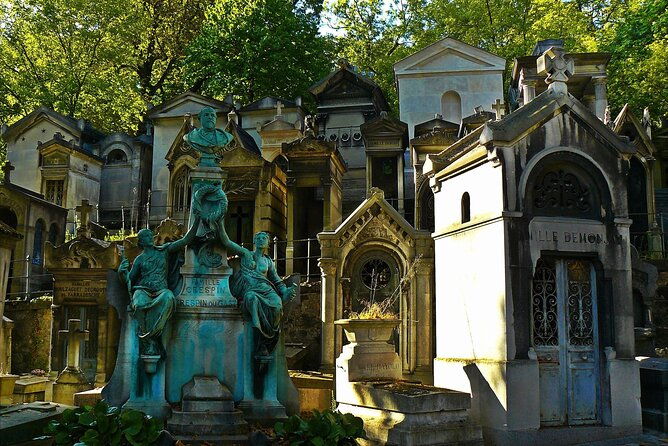
If the standard famous-graves tour is the Wikipedia version, this is the true-crime podcast. Same cemetery, different focus — ghost stories, dark legends, the Commune massacre, and the stranger tales that the daytime tours gloss over. Worth the premium if you’ve already done the standard route or if you’re the kind of person who’d rather hear about a spiritist sect than a composer’s resting place. Our review covers what makes the haunted angle work — it’s surprisingly well-researched, not cheesy.
Visiting on Your Own: Practical Details
Entry is free. No tickets, no reservations, no timed entry. Just walk in. The main entrance is on Boulevard de Ménilmontant (Métro: Père Lachaise, Line 2 or 3). There’s a secondary entrance on Rue des Rondeaux if the main gate is crowded.
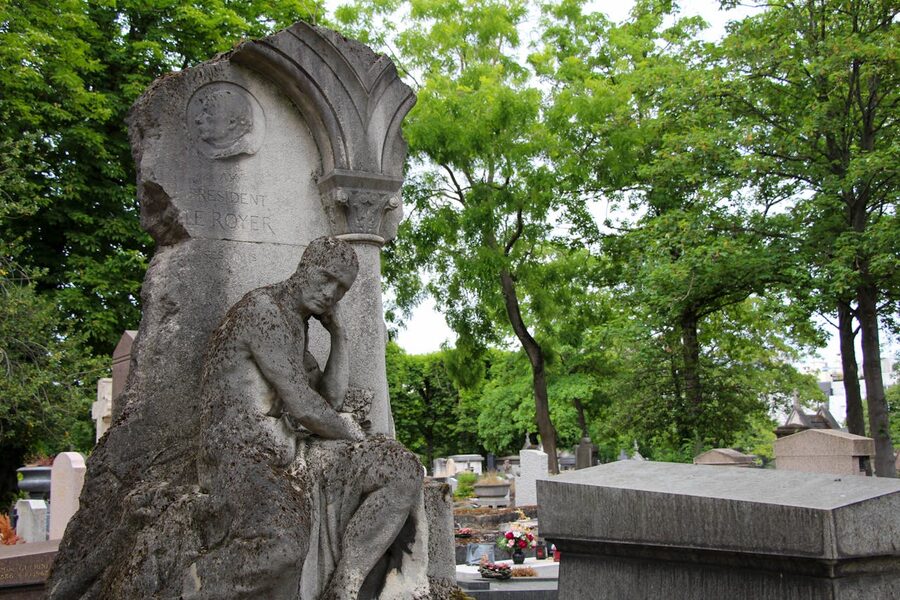
Opening hours: 8am–5:30pm in winter, 8am–6pm in summer (8:30am start on weekends and holidays). The guards start clearing people out 15 minutes before closing and they mean it.
How long to allow: 90 minutes for a focused visit hitting the major graves. Two to three hours if you want to wander. A full morning if you’re a photographer or history obsessive. Guided tours are almost always 2 hours.
Maps: Free paper maps are available at the guardhouse by the main entrance. They mark the celebrity graves by number. The maps aren’t great — the cemetery’s layout doesn’t lend itself to cartography — but they’re better than nothing. Google Maps actually works reasonably well once you’re inside.
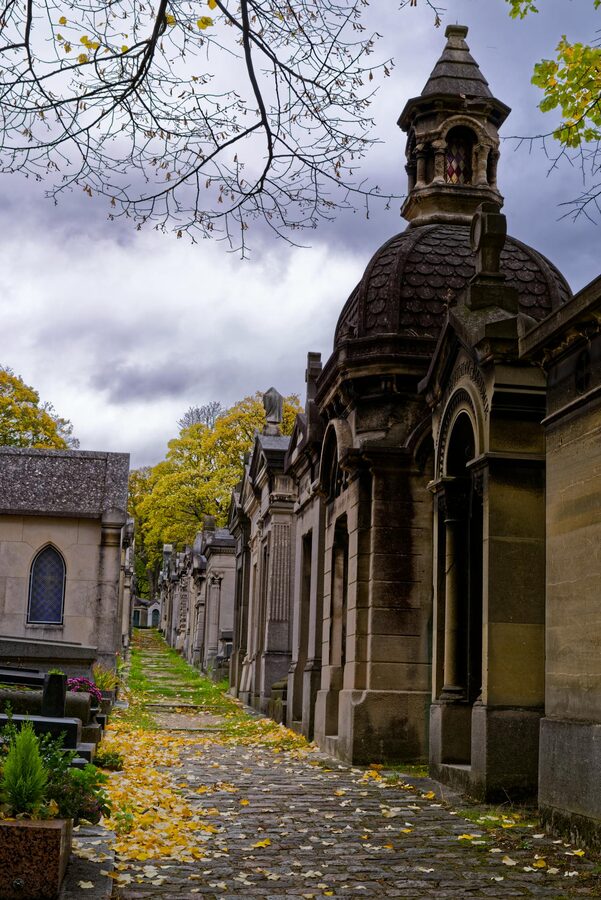
What to wear: Comfortable walking shoes — the cobblestones are uneven and the terrain is hilly. Père Lachaise is on the slope of a hill, so some sections involve genuine uphill walking. There’s no dress code, but it is an active cemetery where burials still happen. Respectful behaviour is expected and guards will intervene if you’re being disruptive.
Best Time to Visit
Early morning on a weekday. The cemetery opens at 8am (8:30 on weekends) and for the first hour it’s almost empty. The light is beautiful, the atmosphere is genuinely meditative, and you won’t be sharing Jim Morrison’s grave with forty phone screens.
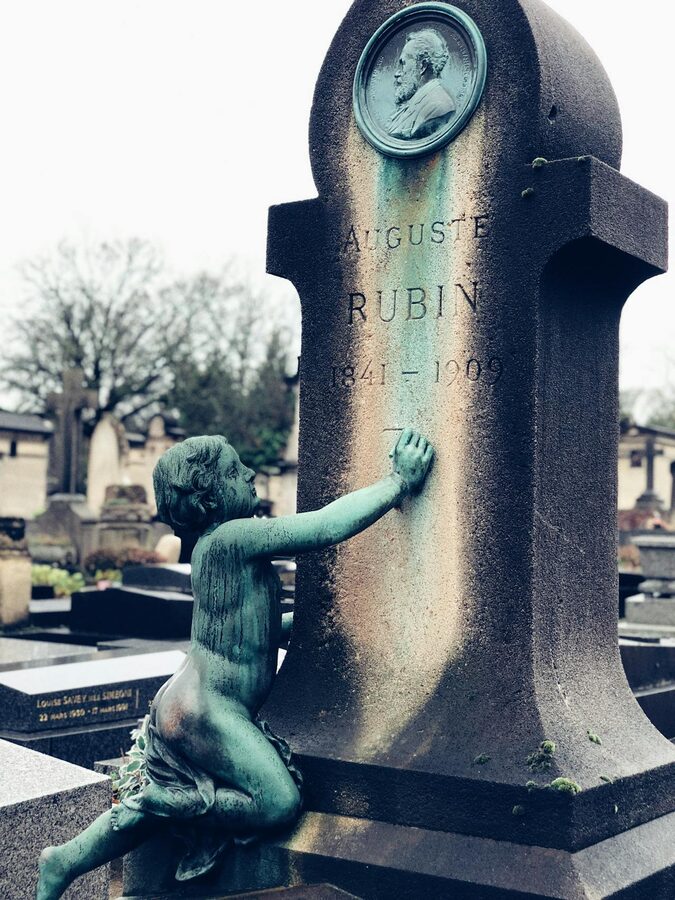
By 10am, the tour groups arrive and the popular graves get crowded. By noon on a summer weekend, the cemetery feels more like a tourist attraction than a place of rest. If you’re taking a guided tour, the early-morning slots (usually 9 or 9:30am) are the best choice.
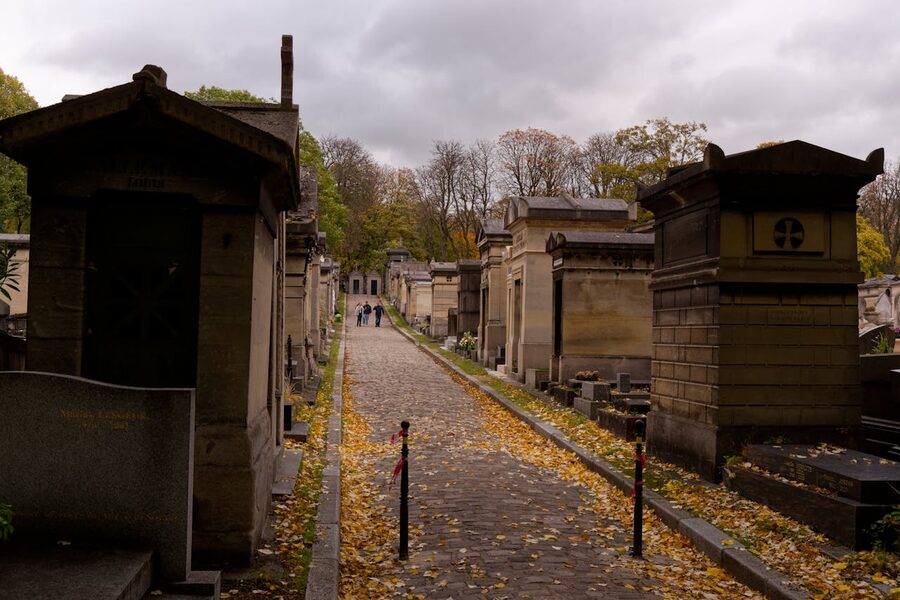
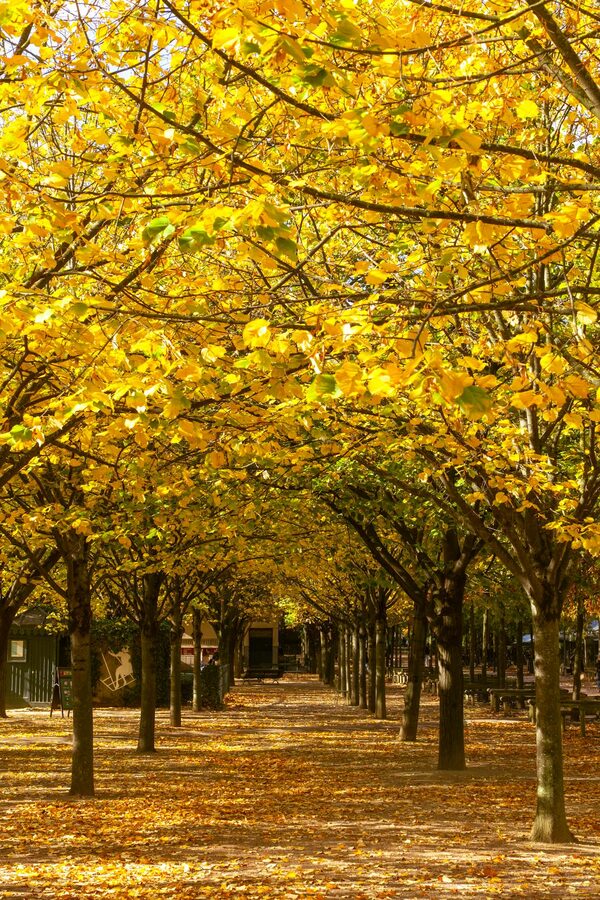
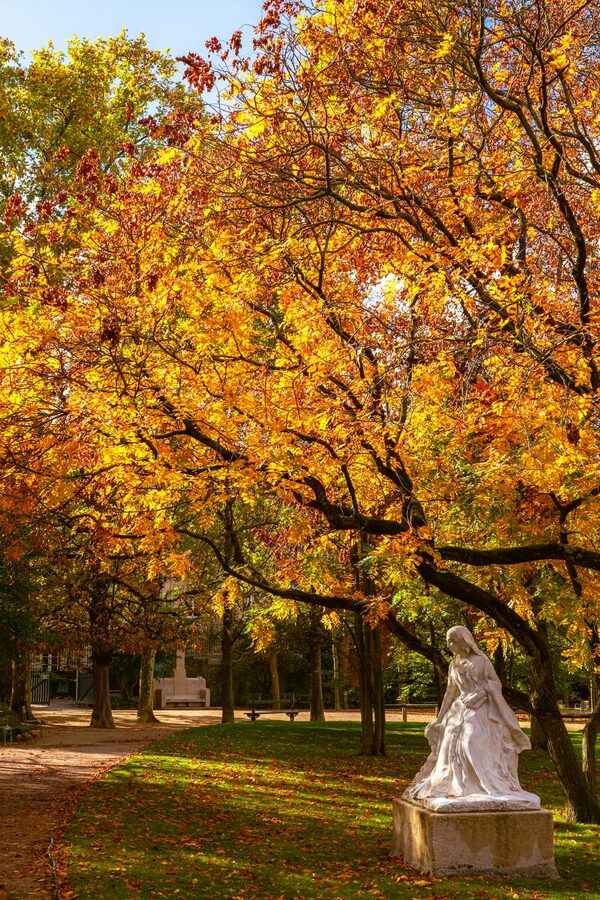
Seasonally: autumn is magical — the trees change colour and the fallen leaves on the cobblestones look like a film set. Spring is lush and green. Summer is hot and crowded. Winter is quiet and atmospheric but the paths can be icy. Overcast days, oddly, produce the best photographs — harsh sunlight creates difficult contrast between the bright paths and dark tomb interiors.
Beyond the Celebrity Graves
The guided tours focus on the famous names because that’s what sells tickets. But some of the most interesting parts of Père Lachaise have nothing to do with celebrity.
The Mur des Fédérés (Wall of the Communards) in the northeast corner marks where 147 members of the Paris Commune were executed by firing squad on May 28, 1871. Every year, thousands of people march to the wall on its anniversary. It’s become a secular pilgrimage site for the French left, and the atmosphere there is noticeably different from the rest of the cemetery — political rather than mournful.
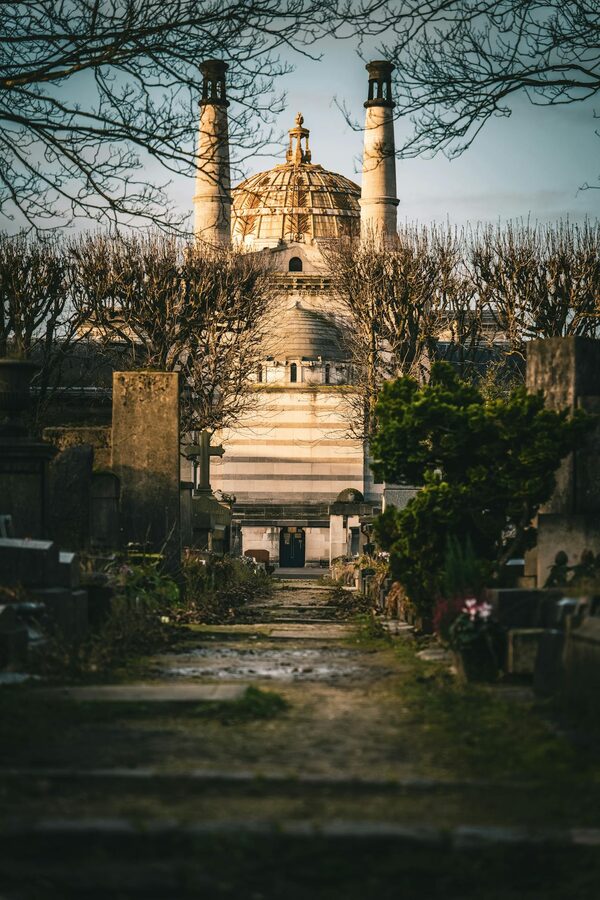
The columbarium and crematorium near the eastern edge holds the ashes of several notable figures, including dancer Isadora Duncan and artist Max Ernst. It’s a different architectural style — more Art Nouveau — and much quieter than the main paths.
The Jewish section and various war memorials — including monuments to Holocaust victims, Resistance fighters, and soldiers from both world wars — add layers of history that most visitors miss entirely. A slow walk through these areas is sobering in a way the celebrity graves aren’t.
The Neighbourhood Around the Cemetery
Père Lachaise sits in the 20th arrondissement, one of Paris’s most diverse and least touristy neighbourhoods. The area around Ménilmontant and Belleville has a completely different energy from central Paris — more working-class, more multicultural, more authentic in the way that travel writers love to overuse that word.
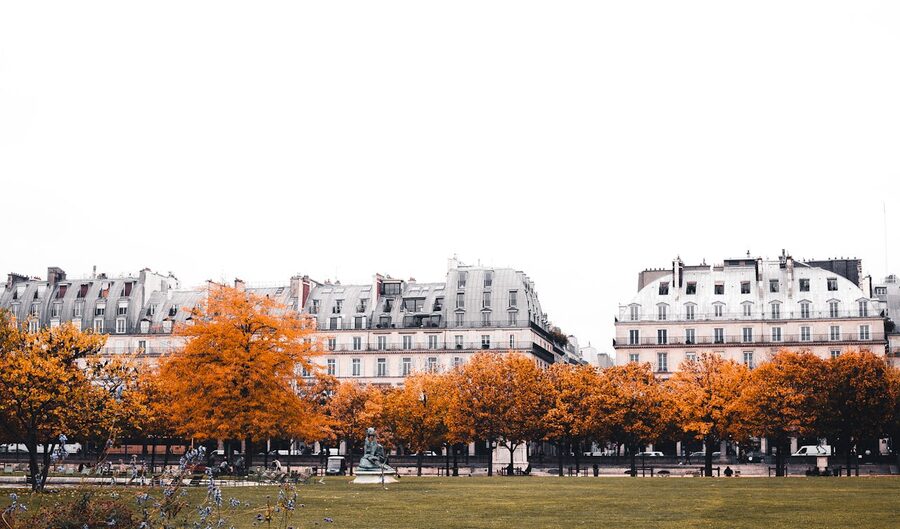
If you’re visiting in the morning, Rue Oberkampf and Rue de Ménilmontant have some of Paris’s best casual lunch spots — the kind of places where the menu is handwritten on a chalkboard and the plat du jour is whatever the chef felt like cooking. The Marché de Belleville (Tuesday and Friday mornings) is one of the city’s biggest and most colourful street markets, with some of the cheapest produce in Paris.
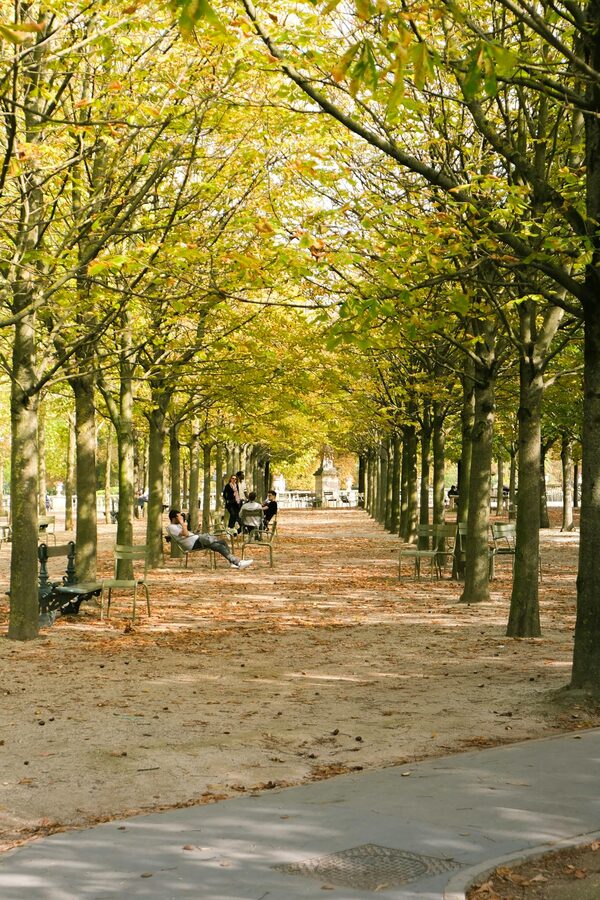
The nearest Métro stations are Père Lachaise (Lines 2 and 3) and Gambetta (Line 3, closer to the secondary entrance). Philippe Auguste on Line 2 also works if you’re approaching from the south. If you’re coming from central Paris, it’s about 20 minutes on the Métro from Châtelet.
Where Père Lachaise Fits in Your Paris Trip
A Père Lachaise visit pairs naturally with other eastern Paris activities. The Panthéon is another resting place of famous figures — Voltaire, Hugo, Dumas, Curie — but with a very different atmosphere (grandiose and formal vs. Père Lachaise’s organic, park-like feel). The Notre Dame Cathedral is back open and worth combining into a day exploring Paris’s relationship with the dead and the divine.
For a different side of Paris entirely, the cooking and baking classes make a great afternoon follow-up — nothing resets your mood after a morning among graves like learning to make croissants. And if Père Lachaise sparks an interest in Paris’s darker history, the Orangerie Museum won’t continue that thread, but Monet’s water lilies are a beautiful counterpoint to a morning spent with stone and marble. For the full Montmartre experience — another neighbourhood with layers of art and death — our Paris bike tour guide covers routes that pass through the area.