
Montmartre is the hardest neighbourhood in Paris to get right. Do it wrong and you spend three hours fighting crowds on Place du Tertre, getting hustled by portrait scammers, paying €9 for a burnt espresso at Le Consulat, and leaving with a “meh, it’s fine” memory of the most photogenic corner of the city. Do it right and you spend the same three hours walking through cobbled back streets that look exactly like the Renoir paintings, eating a €4 almond croissant from a bakery locals actually use, and watching the sunset from the Sacré-Cœur steps with a bottle of something cold.
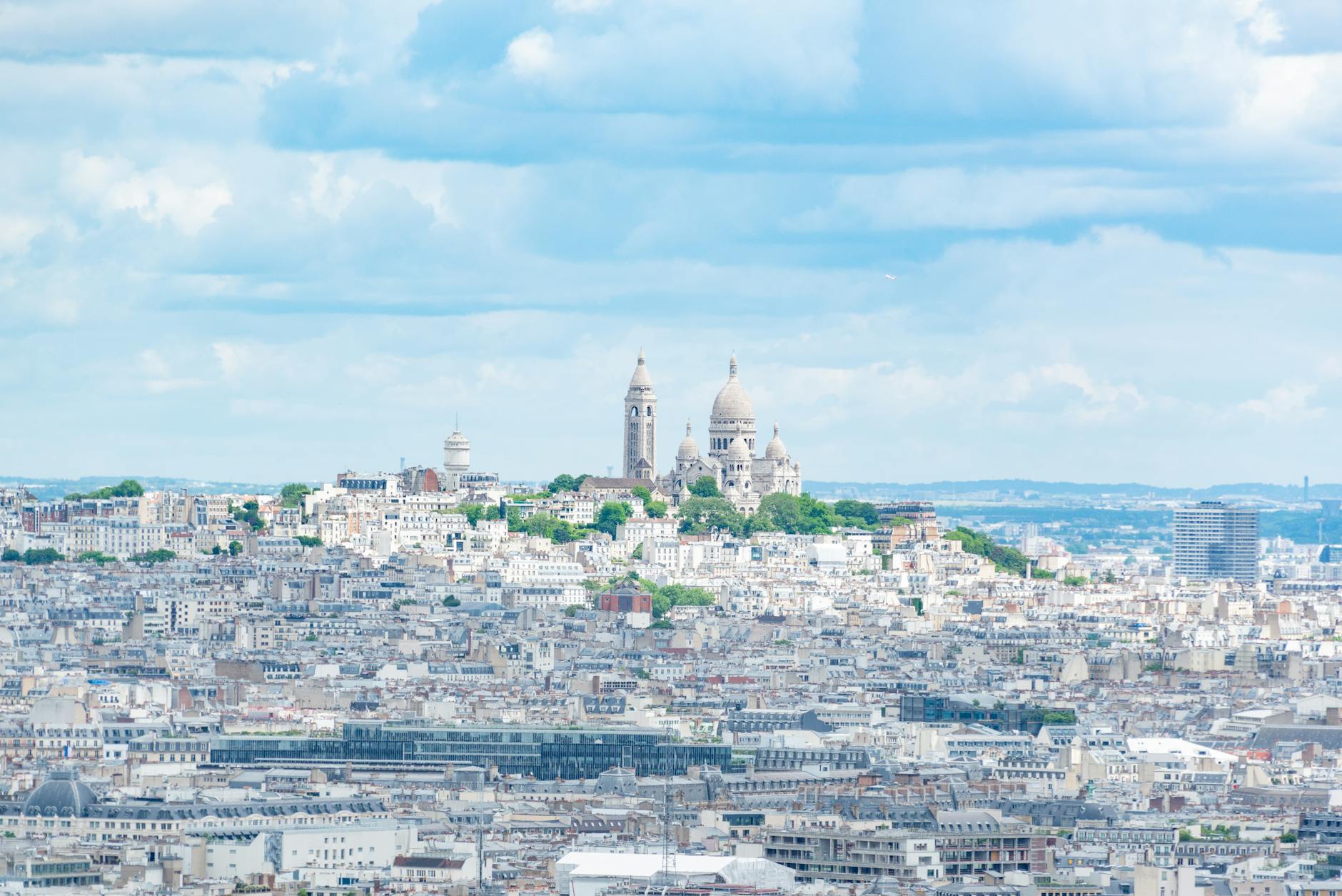
I have walked Montmartre about 30 times. I still find new corners. This guide is the specific 3-hour route I give friends who ask for “the good Montmartre” — the one that starts at the right metro station, skips the tourist traps, and ends at the best view in Paris at the right time of day.
Short version: start at Abbesses metro (not Pigalle, not Anvers), walk up the back way via Rue des Abbesses, save Place du Tertre for last (and just pass through), finish at the Sacré-Cœur steps 90 minutes before sunset. Book a guided walking tour if it is your first time. Full version follows.
Quick Picks: Montmartre Walking Tours
Cheapest & quirkiest: Magical Montmartre Without the Crowds (small group, $17) — deliberately avoids Place du Tertre and the funicular, sticks to the quieter east-side streets.
Bestseller with history: Montmartre Highlights Walking Tour with a Local Guide ($34, 2 hours) — covers the main sights plus backstreet context. 1,600+ reviews.
Food-focused: Montmartre Cheese, Wine & Pastry Walking Tour ($127, 3 hours) — the best Montmartre tour if you want to combine the history with serious French food stops. 2,200+ reviews, still my favourite tour in Paris.
Do it yourself: Start at Abbesses metro (line 12), go west before you go east, hit Place du Tertre last, end at Sacré-Cœur. 3 hours. Free. Route below.
When to go: Late afternoon, arriving at Sacré-Cœur 90 minutes before sunset. Avoid Saturday afternoons entirely if you can.
- Quick Picks: Montmartre Walking Tours
- Why Montmartre Is Hard to Do Well
- The 3-Hour Route (Starting at Abbesses)
- The Sacré-Cœur Approach (The Good Way)
- Sacré-Cœur Itself
- Place du Tertre (Skip It Fast)
- Montmartre Tour Options (Ranked)
- Magical Montmartre Without the Crowds (Small Group)
- Montmartre Highlights Walking Tour with a Local Guide
- Montmartre Cheese, Wine & Pastry Walking Tour
- When to Go
- How to Get There
- Food in Montmartre (The Actually Good Stuff)
- The Dome Climb: Worth It?
- The Montmartre Cemetery
- What to Wear and Bring
- Common Mistakes
- Is Montmartre Right For You?
- A Full Montmartre Day Itinerary
- What to Pair Montmartre With
- Final Thoughts
- FAQ
- More Paris Neighbourhood Walks
Why Montmartre Is Hard to Do Well
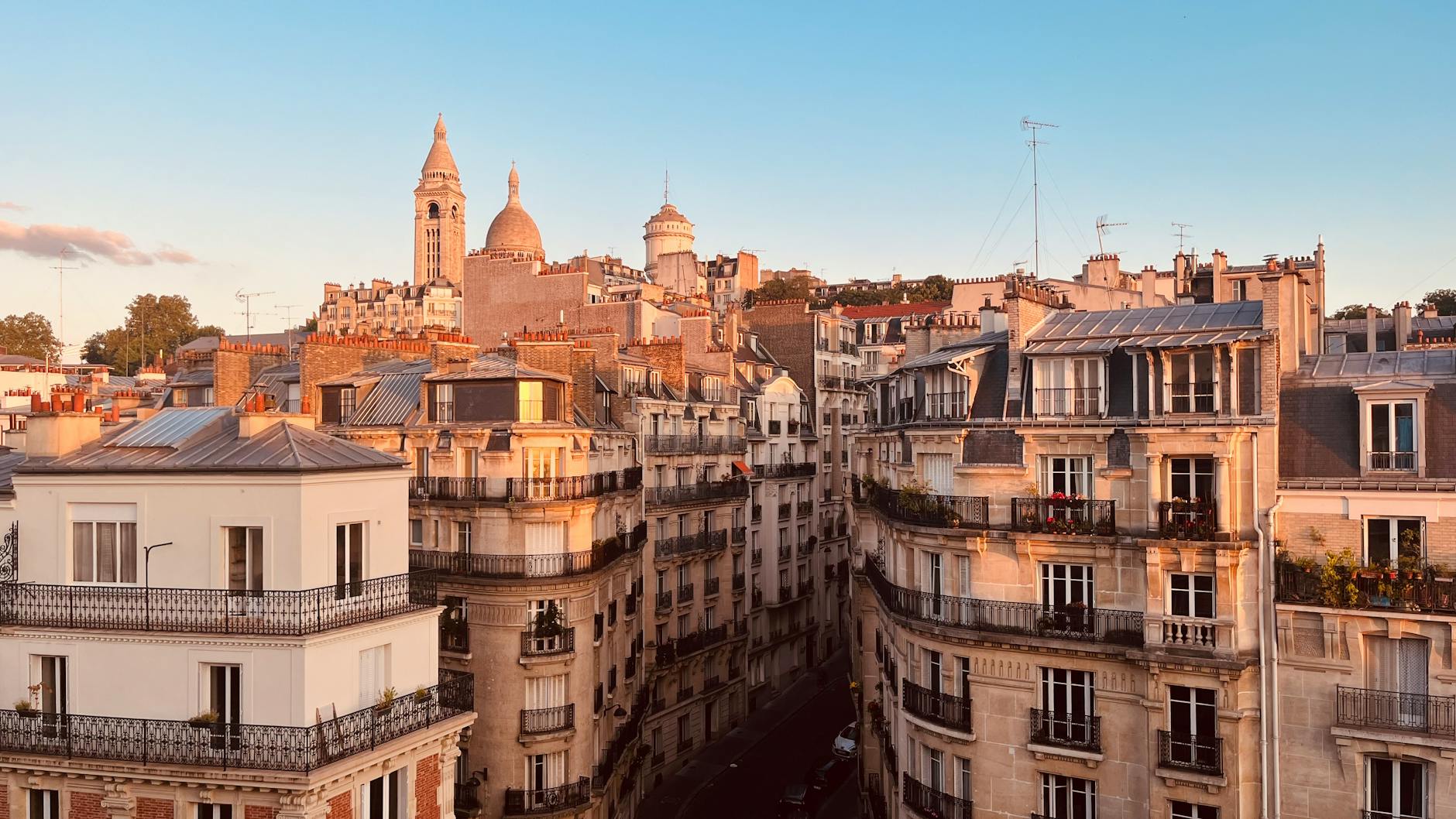
Montmartre is two completely different neighbourhoods sharing a postcode. There is Tourist Montmartre, which is a thin corridor running from the Anvers metro up the south slope through the main funicular, past the Sacré-Cœur steps, into Place du Tertre, and back down. On a Saturday afternoon it has 60,000 people a day crushed into it.
And there is Real Montmartre, which is everything else — the back streets, the north slope, the east side around the vineyard and the Musée, the Abbesses side to the south-west. These two neighbourhoods barely overlap.
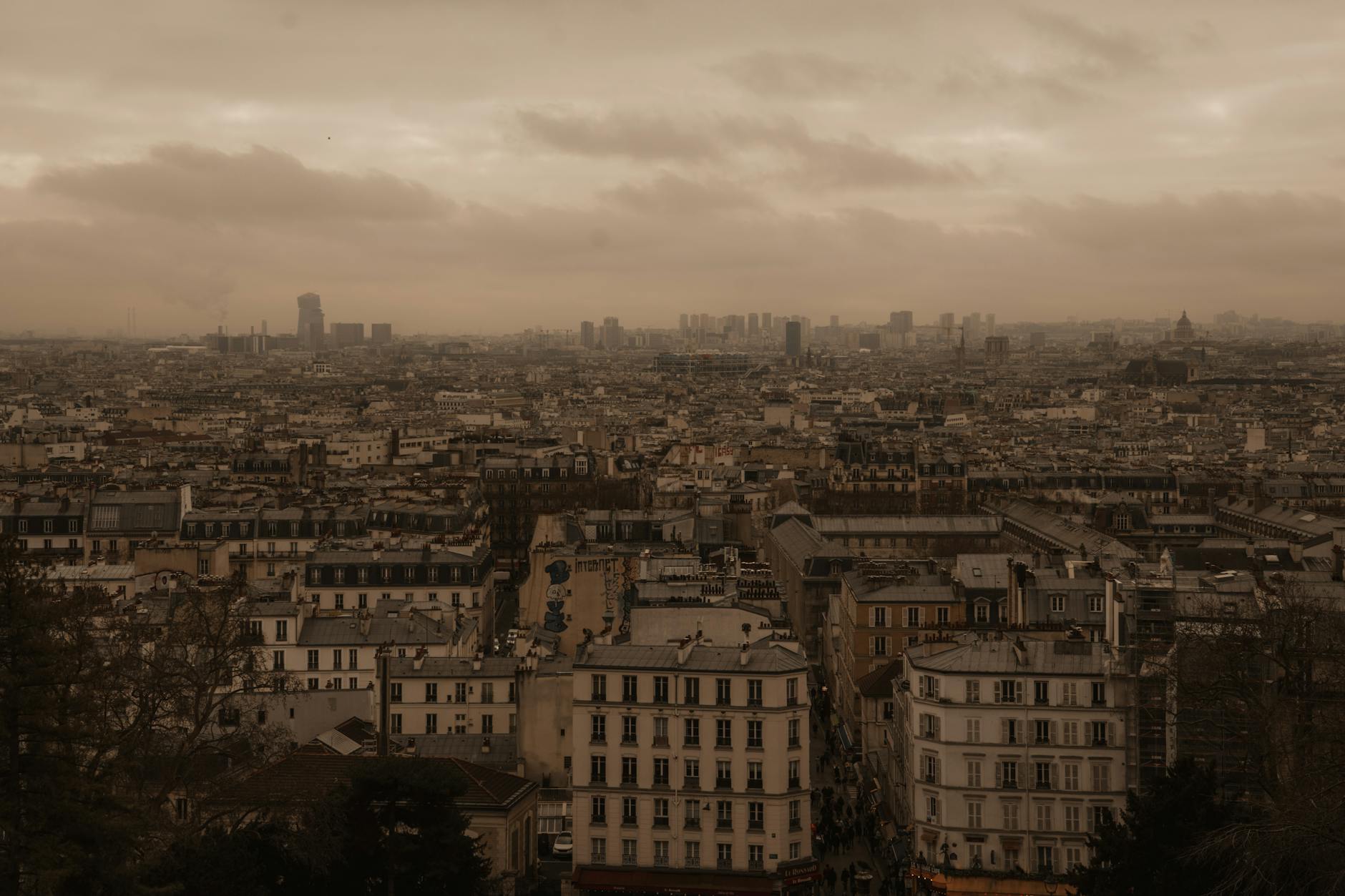
Most first-time visitors accidentally do the tourist version. They come up from Anvers, ride the funicular (€2.10 for a 90-second trip you could walk in five minutes), hit Sacré-Cœur, wander into Place du Tertre where they get approached by four portrait artists within 20 seconds, buy a €12 crêpe, and leave. They never see the actual village.
They never walk Rue Lepic past the Moulin de la Galette. They never find the Clos Montmartre vineyard (yes, Paris has a working vineyard — Montmartre has it). They miss the entire reason Montmartre is famous.
This guide is the fix. It is the version I do when I bring friends up for the first time. It takes the same 3 hours as the tourist version but shows you Real Montmartre for 2.5 of those hours and Tourist Montmartre for the final 30 minutes.
The 3-Hour Route (Starting at Abbesses)
Start: Abbesses metro station (line 12). Not Anvers. Not Pigalle.
Abbesses is the most beautiful metro station in Paris — a preserved Hector Guimard art-nouveau entrance from 1900, one of only three in the city that still has the original glass canopy. Stop and take a photo on the way out. Everyone does.
Exit to Place des Abbesses. Small pretty square with a carousel, a few cafés, and the actual entrance to the Abbesses station (deep — one of the deepest on the whole metro network, because the hill is solid bedrock). Walk south-east on Rue des Abbesses for about 200m.
This is an actual local shopping street — bakeries, wine shops, small restaurants that are not pitching to travelers because most travelers never walk this far west. Buy a pain au chocolat from Le Grenier à Pain (won best baguette in Paris in 2015) and eat it as you walk.
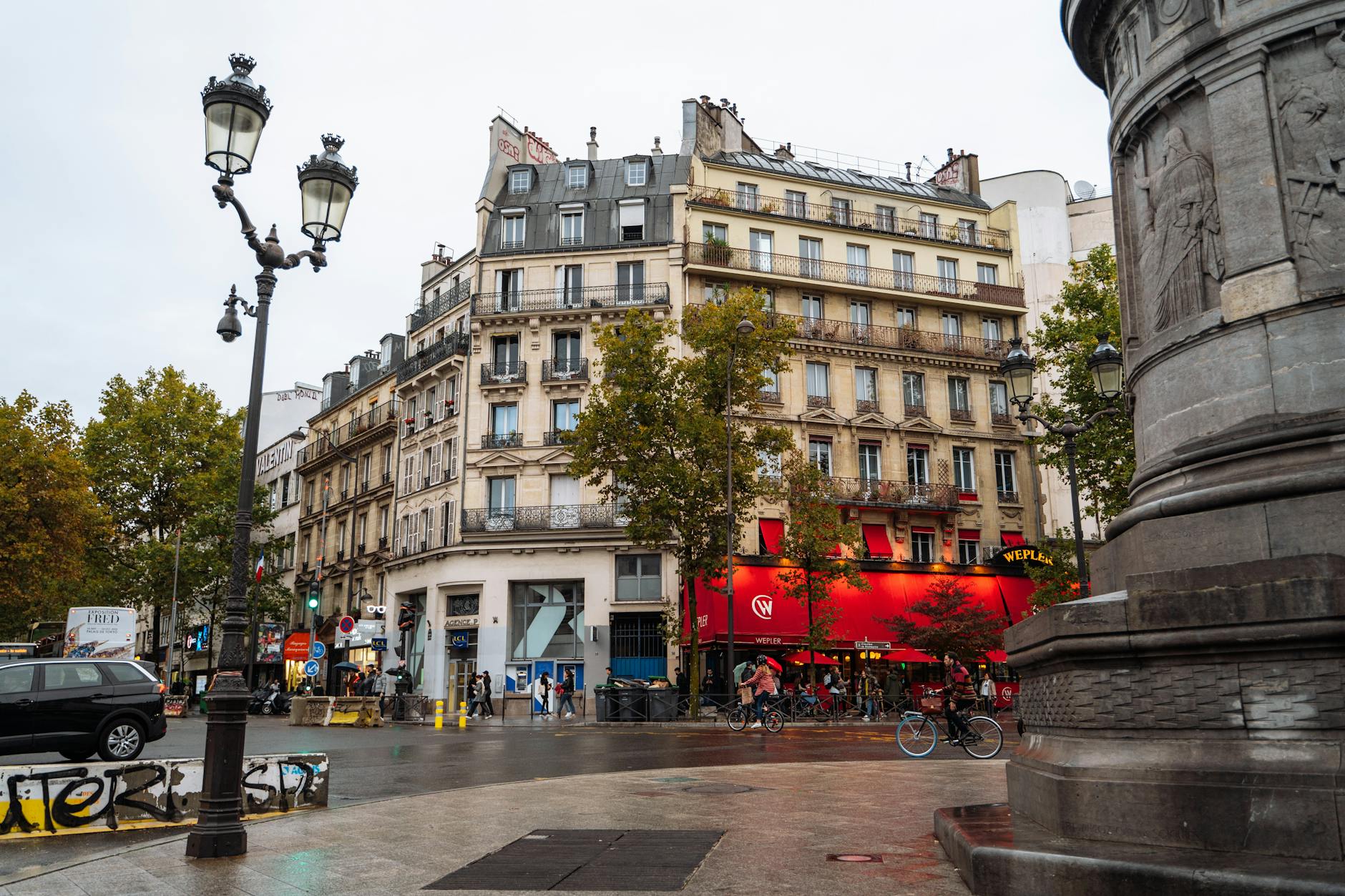
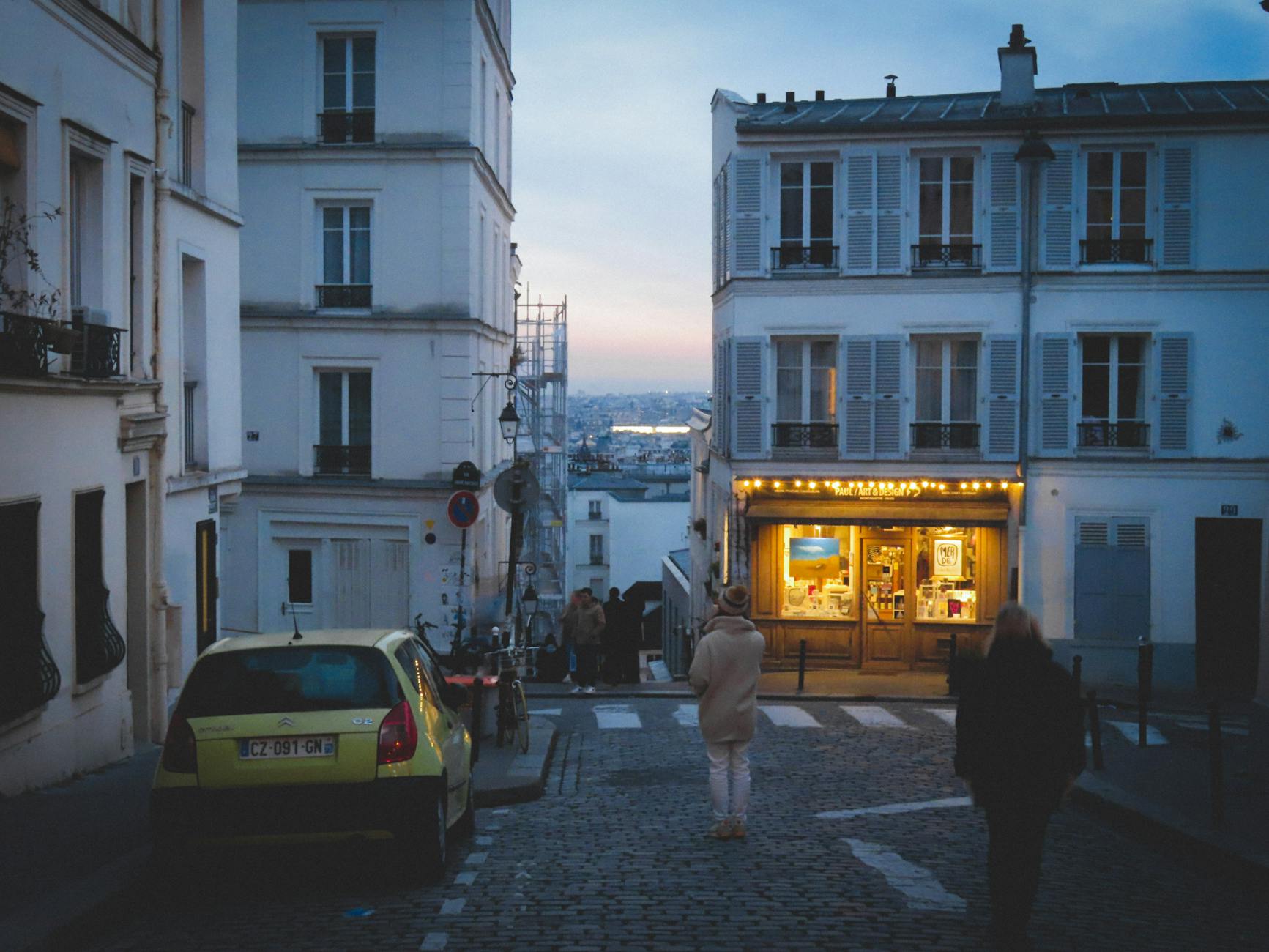
Turn left on Rue Lepic. This is the street that Amélie walks down in the film — the Café des Deux Moulins at number 15 is still there and still does a decent breakfast if you are starving. Continue up the hill (Rue Lepic curves, do not turn off).
About 10 minutes of walking uphill brings you to:
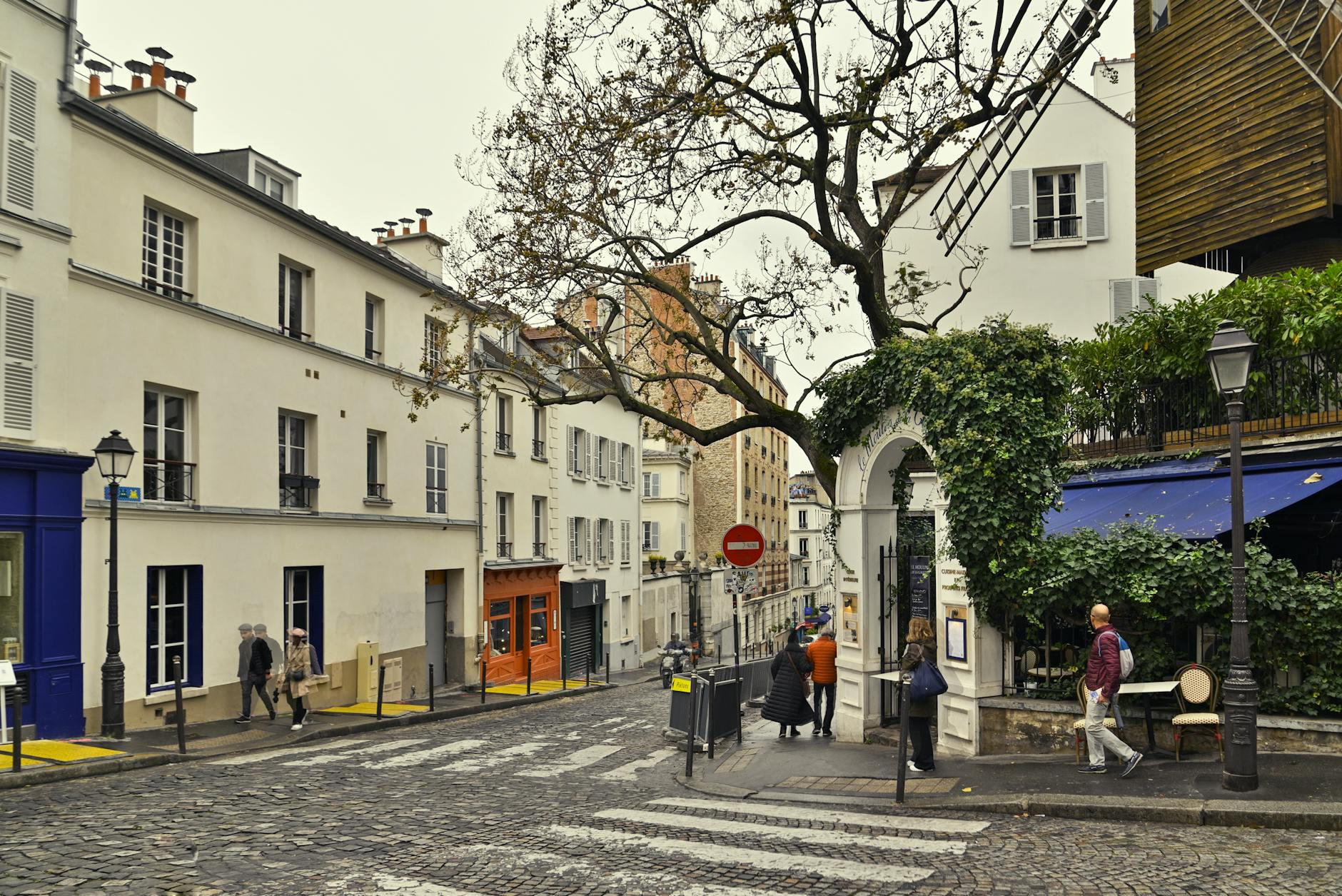
Moulin de la Galette. Two windmills — the older (Moulin Radet, visible from the street) and the famous one (Moulin Blute-Fin, painted by Renoir, behind the wall). You can see one from Rue Lepic without paying to enter the restaurant.
Do not eat here. The restaurant has been riding the Renoir connection for 40 years and the food is tourist-priced with tourist quality.
Continue on Rue Lepic, curve right onto Rue Girardon. About 300m and you will reach Place Marcel Aymé, a small square on your left with a distinctive statue: a man emerging from a stone wall. This is “Le Passe-Muraille” — a statue inspired by a 1943 short story by Marcel Aymé about a man who discovers he can walk through walls.
Locals rub the statue’s hand for luck. Take the photo.
From here it is 5 minutes to the Musée de Montmartre — the best museum in the neighbourhood. It is housed in the 17th-century house where Renoir, Suzanne Valadon, and Maurice Utrillo all lived and worked (not at the same time — it passed between them). The Renoir garden around the back is genuinely beautiful and almost nobody visits it. €16 ticket.
Worth it.
The Sacré-Cœur Approach (The Good Way)
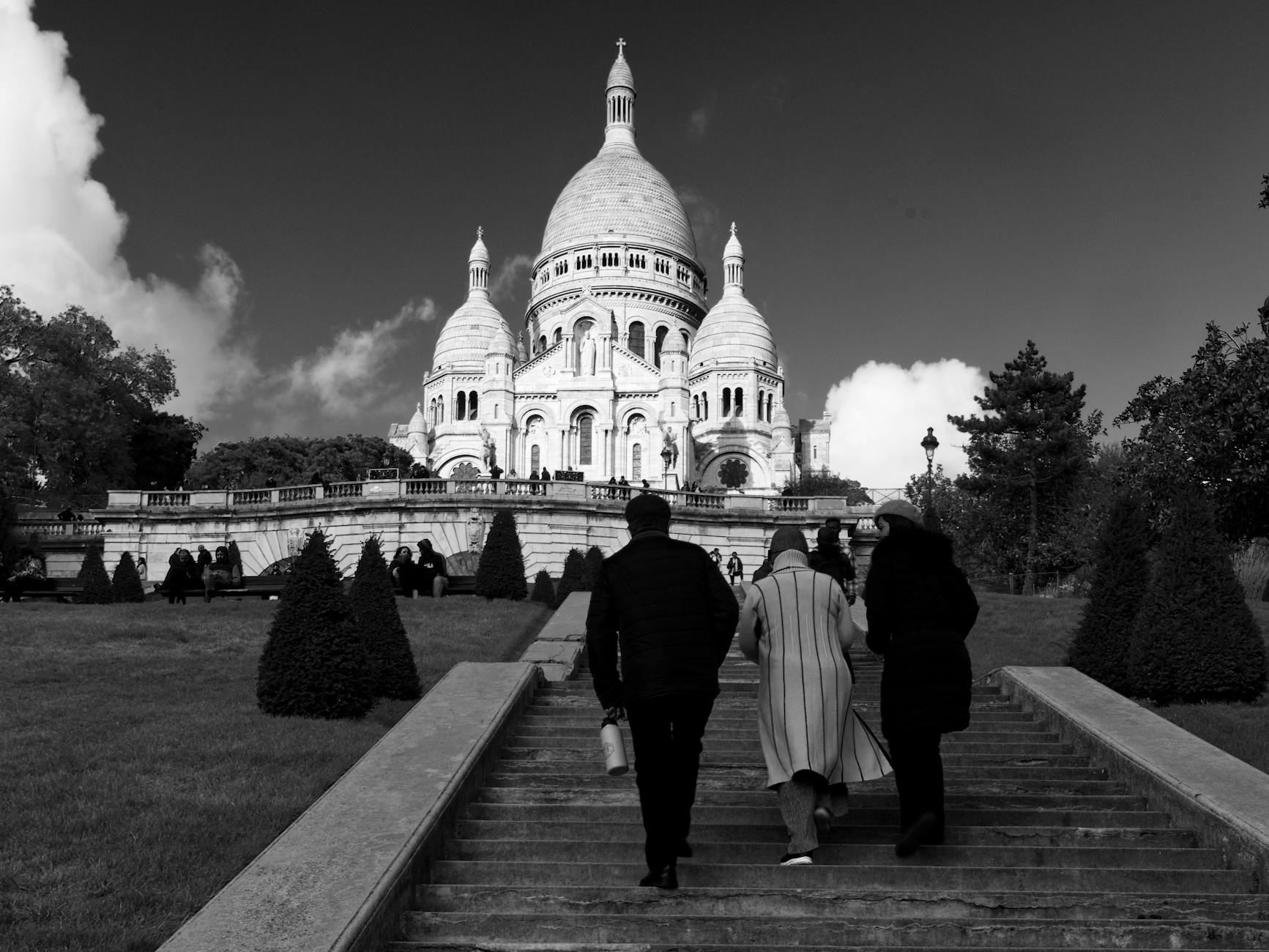
From the Musée de Montmartre, you are now north of the summit. The standard tourist approach is to come up the south side from Anvers and climb 270 steps past the funicular. This is the bad way.
Every tourist does this. The view is fine but the experience is crowded and the steps are always packed.
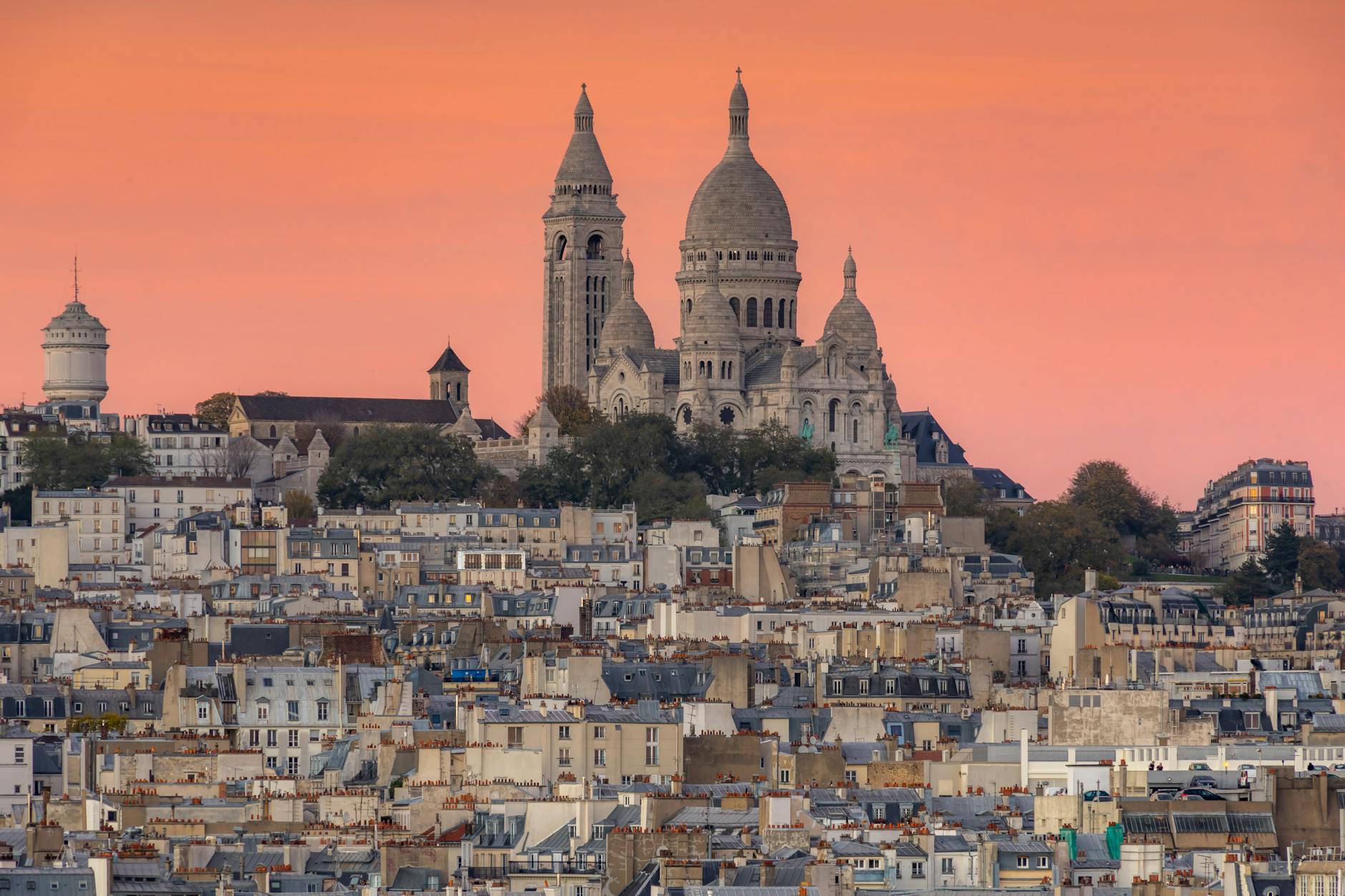
The good way: come in from the north-west via Rue du Mont-Cenis. You approach the basilica from behind, the crowds drop by about 80%, and you get to walk through the actual village on your way. From the Musée de Montmartre head east on Rue Cortot, turn south on Rue des Saules.
You will pass the Clos Montmartre vineyard on your left.
The vineyard is a working micro-vineyard — 2,000 vines on about 1,500 square metres, producing maybe 1,500 bottles per year. The wine is famously terrible (the Paris climate is not really made for grapes) but the harvest festival in early October is one of the best local events in the city. The vineyard itself is fenced and you cannot enter, but you can see the rows from the street.
The Musée de Montmartre organises occasional guided visits if you book ahead.
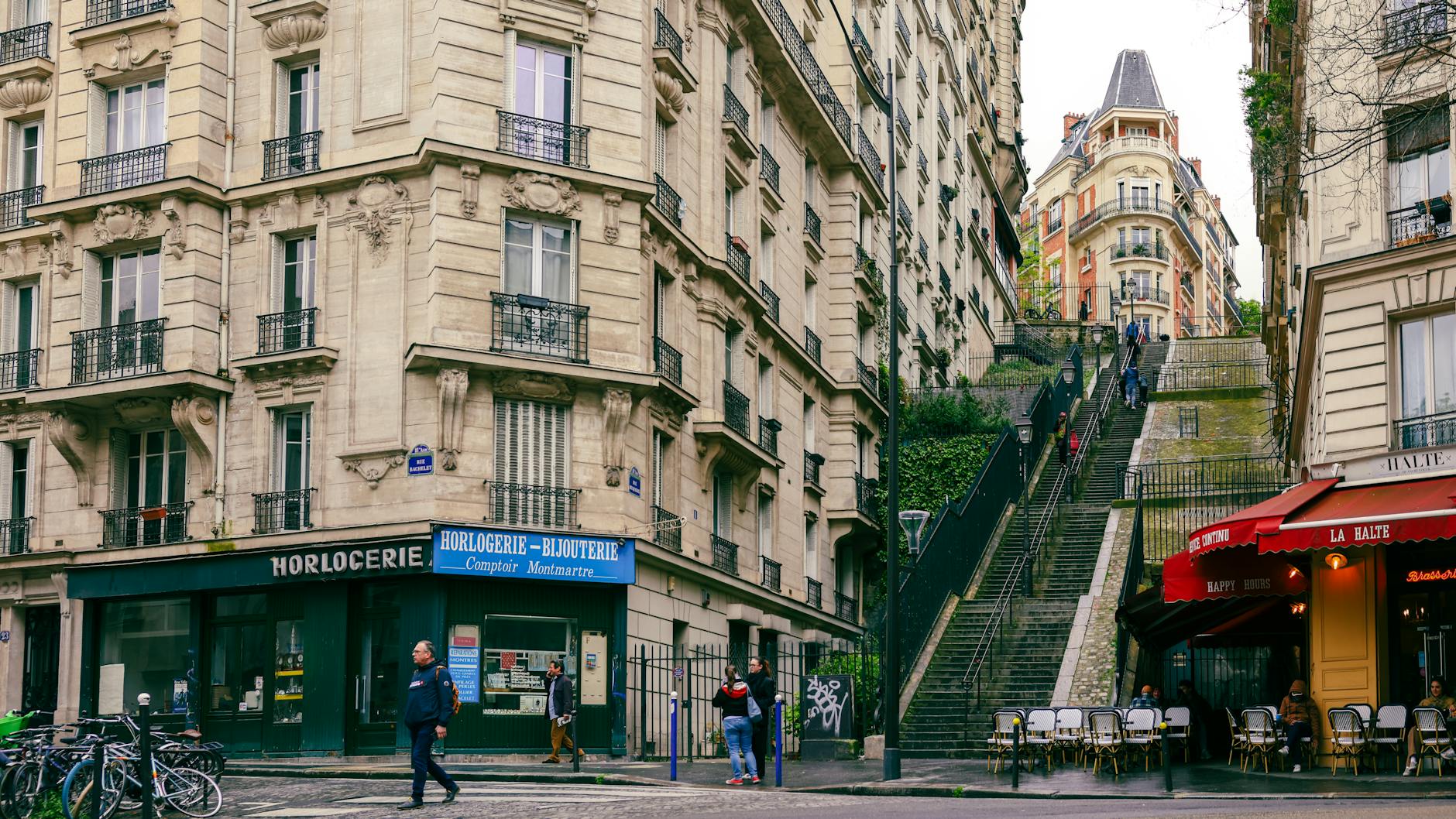
Continue south on Rue des Saules. You will pass Au Lapin Agile on your right — a cabaret bar from 1860 where Picasso, Modigliani, and Apollinaire used to drink in the 1900s. It still functions as a nightly cabaret (mostly French folk songs, travelers welcome) and it is one of the last authentic survivals of the old bohemian scene.
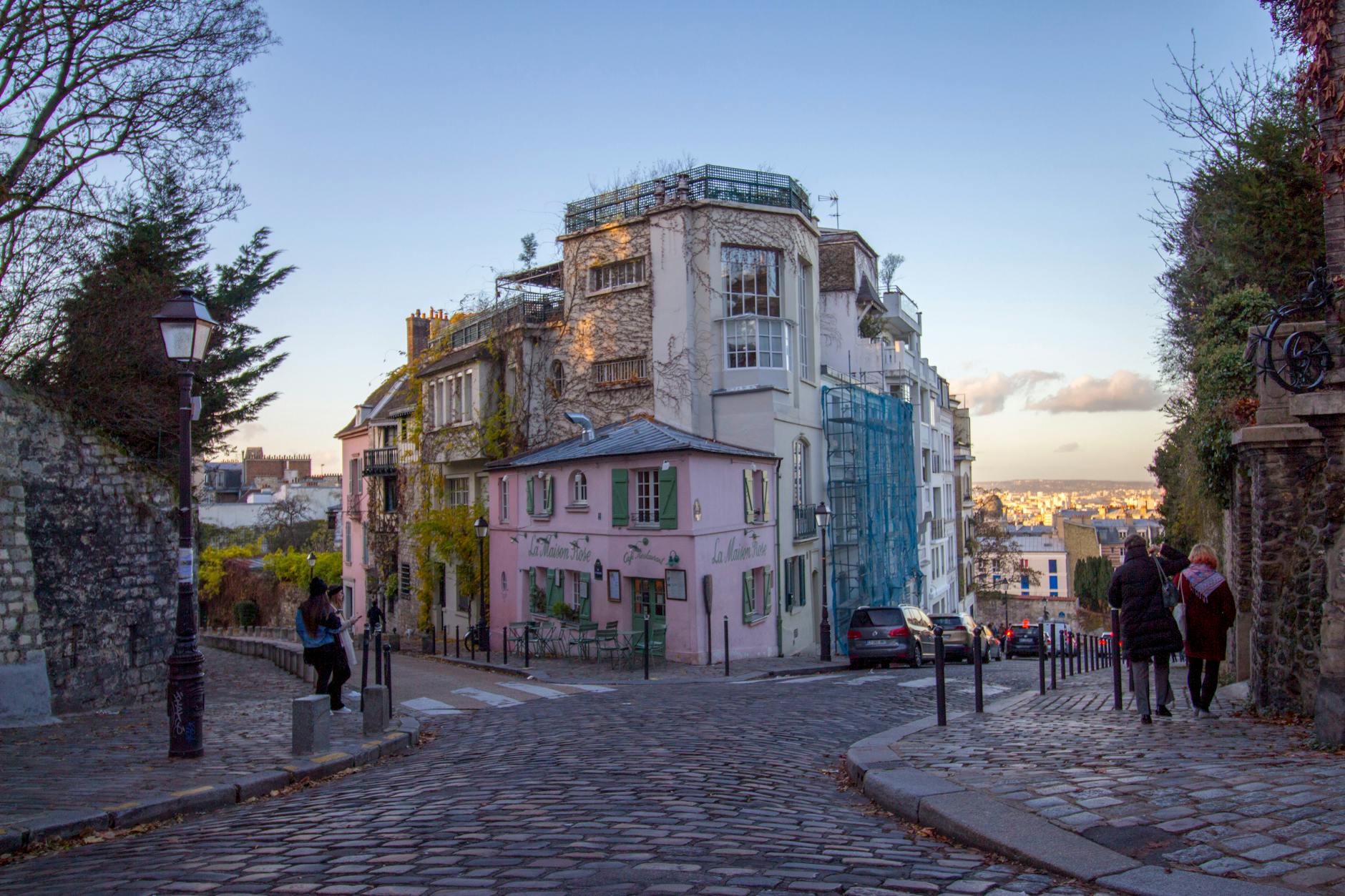
Turn left on Rue de l’Abreuvoir (another contender for the prettiest street in Paris). You will pass La Maison Rose. Keep going east.
The road curves left onto Rue des Saules (short loop) and delivers you to Place Dalida — small square with a bust of the singer Dalida, who lived in Montmartre for 20 years. Small detour worth taking.
From Place Dalida, head south-east along Rue de l’Abreuvoir to Rue du Mont-Cenis. This brings you out at the back of Sacré-Cœur, arriving at the basilica’s east entrance. Walk around to the front (the west side, with the terrace and the steps and the view) from the north — so you are looking down on the crowds climbing up.
Sacré-Cœur Itself
The basilica is free to enter. Always has been. Always will be.
There is no ticket counter. Walk through the main doors and you are in. Photography inside is discouraged but enforced loosely — take a few quiet phone shots if you must, but do not use flash.

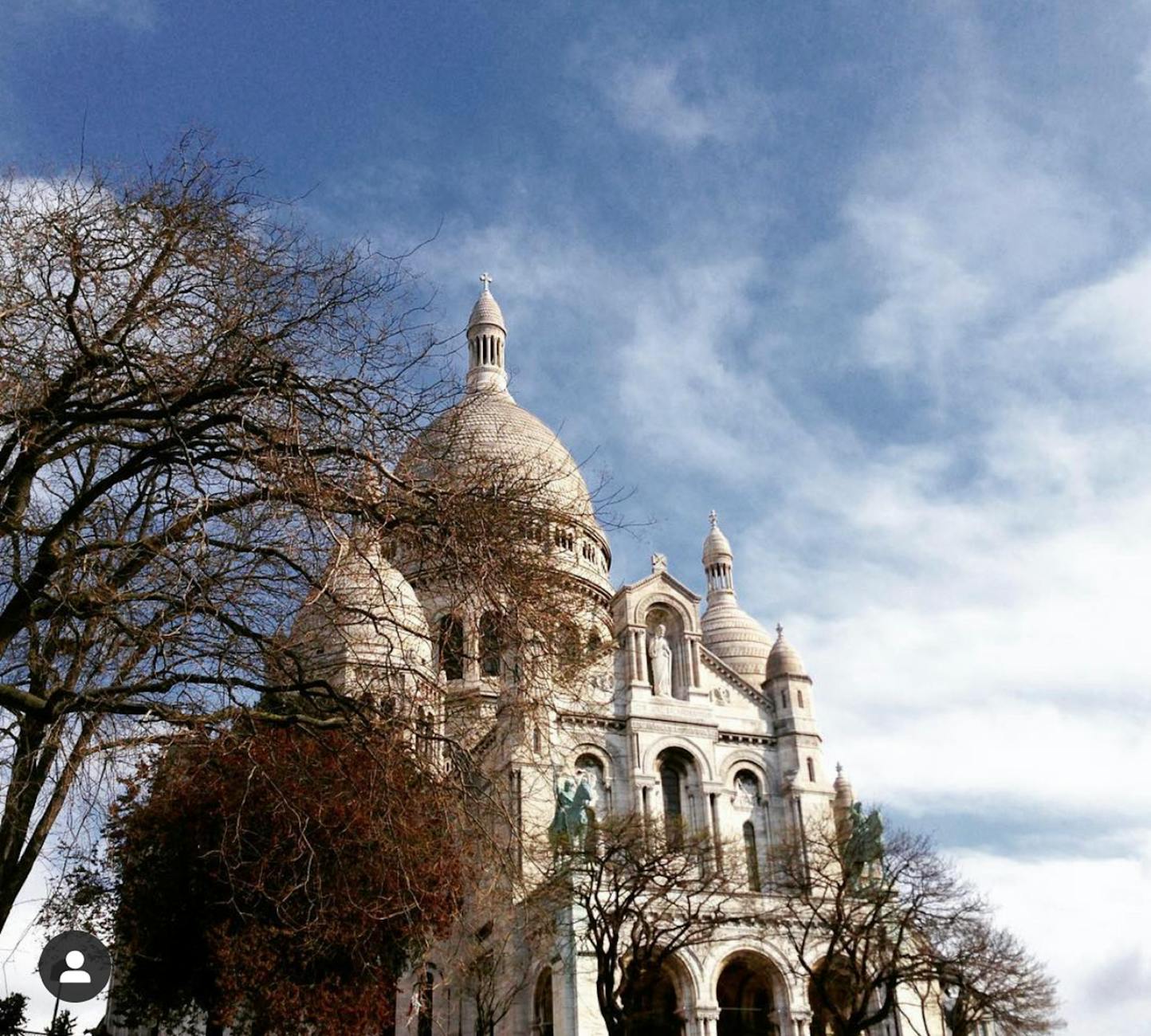
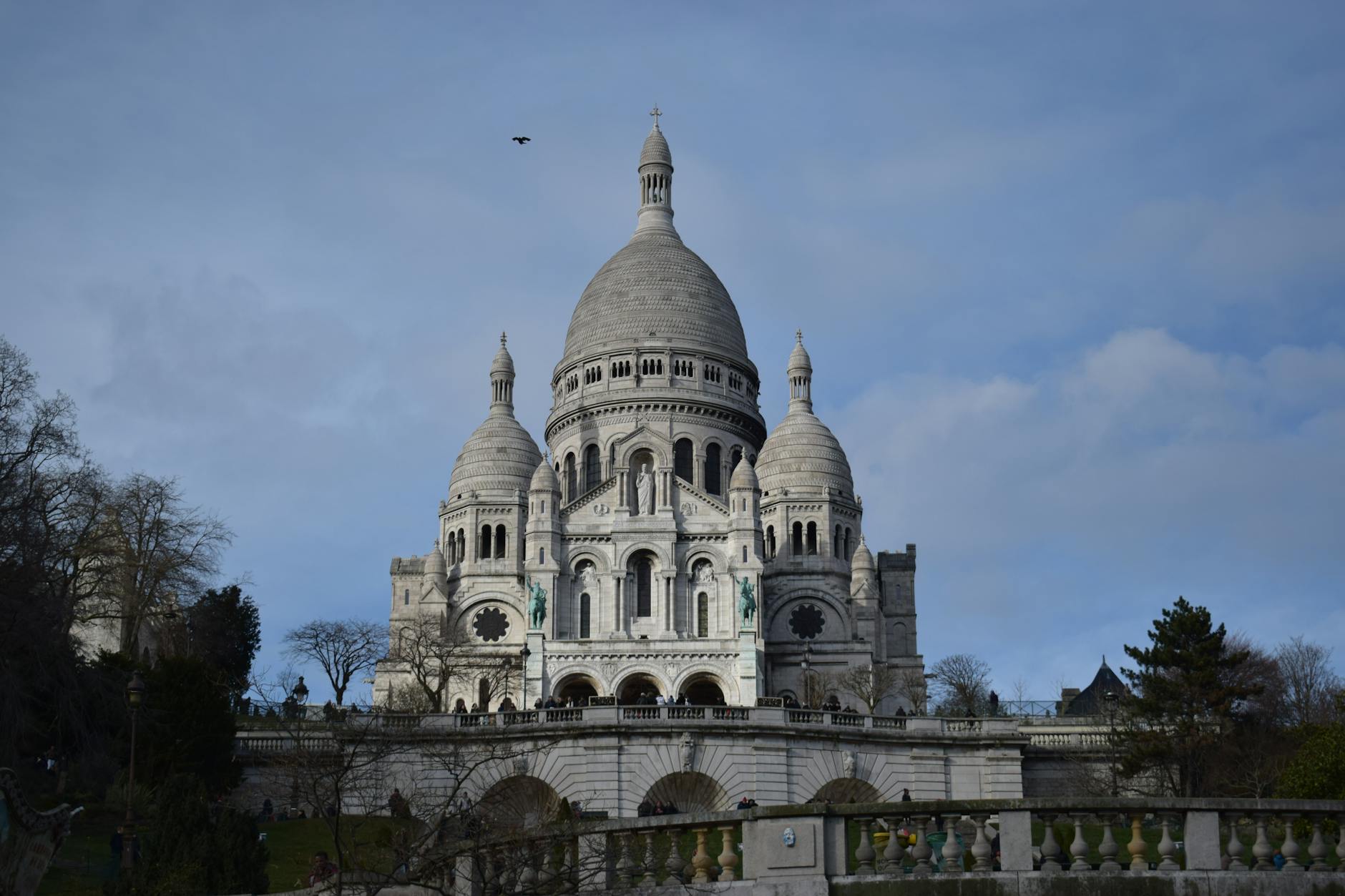
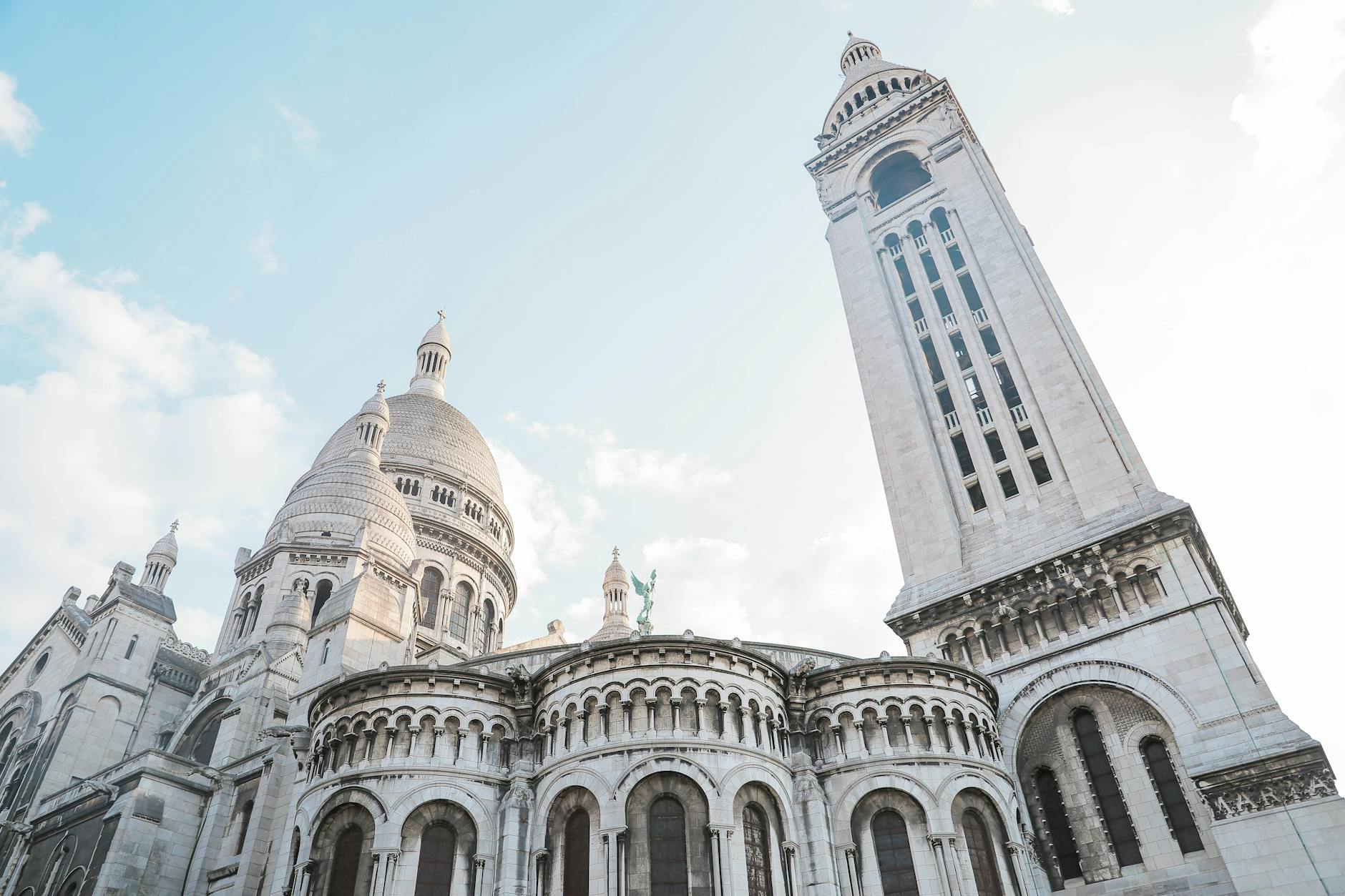
The interior is a Romano-Byzantine revival — it looks more like Istanbul than Paris, which is deliberate. The architect Paul Abadie wanted to reference early Christianity rather than medieval French Gothic, partly because Sacré-Cœur was built as an atonement for the Paris Commune of 1871 and the architects wanted to break visually from the Gothic-tradition revolutionaries who had sacked Notre-Dame. The ceiling mosaic above the apse — “Christ in Majesty” — is one of the largest mosaics in the world.
It is worth tilting your head back for.
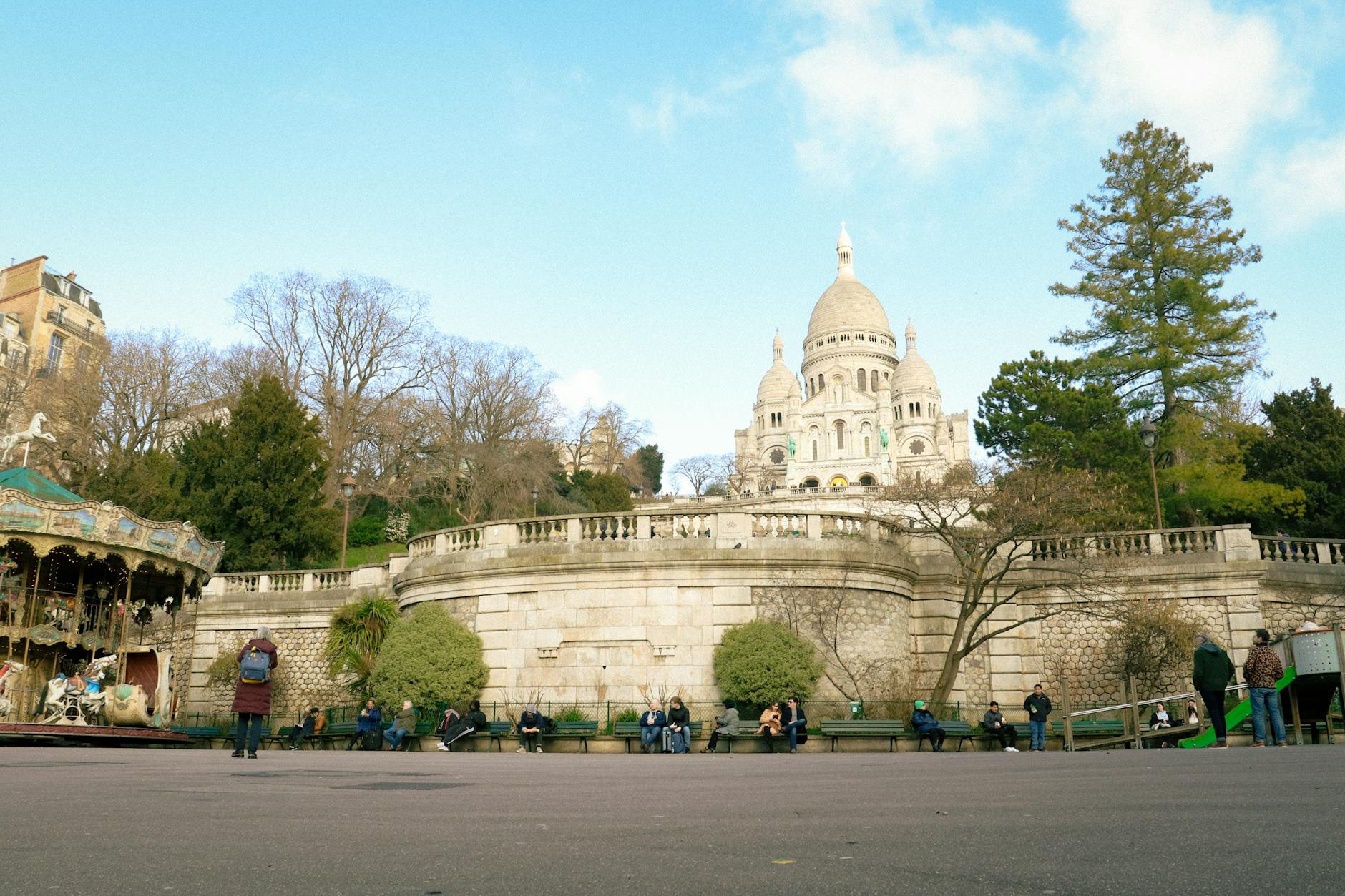
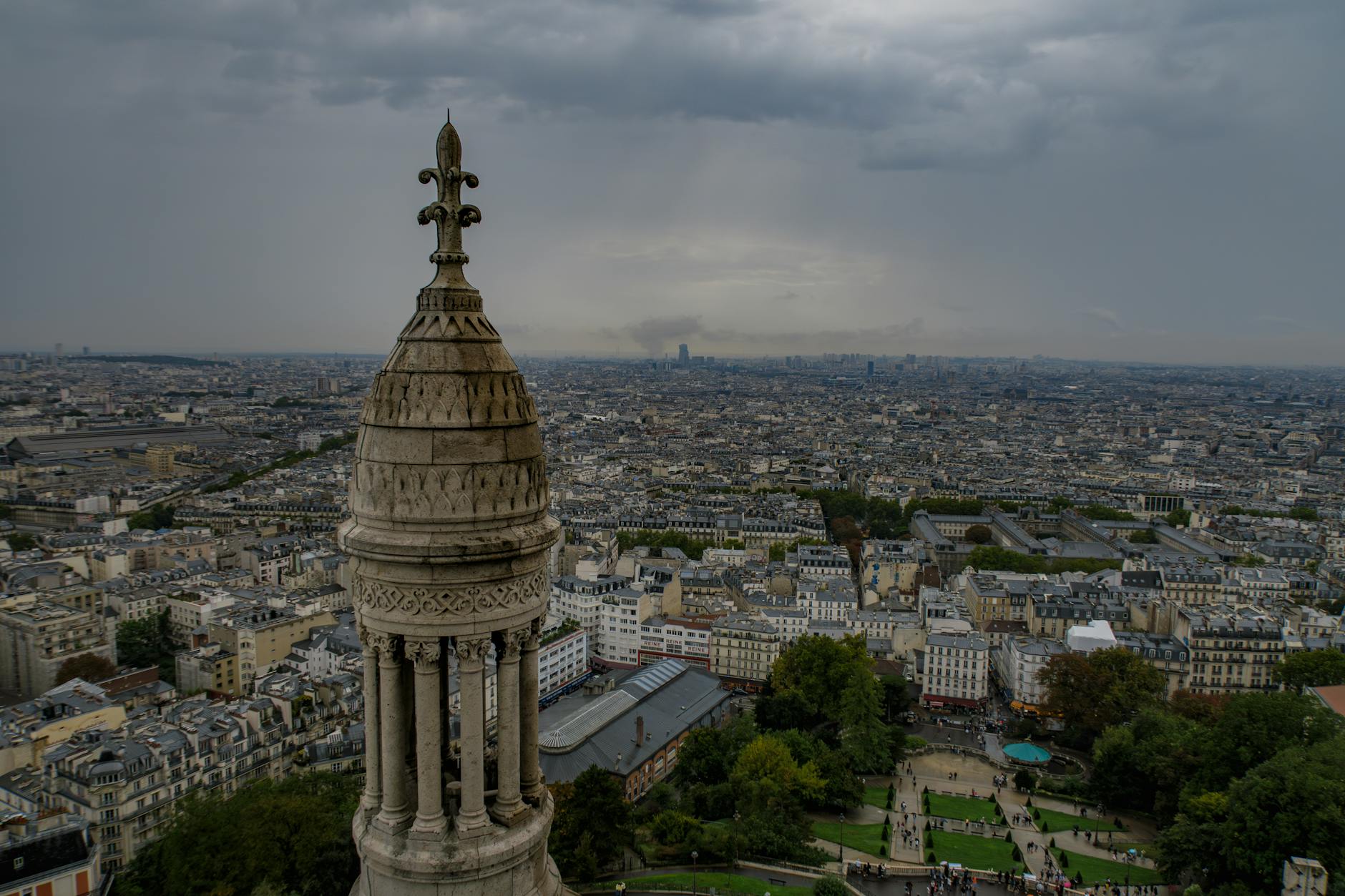
The dome climb is a separate €8 ticket and you have to pay at a small booth at the back of the basilica (they only take cards, usually, but cash sometimes works). You climb 300 narrow spiral steps to reach the panoramic gallery on the outside of the dome. The view is better than the terrace below because you are 200m higher.
On a clear day you can see 30+ kilometres. Worth it, if you have the energy for the stairs and are okay with tight spaces.
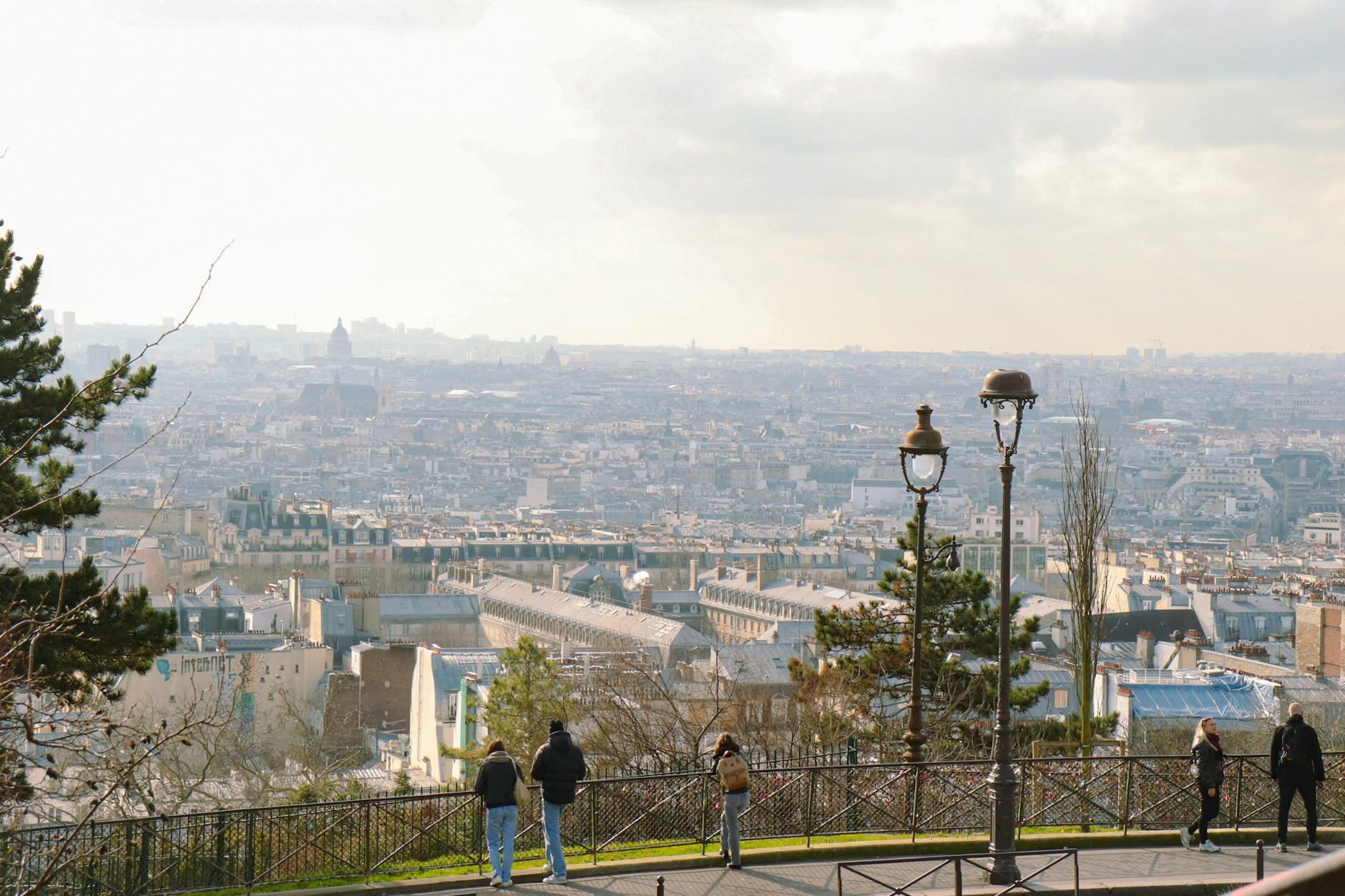
After the basilica, walk out onto the terrace and take the wide-panoramic Paris photo. This is the shot you came for. Stay at least 20 minutes.
Sunset moves the light across the rooftops and the basilica behind you turns gold for about 10 minutes before the city lights start coming on.
Place du Tertre (Skip It Fast)
Place du Tertre is the small square 90 seconds west of Sacré-Cœur where “Montmartre artists” set up easels and sell watercolours and offer to do your portrait in 20 minutes for €40. It is where most first-time visitors spend most of their Montmartre time. Do not be them.
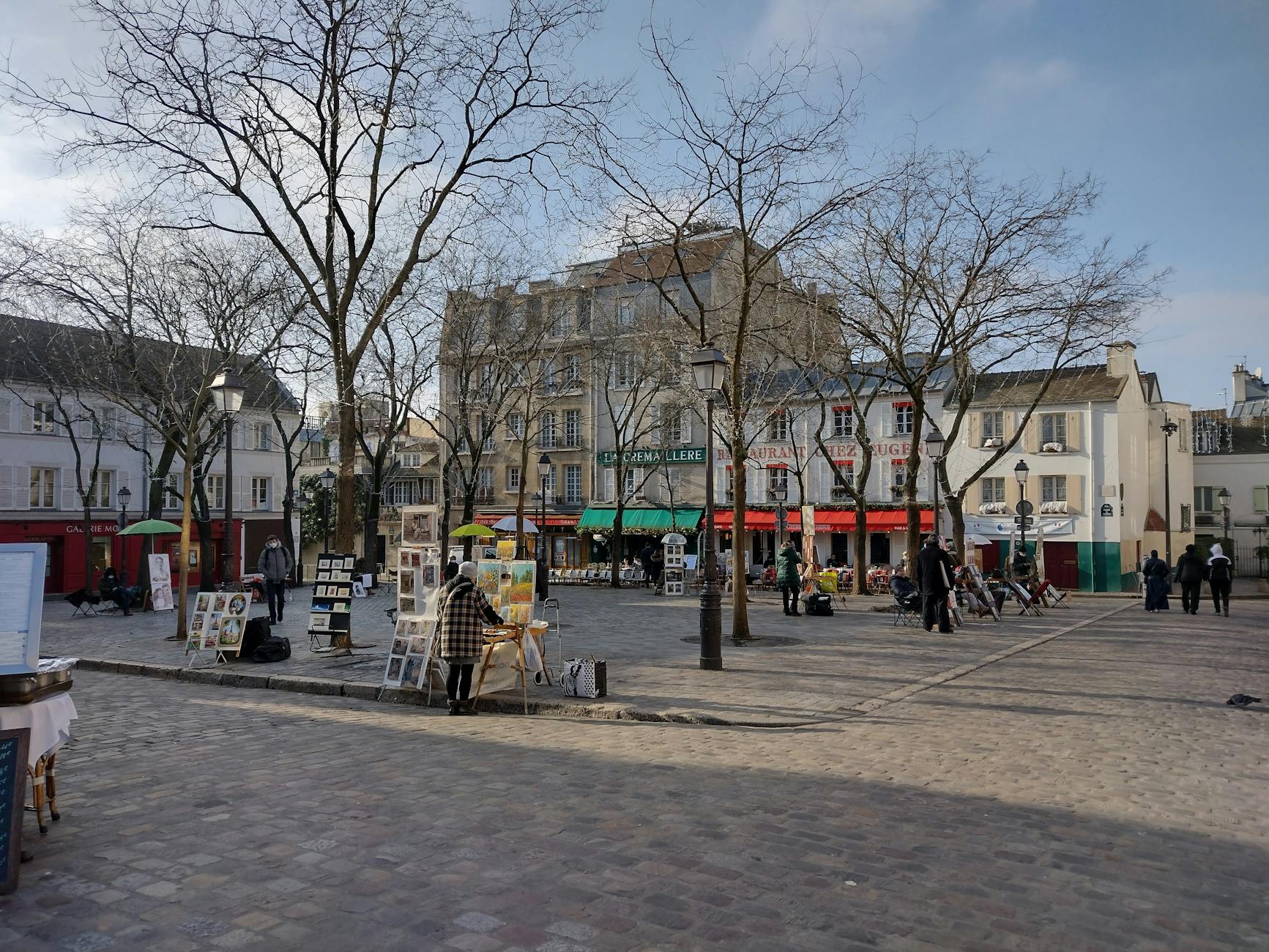
Walk through it. Do not stop. Do not make eye contact with the artists — they are trained to lock eyes and then follow you for 20 seconds trying to sell you a portrait.
A firm “no merci” and a direct walking line will get you through in 90 seconds. On the far side of the square you will reach the top of the funicular station and Rue Norvins heads back west. Take Rue Norvins if you want to loop back toward Abbesses.
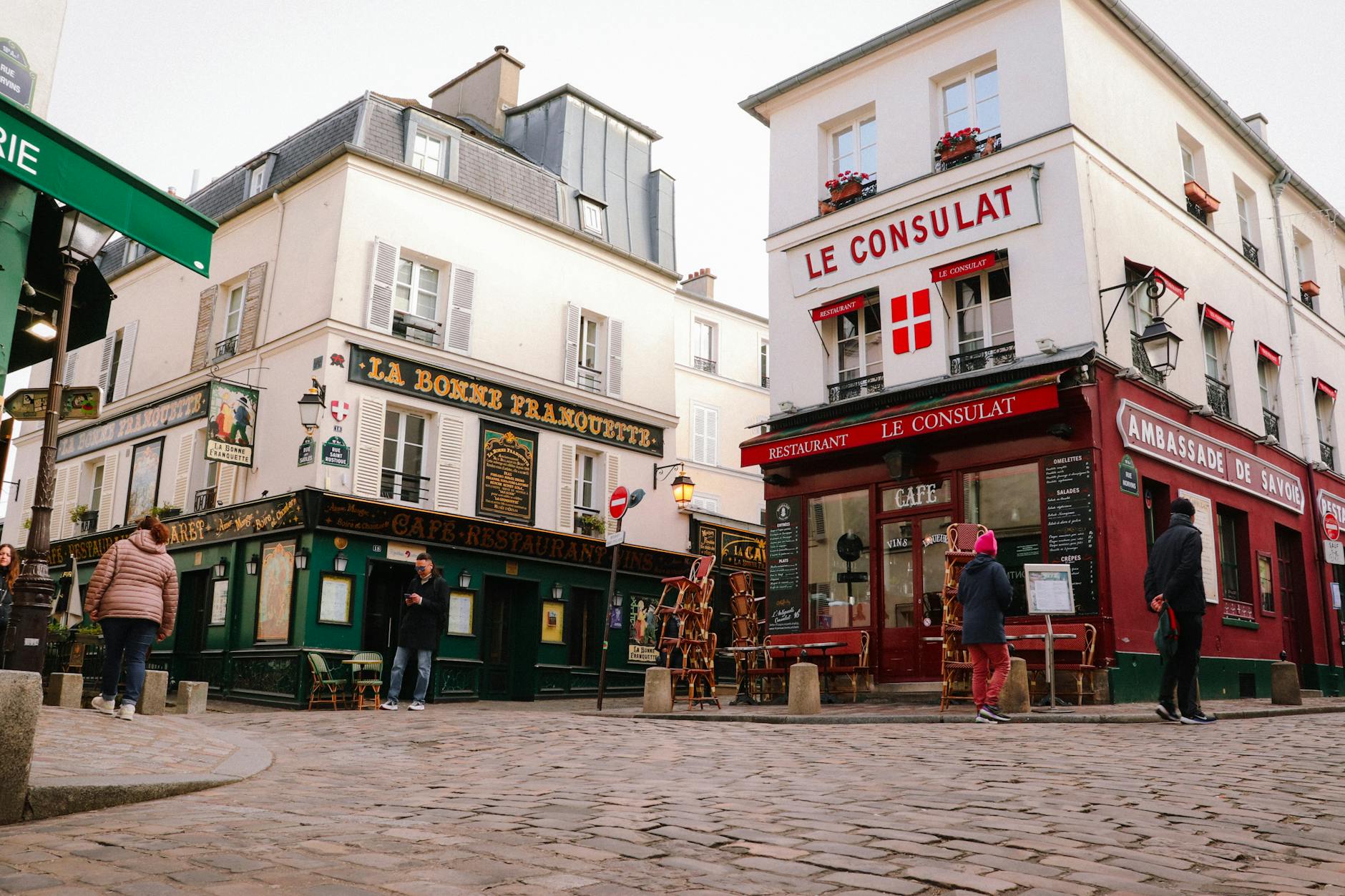
The cafés around Place du Tertre are tourist-price. Do not eat here. A coffee at La Bonne Franquette is €6.
An omelette is €18. You are paying for the location and the food reflects no effort whatsoever.
If you must sit down on the square, the one spot that is not a complete tourist trap is Le Tire-Bouchon on Rue Norvins just off the square. They have small pavement tables, a fair wine list, and the owner is friendly. But even there the food is 20% above what you would pay anywhere else in the neighbourhood.
Montmartre Tour Options (Ranked)
Magical Montmartre Without the Crowds (Small Group)
Price: $17 · Duration: 2 hours · Provider: GetYourGuide
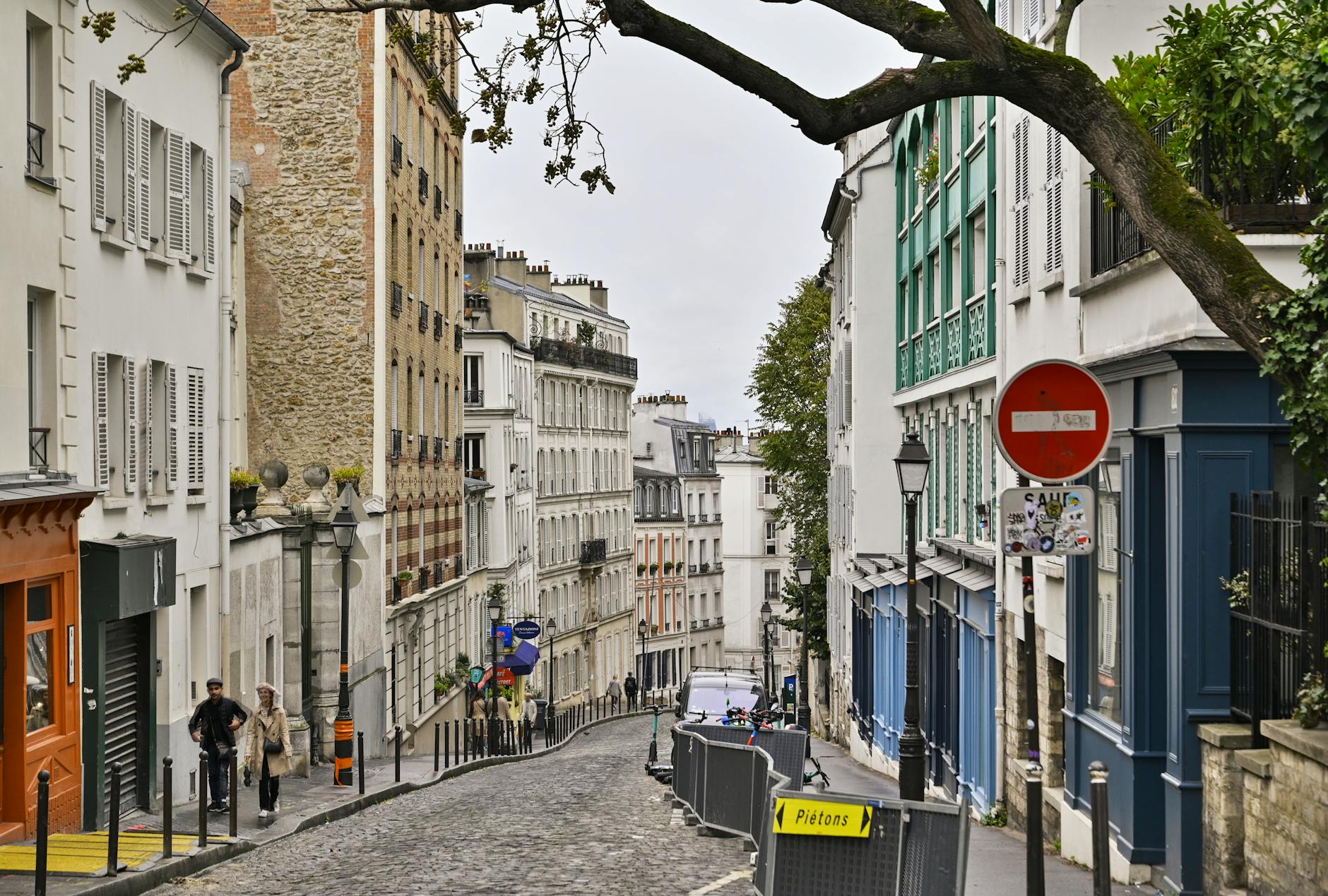
The tour for people who specifically want to avoid Tourist Montmartre. It is run by a small local outfit whose guides deliberately route you through the east and north-side back streets — the exact route I described above, roughly. Small group (max 10), which means the guide can actually stop and tell you things without having to shout over traffic.
You will not hit Place du Tertre and you will not pay for the funicular. At $17 it is the cheapest proper guided tour of the neighbourhood on any platform.
Best for: First-time visitors who hate crowds, repeat Paris travellers who have already done the basic tourist version, anyone on a budget, introverts.
Montmartre Highlights Walking Tour with a Local Guide
Price: $34 · Duration: 2 hours · Provider: GetYourGuide
The bestseller on GetYourGuide for Montmartre (1,600+ reviews). This is the standard highlights tour — you hit Sacré-Cœur, Place du Tertre, the Moulin de la Galette area, and the main Amélie film locations, guided by a local who knows the Picasso/Utrillo/Renoir-level history. Larger group than the $17 option (typically 12-18 people) so you get less individual attention, but the guide content is stronger and the history coverage is better.
A good choice if you want a more traditional guided experience and do not mind hitting a few of the busy spots.
Best for: History buffs, first-time visitors who want the full classic Montmartre tour, travellers who are happy in a slightly bigger group.
Montmartre Cheese, Wine & Pastry Walking Tour
Price: $127 · Duration: 3 hours · Provider: GetYourGuide
This is the best Montmartre tour on any platform, full stop. 3 hours, 6-8 food stops (cheese shop, wine shop, pâtisserie, bakery, chocolate shop, sometimes a charcuterie or a fromagerie), plus the standard neighbourhood history between bites. The guides are small-group food professionals who know the shopkeepers by name. You eat genuinely good French food, not tourist food — proper Brie de Meaux, real baguette from a prize-winning bakery, small-batch Burgundy wines. 2,200+ reviews and deservedly the highest-rated Montmartre tour.
It replaces lunch and probably dinner. At $127 it is not cheap but it is completely worth it.
Best for: Food-loving travellers, couples doing one big “special occasion” experience, repeat Paris visitors who already know the basic history and want depth.
When to Go
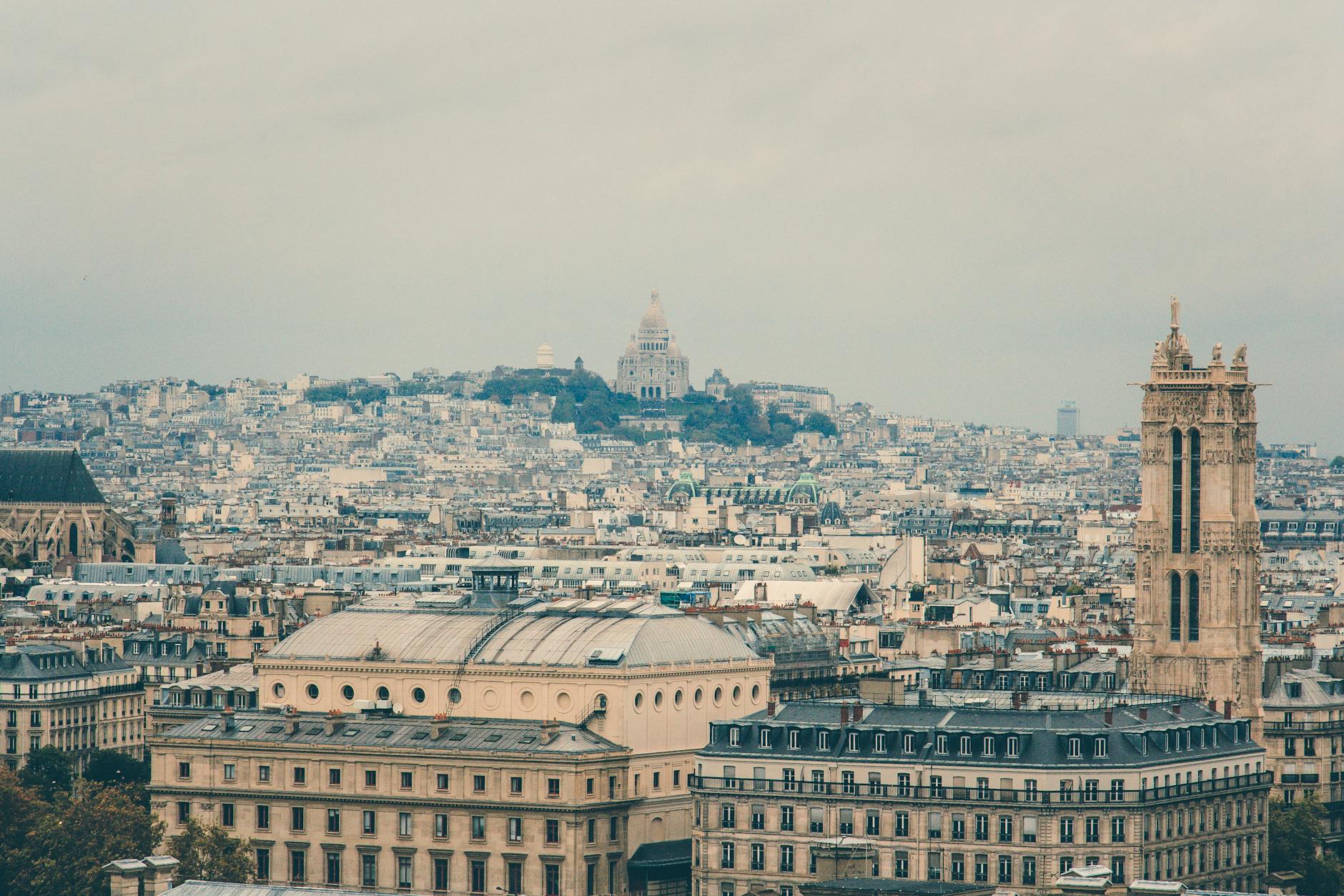
Late afternoon into early evening is the single best time to walk Montmartre. Specifically: start your route at around 15:30 so you arrive at the Sacré-Cœur steps by 17:30 on a summer day (or by 16:30 in winter — the sun sets earlier). Sunset from the steps is the signature Montmartre experience and you want to be there for the 30 minutes before and after.
Avoid Saturday afternoons if you possibly can. Saturday 14:00-18:00 is the single worst slot in the whole week — all the day-tripping travelers from other parts of Paris make the pilgrimage up to Sacré-Cœur in the same 4-hour window. Sunday morning is much quieter, but then you lose the sunset window because the sun is not in the right position.
The ideal combination is Tuesday or Wednesday late afternoon.
Summer (July-August) is the worst season for crowds but the best season for the long sunsets (the sun is still up at 21:45). Autumn (September-October) is probably the best overall — fewer crowds, decent weather, sunset around 19:00-19:30 which is a civilised hour. Winter (December-February) is quiet and beautiful but the basilica closes slightly earlier and it can be genuinely cold on the steps.
How to Get There
Abbesses metro station (line 12) is the best starting point for the route I described. It is also one of the three deepest stations in the Paris metro (the hill is solid rock, so the platforms are about 36m underground). There is an elevator but the queue is long — most people just take the spiral staircase up, which is famously painted with Montmartre murals along the way.
Worth the 5-minute climb. It is a free art experience.
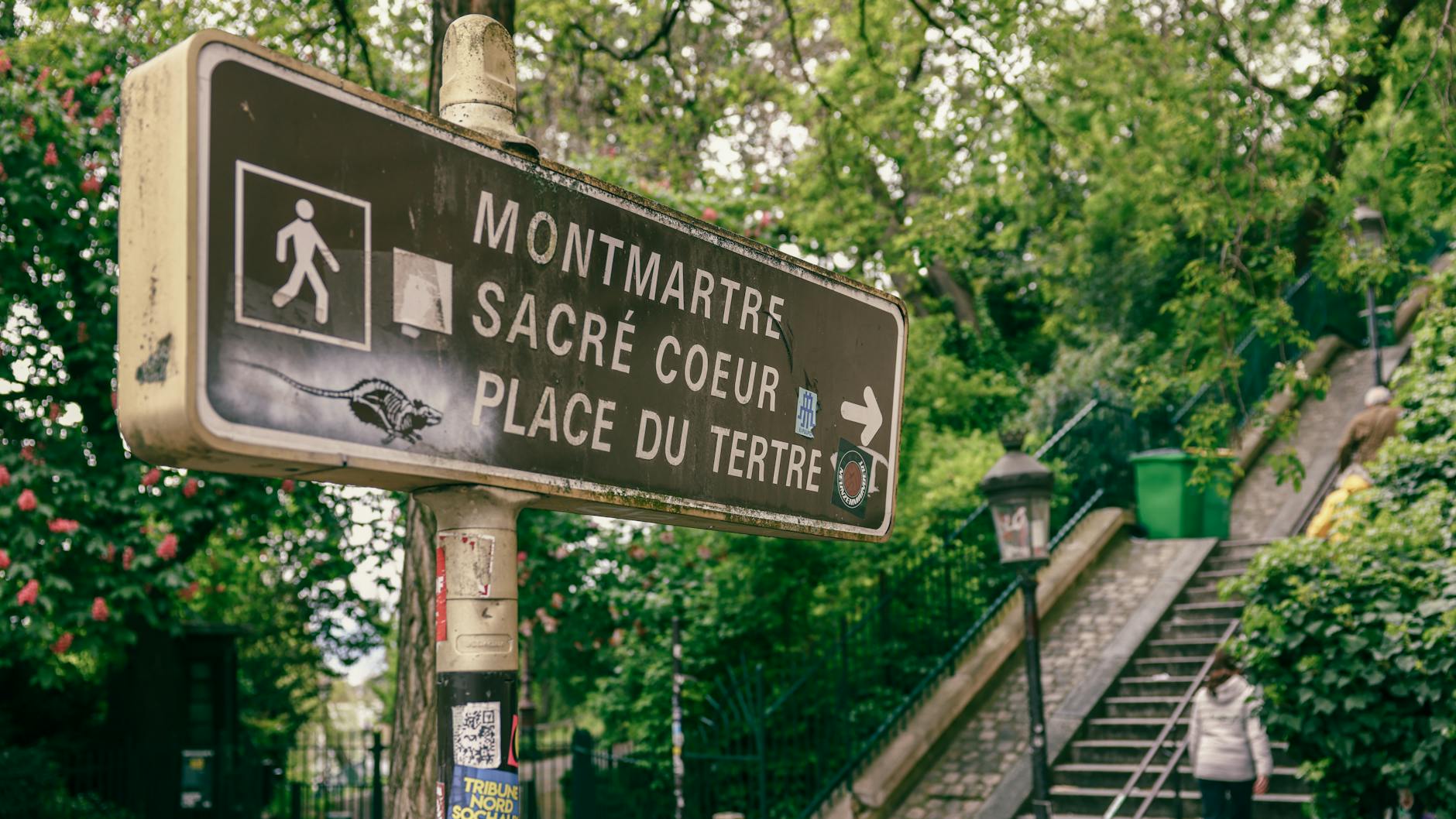
Anvers metro (line 2) dumps you straight onto Boulevard de Rochechouart at the bottom of the main Sacré-Cœur steps. This is the standard tourist arrival. It is fine if you want the basic version.
Do not use this one if you are following my route.
Pigalle metro (lines 2 and 12) is 5 minutes west of Anvers. The immediate area around Pigalle is the old red-light district (Moulin Rouge is here) and it still has a slight seedy edge, particularly in the evening. Not dangerous by Paris standards but not scenic.
I would not start a Montmartre walk from Pigalle unless you specifically want to include the Moulin Rouge in your day.
The funicular runs from the base of the main steps up to the terrace in front of Sacré-Cœur. It costs €2.10 (or 1 metro ticket — same ticket system as the metro) and takes about 90 seconds. The experience is not especially interesting and you could walk the steps in 4 minutes.
Take it only if you physically struggle with stairs.
Taxi or rideshare: the streets around the summit are too narrow and too steep for most cabs to drop you off directly at Sacré-Cœur. They will leave you at Place Blanche, Place Pigalle, or Boulevard de Clichy — all at the base of the hill, all with a 15-20 minute uphill walk to reach the basilica. Metro is just faster.
Food in Montmartre (The Actually Good Stuff)
Montmartre has a reputation as a tourist-food zone, which is partly fair — most of the places within 200m of Place du Tertre are overpriced and under-effort. But venture 400m out and you find some of the best bakeries and bistros in the whole city.
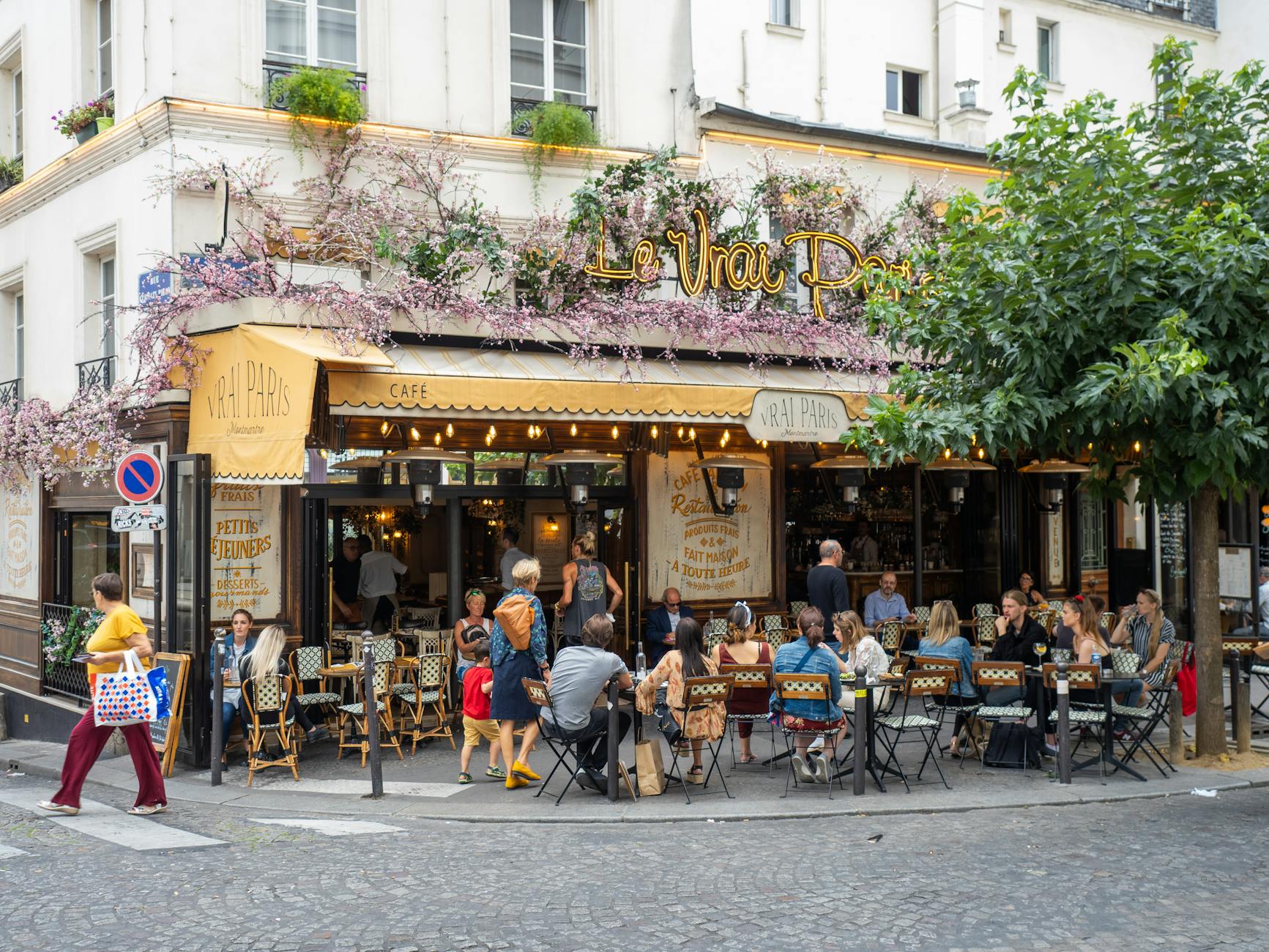
Bakeries: Le Grenier à Pain (38 Rue des Abbesses) — won the Paris best-baguette prize in 2015. Everything from the baguette to the viennoiseries is better than average. Pain Pain (88 Rue des Martyrs) — just outside Montmartre proper but worth the detour. Their pistachio croissant is one of the best pastries in Paris.
Proper lunch: Le Relais Gascon (6 Rue des Abbesses) — Gascon regional cooking, giant salads, and the best duck confit in the arrondissement. €15-20 mains. Always busy at peak lunch but worth the wait. Le Coq Rico (98 Rue Lepic) — serious roast chicken restaurant, €30+ per person but the chicken is genuinely exceptional. Book ahead.
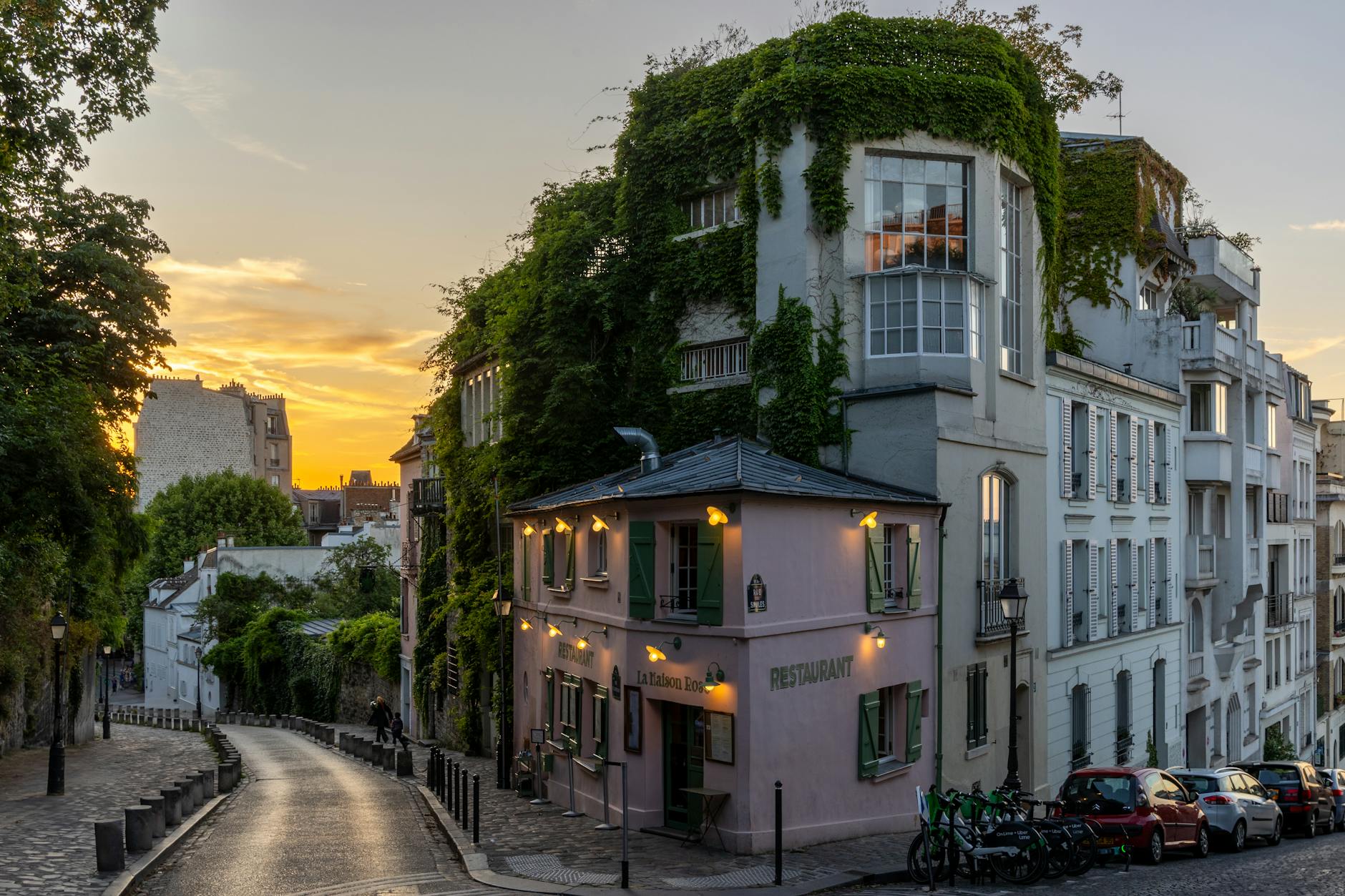
Bistros with a view: Le Moulin de la Galette restaurant is the tourist trap everyone recommends — skip it. La Bonne Franquette on Place du Tertre is the other tourist trap. Instead: Chez Plumeau (Place du Calvaire) has mediocre food but a genuinely unbeatable view over Paris from its terrace. Go for a drink at sunset, not a meal.
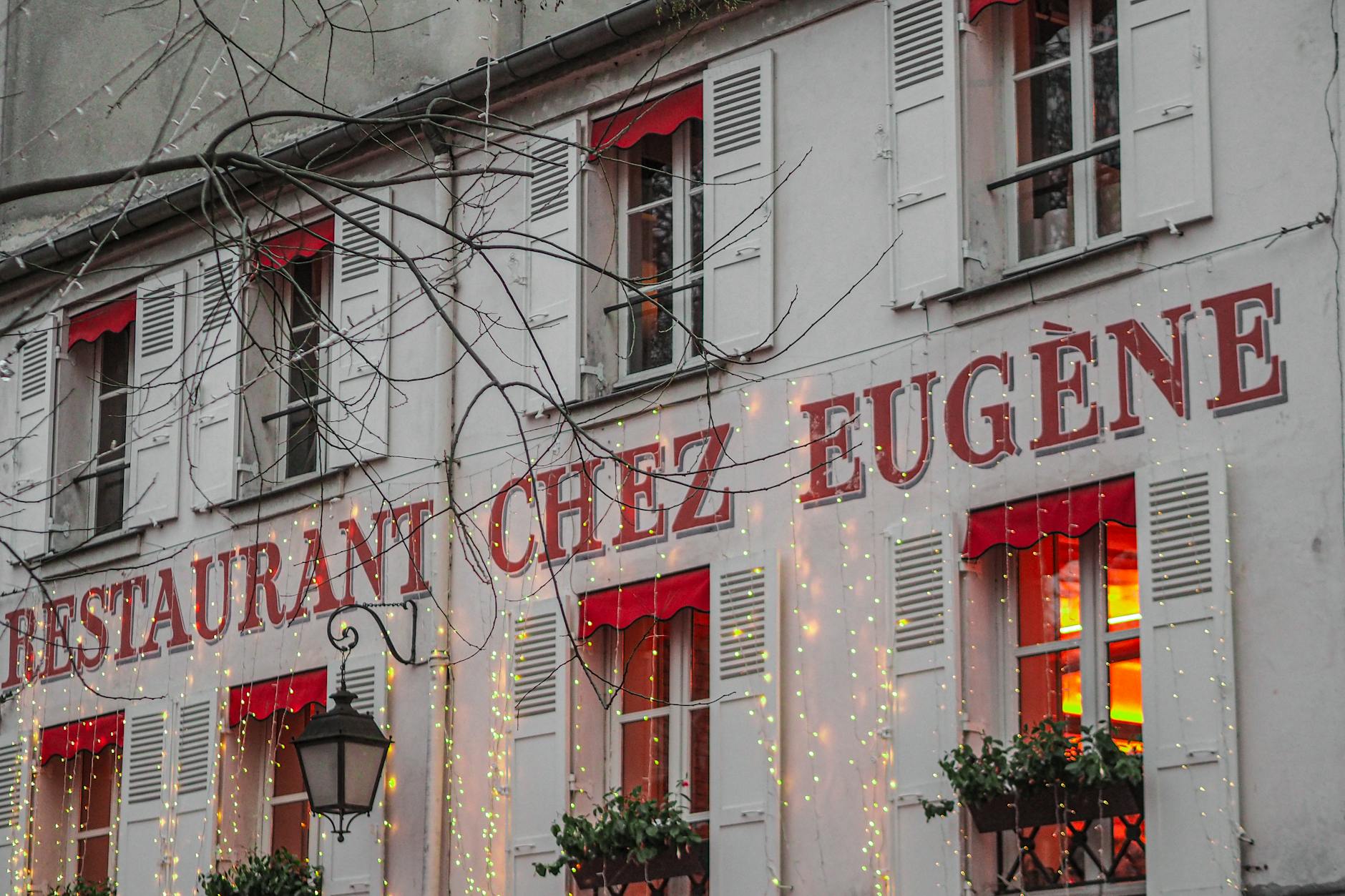
Cheese and wine stops: Fromagerie Jouannault (41 Rue des Martyrs) — probably the best cheese shop in the 18th arrondissement. They will happily make you a takeaway cheese plate with 4-5 cheeses and a baguette for about €15. Cave des Abbesses (43 Rue des Abbesses) — good natural wine shop that does wine by the glass. Genuine local place.
Crêpes: Skip the tourist crêpe stands around Place du Tertre. Crêperie Plougastel (47 Rue du Montparnasse) is technically not in Montmartre but every local I know agrees it is the best Breton crêperie in the city. If you specifically want Montmartre and cannot travel, La Crêperie de Montmartre (Rue Poulbot) does decent crêpes at lunch time.
The Dome Climb: Worth It?
The Sacré-Cœur dome climb costs €8 and adds about 30 minutes to your visit. You climb 300 spiral steps up a narrow, tight staircase to reach the external gallery at the base of the main dome. From there you have a full 360-degree view of Paris, about 200m above the already-elevated terrace.
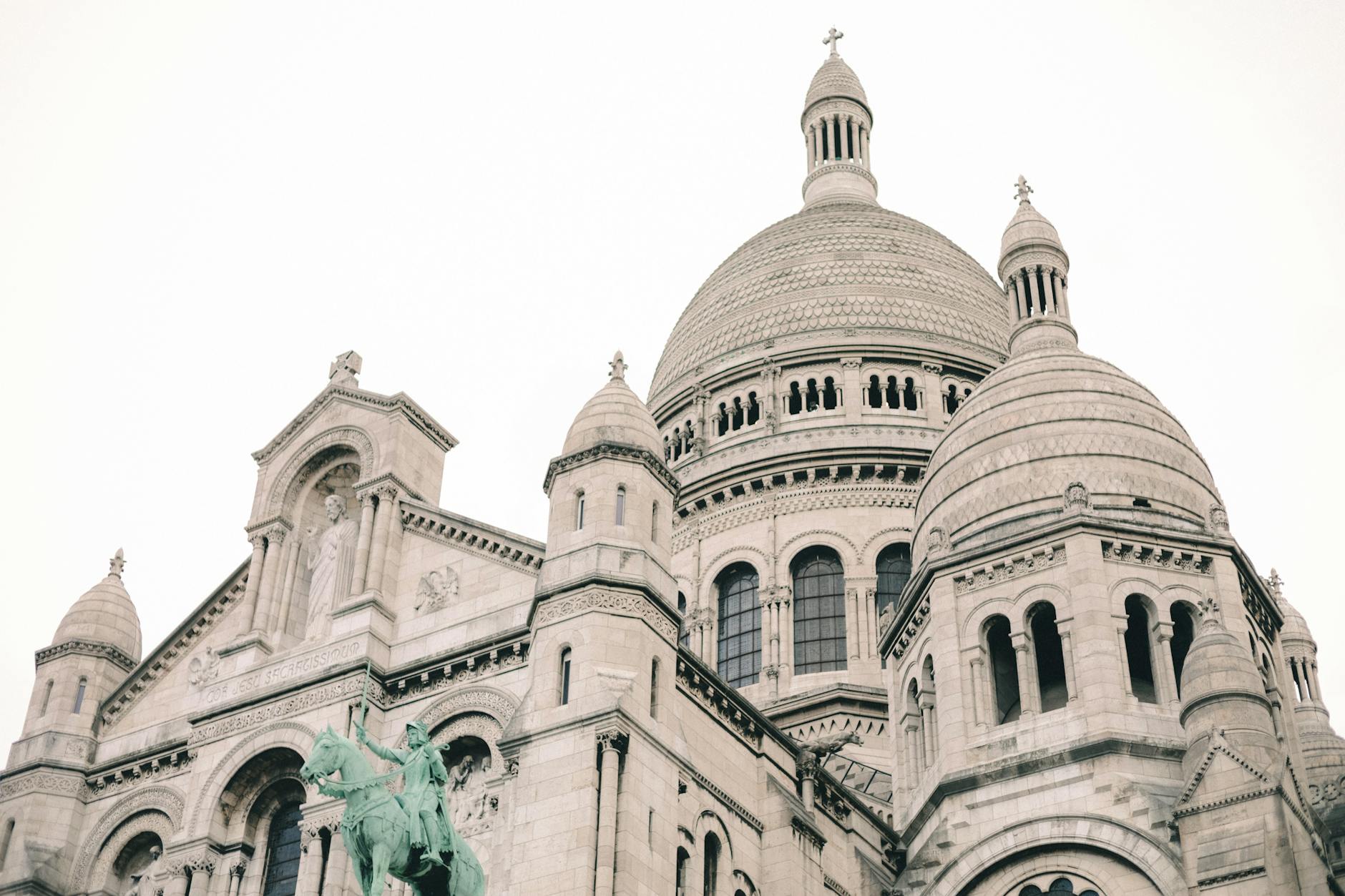
Worth it if: you love a good view, you do not mind tight spiral stairs, you want the highest free-standing panorama in Paris that is not the Eiffel Tower, you are already taking your time on the hill and have no schedule pressure.
Skip it if: you have knee problems, you are claustrophobic, you are time-pressured, you already climbed the Eiffel Tower / Arc de Triomphe / Montparnasse earlier on your trip and are rooftop-view-saturated. Also skip it if the weather is bad — the view is the whole point and on a cloudy day you can barely see past the first arrondissement.
Purchase: cash or card at the back-left of the basilica (separate booth from the main entrance). Opening hours are generally 08:30-20:00 in summer, shorter in winter. The booth does sometimes close unexpectedly for staffing — no pre-booking online is available.
The Montmartre Cemetery
Most first-time visitors do not realise Montmartre has a cemetery worth visiting. The Cimetière de Montmartre sits at the western foot of the hill, entered from Avenue Rachel. Dalida, Degas, Stendhal, Berlioz, Truffaut, and Zola are all buried here.
It is one of the three “big” Paris cemeteries (along with Père Lachaise and Montparnasse) and it is the least crowded.
Free to enter. Open 08:00-18:00 most days. Quiet, shaded, peaceful — genuinely a good spot for 20-30 minutes of walking and reflection between the busier Montmartre hot-spots.
The cemetery has a small map at the entrance showing where the famous graves are. Dalida and Truffaut are the most visited.
Avenue Rachel entrance is 5 minutes from the Blanche metro station (line 2), which is one stop west of Pigalle. If you are doing Moulin Rouge + Montmartre on the same day, the cemetery fits perfectly between the two.
What to Wear and Bring
Wear proper walking shoes. Montmartre is a steep cobbled hill. A regular 3-hour walking route includes about 180m of vertical climb and maybe 6-8km of total walking.
Flat comfortable shoes are essential. Heels are a disaster. Flip-flops are a disaster.
Bring: water bottle (refill at any café for free if you buy something), small backpack, phone fully charged (maps + photos), some cash for the dome climb and any bakery stops, a light layer even in summer (Montmartre is 130m higher than the rest of Paris and noticeably cooler in the late afternoon).
Do not bring: large backpack (security at the basilica checks bag sizes), anything valuable in visible pockets (pickpockets work the main stairs and the funicular area), expensive cameras left dangling. Keep your phone in a front pocket or zipped bag.
Watch out for: the “friendship bracelet” scam — men (usually near the base of the main steps) will try to tie a string bracelet on your wrist then demand €20. Just keep your hands in your pockets and walk past. Pickpockets on the funicular in summer.
The “petition” scam around Place du Tertre (woman with clipboard asks you to sign, accomplice picks your pocket). Standard Paris stuff.
Common Mistakes
Starting from Anvers instead of Abbesses. You immediately dump yourself into the crowd funnel and never see the quieter side of the neighbourhood. Start from Abbesses and go the long way round.
Eating on Place du Tertre. The food is tourist-priced and tourist-quality. Walk 300m in any direction and the quality jumps noticeably.
Riding the funicular without a plan. If you pay €2.10 to skip the steps, you miss the terrace view on the way up, you spend 90 seconds inside a crowded glass box, and you dump out in the same spot you would have arrived anyway. If you have working legs, the stairs are faster, free, and more photogenic.
Buying a portrait from a Place du Tertre artist. The portraits are €40-60 for a 20-minute sketch that usually looks more like “vaguely human face that could be anyone.” Some of the artists are genuinely good but most are churning out tourist work at volume. If you actually want art from Montmartre, go to the small galleries on Rue Lepic — real oil paintings from working Montmartre artists at closer-to-fair prices.
Skipping the Musée de Montmartre. This is the mistake I see most often. The museum is the only place on the hill that actually tells you the story of Montmartre’s art history in context.
The Renoir garden alone is worth the €16 ticket. It is always empty compared to the basilica.
Going on Saturday afternoon. You will hate it. Every single path is clogged.
The views are blocked by selfie sticks. Sacré-Cœur has a 20-minute queue just to walk in. Pick literally any other day.
Doing Montmartre in the morning. The light is wrong, the sunset is the whole point, and many of the better restaurants do not open for lunch until noon. A morning visit is fine if you specifically want to see the basilica and leave, but you are missing most of what makes the neighbourhood worth 3 hours.
Is Montmartre Right For You?
Perfect for: Photographers, architecture lovers, anyone who likes walking, Paris repeat visitors who already did the main museums, couples doing a romantic late-afternoon walk, people who want to do one “classic Paris” thing per day without filling their whole itinerary, food-focused travellers who can book the cheese-and-wine tour.
Possibly not for you: Anyone with serious mobility issues (the whole hill is steep cobblestones and stairs — some of it is hard even for fit walkers). Families with small children who cannot walk for 2+ hours (there are no real playgrounds and the crowds are hard on toddlers). People who strongly dislike tourist neighbourhoods on principle (Montmartre is still touristy even on the back streets — you cannot fully avoid it).
Skip entirely if: You are on a one-day Paris trip and are already overwhelmed by the Louvre, Eiffel Tower, and Notre-Dame. Montmartre rewards unhurried time — cramming it into an overloaded day will leave you frustrated.
A Full Montmartre Day Itinerary
This is the ideal day if you are not in a rush and want to do Montmartre properly.
11:30 — Arrive at Abbesses metro station. Take the spiral staircase up past the murals (or the elevator if the queue is short). Exit to Place des Abbesses.
11:45 — Coffee and a croissant at a small café on the square. 20 minutes of resting and people-watching.
12:05 — Walk west on Rue des Abbesses. Pain au chocolat stop at Le Grenier à Pain.
12:30 — Turn onto Rue Lepic. 10 minutes uphill to Moulin de la Galette. Photo stop.
12:45 — Continue past the windmills to the Musée de Montmartre. 45-60 minutes inside, including the Renoir garden.
13:45 — Lunch at Le Relais Gascon or similar on the back streets. 60-75 minutes for a proper sit-down meal.
15:00 — Walk east via the Clos Montmartre vineyard and Au Lapin Agile. Photo at La Maison Rose.
15:45 — Approach Sacré-Cœur from the north-west via Rue du Mont-Cenis. Enter the basilica from the quieter side.
16:00-16:45 — Inside the basilica. Dome climb if you have the energy.
16:45-18:30 — Terrace, sunset, photos, drink from a small plastic-cup bottle. The actual reason you came.
18:30 — Quick pass through Place du Tertre (under 5 minutes, do not stop).
18:45 — Descend via Rue Norvins and Rue Lepic back to Abbesses. Optional final drink at Le Vrai Paris on the way.
19:30 — Metro line 12 back to your hotel.
What to Pair Montmartre With
Montmartre is in the northern part of central Paris, so the most natural pairings are things within a 20-minute metro ride:
For a morning-into-Montmartre-afternoon combo: start at the Palais Garnier (20 minutes south on metro line 12 from Abbesses — direct line, zero changes). Garnier is a 90-minute self-guided visit, perfect for late morning, and then you hop back north to Montmartre for lunch. Two completely different faces of 19th-century Paris on the same line.
For a food-focused day: combine Montmartre with my Paris food tour guide. The cheese-and-wine tours often start in the Marais or on Rue Mouffetard — you do that in the afternoon, then take metro line 12 up to Abbesses for the Montmartre sunset finish.
For a contrast-heavy day: start with Sainte-Chapelle in the morning (13th-century stained glass light show), a good lunch on Île de la Cité, then metro up to Montmartre for the afternoon. Medieval Gothic meets 20th-century bohemian — very fun tonal whiplash.
If you want something much darker, the Paris Catacombs are 25 minutes south on metro line 4 (transfer at Gare du Nord). Underground bones in the morning, sunset from the basilica in the afternoon — one of the most emotionally diverse days in Paris.
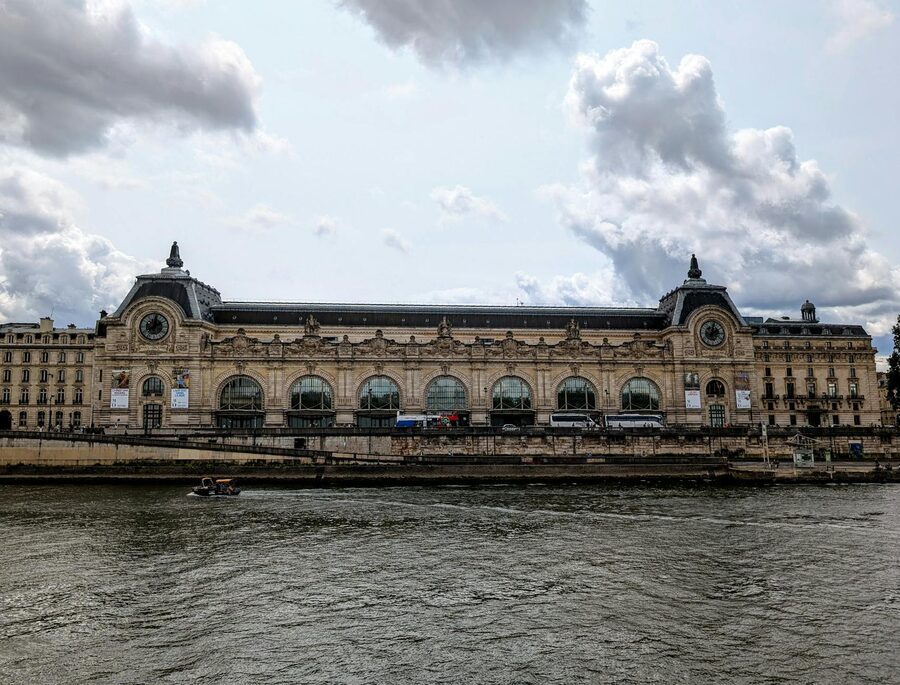
For a museum afternoon after Montmartre: Musée d’Orsay is 25 minutes south on line 12. Seeing Renoir’s “Bal du moulin de la Galette” at the Orsay hits completely differently after you have physically walked past the moulin earlier the same day.
Final Thoughts
Montmartre is genuinely one of my favourite neighbourhoods in any European city, and I am baffled by how many travellers do it badly. The difference between a “Montmartre was fine, kind of touristy” visit and a “Montmartre was the best day of the trip” visit is almost entirely about where you start, which streets you walk, what time you arrive at the steps, and whether you eat on Place du Tertre. Get those four things right and the neighbourhood will reward you.
My short recommendation: book the Cheese, Wine & Pastry walking tour if you are a food person and the budget allows ($127 for 3 hours of proper French food with history built in is a good deal). Book the Magical Montmartre Without the Crowds tour if you are on a budget and want a human guide ($17 for 2 hours is genuinely cheap). Self-guide using the route in this article if you prefer your own pace.
Start at Abbesses. Walk the long way. Eat at a proper local place, not on Place du Tertre.
Arrive at the Sacré-Cœur steps 90 minutes before sunset. Sit. Watch the city light up.
Take one photo. Put the phone away. Stay until the sun is actually down.
That is the good version of Montmartre. That is why people love it. I hope you get that day too.
FAQ
Is Sacré-Cœur free to enter?
Yes, always. No ticket needed for the main basilica. The dome climb is a separate €8 ticket bought at a booth at the back of the church.
How long should I budget for Montmartre?
3 hours minimum for a proper visit following my route. 4-5 hours if you are taking your time, eating a sit-down lunch, and doing the Musée de Montmartre. Under 90 minutes is a rushed tick-box visit that you will not enjoy.
Is Montmartre safe?
Yes, during daytime. It is one of the most touristed neighbourhoods in Paris and actively policed. The usual big-city pickpocket precautions apply (especially on the funicular and on the main steps) but there is no real danger during daytime hours.
The Pigalle area immediately below the hill has a sketchier reputation in the evening but still fine for travelers.
What is the best metro station to arrive at?
Abbesses (line 12) for my recommended back-way route. Anvers (line 2) for the standard tourist approach up the main stairs. Avoid Pigalle as a starting point unless you are also visiting the Moulin Rouge.
Do I need a guided tour?
No — the neighbourhood is very walkable and the self-guided route in this article is genuinely good. But a guide adds a lot of context if it is your first time and you care about the art history. The $17 Magical Montmartre small-group tour is the best-value guided option.
Can I see Moulin Rouge from Montmartre?
Technically yes — the Moulin Rouge is at Place Blanche at the base of the hill, about a 15-minute walk down from Sacré-Cœur via Rue Lepic. Most travelers do them as separate visits because the Moulin Rouge area has a different feel (busier road, touristy but without the village charm). You can easily combine them on the same afternoon.
How crowded is Montmartre on a weekend?
Saturday afternoon (14:00-18:00) is peak chaos. Sunday morning is much calmer. Friday afternoons are in between.
Weekdays during work hours are the best. If you can only come on a weekend, aim for Sunday before 11:00 or after 19:00.
Is the funicular worth taking?
No, unless you cannot physically manage the 222 steps. It is €2.10 (or one metro ticket), takes 90 seconds, and dumps you out in roughly the same spot the stairs would. The stairs are free, about 4 minutes, and much more photogenic.
Does the basilica close?
The main basilica is open 06:30-22:30 daily. The dome climb has shorter hours (roughly 08:30-20:00 in summer, earlier close in winter). The interior is most atmospheric in the early morning or the final 30 minutes before evening close — fewer people and softer light.
Can I go to a mass at Sacré-Cœur?
Yes. Sacré-Cœur hosts daily mass and has been the site of continuous adoration of the Blessed Sacrament since 1885 — someone has been praying in front of the altar, in shifts, every single minute of every day for 140+ years. Mass schedules are posted at the entrance.
What is the dress code?
There is no formal dress code but it is an active Catholic basilica — covered shoulders are appreciated for the interior visit. Beachwear and very short shorts are not a good look here. Just wear what you would wear to any functioning European church.
More Paris Neighbourhood Walks
Montmartre is one of many Paris neighbourhoods worth exploring on foot. The Pere Lachaise Cemetery in the 20th arrondissement is another atmospheric walk through Paris history. The Segway tours cover the central monuments at a pace between walking and driving. And for a wider view from above, the Montparnasse Tower is the neighbourhood down the hill from Montmartre — completely different character, but the best panorama in the city.