
The first thing you notice inside St. Stephen’s Basilica is not the gold, the marble, or the 96-meter dome. It is the silence. Hundreds of people were inside when I visited, and somehow the place absorbed all of it — footsteps, whispers, camera shutters — into this enormous quiet that made me stand still for a full thirty seconds before I even started looking around.
I had walked in expecting a quick church visit. I walked out two hours later having climbed 364 stairs to a panoramic terrace with views I still think about, having stared at a mummified hand from the year 1038, and having sat through an impromptu organ rehearsal that shook the floor under my feet. St. Stephen’s Basilica is the kind of place that keeps surprising you.
Here is everything I figured out about tickets, the terrace, timing, and what is actually worth paying for.
Best overall: St. Stephen’s Basilica Entry with Options — $12. Skip-the-line entry with terrace and treasury add-ons. Over 12,000 reviews and the most popular ticket by a mile.
Best budget: Basilica Entry with Terrace Option — $9. Cheaper entry with optional terrace upgrade. No treasury access but you probably will not miss it.
Best evening experience: Organ Concert in St. Stephen’s Basilica — $33. A completely different way to experience the building. The acoustics in here are unreal.
- How the Ticket System Works
- On-Site Tickets vs. Booking Online
- The Best St. Stephen’s Basilica Tickets to Book
- 1. St. Stephen’s Basilica Entry with Options —
- 2. Basilica Entry with Terrace Option —
- 3. Organ Concert in St. Stephen’s Basilica —
- When to Visit
- How to Get There
- Tips That Will Actually Save You Time
- What You Will Actually See Inside
- More Budapest Guides
How the Ticket System Works
St. Stephen’s Basilica has a slightly unusual setup compared to most European churches. The basic entry to the main church is based on a donation system — there is a suggested amount of around €6 at the door, though in practice the staff will let you in for whatever you put in the box. This gets you into the main nave, the side chapels, and the Chapel of the Holy Right where the relic is kept.
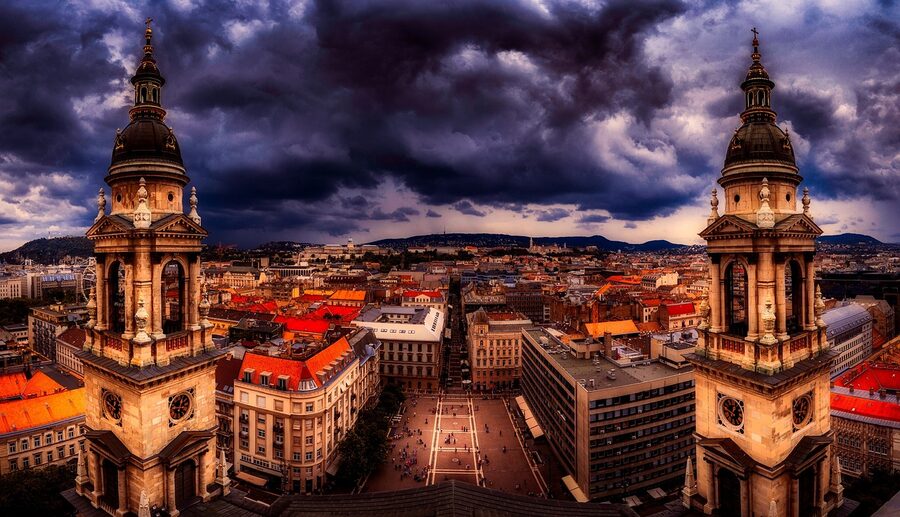
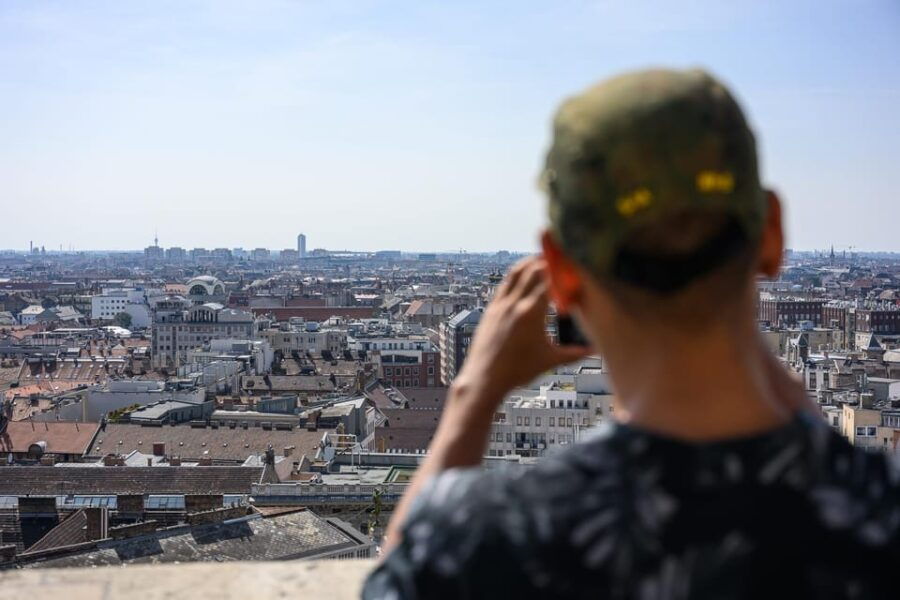
The panoramic terrace is a separate ticket. This is the 360-degree viewing platform at the base of the dome, 65 meters above the square. You can take an elevator most of the way or climb all 364 stairs. The terrace ticket runs around €12 on its own.
The treasury is a small museum inside the Basilica housing religious artifacts — golden chalices, bishop vestments, liturgical silver. It has a separate admission of a few euros. Honestly, unless you are specifically interested in Hungarian Catholic history, you can skip it without feeling like you missed something essential.
The combined ticket covering entry, terrace, and treasury runs about €16 on-site. The online versions from GetYourGuide start at $9-12 and include skip-the-line entry, which during summer queues of 20-30 minutes is genuinely worth the small premium.
On-Site Tickets vs. Booking Online
Both work. But there are real differences depending on when you visit.
On-site tickets make sense in the off-season (November through March, excluding Advent market weeks). Walk up, put your donation in the box, buy your terrace ticket at the counter inside. The whole process takes five minutes when there is no queue.
Online booking is what I would recommend from April through October and during the Christmas market season. The queue at the entrance can stretch 20-30 minutes on summer afternoons, and the popular terrace time slots can sell out entirely. With an online ticket, you walk past the queue with a QR code on your phone. No printing needed.
The price difference is negligible — a euro or two at most. The real value is time. If your Budapest trip is packed (and it should be — there is a lot to do), losing half an hour in a ticket line is half an hour you are not spending at Széchenyi Baths or walking through the Ruin Bars.
Cancellation: Most online tickets offer free cancellation up to 24 hours before. Zero risk to booking ahead.
The Best St. Stephen’s Basilica Tickets to Book
1. St. Stephen’s Basilica Entry with Options — $12
This is the ticket I recommend for most people. At $12, it is the most popular option with over 12,000 reviews and a 4.6-star average — and after using it myself, I understand why it dominates the market.
The skip-the-line entry alone justified the price on my visit. I walked past a queue that snaked around the square and was inside in under two minutes. You can add the panoramic terrace, the treasury, or both at checkout. Add the terrace. The views from up there are genuinely among the best in Budapest, and I have been to every major viewpoint in the city.
One reviewer summed it up perfectly: “Veronica was our guide and was amazing — she explained the history of the Basilica brilliantly.” If you get the guided option, you will learn things about the building that you would completely miss on your own.
2. Basilica Entry with Terrace Option — $9
The budget pick. At $9, this is the cheapest way to get skip-the-line entry plus optional terrace access. It does not include the treasury, but as I mentioned, the treasury is the one element most visitors can comfortably skip.
With 6,400 reviews and a 4.5-star rating, the numbers speak for themselves. One visitor put it simply: “Defo do the viewing terrace. There is a lift to the top, excellent views!” That is accurate — the elevator takes you about 80% of the way up, then a short spiral staircase gets you to the open-air platform.
If you are on a tighter budget or just want the essentials — get inside, see the dome, climb to the terrace — this is the one.
3. Organ Concert in St. Stephen’s Basilica — $33
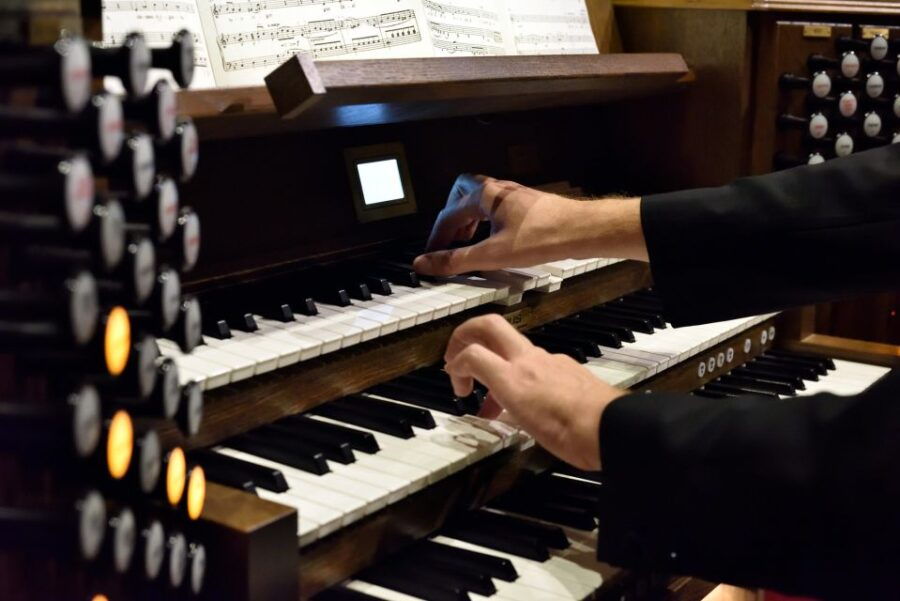
This is a completely different way to experience the Basilica, and it might be my favourite thing I did in Budapest. The organ has over 6,500 pipes, and when it fills that space — a space designed specifically for this kind of sound — you feel it in your chest.
Concerts run in the evenings (usually around 19:30-20:00) and last about 60-90 minutes. At $33, it is more than an entry ticket, but the experience is not comparable to a daytime visit. One reviewer who was not even a classical music fan said: “Wow it was amazing — the opera singer, flute player and pianist were fantastic, it was breathtaking. Get there early because it gets full.”
Book the front seats if they are available. The sound hits differently up close, and you can see the musicians’ expressions. This is also one of the best ways to experience the Basilica without the daytime crowds — by evening, the tourist rush has completely cleared out.
When to Visit
Opening hours: Monday through Saturday 9:00-17:15 (last entry at 17:15). Sundays and public holidays 12:30-17:15 — the morning is reserved for Mass. The panoramic terrace stays open later, typically until 19:00 with last tickets at 18:30, which is great because it means you can catch sunset from the top.
Best time of day: Right at opening. Arrive at 9:00 on a weekday and you will have the nave almost to yourself for the first 30-45 minutes. By 11:00, the tour groups start rolling in and it stays busy until late afternoon. If you want photos without strangers in every frame, early morning is the only reliable window.
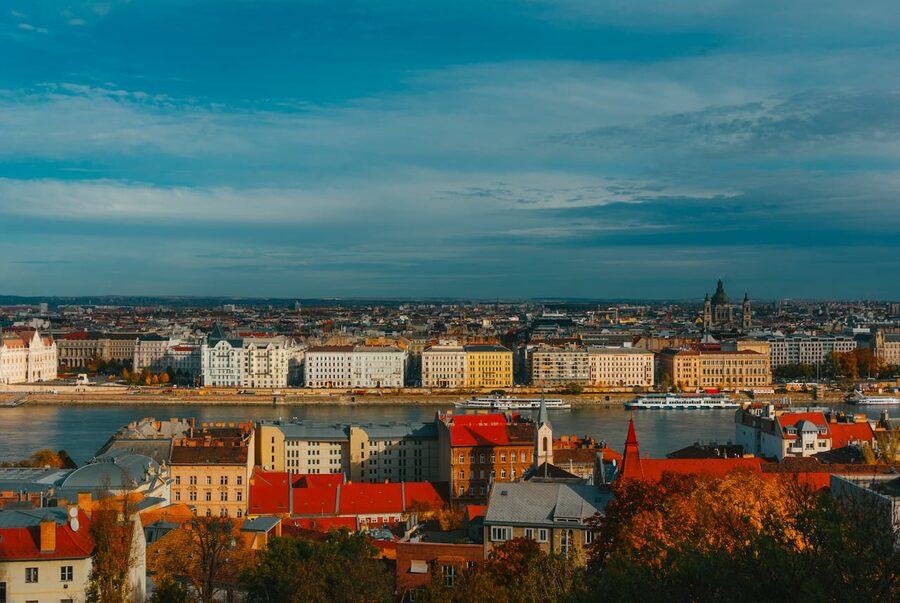
Best time for the terrace: Late afternoon, around 16:00-17:00, for golden hour light. The sun drops behind the Buda hills and paints the whole city in warm tones. This is also the busiest time for the terrace, so there is a trade-off. Morning terrace visits are quieter but the light is flatter.
Best day: Tuesday through Thursday. Monday gets surprise traffic from travelers who treat it as “sightseeing day one.” Weekends are the worst, especially Saturday when cruise ship passengers flood the city center.
Best season: April-May and September-October. Manageable crowds, comfortable terrace weather, and good light. Summer is gorgeous but packed. Winter is fine — the interior is the main attraction and it looks just as stunning in January.
Watch for Mass and concert schedules. Daily Mass at 7:00, 8:00, and 18:00. Sundays at 10:00 and 12:00. During Mass, tourist access is restricted. Evening organ concerts are separately ticketed — check the schedule if you want to attend. August 20 (St. Stephen’s Day) brings a major national celebration with a Holy Right Hand procession through the streets and enormous crowds around the square.
How to Get There
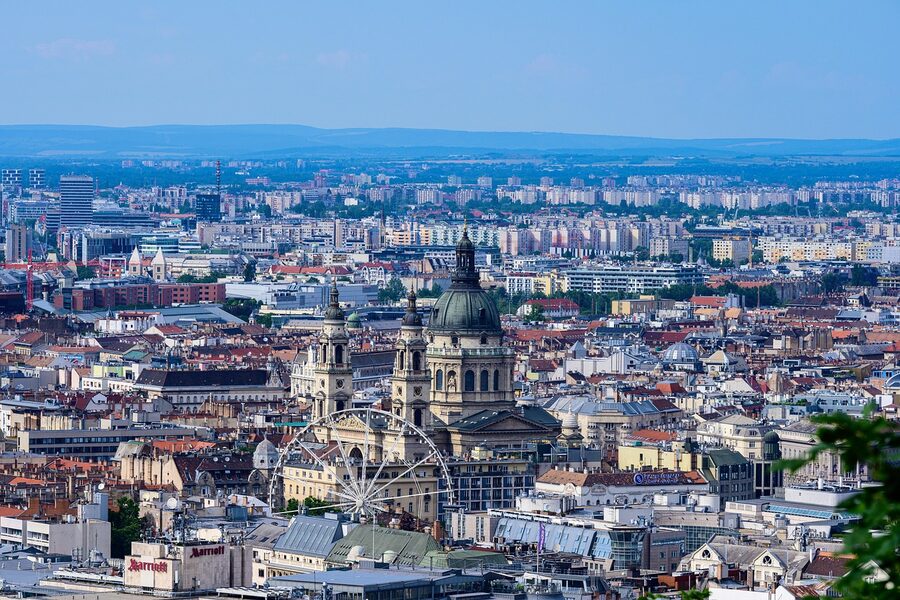
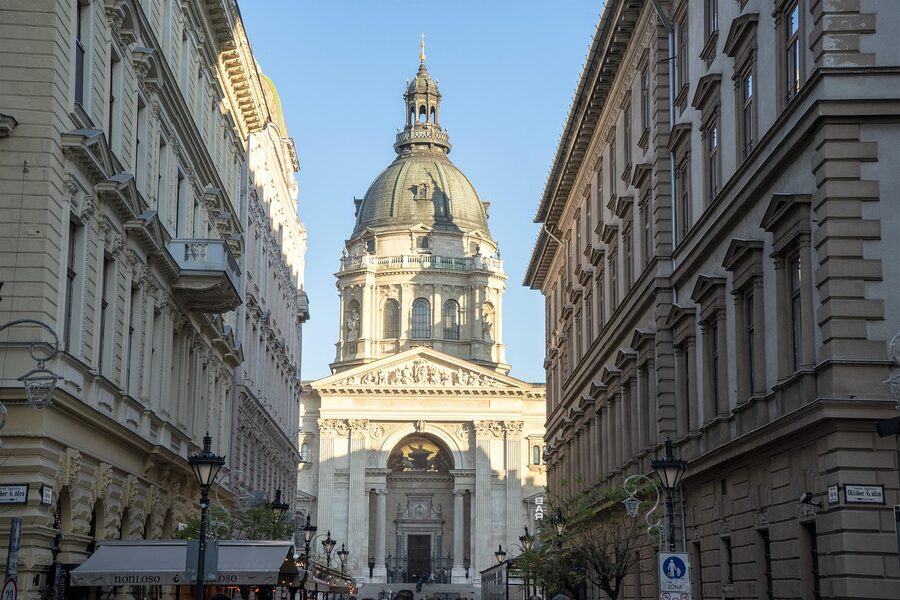
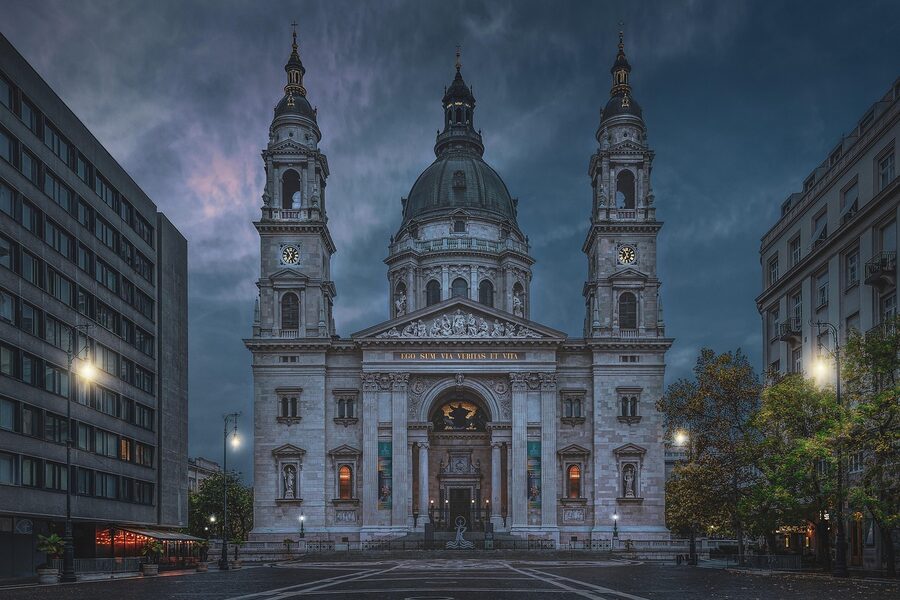
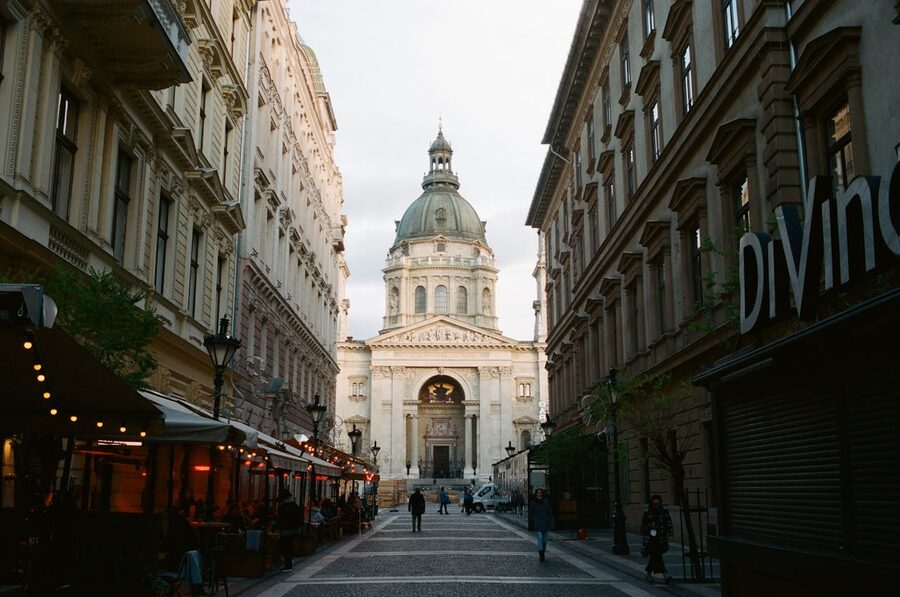
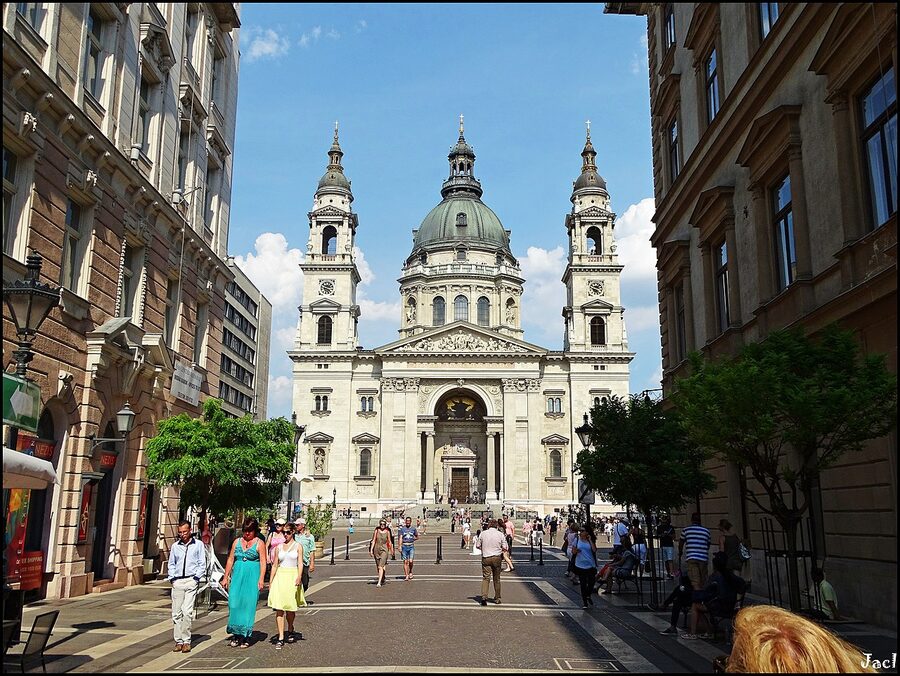
The Basilica sits in the absolute center of Pest, in District V. You will probably walk past it multiple times during your trip whether you plan to or not.
By metro: Bajcsy-Zsilinszky út station on the M1 (yellow) line drops you about a 2-minute walk away. Deák Ferenc tér — the main interchange where M1, M2, and M3 all meet — is about 5 minutes on foot. Coming from the Buda side, take M2 to Deák.
On foot: 5 minutes north from Váci Street. 10 minutes south from Parliament along the river then east. 10 minutes west from the Jewish Quarter. The dome is visible from most of central Pest, so just walk toward it.
By taxi or Bolt: Anywhere in central Budapest will cost $3-6. Tell the driver Szent István tér and they will drop you at the front steps.
Tips That Will Actually Save You Time
Book the combined ticket online. I keep saying this because it genuinely matters. Skip-the-line entry saves you 20-30 minutes on summer days. Having everything — entry, terrace, treasury — on one QR code means no juggling separate tickets at counters inside.
Start with the terrace, not the interior. Most visitors enter the nave first, then try for the terrace later when it is busiest. Flip it. Go directly to the terrace entrance (right side of the building), enjoy the views while the light is fresh and the platform is empty, then come down and explore the interior. You will beat the terrace crowds by an hour.
Take the elevator up, stairs down. The elevator gets you 80% of the way up, then a narrow spiral staircase takes you to the open terrace. On the way down, take the full staircase — you will see structural details in the dome that you miss from the elevator, and the descent is quicker than waiting for the elevator again.
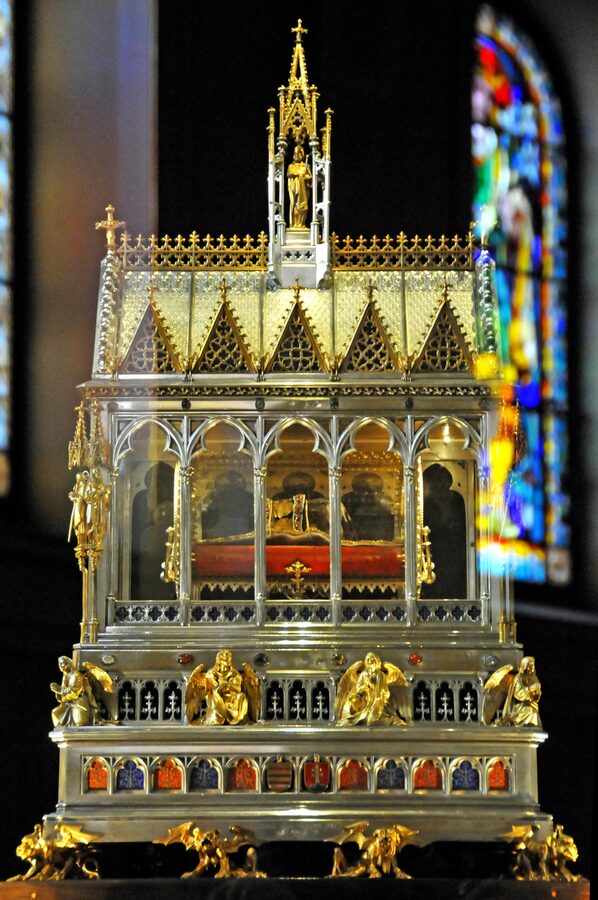
Bring a 200 HUF coin for the Holy Right Hand. The Chapel of the Holy Right is dimly lit on purpose. There is a coin-operated light that illuminates the reliquary case for about 30 seconds. Without the light, you are squinting at a shadow behind glass. Have the coin ready.
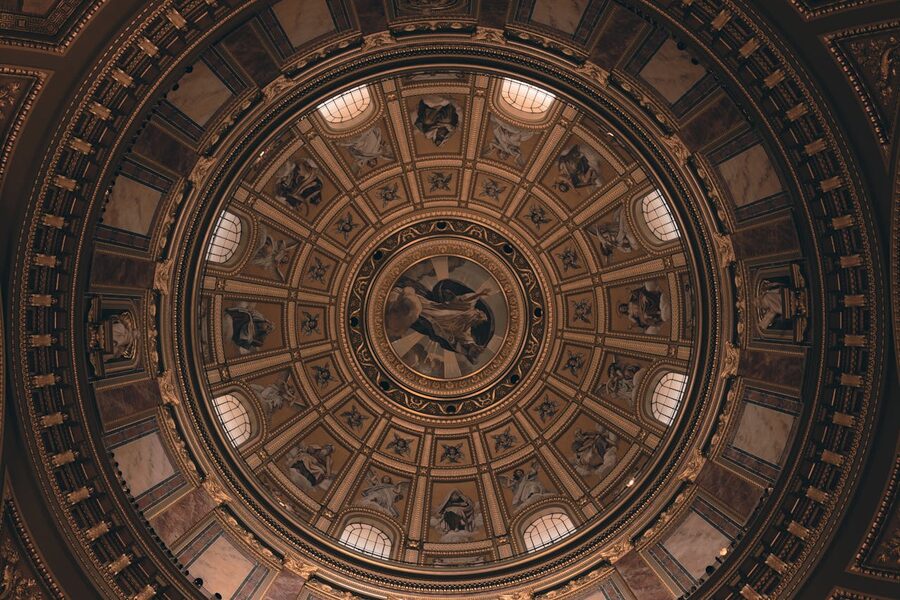
Photography is allowed everywhere except during Mass. Flash and tripods are banned. Modern phone cameras handle the interior lighting fine — for the dome mosaic, switch to your wide-angle lens and point straight up.
Dress respectfully. Cover your shoulders, avoid very short shorts. It is an active church. I have seen people turned away in swimwear, which apparently happens more often than you would expect in a city full of thermal baths. If you want to explore the local cuisine properly, a Budapest food tour will take you to places you would never find on your own.
Allow 90 minutes minimum. A rushed visit takes 30 minutes. A proper visit — nave, chapels, Holy Right Hand, terrace, and some time just sitting and looking — takes 90 minutes to two hours. Do not shortchange yourself.
What You Will Actually See Inside
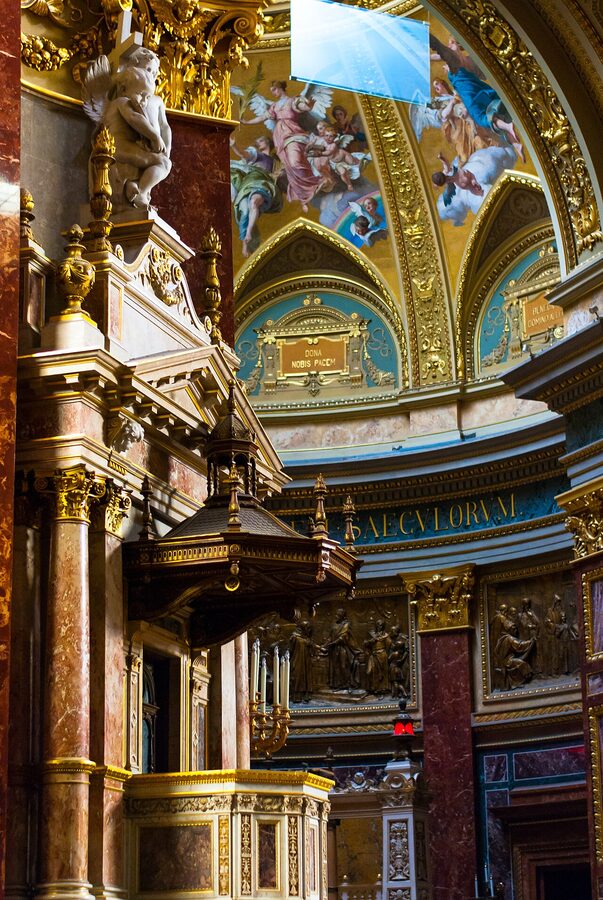
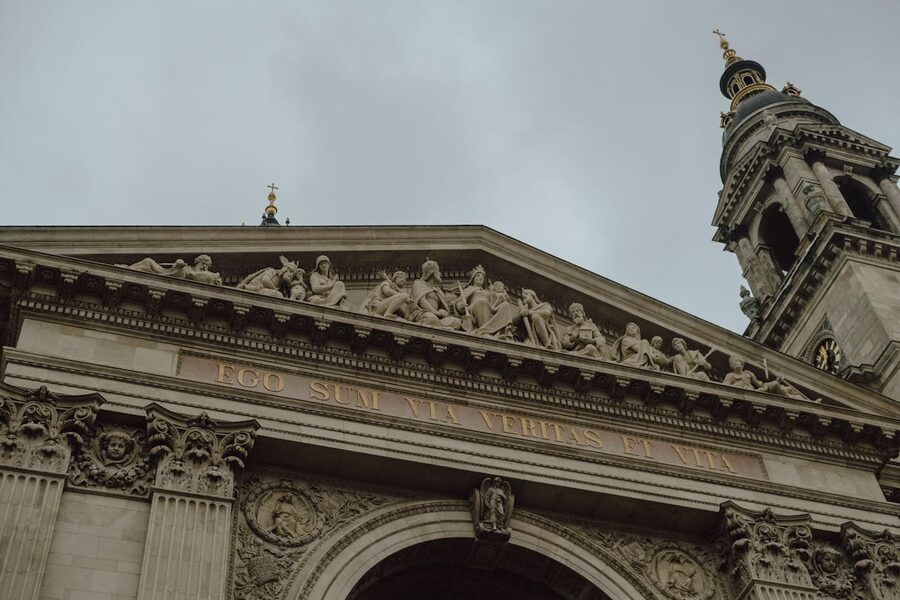
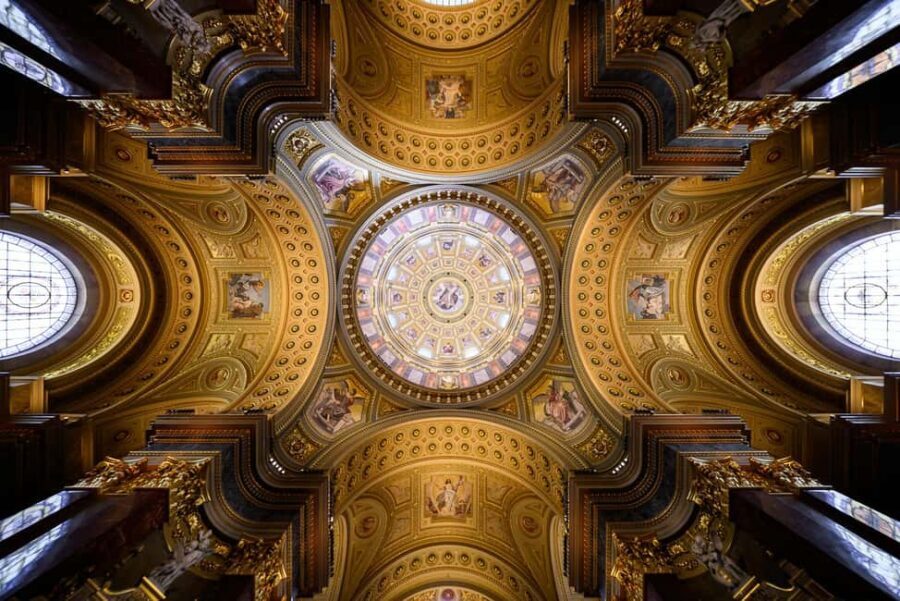
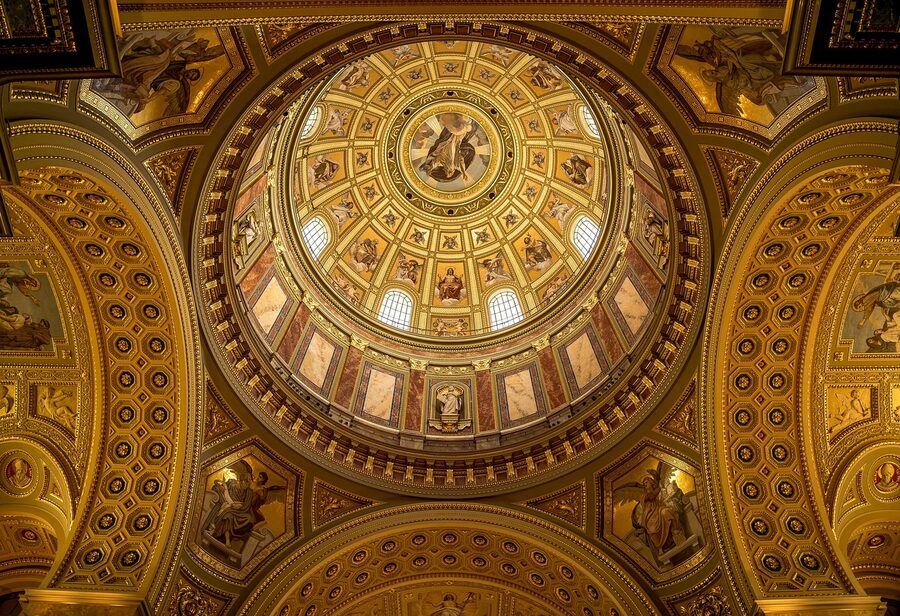
The Main Nave — The scale is the first thing that hits you. St. Stephen’s Basilica can hold 8,500 people, and the ceiling arches 96 meters above the floor — the same height as Parliament, and that is not coincidental. Hungarian law dictates that no building in Budapest can exceed 96 meters, a number representing the year 896 AD when the Magyar tribes settled in the Carpathian Basin. Every surface you see — walls, columns, ceiling — is covered in marble, gold leaf, or mosaic. The building uses over 50 types of marble sourced from quarries in Hungary, Italy, and Greece.
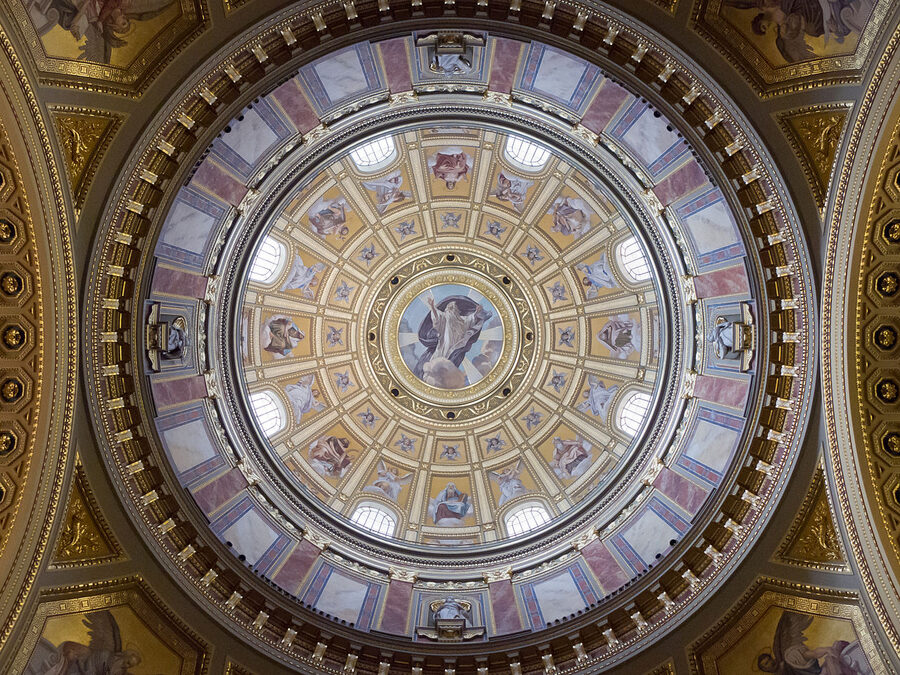
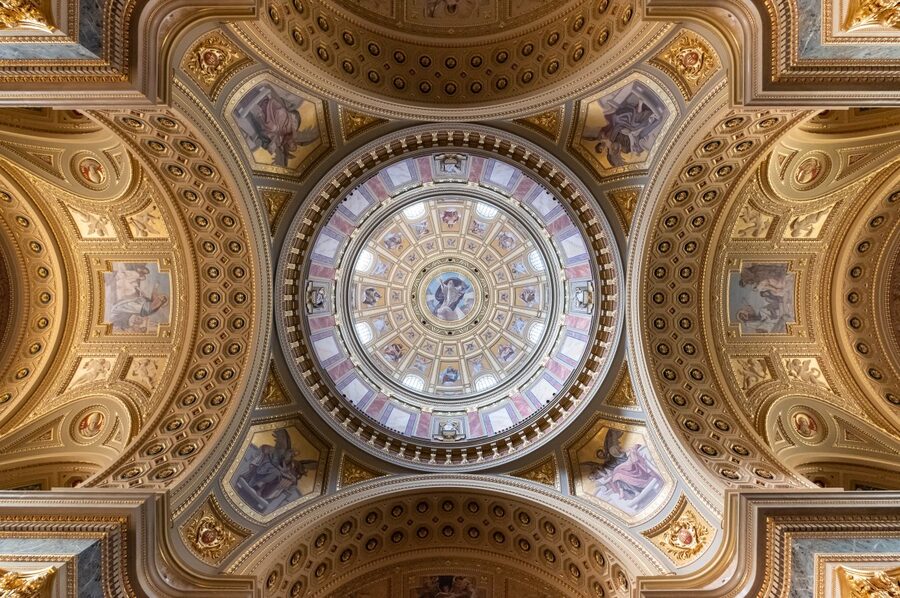
The Dome Mosaic — Stand in the center of the nave and look straight up. The dome painting by Károly Lotz depicts God the Father surrounded by angels and saints. The detail is extraordinary — even from 96 meters below, individual figures and facial expressions are legible. Bring your phone zoom or binoculars if you want the full effect. Most visitors glance up briefly and move on. Give it five minutes. It rewards patience.
The Holy Right Hand (Szent Jobb) — In a small chapel on the left side of the nave sits the mummified right hand of King Stephen I, who founded the Hungarian state in the year 1000 and was later canonized. This relic has survived an astonishing journey — stolen, smuggled to Ragusa (modern Dubrovnik), recovered, hidden during wars, displayed in multiple churches. For Hungarians, it is the most important relic in the country. Every August 20, it leaves the Basilica in a solemn procession through the streets.
The Altar and Apse — The main altar features a massive statue of St. Stephen kneeling and offering the Hungarian crown to the Virgin Mary. Behind it, the apse is decorated with gold mosaics inspired by Italian Renaissance churches. The altar painting is by Gyula Benczúr, one of Hungary’s most celebrated painters.
The Organ — The pipe organ at the rear of the nave has over 6,500 pipes, making it one of the largest in Hungary. Even if you are not attending a concert, look for it above the main entrance. It was built in 1905 and extensively restored in the 2000s. If you get the chance to hear it during a concert, take it — the acoustics in this building were designed for exactly this kind of sound.
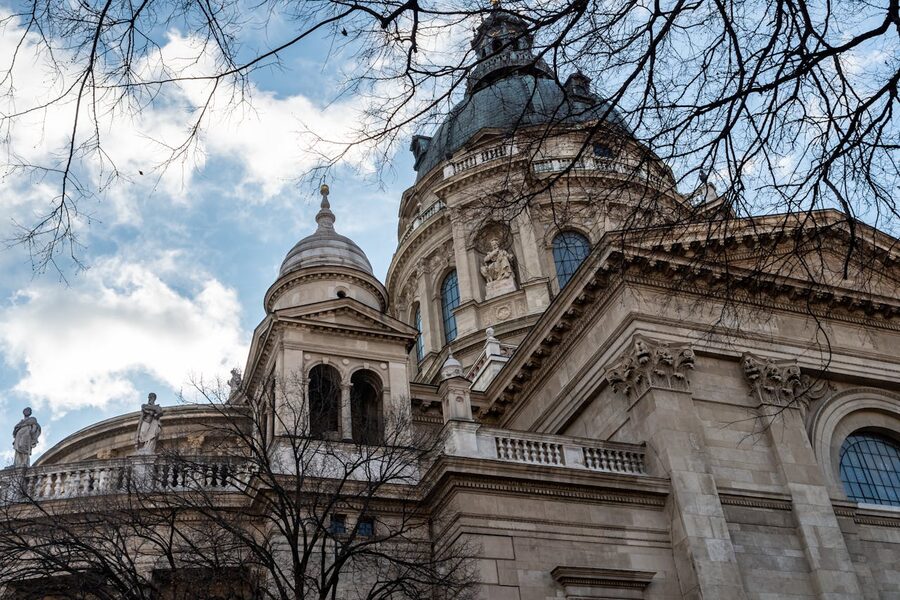
A Quick History — Construction began in 1851 under architect József Hild. After Hild’s death, work continued until disaster struck in 1868 — the dome collapsed completely. Miklós Ybl, Hungary’s most famous architect, took over the project and essentially redesigned the building in a neo-Renaissance style. After Ybl died in 1891, József Kauser finished the job. The Basilica was finally consecrated in 1905, 54 years after the first stone was laid. It survived World War II bombing (with damage), was extensively restored in the 1980s-2000s, and today stands as one of the finest churches in Central Europe.
More Budapest Guides
St. Stephen’s Basilica sits in the middle of Budapest’s best attractions, so it is easy to build a full day around your visit. The Danube is a 10-minute walk west, and a sightseeing cruise or evening dinner cruise on the river is one of the best things you can do in the city. For something more active, the thermal baths are a short metro ride away — Széchenyi is the famous one but Gellért has the better architecture. If you want to explore Hungarian wines, the downtown tasting rooms are walking distance from the Basilica. In the evening, the ruin bars in the Jewish Quarter are a 10-minute walk east. And if you have a full day free, the Danube Bend day trip is the best excursion from Budapest — medieval castles, riverside towns, and Hungary’s largest church at Esztergom.