
Val d’Orcia is the part of Tuscany that ended up on every screensaver. And yes — it mostly lives up to it.
A long day from Florence, Siena, or Rome gets you three villages, a winery lunch, and more photographs than you’ll keep.
Quick Picks
- From Florence — Val d’Orcia & Gladiators Fields With Wines ($94). Montalcino, Pienza, Montepulciano, winery lunch.
- Wine-serious, from Siena — Small-Group Brunello di Montalcino from Siena ($217). Small group, premium producers.
- From Rome — Rome: Tuscany & Montepulciano Day Trip ($83). Long day, but the only sane way to see it without relocating.
- Quick Picks
- Why Val d’Orcia Is Different from the Rest of Tuscany
- The Three Real Options
- Full Day Tour to Val d’Orcia and Gladiators Fields With Wines —
- Small-Group Brunello Di Montalcino From Siena — 7
- Rome: Tuscany & Montepulciano Day Trip —
- The Vitaleta Chapel Problem
- Pienza — the Renaissance Town that Got Planned
- Montepulciano — the Vertical One
- Montalcino and the Brunello Question
- Bagno Vignoni and Tuscan Thermal Springs
- Timing and Season
- From Florence vs Rome vs Siena — Which Base Works Best
- What You’ll Drink
- Who This Tour Is For (and Who It Isn’t)
- Pairing With a Broader Italy Trip
- Common Questions
- The Honest Verdict
Why Val d’Orcia Is Different from the Rest of Tuscany
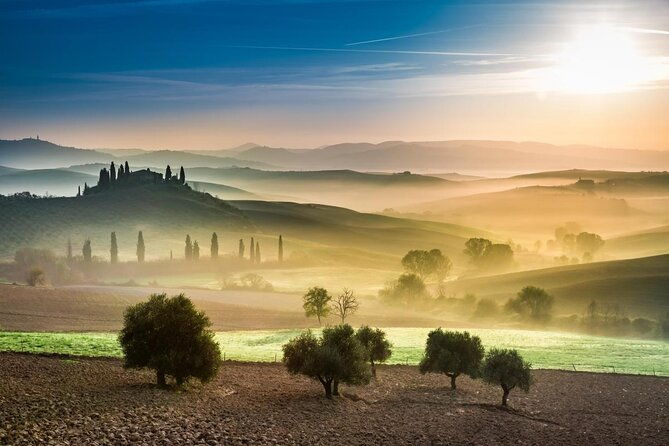
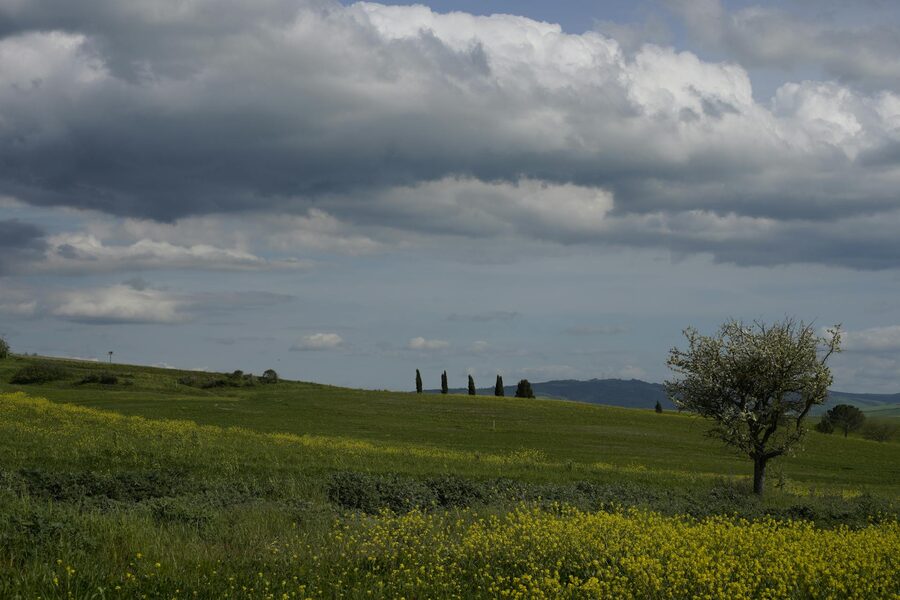
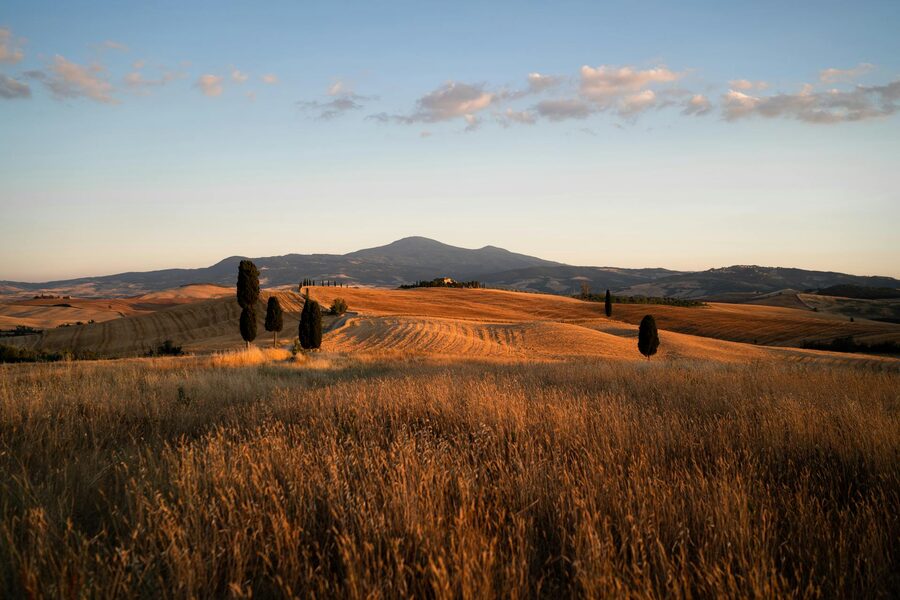
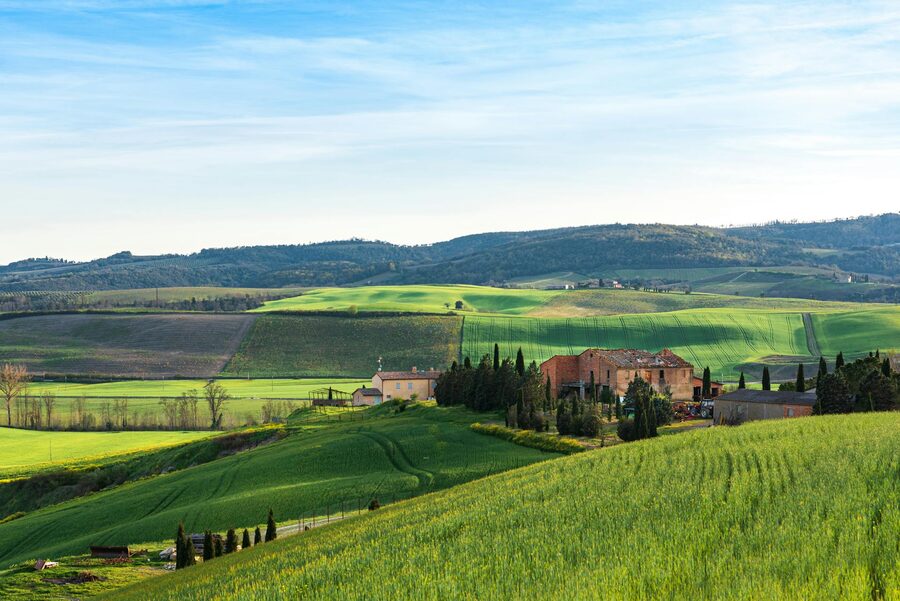
Chianti (between Florence and Siena) is wooded and hilly. The Crete Senesi south of Siena is stark and lunar — bare clay ridges, almost no trees. Val d’Orcia sits south of the Crete Senesi, a band of land between Siena and Monte Amiata, and it’s a specific thing: rolling grain fields with cypress punctuation, medieval hilltop villages every 10-15 km, and a UNESCO World Heritage designation (since 2004) that protects the visual character of the landscape itself.
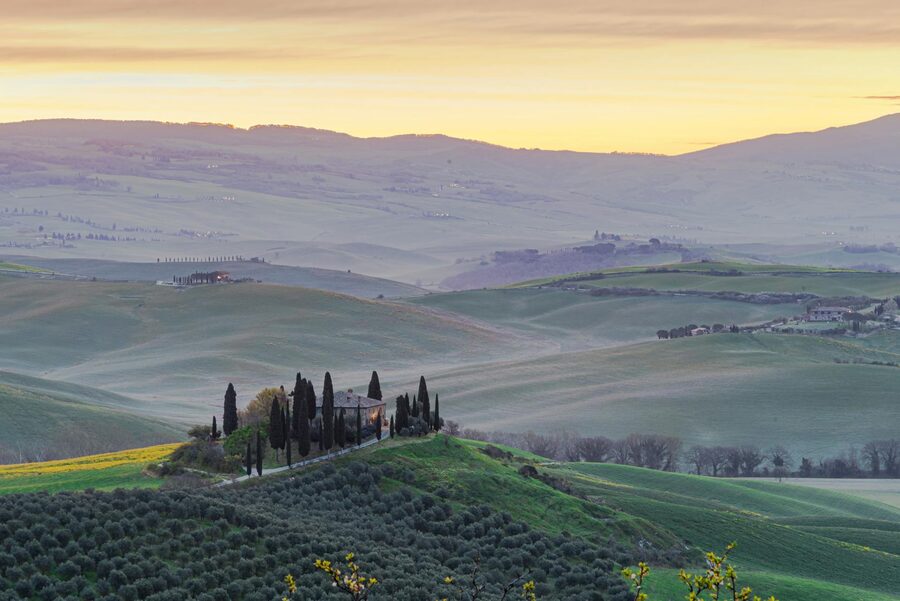
The UNESCO listing matters because it’s one of only a few cultural landscapes worldwide protected as an intact aesthetic unit. That designation blocks development, keeps billboards out, prevents the cypress rows from being felled, and means the shepherd you see moving sheep across a ridge is essentially guaranteed to still be there in 20 years. What you see is, legally, what future visitors will see.
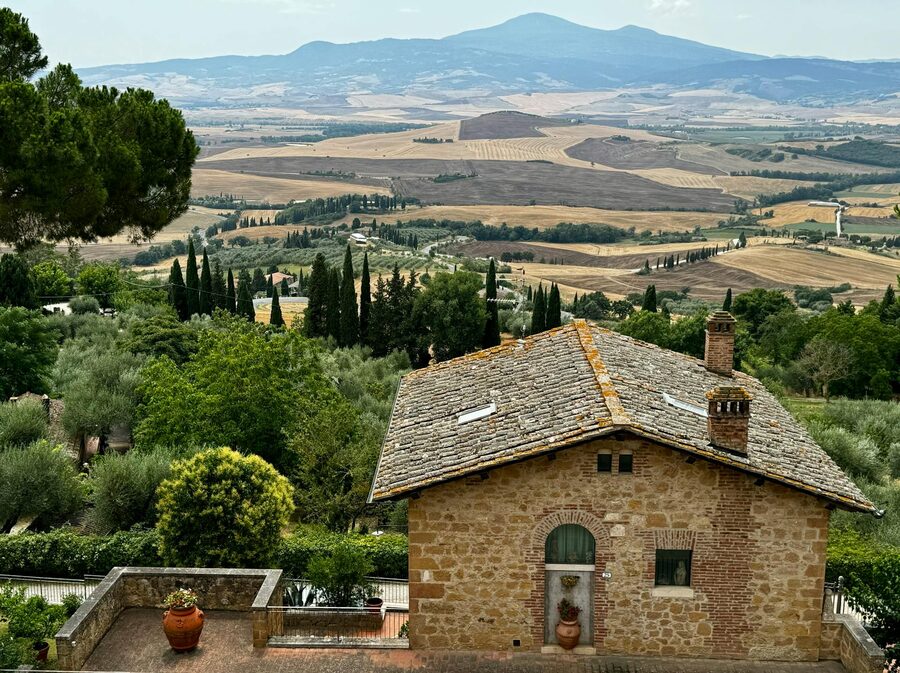
The aesthetic coherence is why this area photographs so well. There’s no visual noise — no power lines strung across vistas, no pastel-painted villas, no ugly concrete farm shed. Every ridge, every tree, every farm was essentially set in its current configuration by the 16th century and has been maintained since.
The Three Real Options
Which tour to book depends on where you’re staying and how much wine you want to drink.

Full Day Tour to Val d’Orcia and Gladiators Fields With Wines — $94
The headline from Florence. Covers Montalcino, Pienza, and Montepulciano in a long day with a winery lunch plus tastings and a photo stop at the Gladiator filming location. Air-conditioned van, eight-ish people max, English-speaking guide. The all-in-one option for travellers who want to see the three main villages and can’t rent a car. Time allocation per village — honestly it’s a full day and you’ll be tired by 19:00.
Small-Group Brunello Di Montalcino From Siena — $217
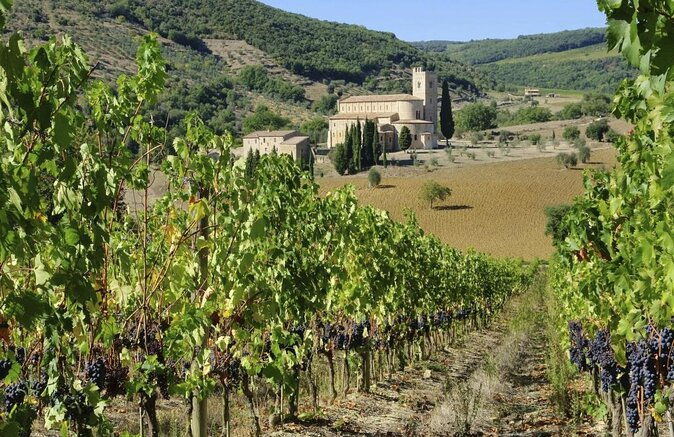
The wine-serious pick. From Siena rather than Florence, small group of eight maximum, two premium Montalcino producers, two full tasting flights including aged Brunello Riservas, proper winemaker-led cellar tours, paired lunch. More than twice the price of the Florence tour but a completely different level of access — you’re tasting €60-120 bottles, not the house quaffer. Worth it only if you’re already into wine; casual tourists should do the cheaper tour. The Chianti bike tour is the lighter, more active cousin.
Rome: Tuscany & Montepulciano Day Trip — $83
For Rome-based travellers who don’t have time to relocate to Florence. Long day — leaves Rome around 7:00, returns around 21:00 — but covers Montepulciano, Pienza, and a winery stop with lunch. The driving is the trade-off: you spend five to six hours total in the van. Basically the only sensible way to see Val d’Orcia from Rome without sleeping over.
The Vitaleta Chapel Problem
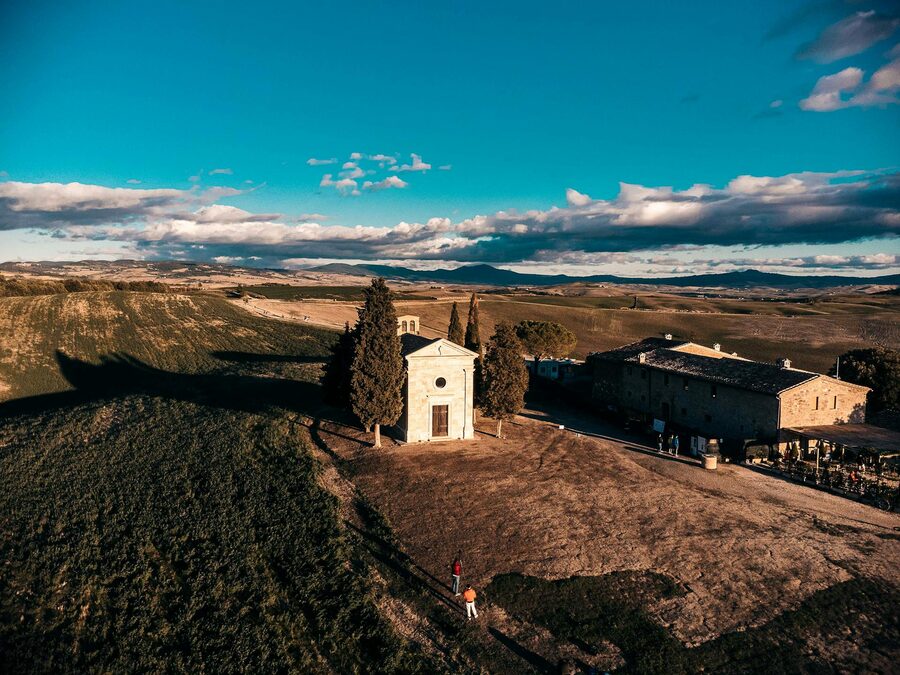
Everyone wants the photo. The chapel sits on a low ridge outside San Quirico d’Orcia, surrounded by a wheat field, with the classic Val d’Orcia backdrop of rolling hills behind. It’s on private land. There’s no official visitor centre. You can’t enter the chapel.
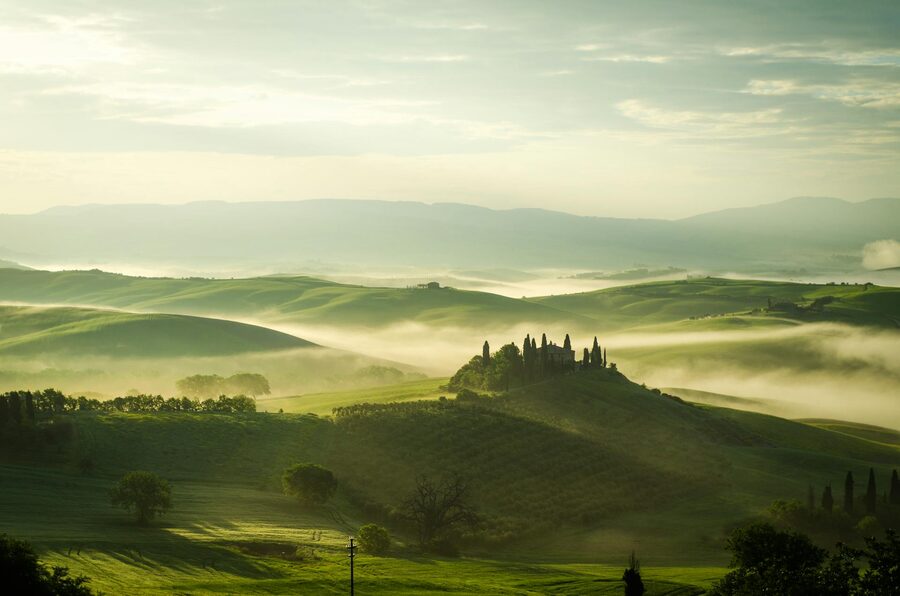
What you can do: walk on the public path that skirts the wheat field, shoot from there. Most tours include a 15-20 minute stop at the viewpoint. If your tour doesn’t, you’re not missing much — you can get an almost-identical shot from the SP146 road pull-out a kilometre away.
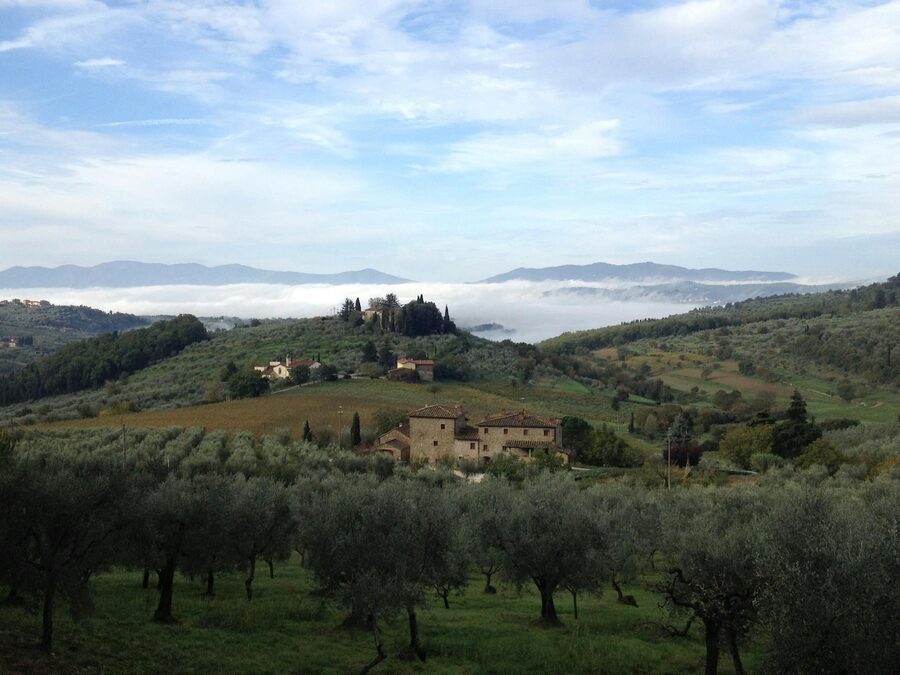
Honest take on the chapel: it’s a small early-20th-century structure, not a particularly significant building architecturally, but it became famous because it fits the landscape geometry perfectly. The chapel itself is 90 seconds of your time. The view from the chapel is what you’re actually there for, and you can get that from half a dozen nearby spots.
Pienza — the Renaissance Town that Got Planned
Pienza is the weird one. Pope Pius II (born here as Enea Silvio Piccolomini) decided in 1459 to rebuild his home village as the ideal Renaissance town. He hired Bernardo Rossellino as architect, gave him three years, and ended up with a central square that’s still considered a textbook example of Renaissance urban design — Palazzo Piccolomini, cathedral, bishop’s palace, and town hall all arranged in strict geometric relationship.
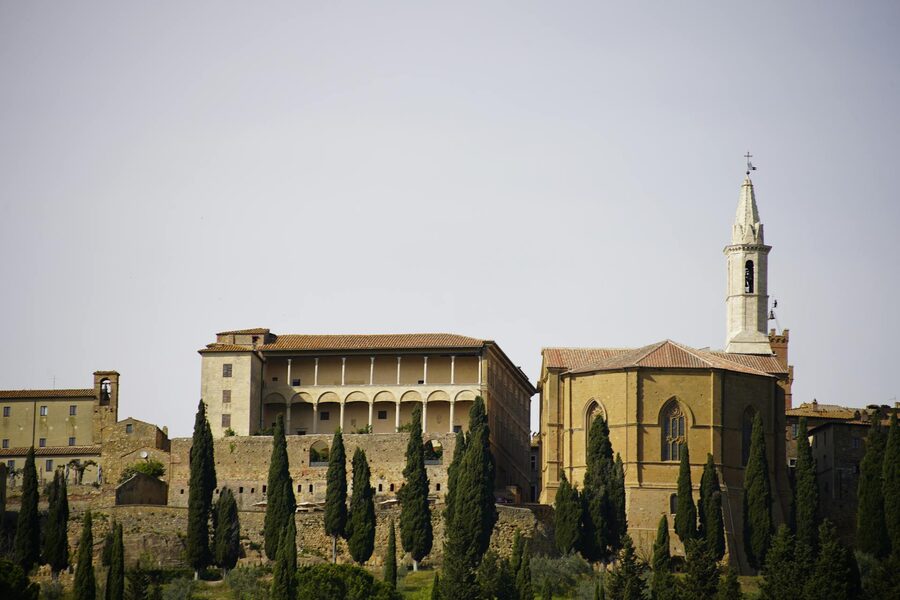
The pope died in 1464, three years after the works finished, and the town never grew beyond the few streets he built. That’s why Pienza today is exactly the size and shape he planned — a rare example of a complete Renaissance urban project preserved without significant modification.
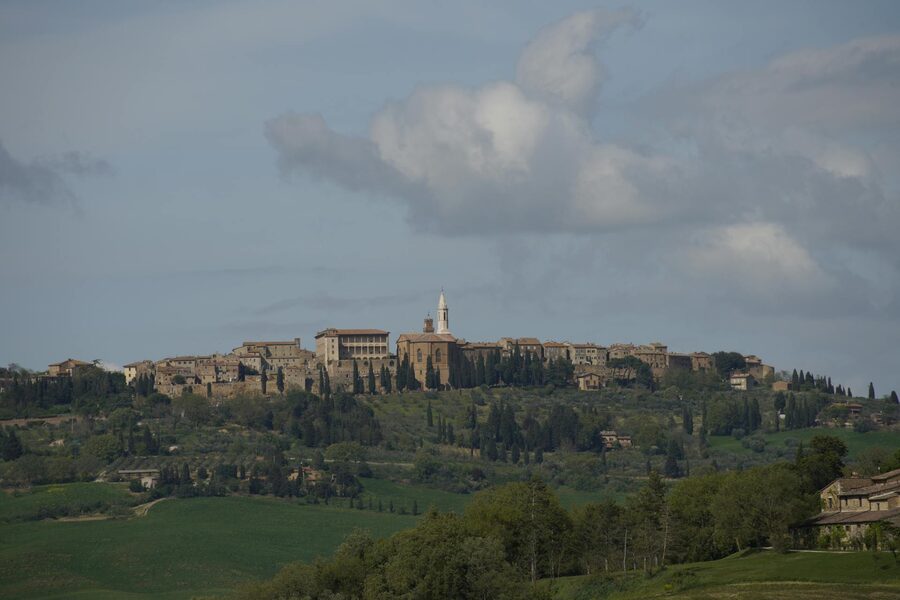
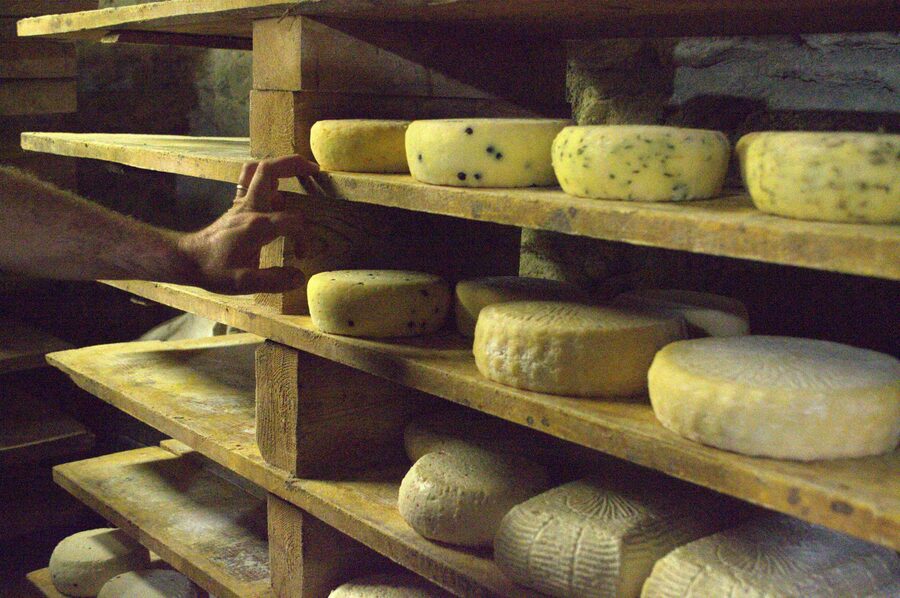
Pienza’s other fame: pecorino. The sheep’s-milk cheese made here (Pecorino di Pienza DOP) is one of Italy’s most celebrated regional cheeses, aged in underground caves, ranging from fresh (30 days) to aged stagionato (12+ months). Every tour stops here for a tasting or a browse through the cheese shops on Corso Rossellino.
Practical time in Pienza: tours usually give you 60-90 minutes here. Enough for the piazza, a walk along the walls, a cheese tasting, and a quick gelato. Not enough for the Palazzo Piccolomini museum (skip it unless you’re a Renaissance fanatic). Lunch happens elsewhere, usually at a farm stop between villages.
Montepulciano — the Vertical One
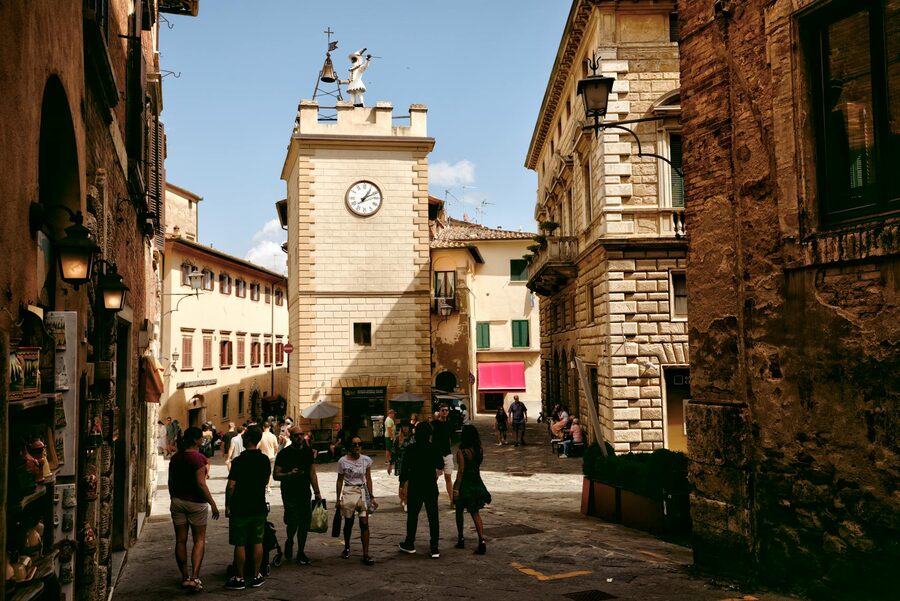
Montepulciano sits on a high ridge and climbs. From the Porta al Prato at the bottom to the Piazza Grande at the top is about 1.5 km of continuous cobblestone uphill. Bring knees that work.
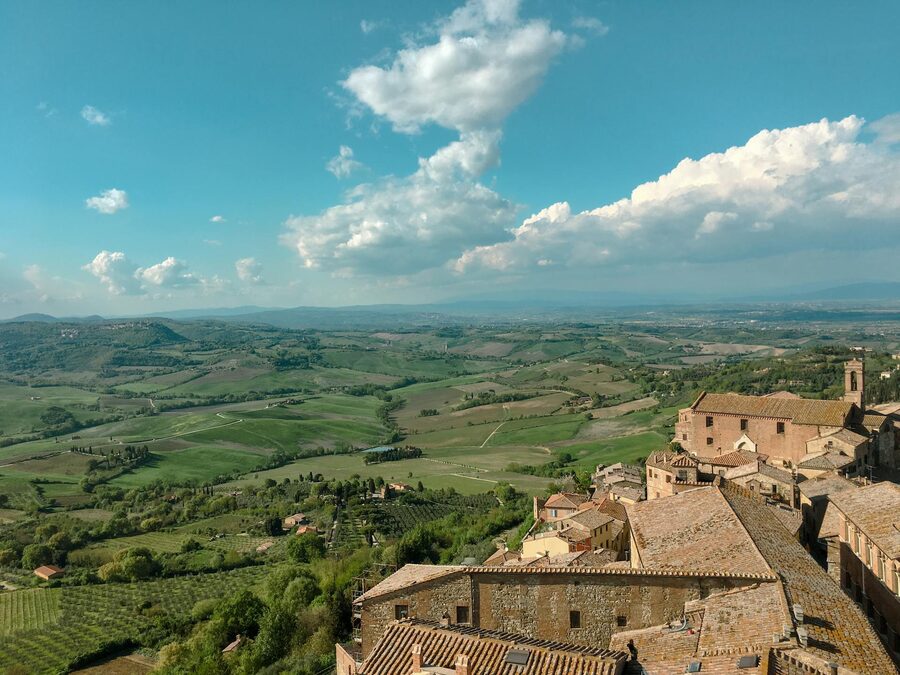
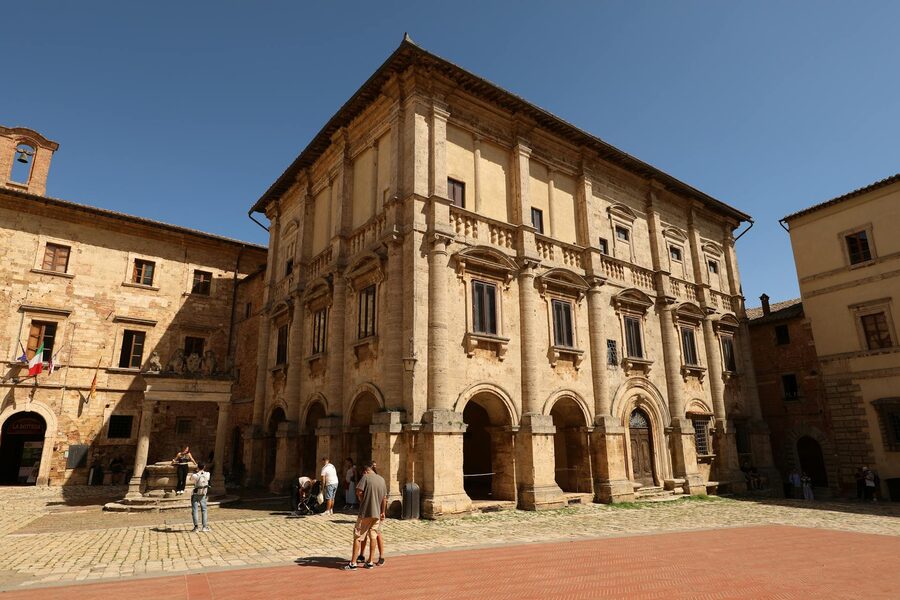
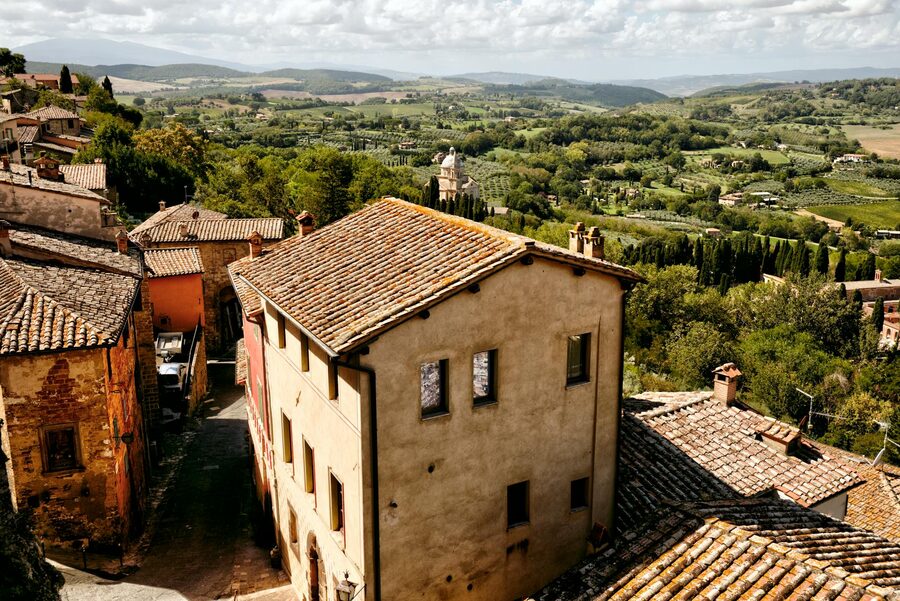
The reward for the climb: Piazza Grande, a medieval square ringed by palazzi, the Duomo, and the Palazzo Comunale (which you can climb for views out across Val d’Orcia toward Monte Amiata). Tours usually give you 90 minutes in Montepulciano, which covers a rushed version of the main street, the piazza, and one cellar visit.
Vino Nobile di Montepulciano: the town’s wine, DOCG since 1980, primarily Sangiovese (called “Prugnolo Gentile” here). Don’t confuse it with Montepulciano d’Abruzzo — totally different grape, different region, nothing in common except the name. Vino Nobile is more refined and expensive; Montepulciano d’Abruzzo is everyday Italian red.
The cellars under Montepulciano’s main street are worth a visit. Many wineries offer free quick tours of their 16th-century storage caves, which extend dozens of metres back into the ridge. Contucci and Avignonesi are the big names; smaller producers like Talosa and De’ Ricci are equally rewarding.
Montalcino and the Brunello Question
Montalcino is the wine capital. The town itself is compact and walled, with a Rocca (fortress) at the top that gives panoramic views, but the reason to visit is Brunello di Montalcino — arguably Italy’s most serious red wine, and certainly its most expensive (starting at €40 for young bottles, reaching €500+ for aged Riservas).
Brunello production rules: 100% Sangiovese, minimum 5 years ageing before release (6 for Riserva), at least 2 years in oak barrels. The result: wines that need 10-20 years to reach their best, and that in good vintages rival top Bordeaux and Barolo for longevity.
Rosso di Montalcino: the junior wine from the same vineyards, shorter ageing, released at 1 year old. Usually €15-25 per bottle. Excellent value and the way to drink Montalcino wine on a non-special-occasion basis.
The standard Val d’Orcia day tour from Florence includes a quick pass through Montalcino with one tasting at a mid-range producer. The Siena-based Brunello-specific tour goes much deeper — two premium producers, cellar access, paired lunch. Completely different experiences. Don’t expect the cheap tour to give you the serious wine experience.
Bagno Vignoni and Tuscan Thermal Springs
The region’s hidden detail: Val d’Orcia sits on thermal aquifers, and a few spots bubble up hot mineral water. Bagno Vignoni — the closest proper thermal village to the Vitaleta chapel — has a medieval pool in the town’s central square. You can’t swim in the central pool, but a nearby spa (Hotel Posta Marcucci) lets day visitors use its thermal pool overlooking the valley.
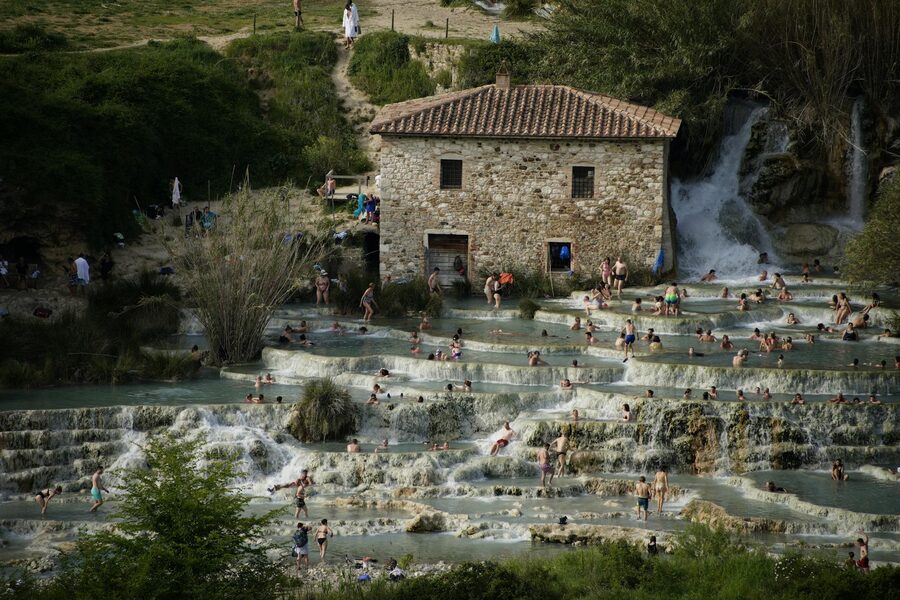
Saturnia thermal cascades: about 90 minutes south by car, genuinely free and open 24/7, made famous by Instagram around 2015. Not in the core Val d’Orcia UNESCO area, but close enough that some private drivers will include it as a bonus stop if you ask.
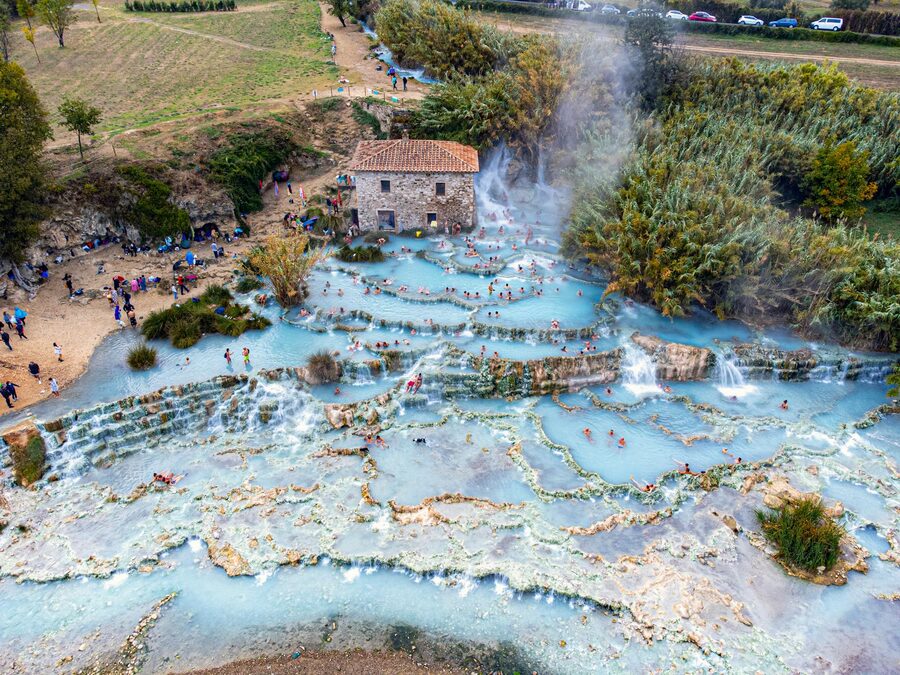
Standard day-tour bookings don’t include the springs. If thermal-bathing is high on your priority list, either rent a car, hire a private driver, or stay overnight at Bagno Vignoni and hit the spa there.
Timing and Season
Val d’Orcia has dramatic seasonal shifts — the visual character changes from green to gold to bronze as the year progresses.
April-May: green season. Wheat and grass lush; vines budding; temperatures 15-22°C. Relatively quiet. Rain possible but rarely day-killing. Best month for photographs of the green rolling hills.
June: early summer. Wheat still green then turning gold mid-month. 22-28°C. Light gets sharper.
July-August: peak tourism + peak heat. Fields are fully golden (the iconic “Tuscan” colour); everything is parched. Tours still run but cities are crowded and temperatures can hit 35°C+.
September: harvest. Grape pickers in the vineyards, wineries working full-tilt, light softening. Arguably the best overall month — colour, weather, and cultural activity align.
October: quieter. Autumn colour in vineyards, truffle season in nearby hills, bronze grass. Cooler mornings (10°C), warm afternoons (20°C). Excellent for photographers.
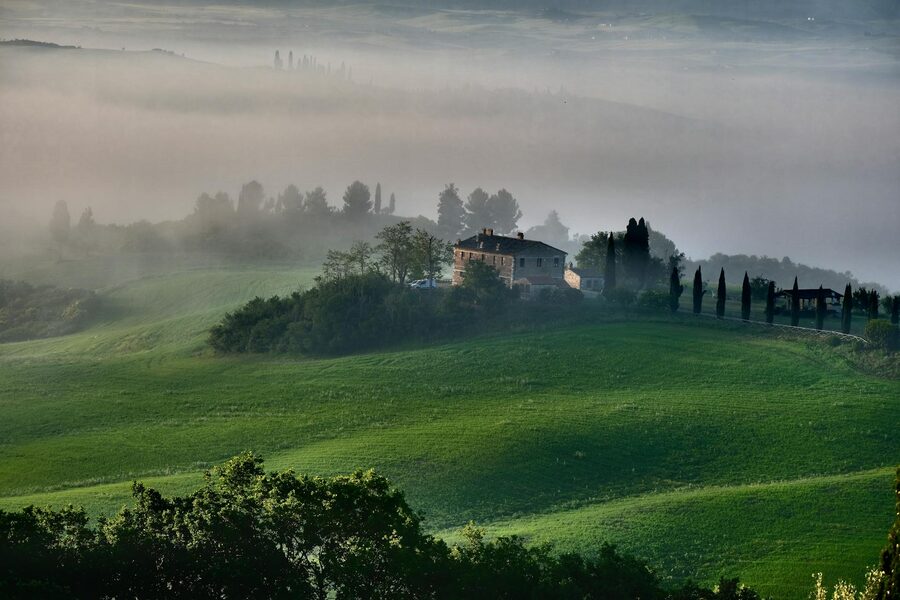
November-March: off-season. Some tours reduce frequency; wineries are quieter. For landscape photographers, the morning mist conditions peak here. For general tourism, less compelling than the shoulder months.
From Florence vs Rome vs Siena — Which Base Works Best
The logistics matter more than people think. Val d’Orcia is central-south Tuscany, and where you start from drives the shape of your day.
From Florence: 2 hours south by road. Standard departure 7:30-8:00, return 19:00-20:00. About 10 hours out. The classic Val d’Orcia day trip formula. Most widely available, most tour options, most language choices.
From Siena: only 60-75 minutes south. Shorter total day (8 hours out), and the small-group premium wine tours are Siena-based. If you’re doing a multi-night Tuscan trip, staying one night in Siena before the Val d’Orcia day saves you 4 hours of driving and gets you better wine access.
From Rome: 3+ hours north each way. Long day (12+ hours out). Worth doing if Rome is your only Italy base and you want to see Tuscany — but it’s clearly a stretch, and the Val d’Orcia time ends up compressed to 4-5 hours on the ground. If your trip has any flexibility, sleep a night in Tuscany.
Honest advice: if you’re doing a week-plus Italy trip, try to build in one night in Siena. The Brunello tour from Siena is a superior wine experience to anything from Florence, and you can do the Val d’Orcia villages the next morning before catching a train back.
What You’ll Drink
Val d’Orcia overlaps with three of Italy’s top DOCG zones. Understanding them before you go makes the tastings land harder.
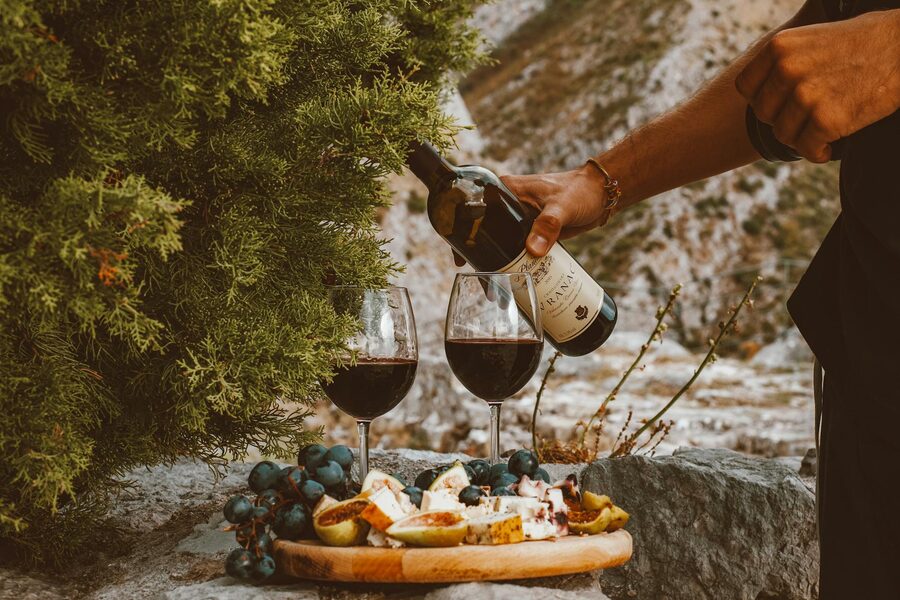
Brunello di Montalcino (Montalcino zone): 100% Sangiovese, minimum 5 years ageing, serious, ageable, expensive. Rosso di Montalcino is the cheaper junior version.
Vino Nobile di Montepulciano (Montepulciano zone): 70% minimum Prugnolo Gentile (= Sangiovese), plus Canaiolo and other local reds. More approachable than Brunello, still serious. Rosso di Montepulciano is the everyday version.
Orcia DOC: the valley’s own denomination (created 2000), covers the land between Montalcino and Montepulciano, looser rules on grape mix. Often excellent value — good winemakers producing serious wines without the premium pricing.
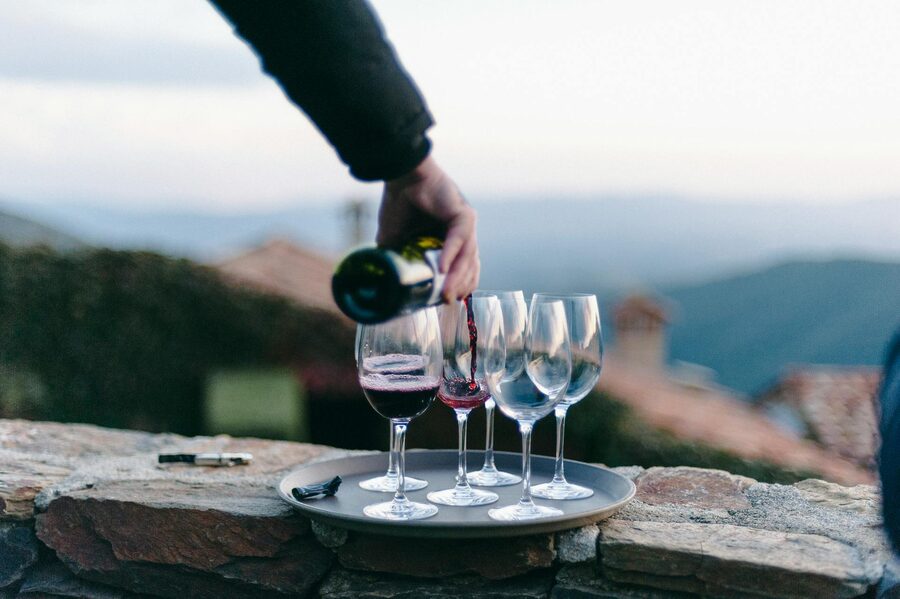
Vin Santo: the sweet dessert wine ubiquitous across Tuscany, made from dried grapes. Every tasting ends here. Served with cantucci (almond biscotti) for dipping.
Who This Tour Is For (and Who It Isn’t)
Great fit: first-time Tuscany travellers with 3-5 days in Florence or Siena who want to see the “real” countryside. Landscape-photography travellers. Anyone who saw Under the Tuscan Sun / Gladiator / Stealing Beauty / Call Me By Your Name and felt something. Wine-curious travellers who haven’t committed to deep wine knowledge yet.
Reasonable fit: serious wine drinkers (book the Siena-based Brunello tour instead — more depth, more access). Rome-based travellers with only one Tuscany day (the Rome day trip is fine but ambitious).
Bad fit: families with kids under 10 (long day, wine-focused stops, not enough to do between villages). Travellers who hate long drives. Anyone looking for high-adrenaline or activity-driven days — this tour is about slow looking, not doing.
Pairing With a Broader Italy Trip
Val d’Orcia is a day trip, not a destination to sleep in (unless you’re doing a week-plus Tuscan villa holiday). Fit it into a larger Italy itinerary thoughtfully.
The pairings that actually work: if you’re doing Florence as a base, add Val d’Orcia on Day 3 or 4 of a four-day Florence trip — the city’s museums and cultural density need pacing, and a countryside day in the middle resets the rhythm. Combining with a Chianti bike tour (different day, different terrain, completely different wine region) gives you a proper Tuscan experience across two days without repeating any landscape. Pair a Val d’Orcia day with a Florence cooking class the next day and you’ll have the full ingredient-to-plate arc — pecorino and Brunello on the tour, pasta rolling and tiramisu at the class. After a long countryside day, the Santa Monaca opera concert is the perfect sit-still evening. For deeper Renaissance context before the trip, a Florence walking tour covers the Medici history that shaped Pienza and the wider Tuscan landscape. And if you’re doing Rome on the same trip, Assisi and Orvieto make a logical Umbria-adjacent day — similar hilltop towns, different region, equally photogenic.
Common Questions
Is it worth it if I don’t drink wine? Honestly, partially. About 40% of the day is wine-related (tastings + winery lunch). The other 60% — Pienza, Montepulciano town, Vitaleta chapel stop, the drive — is entirely landscape-and-architecture. Non-drinkers can sit out the tastings; the guide isn’t going to force-feed you. But you’ll get less value per dollar than a drinker.
Can I skip the winery lunch? Usually no — it’s built into the ticket. The food is generally good (farmhouse-standard Tuscan: antipasto, pasta, salad, dessert). Vegetarian options available with 48 hours’ notice.
How much walking is involved? Moderate. Montepulciano is uphill (~30 minute walk to the top). Pienza is flat but cobbled. Plus a photo stop or two on dirt paths. Total: 3-5 km of walking across the day, much of it on uneven surfaces. Not a marathon; not trivial either.
Is it kid-friendly? Not really, as noted. The wine focus, long driving, and architectural content don’t land with under-10s. Older teenagers with an interest in landscape or photography are fine.
What if it rains? Tours run in light rain. Heavy weather sometimes triggers reschedule offers. The villages are all walkable in rain — you just spend more time in cafés and indoor museums.
Can I take bottles home? Yes. Wineries ship internationally, or you can hand-carry in checked luggage (up to 5 litres per person for non-EU residents, usually duty-free into the US). Wineries wrap bottles for flight safely.
The Honest Verdict
Val d’Orcia is the Tuscany that exists in everyone’s imagination, and the day-trip format delivers it with reasonable efficiency. You won’t get the slow immersion of a villa stay, but you’ll see the three major villages, eat a proper farm lunch, taste serious wine, and photograph the iconic landscape — all in one well-organised day.
Pick the Florence full-day tour ($94) if this is your first Tuscan foray — good value, thorough coverage, central villages. Pick the Siena Brunello small-group ($217) if you care about wine and want proper producer access. Pick the Rome-based trip ($83) only if you’ve got no flexibility to shift your base. Book April-May or September-October for the best light and smallest crowds. Don’t try to combine this with a full city day before or after — your legs will regret it. Bring a camera, wear shoes that handle cobblestones, and eat the pecorino even if you think you don’t like sheep’s cheese.