
Toulouse is the city that doesn’t care whether you’ve heard of it. While Paris preens and Lyon lobbies for foodie attention and Bordeaux wines its way into every travel list, Toulouse just sits in the southwest doing its own thing — making cassoulet, building Airbus planes, playing rugby, and being one of the most genuinely liveable cities in France. The locals call it La Ville Rose for its pink terracotta buildings, and the colour is real. Walk through the old town at sunset and the whole city glows.
France’s fourth-largest city is also one of its most underrated by international visitors. The food scene is extraordinary — earthy, rich, and proudly regional. The architecture spans Roman, medieval, Renaissance, and Art Deco. The nightlife, fuelled by 100,000 university students, is better than cities twice its size. And the aerospace heritage — Airbus HQ, Concorde, and the Space City museum — gives it a modern identity that no other French city can match.
Best market tour: Victor Hugo Market Tasting Tour — $139, 3.5 hours, also a perfect 5.0 rating.
Best overview: City Sightseeing Bus Tour — $19, 1 hour, covers all the major landmarks with audio guide.
- The Food: Why Toulouse Matters
- The Markets: Where Toulouse Eats
- The Architecture: France’s Pink City
- Aerospace Toulouse: Planes, Rockets, and Concordes
- Best Tours to Book
- 1. Toulouse Food & History Tour with a Chef — 3
- 2. Victor Hugo Market Tasting Tour — 9
- 3. City Sightseeing Bus Tour —
- Toulouse After Dark
- The University Quarter
- The Canal du Midi
- Practical Tips
- More Southwest France
The Food: Why Toulouse Matters
Toulouse food is not delicate. It’s not fussy. It’s the kind of cooking that was designed to fuel rugby players and farmers and hasn’t changed just because the farmers now build spacecraft for a living. The signature dish is cassoulet — a slow-cooked casserole of white beans, pork sausage, duck confit, and enough fat to make a cardiologist weep. Every restaurant in the old town has its version. Some use goose. Some add lamb. All of them will keep you full for about 12 hours.
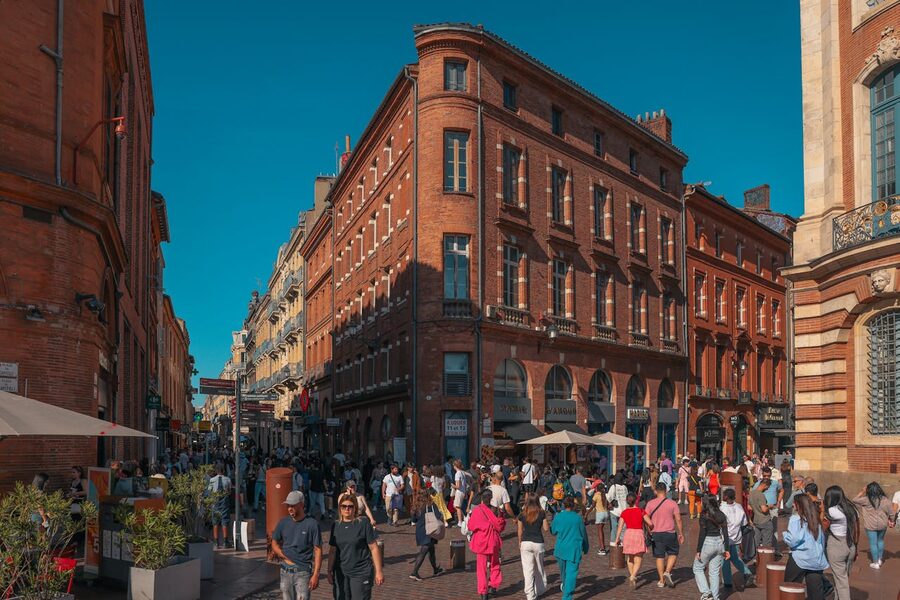
Beyond cassoulet: duck confit is everywhere, and Toulouse does it better than anywhere else in France because the foie gras industry means surplus duck legs at low prices. Toulouse sausage — coarse-ground pork in a long spiral — is grilled over wood and served with white beans. The violet is the city’s symbol, and violet-flavoured everything (candied flowers, ice cream, liqueur, even mustard) is sold at every tourist shop and some of the good restaurants too.
The Markets: Where Toulouse Eats
The Marché Victor Hugo is the food lover’s essential stop. A covered market on two floors — downstairs is the market itself (cheese, charcuterie, foie gras, fresh produce, flowers), upstairs is a ring of restaurants that cook with whatever the vendors below are selling. You buy ingredients at 10am and eat them cooked by a chef at noon. The market tasting tour ($139) is the best way to experience it if you want someone to navigate the vendors and explain what you’re eating.
The food and history tour ($133) takes a different approach — a chef-guide leads you through the old town, stopping at bakeries, chocolate shops, cheese vendors, and restaurants for tastings along the way. Four hours, about 8-10 stops, and enough food that you won’t need lunch. The perfect 5.0 rating across 500+ reviews is nearly unprecedented for a food tour of this length.
The Architecture: France’s Pink City
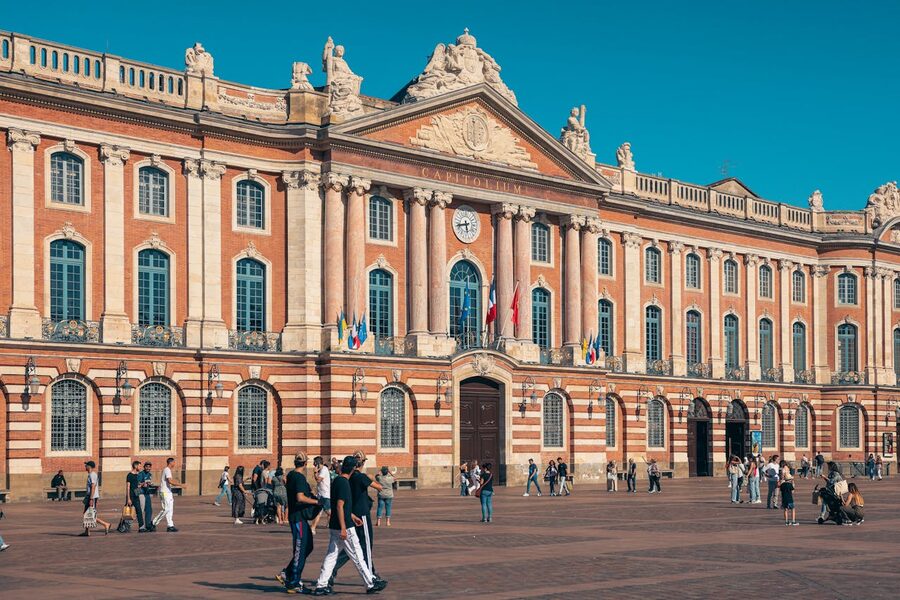
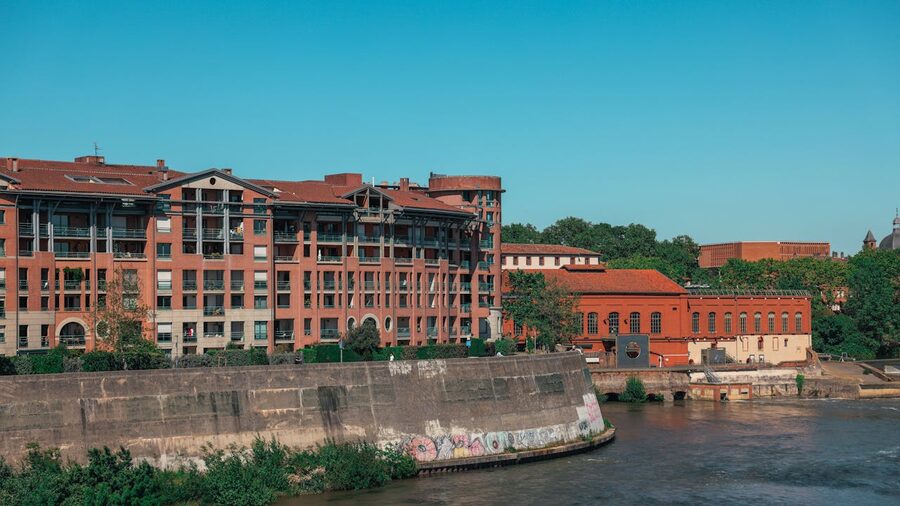
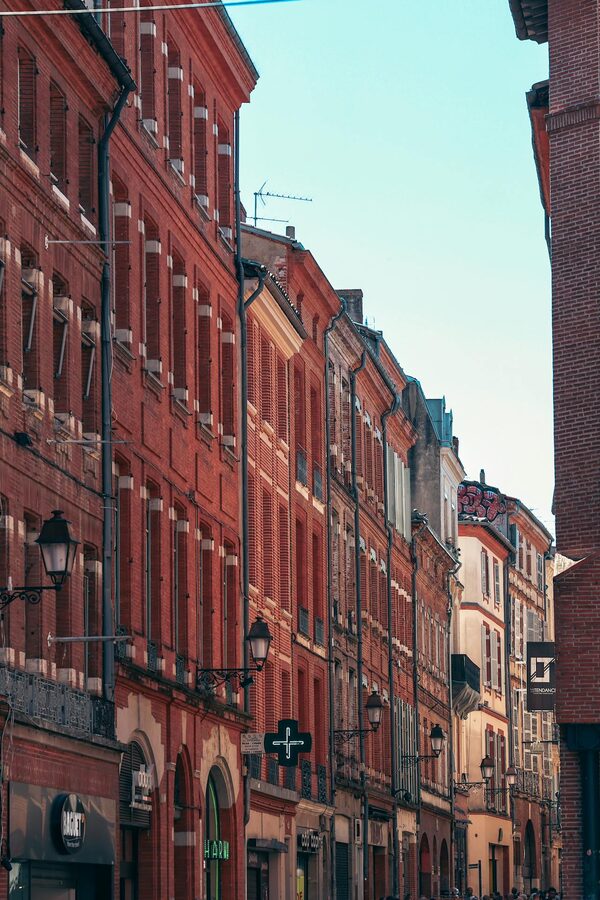
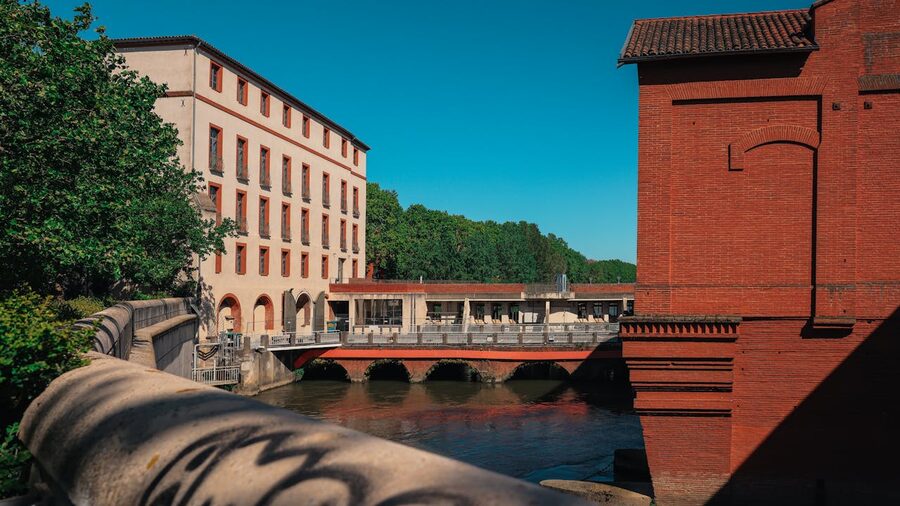
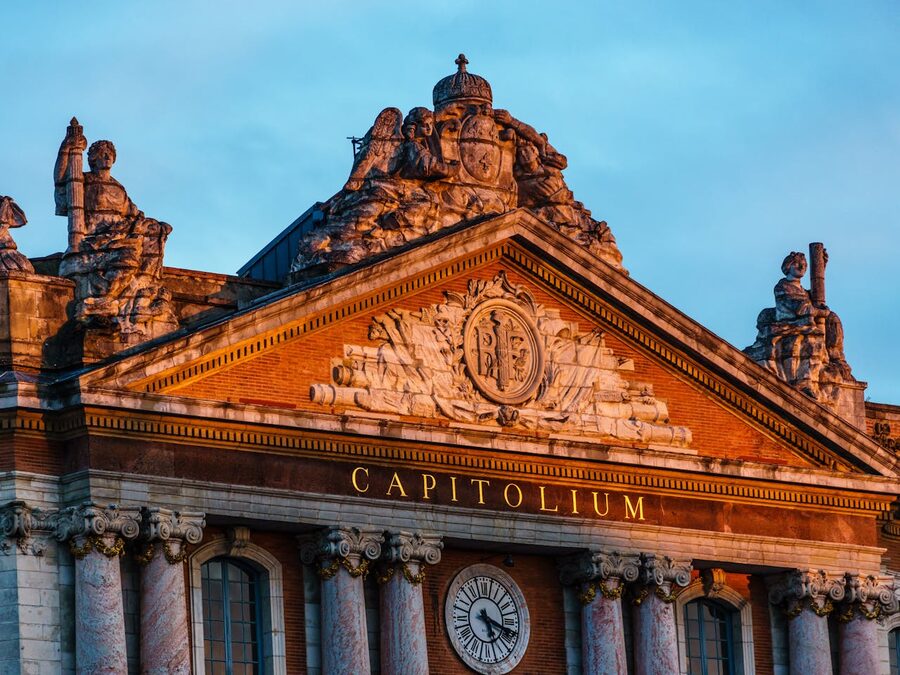
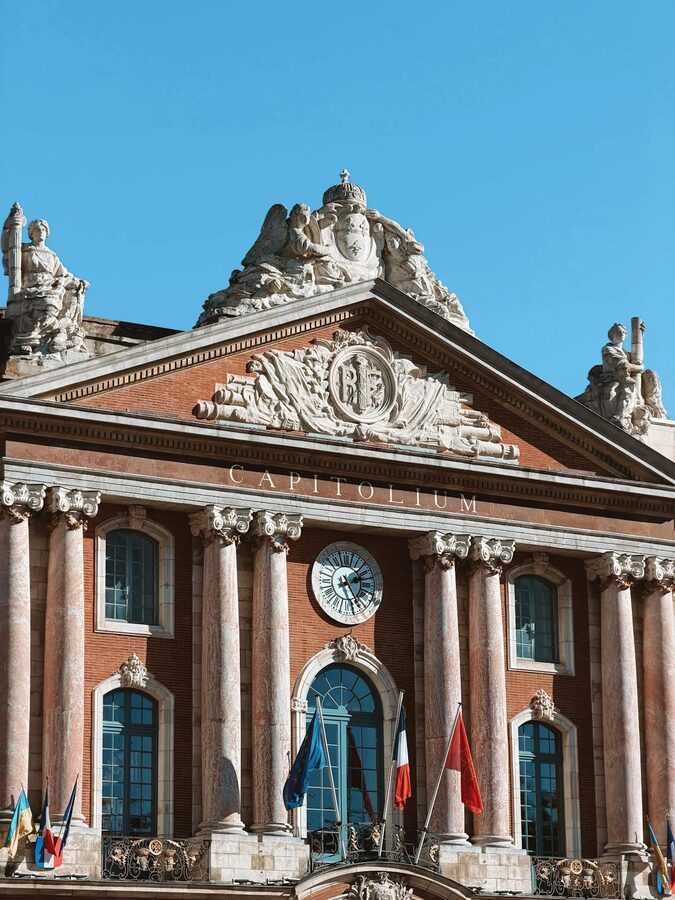
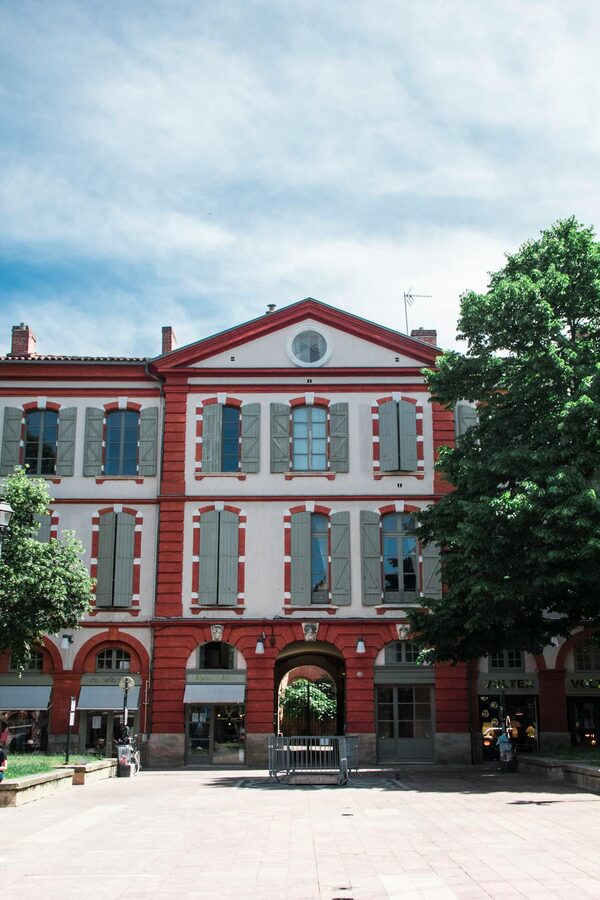
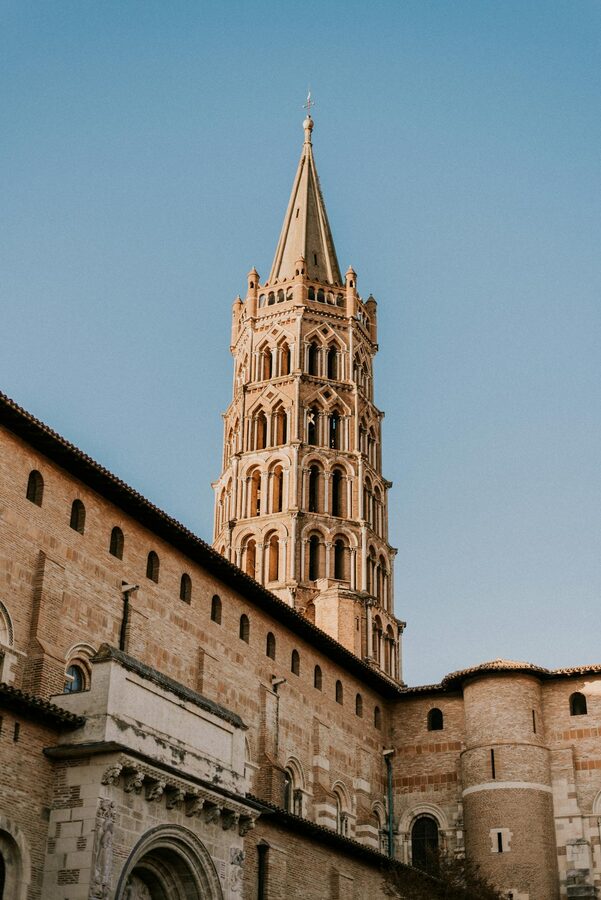
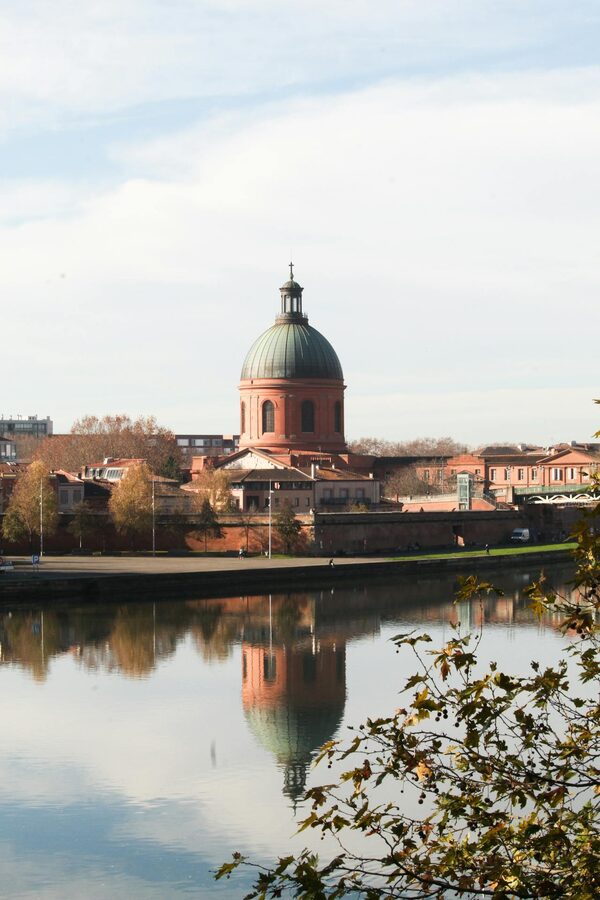
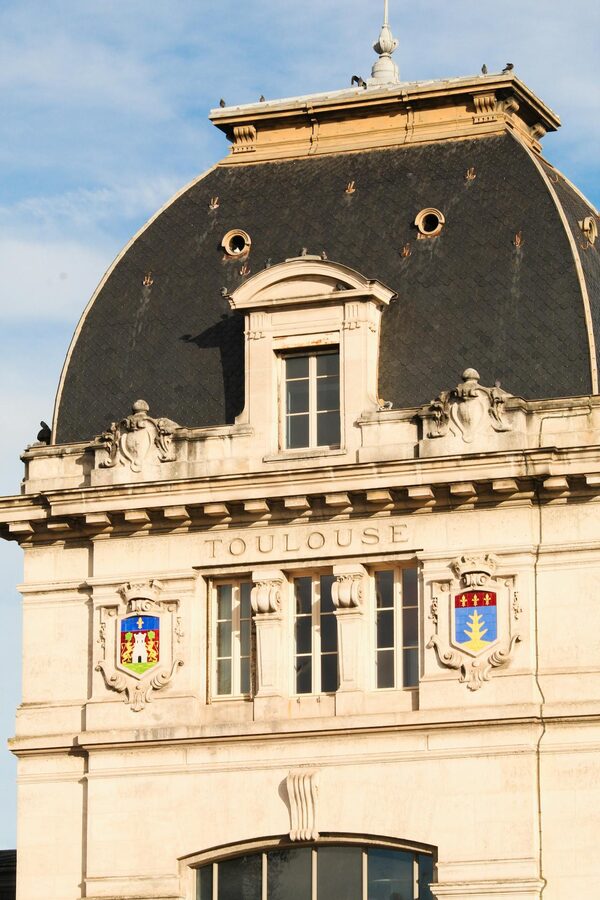
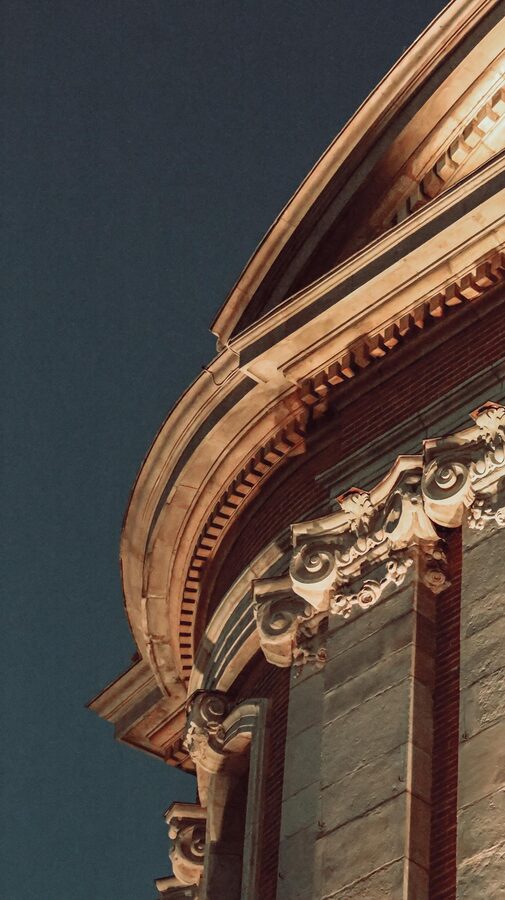
Toulouse’s buildings are brick because the region has no building stone. The Romans brought the brick-making technique, the medieval city expanded on it, and by the Renaissance the wealthy merchant class was building palaces out of the stuff — hôtels particuliers with internal courtyards, carved stone doorways, and towers that competed for height like Tuscan Italian tower houses.
The Basilique Saint-Sernin is the largest Romanesque church in Europe and a UNESCO World Heritage Site as part of the Santiago de Compostela pilgrimage route. The Couvent des Jacobins has an extraordinary palm-tree vault — a single column in the apse that branches into 22 ribs like a stone tree. Both are free to enter and genuinely remarkable.
Aerospace Toulouse: Planes, Rockets, and Concordes
Toulouse is the aerospace capital of Europe. Airbus builds its planes here. The European Space Agency has facilities here. And the Cité de l’Espace (Space City) is one of the best science museums in France, with a full-size Ariane 5 rocket, a Mir space station replica you can walk through, and a planetarium.
The Aeroscopia museum ($18) sits next to the Airbus factory and houses a collection of historic aircraft including a Concorde, a Super Guppy cargo plane, and an A380 test aircraft. You can go inside several of the planes. For aviation geeks, it’s paradise. For everyone else, climbing into the cockpit of a Concorde is the kind of experience that doesn’t require interest in aviation to appreciate.
Best Tours to Book
1. Toulouse Food & History Tour with a Chef — $133
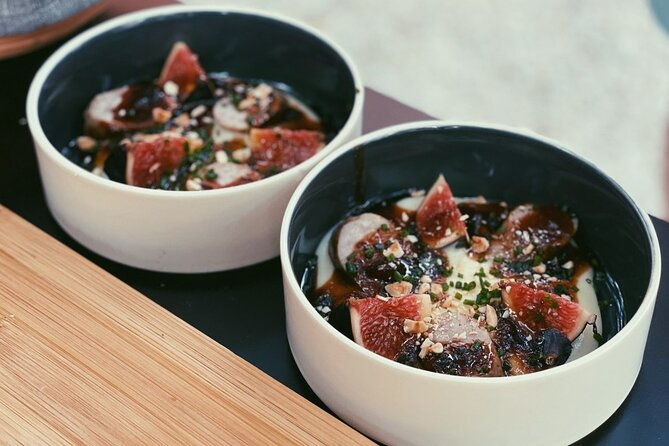
This is the standout. A professional chef leads you through the old town for four hours, stopping at bakeries, chocolate shops, cheese vendors, and restaurants for tastings. The food is substantial — you won’t need lunch after — and the history commentary weaves in the architectural and cultural context that turns a food walk into a real education. Our review covers the full route and why the chef-guide format works better than a standard food tour.
2. Victor Hugo Market Tasting Tour — $139
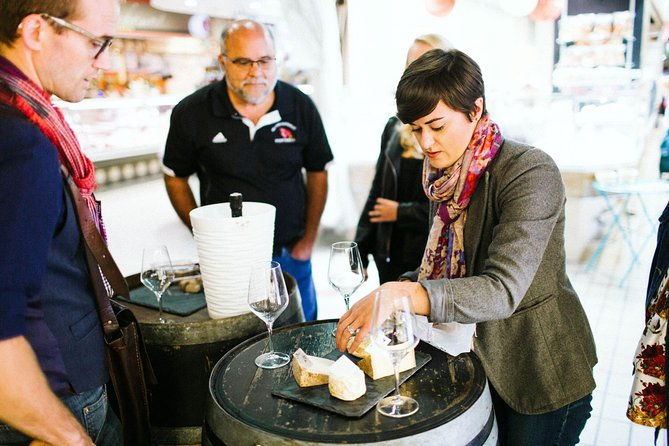
Three and a half hours inside and around the Marché Victor Hugo, tasting cheese, charcuterie, foie gras, pastries, and wine with a local guide who introduces you to the vendors personally. The market’s upstairs restaurants are included — you eat a prepared dish using ingredients from the stalls below. Our review explains the market layout and which vendors are the highlights.
3. City Sightseeing Bus Tour — $19
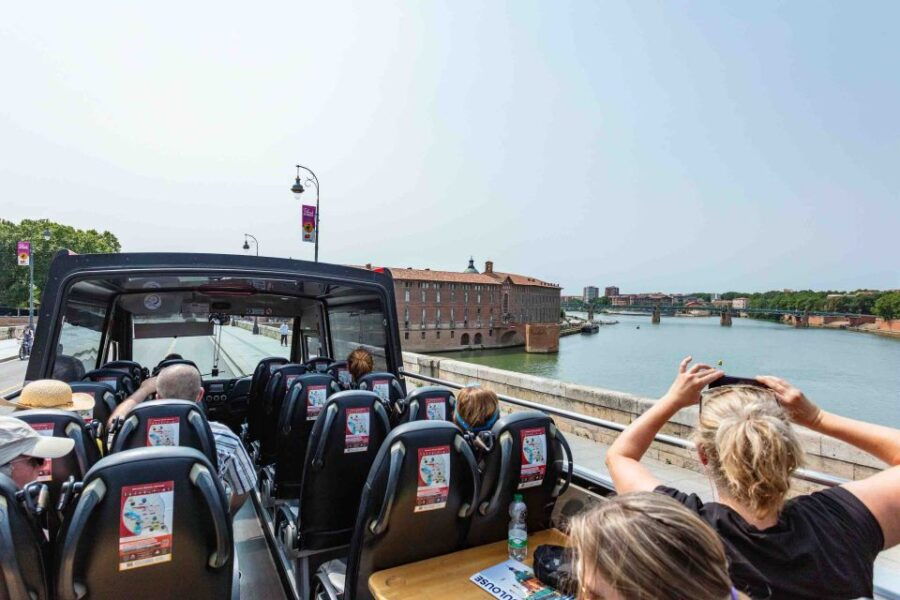
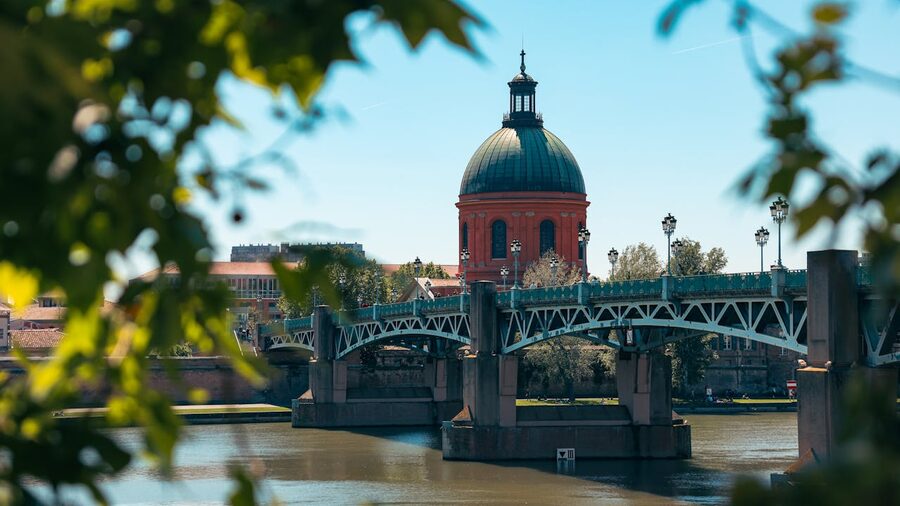
A practical starting point rather than a highlight. The 1-hour bus tour loops through the city centre, passing the Capitole, Saint-Sernin, the Garonne bridges, and the Canal du Midi. The audio guide covers the history efficiently. At $19 and 4.2 stars across 956 reviews, it’s a solid orientation experience that helps you decide what to explore on foot afterwards. Our review evaluates the route and whether the bus or walking is the better way to see Toulouse.
Toulouse After Dark
Toulouse has one of France’s best nightlife scenes, driven by its massive student population. The main bar streets are around Place Saint-Pierre and Place de la Trinité in the old town, where bars with outdoor terraces fill up from 6pm and stay busy until 2am. The Rue de la Colombette area near the Canal du Midi is more alternative — craft cocktail bars, live music venues, and the kind of places where the bartender has opinions about mezcal.
For live music, Toulouse punches well above its weight. Le Bikini and Le Metronum host national and international acts. La Dynamo and Le Rex run smaller gigs — jazz, electronic, indie — most nights of the week. The city produced the band Zebda and has a strong tradition of Occitan music that occasionally surfaces in the most unlikely venues. Rugby match nights — when Stade Toulousain wins, which is often — turn the entire old town into an impromptu street party.
The University Quarter
Toulouse has been a university city since 1229, making it one of the oldest in Europe. The current student population of over 100,000 gives the city an energy that other French cities of comparable size lack. The university quarter around Rue du Taur and Place Anatole France has cheap restaurants, second-hand bookshops, and the kind of late-night kebab joints that every student city needs.
The Canal du Midi
The canal runs through the eastern side of Toulouse and is one of the city’s most pleasant spaces. The towpath is a shaded walking and cycling route, and in summer the banks fill with picnickers, joggers, and couples on rented boats. Several restaurants line the canal banks — eating dinner beside a 350-year-old waterway while barges glide past is a particularly Toulousain experience.
For a longer canal experience, barge holidays along the Canal du Midi are increasingly popular. You can rent a houseboat (no licence needed) and navigate the 63 locks between Toulouse and the Mediterranean over a week. It’s slow travel in the truest sense — walking pace, with the Midi countryside unfolding at the speed of a canal lock.
Practical Tips
Getting there: TGV from Paris Montparnasse takes about 4.5 hours (or fly — Toulouse-Blagnac airport has budget connections from across Europe). From Bordeaux, it’s 2 hours by train. From Barcelona, about 4 hours by car.
How long to spend: Two to three days. One day for the food tours and old town. One day for aerospace (Aeroscopia + Cité de l’Espace). A third day for the Canal du Midi, the museums, and the night scene.
Best time to visit: April through June and September through October. Summer (July-August) is hot — Toulouse regularly hits 35°C+ and the students leave, which empties the bars. The rugby season (September-May) is when the city’s real passion shows — a Stade Toulousain match at the Ernest Wallon is an experience even for non-rugby fans.
Budget: Noticeably cheaper than Paris or the Riviera. A three-course lunch (plat du jour + glass of wine) is €15-20 in the old town. Hotels run €70-120 for a good double room. The food tours ($130-140) are the biggest expense but they replace a meal and provide 3-4 hours of guided experience.
More Southwest France
Toulouse is a natural starting point for exploring the wider southwest. Carcassonne’s medieval fortress is about an hour south by train — one of the best-preserved walled cities in Europe. The Provence day trips from Avignon are a few hours east and show a different side of southern France. And if you’re heading north afterward, the Lyon food scene makes a natural comparison — France’s two great food cities, back to back, will ruin your diet and expand your understanding of what French cooking actually means beyond Paris.