
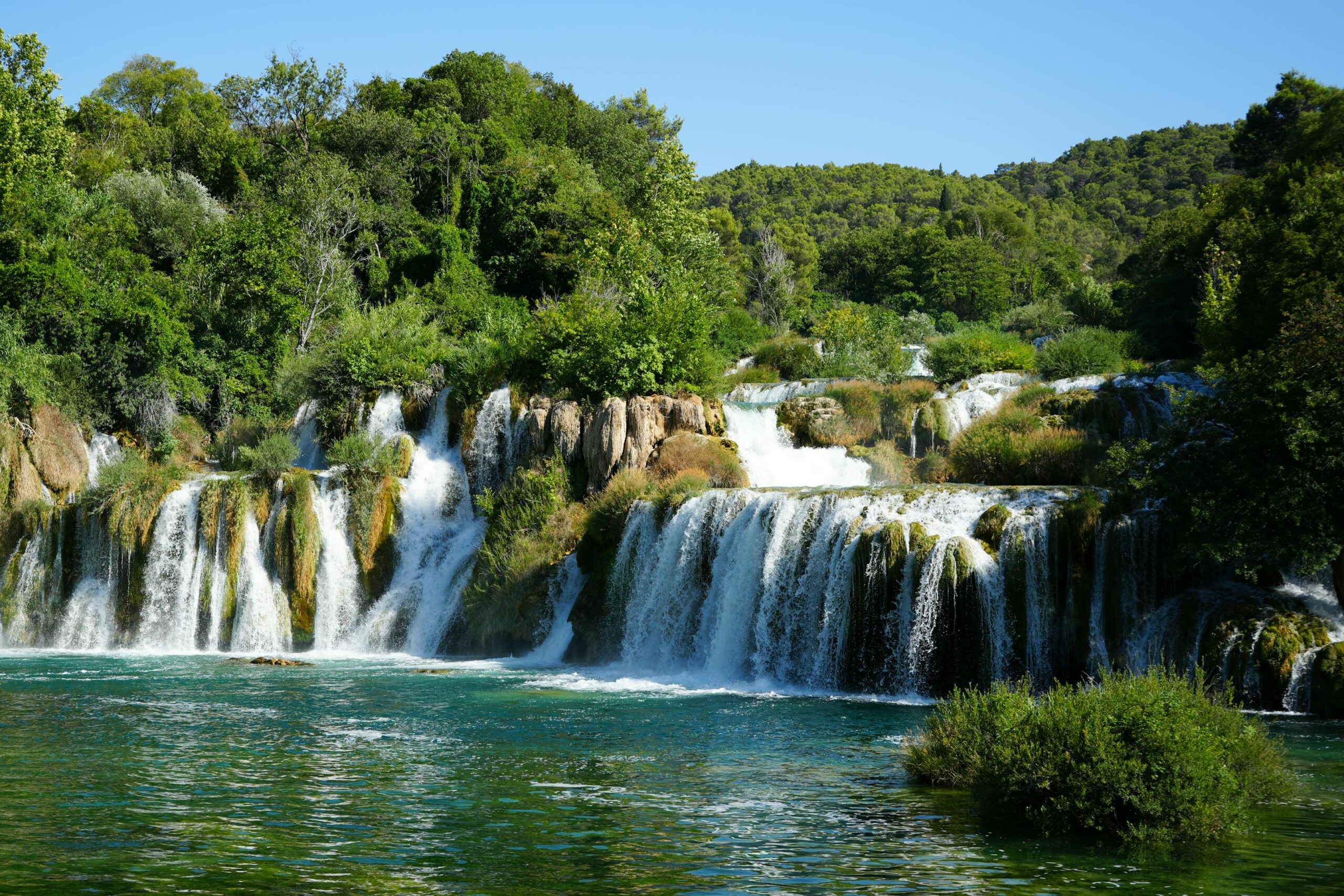
Krka is the national park people pick when Plitvice feels too far or too crowded. It’s an hour from Split, it has waterfalls that rival Plitvice’s for drama, and until 2021 you could actually swim right below Skradinski Buk — the main cascade — which is something you absolutely cannot do at Plitvice. (Swimming is now restricted to designated areas elsewhere in the park, but the swimming element remains part of Krka’s appeal.) Here’s the complete guide to the best day trips from Split, what’s changed recently, and why Krka still earns its place on every Dalmatia itinerary.
- Quick Pick: Best Split to Krka Waterfalls Tours
- Krka vs Plitvice: The Honest Comparison
- The 4 Best Split to Krka Tours Reviewed
- 1. From Split: Krka Waterfalls, Food & Wine Tasting Tour
- 2. From Split: Krka Waterfalls Tour with Boat Cruise & Swimming
- 3. Split: Krka National Park Day Trip with Boat Ride & Swimming
- 4. Krka Waterfalls Tour with Boat Ride and Swimming in Skradin Town
- What Skradinski Buk Actually Looks Like
- Roški Slap and the Upper Park (Worth the Extra Effort?)
- The History Behind the Park
- Split as a Base: Why It Works
- Practical Tips for Krka
- More Croatia Guides Worth Reading
Quick Pick: Best Split to Krka Waterfalls Tours
🚤 Best with boat ride: Krka Tour with Boat Cruise & Swimming — 3,913 reviews. Includes a scenic boat cruise through the park plus plenty of time at the falls.
💰 Best straightforward option: Split Krka National Park Day Trip — 1,321 reviews. No-frills, well-organized, great for travelers who just want the basics done right.
🏘️ Best with Skradin village stop: Krka with Skradin Town — 917 reviews. Adds meaningful time in Skradin, the postcard fishing village at the park’s edge.
Krka vs Plitvice: The Honest Comparison
This is the first question every Dalmatia traveler asks, and the honest answer is: if you only have time for one, it depends entirely on where you’re based. From Split, Krka is an easy hour each way and makes a relaxed half or full day. From Zagreb, Plitvice is the equivalent easy drive. Trying to do Plitvice from Split is a 14-hour grind; trying to do Krka from Zagreb is doable but awkward. Pick whichever is closest to your current base.
If you have time for both, you’ll find they complement each other beautifully. Plitvice is bigger (295 km² vs Krka’s 109 km²), more complex (16 lakes vs Krka’s mostly linear river system), and offers more sheer variety of landscapes. Krka is more intimate, more accessible, and has the swimming history that Plitvice never had. Plitvice is the “wow, this is incredible” park; Krka is the “wait, I can actually get in this water” park — or at least was, until the 2021 regulation changes.
Here’s the key update: swimming at Skradinski Buk, the main waterfall basin, was banned in January 2021 as part of park conservation efforts. You can still swim in other parts of the Krka river system and at designated areas — and you can absolutely still wade at the foot of smaller cascades — but the iconic “swimming right under the main waterfall” shot is no longer legal. Tours that market themselves with swimming now take you to different parts of the park for the water activity. Don’t book expecting the old experience; book understanding what’s currently available.
The 4 Best Split to Krka Tours Reviewed
1. From Split: Krka Waterfalls, Food & Wine Tasting Tour
This is the Krka tour. With over 9,000 reviews averaging around 4.8 stars, it’s arguably the most popular day trip in all of Dalmatia, and the review volume alone tells you something about consistency. The itinerary is straightforward: air-conditioned coach from Split to Krka, 2-3 hours of free time at the park to walk the main trail around Skradinski Buk, then a stop at a family-run Dalmatian winery on the way back for a tasting of local wines paired with traditional foods — usually prosciutto, cheese, olive oil, and bread.
The wine tasting portion is what elevates this tour above the alternatives. Reviewers consistently mention the winery experience as a highlight — not an afterthought. You’re at an actual working farm, not a touristy venue, drinking wines you’d never find in a supermarket and eating food that was produced within sight of the tasting table. Guides like Nicolas, Loves, and Gabby get called out by name for being informative about the wines and generous with the pours. Several reviewers mention buying bottles to take home.
“Krka national park is a must see if you’re in the Split region. Loves organised the tour perfectly and kept us all engaged and fully entertained.”
“It’s about an hour and a half in a comfortable motor coach. Nicolas, our guide, gave us a history of the area and the time flew by. The wooden boardwalk path is flat. About half of us continued in the bus to a wine tasting at a small winery. The trip was well worth the price. I would recommend it to anyone.”
2. From Split: Krka Waterfalls Tour with Boat Cruise & Swimming
This tour includes a scenic boat cruise through a portion of the Krka River system as part of the day — something you don’t get with the standard waterfalls-only tour. The boat ride winds through the canyon where the river narrows and passes limestone cliffs, tiny riverside villages, and (if you’re lucky) wildlife like herons and cormorants. It’s a different perspective on the park than you get from the boardwalks above the cascades.
The guides Sanja, Larry, and Luka come up repeatedly in positive reviews. Sanja in particular gets called out for having a sense of humor and a personal, engaging style that makes the bus portions fly by. A practical tip from reviewers: bring your own lunch. The food options inside the park are expensive and not particularly good, and you’ll appreciate having something decent to eat during the free time between activities. Most tours don’t include meals, so plan ahead.
“Absolutely amazing tour to Krka National Park! Sanja was an incredible guide – knowledgeable, friendly, and made the entire trip so much fun. Her passion for the park and its history was infectious, and her recommendations were perfect.”
“Amazing trip. Guide was excellent – Larry. Waterfalls amazing. Take lunch with you as the park is very expensive and not that great for food.”
3. Split: Krka National Park Day Trip with Boat Ride & Swimming
This is the “just the essentials” option. You get the coach from Split, a well-organized drop-off at the park, a boat ride within the park (which is covered by your entrance ticket but nice to have pre-arranged), enough free time to walk the Skradinski Buk loop and take photos, and a return trip that gets you back to Split by late afternoon. No wine tasting, no village stop, no extras. Just Krka, done right.
This is the tour to pick if you don’t care about wine tasting or village side trips and just want to see the waterfalls with minimum fuss. The guides (Tin and others named in reviews) are competent rather than charismatic — you’ll get clear practical information and reasonable pacing, not necessarily the charming local characters some of the bigger tours feature. Reviews specifically mention that the transport is well-organized and the timing at each stop is generous enough that you don’t feel rushed.
“The park is incredibly beautiful and the transport there was very well organized. Once there, we had enough time to move around freely in the park and explore. Instead of taking the boat trip, we chose to walk into the city: this offers a more beautiful view of the lake and gives you a better impression of the park.”
“The trip to Krka was well organised with a fluent tour guide (Tin) who was fun and kept us well informed. The park was beautiful and well worth the visit.”
4. Krka Waterfalls Tour with Boat Ride and Swimming in Skradin Town
This tour is the one to pick if you want more than just the park itself. Skradin is a tiny fishing village at the edge of Krka National Park, and it’s exactly the kind of place that looks like Croatia used to look before tourism exploded — narrow stone streets, stone houses with wooden shutters, small family-run tavernas serving local risotto and grilled fish. This tour gives you about 90 minutes in Skradin on top of the park visit, which is enough to have a proper lunch and wander the town.
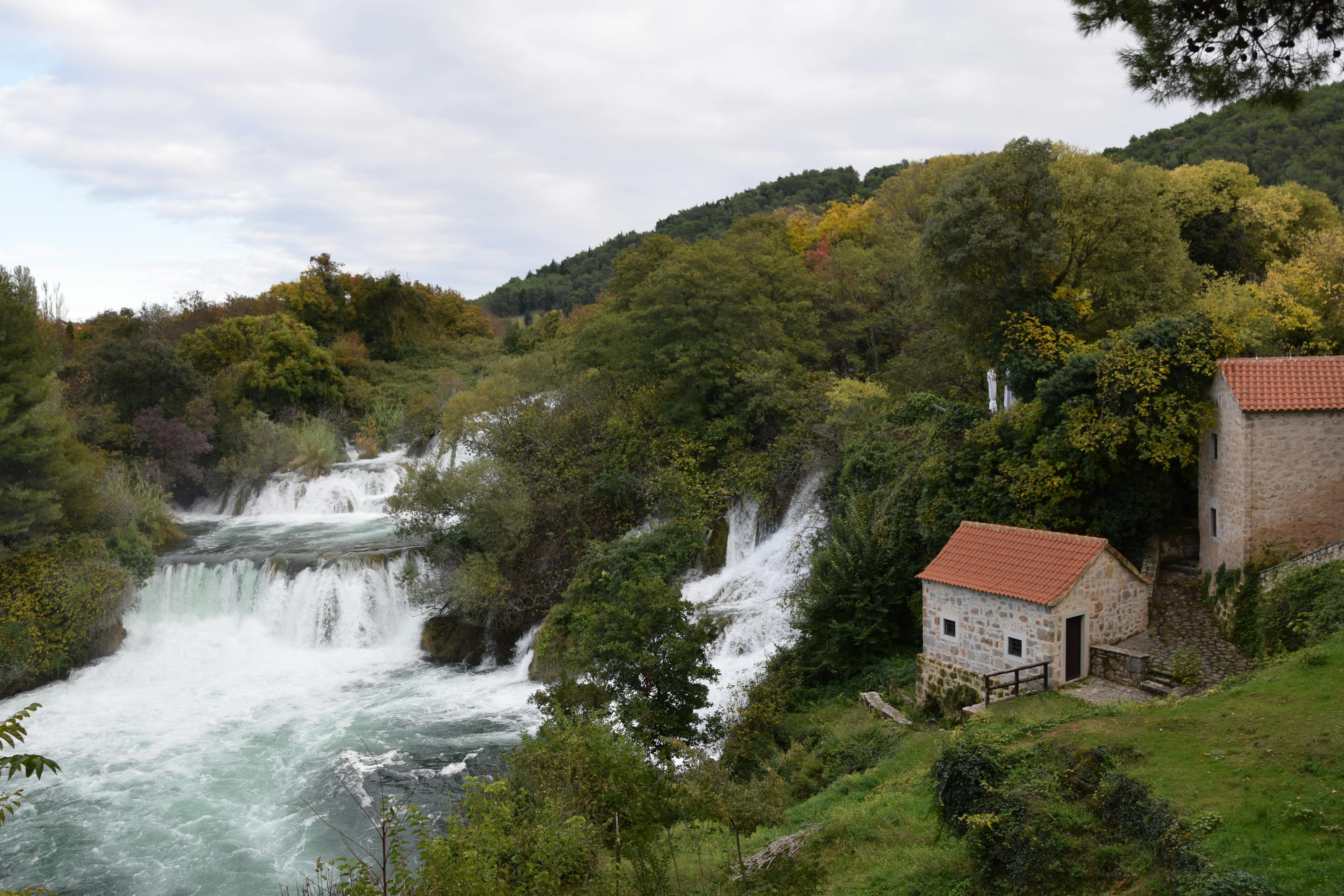
Note from several reviewers: the park entrance fee is often NOT included in this tour’s price, and you’ll need to pay it in cash on arrival (around €16 per person in shoulder season, more in peak). Check the fine print before booking, and bring extra euros just in case. One reviewer mentions their tour combined Krka with a Mostar day trip in Bosnia-Herzegovina — that’s a different, longer version of this operator’s tour, so read carefully to make sure you’re booking what you actually want.
“Lovely and very affordable trip. Beautiful views and the Skradin town was very nice, 1hr30 is enough time to look around and soak in the views. Thank you to our tour guide Frane for being so knowledgeable and teaching so much history about Split!”
“Amazing time, Guide Laura was amazing! Ride was smooth, park was beautiful and I was able to try a local dish in Skradin.”
What Skradinski Buk Actually Looks Like
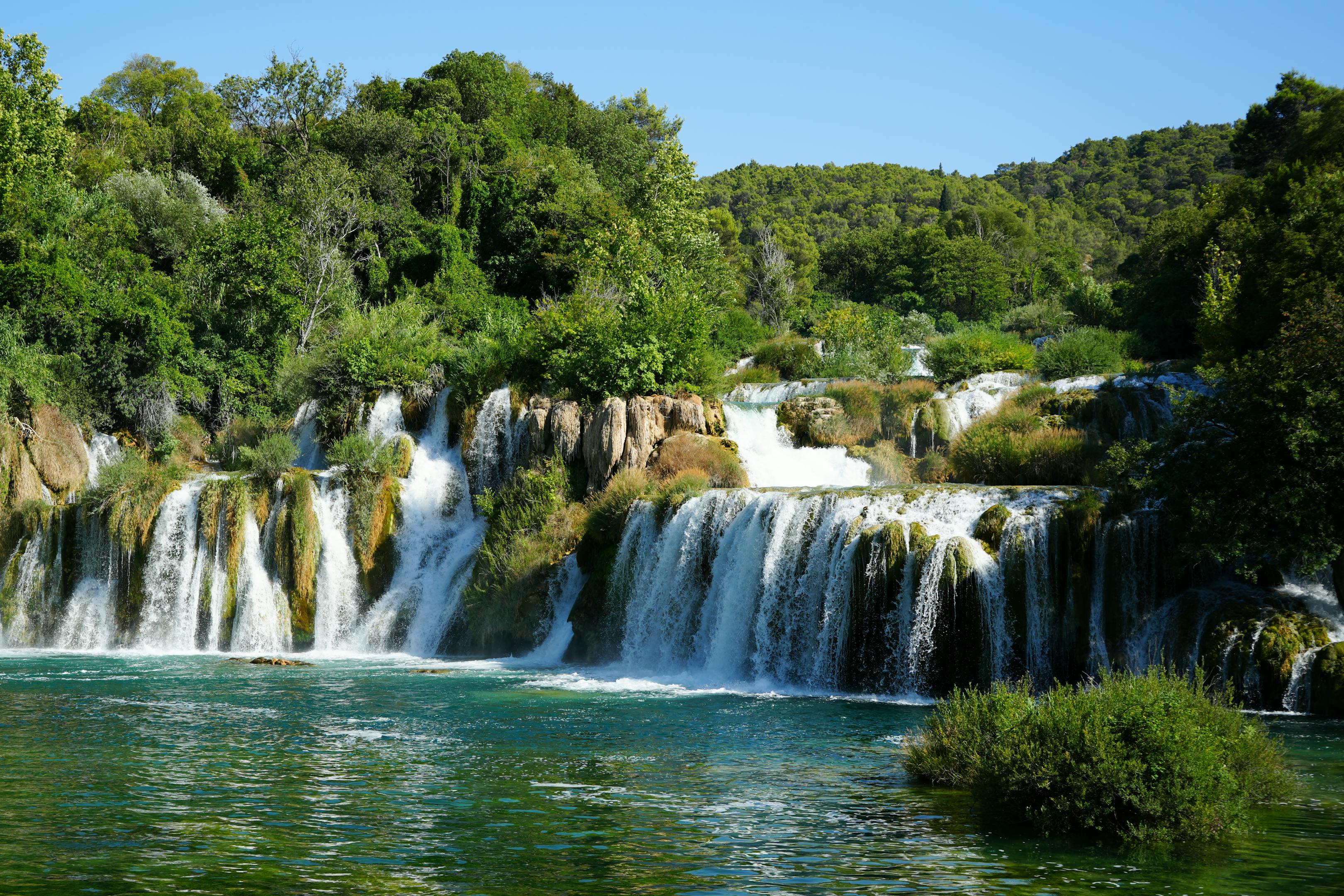
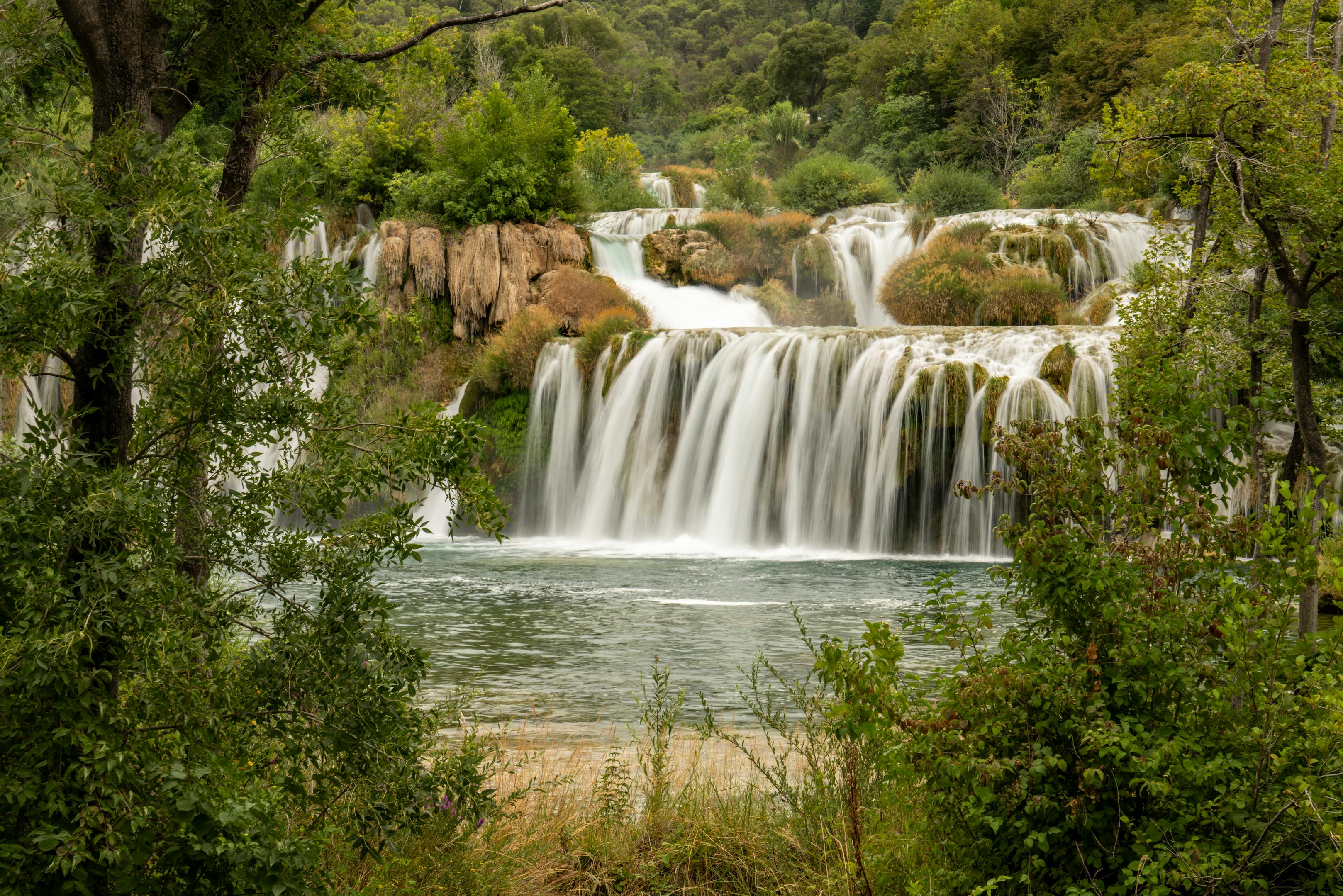
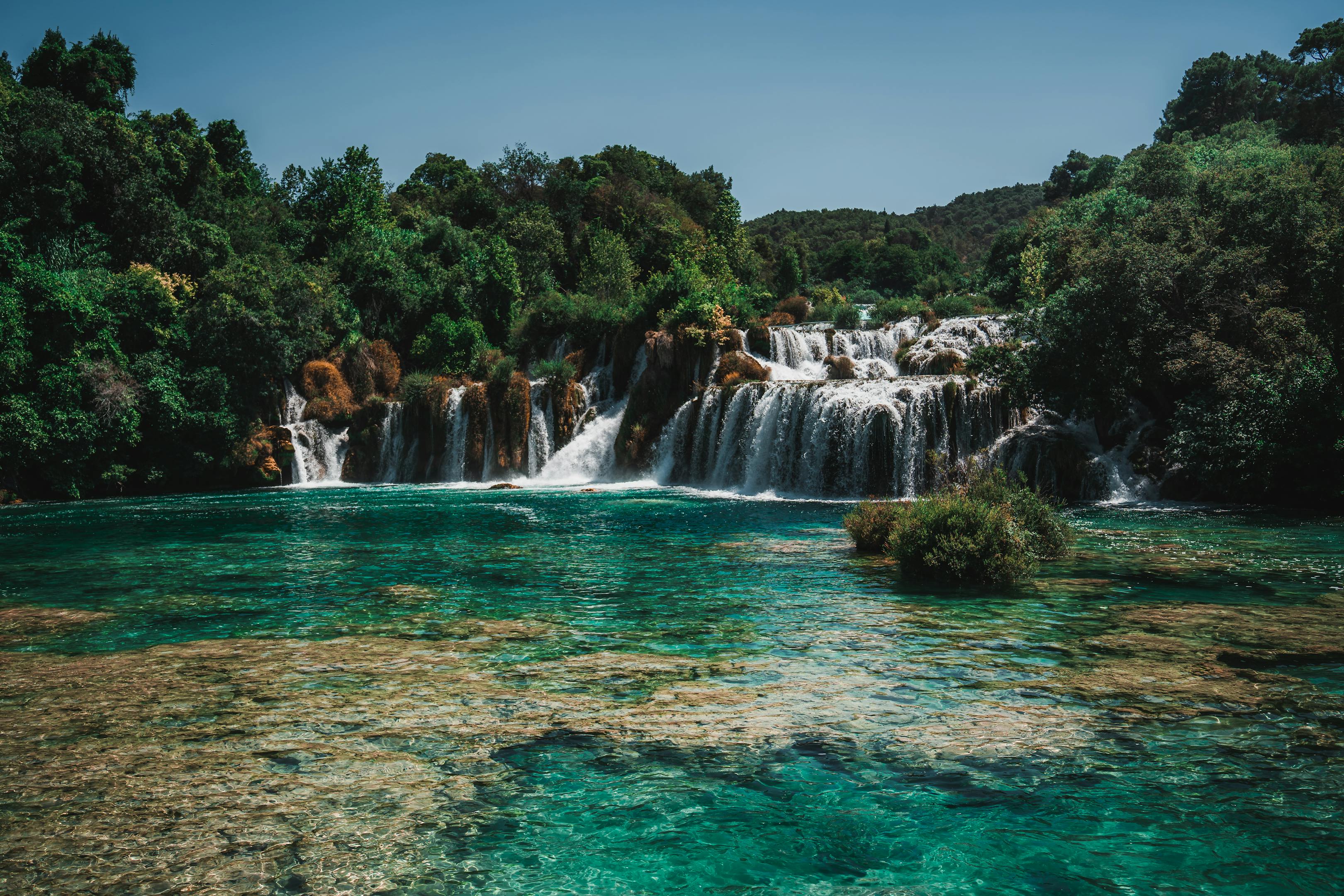
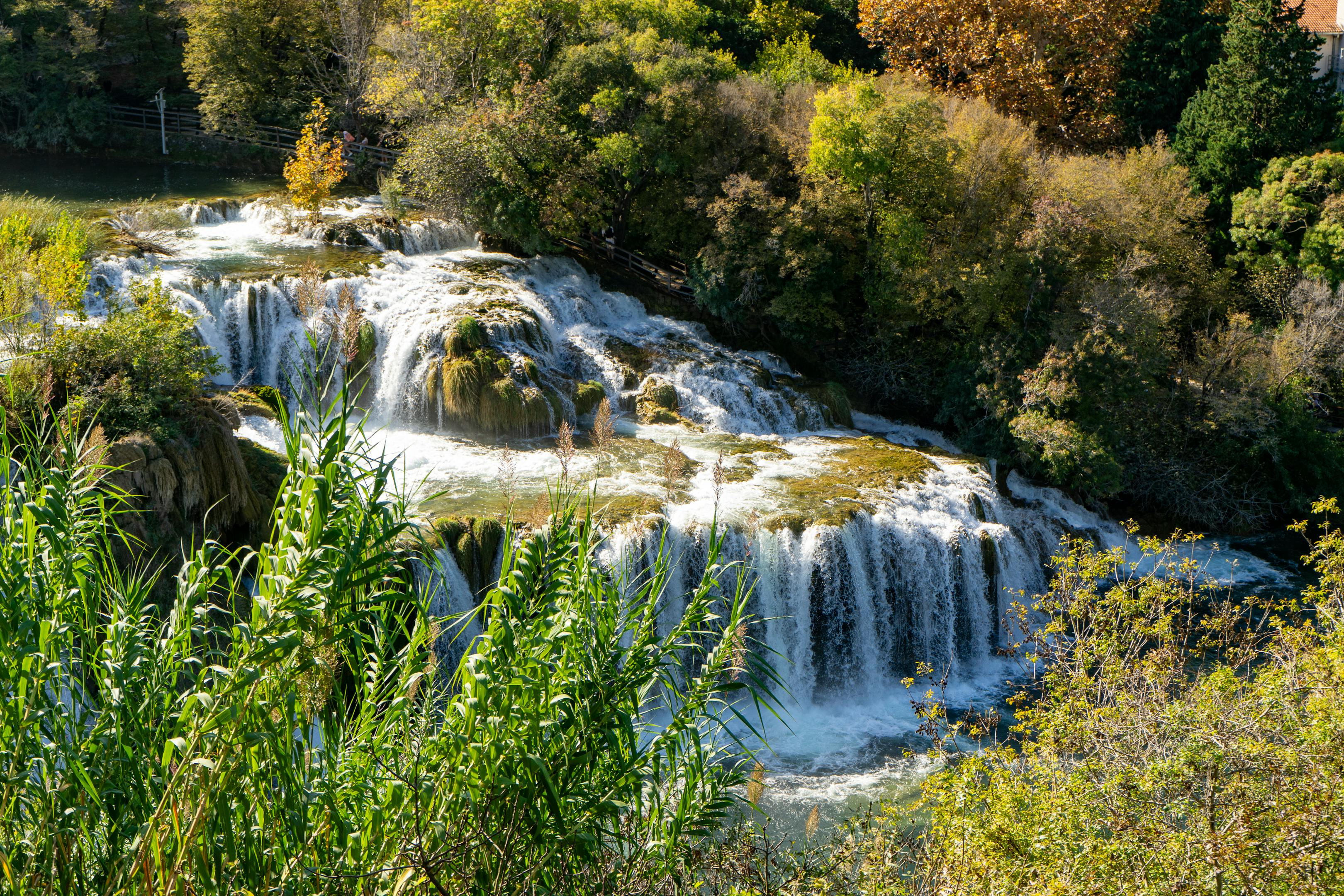
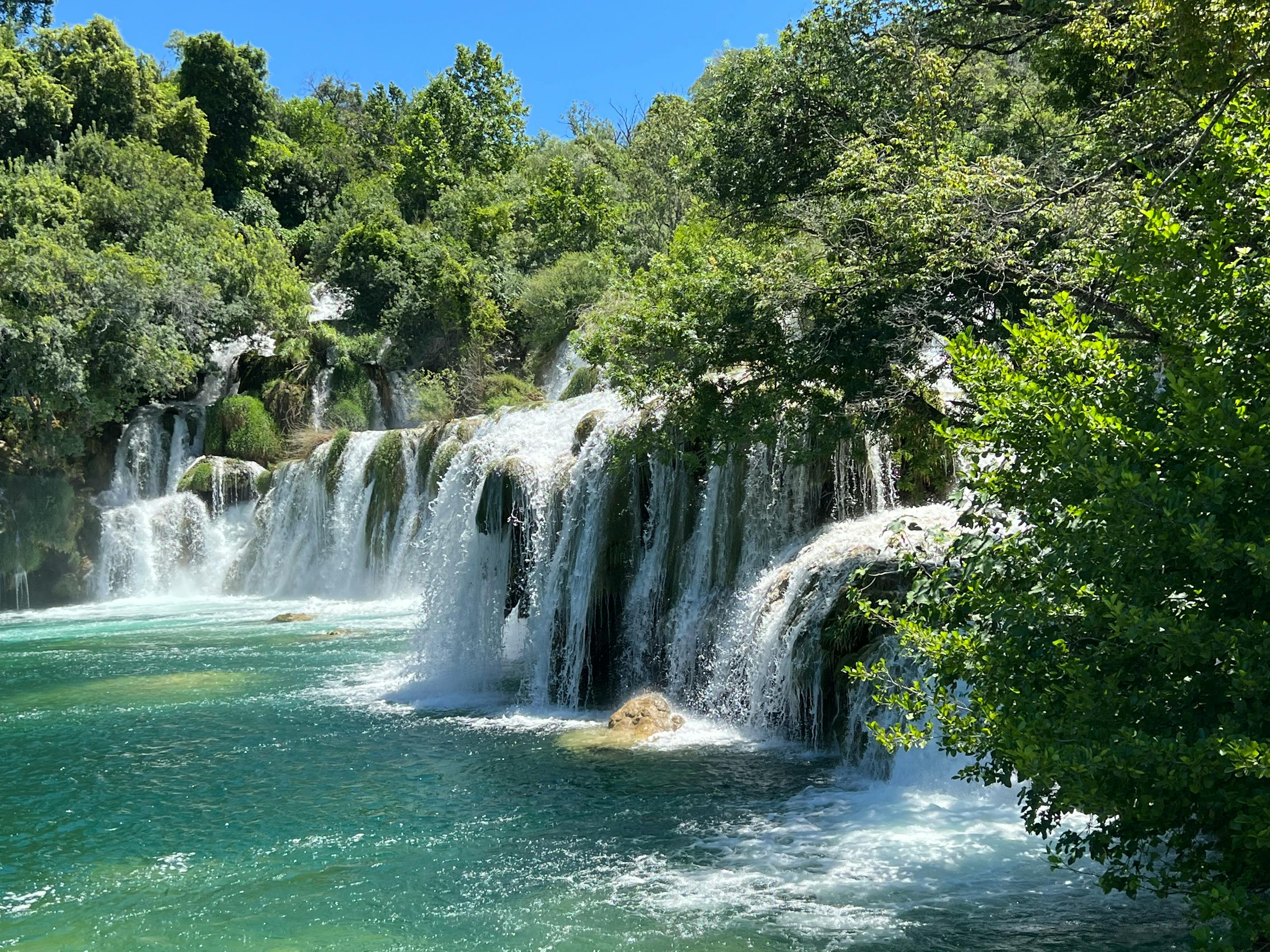
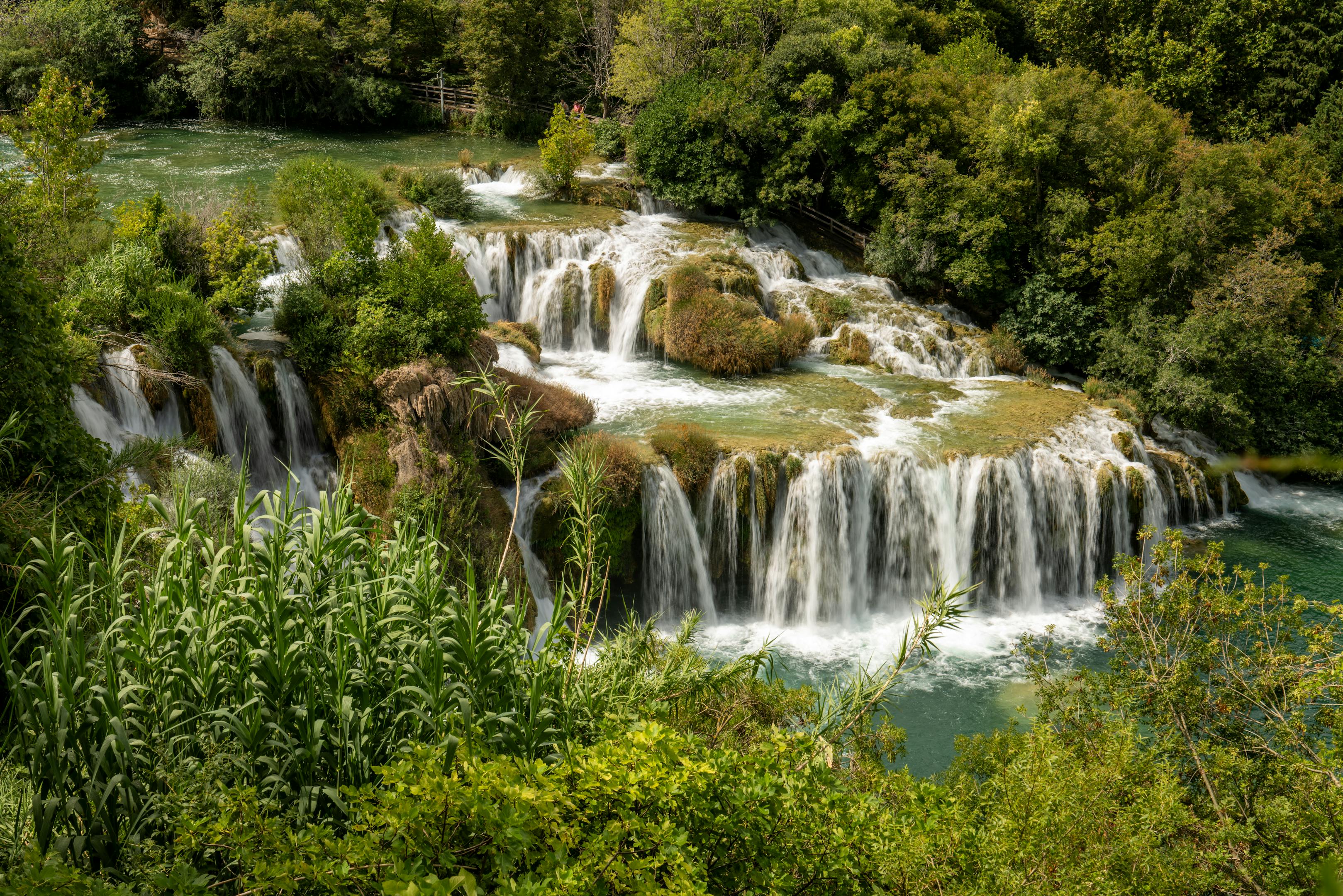
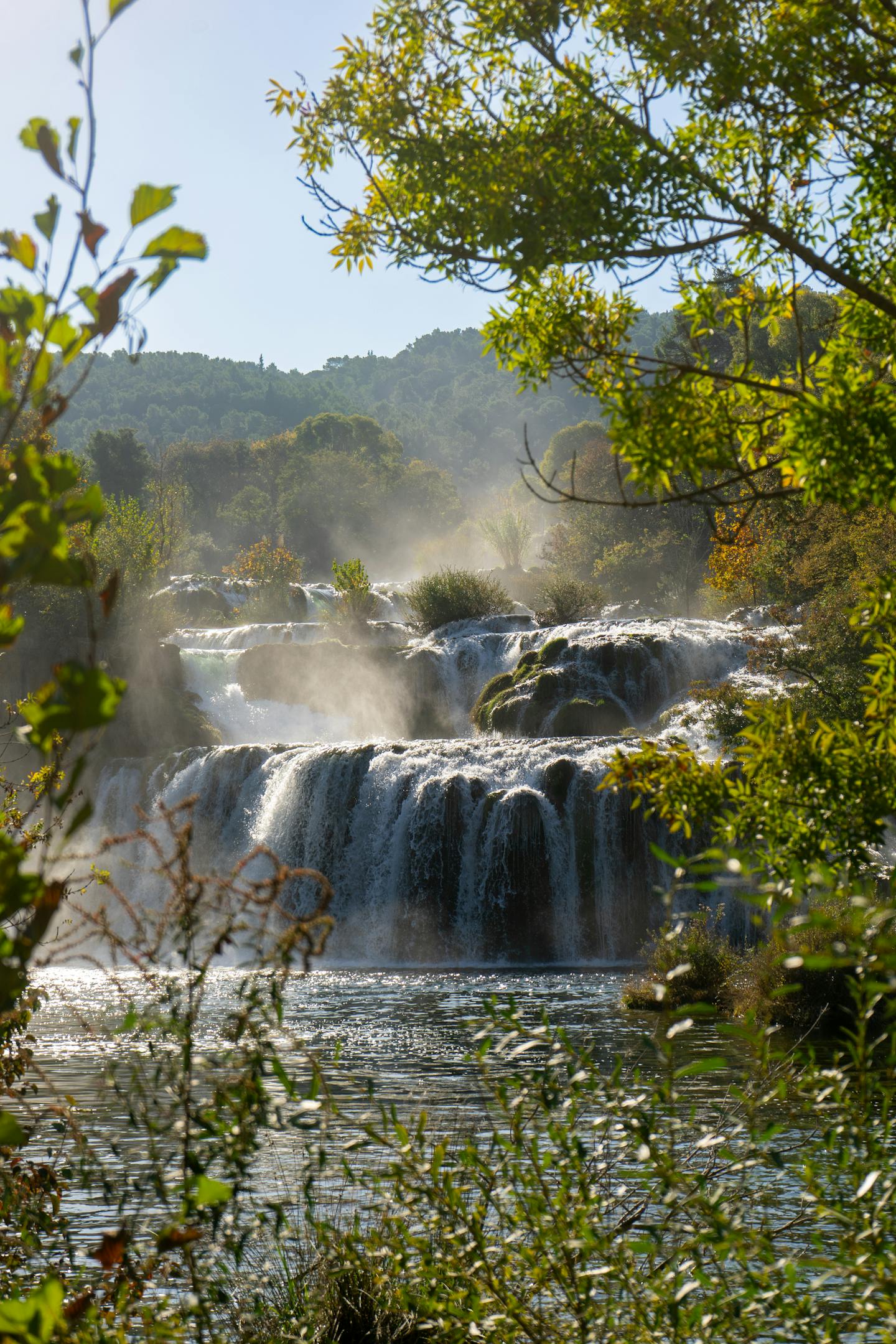
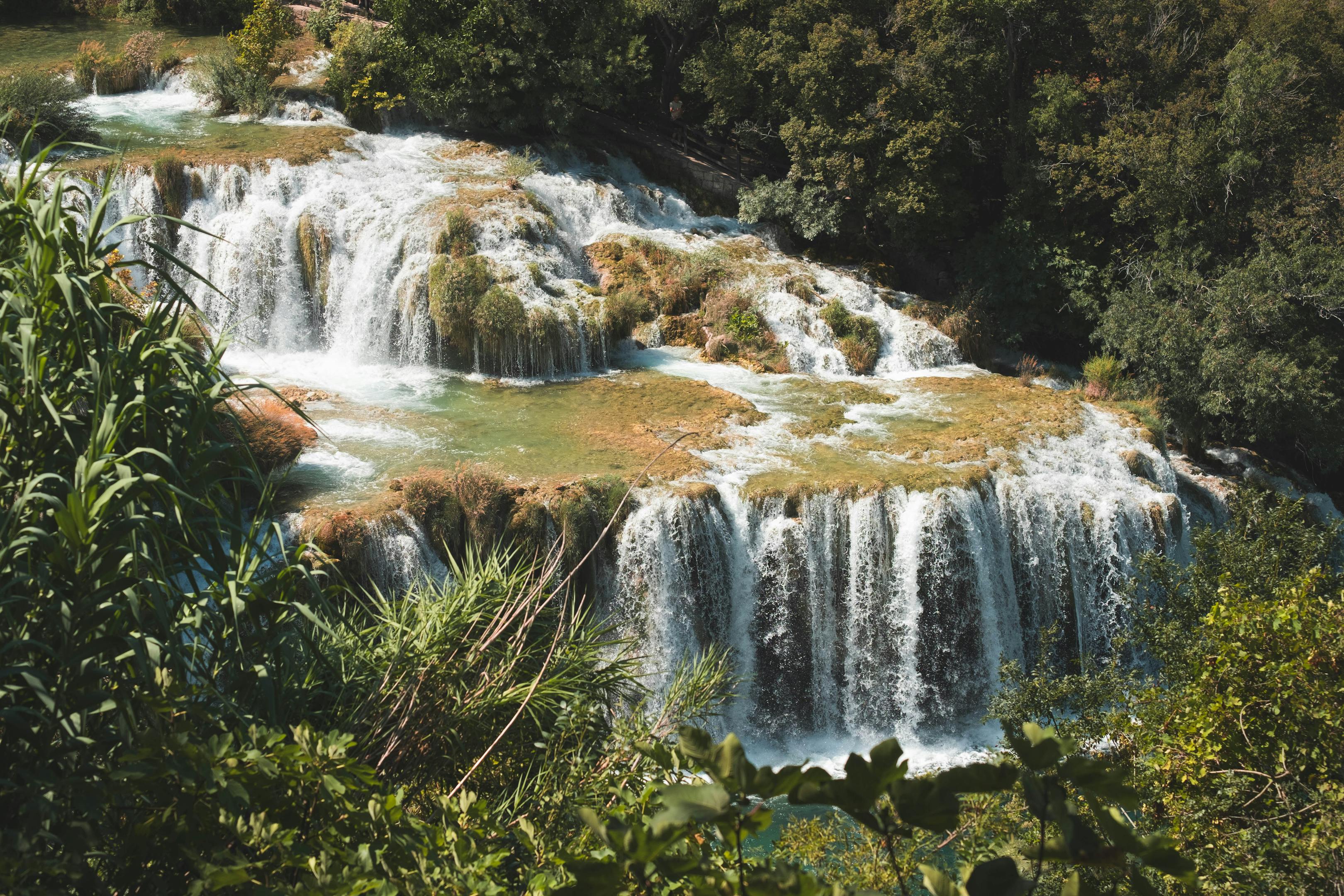
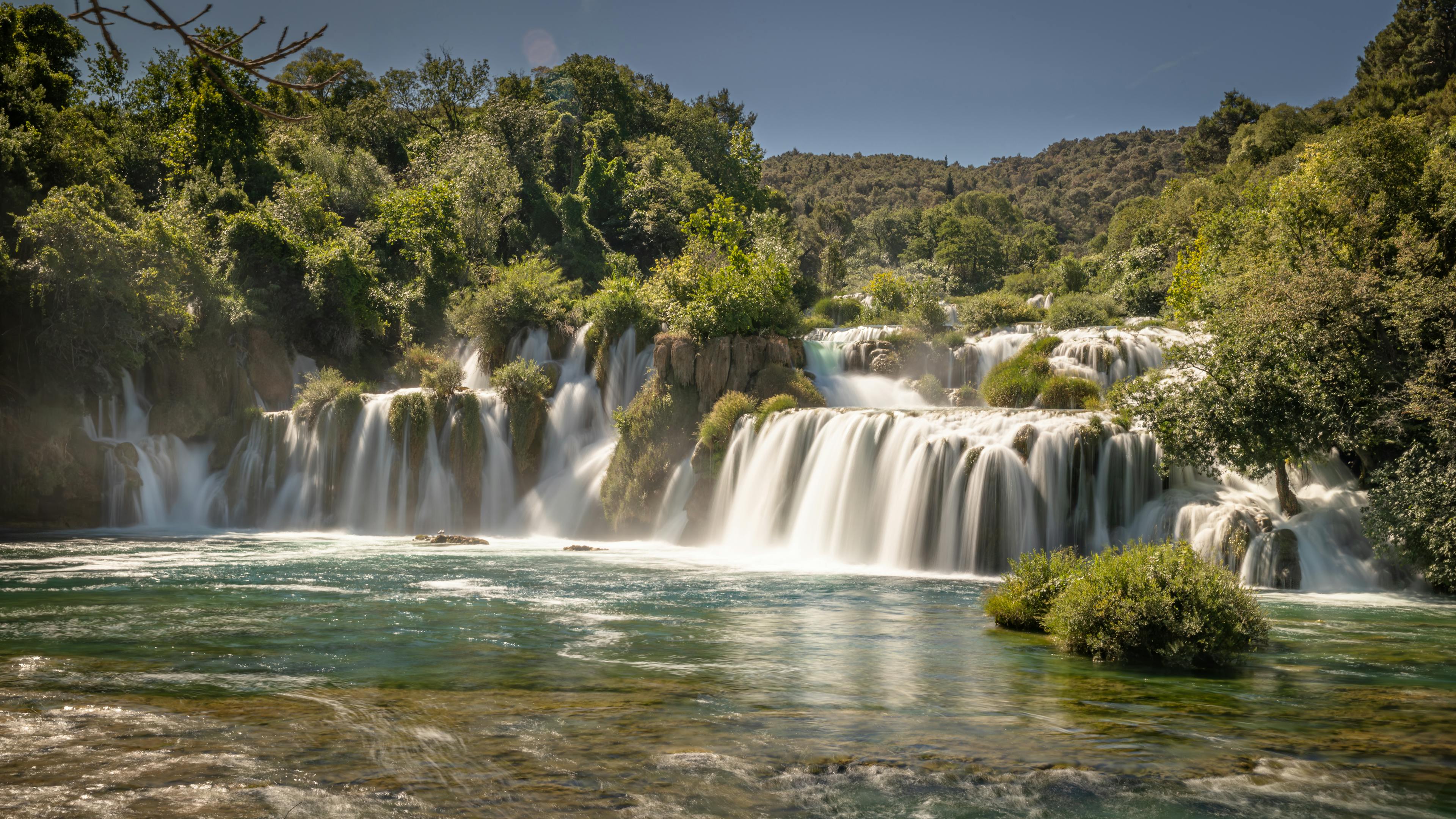
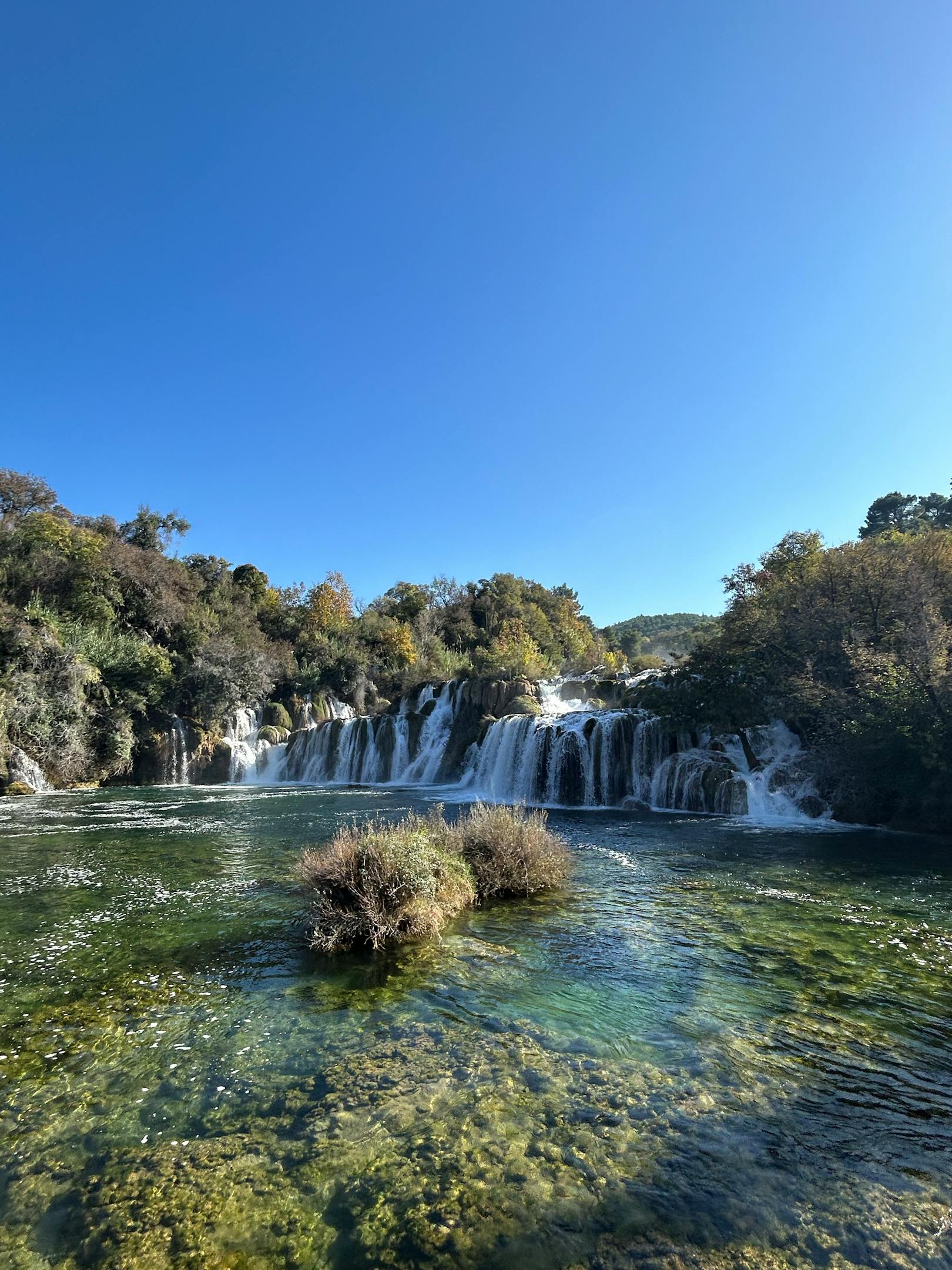
Skradinski Buk is Krka’s headline act, and it’s genuinely spectacular. The name means “Skradin Falls,” and it’s technically not a single waterfall but a series of 17 travertine steps over which the Krka River descends about 46 meters in total. Width-wise, the cascade system spans 400 meters at its widest point — wide enough that from some angles you can’t see the whole thing at once. The water pools between the steps form emerald basins where the water sits still long enough to take on that mineral-rich turquoise color.
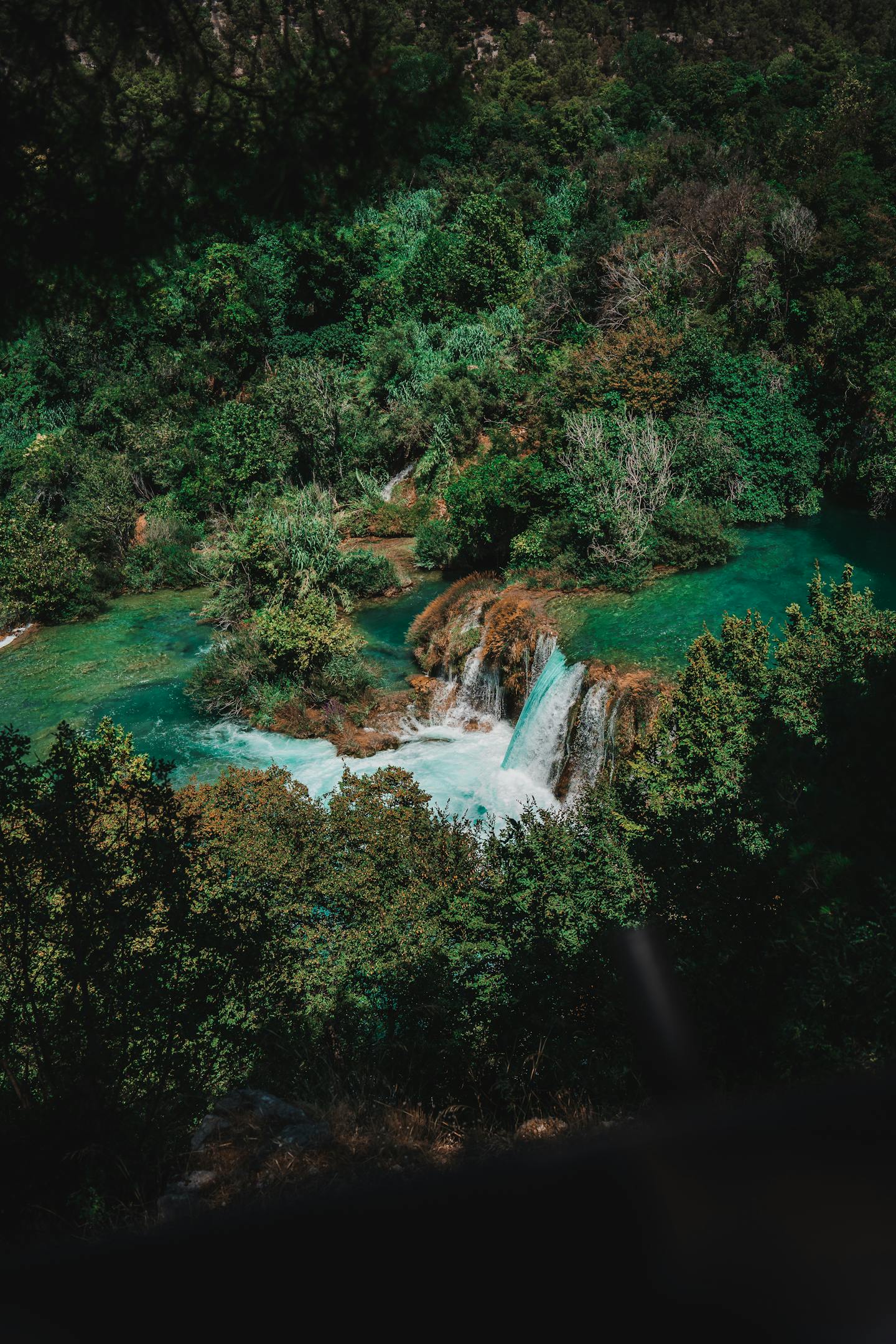
The main visitor trail is a 1.9-kilometer wooden boardwalk loop that takes you all the way around the basin and over the cascades themselves. The trail is mostly flat with a few gentle inclines — significantly easier than Plitvice’s stair-heavy circuit — and takes most people 60-90 minutes to complete at a comfortable pace, including photo stops. Wheelchair accessibility is limited: some sections have boardwalks with gaps between planks that make wheeled travel difficult, though the park has been improving accessibility in recent years.
The best photos at Skradinski Buk come from two specific spots: the wooden bridge at the top of the cascade (where you can shoot down along the entire falls) and the viewing deck at the base (where you get the classic “full wall of water” shot with the tiered cascades framed behind). Visit in the morning for the best light — by midday, the sun is directly overhead and the shadows flatten out.
Roški Slap and the Upper Park (Worth the Extra Effort?)
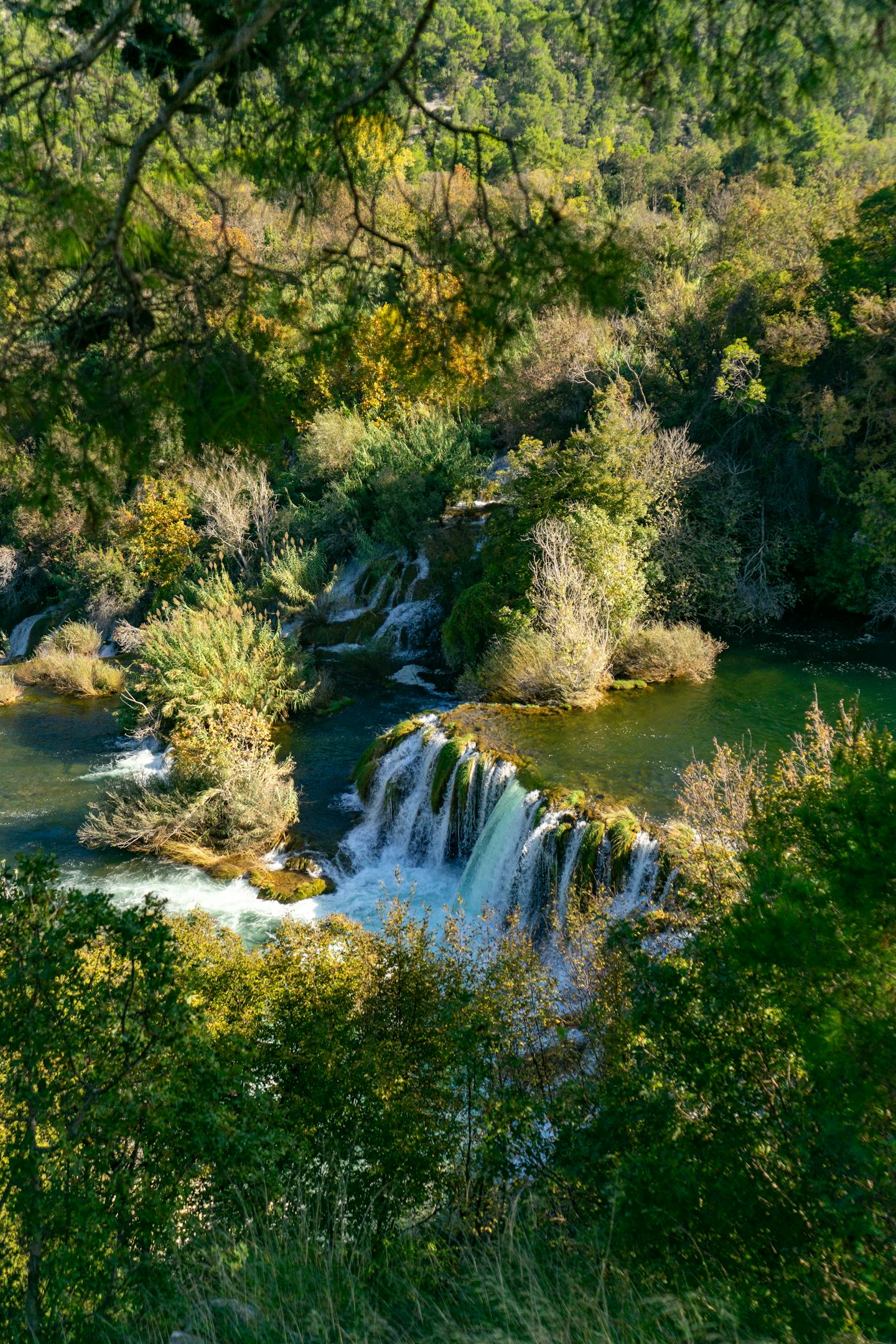
Most day trips only visit Skradinski Buk and skip the rest of the park, but Krka has a second major waterfall further upstream called Roški Slap. It’s less visited (which also means less crowded), smaller than Skradinski Buk but more intimate, and surrounded by trails that pass through limestone caves, watermills, and ethnographic exhibitions about traditional Dalmatian rural life. If you’re on a day tour from Split, you probably won’t see Roški Slap — there’s just not enough time to fit both.
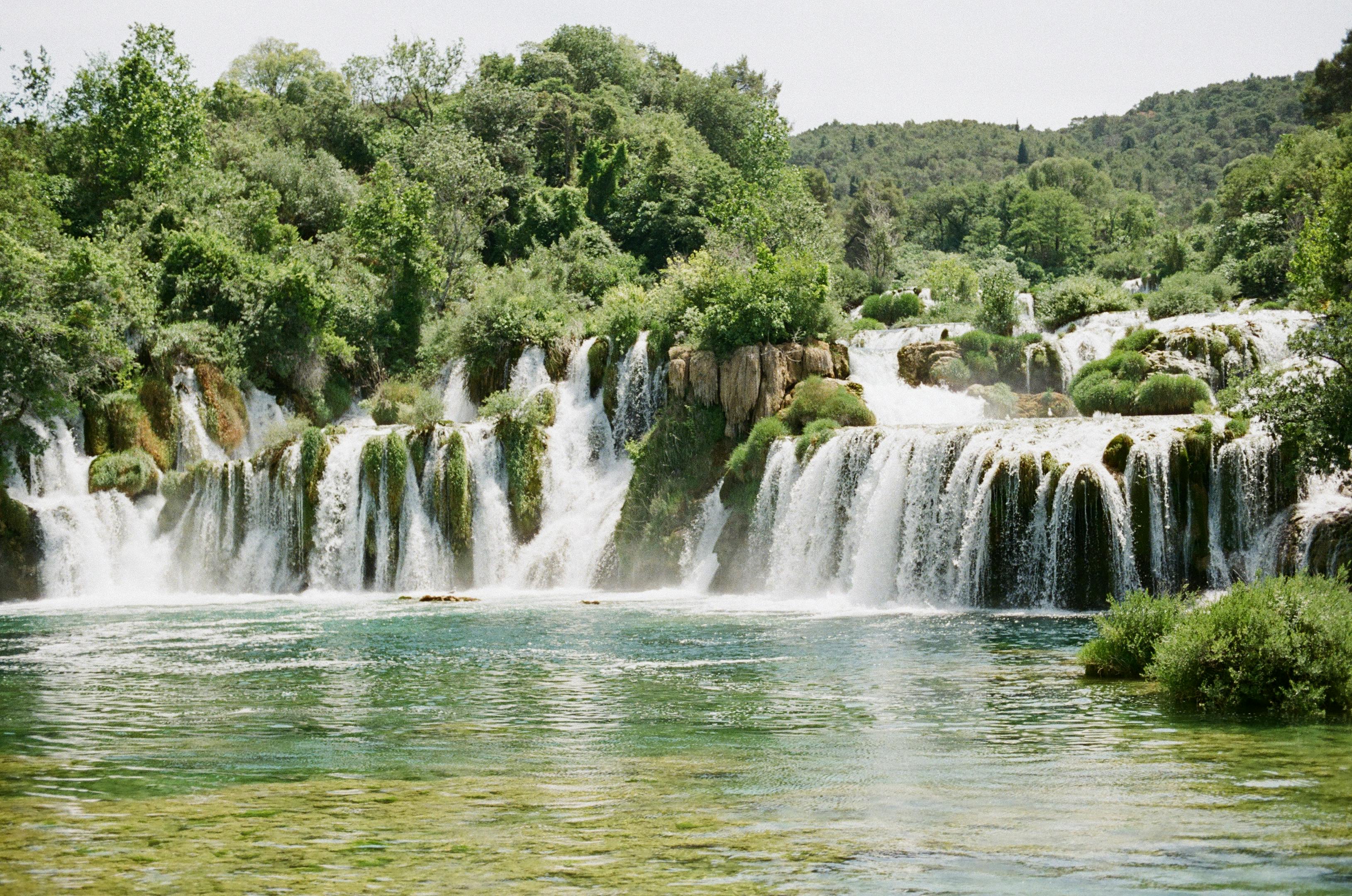
If you have a car and a full day to spend at the park, though, Roški Slap is absolutely worth the detour. It’s about a 30-minute drive north of Skradinski Buk along the park road, and the smaller scale makes it feel less like a tourist attraction and more like a genuine slice of rural Croatia. There’s also a small monastery on a river island nearby (Visovac) that you can reach by boat — the monastery has been occupied continuously since the 15th century and houses a small museum with medieval religious artifacts.
The History Behind the Park
Krka National Park was established in 1985, making it relatively young as far as Croatian national parks go (Plitvice dates to 1949, Paklenica to 1949, Mljet to 1960). But the river itself has a much longer human history. The Romans built Scardona — the precursor to modern Skradin — here as early as the 1st century BC, and used the area as a military and administrative center. The Krka River was a strategic inland waterway connecting the Adriatic coast to the interior, and the Romans built roads, watchtowers, and forts along its banks.
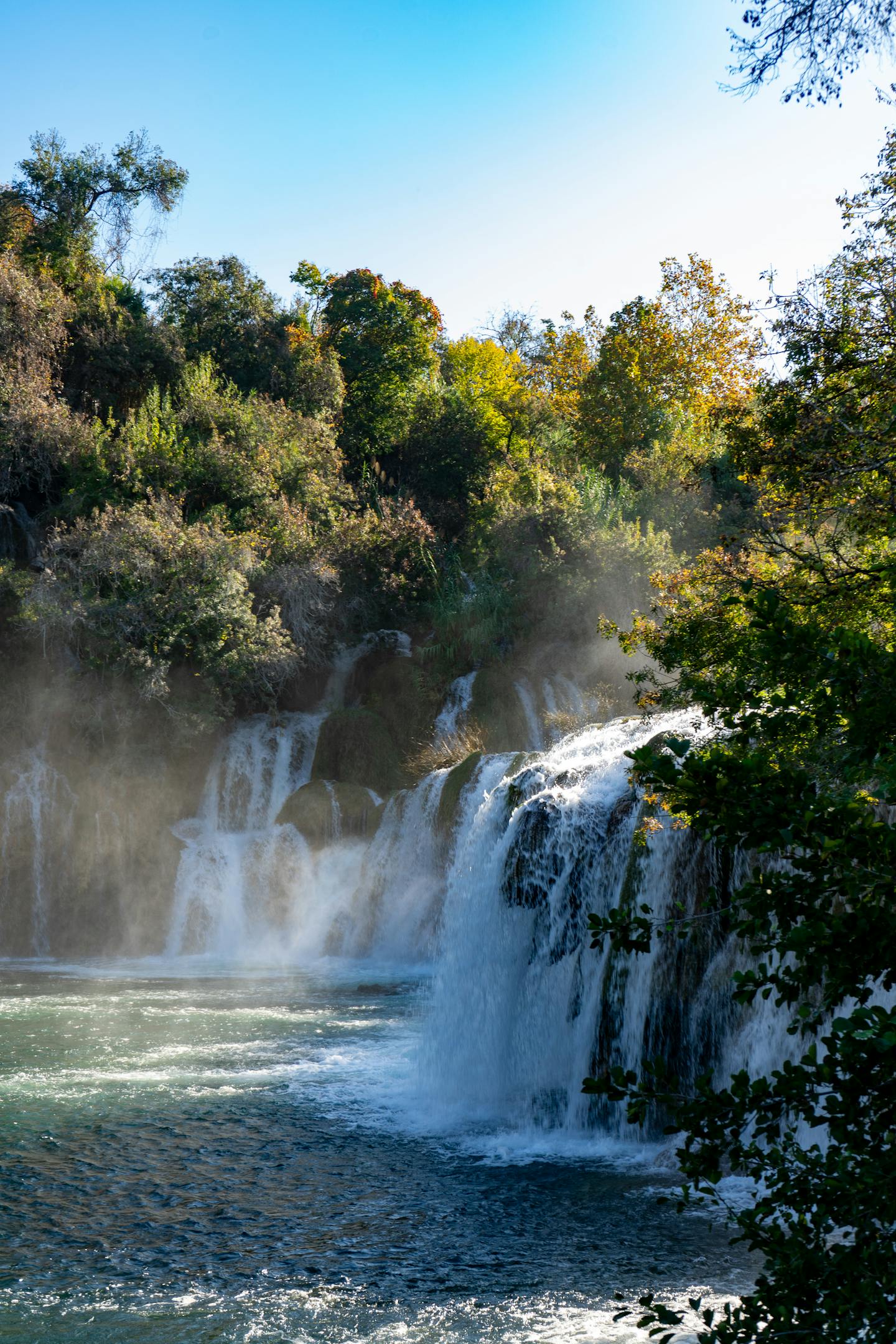
In the Middle Ages, the water power of Skradinski Buk was harnessed for grain mills, textile processing, and eventually (in 1895) to power one of the world’s first hydroelectric plants — the Jaruga plant, which generated electricity for the nearby city of Šibenik and made Šibenik one of the first cities in the world to have public electric street lighting. Some of the original mill buildings still stand inside the park today, restored and converted into small exhibitions about traditional Dalmatian life. You can walk through a working old mill during your Skradinski Buk loop — most day tours don’t emphasize this, but it’s a genuinely interesting stop.
The park has also been a battleground, most recently during the Croatian War of Independence in the early 1990s when the area saw combat and some infrastructure damage. Unlike Plitvice, Krka was never occupied for long periods and reopened to visitors relatively quickly after the war ended. Today, the park’s visitor numbers have grown to well over a million annually — a reminder of both its popularity and the pressure that popularity places on the fragile travertine ecosystems that make the park what it is.
Split as a Base: Why It Works
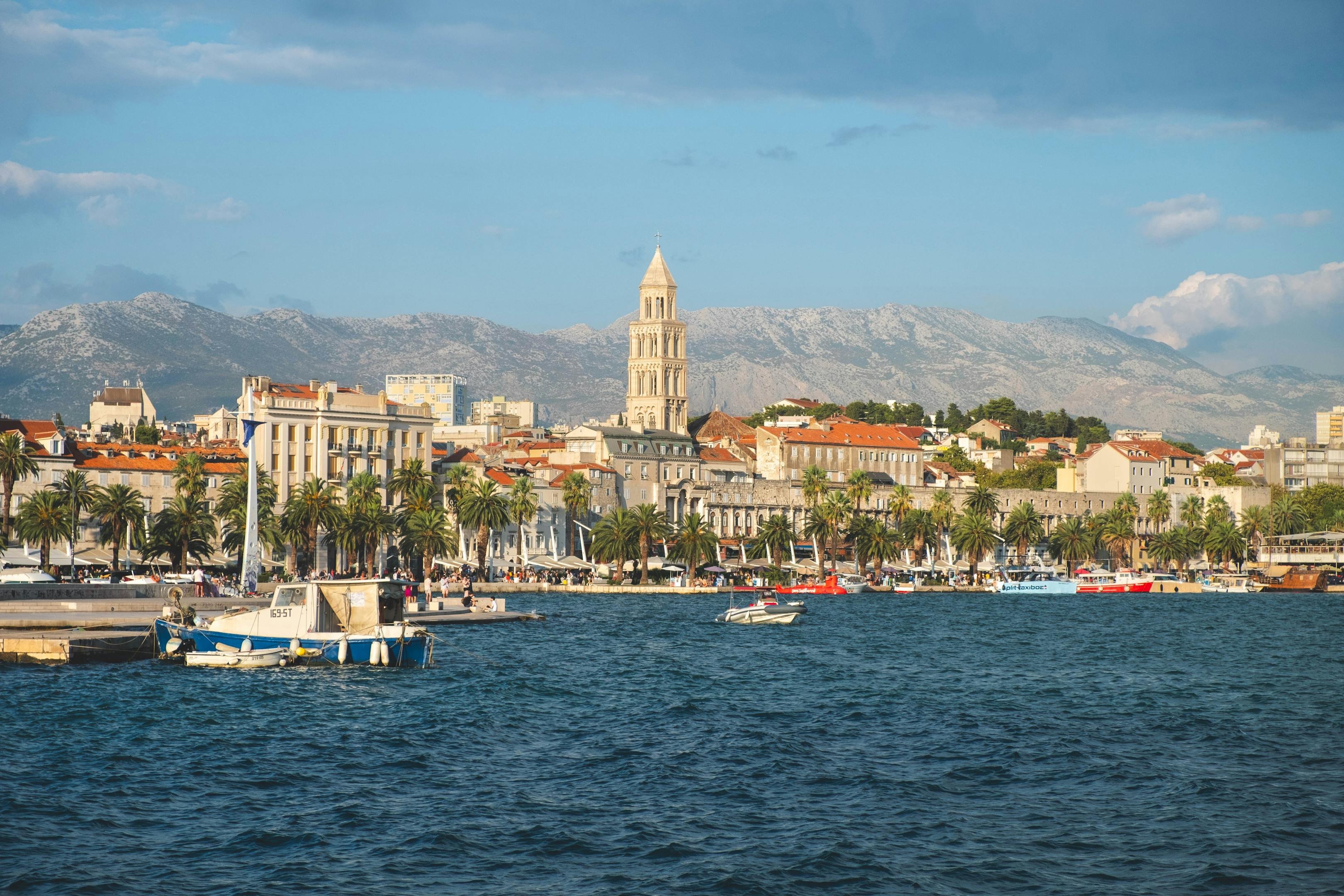
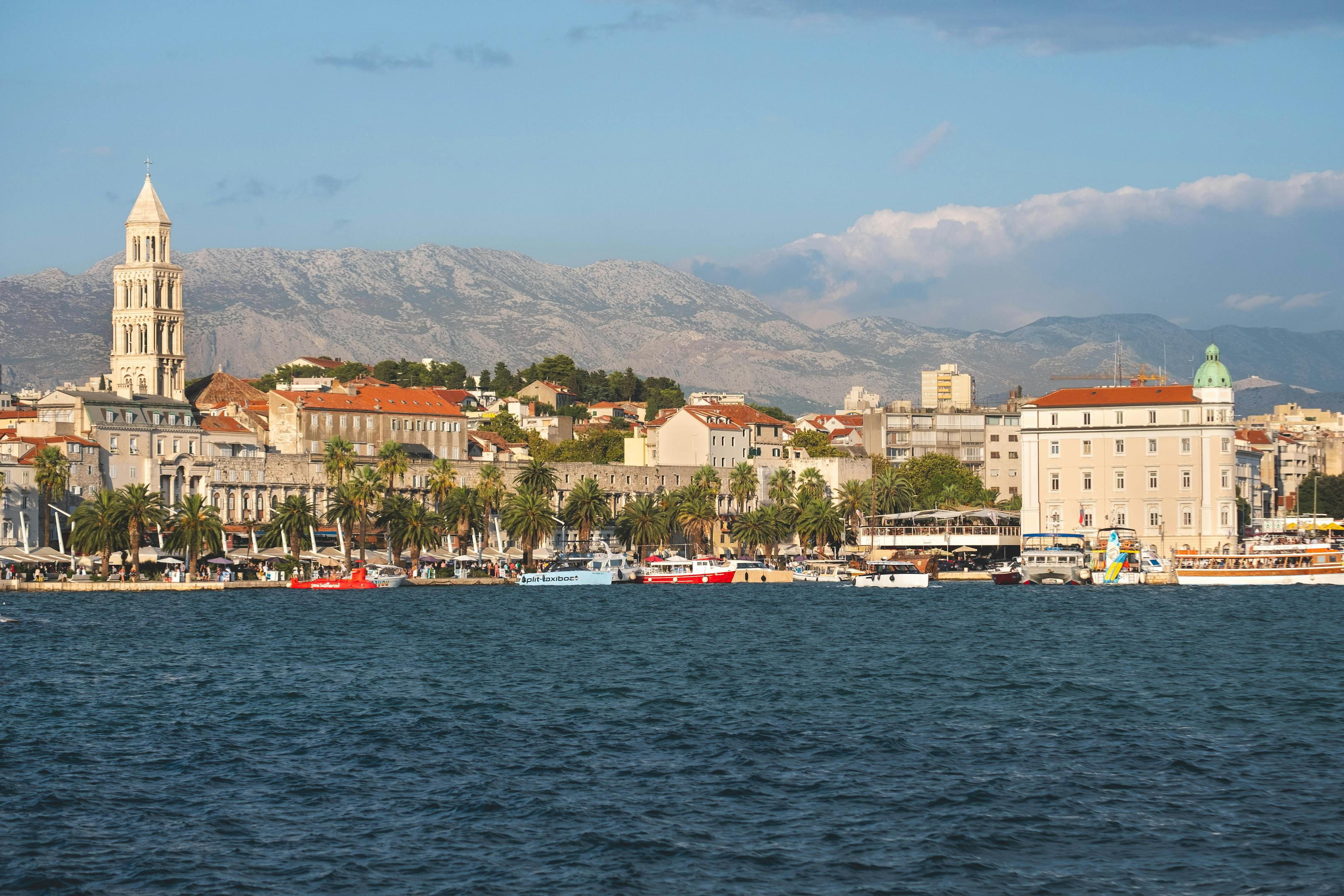
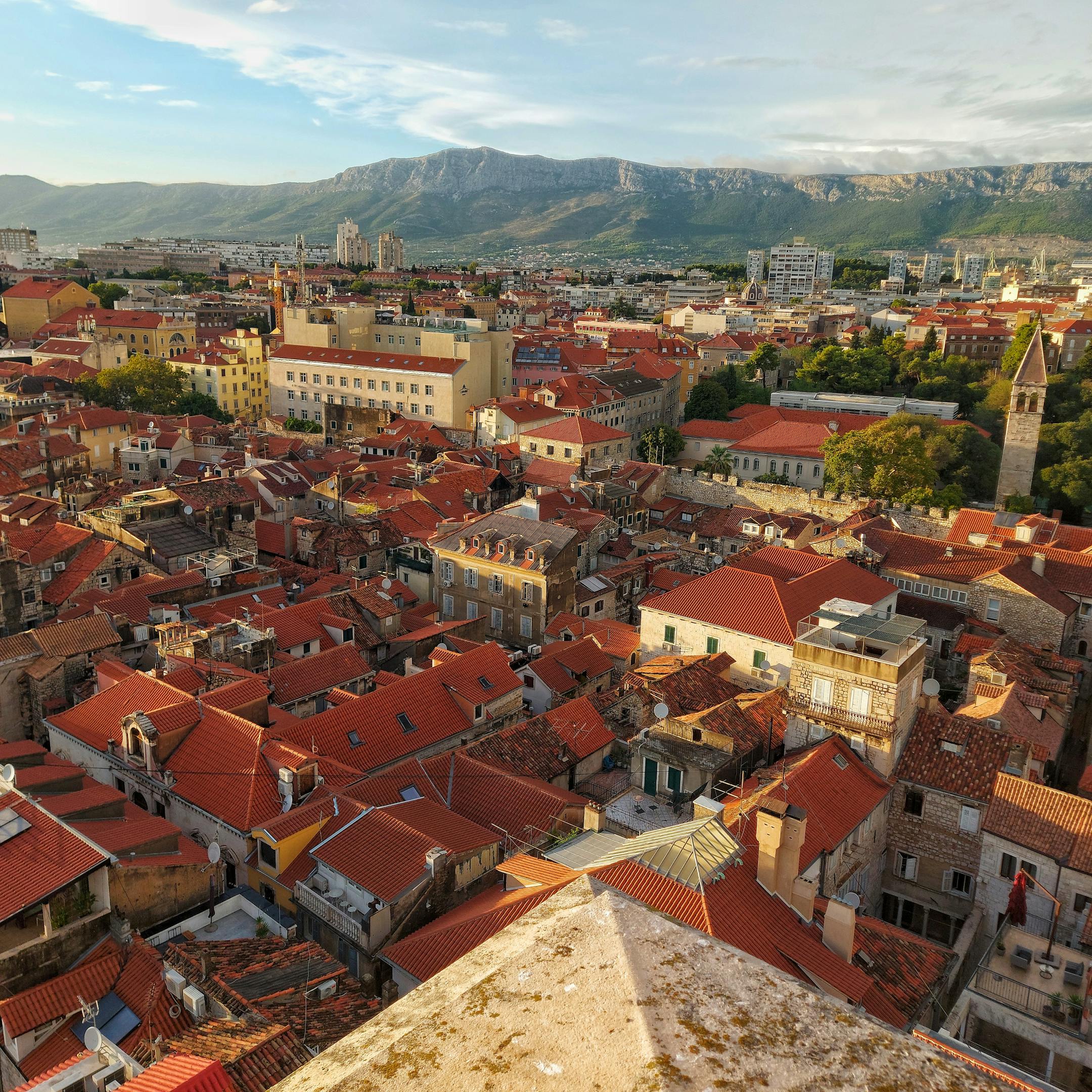
Split is the ideal base for exploring Krka because it sits exactly at the sweet spot of geography. You’re close enough to Krka (about 90 minutes by road) that a day trip is relaxed rather than exhausting, you’re on the coast with daily ferry access to the islands, and you have the Roman-era Diocletian’s Palace and Old Town to explore during the hours you’re not on a bus.
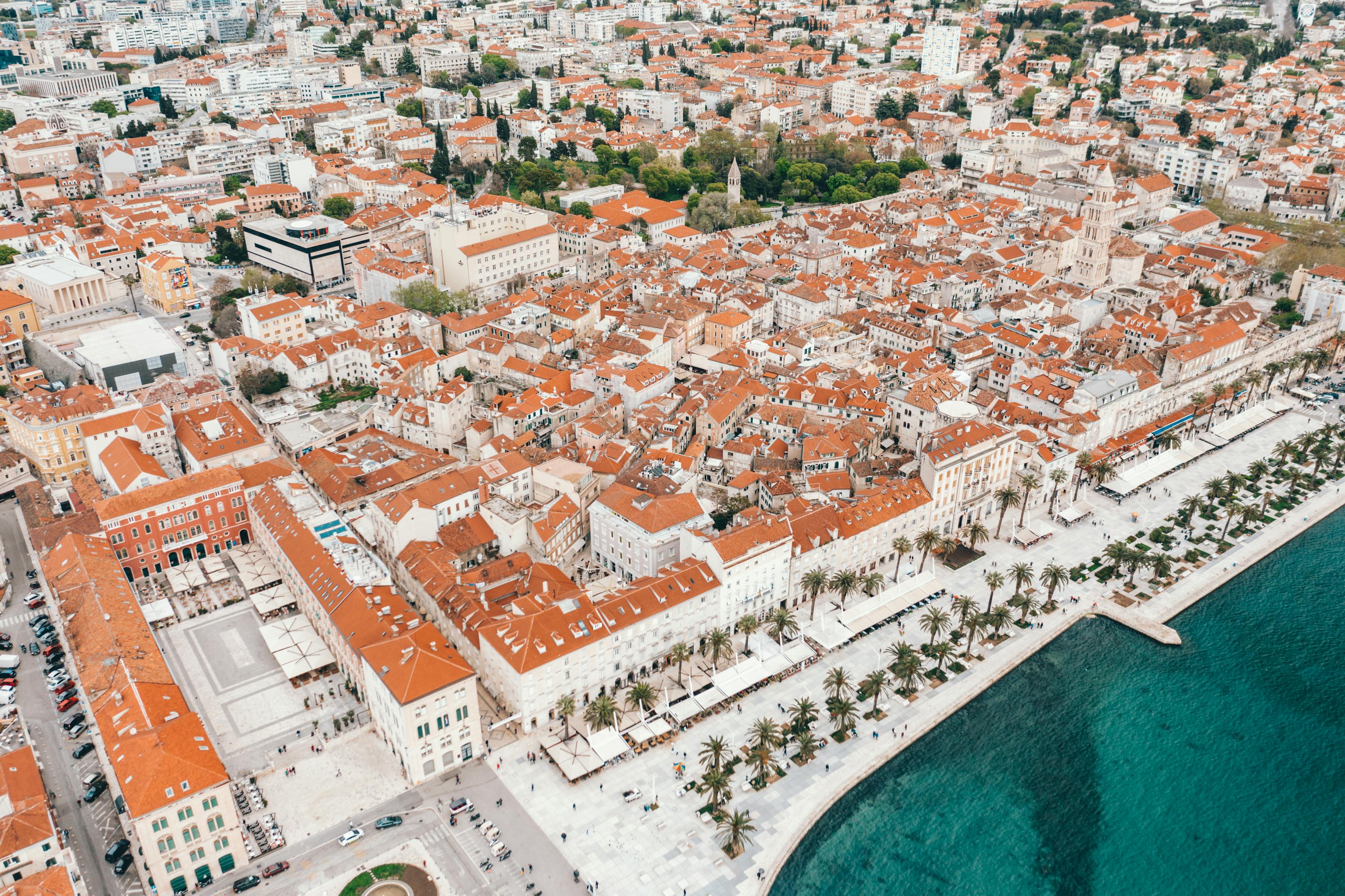
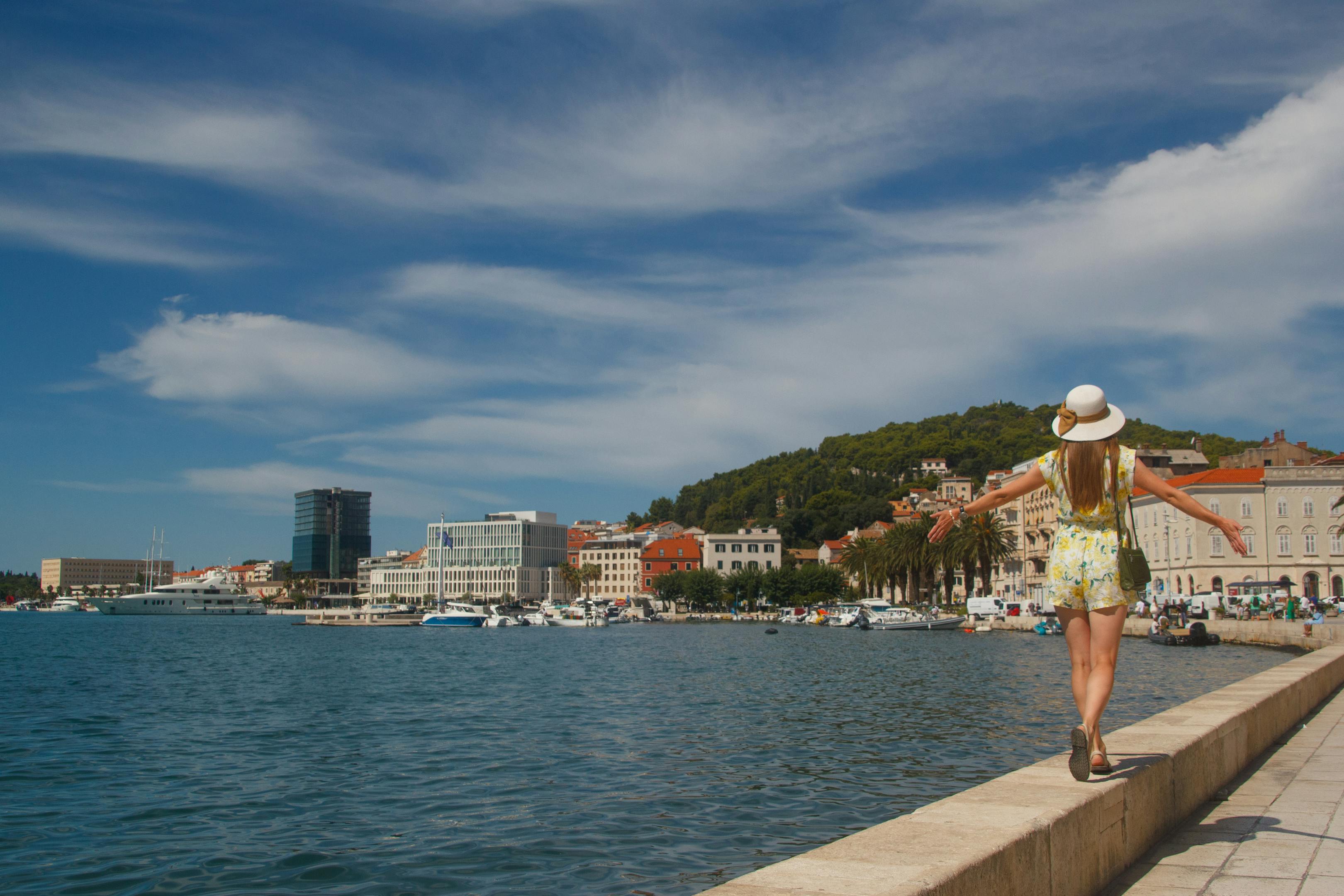
Most Split hotels are within walking distance of Riva, the main waterfront promenade where tour buses pick up and drop off. Pickup is usually around 7:30-8:00 AM for Krka tours, and returns are typically 4:00-6:00 PM depending on the itinerary. If your accommodation is in Split Old Town, you can literally walk out your door to the meeting point — no taxi required.
Practical Tips for Krka
Shoulder season is king at Krka. April-May and September-October offer mild temperatures, noticeably smaller crowds, and better photography light than the brutal midsummer period. In July and August, the boardwalks around Skradinski Buk get so crowded that you’re essentially moving in single file, and the heat (often 32-35°C by noon) makes the walk less pleasant than it should be. If you have any flexibility in your dates, aim for May or September.
Bring water shoes if you want to wade. Even though swimming at Skradinski Buk is no longer permitted, you can still step into the shallows at other designated spots in the park, and the rocks underfoot are sharp and slippery. Rubber-soled water shoes make a huge difference to comfort and safety. You can also buy cheap ones at Split markets for €8-10 if you didn’t bring any.
The park entrance fees vary by season. In 2026, expect to pay around €16-25 for a Skradinski Buk ticket depending on whether you visit in low, shoulder, or high season. Many tours include this in the price; others don’t. Always check the fine print, and if you’re unsure, bring cash (euros) as a backup. Card payments work at the main entrance but not always reliably in the smaller kiosks.
If you’re driving yourself, the main parking area at the Lozovac entrance is easy to find and rarely full. From Lozovac, you take a free park shuttle bus down to the trail head (about 10 minutes), walk the Skradinski Buk loop, then take the shuttle back up. Don’t make the mistake of parking at the Skradin entrance expecting to walk down — it’s a 4.5-kilometer walk along a road with no sidewalk and minimal shade, and you’ll be miserable before you even reach the waterfalls.
Time of day matters more than most visitors realize. The first shuttle from Lozovac runs at 8:00 AM in peak season, and if you can be on it, you’ll have the boardwalk almost to yourself for the first hour — worth every bit of the early alarm. By 10:30 AM the coach tours start arriving in waves, and from then until about 3:00 PM the main viewing platforms are solidly packed. The last hour before closing is another quieter window, but the light starts going flat and you’re rushing back to the shuttle. If you’re on a tour bus rather than driving, ask your guide which end of the loop they recommend starting from — contrarian routing (starting from the far end and walking back) can help you dodge the worst pinch points near the main overlook.
One more underrated tip: bring a small microfiber towel even if you don’t plan to wade. The spray from Skradinski Buk is significant on windy days, and the boardwalks closest to the falls will soak camera lenses, phone screens, and sunglasses within seconds. Reviewers who brought towels were uniformly glad they did; reviewers who didn’t complained about wet electronics. A €5 towel from any Split pharmacy is a worthwhile investment, and it doubles as a picnic blanket for your lunch stop.
More Croatia Guides Worth Reading
Krka pairs beautifully with other Dalmatian experiences, and Split is the launching pad for most of them. The Blue Cave and Hvar 5-island speedboat tours from Split are the natural sea-based complement to Krka’s inland waterfalls — one day for turquoise pools surrounded by forest, another for turquoise caves surrounded by island coves. If you’re extending your trip up to the capital, the Plitvice Lakes day trips from Zagreb cover the much larger and more elaborate sibling of Krka — many travelers end up visiting both and finding each memorable in a completely different way.
For travelers continuing south, Dubrovnik is Croatia’s other major stop. The Dubrovnik City Walls and walking tours page covers the best guided experiences of the medieval walled city, while the Elaphite Islands cruises from Dubrovnik offer day-long sailing trips to three car-free islands just offshore. Fans of fantasy TV shouldn’t miss the Game of Thrones tours in Dubrovnik that visit the real-world filming locations for King’s Landing. And if you’re flying into or out of Zagreb, don’t overlook the Zagreb walking tours and WWII tunnels — the capital is more interesting than first-timers expect once you scratch beneath the surface.