
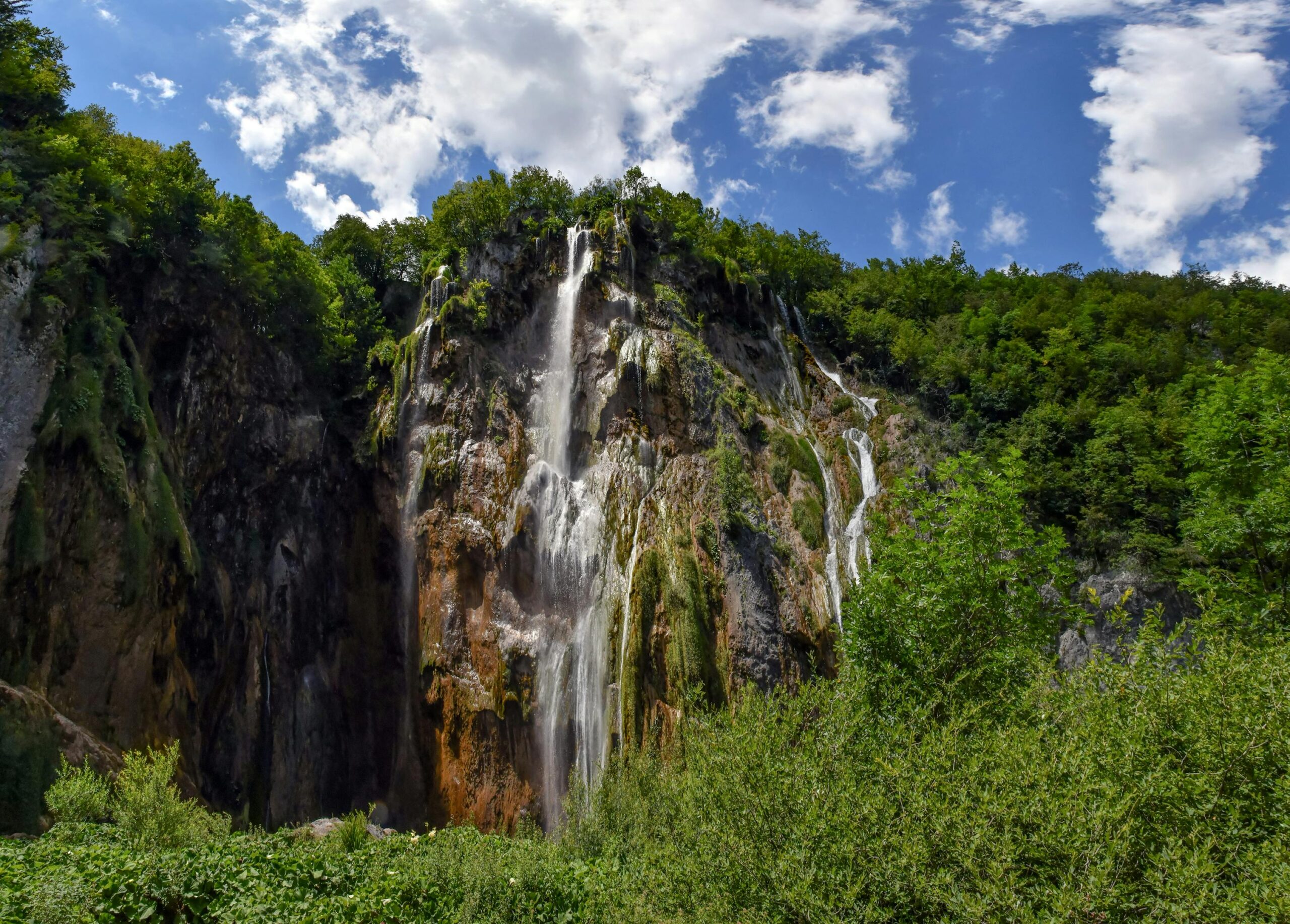
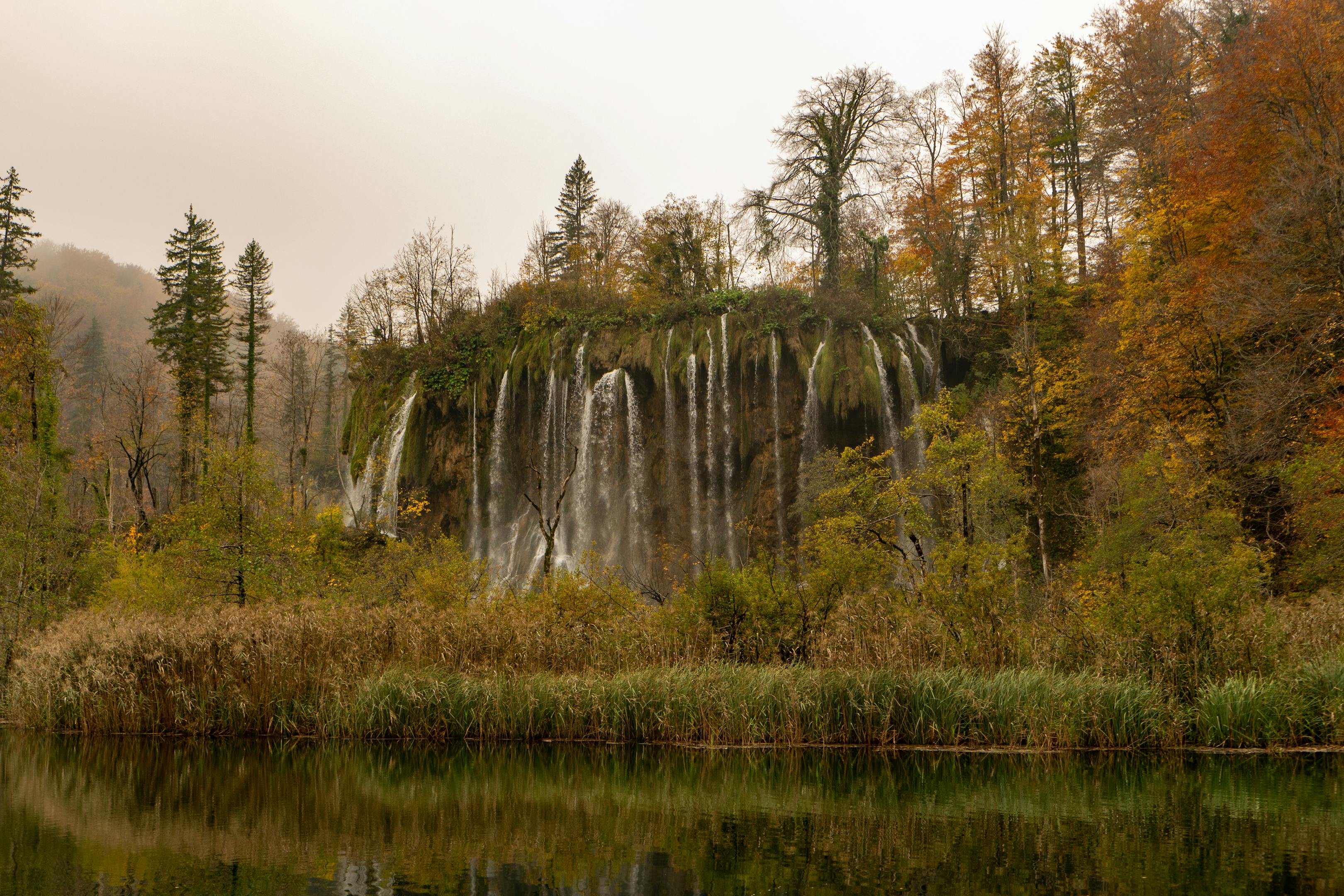
Plitvice Lakes does a thing no other national park in Europe does. Sixteen terraced lakes drain into each other through a sequence of waterfalls and travertine barriers, creating a landscape of turquoise pools, mossy cascades, and wooden boardwalks that look more like a fantasy film set than anything that exists in real life. It’s also a two-hour drive from Zagreb and a four-hour drive from Split, which means most travelers visit on a day trip. Here’s which tour to pick, what to actually expect, and how to avoid the mistake that ruins people’s Plitvice experience.
- Quick Pick: Best Plitvice Lakes Day Trips
- Why Plitvice Is Unlike Anywhere Else
- Which Section: Upper Lakes vs Lower Lakes
- The 4 Best Plitvice Day Trips Reviewed
- 1. Plitvice Lakes: Guided Walking Tour with Bus and Boat Ride
- 2. Plitvice Lakes with Ticket & Rastoke Tour from Zagreb
- 3. From Zagreb: Plitvice Lakes Guided Tour
- 4. From Split: Plitvice Lakes Fully-Guided Day Tour
- The Mistake That Ruins People’s Plitvice Experience
- What the Boardwalks Are Actually Like
- The History and Science of the Lakes
- Practical Tips for Plitvice
- More Croatia Guides Worth Reading
Quick Pick: Best Plitvice Lakes Day Trips
🏘️ Best combo: Plitvice + Rastoke Day Trip from Zagreb — 966 reviews. Adds the watermill village of Rastoke — a surprise highlight for most travelers.
💰 Best simple option: From Zagreb: Plitvice Lakes Guided Tour — 501 reviews. Straightforward, no-frills day trip with a focus on the lakes themselves.
🏖️ Best if you’re based in Split: From Split: Plitvice Lakes Fully-Guided Day Tour — 392 reviews. A long day (4 hours each way) but worth it if Zagreb isn’t on your itinerary.
Why Plitvice Is Unlike Anywhere Else
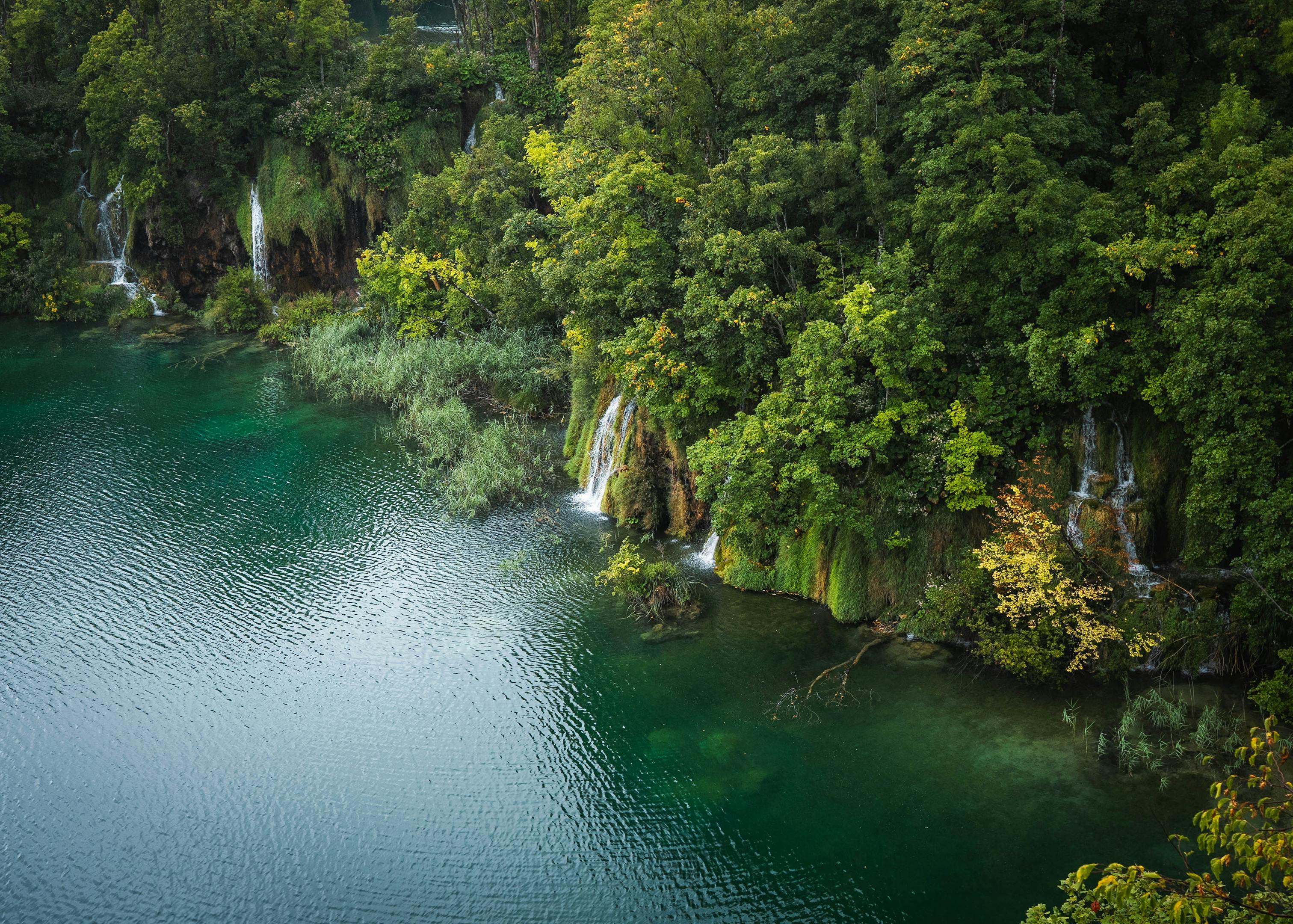
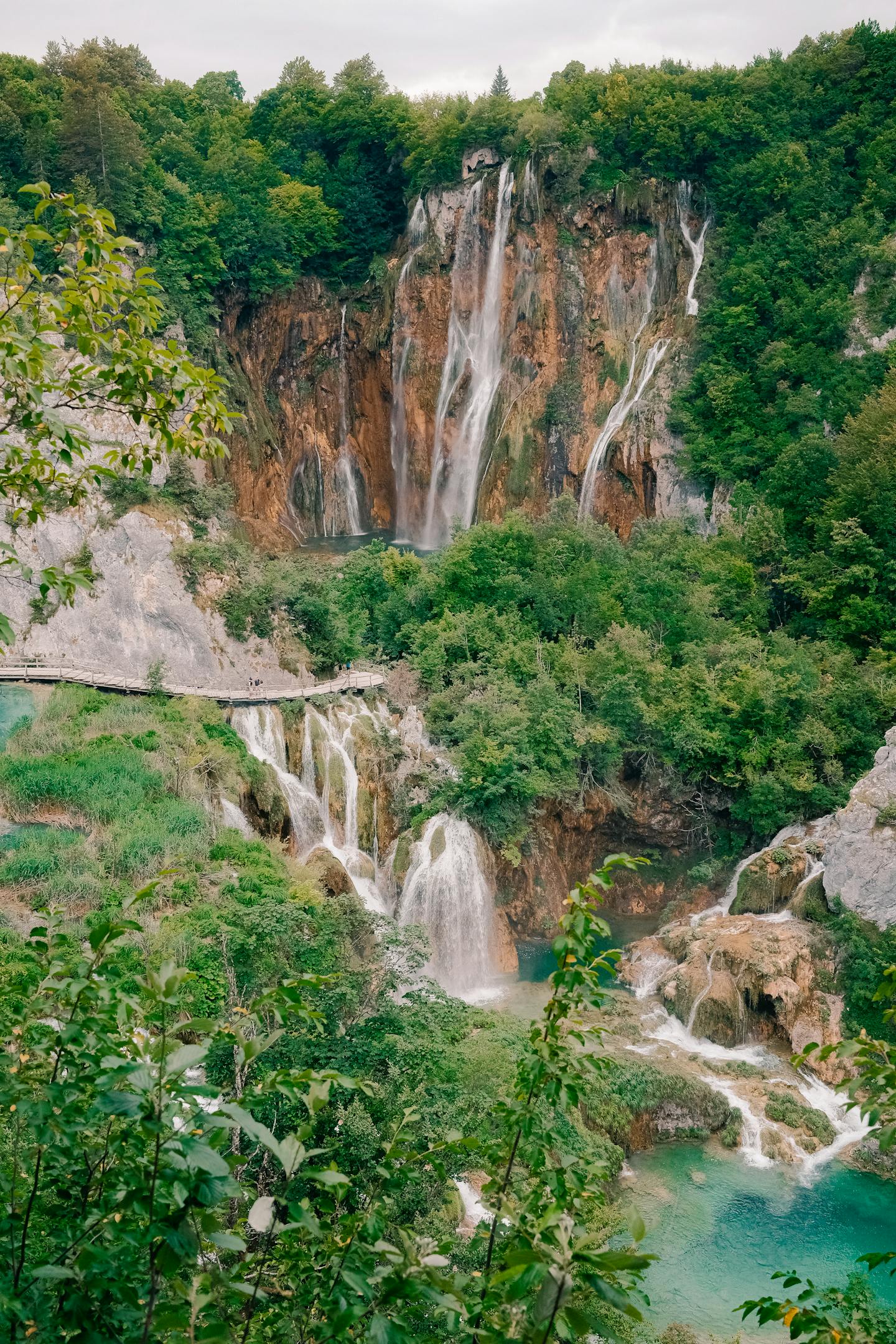
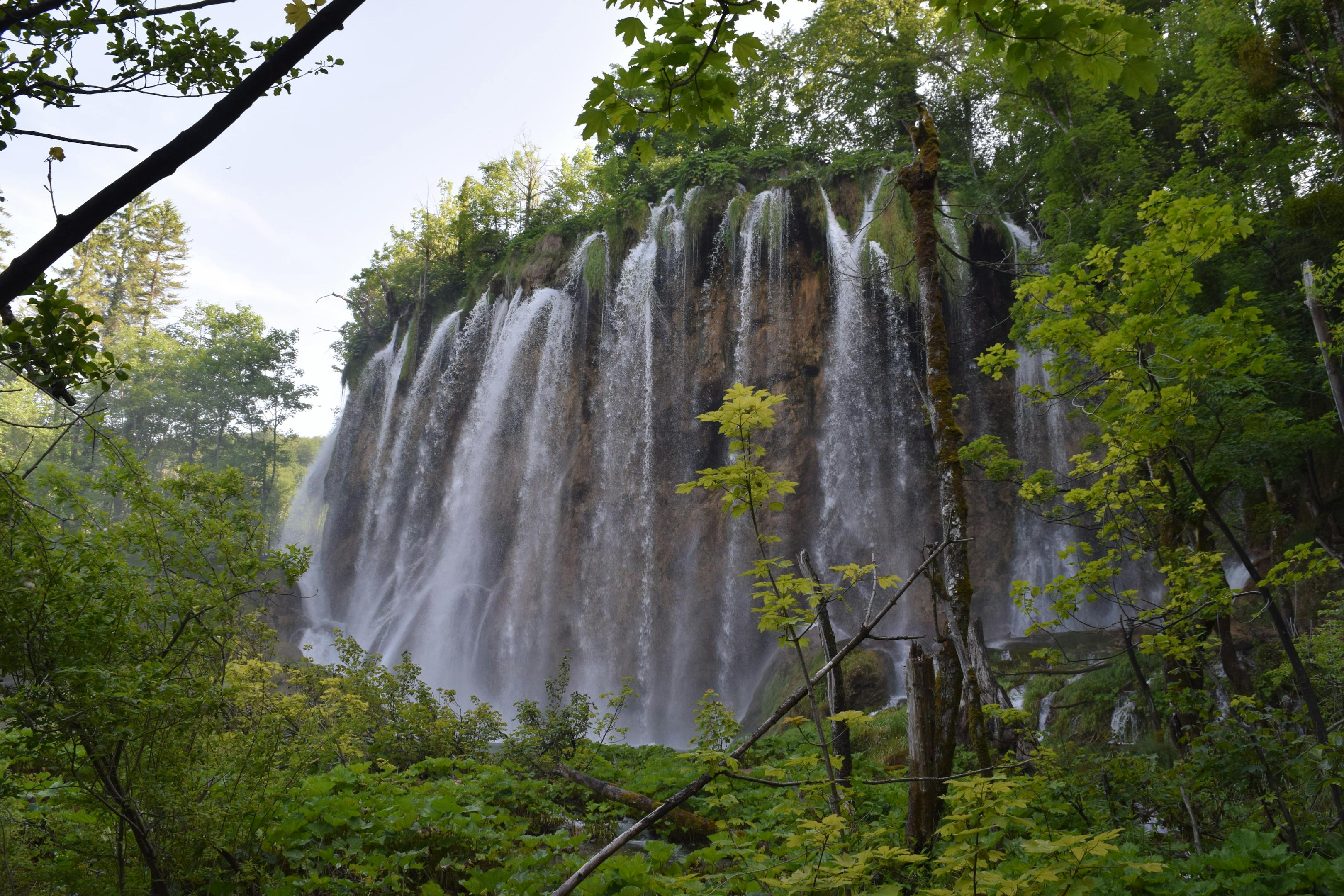
The reason Plitvice looks the way it does is chemistry, not geology. The lakes sit on a bed of dolomite and limestone, and the water flowing through the park carries dissolved calcium carbonate. When moss, algae, and bacteria interact with that calcium-rich water, they cause the minerals to precipitate out and form travertine — porous rock that builds up over centuries into natural dams. Those dams are what separate the lakes into their terraced arrangement. The whole system is still actively growing; the travertine barriers add about one centimeter per year.
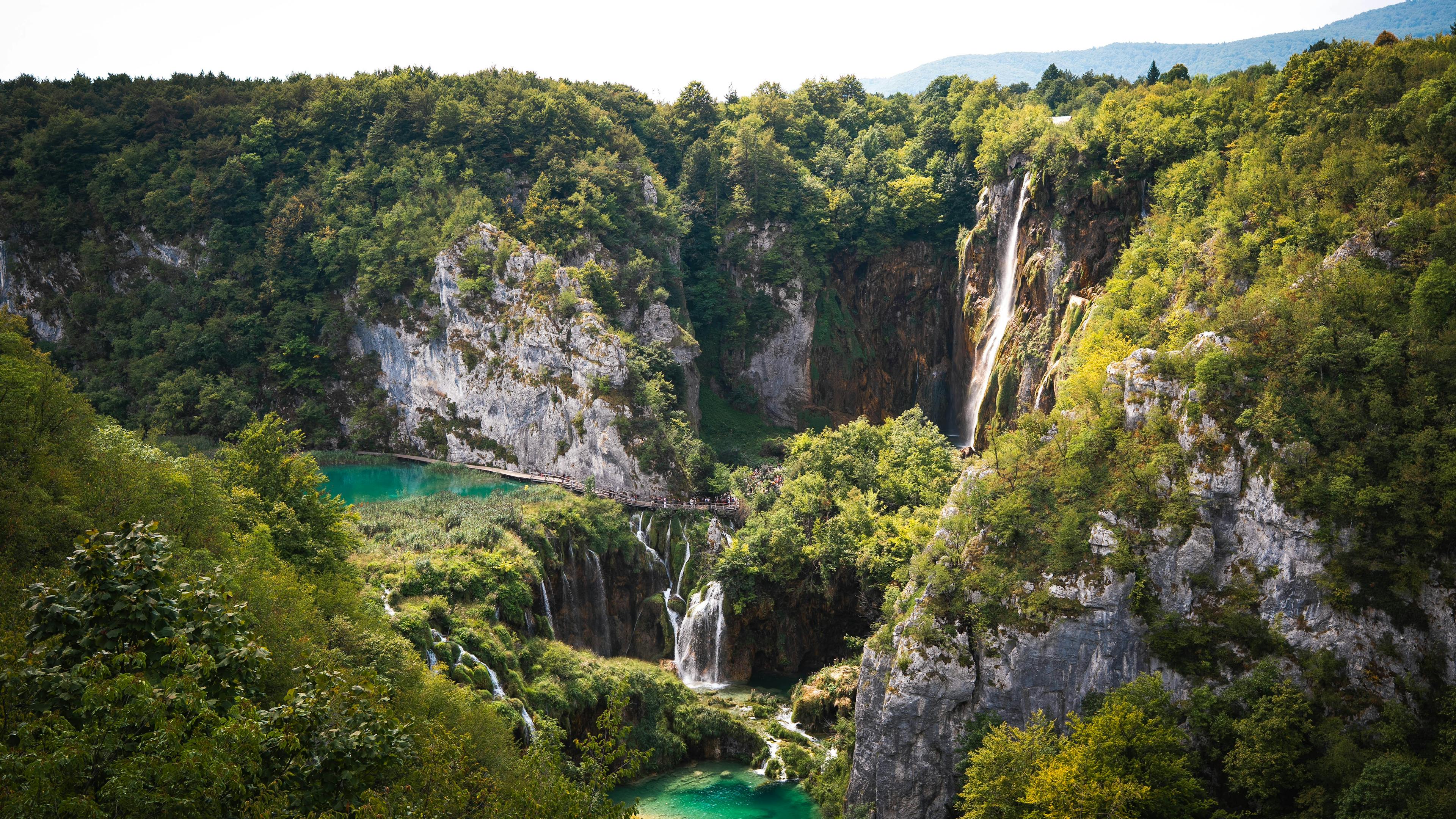
This is also why Plitvice is so fragile. Touch the travertine and you damage it. Swim in the lakes and you disturb the bacterial colonies that build the dams. This is why swimming is absolutely forbidden park-wide (unlike Krka National Park, which permits it in designated areas), and why the walking path is routed along elevated wooden boardwalks that hover inches above the water without ever touching the lake surface. Break the rules and the park’s ecological engine breaks with them. Take it seriously — rangers do.
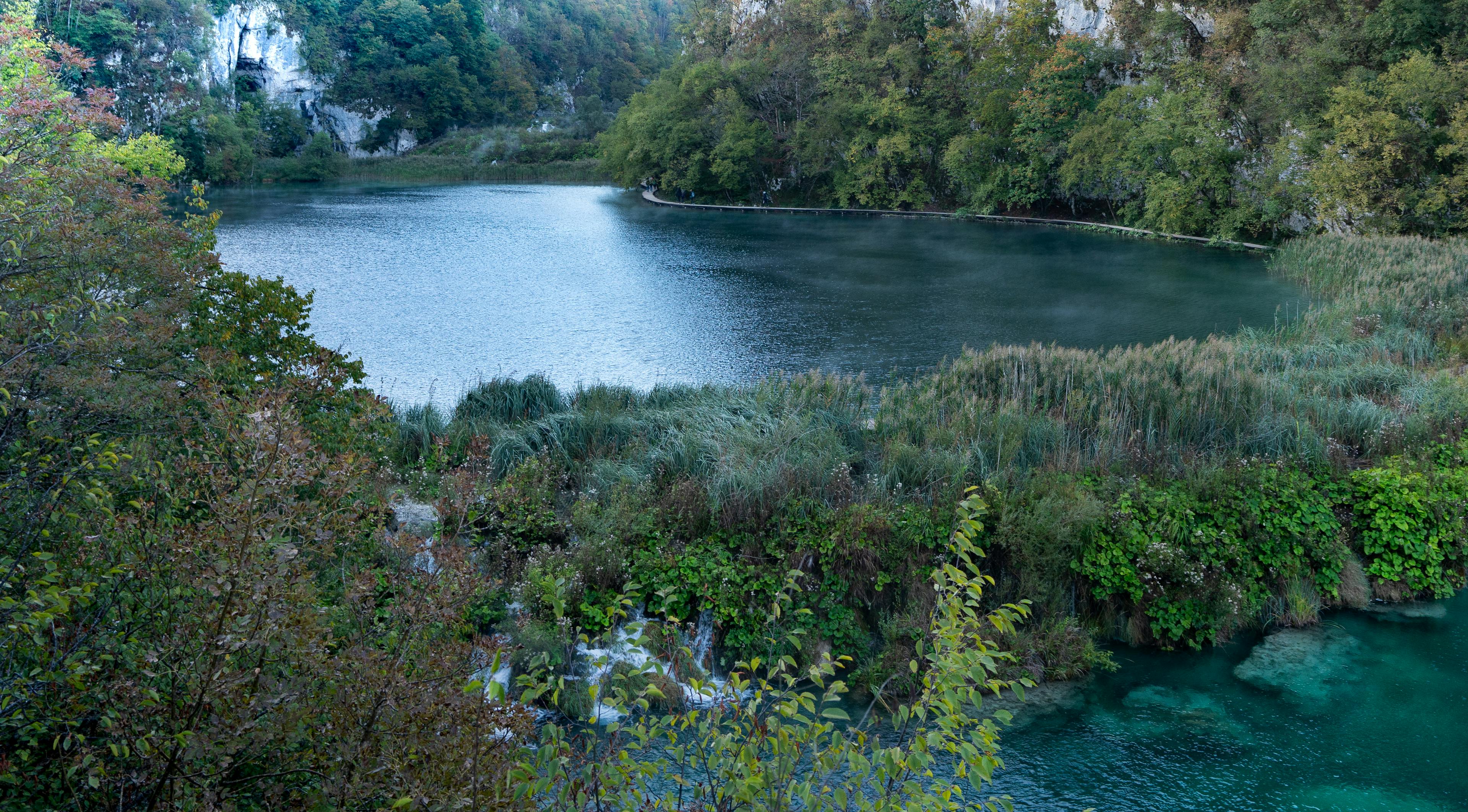
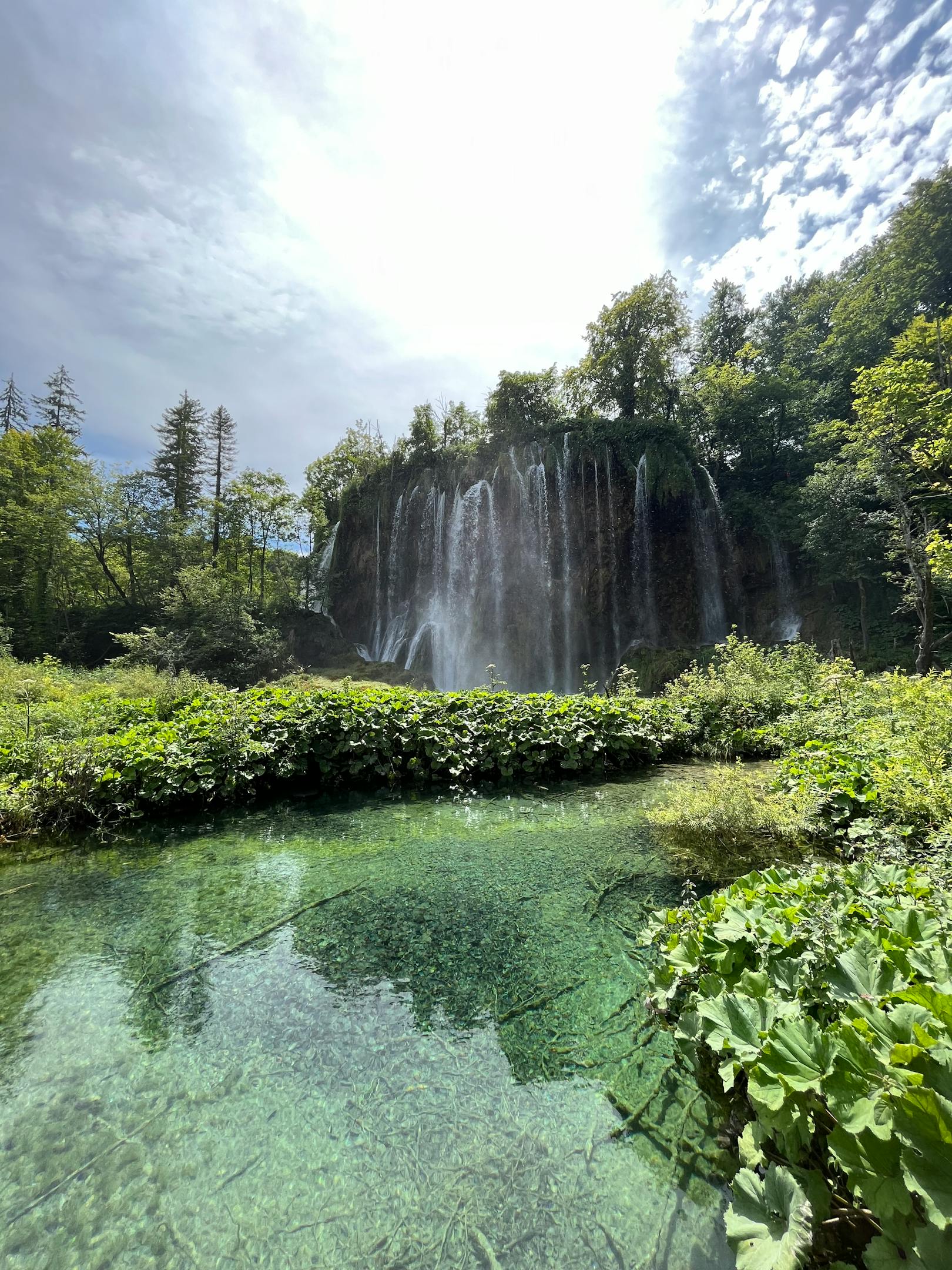
The water itself ranges in color from emerald green to sapphire blue to pale turquoise, depending on the depth, the mineral content, the angle of the sun, and what kind of algae is blooming in that particular lake on that particular day. Plitvice regulars say no two visits ever look the same. Show up on a cloudy day and you get deep teal; show up at noon in August with full sun and some of the lakes glow almost neon. It’s worth noting that the photos you’ve seen online almost certainly don’t exaggerate — the colors are actually real.
Which Section: Upper Lakes vs Lower Lakes
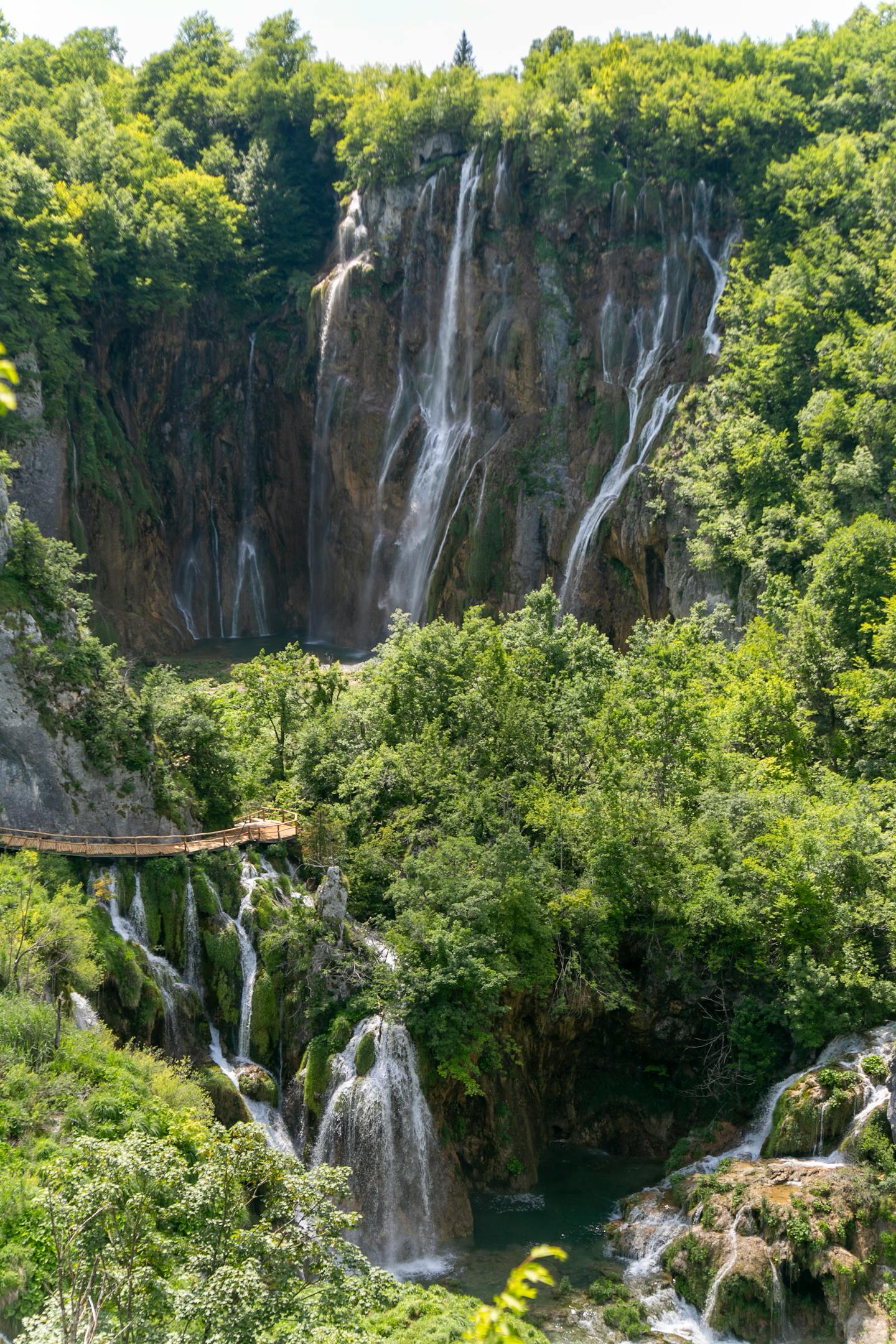
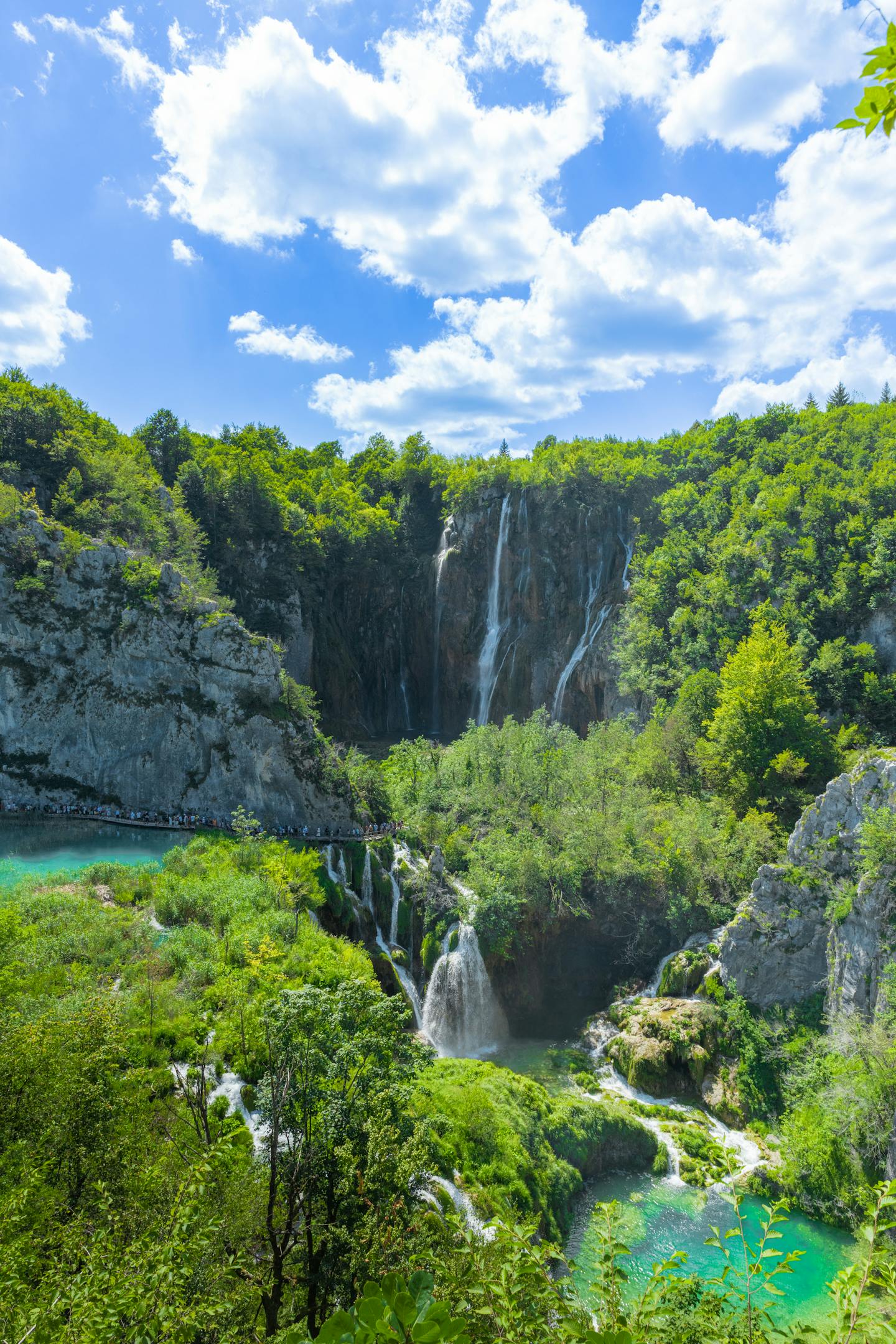
Plitvice is divided into two sections: the Upper Lakes (Gornja Jezera) and the Lower Lakes (Donja Jezera). Most day trips cover both, but they’re very different experiences. The Upper Lakes are larger, quieter, and surrounded by more forest — the boardwalks wind through thick woodland, and the waterfalls are smaller and more intimate. The Lower Lakes are where the drama lives: steep canyon walls, the massive Veliki Slap (Great Waterfall, 78 meters high — the tallest in Croatia), and the photogenic shots that end up on postcards.
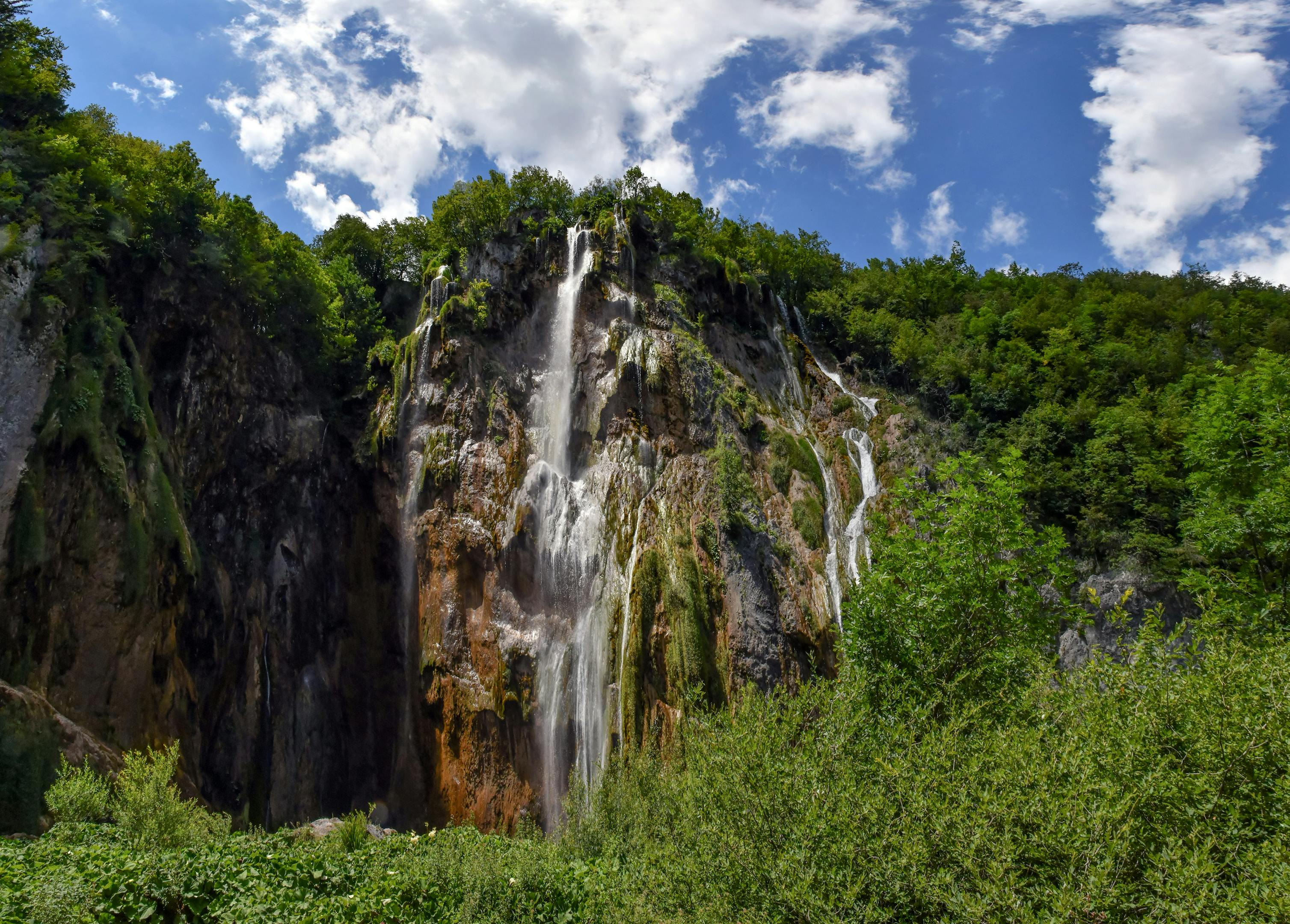
A good guided tour routes you strategically: starting at Entrance 1, hiking down the canyon to Veliki Slap first (when your legs are fresh), walking through the Lower Lakes up to the ferry crossing on Lake Kozjak (the largest lake in the park), riding the electric boat across Kozjak, then exploring the Upper Lakes, and finishing with either a shuttle bus back to the starting point or a walk along the upper ridge. This route covers about 6-7 kilometers of actual walking plus the boat and shuttle rides — it’s a full day, roughly 4-5 hours inside the park itself.
The 4 Best Plitvice Day Trips Reviewed
1. Plitvice Lakes: Guided Walking Tour with Bus and Boat Ride
This is the most popular Plitvice tour for a reason. It includes a licensed guide inside the park (crucial — without one, you’re just wandering along boardwalks with no idea what you’re looking at), the park shuttle bus that gets you between entrance points without adding kilometers to your walking day, and the electric boat crossing on Lake Kozjak that connects the Upper and Lower Lakes. The guiding quality is consistently excellent based on review patterns — Mario, Leo, Dalibor, and Leopold get named repeatedly.
One thing to know from actual reviews: the entry ticket includes the boat and shuttle rides, so you’re not paying twice for those services through this tour. You’re paying for the guide, the transportation between Zagreb and the park, and the organized logistics that save you from figuring out everything yourself. Reviewers specifically mention that going with a guide made them notice things they would have walked right past — specific viewpoints, the origin of certain place names, the flora and fauna, the historical importance of the area.
“Mario was an amazing guide. Tailored our tour to suit the weather conditions. His knowledge of the park both historically and physically made it well worth the cost of a tour guide. The park itself is stunning. Our best day so far in Croatia.”
“We thoroughly enjoyed this tour, the scenery was spectacular and our guide was probably the best we have had on our whole tour. A big thank you to Leo for sharing his knowledge of the park and history of the region.”
2. Plitvice Lakes with Ticket & Rastoke Tour from Zagreb
This tour is a secret weapon. It includes everything the standard Plitvice day trip includes — entrance ticket, guided walk through the park, boat ride, shuttle — but also adds a stop at Rastoke, a tiny village of watermills built on the confluence of the Slunjčica and Korana rivers about 30 minutes from the park. Rastoke looks like a real-life version of a storybook illustration: wooden houses balanced on waterfalls, working mills, small footbridges, tavernas serving trout caught that morning. Most visitors have never heard of it before they arrive and leave having taken 200 photos.
The tradeoff is that adding Rastoke means slightly less time inside Plitvice itself. You’ll still see both the Upper and Lower Lakes, and you’ll still get the full highlights, but you won’t have time for a second pass through any section or an extended lunch break. For most first-time visitors, that tradeoff is absolutely worth it — Rastoke is the kind of place you’d never think to visit on your own, and seeing both in one day gives you a much fuller picture of inland Croatia than just the lakes alone.
“Excellent full day experience with the very knowledgeable Martina. Highly recommend. The sights were breathtaking and the small village of Rastoke was very unique.”
“It was beautiful. Maja was our tour guide and took the time to stop and discuss information about the park, lakes, and waterfalls.”
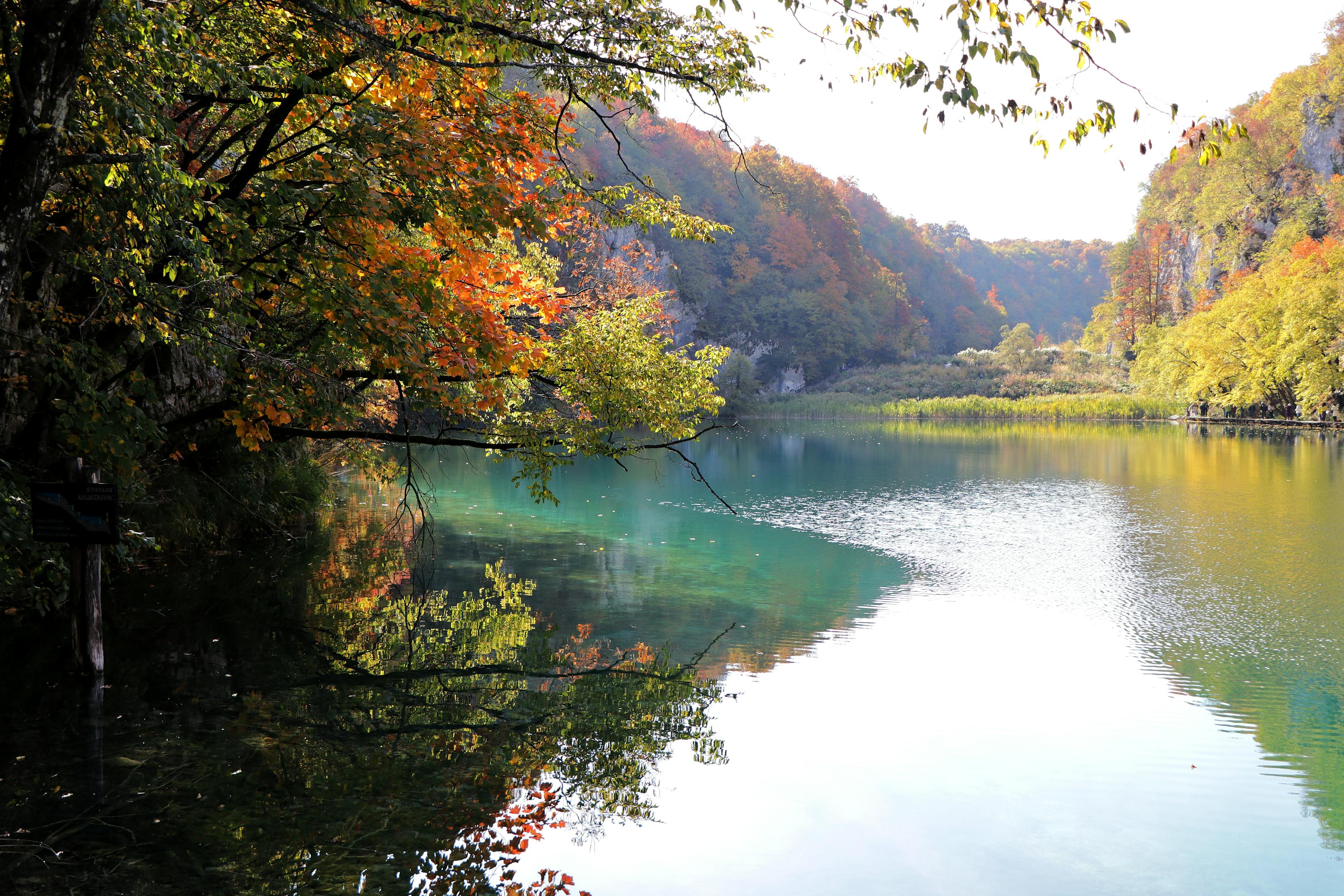
3. From Zagreb: Plitvice Lakes Guided Tour
If the Rastoke combo feels like scope creep and you just want to see Plitvice with a competent guide and minimum fuss, this is the option. It’s a straightforward coach ride from central Zagreb to the park, a guided walking tour covering both the Upper and Lower Lakes, the boat crossing included, and a return trip that gets you back to Zagreb by early evening. The group size is sometimes larger (reviewers mention 50+ people), which is worth noting if you find big tour groups exhausting — if that’s you, pick option 1 instead.
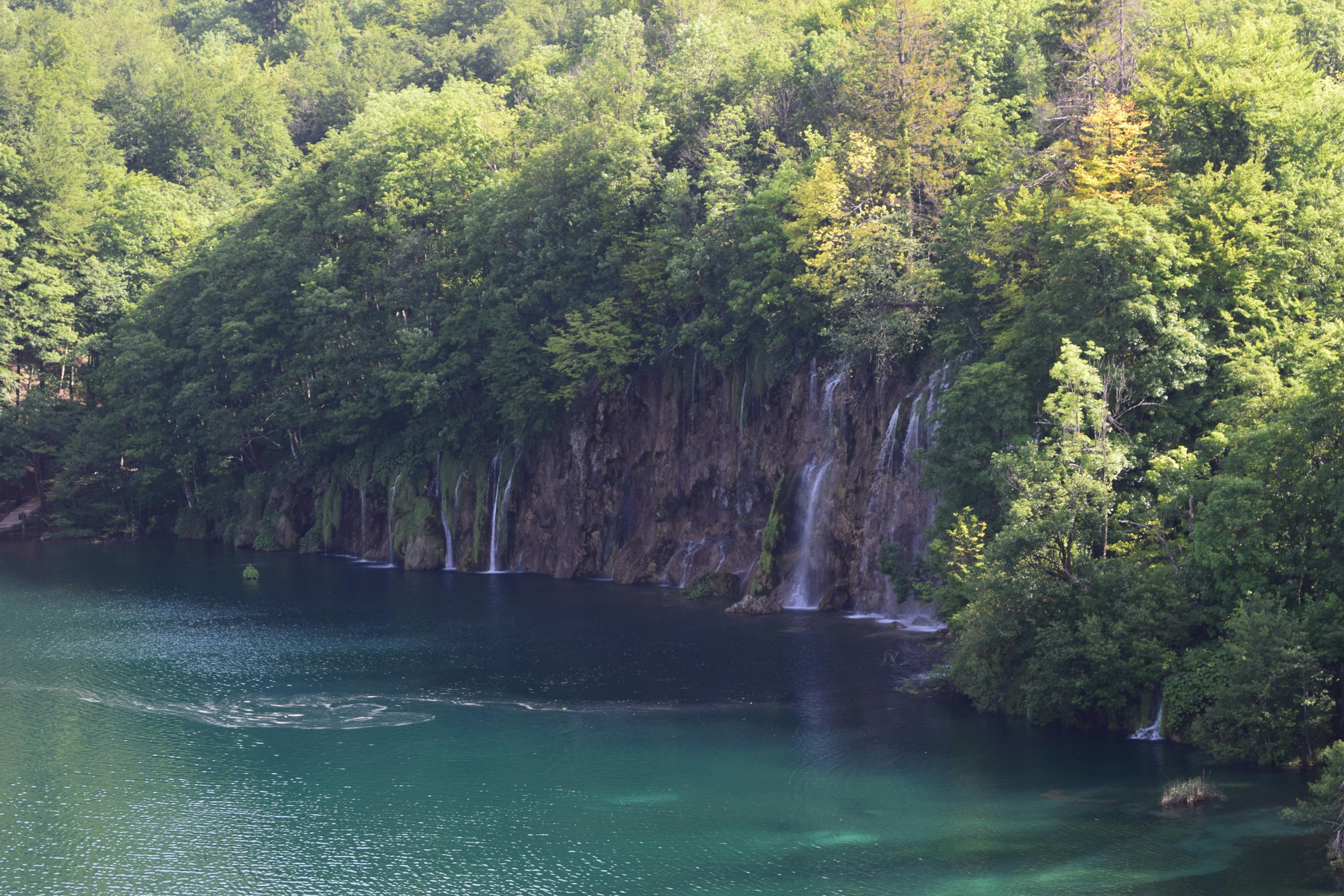
The strength of this tour is its reliability. Guides like Đanijela, Sanja, and Sonja get called out in reviews for being knowledgeable and communicative, setting clear expectations at the start of the day, and managing large groups effectively. The weakness is exactly what it sounds like — a larger group moving together means slower progress along the boardwalks, more jostling for photo angles, and less flexibility to linger at spots that catch your eye. Priced lower than the smaller-group options, so the value math works if you prioritize budget over intimacy.
“I had an amazing experience on today’s guided tour to Plitvice Lakes, thanks to our wonderful guide, Đanijela! She was incredibly honest and communicative, setting clear expectations about the day’s schedule. The tour was exceptionally well-planned, covering all the highlights with perfect timing.”
4. From Split: Plitvice Lakes Fully-Guided Day Tour
This is the tour for travelers who are based in Split and don’t want to relocate to Zagreb just to see Plitvice. It’s a long day — the drive is about 4 hours each way, so you’ll leave early (around 6:30 AM) and return late (usually after 8 PM), with about 4 hours in the park itself. Some travelers find that ratio brutal; others find it completely worth it because Plitvice is genuinely unique and skipping it feels wrong. The guiding quality is strong — Mia, Sanja, and Ivanka get consistently excellent reviews — and the bus is comfortable for the long haul.
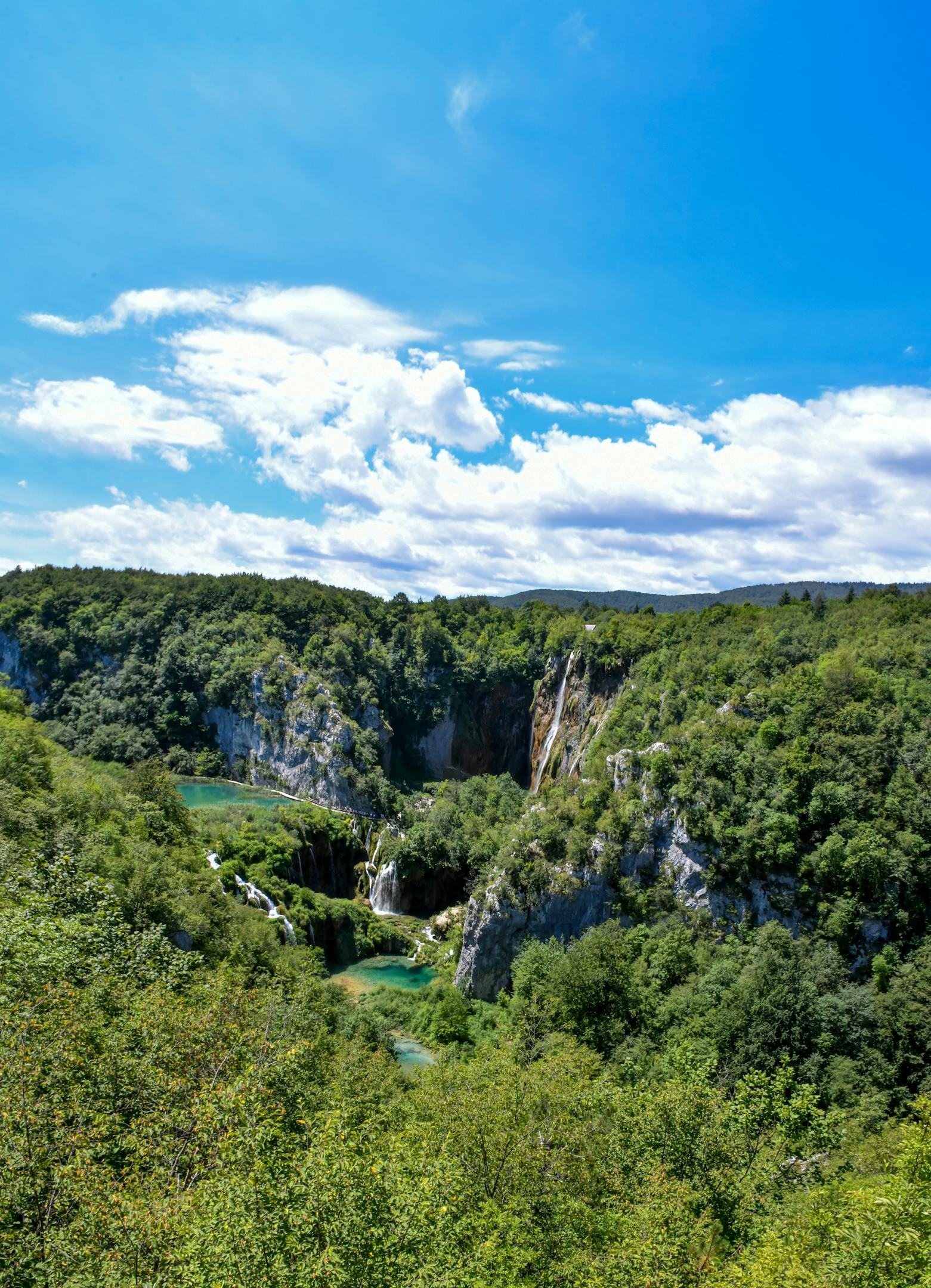
Practical tip if you pick this option: sleep on the bus both ways. The driver knows the route; your job is to conserve energy for the park itself. Bring snacks because the lunch stop is short and limited. Wear shoes you’ve already broken in because you’ll be walking 6-7 kilometers on uneven terrain after sitting in a bus for 4 hours. And mentally prepare for a 14-hour day — this is not a relaxed excursion.
“It was lovely. Although the trees are naked, I still really like the vibes there. Lakes and views from the top are breathtaking. If you love nature, this place is for you. Big thanks to Mia, she is informative and helpful.”
“The best tour guides I have ever had! Mia and Sanja kept us entertained with so much information. 3 hours trips didn’t bother us at all. Very professional and knowledgeable!”
The Mistake That Ruins People’s Plitvice Experience
Here’s the trap. Most first-time visitors assume that Plitvice, being a famous national park, must have well-marked paths and you can figure it out on your own. You technically can — the park sells entrance tickets and provides maps. But here’s what happens: you show up at 11 AM, join the queue of 500 other people who arrived at the same time, shuffle along the boardwalks at a pace dictated by the slowest person in front of you, take photos over strangers’ shoulders, can’t hear yourself think, and leave three hours later thinking Plitvice was overrated. It wasn’t overrated. You just visited it wrong.
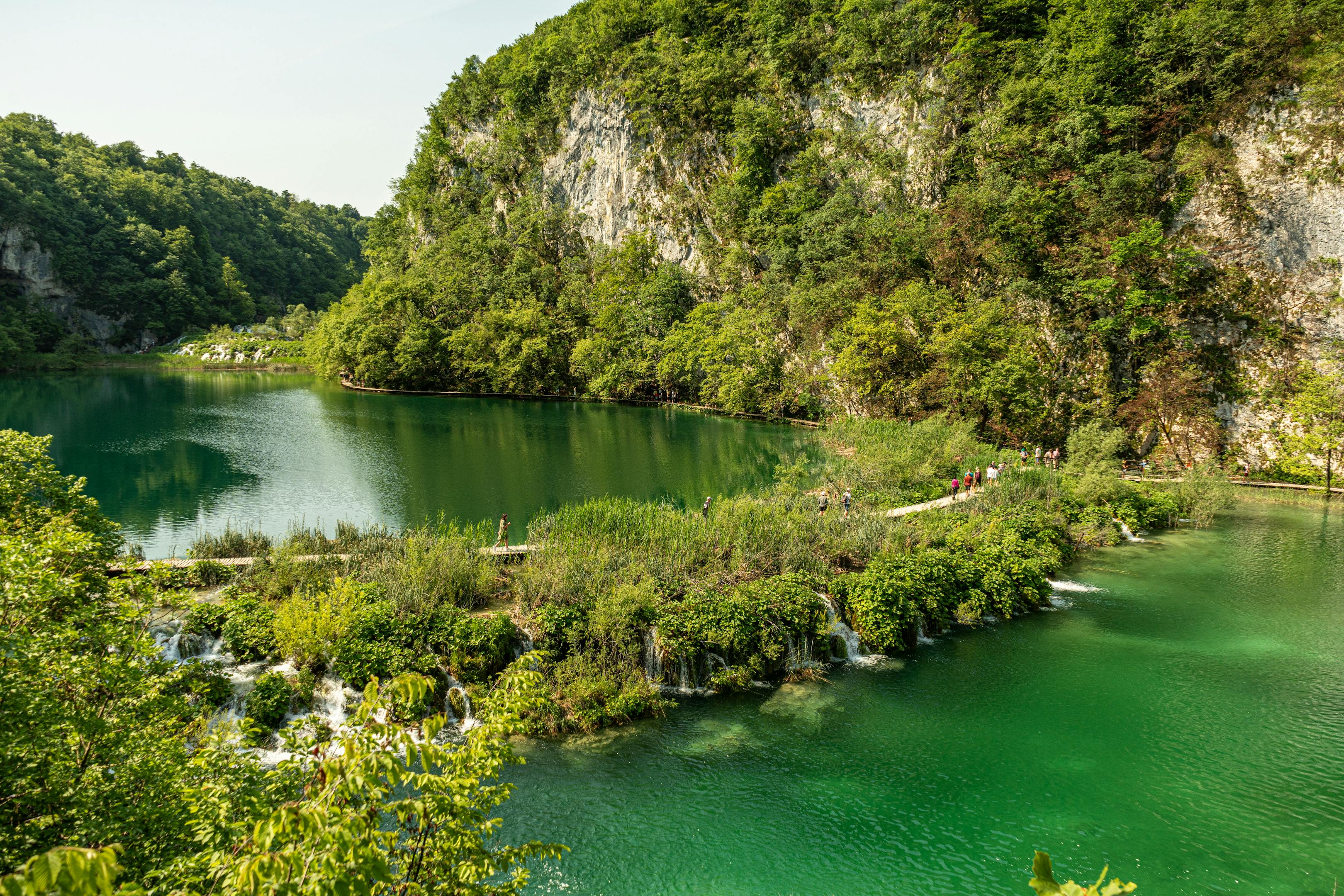
The fix is early arrival. The park opens at 7 AM in summer. Tours that arrive before 9 AM get you on the boardwalks during the golden window when the first tour buses haven’t arrived yet. For that first hour or two, you can actually walk at your own pace, hear the waterfalls, see the lakes without someone’s selfie stick in the frame, and take photos that aren’t cluttered with other travelers. The difference between 8 AM Plitvice and noon Plitvice is the difference between a transcendent experience and a logistical slog.
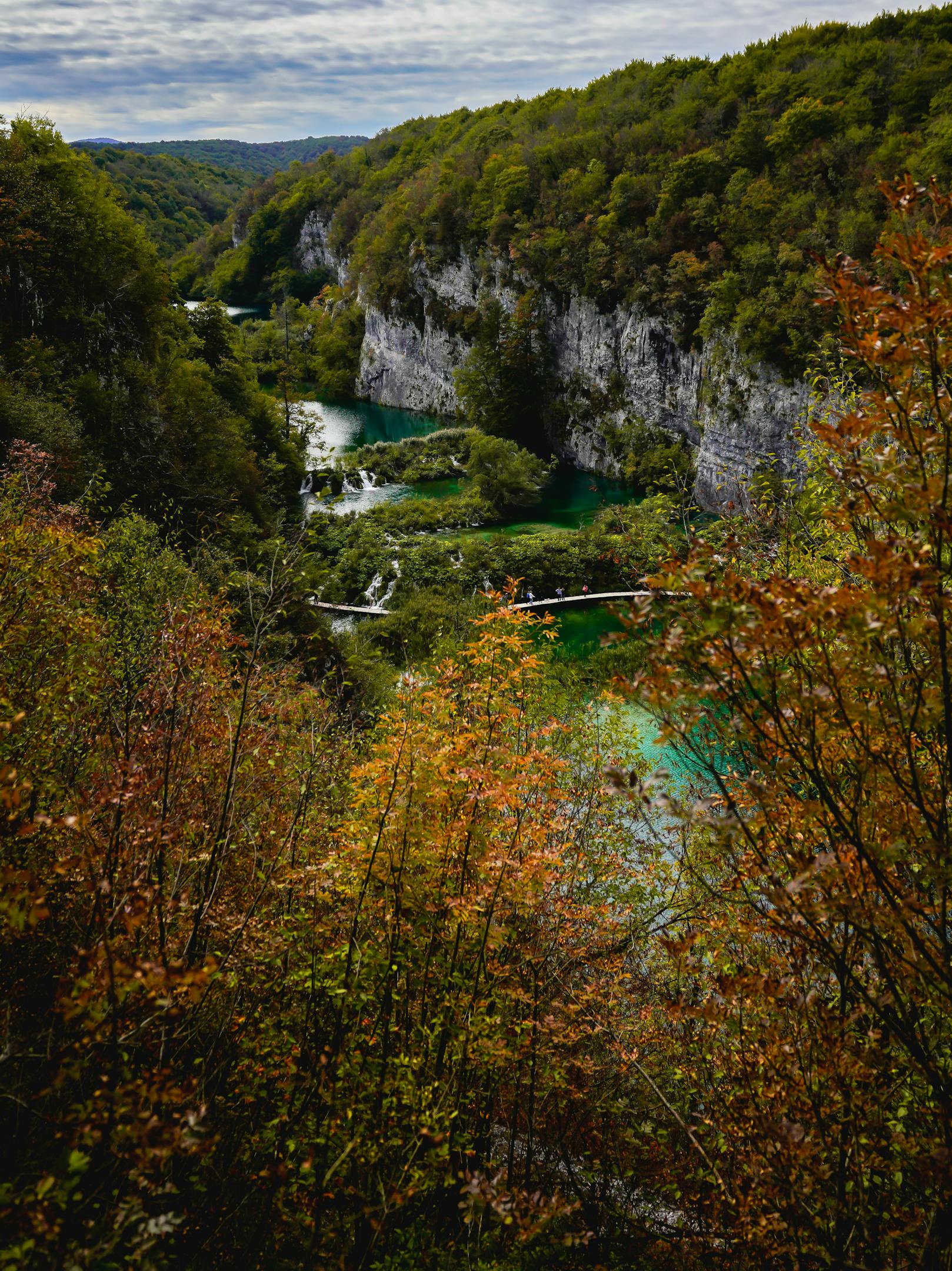
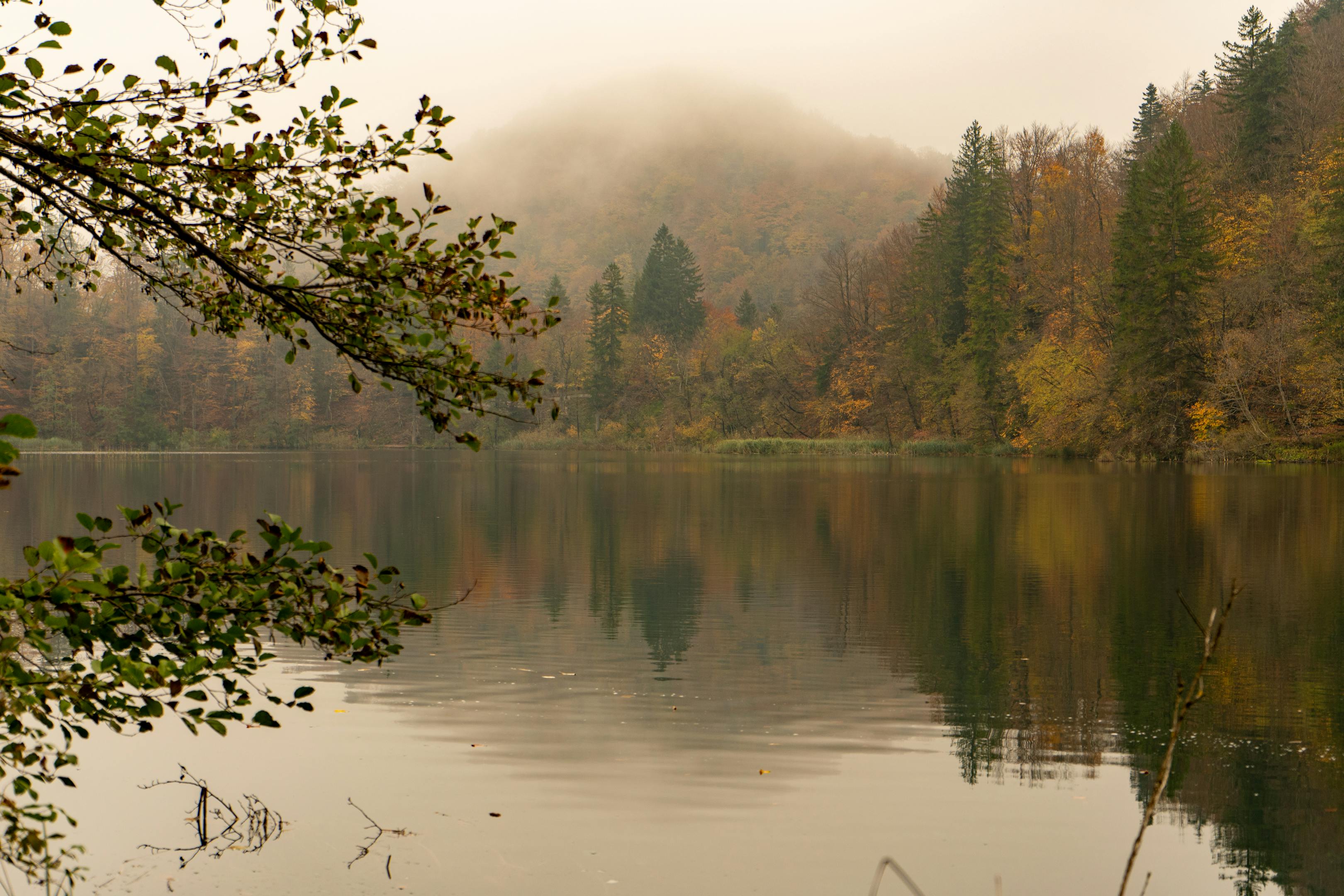
The other fix is seasonal. June and September are the sweet spots: warm enough for comfort, cool enough for walking long distances, and slightly less crowded than the July-August peak. October is wonderful for autumn colors but some of the park shuttles run on reduced schedules. Winter Plitvice is a completely different experience — waterfalls freeze, the boardwalks are icy, and the entire park takes on a muted, ghostly quality. If you visit in January or February you might have the place almost to yourself, though some sections close due to safety concerns.
What the Boardwalks Are Actually Like
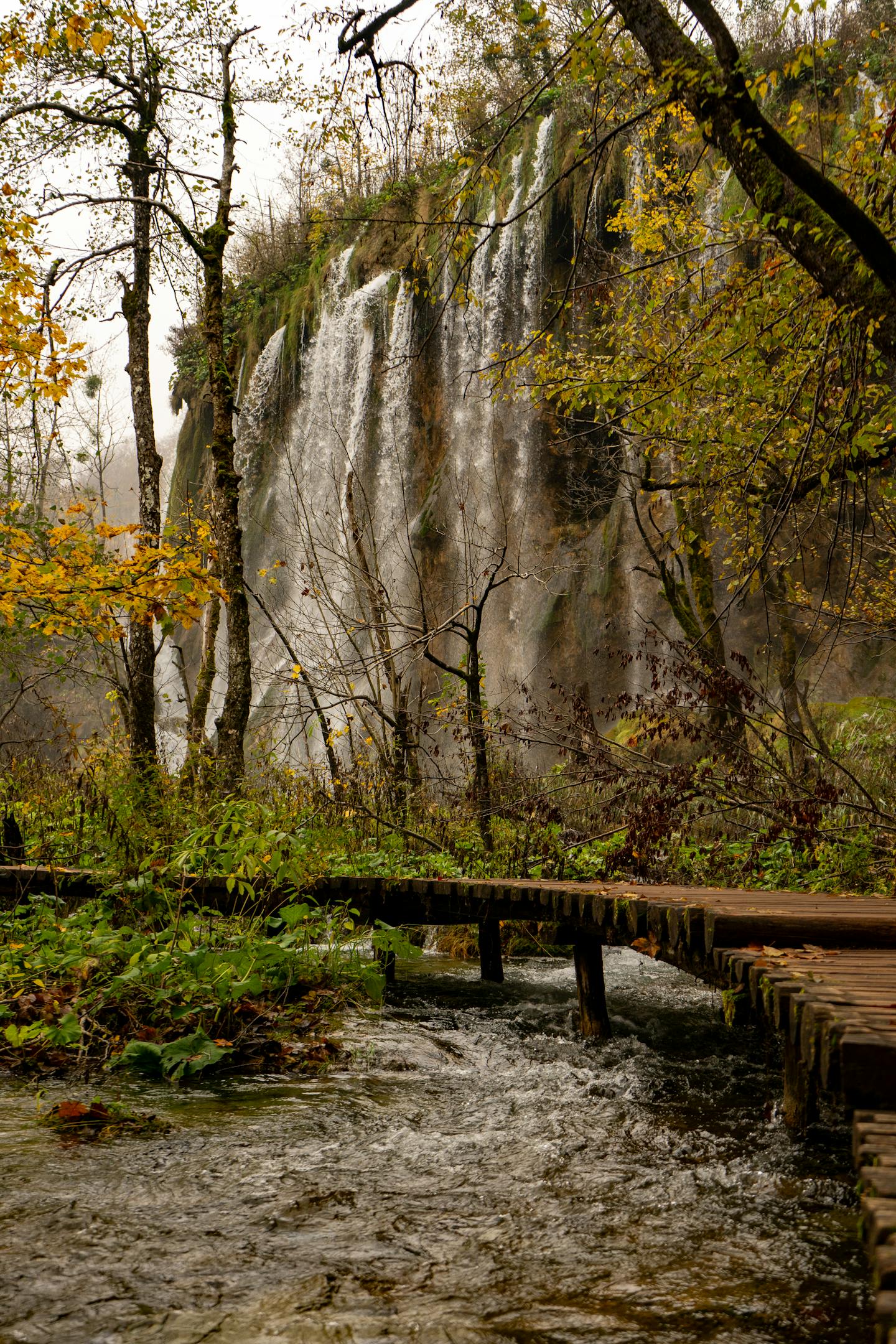
The Plitvice boardwalks are narrow. In most places they’re about 80 centimeters wide — just enough for two people to pass each other with care. They’re made of wooden planks set on piers that elevate them above the water surface, and they often run right alongside (or directly over) the travertine edges where the waterfalls pour from one lake to the next. You can stand on a boardwalk with water rushing beneath your feet and cascading just inches from your shoes. It’s genuinely thrilling the first time.
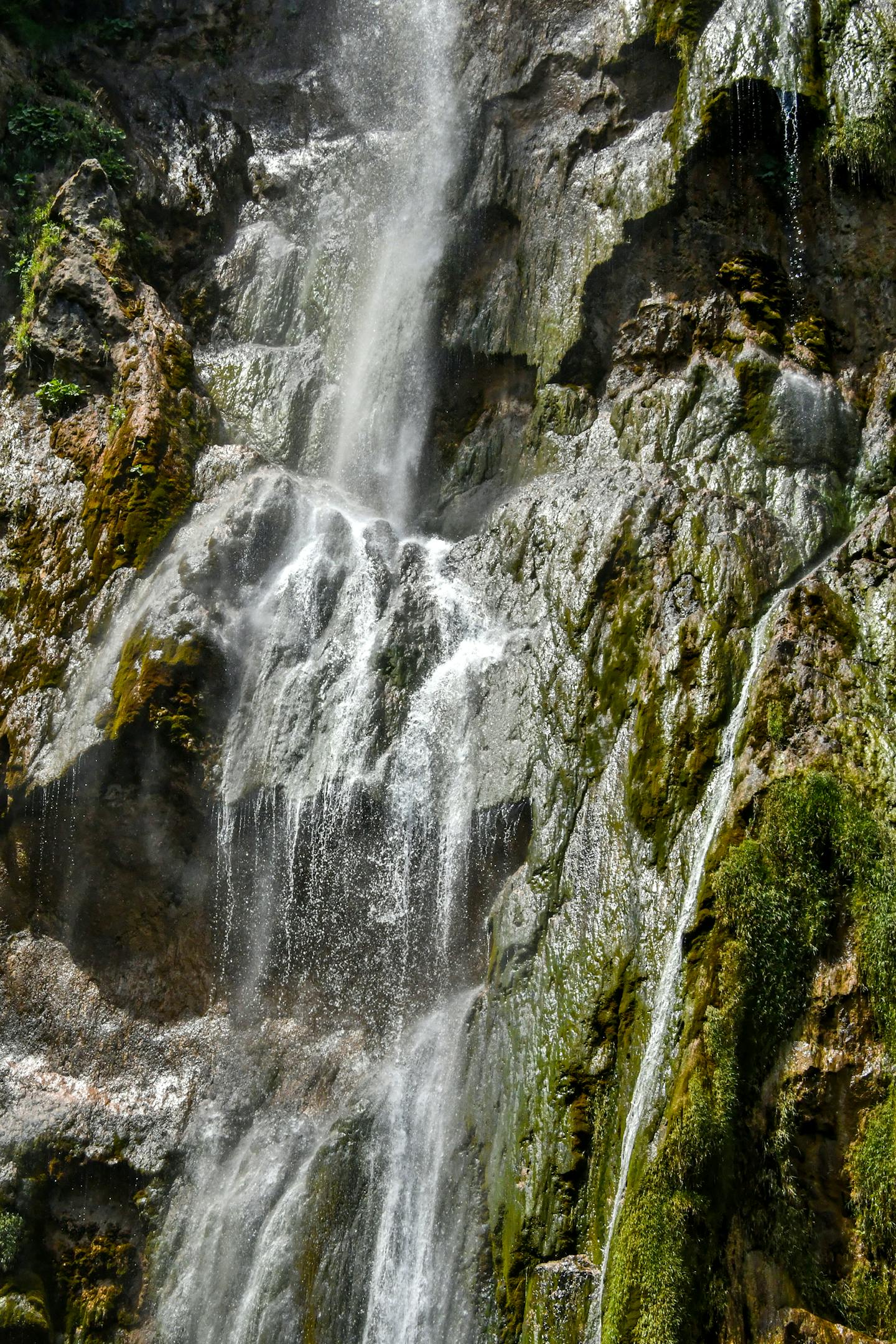
The boardwalks are also slippery when wet, which is a constant factor because the air near the waterfalls is always slightly misted. Wear shoes with real grip. Sandals and dress shoes are a bad idea. Many people fall at Plitvice every year, and while most falls result in nothing worse than wet pants and bruised pride, occasional serious injuries happen. The park is actively managed but there are no safety railings on much of the boardwalk system — you’re relying on your own balance and good sense.
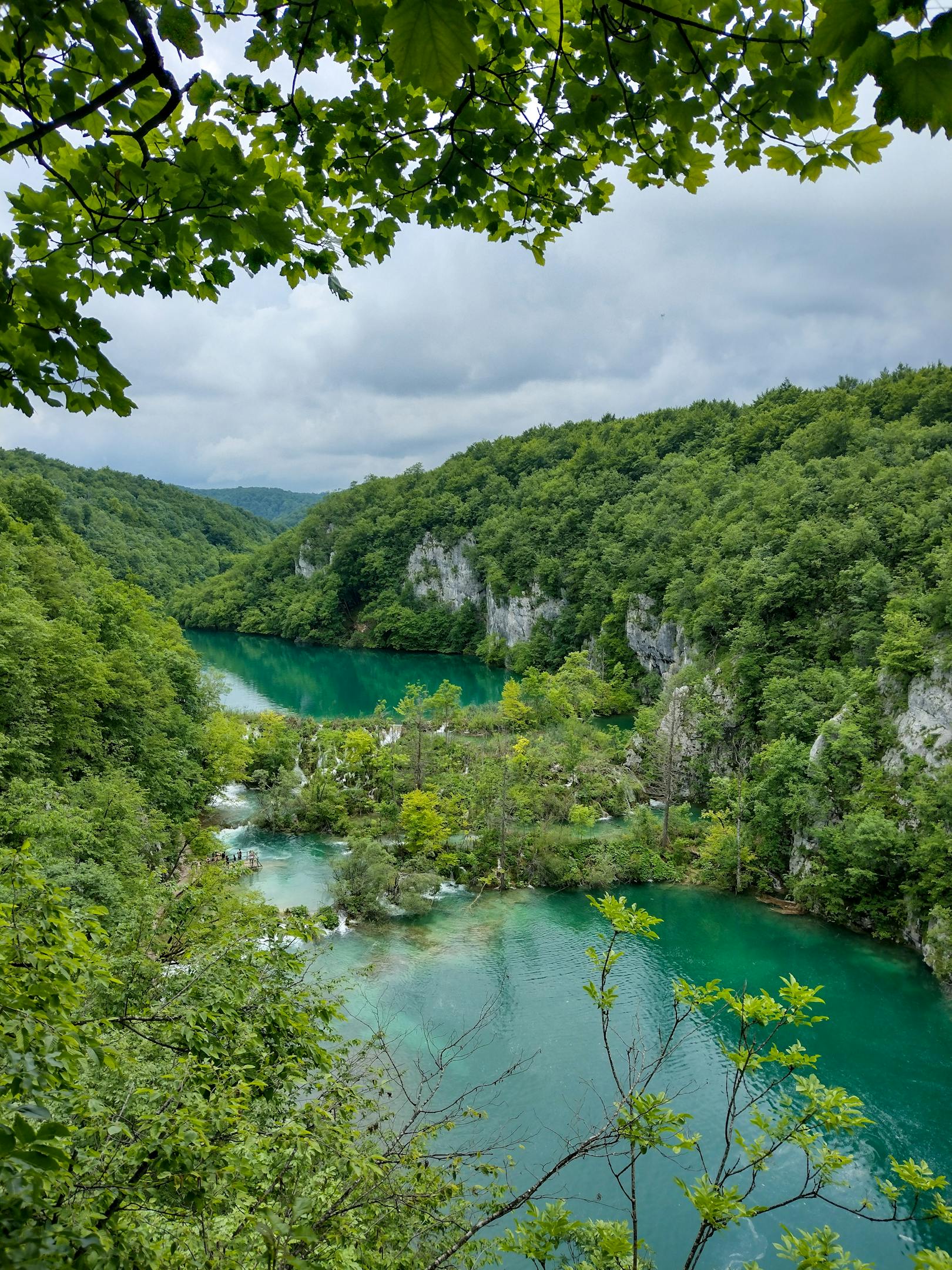
The History and Science of the Lakes
Plitvice became Croatia’s first national park in 1949 and was added to the UNESCO World Heritage list in 1979 — one of the earliest inscriptions. The area has been protected in some form since 1893, when local conservationists began advocating for its preservation against logging operations. The name “Plitvice” comes from the Croatian word “plitko” meaning “shallow,” though the lakes themselves reach depths of over 40 meters in places. The “shallow” descriptor refers to the original perception that these were not proper deep lakes but rather a chain of connected pools, which is accurate.
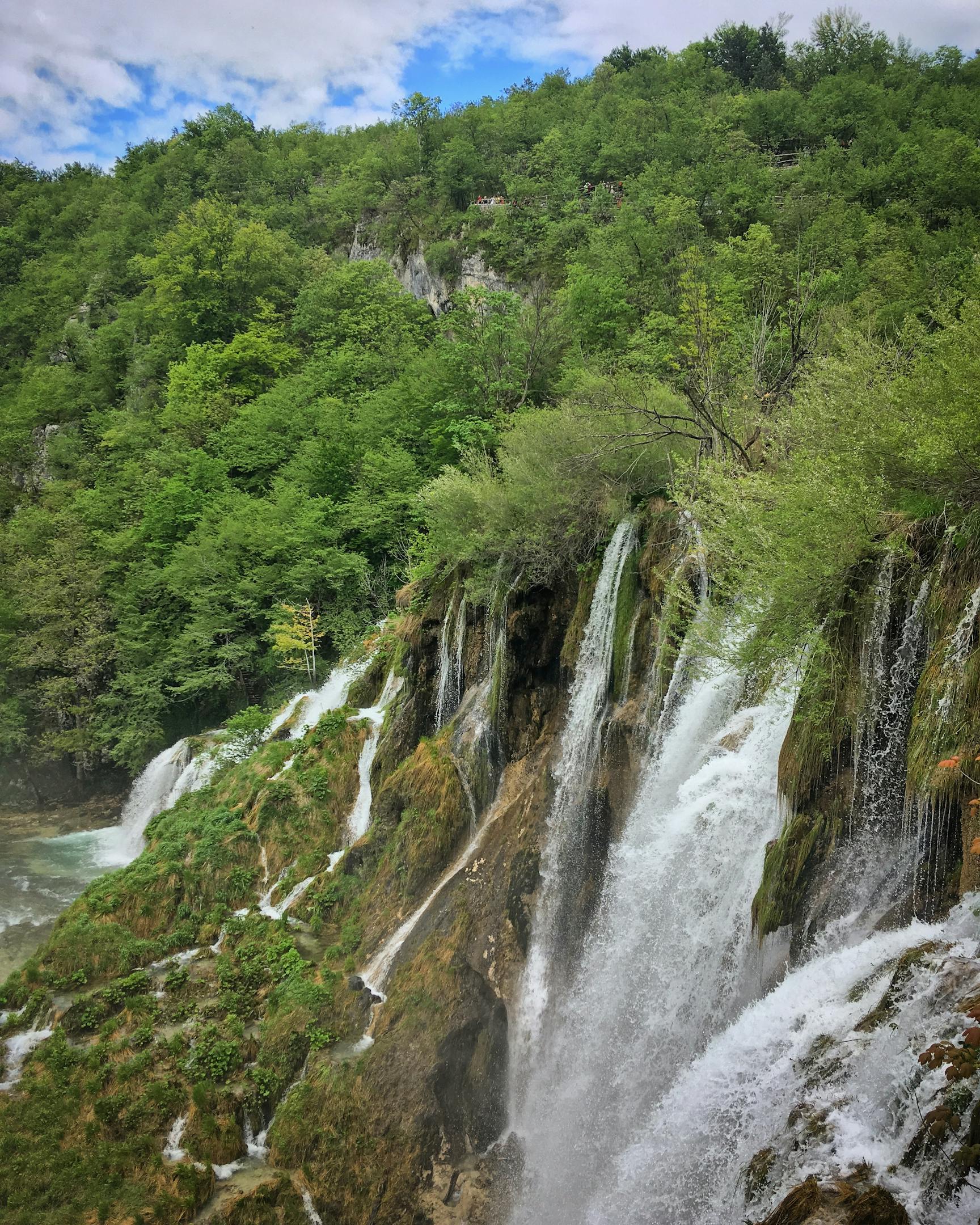
The park has a darker recent history. The first shots of the Croatian War of Independence were fired here on March 31, 1991 — a day still called “Bloody Easter” in Croatia — when Croatian police clashed with Serbian paramilitaries who had seized the park. The conflict that followed lasted four years, during which Plitvice was under Serb control and largely off-limits to travelers. When the war ended and the park reopened in 1995, rangers had to clear landmines from hiking trails. Today, the war damage is invisible unless you know where to look, but local guides usually mention it — particularly at the ranger station that was the site of the initial clash.
The biodiversity of the park is also extraordinary. Plitvice is home to brown bears, grey wolves, lynx, wild boar, red deer, and over 150 bird species. The bears and wolves are extremely rarely seen — they stay in the less-visited backcountry — but their presence means the park genuinely functions as a protected wildlife habitat, not just a scenic tourist destination. Rangers sometimes close sections of the park when animals are observed moving through them.
Practical Tips for Plitvice
Book tickets in advance in summer. The park introduced a daily visitor cap in 2019 to prevent overcrowding, and in July and August, tickets regularly sell out. Organized tours include your entry ticket as part of the booking, which is one of the key reasons they’re worth it during peak season — you don’t need to stress about whether tickets will still be available the day you want to visit.
Bring layers. Plitvice sits at an altitude of 400-700 meters, which means it’s noticeably cooler than the coastal cities you’re likely arriving from. A morning in June at Plitvice might be 15°C even when Split is already at 28°C. By afternoon the park warms up, but mornings can be genuinely chilly. A light jacket or fleece that you can stuff in your daypack is worth having.
Bring water and snacks. There are cafés at the entrances and a small restaurant at one of the mid-park stops, but the food is expensive and the queues can be long during peak hours. A packed lunch from your hotel or a Zagreb bakery gives you flexibility to eat wherever looks most appealing, which at Plitvice is generally anywhere with a view — which is everywhere. Don’t drink from the lakes under any circumstances, no matter how clean the water looks.
For photography, bring a polarizing filter if you’re using a proper camera. The water’s reflections can blow out highlights and obscure the turquoise color underneath; a polarizer cuts through that and reveals the real lake colors. Phone cameras do surprisingly well at Plitvice because the light is usually good, but specific angles — the Veliki Slap overlook, the boardwalks above the Lower Lakes — genuinely benefit from a wide-angle lens you can’t get from a phone.
One more practical note on routes: the park has two main entrances (Entrance 1 and Entrance 2), and experienced visitors debate which is the better starting point. Entrance 1 is closer to the Lower Lakes and Veliki Slap, so you get the dramatic views right at the start. Entrance 2 is closer to the Upper Lakes and gives you a gentler introduction. Most organized tours default to Entrance 1, which is fine, but if you’re doing this independently and want to avoid the thickest crowds at Veliki Slap, starting from Entrance 2 and working backwards can be a smart inversion. You’ll end your day at the most photographed spot in the park just as most day-trippers are leaving, which means golden-hour light and fewer people in your shots.
More Croatia Guides Worth Reading
Plitvice is arguably Croatia’s most otherworldly landscape, but the coastal cities and islands offer a completely different side of the country. If you’re pairing Plitvice with time in Dalmatia, the Split to Krka Waterfalls tours are the logical complement — Krka is similar in concept to Plitvice (terraced waterfalls, travertine barriers) but allows swimming in designated areas and is easier to reach from the coast. The Blue Cave and Hvar 5-island speedboat tours from Split are a great contrast to the forest-and-waterfalls vibe, swapping inland greenery for turquoise sea caves and island-hopping.
For travelers coming up from the south, Dubrovnik is the other must-stop city. The Dubrovnik City Walls and walking tours page covers the best ways to experience the medieval walled city on foot, while the Elaphite Islands cruises from Dubrovnik offer an island-hopping day trip to three nearby car-free islands. Pop-culture fans shouldn’t miss the Game of Thrones tours in Dubrovnik that walk you through the actual filming locations used for King’s Landing. And if you’re based in Zagreb for your Plitvice trip, carve out an afternoon for the Zagreb walking tours and WWII tunnels — the capital is genuinely interesting once you peel back the first layer.