
You can walk Florence’s historic centre in 90 minutes. Alone, you see the buildings. With a guide, you understand why an 800-year-old wool-merchant town invented the Renaissance.
€27 is the cheapest useful thing you’ll book here.
Quick Picks
- The best-value walk — Florence Highlights Walking Tour with Expert Guide ($27). 90 minutes, the essentials.
- Longer format — Florence Guided Walking Tour ($31). Two hours, more depth at each stop.
- Walk + David — Highlights Walking Tour & Accademia Priority Entry ($37). Walk plus Michelangelo’s David in one ticket.
- Quick Picks
- Why You Need a Guide for Florence Specifically
- Booking the Three Real Options
- Florence: Highlights Walking Tour with Expert Guide —
- Florence: Guided Walking Tour —
- Florence Highlights Walking Tour & Accademia Priority Entry —
- The Route You’re Actually Walking
- What 600 Years of Florentine History Get Compressed Into
- The Best Time to Take the Walking Tour
- Why the Accademia Add-On Makes Sense
- Group Sizes and Tour Quality
- What Walking Tours Can’t Do
- Combining With Other Florence Activities
- What to Bring and Wear
- Booking Mistakes That Matter
- The Honest Verdict
Why You Need a Guide for Florence Specifically
Rome is a city where you can mostly muddle through with a guidebook. Florence is not. The reason is density. Within a 1.5km walking radius, the city packed roughly 200 years of cultural revolution into 30 square blocks. Every building you walk past has a story. The Medici lived there. Dante was born here. Galileo defended his telescope down that street. Without a guide, all of this collapses into “old Italian buildings.”
A 90-minute guided walking tour gives you the conceptual map. After it you can walk through the same streets on your own and recognize what you’re looking at. The walking tour functions as a primer that makes the rest of your Florence trip make sense — every museum visit, every restaurant meal, every casual evening walk benefits from having the framework.
Skip the walking tour and you’ll see Florence the way most tourists do — as a series of pretty backdrops for selfies. Take the walking tour and the same backdrops become a story you’re inside.
Booking the Three Real Options
The Florence walking-tour market is competitive — dozens of operators run similar routes at similar prices. The three below are the proven ones with consistent guide quality.
Florence: Highlights Walking Tour with Expert Guide — $27
The default. 90 minutes covering Duomo, Baptistery, Piazza della Signoria, Ponte Vecchio, and the streets between. Small groups (10-15), English-language guide. Exactly what you see — the route is tight but the guide fills in 600 years of context. Best value option.
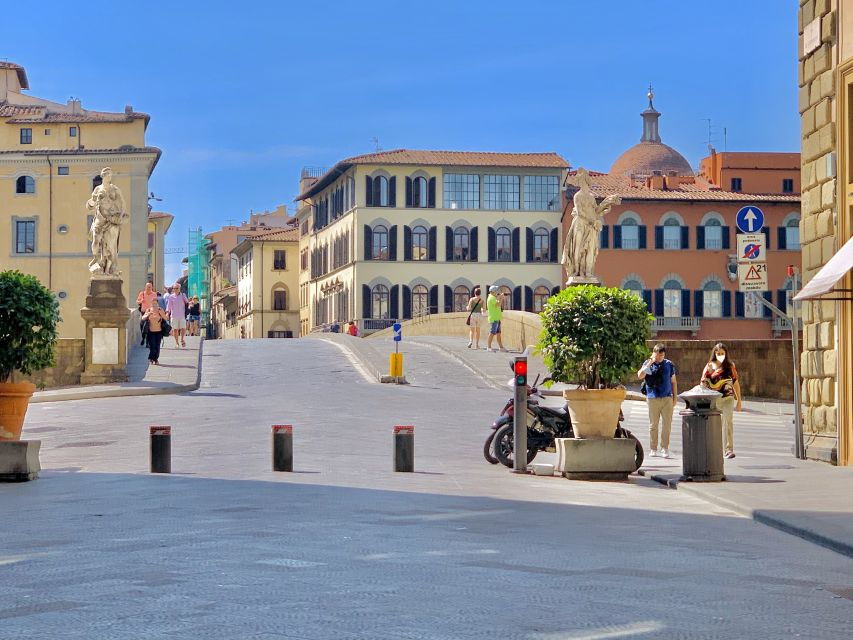
Florence: Guided Walking Tour — $31
The 2-hour version of the same route. Same operator’s longer format with more storytelling time at each stop. Worth the extra $4 if you want depth over speed. Which format works better for which type of traveller is in the write-up. The 90-minute version works better if you’re also fitting in a cooking class and the Uffizi.

Florence Highlights Walking Tour & Accademia Priority Entry — $37
The walking tour plus skip-the-line entry to see Michelangelo’s David at the Accademia. Why bundling beats booking the David separately is the honest math. The David visit alone usually costs $20-25 with timed-entry friction; bundling saves both money and queue time. Pick this if David is one of your Florence priorities.
The Route You’re Actually Walking
All three operators run essentially the same route with minor variations. The standard sequence:
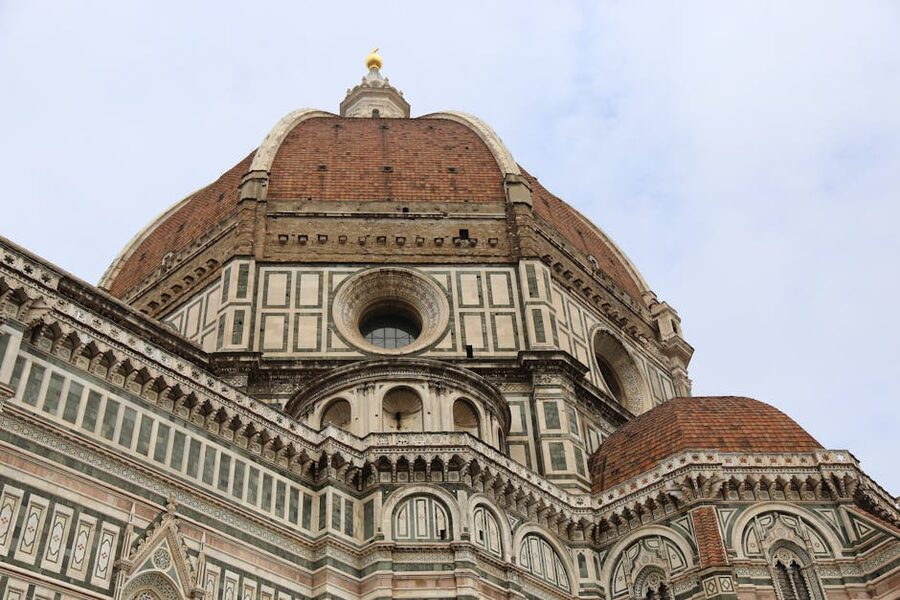
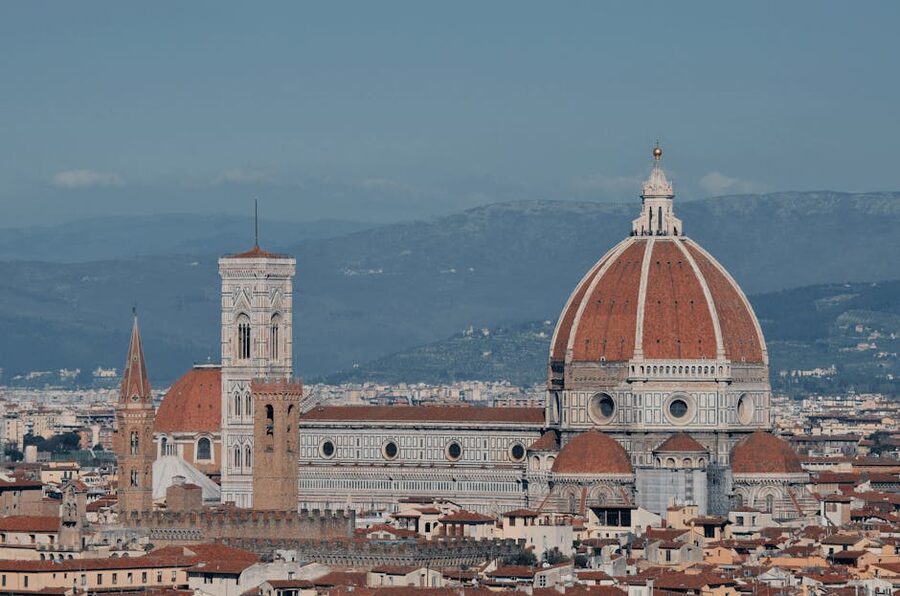
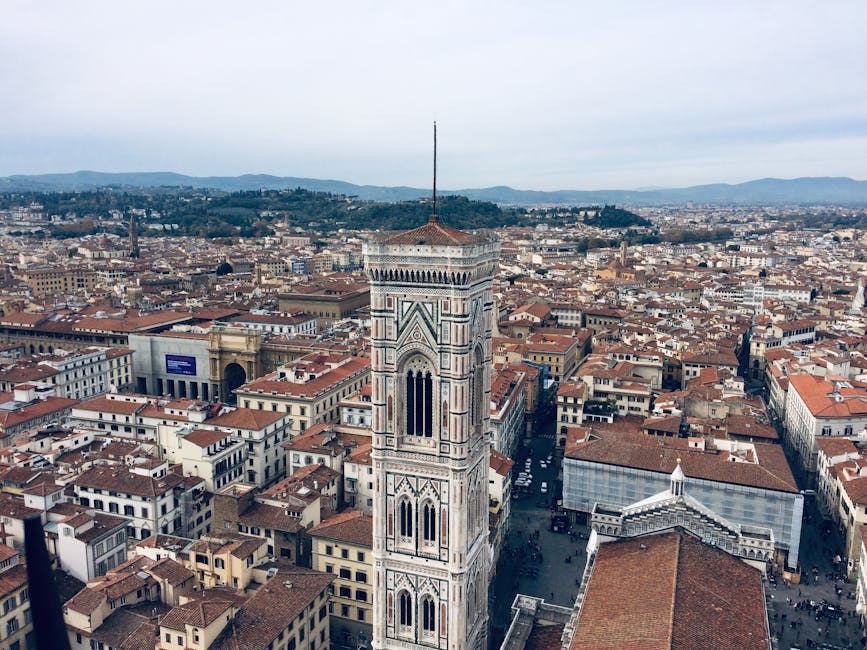
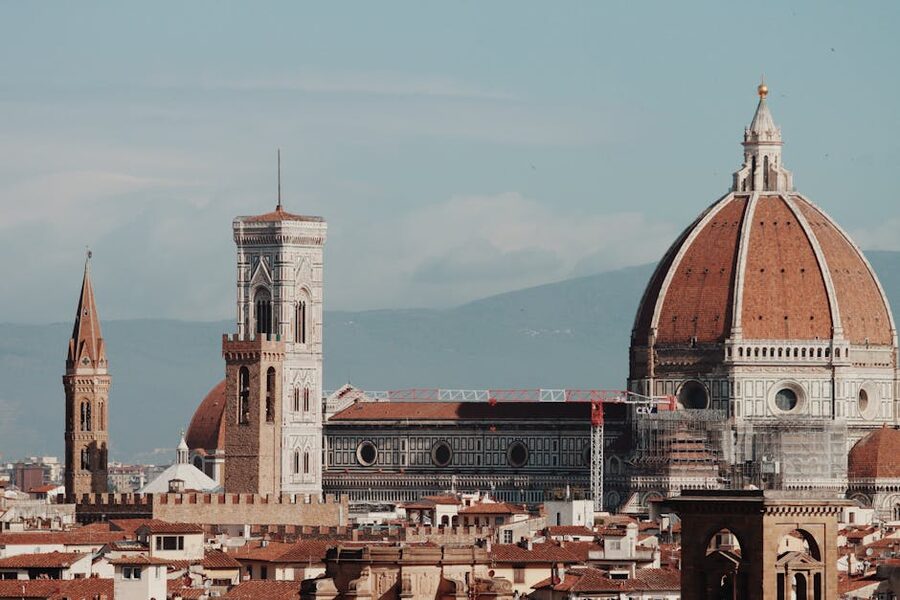
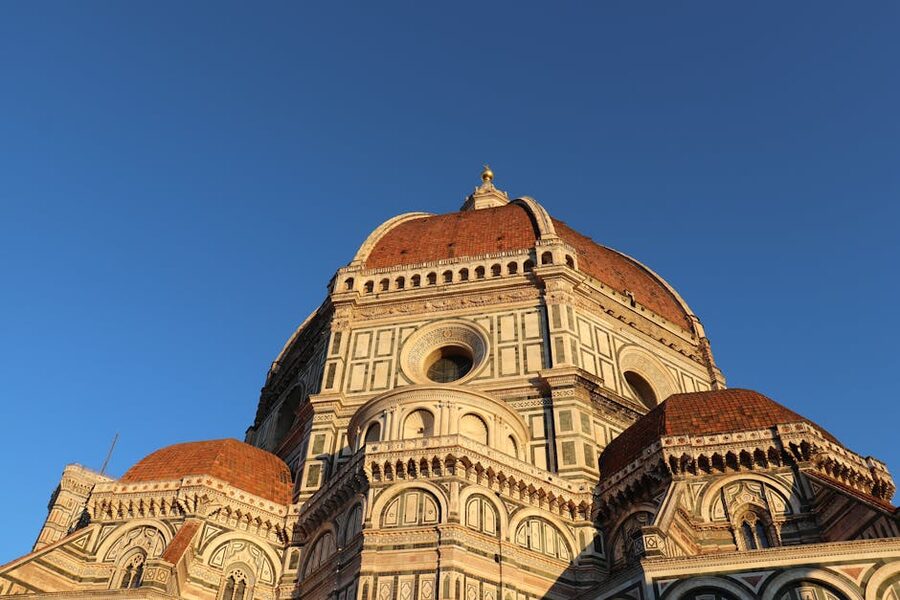
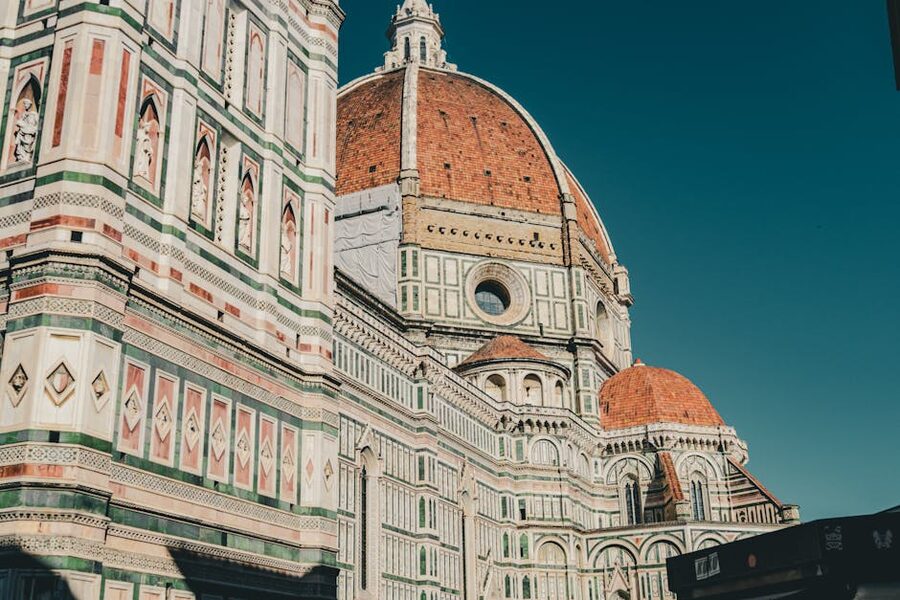
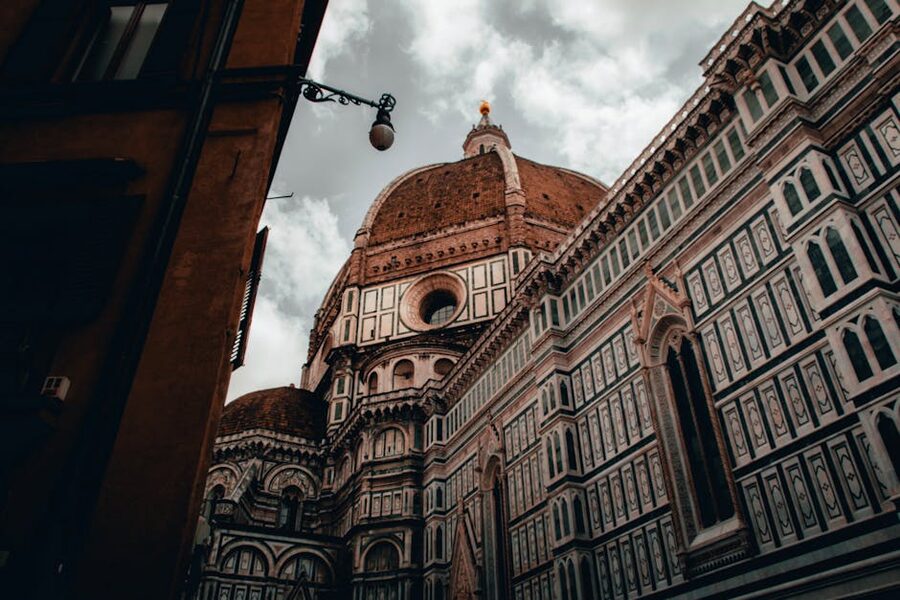
Stop 1: The Duomo Complex. Cathedral exterior, Baptistery exterior, Giotto’s Campanile (bell tower). 20-25 minutes. The guide explains Brunelleschi’s dome (built 1420-1436), the bronze doors of the Baptistery (Ghiberti’s “Gates of Paradise” — replicas now, originals in the museum), and why the Duomo’s striped marble facade is actually a 19th-century reconstruction (the original facade stayed unfinished for 500 years).
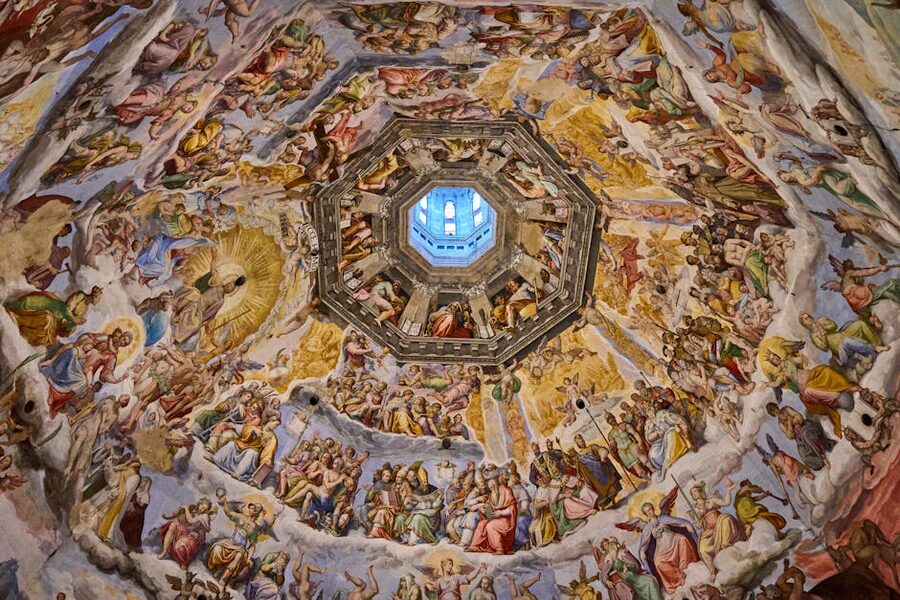
Stop 2: Walking through the historic streets. 10-15 minutes between the Duomo and Piazza della Signoria. The guide points out things you’d walk past — the house Dante was born in (Casa di Dante, now a small museum), the Bargello (the original Florentine prison turned sculpture museum), the Orsanmichele church-turned-sculpture-display, and various medieval guild halls.
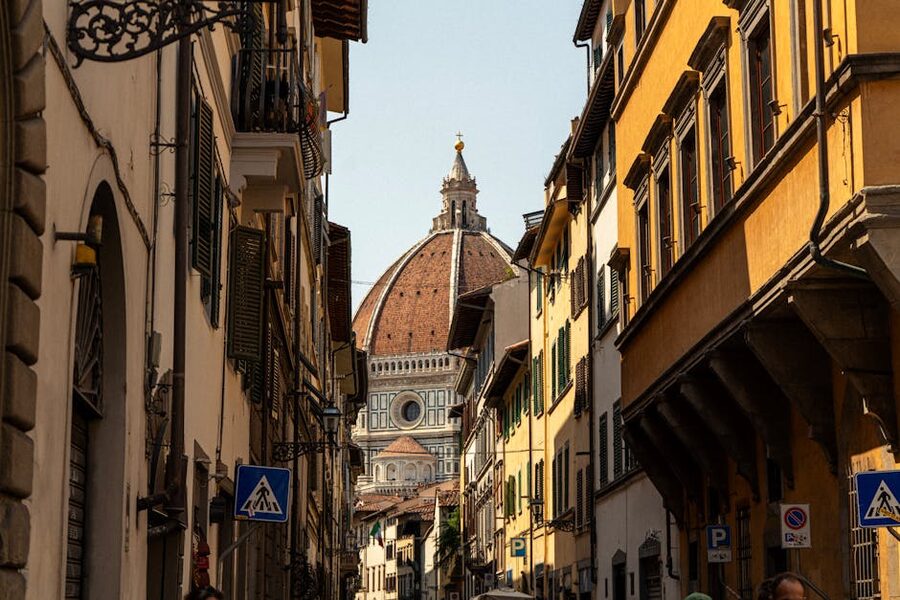
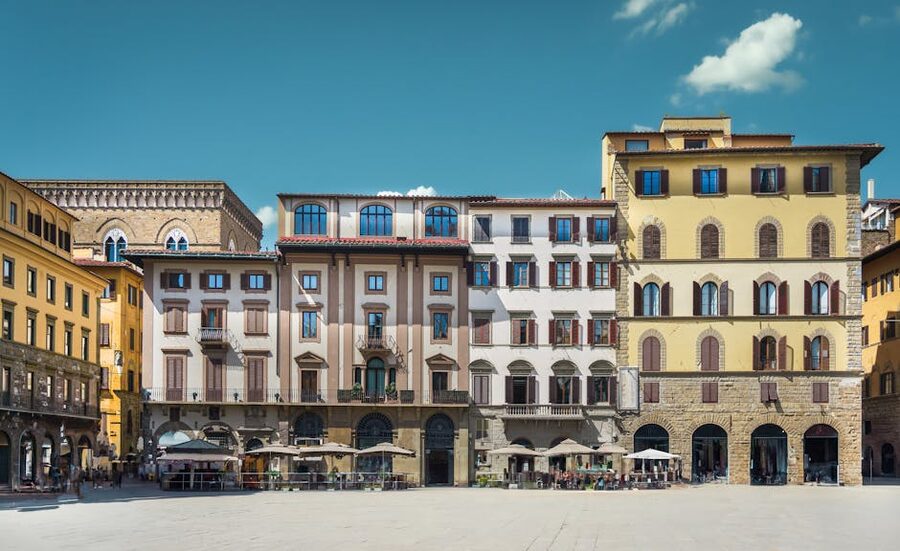
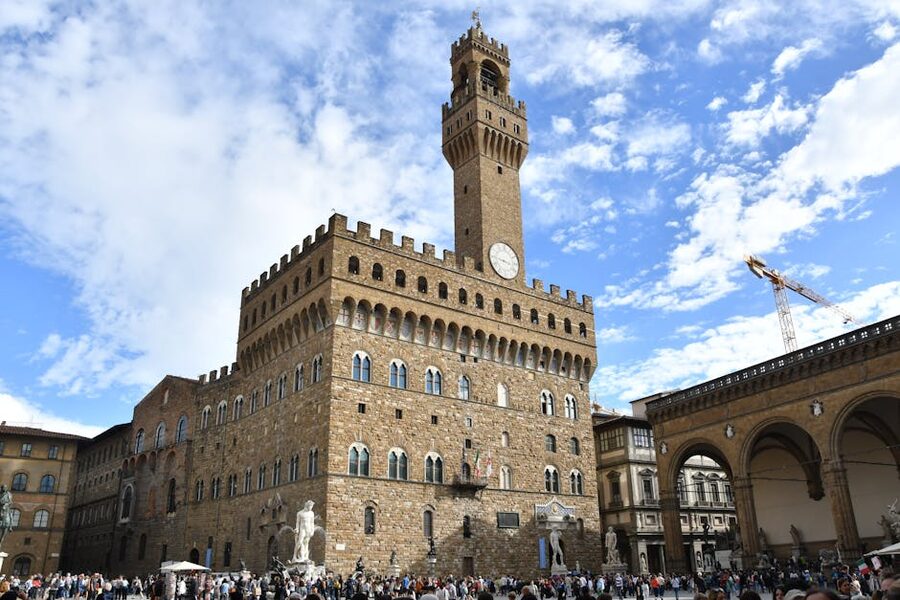
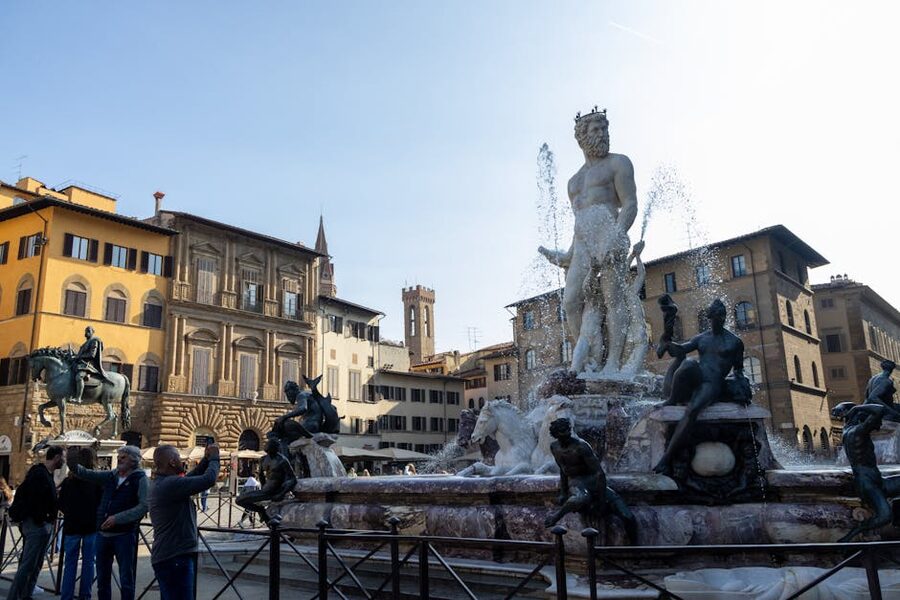
Stop 3: Piazza della Signoria. 20 minutes. The political heart of Florence — Palazzo Vecchio (city hall since 1299), the Loggia dei Lanzi (open-air sculpture gallery with Cellini’s Perseus and Giambologna’s Rape of the Sabines), the David replica (the original is at the Accademia 10 minutes away), and the Neptune Fountain. This is the densest stop on the tour because the visual content per square metre is extraordinary.
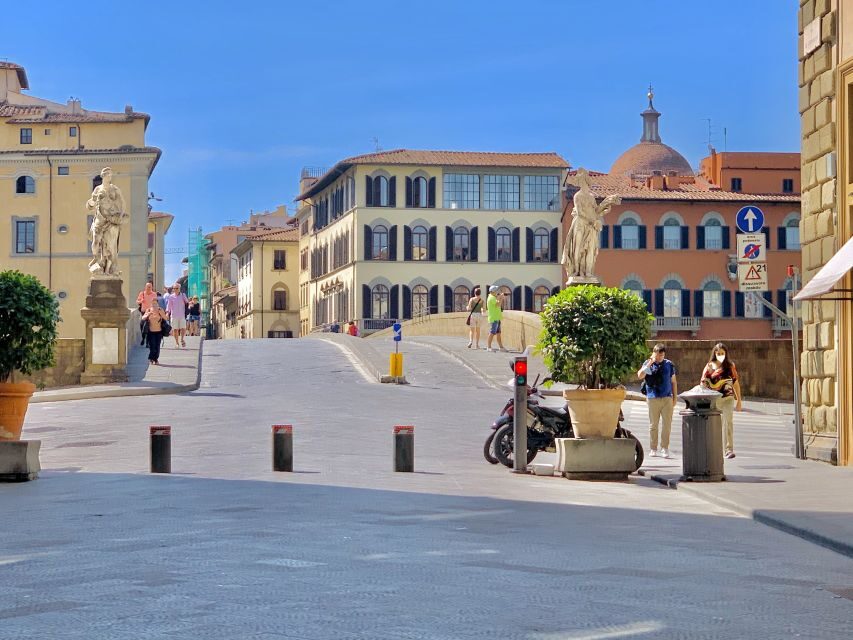
Stop 4: Walking to Ponte Vecchio. 5 minutes. Past the Uffizi Gallery (the world’s first museum, opened to the public in 1769), Vasari’s elevated corridor connecting the Uffizi to the Pitti Palace across the river (built so Cosimo I could move between buildings without mixing with commoners), and into the bridge.
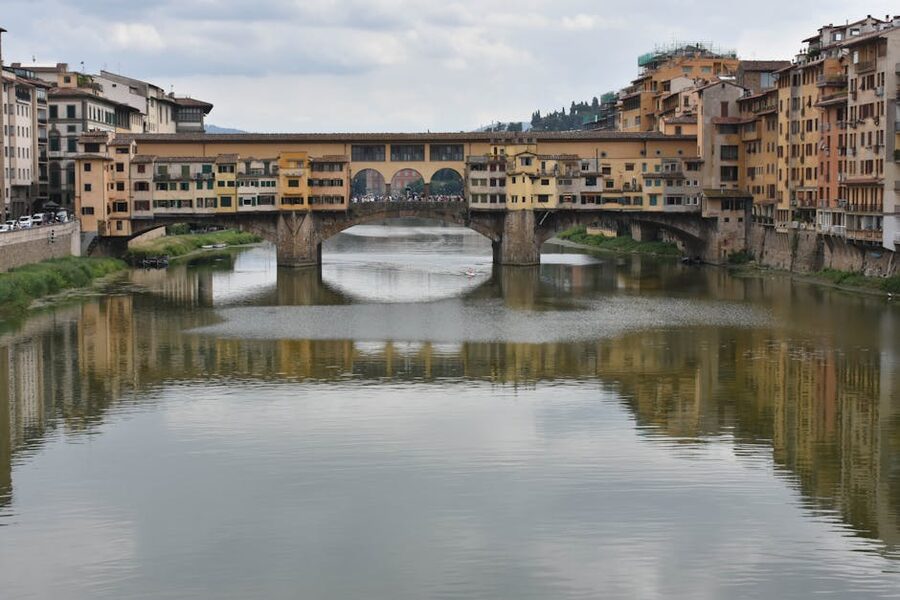
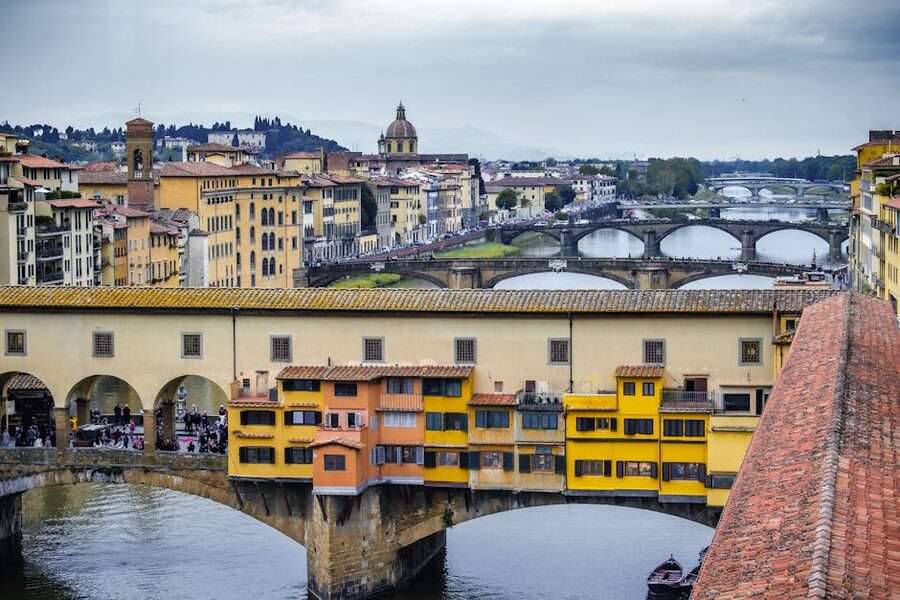
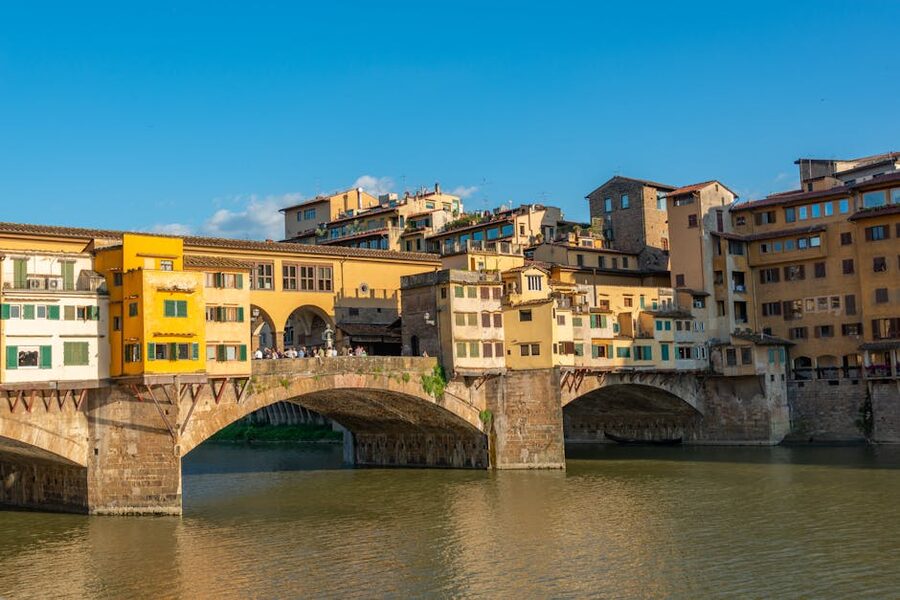
Stop 5: Ponte Vecchio. 15-20 minutes on or near the bridge. The guide explains why it’s covered in jewellery shops (Ferdinand I expelled the butchers in 1593 because the smell offended him; goldsmiths replaced them and never left), why it survived WWII when every other Florence bridge was blown up by retreating Germans (Hitler personally ordered it spared, allegedly because he thought it was beautiful), and how the medieval engineers made it span the Arno without central pillars.
Optional Stop 6: Santa Croce or Pitti Palace exteriors. Some tours add a final stop at one of these. Santa Croce is where Michelangelo, Galileo, and Machiavelli are buried. Pitti Palace was the Medici’s main residence. Either is worth 10 minutes of explanation if your tour includes it.
What 600 Years of Florentine History Get Compressed Into
The walking tour delivers the cliff notes version of an extraordinary period. Worth knowing what you’re getting before you book.
The Florentine Republic (12th century – 1530). Florence was a self-governing city-state, ruled by guilds and merchant families. The system produced unusual social mobility — the Medici started as wool merchants, became the world’s first international bankers, then ran the city for 200 years.
The Medici (1397-1737). Started as bankers, became unofficial rulers, then official Grand Dukes of Tuscany. They financed Brunelleschi, sponsored Leonardo, employed Michelangelo, and produced four popes (Leo X, Clement VII, Pius IV, Leo XI) and two queens of France (Catherine and Marie de’ Medici). They did this without ever holding formal political office for most of the family’s first 100 years.
The Renaissance (roughly 1400-1530). Florence essentially invented this. Not by accident — the city had wealth (banking), patronage (Medici), and a cultural environment that rewarded artistic competition. Brunelleschi, Ghiberti, Donatello, Masaccio, Botticelli, Leonardo, Michelangelo, Raphael — all worked here at the same time, often competing for the same commissions.
Your guide will hit roughly 30% of this in 90 minutes. The detail you don’t get on the walking tour, you can read about afterwards. The framework is what matters — once you know the Medici backed Brunelleschi who built the dome that defined the city, every subsequent observation lands somewhere on a coherent map.
The Best Time to Take the Walking Tour
Florence walking tours run multiple times daily — typically 09:30, 14:30, and 17:30 starts. Each time slot has different advantages.
09:30: coolest temperatures (good for summer), smallest crowds at each stop, the morning light is excellent for photos. Done by 11:00 — perfect for a long lunch + afternoon Uffizi or Accademia visit.
14:30: midday crowds at all stops. Sun directly overhead means harsh photo light. Avoid in summer (midday heat).
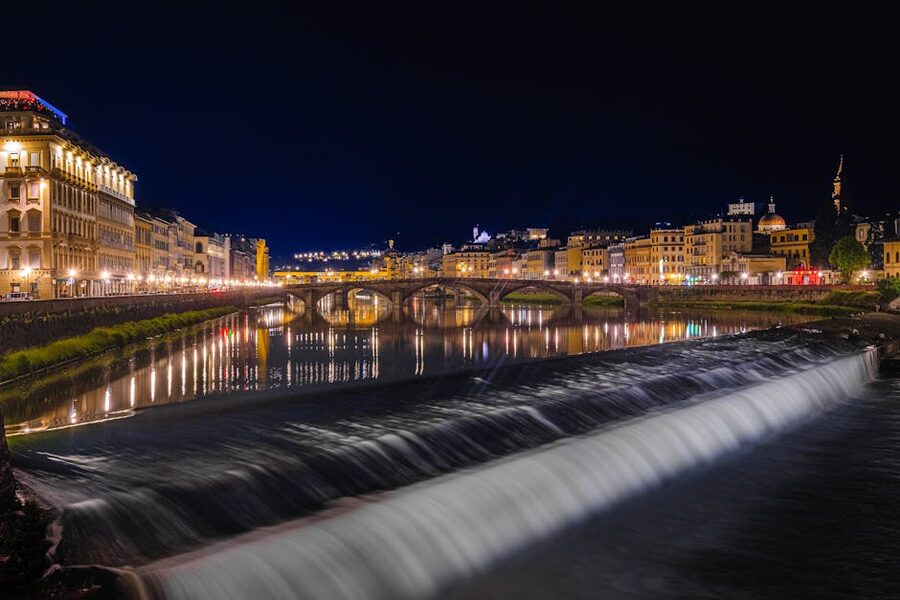
17:30: golden hour timing — best photo light of the day. Crowds are thinning. Done by 19:00 with time for aperitivo. Best slot for romantic couples.
Best month: April-May or September-October. Florence in summer (June-August) is brutally hot and crowded; the walking tour becomes a sweat march. Winter (November-February) is fine if you can handle the cold.
Why the Accademia Add-On Makes Sense
Michelangelo’s David is at the Accademia Gallery, not in the open-air Piazza della Signoria (where you’ll see a replica). The walking tour with Accademia priority entry combines both — you see the city context first, then walk to the Accademia and skip the queue to see the actual David.
The David alone is worth a separate trip — it’s 5.17m of marble carved by a 26-year-old Michelangelo in 1501-04, originally meant to sit on the cathedral roof but moved to the Piazza della Signoria when it was finished. Now in the Accademia behind a protective barrier. Standing in front of it for the first time is one of those experiences that justifies the trip to Italy.
The combination ticket saves money (about $10 vs booking separately) and saves queue time (Accademia walk-up queues run 1-2 hours in summer). If David is on your Florence priority list, this is the smart booking.
Group Sizes and Tour Quality
The standard walking tours run groups of 10-15 people. Smaller-group “premium” versions exist for $50-70/person but the basic versions deliver enough.
The audio system varies by operator. The good ones use whisper-headsets — small earpieces that let the guide speak normally and you hear them clearly even in crowded areas. The cheap ones don’t, which means the guide has to shout to be heard, which is exhausting and disrupts other tour groups.
Ask before booking whether headsets are included. The $27 Highlights tour from GetYourGuide includes them. Some Viator listings don’t.
Solo travellers: walking tours are ideal social activities. The shared 90-minute experience produces conversations that last well beyond the tour itself. Several people I know found Florence dinner companions through walking tours.
What Walking Tours Can’t Do
Setting expectations honestly.
You won’t enter any museums. The walking tour is exterior-only except the Accademia version. To see the Uffizi, you need a separate ticket. To climb the Duomo dome, separate ticket. To see Michelangelo’s tomb at Santa Croce, separate ticket. The walking tour gives you orientation; the museums give you depth.
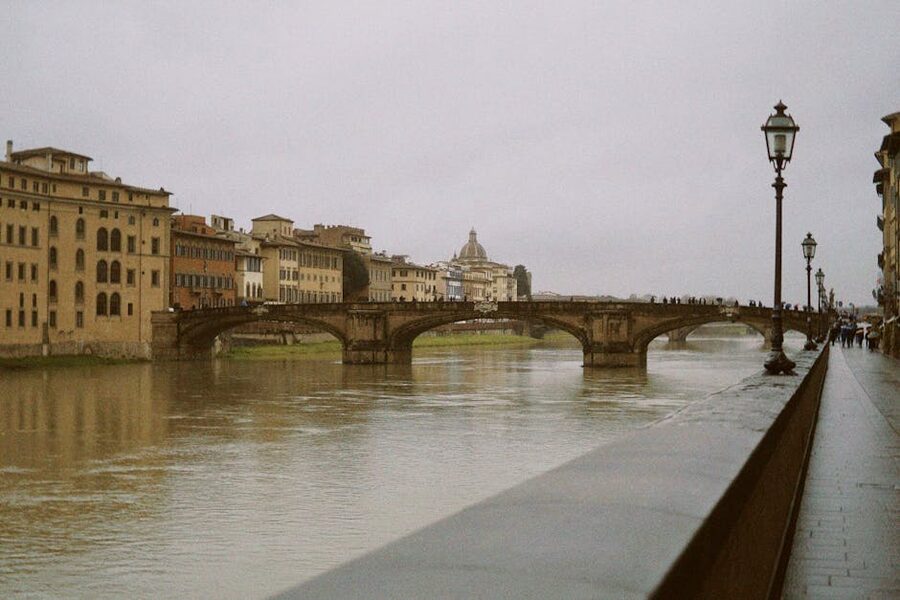
Coverage stops at the Arno. Most walking tours don’t cross the river to Oltrarno (the south bank — Pitti Palace, Boboli Gardens, San Miniato al Monte church, Piazzale Michelangelo viewpoint). To see those, plan a separate evening or morning.
The route doesn’t change. Same stops, same order, same guide narration patterns. If you’ve read about Florence extensively beforehand, you’ll find the tour basic. It’s optimised for first-time visitors with no prior context.
No food included. Unlike food tours, this is purely cultural. Plan a meal before or after.
Combining With Other Florence Activities
The walking tour is the best activity to anchor your first Florence day. Build everything else around it.
The combinations that work: morning 09:30 walking tour finishes by 11:00, light lunch, afternoon Uffizi at 14:00 — first day in Florence pattern that sets up the rest of the trip with maximum context. Alternatively, the morning walking tour with Accademia add-on finishes around 13:00 with David already seen, leaving the afternoon free for the Bargello (smaller museum, less crowded, holds Donatello’s David) and an evening aperitivo on the Arno. For longer Florence stays the walking tour pairs perfectly with the Florence cooking class the next day — you’ll have the historical context to appreciate why Tuscan food traditions matter, and the cooking class will deepen the connection to a specific corner of Florentine life. If you’re combining Florence with Rome trips, do the walking tour Day 1 in Florence and compare it mentally to what you saw in Rome — the contrast between Republican Roman urbanism and Renaissance Florentine geometry is one of those subtle Italian travel pleasures most visitors never notice.
What to Bring and Wear
Florence walking is on cobblestones and sometimes uphill. Closed comfortable shoes are essential.
Dress code at the cathedral: shoulders covered, knees covered. The walking tour doesn’t enter, but if you want to step inside the Duomo afterwards (free entry), you’ll need modest dress.
Water bottle: Florence’s nasoni (free public fountains) are everywhere and the water is excellent. Refill rather than buying bottled water.
Phone with charger: heavy photography day. Bring a power bank if you’ll be out all day.
Light jacket: evenings cool quickly even in summer. The 17:30 tour finishes when temperatures are dropping.
Booking Mistakes That Matter
A few things to flag.
Don’t confuse “walking tour” with “Uffizi tour.” Some operators market combined products that include Uffizi entry. These are good but cost more and run longer. The basic walking tour does not enter any museums.
Don’t book this same day as your Uffizi visit. Walking + museum + walking = exhaustion. Spread across two days minimum.
Check whether headsets are included. Tours without whisper headsets are noticeably worse experiences in the high-traffic Duomo and Signoria areas.
Confirm the meeting point. Florence’s central piazzas all look similar to first-time visitors. The tour confirmation should include exact GPS coordinates — use them rather than just “near the Duomo.”
Tip your guide. Standard 10-15% if the tour was good. Italian guides expect this from English-speaking groups even though Italians themselves rarely tip on tours.
The Honest Verdict
Florence’s $27 walking tour is the highest-value Italy activity I can recommend. 90 minutes, 600 years of context, fundamental orientation that improves every subsequent Florence experience. There’s no scenario where this isn’t worth booking on your first day.
Pick the basic 90-minute Highlights version ($27) if you’ll do the Accademia separately or you’ve already booked David tickets. Pick the 2-hour version ($31) if you want more depth and have the time. Pick the Accademia combo ($37) if you haven’t booked David tickets and want the bundle savings + queue skip. All three deliver the core Florence walking-tour value. Skip if you’ve been to Florence before and already know the territory — repeat visits don’t justify the orientation investment.
Book the 09:30 morning slot in summer for cooler temperatures. Book 17:30 evening slot in spring/autumn for golden-hour photos. Wear comfortable shoes. Bring a water bottle. Tip the guide.