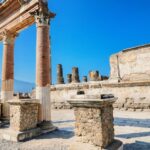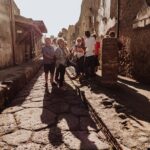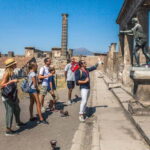

Herculaneum reads like a frozen city. This small-group walking tour in Ercolano lets you see houses, baths, and public spaces that survived under volcanic ash, explained by a working archaeologist. I like that the guide connects what you’re looking at—carbonized wood, fresco walls, carved details—to how people actually lived day to day.
I also love the small group size and the headsets. With a maximum of 20 people, you’re not stuck behind a parade line, and the audio system helps you catch the important bits without craning your neck. One thing to keep in mind: it’s a walking tour with lots of standing, so plan for minimal sitting time over the full 2 hours.
Even the route has a logic. You’ll start at the ticket office area and then move through the best-preserved highlights—rich homes, thermal baths, and the standout wooden elements—so you get the story of the town without wasting time circling. The main consideration is timing: the pace is meant to cover multiple stops, so if you need a slower route or lots of museum time during the tour, go in with realistic expectations.
- Key points to know before you go
- Meeting at the Ercolano Ticket Office: how to arrive without stress
- The archaeologist guide effect: why Herculaneum becomes understandable
- The 2-hour walking route: what you see at each stop and why it’s special
- House of the Deer: the peristyle’s marble stags
- La Terrazza di M. Nonio Balbo: a benefactor’s legacy
- College of the Augustales: worship, status, and the Augustus cult
- Casa del Rilievo di Telefo: a house with private bath access
- Partem Domus lignea: the wooden partition that survived
- House of the Skeleton: the tragedy behind the name
- Central Thermae: separate entrances for men and women
- House of the Black Salon: luxury, preserved carbon traces
- Casa Sannitica: a Samnite-style layout with Ionic columns and frescoes
- Casa del Bel Cortile: courtyard design with a stone balcony
- House of the Grand Portal: colonnati, frescoes, and charred wood
- Price and value: what .81 buys you here
- Pacing, comfort, and real-world tips for your best experience
- Who this tour suits best (and who might want a different plan)
- Should you book this Herculaneum small group archaeologist tour?
- FAQ
- How long is the Herculaneum small group tour with an archaeologist?
- What language is the tour offered in?
- What is the maximum group size?
- Where do we meet for the tour?
- Does this tour include admission tickets?
- Are skip-the-line tickets provided?
- Are headsets included?
- Are dogs allowed on the tour?
- What is the cancellation policy?
- The Best Of Naples!
- More Tickets in Naples
- More Tours in Naples
- More Tour Reviews in Naples
- Not for you? Here's more nearby things to do in Naples we have reviewed
Key points to know before you go
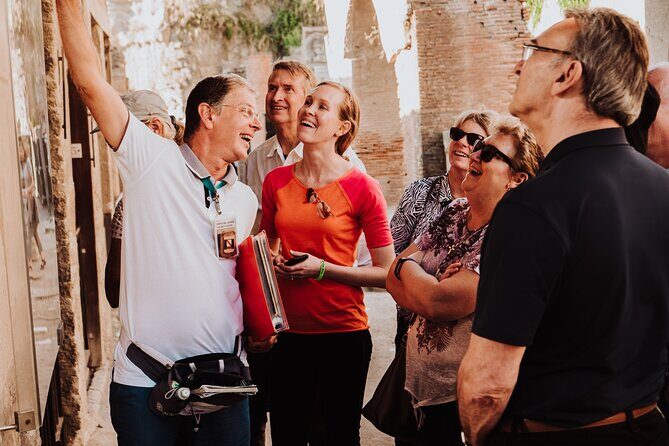
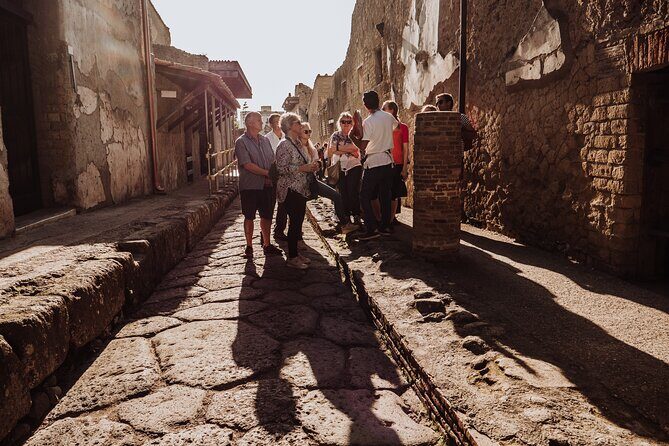
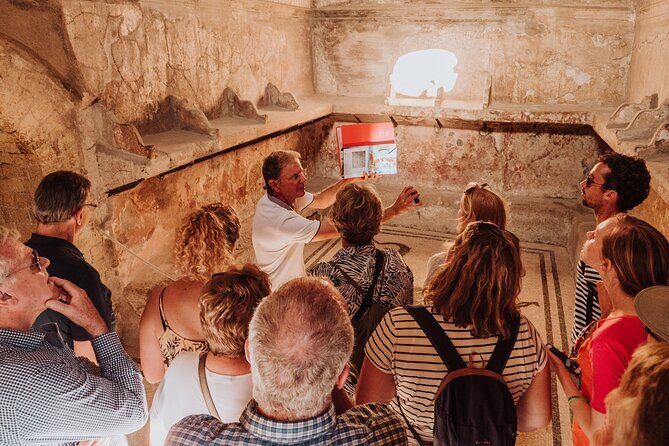
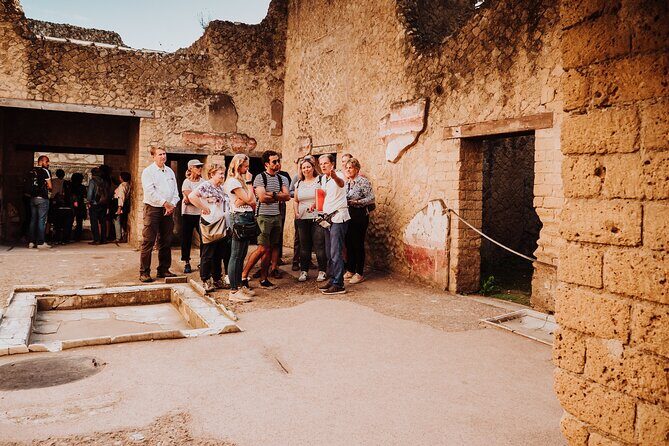
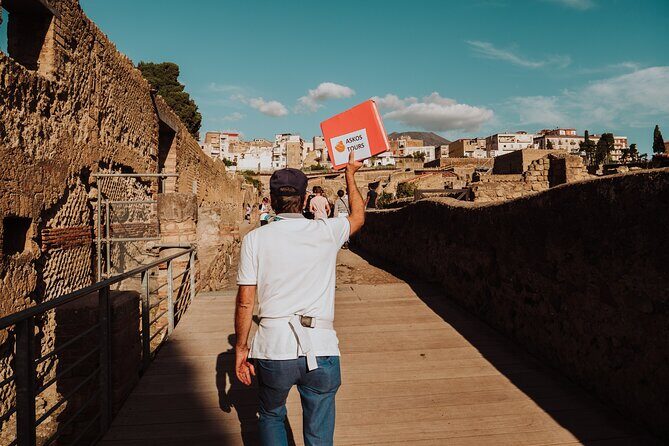
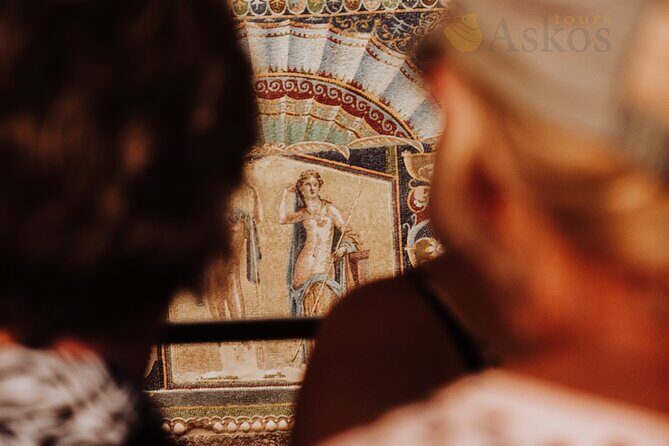
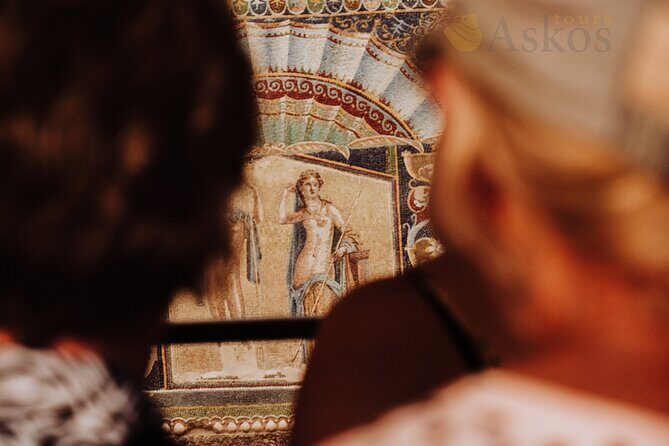
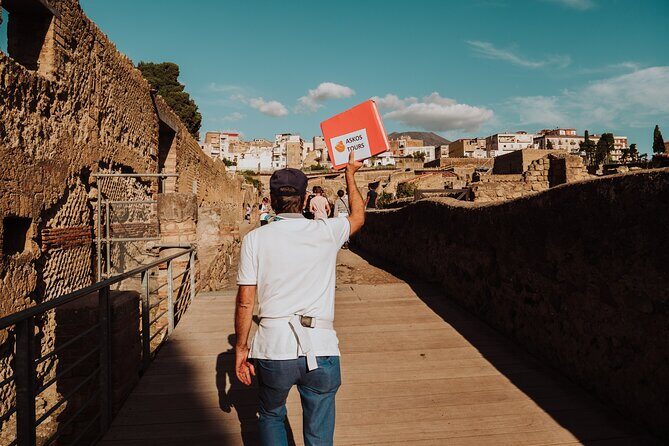
- Archaeologist-led explanations: you’re not just hearing “what it is,” you get why it matters and how it worked.
- Skip-the-line entry plus included tickets: less queue time, more time on your feet.
- Max 20 people with headsets: easier listening, especially if your group is spread out.
- A highlight-focused route: from named houses (Deer, Skeleton, Black Salon) to the Central Thermae.
- Doorways, wood, and bath access: the tour spends time on unusual details that most solo visitors miss.
- Weather-ready: the tour runs in all weather conditions, so dress for it.

👉 See our pick of the Discover 14 Great Lunch Experiences In Naples
Meeting at the Ercolano Ticket Office: how to arrive without stress
This tour begins at the Ticket Office of the Herculaneum ruins. The start point is listed near Corso Resina 187, Ercolano (Scavi di Ercolano is the end), so you’ll want to show up a few minutes early and get your bearings fast.
Getting there is straightforward:
- By car: you can park in via Pignalver, where there’s unguarded parking close to the meeting area.
- By train: take the Circumvesuviana to Corso Resina 1, then plan on about a 10-minute walk.
Why this matters: in a place with fixed entry points and timed crowds, being early means you’re not rushing to join the group. And because the tour includes skip-the-line admission, you’ll still want your head in the right place when you step into the site.
You can also read our reviews of more tours and experiences in Naples


The archaeologist guide effect: why Herculaneum becomes understandable
What makes this experience different is the archaeologist background behind the commentary. The guides on this tour tend to bring the science down to human scale: how spaces connected, who would go where, and what certain finds suggest about daily routines.
I like the way the better guides also use reconstructions and close-looking techniques. One guide (Luciano Leone) is noted for bringing visual materials showing how buildings may have looked about 2,000 years ago. That helps you stop thinking of Herculaneum as a pile of ruins and start seeing it as a working neighborhood.
You’ll also notice small things more easily when someone points them out. Carbonized doorway elements in luxury homes, the layout of baths, and the meaning behind named houses aren’t obvious at first glance—yet they’re exactly what the tour route is built around.
The 2-hour walking route: what you see at each stop and why it’s special
The tour moves through a sequence of about ten key points, with short stops designed to keep energy up and the storyline clear. Each stop is around 10 minutes, so don’t plan on long photo sessions at every doorway. Instead, think of it as guided orientation plus highlight hunting.
House of the Deer: the peristyle’s marble stags
This house earns its name from marble statues of stags found around the peristyle. It’s a great first stop because it shows you how domestic decoration can be about identity—status, taste, and symbolism—long before you start comparing richer homes to public spaces.
Tip: look at how the peristyle functioned as a central outdoor/transition space. Even if you don’t catch every architectural term, you’ll get the “how you’d move through the house” feeling.
La Terrazza di M. Nonio Balbo: a benefactor’s legacy
M. Nonius Balbus is described as the city’s major benefactor, restoring and building public buildings. On his death, he was honored, with details preserved in a long inscription on his funeral altar.
This stop is valuable because it shifts you from private luxury to civic power. Herculaneum wasn’t just homes—it was also leadership, funding, and public works.

College of the Augustales: worship, status, and the Augustus cult
You’ll visit the College of the Augustales, thought to be tied to the cult of Emperor Augustus and possibly connected to local administration (Collegium Augustalium, and sometimes linked to the local curia).
In plain terms: this is where religion and politics overlap in a local setting. It’s the kind of stop that makes you realize why emperors and honors mattered at street level.
Casa del Rilievo di Telefo: a house with private bath access
This house is linked to one of the town’s leading benefactors and is unusual because it has its own private access to the Suburban Thermae to the south.
That private connection is the kind of detail you’d miss on your own. It’s also a reminder that bathing wasn’t just hygiene—it was social time, routine, and (for some) a privilege of convenience.
Partem Domus lignea: the wooden partition that survived
One of the most important elements here is the wooden partition (Partem Domus lignea) that’s remained. Wood usually disappears, so when you see surviving wood structures or traces, it’s a big deal.
This stop helps you understand why Herculaneum is so compelling compared to other sites: the ash didn’t just preserve stone—it sometimes preserved the evidence of everyday interiors.
House of the Skeleton: the tragedy behind the name
The House of the Skeleton gets its name from human remains discovered in a second-floor room in 1831. The tour doesn’t just point; it gives context so you can process the site emotionally without turning it into a museum of spectacle.
I find this stop balances well with the earlier “how it worked” explanations. After you’ve learned how people lived, this reminds you of how the event ended life there.
Central Thermae: separate entrances for men and women
The Central Thermae were built around the beginning of the 1st century AD and were divided into men’s and women’s baths, each with separate entrances.
This is one of the most practical stops on the route. Once you understand the layout, you can better imagine routines: where you’d enter, where you’d cool down, and how the design handled gender separation in a public setting.
House of the Black Salon: luxury, preserved carbon traces
The House of the Black Hall is presented as one of Herculaneum’s more luxurious mansions, with a monumental entrance. One striking detail mentioned on the tour is carbonized remains of the doorposts and lintel.
This is a great stop if you like architecture and materials. The carbon traces act like fingerprints of the original structure—proof that even “destroyed” things can still hold clues.
Casa Sannitica: a Samnite-style layout with Ionic columns and frescoes
Casa Sannitica shows an arrangement typical of the Samnites, with a splendid atrium bordered by a gallery with Ionic columns and rooms decorated with frescoes.
The payoff here is comparison. After seeing more standard-looking domus features, you start noticing how local traditions and cultural influences show up in layout.
Casa del Bel Cortile: courtyard design with a stone balcony
This house is described as original, with a courtyard featuring a stairway and a stone balcony instead of an atrium.
It’s a useful reminder that “Roman house type” didn’t mean one single formula. People built versions that fit their taste, space, and needs.
House of the Grand Portal: colonnati, frescoes, and charred wood
The House of the Grand Portal is in the central archaeological area and is described as beautiful, with collonnati (colonnades), frescoes, and charred remains of wooden parts.
This works well as the finale for many visitors because it pulls together what you’ve learned: luxury materials, decoration, and the physical traces of everyday structures.
Price and value: what $53.81 buys you here
At $53.81 per person, this isn’t a cheap “walk around and read a sign” option. But it does include a few things that matter in Herculaneum:
- Entrance tickets (the entry ticket is listed as 16 euros for adults, with discounts for EU citizens 18–25).
- An archaeologist-licensed guide with archaeological background.
- Skip-the-line admission so you aren’t stuck waiting.
- Headsets so you hear the commentary even if the group spreads out.
In other words, you’re paying for interpretation plus time savings. Herculaneum is a site where details are easy to overlook—especially wood traces, bath layouts, and the meaning behind named houses. If you want your visit to feel like a story rather than a checklist, this price starts to make sense fast.
Pacing, comfort, and real-world tips for your best experience
This tour is built for coverage, so expect:
- Standing and walking for most of the 2 hours.
- Short stops rather than long sits inside specific rooms.
- A guide who keeps moving to fit everything in.
This can be perfect for active travelers who want the highlights. If you’re visiting with mobility limits, I’d plan around the fact that there’s little sitting time.
Also, bring practical gear:
- The tour runs in all weather conditions, and rain is common. Bring a rain layer you can move in.
- Wear shoes with good grip on outdoor surfaces.
- If you rely on hearing aids, the headsets are a plus. One review specifically praised the guide for making sure they could hear clearly.
One more timing note: the group covers many points. On the day you go, keep your own schedule flexible for after the tour, especially if you want to add time at the onsite museum portion of the ticket.
Who this tour suits best (and who might want a different plan)
This is a strong match if you want:
- Expert context for what you’re seeing in Herculaneum
- A structured route that hits the site’s most memorable features
- A small group experience (max 20) with practical listening through headsets
It may be less ideal if you prefer:
- A slow, sit-down museum day
- A tour that builds in long free time at each stop
- A day where you need lots of breaks every 10–15 minutes
If you’re trying to choose between doing nothing but wandering and adding a guide, I’d pick the guide. Herculaneum rewards attention, and this route is designed to teach you what to pay attention to.
Should you book this Herculaneum small group archaeologist tour?
Yes, if you want your visit to feel intelligent and personal, not just scenic. The combination of skip-the-line tickets, headsets, and an archaeologist guide with a focus on real details makes it good value for the money. It’s also ideal if you only have a short window and want to see the key houses and baths without guesswork.
I’d think twice only if you know you’ll struggle with standing/walking, or if you’re hoping to turn the guided portion into a leisurely museum stay. For most people, though, this is one of the best ways to get oriented quickly and leave with a much clearer picture of what Herculaneum was like.
FAQ
How long is the Herculaneum small group tour with an archaeologist?
It lasts about 2 hours.
What language is the tour offered in?
The tour is offered in English.
What is the maximum group size?
The group is limited to a maximum of 20 travelers per guide.
Where do we meet for the tour?
You meet at the Ticket Office of the Herculaneum ruins (near Corso Resina, 187, 80056 Ercolano NA).
Does this tour include admission tickets?
Yes. Entrance fees and Herculaneum entry tickets are included.
Are skip-the-line tickets provided?
Yes, the tour includes skip-the-line tickets so you don’t wait in long queues.
Are headsets included?
Yes, headsets are included.
Are dogs allowed on the tour?
Dogs are allowed at the Herculaneum Archaeological Park if they are kept on a leash or muzzle, and you must collect droppings. Access rules inside certain areas (like the Antiquarium premises and some domus areas with mosaic floors) require dogs to be carried or transported in an appropriate carrier.
What is the cancellation policy?
Free cancellation is available up to 24 hours in advance for a full refund. If you cancel less than 24 hours before, the amount paid is not refunded.