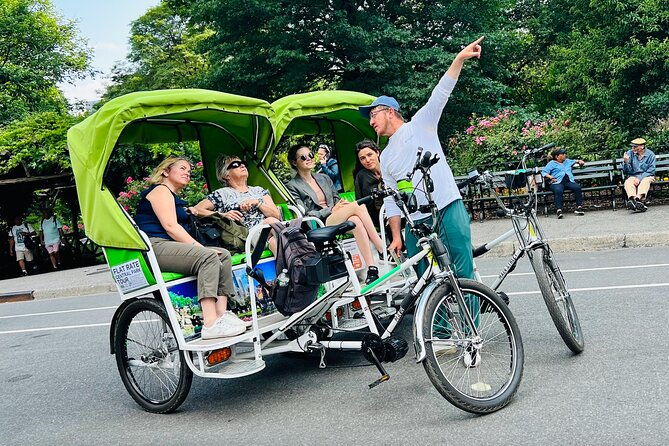
Central Park feels different from a pedicab. You get a private ride through 843 acres, with a guide steering you past the park’s best-known sights and movie locations. It’s an efficient way to see more than you’d ever cover on foot, while you sit back and let the pedaling do the work.
I love the warm blanket option for cold days, and I love how the guides build in real photo stops instead of just saying you should take pictures. In reviews, guides like Sam and Aj get singled out for staying friendly and keeping the mood light even in freezing weather.
The biggest consideration is good weather. The tour requires it, so if conditions are off, you may need to switch dates or get a refund.
- Key Highlights Worth Knowing
- Getting Your Bearings Fast on a Central Park Pedicab
- Price and Value: What Really Buys You
- Choosing the Right Time: 1, 2, or 3 Hours
- From Carousel to Balto: The Central Park Hits You’ll See First
- Wollman Rink and Gapstow Bridge: Winter and Photo Opportunities
- The Pond, the Boats, and Central Park Zoo Area
- Bethesda Fountain and Terrace: Central Park’s Most Famous Backdrop
- Lakeside Calm: Turtle Lake, Boathouse, and the Gondola Vibe
- Strawberry Fields, the Dakota, and Sheep Meadow for Big NYC Emotion
- The Met Area, Reservoir, and Belvedere Castle on Longer Rides
- Comfort and Practical Tips for a Smooth Ride
- Should You Book This Central Park Pedicab Tour?
- FAQ
- How much does the Central Park pedicab tour cost?
- How long is the tour?
- Is the tour private?
- What language is the tour offered in?
- Where does the tour start and end?
- What is included in the price?
- What if the weather is bad or my plans change?
- The Best Of New York City!
- More Guided Tours in New York City
- More Tours in New York City
- More Tour Reviews in New York City
- Not for you? Here's more nearby things to do in New York City we have reviewed
Key Highlights Worth Knowing
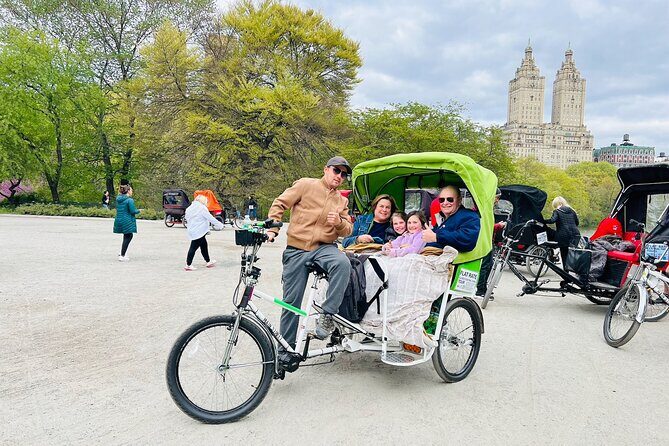
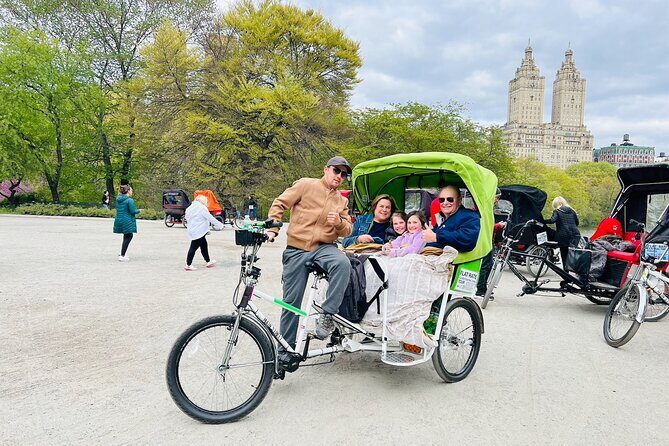
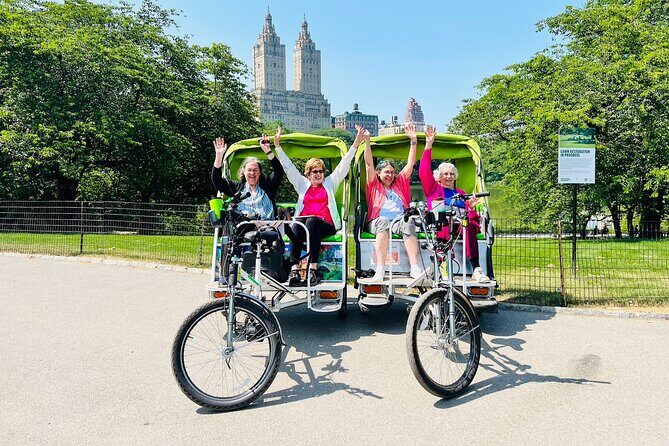
- Private ride for your party only with a guide who tailors the pacing
- Warm blanket in cold weather plus all taxes and fees included in the price
- Photo help built into the tour at iconic spots, not random pull-offs
- Movie and TV connections mixed with real park design details
- Best for first-timers who want the famous Central Park hits without the walking grind
👉 See our pick of the 3 Top-Rated New York City Historical Tours
Getting Your Bearings Fast on a Central Park Pedicab
Central Park is huge. Even if you know the name of every famous landmark, actually getting from one to the next on foot can turn your day into a long shuffle.
That’s where a pedicab makes sense. A bicycle-powered cab lets you cover more ground without burning hours on blisters or “how far is this, really?” moments. You still get the park experience: wide paths, bridges, fountains, gardens, and that slow shift in pace when you leave the city noise behind.
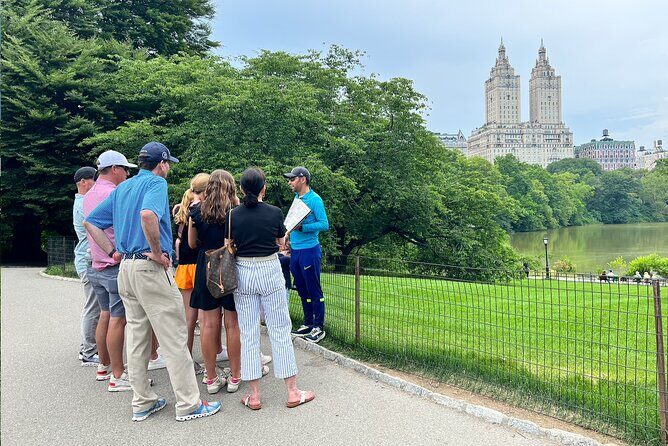
The private format is also a big deal. You’re not trying to hear a script over a crowd. And your guide can adjust the tempo based on what your group cares about, whether that’s quick iconic photos or a slower walk at the stops where you want to linger.
You can also read our reviews of more guided tours in New York City



Price and Value: What $38 Really Buys You
At $38 per person, the deal is about time saved and personalization. Central Park can swallow a half day. A guided pedicab route helps you do the “greatest hits” in a way that feels relaxed, not rushed.
You also get a few practical value adds built into the package:
- a comfortable pedicab ride that’s easier than walking the full park
- photo opportunities where your guide helps you capture the moment
- a mobile ticket so you’re not scrambling for paperwork
- all taxes and fees included, so the price you see is the price you plan around
If you’re traveling with kids, older relatives, or anyone who just doesn’t want to clock nonstop walking, that’s where the cost starts to feel fair. You’re paying for a guided, efficient way to see real Central Park landmarks without turning the day into a fitness test.
Choosing the Right Time: 1, 2, or 3 Hours
This tour runs about 1 to 3 hours depending on what you book and how long you want to pause at key sights. I like this flexibility because Central Park works differently for different seasons.
- A shorter ride works if it’s your first time and you want the key classics.
- A longer ride is better if you want more space for photos and a wider sweep that reaches the park’s edges.
In the longer options, you’ll typically reach major nearby landmarks such as the Metropolitan Museum of Art area, the Jacqueline Kennedy Onassis Reservoir area, and Belvedere Castle. Those add big NYC context without turning your day into a full museum day.
From Carousel to Balto: The Central Park Hits You’ll See First
Most pedicab routes start you with the sights that define Central Park’s identity, especially if you’re a first-timer.
You’ll often ride past the Victorian Garden area, including references to the amusement and ice-skating vibe in winter. It’s a good opening because the guide can set the tone right away: how Central Park was designed, how it changed over time, and why certain spots became famous in pop culture.
Then come a few family-friendly stops that also work for adults:
- Chess and Checkers House: built in 1952, an octagonal brick building surrounded by tables shaded by a wooden trellis. Even if you don’t play, it’s a charming pocket of park life.
- The oldest carousel in the city: the Central Park Carousel dates back to 1908 and includes 57 hand-carved horses plus two decorative chariots. If you like historic details, this is a must-look.
- Balto’s statue: the bronze Balto statue, installed in 1925, ties the park to the sled-dog legend and pop-culture storytelling. It’s one of those places people recognize instantly, even if they didn’t know the name.
As you glide through, you’ll also hit Central Park’s “small but famous” architectural and filming connections, like the Upper East Side history and TV filming locations tied to Gossip Girl. The guide can point out how Central Park was used as a recognizable stand-in for different eras and neighborhoods.
Wollman Rink and Gapstow Bridge: Winter and Photo Opportunities
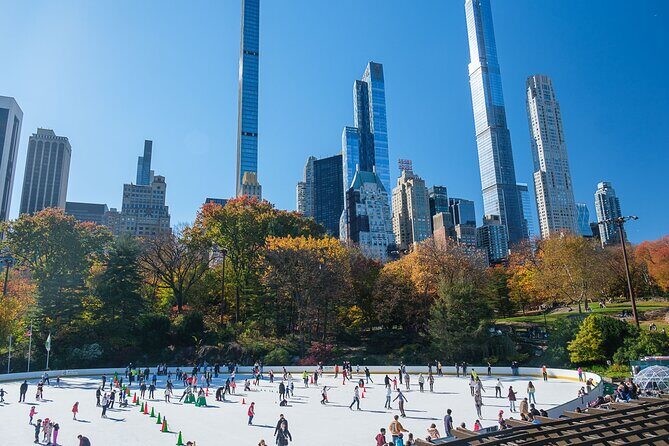
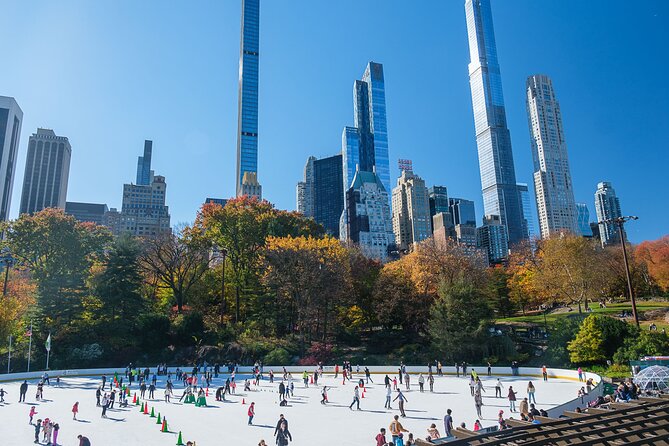
If you’re visiting in colder months, Wollman Rink may be in play. It’s a public ice rink in the southern part of Central Park, open roughly from late October to early April and named after the Wollman family.
Why it matters even if you don’t skate: seeing it from a pedicab ride is a nice reminder that Central Park isn’t only summer gardens. It changes with the season, and the ride makes that shift obvious fast.
Another photo-friendly stop is Gapstow Bridge. The rustic stone structure, covered in vines, looks like it belongs to a storybook. It also crosses a narrow neck of the pond and is a popular viewpoint. For movie fans, this is where film references show up repeatedly, so it’s easy to connect what you’ve seen onscreen with what you’re seeing in real life.


The Pond, the Boats, and Central Park Zoo Area
Central Park has pockets that feel like separate worlds. Two of the best examples are the pond-and-boats zones.
One area your guide may point out is Conservatory Water, also known as the Model Boat Pond. This is where children and hobbyists launch miniature sailboats and yachts (and where you might spot the Kerbs Boathouse nearby). Benches along the water are perfect for a short pause, even if you’re just people-watching.
Nearby, you can also see statues in the same general orbit of the pond area, including Alice in Wonderland and a monument to children’s author Hans Christian Andersen. It’s a great pairing because the statues instantly make the area feel like a themed garden, not just a pond.
And then there’s the Central Park Zoo, a 6.5-acre zoo at the southeast corner of the park. Even if you don’t enter, riding past it gives you a sense of how Central Park blends attractions into the green space.
Bethesda Fountain and Terrace: Central Park’s Most Famous Backdrop
If you’re chasing the iconic Central Park moment, Bethesda Fountain is the center of gravity on the lower terrace. The fountain pool is centered by Emma Stebbins’s Angel of the Waters, unveiled in 1873. It’s tied to the biblical Pool of Bethesda healing story from the Gospel of John, which is exactly the kind of detail that makes the stop more than just a photo.
Then you’ll move to Bethesda Terrace, which is famous for views and arcade details. There’s also a strong tile and restoration story connected to the ceiling arcade, including changes made and then later restored through the Central Park Conservancy after major funding and preservation decisions.
Right next door is Cherry Hill and Cherry Hill Fountain, built in the 1860s and originally designed as a watering trough for horses during the 19th century. Today it’s more ornamental, with Minton tiles in the basin and frosted lamps crowning the granite dome. It’s not the “everyone stops here” fountain like Bethesda, but it’s the kind of stop your guide can explain in a way that makes you slow down and actually look.
Lakeside Calm: Turtle Lake, Boathouse, and the Gondola Vibe
Central Park has a heart that feels calmer, and Turtle Lake and the Boathouse area help create that mood. Your pedicab ride can take you past:
- the Turtle Lake and Boathouse area, including the gondola-style boat experience
- the cinematic vibe of classic film locations around the lake
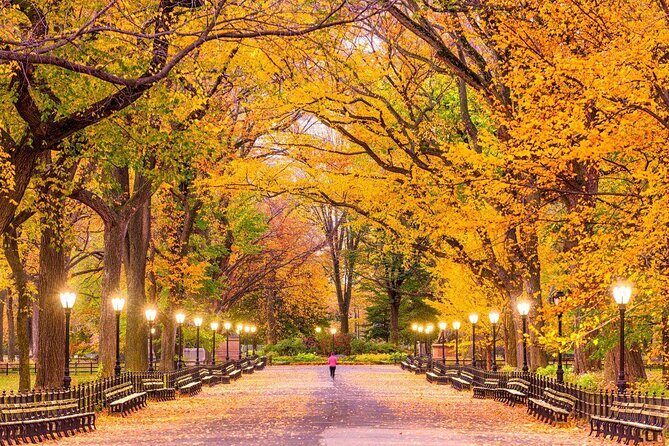
If you like waterfront details, this is a good stretch to take photos from multiple angles. The water and the trees do a lot of visual work here, and the guide can connect what you’re seeing with the park’s design logic.
The most famous nearby bridge stop is usually Bow Bridge. It was completed in 1862, restored in 1974, and has shown up in many films and TV scenes. It’s one of those spots where you can look out and immediately see why it became a cinematic favorite.
For timing: on a short ride, you’ll likely get a brief stop for photos and viewpoints. On a longer option, you’ll get more time to slow down.
Strawberry Fields, the Dakota, and Sheep Meadow for Big NYC Emotion
On the south end, the mood shifts again. Strawberry Fields is a landscaped memorial dedicated to John Lennon and named after the Beatles song Strawberry Fields Forever, itself tied to a childhood orphanage location in Liverpool.
Next to that is the Dakota, the famous building linked to Lennon’s story. Even if you don’t know all the details, the combination of memorial landscaping and the instantly recognizable architecture makes for a strong emotional stop.
Then come the open green stretches, including Sheep Meadow, often described as a place to relax, sunbathe, read, and picnic. It’s a simple park pleasure, and I like how the pedicab gets you there without having to “earn it” with a long walk across the park.
If your route includes it, you may also pass notable bridges and charming ironwork views such as Pinebank Arch, designed to blend into rocky edges. In film references, it shows up as a recognizable park photo angle and a scenic viewpoint.
The Met Area, Reservoir, and Belvedere Castle on Longer Rides
If you choose a longer option, your pedicab ride can reach beyond the central core and into landmark territory that still feels like part of the park.
One big addition is the Metropolitan Museum of Art area. The park commissioners offered land in Central Park for the museum building, and architect Calvert Vaux created an initial High Victorian Gothic concept. Even without entering, the exterior relationship between park and museum is a neat NYC contrast.
You may also see the Jacqueline Kennedy Onassis Reservoir, built between 1858 and 1862. It covers 106 acres and holds more than one billion gallons of water. Gatehouses along the shore sit quietly in the background, but seeing the reservoir from the park side makes it feel like an engineered feature with a purpose, not just an obstacle.
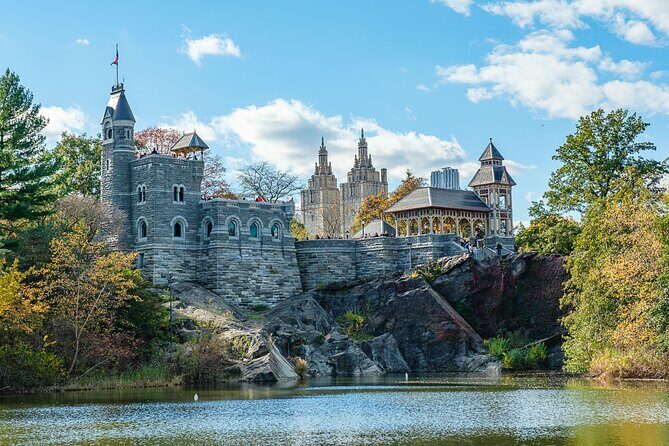
And then there’s Belvedere Castle, a folly designed by Calvert Vaux and Jacob Wrey Mould in 1867. It includes exhibit rooms and an observation deck, and it’s also where Central Park’s official weather station has been housed since 1919. This is the kind of stop that works well if your group likes “why is that there” explanations.
Comfort and Practical Tips for a Smooth Ride
Here’s how to make the ride feel great, especially if the weather is cold.
- Wear layers and bring a hat or gloves. The blanket helps, but you’ll still feel wind.
- If your group includes kids, keep expectations simple: the pedicab is for shortcuts and iconic moments. Then let them pick where to pause for photos.
- If you want shopping or food stops, plan that as a separate add-on. This experience is focused on Central Park sights.
Also, language and pacing can vary by guide. In at least one case, an accent made a portion of the commentary harder to catch quickly. If you’re sensitive to that, ask your guide to slow down when you want more detail.
Should You Book This Central Park Pedicab Tour?
Book it if:
- you want the famous Central Park sights without spending half your trip walking
- you’re traveling as a group and want your own private ride
- you care about movie references and design details, not just quick snapshots
Skip it if:
- you love walking and you already have a route planned across the park’s must-sees
- you’re visiting when weather is questionable, since the tour requires good conditions
If you’re a first-time visitor, I think this is one of the most practical ways to see Central Park’s best-known moments while keeping the day fun and manageable. Guides like Sam, Aj, and Peter have a knack for making the ride feel personal, light, and actually worth your time.
FAQ
How much does the Central Park pedicab tour cost?
It costs $38.00 per person.
How long is the tour?
The duration is about 1 to 3 hours.
Is the tour private?
Yes. It’s a private experience, and only your group participates.
What language is the tour offered in?
The tour is offered in English.
Where does the tour start and end?
It starts at 1411 6th Ave, New York, NY 10019, USA, and ends back at the meeting point.
What is included in the price?
The tour includes a warm blanket during cold weather, private experience, photo opportunities, comfortable pedicab ride, expert local guides, and all taxes and fees. Admission tickets are included for some stops as noted, while some attractions like the Metropolitan Museum of Art are not included.
What if the weather is bad or my plans change?
The experience requires good weather. If it’s canceled due to poor weather, you’ll be offered a different date or a full refund. You can cancel for a full refund up to 24 hours in advance.