
Lisbon in one walk helps you read the city. This Lisbon city center tour strings together classic landmarks and off-the-main-street lanes, so you see the places you’ll keep hearing about later. It’s built for real strolling—car-free routes, alleys, and story stops—plus a pay-what-you-want style that lets you match the price to your experience.
I especially like the mix of big-history anchors and people-first details, from Praca dos Restauradores to Chiado and Bairro Alto. I also love how guides bring the streets to life: I’ve seen names like Miriam, Claudia, Hugo, and Ricardo pop up in standout reviews, and the common thread is humor plus practical city pointers. One possible drawback: you’ll walk a steady amount on uneven streets, so if you’re sensitive to cobblestones or you want minimal walking, plan for slower pace and good shoes.
- Key Highlights Before You Go
- Start at Praça dos Restauradores, Then Learn Lisbon’s “why”
- Igreja de S Domingos: A simple church with a surprising punch
- The 1506 Jewish Massacre Memorial: Lisbon faces hard parts
- Rossio Square and the Rail-Station Showstopper
- Chiado entrance: The neighborhood switch you can feel
- Santa Justa Elevator: Use the free area, then look around
- Largo do Carmo: Revolutions happen in plain sight
- Igreja de Sao Roque: Jesuit roots and a top-tier chapel
- Bairro Alto and the nightlife spine
- A Brasileira and São Carlos: Coffee culture meets performance
- Rua Augusta and Praça do Comércio: Your ending view of Lisbon’s “big finish”
- The Pay-What-You-Want model: Why it’s good value, and when to be careful
- Guides make the difference: Who you might see and what to watch for
- Timing, walking style, and weather reality
- Who should book this Lisbon city center walking tour?
- Should you book it or not?
- FAQ
- How long is the Lisbon City Center Tour – The Unmissable Lisbon?
- Where does the tour start and end?
- What language is the tour offered in?
- How big is the group?
- Is there a ticket or mobile ticket?
- How does the pricing work?
- Is the tour mostly walking?
- What if the weather is bad?
- What is the cancellation deadline for a refund?
- What happens if the minimum number of travelers isn’t reached?
- The Best Of Lisbon!
- More City Tours in Lisbon
- More Tours in Lisbon
- More Tour Reviews in Lisbon
- Not for you? Here's more nearby things to do in Lisbon we have reviewed
Key Highlights Before You Go
 1 / 6
1 / 6 2 / 6
2 / 6 3 / 6
3 / 6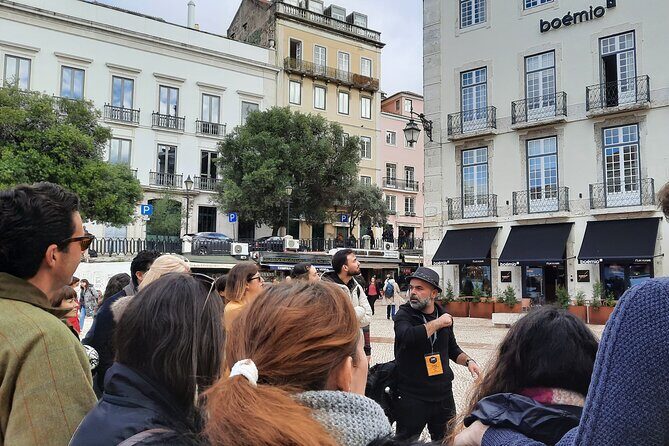 4 / 6
4 / 6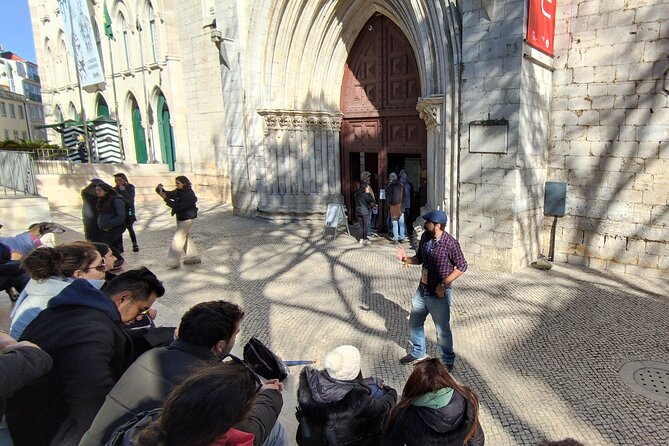 5 / 6
5 / 6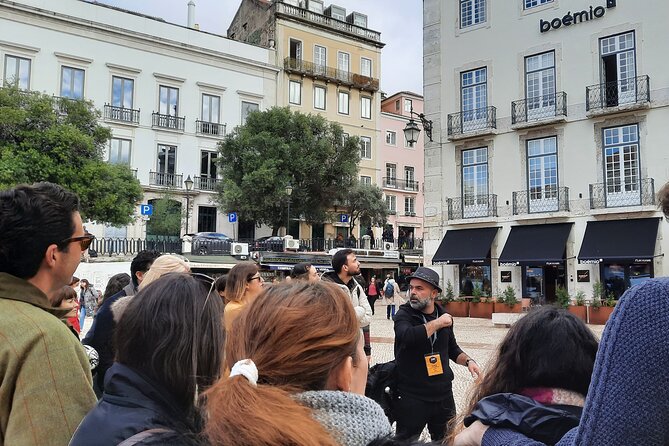 6 / 6
6 / 6- Pay what you think it’s worth: start with a low stated price, then adjust at the end based on value.
- Small group size (max 25): easier conversation and quicker answers to your questions.
- Car-free streets and alleys: you’re guided through places vehicles can’t easily reach.
- A focused sampler of central Lisbon: you get bearings across downtown, Chiado, and Bairro Alto.
- Great guide energy: reviews praise guides for staying fun even in rain or fog.

👉 See our pick of the The Top 13 Lisbon Historical Tours
Start at Praça dos Restauradores, Then Learn Lisbon’s “why”
Your tour kicks off at Monumento dos Restauradores, right in the Praca dos Restauradores area, where Avenida da Liberdade runs into the city’s grand central stage. This spot matters because it frames the rest of the walk: Lisbon doesn’t feel random once you understand how it presents independence, identity, and power in stone and space.
This first stretch is also a smart move if you’re trying to beat jet lag. You get moving immediately, and you’re not stuck in a briefing that goes nowhere. A good guide sets the tone fast, and that helps you enjoy the later stops more.
You can also read our reviews of more city tours in Lisbon



Igreja de S Domingos: A simple church with a surprising punch
Next you’re at Igreja de S Domingos, described as among the least adorned churches—yet it’s framed as rich in what it represents. That’s the kind of stop I like on a city walk: you notice the building with fresh eyes, even if you’re not a full-time church person.
One thing to keep in mind: churches are quieter, slower stops. If you like short, quick facts and you’re already on the go, ask the guide for the “one-minute version” before you step inside. You’ll still get the meaning, just with less information overload.
The 1506 Jewish Massacre Memorial: Lisbon faces hard parts
Then comes a memorial stop: Memorial as Vitimas do Massacre Judaico de 1506. This is not a decorative detour. It’s a clear reminder that Lisbon, like every major European city, has painful chapters tied to religion and intolerance.
I appreciate that the tour doesn’t dodge the hard topics. It also changes how you look at the city overall. When you understand that Lisbon history includes both pride and harm, the rest of the landmarks feel more honest.
Rossio Square and the Rail-Station Showstopper
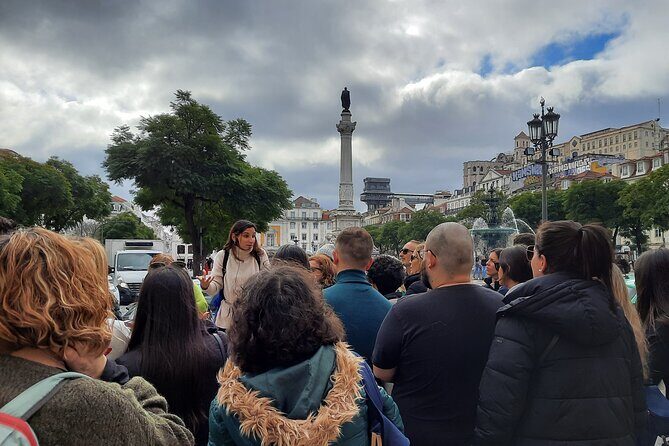
You’ll move to Praca Dom Pedro IV, better known as Rossio Square—one of Lisbon’s oldest and most beautiful squares, and a stage for important events for centuries. This is a key orientation point. From here, you start to see how central Lisbon “moves”: the flow of streets, the rhythm of crowds, and where big sights sit relative to each other.
After that, you’re at Estacao do Rossio. The station building is called out as imposing, and the construction date is meant to surprise you. Even if you don’t care about architecture, stations in old cities are powerful. They’re where Lisbon got modern, where people arrived with new ideas, and where daily life met major routes.
Chiado entrance: The neighborhood switch you can feel
Then you step into Chiado, where the tour frames the area as Lisbon’s most cosmopolitan neighborhood. Whether you care about shopping, culture, or just good wandering, Chiado is a smart middle section. It’s familiar enough to be easy, but it still feels like you’re watching the city evolve.
A small but useful detail: the tour keeps timing tight between stops—so you don’t lose your momentum. If you stop too long on your own later, you’ll be tempted to skip things. This tour helps you do the opposite: you collect the stops first, and then you choose what to expand on later.


Santa Justa Elevator: Use the free area, then look around
At Elevador de Santa Justa, you’ll access the elevator’s free area. The guide focus here is on the elevator as a public transport “monument,” and the tour notes that it opened in 1846.
Here’s the practical value: you get the vibe without forcing a big extra budget right away. Even from viewpoints connected to the elevator area, you can start mapping Lisbon’s hills and street patterns. It’s also a good photography stop—just remember that rain or fog can change what you can actually capture.
Largo do Carmo: Revolutions happen in plain sight
Next is Largo do Carmo, described as a stage for passionate revolutions. That’s an easy phrase to remember later when you read about Lisbon’s political twists. Revolutions usually sound abstract until you stand in the specific square where they played out.
If you’re the type who likes Lisbon as a story, this stop delivers. If you’re the type who likes Lisbon as a checklist, still don’t skip it. It’s one of those places where you’ll feel Lisbon thinking about the future and the past at the same time.
Igreja de Sao Roque: Jesuit roots and a top-tier chapel
You then visit Igreja de Sao Roque, built in the 16th century and noted as the earliest Jesuit church in Portugal. The tour frames it as the Jesuits’ home church in Portugal for over 200 years, before they were expelled.
Inside, the tour highlights that it houses one of the world’s most valuable chapels. Even if you don’t go deep on art, this stop works because it gives you a lens: why this building mattered, who used it, and what changed when history turned.
Bairro Alto and the nightlife spine
After São Roque, you head into Bairro Alto, Lisbon’s nightlife district with 500+ years of history. It’s a different mood from the earlier grand squares. The streets feel more lived-in and more flexible—great for people watching, even if you don’t plan to party tonight.
I like this placement. You’re not just “doing nightlife.” You’re seeing where social life grew in the city, and you’ll spot cues later when you wander on your own.
A Brasileira and São Carlos: Coffee culture meets performance
The tour then moves to Largo do Chiado as a transition zone between Chiado and Bairro Alto. Short stops like this are underrated. They help you connect neighborhoods without feeling like you’re hopping randomly.
From there, you reach A Brasileira, where the tour credits coffee culture and names Fernando Pessoa and other intellectuals connected to the modernist magazine Orpheu. If you like literature or want to feel the intellectual Lisbon vibe without hunting it down alone, this stop does the job.
You also visit Teatro Nacional de Sao Carlos, noted as Portugal’s only theatre geared toward producing opera plus choral and symphonic music. If you’ve ever wanted a taste of Lisbon’s performing arts, this is an easy way in. Even outside a full performance, the building helps you understand the city’s cultural ambitions.
Rua Augusta and Praça do Comércio: Your ending view of Lisbon’s “big finish”
One of the most satisfying stretches comes near the end: Rua Augusta, described as the most agitated and charming street in downtown Lisbon. This is where you feel the central core in motion.
Finally, you end at Praca do Comercio, one of the most beautiful squares in Europe, where the city ends and the Tagus begins. The tour finishes at Praça do Comércio between the arch and the equestrian statue of D. José I, which is perfect for tying your walk to a clear landmark and a simple decision point for dinner or a water-side stroll.
This is also a smart ending if you want to make the rest of your days easier. After Rossio, Chiado, Bairro Alto, and the waterfront, you can start picking neighborhoods with confidence.
The Pay-What-You-Want model: Why it’s good value, and when to be careful
The tour’s pricing approach is a big part of the appeal. Even though there’s a low listed price (shown as $3.62 per person), the pitch is clear: you choose what it’s worth and pay accordingly.
For me, this is a value model because it rewards what you actually experience. If your guide keeps things lively, points out where to go next, and threads history into street-level understanding, you can reflect that. If you feel the pace isn’t for you, you aren’t locked into a fixed rate that doesn’t match your vibe.
The one caution: if you’re expecting a light, casual stroll with minimal facts, the tour may feel heavy. One negative review in the mix criticized too many mini lectures. My advice is simple: if you want a lighter touch, tell your guide early that you prefer shorter explanations and more time just looking.
Guides make the difference: Who you might see and what to watch for
The strongest praise across the experience focuses on guide personality and storytelling. Names like Miriam, Cecília, Claudia, Hugo, Ricardo, Sandra, Mariana, Odelia, Fernanda, Sylvesto, Marti, and Silvestro show up in high-star reviews, with people repeatedly pointing to humor, engagement, and strong English.
Here’s how to use that as a decision tool when you book:
- Look for a guide who matches your pace. If you like lots of stories, you’ll probably love the long-form explanations.
- If you’re a photo person, watch how the guide handles weather. Even when it turns rainy, the best guides still find angles and tell you where to aim your camera.
- Ask for follow-up tips. One guide sent a WhatsApp document with local info and recommendations, which can be a huge time saver after your walk.
Timing, walking style, and weather reality
This tour runs around 2 hours 30 minutes and moves at a steady walking pace. Reviews mention it’s manageable, but it involves plenty of walking on uneven streets. That means you should wear shoes you can trust, and you should expect small stops more than big rests.
Also, the experience requires good weather. That doesn’t mean it’s canceled the second clouds appear, but it does mean rain can affect the feel—especially for pictures. If you go on a foggy or rainy day, treat it like a stories-and-streets day, not a postcard day.
Who should book this Lisbon city center walking tour?
Book it if you want:
- A fast way to get your bearings in central Lisbon
- A single outing that links Rossio, Chiado, Bairro Alto, and the waterfront
- A guide-led walk with clear explanations and city tips you can use the rest of your trip
You might skip it if:
- You want a very short, mostly silent stroll
- You have mobility limits that make uneven cobblestones tough
- You only want major attractions and don’t care about neighborhood transitions
Should you book it or not?
Yes—if you’re a first-timer or you like starting your trip with structure. This walk gives you the logic of Lisbon: why the squares matter, how neighborhoods connect, and where the city’s energy flows from downtown to the Tagus.
If you prefer lighter facts, do what I do in situations like this: set your expectations in advance and ask for the focus points you care about. With the right guide energy, you’ll leave with both a map in your head and a shortlist of where to go next.
FAQ
How long is the Lisbon City Center Tour – The Unmissable Lisbon?
It’s about 2 hours 30 minutes.
Where does the tour start and end?
It starts at Monumento dos Restauradores, Praca dos Restauradores (1250-188 Lisboa). It ends at Praca do Comércio MB (1100-148 Lisboa), between the arch and the equestrian statue of D. José I.
What language is the tour offered in?
The tour is offered in English.
How big is the group?
The tour has a maximum of 25 travelers.
Is there a ticket or mobile ticket?
Yes. You’ll receive a mobile ticket.
How does the pricing work?
The tour highlights that you choose the price—pay only what you think the experience is worth.
Is the tour mostly walking?
Yes. It’s a walking tour with multiple stops across central Lisbon, and it involves walking on uneven streets.
What if the weather is bad?
The experience requires good weather. If it’s canceled due to poor weather, you’ll be offered a different date or a full refund.
What is the cancellation deadline for a refund?
You can cancel up to 24 hours in advance for a full refund. If you cancel less than 24 hours before the start time, the amount you paid will not be refunded.
What happens if the minimum number of travelers isn’t reached?
If it’s canceled because the minimum isn’t met, you’ll be offered a different date/experience or a full refund.