Berlin’s history hits hard, fast. This half-day walking tour strings together Berlin’s major layers, from Prussian and Imperial periods through Nazi Germany and the Cold War, then lands in today’s rebuilt city. You’ll cover famous monuments plus the spaces that explain how the city changed.
I love how the route follows big “story lines,” especially the walk along Unter den Linden toward Brandenburg Gate. I also like that the stops are short but frequent, so you get context without spending your whole day inside buildings. Guides I’ve seen mentioned, like Amanda and Emma, get singled out for making divided Berlin feel real without turning it into a lecture.
One thing to consider: it’s a lot of ground for a half day, so comfort matters. If you prefer long museum visits and lots of standing still, this fast-moving format might feel like too much walking.
- Key highlights at a glance
- Why this Berlin walking tour works so well
- Meeting at Neue Promenade 3 and the pace you should expect
- The Museum Island area: where Berlin’s big institutions start to make sense
- From royal boulevard to parliament: Unter den Linden to Reichstag
- Pariser Platz, Hitler’s bunker location, and the Holocaust Memorial
- Bebelplatz and the 1933 book burning memorial moment
- Checkpoint Charlie and the Berlin Wall: division you can walk through
- Topography of Terror: the Gestapo and SS HQ grounds
- Other quick stops that add up: from churches to opera houses
- Value check: is .19 worth it?
- Who should book this tour, and who should skip it
- Should you book this Berlin half-day walking tour?
- FAQ
- How long is the Discover Berlin Half-Day Walking Tour?
- What language is the tour offered in?
- Where do I meet the guide?
- Is the ticket mobile?
- How big is the group?
- Does the price include food and drinks?
- Are museum or attraction admissions included?
- Is it suitable for most travelers?
- Can I cancel for a full refund?
- The Best Of Berlin!
- More Walking Tours in Berlin
- More Tours in Berlin
- More Tour Reviews in Berlin
- Not for you? Here's more nearby things to do in Berlin we have reviewed
Key highlights at a glance
 1 / 8
1 / 8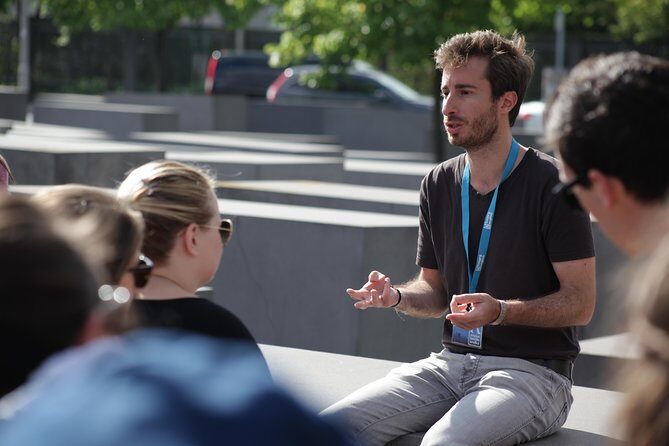 2 / 8
2 / 8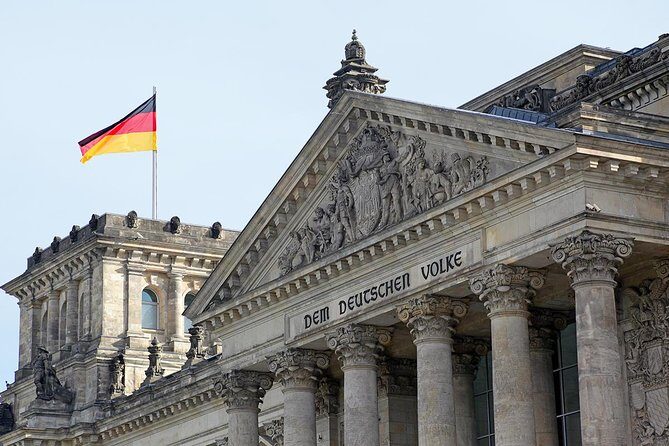 3 / 8
3 / 8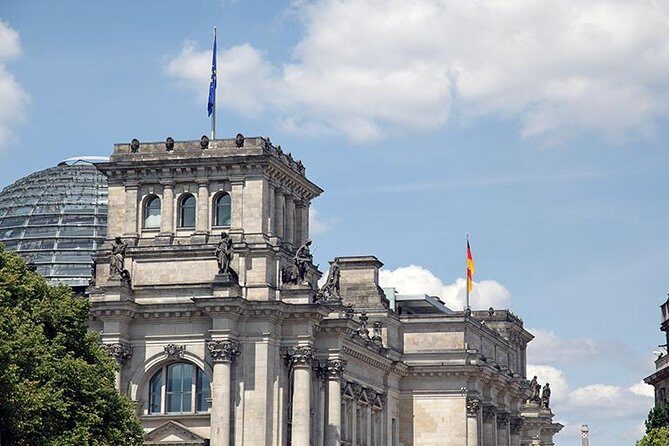 4 / 8
4 / 8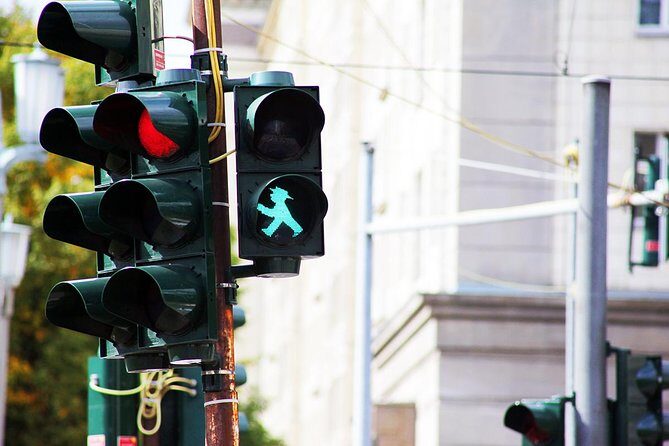 5 / 8
5 / 8 6 / 8
6 / 8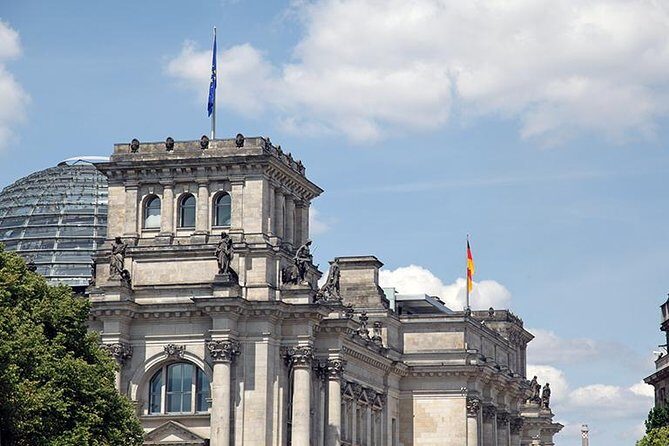 7 / 8
7 / 8 8 / 8
8 / 8- A four-era Berlin story in one route covering Prussia, Imperial power, Nazi years, and Cold War division
- Unter den Linden as the backbone linking royal sites to modern-day political symbolism
- Memorial and tragedy stops handled with care at places tied to Nazi persecution and Jewish murder
- Checkpoint Charlie and the Berlin Wall making East-West barriers concrete in real space
- Topography of Terror at the Gestapo/SS HQ site, including a look down into excavated cellars
- Small group size (max 25) with an English-speaking guide and a mobile ticket

👉 See our pick of the Berlin’s 4 Best Vegan & Vegetarian Tours (With Prices & Reviews)
Why this Berlin walking tour works so well
Berlin is the kind of city where the past doesn’t sit politely in one museum. It leaks into streets, façades, and squares. This tour’s appeal is that it treats Berlin like a timeline you can walk through, not like a checklist of photos.
At just under four hours, you get a guided framework for understanding how power shifted over time: royal Berlin, then dictatorship, then division, then reunification and the ongoing work of remembrance. That’s especially valuable if it’s your first trip, because it helps you connect landmarks that otherwise feel unrelated.
You can also read our reviews of more walking tours in Berlin


Meeting at Neue Promenade 3 and the pace you should expect
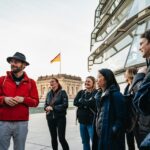
You meet at Neue Promenade 3 (10178 Berlin) and you start with an overview that frames what you’re about to see. The tour runs about 3 hours 30 minutes and keeps moving, with many stops around the 5-minute mark. That doesn’t mean there’s no depth. It means your guide has to be selective, so you hear the key threads fast.
The group stays small (up to 25), which matters for questions. Multiple guides get praised for being friendly and responsive, like Tobi, Walid, and Glenn, who were described as fun and clear while still covering serious material with respect. If you like to ask things as you go, this format tends to reward you.
Practical note: it’s an outdoor-heavy route. Wear real walking shoes. Also, remember that you’re not buying museum admissions on this trip just to “check a box,” since many stops are designed for quick viewing and explanation.
The Museum Island area: where Berlin’s big institutions start to make sense
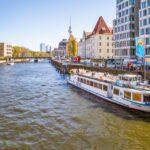
Your day quickly sweeps you into central Berlin’s historic and cultural core, including fast stops around Hackescher Markt and James Simon Park. These early pauses help you get oriented before the tour starts pointing at the city’s major “learning zones.”
Then you reach Museum Island, where the guide uses the concentration of major sites to explain how Berlin built its public identity around museums, learning, and national pride. You’ll have a look at the cluster of prominent museums on and around the island, including Neues Museum, Pergamonmuseum, and Altes Museum. Since these museums are so famous, it’s easy to feel like you already know them from postcards. The guide’s job is to connect the buildings to the eras you’re studying.
One stop I’d pay attention to is the Berlin State Library, noted as the workplace of Albert Einstein. Even if you don’t plan to go inside today, it’s a strong reminder that Berlin wasn’t only about politics and violence. It also produced thinkers, institutions, and cultural weight.
You also pause at Stiftung Neue Synagoge Berlin – Centrum Judaicum during the walk. Even with a short stop, it signals that Berlin’s story includes Jewish life and community history, not just the tragic chapter that later took over Nazi policy.
From royal boulevard to parliament: Unter den Linden to Reichstag
After Museum Island, the route leans into one of Berlin’s most important walkways: Unter den Linden. This boulevard matters because it links places with power, governance, and national symbolism. Walking it in sequence makes it easier to “read” the city rather than just stare at individual landmarks.
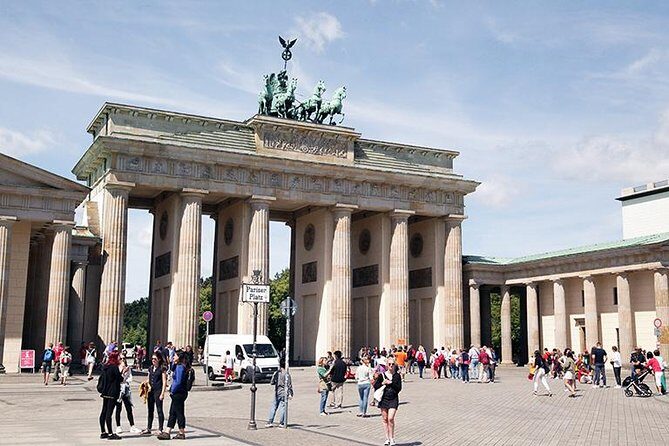
A key point along the way is the stop near Stadtschloss Berlin and the royal-city-to-modern-symbolism transition. Even if you only get a brief look, it helps you understand why this corridor became so meaningful. The tour then moves you toward Brandenburg Gate, which forms a major anchor for the story.
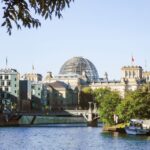
You’ll also see the Reichstag, Germany’s parliament building, which is close enough to Brandenburg Gate that it feels like part of the same political scene. The guide uses these positions to explain how architecture and national institutions changed roles as Berlin’s governments changed. This is the kind of context that saves you time on later days, because you’ll recognize what you’re looking at and why it matters.
Pariser Platz, Hitler’s bunker location, and the Holocaust Memorial
The route turns sharply heavier around Pariser Platz, tied in the description to the location of Hitler’s bunker. This isn’t a place where you’re expected to linger. The value here is that the guide gives you the context so you understand why this area carries weight today.
Right there, you reach the Holocaust Memorial, described as commemorating the many Jews murdered during the Nazi regime. The strength of a guided stop is that it helps you understand what you’re seeing without rushing past it like a photo stop. Even when you only spend a few minutes, the guide’s framing can make the memorial feel less like an object and more like an instruction: remember, and understand what led to this.
If you’re sensitive to difficult topics, plan for that before you go. This tour includes serious sites as part of the route, and the pacing is designed to keep you moving while still acknowledging what these places mean.
You can also read our reviews of more tours and experiences in Berlin


Bebelplatz and the 1933 book burning memorial moment
At Bebelplatz, you’ll have a stop at the area connected to the 1933 Nazi book burning. This is one of the most “Berlin-specific” lessons because it shows how censorship and control weren’t just theoretical. They happened publicly, in a way that shaped what the next generation could read, think, and question.
The stop at the Book Burning Memorial at Bebelplatz gives you a rare chance to connect ideology to a physical location. It’s also a reminder that the Nazi era didn’t only involve violence. It attacked culture and knowledge, too.
A small warning: because the tour moves quickly, you may want to take extra care with photos. If your camera or phone keeps you stuck while the group moves on, you can feel rushed. I suggest keeping your gear simple at this kind of stop so you can stay present.
Checkpoint Charlie and the Berlin Wall: division you can walk through
Next comes the Cold War section, and it gets real fast. The tour traces the path of the so-called death strip to Checkpoint Charlie, described as the infamous crossing point between East and West Berlin. Walking this corridor with a guide helps the story go from textbook to street level.
Then you continue to sites linked to the Berlin Wall, including a stop at a Memorial of the Berlin Wall. Even with a brief pause, the point is clear: this boundary wasn’t symbolic. It was enforced, monitored, and designed to stop people from moving freely.
The tour also highlights the Wall’s downfall in 1989, so you’re not only learning how division worked, but how it ended. That matters, because Berlin’s later rebirth feels more believable when you understand the obstacle that had to disappear first.
Topography of Terror: the Gestapo and SS HQ grounds
One of the most intense stops is Topography of Terror at the former Gestapo and SS Headquarters. The guide explains why the museum sits exactly here, and that detail matters. It’s not just “history on display.” It’s confrontation in place.
You’ll also hear about the excavated cellars under the building, described as a haunting location connected to political prisoners who were tortured and killed. Even if you only spend a short time, the guide’s job is to keep this from becoming spectacle. The stop is built for remembrance and understanding, not just for sightseeing.
If you plan to return later for more time inside, this tour gives you a fast foundation. If you only have half a day, it’s still a strong emotional anchor because it ties the rest of Berlin’s 20th-century story to what the Nazi regime actually did.
Other quick stops that add up: from churches to opera houses
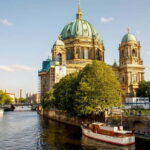
Throughout the walk, you’ll see a string of sites where the guide gives short explanations. That includes major landmarks like Berliner Dom, Rotes Rathaus, and Nikolaiviertel, plus stops around Lustgarten and Schlossbrücke. You’re not getting long time inside any one building, but the trade-off is that you see how the city’s layout connects.
You’ll also pass and pause at places like Staatsoper Unter Den Linden and Cathedral of St. Hedwig (Domgemeinde St. Hedwig). These are quick visual breaks that keep the day from turning into nonstop memorial mode. They also help you understand Berlin as a lived city, not only an archive.
A few stops feel especially modern and practical, too. The tour includes a stop at Humboldt University and even an Ampelmann Shop, which gives you a glimpse of how Berlin keeps its identity in everyday design. That little contrast helps after the heavier sections, and it makes the final stretch feel less abrupt.
Value check: is $24.19 worth it?
At about $24.19 per person, this is priced like a bargain for what it packs in. You’re paying for a professional guide who turns major landmarks into a connected narrative across multiple eras. For many people, that’s the real value: you’re buying understanding, not just walking.
You’re also getting a format that’s efficient. You cover a long stretch of central Berlin on foot, rather than spending time figuring out transport and deciding what’s worth your limited vacation hours. With a small cap of 25 people, you generally get a smoother experience than on huge coach tours.
Food isn’t included, so you’ll likely want to plan your own snack or lunch. Reviews mention a quick chance to warm up at a coffee or bakery stop, but that’s not built in as a free meal. Still, the main point is solid: you’re not paying for extras. You’re paying for the guide and the storyline.
Who should book this tour, and who should skip it
Book this if you want a first-pass orientation to central Berlin and you like history that’s tied to the street. It’s a strong pick for first-timers and for anyone who wants context before visiting museums or memorial sites on later days.
Skip it if you hate walking, or if you want lots of time inside places rather than short, guided pauses. This is half-day, so it’s designed for movement and explanation, not slow wandering.
Should you book this Berlin half-day walking tour?
If you’re the type who likes to understand what you’re seeing, yes, book it. The route connects Unter den Linden, Brandenburg Gate, the Reichstag, the Holocaust Memorial, Checkpoint Charlie, and Topography of Terror into a single timeline that makes Berlin feel more coherent fast. It also gets high praise for guides like Amanda and Emma bringing complex, emotional material to life with a good sense of pacing and care.
If your schedule is tight, this is one of the best ways to use it. You’ll leave with a mental map and a clearer sense of why each monument sits where it does.
FAQ
How long is the Discover Berlin Half-Day Walking Tour?
It runs for about 3 hours 30 minutes.
What language is the tour offered in?
The tour is offered in English.
Where do I meet the guide?
You meet at Neue Promenade 3, 10178 Berlin, Germany.
Is the ticket mobile?
Yes. The tour uses a mobile ticket.
How big is the group?
The maximum group size is 25 travelers.
Does the price include food and drinks?
No. Food and drinks are not included unless specified.
Are museum or attraction admissions included?
The listed stops show admission as free for each stop on the tour description.
Is it suitable for most travelers?
Yes. Most travelers can participate, and service animals are allowed.
Can I cancel for a full refund?
Yes. You can cancel up to 24 hours in advance for a full refund. If you cancel less than 24 hours before the start time, the amount paid is not refunded.
If you want, tell me your travel dates and what kind of history you prefer most (royal/prussian, WWII, or Cold War). I’ll suggest the best day to schedule this so it supports your other Berlin plans.