
Medici stories turn Florence from pretty to powerful. This is a compact walk built around the people who paid for ideas to become art, from San Lorenzo to Piazza della Signoria. I like that you start right by the Giovanni de’ Medici statue, so the whole route feels guided, not random. Guides often bring the city to life with vivid commentary, and names you may hear along the way include Aurora, Camilla, and Deborah.
Two things I especially like: you get major monuments plus quieter stops in only about two hours, and you learn the “why” behind what you’re seeing. You’ll pass the Palazzo Medici Riccardi, the Baptistery of St. John, the Duomo complex, and the Dante area, then finish near the Uffizi. One drawback to plan for: several highlights are best viewed from the outside on this route, and some sites can have admission that’s not included.
- Key Highlights That Make This Tour Worth It
- Getting Your Florence Bearings in Just Two Hours
- Meeting at Piazza di San Lorenzo (and Why That Matters)
- The Big Value Question: Price vs. Donation-Based Reality
- The Route: From Medici Fun Facts to Duomo-Scale Awe
- Basilica di San Lorenzo: Where the Medici Are Laid to Rest
- Palazzo Medici Riccardi: A Banker’s Home With Renaissance Clout
- Baptistero di San Giovanni: One of Florence’s Oldest Surprises
- Duomo, Campanile di Giotto, and the Brunelleschi Dome Outside
- Museo Casa di Dante: A Free Stop That Adds a Literature Layer
- Piazza della Signoria and Palazzo Vecchio: Florence’s Political Stage
- Ending Near the Uffizi Gallery: Where the Renaissance Culture Continues
- What the Best Guides Do With This Route
- How to Plan Your Day After the Tour
- Who This Tour Suits Best (and Who Should Think Twice)
- Should You Book This Florence Medici Walking Tour?
- FAQ
- How long is the Florence walking tour?
- Where do I meet the guide, and where does the tour end?
- Is the tour offered in English?
- Is a mobile ticket used?
- Are admission tickets included for the stops?
- What if the weather is bad?
- The Best Of Florence!
- More Tours in Florence
- More Tour Reviews in Florence
- Not for you? Here's more nearby things to do in Florence we have reviewed
Key Highlights That Make This Tour Worth It




- Medici-led story flow: the family’s influence ties together churches, palaces, and political squares
- A tight, high-impact route: you cover Duomo-area icons and Medici sites in roughly 2 hours
- End near Uffizi: your finish point drops you exactly where you might want to go next
- Great guide energy: top marks for storytelling and humor, even on rainy days
- Small group pace: capped at 30 travelers, so it’s easier to hear and ask questions
👉 See our pick of the What Are The Best 2-Hour Tours In Florence? Our Top 3 Picks
Getting Your Florence Bearings in Just Two Hours
If you want Florence to make sense quickly, this tour is a smart first move. You’re walking through the center of Renaissance power, with the Medici family as your thread. Instead of treating Florence like a checklist of buildings, you get explanations for how wealth, politics, and religion braided together in daily life.
I also like the fact that it’s practical. You’re on foot, so you feel the rhythm of the city—busy markets around San Lorenzo, then easing into grand civic spaces by the Duomo area and Piazza della Signoria. And because it ends near the Uffizi, you’re not stuck at the far edge of town wondering what to do next.
You can also read our reviews of more tours and experiences in Florence.
- Tuscany Day Trip from Florence: Siena, San Gimignano, Pisa and Lunch at a Winery
★ 5.0 · 21,634 reviews

Meeting at Piazza di San Lorenzo (and Why That Matters)
The meet-up point is Piazza di San Lorenzo, 35R, by the statue of Giovanni de’ Medici sitting on a throne. It’s a good setup: the tour begins in the heart of the city’s historic core, so you don’t lose time finding your way.
From there, expect a smooth walking pace that fits a wide range of visitors. The tour is offered in English, and it uses a mobile ticket. It’s also built for real-world travel needs—service animals are allowed, and it’s near public transportation.
One tip that comes from how the route works: if you want to get the most out of the storytelling, aim to arrive a few minutes early. The tour is popular enough that it’s often booked about 25 days in advance, so showing up on time helps everything stay calm.
The Big Value Question: Price vs. Donation-Based Reality
The listed price is extremely low (shown as about $3.62). At the same time, the experience notes that it’s made possible thanks to donations, and at the end you decide what to compensate based on the guide’s professionalism. Translation: you shouldn’t think of this as a “cheap tour that’s less good.” You should think of it as a pay-what-you-feel model with a strong local guide focus.
Why does that matter for you? Because a donation-based setup often encourages guides to work hard from minute one. And the reviews you’ll see for this tour repeatedly emphasize that guides connect the dots—Medici power, Renaissance art, and the meaning of specific architecture—while keeping the pace comfortable.
The Route: From Medici Fun Facts to Duomo-Scale Awe
This tour follows a simple logic: start with Medici roots, then build up to Florence’s most famous religious and civic landmarks, and finally end right where big art plans often begin.
You’ll cover these main areas in order:
- Basilica di San Lorenzo
- Palazzo Medici Riccardi
- Baptistery of St. John
- Duomo complex (Duomo and the Campanile area)
- Cupola del Brunelleschi (the famous dome from outside)
- Museo Casa di Dante area
- Piazza della Signoria
- Palazzo Vecchio and the David copy
- Gallerie degli Uffizi (ending nearby)
Even if you’ve been to Florence before, this kind of route is useful because it gives you context you might have missed when you were moving quickly between sites on your own.
Basilica di San Lorenzo: Where the Medici Are Laid to Rest
Your first stop is Basilica di San Lorenzo. It’s one of Florence’s largest churches and sits in the main market district area. What makes this stop more than “another big church” is that it’s the burial place of principal members of the Medici family, from Cosimo il Vecchio through Cosimo III.
What I’d watch for when you’re there: this is where power becomes permanent. A family’s story isn’t just in palaces and paintings; it’s also in who gets remembered in sacred space. Even if you don’t go deep into interiors, the guide’s explanation helps you read the building like a statement.
This stop is listed as about 10 minutes, and admission isn’t included in the tour.
- Tuscany Day Trip from Florence: Siena, San Gimignano, Pisa and Lunch at a Winery
★ 5.0 · 21,634 reviews
Palazzo Medici Riccardi: A Banker’s Home With Renaissance Clout
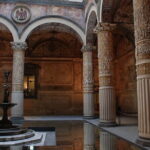
Next comes Palazzo Medici Riccardi, designed for Cosimo de’ Medici. Construction ran from 1444 to 1484, which puts it right in the heart of Renaissance ambition: this is when Florence turned money and ideas into lasting buildings.
Here’s what makes the stop valuable: you’re looking at architecture as messaging. The Medici weren’t just funding artists. They were shaping who looked legitimate, who looked powerful, and what kind of city Florence aimed to be. A good guide will connect what you see outside the building to the larger Medici strategy: influence through culture.
This is also scheduled as about 10 minutes, with admission not included.
Baptistero di San Giovanni: One of Florence’s Oldest Surprises
The Florence Baptistery (Battistero di San Giovanni) is one of the oldest buildings in the city, built between 1059 and 1128 in the Florentine Romanesque style. It sits across from Florence Cathedral and near the Campanile of Giotto.
Even on a short tour, this stop can change how you understand the Duomo complex area. The older Baptistery makes the later Gothic and Renaissance developments feel less like an isolated masterpiece moment and more like a long timeline of building, rebuilding, and rethinking faith and art.
This stop is listed at about 10 minutes, and admission isn’t included.
Duomo, Campanile di Giotto, and the Brunelleschi Dome Outside
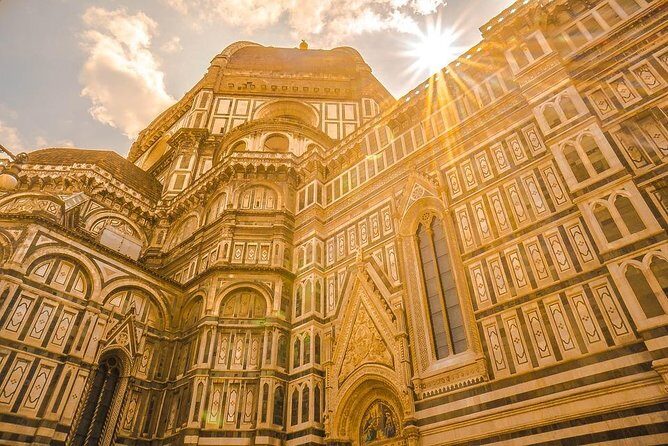
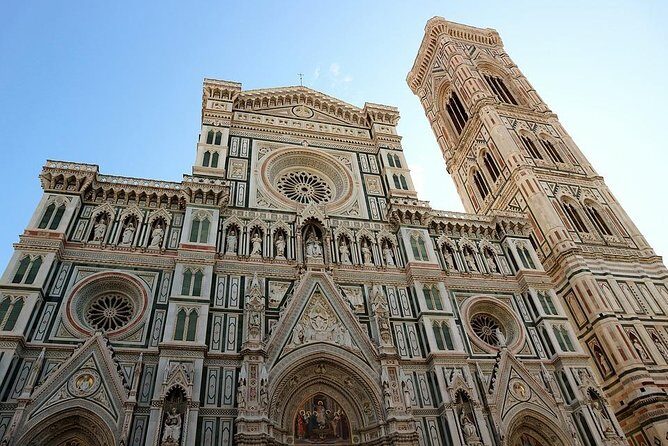
Then you hit the showpieces: Duomo (Cattedrale di Santa Maria del Fiore), the Campanile di Giotto, and views connected to Cupola del Brunelleschi.
A helpful way to think about this: on a walking tour, you’re mostly seeing these monuments from public spaces around them, which means your main job is to notice proportions and details described by your guide. The Cathedral complex is part of a UNESCO World Heritage Site for Florence’s historic center, and it’s one of the reasons visitors remember Florence as a “serious art city.”
- Duomo: begun in 1296 in the Gothic style to a design of Arnolfo di Cambio. This stop is listed as free to view as part of the route (admission ticket free).
- Campanile di Giotto: adjacent to both the Basilica and Baptistery area. It’s a highlight of Florentine Gothic architecture with rich sculptural decorations and polychrome marble details.
- Cupola del Brunelleschi: the dome is described as one of the biggest construction mysteries in art and architecture, once the largest in the world, and still the largest brick dome ever constructed.
Scheduled time here is about 10 minutes at each point. Notably, admission tickets aren’t included for most of these, so if you want to go inside, you’ll be making that choice on your own after the walk.
Museo Casa di Dante: A Free Stop That Adds a Literature Layer
You then pass by the House of Dante area (listed as Museo Casa di Dante). Dante Alighieri wrote the Divine Comedy, often described as the most important poem of the Middle Ages and a major work of Italian literature.
This is one of the smart moves of the tour: it reminds you that Florence is not only painting and architecture. It’s also language and ideas. When a guide ties Dante to the broader Renaissance mindset, the city stops feeling like separate “attractions” and starts feeling like one continuous culture.
This stop is about 5 minutes, and admission is listed as free.
Piazza della Signoria and Palazzo Vecchio: Florence’s Political Stage
Now the tour shifts from sacred spaces to public power.
Piazza della Signoria is an L-shaped square in front of Palazzo Vecchio. It’s where Florentines gather, and it’s also packed with travelers—still, it works as a learning zone because it’s a living stage for power. The square sits near both Palazzo Vecchio and Piazza del Duomo, and it functions as a gateway toward Uffizi.
Then you reach Palazzo Vecchio, the Old Palace and town hall. It’s massive, fortress-like in feel, and it oversees a lot of civic identity. There’s also a key visual cue: the square and palace area connect to the copy of Michelangelo’s David and to statues you can see in the adjacent Loggia dei Lanzi area.
This is one of the spots where guides often earn extra praise, because they explain why the city placed sculpture and politics next to each other. You start to see power as something performed in daylight.
This area is scheduled as about 10 minutes for Piazza della Signoria and about 10 minutes for Palazzo Vecchio, and admission isn’t included for Palazzo Vecchio on this route.
Ending Near the Uffizi Gallery: Where the Renaissance Culture Continues
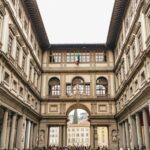
The walk ends near Gallerie degli Uffizi. The Uffizi is one of Italy’s most important museums and the most visited, and it holds priceless works, especially from the Italian Renaissance. The building of the Uffizi complex began by Giorgio Vasari in 1560 for Cosimo I de’ Medici to accommodate offices of Florentine magistrates—hence the name “uffizi,” meaning offices.
This ending point matters because it saves you time. After the tour, you’re already standing near a place that turns the stories you heard into tangible paintings and sculptures.
The tour schedules this as about 10 minutes near the end, with admission not included.
What the Best Guides Do With This Route
What keeps this tour from feeling like a rushed site loop is the storytelling. Many of the named guides in the feedback—Aurora, Alberto, Manuel, Camilla, Deborah, Simona, and Elisabetta—are praised for explaining details you might otherwise miss.
A couple practical examples of what good guides tend to add:
- Medici context you can carry into museums later, so art and politics connect.
- Architecture meaning, not just dates and names, so the Duomo complex feels intelligible rather than overwhelming.
- Food and restaurant suggestions for after the walk, including what to try and where to go next.
- Even small moments like the David copy explanation can become a mini lesson in how Florence uses art to communicate.
That combination is why people recommend doing this early: it gives you a mental map before you start picking what to visit in depth.
How to Plan Your Day After the Tour
If you want the most value, don’t treat the walking tour as the whole trip. Use it like a framework.
Here’s a simple flow that works well:
- Do this tour early so you know which buildings and stories match your interests.
- After the walk, return to the areas you liked most. Since you end near the Uffizi, this is an easy next step if you’re art-focused.
- If you’re a “church and art” person, you’ll likely want to spend extra time around the Duomo complex. If you care more about literature and thinking, the Dante stop sets you up for that angle too.
Also, since multiple stops don’t include admission, you’ll want to decide in advance which places you want to enter. If you’re not sure, it’s totally fine to start by seeing what you can from the outside—this route is built to work either way.
Who This Tour Suits Best (and Who Should Think Twice)
This works best if you:
- Want an efficient first look at Florence with the Medici thread running through everything
- Enjoy walking and learning city context without waiting in separate ticket lines for every stop
- Appreciate guides who explain architecture and power in a way that feels like a story, not a lecture
You might think twice if you:
- Only want tours where you enter every site included (this one focuses a lot on seeing key monuments and passing major landmarks)
- Feel strongly about avoiding outdoor monument viewing when the weather is rough, since the experience notes it requires good weather
Should You Book This Florence Medici Walking Tour?
I think you should book it if you want Florence to feel coherent fast. The route covers the essential Renaissance “power map” in about two hours, and you end in a prime location near the Uffizi for the next step. The pricing model is donation-based in spirit, which often means you’re buying the guide’s ability to make sense of what you’re seeing—not just access to buildings.
If you’re flexible, arrive a bit early, wear comfy shoes, and plan a little time afterward for whatever grabbed you most during the stories. It’s a first-day win, and it also works as a refresher on repeat trips.
FAQ
How long is the Florence walking tour?
It lasts about 2 hours.
Where do I meet the guide, and where does the tour end?
You meet at Piazza di San Lorenzo, 35R, 50123 Firenze FI, Italy. The tour ends near Piazza della Signoria, 50122 Firenze FI, Italy (the exact end point can vary slightly).
Is the tour offered in English?
Yes, it’s offered in English.
Is a mobile ticket used?
Yes, the tour uses a mobile ticket.
Are admission tickets included for the stops?
Admission is not included for several stops. Some areas are listed as free to access as part of the route (for example, Duomo and Museo Casa di Dante), but you should plan that not every site’s interior is included.
What if the weather is bad?
The experience requires good weather. If it’s canceled due to poor weather, you’ll be offered a different date or a full refund.
The Best Of Florence!


More Tours in Florence
- The Best tour in Florence: Renaissance & Medici Tales – guided by a STORYTELLER
★ 5.0 · 12,316 reviews

More Tour Reviews in Florence
- Tuscany Day Trip from Florence: Siena, San Gimignano, Pisa and Lunch at a Winery
★ 5.0 · 21,634 reviews - The Best tour in Florence: Renaissance & Medici Tales – guided by a STORYTELLER
★ 5.0 · 12,316 reviews

Not for you? Here's more nearby things to do in Florence we have reviewed
- The Best tour in Florence: Renaissance & Medici Tales – guided by a STORYTELLER
★ 5.0 · 12,316 reviews - Tuscany Day Trip from Florence: Siena, San Gimignano, Pisa and Lunch at a Winery
★ 5.0 · 21,634 reviews