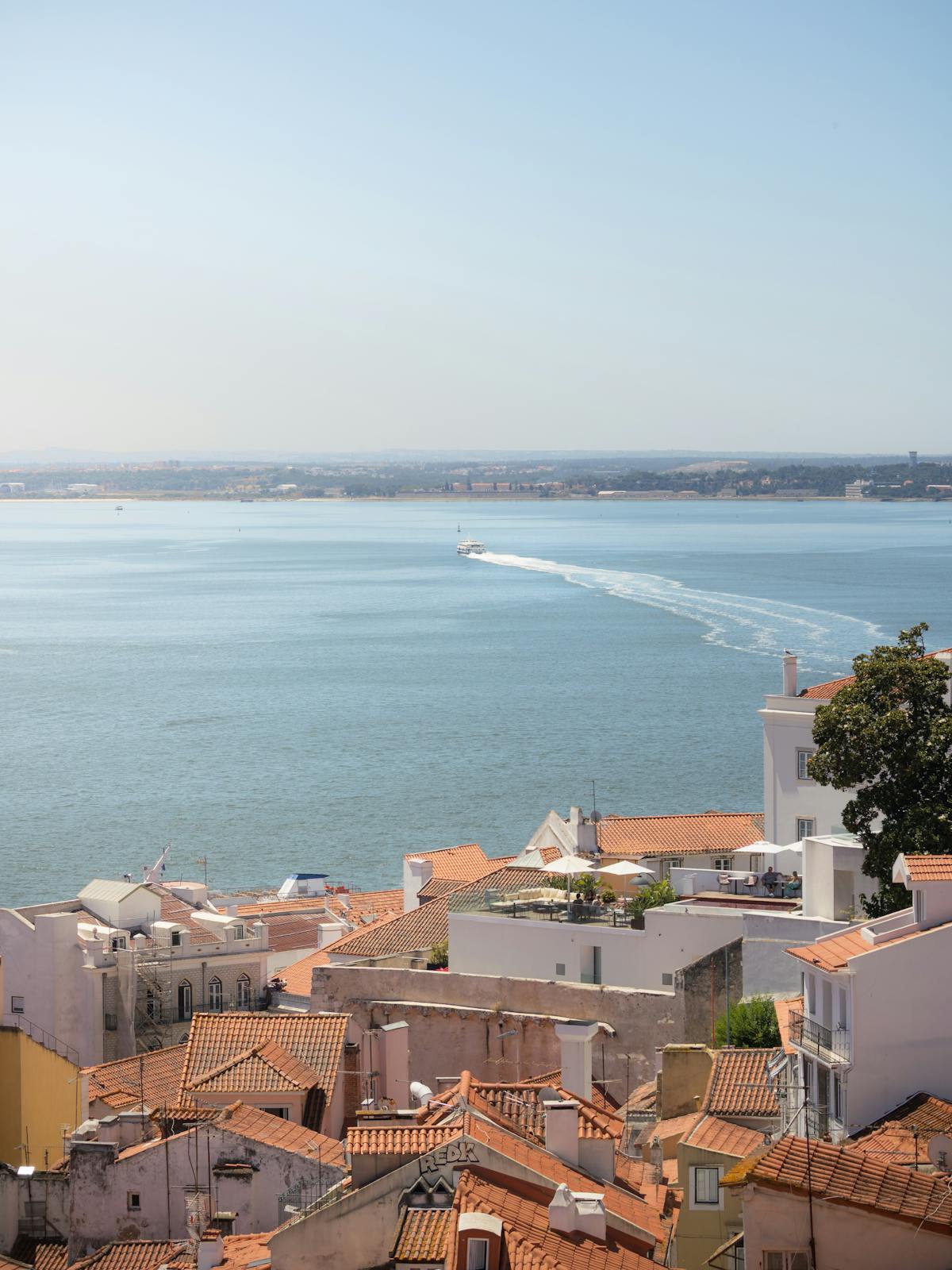
Lisbon’s relationship with water isn’t decorative — it’s fundamental. The Tagus River (Tejo to the Portuguese) is the widest river estuary in Europe, and for centuries it served as Portugal’s gateway to the world. Vasco da Gama sailed from these banks to India, the spice trade made Lisbon one of the richest cities on Earth, and even today the river defines the city’s rhythm, its light, and its layout. Seeing Lisbon from the water isn’t just a nice addition to your trip — it’s arguably the only way to properly understand how the city works, with its seven hills tumbling down to a waterfront that stretches for kilometres.
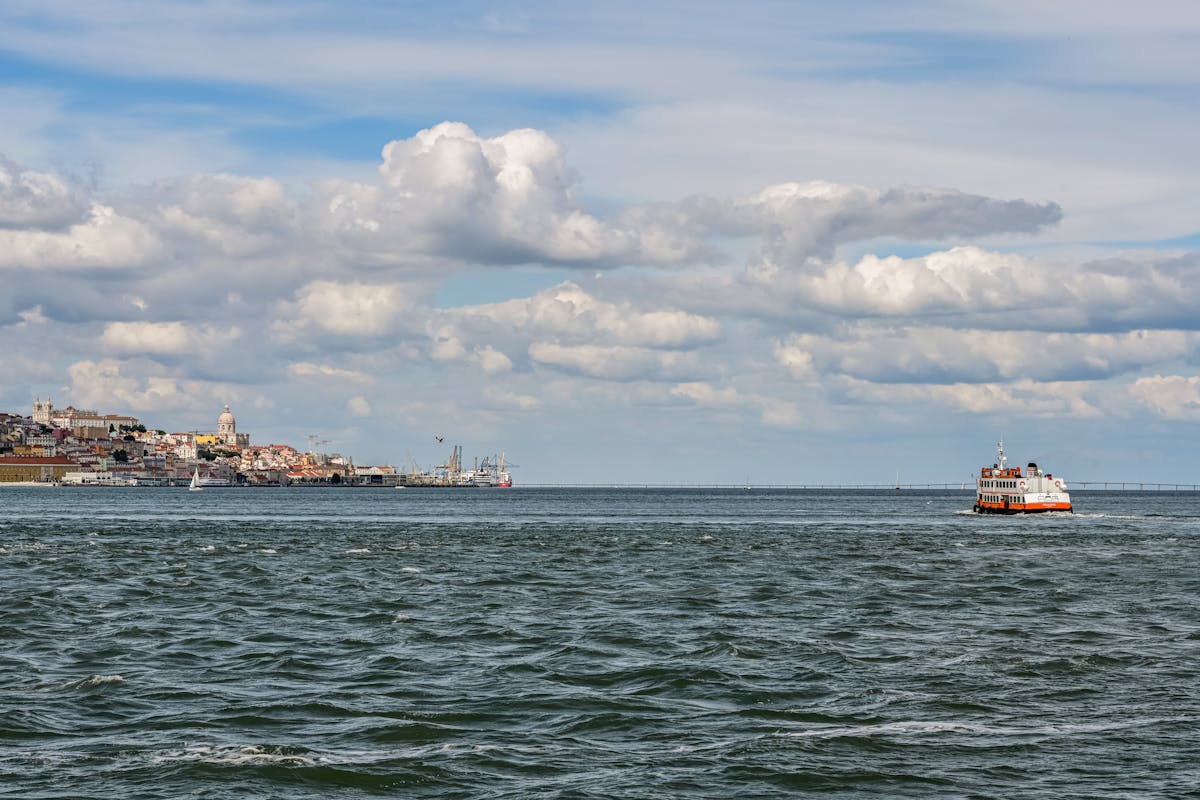
The boat tour scene in Lisbon covers everything from traditional wooden cargo boats restored from the 1940s to luxury sailing yachts with free-flowing wine, and even high-speed RIB boats chasing dolphins out into the Atlantic. Sunset cruises are the biggest draw — watching the light turn golden over the 25 de Abril Bridge and Belém Tower from the deck of a boat, glass of Portuguese wine in hand, is one of those travel moments that genuinely lives up to the hype. But daytime sightseeing cruises and dolphin-watching expeditions are equally worthwhile, offering perspectives of the city and its coastline that no miradouro can match.
The Sunset & Wine Sailing Tour is the top choice with 2,680 reviews and a perfect 5.0 rating. You get a luxury yacht, unlimited wine, charcuterie, and Lisbon’s best sunset views — all for around €35. For something more characterful, the Traditional Boats Sunset Cruise uses a beautifully restored 1947 cargo boat with live commentary.
- Recommended Boat Tours
- 1. Sunset & Wine Sailing Tour — Lisbon’s Most Popular Cruise
- 2. Traditional Boats Sunset Cruise — Heritage on the Water
- 3. Luxury Sailing Yacht with History Commentary
- 4. Dolphin Watching with a Marine Biologist
- 5. Traditional Boats — Guided Sightseeing Cruise (Daytime)
- 6. Express Cruise — The 45-Minute Quick Option
- What You’ll See from the Water
- Belém Tower
- Monument to the Discoveries (Padrão dos Descobrimentos)
- The 25 de Abril Bridge
- Praça do Comércio
- Practical Tips for Lisbon Boat Tours
- When to Go
- What to Wear
- Seasickness
- Booking Strategy
- Where Tours Depart
- Lisbon’s Maritime History: Why the River Matters
- The Age of Discovery Started Here
- The 1755 Earthquake and Tsunami
- The Bridge and the Revolution
- Cristo Rei — Lisbon’s Answer to Rio
- More Portugal Guides
Recommended Boat Tours
1. Sunset & Wine Sailing Tour — Lisbon’s Most Popular Cruise
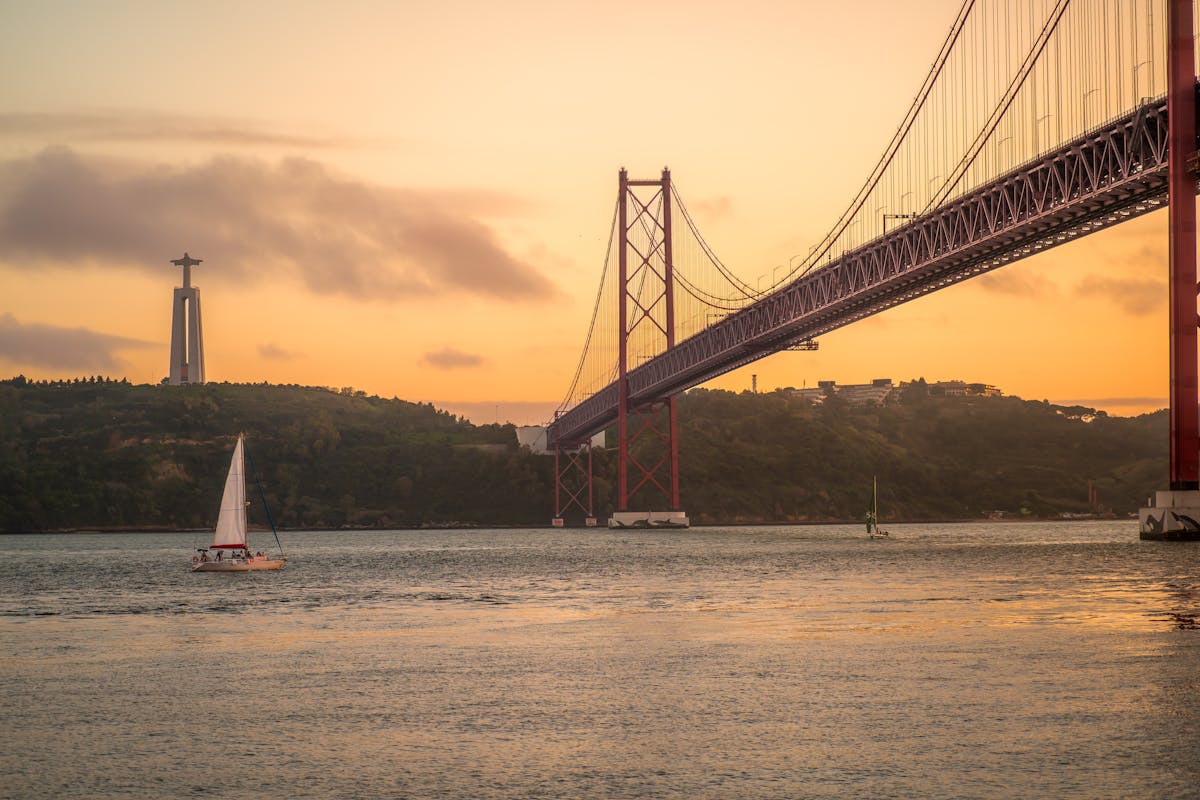
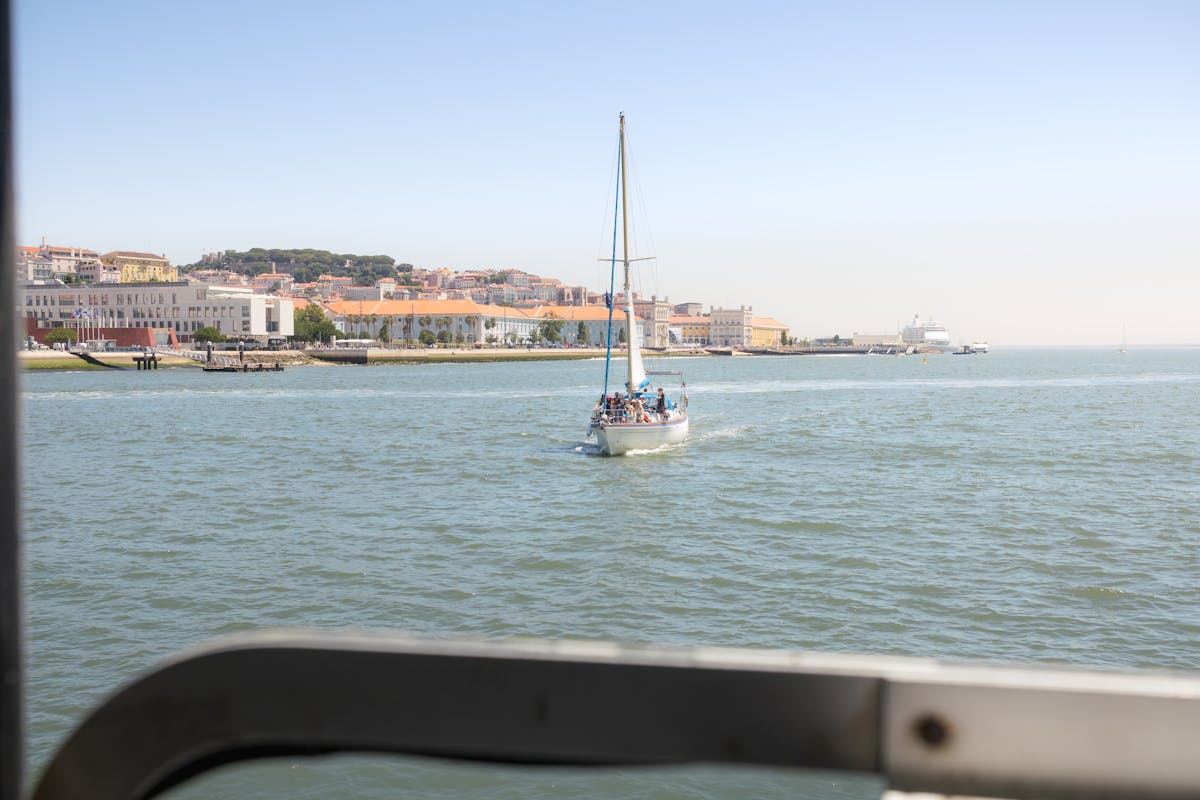
With 2,680 reviews and a perfect 5.0 rating, this sunset sailing tour has earned its place as Lisbon’s most-booked water experience. The concept is straightforward and brilliantly executed: board a luxury sailing yacht at Doca de Santo Amaro, sail along the Tagus past Lisbon’s major waterfront landmarks, drink as much Portuguese wine as you’d like, and watch the sunset paint the 25 de Abril Bridge in shades of amber and pink. Charcuterie boards with local ham and cheese are included, and the crew provides blankets on cooler evenings — a thoughtful touch that reviewers consistently mention.
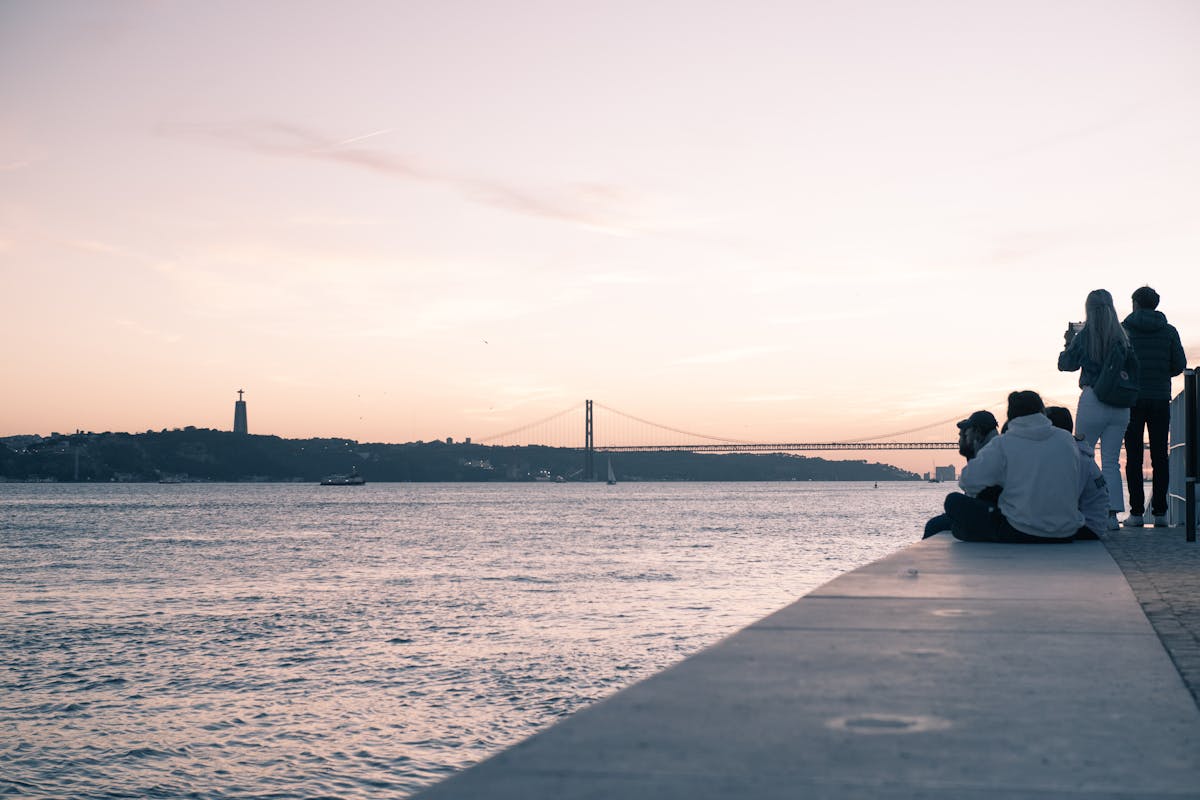
Ana called it “a must-do boat tour in Lisbon” and highlighted the generous hospitality: “They gave us plenty of wine, ham, and cheese, and even a blanket because it was cold, which we really appreciated.” Michelle echoed this, noting that “Joe and Henry were amazing guides” who “set out blankets for us, poured the wine endlessly, and even provided little bites.” The crew frequently receive personal mentions — Alejandro described a trip with only five guests that felt “much more intimate” and said he would “definitely recommend anyone to do this.”
The tour lasts approximately two hours and departs from Doca de Santo Amaro, near the 25 de Abril Bridge. Groups are kept small (typically 10-12 guests on a yacht designed for more), which means you get plenty of space to move around, take photos from different angles, and actually have conversations with the crew. The sunset departure time shifts seasonally — check when booking.
Read reviews and check prices for this tour
2. Traditional Boats Sunset Cruise — Heritage on the Water
If sailing yachts feel too modern for a city as historic as Lisbon, this cruise on a beautifully restored 1947 wooden cargo boat — a traditional cacilheiro — offers something with more soul. With 2,091 reviews and a 4.5 rating, it’s the second most-reviewed river experience in Lisbon, and the slightly lower rating compared to the yacht tours is worth examining. The vast majority of reviews are glowing: Selina called it “a very fun and relaxing atmosphere” where “time flies as you have so much fun,” while Ben praised the “traditional boat which was surprisingly comfy with a very friendly and informative crew.”
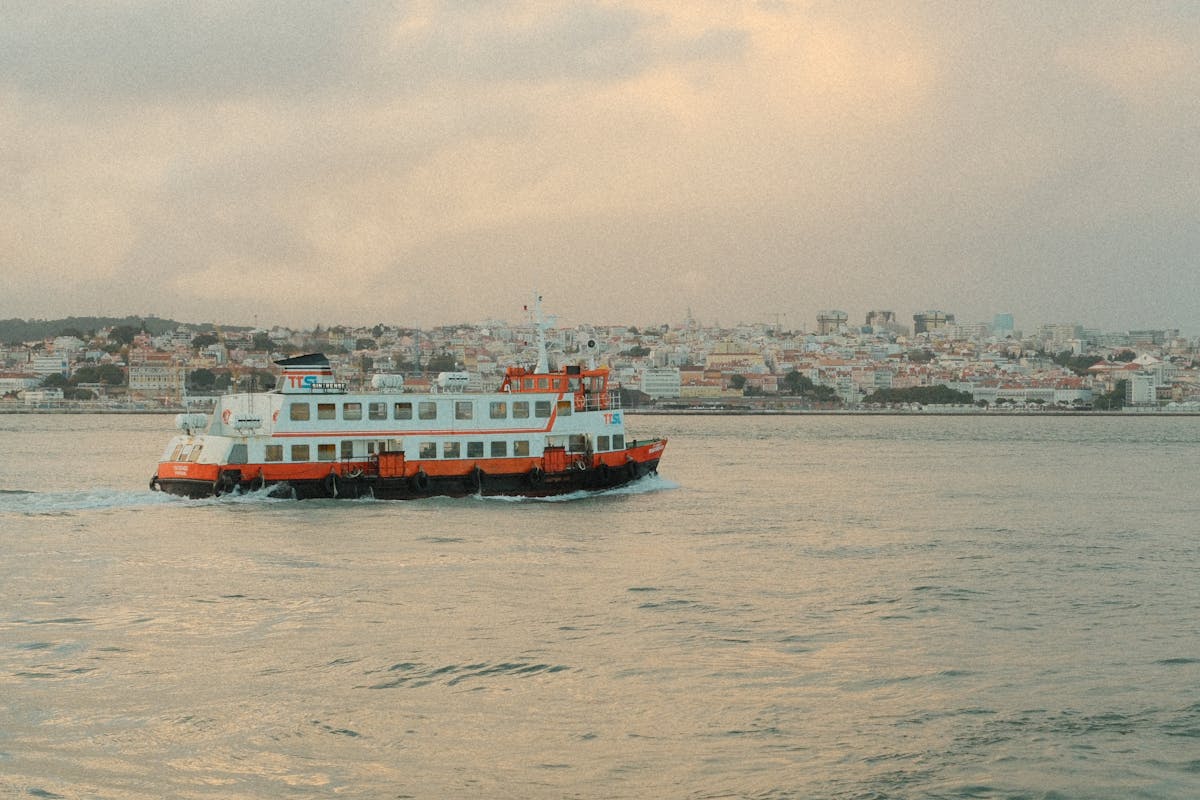
The occasional negative review typically mentions inconsistent guide engagement — Kirk noted it was “a little clunky up front to find out where to actually meet” and Amanda had a rare bad experience with “no tour guide” pointing out landmarks. But these are outliers in an overwhelmingly positive review pool. The boat itself is the star — open-air, wooden, atmospheric, and unlike anything you’ll experience on a modern vessel. Wine is served generously throughout, and the crew often play Portuguese music as the sun goes down.
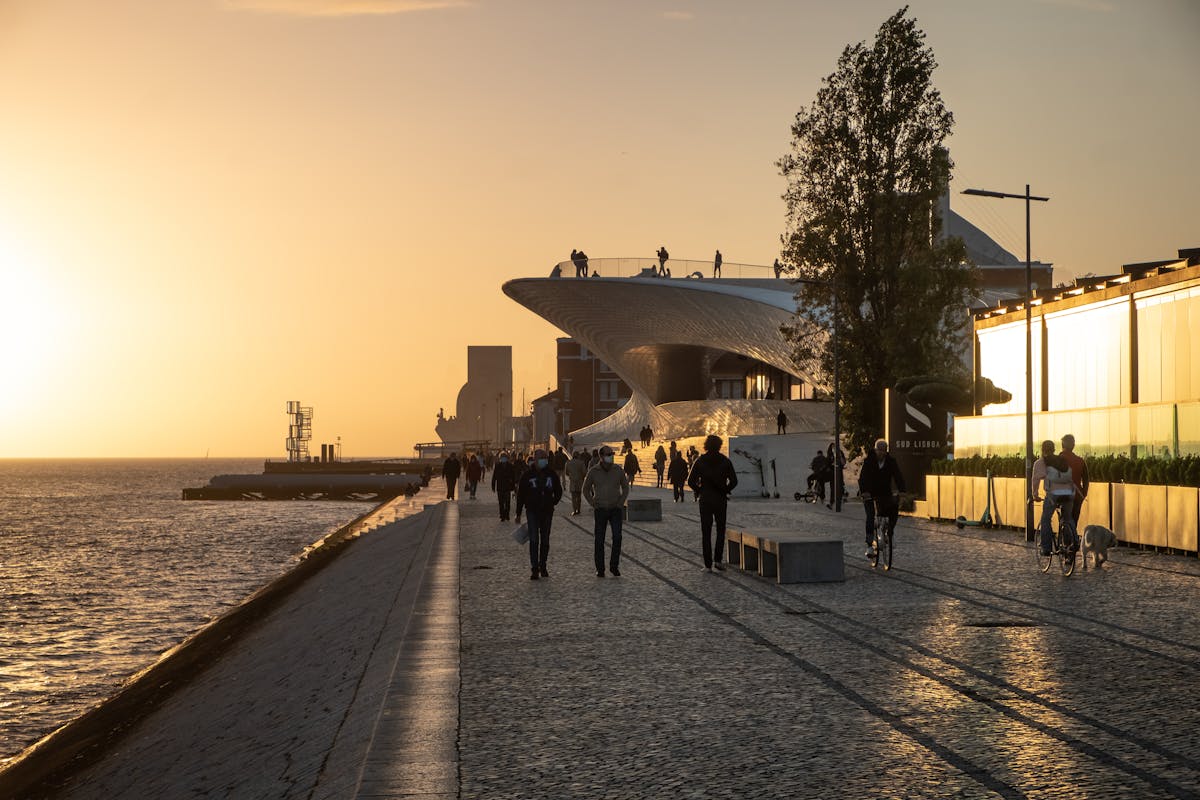
The cruise lasts approximately two hours and passes all major waterfront landmarks: Belém Tower, the Monument to the Discoveries, the MAAT museum, and the 25 de Abril Bridge. The traditional boat moves slowly, which is actually a benefit — you have time to absorb the views and take photos without the boat bouncing around.
Read reviews and check prices for this tour
3. Luxury Sailing Yacht with History Commentary
This 1,109-review tour bridges the gap between pure sightseeing and sunset relaxation by adding genuine historical commentary to the sailing experience. While the yacht itself is similar to the top-rated sunset tour, the difference is the emphasis on storytelling — guides share detailed history about the landmarks you’re sailing past, turning the cruise into a floating history lesson as well as a scenic experience.
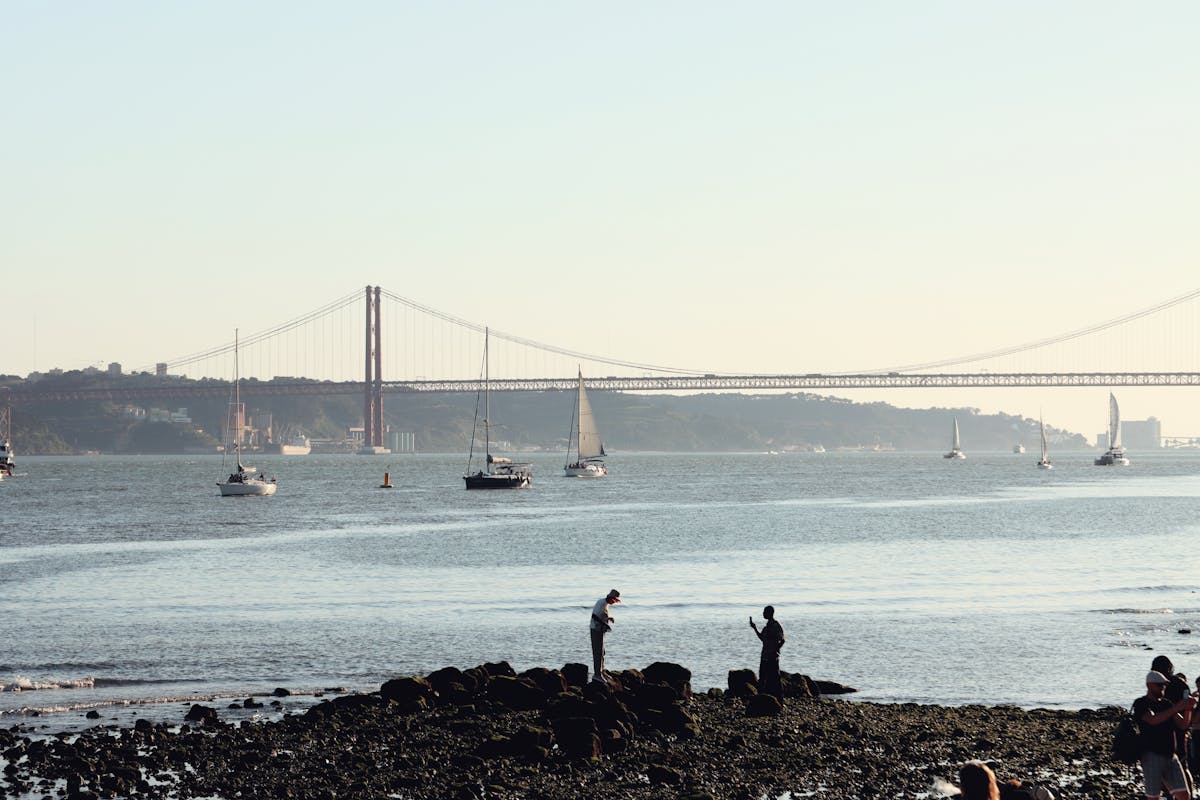
Neda’s review captures the appeal: “We did this boat tour in January and were worried it might be too cold. But despite the unexpectedly chilly weather and wind, it turned out to be a really lovely experience.” She highlighted that “Sebastian and his crew member shared loads of interesting insights about the city and Portugal.” Helen called it “a highlight of our trip to Lisbon” and praised the “local wine and cheese” and “very relaxing beautiful experience.”
Wine, cheese, and beer are included, and the crew are consistently praised for their warmth and knowledge. Hillary enjoyed the “fun sail up and down the river” with guides who gave “insights into living in Lisbon today” — not just historical facts but practical, contemporary context about the city. This is a great option for visitors who want more than just pretty views and free wine (though you get those too).
Read reviews and check prices for this tour
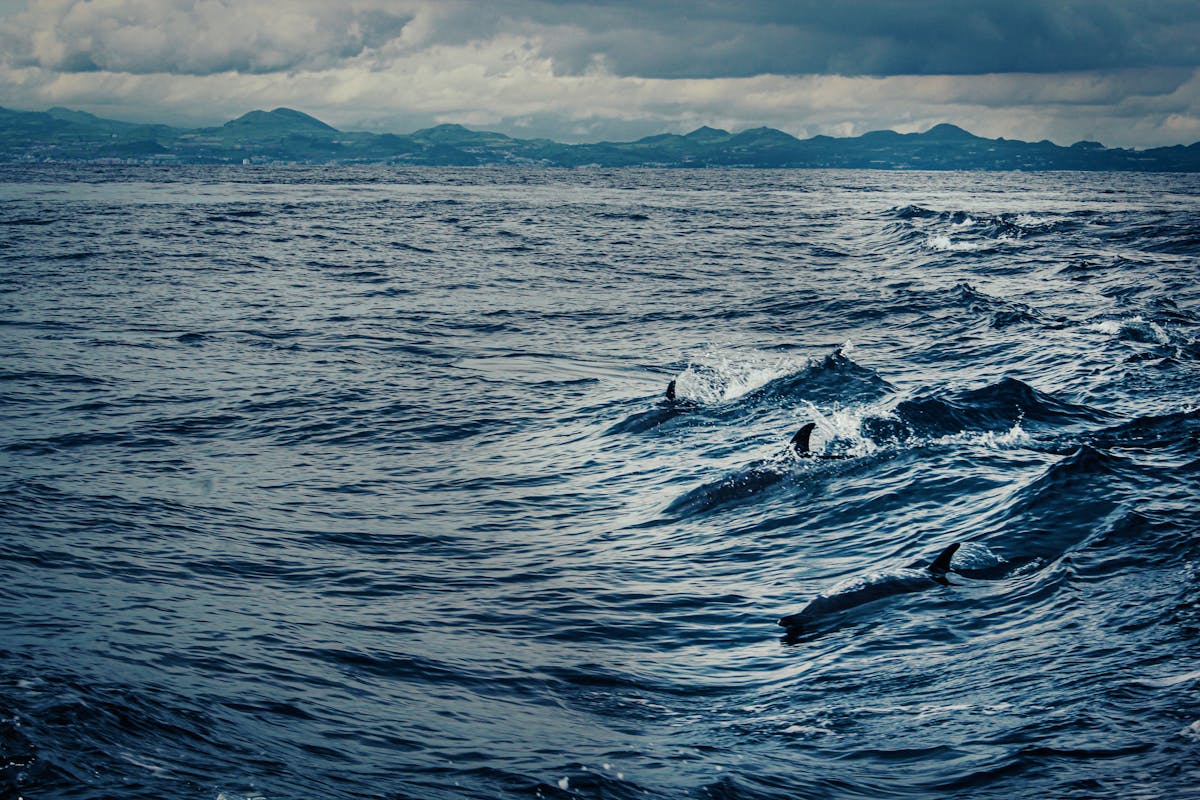
4. Dolphin Watching with a Marine Biologist
This is a completely different experience from the sunset cruises — a high-speed RIB boat takes you down the Tagus, past the river mouth, and out into the open Atlantic Ocean to find pods of wild dolphins. With 812 reviews and a 5.0 rating, the success rate for dolphin sightings is remarkably high, and the marine biologist on board provides scientific context about the species you’re seeing.
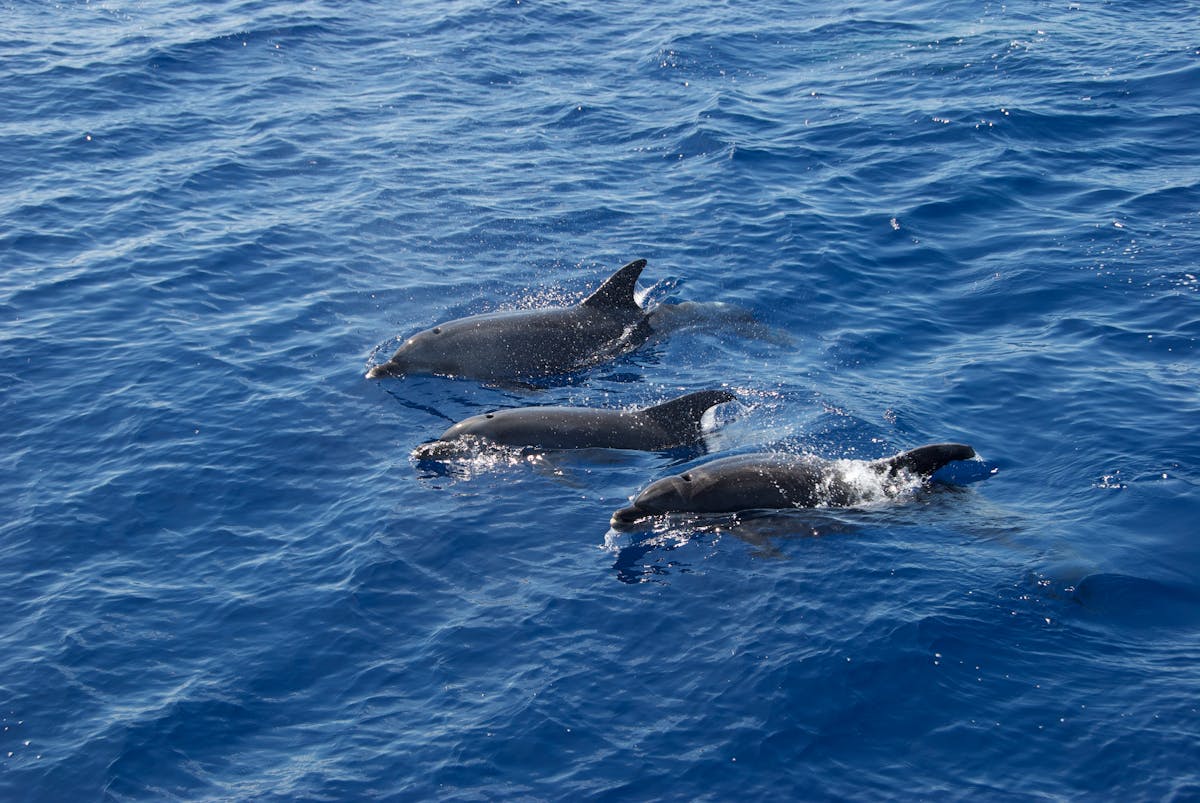
The standout reviewer might be “dechalk,” who wrote: “Even if you don’t see dolphins, the ride on the RIB along the Tagus and into the Atlantic is a great experience. Bouncing along the waves is like a rollercoaster, but not on rails so a little more exciting.” They added: “We saw two pods, common dolphins and the much larger bottlenose dolphins. They swam beside the boat, ahead of the boat, and often swam underneath. This is a real bucket list type activity.” Kait saw “a common dolphin mama and her baby” and Lisa called it “a truly wonderful experience” with “a maximum of 12 guests.”
A few practical notes: the boat is open and moves fast, so bring a warm layer even in summer — the wind chill on the Atlantic is significant. Lauren noted the crew “loaned us jackets as it gets really cold in the wind” and that “there isn’t a bad seat on the boat so there’s no fighting over the view.” The trip lasts approximately 2-3 hours, and while dolphin sightings are very common, they’re not guaranteed in rough weather. Book for a calm day if possible.
Read reviews and check availability
5. Traditional Boats — Guided Sightseeing Cruise (Daytime)
If you’d rather see Lisbon in daylight — which makes sense if you want clear photos or prefer to save your sunset slot for a rooftop bar — this daytime cruise on the same traditional 1947 boat operates as a proper sightseeing tour with guided commentary. With 523 reviews and a 5.0 rating, it consistently outperforms its sunset sibling in terms of guide engagement.
Robert praised the “old traditional 1947 river boat” with “surprisingly smooth” sailing and “good commentary from Elisha.” John called it “perfect for a casual couple of hours” with a guide who “shared some fascinating history in 3 languages” and “made every guest feel welcome.” Kate highlighted the “wonderful traditional sailing boat from 1947” with “an excellent host who spoke 4 languages brilliantly and explained in detail what we sailed past.”
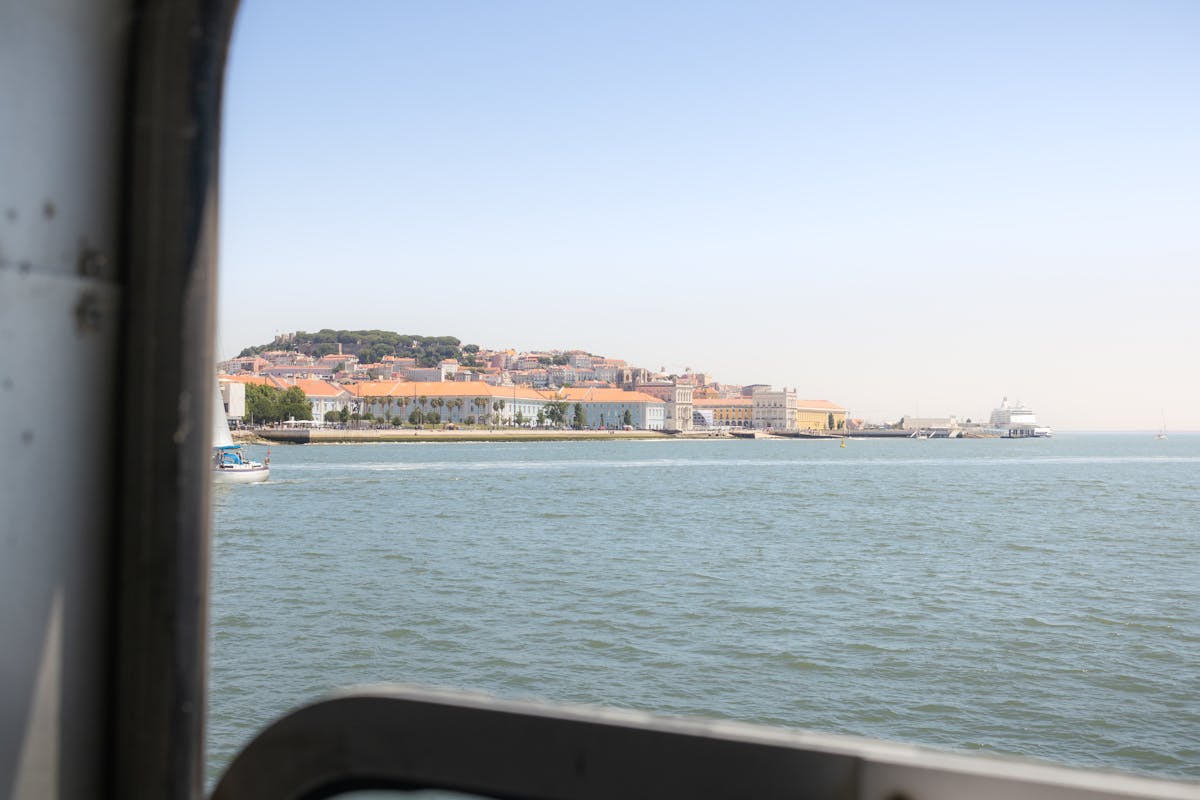
The daytime cruise is the best option for anyone who wants informative commentary as a priority. The guides on this version tend to be more engaged with the educational aspects — presumably because they’re not competing with sunset wine euphoria for attention. The cruise takes approximately 1.5-2 hours and follows the same route past Belém, the bridge, and the major waterfront landmarks.
Read reviews and check prices for this tour
6. Express Cruise — The 45-Minute Quick Option
Short on time? This 45-minute express version on the traditional boat gives you the highlights without the two-hour commitment. With 608 reviews and a 5.0 rating, it covers the main waterfront stretch between Praça do Comércio and Belém, passing the key landmarks at a brisk but comfortable pace.
Leaanne called it “a wonderful cruise, travelling on a traditional cargo boat” and “highly recommend this tour.” It’s particularly good for travellers with packed itineraries who want a river perspective but can’t dedicate a full evening to a sunset cruise. The downside is obvious — you don’t go as far, and you miss the western stretch past the bridge — but at roughly half the price of the longer tours, it’s excellent value for a quick waterfront orientation.
Read reviews and book this tour
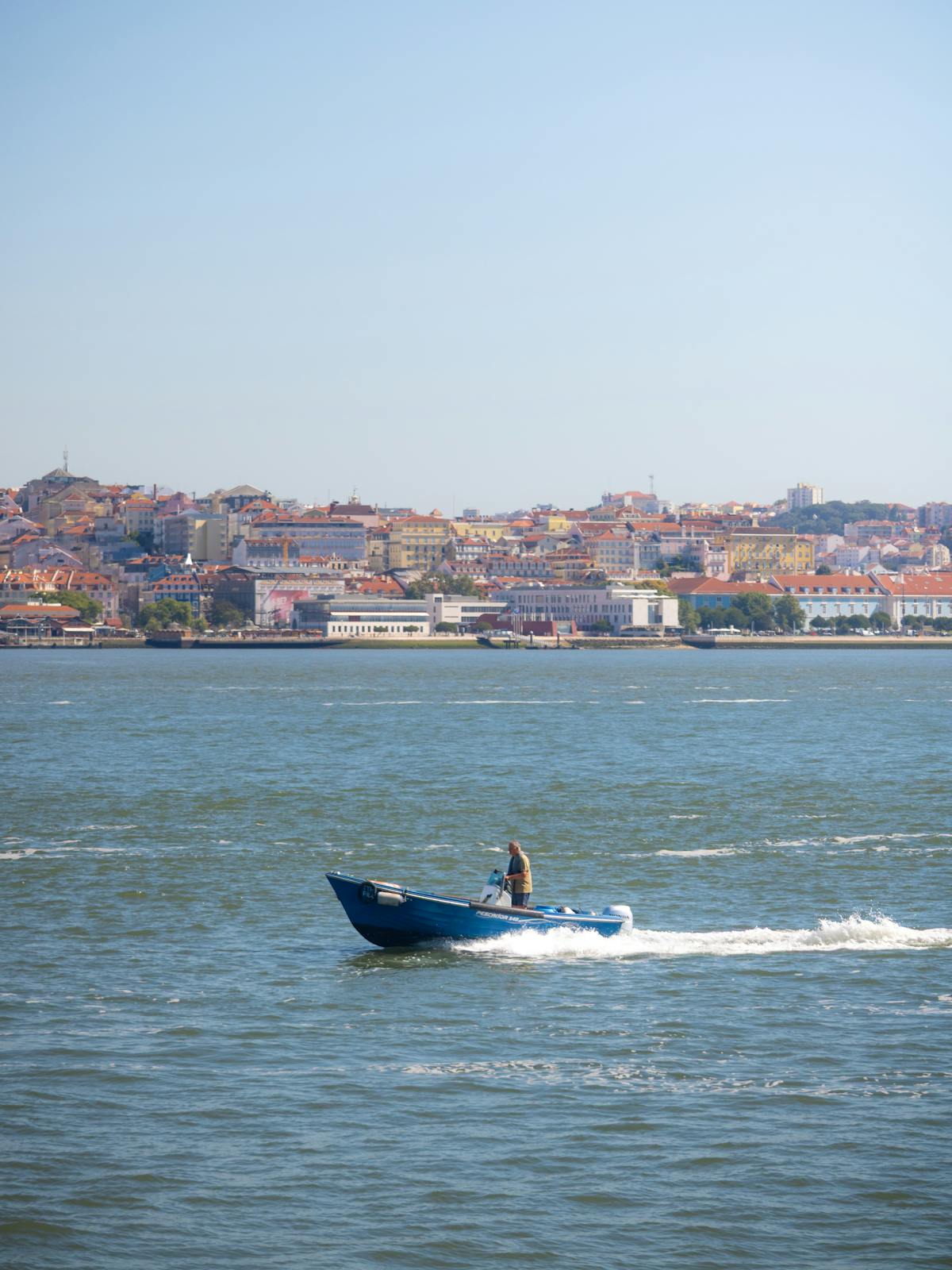
What You’ll See from the Water
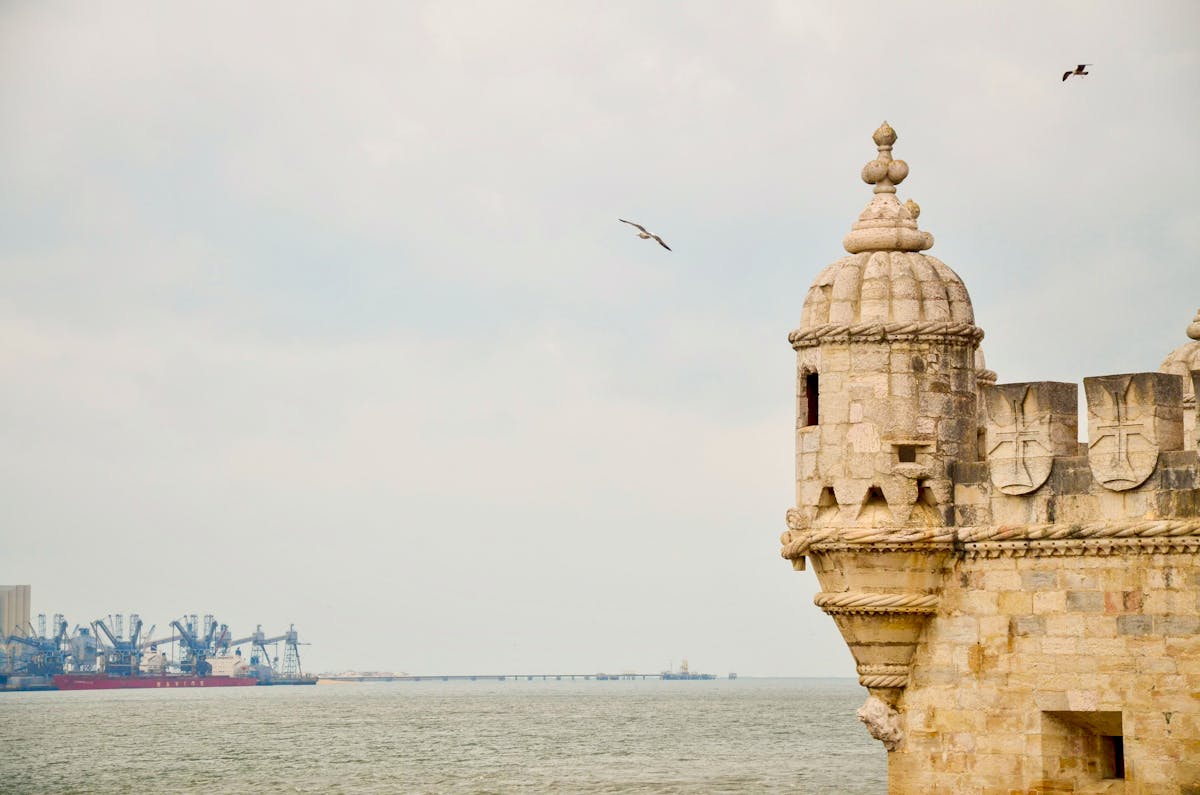
Belém Tower
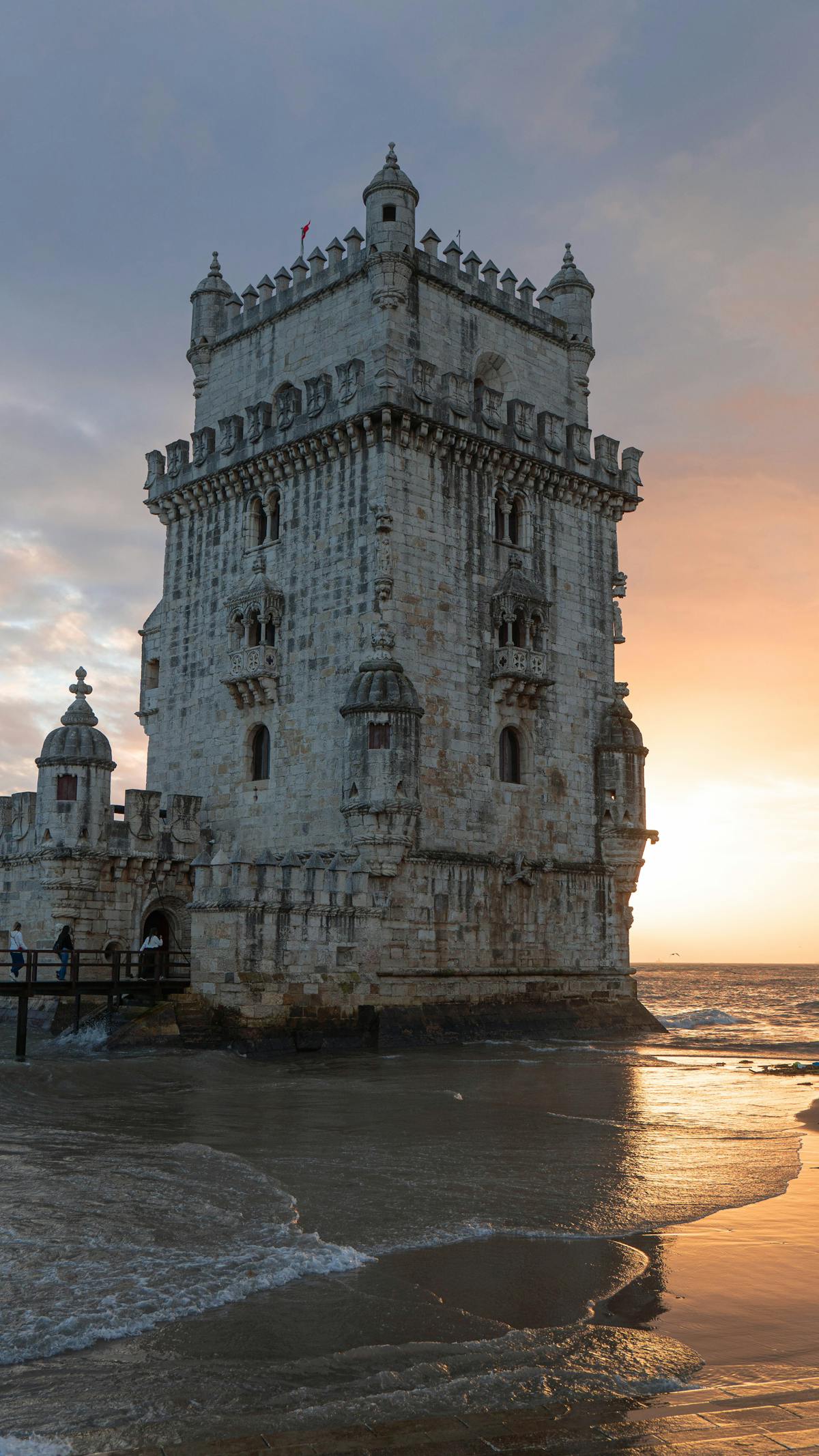
This 16th-century fortified tower was the last thing Portuguese sailors saw as they departed on their voyages of exploration — and the first thing they saw when they returned. Built between 1514 and 1520 during the reign of King Manuel I, it originally stood in the middle of the Tagus River, guarding the approach to Lisbon. Earthquakes and changing river currents have since left it standing near the riverbank, but from a boat you can still appreciate its original position and imagine what it meant to sailors leaving for years-long voyages into the unknown.
Monument to the Discoveries (Padrão dos Descobrimentos)
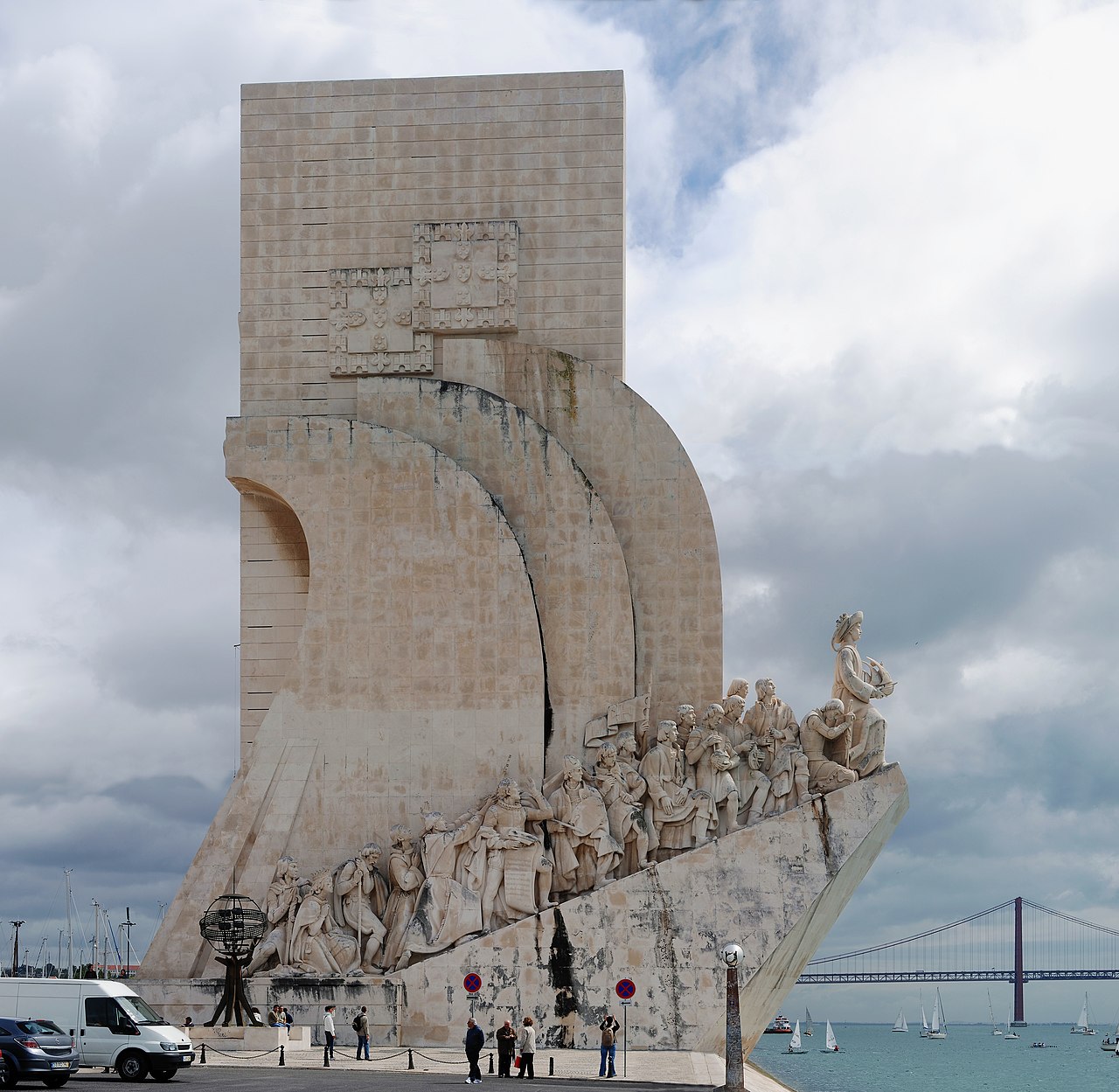
This massive 52-metre monument, shaped like the prow of a ship, celebrates the Portuguese explorers who mapped much of the world in the 15th and 16th centuries. Henry the Navigator stands at the front, followed by Vasco da Gama, Pedro Álvares Cabral (who reached Brazil), and Ferdinand Magellan (whose expedition was the first to circumnavigate the globe). From the water, the monument’s ship-prow shape is most apparent — on land, it looks like a standard monument, but from a boat you can see clearly that it’s designed to look like it’s sailing out onto the Tagus.
The 25 de Abril Bridge
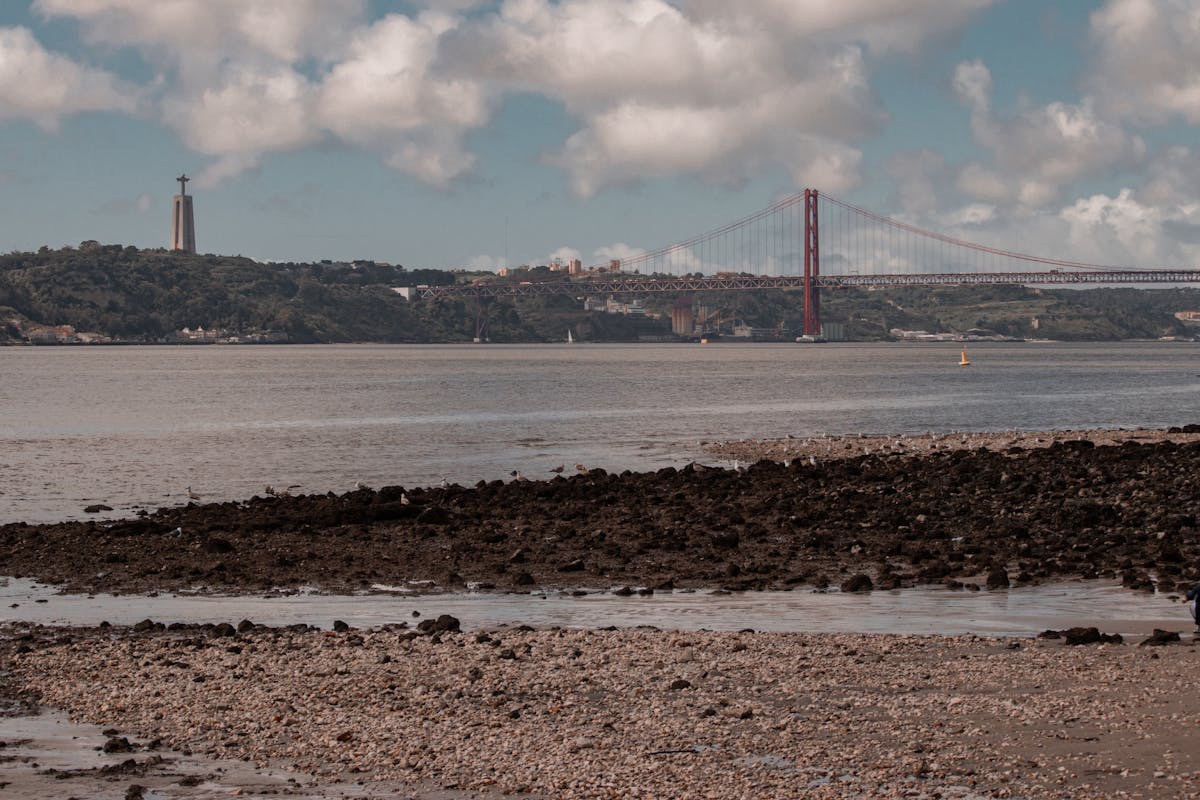
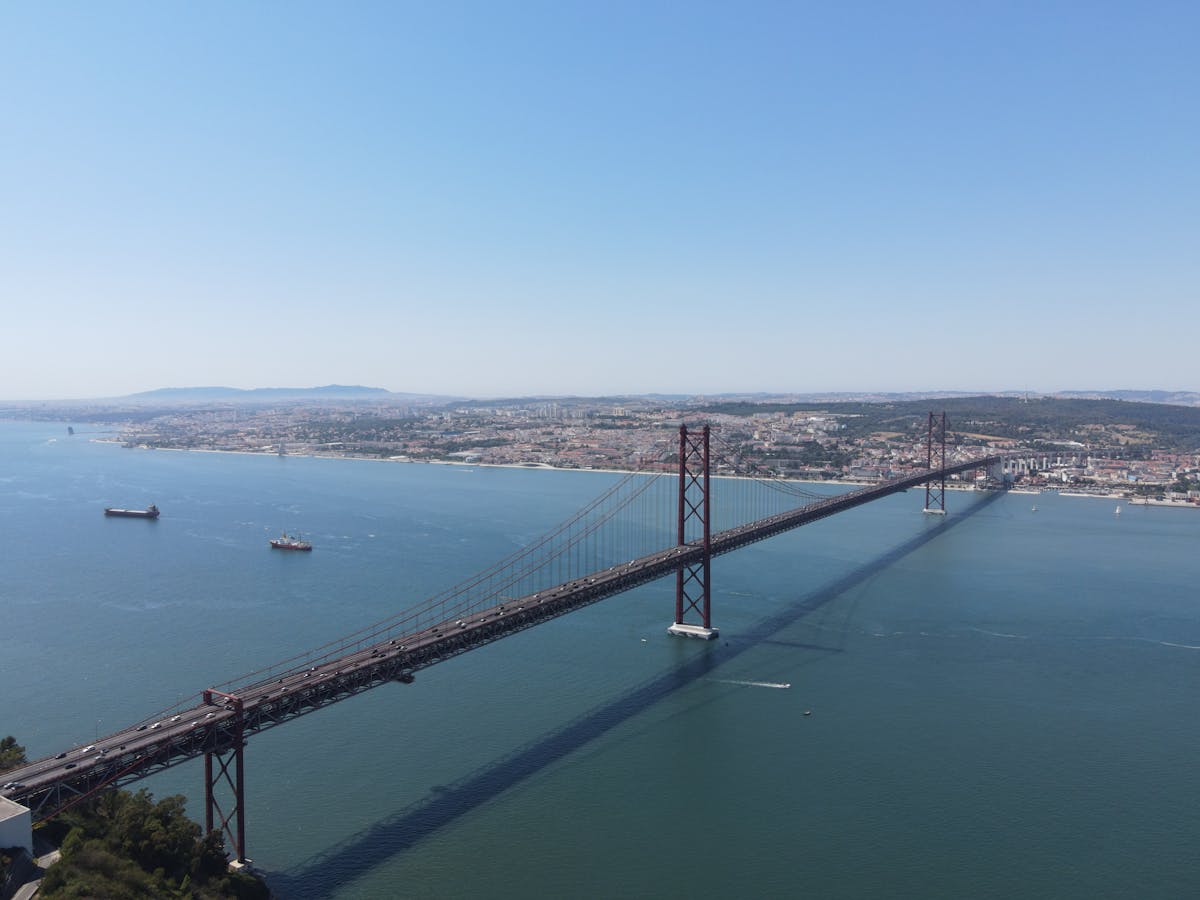
Lisbon’s most recognisable landmark spans 2.3 kilometres across the Tagus and looks remarkably like San Francisco’s Golden Gate Bridge — not a coincidence, since the same company (American Bridge Company) was involved in building both. Passing underneath it by boat gives you a visceral sense of its scale that no photo from land can convey. The bridge was originally named the Salazar Bridge after Portugal’s dictator but was renamed after the Carnation Revolution of 25 April 1974, which ended 48 years of authoritarian rule.
Praça do Comércio
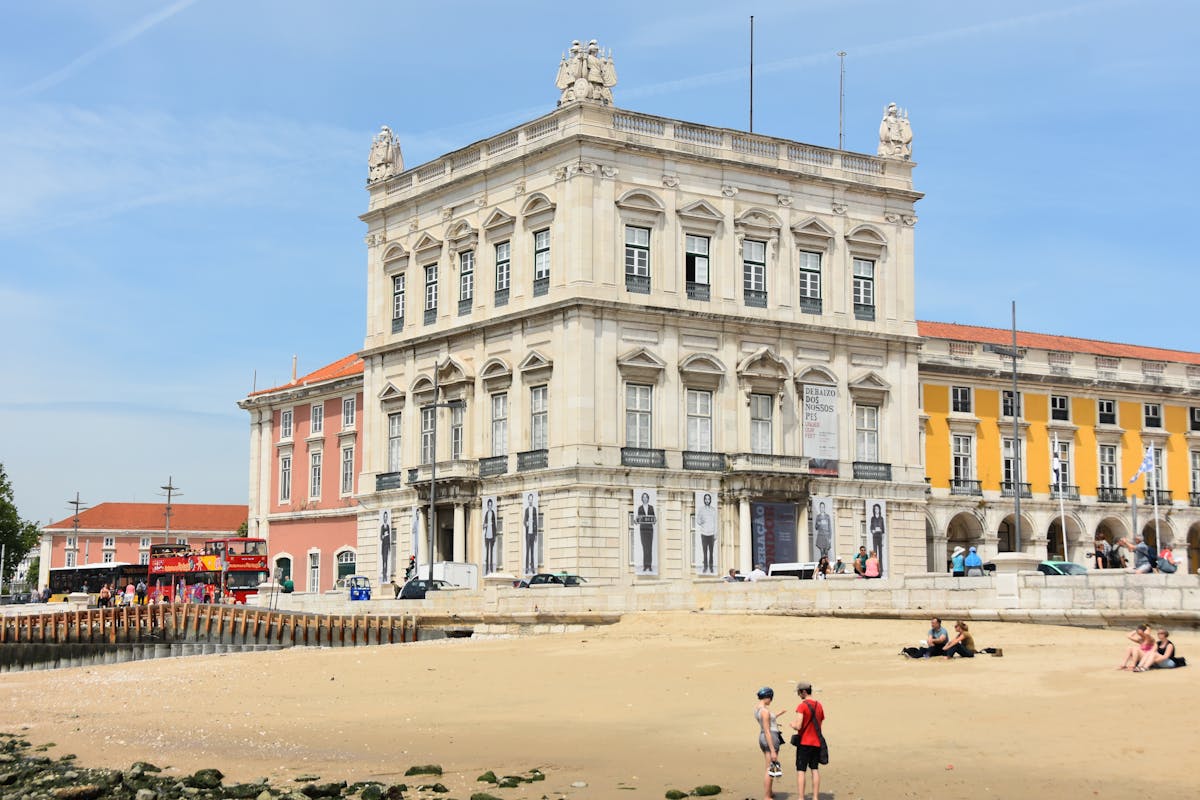
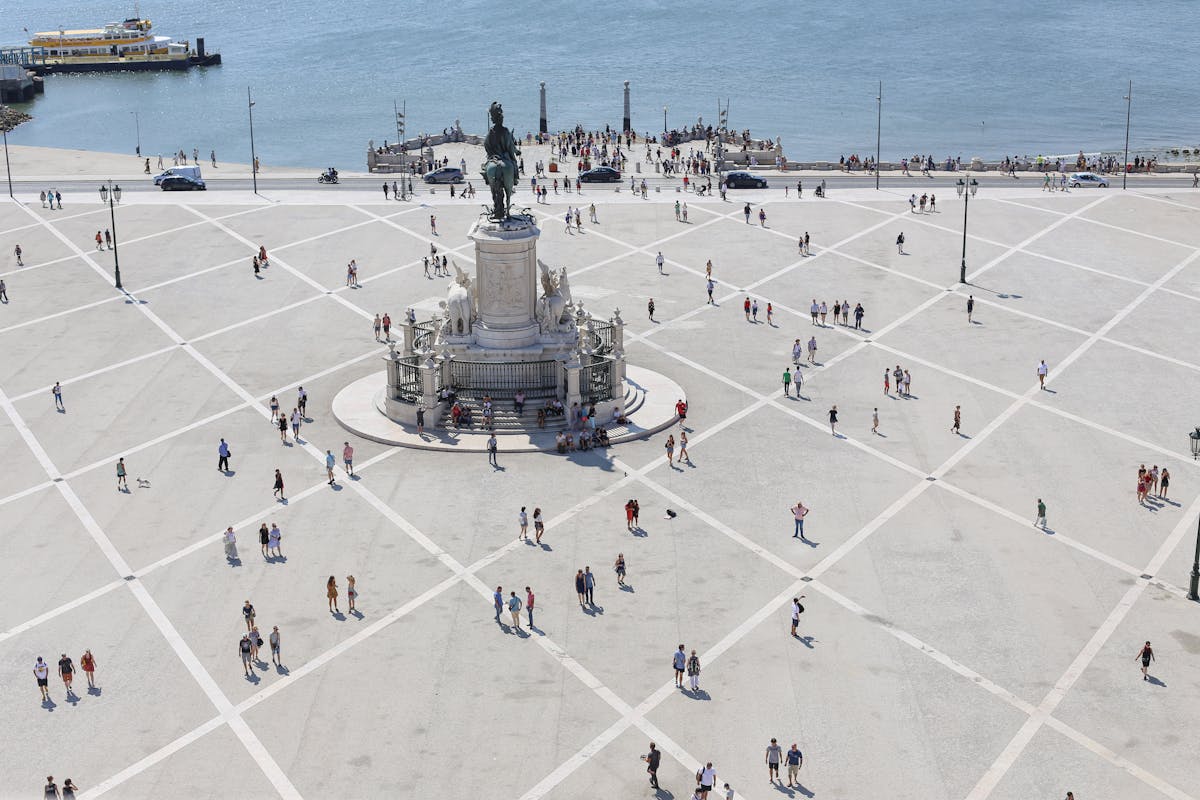
This grand waterfront square — formerly the site of the Royal Palace destroyed in the 1755 earthquake — opens directly onto the Tagus and was historically the first sight visitors arriving by ship would see. From a boat, the square’s enormous scale becomes apparent: the triumphal arch, the bright yellow buildings framing three sides, and the bronze equestrian statue of King José I in the centre. Most boat tours depart from near here, so you’ll see it from both land and water.
Practical Tips for Lisbon Boat Tours
When to Go
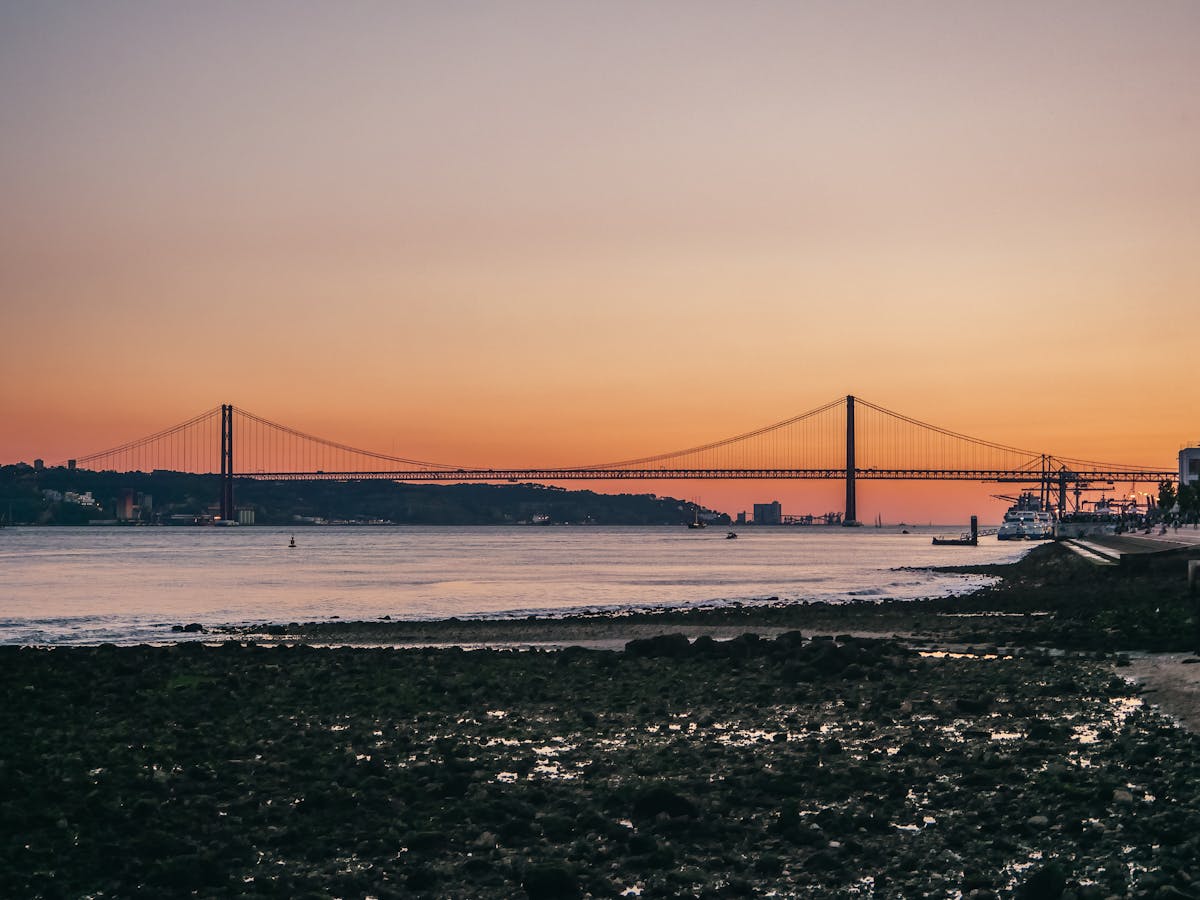
Sunset cruises are the most popular option for good reason — the light on the Tagus during golden hour is extraordinary, and the temperature is more comfortable than midday in summer. Booking a sunset departure in July or August means you’ll be on the water around 7:30-8:30 PM when temperatures have dropped from the day’s high. In spring and autumn, sunset is earlier (around 6-7 PM), and the weather is often more pleasant for extended time on the water.
What to Wear
The river creates its own microclimate — even on a warm day, it’s significantly cooler on the water, especially once you’re moving. Bring a light jacket or sweater for evening cruises, and a windbreaker if you’re doing the dolphin watching trip, which heads into the open Atlantic where the wind is much stronger. Flat shoes with grip are essential on any boat — flip-flops on a wet deck are a recipe for an embarrassing holiday story.
Seasickness
The Tagus estuary is generally very calm — protected from Atlantic swells by the narrow river mouth. If you get seasick on open water, the river cruises (options 1-3 and 5-6) will almost certainly be fine. The dolphin watching tour (option 4) does go out into the Atlantic, where conditions can be rougher. If you’re prone to motion sickness, take medication before boarding and choose a seat near the centre of the boat where movement is least pronounced.
Booking Strategy
Sunset cruises sell out, particularly in peak season (June-September) and on weekends. Book at least 2-3 days in advance during summer, and a week ahead for weekend sunset slots. The daytime sightseeing cruise and express option are easier to get last-minute. For the dolphin watching, check the weather forecast — calm seas mean better sightings and a more comfortable ride.
Where Tours Depart
Most Lisbon boat tours depart from one of three locations: Doca de Santo Amaro (near the bridge, used by the sailing yacht tours), the river station near Praça do Comércio (used by the traditional boats), or the Doca do Bom Sucesso near Belém (used by some dolphin watching tours). Check your booking confirmation carefully — arriving at the wrong dock is a common mistake that several reviewers mention.
Lisbon’s Maritime History: Why the River Matters
The Tagus isn’t just a convenient waterway for tourist boats — it’s the single most important geographical feature in Portuguese history. Understanding what happened on this river transforms a pleasant cruise into a journey through five centuries of exploration, trade, disaster, and reinvention. The boat tour guides touch on these stories, but knowing the full context makes every landmark you pass significantly more meaningful.
The Age of Discovery Started Here
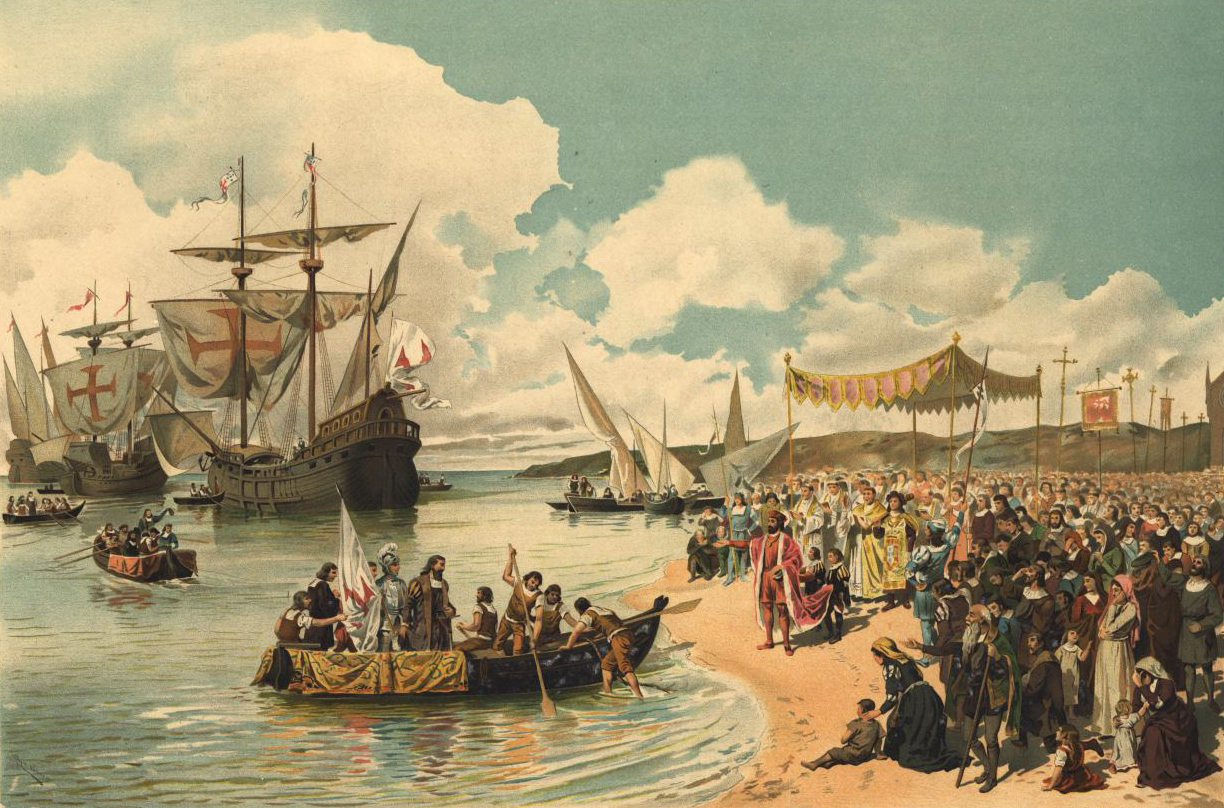
In 1497, Vasco da Gama departed from the Tagus with four ships and 170 men, heading south around Africa in search of a sea route to India. He succeeded — arriving in Calicut in May 1498 — and in doing so launched Portugal’s maritime empire, which would eventually stretch from Brazil to Japan. The spice trade that followed made Lisbon the wealthiest city in Europe for nearly a century, and the profits funded the Belém Tower, the Jerónimos Monastery, and much of the monumental architecture you see along the waterfront today.
The scale of Portugal’s achievement is almost absurd when you consider the country’s size. A nation of barely one million people in the 15th century managed to establish trading posts and colonies across four continents, create the first global maritime trade network, and produce navigators who mapped coastlines that Europeans had never seen. All of it started from the banks of the river you’re cruising on.
The 1755 Earthquake and Tsunami
On the morning of 1 November 1755, Lisbon was hit by one of the most powerful earthquakes in European history, estimated at 8.5-9.0 on the Richter scale. The initial tremors collapsed churches packed with worshippers (it was All Saints’ Day), fires broke out across the city, and then — approximately 40 minutes later — a massive tsunami surged up the Tagus, flooding the waterfront and drowning thousands who had fled to the open riverbank for safety. An estimated 30,000-40,000 people died in Lisbon alone.
The earthquake destroyed the Royal Palace on Praça do Comércio, along with its priceless library of 70,000 volumes, artwork by Titian and Rubens, and the royal archives documenting Portugal’s explorations. From a boat, you can see how the rebuilt waterfront — designed by the Marquis of Pombal with wide, grid-patterned streets and earthquake-resistant architecture — reflects the systematic reconstruction that followed. The Pombaline buildings you see along the Baixa district, with their distinctive yellow facades, are among the world’s first earthquake-engineered structures.
The Bridge and the Revolution
The 25 de Abril Bridge, completed in 1966, was originally named the Salazar Bridge after António de Oliveira Salazar, Portugal’s authoritarian ruler from 1932 to 1968. On 25 April 1974, military officers opposed to the regime launched a nearly bloodless coup — the Carnation Revolution, named because civilians placed red carnations in soldiers’ rifle barrels. The bridge was renamed that same year, and Portugal transitioned to democracy. Sailing underneath the bridge, renamed for the revolution that freed a nation, is one of those moments where history and geography align perfectly.
Cristo Rei — Lisbon’s Answer to Rio
The 110-metre Cristo Rei statue standing on the south bank of the Tagus was inspired directly by Rio de Janeiro’s Christ the Redeemer. Built in 1959 as a thanksgiving for Portugal being spared the worst of World War II, it watches over Lisbon from the Almada hills. From the water, you see both the bridge and Cristo Rei together — a combination that creates one of the most photographed panoramas in Portugal.
More Portugal Guides
If you’re spending time in Lisbon, the Sintra day trip is the perfect complement to a boat tour — you swap the river for forested mountains dotted with fairytale palaces, including the kaleidoscopic Pena Palace and the mysterious Initiation Well at Quinta da Regaleira. For evening entertainment, Lisbon’s fado shows offer live performances of Portugal’s hauntingly beautiful traditional music in intimate Alfama venues — pair one with a sunset cruise for a perfect Lisbon day.
Heading north to Porto? The Porto walking tours unlock a completely different Portuguese city — steeper, grittier, and fiercely proud — while the Douro Valley wine tours take you into UNESCO-listed terraced vineyards where port wine is produced. Down south, the Algarve’s Benagil Caves offer a completely different boat experience — dramatic sea caves, golden cliffs, and hidden beaches along one of Europe’s most spectacular coastlines. And when evening falls, Porto’s fado and port wine experiences pair live traditional music with tastings in atmospheric venues — the perfect cultural counterpart to a day on the water.